
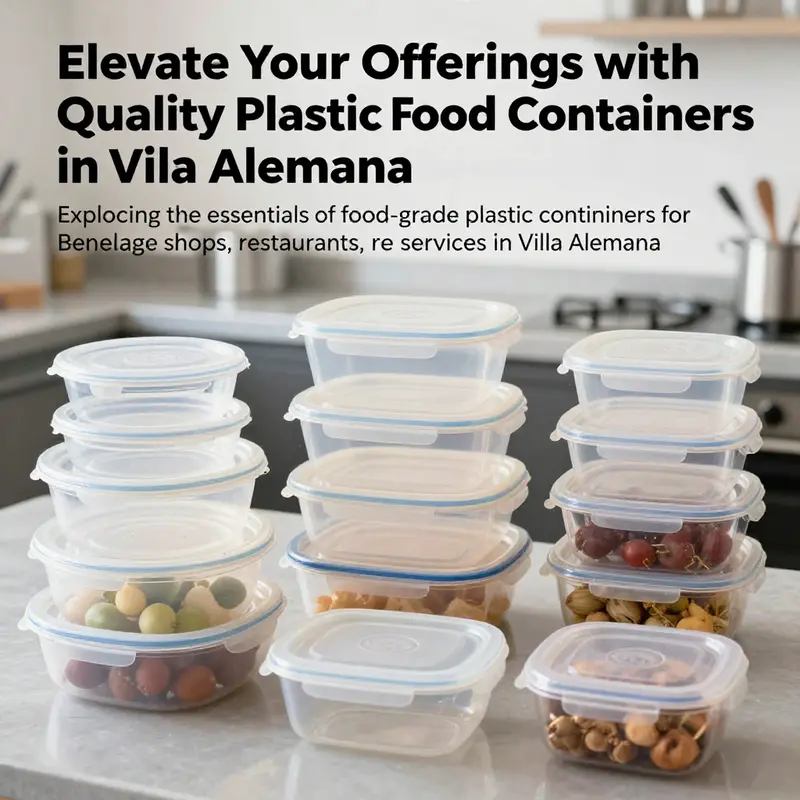
Food-grade plastic containers are essential tools for professionals in the food and beverage industries, particularly in vibrant locales like Villa Alemana, Chile. As the demand for efficient packaging grows in restaurants, bubble tea shops, and catering services, understanding the landscape for plastic food containers is integral. This article delves into the local availability of these containers, the variety of options ideal for various business needs, the safety standards they must meet, and the prevailing market trends that shape consumer preferences. Each chapter will illuminate a critical facet of portable food storage solutions that keep both vendors and clients satisfied.
Finding Food-Grade Plastic Containers in Villa Alemana: A Practical Local Guide
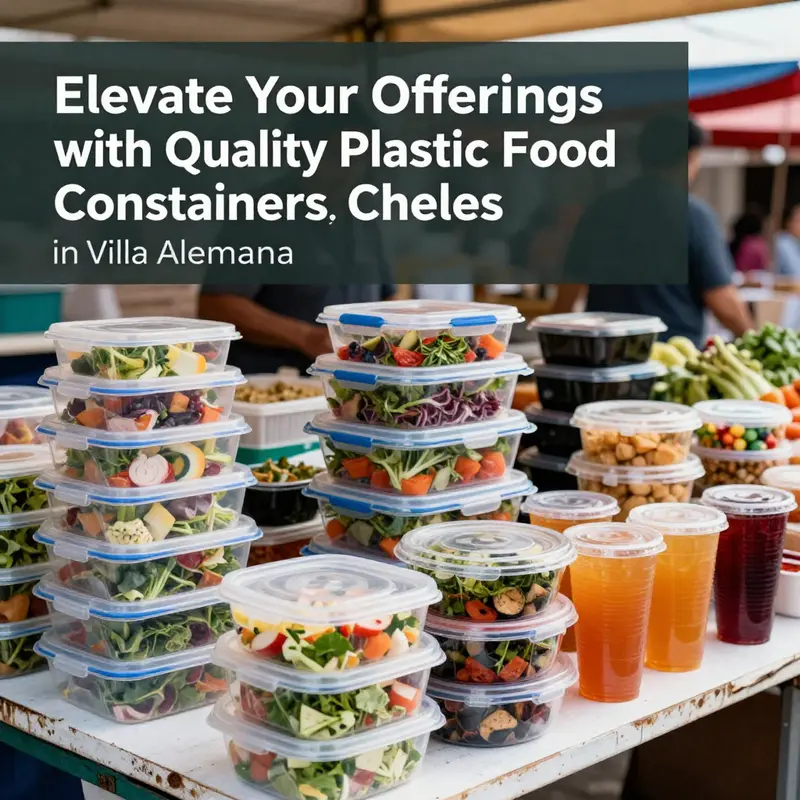
Villa Alemana sits along Chile’s central corridor, where daily life blends market stalls with home kitchens. For residents who need food-grade plastic containers, the local landscape offers a mix of supermarkets, hardware stores, and online platforms that service the Valparaíso Region. There isn’t a single dominant local brand catalog, so buyers often compare options across channels and rely on clear labeling to verify safety. This chapter outlines practical steps to locate containers that are suitable for food contact, explain what to look for, and describe how to balance local stock with cross-border possibilities.
In practice, the essentials are simple: confirm that the container is food-grade and BPA-free if labeled, check the material type (for example, polypropylene or polycarbonate), and verify use case compatibility (microwave, freezer, dishwasher). Look for lids that seal securely and are compatible with multiple containers to reduce complexity. If in doubt, request a product data sheet or safety documentation from the seller. Local stock is often seasonal and varies by store, so a methodical search across several shops increases the chance of success.
A practical strategy is to start with nearby supermarkets for everyday sizes, then expand to hardware chains that carry pantry organizers and bulk storage options. Online marketplaces serving Chile can be valuable when local stock is thin or when you want to compare prices across sizes and lid types. When shopping online, read reviews about lid reliability and seal performance under repeated washing.
For small food businesses or households stocking higher volumes, consider asking about bulk pricing, lead times, and return policies. Cross-border suppliers can offer broader size ranges and specialty seals, but plan for longer lead times and request safety data before committing. Keep a flexible portion of your budget for unexpected needs and prioritize vendors with transparent labeling and responsive customer service.
In short, while Villa Alemana lacks a single, centralized catalog of food-grade plastic containers, a disciplined multi-channel approach—local inspection, targeted online checks, and careful evaluation of safety documentation—will usually yield reliable options that meet basic food-safety expectations.
Plastic Food Containers in Villa Alemana: Types, Choices, and the Subtle Balance Between Convenience and Local Food Culture
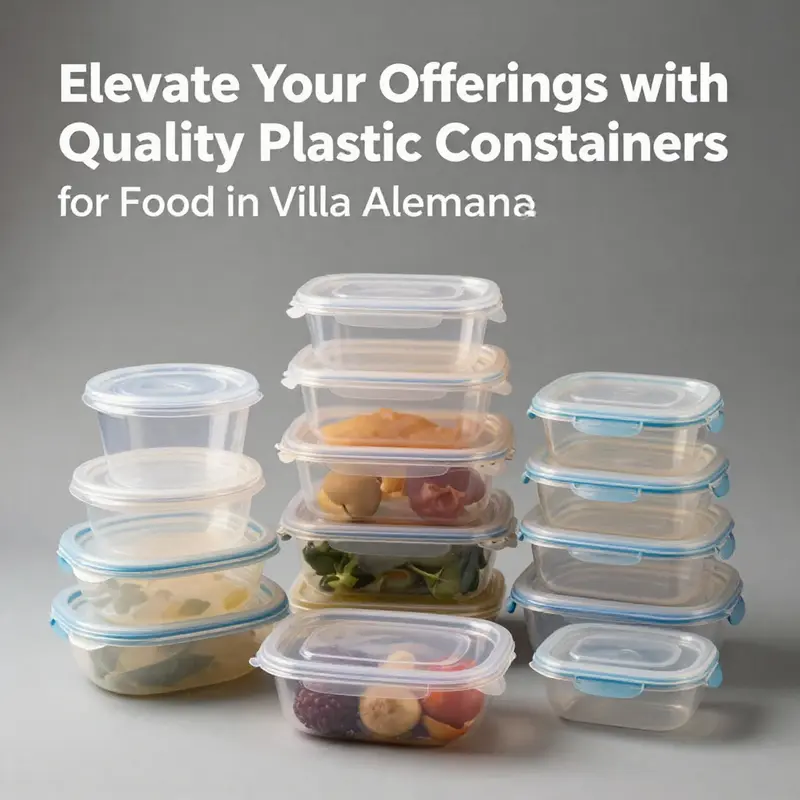
In Villa Alemana, as in many coastal and inland communities across Chile, the everyday practice of storing, transporting, and serving food hinges on a familiar cast of plastic containers. These vessels are more than packaging; they are part of a practical ecosystem that supports home cooks, street vendors, and small eateries alike. The story of these containers is not simply one of materials and shapes, but of how a city negotiates speed, safety, and sensory experience when meals move from kitchen to table, from vendor to customer, and from memory to repeat purchase. When you walk through a market or a neighborhood bodega, you see the same core idea repeated in different forms: a lightweight, durable, food-grade option that seals in freshness, guards aromas, and travels well. This chapter, anchored in the broader topic of plastic containers for food in Villa Alemana, offers a cohesive portrait of the kinds of containers commonly found, the design logic behind them, and the human factors that shape choices in a local setting that blends family kitchens with small business operations. It is not a catalog of brands or a survey of suppliers, but a synthesis of how function, safety, and practicality meet the rhythms of daily life in this Chilean city.
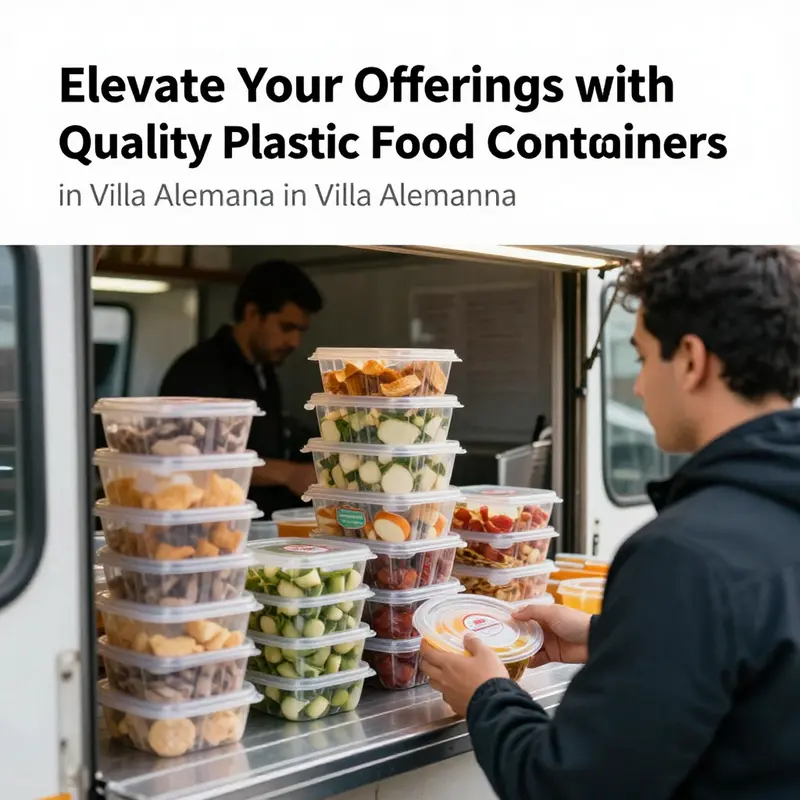
At the heart of the discussion is the broad spectrum of containers used to store and dispense food. In everyday use, these containers fall into several overlapping families: the take-out or to-go box, the meal-prep or portion-control box, the simple lidded jar for dry goods, and the translucent or opaque clamshell or tub that protects leftovers. The most visible and widely deployed forms are the take-out boxes and meal-prep trays. They are favored for their lightweight resilience, their compatibility with short shipments and quick handoffs, and their ability to keep foods neat during transport. In many kitchens and stalls, these containers are stacked near cash registers or behind counters, ready to be filled with hot or cold foods, sealed, and handed over with minimal fuss. The design logic behind them emphasizes a reliable seal, a shape that optimizes stacking and space in a cart or shelf, and a lid mechanism that is simple for staff to operate yet effective at limiting leaks and aromas. Such containers are also chosen for their ability to withstand typical service conditions: one-handed closing, occasional microwaving, and the rough handling that can occur during short trips through busy streets.
Beyond the quick-serve niche, households and small eateries rely on a broader set of plastic storage options. Transparent or semi-transparent containers allow quick visual checks of contents, a practical benefit when you are reheating leftovers or assessing quantities at a glance. Opaque containers, on the other hand, can shield foods from light exposure that might affect flavor or color over time, and many are designed with tighter lids and heavier walls to resist cracking when dropped or jostled. The capacity spectrum in use locally generally spans the mid-range sizes—from a modest 250 to 500 milliliters for individual portions or leftovers, up to 1 to 2 liters for family-sized portions or bulk dry goods. The versatility of these sizes is crucial in Villa Alemana, where households balance everyday meals with a culture of shared cooking and occasional gatherings that demand practical, scalable packaging solutions.
There is also a notable diversity in the kinds of plastics employed, each selected for its particular balance of clarity, strength, heat tolerance, and cost. Polypropylene and high-density polyethylene are among the most common materials for everyday food containers. Their heat resistance makes them suitable for reheating in a microwave, while their stiffness and resistance to cracking support long service life under repeated use. The trade-off tends to be a higher perceived cost for more robust containers, but the durability they deliver can reduce the frequency of replacements—an important consideration for small food businesses operating on tight margins. PET, prized for its clarity, often appears in jars and lids where visibility of contents adds value to the consumer experience. It can provide a crisp, clean look that helps shoppers identify sauces, grains, or prepared dishes at a glance. In some cases, system designers and manufacturers also incorporate a very thin layer of material that helps resist oxygen ingress, a feature that can extend shelf life for certain prepared foods while maintaining lightweight design.
In discussing safety and regulatory expectations, it is important to acknowledge that the food-contact landscape is shaped by standards that govern what can migrate from packaging into food. While local, national, and regional regulations vary, the overarching goal is to minimize any potential health risk from packaging materials. A frequently cited concern in global conversations is the migration of additives or residual monomers, including substances that might affect flavor or safety under certain conditions. In many jurisdictions, the emphasis is on limiting substances such as bisphenol A (BPA) and ensuring compatibility with a wide range of foods and temperatures. Chile, like many other economies, participates in a broader ecosystem of food-contact safety practices. Businesses that supply or use plastic containers commonly prioritize items that are labeled as food-grade and that carry certifications or testing data indicating migration limits have been respected under applicable rules. For Villa Alemana buyers, the practical takeaway is simple: ask for documentation or product declarations that show the packaging is appropriate for food contact and appropriate for the intended use, whether it be cold storage, hot service, or both.
The design features of these containers reflect the practical realities of local life. Tight-sealing lids, venting options for hot foods, and the ability to withstand a fast-paced service environment all matter. Convenience is not just about ease of use; it is also about reliability. In the shops and kitchens of Villa Alemana, containers that survive the daily shuffle—from the cooking pot to the tray, to the cart, and finally to the consumer’s table—are valued for their robustness. Their shapes are chosen to maximize space, to enable efficient stacking, and to simplify sanitation routines. The lids must close securely, yet be easy to reopen for serving or adding ingredients. The edges and corners of these containers are designed to minimize cracks and creases that can harbor food residues, a small but meaningful detail in hygiene. In homes, the containers often double as serving dishes; a container that looks neat on a shelf, with a lid that fits snugly, becomes part of the nightly routine of planning meals, refrigerating leftovers, and reusing containers to reduce waste where possible.
From a sourcing perspective, Villa Alemana sits at a crossroads between local procurement and global supply channels. On the local side, vendors and small shops stock a range of containers suitable for daily needs, including those intended for quick-service foods and for household meal prep. These options are favored when immediate availability matters and when costs must be kept predictable given modest budgets. The pull of global supply lines—through international wholesalers and cross-border logistics—brings a wider variety of sizes, shapes, and technical specifications into reach. For operators who require more specialized packaging, such as containers designed for specific cuisines, temperature profiles, or branding opportunities, cross-border sourcing can open doors to options not readily available in the local market. The practical equation often involves balancing upfront costs with long-term value: a more durable container may carry a higher initial price but can reduce waste and the need for frequent reordering.
In this balancing act, it is useful to think through a few concrete decision criteria. First, consider the intended use: will the container primarily hold hot foods for short trips, or is it meant for cold storage or longer refrigeration? The answer influences material choice and lid design. Second, account for the service environment: a busy stall in a market or a small cafe will benefit from containers that are light yet resilient, with lids that snap on firmly to prevent spills during transport. Third, evaluate the ease of cleaning and reuse. Containers chosen for frequent reuse should be resistant to staining and capable of withstanding dishwasher or hand-washing routines without losing their seal. Finally, assess the sustainability angle as part of a broader strategy. While plastic containers provide undeniable convenience, customers and operators are increasingly aware of environmental considerations. A growing segment of consumers favors packaging that is recyclable or made from more sustainable materials, and this preference can shape the mix of packaging choices available to a business over time.
Incorporating a broader view of packaging options, many buyers in Villa Alemana weigh plastic against other materials such as paper-based or compostable containers, especially for take-out and prepared foods. This comparative lens helps local decision-makers decide when to lean on plastic for practicality and when to pivot toward alternatives that align with sustainability goals or regulatory requirements in the future. As local buyers explore options, many weigh the contrast between plastic and paper-based packaging, such as octagonal kraft paper packaging. This choice is not simply about material performance; it also involves considerations of branding, customers’ perceptions of sustainability, and waste management logistics. For readers who want a concrete example of this packaging spectrum and its practical implications, a representative reference that captures the broader packaging landscape is available online under the topic of durable, easy-to-dispose packaging solutions. octagonal kraft paper packaging
The local context also means that individuals and small businesses often evaluate total cost of ownership rather than just the unit price. A container that serves well for a year but costs more upfront can be a smarter bet than a cheaper alternative that fails after a few uses. Conversely, for certain vendors operating on tight margins, the ability to source sufficiently low-cost options in bulk becomes decisive, even if that means accepting somewhat shorter lifespans or simpler sealing mechanisms. The price-performance calculus is frequently negotiated through talking to suppliers about batch sizes, shipping times, and the availability of compatible lids and accessories. In these negotiations, the emphasis remains on food safety, reliability, and the customer experience. A well-chosen packaging system supports the perception that food is handled with care, arrives intact, and is easy to use, which in turn can influence repeat purchases and word-of-mouth recommendations.
When it comes to practical guidance for readers who are designing or upgrading their packaging approach in Villa Alemana, a few core steps help align choice with everyday needs. Start with a clear assessment of food types and service flow: which foods require steam retention, which need to stay crisp, and which are best stored in transparent containers for quick inspection by staff or customers. Then map out the typical environmental conditions—whether containers will travel through busy streets, sit in a car trunk, or be stored in a cooler—and choose materials and lids accordingly. Next, establish a simple testing protocol, perhaps by running small-scale trials with a handful of containers to observe performance under heat, cold, and mechanical handling. Document results about leakage, seal integrity, staining, and ease of cleaning. Over time, this practical data becomes a guide for scale-up decisions and for communicating with suppliers about the precise requirements of Villa Alemana operations.
A final note on the sourcing ecosystem is warranted. While direct, region-specific brand information may be scarce, the principle remains: select packaging that is clearly food-grade, compatible with the intended use, and accompanied by accessible information about materials and safety testing. For practitioners who require more variety or who want to compare options from different suppliers, the path typically leads to international wholesale channels that can supply diverse container families along with relevant documentation. The ongoing dialogue between local needs and global supply capabilities means that Villa Alemana can continue to refine its packaging mix in ways that support both the practicalities of daily service and the evolving expectations of consumers who value safety, convenience, and responsible packaging.
External resource: https://greendispopack.com/product/disposable-kraft-paper-bowl-take-away-kraft-paper-salad-bowl-with-lid/
Choosing and Regulating Food Plastic Containers in Villa Alemana: Safety, Standards, and Local Realities
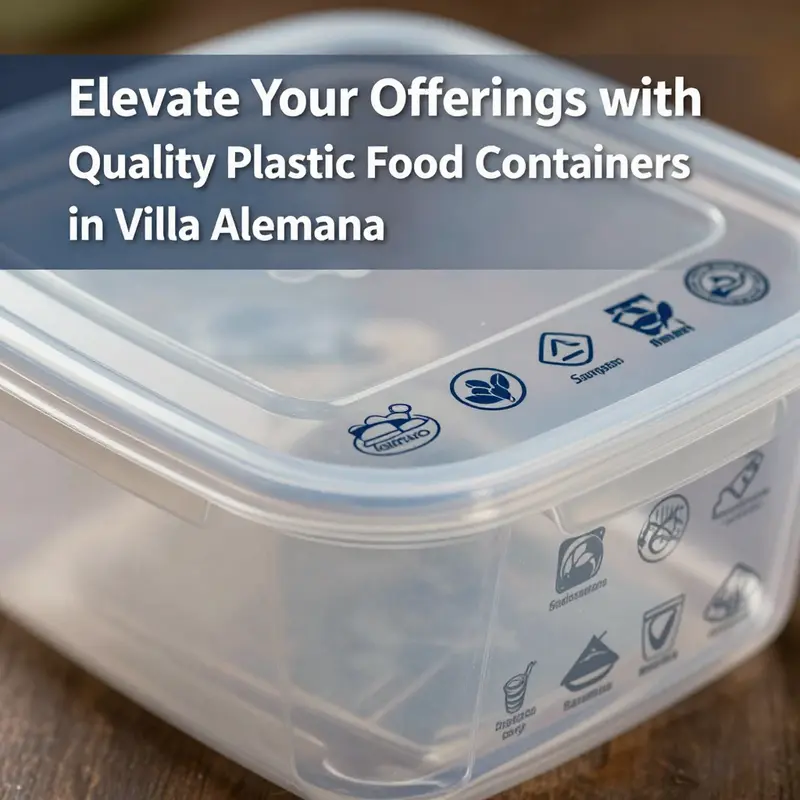
Villa Alemana sits inland from the Pacific, a city where households and eateries share a steady rhythm of meals, groceries, and take-out. In this setting, plastic containers for food are not merely conveniences; they are interfaces between local habits, business models, and a regulatory landscape that is evolving as quickly as consumer tastes. The practical question for a small restaurant, a market stall, or a home kitchen in Villa Alemana becomes not only what container best preserves a meal, but how that container fits within safety expectations, waste management programs, and a shifting policy environment. To understand the core dynamics, one must move beyond the shelving of glossy, new-generation containers. One must look at safety, sustainability, import pathways, and local procurement channels as an integrated system that shapes the everyday choices of food storage and delivery. In this sense, the chapter moves away from a simple comparison of sizes and shapes and toward a more holistic reading of how a city’s regulatory tempo and community practices influence container selection in a real, living market.
Chile’s approach to packaging in the food sector has grown more rigorous in recent years, driven by a broad policy push to reduce single-use plastics and to promote waste reduction, reuse, and recycling. The public policy narrative in Chile has shifted from permissive use toward active discouragement of disposable plastics in many commercial and household contexts. A pivotal element of this shift is the overarching move to discourage the prevalence of single-use plastic items in daily life, and to encourage circular economy practices that reward reuse or return of materials. In practical terms, this means that a local cafe, a small grocery, or a household in Villa Alemana is more likely to encounter recommendations to favor containers that are recyclable, reusable, or designed for extended life over purely disposable options. The trend feeds back into how suppliers frame their product lines, and it nudges producers to consider end-of-life pathways for the containers they sell.
The regulatory surface that governs food contact materials—containers, lids, seals, and the materials they’re made from—speaks to health, safety, and consumer confidence more than to aesthetics. In Chile, sanitary and import regulations apply to goods that come into contact with food, and the regulatory conversation has grown more explicit and comprehensive as the country tightens controls around food safety and quality. This is not merely about a container’s ability to keep a product from leaking; it is about ensuring that any substance that could migrate from plastic into food stays within agreed limits, and that the overall packaging system supports the integrity of the food it surrounds. The import regime is designed to ensure that foreign packaging materials entering Chile meet local safety expectations, and it reflects a broader willingness to align with international best practices for food contact materials. Although specific technical standards evolve, the core principle remains clear: packaging in contact with food must be designed to protect the product while safeguarding public health.
For businesses that export or import food contact materials, the regulatory scene also emphasizes traceability, certification, and documentation. A robust sanitary framework means that suppliers, distributors, and retailers in Villa Alemana must be prepared to demonstrate compliance with health and safety requirements, not only for the products themselves but for the processes surrounding their marketing and distribution. This is where the Chilean Ministry of Agriculture (SAG) plays a pivotal role. SAG’s work encompasses the sanitary and regulatory dimensions that influence packaging and imports related to food. The agency’s guidance and surveillance help ensure that materials used in food packaging meet the standards expected by Chilean authorities and protect consumer health. The regulatory environment thus operates on multiple levels: it governs the safety of the packaging itself, sets expectations about how materials can interact with foods, and regulates the import pathways that bring containers into the local market. In Villa Alemana, this translates into careful supplier vetting, documentation practices, and an emphasis on packaging solutions that can clearly demonstrate compliance with local expectations.
A related, broader signaling element comes from Chile’s ongoing efforts to curb plastic waste and promote recycling and reuse. The push to minimize single-use plastics aligns with a growing appetite for packaging formats that can be repurposed, refilled, or easily recycled. This regulatory and policy stance nudges businesses toward exploring alternatives that balance performance with environmental responsibility. For restaurant owners and retailers in Villa Alemana, this is not a theoretical preference; it translates into practical decisions about which containers to stock, how to store them to preserve food quality, and how to present packaging to customers who increasingly value sustainability. The practical implication is that container selection becomes a decision that weighs food safety, cost, environmental impact, and consumer expectations in a single, integrated decision tree.
Supply chains for packaging in Villa Alemana reflect these policy and consumer dynamics. Local procurement channels—including markets, distributors, and regional wholesalers—coexist with cross-border options that bring a wider range of packaging formats to Chile. In the local market, buyers often prioritize availability, price, and the ability to meet regulatory expectations with confidence. When a business looks beyond its doorstep, cross-border sourcing becomes a potential pathway to diversify container formats, expand the options for storage and take-out, and test new materials that might align with evolving standards and consumer preferences. Platforms that connect buyers with manufacturers offer a range of options—from transparent, stackable storage containers suitable for home or small business use to ventilated, hermetic designs intended for more demanding commercial environments. The key challenge is ensuring that any imported container intended for contact with food complies with safety standards, migration limits, and labeling requirements that Chilean authorities expect. This is where careful due diligence steps in: verifying material composition, confirming compatibility with specific food types, and ensuring that the complete packaging system—container, lid, and any seals—meets performance and safety criteria.
Within this landscape, the role of design and material selection becomes a story of balancing performance and responsibility. For some food items, a hermetically sealed container with a robust lid can extend shelf life and protect contents from moisture and contamination. For other applications, a lighter, recyclable container may offer sufficient protection while aligning with waste-reduction goals. In Villa Alemana, as in many parts of Chile, this balance often requires choosing containers with clear labeling about material composition and recyclability, and ensuring that the disposal and recycling options are understandable to customers. The conversation extends to the end user as well: a consumer who purchases a ready-made meal will likely consider not only the price and convenience but also how easy it is to recycle or reuse the container after the meal is consumed. The social and logistical realities of a mid-sized Chilean city thus feed back into packaging choices, encouraging packaging suppliers and food businesses to pursue designs that align with a more circular economy while delivering reliable performance.
As the public policy and market signals converge, a practical example helps anchor these considerations. In parallel to the push against single-use plastics, there is growing attention to alternative packaging formats that can deliver the same level of food safety and convenience with a smaller environmental footprint. This is where consumer-facing packaging choices meet business strategy. A take-out environment in Villa Alemana benefits from a spectrum of packaging formats that address different use cases: quick-service meals, ready-to-serve portions, and household storage. For many settings, options like sealed clear containers, air-tight jars, and stackable trays are chosen for their ability to preserve freshness and reduce waste. Yet there remains a strong pull toward materials that can be recycled or repurposed after use. The interplay between regulatory expectations and consumer preferences means that a gradual shift is underway, with more businesses favoring packaging that can satisfy safety requirements while offering improved end-of-life outcomes for the environment. In practice, this often means a staged approach: maintain performance where it matters most for food safety, and gradually integrate more recyclable or reusable containers where feasible.
In discussing packaging strategies, it is helpful to frame the conversation in terms of lifecycle thinking. Migration concerns—how much substance may migrate from plastic into food—are a central consideration in regulatory reviews of packaging materials. This concern parts ways with mere material choice and enters into the design and testing of the packaging system. While some jurisdictions provide explicit migration limits for substances and explicit compliance pathways, others emphasize conformity assessments and certifications. The Chilean regulatory ecosystem, shaped by a culture of safety and a commitment to consumer protection, encourages suppliers to provide robust documentation and verifications that demonstrate the safety of packaging components encountered in everyday food contexts. The practical implication for Villa Alemana businesses is clear: work with suppliers who can offer transparent test data and clear declarations about the materials used in containers, lids, and seals, and maintain records that can be shared with local authorities if needed.
The local decision-making process for container selection does not occur in isolation. It is informed by broader market trends, such as the availability of cross-border containers through wholesale platforms and the presence of local e-commerce marketplaces where households and small businesses procure storage and take-out packaging. These channels broaden the range of options available to Villa Alemana residents and business owners and help balance cost considerations with safety and sustainability. They also expose buyers to the realities of global supply chains, where regulatory standards in one country can influence the design and testing of packaging materials used in another. In practice, a buyer may consider a spectrum of container formats—from clear, transparent, stackable boxes designed for moisture resistance to opaque, durable jars engineered for long-term storage—to determine which solutions best fit the food items and the storage conditions typical in a Chilean home or a small local establishment. The choice becomes a negotiation among performance, price, and the ability to meet evolving regulatory expectations over time. To illustrate how packaging choices intersect with cultural preferences, consider the growing interest in paper-based packaging for certain take-out contexts. Kraft paper bowls and similar alternatives offer a different environmental profile than conventional plastic containers, particularly when they are designed for disposable use or for short-term storage. For readers curious about such alternatives, one relevant example is a disposable kraft paper bowl format that demonstrates how design can balance practicality with environmental considerations. See the following example: disposable-700ml-kraft-paper-bowl-take-out-octagonal-rectangle-paper-bowl. This example illustrates how packaging choices are evolving in response to consumer expectations and regulatory signals, even as the local market in Villa Alemana continues to rely on a mix of traditional plastic containers and newer formats that align with waste-reduction goals.
Looking ahead, the regulatory horizon in Chile is likely to continue shaping the packaging options available to businesses and households in Villa Alemana. The broad policy objective of reducing single-use plastics will likely promote continued innovation in container design, with a preference for materials that are recyclable, reusable, or easily integrated into local recycling streams. At the same time, the push toward robust health and safety standards will require ongoing diligence from suppliers and users alike. For those who export or import food-contact materials, the emphasis on compliance means that documentation, certifications, and testing will stay at the center of the procurement process. In this environment, the local economy of Villa Alemana benefits from a steady supply of safe, compliant packaging options, whether sourced locally or imported through cross-border channels. The balance between cost, safety, and environmental responsibility will continue to steer how families and businesses choose containers for food storage and service, and how suppliers respond to the evolving needs of Chile’s cities, including Villa Alemana.
For official context on how sanitary regulations and imports on food contact materials are managed in Chile, see the SAG—Chile’s Ministry of Agriculture—online resource. This guidance complements the practical considerations described above, helping to connect policy with everyday choices in packaging. Further regulatory context and updates can be found at https://www.sag.gob.cl/.
Market Currents in Villa Alemana: Trends and Preferences Shaping Food Plastic Containers in a Chilean City
Villa Alemana, tucked between the coast and the foothills of Chile’s central valleys, is a place where kitchens, markets, and street stalls share a common rhythm: a constant push to preserve food safely, transport it reliably, and do so without breaking the bank. The city’s everyday routines—families cooking at home, small eateries serving quick meals, and households arranging groceries for the week—are all mediated by the containers that hold, shield, and carry food. Yet even as local tastes and habits play a crucial role in decision-making, precise market data for Villa Alemana itself remains elusive. Researchers approach this horizon by triangulating broader regional and global patterns with the sparse local indicators available through schools, community programs, and municipal waste-management discourse. What emerges is not a snapshot locked in one moment but a living, evolving picture: how people think about safety, how they value convenience, and how they respond to messages about sustainability that arrive from both global platforms and local classrooms. This chapter threads those observations into a cohesive exploration of market trends and consumer preferences, aiming to illuminate how a Chilean city negotiates the complex terrain of food plastic containers in an era of heightened scrutiny over safety, transparency, and environmental impact.
Sustainability has become a facet of daily life rather than a distant aspiration. In Villa Alemana—and in Chile more broadly—the resonance of eco-conscious practices is strongest where households can translate concern into tangible routines: recycling programs that are accessible, waste streams that are well explained, and a sense that individual choices connect to a larger environmental arc. The packaging that accompanies meals, leftovers, and grocery purchases is a frequent site of reflection, because it is at once visible and functional. Consumers look for packaging that protects freshness and aroma, but they also want to understand what happens to that packaging after use. This dual demand—security during storage and clarity at disposal—frames how households rate the value of different container options. The net effect is a market that prizes materials that perform reliably while offering a credible disposal pathway. The downstream consequences are real: retailers and suppliers are increasingly pressed to present information in accessible forms, and policymakers are nudging the system toward standardization that reduces confusion and enhances safety across a mosaic of vendors and consumers.
The current market currents ride on three interconnected rails: sustainability awareness, transparency in labeling, and the continuing demand for practical, affordable solutions. Sustainability awareness in Villa Alemana is not a slogan; it shows up in household conversations, school projects, and community campaigns that critique wasteful habits and celebrate reuse whenever feasible. Buyers often compare the life cycle of containers—their material composition, how they hold up under refrigeration or microwave heating, and whether they can be separated from other waste streams without difficulty. In many retail settings, this translates into a preference for containers that claim recyclability or compostability, even if the local infrastructure for end-of-life processing is still evolving. The environmental calculus certain families perform is intimately tied to budget constraints, as up-front price sometimes competes with long-run waste management costs. In practice, this means that simple, reliable designs which minimize the need for multiple replacement purchases tend to win favor, while complex multi-part systems that demand specialized disposal are less attractive to practical households pressed by time and resources.
Transparency, as a market force, extends well beyond a single label or logo. It hinges on coconuts of trust—trust in origin, trust in the safety of materials, and trust in how information travels from factory floor to kitchen shelf. The Australian labeling incident cited in global reflections on consumer protection underscores a deeper concern: consumers demand that what is promised on a label honestly reflects reality. In Villa Alemana, this translates into heightened attention to how a container is described, what materials are used, and what testing or certification accompanies the claim of “food-grade safety.” The value of transparent labeling multiplies when the information is consistently available across brands and product lines. People want to know whether a resin type is suitable for cold storage, whether additives have been vetted for food contact, and whether migration data is available and understandable. When information is sparse or opaque, trust erodes, and the likelihood of trial with new packaging options diminishes. This is not merely a debate about compliance; it becomes a practical assessment of whether a product earns a place in a family’s kitchen or a retailer’s shelf.
The third rail, the shift toward eco-friendly options, defines the pace and direction of change. On one hand, plastics continue to offer affordability, lightness, and durability—traits that keep them deeply embedded in ordinary routines. On the other hand, a growing chorus of voices advocates alternatives that mitigate plastic pollution, including biodegradable options, plant-based polymers, and packaging designed for reuse. In Villa Alemana, the uptake of these alternatives is shaped by price differentials, the reliability of supply, and the presence of a local disposal framework that can accept and process such materials. Eco-friendly choices are more likely to win traction when they are integrated into familiar formats and when they demonstrate compatibility with existing household practices. A container that can keep food fresh, withstand typical handling, and be disposed of in a known way—whether through municipal recycling or composting programs—stands a better chance of becoming a regular part of daily life. Yet the reality remains nuanced: even when consumers favor sustainable options, the decision is filtered through the lens of practicality, availability, and total cost of ownership.
In this landscape, consumer preferences in Villa Alemana appear to be shaped by an implicit scorecard that blends environmental considerations with straightforward requirements. First, there is an emphasis on packaging that can be recycled or repurposed without requiring specialized disposal steps. Second, there is a desire for clear, credible information about where a container comes from and how it was produced. Third, there is a preference for packages that offer robust performance—leak resistance, dependable seals, and resilience to temperature fluctuations—so that homes can rely on containers for leftovers, meal prep, and on-the-go meals without needing constant replacements. This triad—environmental alignment, transparent provenance, and practical reliability—provides a workable guide for households choosing among the abundant options that the Chilean and global markets offer. It also pushes retailers and manufacturers toward designs and labeling practices that reduce friction in everyday use while elevating trust and satisfaction.
The scholarly echo of these local tendencies comes from broader research that links sustainability literacy and innovation with consumer acceptance. A 2024 conference contribution focused on Villa Alemana highlights the city’s engagement with STEAM education as part of a broader push toward sustainable development and innovative technologies. While the paper itself does not dissect food containers in granular fashion, its conclusions illuminate a community poised to adopt novel packaging ideas when they are embedded in clear, interdisciplinary approaches to problem-solving and environmental stewardship. That alignment—education feeding demand, and demand informing design—helps explain why Villa Alemana might prefer packaging that communicates a coherent story about material choice, safety, and responsible disposal. The interconnectedness of education, consumer choice, and packaging design suggests that changes in one domain can contribute to ripples across the others, gradually shifting the local market toward formats that harmonize safety, accessibility, and sustainability. For researchers and practitioners, this underscores the value of communicating packaging traits through accessible, evidence-based narratives that resonate with families and small businesses alike.
From the perspective of procurement and retail strategy, Villa Alemana’s market presents a compelling case for adopting a diversified approach to packaging that balances local suitability with global capability. Local retailers benefit from offering a spectrum of formats—ranging from simple, stackable, transparent containers to more robust, seal-ready options—each with clear information about safety, recyclability, and end-of-life handling. The practical implication is not merely to stock a wider assortment but to accompany the range with education: simple disposal guidance in store signage, easy-to-understand labeling, and staff training that helps customers interpret safety claims and recycling instructions. As the community grows more discerning, the ability to explain why a particular container is suited to a given use case becomes a differentiator. This is particularly relevant for households who rely on frozen, refrigerated, or hot meals—where performance and containment are critical—and for small-scale food businesses that require reliable packaging with predictable logistics.
A thoughtful example ties together convenience, safety, and sustainability without naming brands: a simple, durable kraft-based disposable option that can handle a single-serve meal while offering a clear disposal pathway where local facilities exist. The broader narrative of such a choice reflects how form, function, and fate converge in everyday life. For readers who want to explore a concrete option that aligns with these principles, consider a take-out kraft paper bowl suitable for single-use applications and designed to be clear about disposal guidance and material properties. This kind of option has utility for households, home cooks, and small vendors who seek reliable performance at a reasonable price. See the following representative packaging option for a tangible example: kraft paper bowl take-out. The anchor text is chosen to reflect the URL’s descriptive content while maintaining a neutral stance that avoids naming specific product brands.
Across the wider research landscape, external scholarship reinforces the idea that consumer acceptance of eco-friendly packaging grows when it is complemented by credible testing and transparent communication. In Villa Alemana, this means that labels should present not only the basic claims but also accessible explanations of what those claims mean in practice, including how the material behaves in typical Chilean kitchen environments and how it fits into local waste streams. In sum, the market signals in Villa Alemana point toward a future where packaging that is safe, transparent, and adaptable to sustainable practices will be favored, even as affordability and convenience continue to drive day-to-day decisions. Businesses that invest in clarity, reliability, and a coherent environmental narrative will be better positioned to meet evolving expectations and to participate in a market that increasingly links consumer well-being with the stewardship of resources.
For readers seeking a broader external context that complements these observations, see ICERI Proceedings, which discuss sustainability and innovation in Villa Alemana and similar settings, offering a framework for understanding how educational and technological ecosystems intersect with consumer behavior and packaging choices: https://doi.org/10.21125/iceri.2024.2509.
Final thoughts
Understanding the facets of food plastic containers in Villa Alemana is crucial for businesses in the local food industry. From exploring local availability to examining safety standards and market trends, stakeholders are better prepared to make informed decisions that cater to customer needs while adhering to safety guidelines. By investing in reliable, quality plastics, beverage shops, restaurants, food trucks, and catering services can enhance operational efficiency and customer satisfaction. Embrace these insights to stay competitive in a dynamic market.