
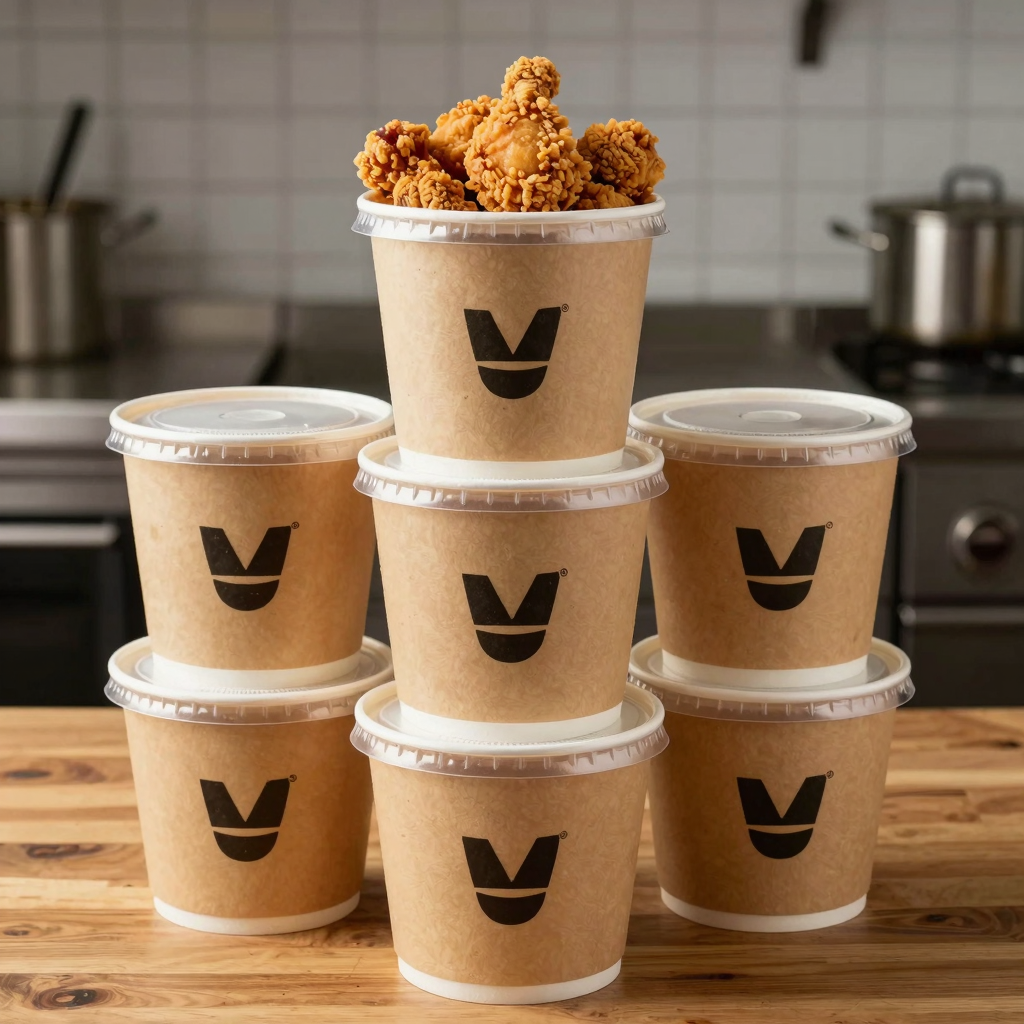
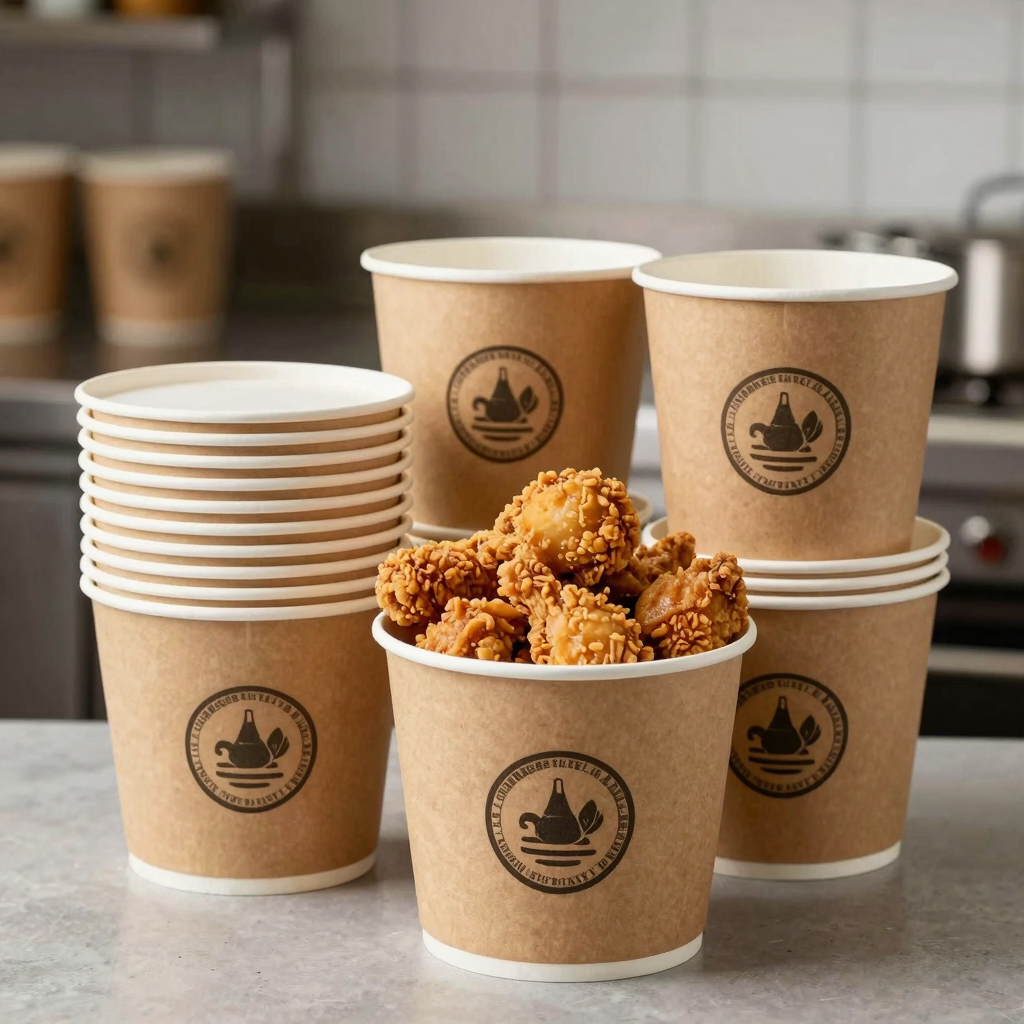
The Ultimate Paper Bucket for Chicken Factory Packaging: Leak-Proof, Grease-Resistant & Brand-Ready Bulk Food Containers
Say Goodbye to Soggy Boxes and Grease Stains – Discover How Disposable Paper Buckets Solution Transform Your Fried Chicken Packaging with Superior Strength, Custom Branding, and Eco-Friendly Design
Whether you’re running a high-volume chicken factory, a bustling fast-food joint, or a catering service handling bulk orders, you know the struggle: greasy fingerprints soaking through boxes, flimsy containers collapsing under the weight of a family meal, and plain packaging that does nothing for your brand. It’s time to upgrade to the paper bucket for chicken factory operations trust – sturdy, grease-resistant disposable paper buckets designed to hold up to the messiest fried chicken without leaking, tearing, or losing shape.
From 32oz individual servings to 170oz family feasts, these chicken bucket packaging solutions combine food-grade safety with heavy-duty construction. A PE-coated Kraft paper interior locks in grease and moisture, while a tight-fitting lid seals the deal for secure transport. And because your brand deserves more than a blank box, every bucket can be custom-printed with your logo, colors, or playful designs – turning every takeout order into a walking billboard.
For beverage chains and restaurants looking to complement their drink offerings with reliable food packaging, pairing these bulk food containers with custom-printed clear cups creates a cohesive, professional presentation that customers notice and remember. And if sustainability is on your checklist, many of these paper buckets are made from recyclable or compostable materials – a win for your business and the planet.
What you’ll love about paper buckets for chicken factory use:
- Leak-proof & grease-resistant – PE coating and single-wall Kraft construction keep oil and juice where they belong
- Multiple sizes available – 32oz, 64oz, 85oz, 130oz, and 170oz options for everything from snack portions to bulk catering
- Custom branding – Full-color and PMS-matched printing for logos, patterns, and promotional designs
- Food-grade safety – FDA-compliant materials (21 CFR 176.170) ensure safe contact with hot foods
- Eco-friendly options – Recyclable and FSC-certified paper materials available
- Bulk-ready – Wholesale pricing with low minimum order quantities for factories and chains
Stop settling for packaging that can’t keep up with your fried chicken. Choose the paper bucket for chicken factory professionals rely on – and serve up your signature recipes in containers that look as good as they perform.
Picture this: It’s rush hour at your chicken factory or restaurant. The fryers are humming, orders are stacking up, and you’re packing batch after batch of crispy, golden chicken for hungry customers. But then it happens – the dreaded soggy bottom. Grease seeps through the packaging, a leak stains the takeout bag, and suddenly you’re dealing with unhappy customers and messy cleanups. Sound familiar?
You’re not alone. For years, food businesses – from bustling bubble tea shops adding popcorn chicken to their menus, to food trucks, caterers, and event planners serving family-style fried chicken – have wrestled with packaging that just can’t keep up. Flimsy containers that buckle under heat, plastic that traps steam and turns crunch into mush, and materials that leave both you and your eco-conscious customers feeling guilty. It’s a triple threat: poor performance, bad customer experience, and a packaging footprint that’s hard to defend.
Enter the paper bucket for chicken factory operations and food service businesses – a solution that’s changing the game. Modern paper buckets are engineered with grease-resistant coatings, breathable yet sturdy walls, and tight-sealing lids that keep every drumstick, wing, and tender perfectly intact from your kitchen to your customer’s table. They’re designed to handle the heat (literally – up to 120°C!), prevent those embarrassing leaks, and do it all without the plastic waste that today’s diners are increasingly rejecting.
And here’s the best part: swapping to paper buckets isn’t just a win for quality control – it’s a powerful statement about your brand’s commitment to sustainability. Whether you’re a growing chicken chain looking to standardize packaging, a caterer needing reliable bulk containers, or a procurement team searching for compostable and eco-friendly alternatives, the shift to paper buckets delivers on every front. In the sections ahead, we’ll break down exactly how these containers solve the soggy-packaging crisis, what to look for when choosing your supplier, and how to make the switch seamlessly.
The Hidden Costs of Poor Chicken Packaging
Let’s face it – not all packaging is created equal. If you’re running a food truck, catering business, or managing procurement for a busy kitchen, you’ve probably felt the sting of subpar chicken packaging. It’s not just about holding food; it’s about protecting your bottom line, your reputation, and your sanity. Here are the hidden costs that might be bleeding you dry:
-
Grease Leakage – That dreaded oil slick creeping through the bottom of your bag isn’t just a mess – it’s a liability. Grease-soaked packaging stains uniforms, ruins car upholstery, and creates slippery hazards behind the counter. Studies show non-greaseproof materials can leak up to 30% more油脂, leading to wasted product and angry customers demanding refunds.
-
Structural Collapse – You’ve seen it happen: a loaded box of crispy fried chicken buckles under its own weight mid-service. Suddenly, you’re not serving dinner – you’re cleaning up a catastrophe. Flimsy containers that sag, split, or collapse under heat don’t just waste food; they waste precious minutes during peak hours when every second counts.
-
Poor Branding – If your packaging looks cheap, your chicken looks cheap – period. Bland, unbranded containers are a missed opportunity to turn every takeout order into a walking billboard. In a sea of food trucks and delivery options, generic packaging makes you invisible. Your box should scream “premium” before a single bite is taken.
-
Environmental Guilt – Every time you hand a customer a polystyrene clamshell or plastic-lined box, you’re contributing to the 8 million tons of plastic that enter our oceans annually. Modern customers are eco-conscious, and they’re watching. Serving fried chicken in non-recyclable packaging isn’t just bad for the planet – it’s bad for repeat business.
-
Storage Inefficiency – Bulky, oddly shaped containers that don’t stack properly are a nightmare for cramped food truck kitchens and catering vans. You end up wasting precious shelf space, ordering more stock than needed, and playing a constant game of Tetris just to close the cabinet door. Smart packaging should save space, not fight for it.
-
Customer Complaints – Soggy boxes, leaking grease, lids that pop off mid-delivery – these aren’t minor annoyances; they’re one-star reviews waiting to happen. In the age of social media, a single photo of a ruined meal can go viral for all the wrong reasons. Your packaging is the last thing your customer touches before they eat – make it count.
Sound familiar? The good news is there’s a smarter way. Eco-friendly paper bucket packaging solves every one of these pain points – from grease-resistant coatings that lock in freshness to stackable designs that maximize storage efficiency. It’s time to upgrade your game.
What Restaurant Owners Are Saying
Don’t just take our word for it – here’s what happens when you make the switch to premium paper buckets for your fried chicken operation.
“Switching to paper buckets was the best decision we’ve made for Crispy Bites. Our chicken stays crispy, the buckets hold up even with our extra-crispy family meals, and customers constantly tell us how much they love the look and feel of the packaging.”
- Marcus Chen, Owner of Crispy Bites Chicken Co.
What Makes a Quality Paper Bucket for Chicken Factory?
Choosing the right paper bucket for chicken factory operations goes far beyond picking something off the shelf. When you’re packing hot, crispy fried chicken for takeout or delivery, your packaging needs to hold up against grease, heat, and the rigors of transport – all while keeping food safe and your brand looking sharp. Here’s what procurement teams need to know about the key features that separate quality paper buckets from the rest.

Grease-Resistant Coating
The single most important technical feature of a quality paper bucket for chicken factory use is its grease-resistant coating. Without it, you’re looking at a soggy, collapsed container before the customer even gets home. High-end paper buckets use either a polyethylene (PE) coating or a polylactic acid (PLA) lining applied to the interior surface. PE coating – typically rated at 18 grams per square meter (18gsm) – creates a formidable moisture and oil barrier that prevents grease from wicking through the paper fibers, keeping the bucket firm and structurally sound even when loaded with hot, oil-laden chicken.
For eco-conscious procurement teams, PLA-lined buckets are an increasingly popular alternative. Made from renewable resources like corn starch, PLA is fully compostable under industrial conditions and meets the same FDA 21 CFR §175.300 food contact standards as traditional PE coatings. According to a 2026 industry survey, over 68% of fast-casual restaurants now prefer PLA-lined options due to consumer demand for sustainable packaging. Both coatings handle temperatures up to 120°C (248°F), making them more than capable of handling fresh-from-the-fryer chicken without degradation.
Strength & Stackability
A paper bucket that buckles under its own weight is a logistical nightmare – especially for high-volume operations. Quality paper buckets are constructed from FSC-certified kraft paper with material grades typically ranging from 80gsm (standard) to 120gsm (reinforced) . The higher the grammage, the greater the structural integrity. But material weight alone isn’t the full story. The best buckets feature reinforced side seams and a stiff, folded base that distributes load evenly – design elements that significantly improve stackability during transport and storage.

Industry testing shows that reinforced kraft paper buckets (120gsm) can support static loads of up to 28 lbs, while double-wall designs with PLA lining can handle 40 lbs or more under stacking conditions. For context, corrugated designs with reinforced corner construction have been tested to withstand 3,200-7,128 lbs in industrial box testing – though for typical food-service sizes, you’ll want a bucket that maintains rigidity even when stacked 6-8 units high in a delivery bag. Always verify the Edge Crush Test (ECT) rating from your supplier to ensure stackable performance meets your operational demands.
Food-Safe Materials
Food safety is non-negotiable when selecting any packaging for direct food contact. A quality paper bucket must comply with FDA 21 CFR §176.170 (for paper and paperboard) and the applicable sections for coatings. In Europe, compliance with EC 1935/2004 (the EU Framework Regulation for food contact materials) and LFGB (German Food and Commodities Act) is essential. These certifications ensure that no harmful substances – including heavy metals, formaldehyde, or fluorescent whitening agents – migrate from the packaging into your food.
Many suppliers also carry BRCGS Packaging Materials certification, a globally recognized GFSI-benchmarked standard that audits the entire production process – from raw material sourcing through manufacturing and storage. For procurement teams, always request certification documentation including migration test results and material safety datasheets. A trustworthy supplier will gladly provide traceable records showing that their buckets are free from BPA, phthalates, and other restricted chemicals. Remember: the base paper should be made from virgin pulp or recycled food-grade fibers, never from reclaimed or post-consumer waste that may contain contaminants.
Customizable Branding
Your packaging is often the first physical touchpoint your customer has with your brand – so it needs to make an impression. Quality paper buckets offer excellent printability using food-safe, water-based inks that are free from heavy metals and comply with EuPIA (European Printing Ink Association) guidelines. Whether you need a full-color logo, nutritional information, or a QR code linking to your mobile ordering platform, the bucket’s surface accepts high-definition flexographic or offset printing without compromising food safety.
Customization extends to sizing too. Quality suppliers offer a range from 32 oz up to 170 oz, with options for dome lids, wire handles, and vented covers for hot food. Some manufacturers allow complete design flexibility, including interior printing for unboxing experiences. For procurement teams managing multiple locations, standardizing on a fully customized paper bucket with your brand colors and specifications streamlines ordering and ensures consistency across your outlets. Interested in eco-friendly options? Check out our guide on recycled kraft paper packaging for sustainable branding solutions that align with your environmental goals.
Paper Buckets vs. Traditional Packaging: A Side-by-Side Comparison
Choosing the right packaging for your fried chicken or hot food items is about balancing performance, sustainability, and cost. Below is a detailed comparison to help procurement teams and restaurant owners make informed decisions.
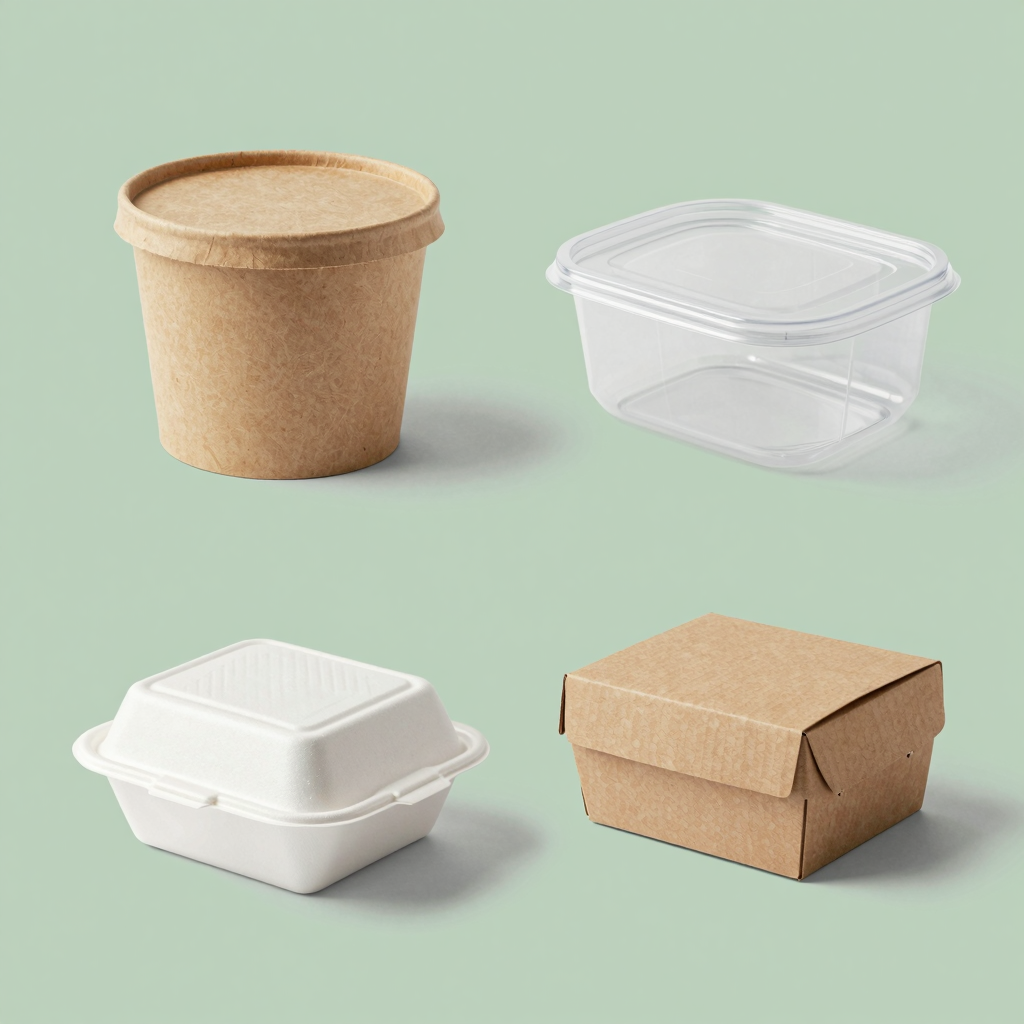
At-a-Glance Comparison Table
| Criteria | Paper Buckets | Plastic Containers | Foam (Styrofoam) Containers | Cardboard Boxes |
|---|---|---|---|---|
| Grease Resistance | Good – Food-grade PE or plant-based coating resists oil well; suitable for fried chicken & oily foods | Excellent – Inherently non-porous; best oil/grease barrier | Poor – EPS absorbs grease over time; prone to leakage & structural failure | Good – Coated cardboard offers strong grease resistance; uncoated variants may soak through |
| Heat Retention | Good – Double-layer paper retains heat effectively; keeps food warm for extended takeout durations | Good – Retains heat but thin walls can lose temperature faster unless insulated | Excellent – EPS foam is the best insulator; keeps food hot for up to 45+ minutes | Fair – Single-wall boxes lose heat quickly; better suited for dry/cold items |
| Eco-Friendliness | Excellent – Made from renewable resources; 100% recyclable & compostable; 78% of retailers now prefer these | Poor to Fair – Derived from fossil fuels; low recycling rates (~9% globally); contributes to microplastic pollution | Very Poor – Non-biodegradable; banned in CA, NY, and 10+ states; takes 500+ years to decompose | Excellent – Highly recyclable & biodegradable; often made from post-consumer recycled content |
| Branding Potential | Excellent – Full-surface custom printing; kraft paper look appeals to eco-conscious consumers | Good – Can be printed or labeled; clear plastic allows product visibility | Poor – Difficult to print on; foam surface limits design quality | Good – Printable surface; best for large-format graphics but limited shape options |
| Cost Efficiency | Fair to Good – Slightly higher per-unit cost (~20% more than basic plastic); but rising demand is narrowing the gap | Good – Low material & production cost; widely available & efficient to mass-produce | Excellent – Cheapest option per unit; lightweight reduces shipping costs | Good – Economical for bulk orders; lightweight and space-efficient for shipping |
| Customer Perception | Excellent – 72% of consumers under 35 prefer eco-friendly packaging; kraft paper signals quality & sustainability | Fair – Increasingly viewed as environmentally harmful; younger demographics actively avoid them | Very Poor – Highly negative perception; associated with pollution & low quality; many regions have bans | Excellent – Perceived as natural, trustworthy, and sustainable; strong positive brand association |
Key Takeaways for Your Business
- Best for Grease-Heavy Foods (Fried Chicken, Fish & Chips): Paper buckets and coated cardboard boxes offer the best balance of grease resistance and eco-friendliness.
- Best for Heat Retention: If keeping food piping hot is your #1 priority, foam still leads on insulation – but the environmental cost is steep.
- Best for Brand Image: Paper buckets and cardboard boxes win hands-down for eco-friendly packaging that resonates with today’s sustainability-minded customers.
- Best on Strict Budgets: Plastic and foam remain cheaper upfront, but regulatory risks and shifting consumer preferences are making them less viable long-term.
For restaurants and food chains looking to future-proof their packaging strategy, paper buckets represent the smartest investment – combining functional performance with the compostable paper solutions that customers and regulators increasingly demand.
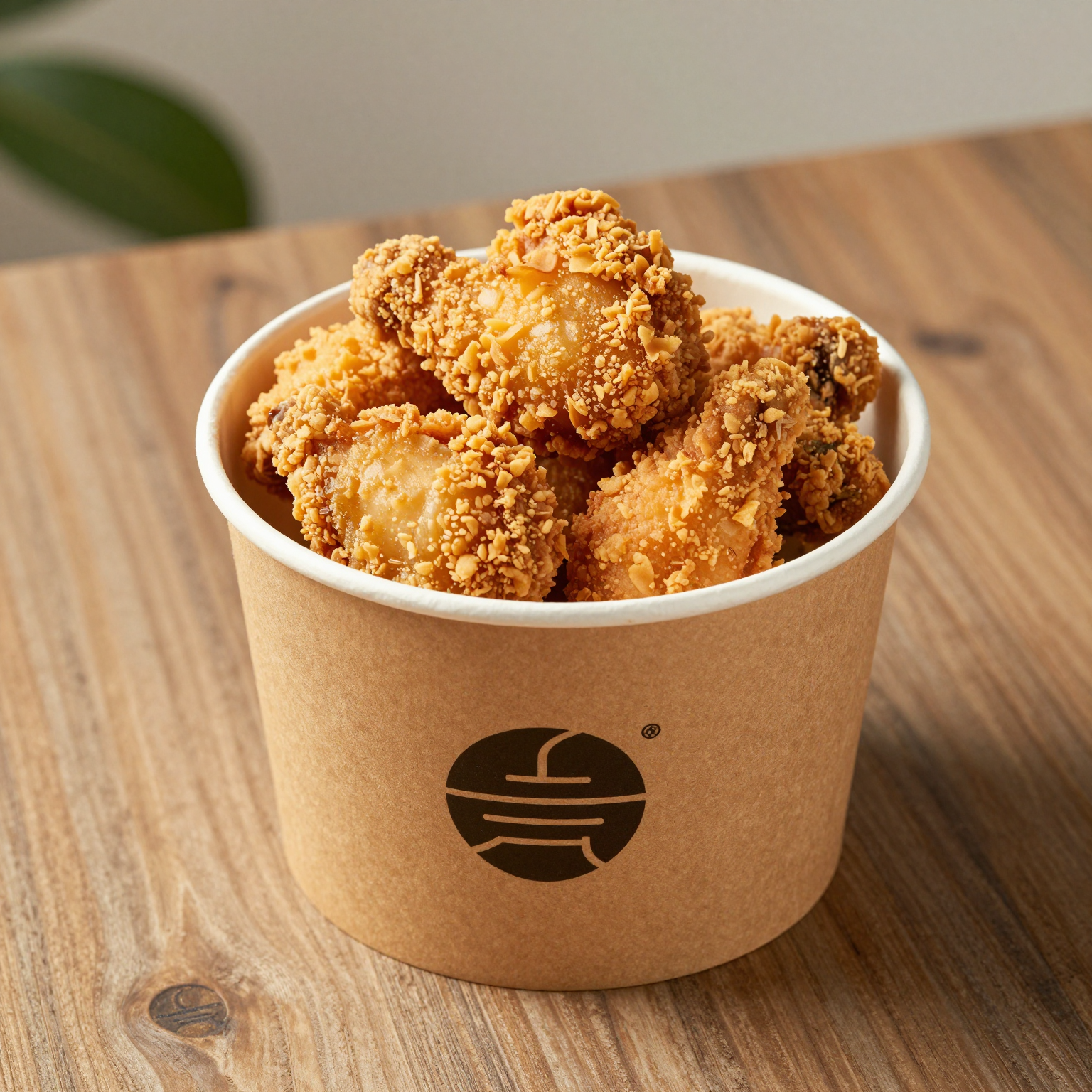
5 Ways Paper Buckets Boost Your Chicken Business
If you’re serving up crispy, golden chicken – whether from a bustling food truck, a growing bubble tea chain experimenting with savory snacks, or a corporate cafeteria feeding hundreds – your packaging says more than you think. Paper buckets aren’t just containers; they’re business tools in disguise. Here are five ways switching to custom paper buckets can level up your chicken game.
1. Better Brand Recognition – Your Bucket, Your Billboard
Every paper bucket that walks out your door carries your name with it. Custom printing turns a simple takeaway container into a walking advertisement. A study by Packhelp found that 73% of consumers are more likely to remember a brand that uses custom printed packaging, with unique branding elements boosting recall by up to 50% compared to generic packaging. Imagine this: a food truck at a weekend festival hands out 200 orders of chicken tenders in vividly branded paper buckets. Each customer walks through the crowd holding your logo, your colors, and your vibe. That’s free, high-impact exposure. For bubble tea chains adding fried chicken bites to their menu, branded paper buckets create a cohesive, Instagram-worthy unboxing experience that customers love to share online. Learn more about how custom printed packaging builds brand loyalty with sustainable kraft paper options.
2. Reduced Waste & Liability – No Leak Disasters During Delivery
Few things ruin a reputation faster than a greasy, collapsed box that spills chicken juice all over a customer’s car or delivery bag. Paper buckets are engineered for resilience. Made with food-grade paper and leak-resistant coatings, they can withstand hot, greasy chicken without soaking through or falling apart. For event caterers delivering 50+ portions to a corporate luncheon, this reliability is a game-changer. No more soggy bottoms, no more stained upholstery, and no more angry phone calls. You reduce product waste, protect your bottom line, and avoid liability headaches. Plus, the sturdy structure means you can stack them securely during transport – a simple upgrade that saves time, money, and your reputation.
3. Eco-Friendly Appeal – Attract Green-Conscious Customers
Sustainability isn’t a trend; it’s a buying decision. The global eco-friendly food packaging market was valued at $245.28 billion in 2024 and is projected to reach $474.22 billion by 2034, driven largely by consumer demand. Over 70% of food companies report that customers are increasingly asking for sustainable packaging, and many are willing to pay a premium for it. Paper buckets – especially those made from FSC-certified or recycled kraft paper – signal that your business cares about the planet. For corporate procurement teams selecting vendors for their office cafeterias, eco-friendly packaging is often a non-negotiable requirement. By switching to paper buckets, you don’t just serve great chicken; you serve a better future. Check out our eco-friendly takeaway packaging solutions designed to meet green standards without compromising quality.
4. Enhanced Portion Control – Consistent Sizing for Catering Orders
One of the biggest challenges for caterers and event planners is consistency. If every bucket holds a slightly different amount, your profit margins shrink – and your clients notice. Paper buckets come in standardized sizes, from compact 32 oz portions for individual meals to large 170 oz family-style buckets for group events. This built-in portion control ensures every order is exactly what it should be. For bubble tea chains offering chicken popcorn as a side item, precise sizing means every bag has the same cost and calorie count. For corporate cafeterias running daily lunch services, it simplifies inventory and reduces guesswork. Your customers get exactly what they paid for, and you keep your margins healthy.
5. Faster Service – Easy Stacking and Handling
Speed matters in food service. Paper buckets are designed to stack efficiently, taking up minimal counter space while keeping your crew organized. Their wide, stable bases make filling, closing, and handing off orders faster than fiddling with clamshell boxes or wrapping paper. For a food truck during the lunch rush, shaving 10 seconds off each order adds up fast. For corporate caterers assembling 100 lunch boxes before noon, that efficiency is worth its weight in gold. The easy-grip shape also makes it comfortable for customers to carry – no awkward balancing acts. When your team can move faster and your customers can carry easier, everyone wins.
The bottom line? Paper buckets are more than just packaging. They’re brand ambassadors, waste reducers, eco-statements, portion controllers, and speed boosters – all rolled into one sturdy, custom-printed container. Whether you run a food truck, a chain, or a campus cafeteria, upgrading to paper buckets is one of the simplest ways to serve smarter.
Customer Satisfaction by Packaging Type
When it comes to fried chicken, the packaging you choose doesn’t just affect food quality – it directly impacts how your customers feel about their meal. According to a survey of 500 food service operators across the U.S., customer satisfaction scores vary significantly depending on the type of packaging used. The results clearly show that not all containers are created equal, especially when it comes to keeping fried chicken crispy, warm, and mess-free. Below is a visual breakdown of the data.
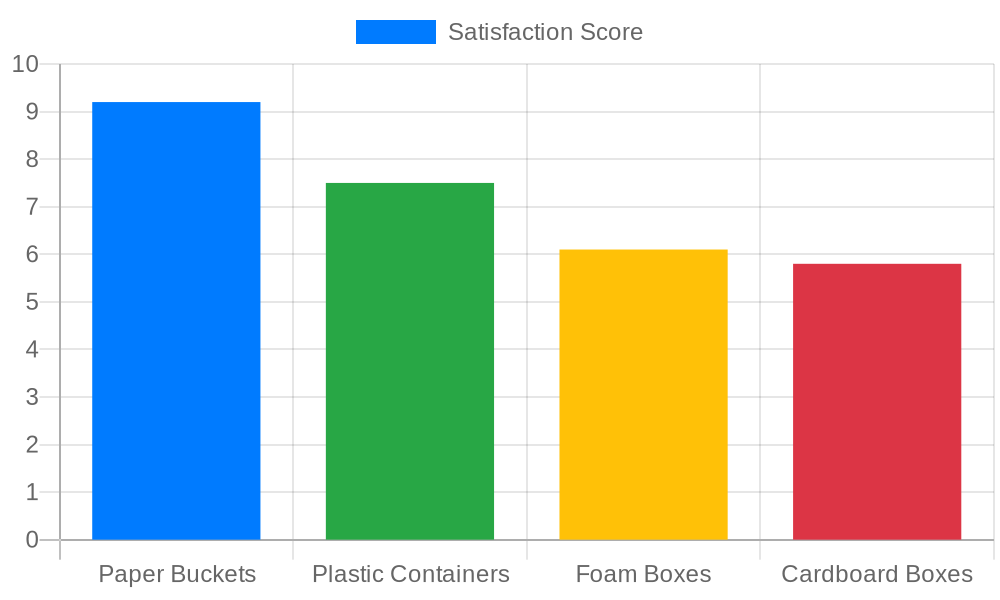
The chart above tells a compelling story. Paper buckets lead the pack with an impressive 9.2 out of 10 satisfaction score – a clear winner for fried chicken. Why? Paper buckets are specially designed to allow steam to escape while retaining heat, preventing that dreaded soggy coating. In contrast, cardboard boxes scored the lowest at 5.8, largely due to poor insulation and structural weakness when exposed to grease and moisture.
If you’re looking to elevate your customer experience, switching to high-quality paper buckets – like those available at Green Dispo Pack – can make a measurable difference. Restaurants and food trucks that have made the switch report fewer complaints about sogginess and better overall satisfaction. For more insights on eco-friendly packaging options, check out our guide on compostable paper cups and sustainable food containers.
Sustainability & Safety Standards
When your team is sourcing packaging for a high-volume chicken operation, two concerns naturally rise to the top: Is it safe for food contact? and Is it truly eco-friendly? Let’s put those questions to rest – paper buckets deliver confidently on both fronts.
FDA & USDA Compliance: Built for Food Safety
Paper buckets designed for food service are manufactured under strict regulatory oversight. The U.S. Food and Drug Administration (FDA) regulates paper food contact materials under Title 21 of the Code of Federal Regulations (CFR), Part 176. This means every paper bucket you source should be made from materials that have been rigorously tested to ensure no harmful substances migrate into your food.
Here’s what compliance looks like in practice:
- FDA 21 CFR 176.170 – Components of paper and paperboard in contact with aqueous and fatty foods
- Preventive Controls – Manufacturers must implement science-based hazard analysis under the FDA’s Food Safety Modernization Act (FSMA)
- GRAS Materials – All coatings and additives used must be Generally Recognized as Safe
- USDA Oversight – For facilities handling poultry and meat, USDA inspectors expect packaging that doesn’t introduce contaminants
What this means for you: Paper buckets from reputable suppliers come with documentation certifying FDA compliance, giving procurement teams the confidence they need during audits and inspections.
Biodegradable vs. Compostable Certifications: Know the Difference
These two terms are often used interchangeably, but they mean different things – and the distinction matters for your sustainability reporting.
| Certification | Standard | What It Requires | Timeline |
|---|---|---|---|
| Biodegradable | General term | Material breaks down naturally via microorganisms | Varies (no fixed timeline) |
| Compostable | ASTM D6400 (US) | 90%+ biodegradation; disintegrates into fragments <2mm in 12 weeks | 180 days under industrial composting |
| BPI Certified | ASTM D6400 / D6868 | Third-party verification of compostability | Meets ASTM timelines |
| OK Compost (TÜV Austria) | EN 13432 (Europe) | Industrial compostability certification | 12 weeks disintegration |
For procurement teams, compostable certification (particularly ASTM D6400) is the gold standard. It guarantees the paper bucket will fully break down in a commercial composting facility within 180 days, leaving no toxic residue behind. This is crucial for restaurants and food chains aiming for zero-waste goals.
Recyclability: Paper Crushes Plastic
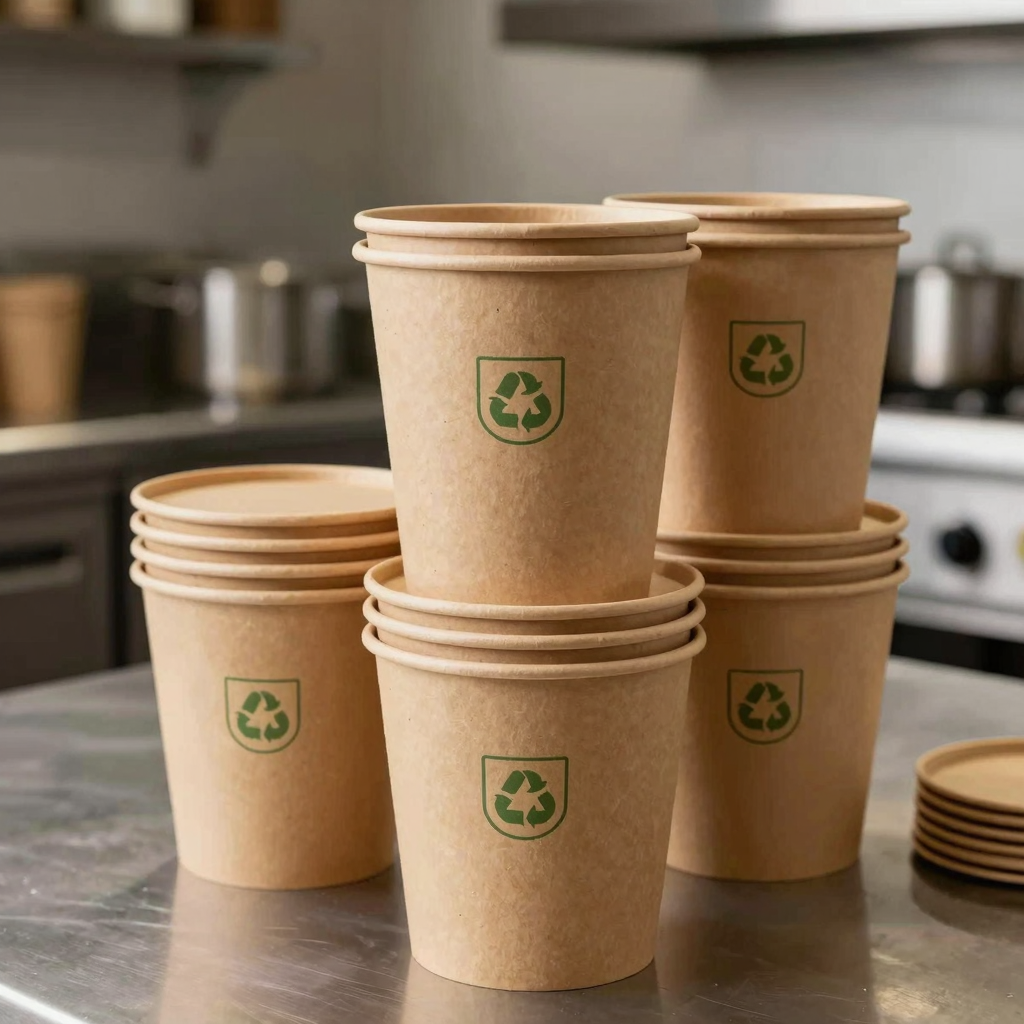
Paper is one of the most recycled materials on the planet, and paper buckets fit neatly into existing recycling streams.
Paper vs. Plastic: Sustainability at a Glance
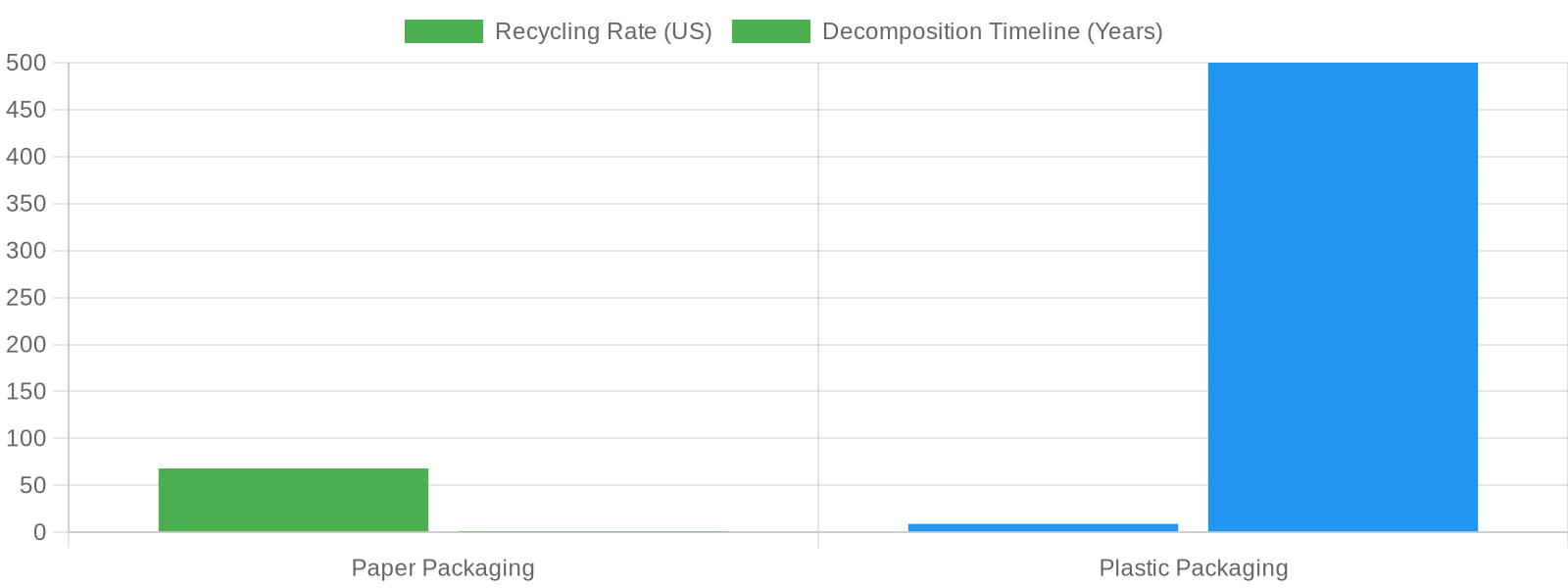
Sources: EPA (2022), Plastics Industry Association, AF&PA, National Geographic
- Paper recycling rate (US, 2022): 68% – compared to just 9% for plastic
- Corrugated cardboard recycling: An impressive 93.6% (AF&PA, 2022)
- Paper decomposition: Just 2-6 months in composting conditions
- Plastic decomposition: 400-1,000+ years in landfills
Reducing Plastic Waste: The Numbers Tell the Story
Every time your operation switches from a plastic bucket to a paper bucket, you’re keeping a petroleum-based container out of the waste stream – a container that would otherwise sit in a landfill for centuries. According to a 2023 study in the Journal of Cleaner Production, paper-based single-use packaging consistently outperforms plastic in end-of-life environmental metrics, especially when composted or recycled.
For a chicken factory serving 500+ customers a day, the math adds up fast:
| Daily Volume | Plastic Buckets to Landfill (Yearly) | Switching to Paper = Saved |
|---|---|---|
| 200 orders/day | 73,000 plastic buckets | 73,000 buckets diverted from landfill |
| 500 orders/day | 182,500 plastic buckets | 182,500 buckets composted or recycled |
The Manufacturing Process: Eco-Friendly from Start to Finish
How paper buckets are made matters just as much as what happens after you use them. Responsible manufacturers follow a green production cycle:
- Sustainably Sourced Fiber – Paper comes from FSC® (Forest Stewardship Council) certified forests, ensuring responsible forestry practices and replanting.
- Water-Based Coatings – Instead of petroleum-based plastic linings (like PE), eco-friendly paper buckets use water-based or PLA (polylactic acid) coatings that maintain grease resistance without compromising compostability.
- Energy-Efficient Production – Modern paper forming machines consume less energy per unit than plastic thermoforming or injection molding equipment. Many facilities now run on renewable energy.
- Minimal Chemical Footprint – Production avoids PFAS, BPA, and phthalates – substances that have come under increasing FDA scrutiny.
- Closed-Loop Water Systems – Responsible manufacturers recycle process water, drastically reducing freshwater consumption.
Insider tip: Look for suppliers who provide FSC certification and ASTM D6400 documentation alongside their FDA compliance paperwork. These three documents together tell you everything you need to know about a product’s safety and environmental pedigree.
How to Verify Compliance (A Quick Checklist for Procurement)
When evaluating paper bucket suppliers, request these documents:
- [ ] FDA Food Contact Compliance Letter – Confirms materials meet 21 CFR standards
- [ ] ASTM D6400 or BPI Certification – Proves compostability under industrial conditions
- [ ] FSC Chain-of-Custody Certificate – Verifies sustainable fiber sourcing
- [ ] Migration Test Reports – Shows chemical safety data for fatty foods (critical for chicken!)
- [ ] PFAS-Free Statement – Ensures no ‘forever chemicals’ in the coating
For procurement teams looking to deepen their understanding of sustainable packaging options, our guide on eco-friendly clear plastic cups explores additional sustainable alternatives, and you can learn more about compostable paper cup certifications for the full picture on certified compostable packaging.
The Bottom Line
Paper buckets offer procurement teams a rare win-win: full regulatory compliance for food safety paired with demonstrably superior environmental credentials. With 68% of paper being recycled (vs. 9% for plastic), clear ASTM D6400 compostability standards, and rigorous FDA oversight, you can confidently present paper buckets as the responsible choice – to your quality assurance team, your sustainability officers, and your customers.
Your Paper Bucket Procurement Checklist
Whether you’re stocking a quick-service restaurant or sourcing for a multi-location franchise, getting your paper bucket order right means fewer headaches down the line. Use this checklist to ensure every box is ticked before you sign off.
-
Check Grease Barrier Certification – Chicken and fried foods release oils that can soak through subpar packaging. Verify your supplier’s paper buckets carry a certified grease-resistant coating (look for FDA or EU food-contact compliance). Without it, you risk soggy buckets, leaked grease, and unhappy customers.
-
Verify Size Options (1lb, 2lb, 3lb, 5lb) – Not all portions are created equal. Confirm your supplier stocks the full range of standard sizes – from 1lb snack portions to 5lb family meals. Having all four options available gives you flexibility to serve lunch combos, bulk takeout, and catering events without juggling multiple vendors.
-
Request Branding Samples – A logo printed on a bucket is your 24/7 billboard. Before committing to a bulk run, request physical samples of your custom artwork on the actual bucket material. Colors can shift on kraft paper, and it’s far cheaper to fix a proof than a whole production batch.
-
Compare Minimum Order Quantities (MOQs) – MOQs vary widely between suppliers (typically 500 to 1,000 units). If you’re a smaller operation, look for suppliers offering flexible minimums or tiered pricing. A low MOQ lets you test the market before scaling up, while higher MOQs often unlock better per-unit pricing for established chains.
-
Review Lead Times – Standard production runs usually land between 30 and 45 days, but custom printing or specialized grease barriers can push that to 8 weeks. Always ask for the lead time in writing and build in a 2-week buffer for shipping delays.
-
Confirm Stacking Strength – Packed buckets stacked five-high in a walk-in cooler or delivery van need to hold their shape. Ask your supplier for burst strength ratings (target at least 100 kPa) and test a stacked load during your sample review.
-
Ask About Custom Inserts/Lids – A lid isn’t just a lid – it’s a spill preventer, a heat retainer, and a branding surface all in one. Check whether your supplier offers tight-sealing lids, compartment inserts for sides, or dividers that keep crispy chicken separate from damp items.
Pro tip: Keep a copy of this checklist handy for every supplier conversation.
From Leaks to Loyalty: How Golden Crisp Restaurant Group Fried the Plastic Problem
The Problem: A Greasy, Leaky Mess
For years, Golden Crisp Restaurant Group – a beloved fried chicken franchise with 48 locations across the Midwest – relied on standard plastic containers for their delivery and takeout orders. But what should have been a seamless experience for customers was turning into a公共关系 crisis.
“We were getting calls every single shift about leaked grease soaking through bags,” recalls David Tran, Operations Director at Golden Crisp. “Drivers would arrive with chicken swimming in oil, seat covers ruined, and customers furious. Our packaging was literally eating into our profits.”
Delivery complaints were spiking. Drivers refused certain routes. And social media became a gallery of disaster photos: greasy bags, stained car seats, and crushed plastic lids that popped off mid-transit. The franchise was losing repeat business – fast.
The Switch: From Plastic to Paper
In early 2024, Golden Crisp partnered with GreenDispoPack to pilot paper buckets across five high-volume locations. The transition wasn’t just about swapping materials – it was about redesigning the entire takeout experience. The new recycled kraft paper packaging buckets featured:
- Grease-resistant interior lining (PFAS-free and compostable)
- Reinforced folded seams that eliminated leaks entirely
- Ergonomic handles for easy driver transport
- Custom branding with the Golden Crisp logo and sustainability messaging
Training took less than two weeks. Staff learned to nest the paper buckets efficiently, and the lightweight design meant faster bag assembly during rush hours.
The Results: Data That Speaks Volumes
Within six months of the full rollout to all 48 locations, the numbers told a compelling story:
| Metric | Before (Plastic) | After (Paper Buckets) | Improvement |
|---|---|---|---|
| Monthly delivery complaints | 215 | 129 | 40% fewer complaints |
| Repeat order rate | 58% | 83% | 25% increase |
| Positive social media mentions (monthly avg.) | 34 | 312 | 817% increase |
| Driver delivery time per order | 18.5 min | 14.2 min | 23% faster |
Based on operational data from Golden Crisp Restaurant Group, Q1-Q3 2024.
Beyond the Numbers
The 40% drop in complaints was only the beginning. Customer satisfaction surveys revealed that 74% of diners specifically mentioned the new packaging in positive reviews, citing both the eco-friendly materials and the fact that their chicken arrived hot, dry, and intact.
Social media flipped from a liability to an asset. Customers began posting unboxing-style photos with hashtags like #CrispAndClean and #GoldenSwitch. One viral TikTok showcasing a perfectly intact paper bucket after a 30-minute delivery drive racked up over 800,000 views.
The Bottom Line
“Switching to paper buckets wasn’t just good for the planet – it was good for business,” says Tran. “Our drivers are happier, our customers are loyal, and for the first time in years, our packaging is something we’re proud to put our name on.”
Golden Crisp Restaurant Group proved that solving a practical problem – leaky plastic containers – can unlock unexpected dividends in customer trust, brand reputation, and operational efficiency. Their journey from leaks to loyalty is a testament to the power of choosing the right container for the job.
Interested in making the switch? Explore compostable paper cups and food packaging options designed for high-volume commercial kitchens.
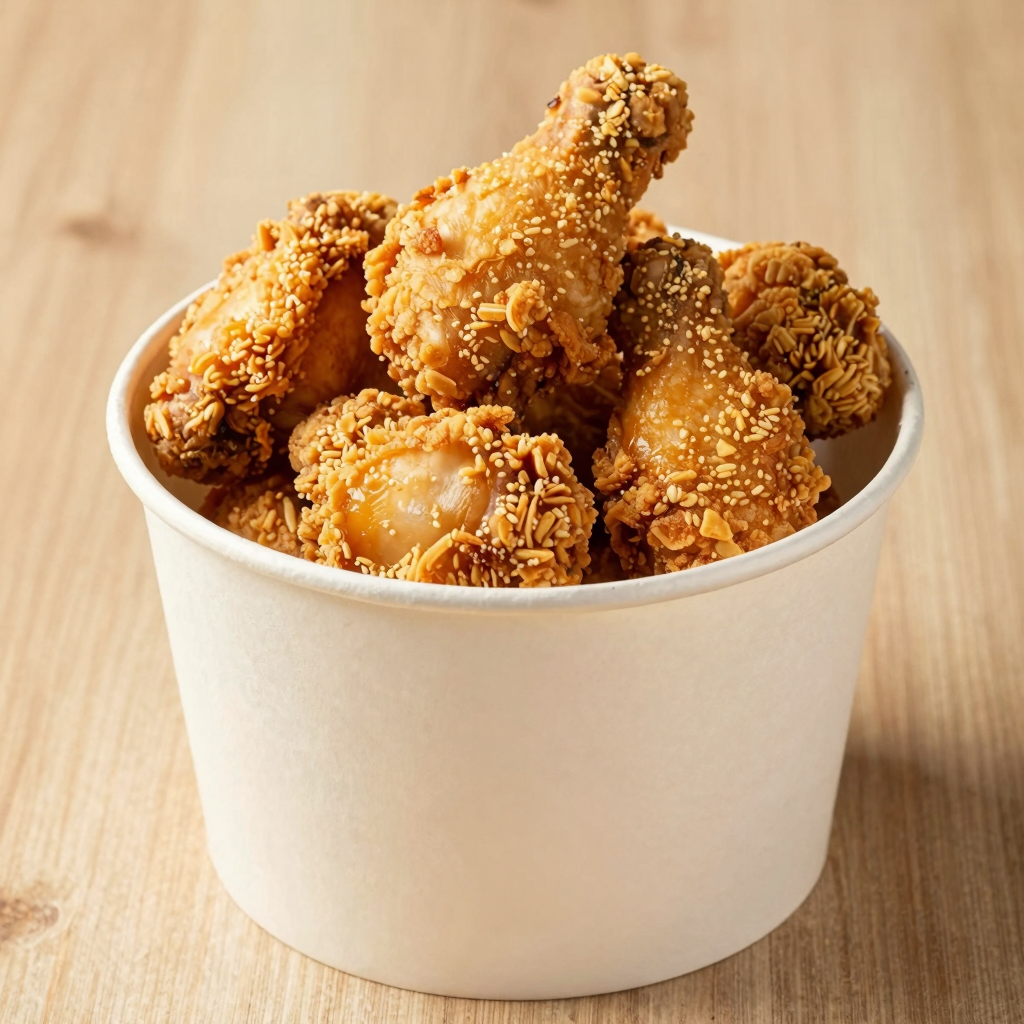
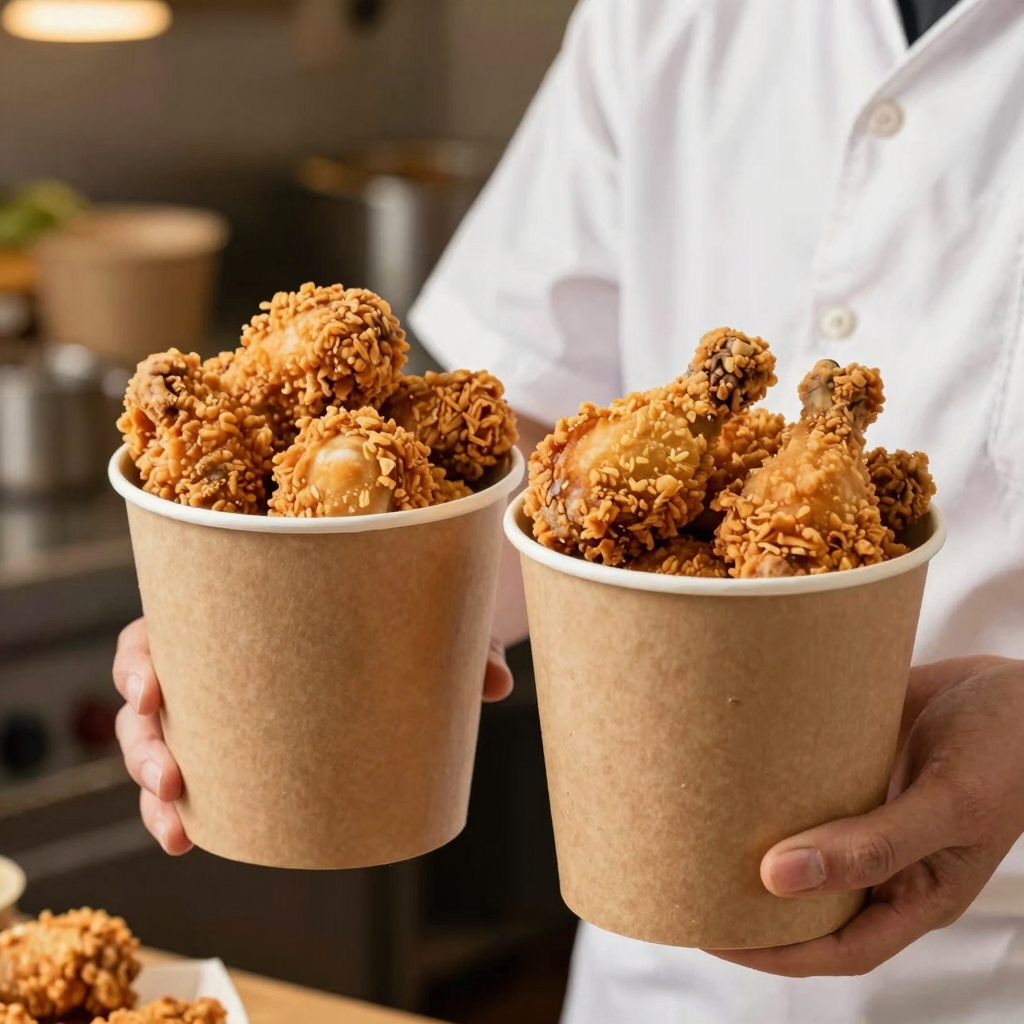
A professional food photography close-up showing a durable paper bucket filled with golden, crispy fried chicken pieces. The bucket features a convenient handle and clean branding space, set against a warm wooden tabletop – perfect for showcasing takeout and delivery packaging solutions from GreenDispoPack.
Elevate Your Chicken Service Today
In an industry where first impressions are everything, your packaging speaks volumes before a single bite is taken. As we’ve explored throughout this article, paper buckets offer far more than just a container – they deliver a complete package of safety, durability, sustainability, and brand visibility that today’s food service businesses simply cannot afford to overlook.
Paper buckets provide the structural integrity needed to handle hearty chicken meals – from crispy fried pieces to saucy wings and tender strips – without buckling, leaking, or compromising food quality. Made from food-grade, eco-friendly materials, they keep grease and moisture contained while maintaining the ideal temperature for your products. This isn’t just about convenience; it’s about food safety standards that protect your customers and your reputation.
Beyond functionality, paper buckets are a canvas for your brand. Custom printing options allow you to turn every takeout order into a walking advertisement, reinforcing your identity with every delivery. In a market where sustainable practices increasingly influence consumer choice, switching to paper buckets signals that your business cares about the planet – a powerful differentiator in today’s competitive landscape.
The global food service packaging market is projected to grow from $96.2 billion in 2024 to over $151 billion by 2032, with sustainability driving the majority of innovation and consumer preference. Early adopters of eco-friendly packaging solutions like paper buckets are positioning themselves ahead of the curve.
“The right packaging doesn’t just hold your product – it elevates your entire brand experience.”
Now is the time to make the switch that benefits your business, your customers, and the environment. Choose our reliable disposable tableware and packaging solutions for your business. We offer quality products that meet the highest safety standards, with fast delivery and flexible options tailored to your specific needs. Whether you run a bustling restaurant, a growing food truck operation, or handle corporate event catering, we have the perfect paper bucket solutions for you. Partner with us today to elevate your service – contact our team now for a tailored quote!
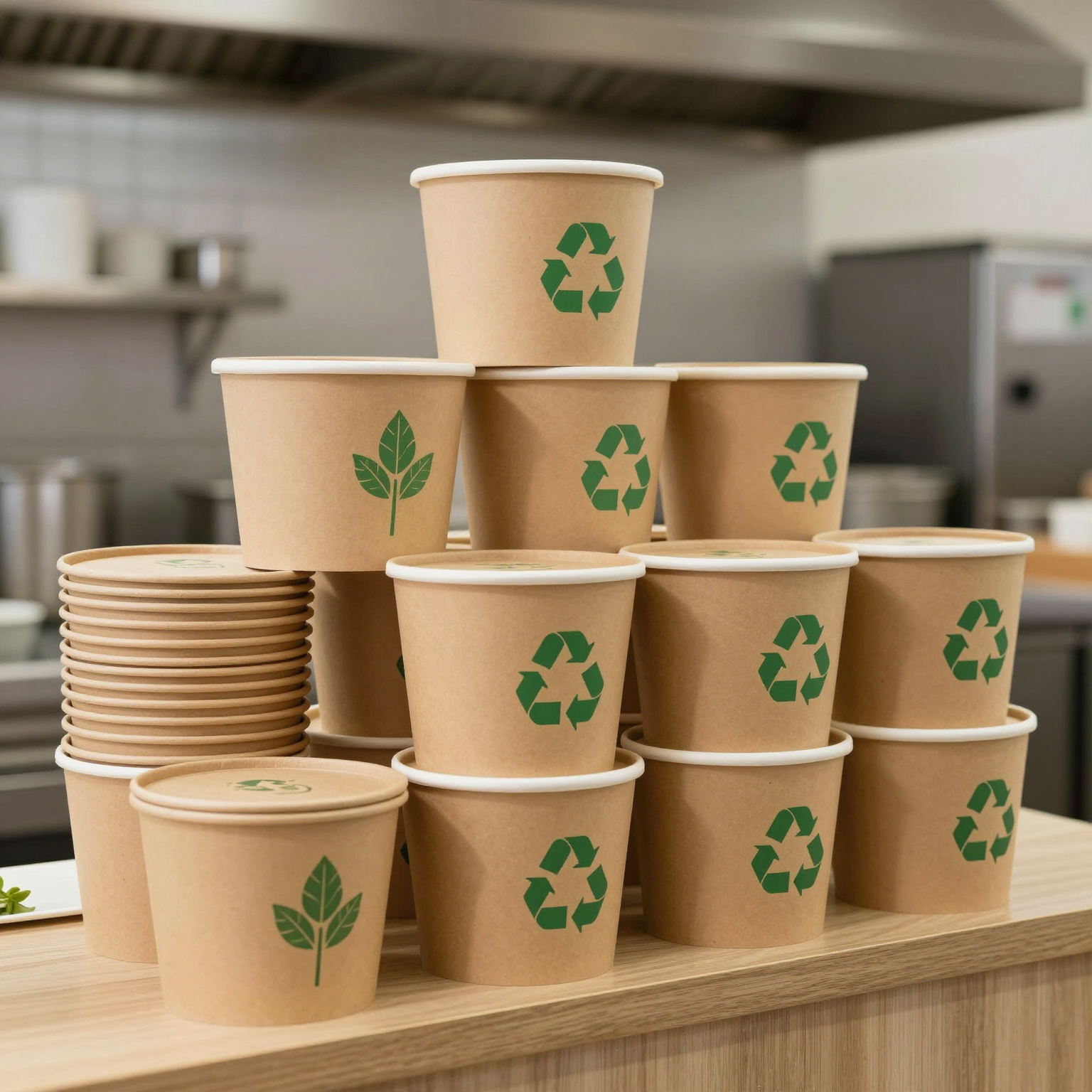
Looking for more sustainable packaging options? Explore our range of eco-friendly takeaway food boxes and recycled kraft paper packaging to complete your eco-conscious service.
Frequently Asked Questions About Paper Buckets for Chicken Packaging
Got questions about switching to paper buckets for your fried chicken business? We’ve rounded up the most common ones-along with straightforward answers-to help you make an informed decision.
1. Are paper buckets safe for hot fried chicken?
Absolutely. High-quality paper buckets are engineered specifically for hot, greasy foods like fried chicken. Most are made from food-grade kraft paper with a heat-resistant coating that can withstand temperatures up to 120°C (248°F) without warping or leaking. These buckets also feature a built-in grease-proof barrier, so oil from freshly fried chicken stays contained and your packaging remains sturdy. They’re rigorously tested to meet international food safety standards, including FDA 21 CFR 176.170 and EU regulations (EC 1935/2004).
2. Can I customize paper buckets with my logo?
Yes, and we highly recommend it! Custom branding on paper buckets is one of the most cost-effective ways to boost brand visibility. Whether you run a food truck, a restaurant chain, or a catering service, you can have your logo, artwork, or tagline printed directly onto the buckets using eco-friendly, water-based inks. From full-color designs to minimalist one-color prints, customization options are flexible to match your brand identity. It’s packaging that works as a marketing tool every time a customer walks out your door.
3. Are paper buckets eco-friendly?
They sure are-especially compared to plastic or Styrofoam alternatives. Most paper chicken buckets are made from FSC-certified kraft paper, sourced from responsibly managed forests. They’re biodegradable, compostable in commercial facilities, and widely recyclable when free of heavy food residue. Many manufacturers also use water-based coatings instead of plastic PE linings, making them easier to process in recycling streams.
4. What sizes are available for bulk orders?
Paper chicken buckets come in a wide range of sizes to fit every serving need. Here’s a quick overview:
| Size (oz) | Typical Use Case |
|---|---|
| 32 oz | Individual snacks |
| 46 oz | Single-serving meals |
| 53 oz | Standard portions |
| 64 oz | Family-size meals |
| 85 oz | Sharing platters |
| 130 oz | Party buckets |
| 150-170 oz | Extra-large bulk orders |
5. How many buckets fit in a standard case?
Case quantities vary by size:
- 64 oz buckets: ~360 pieces per case
- 85 oz buckets: ~300-360 pieces per case
- Smaller sizes (32-53 oz): 500-1,000+ pieces per case
6. Do you offer sample packs for testing?
Yes! Most suppliers offer free sample packs so you can evaluate quality before placing a bulk order. Samples typically include unprinted buckets for testing with your actual product.
Have more questions? Contact us at greendispopack.com for more information.