
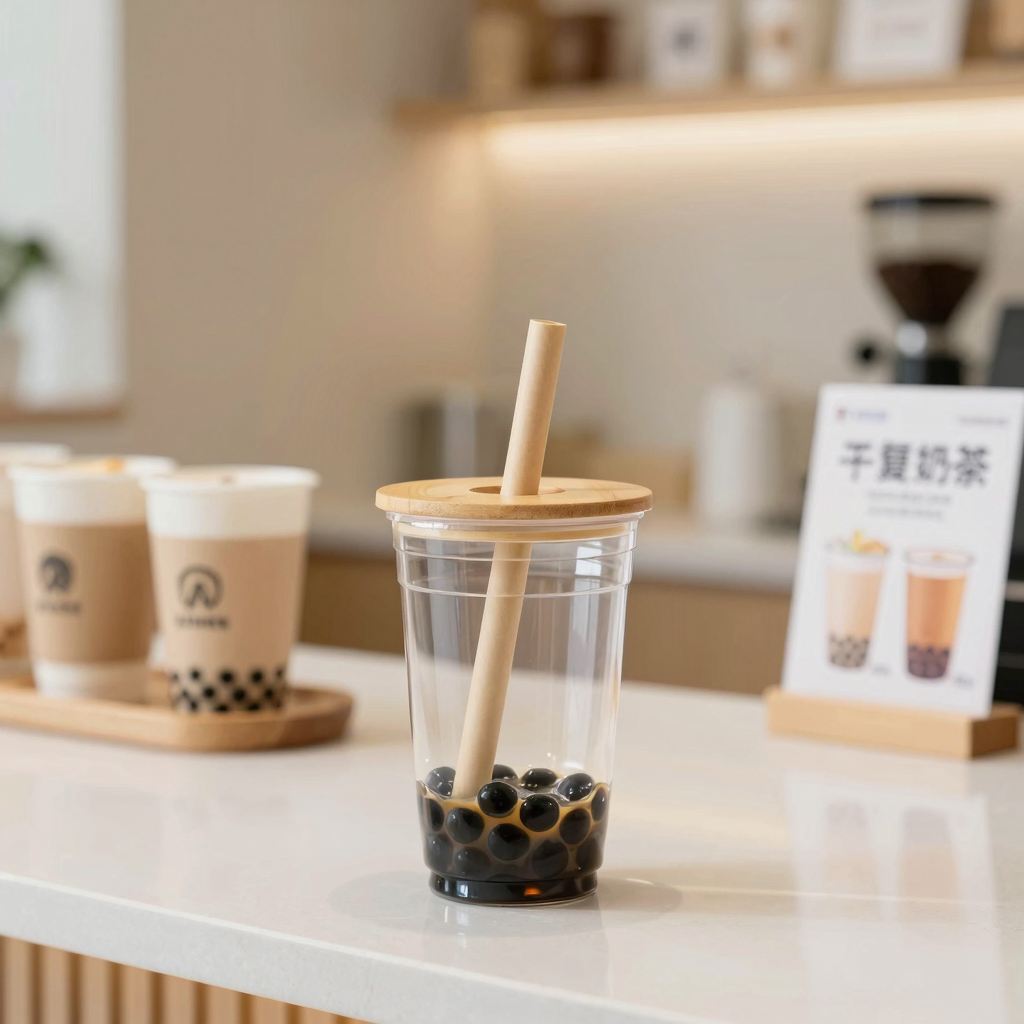

Picture this: You’re at your favorite bubble tea shop on a sunny afternoon. The barista slides a beautifully crafted cup across the counter-crystal-clear bioplastic, a sleek bamboo lid, and a compostable straw nestled inside. There’s no crinkly plastic wrap, no styrofoam clamshell, no guilty afterthought about where this will end up. It feels good. And honestly? It should. We’ve entered a new era-one defined by the most exciting eco-friendly food packaging trends 2025 has to offer.
For years, single-use packaging told a pretty ugly story. Mountains of polystyrene containers, plastic lids that’d outlive your great-grandchildren, and takeout boxes that took centuries to decompose. But 2025? It’s a whole different chapter. Today, innovative materials like molded sugarcane fiber (bagasse), compostable PLA cups, and paper-based solutions are replacing the old guard-and they’re not just better for the planet, they’re better for business, too. Studies show the global sustainable packaging market is projected to reach $418.6 billion by 2027, driven by a demand that 85% of consumers now say influences their purchasing decisions. The message is clear: sustainability sells.
So what changed? Regulation tightened (the EU’s new Packaging and Packaging Waste Regulation is a game-changer), technology caught up, and consumers voted with their wallets. The result? 2025 marks a tipping point where sustainability, functionality, and affordability converge-and for restaurants, bubble tea chains, food trucks, and event teams, that changes everything.
Ready to explore the top trends shaping the future of food packaging? Let’s dive in.
This is a sample content section providing an overview of the project.
The Big Shift: Why 2025 Is the Year of Sustainable Packaging
If you run a bubble tea shop, restaurant, or food truck, you’ve likely noticed something shifting. Sustainable packaging is now a business imperative.
What the Numbers Say: Consumer Demand for Sustainable Packaging
“According to Trivium Packaging’s 2024 Global Buying Green Report, 82% of consumers are willing to pay more for products with sustainable packaging – and among Gen Z, that figure jumps to a striking 90%. Meanwhile, McKinsey’s 2025 global consumer survey confirms that 40% to 80% of consumers across every major market are ready to pay a premium for eco-friendly packaging, even amid rising inflation.”
This data isn’t just a statistic – it’s a clear signal for the food service industry. For bubble tea shops, restaurants, food trucks, catering services, and event procurement teams, the message is unmistakable: sustainable packaging is no longer a nice-to-have; it’s a competitive necessity.
When nearly two-thirds of consumers say they’d actively avoid brands using environmentally harmful packaging, the choice becomes clear. For a bubble tea chain looking to attract younger, trend-conscious customers, switching to eco-friendly clear plastic cups or compostable paper cups isn’t just an environmental statement – it’s a direct driver of customer loyalty and repeat business. The same logic applies to food trucks and caterers, where packaging is often the most tangible brand touchpoint.
What’s particularly compelling is the generational shift. Gen Z and Millennials – who make up the core customer base for bubble tea, fast-casual dining, and event catering – are driving this demand. They’re not just saying they care; they’re voting with their wallets. This means that businesses adopting sustainable solutions today are positioning themselves to capture the fastest-growing segment of the market.
For corporate procurement teams and event planners, the implications are equally significant. With 63% of consumers less likely to purchase products in environmentally harmful packaging, choosing suppliers that offer compostable paper cups and recyclable takeaway containers directly impacts brand perception at corporate events, conferences, and catering functions.
The bottom line? The data is overwhelmingly in favor of sustainable packaging adoption. Waiting on the sidelines is no longer a viable strategy.
Trend #1 – Plant-Based & Compostable Materials Dominate

If 2025 has a packaging MVP, it’s plant-based materials. From PLA (polylactic acid) derived from cornstarch to bagasse made from sugarcane fiber and even mushroom-based mycelium packaging, the shift away from petroleum-based plastics is no longer a niche movement-it’s a full-blown industry standard. Here’s why these materials are taking over the food service world.
Why Plant-Based Materials Are Winning
The global compostable food packaging market was valued at $74.01 billion in 2023 and is projected to reach $113.88 billion by 2030, growing at a steady CAGR of 6.5% (Grand View Research). In the food service segment specifically, Allied Market Research projects an 8.4% CAGR through 2032. The driving forces? Tougher regulations (like the EU’s Single-Use Plastics Directive mandating 50% biodegradable material penetration by mid-2025) and surging consumer demand for eco-friendly options.
PLA: The Bubble Tea Cup Game-Changer
Compostable bubble tea cups made from PLA are quickly becoming the go-to choice for boba shops and beverage chains. PLA is derived from renewable resources like cornstarch or sugarcane, and it offers the crystal-clear transparency that bubble tea lovers expect, so those beautiful layers of colorful tapioca pearls and fruity toppings are still on full display. Plus, PLA cups are durable enough for cold beverages, lightweight for shipping, and fully compostable in commercial facilities. With the Asian fresh-made tea market surpassing ¥200 billion ($28+ billion) in 2025, major chains are reporting a 30%+ year-over-year increase in demand for compostable cups. Looking for options? Check out our full range of eco-friendly clear plastic cups designed to meet compostability standards without sacrificing visual appeal.
Bagasse: The Takeout Container Superstar
Bagasse takeout containers are made from the fibrous residue left after sugarcane stalks are crushed for juice extraction. Instead of burning that fiber-a common agricultural waste practice-manufacturers press it into sturdy, microwave-safe clamshells and food trays. A life cycle assessment conducted in Guangxi, China (one of the world’s largest sugarcane-producing regions) found that bagasse containers reduce environmental impact by over 70% compared to traditional plastic and foam containers across key metrics like global warming potential and resource depletion. They’re naturally grease-resistant, can handle hot and cold foods alike, and decompose in commercial composting facilities within 60-90 days. For food trucks and caterers, bagasse means no compromise between convenience and sustainability.
Mushroom Packaging: The Dark Horse
Perhaps the most fascinating entry in the plant-based lineup is mycelium packaging-grown from mushroom roots on agricultural byproducts like buckwheat hulls and cottonseed husks. Companies like Ecovative Design have pioneered this technology, creating packaging that grows itself in just a few days. The result is a lightweight, naturally insulating material perfect for shipping delicate items or creating custom-shaped food trays. It decomposes in 3-6 months in home or industrial composting setups and leaves behind zero microplastics.
Real-World Applications & End-of-Life Benefits
Here’s a quick comparison of how these materials perform across key use cases:
| Material | Best For | Composting Timeline | Heat Tolerance | Key Advantage |
|---|---|---|---|---|
| PLA (Cornstarch) | Bubble tea cups, cold drink cups, clear deli lids | 60-90 days (commercial) | Up to 110°F (cold use) | Crystal clarity for product visibility |
| Bagasse (Sugarcane) | Takeout clamshells, food trays, 3-compartment boxes | 60-90 days (commercial) | Up to 220°F (microwave-safe) | Sturdy, grease-resistant, waste-derived |
| Mycelium (Mushroom) | Shipping inserts, custom trays, dry goods packaging | 90-180 days (home compost) | Moderate heat resistance | Zero microplastics, grown not manufactured |
What ties all three together is their end-of-life story. Unlike petroleum-based plastics that linger for centuries, these materials return to the earth as nutrient-rich compost. No microplastics. No toxic residues. Just clean, organic matter that can nourish the soil for the next harvest cycle. When you choose plant-based packaging, you’re not just buying a container-you’re investing in a circular economy where waste becomes a resource. And for businesses catering to eco-conscious customers, that’s a story worth telling.
Looking for high-volume solutions? Explore our selection of disposable paper cups and compostable alternatives built for the modern food service operation.
Comparison Table: Eco-Friendly Packaging Materials for 2025
| Material | Best For | Compostability Timeline | Cost vs. Traditional Plastic |
|---|---|---|---|
| PLA (Cornstarch) | Cold drink cups, bubble tea cups, clear salad containers, deli trays | 90 days in industrial composting (55-60°C); not home-compostable | 20-40% more expensive than virgin plastic; price gap narrowing with scale |
| Bagasse (Sugarcane Fiber) | Takeout clamshells, food truck boxes, burger clamshells, hot-food bowls, plates | 90-180 days in industrial composting; also biodegradable in soil | 20-30% more than traditional plastic; bulk pricing ~$0.04/unit (10k+ qty) |
| Molded Pulp | Egg cartons, cup carriers, protective inserts, food trays, 3-compartment takeout boxes | 90 days in industrial composting; fully recyclable with paper | 15-25% less than plastic; $50-150/ton vs. $800-1,200/ton for plastic |
| Mushroom Mycelium | Protective packaging for electronics, luxury gift boxes, wine shippers, cooler inserts | 45-90 days in industrial composting; can be home-composted | 40-80% more expensive; ~$1.50-2.80/unit; costs dropping 40% since 2022 |
| Recycled PET (rPET) | Clear beverage bottles, cold cups, sauce containers, catering trays | Not compostable – recyclable in existing PET streams (closed-loop) | 10-20% more than virgin PET; lifecycle cost competitive when factoring carbon penalties |
Data sourced from Grand View Research, Packaging Digest, Grown Bio, Ellen MacArthur Foundation, and GreenBiz (2025-2026).
Trend #2 – Minimalist Design & Smart Labeling
In 2025, less truly is more when it comes to packaging. The shift toward minimalist packaging design isn’t just an aesthetic choice-it’s a powerful strategy for reducing waste, cutting costs, and building brand trust with eco-conscious customers. By stripping away excess layers, switching to smarter materials, and embracing digital labeling, food businesses are redefining what sustainable packaging looks like.
Less Ink, Fewer Materials, Bigger Impact
Traditional packaging often relies on multiple branding layers: shrink sleeves, foil stamps, glossy coatings, and heavy ink coverage-all of which complicate recycling. The 2025 approach is refreshingly simple. Brands are adopting one-color prints, uncoated paper stocks, and bare-minimum structural designs that use fewer raw materials. This reduces both production costs and environmental footprint.
One of the biggest wins? Water-based inks. Unlike petroleum-based alternatives that release volatile organic compounds (VOCs), water-based inks are far gentler on the planet. According to 2025 industry data, water-based ink adoption in packaging has climbed to nearly 48% market share globally, up from just 22% in 2020-a clear signal that the industry is cleaning up its act.
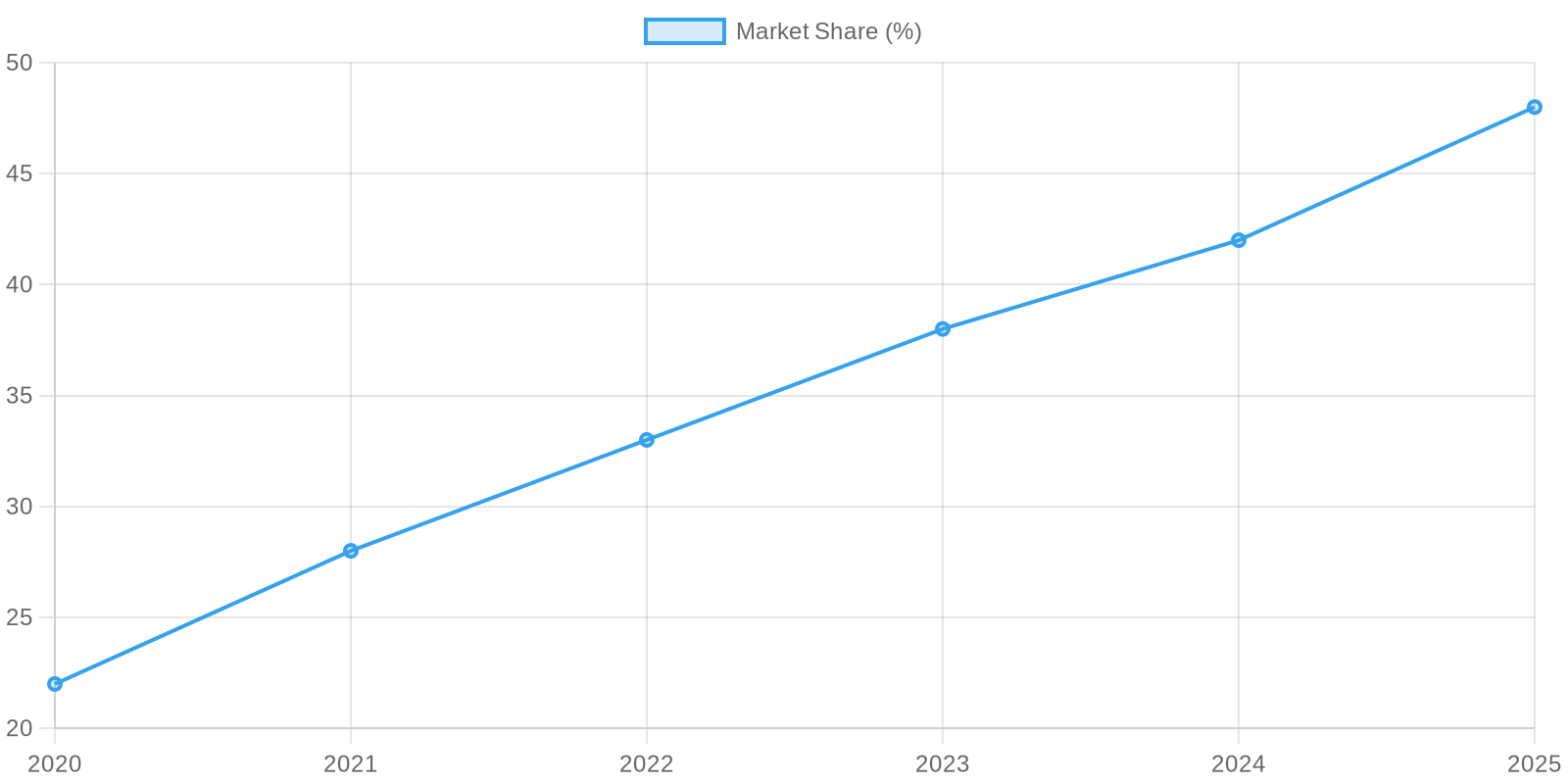
Water-based ink adoption in eco-friendly packaging has more than doubled since 2020.
Smarter Labeling with QR Codes
Minimalist design doesn’t mean ditching information-it means moving it off-pack and online. Smart QR codes are replacing cluttered labels, giving customers instant access to recycling instructions, ingredient sourcing, and brand stories with a quick scan. This digital shift reduces label material waste while creating a more interactive customer experience. For food businesses, this is a win-win: cleaner packaging and deeper customer engagement.
What This Means for Your Business
Whether you run a bubble tea shop, a food truck, or a catering service, minimalist packaging is easier to adopt than you think:
- Bubble tea shops can use clear plastic cups with subtle logos-letting the vibrant drink colors do the talking. Check out custom clear cup options for branding that stays elegant and eco-friendly.
- Food trucks and fast-casual spots can switch to kraft paper boxes with single-color water-based ink prints, keeping the look natural and compostable-friendly.
- Event caterers can use one-color prints on disposable serveware, eliminating the need for multi-layer labels and reducing sorting confusion at recycling stations.
| Eco-Friendly Packaging Switch | Environmental Benefit | Cost Impact |
|---|---|---|
| Water-based inks | 80-90% fewer VOCs than solvent inks | Comparable or slightly lower |
| One-color prints | Less ink usage = less chemical waste | Reduces printing costs up to 30% |
| QR code digital labels | Eliminates paper label waste | Minimal one-time setup cost |
| Clear cups (no full-wrap labels) | Fully recyclable without label removal | Lower material cost per unit |
The Bottom Line
Minimalist design is more than a trend-it’s a practical roadmap to sustainable, cost-effective packaging that resonates with today’s customers. By reducing what’s on the outside, you’re protecting what’s on the inside: your product, your brand reputation, and the planet.
Remember this simple rule: Less is more. The less material, ink, and complexity you put into your packaging, the greater the environmental payoff-and the stronger your brand story becomes.
📈 Eco-Friendly Food Packaging Market Growth (2023-2030)

The numbers tell a powerful story. The global eco-friendly food packaging market is on a steep upward trajectory, projected to nearly double from $210 billion in 2023 to $470 billion by 2030. That’s a compound annual growth rate (CAGR) of approximately 12.2% – far outpacing traditional packaging segments.
What’s Driving This Surge?
Several key factors are fueling this remarkable growth:
- Consumer demand: Over 70% of consumers now say they prefer brands that use sustainable packaging
- Regulatory pressure: Single-use plastic bans are spreading across the EU, Canada, and parts of the US
- Corporate commitments: Major food chains and beverage companies are pledging 100% sustainable packaging by 2030
- Cost parity improving: As production scales, eco-friendly options are becoming more affordable
Why This Matters for Your Business
Whether you’re running a bubble tea shop, a food truck, or catering large events, the shift to eco-friendly packaging isn’t just a trend – it’s the new standard. Businesses that switch early to sustainable solutions position themselves as industry leaders while future-proofing against upcoming regulations.
Check out our guide on eco-friendly clear plastic cups and compostable paper cups for practical options you can start using today.
Trend #3 – Reusable & Returnable Packaging Systems
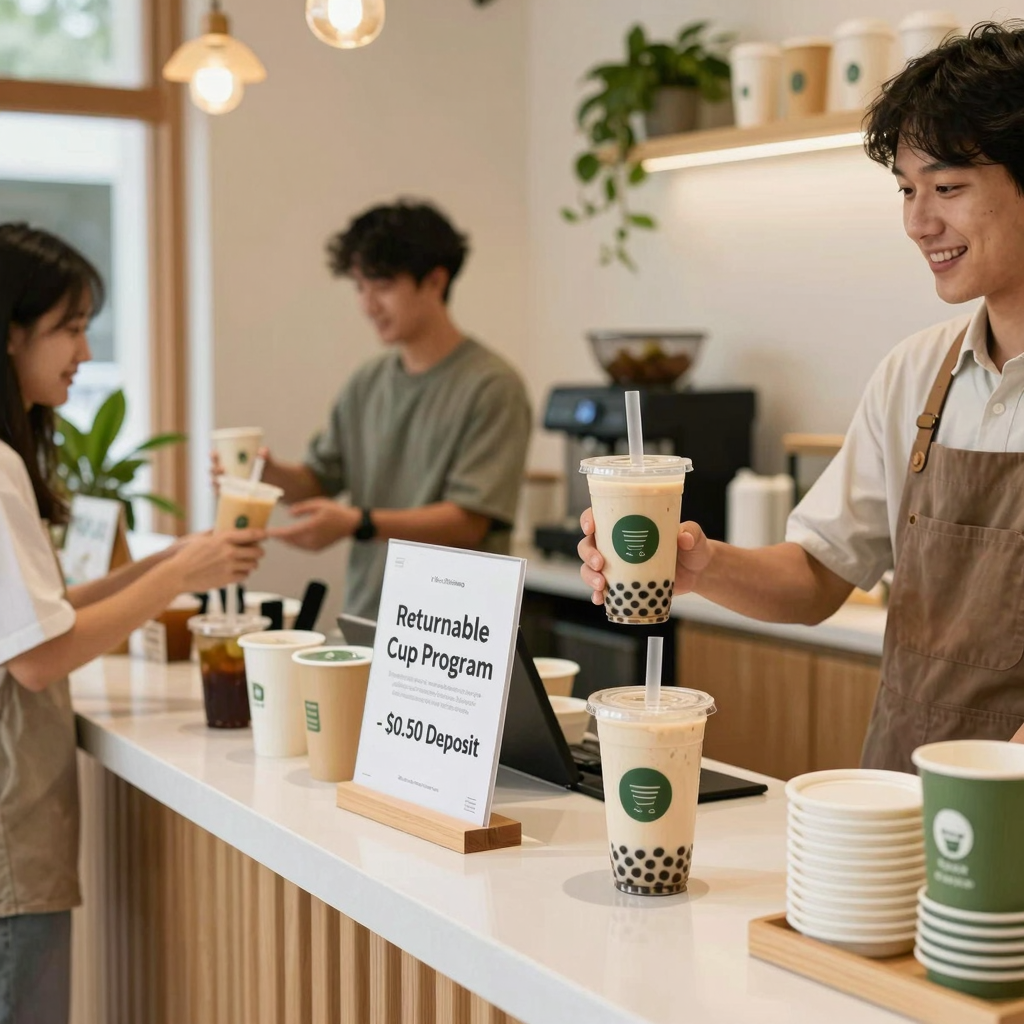
The days of single-use-and-toss are giving way to a smarter model: reusable and returnable packaging systems. By 2025, this isn’t just a niche experiment – it’s a full-blown movement reshaping food service, from bubble tea chains to corporate catering. In fact, the reusable foodservice packaging market is projected to hit $61.37 billion by 2031, growing at a steady 5.85% CAGR, according to Market Research Future. Major beverage chains like Chatime, Gong Cha, and Xing Fu Tang are already piloting returnable cup programs, offering $0.50-$1.00 discounts to customers who return cups through deposit-based systems. These programs are seeing 30% higher repeat customer rates and up to 45% reductions in single-use plastic waste.
How the Model Works
Pioneers like Loop and r.Cup are proving that reuse at scale is viable. Loop’s platform – backed by major investors including Nestlé and Procter & Gamble – operates a “waste-free” system where durable containers are returned, professionally cleaned, and refilled. r.Cup provides event-based returnable cup services that have already diverted millions of single-use cups from landfills at festivals and stadiums. Local reuse initiatives are sprouting up too: Taipei’s “Boba Life” program circulated over 600,000 reusable cups in 2025 alone, eliminating an estimated 2 million disposable cups annually.
The Business Case: Lower Costs, Stronger Loyalty
Reusable systems aren’t just good for the planet – they’re good for your bottom line. While the upfront cost per reusable cup is higher (averaging around $2.50), the total cost of ownership over 100+ uses is dramatically lower than single-use alternatives.
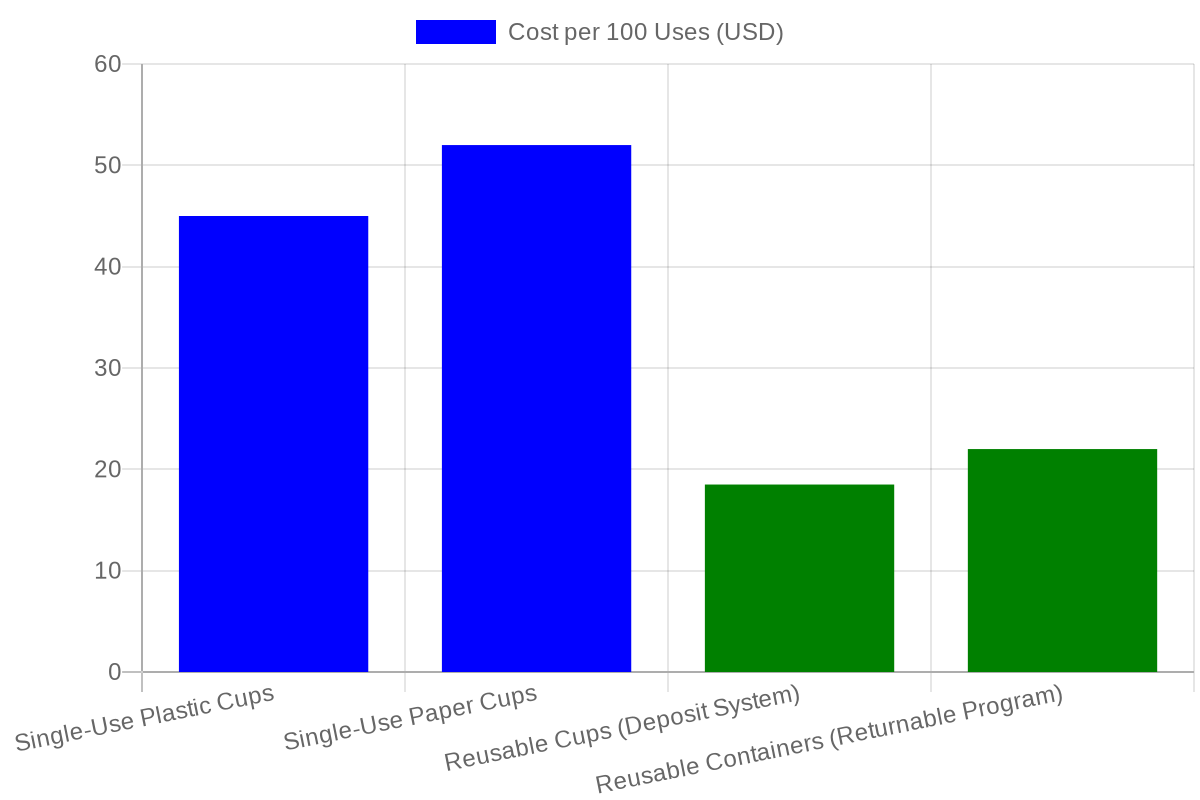
Beyond cost savings, implementing returnable food container programs builds brand loyalty. Research shows 82% of consumers are willing to pay more for sustainable packaging, and 73% of younger demographics actively choose brands with reuse programs. It’s a competitive edge that turns eco-conscious customers into repeat patrons.
Getting Started: Practical Steps for Your Business
Ready to launch a reuse program? Here’s how to start:
- Start with a pilot deposit system – Introduce a small deposit fee (e.g., $0.50-$1.00) on branded reusable cups or containers, fully refunded upon return. Track return rates to gauge customer adoption before scaling up.
- Partner with a reuse platform – Collaborate with established providers like r.Cup or Loop to handle collection logistics, industrial washing, and redistribution – saving you the infrastructure investment while ensuring hygiene compliance.
- Gamify the experience – Add digital rewards, QR code tracking, or referral bonuses to boost participation. Studies show gamification can increase returnable program participation by up to 58%.
- Invest in durable, branded containers – Choose high-quality reusable cups and containers that withstand repeated washing cycles and display your brand logo. Check out our guide on eco-friendly clear plastic cups for durable, sustainable options that align with your program.
The shift to reuse is accelerating. Whether you’re running a bubble tea shop, a food truck, or a corporate canteen, returnable food container programs are no longer a futuristic concept – they’re a practical, profitable reality that your customers are ready to embrace.
Trend #4 – Digital Traceability & Transparency
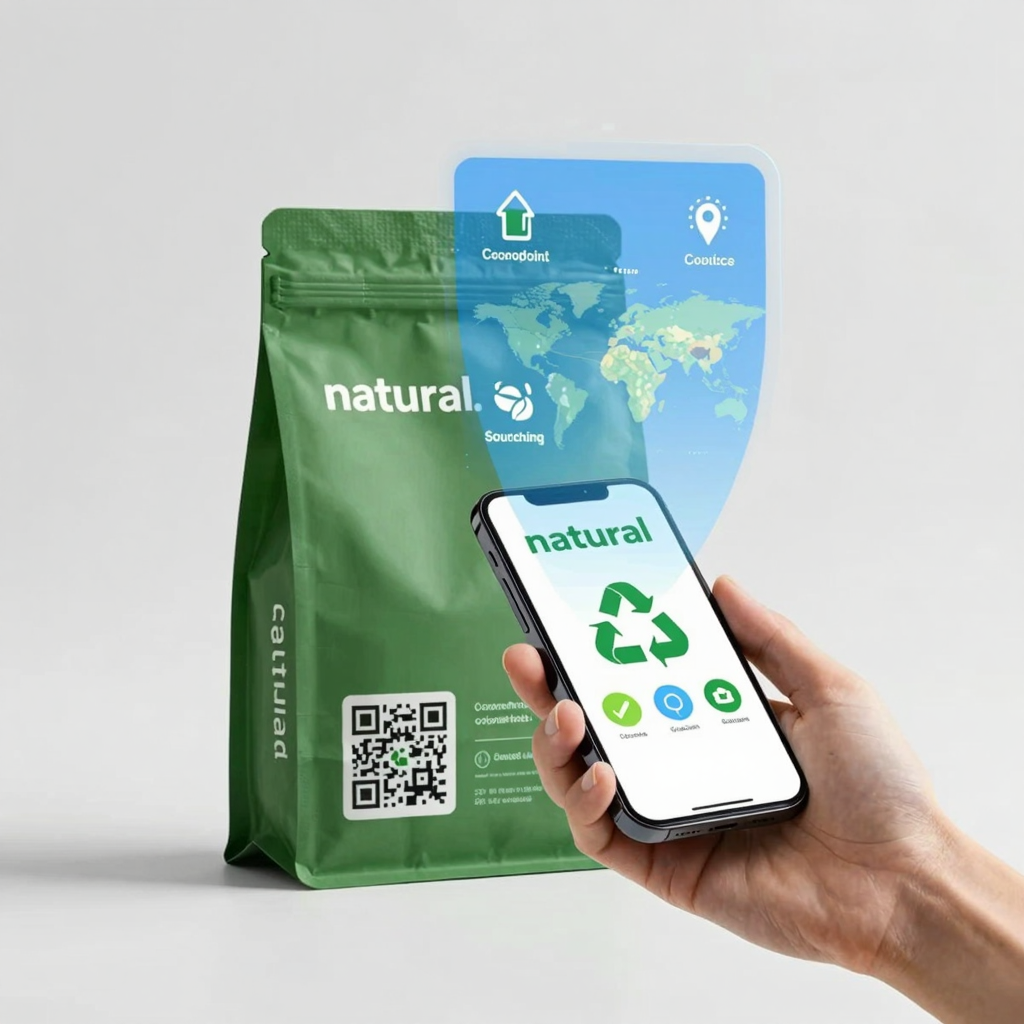
In 2025, digital traceability has become one of the most powerful tools in the sustainable packaging revolution. Thanks to the convergence of QR codes, blockchain technology, and smart labeling, the humble package is no longer just a container – it’s a window into the entire lifecycle of your product.
What Digital Traceability Looks Like in Practice
Imagine a customer picking up an eco-friendly takeaway box at your bubble tea shop or food truck. With a single smartphone scan of a QR code printed on the packaging, they can instantly access:
- Sourcing details – Where was the raw material grown or harvested?
- Carbon footprint data – What was the environmental cost of production and shipping?
- Composting & disposal instructions – How to properly recycle or compost the package for your local municipal system
- Certifications & compliance badges – Third-party verification of sustainability claims
Behind that QR code lies a blockchain-secured ledger that records every step of the supply chain – from farm to facility to your counter. Because blockchain data is immutable, brands can offer tamper-proof proof of their eco-friendly claims, eliminating greenwashing concerns once and for all.
Why This Matters for Your Business
For corporate procurement teams and event planners, this isn’t just a nice-to-have – it’s quickly becoming a compliance necessity. With regulations like the EU’s Digital Product Passport gaining momentum and sustainability reporting requirements tightening globally, traceability ensures you can verify your supply chain’s environmental impact with verifiable data rather than guesswork.
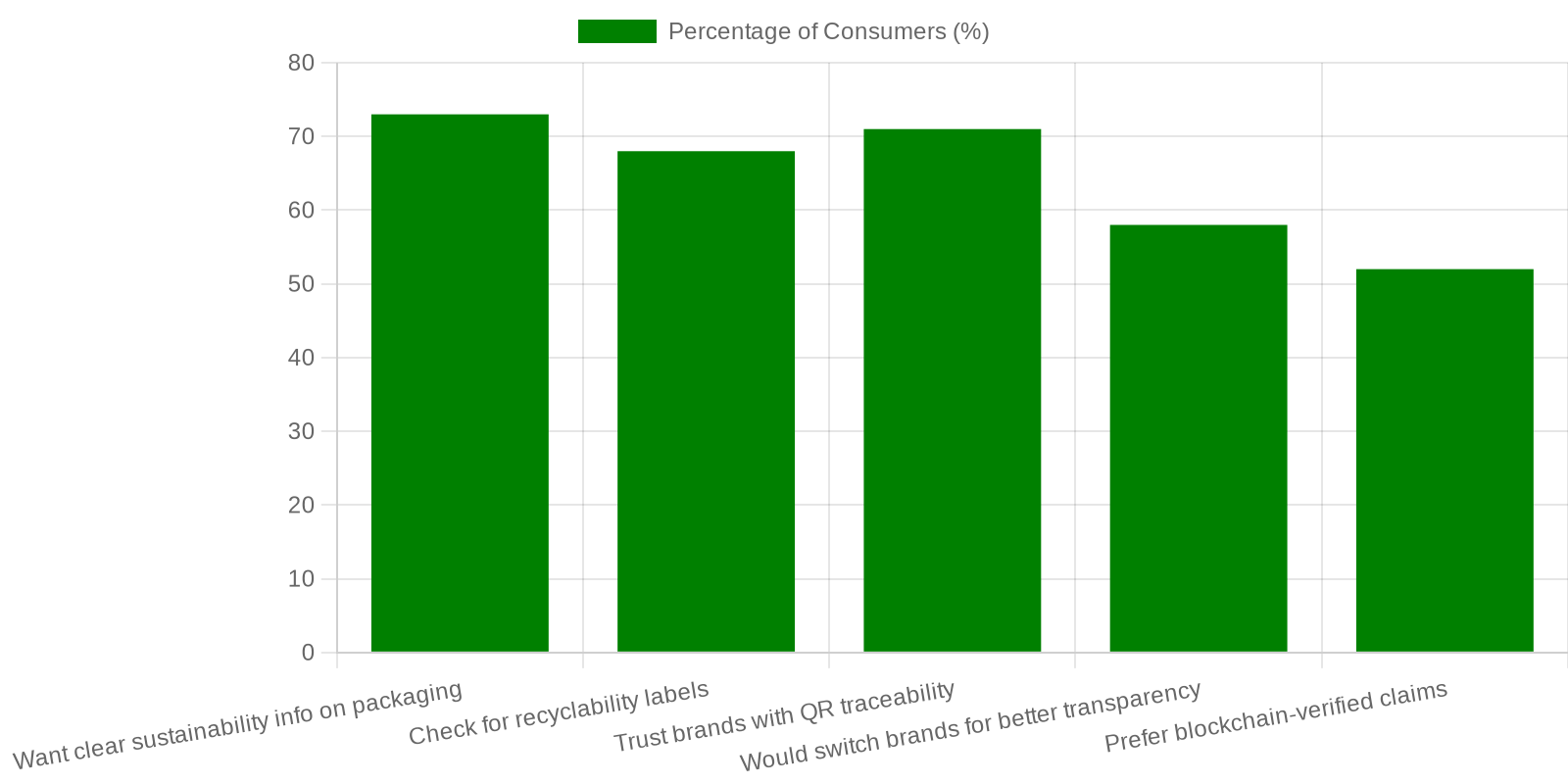
Research from early 2025 shows that 71% of consumers trust brands that offer QR-based traceability, while 68% actively check for recyclability and sustainability labels before purchasing. For beverage chains and restaurants, this means that smart packaging traceability isn’t just about staying compliant – it’s a competitive advantage that builds customer loyalty.
What Can Be Tracked in 2025
| Traceability Feature | What It Reveals | Who Benefits Most |
|---|---|---|
| Raw Material Origin | Farm/source location, harvest date, certifications | Beverage chains, cafes sourcing ethically |
| Carbon Footprint | CO₂ emissions per unit from production to delivery | Corporate teams reporting ESG metrics |
| Composting Instructions | Local disposal guidance, home vs. industrial compostability | Event planners managing waste streams |
| Supply Chain Timeline | Full chain-of-custody from source to shelf | Restaurants proving food safety compliance |
| Blockchain Verification | Immutable proof of authenticity for sustainability claims | All food service operators avoiding greenwashing claims |
The Bottom Line
As we look ahead, one thing is clear: transparency is the new currency of consumer trust. In a world where customers are more informed and skeptical than ever, brands that embrace digital traceability will earn loyalty that no marketing campaign can buy. The package of the future doesn’t just hold your food – it tells your story, proves your integrity, and builds a relationship of trust with every single scan.
5 Questions to Ask Your Packaging Supplier in 2025
As sustainability regulations tighten and consumer demand for eco-friendly options grows, choosing the right packaging supplier is more critical than ever. Whether you run a bubble tea chain, a bustling restaurant, or a catering service, asking the right questions can save you money, protect your brand reputation, and keep you ahead of compliance requirements. Here are five essential questions to bring to your next supplier conversation.
1. Are your materials certified compostable?
Not all “green” packaging is truly compostable. In 2025, certifications like BPI (North America) and TÜV OK Compost (Europe/Asia) are the gold standards for verifying that materials meet EN 13432 or ASTM D6400 requirements. These certifications ensure your cups, containers, and cutlery will fully biodegrade in industrial composting facilities within 180 days, leaving no toxic residues. Always ask for certification documentation-greenwashing is still rampant, and you need proof, not promises.
2. What is your minimum order quantity (MOQ) for eco-friendly products?
Many suppliers still apply high MOQs to sustainable packaging lines, which can be a dealbreaker for small-to-mid-sized businesses. In 2025, more manufacturers are lowering MOQs to accommodate growing demand from food trucks, local cafes, and boutique beverage chains. Ask upfront whether they offer tiered pricing or sample programs.
3. Do you offer custom branding on sustainable packaging?
Custom branding on eco-friendly packaging is no longer a luxury-it’s expected. From logo-printed compostable cups to branded kraft boxes, 85% of consumers say eco-friendly packaging influences their purchasing decisions. Ask your supplier about printing capabilities on sustainable materials, including water-based inks and minimal-waste techniques.
4. What is the lead time for bulk orders?
Supply chain disruptions have been a major challenge since 2020, and 2025 is no exception. Eco-friendly materials-especially certified compostable ones-can have longer lead times due to specialized sourcing and production processes. Ask your supplier about their current lead times, rush options, and inventory buffers.
5. Can you provide carbon footprint data for your products?
This is the question that separates forward-thinking suppliers from the rest. In 2025, packaging accounts for 30-60% of the total carbon footprint in the food and beverage industry. Leading suppliers now offer product-level carbon footprint reports, including raw material sourcing, manufacturing energy use, and transportation emissions.
Asking these five questions will help you partner with a packaging supplier who shares your commitment to quality, transparency, and the planet.
How to Transition Your Business to Sustainable Packaging Without Breaking the Bank
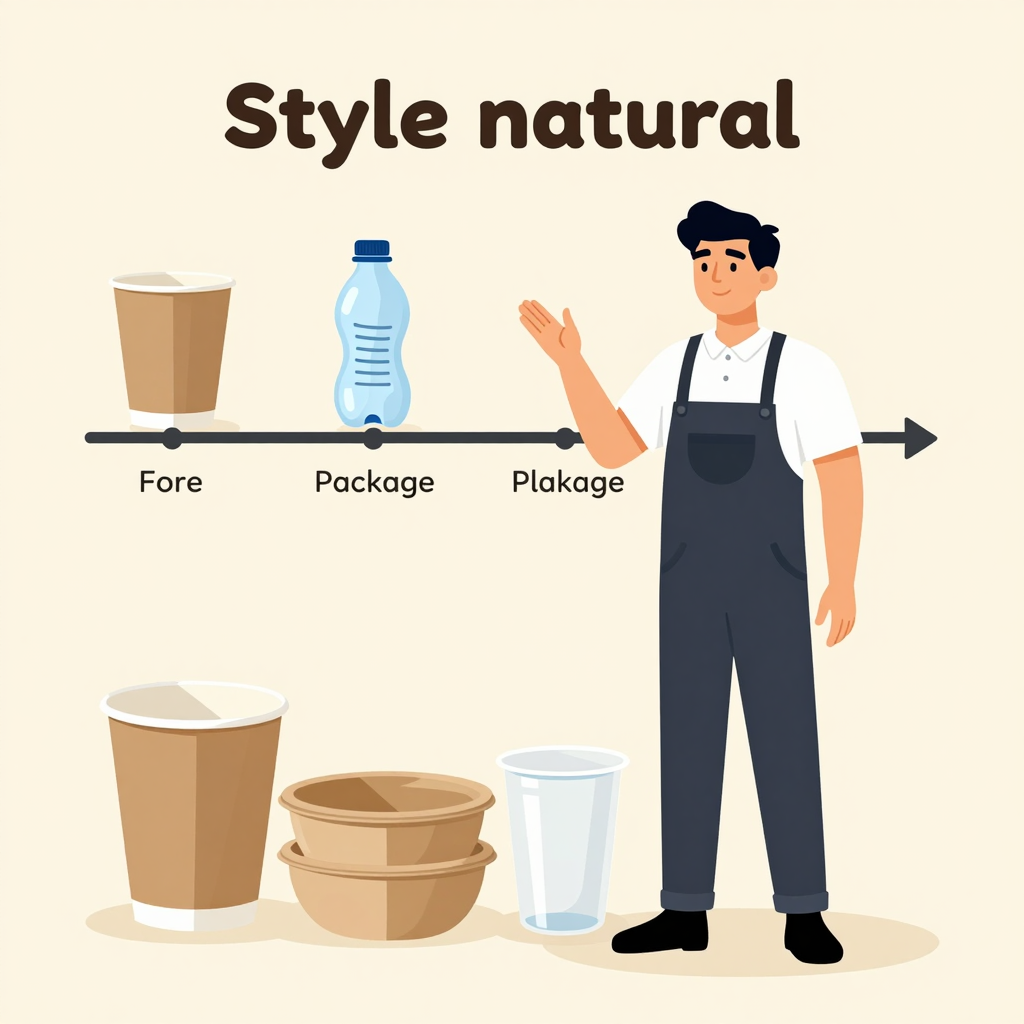
Let’s be real – switching to eco-friendly packaging sounds expensive, but it doesn’t have to be. In fact, the global sustainable packaging market is projected to reach USD 418.6 billion by 2027, and smart early adopters are already saving money while gaining loyal customers. With 85% of consumers saying sustainable packaging influences their purchase decisions, the real cost is not making the switch. Here’s how to do it without straining your bottom line.
Step 1: Audit Your Current Packaging Usage
Before changing anything, take a hard look at what you’re using. Walk through your daily operations and list every packaging item – cups, lids, straws, napkins, takeout containers, bags, and utensils. Ask yourself:
- Which items are used most frequently?
- Which generate the most waste?
- Are there materials you’re overusing (e.g., double-bagging, oversized containers)?
A simple audit often reveals 15-30% of packaging is unnecessary or oversized. Reducing material upfront is the most cost-effective sustainable packaging strategy – you save money and reduce waste before spending a dime.
Step 2: Prioritize High-Impact, Low-Cost Swaps
You don’t need to overhaul everything at once. Start with the items that make the biggest difference for the least investment:
| Priority Item | Eco-Friendly Swap | Typical Cost Impact |
|---|---|---|
| Plastic straws | Compostable paper or PLA straws | Minimal increase |
| Plastic sip lids | Fiber-based or recyclable lids | Slight increase; bulk offset |
| Clear cold cups | Eco-friendly clear plastic cups made from PLA or recycled PET | Comparable with volume |
| Takeout containers | Bagasse (sugarcane fiber) or compostable containers | Often same or lower |
| Hot drink cups | Compostable paper cups with plant-based lining | ~10-15% more; recouped via marketing |
Pro Tip: Switching straws, lids, and cups first gives you the fastest visible sustainability win for your customers.
Step 3: Partner with a Trusted Manufacturer That Offers Bulk Discounts
This is where you unlock real savings. By working directly with an experienced manufacturer like GreenDispoPack, you gain access to:
- Bulk pricing – the more you order, the less you pay per unit
- Wholesale partnerships – consistent supply chain with predictable costs
- Custom options – branded cups and containers that double as marketing
For example, ordering custom clear plastic cups with your logo in bulk quantities lowers per-unit costs significantly below retail alternatives. Many eco-friendly materials – like PLA, bagasse, and recycled kraft paper – are now priced competitively with traditional plastics when purchased at scale.
Step 4: Phase Changes Over 6-12 Months to Manage Costs
Rome wasn’t built in a day, and neither is a sustainable supply chain. A phased approach helps you:
- Spread out capital outlay – replace items as existing stock runs out
- Test new materials – try a small batch before committing to large volumes
- Train staff gradually – avoid overwhelming your team with too many changes at once
Sample Timeline:
- Months 1-3: Replace straws, lids, and napkins
- Months 4-6: Switch cold cups and takeout containers
- Months 7-9: Transition hot cups and utensils
- Months 10-12: Full rollout with branded sustainable packaging
Step 5: Market Your Transition to Customers
Your sustainability journey is a story worth telling. When customers see you’ve made the switch, they’re more likely to choose you over competitors. Share your progress through:
- Menu inserts or table tents explaining your new eco-friendly packaging
- Social media posts highlighting specific swaps (e.g., “We just switched to compostable cups!”)
- In-store signage near ordering areas
The bottom line? Sustainable packaging is not a cost – it’s an investment that pays for itself through customer loyalty, reduced material waste, and operational efficiency. And with the right partner by your side, it’s more affordable than you think.

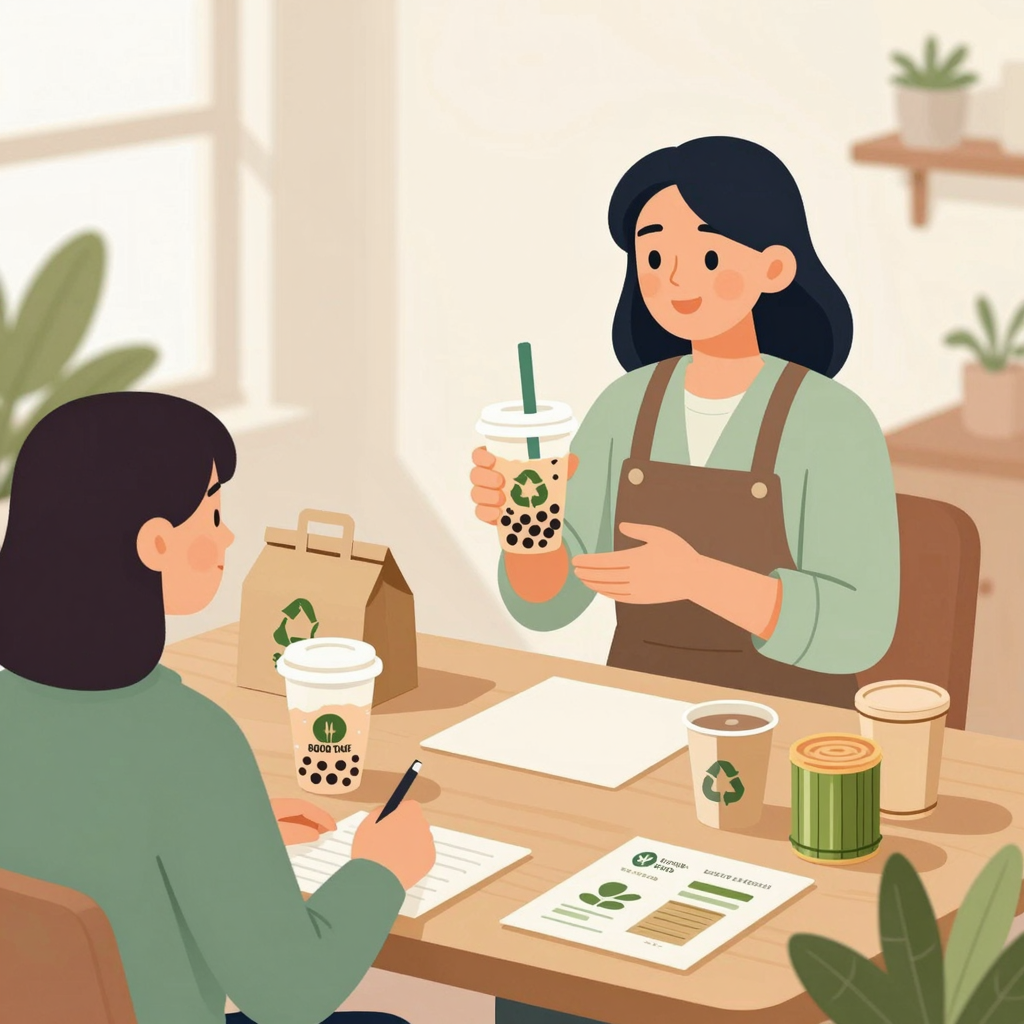
A warm moment of connection – a barista smiles as they serve bubble tea in a modern compostable cup, showcasing the future of sustainable beverage packaging.
Eco-Friendly Packaging Regulations You Need to Know in 2025
If you run a bubble tea shop, restaurant, food truck, or catering business, 2025 is a pivotal year for food packaging regulations 2025. Governments across the globe are tightening rules on single-use plastics-and staying compliant is no longer optional. Here’s what you need to know.
🇪🇺 European Union: Packaging & Waste Regulation (EU 2025/40)
The EU’s Packaging and Packaging Waste Regulation (EU 2025/40) entered into force on February 11, 2025, replacing the earlier directive. This regulation mandates that all packaging must be designed for recyclability, sets reuse targets (e.g., at least 10% of beverages in reusable packaging by 2030), and strengthens Extended Producer Responsibility (EPR) rules. For European bubble tea chains and restaurants, this means transitioning away from single-use plastic cups and toward reusable or fully recyclable alternatives.
🇺🇸 United States: State-Level Push
States are leading the charge in the U.S.:
- California (SB 54): The Plastic Pollution Prevention and Producer Responsibility Act requires all single-use plastic packaging and food ware to be recyclable or compostable by 2032, with a 25% reduction in plastic use and a 65% recycling rate target. Producers must join a state-approved PRO.
- New York: Expanded waste reduction laws now target small plastic bottles, and discussions are underway to phase out plastic wrap for everyday products.
- Washington: The state has set a goal for 100% of packaging sold in Washington to be recyclable by 2025, backed by a state-level plastics study.
🇨🇦 Canada: Nationwide Single-Use Plastics Ban
Canada’s Single-Use Plastics Prohibition Regulations (in effect since December 2023) ban the manufacture, import, and sale of checkout bags, cutlery, straws, stir sticks, plates, polystyrene food containers, and ring carriers. This directly impacts food trucks and caterers relying on polystyrene takeout boxes and plastic cutlery.
📊 Regulation Overview
| Region | Key Regulation | Effective | What It Means for Food Service |
|---|---|---|---|
| EU | Packaging & Waste Regulation (EU 2025/40) | Feb 2025 | Reusable packaging targets; recyclability mandates |
| California | SB 54 Plastic Pollution Prevention Act | Phased to 2032 | 25% plastic reduction; EPR compliance required |
| New York | Expanded Waste Reduction Laws | 2025-2027 | Small plastic bottle ban expanded; wrap phase-out |
| Washington | 100% Recyclable Packaging Target | 2025 goal | All packaging must be recyclable |
| Canada | Single-Use Plastics Prohibition | Dec 2023 onward | Ban on polystyrene, plastic cutlery, straws & more |
What This Means for Your Business
- Bubble tea shops will need to switch from plastic cups and straws to compostable paper cups, PLA-lined cups, or reusable cup programs. Check out our guide on eco-friendly clear plastic cups for compliant alternatives.
- Restaurants must audit their takeout packaging-polystyrene containers are banned in most regions. Compostable paper and bagasse (sugarcane fiber) options are excellent substitutes.
- Food trucks & caterers should eliminate single-use plastic cutlery, straws, and stir sticks. Switch to bamboo, wood, or compostable bioplastics.
- Event planners need procurement strategies that prioritize reusable or compostable serviceware to meet permit requirements.
✅ The Bottom Line
Navigating these regulations can feel overwhelming, but partnering with a compliant manufacturer simplifies adherence. By working with a supplier that stays ahead of regulatory changes-offering certified compostable cups, recyclable containers, and plastic-free alternatives-you can focus on serving your customers while knowing your packaging is fully compliant. The future of food service is sustainable, and the businesses that adapt early will thrive.
A Sustainable Future Starts Now: Your 2025 Packaging Playbook
As we’ve explored, 2025 is shaping up to be a defining year for the food and beverage industry. The four key trends – the surge in biodegradable materials, the rise of circular packaging systems, growing regulatory pressure on single-use plastics, and informed consumer demand for transparency – aren’t just passing fads. They represent a fundamental shift in how businesses like yours operate.
With the global eco-friendly packaging market projected to exceed $300 billion by 2035 – growing at a CAGR of over 6.5% – and the sustainable plastic packaging segment alone surpassing $124 billion in 2025, the message is clear: eco-friendly packaging is no longer optional; it’s a competitive necessity. Whether you run a bustling bubble tea chain, a catering service, or a food truck, adopting sustainable solutions today positions your brand as a forward-thinking leader.
But knowing the trends is only the first step. The real impact comes from taking action. That’s where we come in. Choose our reliable disposable tableware and packaging solutions for your business. We offer quality products that meet safety standards, with fast delivery and flexible options – from compostable paper cups to eco-friendly clear plastic cups that balance performance with sustainability. Partner with us today to elevate your service – contact our team now for a tailored quote! Let’s make 2025 the year your business goes green without compromising on quality or convenience.
Ready to make the switch? Get in touch with us at GreenDispopack.com – your trusted partner in sustainable packaging solutions.