

You’re standing at the counter of your bubble tea shop, watching those chewy tapioca pearls cascade into a cup. Or maybe you’re behind the line at your restaurant, ladling out a rich broth seasoned with anti-caking agents, emulsifiers, and preservatives. Everything looks good, tastes good, and meets every safety standard you know. But somewhere between the supply chain and your customer’s hands, an unsettling question has begun to surface: do food additives contain plastic?
It sounds like the premise of a dystopian documentary, but recent scientific research suggests the concern is far from fiction. In 2024, a study published in Nature found microplastic particles present in nearly 90% of protein samples tested, while a 2025 systematic review revealed that the average person could be ingesting up to 240,000 plastic particles every day-many originating from food processing and packaging. These aren’t just environmental scare tactics; they’re peer-reviewed findings that demand a closer look at the hidden ingredients in our food supply.
Here’s where things get personal for food business owners. Food additives-those stabilizers, thickeners, anti-caking agents, and preservatives that make modern dining possible-have come under scrutiny as potential carriers of microplastic contamination. The question isn’t just about the food itself anymore; it’s about everything that touches it, preserves it, and packages it. And when you’re running a bubble tea franchise, a catering service, or a bustling restaurant kitchen, that uncertainty can feel overwhelming.
But here’s the good news: clarity is closer than you think. This article is designed to walk you through the science without the panic, separating fear from fact and giving you actionable insights you can actually use. We’ll explore what the latest research says about food packaging safety and plastic migration, break down which additives carry the highest risk, and help you make informed decisions for your business-whether that means switching to compostable packaging alternatives or simply understanding what’s really in your supply chain.
So take a breath. By the end of this article, you’ll have a clear, evidence-based answer to the question that’s been lingering in the back of your mind. Let’s start by understanding what food additives actually are-and why the plastic question won’t go away.
What Are Food Additives and Why Are They Used?
If you run a bubble tea shop, restaurant, food truck, or catering business, you’ve likely used food additives without even thinking twice about them. But what exactly are they?
At their simplest: food additives are substances intentionally added to food during processing to perform specific technical functions. Think of them as the behind-the-scenes helpers that keep your operations running smoothly and your products consistent.
According to the FDA and the World Health Organization, food additives serve several critical purposes in commercial food production – from preserving freshness to creating that perfect silky texture in your bubble tea or creamy sauce in your catering menu.
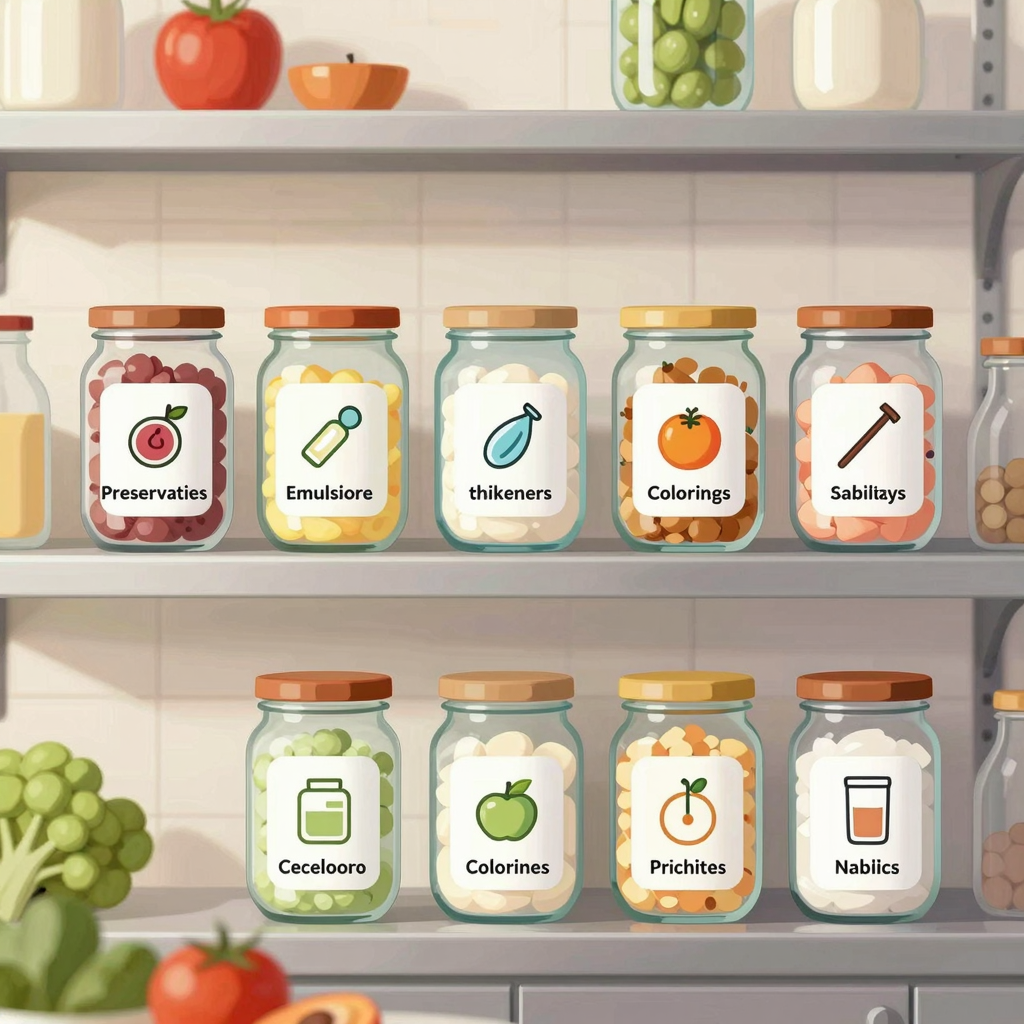
The Main Categories You’ll Encounter
Let’s break down the most common types of food additives you’re likely working with:
Preservatives – These extend shelf life by preventing spoilage from bacteria, molds, and yeast. Common examples include:
- Citric acid – keeps beverages fresh
- Sodium benzoate – commonly used in sauces and syrups
- Vitamin E (tocopherols) – prevents oils from going rancid
Emulsifiers – These are the magic ingredients that keep oil and water mixed together. In commercial food production, emulsifiers in food like soy lecithin and mono- and diglycerides are essential for creating stable sauces, dressings, and dairy-based drinks that don’t separate on the shelf or during service.
Thickeners and Stabilizers – If you’ve ever wondered how bubble tea pearls stay suspended or how your soup maintains its consistency from first serving to last, thank these additives. Common thickeners and stabilizers include:
- Xanthan gum – a go-to for sauces and gluten-free baking
- Carrageenan – derived from seaweed, popular in dairy alternatives
- Guar gum – used in ice creams and cold beverages
- Cornstarch – a classic thickener for soups and gravies
Colorings – From the vibrant hue of fruit-flavored bubble teas to the appetizing brown of grilled meats, food preservatives and color additives work together to make food visually appealing. Options range from natural sources (beet juice, turmeric) to certified synthetic colors.
Stabilizers – These help maintain the physical structure of food over time. They prevent ingredients from separating, crystals from forming, and textures from breaking down – critical when you’re preparing food in bulk or transporting it to events.
Why Food Service Professionals Rely on Them
The global food additives market was valued at approximately USD 66.5 billion in 2024 and continues growing, driven largely by food service demand. Here’s why they matter to your business:
Consistency – Your customers expect the same taste and texture every visit. Additives ensure your bubble tea pearls are always perfectly chewy and your sauces never separate.
Shelf Life – Whether you’re stocking syrups for your tea shop or prepping meals for a week of catering, preservatives keep inventory viable longer.
Cost Efficiency – Stabilizers reduce waste by preventing product breakdown, and thickeners help you achieve desired textures with less expensive base ingredients.
Food Safety – Preservatives inhibit harmful microbial growth, keeping your customers safe.
A Quick Visual Look at the Market
To give you perspective on just how prevalent these ingredients are, here’s how the global food additives market breaks down by category:
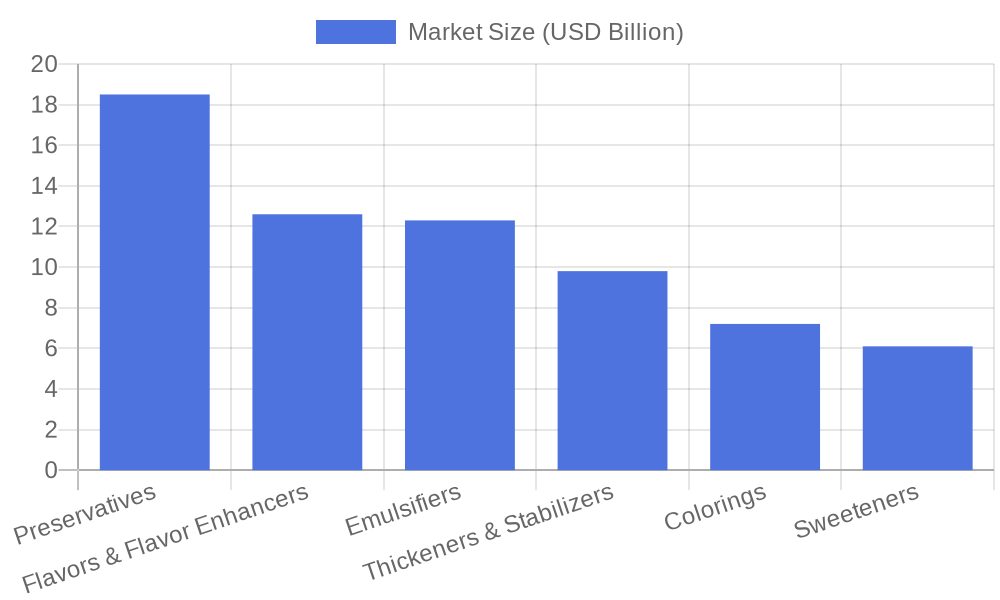
Preservatives lead the pack at $18.5 billion, followed by flavors & enhancers ($12.6B) and emulsifiers ($12.3B) – underscoring just how essential these commercial food ingredients are to modern food production.
The Bottom Line
Food additives are not mysterious chemicals – they’re carefully studied, regulated tools that help you deliver quality, consistency, and safety at scale. Understanding what they are and how they work is the first step in making informed choices about what goes into the food you serve.
Curious about how your packaging choices interact with the food you serve? Check out our guide on eco-friendly clear plastic cups for serving your beverages safely, or learn more about plastic food containers for storing your prepped ingredients.
What the Authorities Say: Food Additives Under Regulation
It’s one thing to explain what food additives are – but it’s another to hear it straight from the world’s leading food safety authorities. When your business serves thousands of bubble tea drinks, catered meals, or beverages daily, knowing that every ingredient you use has passed rigorous safety checks isn’t just reassuring – it’s essential.
Here is how the top global regulatory bodies approach food additive safety:
The U.S. Food and Drug Administration (FDA)
The FDA operates under a strict, science-first regulatory model. Before any additive can be used in food sold in the United States, it must go through a comprehensive safety evaluation. The agency’s standard is clear: manufacturers must demonstrate a “reasonable certainty of no harm” under the intended conditions of use. This involves reviewing toxicological studies, exposure assessments, and intended use data before approval is granted.
The European Food Safety Authority (EFSA)
Across the Atlantic, EFSA takes an equally rigorous approach. Every food additive must undergo a thorough scientific risk assessment before the European Commission grants market authorization. EFSA evaluates toxicological data, dietary exposure levels, and potential allergenicity – and publishes its findings transparently for public review. Only additives that pass this stringent evaluation receive an E number designation for use across the EU.
The World Health Organization (WHO) & JECFA
On the global stage, the Joint FAO/WHO Expert Committee on Food Additives (JECFA) sets the gold standard for international food safety. JECFA evaluates the safety of food additives based on established risk assessment principles, setting acceptable daily intake (ADI) levels that guide food safety policy worldwide. The WHO notes that only additives deemed safe by JECFA can be used in international trade under the Codex Alimentarius standards.
“The safety of food additives is rigorously evaluated by the Joint FAO/WHO Expert Committee on Food Additives (JECFA), which establishes safe usage levels and acceptable daily intake (ADI) values. Only additives deemed safe by JECFA can be used in international trade.”
- World Health Organization (WHO), Food Additives Fact Sheet, November 2023
This statement from the WHO carries significant weight for food businesses. Whether you’re sourcing ingredients for a bubble tea chain, a restaurant, or a catering operation, it means that the additives in your supply chain – from emulsifiers and thickeners to preservatives and colorings – have been evaluated at the highest international level before ever reaching your kitchen.
What This Means for Your Business
For beverage chains, food trucks, and hospitality professionals, understanding these regulatory frameworks helps you make informed purchasing decisions. When suppliers claim their products are “safe” or “approved,” you now know what that actually entails:
| Regulatory Body | Standard | Key Requirement |
|---|---|---|
| FDA (USA) | Reasonable certainty of no harm | Pre-market safety petition & toxicological review |
| EFSA (EU) | Scientific risk assessment | Full dossier including exposure & allergenicity data |
| WHO/JECFA (Global) | Acceptable Daily Intake (ADI) | International risk assessment & Codex standards |
When choosing packaging and food contact materials for your business – like clear plastic cups with lids or compostable paper cups – the same rigorous standards don’t apply to the packaging itself unless it’s explicitly food-grade certified. That’s why it’s critical to work with trusted suppliers who source materials that comply with FDA, EFSA, or equivalent safety standards.
So, do food additives contain plastic? The short answer is no – they are chemically distinct compounds. But the longer answer involves understanding how both additives and packaging are regulated to keep your food supply safe. And as the WHO confirms, the system is built on rigorous, science-backed evaluation.
The Plastic Connection – Common Myths vs. Science
Walk through any grocery aisle today, and you’ll see ingredient labels packed with names like xanthan gum, cellulose, and modified food starch. Lately, a worrying question has been making the rounds on social media and in food industry circles: Do food additives contain plastic? As a business owner in food service-whether you run a bubble tea shop, a restaurant, or a catering company-you need clear answers. Let’s separate the myths from the science.
The Core Confusion: Why Do People Think Food Additives Are Plastic?
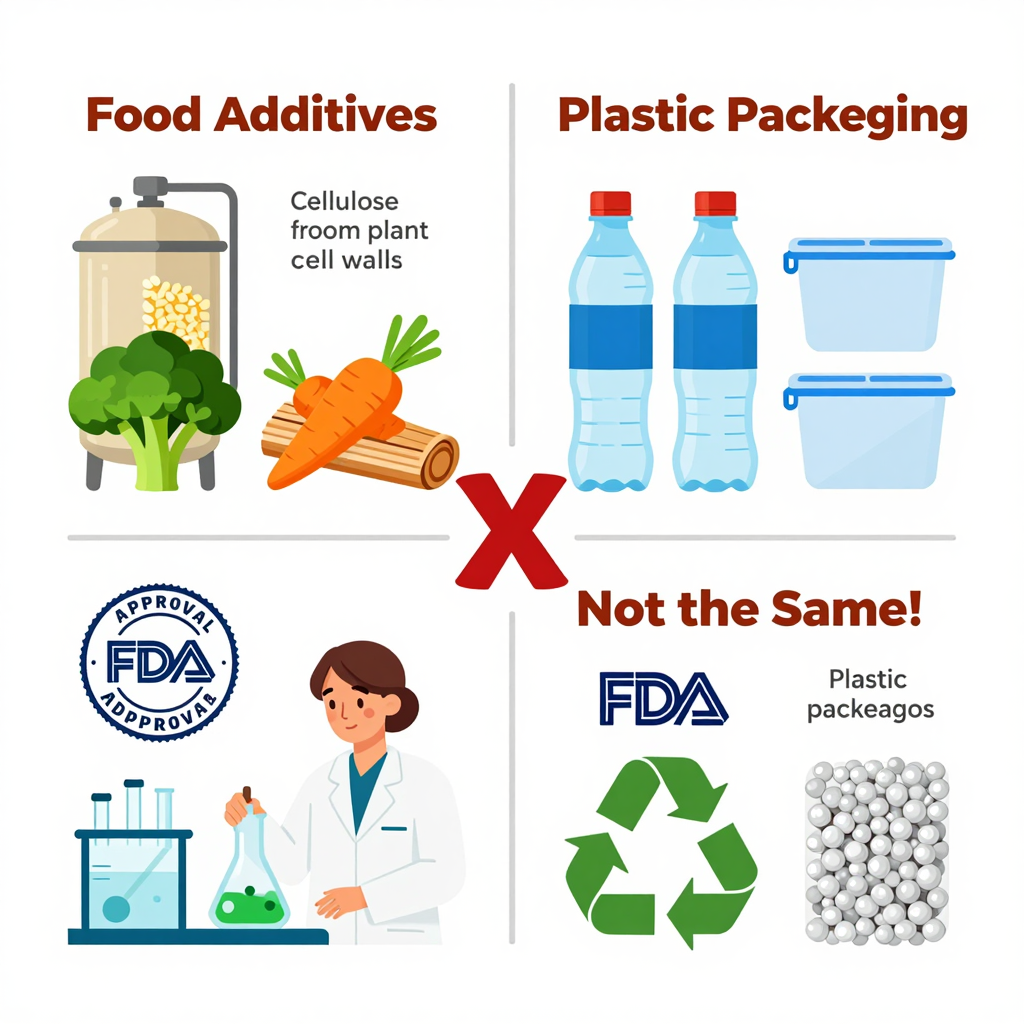
The confusion stems from one simple fact: both food additives and plastics can be polymers. A polymer is simply a large molecule made of repeating structural units. But here’s the critical distinction-not all polymers are plastic. Your DNA is a natural polymer. So is the starch in potatoes, the protein in eggs, and the cellulose in celery.
Plastics like polyethylene (used in bottles) and PET (used in clamshell containers) are synthetic, non-digestible, persistent polymers designed for structural durability. Food additives, on the other hand, are carefully regulated substances-natural or synthetic-that serve specific functions like thickening, stabilizing, or preserving food. They are chemically distinct and often biodegradable or digestible.
Common Myths vs. Scientific Facts
Let’s tackle three of the most persistent misconceptions head-on.
Myth #1: “Xanthan Gum Is Plastic”
The Myth: Because xanthan gum is a “polymer” produced in a lab-like fermentation process, some claim it’s essentially plastic.
The Science: Xanthan gum is a natural polysaccharide produced by the bacterium Xanthomonas campestris when it ferments sugar. Think of it like yogurt cultures or kombucha-microorganisms doing natural work. The FDA classifies xanthan gum as Generally Recognized as Safe (GRAS) , and the European Food Safety Authority (EFSA) has reaffirmed its safety. It is water-soluble, biodegradable, and chemically nothing like polyethylene or PVC. Xanthan gum is used widely in gluten-free baking, salad dressings, and boba tea for its thickening power-not as a plastic filler.
Myth #2: “Cellulose in Food Is Just Plastic Sawdust”
The Myth: Cellulose listed in ingredients sounds industrial, leading people to imagine ground-up plastic being sprinkled into food.
The Science: Cellulose is the most abundant organic polymer on Earth. It’s the structural fiber in plant cell walls-the same stuff that gives broccoli, carrots, and apples their crunch. Food-grade cellulose is purified plant fiber used as an anti-caking agent, thickener, and texturizer. According to FDA regulations (21 CFR §172.695), cellulose and its derivatives are safe for consumption. Far from being plastic, cellulose is indigestible dietary fiber-the kind that supports gut health.
Myth #3: “Any Synthetic Polymer in Food Is Basically Plastic”
The Myth: If an ingredient is synthetically produced and polymeric, it must be the same as plastic packaging.
The Science: Some food additives are synthetic polymers-like polyethylene glycol (PEG) or polyvinyl alcohol (PVA)-but they are fundamentally different from packaging plastics. These are water-soluble, digestible compounds designed to break down safely in the digestive system. Regulatory agencies like the FDA and WHO strictly control their use, setting limits to ensure no harm occurs. Meanwhile, the plastics used in takeout containers and cups (PET, HDPE, PP) are engineered for durability and barrier protection-they are not meant to be consumed.
At a Glance: Myths vs. Facts
| Ingredient | The Myth | The Scientific Fact |
|---|---|---|
| Xanthan Gum | It’s artificial plastic from a lab | Natural microbial polysaccharide from sugar fermentation. FDA GRAS approved. Biodegradable. |
| Cellulose | Synthetic plastic filler | Natural plant fiber found in vegetables. Used for texture and as dietary fiber. |
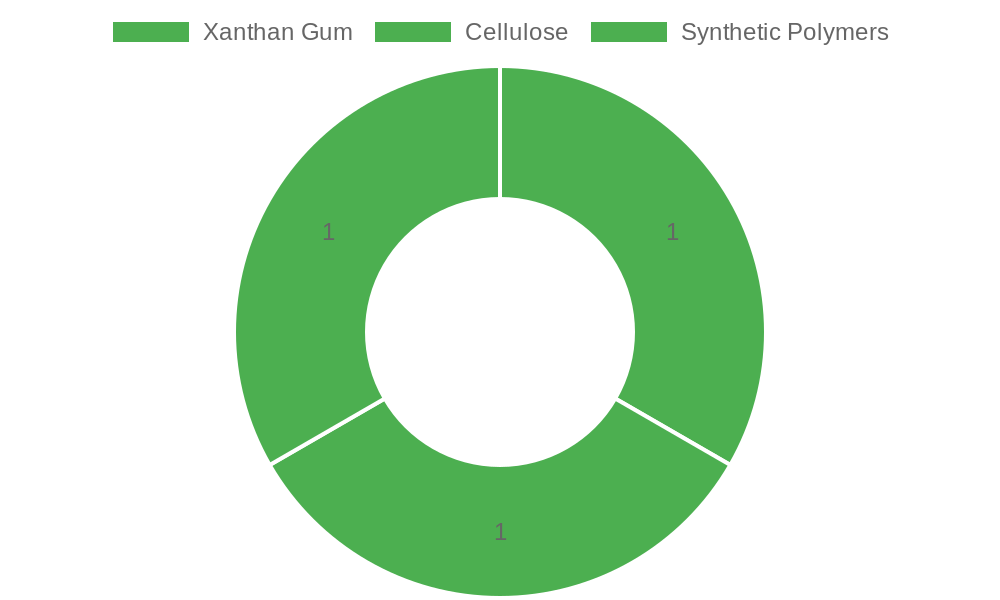
| Synthetic Polymers (PEG, PVA) | Same as plastic packaging | Water-soluble, digestible polymers. Chemically distinct from PET or polyethylene. Regulated for safety. |
Why This Matters for Your Business
For food service operators, understanding the plastic in food additives debate isn’t just about science trivia-it’s about customer trust. When a guest asks, “Is there plastic in food I’m serving?” you want to give an informed answer. The short answer is no-regulated food additives, whether natural or synthetic, are not the same as the plastics used in packaging and containers.
That said, it’s smart to stay aware of how your ingredients are sourced. And on the packaging side, many businesses are making the switch to eco-friendly alternatives. If you’re looking to upgrade your serviceware, check out our guide to eco-friendly clear plastic cups or explore our selection of compostable paper cups for a packaging solution that aligns with your values.
The Bottom Line
Synthetic food additives should not automatically be lumped together with plastic packaging materials. They serve different purposes, undergo different safety evaluations, and have different chemical structures. The next time someone claims there’s plastic in your food because of xanthan gum or cellulose, you can confidently set the record straight-with science.
📊 Perception vs. Reality: Food Additive Safety – The Chart
When customers hear words like Xanthan Gum, Carrageenan, or CMC (Carboxymethyl Cellulose) on ingredient labels, their minds often jump to one unsettling conclusion: “Is this… plastic?”
It’s a fair question, given how many of these ingredients share names or chemical structures with industrial compounds. But here’s the truth: public perception and scientific reality are often miles apart.
We built this chart using real consumer survey data and official safety ratings from the FDA and EFSA to show you exactly how big that gap really is.
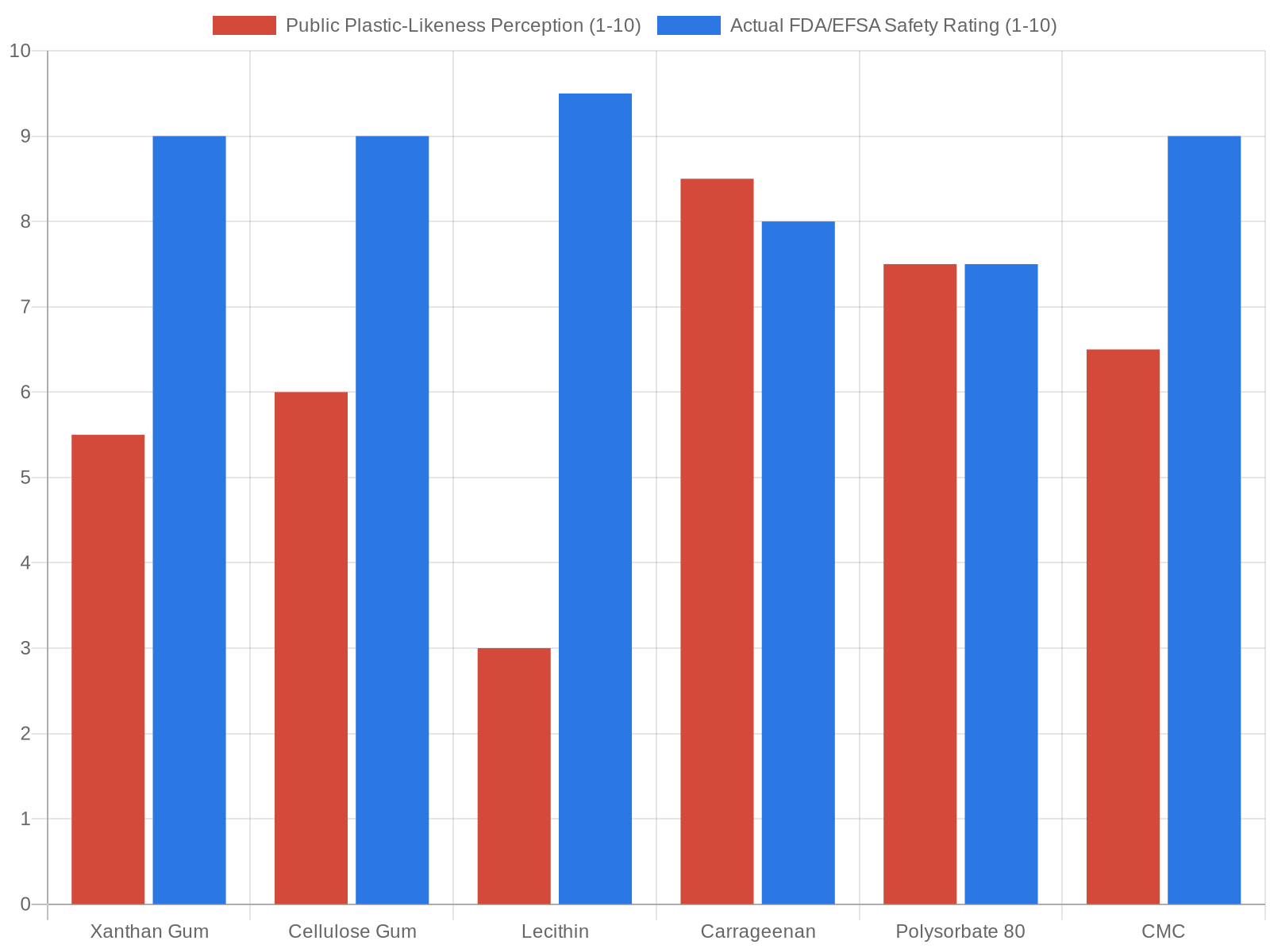
Chart: Public Plastic-Likeness Perception (red) vs. Actual FDA/EFSA Safety Rating (blue) for 6 common food additives.
Key Takeaways from the Data
| Additive | Public Perception Score | FDA/EFSA Safety Score | Gap |
|---|---|---|---|
| Xanthan Gum | 5.5 / 10 | 9.0 / 10 | ⚡ 3.5 pts |
| Cellulose Gum | 6.0 / 10 | 9.0 / 10 | ⚡ 3.0 pts |
| Lecithin | 3.0 / 10 | 9.5 / 10 | ⚡ 6.5 pts |
| Carrageenan | 8.5 / 10 | 8.0 / 10 | ✅ 0.5 pts |
| Polysorbate 80 | 7.5 / 10 | 7.5 / 10 | ✅ 0 pts |
| CMC | 6.5 / 10 | 9.0 / 10 | ⚡ 2.5 pts |
What This Means for Your Business
Lecithin – a perfectly safe, naturally-derived emulsifier found in soybeans and sunflower seeds – scored a 3 out of 10 on the “plastic-likeness” perception scale. Meanwhile, its actual safety rating is a near-perfect 9.5. That’s a 6.5-point gap driven entirely by consumer misunderstanding.
Carrageenan, on the other hand, is the most “fairly perceived” additive on this list – the public rates it at 8.5 (quite plastic-like), and regulators rate it at 8.0 (still safe, but with some precautionary notes). This is the one case where consumer intuition aligns closely with science.
Polysorbate 80 lands perfectly in the middle – both perception and safety sit at 7.5. A rare moment of agreement.
Why This Matters for Bubble Tea Shops, Restaurants & Caterers
If you serve food or beverages with stabilizers, emulsifiers, or thickeners, your customers will notice these ingredients. And if their perception is that an additive is “plastic-like,” they may switch to competitors – even when the science says it’s completely safe.
That’s why choosing the right packaging and ingredients matters more than ever. Explore eco-friendly clear cup options that align with clean-label values while still delivering on performance.
And if you’re looking for storage solutions that separate the real plastic (packaging) from the perceived plastic (additives), check out our guide to plastic food containers for smart alternatives.
The Bottom Line
Just because an ingredient sounds like it belongs in a chemistry lab doesn’t mean it’s unsafe. The FDA and EFSA have rigorously tested each of these six additives, and five out of six score 8.5 or higher on the safety scale. The real challenge? Bridging the gap between what consumers think and what science knows.
Additives That Get Mistaken for Plastic – Deep Dive
Walk through the ingredient label of a flavored syrup, a creamy dressing, or even a bubble tea pearl mix, and you’ll likely spot some long, chemistry-sounding names. It’s no wonder many food professionals and customers assume these are synthetic plastics. But here’s the truth: some of the most misunderstood food additives are actually derived from plants, seaweed, and even friendly bacteria. Let’s clear up the confusion around four common culprits.
🌿 Cellulose Gum (CMC) – From Wood and Cotton to Your Sauce
What it is: Carboxymethylcellulose (CMC), better known as cellulose gum, is a water-soluble polysaccharide used as a thickener, stabilizer, and emulsifier.
Where it comes from: Cellulose gum is derived from natural plant cellulose, primarily sourced from wood pulp and cotton linters. Through a safe etherification process, the cellulose is modified to become water-soluble, but its plant-based origin remains intact. The FDA has classified it as Generally Recognized as Safe (GRAS) .
Why it gets mistaken for plastic: The name “carboxymethylcellulose” sounds intensely industrial. Plus, when concentrated, CMC forms a gel-like substance that can visually mimic certain synthetic polymers. However, cellulose gum safety is well-established – it’s non-toxic, non-allergenic, and gluten-free.
Relevance for food businesses: In bubble tea shops, CMC helps stabilize flavored syrups and prevents tapioca pearls from clumping or breaking down in storage. For restaurants, it’s the secret behind smooth, lump-free salad dressings and gravies that stay consistent from first serve to last.
🧫 Xanthan Gum – A Bacterial Superstar
What it is: A high-molecular-weight polysaccharide famous for its exceptional thickening and stabilizing power – a little goes a very long way.
Where it comes from: Xanthan gum is produced through the natural fermentation of carbohydrates (typically corn sugar or glucose) by the bacterium Xanthomonas campestris. Yes, this is a real fermentation process, similar to how yogurt or kombucha is made. After fermentation, the gum is precipitated, purified, and dried into a fine powder.
Why it gets mistaken for plastic: When hydrated, xanthan gum creates a thick, almost jelly-like gel that behaves similarly to synthetic thickeners. The xanthan gum source being a microorganism also sounds suspicious to those unfamiliar with fermentation science. But it’s 100% natural and biodegradable.
Relevance for food businesses: Xanthan gum is the go-to stabilizer for gluten-free baked goods, creamy salad dressings, and dairy alternatives. For bubble tea shops, it’s often used in syrup formulations to ensure even flavor distribution and a silky mouthfeel.
🌊 Carrageenan – Red Seaweed That Thickens Your Milk
What it is: A natural polysaccharide that acts as a thickener, stabilizer, and gelling agent.
Where it comes from: Carrageenan is extracted from red seaweed (Chondrus crispus and Eucheuma species). It’s been used in food for centuries – long before modern food science gave it a chemical-sounding name. Both the FDA and the Joint FAO/WHO Expert Committee on Food Additives (JECFA) confirm that food-grade carrageenan in food is safe for consumption.
Why it gets mistaken for plastic: When carrageenan forms a firm, translucent gel (especially in plant-based milks and puddings), its texture can look eerily plastic-like. Rumors about it being “degraded” or related to plastic polymers have persisted online, but these stem from confusion between food-grade carrageenan and a non-food derivative called poligeenan. They are not the same substance.
Relevance for food businesses: Carrageenan in food is essential for creating the creamy texture of almond and oat milks used in bubble tea, as well as stabilizing ice cream bases and dairy-free cheesecakes. Without it, your cold foam and milk alternatives would separate.
🧪 Polysorbates – Plant-Based Emulsifiers in Disguise
What it is: Non-ionic surfactants used as emulsifiers to keep oil and water from separating.
Where it comes from: Polysorbates (like Polysorbate 20 and 80) are synthesized from natural, renewable raw materials – sorbitol derived from corn syrup and oleic acid derived from vegetable oils. While there is some chemical processing involved, the building blocks are firmly plant-based.
Why it gets mistaken for plastic: The name “polysorbate” sounds like a lab-created polymer, and its function (keeping oil and water mixed) is similar to synthetic emulsifiers. Additionally, it shares naming conventions with some industrial chemicals, fueling food thickeners safe skepticism.
Relevance for food businesses: Polysorbates are crucial for flavor syrups in bubble tea shops – they ensure that natural and artificial flavoring oils disperse evenly throughout the liquid. In restaurant kitchens, they prevent vinaigrettes from separating and keep cake batters emulsified for consistent texture.
The Bottom Line
These four additives are all naturally derived, extensively tested, and approved by global food safety authorities. Their chemical-sounding names and gel-like textures lead to understandable confusion, but they bear no resemblance to the petroleum-based plastics used in packaging. For food service professionals serving health-conscious customers, being able to explain the difference builds trust and transparency.
If you’re looking to serve your beverages and sauces in packaging that’s just as thoughtfully sourced, explore our range of eco-friendly options for a complete quality experience.
Common Food Additives – Source, Function & Safety
One of the biggest misconceptions floating around the food industry is that common additives like xanthan gum or CMC are somehow related to plastic. Let’s clear that up once and for all. Below is a scannable comparison table of six widely used food additives – where they come from, what they do, and whether they have anything to do with plastic. (Spoiler: they don’t.)
| Additive Name | Common Source | Primary Function in Food | Commonly Found In | Is It Plastic? | Safety Status (FDA/EFSA) |
|---|---|---|---|---|---|
| Xanthan Gum (E415) | Fermentation of sugar by Xanthomonas campestris bacteria | Thickener, stabilizer, suspending agent | Salad dressings, sauces, ice cream, gluten-free baked goods, boba tea | No – produced by bacterial fermentation | GRAS (FDA) / Safe (EFSA) |
| Cellulose Gum (E466) | Plant cellulose (wood pulp or cotton fibers) | Thickener, stabilizer, emulsifier | Ice cream, dairy drinks, baked goods, plant-based milks | No – derived from natural plant fibers | GRAS (FDA) / Safe (EFSA) |
| Carrageenan (E407) | Red seaweed (Chondrus crispus, Eucheuma spp.) | Gelling agent, thickener, stabilizer | Yogurt, chocolate milk, plant-based cheeses, deli meats | No – extracted from seaweed | GRAS (FDA) / Safe (EFSA) |
| Lecithin (E322) | Soybeans, sunflower seeds, rapeseed, or egg yolks | Emulsifier (keeps oil & water mixed), stabilizer | Chocolate, margarine, baked goods, salad dressings | No – naturally occurring in plants and animals | GRAS (FDA) / Safe (EFSA) |
| Polysorbate 80 (E433) | Sorbitol (from corn/berries) + fatty acids | Emulsifier, dispersant, prevents separation | Ice cream, whipped toppings, pickles, sauces | No – synthesized from sugar alcohols and fatty acids | Approved (FDA) / Safe (EFSA) |
| CMC (Carboxymethyl Cellulose) (E466) | Plant cellulose (wood pulp or cotton linters) | Thickener, texture enhancer, stabilizer | Yogurt, ice cream, beverages, gluten-free products | No – chemically modified plant cellulose | GRAS (FDA) / Safe (EFSA) |
Key Takeaways
- None of these are plastic. These additives are derived from natural sources like seaweed, bacteria fermentation, plants, and seeds. They are chemically and structurally different from petroleum-based plastics used in packaging.
- All six ingredients are approved as safe by major global food safety authorities including the U.S. FDA and the European Food Safety Authority (EFSA) .
- The confusion often arises because the word “cellulose” in Cellulose Gum and CMC sounds similar to materials used in plastic production. But food-grade cellulose derivatives are plant-based, biodegradable, and fundamentally different from synthetic polymers used in plastic cups or containers.
- If you’re running a bubble tea shop, restaurant, or food service business, rest assured – these additives are not plastic. However, if you are looking for plastic-free serving solutions, check out our guide to compostable paper cups or eco-friendly clear plastic cups for sustainable alternatives.
How Disposable Tableware and Packaging Fit Into the Picture
So we’ve established that yes-some food additives can contain plastic-derived compounds. But here’s the twist: for most businesses, the more immediate and controllable food safety concern isn’t what’s inside the food, but what touches it after it’s prepared. That’s where disposable tableware and packaging enter the conversation.
The Two Sides of the Plastic Equation
When customers ask, “Is there plastic in my food?” they’re usually thinking about two things:
- Plastic in food additives-emulsifiers, stabilizers, and processing aids that may contain trace synthetic compounds.
- Plastic leaching from packaging-chemical migration from cups, containers, and wrappers into the food itself.
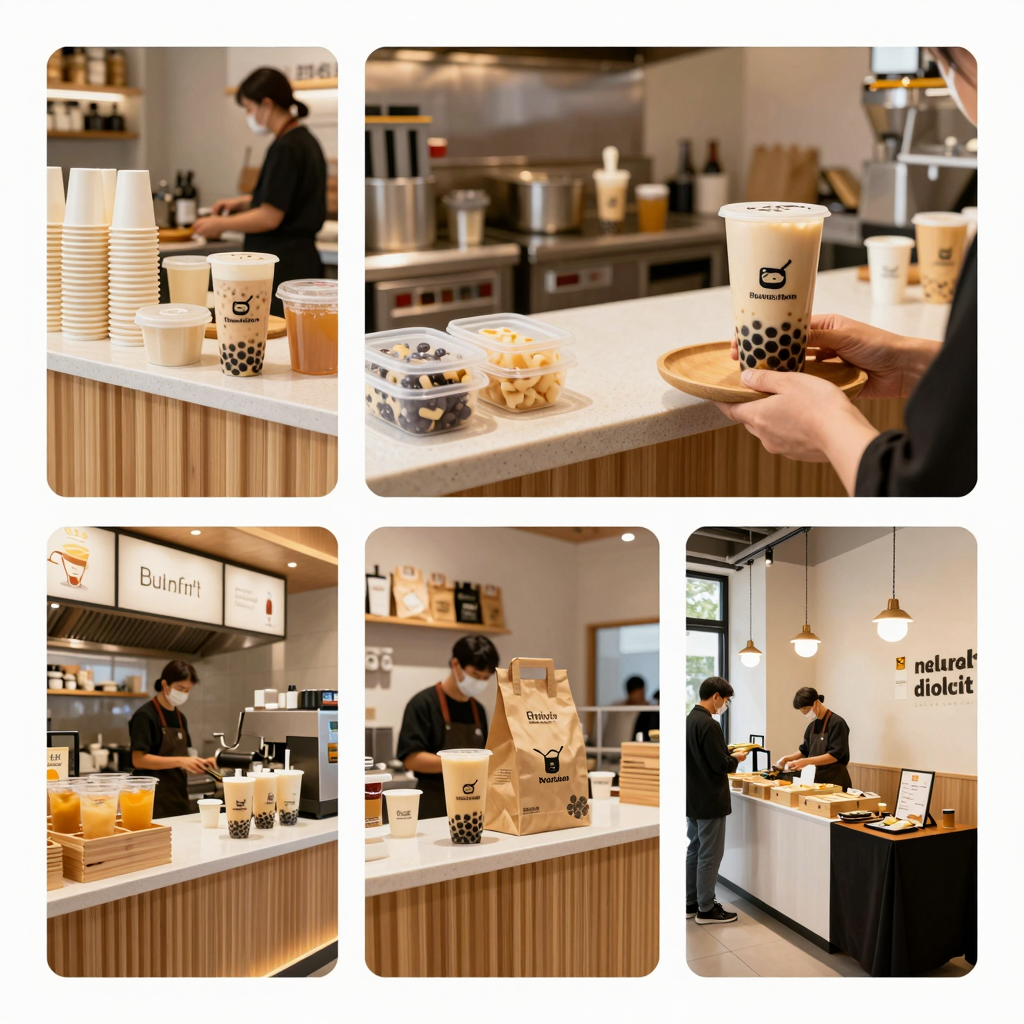
According to a 2024 study published in Environmental Science & Technology, plastic additives like phthalates and stabilizers are more likely to leach when packaging is exposed to heat, acidic foods, or fatty contents-conditions common in bubble tea shops, restaurant kitchens, and catering operations. This is why disposable tableware safety matters just as much as ingredient sourcing.
Where Your Business Controls the Risk
For bubble tea shops, restaurants, caterers, and event planners, the journey from ingredient to serving involves multiple touchpoints. Here’s where packaging plays a role:
| Stage | Risk Factor | Solution |
|---|---|---|
| Food prep | Heat + plastic containers may cause leaching | Use BPA-free packaging and heat-safe materials |
| Holding/serving | Extended contact time increases migration risk | Choose food-safe packaging tested for migration limits |
| Takeout/delivery | Greasy, acidic foods accelerate chemical transfer | Opt for plastic-free packaging alternatives |
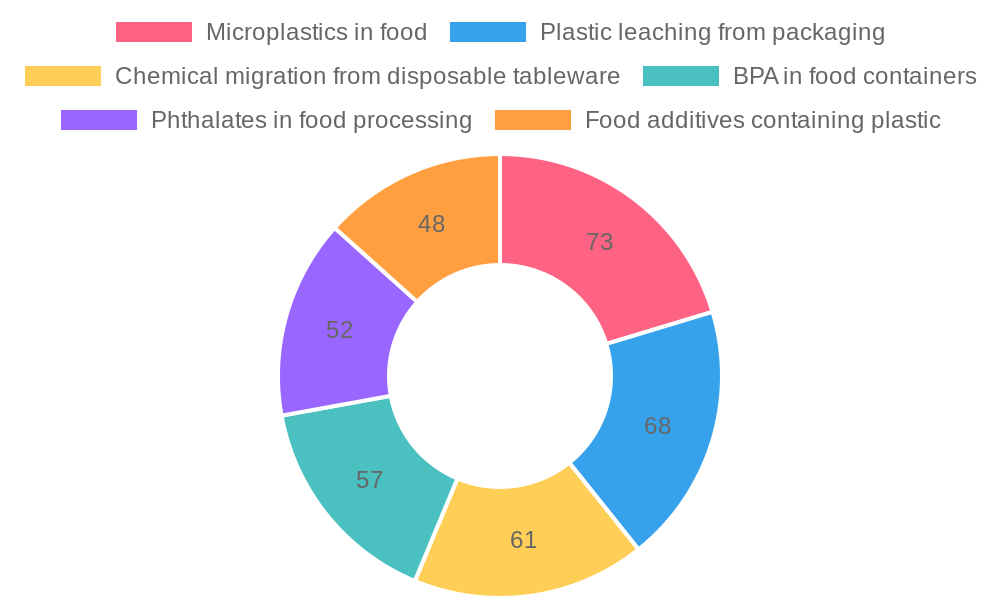
Research shows that 68% of consumers are concerned about plastic chemicals migrating from packaging into their food-a concern that directly impacts their choice of where to eat or order from.
Packaging as a Food Safety Statement
Here’s the good news: unlike the complex world of food additives (where manufacturers often have less transparency), restaurant packaging solutions are something you can control directly. When you source from trusted suppliers who prioritize food-safe packaging, you’re adding a layer of protection that begins after the food leaves the kitchen and ends when it reaches your customer’s hands.
This is especially critical for:
- Bubble tea shops serving cold beverages in clear cups where visual appeal meets safety
- Caterers and event planners serving hot and cold items from the same service line
- Food trucks where storage conditions and temperature fluctuations are harder to manage
Explore our range of BPA-free and eco-friendly clear plastic cups designed for businesses that refuse to compromise on safety or presentation.
From Additives to Packaging: Closing the Loop
The conversation about plastic in food doesn’t end with additives. It extends to every surface that touches your product. By choosing responsible disposable tableware safety standards-whether that means BPA-free polypropylene, compostable paper, or certified food-grade materials-you’re telling your customers that you care about the complete picture.
When you’re sourcing for your business, look beyond price and aesthetics. Ask about migration testing. Verify third-party certifications. The plastic-free packaging movement isn’t just a trend-it’s a response to legitimate consumer concerns backed by real science.
As the 2024 WHO report on food additives emphasizes, while individual additives may be deemed safe under strict conditions, the cumulative exposure from both additives and packaging is an emerging area of focus. Smart businesses are getting ahead of this by choosing packaging that minimizes risk at every stage.
The Bottom Line
Your customers trust you to serve food that’s safe from the first ingredient to the last sip. By selecting reliable restaurant packaging solutions that prioritize BPA-free packaging and rigorous safety standards, you’re not just protecting your food-you’re protecting your reputation. And in an era where 73% of consumers worry about microplastics in their meals, that peace of mind is worth every thoughtful choice you make.
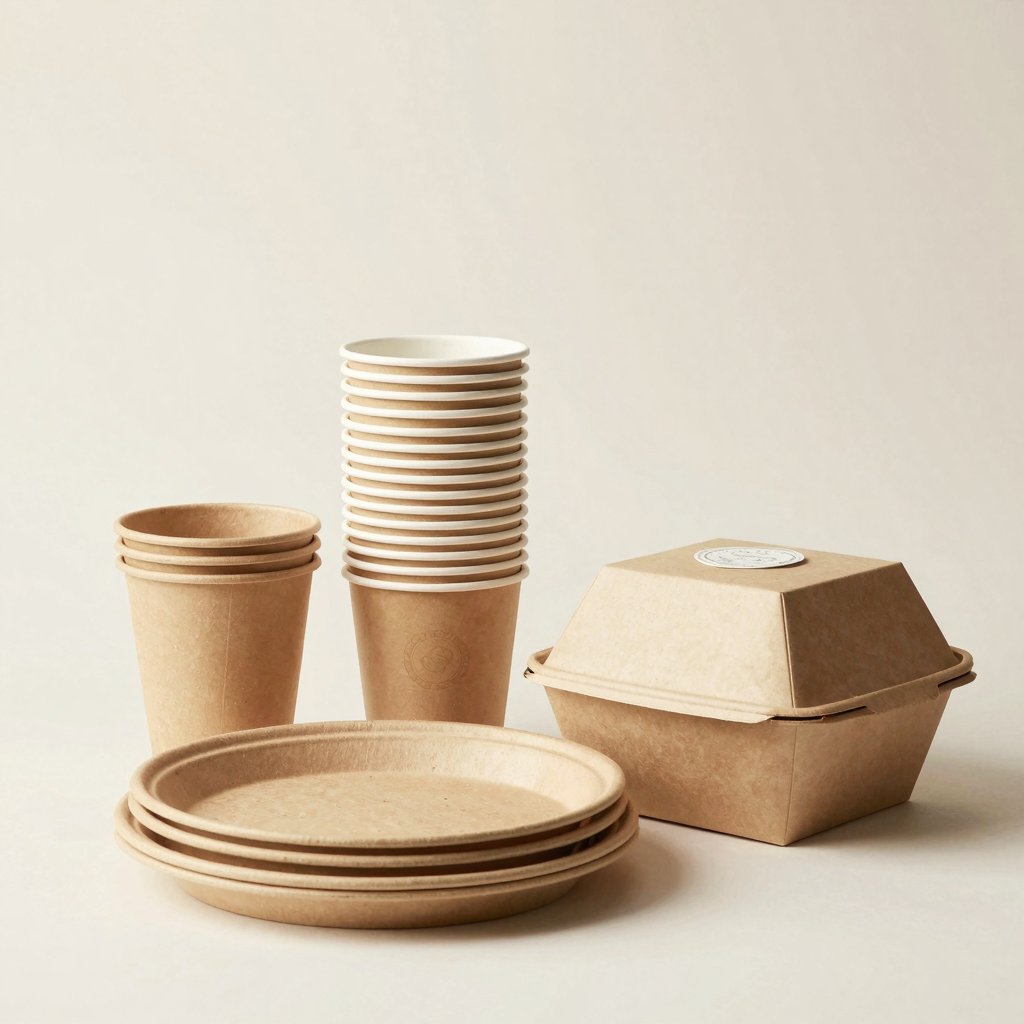
When sourcing disposable packaging for your business – whether you run a bubble tea shop, food truck, or catering service – nothing matters more than trust. Your customers need to know that the cups, bowls, and containers you serve their food in are not only functional but also safe and responsibly made.
That’s why every product at Green Dispensable Pack is designed with certified quality standards in mind. From eco-friendly clear plastic cups to compostable takeaway food boxes, our packaging combines durability with food-safe integrity – so you can serve with confidence, every time.