
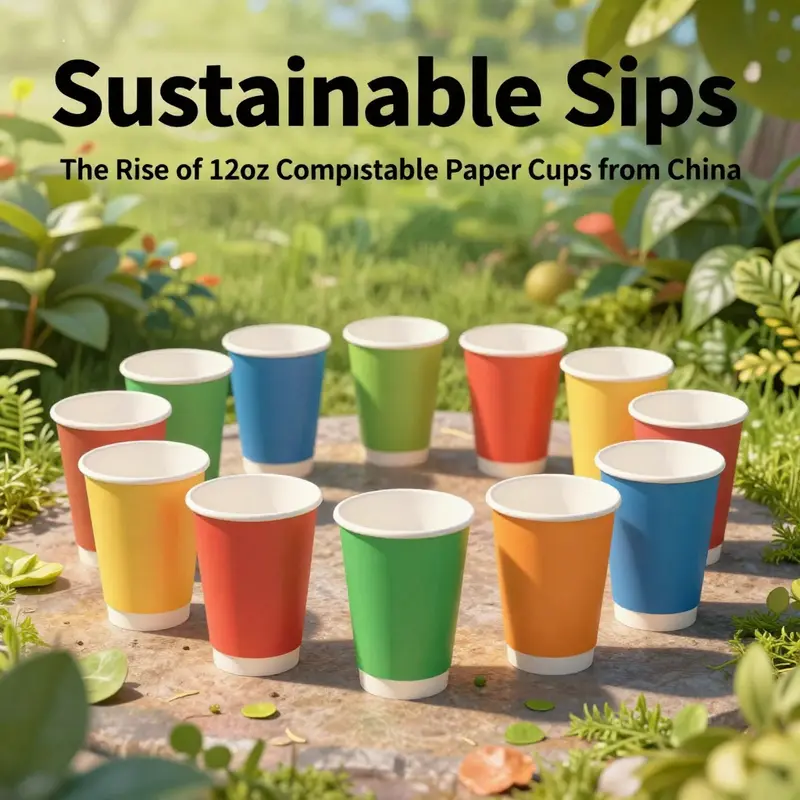
As the demand for sustainable packaging grows, bubble tea shops, beverage chains, restaurants, food trucks, and catering services are increasingly adopting eco-friendly alternatives like 12oz compostable paper cups. These cups not only meet the needs of modern consumers who prioritize environmental responsibility but also comply with regulations aimed at reducing single-use plastics. This article explores the key features that make these cups a preferred choice, highlights the environmental benefits they offer, and examines the current market trends and leading suppliers in the industry. Whether you’re looking to enhance your business’s sustainability efforts or simply want to align with consumer preferences, understanding the attributes of compostable paper cups can help you make informed purchasing decisions.
Sustainable by Design: Core Features of China’s 12oz Compostable Paper Cups
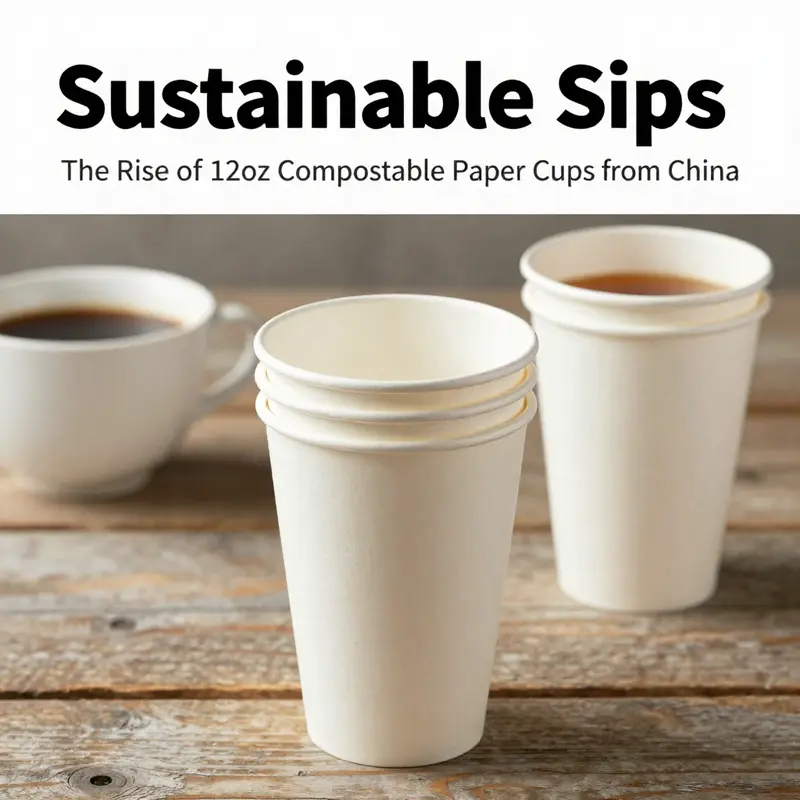
Across the busy lanes of Chinese manufacturing districts and the bustling docks where bulk shipments head to markets in Europe and North America, a quiet design revolution is unfolding in the realm of disposable tableware. The 12oz compostable paper cup has emerged as a focal point in a broader shift toward packaging that aligns utility with responsibility. This shift is not just about meeting a compliance checklist or chasing a green halo; it is about rethinking what a single-use cup can be when its life cycle is considered from raw material to end-of-life. In this chapter, we explore the essential features that define China’s 12oz compostable paper cups, how those features translate into real-world performance, and why they matter to buyers who want both reliability and a credible sustainability story. The cups themselves are designed with three overlapping priorities in mind: strength and heat management, compostability that makes sense within modern waste systems, and the flexibility to support brands and institutions that want to signal their environmental commitments without sacrificing everyday usability. At the heart of these products lies a continuous effort to balance natural materials with plant-based coatings, to substitute plastics with biodegradable alternatives, and to knit provenance with certification so that buyers can trust what they purchase while knowing the production footprint behind it all.
Material choices anchor the entire conversation about features. The outer shell is almost always a form of kraft paper or sugarcane bagasse—paperboard drawn from renewable resources and chosen for its strength, its ability to resist soaking when hot liquids are involved, and its compatibility with a variety of coating technologies. The internal lining is frequently a polylactic acid (PLA) coating, a plant-based resin derived from corn starch. Unlike traditional polyethylene linings, PLA is designed to be compatible with industrial composting streams, where high heat and controlled conditions help break the coating down along with the fiber matrix. This pairing—rigid, sturdy paperboard on the outside and a compostable, plant-based lining on the inside—produces a cup that can hold a hot beverage without the risk of leaking or collapsing under heat, while still committing to a disposal pathway that returns nutrients to the soil rather than adding persistent plastics to landfills.
The design also anticipates the sensory realities of hot beverages. A notable feature in many Chinese 12oz compostable cups is a double-wall construction. This feature uses a ripple or corrugated wall that creates a thin, additional layer of insulation between the inner cup and the external environment. The result is a cup that keeps the liquid hotter for longer and, crucially, keeps the user’s fingers from scalding. This dual purpose—thermal retention for the drink and hand protection for the consumer—helps café staff manage service flow and reduces the need for sleeves or external wraps, which themselves add material and complexity to the packaging chain. In practical terms, the double-wall design translates into a more stable drinking experience, especially in settings with outdoor service, long queues, or events where temperature control is a central service parameter.
In addition to material choices and wall structure, the coating strategy is central to both performance and end-of-life outcomes. Water-based PLA coatings are increasingly common, offering a compromise between leak resistance and compostability. They provide a moisture barrier that prevents seepage into the sleeve or carrier while remaining compatible with composting facilities designed to handle plant-based resins. The coating’s role extends beyond mere containment; it actively influences recyclability and compostability in practice. When facilities are equipped to process PLA-coated paper, the cup can break down without leaving behind microplastic residues that plagues some traditional plastic-lined products. The result is a product that can be integrated into systems aiming for a circular economy, provided that collectors and composters are aligned and consumer education supports proper sorting.
The design ethos also embraces customization without sacrificing the core materials story. The cups can be produced to varying sizes beyond the baseline 12oz, enabling operators to offer a tiered range of beverages while preserving a consistent sustainability narrative. Custom printing options, often available up to several colors, empower cafés, catering services, and event organizers to maintain brand identity while signaling environmental stewardship. In the Chinese manufacturing ecosystem, this combination of customization and material integrity is supported by processes that emphasize food-contact safety, ink stability, and the use of food-grade inks. The aim is to deliver a product that performs reliably in hot liquids, remains visually appealing under heat, and communicates a clear sustainability message through packaging design.
From the perspective of safety and compliance, the feature set is reinforced by a framework of certifications and testing that buyers frequently review. Compliant suppliers in China tend to pursue certifications such as EN 13432 for industrial compostability and, in many cases, ASTM D6400 equivalence, along with OK Compost Industrial validation. These marks signal that a cup is designed to break down under controlled composting conditions rather than persisting as waste. Food safety certifications and audits—often including SGS verification and, where applicable, FDA alignment for materials used in the U.S. market—provide additional assurance that the cup is suitable for food contact and will not introduce contaminants into compost streams. For buyers, these certifications translate into clearer risk management and a more straightforward path to green certifications for their own operations, such as sustainability reporting, LEED certification considerations, or corporate social responsibility declarations.
Beyond the lab and certification hallmarks, the real-world advantages of these features show up in waste streams and consumer perception. The environmental argument rests on a simple premise: when composted industrially, the cup can disassemble into natural components that re-enter soil systems as nutrients rather than contributing to plastic pollution. The time frames often cited—roughly 90 to 180 days in industrial facilities—illustrate a meaningful departure from the century-long persistence of conventional plastics. The practical implication is that venues that commit to compostable packaging, and ensure proper sorting and processing, can achieve a visible reduction in waste sent to landfills. The broader narrative is that compostable cups support a circular economy with a materials loop that delivers value back to the soil, especially when producers, distributors, and waste processors coordinate to maintain clear streams for organics and fibers.
This confluence of materials science and waste-system alignment also shapes procurement considerations. Buyers look for a consistent material story across batches: paperboard from responsibly managed sources, a plant-based coating compatible with industrial composting, and a structural design that balances insulation with economical use of material. The supply chain ease matters, too. In China, where large-scale production serves international markets, suppliers emphasize predictable lead times, scalable production capacity, and reliable quality control. Documentation—material declarations, test reports, and traceability data—helps buyers verify that a given batch adheres to the stated compostability and safety standards. While the core features remain constant across the market, the degree of alignment with specific certification schemes and the robustness of labeling on the cups themselves can vary, which is why many buyers rely on verified suppliers and third-party testing to confirm performance.
A practical lens on these features invites a look at how such cups are used in the field. Coffee shops and cafés rely on cups that resist leakage during the trip from counter to customer, especially when toppings, syrups, or foams are involved. Double-wall cups contribute to a calmer service environment by reducing the need for external sleeves, while the plant-based coating maintains a crisp appearance that stands up to exposure to moisture, hot beverages, and transport. In catering and events, the packaging often doubles as a branding surface, so the ability to print or apply logos and color schemes without compromising compostability becomes a strategic asset. In corporate settings, the same cups can participate in sustainability campaigns where staff and guests are reminded of the organization’s commitment to responsible consumption while enjoying a familiar, everyday beverage experience. The narrative, then, is not only about the cup’s function but also about how it communicates a broader value proposition: care for the environment without sacrificing user experience or brand identity.
To illustrate how these features translate into real-world practice, consider the lifecycle of a batch sourced from a major industrial region where high-volume manufacturing meets stringent safety standards. The process begins with responsibly sourced pulp or bagasse, milled into a sturdy sheet that becomes the exterior wall. A thin PLA layer adheres to the inner surface, providing a moisture barrier while enabling compostability under industrial conditions. The double-wall construction adds a hidden layer of warmth and resilience, especially under dim lighting or open-air sales. Once a drink is consumed, the cup travels through a typical municipal or industrial composting stream, where heat, moisture, and microbial activity work in concert to break down paper fibers and PLA together. The residuals, primarily organic matter and minerals, are managed within the facility’s operating plan, with the goal of minimizing residues and returning nutrients to soil systems. In a well-run facility, the cups leave the process as a stable end product that can be incorporated into compost applications, closing the loop in a way that is increasingly expected by conscientious buyers and their customers.
This feature set also has implications for how suppliers communicate with buyers. Clear labeling about compostability, consistent certifications, and transparent material disclosures help buyers compare products across suppliers and regions. When a cup claims compostability, buyers respond not only to the promise that the cup will break down but to the confidence that the breakdown will occur under the correct conditions. The safer, more predictable path is one where the supplier provides documentation showing the product’s compliance with recognized standards, and where the buyer can point to a composting facility that accepts such cups as part of its organics stream. In a marketplace that increasingly prizes green credentials, these features become not just technical specifications but a storytelling framework—an assurance that the cup’s life cycle aligns with a company’s environmental goals rather than merely fulfilling a packaging need.
From a sourcing perspective, evidence of regional manufacturing hubs can be a meaningful indicator of supply reliability. In China, a robust cluster of producers operates in provinces known for their paper and packaging ecosystems. These hubs offer not only volume capabilities but also the capacity to innovate through process improvements and new materials research. The presence of multiple production lines in a region can translate into shorter lead times, more flexible customization, and a greater ability to respond to shifts in demand without sacrificing consistency in compostability and safety. For buyers, this translates into a more resilient procurement path—one that can adapt to changing regulatory landscapes in Europe and North America while maintaining a clear narrative of sustainable design and responsible manufacturing.
As market dynamics continue to evolve, the 12oz compostable cup from China stands as a practical embodiment of a broader industrial and environmental strategy. The convergence of renewable-material paperboard, plant-based coatings, and thoughtful insulation design creates a product that performs in everyday service yet remains aligned with industrial composting infrastructures. It is not a perfect solution in every circumstance; there are ongoing conversations about the accessibility of industrial composting facilities and the need for universal sorting systems that can handle higher volumes of compostable packaging. Still, the trajectory is clear: buyers increasingly demand credible compostability claims, suppliers respond with transparent certifications, and the overall ecosystem moves toward packaging that minimizes plastic waste without compromising the customer experience.
For readers who want a glimpse into how such cups are positioned in the market and how buyers assess the sustainability narrative, a practical example can be found in this product listing that emphasizes eco-friendly design and relevant compatibility with lid options and ripple-wall construction. eco-friendly corrugated ripple-wall-paper coffee cup with lid. This reference illustrates how the physical features of the cup—its insulation, its coating, and its exterior finish—are presented in a way that speaks to both performance and environmental responsibility, while also underscoring branding opportunities that many buyers seek in the supply chain.
External resource: Alibaba’s product listing for 12oz compostable cups provides an external point of reference for specifications, certifications, and bulk sourcing expectations, offering a broader look at how these cups are positioned in the global marketplace. https://www.alibaba.com/product-detail/12oz-Compostable-Paper-Cups-Biodegradable-Hot_1600524777841.html
Green Footprints in a 12oz Cup: Environmental Benefits of China’s Compostable Paper Cups
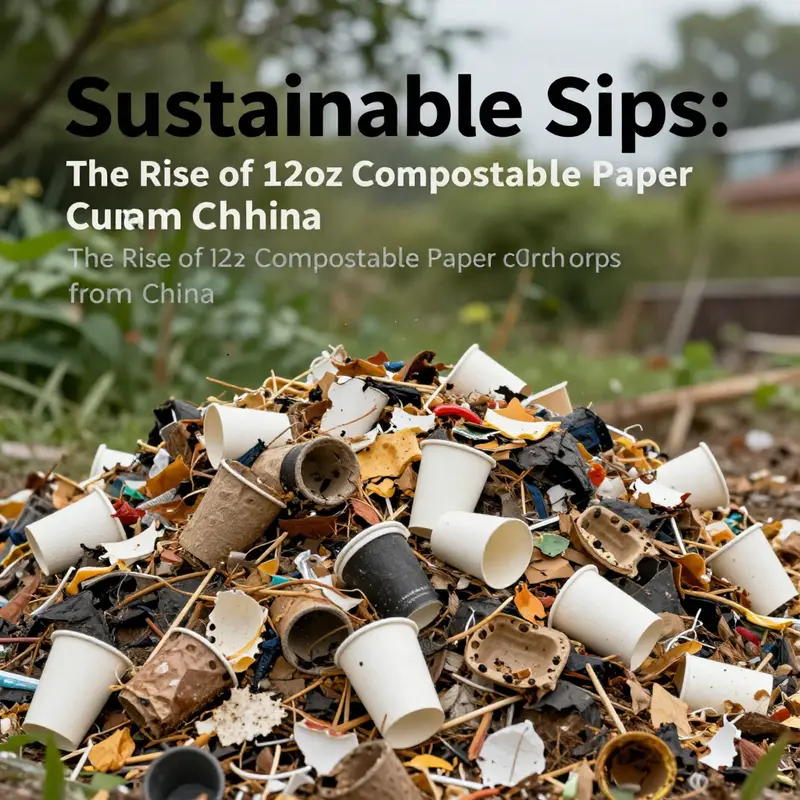
China’s compostable 12oz paper cups exemplify a packaging transition toward renewable materials and end-of-life recovery. By pairing renewable fiber with a plant-based lining, these cups seek to reduce fossil plastic usage and improve compostability where industrial facilities exist. When composting streams are well managed, the cups can contribute to soil nourishment rather than long-term pollution.
A second environmental angle is greenhouse gas performance. While the exact footprint depends on processing efficiency and local waste practices, renewable feedstocks and energy-saving manufacturing can yield lower emissions than conventional plastics, especially in regions with mature composting infrastructure and high diversion rates.
Waste diversion and circularity form another pillar. In cities that collect compostables, compostable cups can become ingredients in soil amendments rather than residual waste, reinforcing urban sustainability programs. Achieving this potential requires clear labeling, consumer education, and accessible facilities to prevent contamination and ensure end-of-life success.
However, the environmental success of these cups hinges on context. Without appropriate facilities or with poor disposal behavior, the benefits can diminish. Policymakers, retailers, and manufacturers thus need to align product design with local waste systems and invest in infrastructure and information campaigns to unlock the full potential of compostable packaging.
In summary, China’s 12oz compostable paper cups offer a pathway to lower plastic dependency, lower carbon intensity, and improved waste outcomes when integrated with renewable materials, responsible manufacturing, and robust end-of-life options.
Greening the Takeaway: Market Currents and Leading Chinese Makers of 12oz Compostable Paper Cups
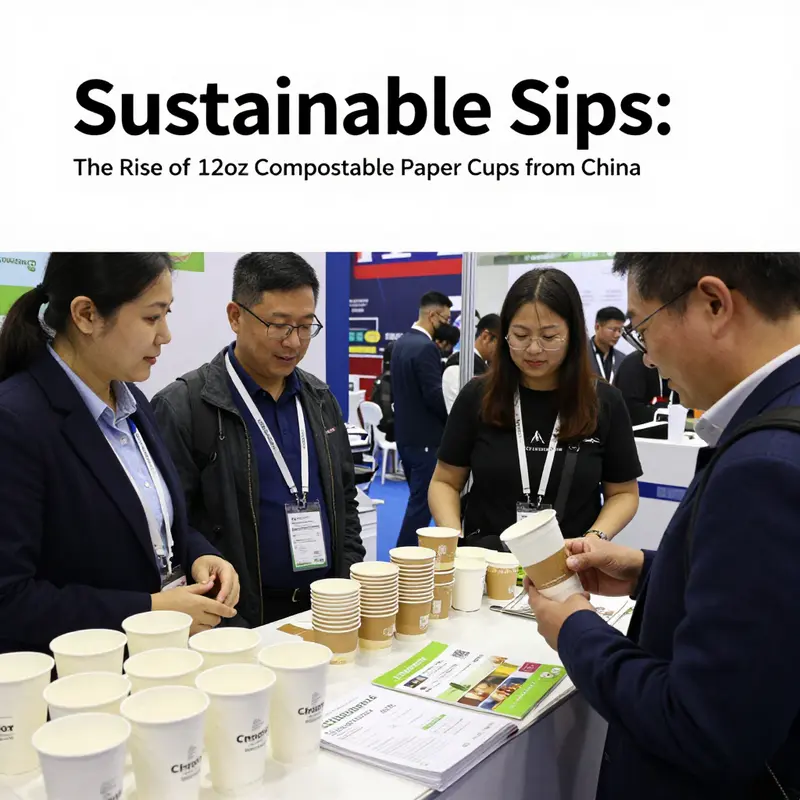
The global push toward sustainable packaging has sharpened the lens through which the disposable cup market is viewed, and nowhere is this shift more evident than in the 12-ounce segment designed for hot beverages. Across continents, regulators, retailers, and consumers are reimagining what it means to carry a coffee, tea, or other warm drinks in a container that exits a café, a street stall, or a catering event with a lighter environmental footprint. In China, this redefinition is not merely a response to demand; it has become a strategic focus that reshapes how cup manufacturers organize their materials, processes, and partnerships. The 12oz compostable cup sits at the intersection of several converging trends: an insistence on renewable raw materials, an ongoing refinement of barrier and heat-resistance technologies, and a growing emphasis on verifiable credentials that prove a product can return nutrients to the soil rather than lingering in landfills. For buyers, the decision set has grown more nuanced. The cups must perform under heat, resist leakage, and carry a credible environmental claim that survives scrutiny from regulators, certification bodies, and curious customers who read the small print on packaging. As companies in the foodservice and events sectors expand their sustainability programs, they confront a lifecycle question: what happens to the cup after it is used? The answers depend on whether the cup is truly compostable in the intended facilities, or merely recyclable in theory. The 12oz size has become a practical default for hot beverages around the world, a standard that balances practicality with a respectful footprint. It is large enough to handle a generous serve yet compact enough to accommodate a broad range of service models, from single-serve cafés to mobile beverage carts and large campus operations. In this context, the Chinese supply chain has evolved into a mature ecosystem that supports both scale and customization, allowing buyers to align packaging with brand identity while meeting stringent environmental expectations. The evolution hinges on core material choices. Traditional paper cups relied heavily on a polyethylene (PE) lining to preserve moisture barriers and structural integrity. Compostable variants, by contrast, often employ a plant-based inner coating—typically a polylactic acid (PLA) layer derived from corn or other starches—that is designed to break down in industrial composting facilities. The interface between the paperboard and the PLA lining is crucial: it must resist delamination under heat and moisture while delivering a clear, defect-free surface for printing and branding. Some producers also experiment with bagasse-based boards—materials derived from sugarcane residue—and bamboo fibers. These options promise reduced reliance on wood pulp and better alignment with renewable resource strategies. When combined with a double-wall or ripple-wall construction, the cups achieve a deft balance of insulation and comfort. The ripple or corrugated outer wall creates a barrier that keeps the beverage hot while shielding the user’s hand from scalding temperatures. This design detail is more than cosmetic; it is a functional attribute that affects customer experience, operational speed, and even the perceived quality of the drink being served. The double-wall configuration also opens the door to a broader range of branding opportunities because the exterior surface is more amenable to high-visibility printing without compromising the wall’s structural integrity. In terms of credentials, reputable suppliers in China routinely pursue a portfolio of certifications to address global markets. Recognized standards such as FDA compliance for food contact, EN 13432 for European compostability, and OK Compost INDUSTRIAL certification provide buyers with confidence that the product meets established benchmarks. SGS or other third-party tests further attest to the product’s safety, performance, and environmental claims. The importance of these certifications extends beyond mere marketing; it is a practical gatekeeper for exporters who want access to the EU, UK, and North American markets, where regulators increasingly scrutinize packaging claims and supply-chain transparency. Buyers who operate with a sustainability mandate are not merely looking for a greener cup; they seek verifiable data about the cup’s entire lifecycle, from raw material sourcing and manufacturing emissions to composting outcomes and end-of-life behavior. The lifecycle perspective is essential because it helps prevent greenwashing and reinforces trust with customers who are quietly demanding more deliberate corporate responsibility from the brands they support. Material sourcing, in particular, has risen to the top of due diligence concerns. The leading edge in China is the shift from traditional petrochemical-derived coatings to bio-based alternatives that leverage agricultural residues and renewable feedstocks. PLA-coated cups, for instance, present a compostability narrative that aligns with industrial facilities rather than home composting. However, the acceptance of PLA-lined cups depends on local composting infrastructure. In regions where industrial composting facilities are widely available, these cups perform as advertised; in places with limited infrastructure, the environmental benefits may be less straightforward. This nuance has made supply-chain transparency even more critical. Buyers now demand documentation such as chain-of-custody records, supplier certifications, and third-party test results that verify the compostability claim and the absence of problematic additives or contaminants. The supplier landscape in China reflects a mature regional network. Guangdong, Zhejiang, and Jiangsu provinces have developed integrated clusters that span raw-material suppliers, converters, printing houses, and packaging distributors. These clusters enable rapid prototyping, flexible production scheduling, and triaged logistics that meet both domestic demand and international orders. The clusters’ strength lies not only in capacity but in the ability to coordinate across the value chain to reduce cycle times, improve quality consistency, and lower the risk of bottlenecks during peak demand periods. The capability to offer customization at scale is a real differentiator for many buyers. It is common for suppliers to provide multi-color printing (up to seven colors), a range of lid-fit options, and branding services that cover logo, motif, and text placement. This capability is particularly relevant for brands seeking to translate their visual identity into packaging that reinforces the customer experience. An emerging feature is the ability to support low-volume trials that help startups gauge market receptivity before committing to larger runs. The availability of small-batch production is a critical factor for market entry, brand testing, and gift campaigns. In a market where environmental claims are increasingly scrutinized, buyers often weigh the combination of cost, quality, and certification. The economic calculus is nuanced: compostable cups typically carry a price premium over conventional PE-lined cups, reflecting the cost of bio-based materials, specialized coatings, and the additional processing steps required to achieve compostability credentials. Yet the premium is often offset by the broader value proposition—third-party certifications, reduced liability for packaging claims, and alignment with corporate sustainability goals that drive customer loyalty and access to green certifications. For those who want to couple sustainability with strong brand presence, a growing option is to source disposable eco-friendly custom paper coffee cups with lid. This approach blends the ecological benefits of compostable materials with the visual clarity of customized branding, turning the cup into a mobile billboard that communicates environmental commitments as customers enjoy their beverages. To illustrate how buyers navigate this landscape in practice, imagine a café chain that meticulously maps its packaging to its environmental promises. The chain must ensure that every supplier can attest to compostability in the intended facilities, and that the product can withstand daily churn—from high-volume morning rushes to late-evening closures—without compromising barrier integrity or ink adhesion. The chain’s procurement team will likely request samples and perform thermogravimetric analyses, heat resistance tests, and print-quality assessments before committing to a long-term agreement. They will also seek assurances about minimum order quantities, lead times, and the flexibility to adjust forecasts in response to seasonal demand or marketing campaigns. The reality is that sourcing in this segment is as much about supply reliability as it is about product credentials. The shift toward longer-term contracts and collaborative testing programs reflects a broader move toward supplier partnerships that can sustain innovation, ensure consistent quality, and reduce the risk of supply disruptions. Regional suppliers, aware of intensified competition, increasingly emphasize not just product performance but also operational transparency. Buyers now expect to receive documentation on life-cycle assessments, supplier audits, and stable sourcing arrangements for renewable materials. These expectations are not mere adjuncts; they are becoming baseline criteria for consideration in many procurement processes. As a result, purchasing teams weigh not only the technical performance of the cup but also the supplier’s capacity to scale with demand, maintain consistent quality, and participate in shared sustainability reporting. The market’s trajectory toward full lifecycle accountability also intersects with policy dynamics in different markets. Europe’s tightened regulatory stance on single-use plastics, alongside national packaging waste directives, has accelerated demand for compostable solutions. North American markets, guided by evolving composting standards and increasingly explicit labeling requirements, favor cups that can clearly demonstrate compostability through recognized certifications. In China, policy signals underscore the intent to align industrial momentum with global environmental expectations, supporting the development of certified materials, traceable supply chains, and lower-carbon production processes. This regulatory backdrop helps explain why a steady stream of suppliers is pursuing certifications such as EN 13432 and OK Compost INDUSTRIAL, and why some producers are prioritizing the traceability of their fiber sources and coatings. The geographic concentration of supply capabilities in southern and eastern China—especially in manufacturing hubs near major ports—also supports export-oriented strategies. Proximity to logistics nodes lowers transit times and reduces lead times for international orders, which is critical in a market characterized by fluctuating demand and the need for quick market entry. For buyers, the practical takeaway is that a robust supplier shortlist in this space will include firms able to demonstrate end-to-end competence: renewable-material feedstocks, compliant coatings, certified products, consistent print quality, and efficient production pipelines that can respond to shifting volumes without sacrificing reliability. When considering a supplier, buyers should evaluate whether the partner can provide a complete package: the cup itself plus lids, compatible packaging, and, ideally, branding services that can deliver a cohesive consumer experience. The ability to customize while maintaining compliance adds value that extends beyond the cup’s physical presence. An important nuance in the sourcing decision is the distinction between “recyclable” and “compostable” claims. A domestically oriented buyer might accept recyclable cups, but for truly compostable designs, the claim should be backed by specific industrial-composting certifications. Misalignment between the claim and the facility’s capabilities can lead to failed composting or, at minimum, customer confusion. In conversations with procurement teams, the emphasis often falls on whether the supplier can provide transparent certificates, explicit material disclosures, and a clear description of the composting conditions required to achieve the claimed outcomes. This level of clarity helps brands communicate effectively with their customers and build trust around sustainability commitments. The landscape is further enriched by the growing demand for customization at scale. Brands with strong visual identities want packaging that stands out on crowded shelves or at crowded counters, and the 12oz compostable cup has emerged as an effective canvass. The supply chain supports multi-color printing on durable, heat-resistant surfaces, which allows for vibrant graphics that endure contact with hot beverages. This capability is particularly valued by brands seeking to embed storytelling into their packaging—narratives about renewable materials, local sourcing, or circular economy partnerships that resonate with environmentally conscious consumers. Market dynamics suggest a steady expansion of capacity in key Chinese regions, aligned with rising global demand. Producers are investing in more efficient drying, coating, and lamination lines, and are upgrading testing labs to better simulate real-world usage scenarios. These improvements contribute to lower defect rates, more consistent color reproduction, and improved barrier performance, all of which matter when cups are used in demanding hospitality environments. As buyers weigh options, they increasingly prefer suppliers who can offer flexible packaging formats, such as different carton sizes and combinations of cups with lids, to simplify distribution and storage. The end-to-end efficiency benefits are meaningful, particularly for operators handling large-scale deliveries or setting up temporary service points at events and festivals. The market’s forward-looking trajectory is also shaped by opportunities to advance circularity. Recyclability remains important, but compostability promises a specific end-of-life pathway that aligns with composting infrastructure development in many regions. The combination of compostable materials and robust certifications provides a credible route to reducing the long-term waste impact of the beverage service industry. Brands that embrace this pathway often see ancillary benefits, such as improved supplier alignment on sustainability reporting, and greater confidence in communicating the environmental value of their packaging to customers. In this evolving landscape, buyers should approach supplier conversations with a holistic frame: “What are the feedstock sources, what certifications confirm compostability, what is the actual demonstration of end-of-life behavior, and how can we ensure a reliable supply chain that scales with our growth?” The answer is not a single silver bullet but a coordinated strategy that blends material science, process optimization, and transparent collaboration with suppliers. To illustrate a practical point, consider the potential for a supplier to partner on a pilot program that tests a brand’s full-supply chain in a controlled environment. Such a program could involve sourcing the cup from a Guangdong-based producer, validating the compostability claim through third-party testing, and coordinating with a local composting facility to monitor degradation rates under industrial conditions. The pilot would provide tangible data on performance, consumer perception, and logistics, giving both supplier and buyer a clearer roadmap for scale. For readers seeking a concrete starting point in this market, there is a growing spectrum of resources to explore. One practical step is to review supplier listings that showcase certified compostable materials and print capabilities, ensuring that the products display credible certifications such as FDA, EN 13432, and OK Compost INDUSTRIAL. Additionally, buyers should consider engaging with suppliers that offer flexible minimum order quantities and transparent lead times to accommodate evolving demand. A marked feature of the current market is the emphasis on regional supply chains that can deliver fast, reliable service while maintaining consistent quality across large orders. In this context, the importance of due diligence cannot be overstated. Buyers should request audit reports, material safety data sheets, and lifecycle data to confirm that each claim aligns with observed performance. The goal is to build a relationship with suppliers who can demonstrate not only the technical competence to produce compostable cups but also the organizational discipline to maintain traceability, quality, and ethical sourcing over time. As the market matures, the conversation with suppliers often evolves from basic product specifications to broader collaboration on sustainability and brand storytelling. The most effective partnerships tend to be those that see packaging as a lever for impact rather than a mere cost center. This perspective aligns with the broader corporate objectives many brands pursue—reducing carbon footprints, improving waste management metrics, and earning recognition through green certifications and third-party verifications. The Chinese manufacturing ecosystem, with its dense network of material suppliers, converters, and finishers, is positioned to support this shift. It offers a blend of scale, technical sophistication, and the flexibility required by brands testing new concepts or launching campaigns with tight timelines. The resulting market reality is a dynamic equilibrium: growing demand for truly compostable, well-credentialed cups; an expanding set of customization options that allow brands to protect and promote their identity; and a supply base that increasingly emphasizes transparency and collaboration as much as output. For readers who want a tangible sense of the current landscape, consider the practical implication of working with a supplier that can provide both robust certifications and branding capabilities. In such a case, a buyer could source the cup with the right compostability credentials and pair it with a design service that translates the brand’s story into on-cup graphics—without sacrificing performance in hot-drink service or logistical efficiency. The result is a packaging solution that not only minimizes environmental impact but also strengthens brand equity in a crowded marketplace. Looking ahead, the market shows resilience and adaptability. The growth of the 12oz compostable cup within China’s export-oriented sector will likely continue as manufacturers lean into renewable material streams, invest in process optimization, and align more closely with international standards. The trajectory supports a future in which sustainable packaging becomes less of a niche feature and more of a baseline expectation for global foodservice operations. As buyers navigate this evolving space, they will increasingly rely on a combination of credible third-party validation, transparent supply chains, and flexible production capabilities that can adapt to shifting demands and evolving regulatory landscapes. The path is collaborative; it requires ongoing dialogue between brands, suppliers, and certification bodies, and it rewards those who approach packaging as a shared responsibility for people and planet rather than a one-time procurement decision. The result is a market where 12oz compostable cups are more than containers for hot drinks. They are symbols of a broader commitment to sustainable practice, a bridge between consumer expectations and manufacturing realities, and a testament to the possibility of keeping everyday rituals—like sipping a morning coffee—in harmony with the environment. Internal links can play a role in this ecosystem by connecting readers with practical options for sourcing and design. For brands considering customization and scalable production, the option to source disposable eco-friendly custom paper coffee cups with lid offers a way to fuse environmental integrity with strong brand impact. Disposable eco-friendly custom paper coffee cups with lid is a representative example of how packaging choices can support a brand’s sustainability narrative while delivering reliable performance at service scale. Readers seeking a broader, external reference on current supplier listings and certifications may consult industry listings that compile product specifications and compliance credentials for compostable cups, as well as live procurement platforms that showcase verified suppliers. External resource: https://www.alibaba.com/product-detail/12oz-Compostable-Paper-Cups-Biodegradable-Hot_1600524777841.html
Final thoughts
In summary, the growing demand for eco-friendly products has led to a significant shift towards 12oz compostable paper cups among beverage providers. These cups offer distinct features that make them suitable for hot beverages while contributing positively to the environment. As consumer preferences continue to evolve, staying informed about market trends and leading suppliers can empower businesses, from bubble tea shops to catering services, to align with sustainability goals effectively. By choosing compostable options, companies not only enhance their brand image but also play a vital role in reducing plastic waste and promoting responsible consumption.