
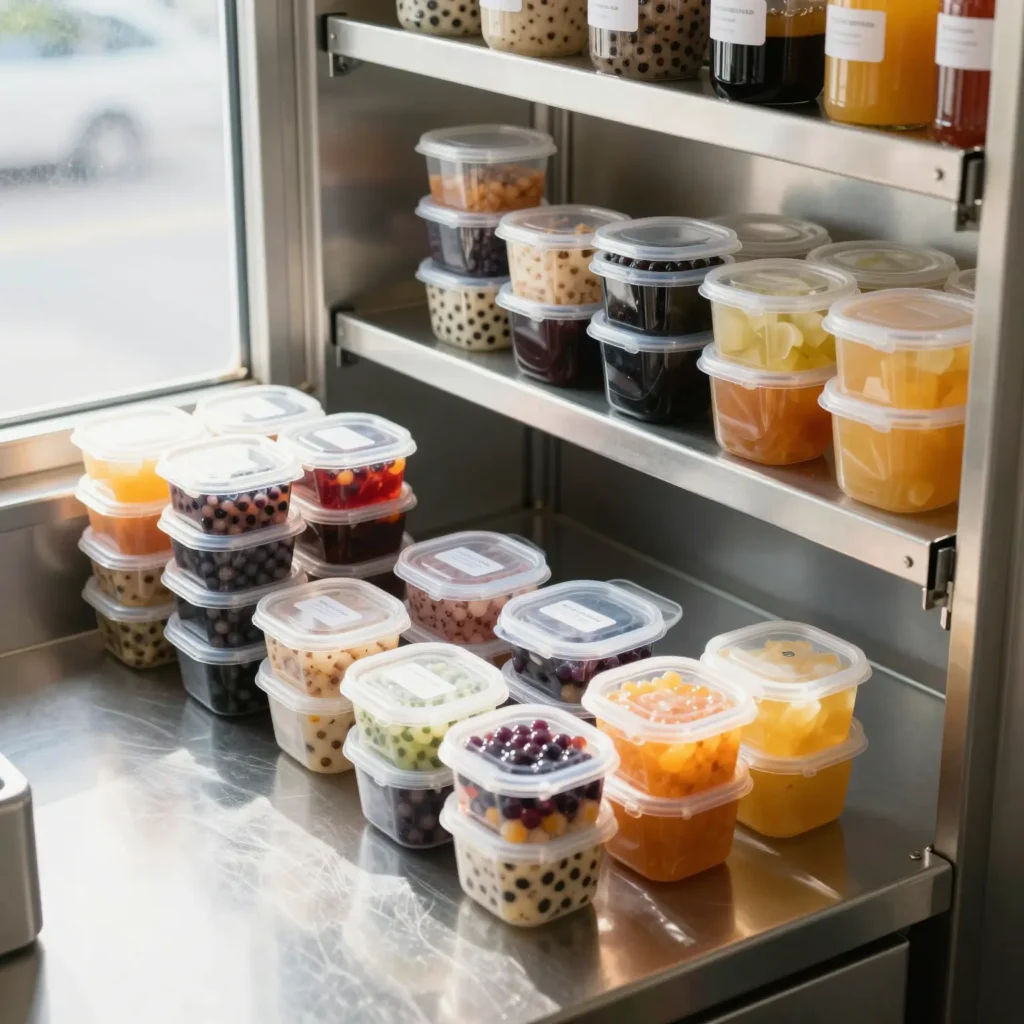
Picture this: you’re running a busy bubble tea shop, a bustling restaurant kitchen, or a non-stop food truck operation. By the end of each week, you’re staring at a growing mountain of plastic baby food containers – leftover from purées, sauces, syrups, and prepped ingredients. They’re sturdy, stackable, and surprisingly uniform in size. But instead of tossing them into the trash (and watching your waste management costs climb), what if you could repurpose plastic baby food containers into something genuinely useful for your business? This simple shift is one of the most overlooked sustainable storage solutions available to food service operators today.
From commercial kitchen organization to precise portion control for food trucks and catering services, these humble containers offer a surprising second life. They’re leak-resistant, microwave-safe, and perfectly sized for holding boba pearls and toppings, sauce portions, catering samples, and even corporate event giveaways. Adopting this practice is a smart, low-cost way to embrace eco-friendly restaurant practices without investing in expensive new shelving or storage systems. Your bottom line – and your customers – will thank you.
In this article, we’ll show you exactly how to turn what many consider trash into treasure, transforming discarded containers into operational assets that save money, reduce waste, and impress your eco-conscious clientele. Ready to rethink your kitchen’s leftovers? Let’s dive in.
Why Repurpose Plastic Baby Food Containers? The Environmental & Economic Case
Here’s a number that should stop you in your tracks: every year, the global food service industry generates over 300 million tons of plastic waste – and less than 10% of it ever gets recycled. The rest ends up in landfills, oceans, and incinerators, contributing to a crisis that’s as costly for the planet as it is for your bottom line.
But here’s the good news: one of the simplest ways to fight back is already sitting in your kitchen.
The Environmental Win
Every time you toss a plastic baby food container into the recycling bin – or worse, the trash – you’re adding to a staggering problem. The food service sector is a major contributor to plastic waste reduction in food service challenges, with single-use packaging accounting for the bulk of the damage. By choosing to repurpose these sturdy, food-grade containers, you’re:
- Keeping plastic out of landfills – one container at a time
- Reducing demand for new plastic storage products
- Lowering your kitchen’s carbon footprint without expensive equipment upgrades
Key takeaway: Repurposing isn’t just recycling – it’s pre-cycling. You’re preventing waste before it happens.
The Cost-Savings Payoff
Let’s talk dollars and cents. Commercial-grade storage containers aren’t cheap. A set of quality bpa-free storage bins can run $20-$50 per container. Now think about how many ingredients you store in a busy bubble tea shop or restaurant kitchen – syrups, boba pearls, dry toppings, sauce backups – the costs add up fast.
Plastic baby food containers are free (they come with your ingredients), durable (designed to hold purees and liquids), and perfectly portioned for mise en place. This is the definition of cost-effective storage for restaurants.
| Storage Solution | Cost per Container | Durability | Best For |
|---|---|---|---|
| Commercial storage bins | $20-$50 | High | Bulk dry goods |
| Plastic baby food containers (repurposed) | $0 | High | Syrups, sauces, toppings, small ingredients |
| Disposable deli cups | $0.10-$0.50 each | Low | Single-use only |
Key takeaway: Switching to repurposed containers can save your business hundreds of dollars annually on storage alone.
The Bottom Line
When you reduce commercial kitchen waste and cut storage costs simultaneously, you’re not just being eco-friendly – you’re being smart business. Every container you repurpose is one less container you buy, and one less piece of plastic in the waste stream. And when you do need to purchase new eco-friendly options, consider exploring sustainable food container alternatives made from renewable materials.
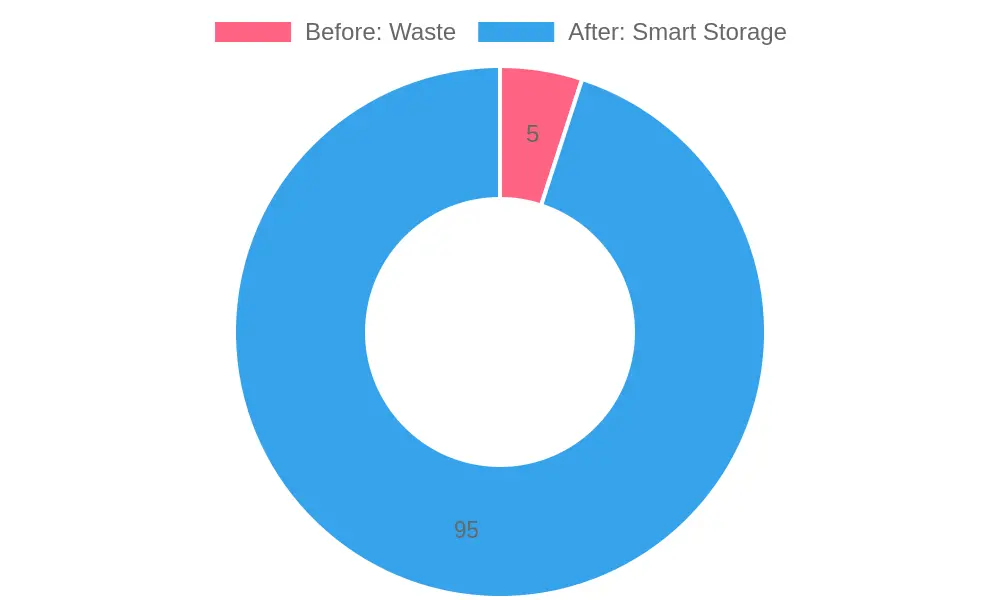
From waste to workspace – the same containers, completely transformed.
Ready to put this into practice? Up next, we’ll walk through the step-by-step process of cleaning, prepping, and organizing your repurposed containers for maximum efficiency in your kitchen.
Why Smart Businesses Are Turning to Creative Reuse
Beyond the environmental benefits, forward-thinking commercial kitchens and beverage chains are discovering that repurposing containers – from bulk ingredient jars to single-serve packaging – can significantly trim operational costs. This isn’t just a trend among eco-conscious startups; it’s a strategy gaining traction across the food service industry. Businesses that pivot toward sugarcane food containers and other sustainable alternatives are finding that creative reuse dovetails perfectly with lean operations.
“In commercial kitchens, the most sustainable container is the one you already have. Repurposing plastic baby food containers for portioning sauces, storing dry ingredients, or organizing prep-station garnishes cuts waste disposal costs by up to 30% while reducing plastic procurement spend. It’s not just eco-friendly – it’s a smart operational decision that directly improves your bottom line.”
This kind of thinking aligns perfectly with the broader shift toward compostable takeaway packaging, where every item is designed with its next life in mind – whether that’s a second use in your kitchen or biodegradation after its journey ends.
Step-by-Step Guide: How to Clean and Prep Baby Food Containers for Commercial Use
Repurposing plastic baby food containers can be a smart, cost-effective move for your business – but only if they meet the same rigorous food safety standards as your primary serviceware. Proper food-safe container cleaning for businesses ensures these containers are ready for dressings, toppings, dipping sauces, and more. Follow this five-step protocol to transform everyday baby food jars into commercial-grade storage solutions.
1. Rinse Immediately After Use – As soon as the container is emptied, give it a thorough rinse with warm water. This prevents food residue from drying and bonding to the plastic, which makes later cleaning far more difficult. For oily or sticky contents (like fruit purees), use a dab of commercial-grade dish soap and hot water, then shake vigorously before the initial rinse.
2. Remove Labels with a Baking Soda Paste – Mix three parts baking soda with one part water to form a thick paste. Apply it generously over the label and let it sit for 10-15 minutes. The mild abrasiveness lifts adhesive residue without scratching the plastic surface. Scrub gently with a non-abrasive pad, then rinse clean. For stubborn adhesive, a few drops of food-grade mineral oil can help dissolve the remaining glue.
3. Sanitize Using Commercial Dishwashing Protocols – Run the containers through a high-temperature commercial dishwasher (at least 180°F for the final rinse) or follow a three-compartment sink method: wash (110°F with detergent), rinse, and sanitize (immerse in 171°F water for at least 30 seconds or use an EPA-approved sanitizing solution per manufacturer instructions). This aligns with FDA food safety standards for reusable food-contact surfaces.
4. Inspect for Cracks or Wear – Examine each container and lid under good lighting. Look for hairline cracks, cloudiness, warping, or degraded seals. Any compromised container should be discarded immediately – even tiny cracks can harbor bacteria and compromise food safety. Remember, these containers should meet the same durability benchmarks as our sugarcane food containers and other premium disposable tableware.
5. Sort by Size and Stack for Storage – Group containers by volume (e.g., 2 oz, 4 oz, 6 oz) and nest them securely. Store lids separately in labeled bins to prevent cross-contamination of food-contact surfaces. Keep stacked containers in a clean, dry, food-grade storage area away from chemicals and cleaning supplies.
Once your containers are prepped and sanitized, you’re ready to get creative – think single-serve sauce cups, sample portions for events, or organized ingredient stations for your food truck or catering service.
Cleaning Guide: Keeping Your Repurposed Containers Sanitary & Professional
Before you start stacking, let’s talk about cleanliness. One of the biggest concerns commercial kitchens have about repurposing plastic baby food containers is hygiene. The good news? These containers are made from high-quality, food-grade plastics – often polypropylene (PP #5) – that are BPA-free, durable, and heat-resistant. With the right cleaning protocol, they can look as clean and professional as any new storage solution.
Step-by-Step Cleaning Protocol
1. Initial Wash & Sanitization
After your last use of baby food, rinse containers immediately to prevent residue from sticking. Wash them in commercial dishwashers on the high-temperature sanitization cycle (at least 180°F for the final rinse), or hand-wash in hot water with a food-safe sanitizer. For stubborn tomato-based stains, a paste of baking soda and water works wonders.
2. Label Removal
To remove original labels cleanly, soak containers in warm soapy water for 15-20 minutes. The labels should peel off easily. For any sticky adhesive residue, use a citrus-based degreaser or rubbing alcohol. Avoid abrasive scrubbers that can scratch the plastic – scratches create hiding spots for bacteria.
3. Final Sanitization
Once labels are gone and containers are clean, soak them in a diluted food-grade sanitizer solution (following manufacturer instructions). Let them air-dry completely on a clean drying rack before stacking. This ensures zero moisture – which means zero bacteria growth.
4. Visual Inspection
Check each container for cracks, warping, or discoloration. Discard any that show signs of wear. Only pristine containers belong in your professional kitchen storage system.
Pro Tip: Assign one day per week for container cleaning. When you make it a routine, it takes just 10 minutes and keeps your system looking sharp.
Image: Neatly stacked repurposed containers organized by size in a commercial kitchen setting, demonstrating professional organization and sustainable practice.
Why Stacking by Size Matters
Once your containers are clean and sanitized, organization is the next step. Stacking repurposed baby food containers by size isn’t just about aesthetics – it’s about operational efficiency. When your kitchen team can grab the right-sized container instantly, you save seconds that add up to hours over the course of a shift.
The Size System
| Container Size | Typical Volume | Best For | Stacking Method |
|---|---|---|---|
| Small (Stage 1) | 2-3 oz | Spices, garnishes, sauce samples | Nested stacks of 10-15 |
| Medium (Stage 2) | 4-6 oz | Prepped herbs, syrups, dressings | Nested stacks of 8-10 |
| Large (Stage 3) | 6-8 oz | Bulk mise en place, marinated items | Nested stacks of 5-8 |
Use a dedicated shelf section for each size tier. Label the shelf edge (not the containers) with size categories using a removable label maker. This keeps the containers themselves clean and label-free while maintaining a foolproof organization system.
For bubble tea shops and beverage chains, these containers are especially useful for holding tapioca pearls, popping boba, fruit syrups, and powdered flavorings. The airtight lids (which come standard with most baby food containers) keep ingredients fresh and prevent cross-contamination.
Restaurants and food trucks can use them for portioned spices, house-made vinaigrettes, and pre-measured garnishes. Event planners and corporate catering teams will appreciate having uniform, stackable containers that maximize limited cooler and shelf space.
Visual Organization Benefits
- At-a-glance inventory: You can see exactly how many of each size you have stocked
- Faster restocking: Newly cleaned containers go straight to their designated section
- Professional appearance: Even during health inspections, organized repurposed containers look intentional and clean
When you’re ready to expand your sustainable packaging lineup, explore our selection of eco-friendly paper bowls and compostable food containers to complement your repurposed storage system.
Creative Business Uses for Plastic Baby Food Containers
You might be surprised to learn that those small, sturdy plastic baby food containers sitting in your recycling bin are actually a goldmine of organizational potential for commercial settings. Thanks to their airtight seals, stackable design, and dishwasher-safe durability, these containers are perfectly suited for repurposing plastic baby food containers for restaurants, food trucks, and event teams alike. Here’s how different business types can turn this everyday item into a commercial asset.
Bubble Tea Shops & Beverage Chains
Bubble tea shops deal with a dizzying array of small ingredients – boba pearls, popping bubbles, flavored syrups, and powdered toppings. Plastic baby food containers are ideal for storing these components. Their transparent walls make it easy to identify contents at a glance, while the tight-fitting lids prevent spills during the morning rush. Chefs and baristas can pre-portion tapioca pearls or fruit syrups into individual containers, ensuring consistent drink quality and reducing mess. This simple commercial container reuse idea keeps refrigerators organized and speeds up service during peak hours.
Restaurants
In busy kitchens, every second counts. Chefs can use these containers to hold pre-portioned sauces, fresh herbs, microgreens, diced garnishes, or even spice blends. By prepping mise en place into these uniform containers, kitchen staff can grab exactly what they need without rifling through bulky storage bins. This not only accelerates prep time but also dramatically cuts down on food waste – particularly for expensive ingredients like fresh herbs or specialty sauces. For restaurants looking to tighten their operations, this is a zero-cost upgrade with immediate returns.
Food Trucks & Catering Services
Space is the ultimate luxury on a food truck. Every square inch counts. Plastic baby food containers are compact enough to nestle into tight corners, yet sturdy enough to hold spices, condiment packets, dressing cups, and cooking oils. Their stackable design means you can organize an entire spice rack in a fraction of the space. For caterers transporting ingredients between venues, these containers prevent leaks and keep everything neatly compartmentalized.
Event Planners & Corporate Teams
Beyond food service, these containers shine in event logistics. Use them to store name tags, table numbers, small decor pieces, safety pins, and craft supplies. The clear lids let you see what’s inside without opening, and the uniform sizing makes packing and transport a breeze. Label each container with a marker and you have a portable, reusable organization system for any event.
| Business Type | Container Use | Benefit | Estimated Monthly Savings |
|---|---|---|---|
| Bubble Tea Shops & Beverage Chains | Storing boba pearls, syrups, and toppings | Portion control and visibility | $50-120 |
| Restaurants | Holding pre-portioned sauces, herbs, garnishes | Faster prep and reduced waste | $80-150 |
| Food Trucks & Catering Services | Organizing spices, condiments, and small ingredients | Space efficiency | $40-90 |
| Event Planners & Corporate Teams | Storing name tags, small decor, and craft supplies | Easy transport and labeling | $30-70 |
When you add up these savings across every department – from reduced spending on disposable storage containers to less food waste and faster prep times – it’s clear that these small, everyday changes can amount to hundreds of dollars in annual savings, all while keeping perfectly good plastic out of the landfill. For more eco-friendly packaging solutions to complement your reuse strategy, explore our sugarcane bowl collection or browse our full range of paper packaging options.
📊 Annual Savings Potential by Business Type
| Business Type | Estimated Annual Savings (USD) |
|—|—|—|
| Bubble Tea Shops | $1,200 |
| Restaurants | $1,600 |
| Food Trucks | $900 |
| Event Planners | $720 |
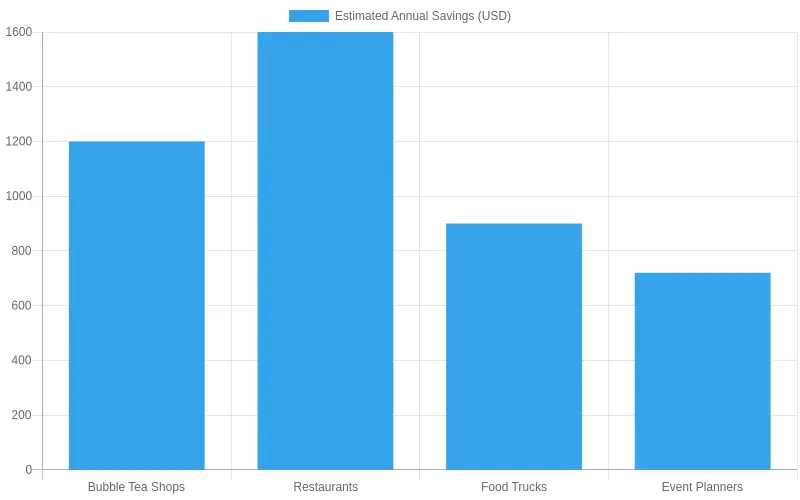
Chart: Annual Savings Potential by Business Type
Repurposing plastic baby food containers isn’t just a win for the environment – it’s a smart financial move for your business. As the chart above illustrates, restaurants lead the pack with potential annual savings of up to $1,600, followed closely by bubble tea shops at $1,200. Even food trucks and event planners can save $900 and $720 per year respectively simply by giving these containers a second life.
These savings come from reduced spending on single-use storage solutions, portion cups, and disposable organizers. Instead of purchasing new containers for every need, businesses can wash, sanitize, and repurpose baby food containers for ingredient prep, sauce storage, garnish organization, and small-part sorting.
For businesses looking to maximize their sustainability efforts while keeping costs low, combining container repurposing with compostable paper packaging and eco-friendly takeaway boxes creates a complete green strategy that appeals to today’s environmentally conscious consumers.
Limitations & When to Choose Professional Solutions
Repurposing baby food containers can feel like a clever, eco-friendly shortcut – and for certain low-stakes storage tasks, it works just fine. But before you commit to using them across your entire operation, it’s important to look at the practical limitations that can affect food safety, customer perception, and long-term costs.
Key Limitations to Consider
- Not heat-resistant: Most plastic baby food containers are not designed to withstand hot foods or beverages. Heat can cause warping, leaching of chemicals, or structural failure – making them unsuitable for soups, hot tea, or warm takeaway meals.
- Short lifespan: These containers are made for single-use baby food, not repeated washing and sanitizing. Over time, they crack, stain, and degrade, especially under commercial dishwashing conditions.
- Unprofessional appearance: For customer-facing foodservice operations, mismatched, cloudy, or worn containers can undermine your brand image. First impressions matter, and repurposed containers often look exactly like what they are – leftovers.
- Inconsistent sizing and sealing: Baby food containers come in limited shapes and sizes, with no standardized lids for leak-proof transport. This can lead to spills, wasted product, and frustrated customers.
- Lack of certifications: Repurposed containers typically lack food-grade certifications or FDA compliance documentation that commercial kitchens and health inspectors require.
When to Upgrade to Professional Solutions
For low-risk, back-of-house dry storage, repurposing may be acceptable. But for high-volume operations, customer-facing service, or temperature-sensitive applications, investing in commercial-grade disposable tableware is the smarter move. Professional solutions are engineered to perform under real-world conditions – they’re heat-resistant, stackable, leak-proof, and designed to reinforce your brand identity.
Whether you’re serving bubble tea, hot soups, salads, or catered events, professional food packaging solutions offer the durability, safety, and visual appeal that repurposed containers simply can’t match. They also come in a wide range of eco-friendly materials – like bagasse (sugarcane fiber), kraft paper, and compostable options – so you don’t have to compromise on sustainability to get professional-grade performance.
Ultimately, the best choice depends on your specific needs. For quick fixes around the office, baby food containers have their place. But for businesses that depend on durable containers for businesses, a purpose-built solution is worth every penny. That’s where having a reliable packaging partner makes all the difference.
The Smart Choice for Your Business
When it comes to sourcing packaging, reliability matters. Our products meet food-grade standards and are made from eco-friendly materials. Bulk ordering saves costs and ensures timely delivery.
Final Thoughts: From Quick Fix to Professional Solution
Repurposing baby food containers around your shop can feel like a clever win – and it is, for a day or two. As we’ve explored throughout this article, those small plastic jars offer a handy, zero-cost way to organize ingredients, store small supplies, or reduce immediate waste. They’re a fine short-term patch when you’re in a pinch.
But here’s the truth: baby food containers were never designed for the demands of a commercial food service operation. They warp under heat, crack under pressure, and their mismatched sizes and labels create an unprofessional impression that customers notice. For bubble tea shops, busy restaurants, food trucks, and event caterers, reliability and presentation matter every single shift.
That’s why the smartest move is knowing when to pivot from a temporary fix to a lasting solution. Investing in quality disposable tableware isn’t just about aesthetics – it’s about consistency, food safety compliance, and building a brand your customers trust. Whether you need sturdy paper cups for hot beverages or eco-friendly sugarcane food containers for takeout, professional-grade packaging pays for itself in customer satisfaction and operational peace of mind.
Don’t let makeshift containers hold your business back. Make the switch to packaging that works as hard as you do.
📞 Contact Us
Choose our reliable disposable tableware and packaging solutions for your business. We offer quality products that meet safety standards, with fast delivery and flexible options. Partner with us today to elevate your service – contact our team now for a tailored quote!
Ready to upgrade your packaging? Whether you need a custom disposable tableware quote for your chain or want to become a professional packaging partner for your growing brand, we’re here to help. Our team works with businesses of all sizes to create packaging solutions that fit your needs, your budget, and your sustainability goals.
👉 Get in touch today – tell us about your business, and we’ll craft a personalized quote with fast turnaround times and flexible order quantities. No minimums too small, no orders too large.
Here’s to smarter storage, better presentation, and a business that always looks its best. We can’t wait to partner with you! 🥤♻️
– The GreenDispoPack Team