
Local Stock or Direct Import? The Real Decision Behind “20 oz clear plastic cups near me”
Whoever types 20 oz clear plastic cups near me into a search box is setting up a supply route, not buying a retail pack. The buyers behind that query run cafes, juice and smoothie counters, bubble tea shops, food trucks, catering operations or packaging distribution businesses. They choose between two supply models: local stock, which ships quickly in small quantities, and direct import, which lowers unit cost at the price of an import MOQ and a longer lead time. Order volume, working capital, storage space and appetite for inventory risk decide which one fits.
Cost, MOQ, lead time and risk are the four things worth comparing, and the figures below are ranges rather than quotes. Confirm any number in writing with a supplier before it goes into a budget.
What Buyers Specify Before Comparing Suppliers
Two quotes for 20 oz clear plastic cups can match on the price line and still describe different products. The specs drive unit cost, freight weight and liability, so fix them before you rank offers and ask every supplier to confirm them in writing.
- Material: specify PET (crystal-clear, cold service) or PP (heat-tolerant, slightly hazier), never a vague “clear plastic.”
- Rim diameter and lid fit: confirm rim OD in millimeters and whether lids are quoted separately or matched to your cup; see cup lids and matching formats when you need a set.
- Wall thickness and rigidity: ask for gram weight per cup rather than “heavy duty,” so you know how the cup behaves when stacked and filled.
- Case pack and pallet configuration: case count, carton dimensions, units per layer and pallet footprint set your landed freight cost.
- Food-contact compliance: request FDA-grade resin declarations and migration test reports that document compliance for your destination market.
- Print and labeling options: confirm print method, color count, MOQ per design, and whether labeling runs in-line or is added after production.
Attach the list to every RFQ, so a local quote and an import quote are measured against the same baseline before you negotiate price.
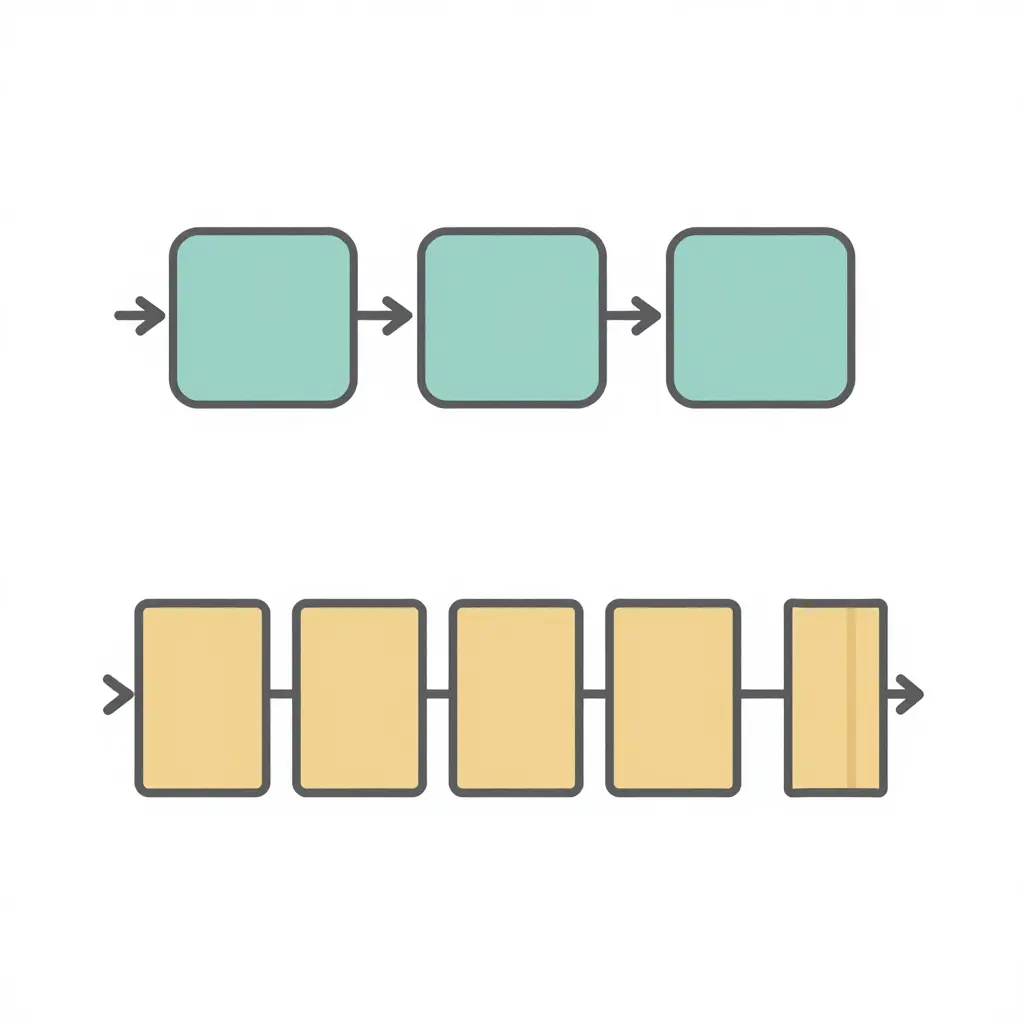
Figure 1: The diagram illustrates the structural difference in the number of handling stages between local stock and direct import.
Reading the Two Paths
The top chain is short: goods move from a supplier’s existing inventory to a local warehouse and then to your door. The bottom chain has more links, and each one costs time, paperwork and money. That is why an import unit price can fall while the calendar stretches.
Fewer handoffs also mean fewer places for a delay to start. On the longer chain the same product passes through more parties, so a hold at one link pushes everything behind it.
Local Stock: Small Quantities, Short Lead Times
Local stock is already sitting in a domestic warehouse, cleared and ready to move. That removes both hard parts of importing at once: the volume commitment and the calendar risk. You buy at the pace your business actually runs.
Case-Level and Pallet-Level Purchasing
Most distributors quote 20 oz clear plastic cups by the case. Case counts vary by supplier and pack configuration, so confirm units per case before comparing quotes.
MOQ is layered rather than fixed. A first order can be a handful of cases; better pricing usually appears at pallet quantities, where the per-unit cost drops. Your minimum scales with shelf space instead of with a container.
Replenishment Lead Time: Ready-to-Ship vs. Regional Transfer
Two clocks run on local stock, and they behave differently.
- Ready-to-ship. The SKU is in the local distribution center and normally leaves within 24 to 72 hours.
- Regional transfer. The SKU sits in another warehouse and needs internal freight. Budget one to two weeks, of which the linehaul itself is typically 5 to 10 days.
Confirm which warehouse a SKU ships from before you promise a delivery date to your own customers. Two distributors can both say “in stock” and still quote very different lead times.
Landed Pricing Already Includes Freight and Duties
The quoted unit price on local stock is a landed price: inbound ocean freight, clearance, duty and drayage are already absorbed. Unit cost runs higher than a factory-direct quote, but on small and mid-size orders the total landed cost is often close and the administration is much lighter. No forwarder, no customs broker, no demurrage exposure.
Where Local Stock Wins
- Flexibility. Order size moves with demand, week to week.
- Testing before committing. Run a size, lid or straw pairing through the actual menu before scaling it.
- Cash flow. Smaller invoices and faster turns instead of a large prepayment tied up for months.
- Distributor support. Mixed loads, matched lids, sleeves and label guidance from one supplier.
If the menu is drifting toward fiber-based formats, compare paper cup alternatives before finalizing a plastic program. Deciding the material now costs less than re-tooling later.
Where Local Stock Falls Short
- Higher unit cost. You pay for availability and small quantities.
- Limited combinations. Warehouses stock the fast movers, not the full catalog.
- Someone else’s stockout. If the distributor runs out, you inherit the gap, and no amount of planning fixes a SKU that is not on the shelf.
The premium buys availability and small batches. For launch volumes, seasonal peaks and menu tests that is usually the cheaper route overall. For steady, high-volume programs, price an import alongside it.
Direct Import: Lower Unit Cost, Higher MOQ
Direct import is where most buyers end up after a local quote looks expensive per cup. You accept a larger commitment and a longer timeline in exchange for a lower landed unit cost. For 20 oz clear plastic cups, map that trade phase by phase before paying a deposit.
The import lead time is a stack, not a number
A credible lead time figure is the sum of six blocks. Each one should be quoted as a range and then confirmed in writing on the proforma invoice.
- Production scheduling. Artwork and dieline approval, print plates or tooling, and raw material booking at the factory. This runs before a single cup is molded, and buyers routinely underestimate it.
- Production run. The manufacturing window, which stretches or shrinks depending on whether your order shares a line with other jobs and whether the color or size is a stock specification.
- Pre-shipment inspection. An in-house factory check or a third-party inspection the buyer books, sampling against an agreed AQL.
- Ocean transit. Usually the longest single block, and the one most exposed to schedule rollovers and peak-season space shortages.
- Port handling and customs clearance. Terminal and destination charges, duty, and the risk of a documentation query that holds the container for extra days.
- Inland delivery. Drayage or trucking to your warehouse or 3PL, plus the appointment window your receiving dock can actually accommodate.
| Phase | Main driver of duration | What to confirm in the quote |
|---|---|---|
| Production scheduling | Artwork approval, tooling, material booking | Whether artwork approval time is included |
| Production run | Line capacity, order position in queue | Run window after deposit receipt |
| Pre-shipment inspection | Booking lead time, AQL scope | Who books and who pays |
| Ocean transit | Port pair, carrier schedule, season | Port of loading and transit estimate |
| Port handling and customs | Duty classification, document accuracy | Incoterm and who clears |
| Inland delivery | Distance, drayage availability, dock slot | Delivery point and unloading terms |
How import MOQ is actually expressed
Suppliers rarely quote one flat number. Expect three overlapping expressions of import MOQ. The first is a minimum quantity per SKU, which protects the factory against short, inefficient runs. The second is a full container load threshold, where pricing steps down materially once you fill a 20ft or 40ft container. The third is mixed-SKU container rules, which let you combine sizes or colors in one container provided each line still meets its own floor. If you sell more than one format, ask for the per-line floor and the container fill target together. Mixed-SKU rules often decide whether a first order is workable or oversized.
Why unit cost falls as volume rises
Setup and tooling are fixed, so they spread over more units as the order grows. Longer print or molding runs lose less time to changeovers. Raw material is bought at better tiers. Freight, documentation and customs costs are mostly per shipment rather than per unit, so a full container load dilutes them across far more cups than an LCL shipment does. The curve then flattens: the largest step down is usually LCL to a full container, and savings beyond that are real but smaller.
Buyer obligations that come with the lower price
Direct import moves several costs and responsibilities onto you, and a good quote names them. Expect a deposit at order confirmation with the balance due before shipment; the split varies by supplier, so confirm it rather than assume it. Inspection usually bills to the buyer, priced per inspection day plus travel and sampling, and a re-inspection after a failed AQL audit bills again. Documentation is yours to review: commercial invoice, packing list, bill of lading, certificate of origin where applicable, and food-contact declarations or test reports for the material grade. Receiving capacity catches first-time importers more often than they expect. You need dock access, unloading labor, a forklift and pallet storage ready the day the container arrives, or you pay demurrage and detention.
Lock lid compatibility down early. If the program pairs cups with a lidded service format, confirm fitment and stacking before the order is placed, and check paper lid options so the closure spec matches the rim you are importing. Finding a rim mismatch after the container lands means buying new lids or new cups.
Import is a margin decision with a schedule attached. Price the whole timeline and the whole obligation list, not only the unit cost, and the comparison against local stock becomes an informed one.
How the two routes compare on the factors that decide the choice:
| Factor | Local Stock | Direct Import |
|---|---|---|
| Minimum order quantity | A few cartons or cases; no container minimum | Usually one full container |
| Unit cost position | Higher per-unit price, paid for speed | Lowest per-unit price at volume |
| Order-to-delivery lead time | 1 to 3 days ready-to-ship; up to 2 weeks from another region | 60 to 90 days door to door, production included |
| Freight and duty handling | Simple domestic delivery, often included | Buyer handles freight, customs, duties and port fees |
| Quality inspection control | Inspect samples and stock before you commit | Pre-shipment inspection is essential; claims are slow |
| Packaging and label customization | Limited to stock print; small label runs possible | Full custom print, logo and carton design at MOQ |
| Cash-flow and payment terms | Pay per shipment; net terms sometimes offered | Deposit up front, balance paid before shipment |
| Storage space required | Small footprint with frequent replenishment | Large warehouse space for container volumes |
| Risk if demand changes | Low; scale up or down order by order | High; slow-moving stock ties up cash |
In most buying decisions the MOQ and lead-time rows rule out one route before unit cost is compared.
Calculating True Landed Cost per Cup
Landed cost is everything you spend to put a filled cup in a customer’s hand, not the number printed on a quote. A container on your dock carries nine cost lines stacked on top of the FOB price or the local stock price, and each line moves differently as order size changes.
The Nine Cost Lines You Must Stack
- Goods cost. The FOB price or local stock price per unit, multiplied by the quantity you commit to.
- Freight. Ocean freight for imports or road freight for domestic stock, usually quoted per container, per pallet or per truckload.
- Insurance. Cargo insurance, normally a small percentage of declared value, covering loss or damage in transit.
- Duties and taxes. Customs duty, import VAT or GST, and any trade remedy or anti-dumping measures applied at the border.
- Port and clearance fees. Terminal handling, documentation, broker fees, and demurrage when paperwork or inspections slip.
- Inland delivery. Trucking from port or warehouse to your door, including liftgate, appointment and waiting-time charges.
- Inspection. Pre-shipment QC, third-party sampling, and any rework or re-inspection you fund yourself.
- Storage. Warehouse space while you absorb and gradually draw down a shipment far larger than current demand.
- Cost of capital. Money locked up in supplier deposits and slow-moving inventory between payment and sell-through.
Which Lines Shrink and Which Grow With Volume
| Cost line | As order volume grows | As order volume shrinks |
|---|---|---|
| Goods cost | Falls as you enter better price tiers | Rises, often sharply below import MOQ |
| Freight | Per-unit cost drops as a fixed container or truck cost spreads wider | Per-unit cost balloons because the fixed trip is shared by fewer cups |
| Insurance | Roughly proportional, so per-unit effect is flat | Flat, but adds a visible margin on a small base |
| Duties and taxes | Proportional to value, flat per unit | Flat per unit, no relief at low volume |
| Port and clearance | Fixed per shipment, so heavily diluted | Fixed per shipment, so painful when volume is thin |
| Inland delivery | Fixed per trip, diluted over more cases | Fixed per trip, a large share of a small order |
| Inspection | Fixed per batch, diluted over more units | Fixed per batch, disproportionately heavy |
| Storage | Grows in absolute cost as containers pile up | Usually smaller, though space stays occupied |
| Cost of capital | Grows in absolute terms with committed spend | Smaller in dollars but higher per cup on slow turnover |
Why a Lower Unit Price Can Cost More per Cup
A low unit price only helps once volume is large enough to absorb the fixed lines. At or below the import MOQ you buy a container’s worth of freight, clearance, inspection and storage to cover demand that may need a few pallets, so those fixed charges land on a thin layer of cups. Local stock looks pricier on the invoice because the importer already spread the same fees across many buyers and carries the risk. That is why a high-volume buyer usually wins on landed cost while a smaller operator often finds local stock cheaper all-in. Convert every quote into the same number, the all-in cost of one cup, before you sign. If you also sell hot drinks or soups, run compatible paper cup formats through the same per-cup method.
Lead Time Comparison: How Long Each Fulfillment Path Really Takes
Landed cost covers half the decision. The chart shows elapsed time from purchase order to dock arrival on each route, which is the calendar time you trade for a lower unit price.
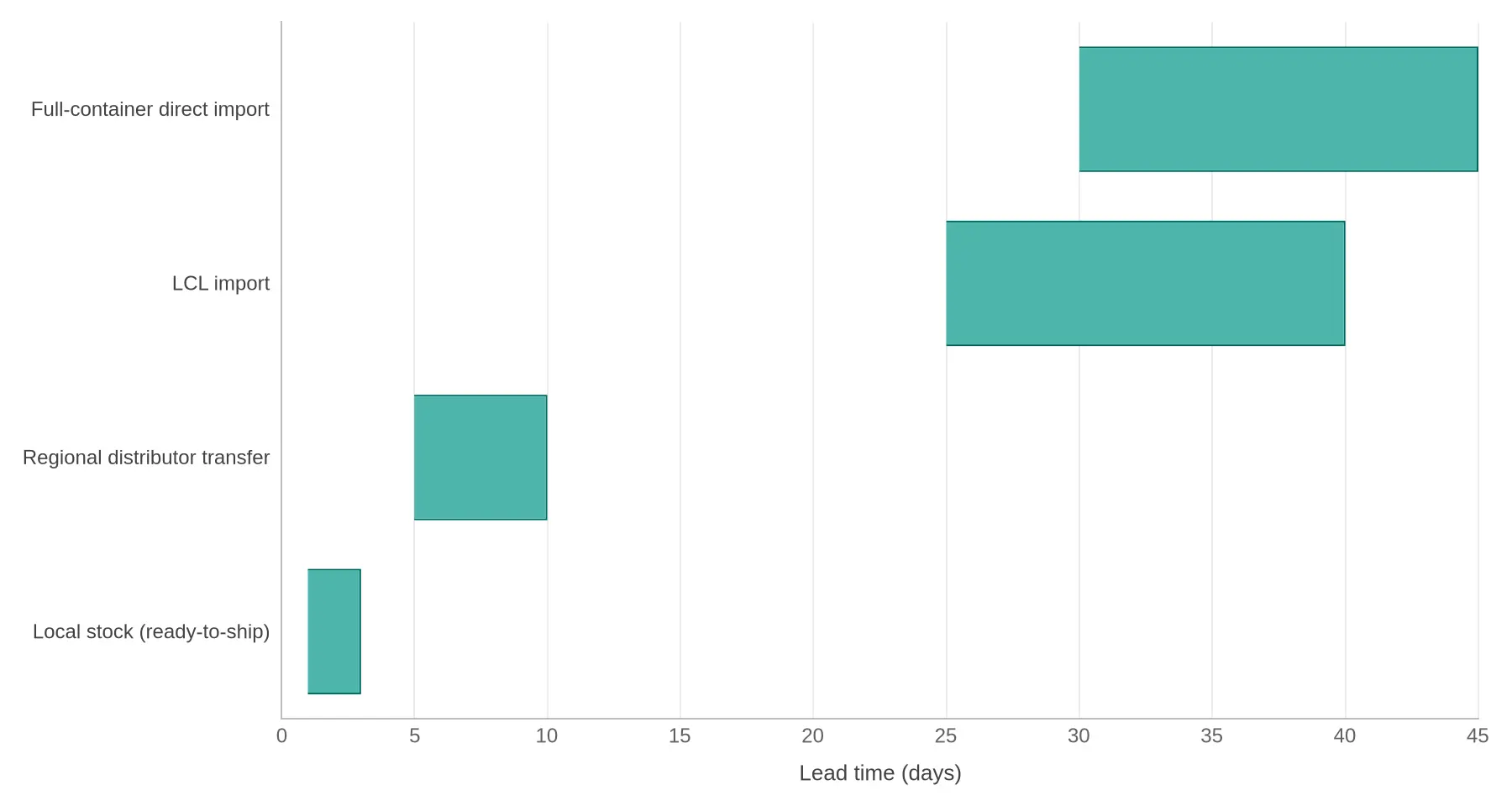
Figure: Typical order-to-delivery lead time ranges in days by fulfillment option – local stock ready-to-ship (1-3 days), regional distributor transfer (5-10 days), LCL import (25-40 days), and full-container direct import (30-45 days). Import figures run from production completion to delivery; add production time for the full order cycle. Lead time ranges are indicative only and must be confirmed with each supplier’s current schedule.
Reading the Chart
- Local stock, ready-to-ship: roughly 1-3 days from order to delivery. Use it for replenishment; procurement belongs to the import lane. It is also what saves a weekend when you are down to the last case.
- Regional distributor transfer: about 5-10 days for the transfer itself, plus warehouse pick and consolidation. Useful when your supplier holds US inventory but not in your region.
- LCL import: typically 25-40 days from production completion to your dock, with consolidation windows and port congestion driving the schedule as much as sailing distance.
- Full-container direct import: roughly 30-45 days on the same basis, plus 20-35 days of production after deposit and artwork approval. Plan on 60-90 days door to door.
Those import bars measure the pipeline after production, not the whole order cycle, and the distinction matters: the gap between local stock and an LCL import is roughly four to six weeks of demand coverage, not a few days, and production time sits on top of it. If you are still building out a broader disposables program, match lead times to shelf life and storage capacity before committing, and see how the rest of the takeaway packaging lineup is structured by category.
Planning rule of thumb: place import orders at least 90 days before your target run-out date, 120 days if the order needs custom print, then keep a local safety buffer of 2-4 weeks for the SKUs you cannot afford to run out of.
Risk Factors That Do Not Appear on a Quote
A quote sheet is a narrow document. It shows unit price, sometimes freight and duty, and the terms you negotiated. The costs that wreck a packaging budget usually sit outside those columns. Choosing between local stock and an import program means choosing which risks you carry and which ones you pay someone else to absorb.
What the quote tends to leave out:
- Lot-to-lot quality variance. Resin batch changes, mold wear and machine settings move wall thickness, rim finish and clarity between production runs. Standard quality inspection samples a batch instead of sorting every carton, so a passing AQL report can still release a thin or scratched lot that cracks under a lid or looks cloudy in front of a customer.
- Breakage and carton damage in transit. Every extra handling point – container stuffing, transloading, port dwell, final-mile delivery – adds crush and drop exposure. Cartons arrive dented, sleeves deform, and by the time you find the loss the claim window is often closing.
- Food-contact documentation and compliance. Declarations of compliance, migration test reports and resin grades have to match what actually arrives in the container, and they have to be current. Mismatched or expired paperwork can stop a shipment or leave a beverage service explaining itself to a health inspector.
- Seasonal capacity constraints and a single distant supply point. Factory slots tighten during peak beverage season and around Lunar New Year, stretching lead time by weeks. Add one port congestion event or one typhoon and a single-source import chain has nowhere else to draw from.
- Storage space and working capital. An import MOQ is not just a quantity. It is pallets occupying your back room, cash sitting in inventory for months, and inventory risk on a SKU whose design may change before you sell through.
This is where local stock earns its premium. The distributor holds the inventory, absorbs breakage claims, warehouses the volume and books factory capacity in advance, so several of those exposures sit on their balance sheet instead of yours. You buy smaller quantities, receive in days rather than months, and turn a fixed capital commitment into a flexible operating cost.
Accountability for fit and compliance does not transfer. Domestic or imported, confirm the specification sheet, request current food-contact documentation and set a written inspection standard against a retained reference sample. The premium buys speed and risk transfer, not a substitute for your own verification. Buyers comparing formats often review the broader foodservice cup range to see how specifications and pack sizes are documented across a portfolio before committing to a route.
Compare landed cost rather than unit price and the local-versus-import question usually answers itself. The chart below splits the delivered cost of a 20 oz clear plastic cup across the six buckets that reach your P&L.
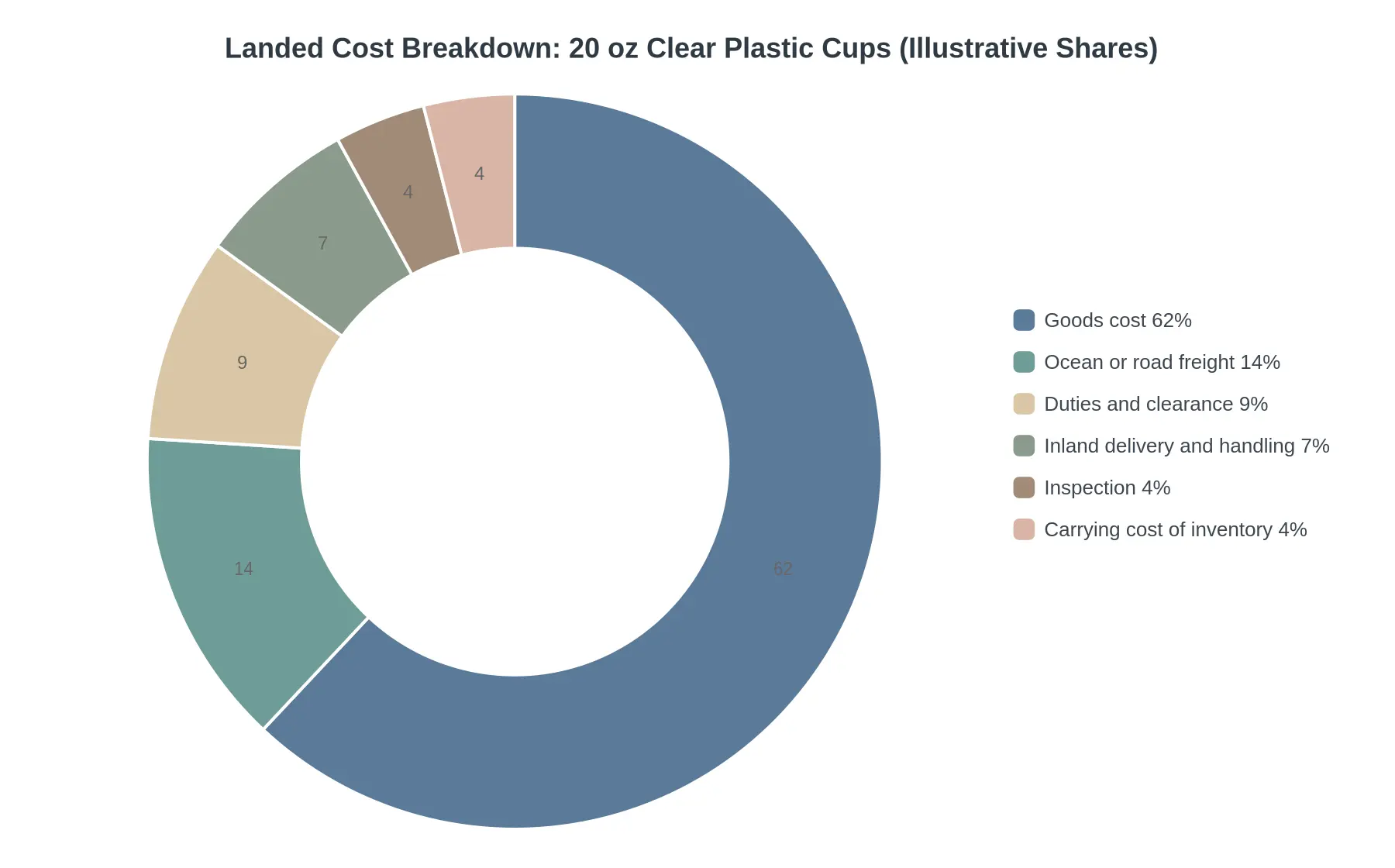
The shares above are illustrative and shift with order volume and shipping method; they are not a quote.
Reading the chart like a buyer
At roughly 62%, the cups themselves are still the biggest line item, which is exactly why direct-import pricing looks so attractive at first glance. Freight is the wildcard: ocean and road freight at around 14% is the bucket that moves most between a full container from overseas and a pallet from a regional warehouse, and it swings with seasonality, fuel surcharges and whether you can wait for a consolidated sailing. Duties, clearance and inland delivery together come to roughly 16% of landed cost, and they are the numbers most often left out of a proposal. Inspection and carrying cost look small on their own (4% each), but with imported goods you pay to hold inventory longer and you carry the risk of a quality problem found after the container clears.
For buyers who need to keep freight and handling lean, working with a supplier that already consolidates container-friendly lines, such as the take-out boxes and food containers shipped alongside, spreads fixed logistics costs across more SKUs.
A Decision Framework for Choosing Your Supply Route
Local stock and direct import sit on the same cost-versus-speed curve, and most buyers land somewhere along it rather than at either end. Work through the seven steps in order; the route usually narrows before you reach the bottom.
- Quantify your annual and peak-season volume in cups. Pull twelve months of usage data and separate the baseline from the spike months (summer, holidays, event season). You need two numbers, not one, because the peak figure is what exposes supply risk.
- Translate that volume into full-container equivalents. Divide annual usage by the carton, pallet or container quantity quoted by each supplier. This shows whether you can realistically absorb a full-container order or would be sitting on inventory for a year.
- Confirm storage and receiving capacity. Check pallet positions, ceiling height, humidity control, and dock or forklift access. A cheap import price disappears quickly if you have to rent overflow warehouse space to hold it.
- Define the lead time your operation can tolerate. Map the gap between order placement and stock on shelf, then add a buffer for customs clearance and inland transport. If a stockout shuts down your smoothie bar, a short domestic lead time can be worth a real price premium.
- Decide required customization and compliance documentation. Confirm logo printing, cup sizing tolerances, food-contact declarations, and any local single-use plastic rules. High customization volumes push you toward import; strict documentation demands may favor a domestic supplier who already holds the paperwork. Buyers weighing a switch away from plastic often compare plant-based cup alternatives before locking in a format.
- Calculate landed cost per cup for each option. Include freight, duties, insurance, port fees, and a realistic allowance for breakage and obsolescence, not just the unit price on the quote. Local stock wins more often than expected once carrying costs are counted.
- Set a reorder trigger. Fix a reorder point in weeks of cover rather than units, and tie it to your lead time plus a margin. This control alone prevents the emergency air-freight order that quietly erases a year of savings.
In practice, most buyers with mixed volume profiles end up running both routes: a container import for the predictable base load at the lowest unit cost, backed by a local supplier for peak-season surge and fast replenishment when forecasts miss. Running both keeps your effective MOQ flexible and your lead time short where it matters most.
The Decision Flow: Run the Three Checks in Order
Three of those steps can disqualify an order outright, so run them before you request a quote: volume, storage, then lead-time tolerance. Skipping ahead to unit price is how buyers discover, after the deposit, that the storage room cannot hold the shipment or that their busiest quarter starts three weeks before the container lands.
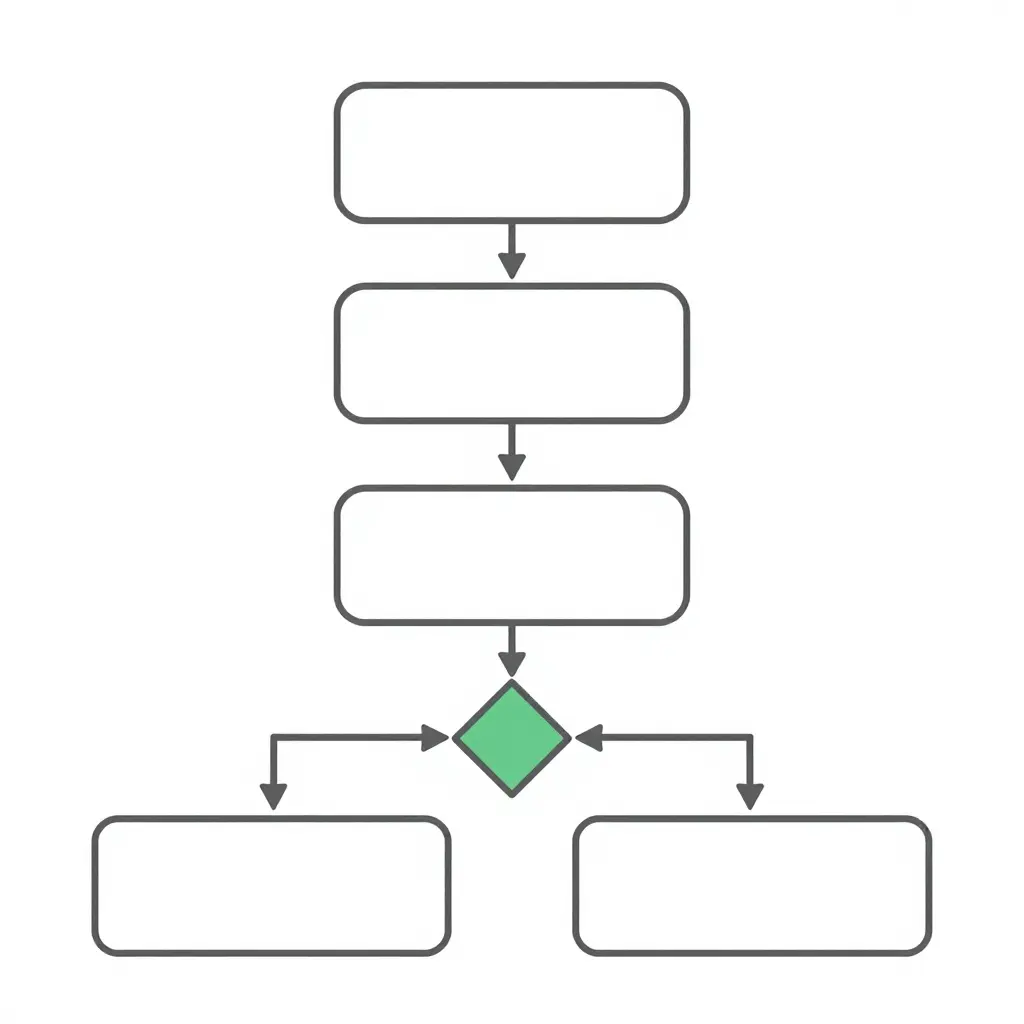
Figure 2: The diagram shows the order in which the volume, storage, and lead time checks should be applied before selecting between local stock and direct import.
The same sequence works for anything else you buy in bulk; the logic transfers directly to our paper cup range if you are trialling a switch away from plastic.
Reading the Flow
| Stage | Question it answers | Outcome if you fail the check |
|---|---|---|
| Annual volume check | Is your yearly usage large enough to clear the import MOQ? | Stay with local stock, or combine SKUs to reach the threshold |
| Storage capacity check | Can your site physically hold the full shipment? | Import with phased releases, or cap the order at what fits |
| Lead time tolerance check | Can you survive a 60-90 day pipeline without stockouts? | Buy local for peak season, import only for buffer-building windows |
| Final route selection | Which supply route best matches the qualified profile? | Local stock for agility, direct import for landed-cost savings |
The Hybrid Route: Buffer Stock Plus Container Cycles
Most experienced buyers stop treating local stock and imports as an either/or decision. They run both lanes and let each one do the job it is good at.
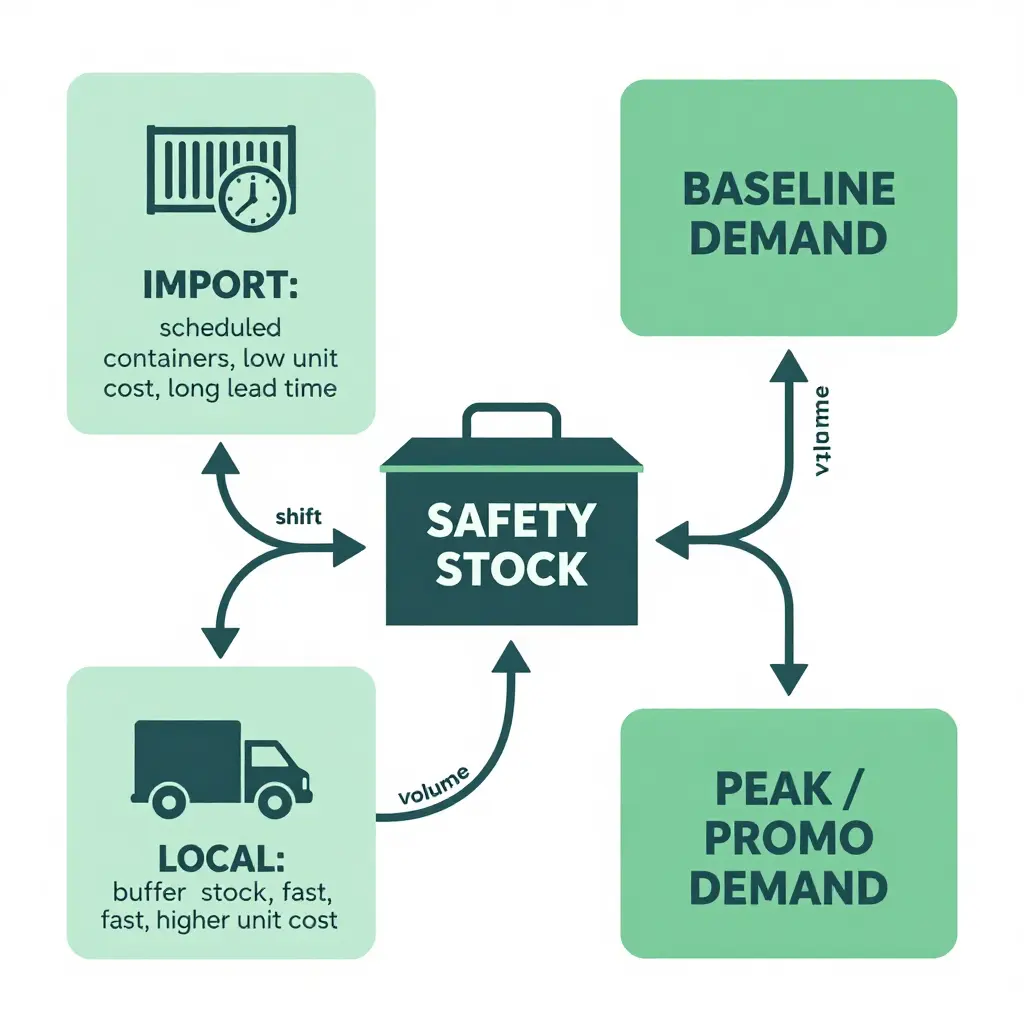
How the two lanes divide the volume
Baseline demand comes from local stock you can reorder in days. Scheduled import orders carry the stable core volume, the predictable SKUs and sizes you will sell regardless of season. The import unit cost earns its keep there, and those savings pay for the premium you accept on local flexibility.
Local stock then absorbs what the forecast cannot see: a heat wave, a catering contract that lands on Thursday, a promotional weekend that triples smoothie sales.
Keep a defined safety stock level
Safety stock should be a number you set deliberately, not a bin that happens to have cups in it. A common rule is to hold enough of the top-selling 20 oz cups to cover local replenishment lead time plus one demand cycle, usually two to four weeks. Write it down, review it quarterly, and never let an import delay quietly eat into it.
Signals that tell you to shift volume
Watch these operating indicators and move volume when they drift:
| Signal | What it suggests | Action |
|---|---|---|
| Rising stockout frequency on core SKUs | Local buffer is too thin | Shift 10-20% of core volume back to local stock |
| Falling storage utilization (empty racking) | Capital tied up in slow-moving import volume | Trim the next container or reallocate SKUs |
| Growing lead-time variance from your supplier | Import lane is less reliable than assumed | Raise safety stock, delay the next PO |
| Import freight and duty landing higher than local price | The cost gap has closed | Pause discretionary container orders |
Standardize before you scale
Standardize spec sheets and lid compatibility across both sources so a cup from either lane fits the same lid, sleeve and straw. Staff should not have to check where a cup came from before they fill it.
The same discipline simplifies your adjacent disposables. Pair the hybrid cup strategy with a consistent sugarcane cup range for eco-conscious accounts and matching paper straws, so every order ships as one kit regardless of origin.
FAQ
What is a typical import MOQ for 20 oz clear plastic cups?
Most factories quote an import MOQ of roughly 50,000 pieces per cup size and color, with a practical floor of about 100,000-200,000 pieces once matching lids are included. The binding minimum is usually one full 20ft container, about 28 cubic meters of usable space. How many cartons that holds depends entirely on case pack, so convert your own carton dimensions rather than relying on a rule of thumb. Buyers who cannot fill a container with cups alone often add accessories to reach volume, which is why many orders are consolidated with paper cup sleeves and holders.
How long does a full-container import lead time normally take?
Production runs 20-35 days after deposit and artwork approval, and sea freight adds another 25-40 days port to port. Including booking, pre-shipment inspection and customs clearance, total lead time is typically 60-90 days door to door. Plan on eight to twelve weeks, and keep a safety-stock buffer for peak season, when vessel space tightens and schedules slip.
Can local stock pricing ever match import pricing at high volume?
Rarely at genuinely high volume. Local stock carries warehousing, repacking and financing costs that typically add 15-35% over the landed cost of a direct import, and the gap widens as order size grows. Local pricing can match or beat imports in narrow cases: distributor liquidation, sudden freight rate spikes, or urgent small top-ups where stockout costs outweigh the unit savings.
Can PET and PP cups be mixed in one container order?
Yes. PET and PP can ship in the same container and most factories will load both resins together. Because the two materials run on separate lines at different temperatures, expect a changeover gap of a few days and clearly separated carton markings. Confirm both resins are declared under their own HS codes and that documentation is issued per material rather than merged into a single certificate.
What should buyers verify about food-contact compliance for local and imported stock?
For a PET cup, ask for a food-grade virgin resin declaration and migration test reports against FDA 21 CFR 177.1630; for polypropylene, 177.1520. (21 CFR 176.170, often quoted in cup specs, covers paper and paperboard, not plastic.) For EU destinations the reference is EU 10/2011, plus factory certification such as ISO 22000 or GMP. For imported goods, request test reports tied to the specific production lot and confirm HS code and country of origin on the commercial invoice. For local warehouse stock, ask the same questions plus lot traceability and storage conditions, since compliance paperwork is easily lost and goods can be stored beside chemicals.
Recommendation
If volume sits below a container threshold, or the operation cannot absorb a two-to-three-month lead time, buy local. If volume is stable and high and you have the storage for it, import directly. If demand is steady but never quite fills a container and warehouse space is tight, run a hybrid: local buffer in place, bulk of the forecast imported.
The comparison still comes down to unit cost, MOQ and lead time. Local stock costs more per unit but asks for small quantities and delivers in days. Direct import reduces unit cost but needs full containers and a two-to-three-month planning horizon. Landed cost per cup settles it, because that figure folds freight, duty, storage and financing into the price you actually pay for every cup you sell. Buyers staying local can review current stock for 20 oz clear plastic cups near me before setting a reorder point.
MOQs and lead times move with production schedules, so confirm current availability and pricing with a supplier before you commit.