
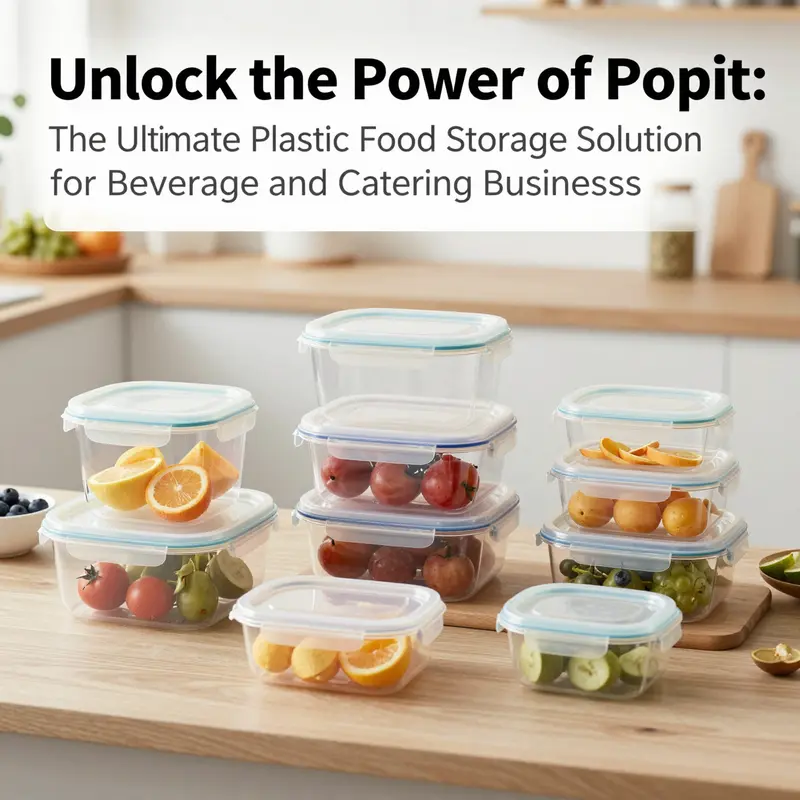
Popit plastic food storage containers are revolutionizing the way food and beverage businesses manage their inventory and serve their customers. With a focus on versatility, safety, market trends, environmental impact, and consumer preferences, these containers are designed to meet the diverse needs of beverage chains, restaurants, food trucks, and catering services. Each chapter delves into important aspects that highlight why these containers are becoming a staple for successful food service operations. Discover how Popit can enhance your storage solutions and elevate your service by efficiently meeting food safety standards and consumer expectations.
Clear, Safe, and Stackable: Rethinking Modern Plastic Food Storage Containers
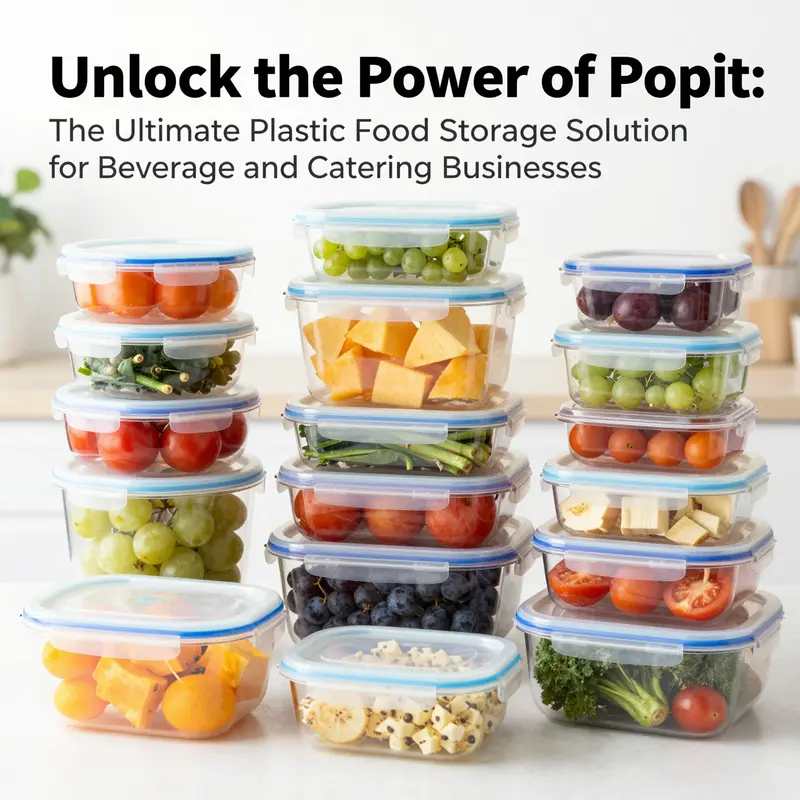
Visibility is a deceptively simple benefit. In a busy kitchen, the ability to scan a row of containers and instantly know what lies inside saves minutes that compound into hours over a week. The strongest plastic storage solutions in today’s market leverage that clarity along with a careful balance of safety, practicality, and space efficiency. Among the most influential lines in this space is a popular eight-piece set that emphasizes a clear body, durable construction, and a meticulous seal. Though the products themselves live in the realm of plastic, the design philosophy behind them reflects a broader shift toward reusability, recyclability, and everyday reliability. In practice, these containers are more than receptacles; they are organizational tools that convert raw ingredients, leftovers, and meal-prep ambitions into a coherent, easy-to-manage system. The core advantages hinge on a few interlocking features that together redefine what a kitchen can do with simple, reusable components.
The transparent, durable body is the first signal of intent. A clear exterior makes contents legible at a glance, which reduces the mental load of meal planning and reduces the chances of food waste stemming from forgotten leftovers. When time is tight, seeing that a container holds yesterday’s sauce or today’s marinated vegetables can guide decision-making without opening lids or guessing contents. This attribute is complemented by the material choice itself. The typical construction hinges on BPA-free plastics such as polypropylene (PP) or Tritan™-type resins. These materials are prized not only for their strength and clarity but for their compatibility with modern health standards. They are engineered to minimize leaching under normal use, including frequent reheating or long-term storage, which aligns with contemporary expectations around food safety and wellness. In a landscape where consumers increasingly scrutinize what touches their food, such assurances are as important as any lid feature.
Speaking of lids, the seal is where everyday utility meets travel-ready practicality. A secure, leak-resistant lid is not merely a feature; it is the difference between a mess and a smooth commute, between a reliable lunch and a soggy bag. The best designs emphasize a tight fit that resists spills while remaining easy to open and close, even for busy hands. This is particularly valuable when containers are used to transport meals from home to office or to a small café kitchen. The combination of a leakproof seal with a clear body makes it possible to prep meals for the week with confidence, knowing that the integrity of the contents will be preserved whether they are kept in a fridge, popped into a microwave, or loaded into a car’s cooler on a hot day.
Flexible sizing is another quiet but essential strength. A line of containers often arrives with a spectrum of capacities, from a compact 200 ml option to larger multiples that sum to a substantial total—an arrangement that supports portion control, batch cooking, and ingredient organization. The inclusion of a smaller 200 ml container, for instance, can be a simple yet powerful tool for storing condiments, sauces, or tiny ingredients that would otherwise overwhelm a pantry. The total capacity across the set—an allocation like 164 fluid ounces—provides ample volume for families who meal-prep or for small business environments where bulk preparation is common. The design philosophy behind this variety is practical: the family one day experiments with a new sauce, the office one day ships a batch of snacks, and the restaurant-adjacent kitchen one day organizes mise en place for the week. In every case, the ability to choose from a range of sizes reduces waste and maximizes efficiency.
Space efficiency has its own eloquence. The stackable design is not a mere convenience; it is a strategic response to cramped urban kitchens, shared workspaces, and small-dishware cupboards that define many modern households and foodservice settings. When containers neatly nest and stack, a single cabinet or drawer becomes a modular, scalable system rather than a cluttered catchall. This compact organization translates into tangible time savings during cooking, packing, and cleaning, because each container’s footprint is predictable and repeatable. The same logic applies to stacking with care in a commercial setting, where every inch of storage space translates into more room for prep, cooling racks, or dry goods. The result is a storage solution that respects both ergonomics and energy—less rummaging, less wasted heat from overfilled shelves, and more mindspace for culinary creativity.
Of course, no faithful account of a storage line would omit its practical adopters. Homes can use such sets to choreograph weekly meal-prep schedules, while offices and studios rely on them to minimize waste and maintain consistency. In professional kitchens, the need for dependable, easy-to-clean, and, above all, safe vessels is non-negotiable. The ability to reuse sturdy containers across multiple shifts and menus not only reduces disposable waste but also lowers the cost of packaging and serviceware over time. In markets with expansive, diverse culinary traditions, these attributes carry extra weight. The trend toward cross-border distribution—where a well-designed plastic storage line becomes a staple in homes and professional kitchens across continents—underscores a shared consumer longing for products that perform consistently, regardless of where they are used. Singapore, with its dense urban living and vibrant food scene, is a case in point: a set that is reliable in the home kitchen translates into everyday efficiency in bustling eateries and catering operations, just as easily as it does in apartment kitchens dotting cities worldwide.
Sustainability threads through this narrative in more than one way. Reusability is the most obvious. A four- or eight-piece set that travels well, resists dents, and holds up under repeated cycles of washing and reheating can displace a surprising amount of single-use packaging over a lifetime. That does not erase the responsibility to manage plastics thoughtfully, of course. Yet safety and durability become arguments for reuse rather than abandonment. BPA-free formulations reinforce trust in the materials, addressing concerns about chemical exposure during storage and heating. In a broader sense, the industry’s gradual shift toward recyclable or recyclable-capable plastics complements the ethic of reuse: a product designed to endure longer can still be responsibly disposed of at the end of its life if it can be recycled. This dialogue between durability, safety, and environmental responsibility contributes to the evolving story of kitchenware in an era defined by sustainability demands, consumer health awareness, and evolving waste-management paradigms.
In daily practice, the overall value rests on how well a line of containers integrates with the rhythms of modern life. For families, the ability to prepare meals in advance, monitor freshness through visual cues, and reliably reheat without a safety compromise can transform the way dinner is planned and enjoyed. For busy professionals, the same containers translate into predictable portion sizes, cleaner prep stations, and fewer interruptions caused by leaks or mismatched lids. The multi-size, clear, and sealed nature of such a set also invites creative organization: grouping breakfast components for the week, dividing sauces for different meals, or storing frozen ingredients for later use with confidence that what goes in will still be recognizable when it comes out. The practical resonance of these traits is perhaps most evident when one pauses to imagine the typical workflow of a kitchen that blends home cooking with food preparation for others: the right containers streamline tasks, reduce the cognitive load of inventory management, and temper the friction that can derail a well-planned menu.
For readers curious about packaging options that extend beyond plastic itself while still prioritizing waste reduction, there are related solutions worth considering. For instance, packaging lines featuring paper-based storage and serving options can complement reusable plastic systems by offering disposable or semi-disposable alternatives that align with different use cases—from take-away services to seasonal events. A useful point of reference for those exploring such options is the broader ecosystem of wholesale and branded packaging designed to minimize waste while maintaining function. Whether you are comparing the cleanliness and transparency of a clear plastic set with the warmth and renewability of fiber-based alternatives, the guiding thread remains the same: design that respects contents, protects health, and serves practical routines with poise. For packaging options that cut waste while keeping storage efficient, a perspective from the cardboard and paper side of the spectrum can be illuminating. Wholesale, print, and Kraft-paper storage bowls show how diverse materials can co-exist in a sustainability-minded ecosystem, offering complementary paths to the same goal of reducing disposables and enhancing reuse.
For readers who want a concrete reference to this kind of packaging approach in practice, one can explore a selection from a related family of products that focuses on food storage solutions with a careful attention to durability and reuse. Wholesale custom-print Kraft paper food storage salad noodle bowl provides a lens into how different materials are deployed to support organized, waste-conscious food workflows. While the centerpiece of this chapter centers on clear plastic storage, the broader narrative recognizes that intelligent packaging ecosystems often blend materials to suit varying contexts and demands, from home kitchens to professional studios.
External reading can further illuminate the evolving standards for safe storage and the practical realities of everyday use. For a broader sense of product design, safety testing, and consumer expectations in the modern kitchen, consider examining current market resources such as product pages and industry reviews. External resource: https://www.amazon.com/dp/B0CZKQ7X3J
Safety and Material Quality of Popit Plastic Food Storage Containers
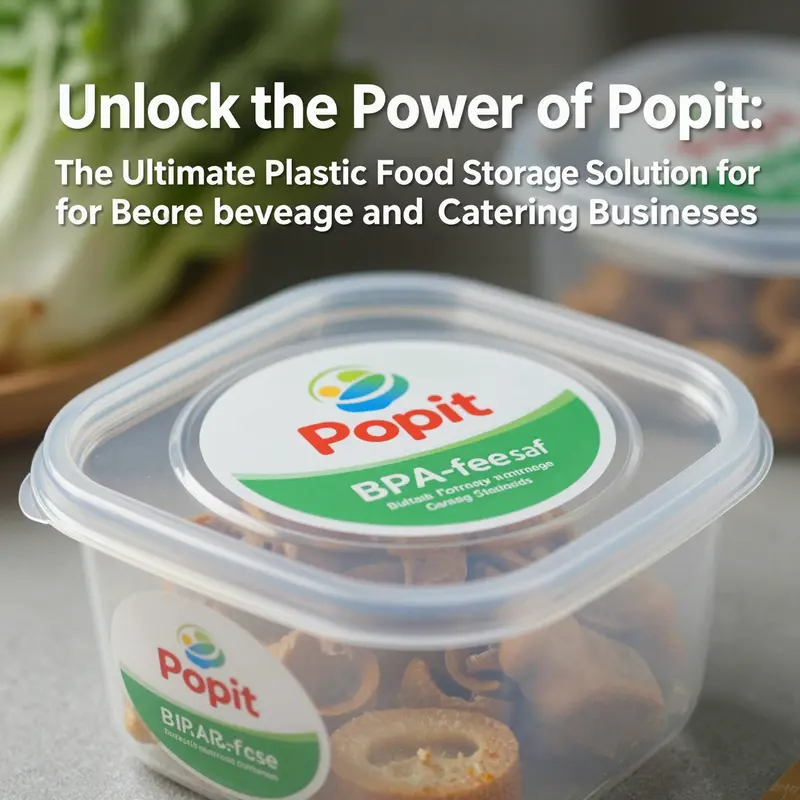
Every kitchen habit leaves a trace, and the safety and material quality of plastic food storage containers shape those traces in subtle, lasting ways. When households stock leftovers, portion out meals for the week, or prep ingredients for the next cooking session, the choices around plastics influence health, taste, and waste. In this context, the brand’s plastic storage solutions are designed not merely to hold food but to protect its integrity across use cycles. The core assurance rests on two pillars that recur across product information: the materials themselves are BPA-free and food-grade, and the containers are engineered to survive the temperature and handling demands of home kitchens without compromising safety. This combination matters because even occasional exposure to leaching chemicals or material degradation can alter flavor, aroma, or texture, especially when foods are heated or stored for extended periods. A practical implication of this design is that users can rewarm, refreeze, and clean with confidence, provided they observe the manufacturer’s guidelines and common-sense limits. The emphasis on safety is not merely a regulatory checkbox; it is a decisive factor in how families cook, store, and plan their meals, turning everyday containers into guardians of freshness rather than gateways for unwanted substances.
At the heart of the material story is the choice of plastic that is both safe for contact with food and robust under real-world conditions. The containers in question are described as BPA-free and food-grade, a designation that signals compliance with standards aimed at preventing chemical migration into meals. For most daily tasks, this means consumers can store a wide range of foods—from grains and soups to cut fruits and sauces—without worrying about bisphenol A entering the contents. The absence of BPA is particularly reassuring when containers are repeatedly heated or cooled, because the combination of heat and prolonged contact can otherwise amplify migration risks in certain plastics. The material choice thus aligns with a prudent assumption: plastics used for regular food storage must resist not only the mechanical wear of daily use but also the thermal demands of a modern kitchen.
Beyond safety labels, the practical performance of these containers is shaped by the materials’ food-grade quality and the way the products are designed to seal, transport, and reheat. The claim of being microwave-safe, freezer-safe, and dishwasher-safe reflects a versatile material profile that holds up under a spectrum of temperatures and cleaning regimes. Microwave safety signals that the polymer can withstand internal heating without deforming, warping, or releasing substances that could contaminate food. Freezer safety indicates resilience to cold-induced brittleness and cracking, which is crucial for preserving texture and preventing leaks when storing soups, stews, or sauces. Dishwasher safety speaks to durability in a high-heat, detergent-rich environment that can challenge seals and surfaces. When taken together, these features point to a material system engineered for endurance, not just short-term convenience.
An equally important facet is the airtight seal that accompanies many of these containers. An air-tight design helps preserve flavor and texture by limiting exposure to air, which slows oxidation and moisture loss. This attribute matters most when portioning meals for later consumption or transporting meals to work or school. In the longer run, this seal contributes to reducing waste, because better preservation translates to fewer spoiled leftovers. Yet the seal’s effectiveness hinges on consistent fabrication—tight tolerances, smooth gasket surfaces, and reliable latching mechanisms that remain robust after repeated cycles. The human factor also matters: a user who misplaces a lid or leaves a container unprotected can unintentionally compromise freshness. These containers, therefore, are not only about the materials themselves but also about how their design nudges users toward safer storage habits.
From a usage perspective, translating safety and material quality into daily practice involves a few straightforward, but essential, guidelines. First, adhere to stated heating limits. Even BPA-free plastics have recommended maximum temperatures, and exceeding them can alter the polymer matrix over time, increasing the potential for micro-leaching or warping. Second, avoid heating containers that are cracked, warped, or otherwise compromised, even if the material is labeled as microwave-safe. A damaged container can fail at the seam or lid, increasing the risk of leaks or contamination. Third, for foods with high acidity or fat content—such as citrus-infused sauces or oily dressings—consider shorter heating intervals and more frequent checks. Prolonged exposure to aggressive foods can intensify wear on the interior surfaces and seals. Fourth, careful cleaning matters as much as the material itself. While most containers tolerate dishwasher cycles, there is real value in paying attention to gasket integrity, ensuring there is no residue buildup, and avoiding abrasive scrubbing that can scratch the surface and create micro-voids that harbor bacteria. These practical steps are not mere maintenance; they are part of a holistic approach to safety that recognizes plastic storage as a component of the food system rather than a disposable convenience.
The broader health and safety discourse around plastic containers also emphasizes consumer education and informed choices. While the materials in question are described as BPA-free and food-grade, it is reasonable to consider how long-term use interacts with evolving scientific understanding. The first-order concern—chemical migration—takes place when plastics and foods meet under heat, mechanical stress, or chemical interaction from fatty or acidic foods. Even with BPA-free formulations, other constituents can influence outcomes, making it prudent to follow brand guidelines and approved food types for each container. In the context of a home kitchen, the goal is to minimize risk while maximizing practicality: choosing containers that perform reliably, storing foods within recommended timeframes, and disposing of or recycling containers when they show signs of wear. In this tapestry, safety and material quality are not static labels but a living practice that informs shopping decisions, daily routines, and long-term sustainability goals.
Environmental considerations also shape how these containers fit into a broader narrative of responsible consumption. The durability and reusability of BPA-free, food-grade plastic containers offer clear advantages over single-use packaging, reducing single-use waste and contributing to a more sustainable kitchen economy. The material choice often aligns with a recycling ecosystem that recognizes the receptacle’s durability and the feasibility of recovering the polymer for future use. Consumers can participate in this cycle by rinsing containers before recycling, removing lids when specified, and following local guidelines for where and how to recycle plastics. Yet even as these containers stand as a more sustainable option within a convenience-driven culture, there remains a continuous invitation to improve. The trade-off between high performance and environmental impact has sharpened the market’s attention to material science, lifecycle assessments, and more transparent labeling that helps shoppers make decisions aligned with their values. In practical terms, this means a preference for containers that maintain integrity through casual home use, are clearly labeled as safe for intended temperature ranges, and are designed for easy cleaning and recycling where available.
As consumers integrate these containers into meal planning and daily routines, the narrative around safety and material quality becomes less about isolated features and more about a coherent philosophy. It is a philosophy that values durable, safe materials, reasonable and explicit performance claims, and a design that supports healthy eating without imposing unnecessary friction on daily life. In the context of a family kitchen or a bustling household, such a philosophy translates into a reliable toolset: containers that keep food fresh, that tolerate reasonable use in the microwave and freezer, and that resist leakage during transport. It also translates into guidance: use the containers as intended, respect temperature and cleaning recommendations, and stay informed about best practices for safe food storage. When these elements come together, plastic storage solutions evolve from convenient accessories to trusted members of the kitchen ecosystem, supporting both health and sustainability as everyday commitments.
For anyone seeking additional, authority-backed guidance on safe use of plastic food containers, authoritative advice from food safety authorities is valuable. The Hong Kong Food Safety Centre provides comprehensive recommendations on disposable and reusable plastics used in food contact, outlining considerations for temperature, cleaning, and storage that help consumers navigate everyday choices with confidence. This external resource offers a grounded perspective on how to balance convenience with safety in real-world settings: https://www.foodsafety.gov.hk/eng/food-safety/2026-02-04-disposable-plastic-food-containers.html
null
null
Between Reuse and Responsibility: The Environmental Footprint of Popit Plastic Food Storage Containers
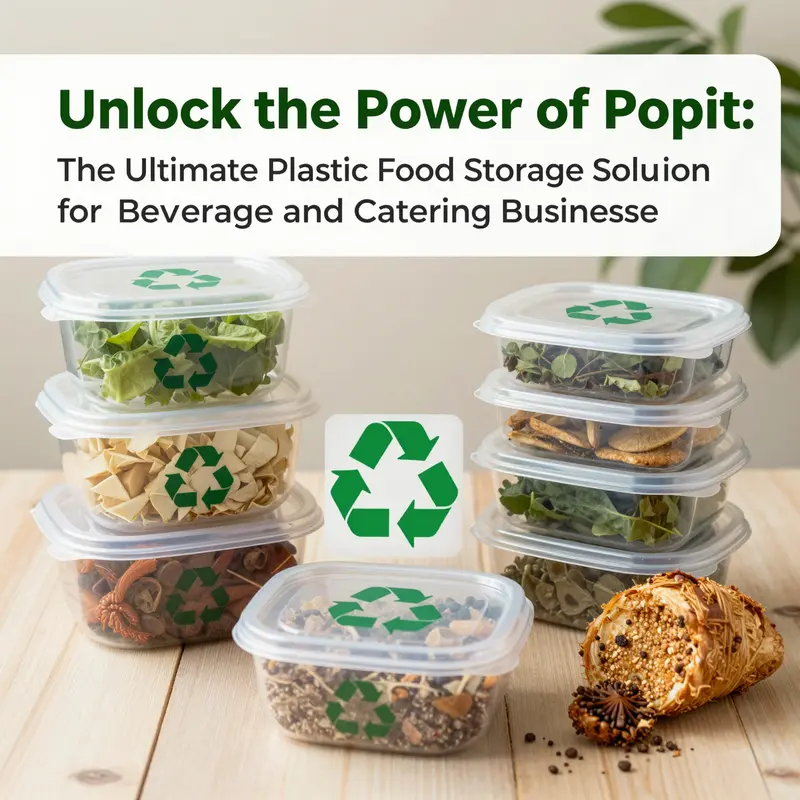
The narrative around modern kitchen storage has long oscillated between convenience and responsibility, and the Popit plastic storage family sits squarely in the middle of that tension. These containers are designed to be practical workhorses in the home and in the front lines of small-scale food service. They promise durability, reliable seals, and the freedom to rework leftovers into meals without the anxiety of leaks or spoilage. Yet beneath that everyday usefulness lies a more intricate conversation about how the materials we choose for food storage shape the environment we share. The core components—the polypropylene body and the silicone lid—offer a blend of safety assurances and practical constraints that illuminate both the benefits and the trade-offs of contemporary plastic storage. Polypropylene, assigned a #5 resin code, has earned a reputation for safety and heat resistance, helping to keep food in good condition when used for microwaving and freezing. It is non-brittle, relatively tough, and designed to endure repeated use. Silicone, on the other hand, contributes sealing fidelity and temperature resilience, enabling a lid that can withstand a broader range of conditions than a rigid plastic cap alone. Taken together, these materials deliver a product that can substitute for countless disposable options and, by that substitution, has the potential to lessen one part of the waste stream. But sustainability is never a single-issue calculation. It hinges on how long a product lasts, how it is disposed of, and how the surrounding infrastructure supports end-of-life recovery rather than diversion into landfills.
From an environmental perspective, the clearest advantage of a well-made reusable storage system is its longevity. When a family uses a tightly sealing, microwave- and freezer-safe container repeatedly over many years, the cumulative waste that would have been generated by disposable alternatives drops significantly. In that sense, the reuse factor is the most straightforward sustainability win. The materials chosen—BPA-free polypropylene and food-grade silicone—also reduce health risks associated with chemical leaching, a key concern for households seeking both safety and responsibility in their food-handling routines. These positives, however, sit alongside more complex realities. Polypropylene, while better than older BPA-containing plastics for consumer safety, remains a fossil-fuel–derived polymer. Its production consumes energy and releases greenhouse gases, contributing to the broader climate footprint of manufactured plastics. Silicone, although exceptionally durable and heat-tolerant, is not a universally recycled material. It is a synthetic polymer whose recycling streams are far less standardized than those for many thermoplastics. These material realities shape the lifecycle impact of the containers in ways that are not always visible in a package’s instruction leaflet or product page.
To parse the environmental story of a product like this, it helps to view it through a lifecycle lens: the journey from raw material extraction to manufacturing, through consumer use, and finally to end-of-life outcomes. The extraction and processing of the petrochemical feedstock for polypropylene carry notable energy demands and emissions. Even when a consumer uses the container for many years, those emissions are embedded in the product’s history. During use, the benefits accrue through reduced waste and through the material’s stability under heat and cold. The advantage of durability becomes most pronounced when users avoid the frequent turnover that characterizes disposable alternatives. Yet the end-of-life stage complicates the equation. PP is technically recyclable; however, real-world recycling is often hindered by contamination, sorting challenges, and variability in local infrastructure. Silicone recycling exists, but it is less commonly offered by municipal programs and specialized facilities. The result is a scenario in which a portion of the product will cycle through recycling streams, while a portion may end up in landfills or require downcycling. The balance between these outcomes depends heavily on local capabilities, consumer behavior, and the design choices manufacturers make to facilitate disassembly and recovery.
In practice, the sustainability profile of Popit storage solutions rests on a few pragmatic habits. First, the premise of reusability is not merely about keeping leftovers fresh; it is about maintaining the product in good condition so that it can do its job for as long as possible. Regular inspection for microcracks in the body and lids, cautious handling to avoid impact damage, and timely replacement when seals lose their effectiveness all contribute to keeping a long product life that displaces many disposable packaging cycles. Second, care in cleaning matters. Both polypropylene and silicone tolerate dishwashers and microwaves, but repeated exposure to high heat, harsh detergents, or abrasive scrubbing can gradually degrade the surface and reduce sealing performance. Gentle handling and following label guidance help extend the useful life, which in turn optimizes overall environmental performance. Third, thinking about end-of-life options early—whether through local recycling programs or through consumer education about proper disposal—helps ensure that the material can rejoin productive cycles rather than becoming waste. The challenge is not merely about choosing a product with a favorable safety profile but about cultivating a culture of maintenance, repair, and responsible disposal that aligns daily use with broader environmental goals.
Industry observers increasingly recognize that the most significant gains in sustainability come from system-level changes as much as from material choices. In a world where the circular economy is a guiding principle, products are designed with both performance and recovery in mind. For a storage container, this might translate into modular designs that allow lids to be replaced without discarding the entire unit, or to make separation of materials easier at the end of life. It might also involve the development of clearer labeling and standardized recycling pathways that help households participate more effectively in material recovery. The presence of certified, BPA-free polymers addresses a critical consumer concern—health and safety—while nudging the market toward safer, more stable plastics. Yet even with these safeguards, the conversation cannot stop at “is it safe?” It must also ask, “how do we reduce the lifetime footprint of everyday plastics without compromising daily convenience?” The tension here is not a failure of product design but a reminder that sustainability is a moving target, one that requires continuous refinement in materials science, product architecture, and the waste-management ecosystem.
For readers exploring alternatives and complements to plastic storage, there is value in considering how packaging ecosystems relate to personal habits. A related conversation can be found in the broader discourse on disposable packaging alternatives in consumer take-away contexts. For readers curious about eco-friendly options beyond rigid plastics, a representative resource on paper-based, logo-printed, and disposable packaging provides a useful contrast that illustrates how choices scale from home cabinets to the supply chains of food service. Disposable eco-friendly printed-logo single-wall paper cups, for instance, highlight a different material pathway and set of trade-offs—weight, recyclability, and end-of-life handling—that help frame the broader sustainability discussion. This comparison helps ground the Popit narrative in a wider context of how households and businesses evaluate storage and packaging across materials.
The bigger picture is not a simple binary between “plastic good” and “plastic bad.” It is a nuanced assessment of how a well-designed, durable storage system can reduce single-use waste and support healthy, convenient meals, while also acknowledging the environmental costs embedded in plastic production and end-of-life management. It invites a careful look at how to maximize durability and reuse, how to minimize energy and materials in production through smarter manufacturing, and how to participate effectively in recycling programs that are often uneven in reach and capability. It also invites shoppers to weigh trade-offs when they navigate choices between polypropylene-based containers and alternative materials such as glass or stainless steel. Those alternatives bring their own advantages—often higher recyclability or longer material lifespans in certain contexts—but they also introduce considerations about weight, fragility, and thermal performance that can influence daily decisions in real kitchens.
In practical terms, alignment with sustainability in a kitchen environment often means staying within a design envelope that prioritizes seal integrity, temperature tolerance, and longevity, while also supporting responsible disposal and potential recovery. The Popit line, with its BPA-free polypropylene body and silicone lid, represents a thoughtful choice within that envelope. It embodies a balance between safety, usability, and environmental responsibility that resonates with households looking to reduce waste without compromising food safety or the convenience of meal planning. Yet the conversation remains incomplete without acknowledging the role of broader systems: how recycling infrastructure, consumer education, and material innovation converge to improve outcomes over time. The aim is not to declare a definitive ecological victor among storage options but to encourage a more informed, iterative approach to choosing and using containers that respect both our daily needs and the shared environment on which future kitchens will depend.
External resource for broader context: https://www.epa.gov/facts-and-figures-about-materials-waste-and-recycling/plastics-material-specific-data
Internal reference for readers seeking related packaging discussions: Disposable eco-friendly printed-logo single-wall paper cup
From Visibility to Versatility: How Consumer Demands Shape the Popular Modular Plastic Storage Solution
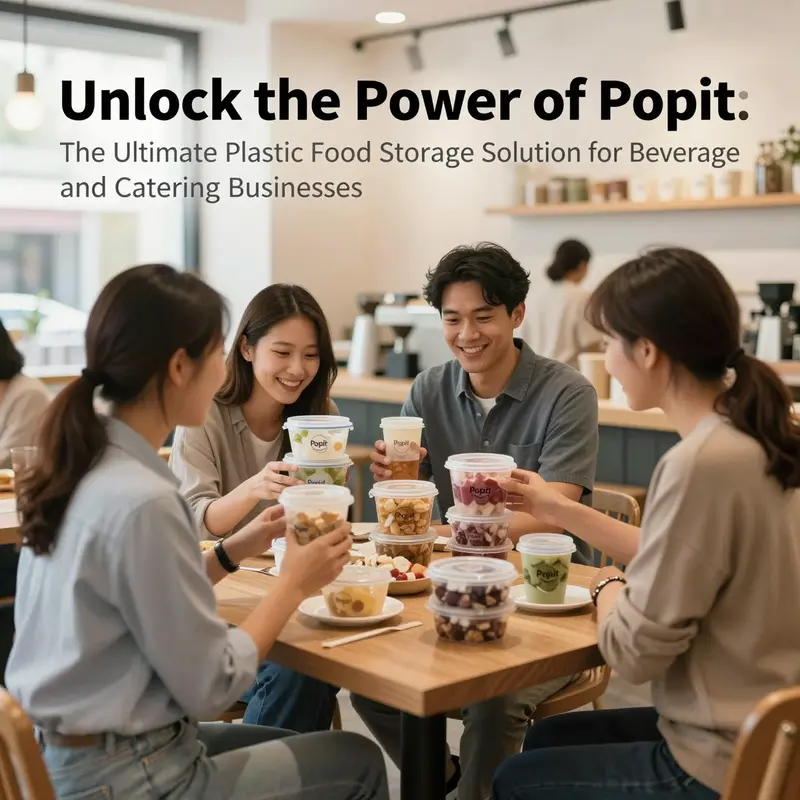
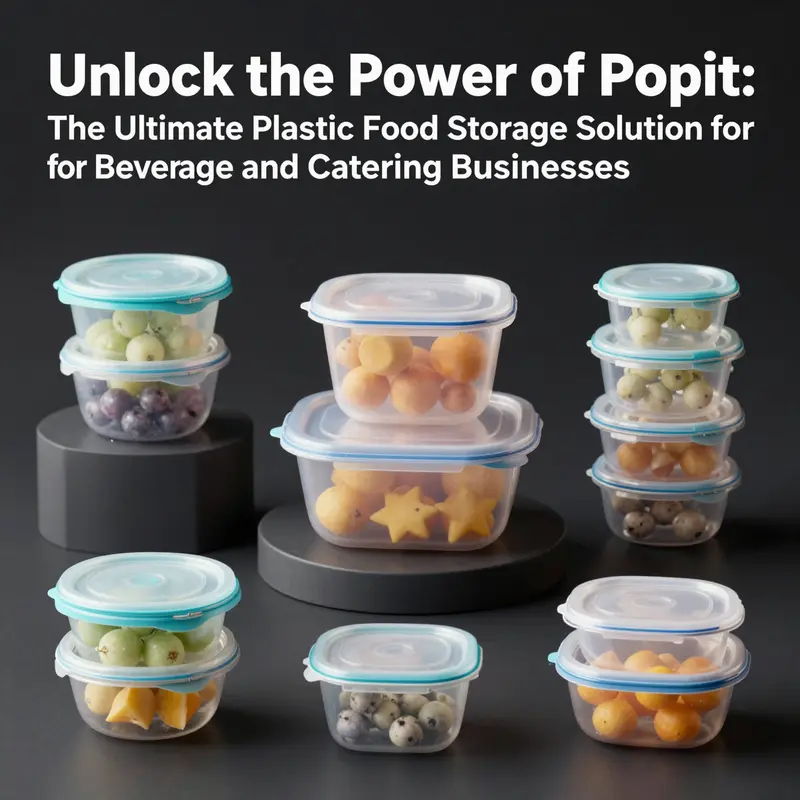
In modern kitchens, the way people think about food storage has shifted from merely keeping peaks of freshness to orchestrating a daily routine. Consumers increasingly value containers that are light enough to carry, shatterproof enough to withstand busy households, and versatile enough to handle a spectrum of meals—from raw ingredients to ready-to-reheat leftovers. This appetite for practical, go-anywhere storage drives demand for modular plastic sets that can be customized to fit different spaces, from intimate apartments to bustling family kitchens. The appeal lies not just in function but in how these containers integrate with everyday workflows: easy to identify, easy to stack, and easy to reuse. A representative eight-piece clear set embodies this philosophy, offering a tangible example of how form and function align to meet contemporary needs. When a container system is designed with visibility, durability, and modularity in mind, it becomes more than a simple receptacle for food; it becomes a central tool for planning, portioning, and reducing waste across the week.
Visibility matters as a design principle because it directly influences how often a household reaches for stored food. A clear body allows cooks to assess contents at a glance, minimizing the guesswork that leads to wasted ingredients. This transparency also simplifies meal planning. When you can see what’s inside, you can quickly pull together ingredients for a quick lunch or a batch of dinners, which in turn supports more intentional shopping and reduced food waste. The same principle applies to labeling and interior organization. Clear containers paired with well-designed lids or separators can help families create a mental map of their pantry or fridge, enabling them to rotate older items to the front and keep track of what’s already on hand. In this sense, visibility becomes a time-saving feature that compounds with regular use to deliver real, everyday value.
Alongside visibility, temperature tolerance is a critical attribute that underpins everyday utility. A well-conceived plastic storage set should perform reliably across the temperature swings of a kitchen—hot foods, cold ingredients, and the transitions required for meal prep. Microwave safety and freezer readiness are not mere marketing claims; they reflect real-life routines in which leftovers are reheated, frozen portions are preserved, and ingredients are portioned in advance for weekday meals. The emphasis on temperature tolerance also dovetails with concerns about food safety. When containers are designed to handle heat without warping or leaking, they reduce the risk of spills and contamination, a consideration that matters to families, singles, and caregivers alike.
The durability of these containers is another pivotal factor shaping consumer preference. Modern households demand products that resist cracking, denting, and everyday wear. A sturdy construction translates into better long-term value, especially for families that use containers multiple times per week. Durability also intersects with the practical realities of storage: stackable designs enable efficient use of limited pantry or fridge space, while reinforced seals help maintain freshness and prevent leaks during transport. Perceived or actual durability influences the overall cost-per-use calculation that guides purchase decisions, since a more robust set that lasts several seasons can outperform cheaper, less durable alternatives over time. In this light, consumers are increasingly willing to invest in a modular system that promises consistent performance rather than opting for disposable or single-purpose solutions.
Material safety remains a core concern that guides purchasing choices. Many modern storage solutions are offered in BPA-free plastics, with materials chosen to minimize the risk of chemical leaching during heating or prolonged contact with food. Polypropylene and Tritan-like formulations frequently emerge in this space because they balance toughness with safety. While the idea of plastic as a long-term storage material is sometimes contested in favor of glass or stainless steel, the practical benefits of BPA-free plastics—lighter weight, shatter resistance, and easier handling—continue to drive consumer adoption. The best plastic sets also emphasize reliable gasket systems or seals that maintain a tight, leak-proof fit. The reassurance of a sealed design is particularly important for liquids, semi-solids, and meals on the go, where a spill could spoil not only the food but the contents of a bag or suitcase as well.
One must also consider the environmental dimension that accompanies modern material choices. The prevailing narrative often contrasts plastic storage with glass or metal, highlighting recyclability and the potential for longer lifespans. Yet the philosophy of sustainability can be reframed around repeat use and reduced waste. A well-designed plastic set extends its life through repairability, modularity, and compatibility with common appliances, supporting a culture of reuse rather than disposal. In practice, the most successful products in this category balance durability with practical lifecycles that align with consumer expectations for reasonable replacement timelines. A durable eight-piece set, for instance, may not outlive a decade, but it can outlast many cheaper alternatives by resisting warping and maintaining seal integrity through repeated cycles of washing, heating, and stacking. In this sense, the brand narrative around such containers centers on responsible use, resilience, and the confidence that comes from reliable performance.
Market dynamics also shape how these products are perceived and adopted. Even as some households gravitate toward glass, stainless steel, or silicone for food storage, plastic container sets continue to hold a notable share of the market due to cost efficiency, lightness, and versatility. Price-to-performance remains a decisive factor; consumers often weigh the upfront cost against the convenience of everyday usage. For families that meal-prep, portion out lunches, or organize ingredients for the week, plastic sets provide a practical balance of affordability and adaptability. The ability to customize a storage system—whether by nesting containers, separating compartments, or mixing sealed jars with differently sized bowls—helps households tailor a solution that fits their unique routines. In short, the continued popularity of plastic storage is less about replacing other materials and more about offering a flexible backbone for daily life that can grow with changing needs.
From a design and marketing perspective, the translation of consumer demand into product features hinges on clarity and communication. Consumers respond to explicit signals about safety, convenience, and space efficiency. A clear, modular set communicates its core advantages at a glance: contents visible, space optimized, and containers ready for multiple tasks across the kitchen, fridge, and pantry. Messaging that foregrounds leak resistance, temperature tolerance, and BPA-free materials tends to reinforce trust and willingness to invest in a coordinated system. Packaging that demonstrates nested storage, tight seals, and easy-to-clean surfaces reinforces the practical value of the product. It is not enough to offer a feature in isolation; successful containers frame their features as integrated benefits that fit into everyday routines, reducing friction in meal planning and food management.
In this evolving landscape, the most compelling plastic storage systems are the ones that emerge from listening to real kitchen workflows. Consumers want containers that they can rely on, day after day, without demanding a complicated ritual to use them safely. They want to see what’s inside without opening multiple lids, to stack containers neatly in the fridge, and to be confident that a spill will stay contained during transport. They want durability that justifies the investment and materials that do not introduce unnecessary concerns about health or safety. These values coalesce into a message that underlines practical intelligence: a storage solution should be straightforward to use, robust enough to support daily life, and adaptable enough to change as a household evolves. When a set checks these boxes, it becomes a quiet, everyday ally in the kitchen—an enabler of organized meals, reduced waste, and a calmer, more predictable cooking rhythm.
As consumer expectations continue to evolve with new cooking habits, shopping patterns, and sustainability considerations, brands that offer well-designed, clearly advertised plastic storage systems will remain central to home and small-business kitchens alike. The trend toward repetition and predictability in weekly meal routines favors simplicity and reliability. Yet it also rewards clever modularity—containers that can be repurposed for different foods, that fit neatly on shelves or in refrigerators, and that tolerate repeated cycles of heating and cooling without losing their seal or transparency. The most successful solutions will continue to blend safety with practicality, delivering confidence in everyday use while maintaining the flexibility needed to adapt to a changing food landscape. This is where the enduring appeal of a robust, eight-piece clear set lies: not merely as a product line, but as a durable framework for how households think about food storage, organization, and everyday nourishment.
External reference: https://www.amazon.com/dp/B0CZ2XKJYV
Final thoughts
The Popit plastic food storage containers are not just functional; they represent a commitment to quality, safety, and sustainability in the food service industry. With their versatility and ability to meet the diverse needs of businesses—from beverage shops to catering services—these containers are quickly becoming essential tools in modern kitchens. As consumer preferences continue to shift towards environmentally-friendly and safe products, investing in Popit containers positions your business to thrive in a competitive market.