
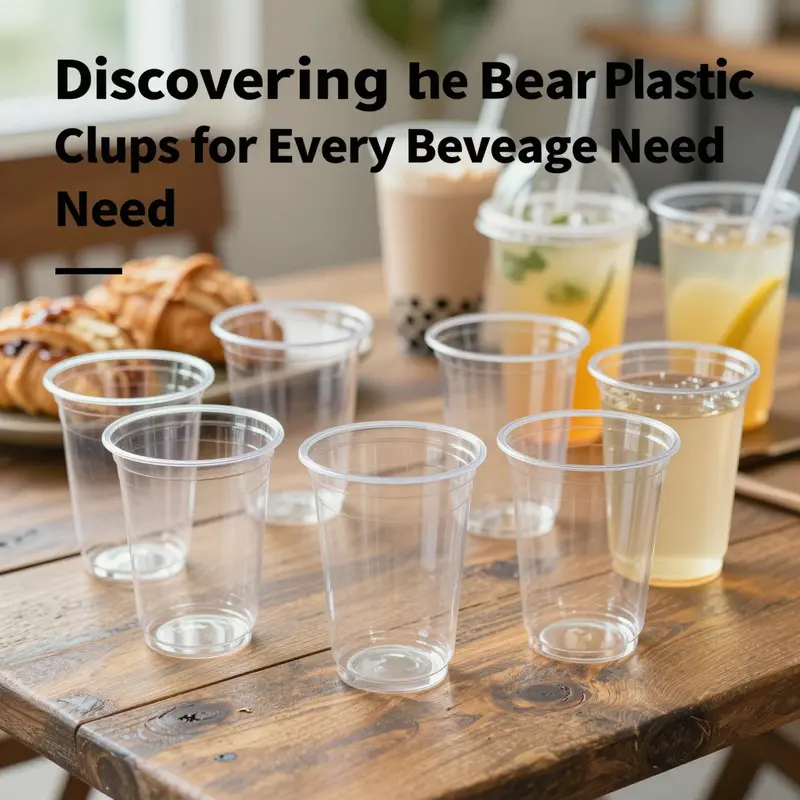
Selecting the right clear plastic cups is paramount for businesses in the beverage and food service industry. High-quality plastic cups can significantly elevate customer experience while ensuring durability, functionality, and food safety. Organizations such as bubble tea shops, restaurants, food trucks, and catering services require cups that not only serve their functional purpose but also reflect their brand and commitment to quality. In the coming chapters, we will delve into the various categories of clear plastic cups, explore their diverse applications, and highlight innovative designs that enhance usability and appeal. We will also examine the crucial aspect of food-grade safety, a non-negotiable for any business serving food and beverages. Let’s embark on this journey towards understanding the highest quality plastic clear cups and how they can impact your service positively.
Crystal Clarity in Action: The Science, Safety, and Style of High-Quality Clear Plastic Cups
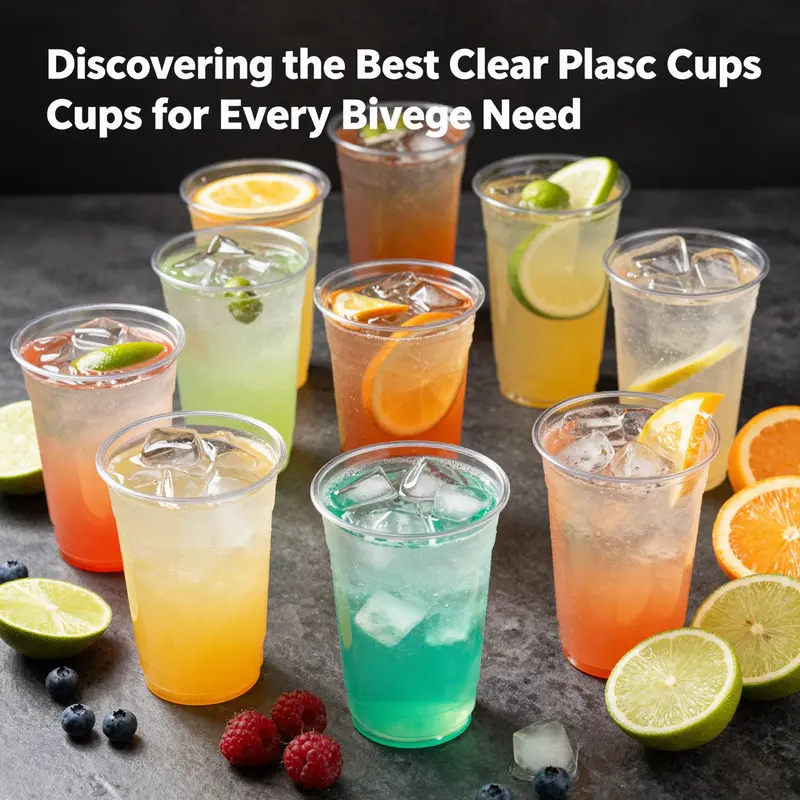
Clear plastic cups have become a quiet backbone of modern beverage service, shaping the way customers perceive, engage with, and remember a drink before they even take a sip. In a marketplace crowded with options, the highest quality clear cups distinguish themselves not merely by transparency but by a careful balance of material science, safety, usability, and brand potential. When a spectator looks at a crystal-clear rim catching the light, they are not simply judging aesthetics; they are witnessing a designed experience. Clarity is more than a visual cue. It signals purity, predictability, and confidence in the product served. It tells a story about how carefully the cup was manufactured, how reliably it will perform during service, and how thoughtfully a brand thinks about the customer journey from the first glance to the last swallow. The result is not a disposable item but a small stage on which beverages perform and brands communicate.
At the core of any high-quality disposable clear cup is material choice. The most common families of clear cups rely on plastics such as PET and polystyrene, each offering distinct advantages for different applications. PET, or polyethylene terephthalate, is prized for its exceptional clarity and strength. It delivers a bright, glass-like transparence that preserves the true color and presentation of a beverage, from the pale shimmer of a chilled juice to the deep glow of a mixed drink. Beyond aesthetics, PET offers robust food-grade safety credentials and compatibility with a wide range of cold beverages. It also tends to support a durable seal against minor impacts during handling and transport, which helps reduce spill risk at crowded events or busy service counters. In the chain of quality, PET’s consistent performance across large production runs and its compatibility with sterile manufacturing environments help ensure that each cup arriving on a bar or table meets predictable standards.
Polystyrene cups, particularly in higher heat-resistant formulations, bring a different kind of confidence. They may offer enhanced heat tolerance for certain beverages and can provide a stiffer feel that improves the perception of sturdiness in hand. The rigidity can support stable pouring and reduce flex during sipping, which matters when a brand wants to maintain a precise, controlled drinking experience. For many operators, the decision between PET and polystyrene comes down to the specific beverage profile and service context. A cold, visually vibrant drink may benefit from PET’s pristine clarity, while a warm, guest-focused service moment may call for a cup whose rigidity and edge stability reinforce a premium feel. In both cases, the consumer’s sensory experience—sight, touch, and mouthfeel—depends heavily on the cup’s material integrity and surface finish.
A growing segment within the broader category of clear cups draws attention to eco-conscious conversations without sacrificing performance. Biodegradable or plant-based options, such as polylactic acid (PLA) derivatives, are increasingly explored by manufacturers seeking to align with sustainability goals. These choices open a dialogue about end-of-life scenarios, compostability, and the energy embedded in production. Yet sustainability is not a one-size-fits-all attribute. It interacts with clarity, barrier properties, and heat resistance in ways that may influence use cases and cost. In practice, the highest quality clear cups often present a spectrum rather than a single choice: a range of materials that can be matched to the beverage type, event format, and environmental objectives of the purchaser. The aspiration is to deliver a cup with excellent optical clarity, dependable safety, and a lifecycle that respects the broader goals of a brand’s environmental stewardship.
Alongside material selection, the precision of manufacturing underpins perceived and actual quality. In top-tier production environments, cups are crafted under stringent quality control systems. Many high-grade cups are 100% food-grade approved and produced in facilities with clean-room-like discipline and aseptic packaging lines. This level of hygiene and process control minimizes human contact with the finished product and reduces the risk of contamination. It also supports consistent performance across millions of units, ensuring that every cup pours smoothly, seals well with corresponding lids, and stacks neatly for efficient storage and retreating into service lines. Regulatory certifications often accompany these products, including but not limited to ISO standards and food-safety endorsements. Those certifications are not merely bureaucratic checkmarks; they offer tangible assurance to buyers that the cup has undergone rigorous evaluation for safety, steadiness, and reliability in real-world scenarios.
In the field, sizes like 8-ounce and 16-ounce clear disposable PET cups shape how operators design the guest experience. An 8-ounce cup is a compact, efficient choice for sampling, tastings, or lighter servings, where a crisp presentation and light handling are prized. A 16-ounce cup, by contrast, provides a more accommodating vessel for cocktails, iced beverages, or larger servings at events and brunch settings. The choice of size is more than a matter of volume; it reflects how a beverage is positioned in the guest journey—from first glance to the final sip. The decision also interacts with lid compatibility, which is crucial in busy service contexts. Lids come in flat or dome formats and can feature openings that range from cross to hole to no opening at all. A well-mated lid not only prevents spills but also preserves aroma and temperature, contributing to the perceived quality of the drink. The blend of size, lid design, and the cup’s rim geometry influences pouring stability and stacking behavior, which in turn affects the efficiency of service and the end-user experience.
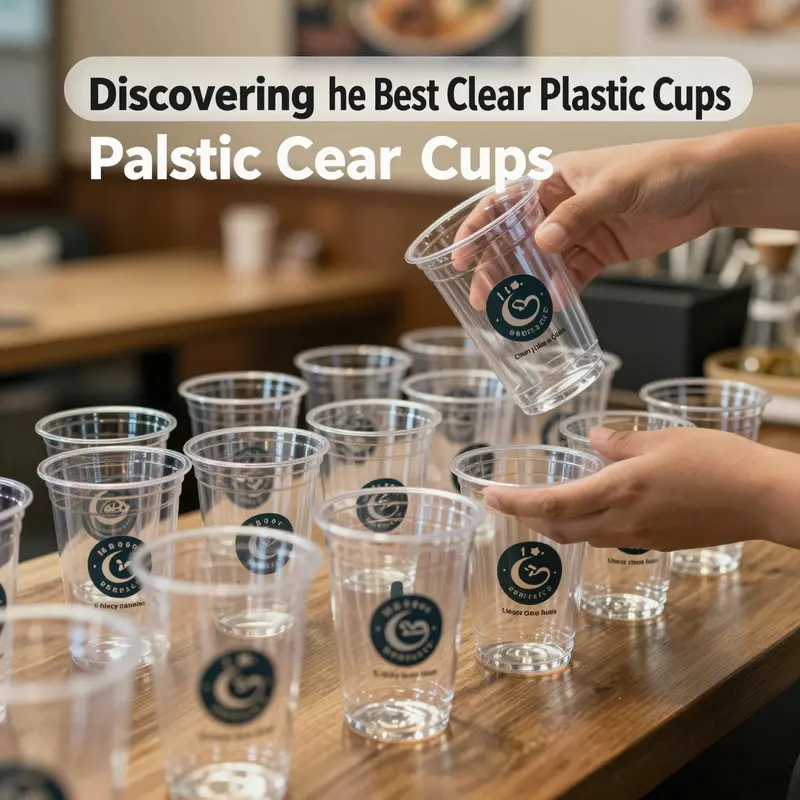
Branding and customization represent a natural extension of clear cup quality in a competitive market. The highest quality cups do not merely transport a beverage; they carry a brand’s message through visual design printed directly on the cup or applied through labels and thermal transfer processes. Printing options can extend across a spectrum of colors, often supporting up to several hues in a single run. When a cup features branding, its potential value increases beyond utility. It becomes a portable billboard that remains in the guest’s hand during the event, reinforcing recognition as the drink in the cup circulates from one person to another. The design must respect the cup’s geometry and optical clarity, ensuring that logos and messages remain legible and harmonious with the beverage’s appearance. In this way, the cup turns into a stage for brand storytelling—subtle, persistent, and highly visible in social moments where guests photograph their drinks and share them with others.
The interplay of customization, material choice, and durability is most visible in practical settings such as cafes, catering services, and events. In a cafe, the clarity of a cold beverage presentation matters, as customers often choose based on color, hue, and presentation at a glance. The cup’s artifact—its thickness, its edge, its anticipate stability—contributes to a quick, confident decision by the consumer. In catering and promotional settings, the ability to imprint logos or designs on a high-clarity cup elevates the experience beyond a mere disposable good. The shared moment of unveiling a beverage becomes a marketing touchpoint that travels with the guest through social spaces and into photographs and posts. This is where a cup ceases to be a common utility and becomes part of a brand’s experiential continuum.
From a quality-control perspective, the best cups are subjected to a confluence of testing and standardization. They are designed to withstand the rough rhythms of high-volume service: rapid filling, frequent handling, stacking, and quick dispensing into a guest’s hand. The rim must be uniform to ensure stable pouring and ease of stacking, avoiding wobble and misalignment that can frustrate staff and dampen the guest’s confidence. The surface must maintain clarity even after repeated wash and reuse cycles, where allowed, and the material should resist clouding over time. Even the choice of packaging method matters. Aseptic, sterile packaging lines contribute to a perception of hygienic quality, which influences how consumers perceive the safety and reliability of what they are about to drink. These features collectively define what it means to be a high-quality cup: a product that performs consistently and presents beverages in their truest, most appetizing form.
The decision-making process for buyers is not purely technical. It is also aspirational. A cup that delivers a pristine, transparent presentation becomes a canvas for color and texture—whether a lemonade’s citrus sparkle or a coffee’s crema—and that visual impact interacts with the guest’s memory of the experience. The material’s optical properties, the rim’s dimensional stability, and the packaging’s hygiene all converge to create a sense of value that justifies the cost. In practice, this means selecting a cup that aligns with the beverage’s temperature profile, the event’s ambiance, and the brand’s desired tone. For a premium, hands-on service moment, a cup that communicates cleanliness, reliability, and presentation can be as important as the beverage itself.
Within this framework, the role of certification and standardization becomes a practical translation of quality into procurement confidence. Cups with recognized safety and quality certifications provide buyers with assurances that go beyond first-hand impressions. They signal that the product has undergone independent verification and adheres to an established set of safety, hygiene, and performance criteria. For business operators, this reduces the risk of encountering defects, misprints, or performance failures that could disrupt service and damage reputations. It also smooths the path for scaling supply, as standardized products support predictable lead times, consistent color and clarity, and reliable compatibility with lids and stacking systems across multiple locations.
In close alignment with the product’s physical and regulatory attributes is the growing conversation about end-of-life and environmental stewardship. While the top-tier cups emphasize clarity and safety, there is a perceptible shift toward responsibly sourced materials and improved recyclability. Operators increasingly weigh not only the direct usability of a cup but its broader lifecycle implications. The most compelling options tend to balance high performance with practical recyclability or compostability, or at least provide clear pathways for recovery within local waste-management infrastructure. The discussion about sustainability is not a distraction from quality; it is a dimension of quality that resonates with customers who value responsible consumption and brand accountability. In other words, a clear cup can be as much about the drink’s presentation as about how the brand aligns with responsible practices in a way that customers can see and appreciate.
As a closing through-line, consider the highest quality clear plastic cups not as a single hero but as part of an integrated system. The cup, lid, and branding choices must cohere with the beverage’s temperature, the venue’s service rhythm, and the brand’s imagery. The best cups provide a reliable foundation for this system: they deliver clarity without compromise, safety without question, and a canvas on which beverage and brand can come together in a moment of recognition and delight. In this sense, the cup is not a disposable afterthought but a crucial enabler of a superior guest experience. The cup, in its quiet elegance, supports the visible and invisible aspects of service—the beverage’s color, the aroma that opens the moment, the feel in the hand, the confidence in the pour, and the memory of the encounter that guests carry with them long after the drink is gone.
External resource: https://www.yamatindustries.com/products/pet-disposable-beverage-cups/
null
null
Seeing Through Innovation: Elevated Clarity and Craft in High-Quality Clear Plastic Cups

Clear plastic cups have journeyed far beyond their simple, disposable origins. Today’s high-quality options are crafted to be nearly invisible, letting the beverage color, aroma, and texture take center stage while delivering performance that customers feel in the palm of their hand. The evolution is not a single leap but a series of careful design choices that marry material science with ergonomic insight, manufacturing precision, and branding potential. In this chapter, we explore how innovative designs in clear cups balance clarity with strength, heat and cold management with comfortable handling, and the opportunity for brands to tell a story through every sip. The result is a class of drinkware that functions as an extension of the beverage itself—crystal-clear, dependable, and adaptable to a wide range of serving contexts—from intimate coffeehouse moments to bustling outdoor festivals and branded tastings that require consistency across dozens or hundreds of venues.
At the heart of these innovations is material selection. The two most common polymers for clear cups are polystyrene and polypropylene. Polystyrene is renowned for its exceptional clarity and rigid feel, producing a crisp, glossy profile that does not distract from the liquid inside. Polypropylene, by contrast, offers a more forgiving balance of toughness and clarity and can better withstand heat exposure, making it a versatile choice for both hot and cold drinks in mixed-use environments. The choice of resin has downstream consequences: it influences wall thickness, rim finish, edge smoothness, and the ease with which the cup can be stacked, transported, and cleaned. The most refined designs optimize these aspects so the cup reads as a seamless extension of the beverage rather than a mechanical vessel dragging down the sensory experience.
The next layer of sophistication comes from structural design. Reinforced sidewalls have become a practical answer to the tension between thin-walled efficiency and the demand for sturdy, dependable performance. The reinforcement is often achieved through subtle geometry—slightly thicker regions, posts, or ribbing resolutely integrated into the wall profile—to deliver rigidity without sacrificing the side profile’s transparency. This approach yields cups that resist deformation during handling, stacking, and when they are set down on uneven surfaces. The result is a product that breathes confidence into service flow: staff can pour, pass, and present with fewer fears of buckling or wobbly rims, while guests sense a quality that signals attention to detail.
Ergonomics, too, has moved from a nice-to-have to an essential feature. A cup that feels pleasant to hold in warm conditions is more likely to be gripped securely and consumed at a relaxed pace rather than abandoned mid-service. Ergonomic shaping—gentle curvature along the body, a comfortable fingertip rest, or a slight thumb platform—improves grip stability and reduces the risk of spills in crowded venues. The design philosophy is straightforward: if handling is easier, the experience feels more premium, and the likelihood of a positive impression increases, which in turn supports branding and guest satisfaction.
Double-walled constructions are a major leap forward for thermoregulation and user comfort. By eliminating direct contact with hot liquid on the outer surface, these cups keep beverages hot longer while dramatically reducing exterior condensation. The interior and exterior walls maintain their transparency even as temperatures rise, preserving the aesthetic appeal of the drink and reducing the risk of moisture dampening a guest’s hands. For cold drinks, the insulating air gap helps maintain chill longer, which contributes to drinkability in informal settings or extended service timelines. A cup with this configuration communicates a premium service level, often aligning with events and venues that seek to elevate the guest experience without committing to more fragile or heavy glassware.
Beyond physical structure, smart features have begun to redefine what a disposable cup can offer. Markers etched or printed on the interior or exterior that indicate fill levels or dilution ratios assist bartenders, baristas, and home enthusiasts in achieving consistent results for recipes or promotional samples. It is crucial that these markers remain legible while preserving the cup’s overall clarity; designers balance contrast, placement, and font size to ensure readability without visually interrupting the beverage’s appearance. Stackability, too, has moved from a convenience to a necessity for large-scale operations. Stackable bases and nested designs reduce the footprint of fleet storage, simplify logistics, and lower handling costs—factors that matter for caterers, venues, and event organizers who rely on rapid setup and tear-down in dynamic environments.
Sustainability has emerged as a defining factor in modern cup design, not as an afterthought but as a guiding principle that shapes material choices and end-of-life considerations. Some innovations pursue recyclable or biodegradable options, while others emphasize compatibility with widely available recycling streams. The challenge is to deliver the same clarity and performance while aligning with environmental expectations. In practice, this means pursuing resin feeds and polymer blends that maintain optical clarity and structural integrity through the typical lifespans of these products, coupled with clear guidelines for disposal and recycling. For brands and operators, the message is simple: investing in sustainable materials and responsible end-of-life pathways can strengthen consumer trust and brand affinity as much as the cup’s visual appeal or tactile quality.
Another frontier is the realm of experiential innovations. Light enhancements, such as embedded, low-energy illumination, create an aesthetic that can transform ordinary beverages into focal points of a social or nightlife scene. These features can be paired with ambient lighting to deliver a coordinated show, turning a standard service into a moment of spectacle. While such technologies introduce new cost considerations and may limit the dishwasher compatibility of the cups, they offer a differentiator for venues and events that seek to create memorable, shareable experiences. In the appropriate context, the added drama justifies the investment by enhancing brand recall and guest engagement, turning a disposable vessel into a catalyst for social media sharing and word-of-mouth buzz.
The production side of these innovations emphasizes precision and consistency. Advanced tooling, meticulous mold design, and tight process controls allow manufacturers to deliver cups with uniform rims, even wall thickness, and predictable behavior across temperature swings. The result is a reliable product that performs consistently across batches, which is essential when supplying large hospitality networks or multi-day events. Consistency matters because it ensures that a brand’s visual language remains uninterrupted from one venue to the next, reinforcing recognition and trust among guests who might encounter the cup in a variety of settings.
In discussing these advances, it is important to acknowledge the broader ecosystem that makes them possible. The design language is supported by suppliers who can provide high-clarity resins, molding capabilities that hold tolerances tight enough to maintain a crisp edge, and finishes that reduce the risk of micro-abrasions or optic scatter. Quality control protocols—ranging from material certification to post-mproduction inspection—play a crucial role in ensuring food-contact safety, appropriate rigidity, and inert surfaces that are comfortable to hold and easy to clean. The final product, therefore, embodies a continuous thread that runs from raw resin to the moment it is raised to the lips of a consumer: certainty in safety, clarity in appearance, and confidence in performance.
This chapter also recognizes the role of sourcing narratives and the branding implications of clear cups. A highly transparent vessel serves as a blank canvas for logos, color accents, or subtle design motifs that do not overwhelm the liquid’s visual profile. When a brand invests in customization—whether through a logo, a color gradient, or a branded imprint—the cup becomes a portable extension of the brand’s identity. This is not just about aesthetics; it is about creating a coherent guest experience that translates across venues and occasions, from corporate tastings to casual gatherings. The opportunity to harmonize the cup’s design with the drink’s presentation and the event’s theme adds value that transcends the container itself. In practice, this means collaborating with manufacturers and designers who understand both the technical constraints of clear plastics and the strategic aims of brand storytelling.
For readers seeking deeper technical or sourcing insights, these innovations point toward a broader ecosystem of producers and researchers shaping the future of clear, plastic drinkware. A notable Chinese manufacturer, known for precision engineering and rigorous quality control, offers a suite of clear cups that align with the described performance criteria. While the specific brand name is outside the scope of this chapter, the case underscores how design and manufacturing excellence converge to realize capabilities at scale. The emergence of such capabilities signals that the next wave of clear plastic cups will likely emphasize smarter features, more sustainable materials, and tighter integration with brands’ customer experiences. This perspective helps connect the dots between laboratory-grade materials and practical, day-to-day use in hospitality and events.
If a reader wants to explore branding-enabled, sustainability-forward options that parallel the clean aesthetic of clear cups, a practical route is to consider offerings that feature logo customization and packaging partnerships suited to cold and hot beverages alike. The idea is not to replace the cup with something more elaborate, but to extend its utility as a branding tool while preserving the simplicity and elegance of its core function. In a world where the tempo of service and the tempo of social sharing are both high, the durable clarity of these cups becomes a dependable canvas for experience design rather than merely a vessel for liquid.
In summary, the highest quality clear plastic cups are defined by a composite of material choice, structural engineering, and smart features that together deliver reliability, safety, and a premium user experience. The most successful designs balance the imperatives of translucent aesthetics with the practical realities of hot and cold beverages, stacking and transport, and the branding ambitions of modern businesses. They are not one-off novelties but thoughtful responses to the evolving demands of hospitality, retail, and experiential marketing. The future likely holds even more refined materials and geometry, enabling cups that stay clear under longer exposure to heat, resist condensation more effectively, and accommodate ever-more sophisticated branding strategies without sacrificing usability or cost efficiency.
For brands and operators exploring these innovations, the path forward involves more than selecting a visually appealing cup. It requires aligning material performance with service design, from glass-like clarity and tactile comfort to reliable stacking, safe handling, and a sustainable lifecycle. The most compelling cups will be those that disappear visually while subtly amplifying the drink’s quality and the brand’s narrative. In the end, innovation in clear plastic cups is less about novelty and more about orchestrating a seamless sensory experience that begins the moment a guest picks up the cup and continues long after the drink is finished. The result is a product that earns its keep not through flash alone, but through steady, verifiable performance and a quiet confidence that resonates with guests across contexts.
For readers who want to explore related branding and packaging options, consider this resource focused on eco-friendly, logo-ready cold beverage cups with lids. It offers a practical example of how a clear cup can serve as a canvas for a brand’s intentions while aligning with sustainability values: eco-friendly printed-logo cold beverage cup with lid. This link complements the discussion of design, material choice, and customization by illustrating how a clear vessel integrates with broader packaging and branding strategies. As the industry continues to innovate, the combination of clear aesthetics, robust engineering, and thoughtful branding will define the next generation of high-quality clear cups that customers not only use but remember. External resource: https://www.dongsuplastic.com/
Crystal Clarity, Safer Choices: Navigating Food-Grade Safety in Premium Plastic Clear Cups
Clear plastic cups offer visibility, convenience, and a cleanliness that is prized in food service. Yet the very thing that makes them so appealing—their transparency—also raises questions about what sits inside them and how that contact affects the consumer. When a café, a caterer, or an event organizer chooses a clear cup, the decision rests on more than price or appearance. It hinges on safety, regulatory compliance, and the performance that protects both taste and health. In the world of high-quality plastic clear cups, safety is the quiet backbone. It informs every choice from the raw material to the finished product, every test for leachables, every reformulation to meet evolving standards. The most reliable path to confidence starts with food-grade safety: materials vetted for direct contact with food and beverages, design features that minimize risk, and certifications that verify compliance under real-world use. This is not about chasing purity alone but about balancing clarity with responsibility, ensuring that a cup can cradle a drink without becoming a source of worry for the consumer.
The first pillar of safety is certification. In practice, this means a cup should bear clear indicators of food-contact compliance. FDA compliance is a foundational benchmark, signaling that the plastic has been evaluated for its behavior in contact with food. NSF certification adds another layer, focusing on safety, sanitation, and performance under conditions typical of food service. A BPA-free label is not just a marketing badge; it is a commitment to avoiding a specific class of chemical leachates that have sparked ongoing consumer concern. When a cup enters a restaurant, a festival, or a hotel conference, these certifications help establish trust at a glance and reassure staff that their choices align with health expectations and regulatory norms. The value of such assurances grows as menus expand, as beverage profiles become more complex, and as customers demand more transparent information about the foods they consume.
These assurances rest on the materials themselves. Food-grade plastics that are widely used for clear cups include PET, HDPE, and PS, each with its own strengths and caveats. PET stands out for its clarity and recyclability. It is the workhorse for many cold beverages, preserving color and sparkle while resisting common odors and flavors from lingering between uses. PET is prized for its stability at refrigeration temperatures and moderate heat tolerance within a broad range of cold-to-room temperatures. For hot beverages, PET is generally less favored, as higher temperatures can promote deformation or accelerated leaching, depending on formulation and design. This cautions us that many clear cups are optimized for cold applications, where clarity remains pristine and the beverage is enjoyed within a short window.
HDPE, or high-density polyethylene, offers a different balance. It delivers good rigidity and clarity, along with strong chemical resistance. The material’s rigidity helps maintain form during pouring and stacking, reducing the risk of cracks that could compromise safety or create messy spills. HDPE cups can perform reliably in a variety of service scenarios, including some that involve moderate heat, though they are generally selected with cold or cool beverages in mind. The environmental aspect of HDPE is meaningful as well; it is widely recyclable, aligning with growing priorities in sustainable packaging.
Polystyrene, PS, has historically been a staple for clear, rigid cups due to its transparency and stiffness. Yet environmental concerns and evolving waste streams have led many regions to reassess PS usage. In high-quality clear cups designed for food contact, PS remains relevant for certain applications that require a bright, crystal-clear presentation with a crisp rim and dependable rigidity. The trade-off comes in its end-of-life handling and potential interactions with hot liquids. When heat is involved, the risks of deformation and, in some formulations, odor transfer become more pronounced. Consumers often expect a crisp sensory experience from a clear cup, and PS can support that expectation if used within its safe operating envelope.
Beyond the raw materials, safety threads through design and manufacturing choices. A truly food-grade cup does more than resist cracking; it is engineered to minimize surface imperfections that could harbor bacteria or trap residues. A uniform, even rim aids stability during pouring and stacking, reducing the likelihood of spills or injuries. Smooth interior surfaces deter the buildup of flavors and odors, ensuring that a beverage does not pick up unwanted notes from a previous use. In this context, a cup’s performance is inseparable from its safety profile.
The responsibility of choosing food-grade cups extends into the practicalities of everyday operation. For a café or venue with a fast-paced environment, ease of cleaning is essential. A cup that resists staining and odor migration supports a cleaner, more efficient workflow. At the same time, staff must be confident that the cups’ chemistry will not interact with the range of beverages offered, from citrus-forward seltzers to richly flavored cold brews. The interplay between flavor integrity and material choices becomes particularly important for beverages with acidic components or added flavorings. In such contexts, the material’s barrier properties and the absence of reactive additives play a decisive role in preserving the intended taste profile. These considerations influence menu planning, waste management, and customer satisfaction.
The chain of safety extends to the labeling and branding that accompany a cup. Labels, adhesives, and printed designs must be food-safe as well, ensuring that branding does not introduce unintended chemicals into a customer’s drink. For business operators, this means selecting printing inks, labels, and adhesives that meet food-contact safety standards. It is not enough for a cup to be clear and attractive; the entire presentation, from the rim to the print on the outside, must reflect a comprehensive approach to safety. In practice, this often leads to a preference for suppliers who provide end-to-end assurances—materials, finishes, and labeling processes all vetted for food contact. Consumers benefit when every touchpoint, from sip to seal, embodies trust.
The environmental dimension is inextricable from safety in today’s market. Recyclability and the lifecycle of a cup influence how confidently a business can promote its safety credentials. PET and HDPE offer robust recycling pathways in many regions, helping to close the loop on single-use plastics where regulations permit. Yet the safety conversation should also address potential contaminants introduced during disposal or recycling. Proper waste streams ensure that cups do not contribute to secondary exposure risks. In this light, the choice of material carries dual significance: it supports safety in use and aligns with responsible end-of-life management. The modern consumer increasingly expects a packaging story that honors both health and planet.
Best practices for selecting cups thus revolve around several core questions. Will the application be cold or ambient in temperature? Is there a need for branding that must survive printing and handling without compromising safety? Will the operation favor disposables for speed, or is a reusable approach feasible with established cleaning protocols? The answers guide toward a material strategy that emphasizes safety certifications, appropriate temperature tolerance, and a clear plan for end-of-life management. In this framework, the highest-quality clear cups emerge not from a single feature but from a harmonized set of attributes. A cup that is BPA-free, FDA-compliant, and NSF-certified provides the baseline trust needed for food service. A PET or HDPE composition offers the strongest guarantee for cold beverages and reliable recyclability. A design that minimizes surface irregularities, provides a stable rim, and ensures easy handling supports both safety and user experience. When branding is included, food-safe printing processes keep the protective promise intact.
The dialogue around safety does not end with certification and material choice. It extends into practical guidance for operators. For instance, if a venue hosts a wine-tandem tasting or a citrus-forward drink station, the cups should maintain clarity through the service window and resist staining from frequent citrus exposure. Odor testing is another practical check; high-quality cups should not impart flavors to beverages or retain lingering aromas after washing. In many cases, this is achieved through a combination of resin formulation, surface treatment, and careful control of manufacturing tolerances. The end result is a cup that remains visually pristine, tastes true to the beverage, and keeps health risks at bay.
As these cups travel from supplier to service area, the information trail matters. Clear documentation about material composition, certifications, and safety testing empowers staff to answer customer questions confidently. In retail and hospitality, customers increasingly inspect packaging safety as a sign of quality. A well-documented safety profile can become a powerful differentiator, signaling that a business values consumer health as much as aesthetics and convenience. For decision-makers, this means building a procurement brief that prioritizes food-grade safety alongside other performance metrics. It also means cultivating a supplier relationship built on transparency, traceability, and responsiveness when safety data or regulatory standards evolve.
In closing this integrated perspective, it is evident that safety in high-quality clear cups is not a single checkbox. It is an ongoing commitment to material science, regulatory adherence, and thoughtful design. It requires understanding how each material behaves under practical use, recognizing the limits of safety in hot liquids, and planning for responsible disposal and recycling. It means acknowledging that the clearest cup can be safest only when every step—from material selection to labeling and end-of-life handling—is governed by rigorous standards and aligned with consumer expectations. In the next leg of this exploration, we will connect these safety fundamentals with the broader performance and customization landscape, linking the science of contact-safe plastics to the realities of branding, event service, and everyday beverage experience. External reference for readers seeking authoritative guidance on safety standards for food-contact materials: https://www.fda.gov/food/food-contact-materials
Final thoughts
The importance of high-quality clear plastic cups cannot be overstated for businesses in the beverage and food industry. Ensuring durability, safety, and innovative designs can significantly enhance customer satisfaction and brand reputation. By considering options that balance functionality with aesthetic appeal, organizations can find the perfect cups for their services. Whether you’re serving refreshing bubble tea or catering a large event, investing in the right clear plastic cups is a strategic decision that can elevate your business. Choose wisely and make every cup count!