
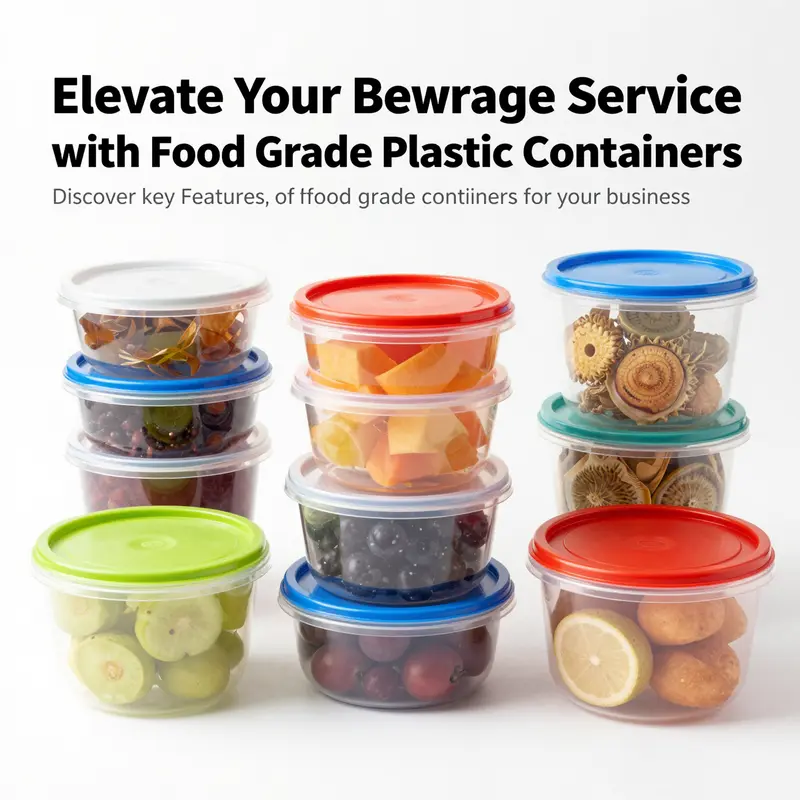
Whether you run a bustling bubble tea shop, cater events, or manage a food truck, the importance of safe and hygienic food storage can’t be overstated. Plastic food grade containers with lids play a pivotal role in ensuring that beverages and food items remain fresh and uncontaminated. This article delves into the essential features and standards that these containers adhere to, explores their diverse designs and functionalities, and examines their use across various sectors while considering sustainability challenges. By understanding these elements, you can make informed decisions that enhance your service quality and operational efficiency.
Guardians of Freshness: Core Features, Materials, and Standards Behind Plastic Food-Grade Containers with Lids
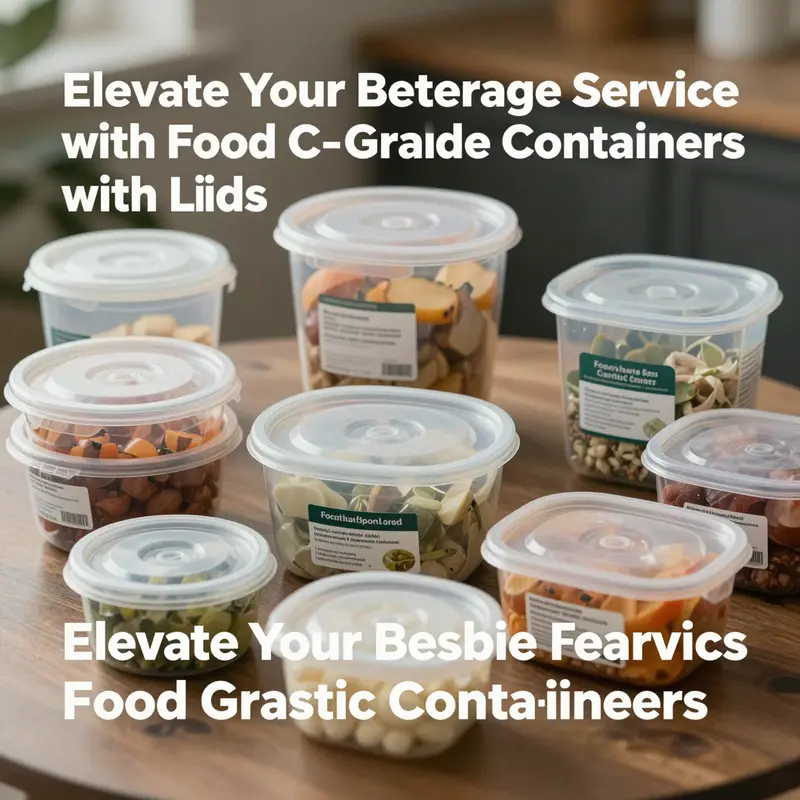
Storing and transporting food safely hinges on more than just a container with a lid. It requires a careful integration of material science, hygienic design, and regulatory stewardship that together define what makes a plastic food-grade container with a lid dependable in kitchens, warehouses, and service operations. The chapter outlines the core materials, lid design, markings, durability, hygienic design, and the standards that keep food contact safe across borders and industries.
At the heart of every plastic food-grade container with a lid lies a material that has earned trust through testing and clear labeling. The most common polymers— polypropylene (PP), high-density polyethylene (HDPE), low-density polyethylene (LDPE), and polyethylene terephthalate (PET)—each bring different balances of heat tolerance, chemical resistance, clarity, and flexibility. PP offers high heat resistance, making it suitable for containers that may encounter warm or hot foods. HDPE provides robust chemical resistance and is widely used for liquids and perishables, though it is less transparent than PP or PET. LDPE appears in certain lid components and seals where flexibility matters. PET is valued for clarity and rigidity, often appearing in rigid-packaging contexts where visibility aids content management. These materials do not act in isolation; their safety profiles depend on how they interact with a range of foods under various temperatures and storage durations. Migration concerns are central to regulation, focusing on what substances may move into food and under what conditions that movement remains within safe limits.
The lid is the stage where containment and protection converge. A lid must seal effectively to prevent leaks, protect from contamination, and help preserve quality. Snap-on designs deliver convenience and re-sealability, while locking or airtight lids offer stronger protection against spills and oxidation. The best lid design harmonizes with the container wall geometry, temperature profile, and cleaning protocols. Common challenges include warping from dishwasher exposure or degradation from heat and cleaners; selecting lids validated for the intended use reduces these risks. A well-matched lid system also includes clear labeling or markings that communicate safe use and compatibility with intended foods and reheating methods.
Clear markings are the quiet yet critical language of safety. Recycling codes, permissible usage temperatures, microwave and dishwasher guidance, and other cautions help users avoid misuse that could lead to migration or damage. Effective labeling translates into safer choices in homes and professional kitchens and supports decisions about cleaning methods, re-use, and heat exposure. Durability and hygienic design follow as practical considerations: containers must withstand daily handling, stacking, and cleaning without compromising the seal or interior cleanliness. Smooth transitions, minimal joints, and easy interior access help prevent residue buildup and facilitate sanitation across high-volume settings.
Standards and regulatory frameworks form the backbone of trust. In China, GB 4806.7-2023 regulates the migration limits and overall safety for plastic materials contacting food. GB/T 43198-2023 focuses on the dimensions, wall thickness, sealing performance, and durability of polyethylene blow-molded containers, including drop-test considerations. In the United States, the FDA’s 21 CFR Parts 174–179 describe the framework for safe food-contact materials, with emphasis on migration testing and compatibility with different foods. The European scene includes the Single-Use Plastics Directive and related packaging safety requirements that influence design for recyclability and reuse. Together, these standards guide material selection, product testing, labeling, and manufacturing practices in a global supply chain.
Beyond regulatory compliance, the practical implications span industries. Catering and buffets prioritize portion-controlled, hygienic containers that prevent contamination and support efficient service. Home meal prep favors stackability, dishwasher compatibility, and reusability. Industrial storage looks to durability and efficient shelf organization for bulk ingredients. Retail packaging benefits from clear visibility while maintaining safe lids to guard freshness. Across settings, the core features—safe materials, secure lids, clear labeling, durability, and hygienic design—remain the common thread guiding quality and trust.
Sourcing and production decisions also shape the final product. OEM and ODM relationships enable brands to tailor geometry, sealing mechanisms, and branding elements. Manufacturing choices—such as printing methods and bonding techniques—impact both aesthetics and performance. MOQs, tooling costs, and supplier capabilities influence the total cost and the ability to scale with demand. A prudent procurement approach weighs price against material safety, regulatory compatibility, long-term performance, and supply-chain resilience.
As sustainability considerations grow, conversations move toward packaging options that balance practicality with environmental impact. Tempered glass offers durability and a non-porous surface with heat tolerance in many cases but adds weight and cost. Plastic remains favored for its lightness, cost-effectiveness, and resilience in transport, though recycling and reuse strategies are critical to minimizing waste. Many settings benefit from a mix of materials and formats, selecting containers that meet the needs of the task while aligning with corporate and consumer sustainability goals.
For professionals making purchasing decisions, the practical takeaway is straightforward: match material properties to the intended use, prefer designs that ease cleaning and hygienic handling, and verify labeling and regulatory compliance for the jurisdiction where the containers will be used. A well-chosen container with a robust lid helps safeguard quality, reduce waste, and simplify daily routines in kitchens and operations alike.
If you seek a concise synthesis of the landscape surrounding plastic food-grade containers with lids, later sections offer overviews of material families, safety standards, and application considerations to help bridge theory and real-world product choices.
Design as Trust: The Integrated Architecture of Safe, Efficient Plastic Food-Grade Containers with Lids
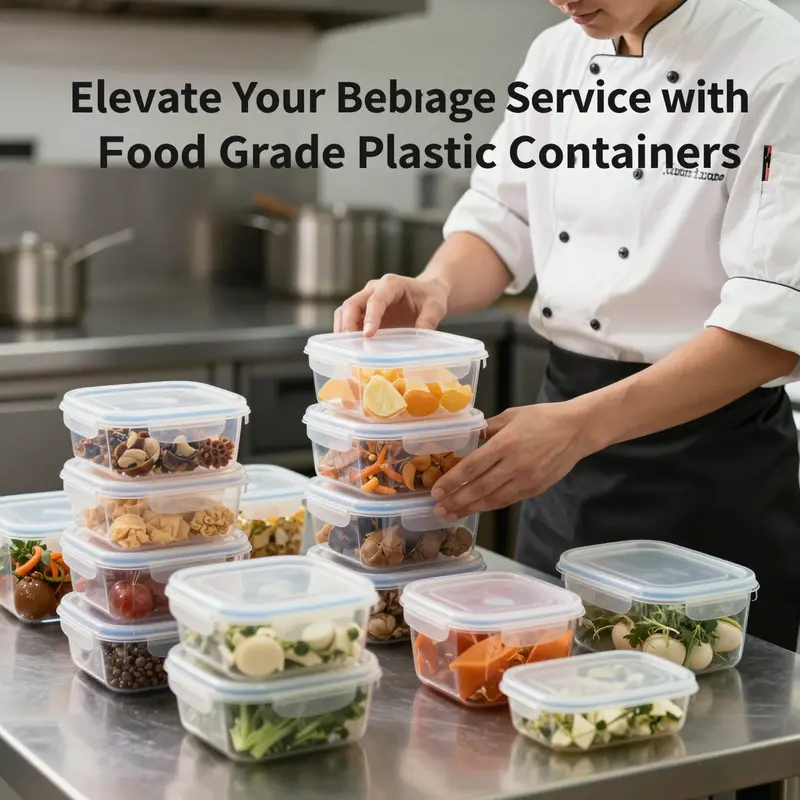
A container is not just a receptacle; it is a compact system built to safeguard ingredients, support hands-on workflows, and travel through kitchens, catering halls, and storage rooms without compromising safety or quality. When we examine plastic food-grade containers with lids, we encounter a deliberate marriage of material science, ergonomic design, and rigorous safety standards that together create a reliable, everyday tool for food storage and transport. The conversation begins with material composition, moves through the intricacies of lid sealing and shape optimization, and extends into hygiene, maintenance, and the broader considerations of sustainability and lifecycle performance. This is not merely about keeping food from spilling; it is about preserving freshness, minimizing contamination risks, and enabling consistent, repeatable use across diverse environments—from a home freezer to a commercial kitchen, a warehouse, or a front-of-house display. The story of design here is a story of how choices in polymer chemistry and geometry translate into practical outcomes that matter for safety, efficiency, and trust in a system that handles food daily.
The most crucial starting point is material compatibility with food contact. In modern containers, the default approach centers on food-grade polypropylene, a polymer celebrated for its safety profile, resilience, and heat tolerance. Polypropylene offers a robust balance of stiffness and toughness, a relatively low permeability to moisture, and a chemical resistance that helps resist staining and odor transfer. Importantly, it can withstand high-temperatures that kitchens routinely demand, enabling safe microwave reheating within certain practical limits, and it can tolerate hot water sterilization or steaming passes without structural compromise when used within recommended temperature ranges. The material, however, is judged not only by its innate properties but also by compliance with regulatory benchmarks that govern direct contact with food. Standards administered by regulatory bodies and verified by third-party audits assure users that the plastics will not leach harmful substances into food under typical storage and handling conditions. This confidence is foundational; it translates into a familiar, almost taken-for-granted sense that the container will perform without introducing risk, even as it faces the everyday rough-and-tumble of busy kitchens, transport, and repeated cleaning cycles.
Design languages for lids emphasize airtight or near-airtight performance, a priority that emerges from the need to curb evaporation, limit oxidation, and block microbial ingress. Snap-on lids with clasp-type mechanisms, twist-lock or screw-type closures, and dual-function designs that double as stable bases are all common; each approach carries distinct advantages, trade-offs, and maintenance considerations. Snap-on lids tend to offer quick, one-handed sealing and rapid access, which suits routine meal prep and portion-controlled storage. They are also forgiving of imperfect alignment, a real-world advantage when hands are busy and attention is split. Twist-lock lids, by contrast, deliver a more deliberate seal; the threaded engagement can be more resistant to accidental openings during transport or from the vibrations of a crowded cooler or vehicle trunk. In both cases, gaskets or integrated seals play a pivotal role. When designed well, these seals minimize air exposure, defend against moisture loss, and thereby slow the chemical changes that degrade texture and aroma. The seal quality becomes a telling indicator of overall container performance: if the lid remains firmly seated, if there is minimal fogging on the inside surface, and if the seal does not impart off-flavors or odors to stored items, then the container earns trust as a dependable part of daily routines.
Beyond seals, the form of the container itself matters for real-world use. Shapes are not merely aesthetic choices; they are functional decisions that influence space efficiency, visibility, and ease of handling. Square or rectangular containers maximize refrigerator and pantry stacking, turning otherwise awkward corners into efficient storage zones. Round containers, with their continuous curves, often optimize for easy gripping and faster sealing, while also offering improved visibility when paired with transparent walls. In foodservice contexts, transparent walls are especially valuable, enabling quick inspection of contents without opening a lid. Graduated markings on the sides—whether for portioning, bulk storage, or simply tracking settling and separation—provide a practical on-the-fly utility that reduces guesswork in busy preparation environments. The availability of tall cylindrical forms adds to the spectrum, allowing stable stacking in vertical storage while accommodating longer items like cut vegetables or prepared sauces.
The internal textures and surface finishes of the plastic also contribute to hygiene and longevity. A non-porous, smooth inner surface minimizes places where residues can cling and mold can take root. The absence of burrs, sharp edges, or rough transitions reduces the risk of cutting fingers during handling and makes cleaning more straightforward for both dishwashers and hands. Removable seals are a key hygiene feature; when properly designed, they facilitate thorough cleaning of the lid interfaces, preventing mold and odor buildup in the micro-gaps that can emerge with repetitive use. The best practice here is routine inspection and cleaning, ensuring that seals remain pliable and do not experience hardening, cracking, or discoloration that could compromise their performance. Ongoing hygiene is reinforced by the careful consideration of the seal’s geometry and the contact surface, with attention to how it distributes pressure, how it mates with the lid rim, and how easy it is to re-seat after a cycle of use and wash.
In addition to sealing and surface characteristics, the design language now increasingly includes modular and adaptable features that respond to evolving workstyles. Stackable configurations, built-in drip trays, and optional modular sets are not mere gimmicks; they are practical responses to the realities of bulk storage and travel. A drip tray, for example, can contain incidental spills during transport, preventing cross-contamination of nearby items and preserving the integrity of the container contents. Modular sets support a range of capacities and configurations that can be adapted for meal-prep regimes, catering service workflows, or warehouse organization. The overall effect is a system that behaves coherently across different contexts, maintaining consistent performance whether perched on a kitchen shelf, nested in a commercial refrigerator, or strapped into a vehicle for off-site events.
From a hygiene perspective, materials and geometries interact with maintenance routines. The best containers invite cleaning rather than deflecting it. Smooth, uninterrupted walls with few crevices and a restrained number of seams reduce places where microorganisms might hide and mildew could develop. Removable seals must be thoroughly cleaned to prevent mold growth. The interior geometry should not trap residues during typical washing cycles, and the bottom of the container should be designed to drain completely when placed in a vertical orientation. In practical terms, this means choosing finishes and tolerances that make dishwashing more forgiving while preserving the container’s structural integrity over many cycles. It also means acknowledging the limits of any design: repeated exposure to aggressive cleaning agents or high heat can gradually affect surface properties and seal performance. Manufacturers and users alike benefit when the design explicitly communicates care instructions, recommended temperature ranges, and cues for recognizing wear, so that the product’s safe lifespan is understood rather than assumed.
Material science and design thus converge on performance benchmarks that are essential to a modern storage system. The polymer itself is only part of the equation; the geometry, fastening method, and surface engineering together determine perceived safety and actual longevity. Innovations in coatings and additives further influence antimicrobial behavior and stain resistance, while still conforming to safety standards for food contact. These layered improvements are not merely about novelty; they respond to real concerns about durability, repeated exposure to heat and moisture, and the need for containers to maintain their aesthetic and functional appeal over time. The industry’s trajectory is toward a thoughtful balance: maintaining rigorous safety profiles while delivering conveniences that align with contemporary lifestyles—such as ease of stacking for space-conscious homes, compatibility with a broad range of temperatures for reheating or hot storage, and predictability in performance across a spectrum of contents—from watery sauces to thicker, more viscous ingredients.
A complete design story also involves an awareness of the lifecycle of the product. Although plastics offer lightweight practicality and cost advantages, there is a growing emphasis on balancing convenience with sustainability. The decision-making calculus often weighs the trade-offs between durable, reusable plastics and the environmental footprint of production, transportation, and end-of-life disposal. In some conversations, tempered glass containers are proposed as alternatives because of their non-porous surfaces, high durability in certain contexts, and microwave and oven safety. Yet glass is heavier and more prone to breakage, which may offset its environmental advantages in certain use cases. The design and material selection thus require a nuanced assessment of the intended application, including storage duration, transport conditions, user behavior, and waste-management infrastructure. In practice, this means manufacturers often offer a spectrum of options, from lightweight, highly recyclable polymers to more robust, glass-like alternatives, to meet a broad set of needs while still prioritizing safety and performance standards.
On the topic of safety and longevity, clear guidance about chemical interactions is essential. Users are advised to avoid prolonged storage of highly acidic or highly energetic substances in some plastic formulations, as prolonged contact with certain acids or citrus compounds could gradually affect clarity or surface integrity. Abrasive cleaning tools should be avoided to minimize surface scratching that could harbor microbes or degrade the seal. A practical rule that emerges from experience is to replace containers showing signs of discoloration, brittleness, or deformation after a few years of use—often within a three-to-five-year window, depending on usage patterns and care. The recycling symbol on the base, commonly denoted with a resin identification code, offers a straightforward cue about material type and recycling options in many communities. In this context, polypropylene, typically labeled with the recycling symbol number five, remains a widely recognized and accepted option in many collection programs. When users understand these indicators, they gain confidence in selecting a container that they can rely on not just for one or two uses but as part of a longer-term storage practice.
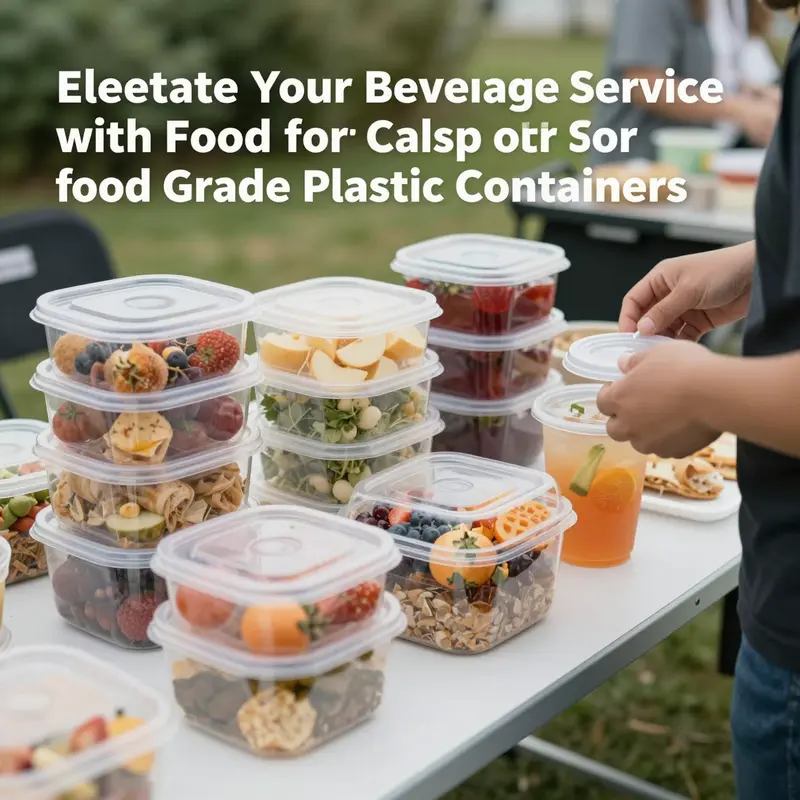
The design conversation advances when we consider how containers integrate into broader food-service ecosystems and consumer routines. In catering and buffet contexts, portion-controlled packaging benefits from seal integrity, visibility, and the ease of rapid access. For home meal prep, stackability, freezer safety, and dishwasher compatibility offer tangible time savings and reduce the friction of daily routines. In industrial and wholesale settings, large-capacity options paired with dependable lids enable bulk storage and efficient inventory management. The retail experience, too, cares about the clarity and appeal of packaging: transparent walls, neutral aesthetics, and reliable closures create a sense of order and trust that supports product visibility and consumer confidence. Each of these contexts frames design decisions in terms of risk reduction, operational efficiency, and user experience, underscoring that plastic food-grade containers with lids are not a single product but a designed system carefully tuned to meet multi-faceted needs.
Production, sourcing, and branding considerations also shape how these containers perform in the market. OEM and ODM services enable manufacturers to customize dimensions, lid configurations, and surface finishes, allowing brands to align packaging with corporate sustainability narratives or procedural standards. The economics of production, including minimum order quantities and lead times, drive decisions for new lines or standardized families. Yet strategic sourcing extends beyond price. Material compatibility, regulatory compliance, and long-term performance are critical for ensuring that the item remains safe to use across its expected life. The supplier’s ability to provide consistent quality, document testing, and support for post-market concerns contributes to a broader ecosystem in which storage solutions become reliable components of operational hygiene and food safety.
Sustainability considerations inevitably accompany these technical and practical discussions. While plastics provide significant advantages in weight, cost, and performance, concerns about environmental impact have spurred interest in alternatives or hybrid approaches. Recyclability remains a key dimension of responsibility, and the industry has continued to refine recycling streams for polypropylene, encouraging more circular use. At the same time, research into biodegradable or bio-based additives offers potential paths to reduce environmental footprints without sacrificing performance or safety. The tension between durability and end-of-life disposal prompts ongoing innovation in both materials and manufacturing processes, with a focus on systems-level thinking that accounts for how containers are produced, used, cleaned, and finally recycled or repurposed. The evolving landscape invites stakeholders to consider not only immediate usability but also the downstream implications of everyday storage choices.
In sum, the design and functionality of plastic food-grade containers with lids emerge from a layered logic. Material safety, airtight sealing, shape optimization, hygiene-friendly surfaces, modular versatility, and lifecycle awareness coalesce into a coherent system that supports safe storage, efficient workflows, and dependable performance across a wide range of settings. The result is not merely a container but a trusted component of daily life—one that helps keep food fresh, reduces waste, and simplifies the rituals of preparation, transport, and organization. As the field continues to innovate, the trajectory points toward smarter seals, better surface engineering to resist mold and odor, and configurations that anticipate how people actually use containers—how they stack, how they travel, and how they are cleaned—so that safety and convenience advance together in a single, practical package.
External resource for further context on material standards and industrial uses of food-grade plastics: https://www.plasticfoodcontainers.com/types-material-standards-industrial-uses
null
null
Final thoughts
In the competitive landscape of food service and beverage chains, selecting the right containers can significantly impact operational efficiency and customer satisfaction. The food-grade plastic containers with lids are not only vital for enhancing storage and transport but also ensure compliance with food safety standards. By understanding the key features, design functionalities, and various applications—including considerations for sustainability—you can take proactive steps to optimize your service. Embrace these containers as indispensable allies in your mission to deliver exceptional experiences to your customers.