
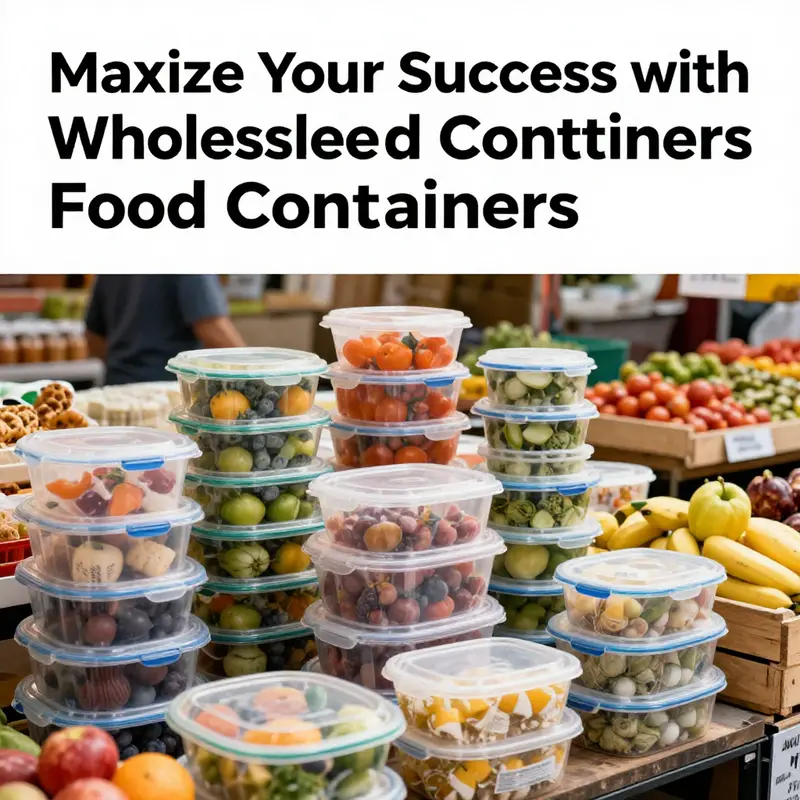
In the competitive landscape of food service, leveraging wholesale plastic food containers offers significant advantages for bubble tea shops, restaurants, food trucks, catering services, event planners, and corporate procurement teams. Understanding the core benefits of cost efficiency, quality assurance, and the plethora of choices available can lead to enhanced operational success. This article explores these facets—beginning with the cost benefits of bulk purchasing, then delving into the importance of safety and sustainability, and finally, showcasing the variety and customization options that enable businesses to meet specific needs and stand out in a crowded market.
Scaling with Purpose: Cost, Compliance, and Continuity in Wholesale Plastic Food Containers
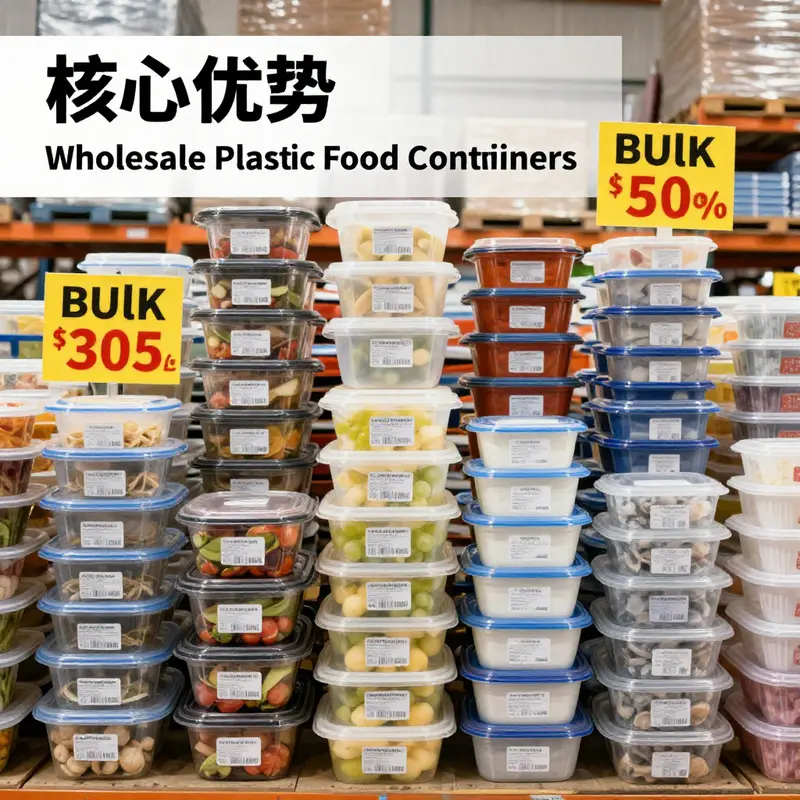
Scaling packaging procurement starts with a clear focus on cost, compliance, and continuity. In wholesale plastic food containers, bulk buying can reduce the effective unit cost by spreading fixed costs over a larger volume, while stabilizing supply and simplifying administration. The result is not only a lower price per item, but improved margins, more predictable budgeting, and room to invest in safety and quality.
The cost dynamics hinge on amortizing fixed costs such as tooling and setup across more units, and on securing more favorable material pricing when demand is steady. When buyers plan around a core family of containers, they can negotiate deeper terms, reduce the friction of supplier management, and shorten lead times. The cash flow impact often shows up as longer payment terms, tiered discounts, and a clearer budget trajectory, all of which support operational planning.
But true value comes from aligning cost with risk and performance. Standardizing on a core set of container sizes, shapes, and lids enables a lean procurement process with fewer vendors, fewer SKUs to track, and more robust supplier performance data. It also helps ensure compatibility with microwaves, refrigeration, and recycling streams, which in turn reduces waste, returns, and service disruptions.
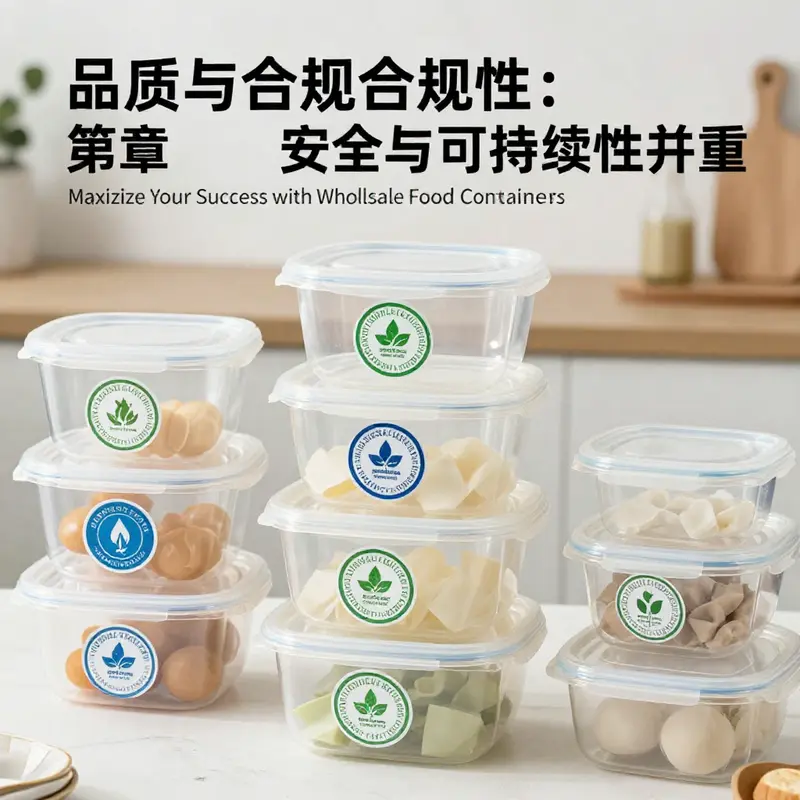
Quality and compliance are non negotiable in bulk packaging. Buyers can demand consistent material specifications, traceability, and regular testing across a larger supply base. Materials such as polypropylene offer a favorable mix of rigidity, heat tolerance, and food contact safety, while standardized labeling and handling instructions support regulatory requirements and customer confidence. Recyclability and recycled content can be pursued without compromising performance when the supplier base is scaled and standardized.
Customization plays a strategic role in bulk programs. Vendors can offer branding, precise sizing, and compatible lid designs that reinforce the brand while maintaining operational simplicity. Customization should be balanced with the need for common components to keep inventories manageable and to minimize the risk of mismatches on the line.
Supply chain resilience often improves with direct factory sourcing. Direct-from-factory arrangements reduce middlemen, improve visibility into calendars and capacity, and simplify sample testing. Access to low cost samples helps validate fit and function before large commitments, lowering the risk of overstocking or obsolescence.
A practical model might involve selecting a core family of containers that covers takeout, meal prep, and portion control, supported by branded variants that align with the company identity. A staged rollout preserves continuity of supply while transitioning to safer or more sustainable materials. A supplier relationship built on repeat orders and transparent performance metrics yields not only lower prices but a more reliable packaging ecosystem across menus and channels.
Finally, sustainability should be integrated into the cost and risk calculus. Recyclable materials and recycled content can reduce lifecycle costs when designed for circularity, and standardized designs help simplify manufacturing and end user experience. As consumer expectations rise for responsible sourcing and transparent labeling, a well executed wholesale program can communicate brand commitments through packaging itself, strengthening trust and long term loyalty.
null
null
Diversified Choice and Customization in Wholesale Plastic Food Containers: Scaling Efficiency, Compliance, and Brand Value
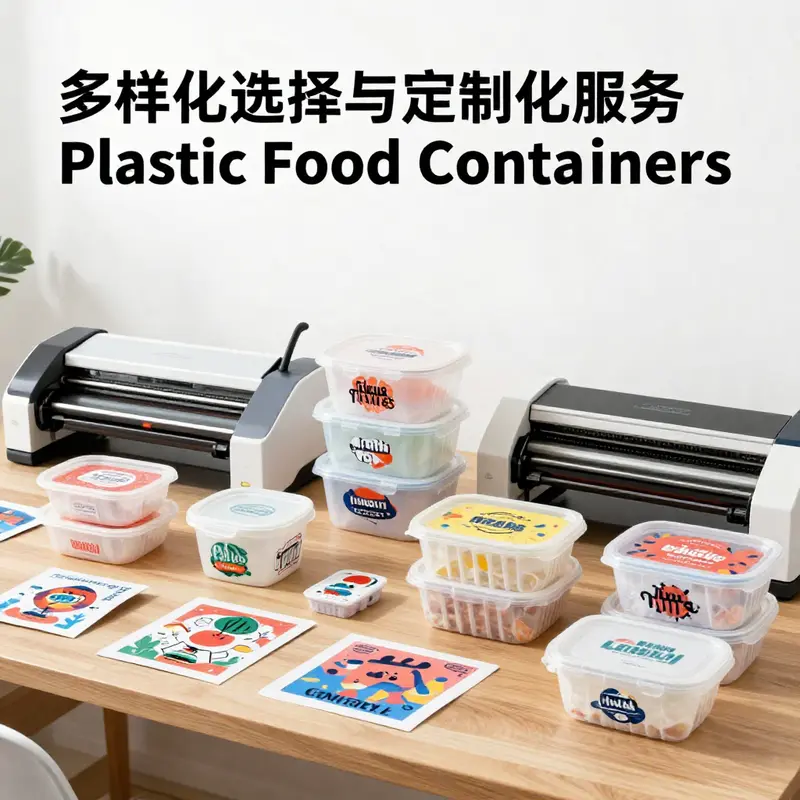
A wholesale market for plastic food containers operates at the intersection of scale, safety, and sophistication. In a sector where every lunch box or takeout tray leaves a footprint, the ability to offer a broad spectrum of options while maintaining tight cost controls becomes a strategic differentiator. The core attraction of wholesale plastic food containers lies in their capacity to dramatically reduce unit costs when purchased in bulk, a principle that resonates deeply with high-turnover operators such as quick-service restaurants, catering outfits, and event planners. Consider a supplier offering single-use plastic meal boxes at prices as low as US$0.09 per piece with minimums around 50,000 units. Such economics enable enterprises to invest in speed, reliability, and brand consistency without compromising on food safety or functional performance. The same supplier can also deliver customization—brand logos, colorways, dimensions, and even material shifts—so a business can preserve its identity while scaling its packaging infrastructure. This combination of cost discipline and customization is not merely a driver of margins; it is the backbone of a scalable, future-proof packaging program.
Yet diversification and customization are not just about aesthetics or tiny margins. They underpin resilience in a supply chain that must accommodate fluctuating demand, regulatory expectations, and evolving consumer preferences. A diversified catalog—ranging from rectangular lidded meal boxes to segmented trays and transparent-cover designs—gives operators options that align with different service models, menu formats, and delivery paradigms. A segmented, microwave-safe PP container can be a revelation for a meal-prep service that targets health-conscious consumers who want to see portioning at a glance. A simple, transparent lid can transform the customer experience by reducing perceived friction at the point of sale, making contents easier to identify and choose. The strategic value of variety is magnified when customization is seamlessly available. A brand can print a logo, adjust packaging dimensions to fit a specific product line, or switch materials—from traditional PS to a more sustainable PLA-based option—without surrendering mass-production benefits. In short, diversification and customization in wholesale plastic food containers are catalysts for efficiency, safety, and brand equity.
The safest, most enduring packaging ecosystems are those that anticipate needs across use cases and channels. In a typical wholesale operation, the demand for packaging extends well beyond a single form factor or material. For instance, rectangular boxes with secure, leak-resistant lids dominate takeout and delivery for many restaurant concepts, particularly where uniformity in stackability and handling translates into lower warehousing and logistics costs. Conversely, specialized formats such as multi-compartment or bite-size trays serve niche meal-prep or wellness-focused menus that require precise portioning and clear visual separation. The market’s flexibility is further enhanced by a spectrum of lid designs—opaque, transparent, easy-seal configurations, and even vented lids for steam-release during transit. The combinations are extensive, but the purchasing logic remains straightforward: minimize total cost of ownership while maximizing reliability, safety, and appeal.
Material choices sit at the heart of this logic. A large portion of wholesale containers are made from polypropylene (PP) due to its balance of strength, chemical resistance, and high-temperature tolerance. The ability to withstand microwave reheating without compromising structural integrity makes PP a preferred material for many takeout and dine-in-to-go formats. The industry is also advancing in sustainability terms, with products designed to accommodate recyclability and, where feasible, post-consumer recycled content. In markets with strict environmental guidelines, suppliers highlight certifications such as FDA-compliance for food-contact safety and LFGB standards for consumer safety in European contexts. The emphasis on safety is complemented by a growing commitment to environmental stewardship. For some product lines, manufacturers are experimenting with recycled polymers or bio-based alternatives, not merely to meet regulatory obligations but to align with consumer expectations for responsible packaging.
This confluence of safety, sustainability, and customization naturally leads to a practical question: how do operators choose among the vast options without becoming overwhelmed? The answer lies in a disciplined approach to diversification that is paired with modular customization. Diversification should be guided by usage scenarios—takeout, dine-in carryout, ready-to-serve meal kits, bulk storage—and by performance criteria such as leak resistance, microwave safety, stacking efficiency, and shelf stability. Customization then builds upon this foundation, offering branding, size optimization, and material adaptation that aligns with the business model. For example, a food-service operator might standardize on a core family of rectangular, seal-tight containers for most orders while offering a second family of divided trays for premium meal plans. A third family could comprise clear, windowed lids that showcase the product, boosting on-shelf allure for grab-and-go purchases. The beauty of this structure is that it preserves efficiency and predictability while enabling a menu to scale or adapt to changing consumer tastes.
To further illuminate how this plays out in practice, consider the procurement pathway that many buyers use to access these options. Platform-driven sourcing—whether through established global marketplaces or direct-to-factory channels—supports a “factory-direct” model that trims intermediaries and reduces lead times. Buyers can view a manufacturer’s catalog, compare specifications, request samples, and negotiate terms with suppliers who can fulfill large orders with consistent quality. The online ecosystem often offers payment protections, freight estimates, and delivery timelines, which aid in inventory planning and cash-flow management. Sample programs, in particular, are essential in validating compatibility with a company’s operational requirements. A typical supplier may offer inexpensive samples—sometimes as low as US$0.01–0.05 per piece—so buyers can verify fit, heat tolerance, and sealing performance before committing to larger orders. This combination of breadth, safety, and accessibility helps convert a broad array of needs into a streamlined, scalable packaging program that remains faithful to a brand’s identity.
The stories of diversification and customization are not purely transactional; they have strategic implications for how brands present themselves and how supply chains evolve. A well-curated mix of container formats can improve operational flow by reducing the number of SKUs required in the field and by enabling more predictable manufacturing runs. When a brand standardizes a handful of reliable container designs across multiple locations, the result is more consistent packaging quality, lower training overhead for staff, and more uniform customer experiences. At the same time, customization options enable brands to differentiate themselves in crowded markets. Logo imprinting, color customization, and packaging materials can be tuned to reinforce a particular image—health-forward, premium, sustainability-minded—while maintaining the advantages of scale. The interplay between diversification and customization, therefore, is not about choosing one path over the other; it is about orchestrating a portfolio that can be tuned to market conditions, consumer expectations, and operational realities.
In terms of design language, the market increasingly rewards elegance through practicality. A streamlined set of container shapes—so-called “core formats”—combined with a pipeline of optional add-ons and finishing touches creates a robust ecosystem. This approach enables a business to respond rapidly to demand surges, such as those driven by a seasonality spike or a major catering contract, without incurring crippling costs or compromising on safety. At the same time, operators must weigh the trade-offs that accompany extensive customization. While bespoke logos or unusual dimensions can enhance brand recall, they can also introduce complexity into production planning, inventory management, and procurement cycles. The most successful programs strike a balance: they maintain a dependable base suite that supports mass production while enabling targeted customization that delivers measurable value to customers and to the brand story.
From a compliance perspective, the emphasis is on ensuring that materials maintain food-contact safety across all use cases. With the growing emphasis on sustainability, operators must also demonstrate responsible sourcing and end-of-life considerations. The consumer base is increasingly aware of packaging—what it is made of, how it is disposed of, and whether it contributes to environmental degradation. The regulatory environment responds to these concerns through standards for recyclability, labeling, and minimum recycled content. In practice, this means choosing container designs and materials that align with local waste management capabilities and regulatory expectations. It also means communicating clearly with customers about how to recycle or dispose of packaging after use. In short, diversification and customization are effective when they are built on a foundation of safety, clarity, and environmental responsibility, not as optional add-ons but as core principles that guide product development and purchasing decisions.
The chapter would be remiss without acknowledging the challenges that accompany the pursuit of diversified and customizable packaging. More options can complicate inventory and production planning, create decision fatigue for buyers, and potentially dilute a brand’s packaging language if not managed carefully. Costs can rise when customization moves beyond standardized templates into bespoke tooling and development. Yet, these obstacles are not insurmountable. The employment of modular design—where products are built from interchangeable components—can preserve economies of scale while enabling meaningful leeway for customization. Digital catalogs and intelligent recommender systems can mitigate the paradox of choice by steering buyers toward configurations that align with their historical preferences, menu formats, and expected throughput. Technology, therefore, is not merely a convenience; it is an enabler of the precise balance between variety and consistency that wholesale packaging demands.
In sum, the wholesale plastic food container market thrives on a deliberate blend of diversified options and customization capabilities. The right mix supports cost-effective procurement, consistent quality, and a brand-aligned customer experience. It empowers operators to respond to market dynamics with agility while safeguarding safety and environmental commitments. As the industry continues to mature, the most resilient packaging programs will be those that treat diversity not as a burden but as a strategic resource—one that can be choreographed to fit the rhythms of a business, the demands of a menu, and the expectations of a consumer audience that cares about both function and footprint. The journey toward an optimized, customized packaging ecosystem is ongoing, and it will increasingly hinge on how well suppliers and buyers collaborate to translate variety into reliable performance.
For buyers exploring concrete examples of customization and design options, one resource demonstrates how a tailored packaging design can accompany a product line while maintaining eco-conscious considerations. You can explore a case of customized design and eco-friendly packaging for large-capacity kraft bowls here: customized-design-eco-friendly-1300ml-kraft-soup-salad-paper-bowl-with-lid. This reference illustrates how a supplier can align branding needs with functional demands such as microbial safety, heat tolerance, and transport stability, while still embracing sustainable material choices where feasible. Such examples underscore the broader principle that diversification and customization should be orchestrated with an eye to safety, environmental impact, and end-user value.
From a broader strategic perspective, the wholesale pathway thus marries three core capabilities: cost efficiency through bulk scaling, performance through diverse yet standardized formats, and identity through branding and material customization. When these elements are choreographed thoughtfully, a business can deliver reliable, safe, and compelling packaging experiences at scale. The next chapters will continue to unpack the implications of this approach across different segments of the market, including how a standardized yet adaptable container family can support multi-site operations, streamline logistics, and enable faster product introductions without compromising on safety or sustainability.
External reference on pricing models can deepen understanding of the economics behind bulk packaging decisions and customization strategies. For further insights, see https://www.stripe.com/fr/insights/what-is-a-fixed-pricing-model.
Final thoughts
By utilizing wholesale plastic food containers, your business can enjoy substantial savings, ensure safety compliance, and benefit from a vast array of customizable options. This strategic investment not only enhances operational efficiency but also contributes to a positive customer experience. As the market evolves, embracing these solutions will position your food service establishment as a leader in efficiency and innovation. Invest smartly and watch your business thrive with the right packaging choices.