
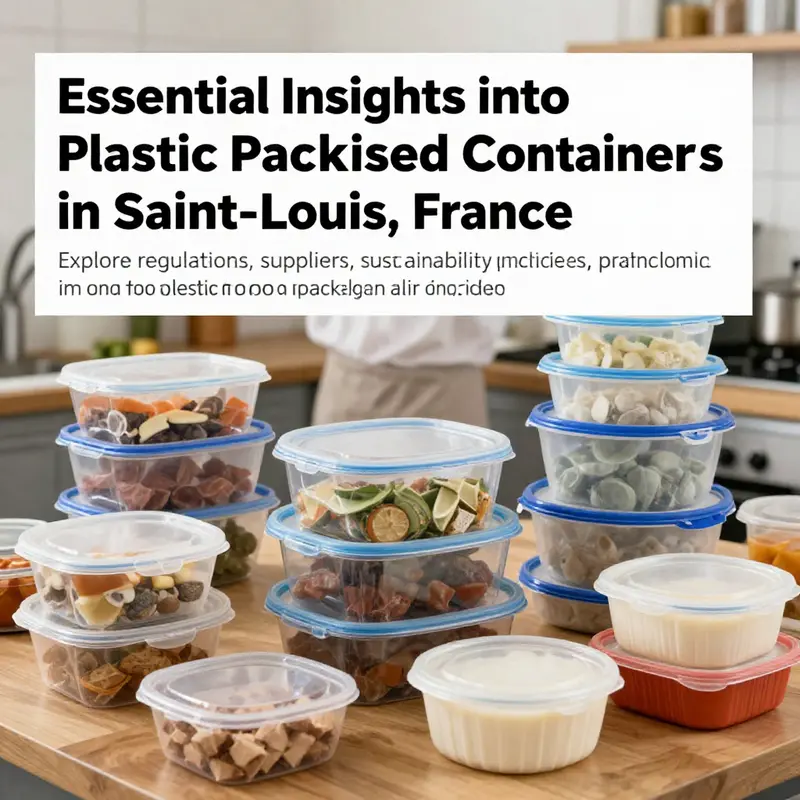
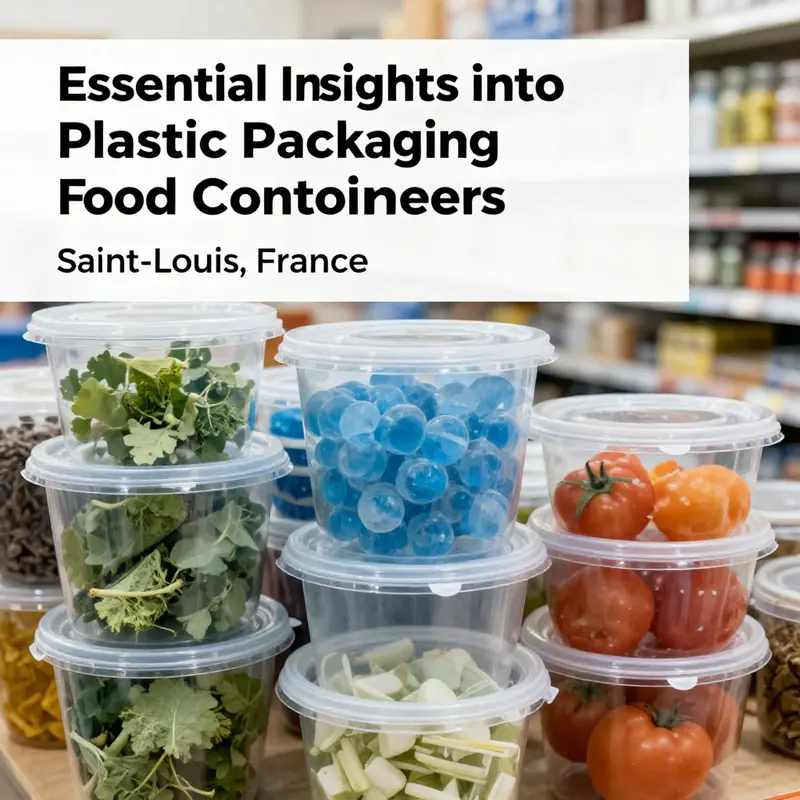
In the heart of Saint-Louis, France, plastic food packaging containers play a critical role in the vibrant food and beverage industry. From bubble tea shops to catering services, the packaging used not only ensures food safety but also reflects growing sustainability concerns. This article delves into four key areas: the stringent regulations governing plastic food containers, an overview of local suppliers catering to various culinary businesses, innovative sustainable practices adopted in the region, and the economic influences of these packaging solutions on local enterprises. By understanding these components, businesses can make informed choices that benefit both their operations and the environment.
Regulating the Crunch: Saint-Louis, EU Safety, Compliance, and Sustainability of Plastic Food Containers
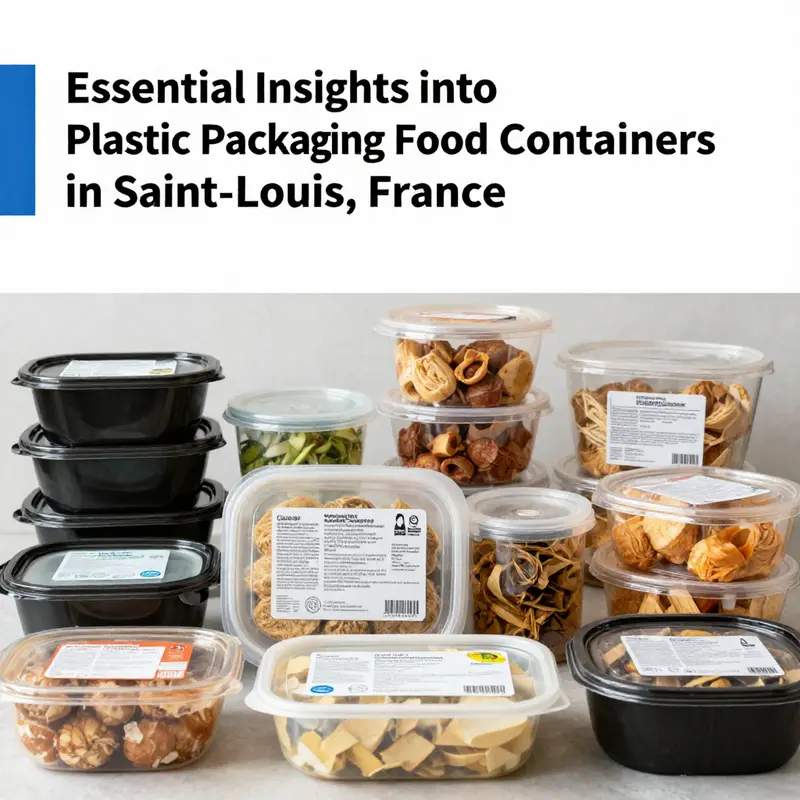
Saint-Louis sits within a European regulatory landscape that frames every plastic food container that touches a consumer’s table. The core rulebook is Regulation (EU) 10/2011, which governs plastics intended for contact with food and sets a framework of DoCs, traceability, and migration limits. In practice, manufacturers, importers, and distributors must ensure that materials come from the positive list, that DoCs are current, and that documentation is retained for a defined period.
Traceability and documentation are central. Firms must map each item to raw materials, production batch, and supplier, with supporting records kept for at least five years. Migration limits translate into tests conducted under representative use conditions and underpin safety assurances for high temperature, fatty, or acidic foods. The result is a predictable, harmonized market across the EU and France in particular, with enforcement conducted by national authorities and market surveillance.
For Saint-Louis businesses, procurement means verifying DoCs, confirming material composition, and validating migration data. Suppliers bear responsibility for up to date compliance information, while buyers exercise due diligence to avoid non compliant batches. Digital tools can streamline five year documentation and enable fast onboarding of new packaging solutions.
Sustainability is increasingly integrated with safety, as recyclability and bio based options gain attention. Choices such as recyclable PET and PLA align with regulatory intent and market expectations, provided migration data and DoCs remain robust. The Saint-Louis packaging ecosystem thus balances performance, safety, and environmental responsibility across the supply chain.
In sum, Regulation (EU) 10/2011 provides a clear map of what is permitted, how compliance is demonstrated, and how documentation is maintained. The DoC, traceability, and migration testing together support safe use, consumer trust, and a resilient local economy in Saint-Louis.
null
null
From Local Markets to Circular Systems: Sustainable Plastic Packaging in Saint-Louis, France
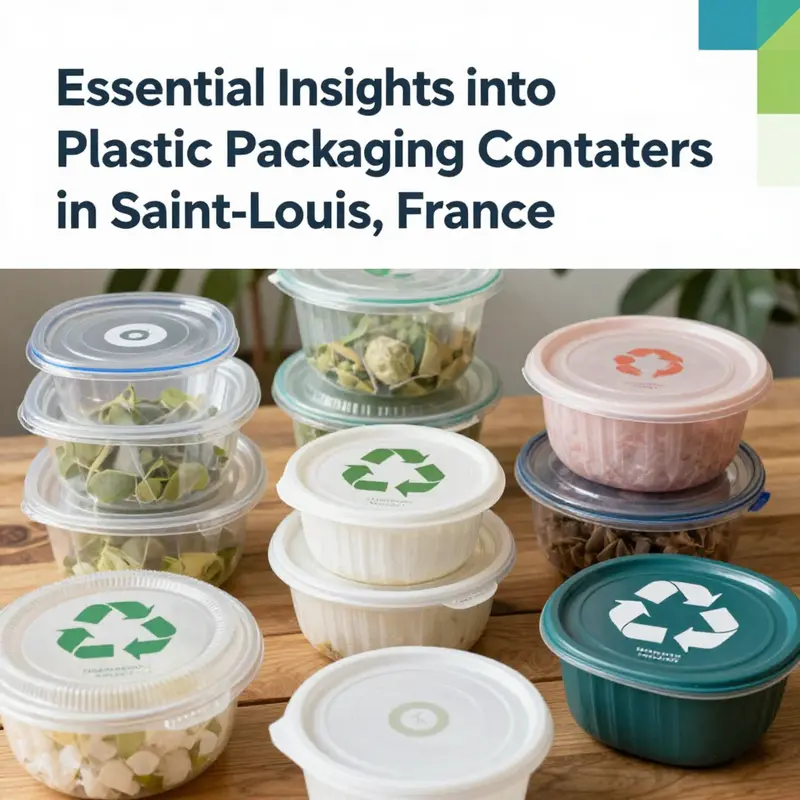
Saint-Louis, a town perched in the northeastern corner of France, embodies a practical convergence of tradition and modern policy in the realm of food packaging. The city mirrors a broader European effort to minimize the environmental footprint of packaging while protecting public health. In everyday terms, this means the plastics used for containers that hold food must be designed and manufactured so that any substances that could migrate into the food stay well within safety limits. The regulatory backbone comes from European rules on materials in contact with food, which are implemented by national agencies and reinforced through ongoing assessments by authorities tasked with evaluating risks and setting thresholds. The objective is not merely to prevent contamination but to create a stable, transparent system in which manufacturers, distributors, retailers, and consumers can trust the safety of what they buy and how it is packaged. For professionals working in Saint-Louis, that translates into a daily discipline: selecting plastics that meet strict performance and safety criteria, choosing packaging configurations that minimize risk, and communicating clearly with customers about how to handle and dispose of containers so that the lifecycle of the packaging remains within the bounds of sustainability goals. The consequence is a packaging landscape that prioritizes safety and traceability as essential elements of environmental stewardship, rather than treating environmental aims as a separate concern tucked away in corporate social responsibility reports.
The practical implication of this framework is that Saint-Louis, like many communities across France and the European Union, leans on a robust network of packaging suppliers and distributors who can provide materials that align with both safety requirements and environmental ambitions. Local buyers typically work with professional packaging providers who specialize in food-grade plastics and related containment solutions. The emphasis is on materials such as recyclable plastics and designs that facilitate recycling or reuse, with an eye toward minimizing the use of single-use formats. Online marketplaces and regional distributors also play a role, offering a range of packaging options and enabling shorter, more localized supply chains. The goal is to support local food producers, retailers and caterers who wish to reduce waste while maintaining the integrity of the product and the trust of the consumer. In shifting from broad, one-size-fits-all packaging toward more nuanced, jurisdictionally appropriate choices, Saint-Louis users begin to align with a wider European push to phase out non-recyclable plastics and expand the role of recycled content.
One practical thread in this tapestry is the move toward materials and configurations that support circularity without compromising safety. The dialogue among manufacturers and users centers on how plastics can be engineered for reuse, or at least for high rates of collection and recycling. PET and other commonly recycled polymers are favored for their clear recyclability, while biobased or biodegradable alternatives gain traction in contexts where compostability is feasible and supported by local waste management infrastructure. Yet even as biobased options attract interest, the chain of custody remains critical: it is essential to ensure that any alternative material does not introduce new hazards or complicate the recycling stream. In Saint-Louis, this nuanced material choice is shaped not only by regulatory compliance but also by the logistical realities of a city that serves both urban businesses and rural supply links. The practical result is a set of packaging choices that balance safety, cost, and end-of-life pathways, with ongoing attention to how each option performs at scale.
Beyond the material itself, the supply chain architecture in Saint-Louis reflects a broader preference for more sustainable packaging practices. Local buyers increasingly favor methods that reduce plastic waste, including strategies that keep packaging to a minimum through smarter design and by supporting direct connections between producers and consumers. Short food supply chains, or SFSCs, exemplify this shift. In SFSCs, products travel shorter distances and pass through fewer intermediaries, which often means less packaging is needed and more packaging can be sourced from local or regional suppliers with a clear understanding of how the packaging will be used and disposed of. In practice, SFSCs allow for unpackaged products or packaging made from compostable materials, aligning with national and European objectives to curb plastic waste. This is not simply a cost-saving move; it is a strategic adjustment that leverages proximity to reinforce traceability, freshness, and community resilience. For the food sectors operating in and around Saint-Louis, embracing SFSCs translates into tangible changes in how products are presented, sold, and returned for reuse or recycling.
A related thread in the Saint-Louis narrative is the active involvement of public institutions in promoting responsible packaging practices. Schools, municipal cafeterias, and other community facilities have begun to implement reusable container programs and practices that reduce reliance on disposable plastics. These programs are not merely about saving money; they function as living laboratories where students, staff, and citizens experience firsthand the benefits of reusing containers, sorting waste accurately, and supporting local supply networks that design products with end-of-life considerations in mind. When a city adopts such programs, it signals to businesses that sustainability is a shared obligation and a practical operating condition, not a niche concern. The result is a cumulative cultural shift: as institutions demonstrate the feasibility and value of reuse, local markets and producers respond with packaging options that support repeated use, easier cleaning and maintenance, and durable performance. The social dimension matters as much as the technical one—consumer confidence grows when people see a municipal commitment to sustainable practices anchored in everyday routines.
Community engagement in Saint-Louis extends beyond institutional pilots. A broad awareness-raising effort accompanies policy and market changes, emphasizing transparent information about packaging materials, disposal options, and the environmental consequences of waste. Local organizations, municipal offices, and educational outlets contribute to a shared narrative about sustainable packaging choices. This narrative is not only about compliance; it is about empowerment—giving residents the knowledge to select packaging that aligns with both safety standards and environmental preferences. The municipal sustainability report, Saint-Louis Transition Ecologique Plan, serves as a living document that outlines priorities, milestones, and lessons learned as the city navigates the ecological transition. While the plan details a spectrum of actions—from energy efficiency to waste management—it repeatedly emphasizes how packaging choices influence the city’s overall footprint and the health of local ecosystems. For readers seeking a deeper understanding of the city’s approach, the plan offers a window into the governance mechanisms that connect policy, procurement, and community behavior in a coherent, action-oriented framework.
In the economics of Saint-Louis’s packaging ecosystem, design for reuse and end-of-life clarity are becoming more than theoretical ideals. They are practical criteria shaping supplier capabilities, retailer choices, and consumer expectations. Packaging designers and manufacturers face the dual challenge of meeting strict food-contact safety standards while designing for reductions in material intensity and easier recycling or composting at scale. This often means rethinking containers so they can be cleaned and reused multiple times or made from materials that can be efficiently returned to a recycling system. It also requires clear labeling and communicative packaging that helps consumers understand how to reuse or dispose of products responsibly. The balance is delicate: it must preserve the safety and quality of food while providing practical pathways for reducing waste. In Saint-Louis, this balancing act is supported by a culture of continuous improvement, transparent reporting, and local collaboration across sectors.
An essential element in this evolving landscape is the ongoing dialogue about material choices and their implications for the local waste infrastructure. The city’s approach acknowledges that recyclability and compostability are not universal absolutes; they depend on the availability of processing facilities, collection streams, and consumer participation. PET remains a cornerstone for many containers because of its high recycling rate and established infrastructure, but the push toward compostable materials and bio-based alternatives reflects a broader ambition to diversify options and reduce dependency on any single material. This diversification helps manage the risks associated with supply shocks, fluctuating commodity prices, and evolving regulations that could alter the viability of certain plastics in the coming years. Saint-Louis’s strategies illustrate how a mid-sized city can participate in a continental transition without losing sight of local realities—production scales, workforce capabilities, and the values of its communities.
What emerges from this synthesis is a vision of packaging in Saint-Louis as a dynamic, evidence-informed practice rather than a fixed package. The city is not asking stakeholders to abandon plastic; it is prompting a reorientation toward packaging that is safer, more recyclable, more reusable, and more aligned with the rhythms of local food systems. It is about enabling smaller producers and retailers to compete effectively while also reducing waste and emissions. It is about engaging consumers in everyday decisions, so the act of choosing a container becomes part of a broader ethic of care for the local environment. In this sense, Saint-Louis is more than a case study of compliance; it is a living experiment in circular economy thinking that integrates safety, sustainability, and social participation into the routine of food packaging.
For those who wish to explore concrete directions beyond general principles, consider how the dialog around packaging in Saint-Louis translates into practical procurement and usage choices. When local buyers consider packaging options, they increasingly weigh not only the direct cost but also the lifecycle costs and the social benefits of reuse, local sourcing, and clear end-of-life pathways. Purchasing decisions become opportunities to reinforce social norms around sustainability, rather than mere transactions. The city’s approach also highlights the value of knowledge sharing—between municipal planners, school programs, market vendors, and households. When people understand how packaging choices affect energy use, waste streams, and the health of local ecosystems, they are more likely to support policies that encourage reuse, improved recycling, and the development of local supply chains tuned to ecological objectives. In Saint-Louis, this integrated approach—where policy, practice, and community awareness reinforce one another—offers a practical template for other towns navigating similar transitions.
As Saint-Louis continues to blend regulatory compliance with local innovation, it becomes a case where the ambition of European food-safety standards intersects with the everyday realities of municipal life. Reuse programs, SFSCs, and public-institution initiatives are not isolated experiments; they are components of a dialog that links safety, responsibility, and resilience. The city’s experience suggests that the path toward sustainable packaging is not a single product choice but a spectrum of decisions—ranging from material selection and container design to consumer education and waste-management infrastructure. By embracing this spectrum, Saint-Louis demonstrates how a community can honor safety requirements while progressively shifting toward packaging practices that reduce waste, cut emissions, and strengthen local food ecosystems.
For readers curious about the municipal roadmap and specific milestones, the Saint-Louis Transition Ecologique Plan provides a comprehensive overview of how packaging practices fit into broader ecological goals. External resource: https://www.saint-louis.fr/plan-de-transition-ecologique. If you want a concrete glimpse into the materials- and design-oriented prospects shaping packaging in communities like Saint-Louis, consider exploring the broader possibilities for recyclable and compostable options within local procurement frameworks and community programs. Additionally, one practical example to complement these concepts is the growing interest in disposable packaging options made from kraft materials that combine ease of use with clearer end-of-life pathways; such approaches are increasingly common in diversified food-service contexts and can help bridge the gap between safety requirements and environmental aims. For a closer look at one form of packaging that illustrates this balance, see the following example of a disposable octagonal kraft packaging option: disposable-octagonal-box-restaurant-food-kraft-paper-packaging.
In sum, Saint-Louis’s experience with sustainable plastic packaging reveals a community that treats packaging decisions as a local responsibility with continental reach. The interplay of safety compliance, reuse and SFSCs, municipal leadership, and active citizen engagement demonstrates how a place can pursue ecological transition without sacrificing the reliability and safety that residents rely on every day. The chapter of this story that remains open is precisely in the daily choices of producers, retailers, and consumers who, together, define what sustainable packaging looks like in a city that seeks to be both responsible and responsive.
null
null
Final thoughts
As the food and beverage landscape evolves in Saint-Louis, understanding the intersection of plastic packaging and regulation is vital for local businesses. By leveraging the knowledge about suppliers, adopting sustainable practices, and recognizing the economic contributions of effective packaging solutions, businesses can navigate the complexities of modern food service while aligning with consumer values. Embracing these insights will not only enhance operational efficiency but also support a more sustainable future for the culinary community in Saint-Louis.