
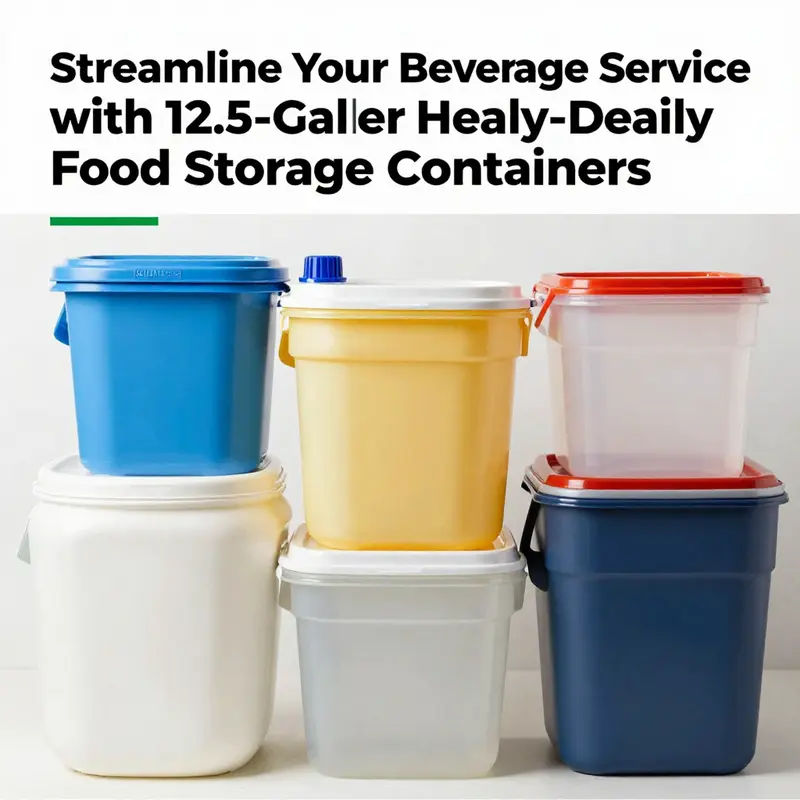
The importance of effective food storage solutions in the food service industry cannot be overstated. The 12.5-gallon heavy-duty plastic food storage container with a lid is fast becoming a staple for bubble tea shops, restaurants, food trucks, and catering services. These containers are designed to meet the rigorous demands of food storage while ensuring safety and accessibility. This article explores the durability of these containers, delving into their robust material composition, unique design features that enhance usability, and their diverse applications within various market segments. As we proceed through each chapter, you will gain insight into why these containers are essential for maintaining organized, efficient service in any food-oriented business.
Guardians of Freshness: Material Science, Design, and Practical Mastery of the 12.5-Gallon Heavy-Duty Plastic Storage Container with Lid
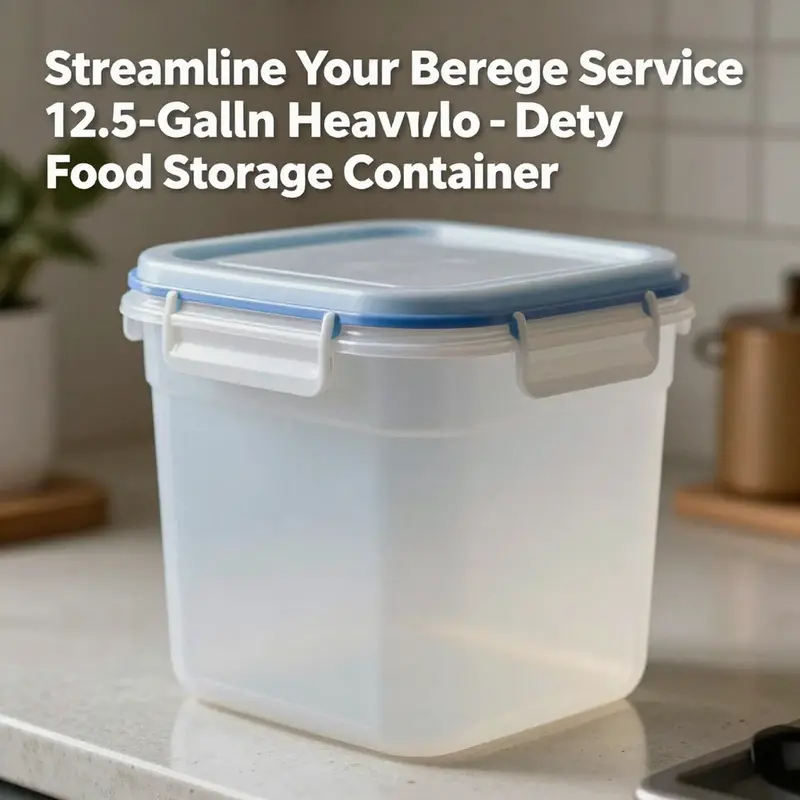
The 12.5-gallon heavy-duty plastic storage container with a lid sits at a quiet crossroads where material science meets daily necessity. It is not merely a bin to hold things; it is a designed instrument for managing space, safeguarding contents, and facilitating a smoother workflow in kitchens, basements, catering setups, and workshop corners. At roughly 50 quarts in capacity, this size lands in a practical middle ground. It can hold bulk grains and dry goods for long-term storage or act as a staging vessel for batch-prepared ingredients in a bustling kitchen. Its interior volume invites a careful balance between what you place inside and how you access it, and the lid’s seal plays a crucial role in the longer arc of shelf life and usability. In spaces where dust, humidity, and the risk of pests intruding can threaten stored goods, the container becomes a quiet guardian of freshness, offering a predictable environment that food and other dry goods can depend on week after week, season after season.
The underlying material choice is a defining factor in how well this kind of container performs under real-world use. In many examples on the market, a rigid, clear polycarbonate body stands out for its combination of impact resistance and visibility. Polycarbonate is prized for its strength; it resists shattering when dropped and maintains its shape under thermal and mechanical stress. Its clarity makes it easier to identify contents at a glance, which reduces the time spent rummaging through a pantry or a storage bin stack. That immediate visibility is more than a convenience. In a busy kitchen or warehouse setting, reducing the steps needed to locate a particular ingredient translates into tangible efficiency and less handling, which can help preserve the quality of the contents by minimizing exposure to air and moisture during search-and-retrieve moments.
Yet material selection is rarely a matter of one trade-off. The contrast between polycarbonate and high-density polyethylene (HDPE) highlights the broader design considerations that shape a durable, user-friendly storage system. HDPE has earned a reputation for ruggedness, chemical resistance, and excellent UV stability, making it a frequent choice for long-term outdoor or garage storage. It tends to be more opaque, which can be a drawback when you need to see what’s inside without opening the lid. In environments where sunlight, heat, or humidity may degrade contents, HDPE’s toughness is a clear advantage. However, for dry goods and pantry staples where quick identification matters, the transparency of a polycarbonate body reduces the cognitive load of searching through shelves. The decision between these materials comes down to intended use: if visibility and a crisp, clean aesthetic are priorities, polycarbonate often wins; if rugged exterior durability and UV resistance in harsh spaces are paramount, HDPE becomes a compelling alternative. Many manufacturers today also offer BPA-free variants in polypropylene (PP) or Tritan™, preserving the high standards of durability and reusability while addressing health and safety concerns associated with older polymer formulations. These options reflect a broader shift toward safer, more sustainable plastics that still meet heavy-duty performance benchmarks.
The lid design is another critical pillar of performance. An airtight lid—often equipped with a gasket or a precisely engineered lip—shields contents from air, moisture, and pests. The sealing is more than a matter of keeping dust out; it directly affects the quality and longevity of stored goods. For dry foods, reduced exposure to oxygen slows the onset of rancidity and staling, while moisture control helps prevent clumping and the growth of spoilage organisms in susceptible commodities, especially flours, grains, and legumes. A secure latching mechanism further enhances the seal, ensuring the lid does not pop off under movement or stacking pressure. In the context of a 12.5-gallon capacity, a dependable lid translates to fewer interruptions in a workflow—no constant repackaging, no spilled contents, and minimal air exchange during transport from prep to storage to service line. The lid’s fit also contributes to the container’s stackability and nesting behavior. A well-designed lid remains compatible with multiple units in a stack, preserving vertical space in crowded pantries or loading docks while still enabling rapid access when needed.
The conversation about materials would be incomplete without addressing safety and health considerations. Contemporary heavy-duty containers marketed for food storage increasingly emphasize BPA-free construction. BPA, historically used in some hard plastics, has raised concerns about potential health effects when used for food contact. Many modern containers resolve these concerns by employing materials such as polypropylene or Tritan™, which maintain high impact strength, clarity, and chemical resistance without the BPA legacy. This shift is not merely a health precaution; it expands the usability of these containers in households that prioritize safety and in commercial settings that must adhere to strict consumer protection standards. The tradeoffs in this space are nuanced. Some BPA-free formulations may be lighter or slightly less scratch-resistant than polycarbonate, yet they still meet stringent food-contact safety criteria and deliver reliable durability. For the consumer, the practical takeaway is to seek a container whose material promise aligns with the intended use—visibility and cleanability on one end, proven resilience under repeated use and transport on the other—and to verify labeling that confirms food-contact suitability and BPA-free status when that matters to the user.
Beyond the material itself, the overall geometry of a 12.5-gallon container matters for daily handling. The exterior shape should promote ease of gripping, even when hands are wet or coated with oils. Smooth contours and chamfers that reduce snagging while removing or inserting the lid can dramatically improve one-handed operation in a fast-paced kitchen or a busy garage bench. A practical aspect often overlooked is the surface finish. A slightly textured exterior can improve grip, while an interior finish that resists staining and residue buildup makes cleaning more straightforward. The interior geometry also influences how evenly contents settle after addition or removal. A gently contoured bottom surface can help reduce the risk of hard-packed layers forming in the corners, making scooping or dispensing fewer obstacles and less waste. In a container of this size, ergonomic design touches accumulate into meaningful gains in everyday use.
Visibility remains a core advantage of the transparent or translucent options some versions of this container offer. The ability to identify contents without removing the lid is not a luxury; it translates into less unnecessary opening, which minimizes exposure to air and dust. It also streamlines inventory checks in kitchens and storage rooms where time is of the essence. At the same time, transparency should not compromise strength. The choice of polycarbonate or similarly clear, tough plastics should be balanced with an eye toward potential scratching and hazing over repeated uses. A durable, scratch-resistant surface keeps the container looking clean and legible for longer, supporting a sustained sense of order in a storage system that is meant to be relied upon daily.
From a space-planning perspective, the 12.5-gallon size is particularly adaptable. In a pantry, it can stand in for bulk purchases of flour, rice, beans, or cereals that would otherwise occupy several smaller bins. In a catering setting, it can serve as a portable staging vessel for bulk ingredients or prepared portions, enabling a smooth workflow from prep table to service line. In a workshop or craft room, it can store bulk components like screws, nails, or other dry goods that benefit from a clear view of quantities and restocking needs. The container’s stackability is more than a convenience; it is a tangible way to leverage vertical real estate in environments where floor space is at a premium. When not in use, nesting reduces its footprint, a feature that becomes especially valuable in seasonal storage or when storage capacity must be scaled up or down with changing demand.
Durability testing, long a consideration for industrial and commercial equipment, finds expression in the everyday reliability of these containers. Repeated cycles of opening and closing, exposure to variance in temperature, and the occasional bump against a shelf or door frame occur far more often than formal lab tests would reveal. A well-made 12.5-gallon container is designed to withstand these realities without cracking, warping, or losing its seal. The lid’s gasket or seal should remain flexible and intact across many cycles, and the body should resist yellowing or clouding that can accompany UV exposure and aging. In practical terms, this means choosing a container with robust slip-resistant lids, reinforced hinges or latches, and a body with a guaranteed thickness that resists denting. The result is a tool that keeps its promise: contents stay protected, access remains straightforward, and the unit endures as space evolves around it rather than becoming a disposable component in a storage system.
Maintenance and care, though often understated, are essential to sustaining the long life of a heavy-duty container. Cleaning should be straightforward and compatible with typical kitchen or workshop cleaning routines. A mild soap and warm water regimen usually suffices to remove flour dust, mineral residues, or grease from handles and the interior corners. For stubborn residues, a gentle non-abrasive sponge can address buildup without scratching the surface. The inner efficiency of the design emerges here as well—regular cleaning not only preserves appearance but also helps maintain the integrity of the seal. When parts are easy to disassemble for washing and reassembly, the container gains an enduring practicality, enabling users to sustain a clean storage environment that supports food safety and overall organization.
In examining the broader design philosophy behind a container of this scale, one encounters a blend of straightforward mechanical reliability and subtle ergonomic refinement. The aim is to deliver a product that feels intuitive in use, that harmonizes with the rhythms of home and commercial kitchens, and that remains adaptable as storage needs shift. The 12.5-gallon category is not about imposing a single solution but about offering a versatile platform on which households and businesses can build a storage system that matches their particular routines. The material system, the lid’s sealing performance, the clarity of the body, and the ease of handling all come together to determine how effectively the container serves as a stable, reusable module in a broader ecosystem of organization. In that sense, the container functions as a practical investment in efficiency, hygiene, and peace of mind—a tool that supports not just storage but the steady cadence of daily life where knowing what is on hand and where it sits reduces friction and enhances reliability across tasks.
As markets continue to evolve, the spectrum of choices within the 12.5-gallon class broadens, reflecting ongoing concerns about safety, sustainability, and performance. Consumers increasingly seek materials that are both robust and responsible, capable of standing up to the rigors of frequent use while minimizing environmental impact. That demand nudges manufacturers toward formulations that deliver high durability without compromising food-contact safety, and toward structural designs that maximize longevity through smart geometry, reinforced joints, and seal technologies that resist wear. The result is a family of containers that can serve as workhorse repositories in industrial kitchens, bulk storage zones in retail settings, and reliable organizers in residential spaces. The chapter has moved from the basics of what the container is made of to how those materials behave under real-world pressures, and it becomes clear that every design decision—material choice, lid construction, seal integrity, visibility, and stacking behavior—contributes to a cohesive, dependable storage experience. In that sense, the 12.5-gallon heavy-duty plastic storage container with a lid embodies a practical application of material science in everyday life, translating laboratory properties into tangible benefits that help keep food fresher, spaces tidier, and workflows smoother, one lid click and one clear view at a time.
External resource: https://www.walmart.com/ip/Carlisle-StorPlus-Food-Storage-Container-12-5-gal-18-x-26-x-9/47530295
Beyond Bulk Capacity: The Architecture and Everyday Utility of a 12.5-Gallon Heavy-Duty Plastic Storage Vessel with a Lid
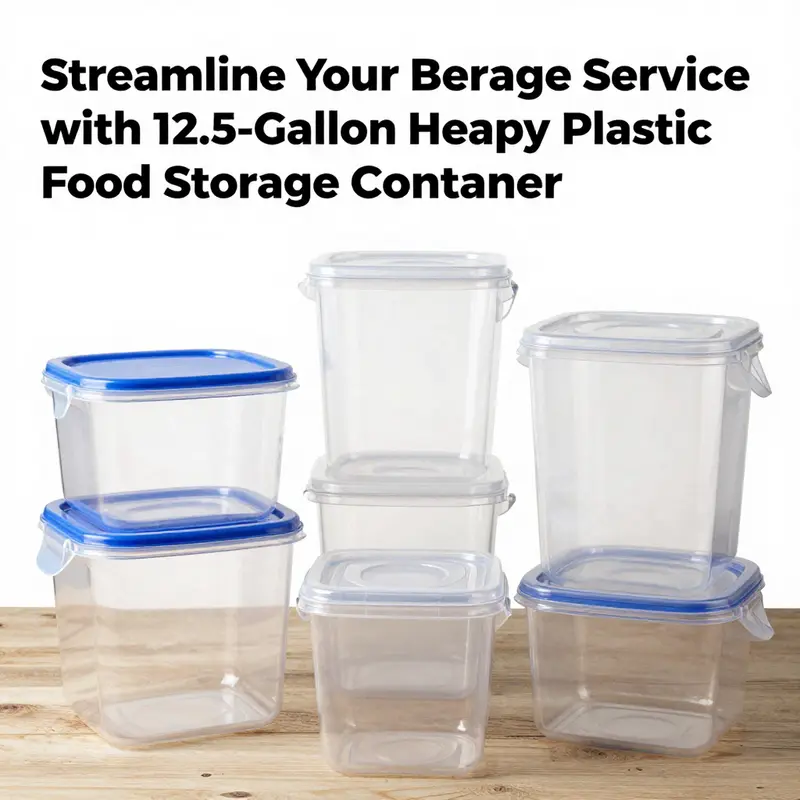
When a container promises 12.5 gallons of capacity, the first impression is about volume. Yet a well designed heavy duty plastic storage vessel with a lid reveals a quieter, more systematic philosophy: design that respects space, preserves freshness, and stands up to daily handling. The rectangular footprint is not merely a matter of appearance. It is a deliberate choice that translates into real gains in how people store, access, and move food and supplies in homes, kitchens, and workspaces. In kitchens where every inch of cold storage is precious, a rectangular profile aligns with shelves, drawers, and the interior geometry of freezers. It minimizes wasted space and leaves more room for other containers, bags, or ingredients. This alignment with existing storage ecosystems matters as much as the container’s own strength or sealing capability, because it determines how a kitchen or facility can scale its organization without chaos.
Constructed from robust, food safe plastic, the vessel embodies a balance between rigidity and resilience. High density polyethylene, or HDPE, provides a core set of advantages that matter when the container is repeatedly opened, filled, and transported. HDPE resists impact better than many other plastics while maintaining a relatively light weight. It also holds up well to temperature fluctuations, from cool winter basements to chilly commercial freezers. The material’s chemical resistance reduces concerns about interactions with moisture, oils, and a range of dry goods that might ride along with the contents. In practical terms, this means a container can endure the rough and tumble of daily use without cracking, delaminating, or losing its form. It is the kind of reliability that encourages people to repurpose the container for a variety of roles beyond simple storage of leftovers, including storage of bulk dry goods, seasonal textiles, or tools in a garage or workshop.
A lid that seals tightly is more than a lid; it is the gatekeeper of freshness. An airtight seal keeps out dust, humidity, and pests, which matters whether the container is tucked away in a pantry or stored in a garage that sees seasonal shifts. The lid mechanism—whether a straightforward snap on style or a locking variant—speaks to two practical outcomes. First, it reduces the risk of spills during transport, which is especially important when the container travels from kitchen to vehicle to freezer in bulk meal preparation. Second, it preserves the integrity of the contents by limiting exposure to air. In bulk storage scenarios, air infiltration can accelerate moisture migration, which leads to clumping in dried goods or rapid ice crystal formation in frozen items. The lid therefore acts as a barrier that protects the bundle of meals or dry goods under its guard, allowing homeowners and professionals alike to portion, freeze, thaw, and reassemble with greater confidence.
The base of the container is reinforced and its rims interlock. These features may seem subtle, yet they are central to the practicalities of stacking and stability. A reinforced base resists warping and distributed loads, so when several containers are stacked, each layer remains level. This is not just about maximizing vertical real estate; it prevents tipping and crushing of contents when stacks are bumped or moved in a busy kitchen, warehouse, or service area. Interlocking rims further stabilize the stack by guiding alignment, reducing slippage as people lift or slide containers one atop another. In a space where bulk storage is common, such as a prep area or a stockroom, stable stacks save time, reduce the risk of accidents, and enable safer, more efficient inventory management.
The dimensions—approximately 26 inches in width, 18 inches in depth, and 9 inches in height—are not arbitrary. They translate into a capacity that feels substantial yet remains approachable for daily handling. The width and depth lend themselves to a footprint that can slide into standard refrigerating or freezer compartments, against walls, or along aisles without crowding neighboring items. The height keeps the container within comfortable reach for users of varied statures, reducing the need to bend excessively to retrieve contents. These proportions also influence how many units can be arranged on a shelf or in a framework, facilitating thoughtful, scalable organization as a kitchen or facility grows.
Another design attribute worth noting is the option for a clear material variant. A transparent body enables instant recognition of contents without opening the container. In busy kitchens or facilities where time matters, this visibility reduces the number of unnecessary openings, helping to preserve the integrity of stored items. It also minimizes the visual clutter that opaque containers can create when many units are stored together. The clear version thus supports inventory discipline by enabling quick checks, which is particularly valuable when managing large batches of bulk ingredients, prepped meals, or seasonal storage that shifts through cycles.
Beyond the explicit features, the character of the container emerges in how it performs under freezer conditions. Freezer safe design means the material and lid cooperate to withstand freezing temperatures without becoming brittle or losing sealing effectiveness. This is essential for leftovers and batch prepared meals that require freezing for later use. The ability to endure low temperatures while maintaining structural integrity helps keep portioned meals intact and ready for easy reheating. It also enables a more flexible approach to food management, where large quantities can be prepared, portioned, and stored with confidence, then thawed as needed. The practical implication is less daily cooking pressure and more predictable meal planning, which in turn can reduce waste and improve budgeting in households and small operations.
The design also anticipates the realities of heavy use. The combination of durable plastic, a secure lid, and a stable base makes the container well suited for environments that demand resilience. It can withstand repeated opening and closing, occasional stacking under load, and the general handling that occurs in kitchens, schools, community centers, or small-scale catering contexts. In such settings, the ability to reuse containers over many cycles is a meaningful efficiency: fewer replacements, less waste, and a more consistent approach to storage logistics. The incremental cost savings accumulate over time, especially when containers are used to move bulk ingredients, organize seasonal supplies, or manage overflow during peak periods.
The container’s practicality extends to maintenance and care. Cleaning is straightforward, typically requiring warm water and mild detergent. The smooth surfaces resist stubborn grime, and the absence of intricate detailing means there are fewer places for residue to hide. When nested, the rims are designed to disengage and reengage with ease, so storage space can be optimized during off seasons without compromising readiness for use. The lid, if it includes a locking mechanism, benefits from regular checks to ensure the latch remains snug. A loose latch is a signal that the seal is compromised and content preservation may be at risk. Routine inspection keeps the unit performing its best, which in turn supports consistent results whether the container is used for daily meal prep or for long term bulk storage.
In terms of versatility, the 12.5 gallon capacity occupies a sweet spot. It is large enough to hold significant batches yet compact enough to be maneuvered by a single person in many scenarios. It fits neatly within kitchen workflows that call for mass portioning, while also serving well in storage rooms that require bulk containment for dry goods, bulk grains, or nonperishable staples. The container can also adapt to nonfood roles, including the organization of textiles, seasonal decor, or tools in a workshop. The emphasis on durable materials and secure lids extends its usefulness across domains where containment, cleanliness, and order matter as much as the actual capacity.
The design language of this vessel mirrors broader trends in storage technology, where efficiency, durability, and user experience converge. The rectangular shape, the emphasis on a strong seal, the reinforcement at the base, and the capacity to stack without compromising stability all speak to a philosophy of dependable utility. These attributes matter not only for practical day to day storage but also for long term planning. When households or facilities think about reorganizing spaces, reducing clutter, or preparing for seasonal changes, a single well made container can serve as a reliable core component in a larger system. It is a reminder that quality design can translate into fewer interruptions, smoother workflows, and a better sense of control over one’s environment.
In the broader market context, containers of this type occupy a critical niche. They are neither fragile novelty items nor oversized, unwieldy stockouts; instead, they offer a pragmatic balance between capacity and manageability. For people organizing family meals, preserving bulk prepared foods, or coordinating supplies for a small business, the value lies in reliability, predictability, and adaptability. The lid, the reinforced base, and the easily visible contents work together to reduce the cognitive load of storage management. When a user can trust that a container will seal, stack securely, and resist everyday wear, the practical effect is a smoother operation. Decisions about what to store, how much to store, and where to place stored items become less guesswork and more a function of a well designed tool.
As with any storage solution that claims heavy duty credentials, the context of use matters. The container is not a universal solution; rather, it is a robust option within a family of products designed to address specific storage challenges. Its strengths lie in a combination of physical properties and thoughtful geometry, harmonized to support busy kitchens, schools, small-scale catering, and home organization projects. The result is not merely a large plastic box with a lid; it is a practical instrument for shaping spaces, reducing waste, and enabling people to plan and execute storage tasks with greater clarity. The narrative around such containers is ultimately about how design translates to daily life: fewer openings, tighter seals, quicker access, and more predictable outcomes when preparing meals, storing seasonal items, or stocking bulk goods for later use.
For readers who want to see how this type of container sits within a broader ecosystem of storage products, it helps to think of it as a scalable module. When combined with a calendar of usage, a system of labeling, and a routine for rotation, it becomes part of an organized approach to living and working. The capacity supports bulk planning; the lid supports preservation; the geometry supports stacking; and the material supports durability. The result is a storage solution that does not demand constant attention, yet remains reliable enough to rely on again and again. In this way, the chapter links the physical attributes of the container to the everyday realities of food safety, space management, and practical workflow iteration. The container stands as a testament to how a well considered plastic vessel can shape habits, not just holdings, by enabling clearer decisions about what to store, how to store it, and when to retrieve it.
If there is a final takeaway about the 12.5 gallon heavy duty plastic storage container with a lid, it is this: capacity is important, but the real value emerges when capacity is paired with a lid that preserve freshness, a base and rim that stabilize stacks, and a form that fits into real spaces without forcing compromises. The design is a tangible reminder that good storage is as much about the details as it is about the numbers on a label. In kitchens and workspaces where organization is an ongoing practice, such containers help convert raw storage capacity into dependable everyday performance. They are not flashy; they are practical, sturdy, and quietly essential for anyone who wants to keep foods safer, spaces tidier, and routines smoother. For researchers and practitioners alike, this is where the conversation about storage design truly comes alive: not in a single feature alone, but in how each chosen element collaborates to deliver consistent, durable, and usable storage that can endure the rhythm of daily life.
To explore precise specifications, one can refer to the retailer listing that documents these common design features in detail. The listing provides the exact footprint, lid style variants, and the nuanced differences between clear and opaque options, which helps buyers compare these vessels against their specific storage needs. The combination of a known capacity with a proven structural approach offers a reliable baseline for evaluating whether a container will perform as expected across different environments and cycles of use. As the conversation about storage solutions evolves, the 12.5 gallon class of heavy duty plastic containers with lids remains a practical anchor. They demonstrate how material science, ergonomics, and space planning can converge in a way that is accessible, repeatable, and useful for people who manage food, supplies, and seasonal items on a regular basis.
For exact specifications, you can view the retailer listing.
Carrying Capacity, Clever Design, and Market Demand: The 12.5-Gallon Heavy-Duty Plastic Storage Container with Lid in Everyday Life and Beyond
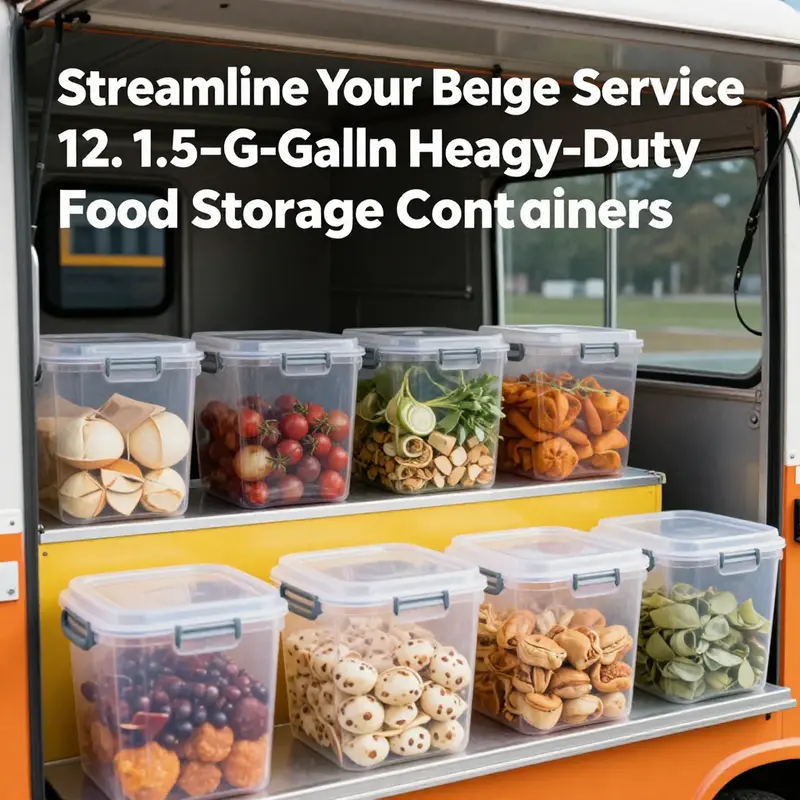
In the quiet economy of organized spaces, the 12.5-gallon heavy-duty plastic storage container with a lid stands as a workhorse that preserves, protects, and organizes. Its presence in kitchens, garages, workshops, and back rooms is seldom celebrated with fanfare, yet its design elevates everyday routines by balancing capacity with resilience. The container’s dimensions—approximately 26 inches wide, 18 inches deep, and 9 inches high—create a footprint that fits snugly in refrigerators, deep freezers, and on shelves while offering a generous interior that can swallow bulk quantities without becoming unwieldy. This balance between bulk capacity and practical form reflects a design philosophy that prioritizes both space realities and daily use. The rectangular silhouette is more than a space saver; it is a strategic choice aligning with how people organize, stack, and access contents in varied environments. When paired with its lid, the full utility becomes clear: a secure, airtight seal that protects contents from moisture, dust, and pests, while providing a reliable defense against freezer burn in cold storage. The lid’s locking mechanism is more than a convenience feature; it is a precise engineering solution to maintain quality for leftovers, chopped vegetables, cooked grains, or batch cooked meals that require careful portioning and predictable preservation. The ability to maintain odor and leak resistance is essential for households juggling meal prep with a busy pace, and for small operations that must transport prepared dishes with minimal risk of spillage or contamination. The container’s polycarbonate-like transparency is not merely cosmetic; it is practical because it reduces the need to open and rummage, thereby limiting heat intrusion in refrigerators or loss of cool air in freezers. In a world where time is scarce, being able to identify the contents at a glance translates into measurable efficiency. The HDPE material—high-density polyethylene—emerges as a central strength of the design. HDPE brings durability and impact resistance, and it carries the attribute of UV resistance, a feature that broadens usefulness beyond the kitchen to basements, garages, and outdoor storage sheds where light exposure is common. The same material provides chemical resistance and FDA-approved food safety, ensuring that food contact remains within safety standards. This combination of safety, toughness, and visibility supports multi-use viability, enabling the container to store not only edible items but also non-food items that require rigid containment, such as clothing, seasonal toys, or small tools. The result is a product category that functions as a flexible platform for organization rather than a single-purpose container. In practice, the container’s design encourages a disciplined approach to storage. The ability to nest containers when not in use saves valuable space, a feature that resonates with homeowners and small operators who contend with ever-tightening storage constraints. Interlocking rims and reinforced bases further enhance stacking stability, allowing multiple units to be tiered safely without tipping or crushing. This is particularly valuable in home workshop or small kitchen setups where vertical space efficiency translates into tangible gains in workflow, inventory visibility, and cost containment. The inherent visibility offered by the clear or translucent HDPE means contents can be identified quickly, cutting down on cross-contamination risk and unnecessary handling. When combined with a robust latching system, this transparency becomes a practical courtesy, ensuring that stored contents remain protected from environmental intrusions while still enabling quick checks for freshness and quantity. The broader market relevance of a 12.5-gallon heavy-duty container with a lid is clear when one considers consumer behaviors and market dynamics. Today’s households are oriented toward meal prepping, batch cooking, and waste reduction. The large capacity makes it possible to store bulk quantities of staples, leftovers, or bulk ingredients efficiently. For families who plan weekly menus, freeze portions in these containers to maintain variety while streamlining cooking schedules. The same capacity that serves households translates well to small-scale food service operations. Catering kitchens, food trucks, and pop-up eateries often require reliable, leak-proof, stackable containers to organize, transport, and serve prepped dishes or bulk ingredients. The durability and impact resistance are valuable in mobile settings where containers may be moved across rooms or loaded into vehicles, enduring vibrations and potential jostling during transit. The container’s versatility extends beyond food storage. In garages, basements, or outdoor storage areas, its sturdy build makes it suitable for stacking heavy items, seasonal gear, or even emergency supplies. In such contexts, the container can safeguard contents against temperature fluctuations and humidity while remaining accessible for quick retrieval. This multi-environment applicability aligns with a broader trend toward durable, reusable storage solutions that serve personal and commercial needs, reducing reliance on disposable packaging and encouraging a lifecycle approach to organization. From a materials perspective, HDPE’s recyclability and durability connect with sustainability goals that increasingly shape consumer decision-making. As environmental awareness rises, buyers seek products that offer long service lives and end-of-life recyclability. HDPE’s capacity to withstand chemical exposure and maintain integrity over time makes the container a practical investment: it endures through seasons, frequent handling, and frequent cleaning, all while resisting pantry spills or tool-dust. The lid’s sealing capability complements this narrative by supporting hygiene and food safety. Airtight and moisture-sealing lids reduce the risks associated with food storage in fluctuating temperatures or humid spaces, thereby preserving taste, texture, and nutritional quality. For households managing budgets, the reusability of such containers translates into lower long-term costs. Instead of repeatedly purchasing new storage options, families can rely on a finite set of robust containers that cover a wide spectrum of storage scenarios, from bulk rice or flour to cooled leftovers and pre-cut vegetables. The durability and adaptability of the container also influence how it is perceived in the retail market. It is a mainstream product in many modern retailers, positioned not only as a storage instrument but also as a foundational piece of a well-organized home operation. The pricing and accessibility of such containers contribute to a broader shift toward organized living as a practical habit rather than a luxury. In this sense, the container sits at the intersection of form, function, and accessibility, offering a combination of features that satisfy practical needs while remaining economically feasible for a broad consumer base. The market implications extend into behavior. When consumers adopt container systems that emphasize stacking, visibility, and secure sealing, they often develop more consistent meal-prep practices, better portion control, and less food waste. This behavioral shift is the outcome of design that minimizes friction and maximizes reliability. The container’s width and depth are not simply measurements; they reflect a thoughtful accommodation of how food and non-food items are stored in real spaces. The 26-by-18-inch footprint aligns with standard shelving and cabinetry layouts, enabling easier integration into existing storage networks. The nine-inch height ensures compatibility with many refrigerator and freezer shelves, as well as with optically organized pantry rows. The practical realities of everyday use—ease of cleaning, resistance to cracking under impact, and the simplicity of opening and closing the lid—collectively inform a user experience that emphasizes continuity, predictability, and simplicity. In the sphere of consumer choice, such usability is a differentiator. Shoppers may compare options on a spectrum that includes size, material, lid design, and stacking stability. The 12.5-gallon option tends to win on overall capacity without sacrificing the compactness that keeps it compatible with domestic storage architectures. Additionally, its durable construction makes it attractive to small businesses that require reliable containers for transport or for display teams that must move and refresh inventory without sacrificing containment. The material’s FDA compliance underscores a trust factor, signaling that the product meets safety standards for food contact, a detail that weighs heavily for households managing multiple food categories, from dry staples to perishable ingredients. The design is mindful of long-term usage; features like reinforced bases and interlocking rims make it more than a practical choice for a single season. They are an investment in ongoing organization. The ability to nest several containers when not in use is equally important. Rather than occupying the entire storage space, containers can be nested to minimize footprint, a feature that becomes particularly valuable in seasonal homes, holiday storage areas, or workshop closets where space is at a premium. This nesting capability, combined with the lid’s reliable seal, supports a modular approach to storage. Users can align containers by category—food, clothing, tools—and rely on consistent dimensions to maintain an orderly inventory. It is not hard to imagine how many households could convert a crowded pantry into a calm array of clearly defined bins, each with a predictable lid action and a transparent view into its contents. The overall narrative of market relevance extends beyond the product’s physical attributes. It encompasses consumer habits, lifestyle choices, and the practical realities of budgets and spaces. In short, the container is not merely a vessel. It is a scalable organization system that adapts to shifting needs—from seasonal wardrobe shifts to more stable, year-round storage and even to light-duty logistics in small businesses. The container’s simplicity—its straightforward lid, its robust body, and its clear visibility—contributes to a broader ease of use that many modern households are seeking. In this light, the product becomes part of a larger conversation about how people manage space and time, how they make mundane decisions about where to store what, and how such decisions ripple outward to affect waste reduction, efficiency, and the perceived value of a well-ordered life.
Final thoughts
The 12.5-gallon heavy-duty plastic food storage container with a lid proves itself to be an invaluable asset for businesses in the food service industry. Its durability ensures long-term reliability, while its innovative design features facilitate efficient use and organization. Understanding its applications across various sectors—from bubble tea shops to catering services—highlights its versatility in meeting the specific needs of the market. This container represents a strategic choice for enhancing storage efficiency, ensuring food safety, and ultimately improving service quality, making it an essential component of any food service operation.