
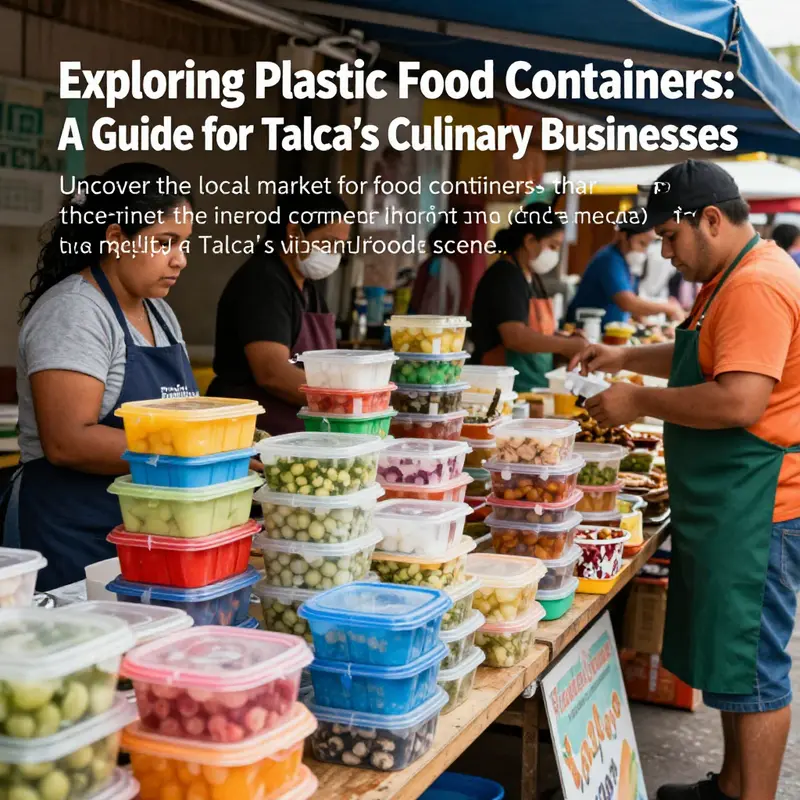
In Talca, Chile, the culinary landscape is rapidly evolving, and so too is the demand for high-quality plastic containers designed for food storage and service. The advent of food trucks, bubble tea shops, restaurants, and catering services has created a unique challenge and opportunity. This article provides a comprehensive exploration of the availability of plastic food containers in Talca, specifically tailored for businesses looking to enhance their operational efficiency. From understanding the local suppliers and e-commerce options to delving into consumer preferences and the environmental implications, each chapter presents critical insights that will aid culinary professionals in making informed choices. By the end of our journey, you’ll be equipped with the knowledge needed to select the appropriate food containers that align with your business needs while also considering sustainability.
Talca’s Food Storage Puzzle: Navigating Availability, Materials, and Local Realities for Plastic Containers in Chile’s Central Valley
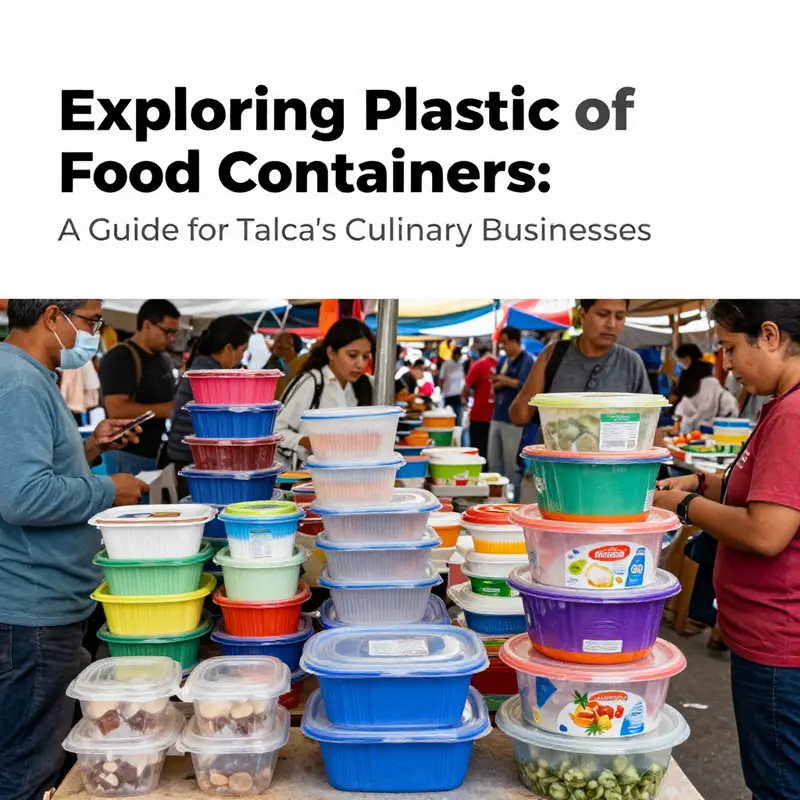
In Talca, the daily rhythms of food preparation and storage echo a broader global story about plastic containers, their materials, and how markets translate need into shelves. Yet when you cast a careful eye over the local scene, you quickly encounter a quiet mismatch between the scale of demand and the granularity of data. There is a practical sense that plastic containers for food are everywhere, especially in kitchens, pantries, and small eateries. But the precise availability, the types most commonly stocked by regional suppliers, and the pathways by which a consumer in Talca would secure a particular size, shape, or material remain elusive in the public documentation that current research could access. This gap is revealing not simply about Talca, but about how regional markets intersect with global supply chains. It invites a patient, on-the-ground approach to sourcing, evaluating, and deciding which containers best fit local needs, whether the concern is household meal prep, dry-storage of grains, or portioning sauces in a modest business environment along the Maule River basin.
What does show up in the broader discourse is a familiar triad of dynamics: the ubiquity of plastic packaging in food systems, the rapid evolution of materials used for containers, and the environmental conversations that frame consumer and producer choices. Globally, researchers and policymakers discuss plastics in terms of material properties, safety for food contact, and the life cycle of products—from production to end-of-life. Within that frame, several materials commonly appear as the backbone of food containers: PET and PP for their clarity, rigidity, and cost-effectiveness; PLA as a biodegradable option that aligns with growing interest in compostable packaging; and metals such as stainless steel and aluminum for durable, reusable or semi-reusable applications. In Talca, as in many markets, these options translate into a set of practical trade-offs. PET and PP offer light weight and affordability, essential for households and small retailers, yet they raise questions about long-term wear, chemical leaching under certain conditions, and recyclability in a regional context. PLA introduces an attractive, compost-friendly angle but can be sensitive to heat and moisture, which influences its suitability for hot foods or dishwashing routines common in busy kitchens. Stainless steel and aluminum containers bring durability and potential for reuse, but their higher upfront cost and heavier weight can deter routine use in households with limited storage space or in fast-moving, price-conscious retail settings.
The Talca market, even when filtered through Chile’s broader logistics and consumer habits, tends to reflect a mix of local purchasing and cross-border sourcing. Local suppliers and grocery supply stores often operate on a regional scale, while larger online marketplaces can open access to an extended catalog of options. For a consumer or small business in Talca, the practical path usually involves checking regional distributors for stock, exploring online marketplaces that deliver to the central Chilean region, and, when possible, visiting local kitchenware shops to see containers in person. The absence of a singular, widely publicized data point about Talca-specific vendors does not imply a void; it signals the need to triangulate information through a blend of local outreach, marketplace scans, and direct inquiries to suppliers about product lines, delivery options, and after-sales support. In this sense, the Talca experience resembles many mid-sized regional markets where the most reliable sources are a combination of local stores, regional distributors, and the occasional cross-border shipment that navigates customs and logistics at a measured pace.
The regional context also intersects with Questions of quality and safety. Food-contact materials are governed by standards that focus on chemical compatibility, sealability, and safe handling during typical kitchen routines. In practice, this translates into a demand for containers that resist staining and odors, preserve contents without leaks, and withstand the cleaning cycles common in households and small commercial kitchens. Consumers in Talca and similar locales naturally weigh these performance attributes against price and durability. For families stocking grains or snacks, the decision may center on long-term storage and ease of organization. For small eateries, the emphasis may shift toward stackable designs, portion control, and efficient turnover—with the added complexity of customer expectations for presentable, food-safe packaging that communicates cleanliness and professionalism.
Alongside performance, environmental considerations increasingly shape purchasing choices. The global dialogue about microplastics, recycling rates, and the environmental footprint of packaging resonates in Talca as much as anywhere else. Local decisions—whether to favor recyclable plastics, reusable metal or glass options, or biobased alternatives—are influenced by factors such as regional recycling infrastructure, waste collection practices, and household attitudes toward reuse and disposal. For many households, the simplest path is to choose containers that fit well into existing routines: containers that are easy to wash, compact when stored, and versatile enough to accommodate a range of foods. For entrepreneurs and small-scale food handlers, the calculus expands to include supplier reliability, the possibility of bulk purchases, and the opportunity to minimize waste through reusable options or buy-in models that promote reuse. In Talca, those choices are not abstract debates but daily decisions that affect cost, convenience, and environmental impact.
To approach sourcing with clarity, it helps to translate the general material landscape into a local decision framework. Start with a few straightforward questions: What foods are most commonly stored, and what temperature or humidity conditions do they require? What storage dimensions would fit in the available pantry or storefront shelves? How important is stackability or durability for repeated use? What is the local ecosystem of repairs and replacements—can containers be easily mended or repurchased without disrupting operations? And crucially, what are the local options for replacing or upgrading containers as needs evolve? In Talca, these questions sit at the intersection of household practicality and business efficiency, often resolved through a blend of direct supplier dialogue and iterative shopping that tests fit, price, and performance in real-world conditions.
Another practical layer concerns the channels through which residents in Talca learn about and access packaging options. Online marketplaces that deliver to Chile, such as regional e-commerce platforms, present a gateway to a broader spectrum of containers, but the delivery realities can vary by location and product category. Local shops, on the other hand, offer tangible advantages: the ability to inspect material quality, verify food-contact compliance in person, and obtain immediate replacements or guidance from shop staff familiar with regional use cases. For those who need to scale storage or packaging quickly, discerning between single-use containers and reusable options becomes a central theme. The former may win on price and convenience, but the latter can offer long-term cost savings and a smaller environmental footprint when used repeatedly with proper cleaning protocols. In Talca’s climate—where humidity and seasonal changes can influence storage conditions—selecting resilient containers that resist warping, staining, and odor retention becomes a practical, daily concern rather than a theoretical preference.
In the absence of a single definitive local catalog, the broader material taxonomy helps anchor decision-making. PET and PP, common for light to moderate use, provide dependable performance with relatively low cost, making them attractive for households and smaller vendors. For longer-term storage or more demanding environments, stainless steel or aluminum containers emerge as compelling alternatives, though their higher upfront costs can be a barrier in price-sensitive settings. PLA and other biobased solutions introduce an appealing ecological narrative, yet their real-world performance under Talcan kitchen conditions—hot foods, dishwashing, or repeated exposure to moisture—requires careful assessment. When evaluating any container, practical tests matter: does the seal stay intact after multiple wash cycles? Is there any odor transfer after storing strongly scented foods? How easy is it to stack and organize containers in the available space? These questions translate high-level material knowledge into actionable criteria that align with Talca’s specific settings.
The chapter’s focus remains the local reality without losing sight of global context. While data on Talca-specific suppliers may be sparse in open databases, the reality is that plastic containers for food are a bridge between global manufacturing ecosystems and local homes and businesses. The broader market signals—cost pressures, evolving consumer preferences, and environmental concerns—shape what is stocked on regional shelves and what is urged by small-scale buyers. In Talca, as in many regional centers, a practical approach blends scouting in local shops, monitoring regional online listings, and engaging directly with distributors about lead times, minimum order quantities, and return policies. The result is a pragmatic, iterative sourcing strategy that accommodates fluctuation in supply while maintaining a clear view of material properties and usage suitability.
As the narrative of Talca’s market for food containers unfolds, one sees how local decisions reflect larger patterns of consumption and waste. The interplay between storage needs, material properties, and the realities of delivery and service in a central Chilean valley frames a continuous negotiation. Businesses weigh the reliability of supply against the environmental costs of packaging, households balance affordability with durability, and the regional economy absorbs the ripple effects of global manufacturing. The outcome is not a fixed catalog but a living practice: an approach to selecting containers that keeps food safe, storage efficient, and waste manageable within the constraints and opportunities of Talca’s everyday life. This is how a city’s relationship with plastic food containers matures—from a broad concept into routine decisions that shape kitchens, stores, and the local ecology over time.
For readers seeking a tangible glimpse into the broader packaging ecosystem that informs these local choices, consider exploring related sustainable packaging options that extend beyond plastics. eco-friendly paper cups with lids offer a perspective on alternatives designed for take-away contexts, emphasizing reusability, recyclability, and reduced environmental impact in everyday service scenarios. This broader lens helps frame Talca’s decisions not only in terms of what is available today but also in terms of what could become viable with shifts in supply chains, consumer habits, and environmental priorities.
External resource: For a comprehensive look at how packaging materials are managed from a sustainability standpoint, see the SMM and plastics packaging sections of the Environmental Protection Agency’s guidance on sustainable materials management. https://www.epa.gov/smm/sustainable-management-materials-plastics-packaging
Talca’s Local Plastics Network: Navigating Food-Grade Container Suppliers in the Heart of Chile
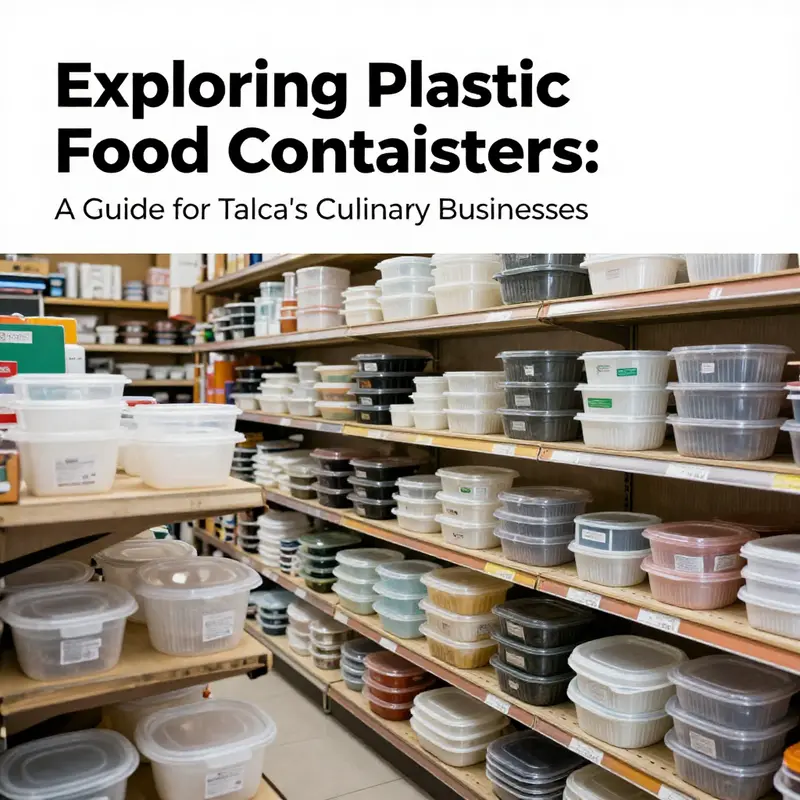
Talca sits at the crossroads of Chile’s Maule region, where markets bustle with fresh fruit, baked goods, and a habit of buying in bulk for family meals and small-scale businesses. In this setting, a reliable supply of food-grade plastic containers is more than a convenience; it is a practical backbone for preserving freshness, maintaining food safety, and keeping costs predictable for cafes, small grocers, and home chefs who bake to feed their communities. The task of locating suitable local suppliers becomes less about chasing a single product and more about understanding a small but capable ecosystem that includes local manufacturers, regional distributors, and a web of marketplaces that anchor the Talca area to wider Chilean and even international supply chains. The goal is to find containers that not only fit the food they hold but also align with Talca’s pace, pricing realities, and the practical demands of daily operation in a city that blends agricultural abundance with industrious urban life. This chapter follows that thread, weaving together practical strategies, material insights, and a sense of how a local supply network can become a collaborative partner rather than a mere procurement channel.
In Talca, the most immediate advantage of engaging with local suppliers is proximity. When you can source containers from within the same region or nearby provinces, lead times shrink and flexibility grows. This matters for businesses that test new product lines, seasonal offerings, or pop-up food concepts that require dependable, hygienic packaging on short notice. Local manufacturers may not always carry mass-market stock, but they can often accommodate smaller lots, shorten setup times, and adjust dimensions or lid configurations to fit specialized needs. For restaurateurs or market stall operators, that lean toward customization is more than convenience; it is a way to reinforce brand consistency, reduce waste, and simplify inventory planning. The core idea is simple: a deliberate local footprint can translate into faster deliveries, easier returns or exchanges, and clearer lines of communication when questions arise about food-contact safety or material performance.
To move from intention to action, a practical approach is to map the local landscape through a few reliable channels. Local manufacturers sometimes advertise directly to the hospitality sector or food processing firms, and they may also be listed in regional business directories or industrial supply catalogs. Distributors within Talca or in adjacent cities can act as feeders for multiple brands, offering a curated assortment of containers in common sizes, along with lids, seals, and labeling options. For a business or individual trying to balance cost with quality, it can be worth speaking first with a few small-volume distributors who can provide samples, price ranges, and a sense of delivery reliability before committing to larger orders. In addition, regional trade shows and business directories still play a meaningful role. Exhibitions devoted to packaging, food production, or the broader retail sector provide a chance to see the latest container designs, feel the materials in hand, and request documentation that speaks to food safety. While Talca’s calendar may not feature a large-scale international expo every year, local and regional events often attract suppliers who can meet the specific needs of Chilean food businesses, including those operating under the unique climate and logistics considerations of the Maule region.
When it comes to finding these suppliers, the same pragmatic questions guide every conversation: Do they offer containers designed for food contact, and can they supply documentation proving compliance with food safety standards? Are the containers compatible with common storage practices in Talca—from cool rooms in winter markets to kitchen shelves in sunlit cafés? What is the minimum order quantity, and how flexible are they on packaging configurations, such as stackable designs, vented lids, or clear versus opaque bodies for content visibility? For a Tejedor-style bread shop that bakes daily or a fruit stand that handles perishable goods, these details matter as much as the price per unit. A local supplier who can discuss the durability of materials under Talca’s typical temperature fluctuations—ranging from cool nights to warm afternoons—will likely be more valuable than a bargain-bin option sourced from hundreds of kilometers away.
Material choice tailors the container to the task at hand. In general, polypropylene (PP), polyethylene (PE), and polyethylene terephthalate (PET) are common options for food-grade containers. Each material has its strengths: PP tends to be heat resistant and durable, a good match for reheating or hot-fill scenarios; PE offers impact resistance and clarity in many clear-walled designs; PET typically provides excellent clarity and a rigid feel suitable for dry goods and refrigerated items. In a Talca context, where cooks and shopkeepers juggle a mix of fresh produce, dried grains, and prepared foods, the ability to match material properties with the food’s storage conditions is crucial. Suppliers who can explain the specific food-contact assurances of their products, provide data on the safe temperature and chemical migration limits, and share test certificates are giving a business the confidence to maintain strict quality controls. If a supplier can produce a concise summary of the material’s suitability for hot or cold storage, a typical shelf life, and instructions for cleaning and re-use, that level of transparency makes a practical difference in daily operations.
Beyond the raw materials, the geometry and design features of containers determine how efficiently a kitchen or stall can function. Stackability reduces footprint in crowded storage rooms and freezers, which is a frequent constraint in Talca’s bustling market environments. Airtight or snap-tight lids help maintain moisture control for dry goods, while vented lids can be essential for certain fermentations or fresh items that emit gases. Transparent bodies allow quick visual checks of contents, a helpful trait for busy staff who rotate stock and manage expiration dates. For businesses that pre-portion meals or ingredients, portion-size compatibility matters too: containers available in a range of volumes—from small 250-milliliter rounds to larger one- or two-liter options—enable standardized packaging without forcing compromises on portion control. When suppliers can show a handful of representative designs and discuss preferred use cases, it becomes easier to assemble a coherent set of containers that cover the day’s needs from market prep to service.
An equally important facet concerns the documentation and assurances that accompany food-contact containers. Local buyers in Talca should seek suppliers who can provide material safety data, labeling guidelines, and, where possible, third-party certifications or laboratory testing summaries. The ability to confirm compliance with food-safety expectations not only supports regulatory convenience but also reinforces trust with customers who are mindful of hygiene and safety. This is especially true for businesses that handle perishable produce, dairy, or ready-to-eat items, where even small packaging defects can become operational headaches. When the supplier can accommodate requests for sample containers to evaluate fit, seal performance, and ease of cleaning, the decision-making process becomes anchored in tangible proof rather than abstract promises. In practice, the most reliable partnerships develop when a supplier demonstrates responsiveness—providing samples, sharing documentation, and offering practical advice about cleaning and reuse cycles that align with local kitchen routines.
From a procurement standpoint, Talca’s small-to-medium enterprises benefit from a staged approach to supplier engagement. Start with exploratory conversations to map the landscape and gather basic information: typical lead times, stock availability for common sizes, minimum order quantities, and the range of lid configurations. Request a small pilot order to test on-site performance in a real kitchen or stall environment. Use the pilot to evaluate not just the container itself but the service level: how quickly the supplier replenishes stock, how accurately invoices reflect agreed terms, and how easy it is to coordinate a resupply during peak periods. A supplier with a flexible mindset—one that can accommodate short-notice orders or adjust packaging bundles when demand spikes—will prove to be a durable partner rather than a mere vendor. If a supplier can tailor a package for a given food category, such as a dry goods line, a fresh pastry line, or a ready-to-eat set, then the conversation expands from “what do you have?” to “how can we design a packaging ecosystem that fits this business’s rhythm?” That is where value becomes measurable: reduced waste from ill-fitting containers, streamlined prep processes, and clearer labeling that minimizes mis-sorts in busy service lines.
As buyers in Talca consider the broader supply network, they also weigh the logistical and economic realities that shape a regionally anchored packaging strategy. Local sourcing helps mitigate long-haul costs and volatility in distant freight, which is particularly relevant for time-sensitive food items that require quick turnover. It also opens doors to informal networks—shops and markets where a trusted supplier visits weekly or where a distributor acts as a bridge between a regional manufacturer and a handful of small businesses. These relationships can yield faster problem resolution, easier returns or exchanges, and more favorable terms, especially when trust is built through repeated interactions and mutual respect for food-safety practices. For anyone assembling a set of packaging options in Talca, the aim should be to curate a small, dependable portfolio of containers that covers most needs—dry pantry items, refrigerated goods, prepared foods, and occasional bulk storage—while maintaining the flexibility to adjust orders as demand shifts with the farming calendar, market festivals, and tourism seasons.
The pursuit of local suppliers is not a solitary effort; it is a collaborative process that benefits from a shared understanding of goals. Restaurants looking to differentiate through packaging, market vendors seeking cost-efficient solutions, and home-based cooks planning for weekend fairs all gain from a community approach to sourcing. When potential partners demonstrate clear knowledge of the regional market, present accessible documentation, and communicate options for customization, they transition from being merely a supply source to becoming an active contributor to daily operations. In Talca, that distinction matters. It translates into containers that perform reliably, shipments that align with busy hours and market cycles, and a support network that helps ensure food safety standards are consistently met from prep to plate. The practical effect is simple: better containers that fit the task reduce waste, improve efficiency, and strengthen the trust customers place in local food businesses.
For readers ready to begin the search, a pragmatic starting point is to explore regional platforms and directories, touch base with nearby manufacturers, and request sample sets to test in real conditions. Keep a running record of material types considered, storage conditions, and any documentation received. Compare not only the price per unit but the total cost of ownership, including potential savings from reduced breakage, easier cleaning, and longer container lifespans in a busy Talca kitchen. In the end, the aim is not to stock up on as many options as possible, but to assemble a compact, well-understood lineup that supports the city’s vibrant food scene while staying aligned with safety, efficiency, and local business realities.
External resource: https://www.google.com/maps/search/proveedores+de+envases+pl%C3%A1sticos+para+alimentos+Talca
From Talca to the Global Shelf: E-commerce Pathways for Plastic Food Containers in Chile
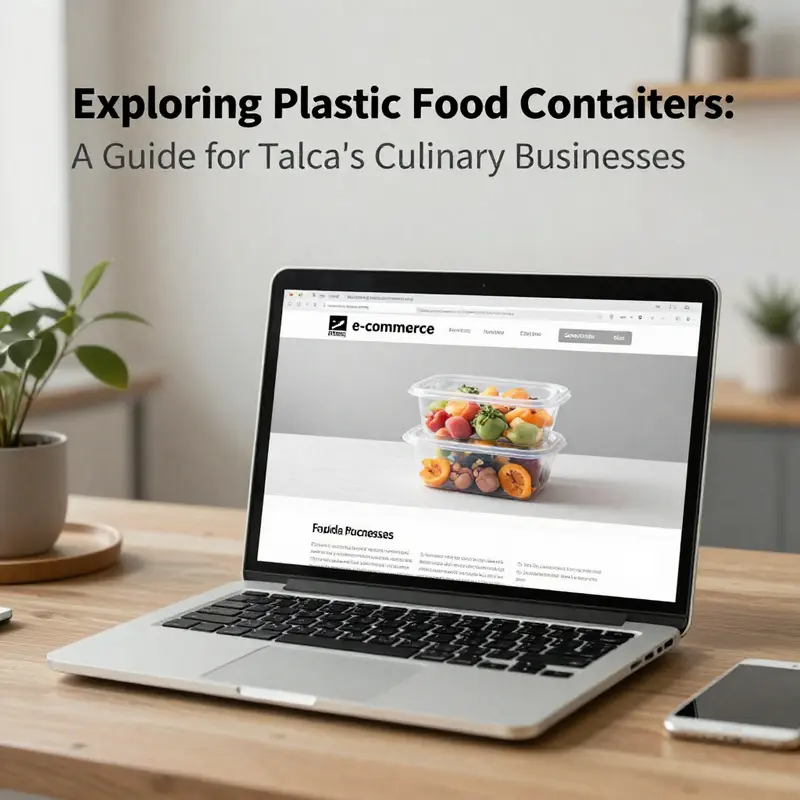
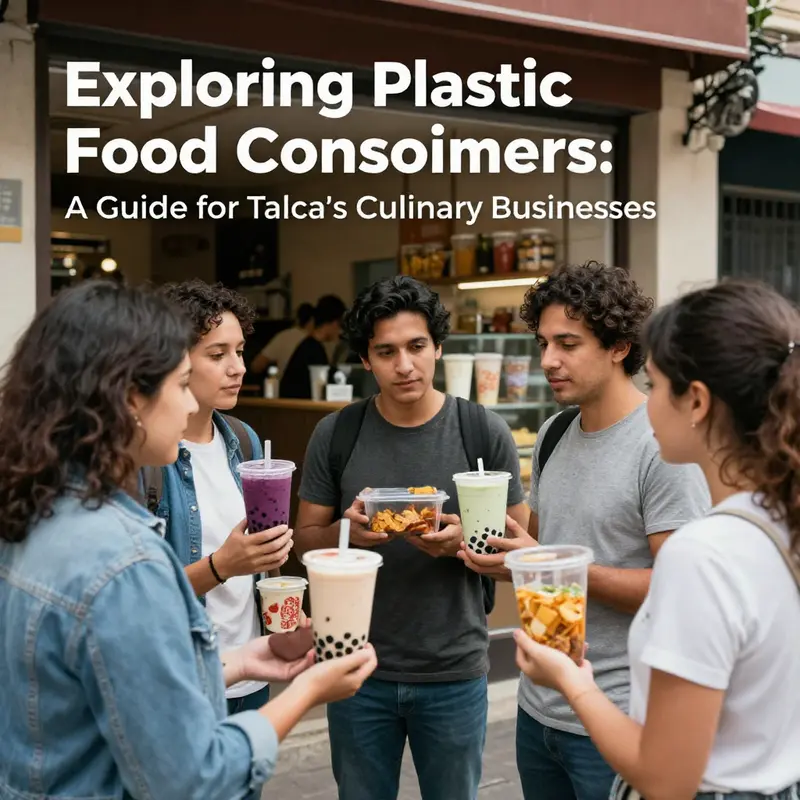
Talca sits within a landscape of Chilean cities where home cooks, small eateries, and growing neighborhood ventures converge on a practical need: reliable plastic containers for food. The city’s markets, groceries, and kitchens share a common challenge—how to source containers that are safe for food, durable for daily use, and affordable enough to fit fluctuating demand. The rise of e-commerce has quietly redefined how Talca residents access these essentials. What once meant a single trip to a neighborhood shop now often begins with a scroll through international and regional marketplaces, then folds back into local suppliers who can bridge the gap between a distant warehouse and a home or storefront in central Chile. This chapter follows that path, tracing how different platforms, languages of commerce, and logistical realities intersect to supply plastic food containers in a way that feels still closer to the local table than to the distant warehouse floor.\n\nThe breadth of options available globally is a starting point for Talca. International marketplaces open doors to a wide range of sizes, formats, and materials that meet food-safety standards. Buyers can search for containers coded for food-grade storage, sealed with tight lids, and designed to stack neatly in crowded pantries or commercial shelves. The advantages of this global reach are clear: bulk pricing, a broader spectrum of closures and seal mechanisms, and the possibility of sourcing specialized shapes that are not readily stocked by local shops. Buyers can distinguish between materials like polypropylene and high-density polyethylene by reading product specifications, but it remains crucial to verify that the items are explicitly labeled as suitable for contact with food. In practice, this means looking for indications of food-grade certification, and where possible, certifications that align with the buyer’s own regulatory or quality expectations.\n\nYet the path from a listing to a Talca delivery is not a straight line. Shipping realities in Chile involve considerations of customs, duties, and regional delivery timelines. Some suppliers on international platforms offer direct shipping to Chile, while others require third-party freight forwarders or consolidation services. Language and payment play a role too. Platforms that support multiple languages and regional currencies can streamline the negotiation process; nevertheless, currency fluctuations and import taxes can affect the final landed cost. Buyers who are planning a kitchen expansion or a small business’s packaging upgrade must weigh these variables against the desire for scale and customization. In many cases, this calculus leads to a hybrid approach: order smaller, readily available items from regional marketplaces for quick turns, while reserving larger or more customized needs for suppliers with dedicated Chile-facing channels or local distributors.\n\nFor Talca’s immediate local needs, regional marketplaces that operate within Chile emerge as the most practical option. These platforms provide proximity benefits: shorter delivery windows, clearer returns, and payment methods aligned with local preferences. Local marketplaces preserve the essential advantages of e-commerce—easy search, product comparison, and user reviews—while layering in the reliability of regional logistics. In this space, the emphasis tends to be on containers that balance price and performance, including options designed for pantry storage, fridge or freezer use, and compatibility with a variety of food types. Buyers often filter for attributes such as BPA-free materials, dishwasher safety, and heat resistance for reheating or hot-fill scenarios. The emphasis on food safety is not merely regulatory theater; it translates into tangible checks during the selection process. Vendors commonly display certifications, material symbols, or explicit statements about suitability for food contact, and shoppers in Talca can usually request additional documentation if needed.\n\nThe practical reality is that not every need in Talca can be met by a single channel. For small, everyday household use, a local assortment sourced from nearby retailers or marketplaces with regional delivery can feel fastest and most economical. In contrast, for bulk storage, commercial packaging, or specialty containers (for example, designs that maximize space in a crowded kitchen or accommodate unusual portion sizes), the reach of an international platform offers a different kind of value—one measured not just in price, but in the diversity of options and the possibility of customization. The choice between speed and variety becomes a strategic decision. In many cases, the most efficient approach is to blend both streams: secure smaller, instantly usable containers locally, while negotiating with overseas suppliers for bulk purchases or for items that would require a longer lead time and tailored specifications. This blended approach helps maintain operational continuity in Talca’s kitchens and food businesses, ensuring that there is always a backup source when demand spikes or when a new packaging requirement emerges.\n\nThe language of the buying journey matters as well. Spanish remains the primary language for most Talca-based buyers, and local payment methods often favor familiar formats. Platforms that support local payment options and straightforward return policies tend to inspire greater confidence. The decision to import or to source locally is not solely about price; it is also about reliability, after-sales support, and the ease with which a buyer can verify that a container meets the standards required for food storage. In many cases, this means looking for suppliers who provide clear product data sheets, including material composition, storage recommendations, and cleaning instructions. The best vendors are those who respond promptly to inquiries for documentation, collaborate with buyers on testing requests, and offer scalable options as a business grows. For Talca’s budding food entrepreneurs, such vendor responsiveness is often as valuable as the containers themselves.\n\nAs this landscape evolves, a subtle but important shift is underway: sustainability and responsible packaging are becoming part of the decision-making fabric. Even in a field as practical as plastic food containers, buyers increasingly weigh long-term costs, reusability, and end-of-life considerations. PLA-based or other compostable materials may be cited by some suppliers as part of their eco-friendly lineups, while many buyers still prioritize materials known for durability and reuse, such as various plastics rated for multiple cycles of use. Talca’s consumers and businesses thus navigate a spectrum from single-use convenience to durable, reusable solutions. The economic calculus often follows the end-use: a college student stocking a dorm pantry may prioritize price and availability, while a small cafe owner might invest in stackable, space-efficient containers that endure frequent washing and handling. Across this spectrum, the accessibility of information becomes key. Clear labeling about food safety, heat tolerance, and compatibility with existing equipment helps buyers make informed choices without unnecessary delays.\n\nThe practical navigation of these channels is aided by a few guiding questions. First, is the container clearly labeled as suitable for food contact, with explicit references to safety standards? Second, does the product offer the sealing performance needed to protect contents during transport and storage? Third, how flexible is the supplier regarding quantity, customization, and delivery terms? And fourth, what is the total landed cost, including shipping, taxes, and any handling fees? In Talca, these questions are often answered through a combination of quick online due diligence and a direct conversation with a seller or distributor who understands the local market. The ability to bridge the gap between international catalog listings and local delivery expectations is what ultimately determines whether a particular container will earn a place on a kitchen shelf or in a restaurant back room.\n\nAn important facet of this chapter’s broader aim is recognizing how local and global forces converge to shape the actual inventory in Talca’s kitchens. Local stores respond to neighborhood demand with shorter restock cycles and easier returns, while global platforms bring scale and variety that can spark innovation in packaging strategies. For someone planning a packaging upgrade, the path may involve first stabilizing the everyday needs with readily available local options, followed by a strategic procurement from international suppliers for items that promise cost savings at scale or special features. In this sense, e-commerce acts not just as a retailer channel but as a conduit for knowledge—exposing Talca’s buyers to new materials, new design concepts, and new ways of thinking about storage and presentation.\n\nWithin this dynamic, one practical tip stands out. Start with a clear set of non-negotiables for food-contact containers—such as food-grade certification, BPA-free labeling, and the ability to withstand typical temperatures in household kitchens. Use these anchors to filter listings across platforms and to guide conversations with suppliers. This disciplined approach reduces ambiguity and accelerates the path from search to purchase. It also helps ensure consistency across purchases, whether the containers arrive from a nearby warehouse or a distant port. For those who want to explore beyond plastic, consider complementary packaging options that might align with Talca’s needs, including recyclable or reusable alternatives that can complement a plastic line while supporting sustainability goals. The broader conversation about packaging strategy is not limited to a single material; it extends to how containers integrate with storage workflows, inventory control, and the economics of daily use in home and business kitchens.\n\nFor readers seeking a practical starting point in the local marketplace, a direct route to one of the most widely used regional platforms is worth noting. The Chilean site community often relies on a simple search for “envases plásticos para alimentos” and related terms, with attention to terms indicating safety and reuse. The platform’s search results can then be refined by material, capacity, and sealing features. The resulting choices commonly reflect the priority Talca buyers place on reliability and cost-effectiveness while keeping doors open to future upgrades as their needs grow. The interplay between global catalogs and regional delivery schedules creates a rhythm that Talca’s households and small operations are increasingly learning to navigate with confidence.\n\nIn closing, the story of sourcing plastic containers for food in Talca through e-commerce is one of convergence. It blends global reach with local pace, bulk savings with everyday practicality, and the urgent need for reliable food-safe storage with the longer arc of responsible packaging. Buyers who master this confluence can secure containers that perform well today and remain adaptable as kitchens evolve. The journey from a screen in a Talca home or business to the stack of labeled containers in a pantry is less about choosing a single source and more about orchestrating a network of options that balance speed, certainty, and value. And as the market continues to respond to changing consumer needs, Talca’s food communities will likely see an even richer tapestry of packaging possibilities that keep food fresh, safe, and accessible to all who rely on these containers every day. For those who want to explore ongoing options beyond the immediate local supply, the Chilean marketplace landscape remains a promising corridor to expand both capability and choice, while a targeted search of international catalogs can unlock opportunities for bulk purchases, customization, and long-term cost efficiency. See the Chilean marketplace at mercadolibre.cl for a localized entry point, and, for styling and sustainable packaging options that align with modern design trends, consider reviewing the eco-friendly Kraft-based alternatives discussed on one packaging-focused example site. The balance of local practicality and global opportunity continues to shape how Talca’s kitchens, cafés, and households store and serve their food—today and into the future. See mercadolibre.cl\n\nExternal resource: https://www.mercadolibre.cl/
null
null
From Field to Footprint: Tracing the Environmental Impact of Food Containers in Talca, Chile
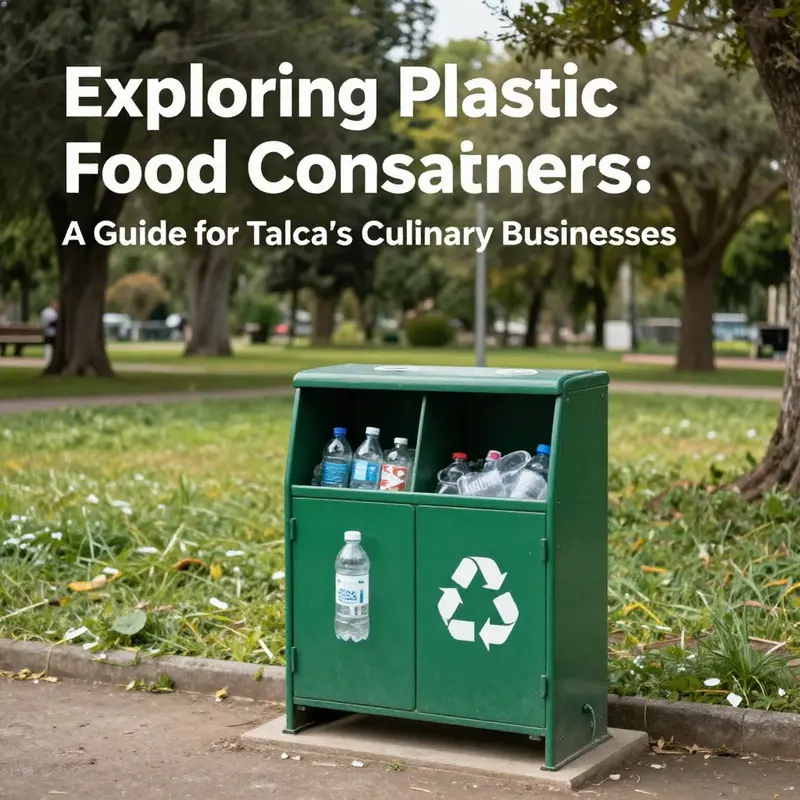
Talca sits at a crossroads of agriculture and daily life in central Chile, where markets brim with fruit, grains, and prepared foods that travelers and locals carry home in a mosaic of containers. Plastic has become a practical ally in this landscape: light enough for easy transport, durable enough to keep perishables safe, and affordable enough for widespread use. Yet the very usefulness of plastic containers for food carries an environmental toll that becomes clearer when we widen the lens beyond a single city or season. In Talca’s reach, the story of plastic packaging is inseparable from the region’s soils, streams, and farms. It is also connected to policy choices that shape how waste becomes resilience instead of risk. The chapter that follows threads together local realities, national policy dynamics, and global trends to illuminate how Talca’s material habits reverberate through soil and river, and how communities might steer toward packaging that sustains both people and place.
Chile’s broader waste management framework has experimented with systems intended to reduce litter and boost recovery. One notable example is the deposit-refund approach that targets containers used for beer and other beverages. In this scheme, producers charge distributors a modest fee to cover recycling costs, with the aim of keeping containers out of the environment and returning materials to the circular economy. The core idea is straightforward: when a small deposit is tied to a container’s lifecycle, the incentive to mishandle it diminishes. The experience captured in policy reviews from around 2005 points to the potential of such measures to alter consumer behavior and waste pathways. Yet the strategy also shows its limits. Beverage containers are only one segment of a broader packaging stream, and deposit schemes depend on effective collection infrastructure, robust markets for recycled materials, and continuous public engagement. In Talca, where farm queues meet city streets, the practical reach of this policy depends on regional implementation, the presence of recycling facilities, and the willingness of vendors to participate in take-back schemes. The deposit-refund concept remains a compass rather than a complete map for the city’s packaging realities, signaling that policy design must evolve to cover the diverse containers that travelers, families, markets, and street vendors rely upon.
Beyond policy frames, the agricultural heartland around Talca reveals a different kind of pollution vector. Plastic mulching—thin films laid across fields to regulate moisture, suppress weeds, and promote early yields—has become an established practice in many irrigated zones. Multiplied across orchards and vineyards, these films improve short-term production, yet they also sow long-term trouble. As harvests end and crops are cleared, remnants of plastic films can be difficult to recover completely. Weathering, sun exposure, and mechanical breakage fragment these films into microplastics that slip into soils and become part of the agroecosystem. Over time, such microplastics can alter soil structure, influence microbial communities, and reduce soil fertility. Even if a farmer’s field looks clean after harvest, microplastic fragments may persist in the topsoil, where they interact with soil moisture, nutrient cycles, and crop roots. The agricultural system thus faces a paradox: plastics that aid productivity today can undermine soil health and resilience tomorrow if not managed with care. This is not merely a Chilean concern; it mirrors a global pattern where mulch films, irrigation pipes, and packaging films contribute insidiously to microplastic loads in farmland. In Talca’s context, where soils are a living archive of generations of farming, the accumulation of microplastics could, over years, influence crop vitality and, in turn, food quality.
A broader look at the global trajectory of plastic waste sharpens the sense of urgency. The world’s oceans receive a staggering flow of plastic—estimates range from eight to fourteen million tons annually. Rivers act as highways delivering inland refuse toward marine ecosystems, and even inland regions can become part of this chain if waste management falters. While Talca sits inland, its proximity to river systems and transport corridors means mismanaged plastic can travel beyond its origin, hitching a ride on seasonal floods or wind-driven debris into waterways that ultimately connect to larger aquatic systems. The implication is clear: improving packaging choices and waste handling in Talca isn’t just about local cleanliness; it’s about preventing downstream harm that travels far beyond the metropolis.
With this awareness comes a search for sustainable alternatives that can balance agricultural productivity, household convenience, and environmental stewardship. The shift toward biodegradable or more easily recoverable materials is not a distant ideal but an ongoing research and policy conversation. In agriculture, biodegradable mulches and films offer one path to reduce long-lasting environmental footprints; in consumer markets, packaging options that prioritize recyclability or compostability can ease the transition away from conventional plastics. This is where the packaging ecosystem—farm supply stores, farmers’ markets, wholesalers, and retailers—plays a crucial role. The choice of packaging is not a neutral decision; it closes or opens routes for waste that determine how much material remains in the ecosystem, where it ends up, and how easily it can re-enter productive cycles.
Yet the practical realities of Talca require solutions at multiple scales. For households and small businesses, the pressure is to minimize single-use plastic consumption while maintaining food safety and convenience. For farmers, the question is how to manage mulching practices so they support yields without leaving behind fragments that persist in soil. For policymakers, the challenge is to align incentives with outcomes: how can enforcement, education, and investment together accelerate the adoption of packaging systems that keep Talca’s land and waterways clean while supporting the region’s economic vitality? The answer lies in a blend of policy refinement, community engagement, and the deployment of durable, eco-friendly packaging options that are accessible to residents and affordable for producers.
As communities in Talca explore these options, the supply chain for food packaging becomes a focal point for change. In the absence of a comprehensive, one-size-fits-all answer, the most promising path involves combining better take-back infrastructure with alternatives that reduce overall plastic use. Paper-based and other fiber-based packaging solutions are gaining attention for their lower environmental footprints when managed properly. The conversation is not about rejecting plastic wholesale but about expanding the toolkit of packaging choices to fit local realities. In this sense, a shift toward more sustainable packaging is a practical, place-based response to the region’s specific mix of agricultural production, market dynamics, and waste-management capacity. It recognizes that Talca’s environmental health depends on the integrity of soil and water, which in turn depends on the material choices that permeate daily life—from the plastic containers used to store and transport food to the mulches that protect crops in the field.
The path forward also involves public awareness—informing residents about how small daily decisions accumulate into measurable environmental outcomes. Education about proper disposal, recycling, and the potential benefits of alternative packaging can empower communities to participate more fully in waste-management efforts. It is not enough to know that plastics are a problem; communities must understand practical steps they can take. This means clear labeling, accessible recycling points, and transparent information about the environmental trade-offs of different packaging options. In Talca, where family businesses, markets, and farms intersect, communicative clarity can translate into collective action. When a consumer chooses a packaging option that minimizes waste, that choice compounds across households, shops, and fields, creating a subtle but powerful shift in the region’s material footprint.
In this narrative, the internal marketplace also matters. A notable example of packaging evolution is the rise of paper-based, take-away solutions designed to mimic the convenience of plastic while reducing end-of-life impacts. These packaging choices often come with trade-offs—supply chain considerations, water usage, transportation emissions, and compostability challenges—but they also offer a pathway to greater sustainability if designed with local conditions in mind. A practical starting point for Talca could be the adoption of disposable kraft paper bowls and similar fiber-based containers for food service and take-out use, paired with improved collection and composting streams. Such a transition would require collaboration across producers, vendors, and municipal authorities, creating a more resilient local system that can absorb shocks from market fluctuations or climate-related disruptions. The potential payoff is a packaging landscape that preserves food safety and convenience while reducing the long-term environmental costs associated with persistent plastic waste.
For readers seeking a concrete glimpse into the packaging alternatives that are gaining traction in markets similar to Talca, one can explore product pages that showcase disposable kraft-based solutions designed for food service and take-out settings. These formats illustrate how paper-based packaging can be made to resemble the practicality of plastic while offering end-of-life options that align with circular economy principles. This kind of packaging innovation is not a distant ideal; it is a tangible, near-term option that communities can pilot, evaluate, and scale as part of a broader environmental strategy. By highlighting these alternatives, the discussion remains grounded in everyday choices and local possibilities rather than abstract ideals. The goal is to connect the practicalities of daily life in Talca with the broader imperative to reduce plastic pollution and safeguard soil and water for future generations.
As Talca moves forward, the balance between convenience and responsibility will continue to define the region’s packaging choices. Policymakers, researchers, farmers, and shoppers all have a stake in shaping a system where containers for food support health and productivity without becoming a long-term burden on soil, waterways, or human health. The path is iterative: assess, adapt, and adopt packaging solutions that fit Talca’s climate, agriculture, and markets. When communities commit to this kind of adaptive approach, the city stands not only to improve its environmental footprint but also to demonstrate a practical model for other inland regions grappling with similar packaging challenges. The story remains open-ended, inviting ongoing collaboration and experimentation as Talca writes the next chapter in sustainable food packaging.
Internal link: For a closer look at fiber-based packaging options that blend practicality and sustainability, see this kraft paper bowl product page: disposable-kraft-paper-bowl-for-food-package-with-lid. This resource exemplifies how a shift in packaging design can align with local needs while offering a cleaner end-of-life path. External resource: https://www.oecd.org/environment/chile-2005-environmental-performance-review.htm
Final thoughts
Navigating the market for plastic food containers in Talca presents both opportunities and challenges for local culinary businesses. By understanding market availability, exploring local suppliers, utilizing e-commerce platforms, gauging consumer preferences, and considering environmental impacts, businesses can make informed decisions that enhance their operational efficiency while aligning with sustainability goals. The right choice of plastic food containers can streamline service, cater to customer demands, and uphold environmental responsibilities. As the culinary scene continues to grow, staying ahead of trends and addressing consumer needs will be essential for lasting success.