

In the competitive landscape of food service, disposable microwave soup bowls have emerged as a staple for restaurants, food trucks, catering services, and beverage chains. These practical, ready-to-use solutions are not just about convenience; they offer safety, efficiency, and an array of features tailored for both chefs and customers. This article delves into the various types of disposable microwave soup bowls available, the materials making them stand out, the environmental considerations surrounding their use, critical safety standards, and the latest market trends influencing consumer preferences. By understanding these facets, businesses can make informed choices that enhance service quality and sustainability.
Heat-Ready Vessels: How Disposable Microwave Soup Bowls Shape Everyday Reheating
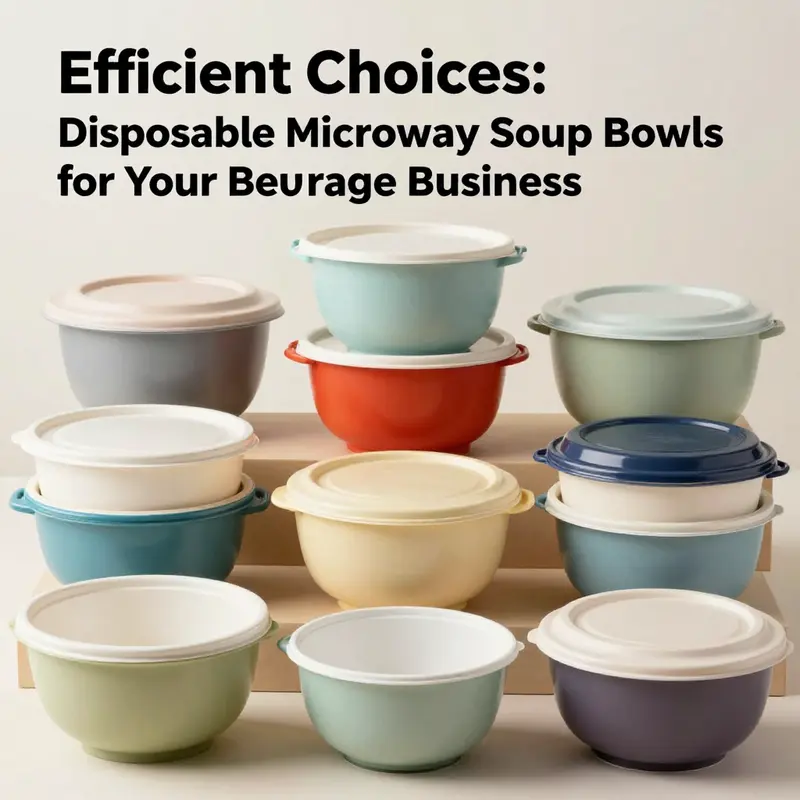
A practical look at disposable microwave soup bowls shows how material choice, design, and end of life shape everyday reheating. Paper based bowls made from food grade paperboard and moisture resistant coatings are common in takeout and office settings. Coatings such as PLA and PE influence liquid retention and end of life outcomes. PLA coated bowls are marketed as eco friendly since they can be composted industrially under proper conditions; PE coatings provide excellent leakage resistance but present different disposal options. Both enable microwaving without soggy paper, though heat retention varies.
Plastic bowls, typically polypropylene, offer heat tolerance and durability; many PP bowls are transparent which helps see the soup. They resist leakage and handle repeated reheating. But PP is not biodegradable and life cycle emphasizes reuse rather than single use.
Borosilicate glass stands as premium reuse option; high thermal resistance; crystal clear surface provides visibility and non reactive. However, glass is fragile and not suitable for disposable contexts; best used for reusable serveware that moves from freezer to microwave or oven. For venues prioritizing sustainability through reuse, glass becomes part of a longer term strategy that reduces waste and supports a more circular approach to dining ware.
Beyond the core materials, design elements such as vented lids and leak proof designs help manage steam and keep serving areas tidy. Built in handles or textured rims improve grip when contents are hot. The lid quality often determines whether reheating is clean and simple in busy settings. In practice, the most effective disposable options blend a robust lid with a body that resists seepage and warping under heat.
Size matters as well; standard portions commonly fall in the 700 to 900 milliliter range, a balance between comfortable portions and manageability. A bowl at this size tends to retain heat long enough for a steady sip while leaving space for steam to vent safely. Paper bowls are light and economical, while PP options often deliver greater heat retention.
Environmentally the topic grows more nuanced. Paper based options coated with PLA promise a more favorable end of life in theory, but real world outcomes depend on local waste systems. PLA coated bowls may require industrial composting facilities; in home composting or areas without such facilities, benefits may be limited. PE coatings provide moisture resistance but pose challenges for biodegradation. PP bowls, while not biodegradable, can be suitable for reuse where facilities exist. Each material carries its own environmental footprint and readers should weigh these against local waste streams and goals.
In practical terms, choosing the right disposable microwave bowl means aligning heat performance, handling, and environmental intent with the context of use. A busy office or cafe may prefer a combination of lightweight handling, leak resistance, and cost per serving, leaning toward paper or PP options with sturdy lids and clear labeling. A catered event aiming to minimize waste might favor compostable paper options or use a mixed approach with reusable vessels for longer service and disposable options for quick turnover. For households, considerations include microwave safety labels, appropriate portion sizes, and local disposal practices. The decision is rarely about a single characteristic but about how the entire package works together to deliver a safe reheating experience.
To illustrate a practical real world choice, consider a versatile lid equipped option widely used in take out: a disposable kraft paper bowl with lid. This design demonstrates eco friendly intent wrapped in a simple, microwave ready package. For a concrete reference to this category, you can explore a product variant that emphasizes lid integrity and spill resistance in a disposable, compostable framework. Disposable Kraft Paper Bowl with Lid illustrating how such a bowl can support practical use and sustainability goals in a single package.
As this chapter threads together materials, heat behavior, and end of life, the disposable microwave soup bowl is not a monolith but a spectrum. Paper based coatings offer a light, often cost effective option with eco friendly potential, while polypropylene provides durability for handling in appropriate contexts. Borosilicate glass stands apart as a reusable, long lived option for environments that emphasize reuse. The choice depends on where, how, and why the soup is reheated: the office break room, the catering table, or the home kitchen. The next chapter will unpack safety certifications and labeling that help consumers navigate these choices with confidence, bridging practical use with regulatory clarity and consumer assurance.
Heat, Habits, and Footprints: The Material Story Behind Disposable Microwave Soup Bowls

Every disposable microwave soup bowl carries more than a simple shape or a single purpose. It is a careful compromise among heat tolerance, structural integrity, safety, handling convenience, and, increasingly, environmental responsibility. The material actually controls what happens in the microwave, how the soup behaves when it meets a hot plate, and what happens to the container after its final use. In a way, the bowl tells a partial story of modern eating rituals: the urge to reheat quickly, to serve neatly, to minimize cleanup, and to align with differentiated waste streams. To understand why some bowls perform reliably while others falter, we must look at the core materials that form their backbone. The common families—polypropylene, polystyrene, and paperboard with microwave safe linings—each bring a distinct set of advantages and constraints that ripple through safety, usability, and sustainability. Temperature is the enemy and the ally at once. A bowl must resist the intense heat of steam and boiling liquids without warping or releasing unwanted substances, while still feeling light enough to carry from office pantry to desk. It must seal leaks and allow steam to escape in a controlled way to prevent pressure buildup, yet remain comfortable to grip with gloved hands or a sleeve. These are not mere preferences; they are nonnegotiable design criteria that shape the lifecycle of every disposable microwave soup bowl.
Among the most common materials, polypropylene stands out for its robust heat resistance. Polypropylene can typically withstand temperatures up to roughly 115 degrees Celsius, a threshold well above the hottest soups you might reheat in a household microwave. This high heat tolerance translates to minimal risk of warping, softening, or deformation during a standard reheating cycle. Polypropylene bowls can be engineered with reinforced rims and thicker walls that resist denting, ensuring stable handling when the liquid inside is near boiling. They also tend to be chemically stable, with a low propensity to leach additives under typical microwave conditions. In practice, this combination supports both safety and durability, making PP a favored option for bowls that are designed to be single use in high-volume settings or, in some cases, reused a few times in controlled environments. The material’s strength and light weight make it a reliable default when speed and reliability take priority over other considerations. From a food-safety perspective, polypropylene is widely regulated and tested to meet food-contact standards, which helps reassure both operators and consumers that heating will stay within safe bounds and that no harmful residues will migrate into the soup.
Polystyrene, particularly the expanded variety known for its insulating properties, has a very different set of tradeoffs. EPS bowls are lightweight and inexpensive, which has historically made them popular for single-use soup service. They insulate well, so the soup stays hot for longer, a benefit in catering or when portions might sit for a short while. However, the heat tolerance of polystyrene is more limited, with performance that can deteriorate as temperatures climb past 200 degrees Fahrenheit (about 93 degrees Celsius). Prolonged exposure or higher heat can cause deformation, slight melting, or warped rims. The insulating value and cost efficiency come with environmental and health considerations that have grown in prominence. The industry has faced scrutiny over microplastics, disposal challenges, and the potential for heat-related leaching when misused. In many circles, the use of EPS for heated foods is now approached with caution and, in some markets, with regulatory restrictions or bans. The result is a more nuanced position: EPS remains a practical option for cold or lukewarm servings or very short reheating intervals, but it is less favored for hot soups that demand repeated microwaving.
Paperboard with microwave safe linings represents a distinctly different approach. Paper-based bowls bring a sustainability narrative that appeals to many operators and consumers who seek a lower overall environmental footprint. These bowls rely on a structural paperboard body paired with a microwave safe lining—often a thin plastic film such as PLA or polyethylene—that provides barrier protection against liquid seepage and helps maintain the integrity of the outer layer during heating. The lining is carefully designed to resist warping, cracking, or delamination when exposed to steam and heat, while the outer paperboard provides the necessary rigidity for handling and stacking. A growing portion of these designs aim for compostability, using plant-based bioplastics or moisture barriers that are compatible with industrial composting streams. Yet the story here is nuanced. While compostable coatings and plant-based plastics improve end-of-life outcomes in the right facilities, they can complicate recycling. The same liner that prevents leakage can hinder recycling streams if it is not compatible with the dominant recycling system in a given region. Still, with proper labeling and a clear understanding of local waste infrastructure, paperboard bowls can deliver a compelling combination of strength, heat resistance, and environmental alignment. Their performance under microwaves hinges on precise engineering: the liner must resist heat and prevent migration of flavors or dyes while avoiding scorching or over-softening of the paper layer. In practice, this material class shines in settings that prioritize sustainability without sacrificing the quick reheating and clean service that modern users expect.
Beyond these main families lies a broader landscape of options that address special requirements. Bagasse bowls, made from sugarcane fiber, exemplify a shift toward renewable, compostable materials that can tolerate typical microwaving when properly designed. They offer good stiffness and a tactile, premium feel while avoiding petroleum-based polymers. Yet their heat tolerance can be more variable than PP and their suitability for extended microwave use depends on the exact formulation and coating. Divided bowls or compartments, often constructed from polypropylene or foam, present another niche. They can keep flavors separate and avert cross-contamination when a meal includes multiple varieties of soup or accompaniments. However, the use of foam in microwave bowls is widely discouraged or prohibited in many markets due to chemical leaching concerns and waste-management considerations. The overarching pattern is clear: the more the bowl emphasizes heat resilience and leak protection, the more delicate the balance with environmental goals becomes. Each material brings a unique footprint, and an informed choice means weighing heat performance, safety assurances, handling ergonomics, and lifecycle impacts in tandem.
From a practical point of view, the typical portions reheated in these bowls fall within a practical range—roughly seven hundred to nine hundred milliliters for a standard serving. This range informs thickness, rim geometry, and the presence or absence of venting features. Lids with venting systems are increasingly standard, designed to allow steam to escape without spattering or creating a vacuum that stresses the container. The right combination of lid design, material rigidity, and heat tolerance minimizes the risk of leaks while maximizing user convenience. When a lid is too tight or the walls are too flexible, little issues can escalate: a small buckle from steam pressure can become a spill, or repeated microwave cycles can lead to micro-cracks that compromise integrity over time. The material’s response to steam, temperature fluctuations, and mechanical handling thus becomes a chain of cause and effect that influences every encounter a consumer has with a reheated soup.
With these considerations in mind, it is also useful to acknowledge the environmental conversations that have shaped material choices. Paperboard and bagasse offer stronger signals of sustainability in their end-of-life narratives, particularly when coated with compostable barriers and paired with clear disposal guidance. Polypropylene, while not always the simplest to recycle in every jurisdiction, is widely accepted in many takeout packaging streams and can be recycled where infrastructure supports it. Polystyrene remains a point of contention: its performance is compelling for insulation and comfort, but its environmental baggage—especially when mismanaged or exposed to high heat—has driven tighter regulation and shifting consumer expectations. The most thoughtful approaches blend performance with responsibility: selecting materials that meet safe heating criteria while communicating realistic disposal pathways to users. In the end, material choice is not just a technical decision; it is an expression of how a business or household aligns convenience with care for people and the planet.
A practical thread runs through these considerations. When readers or operators assess a bowl for home, office, or catering use, they should weigh not only the raw heat resistance and barrier properties but also how the product will be disposed of after use. A well-chosen bowl may be comfortable to handle, reliable during reheating, and still compatible with the local waste system. For those who lean into paperboard options, a quick route to better-informed decisions is to examine the lining and its stated compatibility with microwaving, as well as any certifications or labels indicating compostability or recyclability. For instance, a kraft paper bowl designed for take-away and equipped with a lid can be a practical intersection of form and function. See this example for context and a sense of the practical packaging choices that exist in the market today: disposable kraft paper bowl take-away kraft paper salad bowl with PET lid.
Beyond the specifics of materials, the chapter invites a broader reflection on how design intent shapes user experience. A bowl that remains rigid enough to hold up during transport but flexible enough to fold slightly as it cools will feel more reliable to a user who handles hot soup with care. A vented lid can reduce splatter, yet it must not compromise a secure seal when closed. The interplay of wall thickness, rim geometry, and the choice of polymer or fiber-based components drives not only performance in the microwave but also the ease with which a consumer can grip, lift, and pour. When these traits align with real-world usage patterns—office mornings, catering events, or home dinners—the result is a product that contributes to a smoother, safer, and more sustainable dining routine. This alignment is the heartbeat of material analysis: the science of what makes a disposable bowl not just usable, but predictable in everyday practice.
For readers seeking a practical window into the kind of packaging discussed here, there is a growing catalog of kraft paper bowls designed for take-away use that illustrate the balance between strength and end-of-life options. These designs emphasize sturdy construction while offering a path to composting in facilities equipped to handle plant-based coatings. The key takeaway is that the material choice matters not only during reheating but at every step from purchase to disposal. The best options provide clear labels about microwave safety, offer reliable leak resistance, and minimize environmental impact without forcing users to compromise on convenience. As industries evolve toward more sustainable packaging ecosystems, the dialogue about bowls and their materials will continue to narrow the gap between performance demands and responsible waste management. In the meantime, understanding the material landscape helps cooks, office managers, and event coordinators select the right vessel for the soup they serve, ensuring a hot, safe, and satisfying experience for all.
External resource for further reading on material properties and consumer-facing guidance is available here: https://www.alibaba.com/product-detail/Disposable-Microwave-Safe-Polypropylene-Soup-Bowls-16oz_1600487777051.html
null

null
Safe Heat, Clear Standards: How Certifications Shape Disposable Microwave Soup Bowls
When a warm bowl of soup is handed to you in a disposable vessel, the experience should feel seamless: it heats evenly, it doesn’t warp, and it won’t compromise your food safety. The reality behind that smooth user experience rests on a framework of safety standards and material science that most people never see. Disposable microwave soup bowls are designed not only for convenience but also for reliability under heat, and that reliability is built on the kind of third‑party certification that goes beyond a simple “microwave safe” label. In practice, the most critical benchmark is NSF/ANSI 51, a standard that scrutinizes food-contact equipment and materials to ensure they can withstand contact with hot foods without transferring unwanted substances or compromising integrity during use. A claim of microwave safety is helpful, but it is not enough—verification through a recognized certification body is what separates a truly safe option from a surface claim. The emphasis on certification is especially important in homes, offices, and catering operations where repeated reheating is common and the bowls encounter high temperatures, steam, and repeated cycles of use and cleaning.
To understand why certification matters, think of the journey from raw material to finished bowl. The heart of safety lies in the material itself. Bowls built from food‑safe polypropylene (PP) or high‑quality polyethylene (PE) are widely recognized for their heat resistance and chemical stability. These polymers are favored because they resist deformation and leaching under typical microwave conditions, and they are often labeled as both microwave and dishwasher safe, which gives kitchens an extra layer of confidence when bowls must be reused or rotated through busy service. In contrast, some disposable bowls rely on wax coatings or non‑certified plastics that can warp, degrade, or release subtle substances when heated. The risk is not just a single harmful chemical but a drift of materials away from food safety standards with repeated use or when exposed to the highest microwave intensities. The distinction is not merely academic; it translates into everyday outcomes—your soup remains the same color, aroma, and flavor, and the bowl maintains its shape long enough to be stacked, transported, and disposed of without creating a safety concern.
For eco‑minded buyers, the material story becomes more nuanced. Paperboard bowls with biodegradable coatings, PLA‑based layers, or bagasse (sugarcane fiber) composites offer compelling sustainability benefits. Yet, even these greener choices must be evaluated for safety under heat. Many compostable or biodegradable designs claim microwave compatibility, but their certification may hinge on different standards—often ASTM D6400 or similar compostability criteria rather than food‑contact safety alone. The takeaway is that a fully credible option should carry clear labeling indicating both microwave suitability and compliance with recognized safety or compostability standards. In everyday terms, a bowl can be compostable and safe to heat if it has passed the appropriate certifications and if the coating and fiber matrix do not degrade into the food during heating.
The certification discussion also touches the practical realities of use in varied environments. In an office break room or a busy cafeteria, bowls may be reheated, stored hot, or carried across spaces while hot. The venting design of the lid, the robustness of the seam, and the integrity of the surface under steam are not merely convenience features; they are safety features. Leaky lids or warped sides can cause spills that reach surfaces or hands, creating additional risk that a consumer would rather avoid. Therefore, the emphasis on durable, documented performance under heat extends from the polymer choice to the overall design that supports safe handling, efficient venting, and reliable sealing. On the sustainability side, the market increasingly rewards products that are both certified for food safety and clearly labeled for end‑of‑life decisions. A bowl that is easy to recycle or compost, without compromising safety during heating, represents a convergence of practical kitchen needs and responsible waste management.
With the core material and design considerations in mind, it is also essential to distinguish between generic safety labeling and certified compliance. A “microwave safe” label can be comforting, but without third‑party verification, it offers limited assurance. NSF/ANSI 51 certification, for instance, involves rigorous testing of materials in direct contact with food and under real‑world temperature scenarios. It confirms that the bowl or container does not migrate harmful chemicals into the food during heating, and it also implies a level of durability suitable for repeated use in a controlled environment. In practical terms, this distinction matters most when bowls are used in settings where multiple cycles of heating are routine. A certified option reduces the risk of unexpected changes in color, odor, or texture of the soup, and it supports safer handling across a spectrum of service contexts—from a heated lunch in an office to a chilled display that transitions into a warm‑serve station.
When readers weigh the trade‑offs, the narrative often returns to a simple truth: safety and sustainability are not mutually exclusive. A bowl that carries NSF/ANSI 51 certification plus a robust material profile—such as PP or PE—offers a reliable baseline for safe microwave use. If choosing a greener path, one can select paperboard or bagasse alternatives that carry clear safety and compostability certifications. It is worth noting, too, that even among green materials, there can be a range of performance. Some plant‑based options perform well in terms of environmental impact but require careful heat management to prevent softening or degradation. Others are engineered to deliver better heat retention and structural integrity while still aligning with compostability standards. The common thread across these choices remains active verification: check the labeling, look for third‑party certifications, and understand what each standard covers. That knowledge turns a simple act—reheating soup in a disposable bowl—into a reliable procedure anchored in recognized safety practices.
For anyone who wants to ground the discussion in a tangible purchasing decision, consider exploring the broader category of disposable items designed for hot foods. A practical choice is to examine a kraft paper bowl with lid that balances strength, heat tolerance, and end‑of‑life considerations. Such a product can provide a compelling blend of convenience and environmental stewardship when paired with proper certifications and materials knowledge. If you’d like to explore options in that category, you can review a representative product page that emphasizes disposability, heat tolerance, and lid design, framed within the context of safe food contact. This kind of resource helps bridge the gap between technical standards and everyday buying decisions, ensuring that safety remains at the forefront without sacrificing practicality in busy kitchens or offices.
Ultimately, the core message is clear: safety standards and certifications should guide every choice about disposable microwave soup bowls. Look for explicit third‑party verification such as NSF/ANSI 51, inspect the materials for proven heat resistance and chemical stability, and consider the broader environmental implications of the packaging. The best outcomes come from products that honor both the science of safe heating and the responsibility toward waste and resource use. In other words, the ideal bowl is not just about keeping soup hot; it is about keeping safety intact from the moment the microwave begins to hum to the moment the bowl is emptied and disposed of—without compromising people, surfaces, or the planet. For those who want a concrete starting point on this journey, a sturdy, generic option may be found by following a practical link to a kraft paper bowl with lid, which offers a reliable blend of heat tolerance and convenient design while staying mindful of safety certifications. kraft paper bowl with lid. For further reading on formal safety standards, see the external resource linked below, which provides authoritative criteria for food‑contact equipment and materials: NSF/ANSI 51 Standard for Food Equipment. External resource: https://www.nsf.org/standards/nsf-ansi-51
Balancing Convenience and Responsibility: The Shifting Landscape of Disposable Microwave Soup Bowls
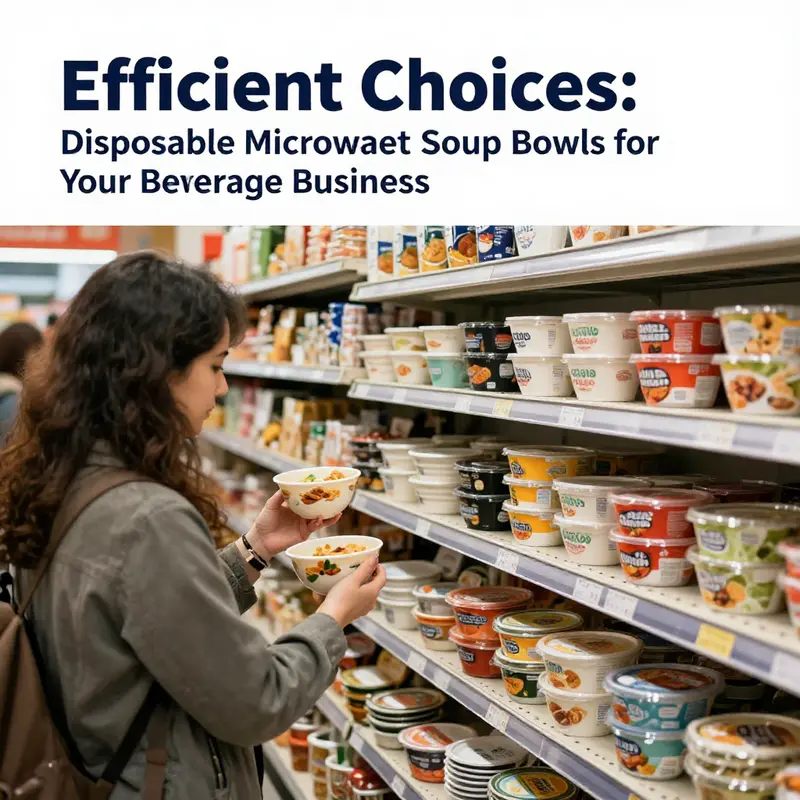
A bowl of soup heated in a microwave carries more meaning than a simple meal: it is a compact promise of convenience that must also honor safety, sustainability, and the evolving values of a diverse set of consumers. In the current market, disposable microwave soup bowls have moved beyond being mere vessels. They are evolving into an interface between daily life and responsible production, a pressure point where speed, safety, and environmental stewardship converge. The stories buyers tell themselves about these products are shifting in real-time, weighted by lived experience in homes, offices, and quick-service settings where a hot bowl represents both nourishment and a choice about how waste will be managed after the last sip. The research tapers into view a landscape that is not merely about material performance, but about how a product category can innovate while respecting tighter regulations and more discerning consumer eyes.
Sustainability remains the anchor pulling the market toward safer, more thoughtful choices. Consumers are increasingly sensitive to the plastic footprint of single-use items, and this awareness is no longer a niche concern but a general expectation. The demand for biodegradable and compostable options—especially those made from plant-based materials such as PLA or molded pulp—has become a durable fixture in product development discussions. This shift is not merely decorative; it is reinforced by policy signals in major manufacturing regions. In China, for example, policy trends tied to broader environmental goals and a tightening stance on single-use plastics push manufacturers to pursue barrier coatings, compostable substrates, and alternative packaging architectures. The implication for disposable microwave soup bowls is clear: performance cannot come at the expense of environmental responsibility, and the market rewards solutions that thoughtfully balance heat resistance with end-of-life manageability.
Yet convenience remains a formidable driver. The modern rhythm of life—hectic commutes, flexible work arrangements, and a thriving takeout culture—creats a persistent demand for bowls that are genuinely microwave-safe, leak-proof, and easy to handle. The best designs minimize the friction of reheating. They offer reliable sealability to prevent spills in transit, ergonomic handling features for a quick and safe transfer from microwave to table, and labeling that clearly communicates safety credentials. In this context, the market seeks a harmony: a product that can confidently survive the chill of an office refrigerator, the heat of a microwave, and the practicality of a post-consumption disposal stream. The consumer who relies on these bowls wants to know that safety has not been sacrificed for speed, that coatings and materials are chosen to reduce the risk of leaching when heated, and that the environmental story makes sense within their broader values system.
This dual demand creates what analysts describe as a market gap—a space where brands can differentiate themselves not merely through cost or aesthetics but through the integrity of material choices. In practice, this translates to a heightened focus on heat-resistant coatings that are certified food-safe. It also means exploring barrier technologies that prevent flavor transfer, preserve the integrity of the soup, and avoid unwanted interactions with the container itself. The shift toward safer, more consistent coatings is driven by both consumer curiosity and regulatory scrutiny, as well as by a pragmatic understanding that repeat purchases hinge on predictable performance in microwaves and in storage. In other words, the present-day market rewards those who can deliver performance without compromising safety or environmental responsibility.
Premiumization is another salient thread. There is a growing expectation that even single-use products can offer tangible value beyond their immediate use. Consumers are drawn to features that reduce spillage, improve thermal insulation, and elevate the overall presentation of a meal in a disposable format. In response, manufacturers are layering value-added attributes into bowls without sacrificing recyclability or compostability. Aesthetic considerations are increasingly important too: color, texture, and form are not just about grabbing attention on a shelf but about enhancing user experience during the brief window when a hot soup is in play. The direction suggests a future where premium disposables become standard in higher-end takeout and catering contexts, offering a designed-in confidence that the product will perform as promised from first use to last.
Technology and manufacturing efficiency intersect with these trends in meaningful ways. Smart packaging concepts, even when applied to disposable products, contribute to consumer trust by providing clearer safety and environmental information, as well as batch-level quality indicators. Automated manufacturing processes improve consistency, which matters when a product is judged by heat tolerance and leak protection. From a supply-chain perspective, this technological bent also means faster adaptation to evolving regulatory requirements and consumer expectations. When a bowl can be produced with precise tolerances and verified coatings, brands can scale offerings that feel safer to buy, easier to dispose of responsibly, and resilient enough to withstand the rigors of daily use in homes and workplaces.
An important takeaway from the current dynamics is the enduring tension between convenience and responsibility. The dual demand has not created a simple compromise; it has spurred a redefinition of what a disposable microwave soup bowl can be. The most successful products are those that articulate a coherent story: they are designed for safe microwaving, they minimize environmental impact through compostable or recyclable materials, and they pursue performance enhancements such as improved insulation or better seal integrity without introducing complexities in the waste stream. This is not merely a packaging story but a broader narrative about how food service and home kitchens align with a world that is increasingly vigilant about waste and resource use. In practical terms, this means designers and manufacturers must address several intersecting questions: How do you maintain heat without adding heavy thermal mass that complicates disposal? Which coatings guarantee food safety during microwaving and still degrade responsibly at end of life? How can you clearly communicate safety and environmental credentials in a crowded market without overwhelming consumers with technical jargon?
The consumer behavior picture accompanying these trends adds nuance to strategic decisions. Today’s buyers are not passive recipients of packaging trends; they actively research labels, certifications, and the environmental claims that accompany a disposable product. They seek assurances that the materials have been tested for safety under microwave conditions and that the coating system does not leach harmful substances when heated. This consumer vigilance supports the movement toward transparent labeling and third-party certifications, which in turn nudges brands toward traceable supply chains and verified environmental performance. It also anchors a shift in the value proposition toward trustworthy, clearly defined sustainability claims rather than aspirational, ambiguous narratives.
In-office and catering environments offer another dimension to market dynamics. In these settings, the reliability of a disposable bowl can influence the efficiency of service, the cleanliness of the workspace, and even the perceived quality of a meal. A well-designed bowl with robust leak protection, stable handling, and a visually appealing surface can streamline workflows, reduce cleanup, and reinforce a positive brand impression for food service operators. For consumers who rely on delivery and heat-at-home occasions, the same attributes translate into a smoother reheating experience and less worry about mess or cold spots. The economic logic is evolving as well: premium features and sustainable materials can command higher price points, while improved manufacturing efficiency helps offset costs and keep prices accessible. The balance between price, performance, and responsibility is central to long-term market health, suggesting that the successful players will be those who harmonize these dimensions rather than prioritizing one at the expense of the others.
From a geographic and regulatory vantage point, the outlook merges economic opportunity with policy-driven demands for better stewardship of resources. Regions pursuing aggressive plastic reduction targets encourage innovations in plant-based materials, water-based coatings, and compostable substrates. This policy climate accelerates investment in R&D and ferries new formulations from concept to market more rapidly. It also creates a barrier to entry for less-resilient designs, as compliance costs rise and consumer expectations for verifiable safety intensify. The resulting market is likely to favor early adopters who can demonstrate real reductions in environmental impact while maintaining or improving performance. In such an ecosystem, collaborative approaches—between packaging developers, material suppliers, and food-service operators—become essential. After all, a bowl that is technically sustainable but impractical to use in many microwaves fails to fulfill its potential. Likewise, a bowl that performs beautifully but is not easily recycled or composted may be adopted in the short term yet rejected in the long term as regulations tighten and consumer values shift.
It is possible to glimpse the shape of the future in the convergence of these threads: a market where convenience is not a reason to overlook safety or environmental responsibility, where value is measured by more than cost per unit, and where the design of a disposable bowl can embody a small act of stewardship with each use. Brands that invest in safer coatings, more heat-tolerant materials, and clearer environmental labeling will likely lead the way. Simpler, more robust disposal options, such as compostable or curbside-recyclable inputs, may become standard, reducing the friction for consumers who want to minimize waste without sacrificing the ease of reheating soup at work or on the go. In this landscape, the disposable microwave soup bowl is not just a convenience item; it is a practical interface between daily life and a broader commitment to sustainable consumption.
For readers seeking a concise sense of the market’s current trajectory, a review of recent industry analyses emphasizes how the two dominant forces—convenience and environmental responsibility—are increasingly interwoven. The most compelling opportunities lie with products that deliver reliable microwave safety, strong spill resistance, and a clear, credible environmental story. The brands that can demonstrate heat-safe performance alongside verifiable end-of-life solutions will likely set the pace in the next wave of growth. This is a chapter about balancing promises made at the point of purchase with promises kept at disposal, and about recognizing that the most enduring value comes from aligning practical needs with a meaningful environmental ethic. As consumer expectations evolve, the category of disposable microwave soup bowls is poised to transform from a simple packaging choice into a considered, responsible component of everyday meals.
Internal link for further reading on eco-friendly packaging options: disposable kraft paper bowl with lid. This resource highlights how material choices and lid designs influence both user experience and end-of-life considerations, illustrating the practical ways in which sustainability and performance can coexist in a single-use context.
External resource for market context and regulatory backdrop: https://www.researchandmarkets.com/reports/738514/disposable-bowls-market-report-2026-regional-analysis-and?utmsource=chatgpt&utmmedium=chat&utm_campaign=referral
Final thoughts
Disposable microwave soup bowls are indispensable tools for businesses aiming to blend convenience with quality service. From understanding the various types and their features to analyzing materials and exploring environmental impacts, each aspect contributes to informed decision-making. By prioritizing compliant products and staying attuned to market trends and consumer preferences, beverage chains, food trucks, and catering services can enhance their offerings while meeting the evolving expectations of their customers.