
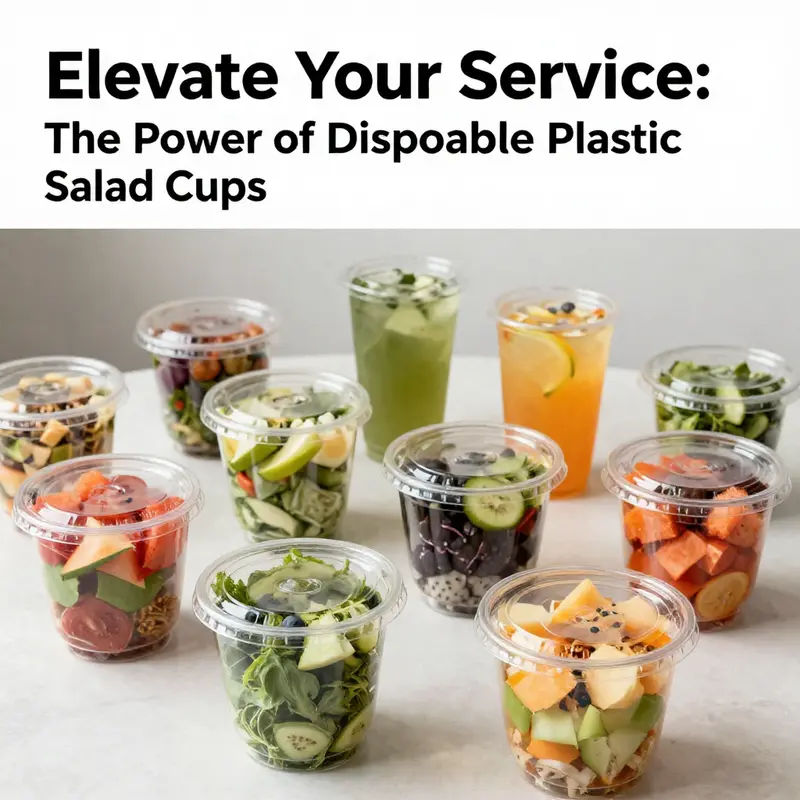
Disposable plastic salad cups have become indispensable in the food service industry, delivering unmatched convenience, hygiene, and cost-effectiveness. Whether you’re managing a bustling bubble tea shop, a trendy restaurant, a mobile food truck, or planning corporate events, understanding the myriad benefits of these single-use containers is crucial. In this article, we explore their key features, applications, performance limitations, and the environmental considerations that come with plastic salad cups, so you can make informed decisions that enhance your service offering.
Compact, Convenient, and Contested: The Modern Realities of Plastic Salad Cup Disposables
In the whirlwind of a modern kitchen, the plastic salad cup acts as more than a container: freshness, convenience, and predictable portioning, wrapped in a single-use shell. The chapter that follows doesn’t simply catalog what these cups are made of or how they look on a shelf; it traces how a seemingly simple object embodies a larger calculus of speed, safety, economics, and the mounting questions about waste and environmental responsibility. At its core, the plastic salad cup is a tool engineered for high-volume operations. It is designed to endure the logistics of a bustling lunch rush, the jostling of delivery, and the variable conditions of a buffet or catering event, all while keeping the salad’s appearance appealing enough to invite a second glance from a hungry patron. Yet behind that sheen of convenience lies a set of trade-offs that shape procurement choices, kitchen workflows, and post-use handling by customers who drop, carry, or unscrew the lid and reach for the next bite.
Material choice anchors much of this narrative. The most common workhorses for these cups are polypropylene and polystyrene. These polymers, classified as #5 and #6 plastics, bring distinct advantages: rigidity that resists shaping under moderate pressure, clear or translucent surfaces that spotlight the salad’s color, and a level of heat tolerance that accommodates chilled or room-temperature servings without warping. The safety dimension is integral to the story as well. Modern disposables in this category are manufactured to meet food-grade standards, with particular attention paid to avoiding substances that could migrate into food during storage. In practice, this means containers that are designed to hold cold salads, dressings, and fruits without imparting off-notes, while avoiding heat scenarios that could compromise integrity. The safety narrative also intersects with regulatory expectations. While the core proposition is simple—keep the contents fresh and visually appealing—the compliance framework surrounding food-contact materials adds a layer of due diligence for operators who must demonstrate that their packaging upholds established standards.
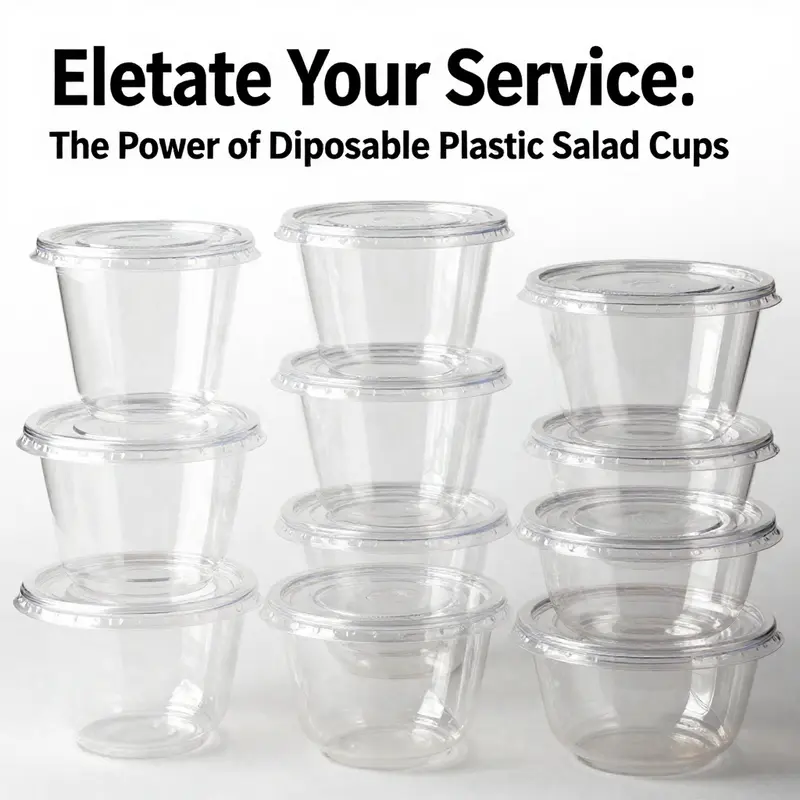
The design variations reflect a spectrum of service models. Classic standard bowls come in common sizes such as 12-ounce, 16-ounce, and around 500 milliliters, tailored for individual portions in fast-casual settings, lunch boxes, and buffet lines. Lidded cups add a practical dimension for transport, helping to minimize spills during delivery or takeout. Stackable configurations are more than a space-saver in the kitchen; they streamline warehousing and improve speed at the line, where every second counts in assembling meals that look as good as they taste. There are even dual-purpose formats that pair salad with beverages, integrating elements like straws and leak-resistant lids to support combo meals where a single cup serves more than one function. The result is a family of products that can be matched to the tempo of a business: the quick-serve counter, the catering event, or the grab-and-go retail display.
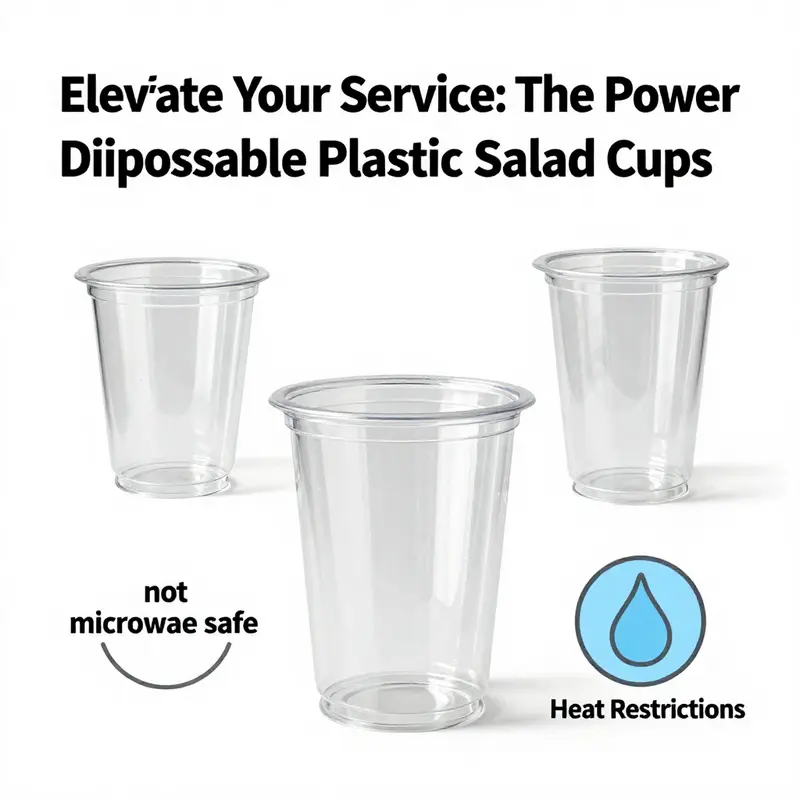
Yet the performance story comes with caveats. Although these cups hold liquids and wet ingredients without obvious leakage under normal service, they are generally not microwave-safe. The risk of warping or distortion increases with higher temperatures, and operators must steer clear of hot foods beyond roughly 120°F (50°C). This limitation matters in a world where customers increasingly expect warmed components or more complex, temperature-balanced packs. In practice, it pushes kitchens to separate hot components from cold in multi-item meals or to use dedicated vessels for reheating, thereby shaping how menus are composed and how assembly lines are organized. The durability narrative thus blends with procedural discipline: careful handling, proper sealing, and a recognition that single-use does not exempt teams from the basics of food safety and presentation.
Environmental considerations hover as a persistent counterweight to convenience. The disposability of these containers means vast quantities can enter waste streams, and the question of end-of-life is never far from the procurement decision. In many cases, the packaging is recyclable if it is made from PP or PET and if it reaches recycling streams clean and free of heavy grease or food residues. However, contamination with oils, dressings, or scraps can render containers non-recyclable, complicating the circular economy narrative and stressing the importance of thorough cleaning, separation, and consumer guidance at disposal points. The reality is nuanced: while some manufacturers offer recyclable options, the actual recyclability hinges on local infrastructure, sorting capabilities, and consumer behavior at the point of disposal. In the urgency to balance efficiency with environmental stewardship, operators increasingly weigh the trade-offs between the convenience of plastic single-use cups and the aspiration toward compostable or biodegradable alternatives, including bioplastics such as PLA where available. The practical takeaway is that packaging choices cannot be divorced from regional waste systems, consumer expectations, and the commitments of the entire supply chain.
The chapter’s broader context invites attention to how these containers are sourced and distributed. In the supply chain, bulk purchasing remains a practical lever for cost containment, especially in high-volume environments. Operators typically seek a reliable supply stream and predictable pricing—factors that drive interest in tiered pricing, volume discounts, and flexible terms with OEM suppliers who can tailor sizes, colors, and branding options to align with a business’s visual identity. The ability to customize—whether with a logo, color, or label—adds a marketing dimension to what is otherwise a functional item. In an industry that prizes speed and consistency, branding on the cup can simultaneously reinforce a restaurant’s identity and reinforce a takeaway experience that feels coherent with in-house presentation. From a management perspective, these cups also demand attention to compatibility with existing lids, sealing mechanisms, and the logistics of stacking and stacking density, which can influence warehouse organization and distribution planning.
The channels through which these cups reach operators are varied, spanning wholesale and retail platforms that serve both individual outlets and large-scale food service programs. In the wider market, these products appear in large-pack formats and are sold through mass-market retailers and B2B marketplaces alike. The practical implication for buyers is straightforward: access to a wide range of sizes and configurations, with varying degrees of customization and price points designed to accommodate everything from a single coffee shop’s daily needs to a multi-site catering operation. The purchasing decision, then, becomes a balancing act. It weighs upfront cost against reliability, considers the ease of sourcing across multiple sites, and weighs the environmental footprint against the logistical realities of fast-paced service.
An important dimension in this narrative is the ongoing conversation about alternatives. While plastic salad cups remain a staple for many operations, the market’s shift toward sustainability has encouraged exploration of packaging that reduces waste, improves recyclability, or offers compostable end-of-life options. In some cases, eco-friendly iterations use biodegradable materials, such as polylactic acid (PLA), or recycled content to lower the overall environmental impact. For those readers who are weighing options beyond the traditional PP or PS cups, a closer look at different packaging families can reveal meaningful contrasts in performance, cost, and end-of-life behavior. For readers curious about sustainable packaging alternatives, consider this option: disposable kraft paper bowl for food package with lid. This reference points toward a class of products that may offer stronger alignment with certain waste-management frameworks, depending on local facilities and consumer behavior.
The discussion would be incomplete without acknowledging the interplay between performance, safety, and consumer perception. A salad cup must appear clean and appealing; it should show off the greens and toppings in a way that invites bite after bite. The lid must seal securely enough to prevent leaks during transport while also being user-friendly enough to encourage easy opening at the point of consumption. The lid-and-cup interface, in particular, is a focal point for quality control: a snug fit avoids spillages in transit, while a straightforward peel-back or snap-on lid accelerates assembly lines during peak service hours. In a crowded food-service environment, all these micro-optimizations accumulate into tangible gains—faster service, fewer returns due to leaks, and a more satisfying customer experience. The packaging, then, is not just a box to hold salad; it is an operational tool that helps staff meet the expectations of speed and consistency, while also enabling the business to communicate its values—whether that means reliability, cost-consciousness, or a stake in responsible packaging.
In negotiation with these practical realities, the chapter also acknowledges the complexity of disposal and recycling. The recyclability of PP and PET depends on cleanliness and local program capabilities. A common pitfall is contamination: grease or food residues can defeat the recycling process, leading to more waste and higher post-consumer disposal costs. Operators, therefore, are increasingly attentive to the lifecycle of packaging—how it is produced, how it is used, and how it will be handled after the last bite. The literature on end-of-life suggests a broader ecosystem view: packaging is most effective when aligned with consumer habits, municipal programs, and the logistics of sorting and processing. In regions where EPS or other foams are banned or restricted, operators must adjust their choices with clear knowledge of what is accepted by local facilities and what alternatives can be credibly adopted without compromising service quality.
The practical takeaway for practitioners is clear. When selecting plastic salad cups for high-volume use, the decision should account for four interlocking factors: the material and its safety credentials; the performance characteristics under typical service conditions; the lifecycle considerations that drive end-of-life handling; and the supply-chain realities that influence cost, branding, and sustainability commitments. The story is not solely about material science or design. It is about how these cups fit into a broader system of food safety, customer experience, and environmental stewardship. As markets continue to evolve, operators will increasingly rely on data-driven choices about which packaging forms best support their menus, their service models, and their responsibilities to the communities they serve. The plastic salad cup, in its unassuming way, becomes a touchstone for a broader conversation on how the food-service industry can balance speed and sanitation with accountability and circularity.
External reference and context can help frame this ongoing dialogue. For readers examining disposal and recycling dynamics in more depth, there is value in consulting formal guidelines that address the nuances of food-service ware across jurisdictions. For instance, state-level and regional policy developments increasingly shape what is feasible in terms of material choice, recycling streams, and composting opportunities. This larger policy context interacts with kitchen practice, influencing which packaging formats are preferred in a given market and how operators communicate disposal guidance to customers. Understanding these dynamics is essential for anyone aiming to optimize both performance and sustainability in a high-volume operation.
In sum, plastic salad cup disposables remain a central convenience in contemporary food service, even as the industry wrestles with environmental questions and evolving waste-management capabilities. They are a product of material science, manufacturing discipline, and supply-chain design, optimized for speed, safety, and consistent presentation. At the same time, they invite ongoing evaluation of alternatives, packaging systems, and consumer-facing messaging about responsible use and disposal. The next chapter expands on how emerging packaging formats are being integrated into menus and service models, with attention to how design choices influence waste streams and cost structures without compromising the core benefits that have made disposable cups such a staple across restaurants, cafeterias, catering, and events. In the meantime, operators can glean practical guidance from the interplay of material characteristics, structural design, and the realities of end-of-life handling, recognizing that every cup chosen today can ripple through a facility’s efficiency and environmental footprint for years to come.
For further reading on disposal and recycling guidelines, including regional considerations and the impact of policy changes on packaging choices, see the California Department of Resources Recycling and Recovery resource updated in 2025. https://www.calrecycle.ca.gov/foodservice/eps-ban/
Clear Portions, Bold Presentations: The Pervasive Role of Disposable Plastic Salad Cups in Modern Food Service
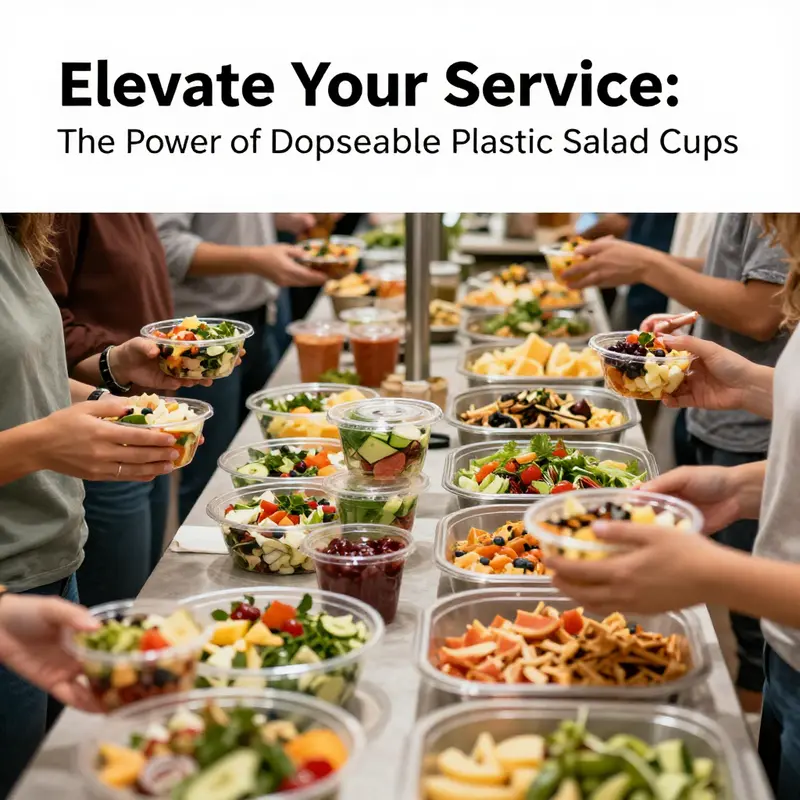
Disposable plastic salad cups sit at a quiet intersection of practicality and presentation in the modern food service ecosystem. They are not merely containers but instruments of portion control, speed, hygiene, and visual appeal that shape how meals are assembled, transported, and experienced. In high-volume settings, where every second counts and impressions matter, these cups deliver reliability that operators can depend on. Their rigid clarity allows guests to view the salad’s layers and ingredients at a glance, creating an appetite-forward narrative before the first bite. That immediate visibility is more than aesthetics; it influences portion accuracy, ingredient integrity, and even the perception of value. In practice, the cups are designed to meet the demands of mass service while preserving the delicate balance between keeping foods crisp, fresh, and safely contained. Their role becomes most visible when events unfold quickly—buffets are replenished efficiently, grab-and-go lines move with minimal bottlenecks, and kitchen crews can stage salads in advance without sacrificing quality. The cups’ design harmonizes with the realities of modern service: they are lightweight enough to minimize transport burdens, sturdy enough to handle a full portion without collapsing under the weight of a layered mix, and economical enough to justify frequent replenishment without eroding margins. The result is a packaging option that does more than hold food; it enhances the entire flow of a dining operation from prep to plate and finally to disposal, all while supporting a clean, organized, and efficient service culture.
Material choices underpin this utility, with polypropylene (PP) and polystyrene (PS) forming the core of many disposable salad cups. These plastics offer a balance of rigidity and moisture resistance that keeps dressings and sauces contained while the salad remains presentable. They are typically BPA-free and aligned with food safety standards in major regulatory regions, which helps operators reassure guests about safety and compliance. Despite their convenience, these materials are not a panacea for environmental concerns, so many producers emphasize recyclability where feasible and offer guidance on correct disposal, even as the market continues to explore more sustainable options. This is where the broader packaging ecosystem matters; the cups sit within a spectrum of containment solutions—from simple standard bowls to sophisticated, hermetically sealed lids and stackable designs—that together streamline operations without compromising safety or quality.
In catering and event services, disposable salad cups prove especially adaptable. Buffets and plated displays rely on quick replenishment, and the clear, rigid design of these cups ensures ingredients remain visually appealing as guests move through lines or mingling spaces. Their interiors are spacious enough to prevent crowding of delicate items like berries or greens, reducing the risk of bruising during display. Secure lids provide a tangible line of defense against spills during transport and display, a critical feature when salads travel between kitchens, banquet halls, and outdoor venues in a single day. For events with multiple courses or stations, the cups offer a consistent, recognizable format that can be used across menus, making service predictably streamlined even as the event scale grows. The lightweight nature of the design also contributes to lower transport costs and easier cleanup, a practical benefit that event organizers and caterers routinely weigh against other packaging options.
Fast-casual eateries and quick-service environments benefit from the cups’ ability to support grab-and-go model efficiency. Here, the cups function as more than containers; they are the interface through which customers experience portioning accuracy and menu presentation. The deep, wide forms popular in many 16-ounce variants accommodate generous layering—a feature that is essential for premium fruit salads, yogurt parfaits, or club-style layered salads that rely on distinct textures and colors to entice orders. Some designs integrate with lids that resist leaks and accommodate straws, enabling them to double as a compact, complete meal or beverage combo. The ability to pre-portion, seal, and hand over a ready-to-eat product reduces cash-handling time and minimizes the risk of spillage during transit from counter to customer. In these settings, the cups also support branding through consistent color, size, and lid configurations, which helps maintain a cohesive visual language across a restaurant’s grab-and-go offerings.
Dine-in environments and food stalls often utilize a broader range of accessory pairings with disposable salad cups. Condiment portions, dipping sauces, and small sides are frequently presented in companion cups or squeeze cups that align with the main salad cups in size and height, creating a unified display and easing portion control. The use of tamper-evident or peelable seals has grown, especially in contexts where customers expect assurance about product integrity from the moment they select their meal. In some cases, small condiment cups are paired with plastic spoons or forks to support a fully disposable, single-serve experience for patrons who dine in briefly or seek a convenient, portable meal. The physical stackability of these cups also proves valuable in bustling dining areas, allowing for compact storage under counters and swift re-stocking during peak hours.
On-the-go delivery services depend on the cups’ leak resistance and robust construction. For riders and couriers, a cup that resists spills and remains stable in transit supports on-time delivery and reduces the risk of mixed or spoiled salads. Nestable designs optimize vehicle loading, while durable walls prevent deformation during the rigors of transport, even when temperatures vary from kitchen to customer’s location. The cups’ light weight and compact form factor translate into lower packaging volume per order, a practical advantage when fleets scale up to meet growing demand. For consumers, these features translate into a reliable, predictable experience: a salad that travels well, lands with minimal mess, and can be opened and enjoyed without the need for additional containers or elaborate handling.
Across these contexts, the cups’ utility is amplified by thoughtful design variations. Standard bowls provide reliable, universal sizing suitable for many appetites and settings, from quick lunches to buffet portions. Lidded cups add a layer of security that is particularly valued in takeout and delivery scenarios, where the risk of spills or temperature loss can otherwise undermine quality. Stackable variants reduce storage demands in kitchens and warehouses, a practical boon for operators juggling limited space and high turnover. Dual-purpose cups, designed to accommodate both fruit salads and beverages, reflect a broader trend toward multipurpose packaging that minimizes waste and simplifies inventory. Each variation serves a specific operational need, yet they all share a common purpose: to preserve freshness, support exact portions, and present a visually appealing product that speaks to an audience increasingly sensitive to presentation and consistency.
As the service landscape evolves, questions about environmental impact remain central. While disposable cups offer undeniable convenience, their single-use nature invites scrutiny. The industry has responded with efforts to expand recyclability, transparent labeling, and the exploration of alternative materials where feasible. Operators balancing cost and sustainability may weigh the trade-offs between immediate operational efficiency and the longer-term goals of environmental stewardship. In practice, this means that managers and chefs must consider not only the immediate workflow benefits but also how a given cup aligns with local recycling streams, waste management practices, and consumer expectations around responsible packaging. Even when recycling options are available, education remains essential: staff must understand proper disposal procedures, and customers must recognize how to recycle or reuse containers in compliant ways.
The sourcing and standards landscape for disposable plastic salad cups mirrors the broader packaging supply chain. Materials are chosen for safety, performance, and cost, with manufacturers often offering a spectrum of polymers and finishes to meet regulatory requirements and catering needs. In many markets, compliance with food safety regulations—often aligned with FDA and EU standards—helps operators maintain confidence that their packaging will safeguard the contents throughout storage, transport, and display. While the core design remains simple, the journey from raw material to finished cup involves precise specification of wall thickness, lid compatibility, and stackability, all of which influence yield, shelf life, and the ease of integration into existing workflows. Operators frequently source in bulk to leverage cost efficiencies, mindful that per-unit costs drop with volume and that stable supply chains reduce the risk of last-minute substitutions that could disrupt service.
To integrate these cups effectively into a broader packaging strategy, many operators consider how they relate to other disposable and reusable options within their portfolio. Paper-based bowls, for instance, are often explored as a warmer, compostable alternative in contexts where customers preference leans toward sustainability. The choice between plastic and paper packaging frequently hinges on performance requirements—such as moisture resistance, stacking tolerance, and lid compatibility—as well as consumer expectations around convenience and environmental impact. In practice, the decision is not binary; it is part of a holistic approach to packaging that weighs the entire guest experience, from the first glimpse of a salad on display to the moment the last bite is enjoyed and the container is disposed of.
For operators seeking to optimize their packaging ecosystem, insightful examples can be found in the broader design landscape that includes diverse packaging formats. A contemporary focus on modular, reusable, and recyclable options encourages experimentation with formats that minimize waste while maintaining the integrity of the food and the speed of service. In this context, disposable plastic salad cups are best viewed not as a standalone solution but as a responsive element within a larger system. They can be paired with compatible lids, sleeves, and display units to create compact, efficient presentation lines at buffets and point-of-sale counters. By aligning cup choices with the specific demands of each service channel—whether a bustling campus cafeteria, a premium buffet, or a busy chain’s grab-and-go counter—operators can deliver consistent quality and a satisfying consumer experience without sacrificing efficiency.
The practical realities of managing these cups extend into procurement and inventory management. Bulk purchasing remains a cornerstone strategy for reducing unit costs, provided that storage conditions and shelf life are carefully managed. The durable nature of the containers reduces the likelihood of damage in transit and during handling, yet it also requires attention to how they are stacked and stored to prevent warping or deformation in extreme environments. Kitchens and warehouses benefit from standardized shapes and sizes, which simplify ordering, receiving, and restocking. When teams standardize on a select few configurations—such as a range of standard bowls with one or two lid types—the operational workflow becomes more predictable, training becomes simpler, and service speed improves. In fast-paced operations, predictability translates into fewer mistakes, faster line movements, and happier guests.
From an environmental and consumer perception standpoint, the ongoing dialogue about disposable packaging emphasizes transparency and accountability. While these cups are convenient and widely accepted for their hygienic advantages, customers increasingly expect clarity about disposal options and the lifecycle of packaging materials. Suppliers and operators respond with clear labeling, accessible recycling guidance, and, where possible, connections to waste streams that support recovery and reuse. This cultural shift places packaging choices within a broader narrative about sustainability, responsibility, and the shape of the future food-service landscape. Although not a complete solution to waste concerns, the continued innovation around recyclable options and better end-of-life handling represents meaningful progress toward packaging systems that honor both operational needs and environmental stewardship.
In sum, disposable plastic salad cups occupy a central position in the modern food service playbook. They enable precise portioning, rapid service, secure transport, and visually appealing presentation across a spectrum of service models—from catered events and high-volume buffets to quick-service counters and on-the-spot dining. Their continued evolution—through refinements in lid design, stacking efficiency, and material chemistry—reflects the industry’s commitment to marrying practicality with safety, aesthetics, and responsibility. As operators increasingly seek to balance speed and quality with sustainability, these cups will remain a key component of the logistical choreography that keeps food moving from kitchen to customer with consistency and grace.
For readers seeking a deeper dive into the technical standards and the broader philosophy behind disposable salad cup usage, a comprehensive analysis is available that explores standards, composition, and applications in 2026. This resource provides a structured framework for understanding how materials, design, and regulatory considerations intersect to create reliable packaging solutions for salads and related products. See external reference: https://www.plasticsnews.com/food-packaging/disposable-salad-cup-standards-composition-applications-2026.
Internal reference for packaging design considerations: to explore compatible packaging formats that complement disposable salad cups, consider a broader range of container systems such as the following option: disposable-octagonal-box-restaurant-food-kraft-paper-packaging.
Note on sourcing and practical implementation: operators should evaluate not only per-unit costs but also the lifecycle of the packaging, including storage, transport, handling during service, and end-of-life disposal. The most successful packaging strategies integrate robust quality assurance, consistent supply, and alignment with the operation’s sustainability goals. In the end, the goal is to ensure that the packaging supports the guest experience—display, portion accuracy, and safe transport—without introducing unnecessary friction into the service workflow.
Beyond Convenience: Navigating the Real-World Performance of Disposable Plastic Salad Cups in Professional Kitchens
Disposable plastic salad cups have become a quiet backbone of modern food service. Their role goes beyond a simple container; they are a touchpoint between speed, safety, and presentation in environments that must serve dozens, or even thousands, of meals with consistent quality. Yet within that veneer of convenience lie performance limitations that can ripple through operations, affect guest perception, and push managers to balance cost, practicality, and sustainability. Understanding these limits is not about lamenting a single weakness, but about recognizing where the design and material choices—typically polypropylene (PP) or polystyrene (PS)—meet, or sometimes miss, the nuanced demands of real-world service. In many cases, the same cups that enable grab-and-go elegance at a brunch buffet or a busy café can prove less-than-ideal when a menu leans heavily on dense ingredients, layered textures, or high-volume throughput paired with exacting presentation standards. The conversation about performance, then, is as much about choosing the right tool for the job as it is about choosing the right waste stream for the job after service ends. It is also a reminder that, even with BPA-free and safety-compliant designs, the ultimate test of these cups is how well they harmonize with the food, the handling chain, and the expectations of guests who judge a dining experience as much by its packaging as by its contents. In this sense, the performance limitations are not mere quirks; they are practical constraints that influence menu planning, packing strategies, and the aesthetics of a brand’s on-the-go identity.\n\nOne of the most immediate and visible limitations relates to structural strength and tactile quality. In the pasteurized bustle of a cafeteria line or a catering setup, cups must feel sturdy enough to convey a sense of value even before the lid is snapped into place. Cheaper or thinner-walled variants can feel flimsy, and when a container is chosen for a themed event or a premium presentation, that thinness becomes conspicuous. The wall thickness does more than influence a tactile impression; it shapes the cup’s ability to withstand the dynamic forces of service. Lightweight walls are more susceptible to warping under heat, pressure, or rough handling during transport from kitchen to service area. The result is not just a practical concern—leaks or spills can undermine a guest’s trust in the product’s reliability—but also an affective one. Visual heft matters. A cup that looks as fragile as it feels can cast an unintended shadow over the perceived quality of the contents, especially when color, texture, and dressing create a vivid, layered presentation in a glassy compressed form. For events with elaborate plating or a color story, the container’s perceived durability can be as important as its functional integrity. In such contexts, the choice between a more robust wall and a lean, cost-saving option becomes a balancing act between budgetary discipline and the visual language of the experience.\n\nA second dimension of performance emerges when heavy, dense, or layered foods are involved. A salad cup is not simply a vessel for greens; it is a carrier for textures, toppings, and dressings that, in combination, can exert considerable load on the container. While standard cups perform well for light salads with light dressings, they encounter real limits when the payload shifts toward densely packed ingredients or layered desserts masquerading as salads. The design intent of many plastic cups favors volume and convenience over structural rigidity under stress. When ingredients settle or press downward, there is a real risk of tipping or deformation, particularly if the cup is at the upper end of its capacity or if the contents include thick dressings that add weight and viscosity. A spill at the handoff point—during delivery, buffet service, or a quick grab on the go—has consequences that extend beyond a single plate. It can disrupt a line, dampen the dining experience, and create extra cleanup overhead that eats into margins. For operators who pivot between light, airy salads and more substantial compositions with starchy elements or dense toppings, the limitations of a single cup type become a clear operational constraint. The recommendation is not to abandon disposables for all heavy applications, but rather to tailor selections to the specific dish profile, sometimes pairing a sturdy lid with a stronger wall or considering alternative packaging for the most demanding items. In this sense, performance is a spectrum, not a binary yes-or-no, and it invites thoughtful menu engineering that respects the container’s capabilities as part of the dish’s overall design.\n\nStorage and transport inefficiencies form a third, quieter, but equally consequential category of limitations. The logistics of disposable packaging are not purely about the food inside; they also involve the space these cups occupy, how they stack, and how efficiently they can be moved through the supply chain. Compared with reusable options, disposable plastic cups asked to perform at scale often demand greater storage footprint and more handling steps. Stackability varies by design, and not all cups are equally forgiving when it comes to tight storage, palletization, or rapid replenishment cycles. In high-volume settings—catered events, large office campuses, or busy cafeterias—the cumulative impact of storage inefficiency can become a hidden cost factor. Space in a kitchen or warehouse that is not used for assembly lines or cold storage is space that could be used for ingredients or finished products; the opportunity cost can be high, particularly during peak seasons. Efficiency in dispensing, portioning, and restocking becomes a choreography. The simplest cups, with their thin walls and modest stacking geometry, may save per-unit costs but demand more careful handling and forethought in logistics. Conversely, cups engineered with more robust walls and more deliberate stacking profiles may incur a premium, yet yield savings elsewhere in the system through reduced breakage, easier inventory management, and fewer return trips for replacements. In practice, the storage and transport dilemma often nudges operators toward mixed packaging strategies, using a combination of cup types tuned to the specific line items on the menu, the service model, and the throughput profile.\n\nAmid these material and logistical considerations, environmental concerns emerge as a systemic frame that colors every choice. It is not a direct performance trait of a given cup to be recyclable or degradable, but the environmental conditions surrounding its lifecycle influence the long-term viability of disposable packaging in an increasingly sustainability-aware market. The reality is that conventional disposable cups are not biodegradable in the short term, and their environmental footprint becomes most pronounced when recycling infrastructure is limited or unevenly distributed. In regions where efficient recycling streams or advanced material recovery facilities are not readily accessible, relying on single-use plastics compounds the environmental burden. The practical implication for operators is nuanced. On one hand, the immediate benefits of disposables—consistency, speed, and cost control—remain compelling under tight service requirements. On the other hand, the perception of environmental responsibility matters to guests and to brand narratives that emphasize stewardship. The challenge then is to align packaging choices with local waste management capabilities and to pursue design options that improve end-of-life outcomes, whether through recyclability, compatibility with curbside programs, or the exploration of compostable substitutes where feasible. This requires not only supplier conversations about material composition and recycling compatibility but also internal planning around procurement, inventory, and the end-to-end flow of packaging from kitchen to consumer.\n\nAmid these constraints, practical operators develop a keen eye for matching the container to the task. The decision calculus extends beyond price and flavor to encompass temperature tolerance, dressings, and the choreography of service. The materials used—PP and PS—are typically chosen because they handle cold or room-temperature salads and dressings with a reliable barrier against leaks and contamination. Yet the boundary conditions are explicit: these cups are not intended for microwave use, and exposure to hot foods above roughly 120°F (50°C) can warp or deform the cup. Dressings and ingredients that are viscous or highly liquid may pose additional leakage risks if lids do not seal perfectly or if the cup walls bow slightly under pressure. The cost-versus-performance equation is rarely static. In some situations, investing in thicker walls or more secure lids will reduce waste from spills and improve the user experience, making it easier to justify the higher per-unit cost for high-volume events or premium offerings. In others, the economics of replenishment and breakage may steer operators toward either a lighter-duty solution, or a different packaging family altogether for specific lines of business where presentation and durability are non-negotiable.\n\nIf the objective is to preserve the integrity of a well-curated salad lineup while maintaining efficient service, a pragmatic approach emerges: make informed, situation-specific packaging choices rather than relying on a single, one-size-fits-all solution. For instance, when the requirement is pristine presentation and secure transport for a diverse range of salads—greens, grains, fruit elements, and savory dressings—a robust, well-sealed cup can help maintain the dish’s integrity from kitchen to event. When speed and simplification of inventory are paramount, a lighter cup that performs well for lighter salads with gentle dressings may be preferable, provided it is paired with careful handling and disciplined service standards. In many operations, tools like lids with secure seals and stackable designs can alleviate some leakage and stability concerns, especially during transport. Yet every added feature carries a cost and a potential impact on the environmental profile. Balancing these trade-offs requires a clear understanding of the meal’s composition, the service context, and the intended guest experience.\n\nFor those who want a tangible alternative to consider in the broader packaging ecosystem, a shift toward paper-based or compostable packaging can be a strategic move. Paper-based options, with their natural aesthetic and potential for stronger rigidity, offer a different set of performance characteristics that can align better with particular menus or service contexts. One accessible example within the packaging continuum is the disposable kraft paper salad bowl with lid. This option demonstrates how operators can pivot to materials that still support a high-clarity presentation while offering different performance dynamics, such as enhanced rigidity and a different look and feel that can complement premium or artisanal menu narratives. For those curious to explore this path, the discussion in this domain can be guided by product families and supplier catalogs that emphasize lid-integrated paper bowls designed for take-out and display. See the disposable kraft paper salad bowl with lid for a concrete reference in the paper-based segment of the packaging landscape. disposable kraft paper salad bowl with lid.\n\nAs operators continue to refine their packaging ecosystems, the looming question remains: how far can disposable cups push the envelope before the constraints become operational bottlenecks? The answer lies not in erasing limitations, but in embracing them as a design and process constraint. It means carefully aligning cup selection with dish integrity, service speed, storage realities, and environmental goals. It means recognizing how the physics of liquids, the weight of dense ingredients, and the gravity of space constraints interact with the economics of bulk purchasing and the logistics of distribution. It means acknowledging that the best choice for one restaurant may not be the best for another, and that the most sustainable path often involves a portfolio approach: using a mix of cup types, lid configurations, and, where appropriate, alternative materials that better match the capabilities of a particular operation and its waste streams. In other words, the performance limitations described here are not mere caveats; they are a practical map. They guide the way teams design menus, stage service lines, and curate waste streams in a system that values consistency, speed, and responsibility in equal measure.\n\nThe conversation about plastic salad cup disposables, then, becomes a conversation about trade-offs and context. It invites every operator to ask pointed questions: What is the typical density of the salad we serve, and how might that change with seasonal ingredients? How much leakage risk is acceptable given our transport routes and handoffs? How do we balance the need for a visually appealing presentation with the realities of storage and recycling infrastructure in our region? And how can we craft a packaging narrative that resonates with guests who increasingly care about both convenience and sustainability? The answers will vary, but the underlying principle holds: understand the performance envelope of the chosen container, design around it, and use the packaging itself as a lever to deliver a consistently high-quality, accountable dining experience. As this chapter has explored, the strengths of disposable plastic salad cups lie in speed, safety, and uniformity—but those strengths must be tempered by a clear awareness of their boundaries. When operators approach packaging with that awareness, they unlock the opportunity to optimize menus, refine operations, and tell a more responsible story to guests who value both convenience and quality. External sources on packaging safety and guidance can provide additional context for how these choices align with broader food-safety frameworks and recycling realities. For further reading, see the FDA’s guidance on food-contact packaging materials. https://www.fda.gov/food/packaging-labeling-food-safety/food-contact-packaging-materials
From Linear Waste to Circular Practice: Reimagining the Environmental Footprint of Disposable Plastic Salad Cups
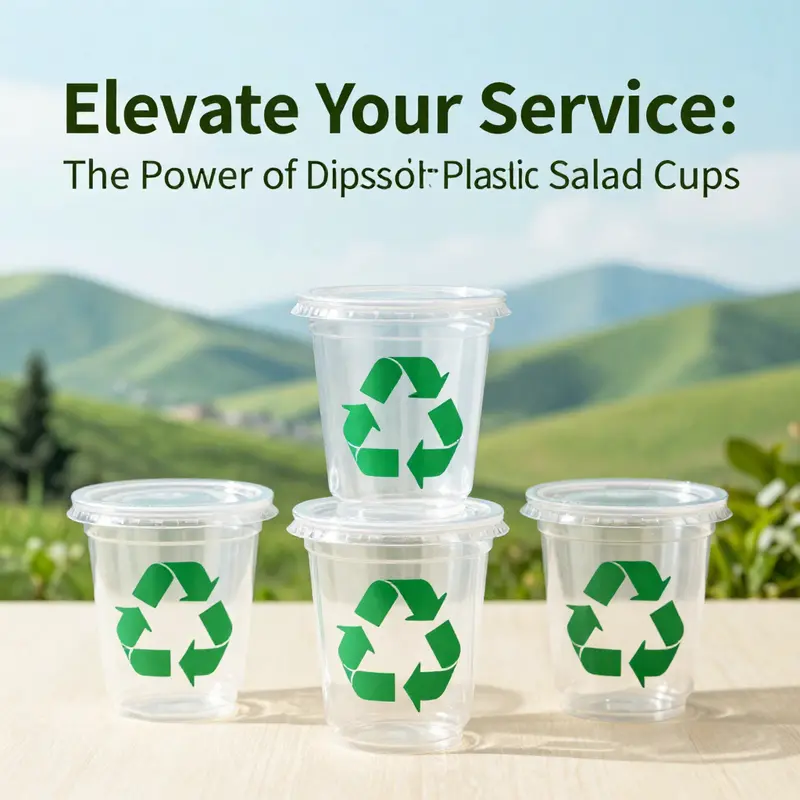
The disposable plastic salad cup sits at a crossroads where convenience intersects with environmental consequence. In kitchens, catering halls, and marketplace snack counters, these cups deliver speed, hygiene, and consistent presentation. They are engineered to withstand the cold and the brisk rhythm of service, to keep greens crisp and dressings contained, and to stack neatly in the back of a busy operation. Yet beneath the surface of their practicality lies a narrative of resource use, energy intensity, and waste by design. To understand the environmental footprint of plastic salad cups is to trace a chain that begins with raw material extraction and ends in the choices that communities, retailers, and cities make about reuse, recycling, and ultimately responsibility for what remains after the last bite is served. In the broad arc of modern packaging, disposable salad cups illuminate a central paradox: the attributes that make them so attractive in the moment often amplify costs for systems we share and depend on long after the meal is over.
The primary materials that feed the production of these cups—polyethylene terephthalate (PET), polypropylene (PP), and polystyrene (PS)—are all derived from fossil fuels. Each links back to energy-intensive processes, from the extraction of crude oil to the refining that yields polymers, and then to the polymerization, shaping, and finishing steps that create a product ready for cold foods and sauces. PET is valued for its clarity and strong barrier properties, which help preserve freshness and visibility. PP and PS offer similar advantages in terms of rigidity and cost, traits that make them staples in high-volume food service. Yet the very properties that enable reliability also anchor these cups to a lifecycle with substantial environmental costs: greenhouse gas emissions, resource depletion, and the energy and water embedded in each unit from cradle to grave.
Even when the single-use model appears to be a straightforward fix for efficiency, the broader system struggles to keep pace with the volume and fragmentation of plastic waste. Recycling, often positioned as the primary solution for disposable packaging, operates far from its theoretical capacity. Global plastic recycling rates hover at a relatively modest level, and the recovery rates for disposable packaging are markedly lower still. In practice, a large share of PET, PP, and PS cups end up in landfills or as litter, where they can persist for decades and centuries, posing risks to soils, waterways, and wildlife. The figure is not just a statistic; it translates into tangible harms as microplastics migrate through ecosystems and as urban and rural landscapes bear the burden of ongoing waste management.
A fuller picture emerges when we widen the lens to consider the lifecycle of a single-use cup—the embodied energy and water, the emissions from manufacturing and transport, and the end-of-life pathways that may or may not be accessible to a given community. Even in jurisdictions with robust recycling streams, contamination, sorting limitations, and market fluctuations can erode the environmental gains that recycling promises. In other words, recycling alone cannot fully compensate for the footprint created by a disposable cup, especially when the system is optimized for throughput rather than circularity. The result is a dichotomy between the convenience enjoyed by diners and the long tail of environmental impact that lingers after the plates are cleared.
Biodegradable or compostable alternatives, such as PLA, have been proposed as a bridge toward more sustainable packaging. However, the story of compostability is not a silver bullet. PLA and related materials often require industrial composting facilities that are not widely accessible across regions, and where such facilities do exist, contamination or mismatches in sorting can undermine the integrity of recycling streams. In practice, industrial composting capacity is uneven, and consumer behavior—navigating separate streams for compostables and recyclables—remains a persistent challenge in many food-service environments. The result is a cycle where promising solutions are constrained by infrastructure, geography, and the realities of daily operation.
The case for rethinking disposables grows sharper when we examine the broader system in which cups are used. A growing body of research highlights the gains from shifting from a linear “take-make-dispose” model to a circular economy that prioritizes durability, reuse, and responsible infrastructure. In closed-loop contexts—festivals, corporate cafeterias, or busy institutional kitchens—reusable cups can outperform single-use equivalents even when considering washing and logistics, provided the loops are well designed and efficiently executed. For polypropylene reusable cups, studies suggest that a reuse threshold of roughly 10 to 20 cycles can beat one-time disposables across climate change impact, resource depletion, and ecological toxicity. Even more striking are the findings for tightly organized loops, where a small number of uses—three to four—can yield better outcomes than disposables when cups are reliably collected, cleaned, and returned for service in a consistent, closed environment.
The practical implications for operators are significant. Embracing reuse demands a holistic approach that integrates product design, collection logistics, sanitation practices, and the physical footprint of the facility. It requires secure, easily manageable systems for returning cups, reliable cleaning technologies, and a robust schedule that minimizes breakage and loss. It also calls for a reimagining of the takeout experience itself. If a café can demonstrate that its cups participate in a circular loop, it can convey a stronger message about stewardship to customers who value environmental responsibility. The transition is not about a single material swap; it is about reconfiguring the entire packaging ecosystem to prioritize longevity and system-level efficiency over incremental material improvements.
Meanwhile, for consumers and businesses seeking to reduce environmental impact without overhauling entire operations, there are tangible steps that align with this broader shift. Choosing reusable options wherever feasible, supporting establishments that implement looped cup systems, and encouraging infrastructure that supports return and reuse can collectively reshape demand curves and waste streams. It is also important to scrutinize marketing claims around “eco-friendly” or “biodegradable” disposables. Labels often spotlight material properties in isolation rather than the full lifecycle, which can mislead stakeholders about true environmental performance. Transparency about end-of-life options, regional recycling capabilities, and the realities of reuse programs helps customers and operators make more informed choices that align with long-term sustainability goals.
In this context, the relevance of replacing disposables with durable, reusable systems grows clearer. The benefits extend beyond emissions reductions or resource conservation. They touch on resilience—creating community-scale loops that are less vulnerable to volatile markets for recycled materials and to the geopolitical dynamics that influence waste management. They also resonate with the moral and practical imperative to preserve ecosystems and reduce litter that jeopardizes habitat quality and public health. Greenpeace East Asia’s 2023 study underscores this logic by demonstrating that long-lasting cup systems, when designed and managed effectively, yield superior environmental outcomes in key impact categories. The essence of the argument is not to dismiss the value of recycling, but to recognize that material substitution alone cannot deliver the scale of impact needed without rethinking the overarching system of use, capture, and return.
For researchers, policymakers, and industry leaders, the takeaway is not to vilify plastics but to recalibrate the incentives that shape packaging choices. The future lies in durable, reusable solutions that are embedded in the daily rhythms of a service economy, where cups are circulated, sanitized, and reintroduced into service while minimizing losses and breakage. It is a move from waste management to resource management. In the short term, this means investing in dedicated reuse programs, improving the design of cups for repeated washing and handling, and building logistics that prioritize clean, efficient return streams. In the medium term, it means aligning incentives for suppliers, operators, and customers to embrace system-level thinking—crafting a future in which the ease of a single-use choice no longer dominates the environmental calculus.
Among the practical signals guiding this transition is the growing availability of packaging alternatives that speak to a broader value proposition. While not all contexts will switch away from disposables overnight, many operations can begin with pilots that test reuse in a controlled, consistent loop. Such pilots help identify bottlenecks in cleaning, tracking, and transport, while also revealing the real-world energy costs and water usage associated with repeated washing. The results of these pilots can then inform investments in more efficient dishwashing equipment, better cup integrity to reduce loss, and streamlined processes that minimize contamination and downtime. In parallel, operators can engage customers with clear communication about the environmental rationale behind these choices, inviting participation and feedback that helps refine the reuse program over time.
In articulating a path forward, it is essential to integrate insights from interdisciplinary work on sustainability and circular economy strategies. The science speaks to the inevitability of waste when consumption outpaces recovery, and the design imperative asks for products that stay in circulation longer, resist premature disposal, and travel through return networks with minimal energy demand. This is not a rejection of plastic or a call for blanket bans; it is a call for smarter systems that recognize the interconnectedness of production, consumption, and recovery. It is about designing cups that survive dozens of dishwashing cycles, about building dependable collection points at events and venues, and about ensuring that every cup can find a second or third life instead of a final resting place in a landfill or an environment where it cannot be captured and redirected.
For readers seeking a concrete node in the broader network of packaging choices, consider the linked resource that discusses a related approach to takeaway packaging. The discussion explores the broader landscape of reusable and recyclable options in retail packaging and offers a practical lens for evaluating what a transition to reuse could look like in a typical dining operation. salad bowl with lid This internal link points to a resource that frames the shift toward reusable systems within the wider conversation about sustainable takeout. While the linked page centers on kraft paper bowls, the underlying principle—designing for reuse, reliability in the supply chain, and clarity about end-of-life pathways—resonates with the core argument of this chapter: the most meaningful environmental gains arise not from a single material swap but from reconfiguring the system to prioritize durability, reuse, and responsible stewardship of resources.
Ultimately, the environmental impact and sustainability of disposable plastic salad cups must be assessed through the lens of systems thinking. The footprint is not contained within the cup itself; it expands across the supply chain, the waste infrastructure, and the civic choices that communities make about how to handle materials after use. The most effective path forward leverages both technological improvements and organizational changes that enable a circular flow of cups—cups that endure, can be efficiently cleaned, and circulate back into service with minimal ecological cost. In doing so, food service can preserve the benefits of convenience and safety while aligning with a planet that increasingly demands accountability for its waste streams. The challenge is substantial, but the trajectory is clear: a shift from disposable convenience toward durable reuse, supported by infrastructure, policy, and culture that value long-term environmental health as a core objective of modern food service.
External resource: https://www.greenpeace.org/asia-east/press/reusable-cups-environmental-impact/
Final thoughts
In conclusion, disposable plastic salad cups serve as a flexible and practical choice for the food service industry, providing features that align perfectly with the needs of fast-paced environments. Their applications extend across a wide array of settings, from takeout orders at bubble tea shops to catering events, allowing businesses to maintain high standards of hygiene and presentation. While it’s essential to acknowledge their performance limitations and environmental impact, ongoing advancements in recycling and material technology point toward a more sustainable future. As you consider your options for disposable tableware, remember that these cups can offer not just convenience but also a pathway towards operational excellence.