

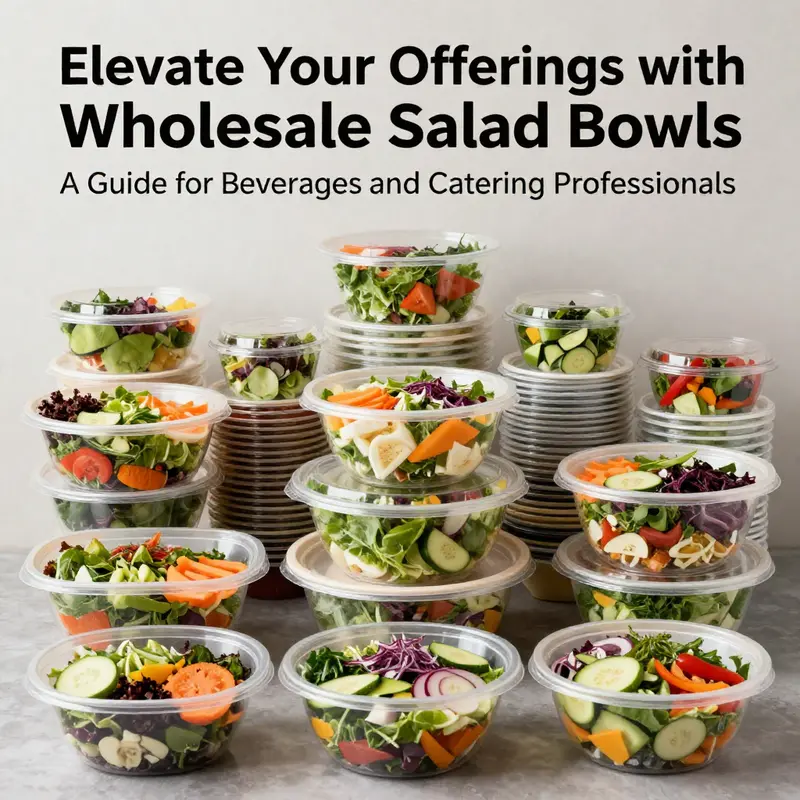
As food and beverage businesses expand their offerings to meet customer demands, the importance of quality serving solutions cannot be overstated. The wholesale salad bowl market is flourishing, thanks to an increase in consumer preferences for fresh, healthy options and the convenience of takeout dining. Whether you’re a bubble tea shop looking to diversify your menu, a restaurant aiming to provide a vibrant salad bar, or a catering service focusing on visually appealing, hygienic options, understanding the market’s diverse offerings is crucial. This article delves into the various types of wholesale salad bowls available, crafting connections to your specific needs, including disposable plastic models that are ideal for fast service, glass options that enhance presentation, durable stainless steel choices for commercial kitchens, and stylish ceramic and wooden bowls that attract a high-end clientele. Each chapter will illuminate how these products can uniquely benefit your business, illustrating how thoughtful selection can drive customer satisfaction and operational efficiency.
null
null
Tempered Glass, Timeless Presentation: Emerging Trends in Wholesale Glass Salad Bowls

Glass salad bowls have moved from a basic kitchen tool to a strategic asset for wholesale buyers who prize durability, presentation, and lifecycle value. In recent market observations, tempered glass bowls stand out for their ability to withstand the rigors of busy hospitality environments, including hotels, caterers, and airline-style meal service. The emphasis on reliability in high-volume settings reflects a broader shift in the wholesale salad bowl market: operators want long-lasting vessels that maintain clarity, resist impact, and present fresh greens or colorful salads with elegance. This is not about novelty alone; it is about translating form and function into operational efficiency and consistent guest experience. The core advantage of tempered glass is its demonstrated resistance to thermal shock and cracking under repetitive use. In a world where a single break can disrupt an entire service line, the ability of tempered glass to endure rapid temperature changes and handling from prep to plate makes it a compelling choice for bulk purchases. The 2026 overview of airline meal service, while not limited to one channel, underlines a practical truth: bulk buyers in travel-forward segments seek bowls that survive stacking, transit, and reassembly without compromising safety or appearance. The result is a clear preference for sets that combine robust construction with thoughtful design, enabling kitchens to prepare, portion, and present salads with minimal downtime between steps.
If durability is the first priority, modularity follows closely behind. Wholesale glass bowl sets are increasingly offered in multi-piece compositions that cover a spectrum of sizes, from small prep bowls to larger serving vessels. The value lies not just in the individual bowls but in the capacity to scale operations. A typical configuration often includes three or five pieces that can be mixed and matched for prep, storage, and presentation. Lids—usually plastic or silicone—are a common inclusion, enhancing storage and transport. This modularity allows restaurants, caterers, and event planners to streamline workflows, reduce the number of separate containers needed, and minimize the risk of mismatches between bowls and lids during busy service periods. In practice, that means fewer logistical hiccups when a last-minute catering order changes size or when a hotel kitchen pivots from a buffet to plated service.
Customization is another thread running through current wholesale trends. Buyers increasingly expect glass bowl sets to carry a brand’s identity through color-coordinated lids, subtle etching, or branded exterior textures. The ability to imprint logos or choose color-matched lids supports consistency across multiple outlets, reinforcing a chain’s visual language. For many operators, this is less about vanity than about consistency in guest perception. A well-presented bowl with a branded lid can reinforce an establishment’s commitment to quality from the moment the guest encounters the packaging at pickup or arrival. Customization often comes without sacrificing performance; tempered glass remains inert and non-reactive, preserving the salad’s flavor and appearance while delivering a premium aesthetic that high-volume buyers crave.
The aesthetics of glass bowls are not incidental. Aesthetics contribute to the dining experience, but they must be balanced with practicality. Textured surfaces, ribbed exteriors, and vintage-inspired silhouettes are trending, offering tactile and visual cues that elevate presentation on a hotel buffet or a plated course. These design elements give presentations an upscale feel while maintaining the practicality required in fast-paced service environments. Buyers who are refurbishing or expanding a dining program find this balance particularly attractive. They want a bowl that looks refined on the plate, yet can endure the repetitive handling of a busy pass, a round of takeout orders, or a multi-event catering schedule without losing its clarity or structural integrity.
From a procurement perspective, wholesale glass bowls are often positioned as a long-term asset rather than a disposable convenience. Their value proposition hinges on resilience, long service life, and the ability to withstand frequent washing and sanitizing cycles. In many hospitality settings, glass bowls are chosen for their inert properties; glass does not leach flavors or residues, and it handles hot and cold applications without compromising surface integrity. This makes tempered glass particularly attractive for menus that feature warm salads or hot toppings, provided care guidelines are observed. As buyers weigh options, they consider the total cost of ownership: upfront purchase price, expected lifespan, maintenance requirements, and the risk profile associated with breakage or chipping.
Market dynamics in wholesale glass bowls also reflect the broader push toward sustainable practices. Glass is fully recyclable and highly reusable, aligning with hospitality operators’ environmental goals and regulatory expectations in many regions. While plastic equivalents may offer lighter weight or lower upfront cost, they often require more frequent replacement and pose questions about reusability, scratching, and odor absorption. The trend toward durable, reusable glass aligns with a lifecycle mindset: invest in a set of bowls that can be repurposed across multiple menus and seasons, rather than replacing single-use items after a single event. This approach resonates with kitchens that manage large inventories and need reliable gear that holds its value over time.
In terms of cost and scalability, wholesale glass bowl sets are increasingly offered at competitive price points that reflect the efficiency of large-scale manufacturing and the built-in value of durability. A common market message is that a 5-piece glass salad bowl set can be purchased in bulk at a price well under a dollar per piece for the set when bought in sizable quantities. This pricing pattern makes glass bowls accessible to a range of operators, from mid-market hotels to large catering fleets. The affordability of bulk glass sets, combined with their durability, supports a compelling total cost of ownership argument for operators who previously favored lighter-weight plastics for their initial lower price but faced higher replacement and sanitation costs over time.
A key consideration for wholesale buyers is the certification and safety profile of glass bowls. Reputable suppliers often confirm compliance with food safety standards relevant to their markets, including evidence of inert materials and safe manufacturing practices. This is important not only for operator peace of mind but also for compliance with regulatory frameworks that govern food contact materials. Certified products help buyers meet internal quality standards and external audits, making tempered glass a preferred option for establishments that pursue rigorous safety and sustainability benchmarks. In a sector where repeat orders hinge on demonstrated reliability, the combination of durability, modular design, and a strong safety profile supports a steady demand for glass bowl sets across diverse dining contexts—from boutique restaurants to upscale event venues.
A practical element of this trend is the ongoing emphasis on storage efficiency and transport practicality. Glass bowls, especially when tempered, stack securely and resist breakage when wrapped or cushioned properly for shipment. The market has responded with packaging that protects delicate surfaces during transit while enabling easy unpacking and immediate use upon receipt. For operations that move between venues or host events at different locations, the ability to assemble a ready-to-use set quickly translates into meaningful labor savings and reduced risk of service delays. The design language—clean lines, clear surfaces, precise edges—also makes the bowls versatile enough to coordinate with a wide range of serviceware, menus, and table settings across multiple properties that share a common culinary program.
As buyers navigate the landscape, the question of how to integrate glass bowls with other materials becomes salient. Many operators see the glass bowl as part of a broader family of serveware that includes ceramic, porcelain, and even certain metal options. In luxury or fine-dining contexts, glass bowls often serve as the centerpiece of a sleek, minimalist presentation, while in more casual settings they pair gracefully with stoneware or wood accents to create a rustic or contemporary look. The ability to mix and match within a single service line provides flexibility for seasonal menus, themed events, and evolving brand aesthetics. The result is a nuanced decision-making process where tempered glass is favored for its durability and clarity, while other materials are chosen to enhance textural variety and mood through the dining experience.
From a sourcing perspective, the wholesale market for glass bowls has matured to accommodate bulk buyers who require reliable supply and predictable lead times. Buyers look for sets that come with clear manufacturing specifications, accurate tolerances, and compatibility with typical commercial dishwashing protocols. They also expect robust packaging that minimizes breakage in transit, especially when orders span long distances or involve air or ground freight. The ability to project inventory needs accurately, based on historical usage and event calendars, is a practical edge that large hospitality operators apply when committing to tempered glass bowl sets. In short, the glass bowl segment of wholesale serves as a linchpin for kitchens that aim to elevate presentation without compromising on efficiency or safety.
To bring this discussion back to concrete buying decisions, consider how a tempered glass set might align with your current program. If your operation values brand cohesion, a layered, modular approach with matching lids can simplify inventory management and reduce the risk of mismatched items. If you prioritize sustainability and long service life, tempered glass offers a durable alternative to disposable options and aging plastics. If your emphasis is on premium presentation, the textured or ribbed finishes and vintage-inspired silhouettes can elevate the dining experience while maintaining the practical advantages of glass. These considerations are not mutually exclusive; in a well-planned wholesale program, you can achieve a blend of durability, aesthetics, and operational efficiency that supports growth across multiple channels.
For buyers seeking a direct reference to broader bowl families that complement glassware in a wholesale catalog, a widely accessible option in the market is the wholesale salad-noodle bowl. This product family demonstrates how organizers think about name-brand consistency, cross-category usage, and branding opportunities without forcing a single material narrative. salad-noodle bowl can be a useful comparison point for understanding how buyers approach vessel design, even when the primary emphasis is on glass. It highlights how suppliers segment bowls by functionality—salad bowls for cold dishes, noodle bowls for warm or mixed dishes—and how lids, color options, and branding play into the overall value proposition. While the glass category remains a distinct choice for durability and presentation, the broader context of bowl families helps wholesale buyers gauge where tempered glass fits within a diversified serviceware strategy.
For researchers and practitioners who want a more technical understanding of tempered glass, a concise external reference offers a broader overview of the material’s properties, manufacturing considerations, and safety implications. External resource: https://en.wikipedia.org/wiki/Tempered_glass. This resource provides foundational context for why tempered glass is a preferred option in high-volume food service environments and how its properties translate into practical advantages on the front line of service. While the wholesale market continues to innovate with texture and form, tempered glass remains a stable baseline that supports long-term value, reliable performance, and a consistently impressive dining presentation.
In sum, the current trajectory for wholesale glass salad bowls favors durable, modular, and visually refined designs that deliver practical benefits across preparation, storage, and presentation. Operators seek sets that can be customized to reinforce brand identity, while still standing up to the daily rigors of busy kitchens and fast-paced catering. The blend of durability, aesthetic appeal, and scalable pricing makes tempered glass bowls a cornerstone of modern serviceware strategies for wholesale buyers, whether they are outfitting a boutique hotel, a large event operation, or an airline-style meal service program. As this segment continues to mature, buyers will likely see even more nuanced texture options, smarter lid configurations, and packaging innovations that protect value from factory floor to banquet hall.
Durable by Design: Stainless Steel Salad Bowls and the Wholesale Kitchen Ecosystem
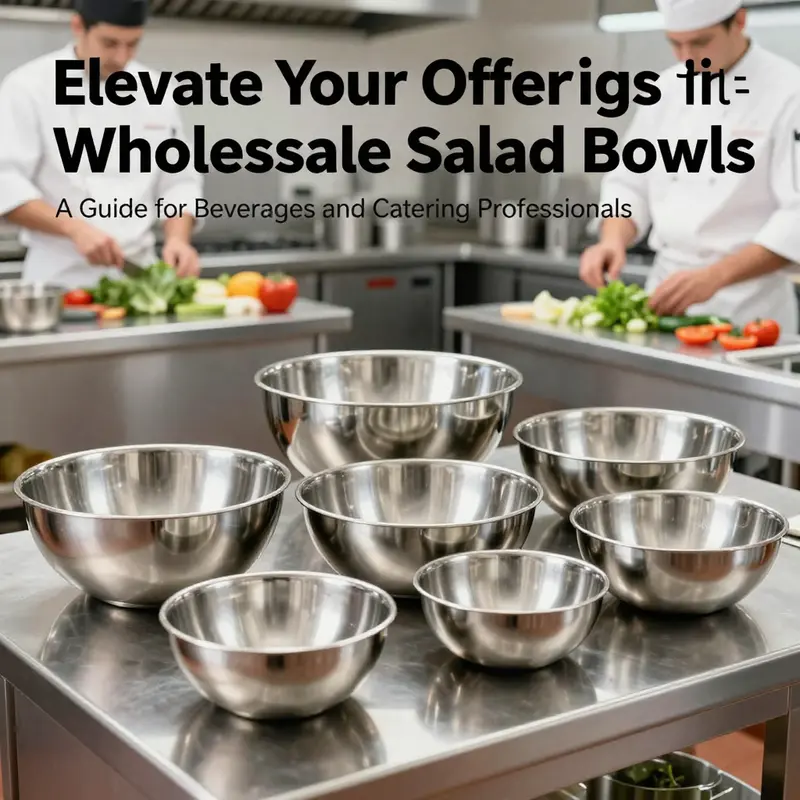
In the wholesale landscape that feeds hotels, restaurants, caterers, and mass-serving venues, the choice of salad bowls is more than a matter of taste or style. It is a calculation of durability, hygiene, lifecycle cost, and supply-chain reliability. Stainless steel salad bowls stand out in this calculus because they deliver a combination of resilience and performance that supports high-volume operations. They endure constant washing, frequent stacking, and rapid handling from prep to service without bending, cracking, or losing their structural integrity. This is not merely about resisting scratches or dents; it is about preserving the exacting standards that large-scale kitchens must sustain across dozens of shifts and hundreds of service events. When a wholesale buyer looks at stainless steel, they are not just purchasing a single item. They are investing in a batch of vessels designed to keep pace with the tempo of a busy kitchen, to maintain consistent food safety, and to minimize downtime caused by equipment failures or frequent replacements.
The material science behind stainless steel—typically the 300-series family—provides a key advantage: corrosion resistance that persists under a range of temperatures and cleaning regimes. In practice, that means bowls can withstand exposure to aggressive detergents, aggressive brines, and the occasional caustic spray without staining or pitting. The non-porous surface is a bulwark against bacterial harboring, making sanitation straightforward. In a setting where time is money, having a surface that is easy to clean, quick to wipe down, and compatible with high-temperature dishwashing saves labor and reduces the risk of cross-contamination in prepped salad stations. The absence of porosity also translates into consistent odor and flavor retention, preserving the integrity of herbs, dressings, and delicate greens across shifts.
From the wholesale perspective, the durability of stainless steel is tightly linked to cost of ownership. Plastic bowls may be cheaper per unit, but their lifecycle often requires more frequent replacement due to cracking, staining, or warping under hot or steam-filled conditions. Glass, while inert and visually premium, can be brittle and heavy, increasing breakage risk and handling costs. Stainless steel blends the best of both worlds: it is light enough to handle with ease in a fast-moving kitchen, robust enough to survive heavy stacking and unavoidable impacts, and hygienic enough to meet stringent food-safety requirements. The perception of quality is also bolstered in front-of-house service when guests encounter a gleaming, responsibly manufactured vessel. This impression matters in the wholesale-to-hospitality pipeline, where buyers look for equipment that signals reliability and professionalism to their own customers.
Beyond sheer toughness, stainless steel bowls offer practical design attributes that resonate with wholesale buyers who manage large inventories. The finish, whether a bright mirror or a brushed satin, can be selected to align with brand aesthetics or to minimize visible fingerprints in a high-traffic food court or buffet line. Finishes can also influence heat transfer during service, which matters when hot salads or warm components are kept in pass-through stations. A well-designed bowl will stack neatly with its peers, optimizing shelf space and per-carton loading while reducing the risk of jamming in transit or storage. Stackability is more than convenience; it is a logistical imperative for operators who rely on efficiency and predictability when restocking multiple outlets or filling bulk orders for events.
Lids and containment are an essential accessory pairing for wholesale stainless steel bowls. Lids enable secure, spill-proof storage, a feature especially valued by supermarkets tracking prepped ingredients and by caterers packing components for transport to event sites. The ability to keep a container closed between prep, service, and storage helps reduce contamination risk and maintain product quality in environments where temperature control and sanitation are critical. Wholesale buyers often seek lids that fit snugly, feature gasket seals, or include silicone rims that preserve freshness without scratching the metal surface. In practice, the combination of a durable bowl and a dependable lid becomes a compact, reliable system for ingredient storage and pre-portioned service, enabling kitchens to maintain organization amid the demands of large-scale operations.
Customizability is another key facet of the wholesale ecosystem surrounding stainless steel bowls. Suppliers in bulk can offer a range of sizes to accommodate various portion needs, from small prep bowls for mise en place to larger bowls for bulk mixing, rinsing, or fruit prep. Finishes can be selected to emphasize durability or aesthetics, with branding options such as laser etching or stamping to enhance marketability for private-label programs. Color variations are less common in stainless steel, but some buyers opt for coated or anodized accents to help staff quickly identify different prep stations or product lines. The ability to tailor dimensions, finishes, and branding helps wholesalers differentiate their catalogs in a crowded market and supports retailers seeking a cohesive look across their culinary equipment.
From a safety standpoint, stainless steel offers reassurance that aligns with strict hygiene standards. The material is non-porous, non-reactive with most ingredients, and resistant to corrosion that could otherwise harbor residues. The lack of porosity makes stainless steel easier to sanitize and less likely to retain odors. When paired with secure lids and reliable seals, stainless steel bowls support consistent food safety protocols across all phases of handling—from prep to display. This is particularly important for large hotels and catering operations that must demonstrate compliance under audit, industry certification programs, and regulatory scrutiny. The reliability of stainless steel in this regard reinforces a buyer’s confidence in their bulk procurement decisions, which is crucial when negotiating pricing, lead times, and service-level agreements with wholesale suppliers.
Sourcing stainless steel bowls at scale also presents a set of practical considerations that wholesale buyers must navigate. Direct relationships with manufacturers can yield better pricing, tighter quality control, and more predictable lead times, all of which are vital when planning dietary cycles, seasonal promotions, or multi-location rollouts. Buyers often evaluate suppliers on a few core criteria: material grade consistency, finish quality, dimensional tolerances, surface cleanliness, and the ability to deliver on schedule. Establishing clear expectations around batch testing, pre-shipment inspection, and packaging standards helps ensure that a bulk order arrives ready for use in a busy operation. In addition, many wholesale programs offer options for custom branding or labeling, enabling operators to project a unified brand experience across services—from banquets to casual dining venues to corporate cafeterias.
The supply chain for stainless steel bowls benefits from a broad base of manufacturers and distributors, which contributes to resilience in the face of demand spikes. Buyers can mix-and-match SKUs to optimize inventory spend and ensure coverage across cold prep, hot holding, and service lines. In practice, this means stocking a mix of core sizes with corresponding lids and perhaps a couple of specialty shapes that accommodate unique menu items or service styles. The wholesale pathway also suggests a strategic approach to packaging: bulk cartons, protective inserts, and standardized pallet configurations help streamline warehouse handling and reduce the risk of damage during transit. The result is a more predictable procurement cycle, with fewer mid-cycle shortages and fewer returns stemming from quality concerns. For sellers, the message is clear: offering a robust, scalable stainless steel bowl program can anchor a profitable wholesale catalog and build trust with food-service partners seeking dependable equipment that stands up to daily use.
While stainless steel is a central pillar of durable kitchenware, wholesale buyers rarely rely on a single material type in isolation. There is value in complementary offerings—such as glass for premium, reusable presentation, or sturdy plastic options for quick-service contexts. This diversification helps clients tailor their equipment mix to specific venues, service formats, and budget contours. A common practice is to pair the stainless steel collection with a curated range of disposables and semi-disposable options to cover every stage of the customer journey—from prep and staging to service and takeaway. For instance, while stainless steel bowls serve as the backbone for bulk prep and storage, a wholesale catalog might also feature a line of disposable or partially reusable alternatives that are suitable for fast-moving outlets, seasonal pop-ups, and events where quick turnover and ease of cleaning are paramount. Buyers must weigh trade-offs between cost per unit, lifespan, and end-of-use considerations, including recyclability and waste management logistics. In markets with strong sustainability commitments, stainless steel’s recyclability and long life often tip the balance in its favor, reinforcing a decision to invest in a high-quality, bulk stainless steel program rather than cycling through cheaper disposables on a frequent basis.
The decision to pursue stainless steel bowls wholesale is also a reflection of broader hospitality trends that prize operational efficiency, product integrity, and customer perception. In large-scale service, presentation matters—but so does reliability. A bowl that resists denting after a thousand dishwashing cycles, one that stays visually consistent across shifts, and one that can be integrated with a range of lids and accessories becomes a quiet workhorse for kitchens and storage spaces alike. When buyers consider total cost of ownership, stainless steel often wins on durability and sanitary performance, even if the upfront price per unit is higher than alternatives. The long-term savings—fewer replacements, less downtime, simpler cleaning protocols, and fewer waste concerns—can translate into meaningful margins over the life of the product line. This is especially true for wholesale customers who operate multiple outlets or who manage large-volume catering programs where small efficiency gains compound into substantial operational dividends.
To close the circle between durability and market readiness, buyers should view stainless steel bowls as part of an ecosystem. The best wholesale programs provide not only a durable vessel but also an integrated set of accessories, reliable delivery, and responsive after-sales support. They offer guidance on proper care to extend the bowl’s lifespan, options for branding to strengthen retail differentiation, and flexible terms that accommodate seasonal demand or expansion plans. In practice, the decision to stock stainless steel bowls is a strategic one. It signals a commitment to long-term reliability, safer handling, and a consistent customer experience across the broad spectrum of food-service channels. The wholesale buyer who embraces this approach can establish a reputation for dependable equipment offerings, build enduring partnerships with operators, and contribute to a streamlined, high-performance kitchen ecosystem.
For readers exploring alternatives within the broader wholesale space, the conversation remains practical and grounded. While stainless steel provides unmatched durability for heavy-use settings, it coexists with glass for premium, reusable presentation, and with disposables for contexts where cost per unit and speed trump longevity. Each material serves a distinct role in the wholesale catalog, and the strongest buyers map their needs to a balanced mix. The goal is not to crown a single-hero material but to design a durable, scalable program that can flex with menus, service formats, and budgeting realities. When a buyer settles on stainless steel, they often discover that the benefits extend beyond the kitchen floor. They gain a reliable asset that helps standardize operations, reduce waste, and reinforce a professional image across every outlet they supply. In this sense, stainless steel bowls can become a backbone of wholesale success, underpinning efficiency, safety, and consistency in markets that demand nothing less than steady, repeatable performance.
As a final point, the wholesale journey is as much about relationships as it is about metal. Sourcing from reputable manufacturers with transparent quality controls, clear lead times, and dependable warranty terms creates a foundation of trust. Clear communication about sizing, finish options, and compatibility with lids and storage solutions helps avoid mismatches that can disrupt service. Buyers who integrate stainless steel bowls into a broader procurement strategy—one that includes careful attention to packaging, shipping logistics, and after-sales support—tend to realize smoother replenishment cycles, fewer stockouts, and better budgeting accuracy across seasons and peak periods. In the end, stainless steel bowls are not only about enduring resilience; they are about predictable performance, which is precisely what wholesale customers need to steward kitchen operations and guest experiences alike.
For readers who wish to see practical examples within the broader wholesale ecosystem, one relevant facet worth noting is the availability of compatible packaging and presentation options for different service contexts. For instance, wholesale programs commonly feature a range of bowls with lids designed to cater to takeaway and display needs in a manner that aligns with brand and menu design. A representative option in the wholesale space is the salad-bowl-with-lid-750ml-disposable-takeaway-kraft-paper-bowl. While this example sits in a different material segment, it illustrates how wholesale suppliers structure product families around lids, sizes, and packaging to support seamless menu execution and inventory management. Buyers can leverage such complementary offerings to create a diversified, resilient catalog that meets a wider range of customer requirements.
External resource: https://www.alibaba.com/product-detail/Wholesale-Stainless-Steel-Salad-Bowls-Durable-Versatile_1600497323852.html
From Craft to Countertop: Navigating Ceramic and Wooden Salad Bowls in Wholesale Supply

From Craft to Countertop: Navigating Ceramic and Wooden Salad Bowls in Wholesale Supply\n\nIn the wholesale landscape of servingware, ceramic and wooden salad bowls stand out not merely as vessels for greens but as living expressions of hospitality philosophy. They carry the promise of durability, aesthetics, and a tactile experience that high-volume, fast-service operations still crave. In hotels, restaurants, and catering services, these bowls are deployed not just for food presentation but as part of a broader narrative—one where durability, ease of care, and a distinctive table look converge with practical concerns like storage, transport, and breakage risk. The wholesale market has responded with a spectrum of options, from timeless ceramic workhorse pieces to warm, organic wooden bowls that evoke a rustic, artisanal vibe. Buyers who seek scale without sacrificing character find that ceramic and wooden bowls can be both workhorse equipment and style signal for a venue, enabling a consistent guest experience across daytime service and elevated events alike.\n\nCeramic bowls sit at the core of many wholesale portfolios. They are prized for their versatility, ability to pair with a broad range of identically sized platters or a mosaic of other wares, and their proven performance in everyday dining. Porcelain and stoneware—two common ceramic families—offer different balances of weight, translucence, and density. Porcelain tends to be lighter and smoother in feel, with a refined surface that handles crisp salads and delicate dressings with ease. Stoneware, by contrast, is renowned for its heft, thermal mass, and resilience, making it a reliable backbone for service in busy kitchens where bowls are swapped quickly between courses and diners expect consistent temperature retention. The glaze layer that crowns most wholesale ceramic bowls does more than provide a glossy or matte finish. It acts as a protective shield against staining, moisture ingress, and micro-scratches that can accumulate with heavy daily use. A glaze crafted for serviceware typically undergoes a high-temperature firing process that creates a non-porous surface, delivering a surface that is not only visually appealing but also hygienic and easy to wipe clean.\n\nWithin the ceramic category, the design language is as varied as the menus it supports. Wholesale suppliers frequently offer a range of shapes—from classic round and shallow cue to more contemporary square and rectangular silhouettes—that align with different plating philosophies and space constraints in storage rooms and dish pits. A square or rectangular ceramic bowl can maximize storage efficiency in back-of-house operations, allowing a uniform stack that minimizes footprint. The aesthetics can run from clean, minimalist glazes to hand-painted accents, if a venue aims to reinforce a particular brand story or seasonal menu concept. Importantly, ceramics are often compatible with common commercial kitchen workflows. Many bowls are designed to be microwave-safe, dishwasher-safe, and able to withstand cold or warm temperatures without risk of cracking, provided they are used within the recommended temperature range. This multi-functionality is crucial for hotels and banquet services where a single piece may be requisitioned for both cold salads and hot soups or sides.\n\nA core advantage of wholesale ceramic bowls is customization. In a market that prizes distinct branding and cohesive tableware, suppliers frequently offer OEM and ODM services that let buyers tailor colors, glaze finishes, or even the shape and size to match a venue’s existing tableware ecosystem. Beyond aesthetics, customization can extend to packaging and labeling, ensuring that bulk orders arrive ready for easy distribution to banquet teams or restaurant service lines. From a safety perspective, ceramic bowls are typically designed to meet stringent standards that limit lead and cadmium content and to comply with international food-safety regulations. When a supplier emphasizes compliance, it signals a commitment to product integrity, which is especially important for operators serving large volumes of guests across multiple sites or importing wares across borders. While the specific certifications may vary by market, the overarching aim remains consistent: deliver a ceramic bowl that is inert to food content, does not impart off-flavors, and performs reliably under the heat and humidity of a busy dining room.\n\nIn parallel with ceramic bowls, wholesale wooden bowls have gained traction for venues pursuing a warmer, more tactile presentation. Woods such as mango and acacia bring a natural grain pattern and organic warmth that can elevate the look of a rustic or modern-casual concept. Wooden bowls are particularly well-suited to cold salads, fruit bowls, or side dishes where the texture and appearance of natural material augment the dining experience. The rustic charm of wood complements seasonal menus and farm-to-table narratives, helping establishments craft a story that resonates with guests who value sustainability and artisanal craft. Wholesale wooden bowls can be offered in a range of finish levels, from lightly oiled untreated surfaces that showcase the wood’s natural character to sealed finishes that improve moisture resistance and ease of cleaning. However, with wood comes a few practical considerations. Wood is more sensitive to heat and prolonged dishwashing cycles than ceramic, and its finishes require appropriate maintenance to prevent cracking, warping, or finish wear. For this reason, wooden bowls are often positioned for specific service roles—such as entrées, salad displays, or shared platters—where they can shine visually while minimizing the risk of exposure to harsh cleaning regimes.\n\nThe environmental footprint and lifecycle of bowls are increasingly integral to sourcing decisions in wholesale procurement. Ceramic bowls, with their long service life and amenability to repairs and refinishing, offer a durable profile that aligns with business goals of reducing waste and replacing wares less frequently. Wooden bowls, when sourced from responsibly managed forests and treated with non-toxic, food-safe finishes, present another hopeful avenue for sustainability-minded venues. In both cases, the forward-looking supply chain emphasizes responsible sourcing and transparent material disclosures. Buyers frequently seek assurances that the ware complies with health and safety standards, including limits on hazardous substances and certifications that underscore responsible manufacturing practices. The conversation around sustainability also intersects with choices about care and maintenance. Ceramic bowls, with appropriate care, can endure years of use in demanding environments. Wooden bowls, when properly sealed and dried between uses, can also last for a substantial period, though they may require more attentive maintenance to preserve their aesthetics and structural integrity over time.\n\nFrom a procurement perspective, this ceramic-and-wood spectrum sits alongside other materials in a wholesale market that also includes disposable plastics, glass, and metal options. Each material cohort serves different operational realities. The ceramic and wooden segments are often leveraged where the guest experience matters most—where diners notice the tactility and presentation as part of the meal. These wares support a narrative of quality and sustainability that aligns with brand commitments and guest expectations for dining environments that feel curated and thoughtful. In practical terms, buyers balance three core factors when selecting bowls: the intended use and service context, the expected lifespan and return on investment, and the logistics that accompany bulk orders. The wholesale path for ceramic and wooden bowls typically involves evaluating minimum order quantities, lead times, and packaging configurations that optimize transport safety and on-site handling. Suppliers commonly offer bulk pricing tiers that scale with order volume, making it feasible for mid-sized operations to transition from a limited trial purchase to a sustained program of inventory replacement for seasonal menus, events, and corporate catering.\n\nBeyond the raw materials and aesthetic considerations, the wholesale decision often hinges on a supplier’s capabilities around customization, consistency, and service. Ceramic bowls may be offered with branded decals or customized glaze programs that align with a venue’s color story or seasonal campaigns. This level of customization helps create a cohesive dining experience across courses and service formats, from banquet plating to buffet lines, while preserving the integrity of the overall tableware system. For hotels and large catering outfits, the ability to reproduce the same bowl across multiple kitchens and event spaces is essential, reducing variance in presentation and simplifying inventory management. In the wooden category, customization might focus on edge detailing, interior bowl sizing, or the level of sealing that governs moisture resistance and washability. The ideal wholesale partner is one who can balance creative requests with practical manufacturing capabilities, ensuring that orders meet quality standards and timing demands without driving up lead times or costs unsustainably.\n\nFor buyers navigating these options, the decision-making framework often coalesces around a few practical cues. First, assess the service environment: will bowls encounter high-volume, high-speed service or are they destined for premium settings where presentation dominates? Second, consider care requirements and compatibility with existing dishwashing and storage workflows. Third, evaluate the supplier’s certifications and quality-control processes. A reliable partner will provide evidence of food-safety compliance, credible lead and cadmium controls for glaze and finish, and transparent materials sourcing. Fourth, examine the supplier’s capacity for consistent customization and batch-to-batch replication. Finally, weigh the total cost of ownership, including breakage rates in transit, the cost of refinishing or replacing worn surfaces, and the efficiency gains from streamlined stacking and rack storage.\n\nEven within a single material family, wholesale buyers often diversify. A hotel group might stock a core set of ceramic bowls for day-to-day service while reserving wooden bowls for signature seasonal menus or events that call for a rustic or artisanal look. A large catering operation might reserve ceramic bowls for plated salads and side dishes, then layer in wooden bowls for display and buffet lines to create visual variety without sacrificing service reliability. In both cases, the aim is to craft a ware strategy that supports consistent guest experience, predictable inventory management, and scalable procurement processes that adapt to menu cycles, seasonal events, and evolving brand storytelling. The wholesale path is less about choosing a single perfect piece and more about curating a complementary family of wares whose shared attributes—their durability, their finish, their degree of heat tolerance, and their ease of care—allow them to function in concert across a spectrum of dining contexts.\n\nTo intersect with broader market alternatives, consider the role of paper, glass, stainless steel, and stoneware in the same decision. While ceramic and wood offer a distinct tactile and visual language, there are venues where fast turnover, minimal risk of breakage, and straightforward, low-cost replacements drive a different choice. Even so, the core principles remain the same: understand the service discipline, anticipate the lifecycle of the wares, and align with suppliers who provide reliable quality, sensible lead times, and clear safety assurances. In wholesale practice, the best outcomes arise when buyers engage early with suppliers to discuss customization avenues, confirm packaging and shipping standards that protect fragile wares in transit, and establish a clear expectation around post-purchase support and replacement policies. The result is not just a successful purchase but a durable, repeatable supply relationship that underpins a venue’s ongoing capability to deliver memorable, well-presented meals.\n\nFor readers exploring broader options beyond ceramic and wood, a practical entry point in wholesale circles is a durable, scalable line of paper-based bowls designed for take-out and self-serve setups. See this option here: Good-selling takeaway square round-bottom salad kraft paper bowl. This internal link helps illustrate how wholesale buyers balance material choices to meet both guest expectations and operational realities.\n\nExternal references can provide technical validation on material safety and composition. For instance, standards governing ceramic food-contact wares are often discussed in external industry resources, which emphasize inert glazes, safe glaze formulations, and testing protocols. A representative reference that commentators in this field consult concerns square ceramic bowls and their compliance with food-safety expectations, illustrating the broader context in which wholesale decisions are made. External reference: https://www.alibaba.com/product-detail/SANMA-PHL-3-Square-Ceramic-Salad-Bowl1600572874741.html?src=srpsearch_result&spm=a270m.16348293.0.0.7b2f7e6aOuKQzH
Final thoughts
Wholesale salad bowls are more than just a vessel for serving food; they play a significant role in the overall dining experience that your business offers. From the durability and convenience of disposable plastic bowls to the elegance of glass and the rustic charm of ceramic and wooden options, there is a high-quality solution available to meet the specific needs of bubble tea shops, beverage chains, restaurants, food trucks, catering services, and more. By thoughtfully integrating these products into your operations, you can enhance customer satisfaction and operational efficiency. As you consider your next wholesale purchase, reflect on how these different salad bowls can elevate your offerings and appeal to your clientele.