
Cambrai, France, often regarded for its rich historical significance, is also emerging as a notable hub for the food industry, especially in terms of packaging solutions. As bubble tea shops, restaurants, food trucks, catering services, and event planners strive to enhance operational efficiency and meet customer preferences, plastic packaging food containers become central to their strategy. This article explores the landscape of plastic food packaging within Cambrai, examining local suppliers, the global impact of brands like CAMBRO, and the interplay of environmental regulations with consumer trends. Each chapter delves into vital aspects of this sector, equipping decision-makers with insights to optimize their packaging choices and cater to evolving market demands.
null
null
Global Currents in Food-Grade Plastic: Tracing U.S.-Led Standards in Cambrai’s French Packaging Market
The story of plastic food-contact packaging in Cambrai sits at the intersection of global manufacturing standards, regional needs, and the evolving expectations for safety, hygiene, and sustainability. Cambrai’s supplier landscape blends local craftsmanship with a wider supply chain that reaches across the Atlantic and into European distribution hubs. In this context, a leading U.S. producer’s performance benchmarks—durability under temperature variation, hygienic design, cleanability, and long-term reliability—have become reference points for French buyers and distributors alike.
Across France, regulatory expectations shape how containers are tested, labeled, and validated for reuse and compatibility with commercial dishwashing cycles. The result is a market where the most trusted containers are those that demonstrate consistent safety, easy cleaning, and predictable longevity in a variety of service environments—from cafes and schools to hospitals and industrial kitchens. The global brand’s footprint helps translate best practices into local practice: standardized part availability, service support networks, and clear guidance on migration limits and cleaning agents, all of which reduce risk for operators and improve total cost of ownership.
Design and branding converge here as well. Beyond performance, buyers consider ease of handling, stackability, and the ability to integrate with standardized racks and cold/hot chain workflows. The trend toward sustainability brings interest in recyclable or hybrid materials, provided they do not compromise core performance. In Cambrai, as in many northern French markets, the balance between reliability and responsibility informs procurement decisions, with local distributors acting as critical translators between global capability and regional needs. This is how global manufacturing intelligence translates into practical gains for kitchens and service spaces that depend on containers that perform, sanitize, and travel safely from kitchen to consumer.
Sourcing Plastic Packaging in Cambrai, France: From Quiet Local Market to a Pan-European Supply Web
Cambrai sits away from the dense industrial clusters that dominate plastic packaging production in Europe. Its geography matters: a landscape of logistics corridors, mid-sized warehouses, and a workforce skilled in manufacturing services rather than in large-scale polymer extrusion and injection molding. For businesses anchored in Cambrai or nearby Hauts-de-France, this means tapping into a broader, often transnational supply network rather than relying on a locally grown ecosystem of plastic packaging manufacturers. The absence of a dedicated plastics manufacturing base in Cambrai is not a failure of opportunity; it’s a natural outcome of scale, specialization, and the broader reality of European supply chains where proximity is valuable, but not sovereign. The practical consequence is straightforward: buyers in Cambrai typically look outward—toward neighboring industrial zones in northern France, across the border into Belgium, or deeper into Western Europe—when they seek reliable plastic packaging for food containers. The route is less about a single local vendor and more about a calibrated network that balances compliance, quality, and speed with cost and capacity. In that sense, Cambrai becomes a node in a larger, highly interconnected logistics mesh, where shipments move efficiently through regional hubs, and where the most meaningful gains come from resilient sourcing strategies rather than from local production alone. The regional context matters because it shapes expectations for delivery times, customization capabilities, and the ability to respond quickly to seasonal demand or regulatory changes. Buyers in Cambrai learn to read the maps of European industrial districts—their strengths in molded plastics, their certifications for food-contact materials, and their established distribution channels to a market that increasingly prizes circularity and traceability. It is a practical truth that must guide conversations about where to source, whom to trust, and how to balance the trade-offs between price, lead time, and compliance. In this landscape, the procurement challenge is less about finding a supplier who can print a logo on a container and more about constructing a supply plan that aligns with EU rules on food packaging, waste management, and the evolving expectations of retailers and consumers who want packaging that performs as reliably as it protects. The upshot is clear: Cambrai buyers often engage with suppliers in the broader region or beyond, seeking partners who can demonstrate rigorous quality control, consistent batch-to-batch performance, and transparent material histories. The aim is not to replace a local market with a distant one, but to weave a dependable supply chain that can deliver on specification, while staying adaptable to regulatory shifts in France and the wider EU.
To navigate this reality, procurement professionals in Cambrai tend to anchor their strategies in three core practices. First, they prioritize regional European suppliers who can offer robust distribution networks, predictable lead times, and compliance with EU packaging and food-contact standards. A key advantage of this approach is the ability to coordinate with nearby logistics hubs, reducing risk associated with long-haul shipments and enabling quicker reorders during peak periods. Second, they leverage online platforms and international catalogs to identify manufacturers with proven capabilities in plastics processing—such as injection molding and extrusion—and in sealing and labeling. The goal is to verify that a supplier can scale production while maintaining stringent quality controls, lab-tested material safety for food contact, and traceable supply chains. Third, they institute rigorous supplier assessments that look beyond price. They weigh technical capability, the breadth of packaging formats offered, certifications for food safety and environmental stewardship, and the supplier’s capacity to respond to changes in legislation or retailer requirements. In today’s market, the most prudent path blends regional reliability with the scalability and innovation available from global manufacturers.
This approach doesn’t ignore the broader materials landscape. Plastic packaging remains a primary option for many food-service applications because it combines lightweight performance with clear, shatter-resistant containment, and it supports efficient sealing and long shelf life. Yet it sits within a spectrum of choices that includes paper-based and recyclable alternatives. In practice, the decision framework centers on safety, recyclability, and end-of-life outcomes as much as on cost. EU regulations governing food-contact materials and packaging waste shape every sourcing conversation. Buyers must confirm that containers meet food safety standards, that materials are traceable, and that the entire packaging system—from production to disposal—aligns with the region’s waste management targets. The conversation around compliance is not a bureaucratic add-on; it is a fundamental criterion that affects supplier selection, contract terms, and the risk profile of the supply chain. In Cambrai, this reality translates into questions about supplier audits, material data sheets, and the ability to provide documentation demonstrating conformity with European safety and environmental requirements. It also encourages suppliers to offer options with recycled content or increased recyclability, even when the core product remains plastic-based. The market is moving toward packaging that performs as needed while offering clarity about its environmental footprint, and Cambrai buyers are learning to ask for the right data, with the right cadence, from the right partners.
The sourcing narrative in Cambrai also involves a practical appreciation of the modes of production that underlie plastic packaging. In Europe, packaging providers commonly rely on processes such as molding and forming to create container shapes that optimize stackability, transport efficiency, and barrier properties. The ability to customize dimensions, wall thickness, and closure mechanisms often defines a supplier’s value proposition. While proximity remains relevant, the modern buyer in Cambrai is more concerned with how quickly a supplier can iterate designs, how well the packaging performs under transport and cold-chain conditions, and how consistently they can reproduce a given specification across multiple production runs. This emphasis on repeatability is fundamental when contracts involve long-term supply commitments or multi-site distribution networks. It also links directly to the broader supply-chain discipline of risk management. In a European market characterized by fragmented manufacturing bases and cross-border sourcing, resilience becomes a differentiator. A supplier that can offer multiple production sites, verify cross-site consistency, and provide contingency plans for disruptions delivers tangible reassurance to customers in Cambrai who must keep their own operations running smoothly.
In practice, the journey from Cambrai to a dependable supplier network often includes illustrative waypoints. Nearby industrial zones in northern France—alongside neighboring Belgium and the Netherlands—function as regional corridors where manufacturers and distributors cluster around common capabilities, certifications, and service models. For companies seeking plastic packaging, regional searches frequently yield partners who combine technical versatility with regulatory clarity. The balance of cost, quality, and speed is continually negotiated, and buyers learn to use the tools of modern procurement—supplier scorecards, third-party lab testing, and transparent lead-time forecasting—to align expectations with delivered performance. When regional options reach their limits, the path outward broadens to cross-border European suppliers and, in some cases, offshore manufacturing hubs that can offer advanced materials, larger scale, and sophisticated customization options. This is not an abandonment of the local market but an expansion of it, a recognition that the most effective packaging solutions often emerge from a network rather than a single source.
As an illustration of how modern packaging ecosystems cross material lines, consider the growing interest in versatile, paper-based packaging options for take-away and deli applications. These formats, while not plastic, exemplify the flexibility buyers need in Cambrai as they negotiate cost, branding, and end-of-life considerations. For curiosity or benchmarking, one example page highlights a disposable octagonal box designed for restaurant use and compatible with take-away workflows. This resource can serve as a reference point for comparing performance attributes, just as a plastic container would, and it underscores the practical reality that packaging decisions are increasingly about total lifecycle thinking, not just the raw material choice. See the example here: disposable-octagonal-box-restaurant-food-kraft-paper-packaging. This internal reference reflects a broader trend toward multi-material portfolios in which buyers assess trade-offs between plastics and paper-based solutions depending on application, branding needs, and waste-management capabilities in their locality. It also signals that Cambrai-based buyers value suppliers who can discuss both plastic and sustainable packaging options with equal clarity.
For readers seeking a practical framework to evaluate suppliers across the global landscape, industry sources advocate structured sourcing methodologies that emphasize capabilities, certifications, and performance history. A widely cited resource outlines how to assess manufacturers, certify compliance with food safety standards, and forecast long-term supplier reliability in a multi-sourcing environment. Such guidance is particularly relevant for Cambrai buyers who must balance regional ease with cross-border capability and who benefit from transparent, data-driven supplier relationships. External resources like this provide a blueprint for building a resilient procurement approach that fits into the EU’s evolving packaging and waste-management expectations.
In sum, Cambrai’s plastic packaging story is less about a local factory and more about how a city leverages a wider European supply architecture. The chapter of sourcing practice here is not a retreat to distance or a surrender to price pressure; it is a disciplined integration of regional logistics, supplier qualification, and regulatory diligence. It is a path that recognizes the realities of modern supply chains: value is created when buyers and suppliers cultivate trust through documentation, traceability, and demonstrable performance. The result is a packaging framework that can adapt to changing materials, evolving sustainability targets, and the shifting rhythms of retail demand, all while keeping the practical demands of Cambrai’s businesses front and center. For those who plan ahead, the journey from this quiet market to a robust, compliant, and flexible supply web becomes less about finding a single partner and more about curating a network that can grow with the region’s needs.
External resource: For a practical framework on supplier evaluation and strategic sourcing, see Alibaba’s guidance on managing supplier relationships and sourcing in global markets. https://www.alibaba.com/
Circular Rules, Local Impacts: Cambrai and France’s Packaging Regime
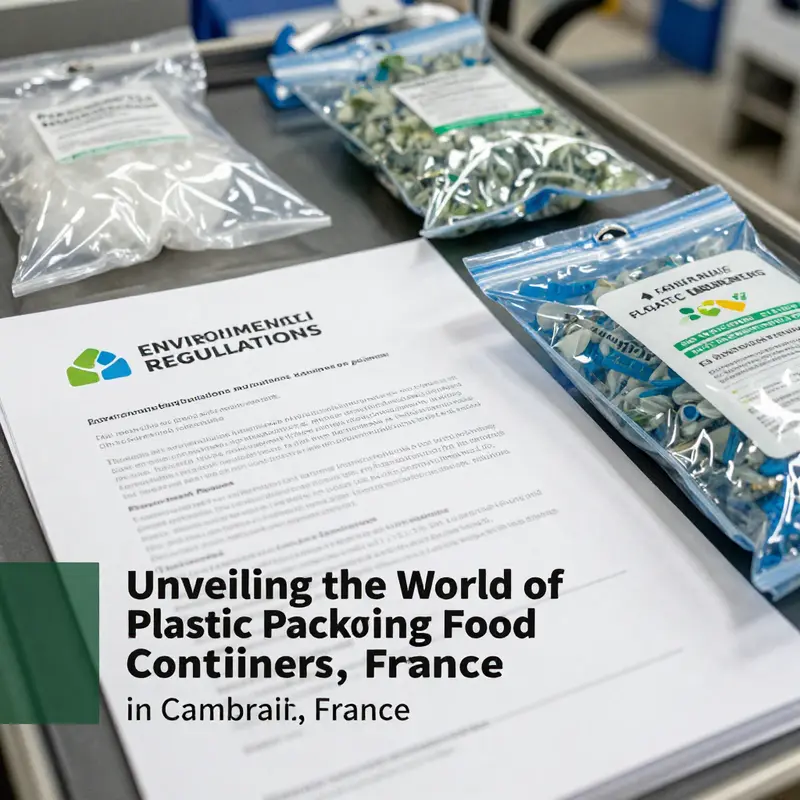
Cambrai sits at a crossroads of history and logistics, where narrow streets meet modern supply chains and a growing appetite for waste reduction. At the European level and in France, policy aims push packaging toward recyclability, reuse, and clear end of life pathways. The result for Cambrai is not a distant memorandum but a set of practical expectations that touch product design, labeling, and household behavior.
In practice, packaging in Cambrai is being designed with an end of life in mind. Local firms consider whether a container can be recycled in the regional sorting streams, whether it can be reused across cycles, and how its materials affect energy use at the recycling stage. The Loi AGEC framework and the national environment code shape decisions from material selection to packaging thickness and labeling, nudging manufacturers toward lighter, more recyclable options without sacrificing function. The city has become a living lab where design and logistics teams align with local disposal facilities to reduce contamination and improve sorting quality.
Consumers notice the change through clearer labels and easier sorting. Municipal campaigns, school programs, and public signage reinforce how to separate plastics, paper, and composites, helping households participate in the circular economy with greater confidence. For small and medium sized enterprises, the regulatory climate rewards packaging that can move smoothly through the system, lowering end of life fees and opening opportunities for local suppliers of recyclable materials. The broader aim is a resilient local economy where design, production, and waste management work in harmony rather than at cross purposes.
Viewed this way, Cambrai mirrors a larger European project to redesign packaging around its end of life. The EU framework for packaging waste, together with France’s Loi AGEC, seeks a balance between consumer convenience and environmental responsibility. The city shows how policy can translate into daily routines, product choices, and local investment in sorting facilities and recycling streams, expanding green job opportunities and encouraging innovation in packaging materials and processing technology.
Shifting Tides in Cambrai: How Local Shoppers Redefine Plastic Packaging in Food Containers
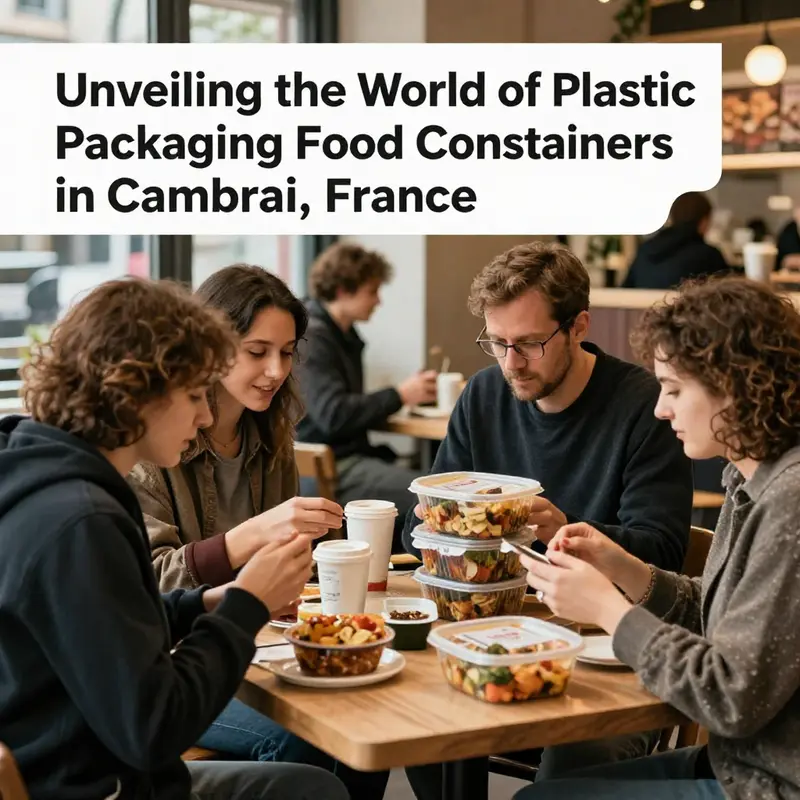
Cambrai sits at a crossroads of tradition and change. In a city known for its markets and close-knit neighborhoods, everyday choices about what carries and preserves food reveal a broader shift that echoes across northern France and beyond. The chapter that follows traces how residents of Cambrai are rethinking plastic packaging, not as a single trend but as a durable recalibration of convenience, health, and responsibility. It is a story that begins with a simple act—opening a grocery bag—and ends with a conversation about what kind of packaging a community wants to sustain for future meals, future health, and a future landscape. The quiet shift in Cambrai mirrors a broader European current: consumers are increasingly asking for packaging that is not only functional but also accountable for its environmental footprint, its ability to be reused or recycled, and its compatibility with a healthier sense of everyday living.
In practice, Cambrai shoppers are showing a preference for packaging choices that reduce waste without sacrificing the reliability of food protection. The local retail scene—comprising small markets, eco-grocers, and cooperative initiatives—has begun to feature display areas that highlight alternatives to single-use plastics. Glass jars, stainless-steel containers, and degradable or recyclable paper options are moving from novelty to expectation in several neighborhood storefronts. This is not merely a fad tied to particular brands or campaigns; it is a response to a lived rhythm of daily shopping where households balance time, cost, and long-term health. When people in Cambrai compare two versions of the same product—the one wrapped in standard plastic and the one offered in reusable glass or compostable paper—they tend to favor the latter if it preserves freshness and flavor while reducing waste. The result is a localized, practical education: packaging matters not only at the point of purchase but in the days that follow, during storage, reheating, and even disposal.
Health considerations are a critical driver behind these changes. Public discussions about the safety of plastic containers, especially those exposed to heat or long storage, have become part of routine conversations in kitchens and cafés. In Cambrai, as across many European communities, concerns about endocrine disruptors and chemical migration from packaging into food have taken root among families and responsible retailers alike. A study published on the HAL platform in 2024 underscores that substances such as BPA can migrate from plastic containers under certain conditions, prompting households to seek labeling that clearly communicates safety and recyclability. These findings are not abstract; they influence daily decisions—whether a container is marked BPA-free, whether it can be recycled locally, or whether it is designed to be reused multiple times. The emphasis on labeling, transparency, and traceability has nudged consumers toward packaging that aligns with health-conscious habits, particularly for items stored in the home for extended periods or heated in microwaves. People become more discerning about the entire life cycle of a container, from assembly to end-of-life processing, and they expect brands and retailers to disclose that life cycle in accessible language.
Parallel to health concerns, Cambrai is witnessing a cultural shift toward refillable systems and shared responsibility. Local markets and community-oriented stores have begun to promote glass jars, stainless steel tins, and biodegradable paper packaging as viable, practical options. Refill stations and bulk sections enable shoppers to bring their own containers or to purchase products in formats that minimize waste from the outset. This move toward reuse and refill is not about rejecting modern packaging technologies; rather, it is about integrating those technologies into a circular approach where packaging is treated as a resource rather than a disposable commodity. In a city where families shop for weekly staples, these options translate into tangible benefits: reduced household waste, more predictable storage conditions, and a sense of continuity with a growing regional ecosystem of sustainable suppliers. The social fabric supports this shift as well—neighbors exchanging tips on safe storage, local advocates promoting responsible packaging, and small businesses leaning into transparent labeling and accessible recycling information.
The supply chain dynamics behind Cambrai’s evolving packaging landscape are equally instructive. Local distributors and small manufacturers are increasingly attentive to materials that offer credible environmental advantages without compromising performance. Paper-based and plant-derived alternatives are entering the mainstream for items once almost exclusively packaged in plastic, including containers used for take-home meals, snacks, and groceries. The shift is accompanied by a broader conversation about the economics of packaging—the price of sustainable materials, the reliability of local recycling streams, and the logistical implications of transitioning from one material standard to another. In many cases, retailers and producers in Cambrai note that the most successful transitions occur when suppliers offer consistency across product lines, robust testing for durability and food safety, and clear consumer guidance about reuse, recycling, and disposal. The ultimate aim is to minimize microplastic risk and reduce the energy demands associated with manufacturing and transporting packaging, while preserving the quality and safety of stored foods.
A pragmatic, everyday lens helps explain Cambrai’s evolving behavior. For many households, convenience still matters—still matters deeply—but the kind of convenience they seek is increasingly linked to responsible choice. The uptake of reusable containers, the preference for packaging that can be recycled in local facilities, and the desire for products that arrive in packaging made from renewable or sustainably sourced materials—all reflect a careful balancing act. Consumers weigh the immediate benefits of a bag or tub against longer-term considerations about waste, litter, and the health of local rivers, soils, and street corners. In this sense, Cambrai’s consumer base is not rejecting plastic outright; it is demanding packaging that behaves well in a real-world environment: that protects food integrity, reduces waste, and supports a cleaner neighborhood aesthetic. This nuanced stance resonates with broader European discourses on the circular economy, where the practicalities of everyday life intersect with ideals about resource stewardship and public health.
The local narrative is reinforced by online and offline conversations that connect the micro and macro scales. Shoppers share tips about which containers hold up best under cold storage, which lids seal most securely, and which packages perform well when reheated in the oven or microwave. Community forums and city events profile case studies of how families choose beakers, jars, and tubs that can be reused many times. In these discussions, the value proposition of sustainable packaging is not abstract; it is concrete: less waste, safer food storage, clearer labeling, and a sense of belonging to a community that acts with intention. A small but telling signal comes from the way clerks and market assistants explain options. They highlight the trade-offs between cost, durability, and recyclability, and they encourage customers to consider the full lifecycle of the packaging they choose. This everyday pedagogy helps normalize sustainable packaging as a practical standard rather than an aspirational ideal.
For readers tracing this chapter’s thread back to practical sources, consider one example of packaging logic in action: the idea of choosing a recyclable or reusable outer shell for ready-to-eat meals, paired with a compact, responsibly sourced inner container. Such configurations illustrate how packaging decisions can support both convenience and sustainability without forcing a compromise in food quality. This is a model that local retailers in Cambrai are beginning to experiment with through in-store demonstrations, refill offerings, and educational signage that makes the lifecycle of a container more transparent. When customers see that their choices can reduce waste and still deliver a hassle-free experience, the incentive to adopt new habits grows stronger. And as more households embrace these practices, the collective impact becomes visible in the streets, in the cleanliness of public spaces, and in the continued vibrancy of local markets.
The chapter closes with a reminder that Cambrai’s packaging choices are part of a larger narrative about how communities negotiate the tension between modern convenience and environmental stewardship. The move away from default plastic reliance toward reusable glass and sustainable paper formats does not imply a wholesale withdrawal from modern packaging technologies. Rather, it signals a preference for packaging systems that provide reliability in food protection while being more compatible with local waste management capabilities, consumer health concerns, and the ambitions of a climate-conscious public. The local story in Cambrai, with its markets, conversations, and small-scale experiments, offers a microcosm of how European communities may continue to navigate these complex choices. It invites readers to consider how the packaging decisions they face in their own towns—whether in a bustling city or a quiet market square—can contribute to a more sustainable food system without sacrificing the everyday ease that makes cooking and sharing meals a pleasure.
For those who want to explore related packaging options in a practical, issue-focused way, a notable example of alternative packaging formats is available here: disposable-octagonal-box-restaurant-food-kraft-paper-packaging.
External reference: the broader European experiment with plastic-free retail pilots illustrates the stakes and potential trajectories for places like Cambrai. See the recent coverage of a UK supermarket’s plastic-free pilot in Oxford for context on how shoppers react to such innovations and what these responses imply for local markets elsewhere. https://www.theguardian.com/environment/2023/sep/22/waitrose-plastic-free-pilot-store-oxford
Final thoughts
Understanding the dynamics of plastic packaging food containers in Cambrai is crucial for businesses looking to thrive in the food service industry. From leveraging local suppliers to being attuned to consumer sentiments and environmental regulations, there is a rich tapestry of influences at play. As consumer preferences evolve and sustainability becomes increasingly essential, businesses must remain agile and informed to succeed. This exploration not only aids in effective decision-making but also supports the growing community in Cambrai’s food sector, ensuring that their packaging solutions meet the demands of tomorrow.