
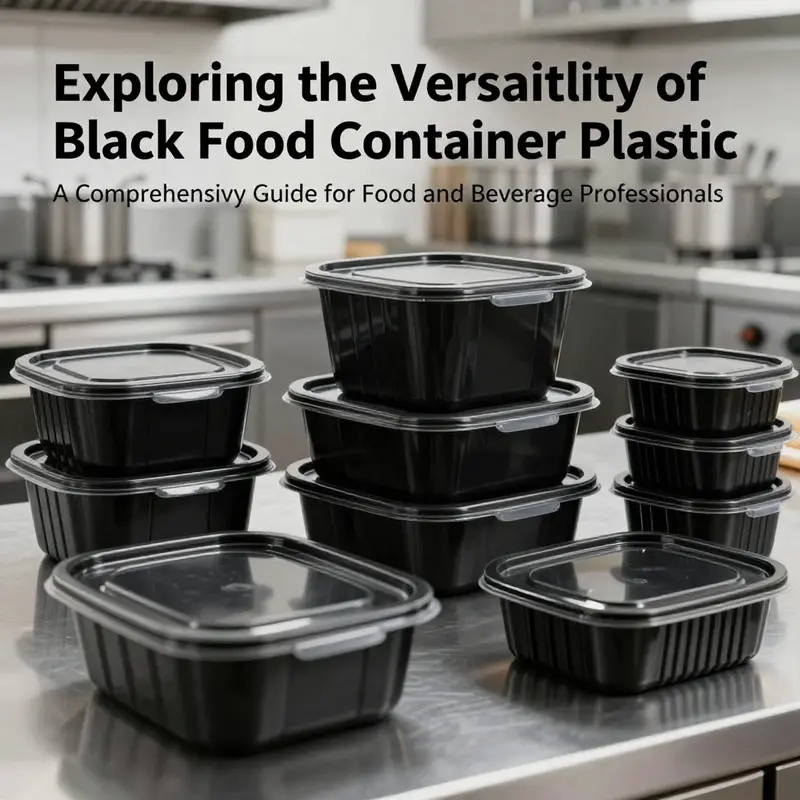
Black plastic food containers have become indispensable across various sectors, including bubble tea shops, restaurants, and catering services. Their distinctive aesthetic and practical features meet the needs of both customers and food businesses. This article delves into the diverse product types and designs of black food containers, providing insights into their materials and core functionalities. By understanding these key aspects, industry professionals can make informed decisions that enhance food presentation and storage while ensuring compliance with safety standards.
在黑色光泽中的多样性:黑色塑料食品容器的类型、设计与材料考量
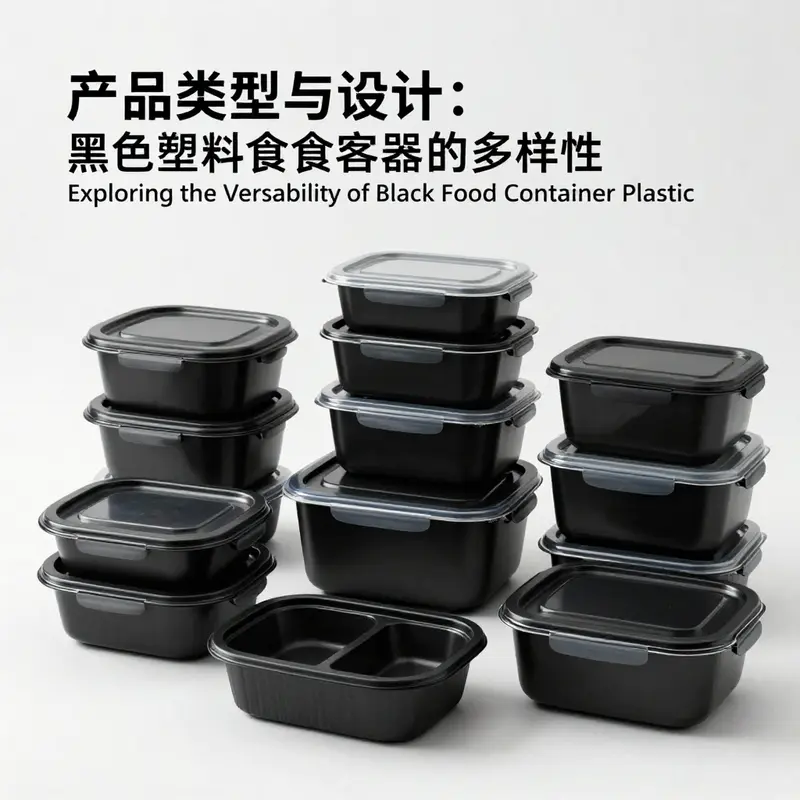
黑色塑料食品容器以其独特的外观与功能性,在从家庭厨房到商业餐饮的广阔场景中扮演着重要角色。它们的魅力不仅来自于沉稳的色调,更来自于对现代生活节奏的顺应——快速备餐、冷藏、外卖配送、微波加热以及便于堆叠的高效存储。黑色容器的普及背后,是材料学、工业设计与供应链管理之间错综复杂的平衡。正是在这种平衡之中,设计师与制造商不断拓展容器的形状、盖合方式、密封性能与耐温范围,以回应餐饮业对卫生、安全、便携与品牌表达的综合需求。本章力图把焦点放在“类型与设计”背后的逻辑,揭示黑色塑料食品容器在不同场景中的适配性、材料选择的利弊、以及在采购与合规性方面的关键考量,从而帮助读者把握这类产品在市场上的定位与潜在风险。
从宏观层面看,黑色塑料食品容器的类型覆盖了家庭日用、商用外卖以及更专业的食品服务需求。第一类是多格分隔餐盒,常以三格或更多格的布局出现,便于把米饭、蔬菜、肉类等不同食材分装在同一餐盒内,既方便携带又有助于现场就餐前的分食安排。这类容器在外卖与自助餐场景中尤其受欢迎,因为它们能在不互相混合的前提下保持食物的原始风味与口感。第二类是方形或矩形的餐盒,形状简洁、体积均衡,便于在冷藏室的整排架上排列整齐,亦便于商家进行标准化堆叠与冷链运输。第三类是带螺纹盖或密封盖的容器,强调密封性与防泄漏,适用于长途运输、冷藏储存以及需要较长时间保鲜的食品。这类容器的密封性不仅能防止液体泄漏,还能在一定程度上阻隔空气进入,帮助减缓氧化过程。第四类是可微波加热的容器,常见于CPET材质或其他耐热塑料系统,标注“microwave safe”或等效说明,适合家庭或小型餐饮单位进行加热处理。对于高端烘焙、热饮外带等领域,CPET材料凭借耐高温、透明性与安全性成为核心选择之一。不同材料的组合与形状设计,形成了从日常便携到专业外卖的全方位覆盖。
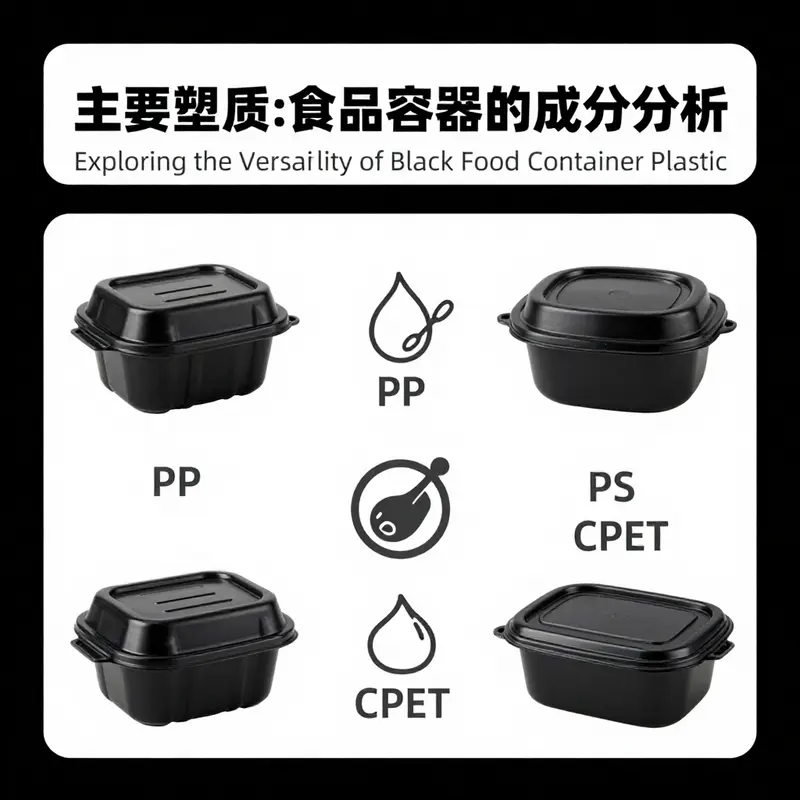
然而,外观与功能并非单纯堆叠,而是通过材料选择、结构设计与制造工艺互相协同来实现。就设计特点而言,黑色塑料容器的选材往往围绕着耐用性、耐温性和可加工性展开。聚丙烯(PP)是最常见的食品级塑料之一,因其耐高温、耐化学腐蚀、相对低成本且在多数情况下可微波加热而成为主力材料。PP的耐热性在许多场景下足以支撑常见的加热与再加热需求;但要把“黑色”做成稳定的外观,制造商往往会添加炭黑等颜料。这种着色过程虽然赋予容器时尚的黑色调,但也带来对食品安全的潜在关注点,因为炭黑及相关添加剂在某些情况下可能影响迁移,以及在高温或长时间暴露下的行为。与PP相比,聚苯乙烯(PS)在绝大多数情况下并不适合微波加热,因为它对高温有较短的耐受窗口,且在加热时可能释放微量成分。因此,若容器需用于微波加热,供应商通常会选择CPET等更适合的高分子材料。CPET(结晶聚对苯二甲酸乙二醇酯)自带可微波的属性,常用于高端外卖包装和烘焙食品容器,其结晶结构对热稳定性有帮助,能够在较短时间内达到均匀升温,减少局部过热的风险。此外,黑色外观的容器设计需要兼顾可回收性与环境影响。传统黑色塑料因炭黑添加而在某些回收流程中不易被分拣,进而对循环体系提出挑战,因此越来越多的制造商在材料选择和后续处理上寻求折中方案,如采用更易回收的聚合物组合,或在设计阶段就考虑回收路径。环保趋势也促使一部分产品在工艺上探索可降解或植物基材料的替代选项,尽管在色彩稳定性、耐温性能和成本之间,需要作出细致的权衡。
从功能与耐用性的角度回望,黑色容器的核心优势在于防污性与视觉吸引力的结合。黑色易于隐藏食物残渣和污渍,外观显得干净整洁,尤其在包装美观与品牌表达方面具有一定优势。这种特性使黑色容器成为餐饮业的常见选择,既能提升门店的视觉统一性,又能在视觉传播上与品牌形象保持一致。在日常使用场景中,容器需要具备良好的防漏性能、适度的密封圈设计、以及某些场景所需的防冻功能,以便在冷藏或冷冻条件下保持食材的新鲜度。对于家庭用户,堆叠设计的容器能最大化利用冰箱和橱柜的垂直空间,减少占用面积,同时通过统一的尺寸和形状实现更高效的储存管理。这一系列设计元素共同构成了黑色塑料食品容器的“多功能性”,使它们在餐饮服务、家庭烹饪、外卖配送等多个维度上都扮演着可靠的角色。
市场上对这类容器的需求并非只看外观与单一功能,而是关注材料的安全性、认证与合规性。食品级PP被广泛标注为可直接与食品接触,且具备冷热耐性与相对低污染风险的特性。对任何声称食品级的产品而言,最重要的是确保其符合食品安全标准与认证,例如FDA、SGS等认证证书,以及BAP等质量体系的合规性声明。这些认证不仅是对材料本身的安全背书,也是对生产过程、供应链管理和检测方法的一种综合认可。对于需要长期使用的容器,尤其是冒险性较高的微波加热场景,引导消费者关注产品是否明确标注“耐热温度范围”、“可以微波加热”的具体条件,以及盖子与密封圈的材料组成是否同样符合安全标准。消费者在选购时,应通过标签、材料代码与包装上的符号来判定容器的材质类别(如“PP 5”或相应的三角形符号与数字标识),从而避免混用或误用在不适宜的场景中。
采购与供应链层面,黑色塑料食品容器的市场段落显示出明显的成本与规模差异。小批量采购通常以较高的单位成本为代价,但灵活性更高,适合试验性市场或小型餐饮单位。随着采购规模的扩大,单件成本会显著下降,甚至达到仅几美分的水平,这使得大规模外卖企业与超市链在成本控制方面获得更大空间。最低起订量通常在一万件至一万五千件之间,少数供应商也可能为样品测试提供较小批量的可能性。主流采购平台上,批发选项丰富,价格区间随数量变化明显,但每家厂商的最低起订量、印刷定制、包装规格等会有不同的条款。对买家而言,除了价格,真正决定长期合作的关键在于对认证、材料标识、清晰的售后条款以及定制能力的评估。定制化服务在这类产品线中尤为重要,因为餐饮品牌需要将自有标识、色彩指南以及包装尺寸统一融入容器设计中。OEM/ODM服务使制造商能够按需调整颜色、尺寸、盖子设计、印刷品牌标识,甚至在某些情况下提供定制盖密封圈的材料结构,以提升密封性与保鲜效果。通过对供应商进行资格验证、样品测试、并在合同中明确质量控制点,买家可以在确保合规的前提下实现品牌一致性与供应稳定性。
在采购路径的现实操作中,建立对材质与认证的清晰认知至关重要。前述的材料类型与认证框架并非仅是理论上的保障,而是对食品安全的实际承诺。对于那些需要长期使用、涉及加热与冷藏的场景,建议在下单前进行小批量试用与功能验证,确保容器在加热、冷藏、运输过程中的表现符合预期。与此同时,回收与环保的现实挑战也不能被忽视。黑色容器的回收关注点在于颜色对分拣系统的影响,以及炭黑颜料对回收材料质量的潜在干扰。若企业或品牌具备明确的回收策略,那么在设计阶段就应考虑回收路径,或选择对回收体系友好的材料组合,以提升整体生命周期的环境绩效。
综上所述,黑色塑料食品容器的多样性在于其能覆盖从日常家庭使用到高强度商业应用的广泛需求。类型的丰富来自于对分区、密封与耐温的综合考量,设计的巧思则体现在如何在外观、功能与安全之间找到平衡点。材料选择的核心是确保在耐热、耐化学性与食品安全之间取得最优解,同时考虑到环境回收的现实限制。采购方面,成本、最低起订量与认证成为决定性因素,OEM/ODM能力则成为品牌塑造与市场扩张的关键支点。对于消费者与购买者而言,最值得坚持的原则是:选择明确标注食品级、具备可追溯认证的产品,关注微波使用的具体条件,并在需要时通过样品测试来验证实际表现。通过对功能性与合规性的双重把关,黑色塑料食品容器将继续以其独特的美学与实用性,为快节奏生活提供稳定可靠的包装解决方案。
外部参考资源在理解这类产品的市场脉络与合规要点时也具有参考价值。若你需要进一步了解批发信息及具体参数,可以查看以下外部资源:https://www.alibaba.com/product-detail/Black-Plastic-Food-Container-Wholesale_1600545371153.html
Beyond the Hue: Unpacking the Constituents and Health Implications of Black Plastic Food Containers
Black plastic food containers are a familiar sight in kitchens, cafeterias, and take-out windows. Their color is not just a fashion choice; it is the result of specific pigments and processing decisions that, together, shape both how the containers perform and how safe they are for food contact. In examining black plastic food containers, one quickly moves from the surface appeal of a sleek, stain-resistant look to a deeper, more consequential inquiry about what makes up these products, how they are made, and how they interact with food, the body, and the environment. The discussion is not simply about color; it is about the chemistry, the supply chain, and the incentives that push packaging toward certain materials and finishes. A foundational question arises: what exactly gives black plastic its hue, and what may accompany that hue in terms of health and safety and environmental impact? The most common answer points to carbon black, a pigment used not only to achieve a rich black but also to stabilize plastics against UV light and to improve aging resistance. Carbon black itself is not uniformly dangerous; it is a spectrum of materials and additives, whose risk profile is shaped by context—specifically, what other chemicals are present, how the plastic is processed, and whether it contains recycled content carried over from other products. The concern that often dominates public discourse is the presence of hazardous additives associated with black plastics, particularly when recycled materials are drawn from diverse streams, including electronic waste. In that context, several threads converge to frame a cautious, evidence-based view of black plastic food containers: the pigments, the flame retardants, the metals, the micro and nano plastics, and the recycling realities that accompany post-consumer or post-industrial plastics. The narrative that follows does not simply condemn the color; it seeks to map the chemical landscape that turns a common packaging choice into a decision point for safety, sustainability, and policy.
At the heart of the composition story is carbon black, the pigment responsible for the deep black tone across many plastic containers. Carbon black is a finely divided form of elemental carbon produced by the partial combustion of hydrocarbons or by controlled pyrolysis. In plastics, it serves multiple purposes: it improves color uniformity, reinforces UV resistance, and can contribute to the material’s mechanical performance. When carbon black is used, it is typically dispersed within a polymer matrix such as polypropylene (PP) or other common food-contact plastics. The presence of carbon black is not automatically hazardous, but the broader context matters. In many regions, black plastics are more challenging to recycle because carbon black can interfere with infrared-based sorting systems at recycling facilities. This sorting difficulty has real environmental implications: more black plastics end up in landfills or incineration, and less is efficiently recovered and reused. The effect is a loop: the color helps define manufacturing choices, and the processing realities can shape end-of-life outcomes in ways that compound environmental harm if not carefully managed.
A more troubling thread appears when one considers the additives accompanying black plastics, especially in containers sourced from recycled materials. A growing body of research has drawn attention to the possibility that black plastics used for food contact may harbor hazardous substances introduced during the recycling process or from the original waste streams. A dominant concern centers on halogenated flame retardants—substances designed to limit flammability but which, in certain formulations, migrate from plastic into food and, ultimately, into the human body. Among these, several widely discussed compounds have faced regulatory scrutiny or restrictions in various jurisdictions because of their persistence, bioaccumulation, and potential toxicity. The alarming statistic often cited in expert discussions is that a substantial proportion of black consumer plastics may contain some form of flame retardant additive, with concentrations and specific chemicals varying by source material and manufacturing practice. When such additives migrate into food, they have been associated, in some studies, with adverse health endpoints—ranging from endocrine disruption to neurodevelopmental effects and carcinogenic concerns. The urgency of this issue is heightened for containers intended for hot foods or for microwave use, where heating conditions can accelerate chemical migration or desorb compounds from the polymer matrix into the food.
Among the most discussed retardants are organohalogen compounds that have historically found broad use in plastics from furniture to electronics. In the context of black food containers, the risk arises not only from the additives themselves but also from the very practice of using recycled plastics that may have accrued residues from various end-of-life products. This is where the supply chain reality becomes critical. Post-consumer recycled plastics can carry a mosaic of contaminants, including heavier metals such as lead and cadmium, which can accumulate in a plastic matrix if present in the original waste stream. When such materials are repurposed for food contact, the potential for migration into edible contents becomes a central concern for regulators and manufacturers alike. The combination of carbon black pigments and recycled feedstocks creates a scenario in which the color and performance of the container are achieved at the possible cost of chemical exposure, particularly in sensitive populations such as children, pregnant individuals, and those with compromised health.
A parallel strand concerns microplastics and nanoplastics that may shed from any plastic product during use, including when containers are filled, touched, or heated. The concern is not merely about visible debris but about the presence of tiny particles in the food itself and, by extension, the human body. Research over recent years has documented that micro- and nano-scale plastic fragments can migrate from packaging into food under certain conditions, especially during heating and mechanical agitation. The health implications of chronic exposure are still being studied, but early signals point to inflammatory responses, gut microbiome alterations, and potential systemic effects that warrant precautionary attention. In the scan of available evidence, black plastics emerge not as an isolated risk factor but as a confluence point where color, material choice, and end-of-life handling intersect with consumer exposure pathways.
From the perspective of recycling and waste management, the black hue introduces a logistical challenge that intensifies the environmental dimension of the problem. Carbon black pigments can interfere with optical sorting technologies used by modern recycling facilities. This interference reduces the efficiency and accuracy of material separation, diminishing the economic and environmental viability of recycling programs that rely on high-purity streams. In practice, this means that even if a consumer correctly sorts a black plastic container for recycling, the facility’s ability to recover the resin effectively may be compromised, leading to lower recycling rates for black plastics relative to more easily detectable colors. The downstream effect is a higher likelihood that these materials exit the recycling loop and end up in landfills or incinerators, contributing to longer-term pollution and the loss of valuable feedstock that could have been reused in a circular economy.
The origin of the materials used to produce black containers also matters for safety. In many regions, the push to reduce costs and improve supply resilience has encouraged the use of recycled feedstocks that originate from a diverse mix of consumer and industrial streams. When electronic waste is among those inputs, the risk of contamination by heavy metals grows more pronounced. Lead, cadmium, and other hazardous metals can become trapped within the polymer matrix or cling to the surface of recycled pellets. If such contaminants are present in food-contact applications, their potential to migrate into the food raises concerns about chronic exposure and cumulative risk. The weight of evidence from multiple studies emphasizes the importance of robust supply-chain controls, including rigorous testing of incoming recycled materials, traceability of resin sources, and clear delineation of what is permissible for food-contact applications. These controls are essential to ensuring that the benefits of recycling do not come at the expense of consumer safety.
All of this underscores a central distinction: color itself is not inherently dangerous, but the conditions under which black plastic containers are produced, processed, and used can magnify risk. The combination of carbon black pigmentation, the use of recycled content, and the potential for hazardous additives creates a unique risk profile for some black plastics in the food-contact sector. In assessing whether a particular black container is safe for use with food, especially for heating in a microwave or for hot contents, the critical question becomes one of verified compliance and transparent labeling. The presence of explicit certifications—such as food-grade claims, and third-party testing or seals from recognized laboratories—offers a more reliable basis for decision-making than color alone. For instance, containers that clearly indicate food-grade polypropylene, microwave safety, and independent certification provide tangible evidence of regulatory alignment and quality control. In this sense, the color is a clue, not a guarantee; the substance of the container, the origin of its resin, and the provenance of its additives tell the real safety story.
Against this background, consumer and industry guidance converges on several practical themes. First, it is prudent to scrutinize labeling beyond the color. Look for explicit statements of food-grade materials, microwave suitability, and certified safety marks such as recognized third-party tests. Second, consider the source of the plastic. Containers manufactured from virgin PP with transparent labeling are generally more predictable in performance and safety than those built from recycled content without clear disclosure. Third, be cautious with heating. The practice of microwaving black plastics is discouraged in many safety advisories precisely because heat can accelerate migration of additives and the appearance of microplastics. Plainly put: heating a black plastic container whose chemical story is uncertain introduces additional risk. Fourth, when possible, favor packaging formats and materials that reduce reliance on recycled electronics-derived plastics, or that employ pigments and additives with demonstrated safety records. Paper-based and plant-derived alternatives, or plastics with well-documented safety profiles and certifications, can offer safer pathways for food packaging, albeit with their own environmental considerations that must be weighed.
From a design and policy standpoint, the challenge is to harmonize consumer demand for affordable, durable, and aesthetically versatile packaging with robust safety standards and responsible end-of-life management. Achieving this balance requires a multisector effort: manufacturers need to verify feedstock sources and maintain rigorous additive controls; regulators must enforce clear labeling and enforce bans where needed; and retailers and food service operators should implement procurement practices that reward materials with proven safety credentials. In parallel, the industry can invest in research and development to reduce or eliminate problematic additives in black plastics intended for food contact, or to develop reliable alternatives that preserve the performance benefits of carbon black without compromising safety. The conversation also invites a reexamination of the recycling ecosystem. Improving sorting accuracy for darker colors, expanding the capacity for advanced recycling technologies, and encouraging the use of safe recyclates in non-food applications are all pathways to reduce the environmental footprint of black plastics without sacrificing the functional advantages these materials provide.
For readers seeking a tangible sense of how packaging choices relate to real-world options, the landscape is gradually expanding toward formats and materials that balance practicality and safety. In many markets, packaging innovations are moving toward lighter- or transparent-toned containers for foods that require heat tolerance, with explicit safety certifications to reassure consumers. These moves reflect a broader recognition that packaging must not only protect contents and extend shelf life but also align with growing expectations around health, environmental responsibility, and transparency. In this context, a practical takeaway for researchers, designers, and buyers is to treat color as a design parameter rather than a sole determinant of suitability. Color is a visible cue that can accompany a material’s entire safety profile but should never substitute for verified data on chemical migration, regulatory compliance, and lifecycle performance.
To foster safer practice, a constructive approach involves deliberate sourcing and testing strategies. When black containers are under consideration, buyers should require documentation that confirms: the use of food-grade polymers such as PP; lack of migration of restricted additives under tested heating conditions; third-party verification of safety claims; and transparent disclosure of recycled content and its traceability. This kind of due diligence helps shift the industry toward packaging that not only looks practical but also upholds consistent safety standards throughout its life cycle. It is also worth noting that many well-established platforms and procurement networks can facilitate such due diligence by connecting buyers with suppliers who publish comprehensive material safety data sheets, certification evidence, and batch-level traceability records. For readers who want to explore alternatives and broaden their packaging options, examples of safer packaging formats and materials can be found in related packaging categories that emphasize paper-based or clear, heat-tolerant plastics with strong safety credentials. As a practical illustration, consider exploring packaging formats born from alternatives to black plastics that emphasize readability, accountability, and recyclability—an approach that aligns with the broader goals of consumer health and environmental stewardship. In this spirit, a representative alternative packaging approach can be found in the following example: disposable-octagonal-box-restaurant-food-kraft-paper-packaging.
The discussion above does not pretend to settle all questions, but it does underscore a clear direction for safety-minded stakeholders. The color black in plastic containers will continue to be a convenient, cost-effective choice for many applications, but it is not a free pass against scrutiny. Knowledge of the underlying chemistry, an emphasis on verified certifications, and a commitment to responsible end-of-life management are essential if consumers are to be confident in the safety of the containers that come into contact with their meals. If anything, the evolving research signals a prudent shift: packaging design should be guided not only by performance and aesthetics but also by transparent, rigorous safety testing and stringent supply-chain controls. In a marketplace where the health of the consumer is inseparable from the health of the environment, this holistic approach is not just advisable; it is indispensable. The debate is far from exhausted, but the path forward is increasingly clear—one that privileges safety-informed choices, stronger certifications, and packaging ecosystems designed to minimize risk while delivering the functional benefits that plastic containers have long promised.
External reference: https://www.sciencedirect.com/science/article/abs/pii/S030438942400756X
Practical Strength, Hidden Costs: The Real-World Advantages of Black Plastic Food Containers
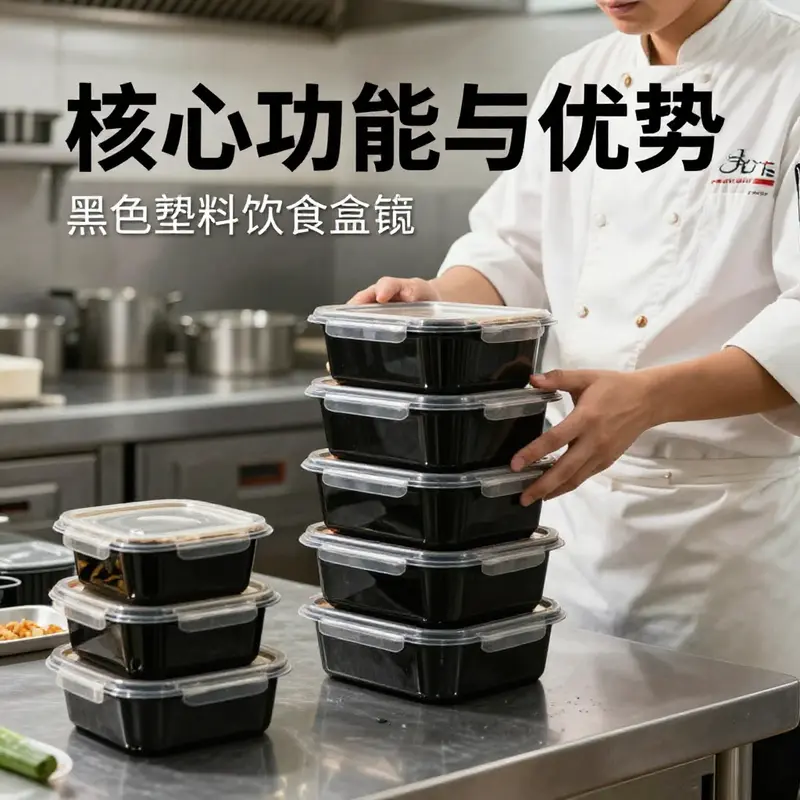
Black plastic food containers earn steady use across catering, delivery and household meal prep because they deliver tangible, short-term benefits. Their appeal is easy to understand: they are tough, economical, discreet and convenient. Yet these everyday strengths sit beside important trade-offs in health, recycling and long-term value. This chapter unpacks what black containers actually do well, why manufacturers favor them, and how those strengths can mask significant liabilities. The goal is a clear, balanced view that helps buyers choose wisely.
Black plastic stands out first for its physical resilience. Compared with thin, transparent disposables, many black containers use thicker walls or reclaimed polymer blends that resist puncture and bending. That extra thickness reduces leaks and breakage during transit. When meals include sharp elements — bones, shells, or rigid garnishes — the stronger black shell holds up. For caterers and delivery services, that means fewer midday replacements, fewer spills, and fewer customer complaints. Black containers also hide minor scuffs and surface stains. That helps them look serviceable longer without additional cleaning or cosmetic replacement.
Light control is another practical benefit. Dark materials block visible light and some UV, which helps slow oxidation in buttery or oily foods. For items sensitive to light-driven changes, this can afford a modest shelf-life advantage in refrigerated or dark storage. Combined with secure lids, a black container can preserve appearance and texture for short-term sale or consumption, which matters for retailers and operators who need consistent presentation.
Cost efficiency explains much of black plastic’s dominance. Adding carbon black pigment is a simple, low-cost way to achieve deep color in mass-produced polymers. For manufacturers, the pigment is forgiving: it masks impurities and color variations in recycled feedstock. That makes black an ideal color when production uses reprocessed material to cut costs. The economics scale well. Small runs can be competitive, but price becomes especially compelling for high-volume orders. That affordability is why many foodservice operators opt for black disposables: they balance unit cost against performance in a high-turnover environment.
These economic and functional gains also enable customization. Black containers are easy to mold into multi-compartment trays, screw-top jars, or stackable rectangular boxes. They accept matte or glossy finishes and are compatible with printing or labeling for branding. For companies seeking a uniform look, black offers a neutral platform that can enhance perceived professionalism. From a logistics standpoint, many black formats nest or stack efficiently, saving warehouse space and shipping volume.
Despite these clear perks, the very features that make black plastic attractive create problems when health and sustainability become priorities. The common pigment used to color plastics black is carbon black. While effective and inexpensive, carbon black complicates recycling. Automated sorting systems at recycling facilities rely on near-infrared sensors. Black plastics absorb that infrared light, preventing accurate material identification. As a result, many black containers bypass recycling streams and are diverted to incineration or landfill. The short-term environmental savings at purchase are offset by long-term waste management costs.
Health concerns add another important layer. Reclaimed black plastics sometimes contain residues of additives, dyes or contaminants from prior uses. When mixed and molded without strict controls, recycled feedstock can vary in composition. That variability increases the risk of chemical migration when containers contact hot or acidic foods. Furthermore, some black colorants or manufacturing aids may carry heavy metals or flame retardants as impurities. Under high temperatures — such as microwave reheating or holding of hot soups — migration into food becomes more likely. This is not universal, but it is a risk that increases with poor quality control.
Material choice matters for these risks. Food-grade PP (polypropylene) and CPET can be formulated safely for microwave use and hot-fill applications. PS (polystyrene), by contrast, performs poorly under heat and is better avoided for hot foods. Yet black PS disposables still appear in some markets because of cost. A careful buyer should insist on clear material declarations and third-party testing. Certifications from recognized labs and agencies provide the best assurance that a black container is suitable for intended use. When such documentation is absent, the visual benefits of black should not outweigh the unknown risks.
The perceived hygiene advantage of black is largely visual, not functional. Black masks grease, stains and minor molding imperfections. That improves perceived cleanliness even when the container surface accumulates residues. For operators, this can delay replacement cycles and reduce apparent waste. But the cosmetic advantage does not reduce microbial risk. Residual food films beneath the surface or within seams still support bacterial growth. Relying on color to signal cleanliness can lead to neglected sanitation practices that ultimately hurt food safety.
From a lifecycle perspective, black containers present a paradox. They may be thicker and more durable, which can extend single-use performance. Simultaneously, their pigmentation and recycled composition often make them poor candidates for closed-loop recycling. The result is a product that performs well in use but performs poorly at end-of-life. For sustainability-focused businesses, this mismatch is critical. Short-term savings on purchase do not account for disposal costs, regulatory pressure, or the reputational impact of widespread landfill waste.
Operational realities drive many decisions. For high-volume kitchens, speed and cost are primary. Black containers meet those demands. They are familiar, stackable, and compatible with existing workflows. For brands that need consistent presentation and frequent turnover, black remains an efficient choice. But a growing segment of consumers and regulators expect transparency about materials, recyclability and food safety. Buyers who transition from black disposables to better alternatives often report reductions in long-term waste and improved brand perception, despite slightly higher upfront costs.
Alternatives to black plastic deserve attention. Rigid reusable options like glass and stainless steel eliminate migration concerns and vastly improve end-of-life value. Compostable paper bowls and molded fiber trays offer a disposable route with better recovery prospects. Food-grade silicone blends flexibility with reusability for some applications. In single-use packaging, uncolored or light-colored PP and CPET variants are more recyclable and testable for migration. When disposable performance is essential, selecting certified, recyclable or compostable alternatives reduces environmental risk while preserving convenience. For operators exploring such options, a practical step is to trial compostable kraft bowls with lids as a single-use substitute that balances cost and recyclability; one example is the disposable kraft paper bowl with lid available from packaging suppliers.
Practical procurement guidance follows from these trade-offs. First, demand clear material declarations and third-party test reports for heavy metal presence and migration under heat. Second, prioritize containers labeled food-grade PP or CPET for heated applications. Third, avoid unknown black disposables for hot foods if certification is absent. Fourth, require suppliers to disclose recycled content and to confirm sorting compatibility with local recycling infrastructure. Fifth, consider the true cost per use: add disposal fees, regulatory compliance, and brand risk to the purchase price.
Black plastic containers will likely remain a fixture in many parts of foodservice. Their durability, low cost, and aesthetic concealment serve concrete needs. But their disadvantages are no longer peripheral. With rising scrutiny on contamination and circularity, the convenience advantages of black are increasingly questioned. For decision-makers, the wisest approach is nuanced: use black wisely where performance and cost justify it, and shift to safer, more recyclable or reusable alternatives when public health or sustainability goals demand. Insisting on certified materials, verified testing, and responsible waste planning turns a simple procurement choice into a defensible one.
For readers ready to replace single-use black plastics, exploring certified compostable paper bowls and sturdy reusable containers can be the next step. A practical starting point is evaluating disposable kraft options with lids that offer water resistance and a clearer recovery path than pigmented plastic. These alternatives create a better balance between functional needs and longer-term responsibility.
External reference: https://www.alibaba.com/product-detail/Black-Plastic-Food-Container-Wholesale_1600545371153.html
Sourcing Black Plastic Food Containers: Market Snapshot, Cost Drivers, and Practical Buying Steps
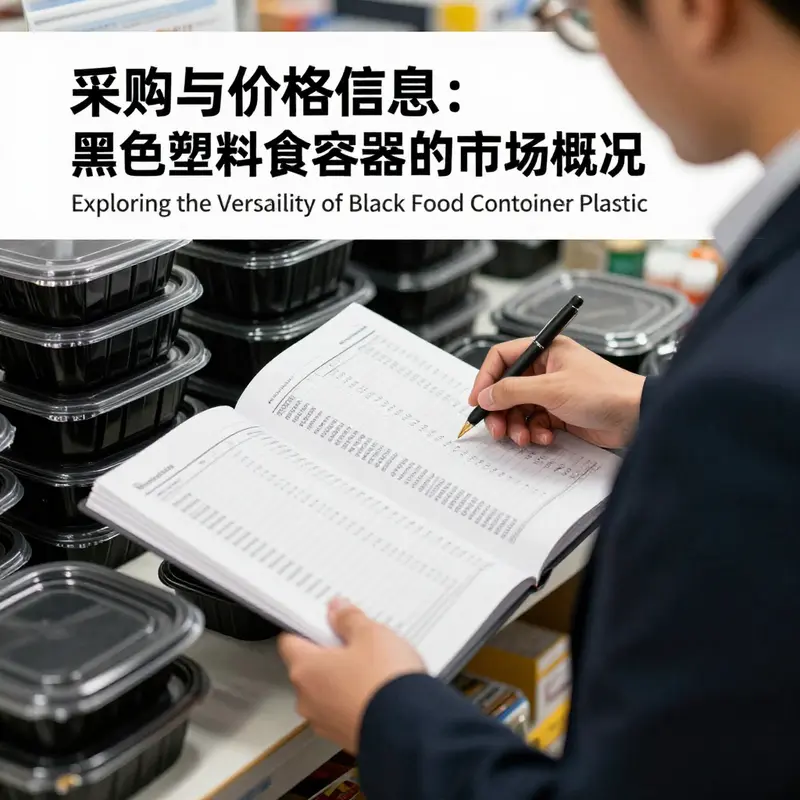
市场概况与采购要点
黑色塑料食品容器属于更大类的塑料食品包装,其采购逻辑与一次性或重复使用的塑料餐盒、外卖容器相近,但有几项特殊注意点。为了进行理性采购,采购方需要把握三件事:市场规模与供需背景、影响价格的关键成本要素、以及可执行的询价、检测与谈判流程。本章从这三个维度整合信息,帮助你在没有现成细分报告的情况下,推断价格区间并设计一种可重复的采购方法。
全球与地区市场为背景。塑料食品容器市场总体体量大,增长稳健,源于食品外卖、预制餐和冷链配送的扩张。原材料价格、环保法规与技术升级共同影响着整体供需格局。黑色容器作为颜色变体,通常并不改变其基本用途,但生产中会加入色料或碳黑,这带来两个后果:一是染料或色素的配方影响成本与可回收性;二是为满足食品接触安全,色料和基料必须符合特定认证要求,从而影响供应商选择和单价。
了解价格区间与MOQ。基于行业样本,黑色方形或三格餐盒在批量采购时的参考价格呈现明显的规模效应。小批量采购(千件级)单价通常在几美分到一角美元区间;而百万级大单时,单价可低至几美分以下。常见的供货门槛(MOQ)会在几千到几万件不等,许多供应商提供样品或小批次试单以吸引新客户。采购时请把注意力放在单位成本之上,也要评估运费、报关、仓储以及可能的退换货成本——这些隐性费用在跨境采购中常常超过产品本身的物流成本。
决定价格的关键驱动因素。首先是材料类型:聚丙烯(PP)因耐热、成本低、易成型而常见;CPET等改性材料价格更高,但能承受高温微波加热。黑色容器如果由回收料(rPP)或含碳黑颜料制成,单价可能更低,但其可追溯性与食品安全合规性需要额外验证。第二是认证与检测:有FDA、SGS或第三方迁移测试报告的产品在采购拍板时更受信赖,但认证成本通常会反映在单价上。第三为工艺复杂度与后处理,例如分格设计、密封盖、螺纹结构或抗漏垫片都会提高模具与生产成本。第四是定制化需求:印刷、品牌标识、颜色配方和特殊尺寸都会触发工具费、起订量提升及生产排期延长。最后,环境政策与回收体系对价格形成长期影响,厂商为了满足绿色合规可能采用更贵的可回收或生物基材料,或投入脱碳工艺,从而抬高成本。
如何获取准确报价。标准做法包括准备一份清晰的询价单(RFQ),列明关键参数:容器材料、颜色与色差容忍度、尺寸与容量、是否微波/冷冻安全、是否需防漏、盖子类型、每箱装量、期望起订量及目标交货期。把这些信息发给多家供应商,并请求三类报价:样品价格、1,000–10,000件区间价格、以及量产优惠(例如50k、100k、1M)。对比时不仅看单价,也要看交货周期、付款条款、是否包含检验以及售后政策。若供应商无法提供食品接触安全的检测报告,要求他们出具第三方检测的时间表并把检测费用计入合同条款。
样品与验证流程。始终先拿样品。样品不仅用来判断外观与公差,也用于实际使用测试:微波加热、冷冻循环、泄漏测试、以及长期储存后的气味迁移。把样品送去做迁移测试与材料鉴定,特别是当容器为黑色时,要确认黑色颜料(如碳黑)来源与食品接触安全记录。若计划印刷品牌标识或使用彩色盖,亦应要求印刷样品确认附着性与洗刷后抗磨损性。最后,用样品进行包装与运输测试,确保在实际物流条件下不会变形、破损或渗漏。
质量控制与合规性审查。在签订大单前,明确验货标准(AQL标准或双方确认的检验表)。建议合同中包含第三方出货前检验(Pre-shipment Inspection)条款和批量抽检比例。若产品会出口到特定市场,提前确认目标市场的法规要求,例如迁移限值、材料标识和回收标识等。黑色塑料因可能妨碍光学回收分拣,某些地区对黑色塑料有额外限制或回收处置成本;采购时需了解进口国的回收与废弃物处理政策,以避免未来的合规风险与隐性成本。
谈判策略与成本拆解。把供应商报价拆解为材料成本、加工费(含模具摊销)、包装费、检验与认证费、运输与关税、以及利润。询问材料升降对价格的敏感度,并用分段采购或长期合约来对冲原料波动。对于初次合作,可以用样品订单与小批量订单测试供应商交付能力,再以逐步上量换取更优价格。对定制模具,争取模具费抵扣(即在一定量后返还一部分)或请供应商承担模具保管与维护。对于MOQ较高但你只需小批量的情况,可寻求联合采购或第三方库存代理服务以降低库存压力。
交货期与库存管理。生产排期会显著影响总成本。旺季时大批订单需要更长交期,尤其是在加工与认证周期较长的情况下。合理的做法是建立安全库存,或与供应商约定滚动供货计划与缓冲库存。若业务具有季节性波动,考虑采用分批出货策略,从而减小单次资金占用并在市场发生变化时保持更高灵活性。
环境与替代选项的成本权衡。采购黑色塑料容器时,决策不仅基于价格,还要考虑可持续性与消费者偏好。由于黑色塑料在回收分拣中存在困难,许多买家会同时评估纸基可降解包装作为替代。若希望在菜单或包装上强调环保属性,可以将部分外卖或外包装转为纸质可回收产品,从而降低企业整体环境负担并可能提升消费者接受度。有关纸质替代品的实例与采购路径,可参见这款一次性纸碗的说明(internal link: disposable kraft paper bowl for food package with lid。
执行清单与下一步动作。总结出一个可操作的采购流程:1) 编制详细RFQ并发给3–6家供应商;2) 要求并评估样品;3) 进行必要的第三方检测与法规审查;4) 比较总成本(含运输、关税与检验);5) 用小批量订单试生产并执行入厂或第三方检验;6) 根据试单结果谈判长期供货条款与价格;7) 将可持续性与回收影响纳入长期采购策略。通过这种分步验证,你既能控制质量与合规风险,也能通过规模化采购获得更有竞争力的价格。
本章整合了行业背景、价格驱动因素与实际采购步骤,旨在帮助买家在信息不足时建立判断与执行路径。若需要精确的市场报价,请准备产品规格表并向具有认证与检验能力的供应商索取正式报价;在跨境采购时,别忘了把物流、关税以及目标市场的回收合规性都计入你的最终成本模型。
外部参考链接:
https://www.alibaba.com/product-detail/Black-Plastic-Food-Container-Wholesale_1600545371153.html
Final thoughts
In a world where presentation and functionality matter, black plastic food containers offer both style and practicality for food industry stakeholders. Choosing the right type, understanding the materials, and recognizing their advantages can enhance service quality. Investing in certified food-grade containers not only ensures safety but also contributes to a business’s brand image. As you move ahead, remember that the right packaging can elevate your offerings and resonate with your customers.