
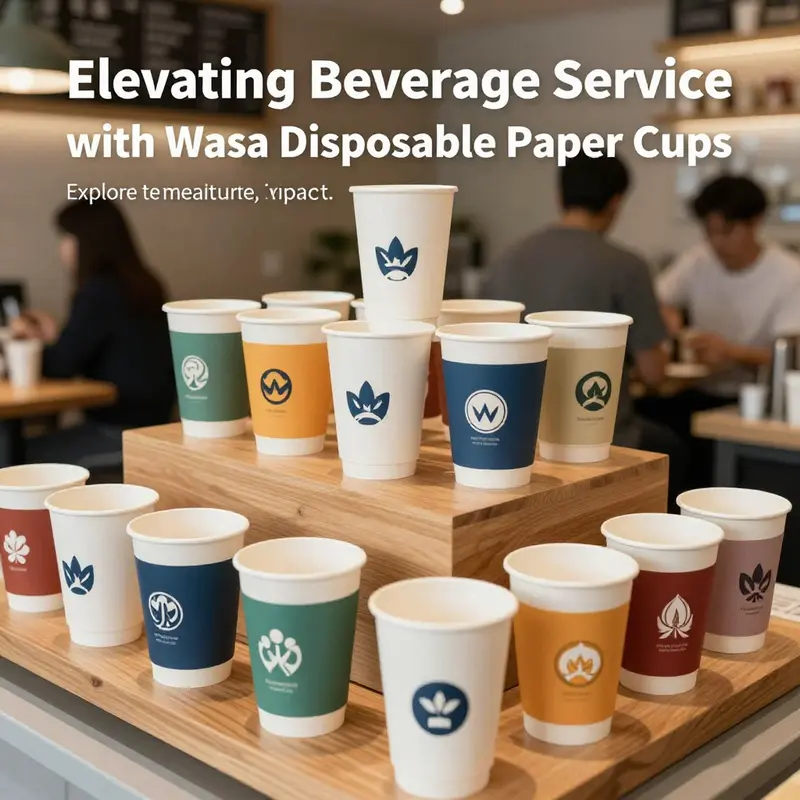
Wasa disposable paper cups have become essential for beverage service across various sectors, catering specifically to the needs of bubble tea shops, restaurants, food trucks, and event planners. These cups blend functionality with eco-conscious design, addressing both convenience and sustainability. As consumers and businesses strive for eco-friendliness, understanding the materials, manufacturing processes, environmental impacts, economic considerations, and societal trends associated with Wasa disposable cups is crucial. In this article, we will navigate through the specifics of Wasa disposable paper cups, highlighting their material composition, environmental footprint, cost implications, and evolving consumer preferences—equipping you with valuable insights for making informed choices.
Wasa Disposable Paper Cups: Materials and Manufacturing Process
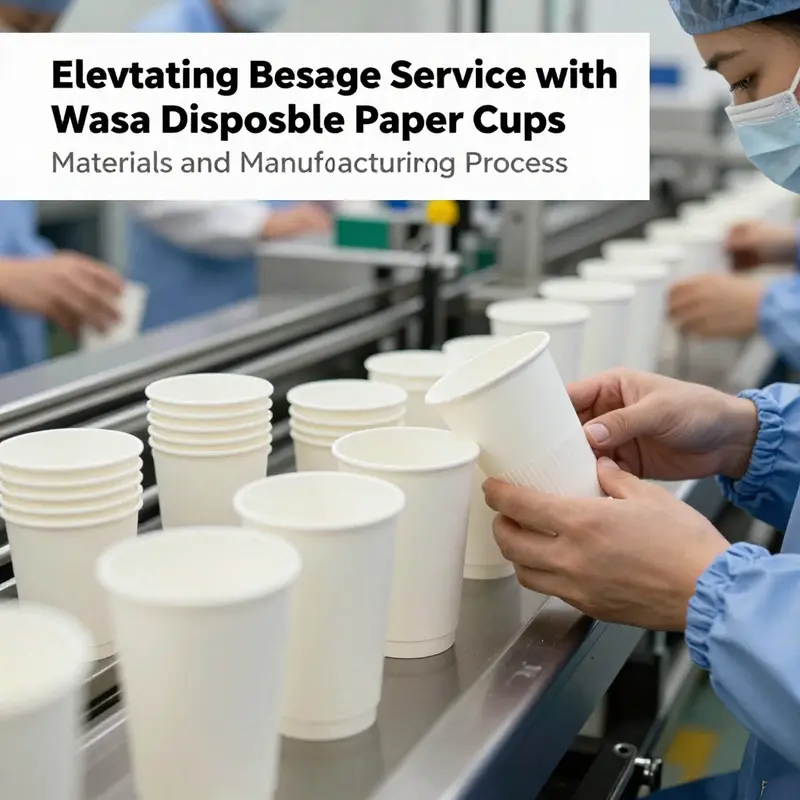
Every disposable paper cup tells a story beyond its immediate use. It sits at the intersection of design, material science, manufacturing efficiency, and environmental considerations. In the crowded world of on-the-go beverages, these cups are engineered not only to hold warmth and liquid without leaking but also to arrive in a form that’s economical to produce at scale and acceptable within evolving regulatory and consumer expectations. The chapter that follows digs into the core realities of how such cups are built—from the raw materials that define their barrier properties to the automated choreography that shapes them on the factory floor. Although specific data about a particular brand name may not be publicly disclosed, the general principles outlined here illuminate how disposable paper cups function in practice. The result is a cohesive view of what goes into a typical hot- or cold-beverage cup and why those choices matter for brands, businesses, and the environment alike.
The primary material in these cups is a high-grade packaging paper. In many cases, manufacturers select what is described as Grade A paper, prized for its strength, uniform thickness, and predictable performance under heat and moisture. This paper forms the core of the cup, providing rigidity and a surface that can be precisely formed by automatic machines. The choice of paper grade matters because it influences everything from the cup’s ability to resist tearing during handling to how it absorbs or resists heat transfer. When a cup is expected to hold hot beverages, the paper is usually paired with a barrier system that keeps liquids from seeping through while maintaining an acceptable exterior feel. The barrier layer is essential; without it, a cup would quickly fail under the stress of a hot drink, releasing moisture that could compromise both the user experience and the surrounding packaging ecosystem.
That barrier layer is commonly described as a waterproof coating. In practice, this coating is designed to prevent liquid penetration while preserving the cup’s shape and integrity. The coating can be a thin polymer film or a wax-based system, depending on the design intent, the required level of barrier performance, and end-user expectations for recyclability. The barrier layer is essential; without it, a cup would quickly fail under the stress of a hot drink, releasing moisture that could compromise both the user experience and the surrounding packaging ecosystem. For hot beverages, the coating must be robust under high temperatures and in contact with steam, yet not so rigid that it cracks or chips during use. In broader industry terms, this barrier system is a delicate balance between performance, safety, and environmental considerations. While coatings improve functional reliability, they also influence how the cup is recycled.
Alongside the paper and its barrier layer, many cups are prepared for printing, which plays a key role in branding, information display, and consumer appeal. A common approach is flexographic printing, capable of handling a range from one to nine colors. This method is well suited to rapid production and large runs, delivering consistent color and sharp imagery on the curved surface of a cup. Printing must meet strict health and environmental standards, including those established by European regulations for food contact materials. The artwork is typically applied before the cup is formed, or as part of a coordinated sequence that respects the flow of the production line. The printing stage is not merely decorative; it communicates branding, usage instructions, and sometimes sustainability messages that influence consumer choice.
The manufacturing process itself hinges on a set of automatic machines designed to form, seal, and finish the cup in a continuous, high-speed sequence. The process begins with large rolls of paper material that are unwound and guided into the forming stage. At this point, the waterproof coating has already been applied to the roll or to a sheet section that becomes the cup wall. The coating is dried or set, ensuring a stable surface for the subsequent forming steps. The cup relief is created through a forming machine that shapes the coated paper into a cylindrical or tapered form, then adds the bottom and top rims through a combination of molding and sealing actions. The exact design of the cup—whether single-wall, double-wall for insulation, or ripple-wall for strength and grip—modulates both the machinery configuration and the speed at which production can occur. In many facilities, production speeds exceed 150 cups per minute, a testament to the efficiency and synchronization of modern packaging lines. Speed, of course, is balanced with quality control: each cup must pass through inspection points to confirm leak resistance, correct wall thickness, and accurate bottom dimensions. When design complexity increases—for example, with double-wall constructions—the line may employ additional steps to insert insulating layers or to form an internal cavity that traps air for enhanced thermal performance.
The ripple-wall and double-wall variants deserve special attention, as they illustrate how cup design translates into user experience and operational practicality. A ripple-wall cup features a textured, corrugated inner surface that enhances grip and helps manage heat transfer to the hand. The texture also plays a role in stacking stability, which reduces slippage when cups are loaded onto carts or display shelves. Double-wall cups incorporate an inner wall and an outer wall separated by an insulating air gap, providing better protection for a hot drink and a cooler exterior for the consumer’s hand. Both variants rely on the same base materials—paper and a barrier coating—but the manufacturing logic shifts to accommodate additional layers, seals, and sometimes adhesive or mechanical interlocks that keep the walls aligned during use. These design choices reflect a broader trade-off: greater insulation and handling comfort often come at the cost of higher material consumption and more complex manufacturing steps. Nevertheless, in a sector where speed and reliability are paramount, such design variants become distinguishing features that brands can leverage to communicate quality and value to customers.
What remains constant across these variations is the underlying tension between performance and end-of-life considerations. The waterproof coating, while essential for liquid containment, complicates recycling in many waste streams. In some regions, cups with laminated coatings or multi-material assemblies are not easily separated in standard recycling facilities. This reality has driven ongoing exploration of alternative barrier technologies, including compostable coatings or paper-based laminates designed to separate or degrade under specific conditions. The regulatory landscape adds another layer of complexity. European standards for food contact materials impose rigorous controls on migration of substances, print inks, and coatings. Manufacturers must demonstrate that the coating and printing processes do not introduce contaminants into beverages, even after repeated exposure to heat. These requirements push suppliers to source compliant materials and to validate their processes through documentation, audits, and testing. In practice, this means ongoing collaboration across paper suppliers, coating manufacturers, printing partners, and beverage brands to ensure that every cup meets a constellation of safety and performance criteria.
Within this framework, the chapter’s focal point remains the practical realities of what goes into a disposable paper cup. The materials chosen—Grade A paper, a barrier coating, and, where branding is involved, printed graphics—are not arbitrarily selected. They are the result of a disciplined design process that balances scalability, regulatory compliance, user experience, and environmental responsibility. The barrier system is not an afterthought but a core component that determines whether the cup can consistently perform in a café lineup, a conference hall, or an outdoor event. The design decisions ripple outward to affect packaging logistics, waste streams, and end-of-life options. For hot beverages, the integrity of the barrier is especially critical; a breach can undermine both consumer safety and the cup’s reputation for reliability. Smarter material choices, better coating technologies, and improved printing inks all contribute to healthier, more resilient products that still meet practical cost targets for mass production.
In the absence of brand-specific disclosures, the discussion can still be anchored by a practical touchstone: a realistic snapshot of what a contemporary cup might entail. A cost-conscious option often relies on a straightforward combination of Grade A paper and a robust waterproof coating, with printing that keeps the visuals clear without overtaxing the production line. The objective is to deliver a reliable, consistent product that can withstand typical service environments while offering predictable performance in terms of leakage resistance and heat retention. For readers who want a tangible point of comparison, an example in the market demonstrates how such a cup is positioned in terms of price and simplicity while remaining compatible with fast-moving service operations. This framing helps connect the technical details—the materials and processes—with the realities of day-to-day use, where reliability, branding, and sustainability converge in a single, sometimes hot, cup.
The chapter closes with a reminder that while material choices and machinery describe the what and how of cup production, the why remains rooted in the everyday needs of customers and the long-term goals of society. The cup’s journey—from raw fiber to finished item in a sleeve or a sleeve-less stack—reflects a chain of decisions about safety, performance, aesthetics, and responsibility. The discussion here provides a framework for thinking about Wasa disposable paper cups without getting lost in a single brand’s specifics. It points to the practicalities and trade-offs that define the category, inviting readers to consider how each element—from Grade A paper to a durable coating, from fast flexographic printing to high-speed forming—contributes to a familiar, daily ritual. In the chapters to follow, the conversation will extend to the environmental implications, recycling scenarios, and potential innovations that could shape the future of disposable cup design and usage.
For readers who want to explore practical examples of these ideas in action, a referenced option in the market highlights a cost-conscious, single-wall design that emphasizes lightweight construction and straightforward printing. It provides a useful contrast to more complex configurations and serves as a reminder that the simplest cups are often the most common in busy service settings. To learn more about this category, readers can visit the linked example through the inquiry path described above. best-price-8oz-double-plastic-free-single-wall-paper-cup.
The chapter ends with a broader reflection: the cup’s simple elegance—paper, coating, and a finished edge—embodies a modern supply chain that must satisfy safety, performance, and responsibility all at once. The materials and the process described here illustrate the balance between rapid production and careful stewardship. They set the stage for forthcoming chapters that will further unpack how these cups are used in real-world settings, how waste programs respond to multi-material barriers, and what innovations might emerge to reconcile convenience with ecological considerations. The journey from fiber to foam-free lid, from the roll to the rack, remains a telling example of how everyday objects shape and reflect broader industry trends, consumer expectations, and environmental imperatives.
External resource: eco-friendly-corrugated-ripple-wall-paper-coffee-cup-with-lid
From Cup to Footprint: Unraveling the Environmental Toll of Disposable Paper Cups
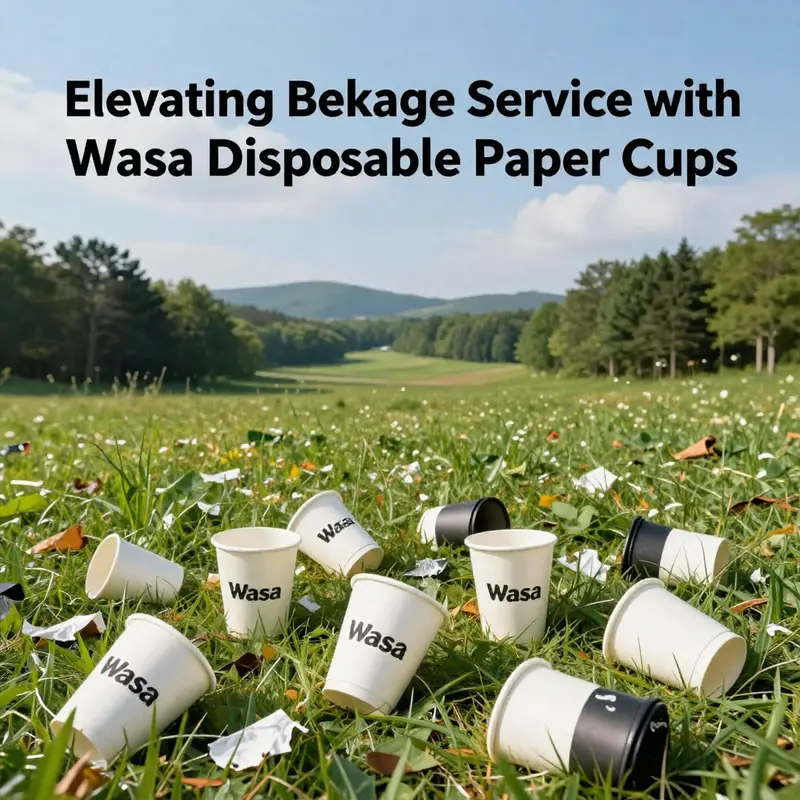
The life cycle of a disposable paper cup begins long before a barista hands it to a customer and continues long after the drink is emptied. It unfolds across forests or pulp mills, through the energy-hungry and water-intensive processes of paper manufacture, across shipping routes, and into waste streams where end-of-life choices determine whether a single-use item becomes a resource or an ongoing burden. This chapter grounds its narrative in the most rigorous evidence currently available on the environmental implications of disposable paper cups. It emphasizes that a cup is not a solitary act of convenience; it is a node in a chain of material flows, energy demands, and waste management decisions that collectively shape climate change, resource depletion, and ecosystem health. In doing so, it also clarifies why the question of sustainability cannot be answered by looking at a single attribute—such as biodegradability or recycling claims—in isolation. The same cup that seems lightweight in a consumer’s hand can carry a heavy carbon bill when all stages of its life are counted.
Revealing what lies inside the standard disposable cup helps explain the broader environmental picture. Paper coats itself in a thin layer of polyethylene to withstand hot liquids, a pairing that is not incidental but instrumental to the function of the cup. The lining makes the cup waterproof, prevents leakage, and preserves beverage quality during transport. Yet it also locks the container into a material system that is difficult to separate in municipal recycling streams. In practice, this means many cups are treated as non-recyclable by local facilities that lack the specialized equipment needed to delaminate the paper fiber from the plastic film. What looks like a low-impact, renewable material on the surface becomes a composite whose end-of-life path is often landfill or incineration. The simplicity of “paper” is thus complicated by the reality of layered materials designed to deliver performance, hygiene, and convenience in a fast-paced service context. This dissonance between intended function and end-of-life outcome sits at the heart of most lifecycle analyses of disposable cups, which routinely show that the recyclability advantage of paper can be undermined by the very features that enable practical use.
The CO2 footprint associated with disposal further compounds the challenge. When these cups are incinerated, the release of greenhouse gases is not trivial. Recent peer-reviewed scholarship estimates that incineration of the cup material can generate about 1.77 kilograms of CO2 per kilogram of material burned. That conversion factor translates to real-world impacts for facilities that rely on mass combustion of end-of-life cups, especially where waste streams are not efficiently diverted toward recycling or reuse. The climate consequence of this pathway becomes more pronounced in urban centers, where the sheer volume of cups produced and discarded compounds the emissions associated with waste processing. It is important to recognize that the carbon intensity of disposal is just one piece of the broader emissions picture. The upstream stages—pulping, paper production, resin or wax coatings, and plastics integration—also contribute significantly to the atmosphere through energy use and chemical inputs. When all these segments are summed, the total lifecycle emissions of disposable cups begin to rival, in certain contexts, the emissions associated with reusable alternatives if the latter are not used enough times to amortize their initial manufacturing burden.
The production phase itself demands substantial resources. Compared with durable, reusable cups, single-use paper cups demand ongoing material inputs, energy for pulping and conversion, and a logistics chain that keeps millions of units moving daily. The energy and resource demands are not merely additive; they interact with the frequency of use and the tenure of the product in circulation. In a broader sense, the environmental math turns on a crucial question: how many times must a reusable cup be used before its lifecycle emissions become lower than those of a disposable cup? Some studies propose a break-even point in which the reusable option becomes more favorable only after a certain threshold of uses is reached, and that threshold is highly sensitive to factors such as the production energy mix, the durability and longevity of the reusable material, and the efficiency of cleaning processes. One widely cited comparison points to stainless steel as a durable option; however, this is not a universal truth. The stainless steel alternative can carry its own manufacturing footprint, sometimes up to about 3.5 kilograms of CO2 per unit produced. The key takeaway is that the environmental calculus for reusables hinges on use frequency, maintenance, and the local energy context, and cannot be resolved by a single metric alone.
Recycling challenges, including contamination, compound the lifecycle complexities. Even when paper cups are routed to recycling streams, significant barriers remain. Food residues can contaminate the batch, reducing the quality of recycled paper and adding processing costs. More stubbornly, the plastic lining resists separation from the paper fiber. Delamination or mechanical separation steps are often required, but these steps are not universally available in municipal facilities. The resulting reality is that a sizable share of cups that enter recycling streams do not emerge as usable paper fibers but are diverted into energy recovery or landfill. Life cycle assessments then reflect these realities by highlighting that the apparent biodegradability or compostability of some paper-based packaging does not automatically translate into lower overall environmental burdens when end-of-life management constraints are accounted for. The perceived advantage of “biodegradability” can thus evaporate when the full life cycle—including production, distribution, and end-of-life processing—is considered.
What emerges from this integrated view is a nuanced hierarchy of environmental priorities. The most impactful choices occur not at the moment of disposal but earlier, in material composition and design decisions. If the inner lining is a plastic film that complicates recycling, reducing or redesigning that layer could tilt the end-of-life equation toward better outcomes. Similarly, reducing the energy intensity of pulping, utilizing cleaner energy sources, or increasing the efficiency of production lines can yield meaningful emissions reductions across the life cycle. But design changes have to be balanced against other constraints—strength, leak resistance, cost, and consumer hygiene expectations. The conversation thus moves from simple disposal advice to intricate design and policy decisions that can, in principle, shift the balance of environmental impact across the product’s entire life cycle.
From a practical standpoint, the sustainability narrative for disposable cups emphasizes that reusables—especially those made from durable materials such as stainless steel, bamboo, or ceramic—hold the strongest long-term promise when their use rate is high enough to offset their heavier initial footprint. The arithmetic of reuse demands consistent utilization: the more often a reusable cup is employed for beverages, the greater the payoff in terms of avoided disposables and associated emissions. In many real-world settings, this logic supports strategies such as incentivizing customers to bring their own cups, integrating durable alternatives into workplace coffee programs, and designing service models that normalize reusability. Yet even here, one must recognize that the benefits hinge on context. In environments where washing facilities are scarce, or where energy sources are carbon-intensive, the reuse advantage may diminish. In those cases, investments in waste reduction and improved end-of-life treatment for disposables can be a transitional bridge, enabling more responsible choices while the broader systems catching up to reuse are put in place.
The implications for policymakers, retailers, and consumers are therefore twofold. First, it becomes essential to acknowledge the limitations of conventional recycling and the sometimes opaque end-of-life trajectories of single-use cups. Second, it is equally important to pursue systemic improvements that reduce the environmental burden across all stages. This means supporting innovations in material science, such as alternative waterproofing technologies that preserve recyclability, and backing upgrades in municipal facilities to enable more effective separation of fiber from film. It also means broad adoption of reusable models in places where they are practical and attractive, complemented by easy-to-use attribute labeling that helps customers understand the true environmental costs of their purchases. And because packaging decisions are often shaped by procurement practices and supply chain norms, prompting suppliers and manufacturers to consider cradle-to-cradle designs can help align product performance with environmental stewardship.
Within the broader discourse of sustainable packaging, a single product category does not act in isolation. It interacts with a spectrum of packaging choices, from take-away bowls and cups to lids and accessories, and with the waste management infrastructure that processes them. A practical way to illustrate this interconnectedness is to look at the range of disposable options used for hot drinks or meals and to ask how each choice maps to waste hierarchies, recycling capabilities, and energy footprints. For instance, a common take-out package might be a kraft paper bowl or cup with a simple lid, designed for rapid turnover and consumer convenience. The design decisions in such packaging influence not only the user experience but also the feasibility of recovery and reuse downstream. Readers who are evaluating sustainability tradeoffs can benefit from examining specific product configurations and their end-of-life destinies, not purely from generalized claims about biodegradability or recyclability.
To ground these considerations in tangible design realities, consider a representative example of disposable take-out packaging. This category often features a paper body with a minimal, thin plastic lining, optimized for leakage resistance while attempting to preserve some degree of recyclability. It illustrates how functional requirements—like heat resistance, moisture control, and stackability—align with material choices that can impede recycling streams. This kind of packaging is recognizable in many cafés and food-service operations and serves as a useful case study for understanding how incremental design tweaks could influence environmental outcomes over a product’s life cycle. For readers who want to explore concrete packaging examples, one such product demonstrates the kind of disposable, lid-equipped, paper-based take-out packaging that is widely deployed in fast-service contexts. Use this link to view a practical example: https://greendispopack.com/product/disposable-700ml-kraft-paper-bowl-take-out-octagonal-rectangle-paper-bowl/.
In sum, the environmental impact of disposable cups is not reducible to a single factor such as compostability or recyclability. It is a synthesis of how raw materials are extracted and produced, how energy is consumed, how far and how fast items are transported, how efficiently waste is managed, and how consumer behavior interacts with the available infrastructure. The peer-reviewed evidence consistently shows that while paper-based designs may offer certain advantages over pure plastics at specific stages of the life cycle, the overall burden remains substantial when all phases are tallied. This recognition does not condemn single-use cups to oblivion. It invites a calibrated, multi-pronged approach: push for smarter materials and smarter disposal, expand and optimize reuse where practical, and invest in waste-management systems that can recover value from diverse packaging streams. It also encourages continuous measurement and transparent reporting so that stakeholders—manufacturers, retailers, and consumers alike—can make decisions grounded in the full spectrum of environmental consequences rather than isolated metrics.
From a consumer education perspective, the key message is not to vilify convenience but to expand the range of choices available and to make the environmental costs visible. When a store offers a reusable option, it should be as straightforward to opt into reuse as it is to accept a disposable cup. From a corporate standpoint, companies can pursue design-for-recyclability principles, reduce the thickness or diversity of plastic liners, or substitute liners with barrier layers that are easier to recover. This does not require a single grand redesign but rather a sequence of incremental improvements that accumulate across millions of cups. In practice, success will come from aligning product design with waste-management capabilities, energy realities, and consumer behavior—an alignment that, if achieved, can translate into meaningful reductions in greenhouse gas emissions, resource depletion, and the environmental footprint associated with take-out dining.
For readers seeking more rigorous details on the greenhouse gas implications and lifecycle considerations of disposable paper cups, the peer-reviewed study titled Environmental Impact of Disposable Paper Cups – A Study on Potentially Toxic Elements provides an authoritative foundation. The study presents a range of lifecycle data, including CO2 emissions from incineration, material composition, and end-of-life pathways, and it supports the conclusion that the overall environmental burden is substantial when all life-cycle components are considered. External resource: https://www.mdpi.com/2071-1050/14/12/7498. This resource offers a comprehensive, data-driven view that complements the narrative outlined here and can help researchers, practitioners, and policymakers ground their decisions in robust scientific evidence.
Economic Currents in Disposable Paper Cups: Growth, Cost Structures, and the Circular Opportunity
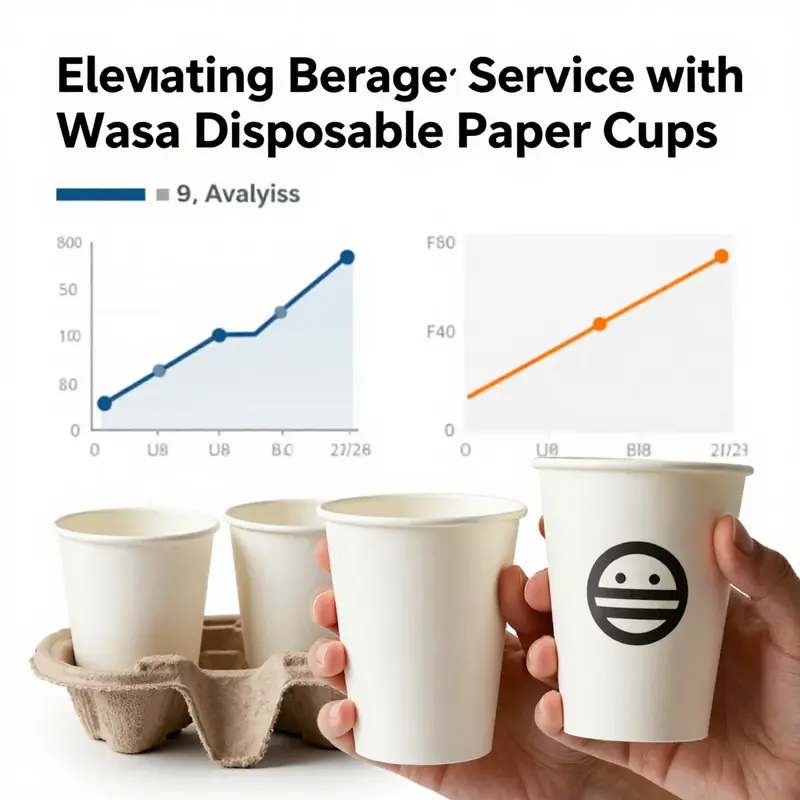
The economic story surrounding disposable paper cups unfolds as a quietly influential thread running through modern food service, event planning, and daily office life. Taken together, the macro indicators present a sector driven not only by the demand for quick, hygienic, convenient serving options but also by the broader dynamics of cost, supply resilience, and the evolving potential of resource recovery. While no single brand data point may uniquely define the space, the industry as a whole reveals a robust growth trajectory, cost efficiencies that tempt price-sensitive buyers, and a set of sustainability-driven opportunities that could alter the long-term profitability and strategic options for manufacturers and retailers alike. In this sense, the chapter pivots on three interlocking ideas: scale and growth, cost architecture and procurement realities, and the circular economy that converts waste into value rather than merely discarding it. The insights are broadly applicable to any label competing in or considering entry into the disposable cup market, and they illuminate why even a seemingly low-cost item can become a meaningful economic lever for a large—yet highly price-competitive—category.
On the growth front, market intelligence points to an expansive, highly liquid market for disposable paper cups. The sector has drawn attention not only for its ubiquity in coffee shops, quick-service restaurants, and corporate settings but also for its adaptability to changing consumer preferences and regulatory environments. A pivotal takeaway is that the market value reached into the tens of billions, with forecasts consistently indicating a persistent expansion. A notable figure from recent industry analyses places the market value around seventy billion dollars in 2025, with a projected compound annual growth rate in the vicinity of 8.5 percent from 2026 through 2033. Such a trajectory signals not just rising demand but the cumulative effect of small, frequent purchases across millions of transactions daily. For any brand that participates in this space, whether through direct manufacturing, private labeling, or supply to distributors, the implication is clear: establish scale, cultivate reliable procurement networks, and align with evolving consumer and business expectations around convenience and hygiene. The growth story also underscores why even modest shifts in competitive dynamics—such as bulk pricing, delivery reliability, or customization capabilities—can translate into meaningful market share gains over time.
Yet growth alone does not fully capture the economic texture of disposable paper cups. The cost structure, and the way buyers perceive and manage price, often governs durability of demand more than headline market size. In practice, unit costs are remarkably low. Vendors have reported price points that can be as low as a few hundredths of a dollar per cup when ordering in bulk quantities. For instance, bulk purchases on the scale of fifty thousand cups or more can translate into substantially lower per-unit costs, creating a compelling argument for high-volume buyers such as large office campuses, event organizers, and regional chains. The economics here rest on standard supply-chain levers: economies of scale, standardized production processes, and minimal incremental costs as output increases. When the unit cost is so modest, even small improvements in efficiency or service—such as more accurate forecasting, reduced stockouts, or faster replenishment cycles—can yield outsized gains in overall profitability. However, this is a space in which margins are frequently razor-thin on the surface, so subtle value levers matter.
This reality shapes the procurement and competitive strategies of participants in the space. Brands and retailers operate in a price-sensitive environment where the base material cost, energy, labor, and distribution all compress margins. The low per-unit price is not a plea for complacency; it is a structural characteristic that makes the category highly investable for scale players and simultaneously invites intense competitive differentiation on other axes. For example, value can be added through faster distribution, more reliable supply chains, more attractive customization options, or stronger partnerships with a network of suppliers who can deliver on thin margins without compromising reliability. In this sense, the economics of disposables are not solely about cutting costs; they are also about optimizing the total cost of ownership for a buyer—considering waste handling, storage, and inventory management. A cup is a small item, but the aggregate cost of missing stock, vendor reliability issues, or inconsistent quality across thousands of outlets can become material when multiplied across a week, a month, or a season.
Turning to the upstream dynamics, the low unit cost belies a more complex value chain where the base materials, printing or branding options, and the protective liners play into the total cost picture. A disposable paper cup typically combines paperboard with a barrier lining to prevent liquid penetration, often a thin plastic film or wax coating. The economics of these materials influence not only the raw cost but also the environmental footprint and potential end-of-life options. In markets where regulatory pressure or consumer preference tilts toward sustainability, brands may face additional costs associated with more environmentally friendly coatings, certified compostability, or enhanced recyclability. In many regions, the practical barrier to full circularity remains the friction between disposal options and the infrastructure capable of processing these cups at scale. Yet even where recycling rates lag, the economic narrative is not static. There is growing recognition that discarded cups can contain recoverable materials or can be diverted into energy recovery streams, generating incremental value in the waste-management ecosystem. The possibility of extracting economic value from discarded cups reframes the category from a simple consumption item to a potential revenue source within a broader circular economy framework.
This circular perspective does not merely rest on theoretical potential. It translates into concrete investment considerations for the entire value chain—from raw material suppliers and manufacturers to distributors and end users. The efficiency of the recycling stream, or lack thereof, has demonstrable implications for policy, branding, and end-user risk management. For instance, if a market can enhance the recyclability of the cup or recover valuable elements from discarded cups, there exists an opportunity to create a new revenue line or to reduce the overall purchase price through participation in recycling programs or deposit-return schemes. On the other hand, if the current disposal infrastructure remains insufficient, brands might respond by accelerating innovation in coatings, lids, or double-wall designs that improve user experience while maintaining compatibility with existing waste streams. In either scenario, the economic calculus expands beyond unit cost and wholesale price to include expected returns from end-of-life processing, regulatory incentives, and consumer willingness to pay for sustainability claims that are verifiable and transparent.
A practical implication of these dynamics is that buyers in the disposable cup market increasingly consider not just the cup’s price but the total package: reliability of supply, customization capabilities, and the ability to align with corporate or institutional sustainability goals. For buyers who operate across multiple locations or events, the value of a single reliable supplier who can deliver consistent quality, on-time replenishment, and seamless integration with their branding strategy becomes a meaningful part of the total cost of ownership. In such scenarios, even modest differences in service levels can translate into tangible savings in downtime, staffing, and customer satisfaction. The economic logic thus supports a broader strategic view: invest in supply chain resilience, embrace partnerships that offer predictable, scalable solutions, and weigh the incremental costs of more advanced packaging options against the reduced risk of stockouts and reputational exposure in high-traffic environments.
From a brand-development perspective, there is also an implicit tension between price-focused competition and value-driven differentiation. In a market where the unit price is inherently low, opportunities to command higher prices lie in the breadth of value delivered—branding, customization, and alignment with sustainability narratives. The capacity to offer printed designs, lid options, or tailored packaging configurations can elevate a commodity item into a preferred choice for a specific segment. Yet this is a careful balancing act; customers who prioritize cost will gravitate toward the lowest feasible unit price, while institutions with strong sustainability mandates or brand-consistency requirements may be willing to pay a premium for credible environmental attributes, reliable branding, and consistent performance. The optimal strategy often blends efficient scale with selective, high-value offerings that reinforce a brand’s unique position without eroding the competitive base.
As buyers and suppliers navigate these questions, there are practical touchpoints that illustrate how the economics plays out in daily decisions. For procurement teams, the decision to purchase in bulk is not solely a price decision but a risk management choice. Bulk buying reduces the probability of stockouts, lowers the per-unit logistics cost, and facilitates smoother event planning or campus operations. However, it also requires storage space, capital tied up in inventory, and a careful forecast to avoid waste. Companies that have mastered demand planning can lock in favorable unit prices while maintaining lean inventory, which improves cash flow and reduces waste. Suppliers, in turn, must balance production capacity with demand signals and the need to maintain quality across large orders. Margins may be thin, but the scale of operations means even small improvements in yield, waste reduction, and process efficiency can accumulate into meaningful profitability. In markets characterized by high volumes and fast turnover, these operational improvements are not optional luxuries; they are core to sustaining competitive advantage over time.
The cost and value dynamics discussed here naturally invite consideration of catalogued options beyond the most basic cup designs. The industry’s ongoing innovation includes variations in wall construction, insulation performance, and lid compatibility, all of which influence user experience and, consequently, market acceptance in diverse contexts—from bustling coffee shops to corporate cafeterias and large conferences. While the basic cup may remain a low-cost vehicle for beverages, the broader packaging family around it becomes a platform for branding, differentiation, and efficiency gains. The result is a market where suppliers who can deliver consistent product quality, flexible customization, and dependable logistics are better positioned to convert volume into sustained profitability, even as the base unit price remains competitively low.
For buyers exploring options, a practical path forward involves recognizing the value of scale while not overlooking the importance of service quality and lifecycle considerations. When negotiating with suppliers, it makes sense to emphasize not only the per-unit price but also the reliability of delivery schedules, the ability to accommodate branding and customization needs, and the availability of compatible lids and supplementary packaging components. The economics of the broader take-away packaging ecosystem—often bundled with cups, sleeves, and lids—can influence the total cost of ownership in subtle but meaningful ways. As operators seek to optimize their operations, the most successful partnerships tend to be those that reduce complexity, improve forecasting accuracy, and facilitate consistent customer experiences across all touchpoints. In such arrangements, even tiny efficiencies in ordering, packaging, or waste handling can ripple through margins, brand perception, and customer loyalty.
In closing, the economic narrative of disposable paper cups is not a simple tale of cheap units and rising demand. It is a multifaceted story about scale, procurement discipline, and the value that can be unlocked through smarter end-to-end management, supplier collaboration, and an embrace of circular principles. The low unit price makes the product accessible to a broad range of buyers, while the potential for value creation lies in how well a company leverages volume, reliability, and branding to differentiate itself. The sector’s growth trajectory is a reminder that even the smallest everyday items can carry outsized economic influence when paired with efficient operations and strategic thinking. For brands contemplating entry or expansion, the path to profitability is less about chasing marginal price reductions and more about building a resilient, customer-centric supply chain that aligns with evolving consumer expectations and sustainable development ambitions. Such an approach positions disposable cups, in aggregate, as a durable economic engine that can support both near-term sales and longer-term value creation across multiple stakeholders in the hospitality and events ecosystem. If you are seeking packaging options that combine cost efficiency with scalable customization, exploring established wholesale avenues can be a productive starting point. For example, you can explore wholesale take-away options with lids to assess how price, reliability, and branding capabilities align with your operational priorities: wholesale take-away 8oz-12oz disposable coffee paper cup with lids.
External resources that further illuminate the market context include comprehensive industry analyses that project long-run demand, price dynamics, and regulatory influences shaping the disposable cup sector. A detailed external resource provides a strategic outlook on the broader disposable paper cup market and its growth mechanics, complementing the more micro-level considerations discussed here: https://www.marketsandmarkets.com/Market-Reports/disposable-paper-cup-market-29569453.html
null

null
Final thoughts
In summary, Wasa disposable paper cups are a significant asset for businesses in the beverage sector, merging convenience with eco-conscious practices. Understanding their materials and manufacturing, environmental impacts, and economic benefits allows businesses to make informed decisions that align with both consumer expectations and environmental sustainability goals. As trends shift toward greater awareness of ecological issues, choosing Wasa cups can enhance a brand’s reputation while catering to the needs of modern consumers. Embracing these innovations not only improves operational efficiency but also reflects a dedication to responsible practices in today’s market.