
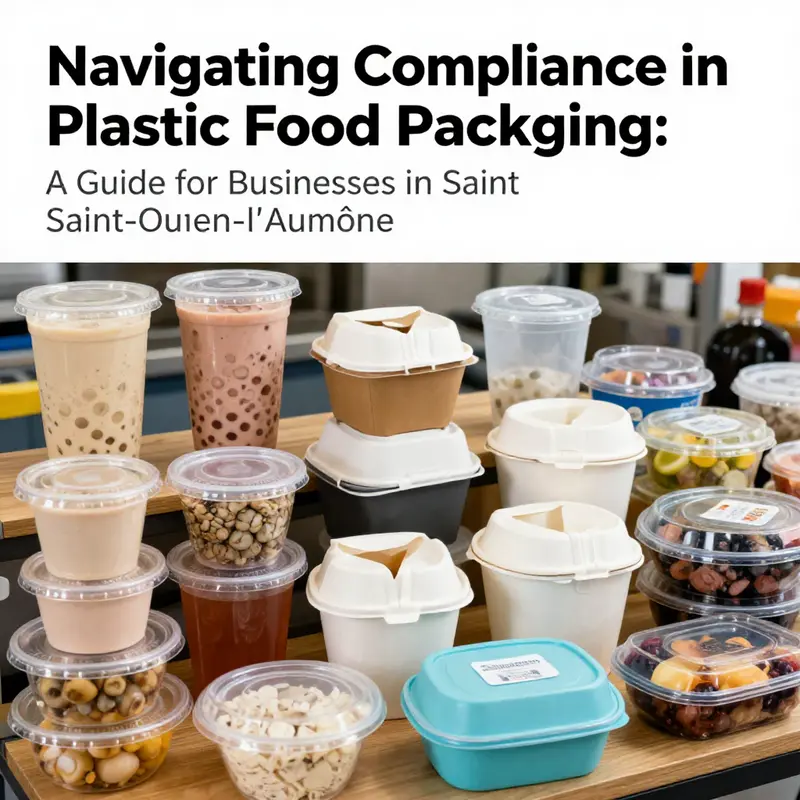
Plastic food packaging containers play a crucial role in the food industry, especially in vibrant locales like Saint-Ouen-l’Aumône, France. As businesses such as bubble tea shops, restaurants, and catering services adapt to evolving consumer preferences and increasingly stringent safety regulations, understanding the compliance landscape is imperative. This article provides an in-depth look at the regulatory framework governing plastic packaging, outlines the necessary testing requirements to ensure safety and performance, and explores the local market dynamics affecting production and procurement of plastic food containers. Delving into these aspects will equip businesses with the knowledge needed to navigate the complexities of plastic food packaging, ensuring their offerings meet both safety standards and customer expectations.
Regulatory Currents: How EU and French Rules Shape Plastic Food Containers in Saint-Ouen-l’Aumône
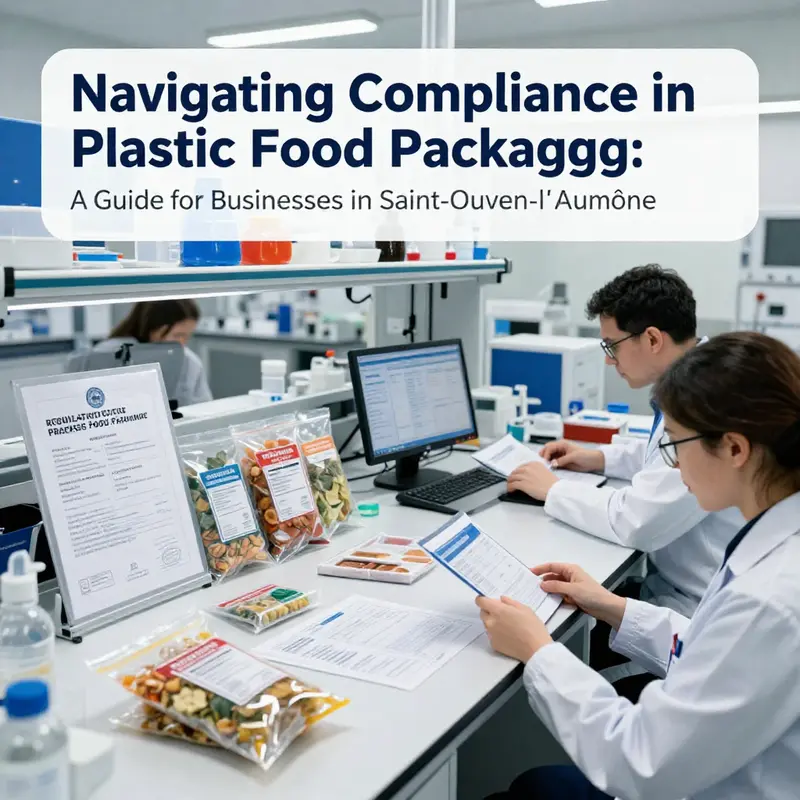
Saint-Ouen-l’Aumône, a town that sits just beyond the urban bustle of the French capital, offers a telling snapshot of how regulatory currents flow from continental rules to local factories and shop shelves. The chapter that follows weaves together the legal architecture that governs plastic food packaging containers in this locale with the practical realities of producing, testing, and marketing under a regime that prioritizes safety, traceability, and consumer trust. The broader European Union framework supplies the spine, but France’s national authorities and their DGCCRF inspections add a layer that is specific, sometimes stricter, and frequently more hands-on. In Saint-Ouen-l’Aumône, as in much of France, the journey from raw material to retail ready container is not merely a matter of meeting a few numeric limits. It is a disciplined process of verifying composition, migration behavior, sensory performance, and documented conformity. The core of this process rests on two tightly linked requirements: the protection of human health and the protection of the environment, pursued through carefully designed tests, certified laboratories, and a formal declaration of conformity that officials can scrutinize at the border of production and market access. The central European regulation that informs most decisions about plastic packaging intended for contact with food is Regulation (EU) 10/2011, commonly referenced in France as the EU framework for materials and articles intended to come into contact with food. Yet in Saint-Ouen-l’Aumône, manufacturers cannot rely on that EU baseline alone. French authorities have added layers of specificity and enforcement that push compliance beyond a simple green light from Brussels. The result is a regulatory tapestry where compliance is not a one-off certification but an ongoing, auditable state of readiness. From the perspective of a local producer, the first question is not simply, “Does this plastic meet EU requirements?” but rather, “Does this packaging meet EU requirements as they are implemented through French law, and can we demonstrate it through validated testing and a DoC that stands up to DGCCRF scrutiny?” In answering this, the most practical route is to trace the life of a typical plastic food container destined for Saint-Ouen-l’Aumône’s markets from design to delivery. The journey begins with the choice of materials and the formulation of the container, a choice shaped by Regulation (EU) 2019/1020 on plastic packaging, which tightens the constraints on safety, composition, and environmental impact. This regulation strengthens the disallowance of hazardous substances and sets clear expectations for testing for chemical migration. In particular, the regulation specifies that substances of concern must not be present in a way that would compromise human health or the environment, and it prohibits substances like bisphenol A (BPA), lead, and phthalates, which have historically raised concerns about endocrine disruption and toxicity. The practical upshot for Saint-Ouen-l’Aumône is that manufacturers must adopt a materials strategy that excludes prohibited substances and favors food-grade inputs. Beyond identifying permissible materials, the regulation anchors itself in measurable outcomes, notably the limits of migration from packaging into food. Here the concept of migration is not merely theoretical. It is tested in two layers: total migration, which captures the overall transfer of nonvolatile substances into a food simulant, and specific migration, which quantifies particular substances of concern in a proportionate way. Laboratories conformed to ISO 17025 play a pivotal role in delivering credible migration data. They conduct standardized tests using food simulants such as olive oil, 95% ethanol, and 3% acetic acid to mimic diverse food matrices. Total migration tests assess the bulk of migrating substances, while specific migration tests search for explicit contaminants—heavy metals like lead, cadmium, and mercury; plasticizers such as certain phthalates; and antioxidants that might migrate in trace amounts. The aim is to ensure that neither the general chemical environment of the container nor the presence of particular additives creates a risk to health or safety, even after prolonged contact with warm or fatty foods. The regulatory framework does not stop at chemistry. In Saint-Ouen-l’Aumône, as elsewhere in France, the sensory reality of packaging is scrutinized as well. A sample may pass chemical tests yet fail if the packaging gives off an off odor into a food simulant or causes visible color migration. These sensory checks are essential because consumer perception can reveal subtle interactions that instrumentation might miss. The combination of migration testing and sensory evaluation forms a robust gate that prevents commercially feasible packages from slipping into the market while still meeting technical specs. To ensure the integrity of the data, the testing process must be performed by a third-party laboratory that holds ISO 17025 accreditation and demonstrates familiarity with French regulations. The resulting test report, usually in English or French, becomes the anchor for a formal declaration of conformity (DoC). This DoC is a legal document produced by the manufacturer or an EU importer and is the principal vehicle DGCCRF officers use to verify that a product on the market complies with the applicable standards. In Saint-Ouen-l’Aumône, the DoC is not a ceremonial token but a practical, enforceable record. It is the document DGCCRF personnel expect to see during routine checks and at the point of market entry, whether the product is intended for local sale or export. The DoC must align with the testing outcomes and reflect the evidence gathered through migration studies and sensory assessments. As a result, the responsibility for compliance is shared among the parties along the supply chain: raw material suppliers must supply food-grade, compliant materials; manufacturers must formulate and process those materials in ways that do not introduce prohibited substances or unacceptably high migration; testing laboratories must deliver credible data; and distributors and retailers must ensure that the DoC travels with the product and remains accessible for inspection. In Saint-Ouen-l’Aumône, this means there is usually a local cluster of production activity capable of delivering customized, food-contact plastic packaging, including containers and bags, with options for silkscreen printing, labeling, and packaging customization. The reality on the ground is one of compliance-driven flexibility. A producer can tailor container shapes and printing to brand needs while maintaining strict adherence to migration limits and other performance metrics. The presence of a local producer ecosystem in the Saint-Ouen-l’Aumône area helps streamline testing logistics and DoC management, enabling faster validation cycles for products that may be designed for regional markets or for export through the broader European supply chain. The practical implications for a business planning to operate in Saint-Ouen-l’Aumône are significant. First, an understanding of the core standards is indispensable. A plastic container must meet total migration limits of 10 mg/dm2, and its specific migration profile must be clear for the substances of concern. The packaging must not exhibit odor or color transfer beyond what is deemed acceptable by the regulation and the testing protocol. The mechanical and thermal performance standards, while sometimes framed as separate technical specifications, are deeply intertwined with chemical safety. A container that warps, cracks, or delaminates at temperatures near 100°C ±5°C will fail to maintain a seal or barrier function, potentially altering migration behavior and creating a pathway for contaminants. In a market like Saint-Ouen-l’Aumône, where restaurants, retailers, and e-commerce operators may demand rapid turnover and customizable packaging, the ability to demonstrate that each batch conforms to migration tests is a competitive differentiator. The supply chain must embed quality at every stage, from resin choice and compounding to molding, printing, and package assembly. Microbiological safety adds another layer of safeguard. The standard of a total aerobic microbial count not exceeding 10 CFU per unit underscores a commitment to hygienic design and manufacturing controls. While this figure may seem modest, in practice it translates into cleanroom-like processing windows, validated sanitation protocols for machinery, and rigorous handling procedures to minimize contamination risk. When a product passes the full spectrum of tests and receives a DoC, it can lawfully enter the French market or be exported with the confidence that it has been evaluated against both EU-wide and France-specific expectations. The DoC, in this sense, acts as a passport that aligns the company with DGCCRF expectations and reduces the likelihood of post-market corrective actions that disrupt production or distribution. The procedure does not end with a single certification event. Regulations are dynamic, and new substances or migration limits may be introduced over time as scientific understanding evolves. For Saint-Ouen-l’Aumône manufacturers, this means maintaining a proactive posture: continuous supplier qualification, routine re-testing of materials, and a surveillance mindset for regulatory updates. Compliance activities should be integrated into manufacturing planning rather than treated as a bolt-on compliance exercise. It is in this frame that the practical realities of market access emerge. Local producers frequently offer turnkey options, including the ability to customize plastic food containers with printing and labeling, and to supply packaging that is formatted for online procurement platforms. The conversation about customization intersects with regulatory diligence: any branding or labeling that accompanies the packaging must not undermine safety or misrepresent the container’s properties. Clear labeling that aligns with the DoC, explicit statements about material composition, and an easy path for DGCCRF verification all contribute to a trustworthy market presence. In this sense, local business dynamics illuminate how regulatory frameworks shape commercial behavior. The capacity to deliver standardized test data and DoCs quickly can determine a supplier’s ability to win and retain customers who expect reliability and compliance. A key feature of Saint-Ouen-l’Aumône’s packaging landscape is the ability to source production with on-demand customization and bulk supply. For communities and business models that rely on inbound packaging for takeout or retail display, the logistical advantages of a nearby supplier reduce the time between design iterations and market testing. They also enable closer alignment of packaging features with the actual food products they contain, which in turn supports more precise migration testing and labeling. The practical implications for a business seeking to enter or expand in Saint-Ouen-l’Aumône extend beyond regulatory compliance into supply chain resilience and customer confidence. As e-commerce and cross-border trade become increasingly prominent, the demand for reliable, compliant packaging that can be stylized for brand identity will only grow. The region’s producers, with their ability to offer customized design, printing, and packaging while adhering to strict migration and safety criteria, provide a model for how modern packaging ecosystems can balance design flexibility with safety imperatives. A future-facing aspect of this regulatory framework is the emphasis on environmental sustainability and the life cycle of packaging materials. While the migration tests focus on safety in contact with food, there is growing attention to recycling, end-of-life management, and environmental impact of plastics. This broader concern does not dilute safety requirements but rather places packaging choices within a wider decision matrix. The best practice guidance emerging from Saint-Ouen-l’Aumône’s regulatory environment encourages manufacturers to consider recyclable or reusable packaging formats, to explore materials with lower migration potential, and to maintain thorough records that demonstrate compliance across the packaging’s entire life cycle. To illustrate how these ideas translate into daily operations, consider a scenario in which a local producer develops a new line of plastic containers intended for hot foods. The design would be vetted for thermal stability and mechanical strength while also undergoing a battery of migration tests against the most relevant simulants for hot, fatty foods. The laboratory report would feed into the DoC, which would then accompany every shipment. If the product is intended for export through the broader EU market, the DoC would serve as a supported, verifiable document for importers in other member states, helping to avoid customs delays and non-compliance claims. This seamless integration of design, testing, documentation, and market access is the practical embodiment of the regulatory currents at work in Saint-Ouen-l’Aumône. It reflects how EU-wide principles and French nuances combine to shape the day-to-day realities of producing plastic food containers. It also highlights how suppliers and buyers can work together to ensure safety, performance, and transparency while pursuing business opportunities in a competitive market. For readers seeking an actionable touchstone, the key takeaway is that compliance is not a static milestone but a continuous process that informs every stage of product development—from material selection to final packaging and post-market surveillance. It is the thread that binds regulatory rigor to market success, and it runs through the workshops, laboratories, and offices that define the packaging economy of Saint-Ouen-l’Aumône. In the spirit of informed procurement and responsible production, it is worth noting the availability of alternative packaging approaches that align with evolving consumer expectations and sustainability targets. While the focus here is on plastic packaging, the regional ecosystem also supports a spectrum of packaging options, including kraft paper-based solutions that can offer competitive customization and environmental advantages. For instance, one can explore diverse kraft paper packaging configurations that accommodate branding through printing and labeling while avoiding some of the migration concerns associated with plastics. A practical way to compare these options is to view packaging choices as a spectrum, with plastics on one end and paper-based alternatives on the other, each with its own regulatory compliance pathway. The key, then, is due diligence across all options. This includes optically inspecting the packaging’s physical integrity, testing for any potential color transfer, ensuring that the chosen materials meet food-contact standards, and securing a comprehensive DoC that documents compliance for intended markets. As regulations evolve, Saint-Ouen-l’Aumône’s packaging landscape will likely continue to adapt, balancing innovation with safety. The capacity to adapt without sacrificing compliance will define the region’s longer-term competitiveness and its role as a model for responsible packaging production near major urban centers. For readers who want to explore concrete design and packaging options without stepping away from regulatory compliance, a relevant reference is provided at the end of this chapter. A useful entry point into the broader discussion of packaging alternatives and their regulatory considerations can be found via the online resource about kraft paper packaging options, which highlights customizable, paper-based solutions that can complement or substitute plastic in certain applications. kraft paper packaging options This link offers a practical glimpse into packaging alternatives that align with sustainability goals while reminding readers that regulatory vigilance remains essential, regardless of material choice. In summary, Saint-Ouen-l’Aumône exemplifies how EU-wide safety imperatives and French regulatory nuances shape the production and sale of plastic food containers. The layered requirements—explicit chemical migration limits, sensory checks, mechanical and thermal performance standards, and formal DoCs—drive a disciplined approach to packaging that supports public health, consumer trust, and market integrity. The outcome is a packaging ecosystem where conformity is not a one-time checkbox but an ongoing commitment to safety, quality, and transparency. For those seeking to deepen their understanding of the legal framework governing plastic packaging in Europe and France, the official EU regulation provides the authoritative baseline and the precise text that guides all subsequent compliance activities. External resources: Regulation (EU) 2019/1020 codifies the essential principles of plastic packaging safety, migration testing, and conformity documentation. It is a critical anchor for businesses operating in Saint-Ouen-l’Aumône and across France. See the official text for details and updates: https://eur-lex.europa.eu/legal-content/EN/TXT/?uri=CELEX%3A32019R1020
Beyond Compliance: The Testing Landscape for Plastic Food Containers in Saint-Ouen-l’Aumône, France
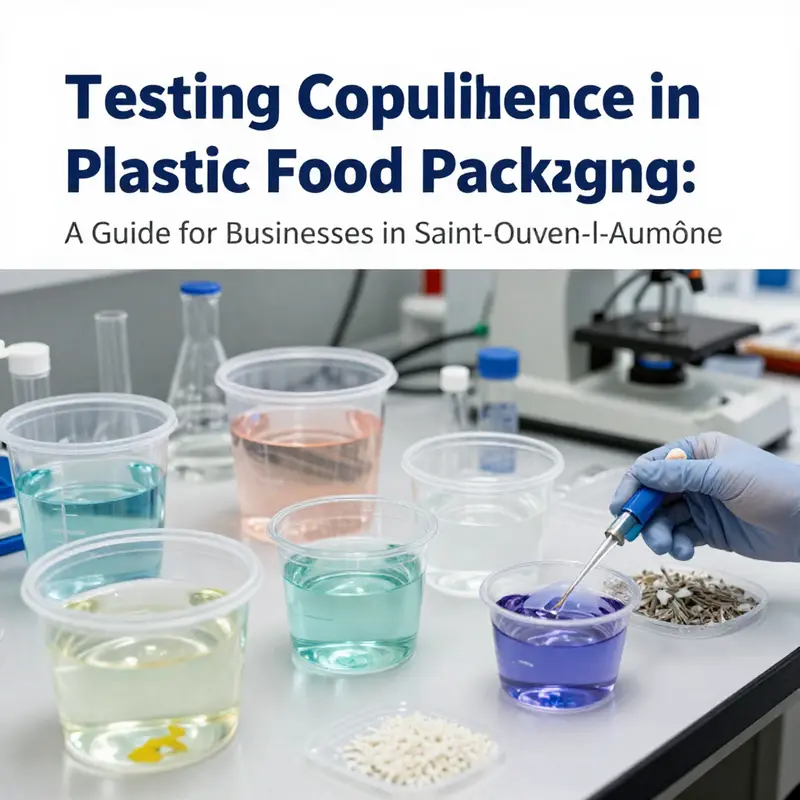
In the European packaging ecosystem, Saint-Ouen-l’Aumône sits at the crossroads of regulation, industry practice, and consumer trust. Plastic food contact materials must meet migration limits, substance restrictions, and safety checks that translate EU rules into day-to-day manufacturing and market surveillance in France. The key pillars are overall migration limits, specific migration limits for restricted substances, and sensory or microbiological safety checks.
Migration tests use food simulants like 10% ethanol or 3% acetic acid, with an often cited overall migration cap of 10 mg per square decimeter. When fatty foods are involved, isooctane or similar lipid simulants may be used and guidance refined to tighten assessments.
Laboratories accredited to ISO 17025 issue test reports; manufacturers draft a French version of the Declaration of Conformity (DoC) and provide it alongside shipments. Local enforcement in Saint-Ouen-l’Aumône requires traceability from batch data to DoC; changes trigger re-testing. The compliance framework supports local producers and EU trade, while ensuring safety, quality, and transparency through traceable data.
For suppliers, design choices should consider regulatory constraints from the outset; testing, documentation, and change management should be ongoing. An external reference is Regulation (EU) No 10/2011, which provides the foundation for these practices.
Compliance, Craft, and Commerce: Navigating Plastic Food Container Production in Saint-Ouen-l’Aumône Within France’s Rigorous Regulatory Landscape
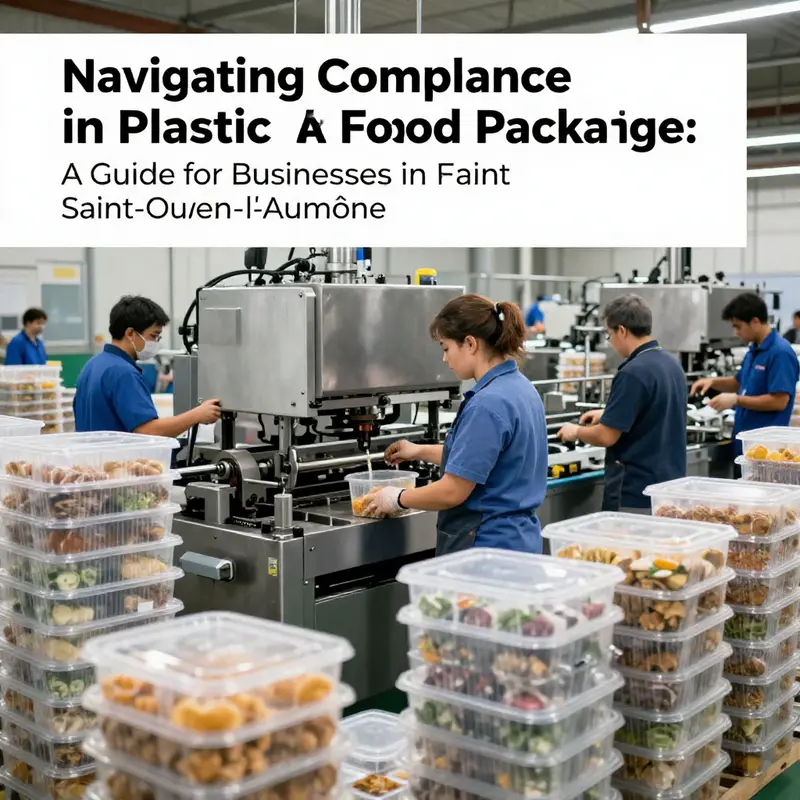
In Saint-Ouen-l’Aumône, as in other corners of France and the wider European market, the manufacture of plastic food contact packaging sits at the intersection of technical capability, regulatory discipline, and commercial viability. The landscape is defined less by local myths of production venues and more by a precise choreography of compliance that begins long before a single mold is cut. The absence of publicly available, locale-specific data about plastic container production in Saint-Ouen-l’Aumône does not erase the importance of understanding the regulatory framework that governs any plant seeking to emerge in this region or to sell across the French market. Instead, it casts a light on what manufacturers must internalize to operate lawfully and competitively: the dual pull of EU-wide safety standards and France’s own stricter enforcement culture, the meticulous testing itself, and the procedural rigor that transforms a raw material into a certified, traceable packaging solution for foods.
At the heart of the regulatory regime is a durable contract among materials, tests, and declarations. All materials intended to come into contact with food, including plastics used for containers, bags, or liners, must comply with EU Regulation No 10/2011 and must be supported by supplementary French requirements administered by the DGCCRF, the responsible national authority. The practical implication is straightforward in principle: meeting the EU standard is not enough. A Saint-Ouen-l’Aumône producer has to demonstrate conformity against France’s more stringent overlays, a distinction that shapes every step from raw material selection to final documentation. This layered obligation is not merely bureaucratic; it is a determinant of market access. When a French inspector from DGCCRF or a recognized third-party lab reviews a file, the focus shifts from abstract intentions to verifiable evidence of safety, performance, and sensory integrity.
The core testing suite that underpins this evidence is rigorous and multidimensional. Total migration, or Overall Migration, is a comprehensive gauge of how much non-volatile material may migrate from a packaging material into a food simulant. The testing typically employs representative simulants such as olive oil, ethanol at high concentration (95%), and acetic acid (3%) to reflect diverse food matrices. The results set upper limits that are stringent yet scientifically grounded. Specific Migration then dissects the possibility of particular substances migrating in measurable quantities. This includes heavy metals—lead, cadmium, mercury, and hexavalent chromium—along with plasticizers such as phthalates and other additives that may raise concerns. Antioxidants such as BHT or Irganox, often present in polymer formulations, are scrutinized not merely for presence but for the quantities that could appear in contact with food. The sensory dimension completes the triad: does the packaging impart an aroma or color shift that could betray the integrity of the food or the consumer’s perception of safety? These tests are not optional checkboxes; they predict, with statistical confidence, how a product behaves under real-world use and storage, and they shape whether a packaging solution can stand alongside a trusted label on a French dining table.
To access and interpret these results legitimately, the manufacturing entity must work with a laboratory that carries ISO 17025 accreditation and is familiar with the French regulatory landscape. The process is precise: select a third-party facility, oversee testing in the prescribed conditions, and obtain a formal report in English or French. From there, the manufacturer or the EU importer must sign a Declaration of Conformity (DoC) in French. This DoC is not a cosmetic page; it is the linchpin that DGCCRF officials examine during market surveillance. It confirms that the tested sample, the tested materials, and the tested processes align with the applicable EU and French standards. The DoC is a legally binding document, a bridge between laboratory science and regulatory accountability, and it anchors the packaging in the regulatory lifecycle that starts with raw materials and ends with the consumer’s safe, unimpaired experience.
In the Saint-Ouen-l’Aumône corridor, the lack of published, locale-specific production data does not diminish the practical pathway that manufacturers must follow. It instead foregrounds a market reality: a business aiming to produce plastic food containers for either export or domestic sale within France must invest in the full cone of compliance. The testing, the DoC, and the ongoing ability to trace and verify every compliance claim are as essential as the physical characteristics of the containers themselves. The process begins with material selection, a domain where polymer chemistry meets food safety. Resins and additives must be chosen with an eye toward migration profiles, compatibility with intended foods, and stability under expected storage conditions. The regulatory lens does not reward the lowest cost material but rather the material that can consistently demonstrate controlled migration and absence of harmful residues in the specific migration window.
Beyond the laboratory and the DoC, the production and market dynamics in Saint-Ouen-l’Aumône hinge on a broader ecosystem. Local producers may offer capabilities such as customized shaping, silk-screen or label customization, and packaging solutions designed for high-volume throughput. In practice, a factory within or near Saint-Ouen-l’Aumône that aspires to serve the French market must align its product development with the regulatory architecture from the outset. This alignment includes integrating compliance checks into supplier selection, ensuring traceability of all components—from resin to finished container—and building documentation that can be readily presented to regulators at points of entry or during routine checks. The commercial argument is equally important. In a climate where a rigorous compliance profile and a strong quality management system are viewed as competitive differentiators, French importers and EU-based distributors increasingly favor suppliers who can demonstrate a clean compliance track record, a clear DoC, and evidence-driven quality control data accessible in English or French.
The convergence of compliance and commerce also shapes procurement and production strategies in practical terms. For a Saint-Ouen-l’Aumône producer, market access depends not only on producing robust and aesthetically reliable containers but also on delivering the assurance that every batch can be traced, every test can be revisited, and every necessary document can be produced on demand. The testing cycle is not a one-off hurdle; it is an ongoing, auditable process. Every new formulation, every change in surface coatings, or even a minor adjustment to the migration testing protocol can trigger a fresh round of assessments, a reality that keeps regulatory readiness tightly coupled with product development timelines. This dynamic, in turn, nudges manufacturers toward a culture of proactive compliance. They invest in compliant design from the earliest stage of product development, maintain a robust record-keeping system, and cultivate relationships with accredited laboratories that understand the French enforcement ecosystem. In this environment, compliance is not an obstacle to growth; it is a foundation for sustainable growth, enabling producers to participate with confidence in both national and international supply chains.
Even as the exact market dynamics in Saint-Ouen-l’Aumône remain opaque in the current research materials, the regulatory scaffolding and the logistical realities of production outline a plausible portrait of how it could unfold. A plant that can demonstrate rigorous migration testing, maintain traceable records, and sign a legally binding DoC becomes a credible supplier for local retailers, hospital kitchens, school cafeterias, and a spectrum of consumer-facing channels. The commercial path could include customized packaging lines that accommodate branded labeling, which is consistent with the broader French preference for clearly identified, compliant packaging solutions. For firms seeking to scale, the supplier ecosystem may also offer access to pre-approved packaging variants that already meet EU No 10/2011 and DGCCRF expectations, reducing the time-to-market for new product lines while preserving safety margins and regulatory confidence. In practice, the procurement channel for these products often traverses a network of distributors, manufacturers’ representatives, and regional logistics hubs that appreciate the French market’s expectations around documentation, traceability, and post-market surveillance.
A crucial element in navigating the Saint-Ouen-l’Aumône context is how a producer frames sustainability and consumer expectations. French regulatory culture is attentive not only to what migrates from packaging but to the overall environmental footprint and potential consumer perception of risk. Although plastic is a central material for many containers, the French market is increasingly attentive to end-of-life considerations and to the dialogue about safer, more sustainable alternatives. This context influences product development decisions—whether to pursue alternative resin formulations, to minimize additive usage, or to explore coatings that reduce migration potential—without compromising the regulatory compliance framework that governs safety. The tension between performance, cost, and environmental responsibility shapes not only product design but also partnerships with suppliers of recycled or bio-based materials, and it informs how Saint-Ouen-l’Aumône-based manufacturers position themselves in a market where retailers and customers demand traceable, compliant, and responsibly produced packaging.
The production and regulatory narrative would be incomplete without acknowledging the practical realities of sourcing, scale, and lead times. The research landscape notes a general minimum order quantity in some packaging operations, with typical thresholds around tens of thousands of units. This statistical reality matters for Saint-Ouen-l’Aumône firms that might serve niche markets or regional distributors. It highlights the trade-off between achieved economies of scale and the flexibility that smaller orders might require for boutique packaging lines or for clients that demand specific design features. In many cases, producers balance their manufacturing schedule with ongoing audits, batch testing, and the continuous upkeep of ISO 17025-accredited testing partnerships to meet DoC requirements. The end game is a packaging solution that not only performs under pressure but also holds up to the scrutiny of a regulatory system that prizes transparency and demonstrable safety.
Meanwhile, the commercial architecture surrounding production in the Saint-Ouen-l’Aumône area is increasingly interconnected with global and regional supply chains. The broader market favors packaging solutions that can be tailored to the host food context, with customization options for size, shape, and labeling while preserving compliance with migration limits and sensory constraints. This convergence supports a dynamic where producers can offer value-added packaging, backed by documentation and test data that reassure buyers about safety and regulatory alignment. Yet this dynamic also places a premium on robust supplier qualification processes, the ability to reproduce test results across batches, and the capacity to respond to regulatory updates that may alter migration thresholds or expand the list of substances subject to specific migration testing.
In thinking about the future trajectory, one can anticipate a continuing tightening of compliance expectations and an acceleration of market expectations around traceability and environmental responsibility. For a Saint-Ouen-l’Aumône operation, staying ahead means building a culture where product development includes ongoing regulatory surveillance, where test data are not merely archival but are linked to production systems, and where a responsible procurement network supports a transparent, auditable supply chain. The common thread is that the regulatory framework is not merely a gate to market but a platform for earning trust. When growers, manufacturers, and distributors work in concert with accredited laboratories and maintain a meticulous DoC, they create a competitive advantage rooted in safety, reliability, and accountability. The result is not only compliance but credibility—the kind of credibility that makes a packaging supplier a preferred partner in a French market that values stringent oversight and high standards.
From the perspective of the article’s broader arc, this exploration of Saint-Ouen-l’Aumône’s regulatory and production potential reveals how deeply the legal architecture informs practical decision-making. Even in the absence of granular local data, the narrative that emerges is coherent: compliance drives design, testing governs release, and documentation certifies performance. The market, wherever real data exist, will reward suppliers who sustain rigorous migration testing, maintain precise DoCs, and present a transparent, well-documented trail from resin to consumer. In this sense, Saint-Ouen-l’Aumône becomes a case study not of a static market but of a regulatory-enabled ecosystem where manufacturers, regulators, and buyers share a common commitment to food safety and consumer trust. The path is demanding, but it is also precisely aligned with France’s ongoing emphasis on safety, accountability, and the integrity of packaging that touches the foods that nourish people every day.
For readers seeking a tangible sense of how packaging choices intersect with sustainability and design considerations, one practical route is to observe how packaging platforms contemplate alternatives to traditional plastic, including kraft paper solutions that are designed for disposable use while offering opportunities for recycling and waste reduction. The following product example illustrates how one packaging provider communicates a concept of single-use, paper-based packaging that is carefully designed for ease of disposal and potential recyclability, while still being mindful of the need for reliable performance. This kind of comparison helps illuminate the choices a Saint-Ouen-l’Aumône-based producer might weigh when balancing regulatory compliance with market expectations and environmental considerations. disposable octagonal box for kraft paper packaging.
In summary, while the current research materials do not supply locale-specific market dynamics or production profiles for Saint-Ouen-l’Aumône, they nonetheless sketch a robust framework that any local producer must inhabit to operate successfully in France. The regulatory architecture—EU No 10/2011 complemented by French DGCCRF provisions—defines the non-negotiable boundaries. The testing regime—Overall Migration, Specific Migration, and sensory assessments—maps the empirical expectations. The DoC process translates laboratory confidence into enforceable accountability. And the production and commercial dimensions—customization, labeling, and scalable manufacturing—shape the practical realities of bringing compliant plastics to the French market. Together, they describe a landscape where compliance is not merely a hurdle but a credible foundation for a responsible, competitive, and future-ready packaging operation in and around Saint-Ouen-l’Aumône.
External resource for regulatory context: EU Regulation No 10/2011 and its updates provide the formal legal framework guiding materials intended to contact foods. See the official text for detailed stipulations on compatibility, migration testing, and documentation requirements: https://eur-lex.europa.eu/legal-content/EN/TXT/?uri=CELEX:32010R0010
Final thoughts
In summary, understanding the regulatory framework, adhering to rigorous testing requirements, and navigating the market dynamics are essential steps for businesses in Saint-Ouen-l’Aumône to thrive in the competitive food packaging sector. By prioritizing compliance and quality, businesses can better serve their customers, enhance their brand reputation, and contribute to a safer food environment. This careful approach to plastic food packaging not only meets legal standards but also aligns with consumer expectations for safety and sustainability.