
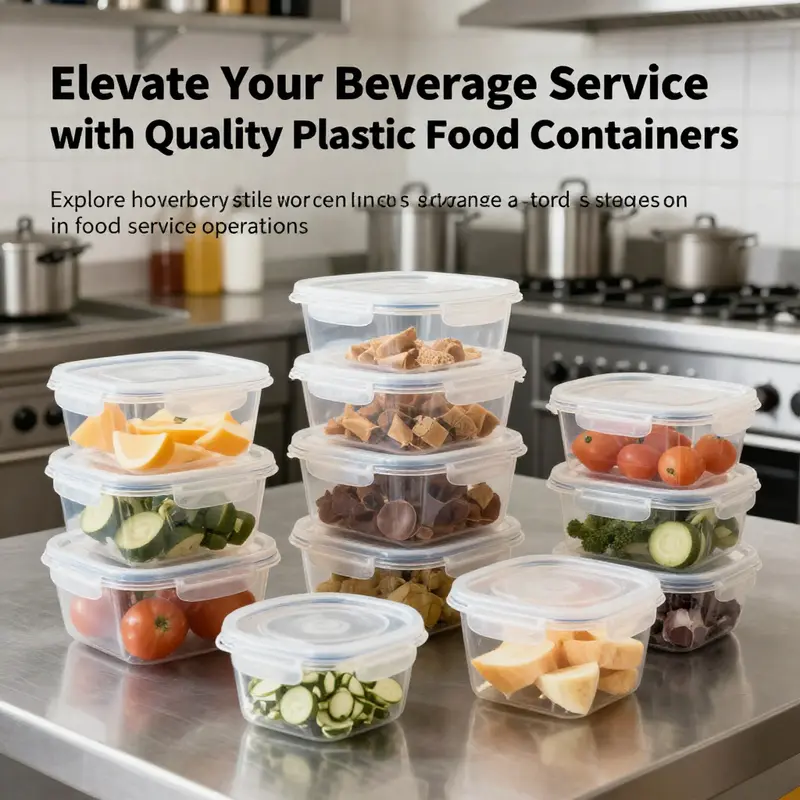
In the bustling world of food service, plastic food containers with lids stand as an indispensable ally, serving essential purposes across various applications—from beverage chains to catering services. These containers not only maintain the freshness of food and drinks but also create an organized approach to storage and transport, thereby streamlining operational processes. This article delves into the material composition, types, industrial applications, hygiene and safety standards, alongside emerging market trends regarding plastic food containers. Each chapter reveals facets that enhance understanding, ultimately reinforcing their significance in the food industry.
Behind the Seal: How Material Choices Shape Safety, Durability, and Performance in Plastic Food Containers with Lids
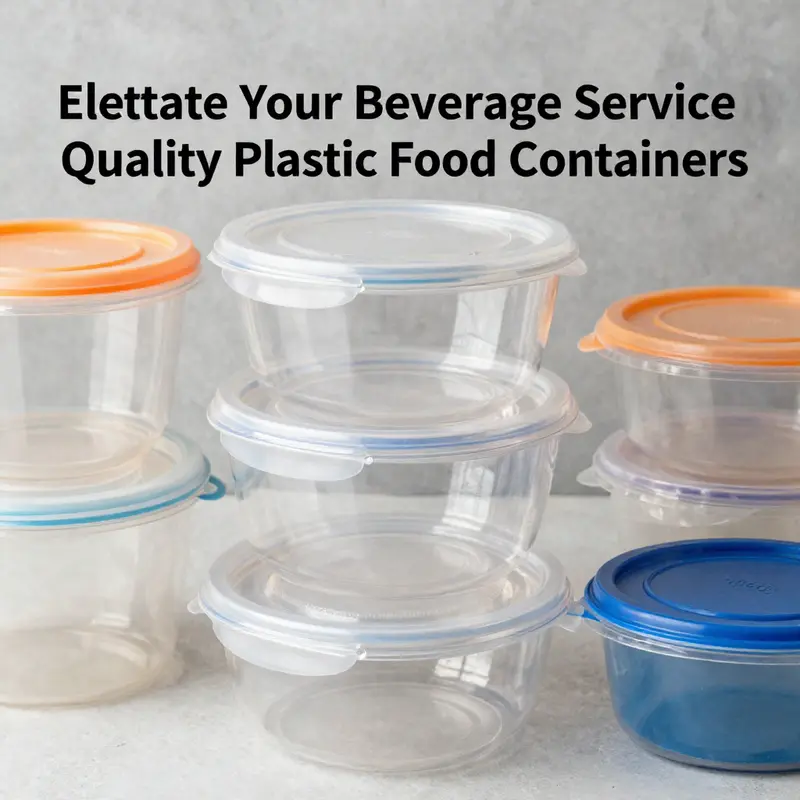
The material composition of plastic food containers with lids is not a mere afterthought in kitchen design or industrial food service. It is the quiet engine that determines how well a container preserves freshness, how reliably a seal holds, and how long a product survives the rigors of use, cleaning, and transport. When we speak of plastics in this context, a handful of thermoplastics dominate conversations about safety, durability, and performance. Among them, polypropylene (PP), high-density polyethylene (HDPE), and low-density polyethylene (LDPE) stand out for their distinct attributes and their fit with different storage challenges. Each polymer brings a unique balance of heat resistance, chemical stability, clarity, and mechanical resilience to the table. The choice is rarely about finding the single “best” material; it is about matching the right material to the intended environment, the type of food stored, and the lifecycle of the product—from daily leftovers in a home kitchen to bulk storage in a bustling catering operation. In this sense, material selection becomes a design language that communicates safety, practicality, and efficiency to cooks, packers, and end users alike.
Polypropylene is often the first material discussed when durability and heat tolerance are priorities. Its crystalline structure provides a solid backbone that resists deformation under repeated use. This makes PP a reliable option for containers intended to withstand microwave reheating, dishwasher cycles, and the quick turnover that characterizes home kitchens and service counters. The material’s heat resistance is paired with a favorable balance of stiffness and flexibility, allowing containers to hold their shape while resisting cracking during handling. In many product lines, PP is formulated to be BPA-free, addressing consumer concerns about endocrine disruptors and aligning with modern food safety expectations. At the same time, PP can offer sufficient clarity for consumer visibility, though it typically does not rival PET in transparency. This combination—strength, safety, and reasonable visibility—defines PP as a versatile workhorse for reusable and semi-reusable containers.
However, every strength has its caveats. Repeated heating can gradually introduce brittleness in some PP formulations, particularly when the exposure is frequent or extreme. While these containers generally perform well in typical household cycles, professional kitchens and high-use catering environments may demand greater resilience over time. The trade-offs extend to chemical resistance as well. PP’s good chemical stability means it handles many sauces, oils, and acidic or salty foods without interfering with flavor or leaching additives. Yet, when faced with aggressive solvents or long-term storage, designers must consider formulation tweaks or barrier enhancements to maintain performance. The emphasis, here, is not merely on heat tolerance or safety in isolation, but on the synergy between material properties and the lid’s sealing mechanism, which ultimately governs spill resistance and product integrity during transport.
HDPE adds another layer of capability, especially when containers are expected to handle liquids, bulk items, or more demanding storage conditions. The opaque, high-density polymer is renowned for its impact resistance and chemical stability. It tends to shrug off minor impacts that would dent or deform other plastics, a feature particularly valued in busy kitchens or catering setups where containers are bumped, stacked, or slid across stainless steel surfaces. HDPE’s chemical resistance helps protect contents from leaching or contamination in the presence of moisture and varied pH levels. Its heat tolerance—while not on par with PP for microwave use—still supports refrigeration and freezing, making HDPE a practical choice for portfolios that prioritize robust cold storage alongside occasional or moderate heat exposure. Recyclability is another practical consideration; HDPE is widely accepted in many recycling streams, which matters for operators seeking to optimize waste management and align with sustainability goals.
LDPE broadens the palette with its intrinsic flexibility and soft touch. This material’s pliancy translates into excellent drop resistance and a forgiving feel when handling containers that are grabbed, passed along lines, or tucked into crowded storage racks. LDPE shines in packaging for gels, sauces, and other semi-solid foods where a gentle squeeze or controlled dispensing is part of the user experience. While LDPE may not offer the same rigid barrier properties as HDPE or the high heat tolerance of PP, its reliability in protection during everyday use remains compelling. In many designs, LDPE serves as an inner lining or as components of flexible lids and seals that need to adapt to imperfect seals or accommodate gentle pressure from flexible walls. The trio of PP, HDPE, and LDPE illustrates a spectrum rather than a hierarchy, enabling manufacturers to tailor a container’s mechanical profile to each storage scenario while respecting safety and regulatory standards.
Beyond the base polymers, the way a material interacts with the lid mechanism is a critical determinant of performance. Lids come in several forms—screw-top, snap-on, and press-fit—and each type imposes different demands on the container’s body material. A screw-top lid, for example, requires rigid threads and a stable, heat-resistant surface to maintain a secure seal through repeated opening and closing. PP’s combination of rigidity and slight give often yields dependable thread engagement and long-lasting sealing performance, which is essential for liquids and marinades. Snap-on lids rely on precise tolerances and a bit more elasticity for a snug fit, making HDPE or conditioned blends attractive for their excellent impact resistance and resilient surfaces that resist creep over time. Press-fit lids emphasize a tight, near-permanent seal that can be achieved with a compatible inner gasket—sometimes LDPE-based—to balance flexibility with a robust barrier. The interplay between material selection and lid design thus becomes a holistic engineering problem; the chosen polymer informs not only safety and heat tolerance but also the ease and reliability of access in fast-paced food workflows.
From a safety perspective, material choices must align with food-contact regulations and migration concerns. The modern food packaging landscape prioritizes formulations that minimize the risk of chemical migration into food, especially when containers are used for hot or fatty foods. BPA-free formulations are now standard in many PP-based products, addressing longstanding consumer concerns about bisphenol A. Yet the conversation extends beyond a single additive. It encompasses how recycled content, stabilizers, and colorants interact with the base polymer during processing and end-use. The migration potential of additives, especially under heat, can influence taste, odor, or color in some instances, reinforcing why manufacturers invest in rigorous testing and adherence to food-grade standards. The end user benefits from this careful calibration: predictable performance, consistent safety, and clear expectations about what kinds of foods a container is best suited to hold—and for how long.
Another dimension to consider is the lifecycle and sustainability of these materials. The appeal of plastics in food storage lies in their light weight, durability, and reusability. Yet sustainability demands thoughtful design for recyclability and end-of-life sorting. PP and HDPE generally offer robust recycling pathways in many communities, provided the products are clean and free from residual contents. This makes them attractive targets for circular economy strategies in both household and institutional settings. Still, design engineers must consider the practicalities of cleaning—dishwasher cycles, dishware handling, and the potential for micro-scratches that harbor food residues. Such residues can complicate recycling or reduce the value of scrap material. In this context, the lid’s material and its interface with the container become as important as the base polymer. A well-sealed container reduces the likelihood of leaks, which, in turn, helps keep the product clean and recyclable. The overarching objective is to combine food safety, functional durability, and easy end-of-life handling into a cohesive packaging solution that performs reliably across varied contexts.
In daily practice, these material choices translate into tangible outcomes for home cooks and professional operators alike. A user might rely on PP for reheating leftovers in the microwave, confident in a container that won’t warp or release raised odors. In a café setting, HDPE’s impact resistance and robust barrier properties help protect sauces and broths from spills during transit and stacking. For semi-solid foods and squeezable products, LDPE’s resilience supports flexible, dip-ready packaging that reduces waste and enhances consumer convenience. The lid is not an afterthought; it is a functional extension of the container’s material system. The seal’s integrity, ease of access, and compatibility with cleaning equipment collectively determine how smoothly a storage solution integrates into a busy workflow. When designers and operators evaluate a storage solution, they are not judging a single aspect but weighing a matrix of properties: heat tolerance, clarity, barrier performance, mechanical resilience, and end-of-life considerations.
To connect this material-centric view to real-world choices, consider how a packaging professional might compare options for a given use case. For instance, a container intended for hot foods that will be microwaved multiple times may favor PP for its heat resilience and BPA-free formulations, with a screw-top lid that maintains a secure seal under pressure. A set planned for cold storage and long-term shelf stability might lean toward HDPE for its sturdiness and reliable barrier properties, paired with a snap-on lid that can withstand frequent handling. When the need arises for products that emphasize visibility to aid portion control or product presentation, a more transparent PP or PET-based option might be considered, with awareness of the temperature ceiling and the consumer’s expected usage. Designers must also weigh whether the end user values lightweight convenience, aggressive spill resistance, or ease of cleaning in industrial dishwashers. These are practical implications of material science at work, translating polymer properties into everyday ergonomics and operational efficiency. For a visual sense of how packaging choices translate into on-shelf or on-table performance, a representative example page can illustrate takeaway packaging with lid components designed for efficient use.
Beyond the broader narrative, the practical upshot is alignment: material choices should match usage patterns, cleaning regimes, and lifecycle expectations of both consumer and business. The end result is a packaging system that not only contains food but helps preserve it, protects against leaks, and integrates into sustainable workflows. As safety standards and consumer expectations evolve, designers will continue to refine blends, processing methods, and lid geometries to optimize outcomes. For readers seeking a concise, scientifically grounded overview, the core message remains that the interface between container body and lid—when thoughtfully engineered—drives the real-world performance that matters most.
Lids, Layers, and Clarity: The Varied World of Plastic Food Containers with Lids
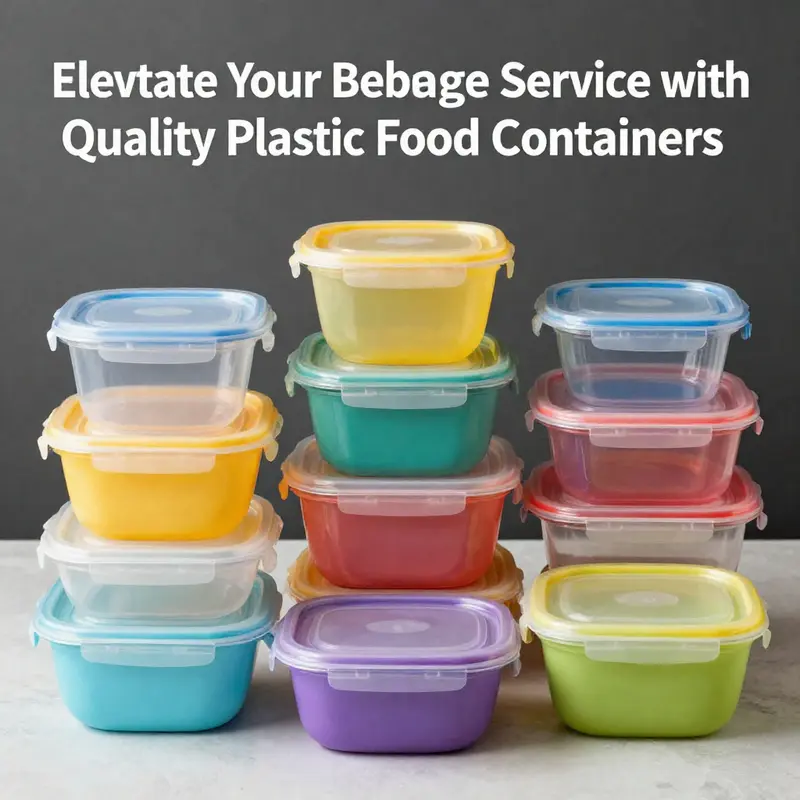
In kitchens around the world, plastic food containers with lids are the portable system for storing, transporting, and reheating meals. They are more than boxes with a cap: the container body, the material it is made from, and the lid that seals it all work as an integrated system that influences safety, performance, and convenience. The right combination affects how long food stays fresh, how easily it can be moved, and how efficiently a kitchen can prep and serve.
Material choices matter more than many users realize. PET, common in clear containers, offers visibility and good barrier properties but limited heat tolerance, making it ideal for cold foods or short storage. HDPE is sturdy and chemical resistant, yet its heat tolerance is modest, so it is less suited for microwaving. Polypropylene (PP) provides higher heat resistance and durability, and is widely recommended for everyday, reusable use; however, lids may be a different resin or grade from the body, which can affect sealing and cycle life.
Design and safety considerations are intertwined with practice. PVC and PS packaging are less common in modern food-contact use due to safety concerns, while BPA-free options and minimization of migrating additives guide product choices. Sealing mechanisms—snap-on lids, screw tops, and vented designs—affect spill resistance, moisture retention, and reheating performance. In real-world use, matching the container’s material and lid design to the intended task—microwave reheating, freezer storage, or transport—delivers better safety and reliability.
Consumers and professionals should check manufacturer guidelines for microwave suitability, dishwasher compatibility, and maximum temperatures. For authoritative guidance on food-contact materials, refer to official safety resources such as the FDA’s food-contact materials information: https://www.fda.gov/food/food-contact-materials
Sealed for Scale: The Integral Role of Lidded Plastic Food Containers Across Industry
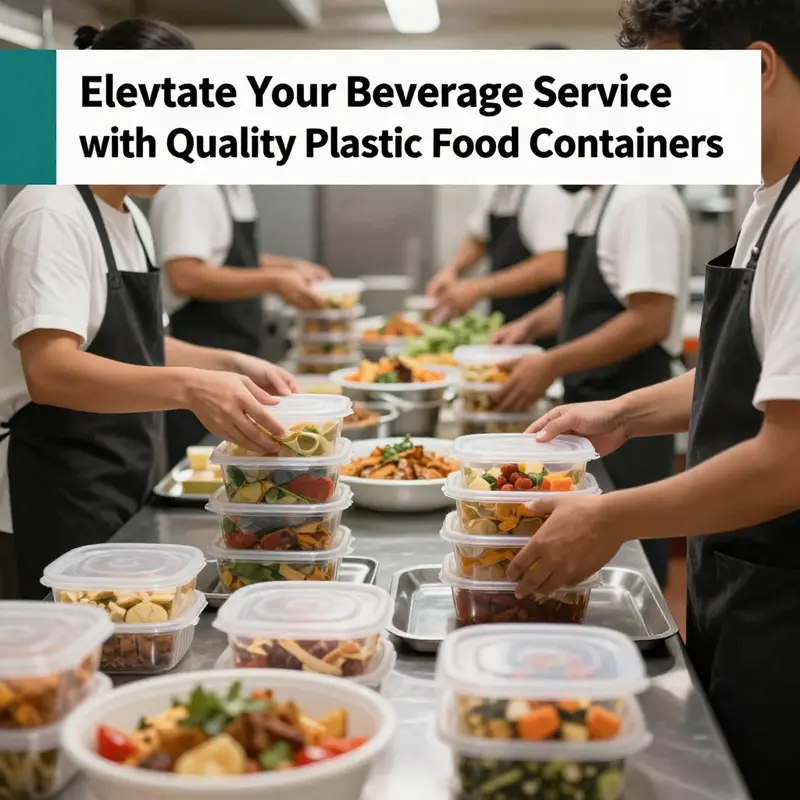
Sealed efficiency is not a slogan but a practical truth in modern industry. Plastic food containers with lids have become the quiet backbone of how foods are stored, moved, and served in vast, tightly managed supply chains. They are lightweight enough to reduce transport energy while offering a durability that can stand up to the rough handling of distribution centers and the brisk rhythms of the kitchen line. What makes them so pervasive is not a single feature but a carefully engineered blend of material choice, lid design, and dimensional versatility. In practice, these containers are engineered from polymers such as polypropylene, high-density polyethylene, and polystyrene, each bringing a specific balance of heat resistance, chemical stability, and physical form. Polypropylene, in particular, earns a lot of practical credit for its heat tolerance, chemical resistance, and general safety profile. It can endure the temperatures typical of reheating and reheating cycles, and it resists many cleaning agents used in industrial settings. High-density polyethylene contributes impact resistance and durability, helping containers withstand drops and stacking pressures that occur during long hauls or busy service periods. Polystyrene provides rigidity and clear visibility in certain applications, which can be valuable for inventory checks and quality control at a glance. The choice among these materials is rarely about a single performance metric; it is about the synergy of toughness, clarity, and reusability that a particular use case requires. In many environments, the ability to see contents at a glance supports rapid processing, reduces handling time, and minimizes errors that can disrupt the workflow. Yet the material is only one side of the equation. The lids that seal these containers are equally critical, and they come in a spectrum of mechanisms designed for different rates of access, levels of spill resistance, and degrees of tamper evidence. Screw-top lids are built for reliable, long-term sealing, particularly when liquids or sauces are involved. They resist unintended opening during transport and in cold storage, where vibrations can otherwise loosen a snap-on lid. Snap-on lids offer speed and simplicity, ideal for high-volume kitchens or packaging lines where quick opening and closing matters more than a perfect hermetic seal. Press-fit lids strike a balance between accessibility and containment, and they can be paired with liners or seals to improve hygiene in dairy and produce applications. In all cases, the lid geometry is tuned to the use case: the tightness of the closure, the ease of reopening, and the integrity of the seal against moisture, dust, and temperature fluctuations. This attention to lid design translates directly into real-world outcomes across sectors that range from food processing to clinical supply chains. When a secure lid is paired with a sturdy container, the result is a system that preserves freshness, prevents contamination, and enables efficient stacking and storage. The practical benefits ripple through the entire operation. In a processing plant, containers can be filled, sealed, and palletized with minimal handoffs, reducing opportunities for contamination and human error. In a distribution center, standardized sizing and reliable seals mean fewer product mix-ups and streamlined automated handling. In an on-site kitchen or catering environment, quick access to pre-portioned ingredients or meals accelerates service while maintaining portion control. The interplay between material properties and lid performance becomes even more decisive in the harsh realities of logistics and warehousing. Reusable plastic containers designed for cold chain logistics must resist condensation and freezing, while still maintaining a dependable seal that keeps moisture out and flavors intact. The ability to withstand repeated cycles without becoming brittle or losing elasticity is a key factor in total cost of ownership. For this reason, many hard-wearing PP and HDPE designs are optimized for repeated use, with molded ribs and bearing surfaces that resist fatigue. In automotive and electronics manufacturing, these containers provide efficient parts organization and traceability. Small components can be stored in uniform, nestable bins with tight lids that keep dust away and allow quick counting on a line. The standardization they enable reduces touchpoints and accelerates production, while protecting product quality across multiple steps of assembly and testing. In the healthcare and pharmaceutical sphere, sealed plastic containers with lids must meet stringent regulatory expectations. The emphasis shifts to material purity, chemical inertness, and the presence of tamper-evident features. Lids may incorporate seals that resist migration of solvents or cleaning agents, while containers themselves are selected for traceability and compatibility with sterilization processes. This combination supports reliable storage and transit of sterile kits, supplements, and diagnostic materials, where even trace contamination can compromise outcomes. Alongside these safety considerations, there is a growing interest in the way these containers perform in more specialized markets, such as agriculture and export. In fresh produce logistics, for instance, composite or expanded polypropylene foams with lids provide insulation and cushioning that protect delicate goods during long voyages. In seafood and perishables export, insulated or foam-based variants with secure lids can help maintain temperatures, dampen shock, and guard against moisture intrusion. This is particularly important when perishables must endure extended transport times and variable environmental conditions. The cost trade-offs among material choices remain central to procurement decisions in industry. PP offers a favorable mix of heat resistance, chemical stability, and cost, making it a common baseline for many reusable options. HDPE provides resilience and toughness, which suits containers expected to bear heavy loads or endure rough handling. PS offers rigidity and clarity, useful for applications where visibility or rigid stacking matters. Still, sustainability pressures are reshaping how these choices are made. Businesses are increasingly asked to evaluate lifecycle impacts, recycling options, and the potential for alternative materials. The debate often centers on whether to favor single-use disposables for certain segments of the supply chain or to commit to durable, reusable solutions that can be cycled through many uses. In practice, the decision is rarely binary. Reusable systems may be chosen for core product lines with stable demand, while single-use variants might be reserved for high-turnover, low-margin items or for seasonal peaks. Regardless of the chosen path, the lids remain a defining factor in practice. A secure lid reduces waste by preventing spills during transport and on shelves. It reduces product loss in catering operations that depend on precise portioning. It also simplifies compliance with hygiene standards when containers are moved between facilities and across borders. In essence, the lid becomes a gatekeeper for performance, just as the container itself is a vessel for efficiency. The broader trend toward automation in production and distribution further elevates the importance of standardized container dimensions and reliable sealing mechanisms. Automated systems thrive on consistent geometry, predictable nesting, and dependable closures. When designed with this in mind, plastic containers with lids integrate seamlessly into conveyors, robotic pick-and-place units, and automated palletizing lines. The result is a potential reduction in labor costs, improved throughput, and a more controllable quality profile across batches. The conversation about industrial applications would be incomplete without recognizing the role of regulatory compliance and safety standards. In many jurisdictions, materials used in contact with food must meet defined safety criteria and avoid leaching of additives into the product. Containers built from PP, HDPE, or PS provide a known baseline that can be qualified for specific use cases. The presence of tamper-evident lids adds an additional layer of assurance for distributors and end users alike. In the end, the story of plastic food containers with lids in industry is a story about reliability, adaptability, and discipline. They are designed to arrive on a loading dock ready to be filled, sealed, and stacked, while continuing to perform under the variable temperatures, humidity levels, and handling realities of real-world supply chains. They help kitchens scale up to meet demand without sacrificing hygiene or flavor, while helping retailers and food service providers maintain inventory control and reduce waste. They enable processors to execute complex cold-chain management with confidence and accuracy, knowing that the packaging will hold up under pressure and protect the product from farm gate to table. As material science advances, we can anticipate smarter designs—containers with optimized wall thickness for weight savings, more efficient sealing systems, and even container ecosystems that support RFID-enabled tracking and better lot-level traceability. Yet the core principle remains unchanged: the combination of a well-chosen plastic matrix and a lid that fits securely is what makes modern food handling practical at scale. The continued alignment of design with operational realities will determine how deeply these containers embed themselves in the everyday logistics of food production, packaging, and distribution. The result is not just a product category, but a foundational infrastructure for hygiene, efficiency, and resilience in global food systems. External resource: https://www.fortunebusinessinsights.com/industry-reports/plastic-containers-market-1035
null
null
Behind the Lid: Navigating Market Trends and Consumer Preferences in Plastic Food Containers with Lids
The global landscape of plastic food containers with lids is evolving with a pace that mirrors the rhythms of modern life: speed, hygiene, and accountability. A recent surge in demand reflects a broader shift toward packaging that not only stores food safely but also simplifies preparation, transportation, and service across both home kitchens and professional settings. Market analyses released through 2026 project a compound annual growth rate around 5.7 percent through 2033, a trajectory driven by convenience, controlled portions, and improved systems for handling food in bulk or on the go. These numbers are not just abstract figures; they sketch the everyday decisions of households stocking pantries, caterers planning menus, and operations managers seeking reliability in busy service lines. As containers with lids proliferate in shops and kitchens, their design becomes a quiet translator of consumer values: we want products that shield freshness, minimize contamination, and travel well, while still aligning with concerns about waste and sustainability.
At the heart of this shift lies a practical choice of materials. Polypropylene (PP) stands out in many households and food service operations for its balanced mix of toughness, heat resistance, and food safety. PP containers can withstand microwave reheating and dishwasher cycles, and they typically perform well in refrigeration and freezing environments. They are often BPA-free and exhibit robust chemical resistance, which supports longer shelf life and safer contact with a wide range of foods. Yet no material is perfect, and PP can grow a touch brittle after repeated heating, a reminder that longevity depends as much on design as on chemistry. In parallel, polyethylene terephthalate (PET) containers offer high clarity and light weight, delivering exceptional visibility of contents for pantry organization and portion control. PET’s transparency makes it easy to identify what’s inside at a glance, an advantage in busy kitchens or in retail displays where product appearance matters. However, PET’s heat resistance is more limited, making it less suitable for microwave use, and its general orientation tends toward short- to mid-term storage rather than long-term preservation.
This material reality feeds a broader conversation about how manufacturers tailor storage solutions to specific uses. Round containers, square and rectangular forms, and even custom shapes all have their roles in optimizing space during stacking, shelving, and transport. The choice of lid mechanism—screw-top, snap-on, or press-fit—carries implications for spill resistance, ease of access, and the tempo of a workflow. In fast-paced environments like catering and buffets, screw-top lids deliver superior protection against leaks, a critical feature when liquids or marinades travel between kitchens or are portioned into service dishes. Snap-on lids, with their quick-release action, support rapid meal prep and service, reducing the time cooks spend chasing lids across a crowded station. Each option embodies a compromise: higher security versus faster throughput, tighter seals versus easier cleaning. The practical art is in matching the lid style to the food type, the service setting, and the worker’s rhythm, so that the container becomes a seamless partner in the day’s operations rather than a friction point.
Beyond the material and lid mechanics, modern containers with lids increasingly embrace integrated functionality. One notable trend is the emergence of compact, multi-element sets that combine storage with ready-to-use utensils or dipping components. Consumers value “one-stop” solutions for meals, snacks, or samples, especially when they’re on the move. The same logic informs institutional and catering contexts, where packaging that reduces assembly steps translates into tangible labor savings and improved hygiene. In practice, these integrations can range from modular interior dividers to detachable utensil pockets, each designed to streamline workflows and minimize handling. The result is not merely a container but a turnkey kit that supports food safety, packaging integrity, and operational efficiency in a single, portable unit.
Concurrently, sustainability remains a driving force shaping product development and procurement strategies. While plastic continues to dominate food-contact packaging, consumer and corporate buyers increasingly demand materials that are recyclable, recycled, or biodegradable. Industry actors are responding with formulations that lower environmental footprints, whether through the use of post-consumer recycled content, enhanced recycling compatibility, or more efficient production processes that cut energy use and waste. In practice, this means a rising interest in designs that can be easily separated from lids for recycling, the use of resin systems that retain clarity and strength without relying on additives that complicate end-of-life processing, and clearer labeling so consumers understand how to dispose of each component. The sustainability dialogue is not limited to material choices; it also encompasses packaging systems that minimize over-packaging, encourage product-to-service alignment, and support return-for-refill or refill-within-use programs where feasible.
In the industrial sphere, the demand for specialized containers grows alongside the expansion of storage and logistics networks. Large-volume, ventilated containers help manage humidity and temperature more effectively in warehouses and retail back rooms. The inclusion of venting features or breathable components reduces condensation and helps maintain quality for certain product categories. These advanced designs illustrate how the line between storage container and environmental control tool is thinning; the best containers do not merely hold food, they help preserve texture, aroma, and safety across the supply chain. As enterprises expand their fleets of containerized solutions, they increasingly value compatibility with existing equipment, nests of storage, and standardized dimensions that simplify inventory management and cross-docking. The ability to forecast usage, align with shelf layouts, and minimize product loss has become a defining criterion for choosing lids, seals, and body materials.
Consumer preferences also reveal a nuanced calculus about portioning and visibility. The market’s appetite for small-capacity options—such as 60 ml containers—mirrors a broader focus on precise portion control, sample distribution, and clean labeling. These small vessels are not merely about reducing waste; they enable more accurate dietary planning, personalized catering, and controlled flavor experiences in both home and professional kitchens. The same impulse that drives portion control also informs the desire for transparent or semi-transparent bodies that allow quick inspection of contents. When a shopper can tell at a glance whether a product looks fresh, the perceived value of a container rises, reinforcing the link between form and trust in food safety. In service settings, this visibility translates into quicker stock checks and reheating decisions, reinforcing the container’s role as an operational tool as much as a storage unit.
As the market consolidates around these priorities, designers and manufacturers face a practical imperative: deliver products that are dependable under stress—heat, cold, washing cycles, and repeated handling—while also offering a sense of responsibility to the environment and an awareness of evolving regulations. Brand-agnostic, the core expectation remains consistent: containers with lids should protect contents, minimize leakage, and support efficient workflows without compromising safety. The challenge lies in balancing strength with clarity, seal integrity with recyclability, and cost with performance. With this balance in mind, procurement decisions increasingly hinge on material science insights, lifecycle assessments, and end-user feedback from kitchens, catering operations, and retail settings alike. The aim is not to chase novelty for its own sake but to tailor packaging that aligns with how people prepare, share, and consume food across diverse contexts.
For operators seeking practical pathways through this landscape, the emphasis is on mapping use cases to the right combination of material, size, form, and lid type. A kitchen that regularly reheats meals in the microwave will have different needs from a catering team that handles bulk cold offerings for pickup. In the former, heat resistance and dishwashing compatibility are paramount, while in the latter, stackability, leak prevention, and transport durability take center stage. It is also essential to consider the broader ecosystem: the availability of compatible lids across suppliers, the ease of sourcing exact sizes for standard storage shelves, and the ability to integrate with existing waste streams and recycling programs. Thoughtful product selection reduces total cost of ownership by limiting breakage, decreasing spoilage, and simplifying handling during busy periods. The chapter is not merely about choosing a single best option but about orchestrating a mix of containers that collectively elevate hygiene, efficiency, and sustainability across a facility.
Within this orchestration, a single, tangible resource can illustrate the kind of one-stop packaging thinking that many buyers now expect. For organizations looking for turnkey packaging solutions that pair everyday functionality with scalable supply, wholesale take-away coffee cups with lids demonstrate how packaging houses translate design intent into readily deployable products. These kinds of offerings embody the ethos of convenience, portability, and safety at scale, providing a concrete reference point for what a modern lid-enabled packaging system can look like in practice. Wholesale take-away coffee cups with lids serves as a useful example of how vendors bundle accessible formats with practical features, even as the broader market continues to refine materials and mechanisms for improved performance and sustainability. While this particular example sits within a specific product family, the underlying principle translates across categories: the most effective containers with lids are those that reduce handling steps, improve product safety, and adapt to evolving consumer expectations without sacrificing value or reliability.
As the chapter progresses into subsequent sections, the themes introduced here—convenience, precision in portioning, integrated functionality, sustainability, and supply-chain resilience—will continue to unfold in more detail. The threads connect the micro-decisions of a single kitchen drawer with the macro-trends shaping global packaging markets. The consumer’s desire for clean, robust, and versatile packaging is not a passing fad; it signals a shift toward packaging ecosystems that enable better food stewardship, easier operations, and smarter use of resources. The next chapters will expand on how retailers, manufacturers, and service providers can translate these trends into actionable procurement strategies, design briefs, and performance metrics that keep pace with a market in motion. External research and industry analyses corroborate the momentum described here, underscoring the importance of aligning product development with evolving consumer priorities and environmental considerations. For readers seeking a deeper dive into market dynamics and the outlook for plastic food containers with lids, a comprehensive external resource provides a structured analysis of the drivers, challenges, and opportunities that define this space: https://www.marketsandmarkets.com/Market-Reports/global-plastic-food-containers-market-38953373.html
Final thoughts
Plastic food containers with lids not only fulfill practical needs in food service operations but also align with evolving consumer demands for sustainability and safety. Their versatile applications, coupled with a commitment to hygiene standards, render them essential for businesses aiming to optimize both efficiency and customer satisfaction. As we witness ongoing innovations in materials and designs, staying informed about these advancements can empower your business to enhance operational performance and meet changing market expectations.