
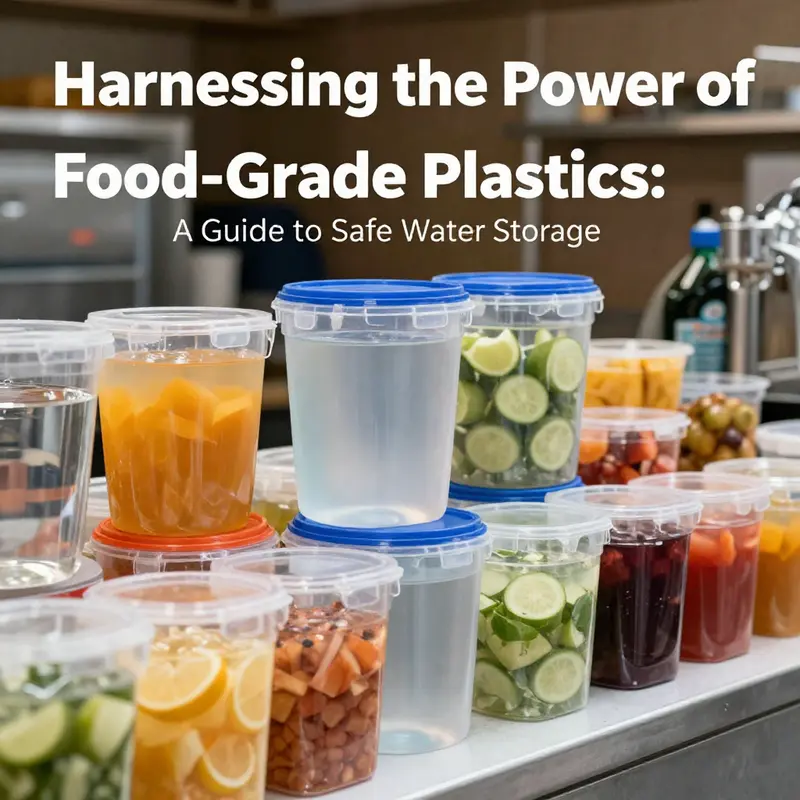
In the bustling world of beverage service, ensuring customer safety and satisfaction is paramount. One integral yet often overlooked aspect is water storage, especially in food-grade plastic containers. This article delves into why using these containers is beneficial for Bubble Tea shops, beverage chains, and catering businesses. We’ll explore best practices in food storage, the safety standards that govern these materials, the science behind different plastics, and the environmental considerations when choosing containers. Each chapter aims to equip service providers with the knowledge to make informed choices that enhance both safety and service quality.
Sustaining Clarity: The Anatomy of Water Storage in Food-Grade Plastic Containers
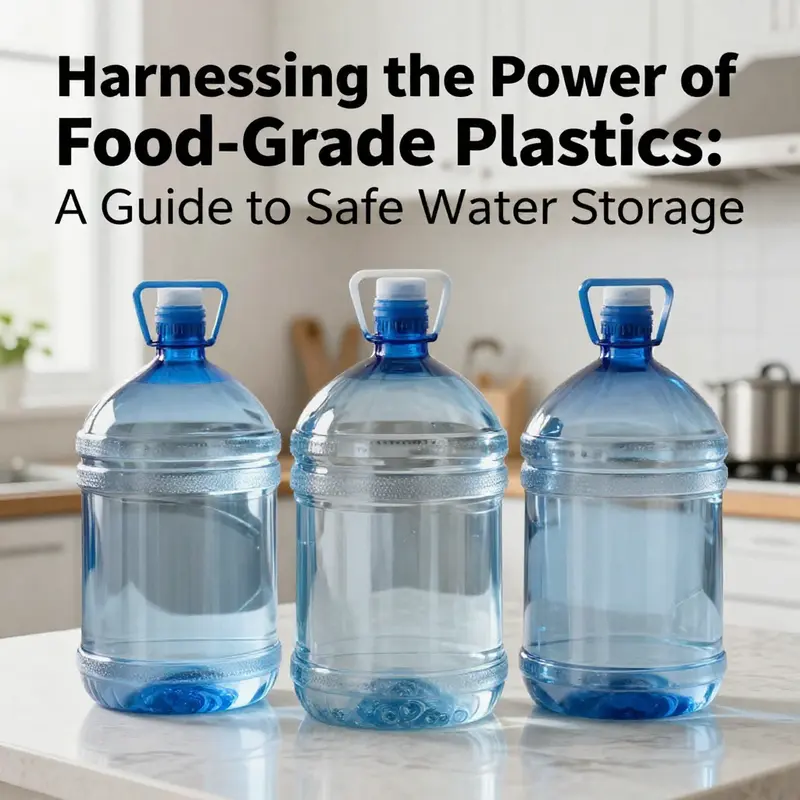
Water storage is a practical thread that runs through kitchens, emergency kits, and community programs alike. When this thread is woven with the right materials, the stored water remains clean, safe, and readily accessible. The conversation about keeping water in food-grade plastic containers centers on a few core ideas: materials designed for contact with consumables, how those materials behave under common storage conditions, and practical practices that keep water safe over time. In this chapter, the story of safe storage unfolds not as a checklist, but as a continuous alignment between the science of plastics and the realities of everyday use. The aim is to illuminate how the right container becomes a trustworthy steward of water, especially when moments demand reliability—during daily routines or times of disruption.
The first thing to understand is that food-grade plastics are formulated to minimize the risk of chemical migration into liquids. This is not a blanket promise of unlimited safety; it is a carefully engineered boundary that limits interactions between plastic and water. Regulatory frameworks in major markets set out the expectations for materials that touch food and beverages. These standards emphasize inertness, stability, and compatibility with water and the wide range of environmental conditions water may encounter in storage. When a container bears an appropriate food-contact designation, it signals that the material has met criteria intended to guard human health, even after months of exposure to water, light, and fluctuating temperatures.
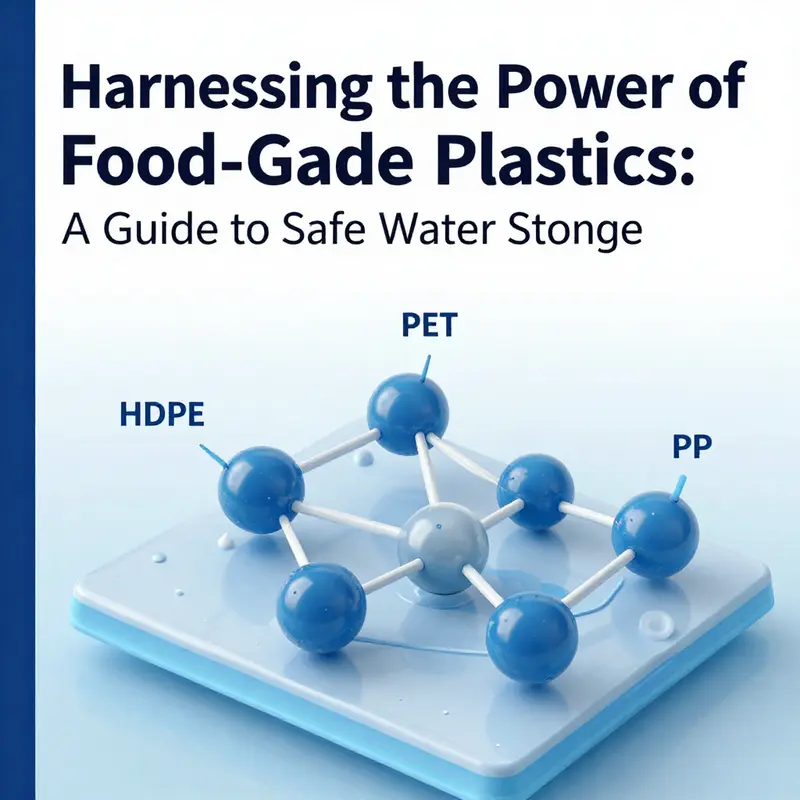
Among the most common materials used for water storage are several variants of polyethylene and polypropylene. Each brings a distinct set of properties that influence how well a container performs in real-world settings. High-Density Polyethylene, or HDPE, is renowned for its strength and chemical resistance. It resists many of the substances that could otherwise leach from a container and shows a low tendency to interact with water under normal storage conditions. For long-term storage, HDPE’s durability is a practical advantage. A rigid, sturdy container reduces the risk of punctures or cracks that could harbor contamination and complicate cleaning. The material’s rigidity also makes it easier to stack and organize in storage spaces, which helps prevent accidental damage that could compromise water quality.
Polypropylene, or PP, is another staple in the family of food-grade plastics. It offers excellent temperature resistance and stability, which is particularly valuable when water containers are subjected to a range of ambient temperatures or occasional heat during transport. PP is widely regarded as non-reactive with most liquids, including many acidic or alkaline solutions, and it tolerates repeated use well. For households and facilities aiming for longer-term water storage, PP’s ability to withstand modest heating without deforming is a meaningful safeguard. It helps keep the container’s shape intact, a factor that matters for maintaining a secure seal and preventing the ingress of dust, microbes, or other contaminants.
Another material that finds its place in the conversation is PET, or polyethylene terephthalate. PET bottles are familiar in single-use contexts and are occasionally used for short-term water storage. The caveat here is important: repeated use, exposure to higher temperatures, or prolonged contact with water can shift the risk profile. PET’s transparency is a practical feature for monitoring water clarity, yet this same transparency means light can reach the water. If a container is used repeatedly or kept in a sunny or warm setting, the risk of photochemical reactions and minor leaching can rise. In short, PET is workable for short-term storage, but for longer horizons hikers, campers, or households planning to rely on stored water for extended periods, HDPE or PP options tend to be more robust.
Low-Density Polyethylene, or LDPE, completes the family picture with flexibility. While it is less rigid than HDPE, LDPE remains safe for water storage under typical conditions. Flexible bags and squeeze bottles often employ LDPE because its pliability can be advantageous for certain storage designs. The key to success with LDPE is to protect it from sharp impacts or exposure to harsh UV light, which can accelerate degradation and potentially affect the container’s barrier properties. The material choice, then, becomes a balance between mechanical needs, storage space, and the expected duration of storage.
But material choice is only part of the equation. The environment in which water is stored—light, heat, and time—plays an equally decisive role. Ultraviolet exposure accelerates the aging of plastics. Even food-grade plastics are susceptible to gradual changes when left in direct sun or exposed to heat for extended periods. Heat not only speeds material breakdown but can also promote microplastic shedding, a concern that prompts many to prioritize cool, dark storage locations. A simple rule of thumb helps: keep containers away from heat sources, avoid direct sunlight, and store them in a place where temperatures remain within a comfortable range for the storage period you anticipate.
Aesthetics and practical design features also influence safety and usability. Clear or semi-clear containers allow quick visual assessment of water clarity and color, which can serve as an early warning of contamination or residual sediment. Conversely, opaque designs protect contents from light, which can be beneficial for algae suppression and color fading. The lid design matters as well. A tight seal prevents evaporation, minimizes contamination risk, and supports longer storage horizons. A poorly sealing lid can invite microbes, dust, and pests, undermining the very purpose of storage. In addition to the lid, the cap’s material and how it interacts with the container are critical; a mismatch can create gaps or stress points that compromise the integrity of the seal over time.
Beyond the container’s material and design, the labeling and certification carry weight in both professional and home settings. Containers should be explicitly labeled as food-grade and appropriate for water storage. Labels act as a reminder of the guidance embedded in manufacturing standards and of the risk that may arise if a container previously used for chemicals, pesticides, or cleaning agents is repurposed for drinking water. The habit of reusing non-food-grade containers is a common pitfall, especially in emergency preparedness contexts where rapid deployment sometimes leads to shortcuts. The safest path is to use purpose-built water storage solutions and to retire any container that shows wear, cracking, or a compromised seal.
Cleaning and sanitization form the next essential chapter in the story. Before first use, containers must be thoroughly cleaned and sanitized with substances appropriate for food contact. Regular maintenance means rinsing with clean water after each use, followed by a sanitization step if the container will see long-term storage or is not used for extended periods. A standardized cleaning routine helps ensure that residual residues do not accumulate, especially in corners or seams where water can stagnate. After cleaning, it is critical to dry containers completely before sealing and storing them. Any moisture left inside can become a breeding ground for microbes that could threaten the water’s safety once storage resumes. Drying can be aided by air circulation in a clean space, or by using dedicated drying racks that keep containers off surfaces that might themselves harbor contaminants.
Regular inspection complements cleaning. A monthly or quarterly check for cracks, discoloration, or clouding is a simple practice that can catch early signs of material fatigue. UV exposure, temperature swings, or rough handling can create microcracks that would not be visible at a glance but could provide routes for air or microorganisms to enter. Any container showing significant wear or compromised seals should be retired from storage and replaced. The habit of routine inspection aligns with broader safety cultures in kitchens and warehouses, where sustained attention to detail often translates into safer, more reliable operations.
Storage conditions themselves deserve thoughtful consideration. Cool, dark, and dry locations are ideal for preserving the integrity of food-grade plastic containers and the water they hold. A stable environment reduces the risks associated with repeated expansion and contraction of materials as temperatures shift. When possible, store water containers off concrete floors or in elevated shelving to minimize potential contact with moisture or pests. Lightweight containers may be moved more easily in response to space constraints, but they also require careful handling to prevent cracks or punctures that could compromise the storage system. For settings that require mobility—such as disaster response teams or community outreach programs—having a system that prioritizes sealed containers, clear labeling, and organized stacking can dramatically reduce the risk of contamination during transport.
The importance of compliance and safety regulations cannot be overstated. Verifying product specifications and certifications is a practical habit that pays dividends over time. While the specifics may vary by region, the underlying principle remains constant: the container must be suitable for contact with water and safe for human use. When in doubt, consult the manufacturer’s guidelines and rely on official resources to confirm that a container’s material family and design meet the expectations of food-contact safety. While this chapter has focused on the typical properties of HDPE, PP, PET, and LDPE, the broader point is about aligning choice with intended use and storage duration.
In real-world contexts, water storage in food-grade plastic containers intersects with broader systems of supply, logistics, and emergency preparedness. In kitchens, these containers support meal planning, beverage service, and routine hydration with a dependable inventory. In emergency contexts, they become part of planning for resilience—buffering communities against water disruptions and ensuring a continuous, safe water supply when infrastructure is strained. The connective tissue across these settings is a shared commitment to preventing contamination and preserving water quality through sensible material choices, proper use, and disciplined maintenance.
As readers move from theory to practice, the overarching message is clear: the right container is one that honors the water it protects. It is not enough for a container to be labeled as food-grade; it must perform consistently within the expected storage conditions, stay intact under physical handling, and be managed with a routine that keeps water clean and safe. When these elements align, storage becomes a quiet act of stewardship—an everyday discipline that preserves health, supports reliability, and reduces waste. Keeping that continuity intact across seasons and scenarios is the practical reward of understanding both the science and the daily realities of storing water in food-grade plastic containers.
External resource: For a regulatory overview of the safety framework surrounding materials that contact food and beverages, see the official guidance on Food Contact Substances provided by the U.S. Food and Drug Administration. https://www.fda.gov/food/food-contact-materials/food-contact-substances
null
null
null
null
Beyond Safe Bottles: Weighing the Environmental Footprint of Water Storage in Food-Grade Plastic
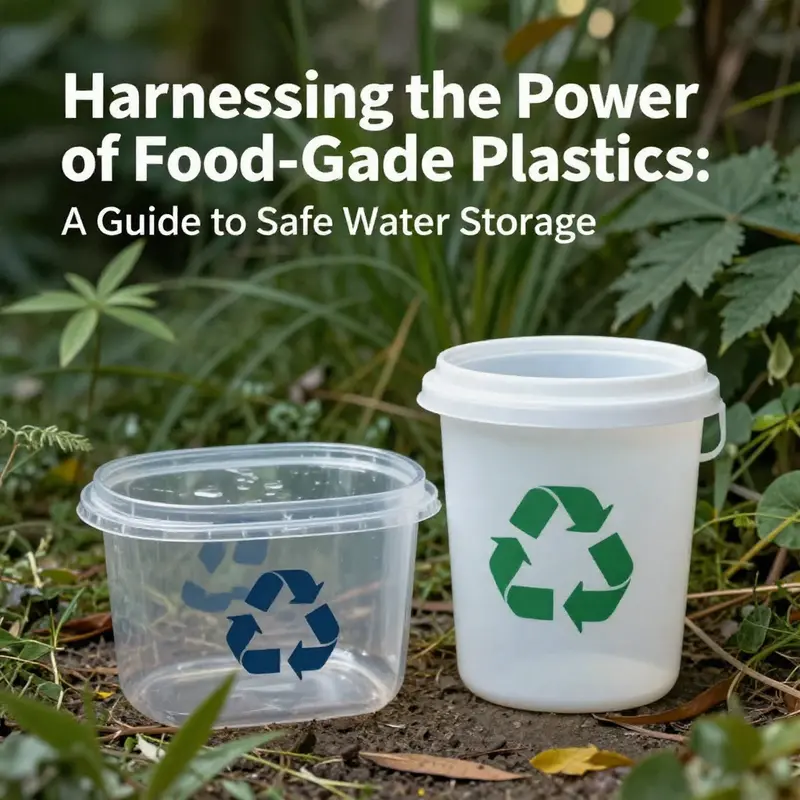
Storing water in food-grade plastic containers is a practice that blends everyday practicality with broader environmental considerations. The conversation rarely stops at whether a container is safe for contact with water; it inevitably extends to what happens to those containers after use, how they are manufactured, and what their presence means for ecosystems and resources over time. To understand the environmental footprint of water storage in HDPE, PET, PP, or LDPE containers, one must trace a chain from raw material extraction to end-of-life management, all while recognizing the legitimate utility these containers provide in emergencies, camping, or long-term storage. The planet-wide implications of those choices arrive not as a single verdict but as a tapestry of tradeoffs that shape our waste streams, energy use, and resilience in the face of scarcity or disaster. In this light, the environmental profile of water storage containers is best viewed as a lifecycle story, one that acknowledges plastic’s strengths in protecting water integrity while honestly confronting its burdens for the climate, soils, and waterways when misused or neglected.
From the outset, the material composition of food-grade plastic containers matters. HDPE and PET dominate this space because of their chemical stability, density, and formability. HDPE is especially prized for larger, rugged containers that are common in bulk water storage, where impact resistance and UV stabilization help preserve integrity during transport and in outdoor settings. PET, frequently chosen for lighter, transparent bottles, offers excellent clarity and barrier properties but has different long-term performance considerations, particularly when reused or subjected to heat. Polypropylene, with its heat tolerance and chemical inertness, has earned its place in reusable configurations that may encounter mild heating or contact with a wide range of liquids. Less rigid LDPE fills additional niches where flexibility is advantageous, though its physical properties can influence long-term protection against leakage and physical stress. In short, the science of these plastics explains why they are chosen for water storage: a balance of barrier quality, mechanical resilience, and compatibility with human consumption. Yet the same characteristics that enable these containers to do their job also shape their environmental journey once their useful life ends.
The environmental concerns attached to water storage containers begin with how and where they are produced. The creation of HDPE and PET relies on fossil fuels as feedstocks, and the energy intensity of polymer manufacture translates into greenhouse gas emissions that contribute to climate change. While plastic technology has advanced to maximize efficiency and reduce waste, the scale of production remains a pressure point for global emissions. The manufacturing phase also determines the container’s energy footprint, the potential for process emissions, and the ultimate recyclability of the material. Recyclability, however, is not a guaranteed outcome in practice. It hinges on local recycling infrastructure, contamination risks, and consumer behavior. Even when a plastic is technically recyclable, the actual recovery rate can vary dramatically between regions, and material gardens of confusion around what can be recycled often lead to improper disposal. These issues highlight a persistent tension: the lightness of plastic reduces transportation energy during distribution, yet the empty containers may persist in landfills or the environment if not collected and processed correctly. The paradox is real—a product that lowers one kind of environmental cost can contribute to another if the system to recover and reintroduce it into the economy is fragile or misunderstood.
From a purity and safety standpoint, food-grade plastics are designed to minimize leaching into water. The focus, then, shifts to how the container behaves throughout its lifecycle. Microplastic shedding is a growing concern when these plastics are subjected to heat, extended use beyond their recommended lifespan, or exposure to sunlight. In practical terms, this means that even containers marketed as safe for water storage require conscientious handling: keep containers cool, avoid storing them in direct sun for prolonged periods, and retire them according to manufacturer guidance. When misused—such as storing hot liquids in a container designed for cold liquids—the propensity for microplastics and chemical migration may rise, complicating the environmental narrative by adding potential health considerations that cascade into waste streams when disposal occurs.
The end-of-life phase is where environmental realities crystallize. HDPE and PET are broadly recyclable materials in many regions, and the concept of a circular economy envisions closing the loop by reclaiming and reprocessing plastics into new containers or other products. In practice, recycling rates remain uneven across the globe, with a substantial fraction of post-consumer plastic ending up in landfills, incinerators, or the natural environment. Even when recycling is technically feasible, contamination from household waste, the presence of mixed plastics, and the economics of processing can impede recovery. The design for recyclability—using single resins, minimizing colorants, and ensuring that labels or adhesives do not hinder processing—becomes a practical environmental strategy that manufacturers and users can jointly pursue. This is not a matter of sanctioning one material over another; rather, it is about choosing products built to participate more effectively in the recycling stream while aligning with local capabilities.
Yet the environmental case for plastic water storage also features meaningful advantages. The lightweight character of plastic reduces transportation emissions compared to heavier alternatives such as glass or metal, especially when containers are shipped in bulk for emergency preparedness or long-term storage. The durability and resilience of HDPE and PP extenuate the risk of catastrophic breakage, a factor that matters in logistics-heavy operations that must deliver safe water to remote or disaster-affected areas. This resilience translates into fewer losses from leaks and spills, a practical environmental benefit when considering the lifecycle costs of water delivery and storage. The packaging economy surrounding water storage, including bulk containers and refillable systems, supports scenarios where rapid deployment and repeated use are essential. In these contexts, a well-maintained, reusable container can reduce per-liter water storage costs and diminish the immediate pressure on alternative packaging ecosystems.
Despite these advantages, responsible environmental stewardship requires deliberate strategies throughout the container’s life. Best practices echo across the lifecycle: use containers only for their intended purpose and lifespan, store them in cool, dark places to slow material degradation, and avoid exposing them to high temperatures or direct sunlight. When the lifespan ends, pursue recycling or safe disposal through established channels, avoiding disposal methods that feed into informal waste streams or ecosystems. Consumers and institutions alike play a part in improving outcomes by reducing contamination, selecting higher-quality, reusable designs when possible, and supporting systems that recover and repurpose plastics rather than consigning them to one-off waste. The environmental conversation, in other words, centers on the intelligent integration of design, use, and end-of-life practices that respect the plastic’s utility while curbing its ecological footprint.
Innovation remains a thread in this narrative. Biodegradable alternatives and closed-loop recycling systems promise to shrink the long-term ecological footprint of plastic packaging, including water containers. Yet these solutions come with tradeoffs. Biodegradable plastics sometimes require specific industrial conditions to break down and may not perform equivalently in the water-storage context, where long-term containment and structural integrity are essential. Closed-loop systems, meanwhile, depend on efficient recovery, standardized labeling, and robust collection networks to prevent leakage from design to disposal. In the near term, a pragmatic approach favors durable, reusable containers backed by strong recycling infrastructures and consumer education about proper disposal. This is not a denial of innovation but a call to balance it with real-world feasibility and environmental accountability.
The environmental assessment of water storage in food-grade plastics thus emerges as a balancing act. On one side lies the undeniable safety and practicality: containers that protect water quality, resist corrosive effects, and reduce leakage risk in transport and storage. On the other side stands the environmental cost of resource extraction, energy-intensive manufacturing, and end-of-life management that challenges waste systems and ecosystems when unmanaged. The question is not whether plastic is good or bad for water storage; it is how to maximize the benefits while minimizing the costs through design choices, usage patterns, and systemic improvements. In this sense, the environmental impact is not a static verdict but a dynamic objective: to keep water storage effective and accessible while pushing toward materials, processes, and networks that harmonize human needs with planetary limits.
Practically speaking, how should policy makers, manufacturers, and users act? Policymakers can incentivize design for recyclability and fund infrastructure that increases recovery rates for post-consumer plastics. Manufacturers can prioritize material choices that facilitate recycling and encourage durable, reusable designs that extend lifespans. Users can adopt habits that minimize contamination of recycling streams, such as thoroughly rinsing containers and avoiding heat exposure that accelerates degradation. Importantly, the water-storage story does not exist in a vacuum. It is part of a broader conversation about how societies store essential resources—water, food, and energy—in ways that are resilient yet responsible. This alignment becomes especially relevant in emergency preparedness and large-scale applications, where the immediate utility of plastic containers is tempered by the longer-term obligation to manage waste responsibly and reduce the system-wide environmental footprint.
For readers seeking a broader perspective on the environmental standards and life-cycle considerations governing plastics in everyday packaging, broader context can be found through established environmental stewardship resources that examine how plastics behave in the environment, how recycling systems function, and what steps communities can take to minimize pollution while maintaining access to safe packaging solutions. See the Environmental Protection Agency’s overview of plastics and the environment for a comprehensive framework of the lifecycle considerations described above. https://www.epa.gov/plastics
To illustrate how packaging ecosystems think about material choices in a related but distinct domain, researchers and designers often turn to real-world examples of sustainable packaging that explore alternatives, reuse strategies, and consumer engagement. One of the nuanced lessons in this space is that even when a material appears to be an ideal solution for a specific purpose, the full environmental story must include end-of-life pathways, regional recycling realities, and the social dimensions of consumption. In some contexts, paper-based or other renewable-backed packaging can offer advantages in end-of-life management, even as it presents different performance tradeoffs during use. The takeaway is not to shun plastics outright but to integrate them into a broader system of resource stewardship that emphasizes durability, recyclability, and responsible disposal. Within water storage, this translates into choosing containers with proven recyclability where possible, maintaining them to extend life, and investing in recovery programs that keep plastic streams in the economy rather than the environment. The environmental footprint, then, becomes a metric of how well a society manages material flows, not just a measure of a container’s safety or convenience.
In sum, the environmental impact of water storage in food-grade plastic containers is a layered narrative of risk and resilience. It acknowledges the safety and practicality that plastic provides for keeping water clean and accessible while confronting the realities of material production, energy use, and waste management. The key is a lifecycle-aware approach that aligns product design, consumer behavior, and policy frameworks toward solutions that minimize environmental costs without compromising public health or storage reliability. As the packaging landscape evolves, the most resilient paths will likely combine durable, reusable designs with robust recovery networks and a clear emphasis on preventing contamination of recycling streams. In this way, the chapter of water storage in food-grade plastics becomes not only a technical discussion of material properties but also a reflection on how modern societies can steward essential resources within planetary boundaries.
Final thoughts
Choosing the right containers for water storage is crucial for maintaining the quality and safety of your beverages. By prioritizing food-grade plastics and adhering to established safety standards, beverage businesses can ensure compliance, enhance customer satisfaction, and contribute positively to environmental sustainability. In a world where consumer awareness is growing, making informed choices about water storage can set your service apart and support your commitment to safety and quality.