
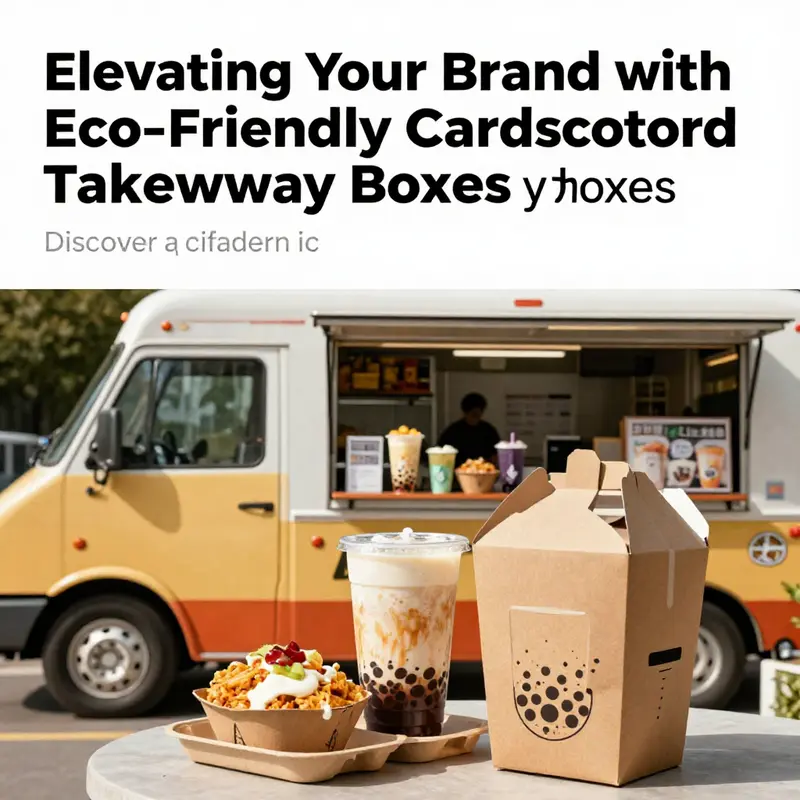
In an era where eco-friendliness meets consumer demand, cardboard food takeaway boxes emerge as a faithful ally for businesses like bubble tea shops, restaurants, food trucks, catering services, event planners, and corporate procurement teams. Beyond mere containers for food, these boxes represent a strategic opportunity to align with growing sustainability practices while enhancing brand identity. This article unfolds in three informative chapters exploring the material and construction of cardboard takeaway boxes, the vast customization options available to businesses, and the positive environmental impact they lend to our operations. As we dive deeper, you’ll uncover how these elements can provide a competitive edge in the bustling market.
From Kraft to Corrugation: The Material Science Behind Cardboard Takeaway Boxes and Their Quiet Sustainability
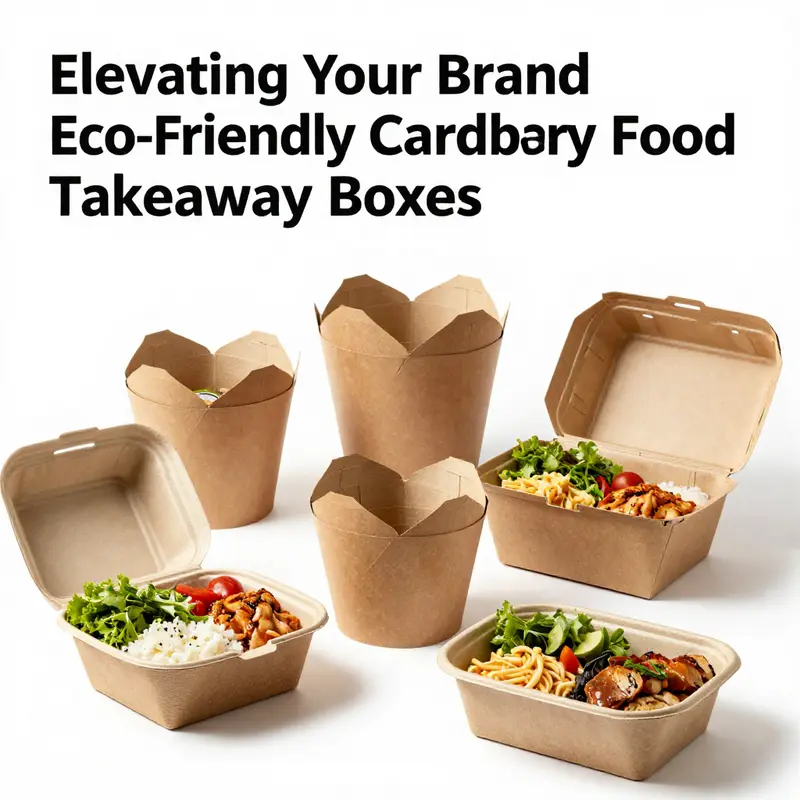
The world of cardboard takeaway boxes often fades into the background once a meal is set in motion, yet the materials and construction choices behind those boxes shape every bite’s journey as surely as the chef’s hand shapes the recipe. The chapter you’re reading threads together the practical realities of material selection with the broader pressures of brand storytelling and environmental responsibility. At the core, cardboard packaging is a marriage of form and function: the right paperboard or corrugated structure must bear weight, resist grease, and keep food at its intended temperature long enough to reach the table with dignity. It must also align with a growing current of consumer expectation that packaging be recyclable, compostable, or at least recoverable in a well-designed waste system. In this balance, the material choices are not merely about cost or aesthetics; they determine performance, shelf life, end-of-life options, and even the impression a brand makes in a crowded marketplace. The simplest takeaway is that the material matters in ways that ripple through operations, guest experience, and a company’s sustainability narrative.
When we examine the most common materials used for cardboard takeaway boxes, three families emerge as the backbone of everyday practicality: kraft paper, white cardboard, and recycled paperboard. Kraft paper, the brown, natural option, is prized for its rugged appearance and intrinsic strength. Its appeal goes beyond looks: kraft’s fibers are well-suited to creating sturdy containers that resist crushing under regular handling. Kraft packaging is often paired with a thin wax or polymer coating to bolster grease resistance, a critical attribute when transporting items like fries, sandwiches with sauces, or baked goods that carry a light sheen of oil. The coating is a practical compromise, providing a barrier against penetrating moisture and oils while preserving the box’s ability to be recycled, depending on the coating and local facilities. The preference for kraft also aligns with a consumer association of earth-friendly production, even when a brand may not disclose every step of its sourcing. Kraft therefore serves a dual role: it signals a sustainability story while delivering reliable performance in a lightweight, cost-conscious package.
White cardboard, by contrast, champions a clean, print-ready surface. It makes sense for premium-looking takeout and branded experiences, especially for items such as burgers, sushi, or artisanal pastries where the visual presentation matters as much as the food itself. The white surface makes logos and imagery pop with crisp contrast, and it also enables a broader range of printing techniques, including offset and high-definition color reproduction. For operators who want a more elevated unboxing moment, white corrugated boards or white linerboards can achieve that feel without sacrificing the sturdy profile of a box. The downside is that white surfaces sometimes require more pigment and smoother substrates to prevent print imperfections, which can influence cost and supply decisions. Still, when a brand seeks to project a refined image or wants to showcase a multi-color campaign, white cardboard boxes provide an adaptable canvas that can be tailored to seasonal menus or limited-time offerings.
Recycled paperboard rounds out the trio as the option most closely aligned with circular economy ambitions. Rooted in post-consumer waste, recycled boards offer commendable structural integrity while reducing virgin fiber inputs. The appeal here is environmental stewardship without sacrificing performance. Recycled boards are especially attractive for boxes designed to carry lighter meals or for brands that emphasize responsible consumption as part of their core message. The trade-off, as with any recycled content, can be variability in surface smoothness and print quality, depending on the recycled feedstock and finishing processes. The industry has made strides in improving the consistency of recycled boards to support higher-end branding while still delivering affordability and sustainability. Taken together, kraft, white, and recycled paperboard illustrate a spectrum of material identities—from earthy and durable to pristine and print-ready to responsibly renewed. For many operators, the decision rests on a blend of brand positioning, performance needs, and the lifecycle story they want to tell customers.
Beyond the broad material families, construction details play a decisive role in how a box performs from kitchen to curbside. Corrugated cardboard, with its characteristic fluted layer sandwiched between flat sheets, often provides the extra stiffness and insulation that larger or heavier meal boxes require. The fluted layer acts like a tiny rib, giving the panel rigidity that helps resist bending in transit. In single-use contexts, designers may opt for lighter paperboard with a water-resistant coating instead of full corrugation, especially when weight or cost is a primary driver. In both cases, the objective is to preserve food integrity—keeping hot items hot, cold items cool, and sauces contained—while minimizing the risk of leaks and structural failure during handling by delivery drivers, on dining room shelves, or in consumer handoffs.
Grease and moisture management sit at the heart of practical design. Without a competent barrier, even sturdy cardboard can succumb to oozing and fatigue under load. The common approaches range from waxed coatings to polymer-based laminates and even moisture-repellent liners inside the box. Each option carries implications for recyclability and compostability. Wax coatings, for example, may complicate end-of-life processing in some recycling streams, while certain polymer laminates can hinder recycling unless the entire assembly is designed for separate material streams. The packaging decision, then, is a careful calculus: you weigh grease resistance, water resistance, printability, weight, cost, and end-of-life options. Where possible, many manufacturers opt for coatings that balance barrier performance with recyclability, seeking certifications or local facility compatibility to reassure brands and consumers that the box’s environmental footprint aligns with stated intentions.
In the realm of user convenience, thoughtful design features matter just as much as material choice. Lids, handles, and foldable components are not cosmetic add-ons but integral parts of what gets the product from kitchen to customer with integrity. A well-conceived lid can prevent spills during delivery and transit, while a carrying handle offers ergonomic benefits that reduce the risk of accidental openings or drops. Foldable mechanisms can convert a simple box into a more secure vessel or into a tray capable of keeping side dishes or dipping sauces upright. These design elements, while seemingly minor, amplify the effectiveness of the materials themselves by creating a packaging system that is easy to open, reliable in use, and simple to dispose of. In larger or heavier meal boxes, corrugated construction supports not only stacking stability but also thermal performance; the box can act as a basic insulator, limiting rapid temperature loss as the package moves through the delivery ecosystem.
Another layer in this material story is scale and customization. As a broad family of packaging, cardboard boxes must accommodate a spectrum of meal sizes and service settings. The standard range of capacities—often expressed in milliliters for compact boxes and in terms of portion mass for larger containers—illustrates the versatility of the format. A typical lineup may include boxes suitable for 330 ml beverages through to 2100 ml meals, with intermediate capacities designed for sandwiches, fries, and multi-item meals. The thickness of the board, commonly around 1 mm for sturdier, heavier-use boxes, is frequently cited as being about 20 percent sturdier than the more common 0.8 mm disposable boxes. The incremental thickness, paired with a robust flat-panel or corrugated core, translates into a packaging solution that resists crushing during stacking and transit while maintaining a manageable weight that keeps shipping costs reasonable. In practice, this translates to fewer damaged orders, reduced returns, and a more reliable customer experience—as a supplier might emphasize when describing product performance to potential buyers.
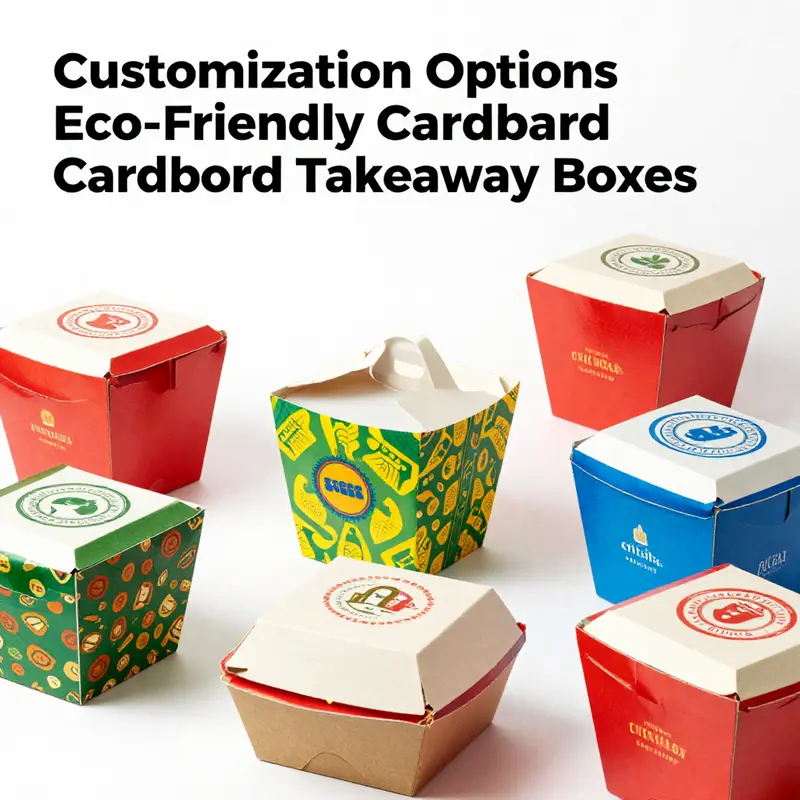
Where branding and communication intersect with material choices is in surface finish and printability. If a box serves as a moving billboard, you want a surface that accepts vibrant offset printing, enabling brands to communicate seasonal menus, nutritional messages, or loyalty prompts with energy and fidelity. White panels are favored when the goal is crisp imagery and color depth, while kraft faces can offer a warm, tactile feel that complements natural or rustic brand narratives. The surface reality of the substrate—its smoothness, whiteness, and ability to hold ink—affects color accuracy, edge definition, and the durability of the print through handling and moisture exposure. The design challenge, then, is to find a balance: a surface that looks attractive on the shelf and remains legible during the many handling steps of takeout service, while still aligning with the box’s barrier properties and end-of-life pathways.
From a supply-chain perspective, the market for cardboard takeaway boxes has evolved toward a more diversified ecosystem of materials and configurations. For operators seeking customization, a variety of options exists for size, shape, coating, and print finish. The landscape is complemented by platforms that connect buyers with verified suppliers capable of producing tailor-made packaging in fixed thicknesses, with precise tolerances, and with branding elements that reflect a brand’s identity. The 1 mm board standard, reported in many supplier descriptions, is cited as a practical compromise between rigidity and weight, often paired with reinforced corners and curved edges to resist deformation during transit. Such attributes matter as much to the driver who loads the boxes into a vehicle as to the consumer who unpacks the meal, delivering a predictable and satisfying experience that reinforces trust in the brand’s packaging choices.
The sustainability angle remains front and center in the decision calculus. A growing cadre of brands emphasizes recyclable and compostable materials, aiming to close the loop through responsible disposal. The desire to avoid wasteful packaging is not merely ethical; it translates into consumer trust and operational savings through reduced damage, less food waste due to temperature fluctuations, and fewer returns. The materials and coatings selected for a given box are typically evaluated against local recycling streams and composting capabilities; what works in one city may be less favorable in another. In this context, the packaging designer’s job is to craft a solution that can travel through a complex system with minimal friction, preserving food quality while enabling straightforward disposal by end users. The shift toward recycled content and responsible sourcing is a signal of how much packaging decisions have matured—from being a necessary cost center to becoming a strategic touchpoint in a brand’s environmental posture.
For those looking to source box materials and customization options, the marketplace landscape offers a broad horizon. Platforms that connect buyers with certified producers list a range of cardboard takeaway options, including custom printed variants and various paperboard configurations designed to handle different menu needs. The practical implication for a restaurant or food service operation is straightforward: select a board type and coating that meet the food-safety and barrier requirements, then align with a supplier who can deliver the required thickness, print capabilities, and green credentials within the desired timeline. In many cases, suppliers also offer guidance on end-of-life considerations, helping brands navigate the trade-offs between grease resistance and recyclability. This is where the conversation about material and construction becomes a conversation about responsibility, efficiency, and customer satisfaction, rather than a purely technical dialogue about fibers and coatings.
To illustrate how these considerations come alive in real-world choices, consider a scenario where an operator wants a mid-range, visually appealing box that can carry a burger with toppings and a side. A white, corrugated or solid board might be chosen for its clean surface and printability, paired with a thin, grease-resistant barrier. The design may feature a foldable lid to prevent spills during delivery, and perhaps a small integrated tab or venting mechanism to manage steam. If the brand aims to emphasize sustainability and post-consumer recyclability, a recycled paperboard with a modest grease barrier could be the primary option, leveraging a coating designed to remain compatible with widely available recycling streams. In another menu scenario—perhaps a fried chicken meal with sauces—a kraft-based solution with a robust grease barrier and a reinforced corner construction could be more appropriate. The choices become a narrative about how a meal travels from kitchen to customer, and how packaging choices echo the brand’s values while performing under practical delivery conditions.
In closing the materials-and-construction discussion, the takeaway is not simply “use this material and you’re done.” It is a narrative about an ecosystem in which paperboard chemistry, mechanical design, and environmental stewardship intersect. The box is a container, yes, but it is also a statement about the values a brand wants to project in the moment a customer first encounters the packaging. The materials chosen will influence not just the box’s performance, but the ease with which those materials are handled, recycled, or composted after use. They shape the unboxing moment, the impression of quality, and the overall footprint of takeout service. The future of cardboard takeaway boxes seems poised to lean further into sustainable formulations, smarter coatings, and designs that maximize performance with respect to both human handling and environmental accountability. Operators who understand these materials—how kraft’s natural strength, white cardboard’s printing reliability, and recycled boards’ circular promise interact with coatings, thickness, and lid designs—will be better equipped to deliver meals that travel well, look appealing, and align with a more responsible packaging paradigm.
For readers who want to explore practical examples of packaging design in this space, a sample of octagonal kraft paper packaging demonstrates how form can follow function. Explore this option here: disposable-octagonal-box-restaurant-food-kraft-paper-packaging.
External resource: Alibaba – Disposable Food Takeaway Boxes Supplier Listings. https://www.alibaba.com/trade/search?fsb=y&IndexArea=product_en&CatId=&SearchText=cardboard+food+takeaway+boxes
null
null
Rethinking Cardboard Takeaway Boxes: Environmental Realities, Innovation, and a Path to Truly Sustainable Packaging
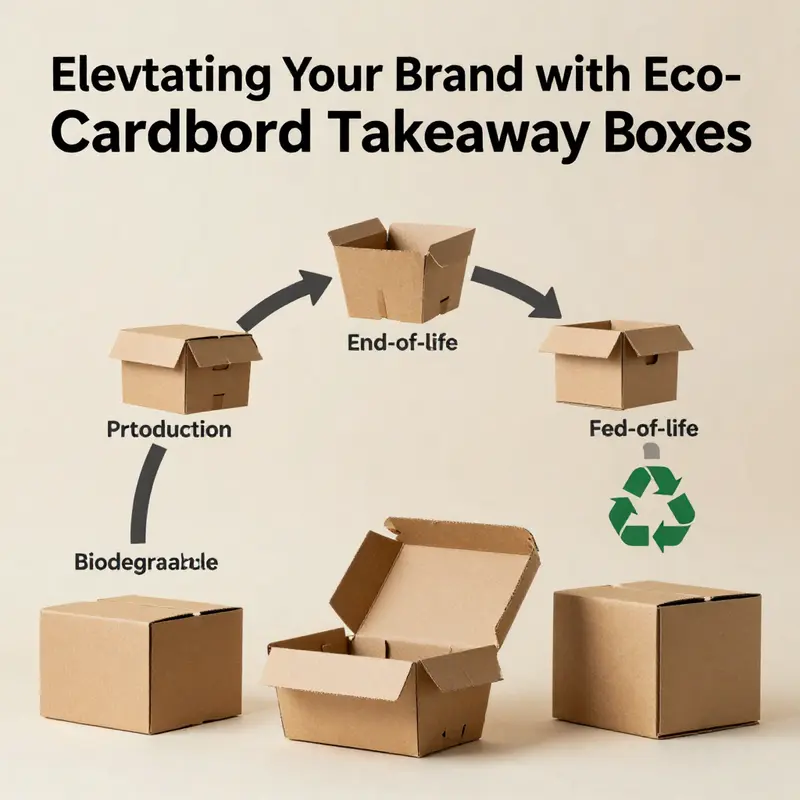
Cardboard takeaway boxes have become almost invisible in the daily choreography of food service, a quiet middleman that carries meals from kitchen to curb with minimal fuss. They are celebrated for being lightweight, stackable, and seemingly friendly to the planet because they are made from paper-based materials. Yet beneath that surface, the environmental story is not simply one of virtue; it is a complex negotiation among forest management, pulping chemistry, energy and water use, end-of-life processing, and the evolving choices that brands make about coatings, inks, and recyclability. In this continuum, cardboard boxes occupy a middle ground that is worth understanding in detail. A true assessment must follow the packaging from cradle to grave and consider how each phase shapes the ultimate footprint of a takeout experience. When we look at the full lifecycle, cardboard can emerge as a comparatively thoughtful choice, but only when the chain of custody—from responsibly sourced pulp to robust post-consumer recycling streams or composting facilities—is solidly in place and clearly communicated to consumers who dispose of them after use.
The most immediate and visible concerns arise at the outset: where the raw material comes from and what happens to it after the meal is finished. Paperboard boxes are, in principle, highly renewable. Their core material—cellulose fibers—can be sourced from responsibly managed forests, or from recycled fibers that have completed one or more lifecycles. In practice, however, the environmental advantages hinge on supply chain choices. Virgin wood pulp, if drawn from unmanaged or poorly managed sources, can exacerbate deforestation pressures and biodiversity loss. Even when forests are managed with sustainable criteria, the energy and water inputs required to transform raw wood into high-quality packaging paper matter. Water is not just a feedstock; it also carries with it wastewater that must be cleaned and treated before it returns to the environment. Energy, meanwhile, can come from a mix of grids and generation sources, with downstream emissions following the box through every leg of its journey.
A second layer of complexity comes from the coatings and treatments that make cardboard boxes grease- and moisture-resistant. The typical coatings used to keep fries or pastries from turning the box into a soggy mess are often polymer-based or wax-like. While these coatings are instrumental for preserving the integrity and presentation of food during transport, they complicate recyclability. When coats or laminations are not compatible with standard recycling streams, the fiber can become contaminated, forcing processing facilities to divert the material or to discharge more energy-intensive recycling pathways. The practical upshot is that a box that might otherwise have a straightforward end-of-life story becomes a mixed-material challenge, requiring careful sorting and sometimes compromising recyclability for performance. This tension between performance and end-of-life clarity is at the heart of many sustainability debates surrounding cardboard packaging.
Viewed through a broader lens, cardboard remains, in many contexts, a better option than a wide swath of plastic alternatives. A growing body of life cycle evidence suggests that when cardboard is recycled effectively, its overall environmental impact can be lower across several categories, including energy use and greenhouse gas emissions, compared with single-use plastics. A 2019 assessment in the Journal of Cleaner Production highlighted that single-use polypropylene containers did not outperform cardboard across a majority of evaluated categories; in particular, cardboard often fared better in global warming potential and other key environmental metrics when the recycling system functions well. The take-home here is not to crown cardboard as the universal solution, but to recognize that its relative sustainability is contingent on real-world performance of the recycling chain, and on ongoing efforts to reduce the virgin input burden, minimize coatings that hinder recyclability, and improve end-of-life processing. When all those pieces align, cardboard packaging becomes a genuinely effective tool for waste diversion rather than a cul-de-sac in the quest for greener packaging.
To move from theory to practical improvement, sustainability practices around cardboard takeaway boxes have to address both the material and the system that processes it. A central pillar is the content mix of the box itself. Increasing the proportion of post-consumer recycled (PCR) content in the pulp reduces the demand for virgin wood pulp and thereby lowers water and energy use in production. However, PCR fibers can bring their own challenges in terms of fiber quality and printability. Modern manufacturing has made significant strides in balancing fiber purity with performance, but the outcome hinges on whether suppliers pay attention to the upstream stream and maintain high standards for fiber cleanliness and strength. The broader design philosophy echoes this balance: maximize recyclability while maintaining the required mechanical properties for transport. In practice, this has meant exploring coatings that either minimize reliance on plastic laminates or, where coatings are indispensable, pursue options that are water-based or plant-based and easier to separate at recycling facilities.
The design for recyclability principle is not merely about the box itself; it also concerns how the consumer is guided to dispose of it. Clear, accurate labeling matters. When boxes are labeled with recycling symbols or compostability claims without a known end-of-life pathway, confusion reigns and disposal rates suffer. Consumer education thus becomes a critical, if often overlooked, ingredient in environmental performance. The packaging ecosystem depends on a working duet between product design and consumer behavior; the best box will still be a missed opportunity if it ends up in a landfill because the local waste stream cannot accept it or because users do not separate it correctly from other packaging.
Innovation in coatings represents a particularly vibrant area of transformation. Where traditional waxes or plastics impede recyclability, new formulations based on water- or bio-based chemistries offer promising avenues. These innovations aim to deliver the same grease resistance and moisture control while enabling smoother integration into existing recycling streams. The engineering challenge is nontrivial: coatings must survive the rigors of consumer handling and transport, resist food-based contamination, and yet be removable or separable during the pulping and sorting processes. The ongoing research in this space reflects a broader shift toward packaging that is not merely single-use but, where possible, compatible with circular economy ambitions. When you couple this with improvements in the collection and processing infrastructure, cardboard packaging can move from a packaging choice with a respectable performance to a packaging system that is consistently aligned with waste-diversion goals.
Branding and presentation are not incidental to sustainability; they are part of the lifecycle story because they influence consumer expectations and post-use behavior. Modern cardboard boxes often feature vibrant offset printing that enables striking branding while preserving the surface integrity necessary for grease resistance. The same design realities that make boxes attractive for marketing can be leveraged to reinforce sustainability messages and to guide disposal behavior. A menu-friendly box that looks fresh and neat after a long ride may still be littered with confusion if disposal instructions are unclear. Therefore, the most effective packaging programs blend aesthetic appeal with practical guidance for end-of-life treatment and, where possible, provide incentives for responsible disposal—efforts that social science and behavior research increasingly show to be as important as the material composition itself.
Manufacturing scale and supply chain resilience are other pieces of the sustainability puzzle. The choice to use a box with a higher thickness, for example, can translate into markedly improved transport performance, reducing the likelihood of bending or collapse during transit. The research overview you are engaging with notes a 1 mm cardboard construction that is 20 percent sturdier than a standard 0.8 mm alternative. This difference is not merely a technical footnote; it carries material implications for food integrity, customer satisfaction, and the downstream logistics of packaging handling. When boxes are overbuilt in ways that promote durability but are not matched by improvements in end-of-life options, the environmental benefits can slip away in the form of increased material use and wasted resources. The challenge, then, is to harmonize mechanical robustness with recyclability and to ensure that every millimeter of material serves a purpose in the lifecycle, not merely in the kitchen.
The interplay between design, coating choices, and end-of-life processing has broader implications for business strategy and policy. Companies that invest in PCR content, seek innovations in coatings that do not compromise recyclability, and participate in or support extended producer responsibility (EPR) programs are effectively contributing to a more circular packaging system. Such programs can support improved sorting, better contamination control, and greater access to recycling facilities. In parallel, municipalities and national regulators face the task of aligning waste management infrastructure with the packaging innovations at the factory floor. If every party in the system adopts a shared commitment to data-driven improvements and transparent reporting, the overall environmental performance of cardboard takeaway boxes can be materially higher over time.
In practical terms, this means choosing boxes that balance performance with end-of-life clarity. It means seeking composites and coatings that can be recycled in existing streams or that participate in industrial composting where appropriate. And it means communicating with customers about how to dispose of packaging after they finish their meals. The consumer education piece is not a one-off campaign; it is the creation of a reliable, repeatable disposal experience. When a box clearly indicates whether it belongs in the recycling bin or the compost stream, and when local facilities can actually process those streams, the lifecycle benefits of cardboard boxes are amplified rather than undermined. A well-executed program can turn a single-use object into a symbol of responsible consumption that travels from restaurant to home and, with a simple action at the end, returns to the material loop ready to be repurposed.
For practitioners seeking a practical touchpoint within this ecosystem, accessibility and affordability are essential. The packaging options available include a range of sizes and configurations, with sturdy 1 mm thickness on some models and options designed to withstand the rigors of hot and greasy meals. These design choices support reliable presentation and less mess in transit, which in turn can reduce consumer dissatisfaction and associated waste from abandoned meals. The opportunity for brands is to couple performance with packaging that is easier to recycle and to explain that decision to customers through clear labeling and transparent sustainability claims. In this sense, the packaging itself becomes a storytelling device—communicating a brand’s commitment to the circular economy while delivering the practical benefits the customer expects.
As with any material system, there is no silver bullet. Cardboard takeaway boxes will never be perfect in every metric, but they can be part of a robust, responsible packaging strategy when they are sourced from responsibly managed forests or high-PCR content, when their coatings are chosen for recyclability, and when disposal at the consumer level is simplified and clearly signposted. This is not only about reducing the footprint of a single meal; it is about contributing to a packaging ecosystem that is resilient, transparent, and capable of evolving as technologies and waste-management capabilities improve. The chapter’s focus remains on the practical intersection of material science, supply-chain governance, and consumer behavior—the triad that ultimately determines whether cardboard boxes live up to their promise as a sustainable packaging option in a crowded, fast-moving foodservice landscape.
To connect these ideas to a tangible example within the broader packaging landscape, consider how a practical, commercially available option can embody many of these sustainability principles. For readers exploring concrete choices, a useful reference is the internal product page on a kraft-based takeout bowl system that highlights grease resistance, rigid construction, and compatibility with standard recycling streams. This resource demonstrates how a single packaging component can reflect attention to material selection, manufacturing design, and end-of-life considerations, all within a format that remains visually appealing and functionally reliable for both customers and operators.
Disposable 700ml Kraft Paper Bowl Take Out Octagonal Rectangle Paper Bowl. The bracketed anchor text anchors a real-world example of how packaging can align with sustainability goals while delivering the performance that food businesses require during transport and service. It serves as a reminder that the choices made at procurement, design, and labeling stages ripple through the lifecycle, influencing recycling rates, emissions, and ultimately the shared environmental footprint of the foodservice sector.
Looking ahead, the sustainable pathway for cardboard takeaway boxes will likely involve a combination of stronger forest stewardship, increased use of PCR content, improvements in coating chemistry to enable easier recycling, and enhanced consumer education about disposal. It will also require alignment across supply chains and waste-management infrastructures so that the collected material can be effectively reprocessed into new products. The goal is not merely to minimize harm but to maximize circularity—creating a system in which the material’s value is preserved across cycles rather than lost to landfills. In practice, that means packaging designers and manufacturers embracing systems thinking: designing for recyclability from the outset, coordinating with pulp suppliers to ensure sustainable fiber sourcing, and collaborating with waste-management partners to optimize separation and processing. It means brands communicating clearly with consumers about how to dispose of packaging and, perhaps most importantly, advocating for the development of local facilities that can handle a growing stream of paper-based, coated packaging.
In sum, cardboard takeaway boxes occupy a nuanced space in the sustainability landscape. They embody a set of trade-offs that can be favorable when managed with care and vision. The most robust path forward blends responsible sourcing, coating innovations, and end-of-life infrastructure with an honest commitment to consumer education. When these elements converge, cardboard packaging does more than carry food; it carries the potential to advance a circular economy, reduce pollution, and keep the dining experience aligned with a more sustainable future.
External resource for broader context: a comprehensive lifecycle assessment comparing packaging materials, including aluminium, polypropylene, extruded polystyrene, and reusable polypropylene containers, offers a broad view of where cardboard stands in relation to alternatives. For readers seeking a deeper dive into lifecycle impacts and relative tradeoffs, see Environmental impacts of takeaway food containers. https://www.sciencedirect.com/science/article/pii/S095965261832257X
Final thoughts
Cardboard food takeaway boxes not only serve practical purposes but also elevate the brand’s appeal by aligning with sustainability goals. By selecting high-quality, customizable packaging, businesses in food and beverage sectors can present their offerings attractively while making a positive environmental impact. With diverse sizes and robust materials, the right takeaway solutions can enhance customer satisfaction and support an eco-conscious marketplace. The move towards sustainable packaging is not merely a trend but a necessary evolution that meets consumer expectations in a conscientious world.