
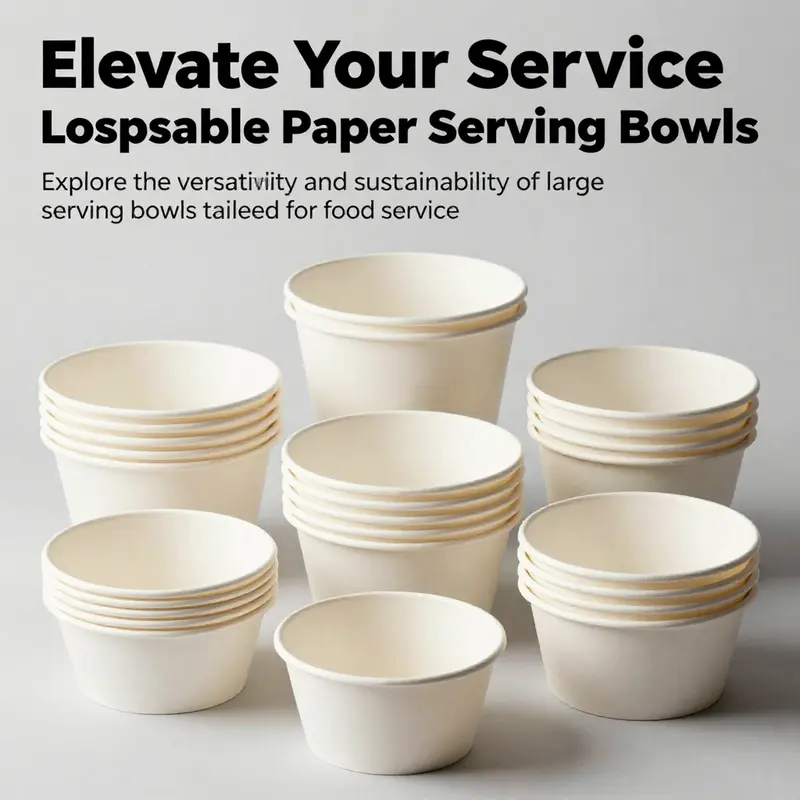
Large disposable paper serving bowls have become a staple in food service industries like bubble tea shops, restaurants, food trucks, and catering services. Their convenience, eco-friendliness, and adaptability to a variety of food types make them a practical choice for businesses aiming to enhance customer experience while promoting sustainability. This article delves into the distinctive features of coated, uncoated, reinforced, and compostable paper bowls, highlighting their benefits, ideal uses, and how they align with the evolving needs of food service establishments. Whether you’re in event planning, corporate procurement, or running a beverage chain, understanding these options will help you choose the right serving solutions for your business.
Coated Paper Bowls: The Durable Heart of Large Disposable Serving Bowls
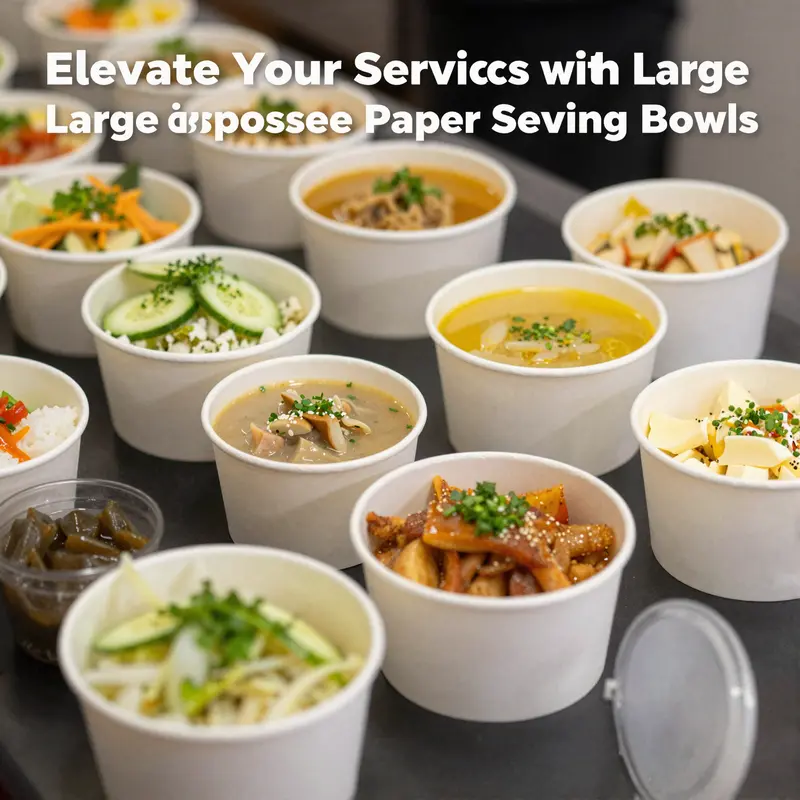
Coated paper bowls are the quiet engine behind many large disposable serving designs. They sit at the intersection of practicality and perception, where durability, heat, and convenience meet the expectations of modern food service. In the realm of large disposable serving bowls, a coating is more than a slick exterior. It is a functional layer that defines how the bowl behaves when loaded with generous portions, sauces, stews, or noodles. The coating, combined with careful paperboard construction, creates a vessel that can ferry heat, moisture, and volume from kitchen to customer without the soggy collapse that would ruin a meal and a moment of dining trust. The result is a balance of resilience and efficiency that helps service crews move quickly through lines, catering events, and busy takeout windows while preserving the integrity of the food and the guest experience.
At the core of coated paper bowls is the structure. These bowls typically rely on multiple layers of paperboard—often double or triple layers—to deliver the lift and stiffness required for large portions. The coating inside or both inside and outside the bowl serves several essential roles. First and foremost, it prevents sogginess and punctures. When a bowl holds liquids, oils, or sauces, the coating acts as a barrier that minimizes moisture migration into the paper. This is crucial for soups, chili, or saucy noodle dishes that stretch the limits of what a disposable vessel should endure. Second, the coating delivers improved thermal performance. By reducing heat loss, it helps keep hot foods hot without relying on extra sleeves or double-walled designs. This invites more flexible service options, from walk-up takeout stations to dine-in operations that want to expedite packed meals during peak periods.
The material choices for coatings vary, but two broad families dominate. One is a polyethylene (PE) or wax-based interior. The other is plant-based, heat-stable liners that align with sustainability goals. The PE or wax layer provides a robust moisture barrier, which translates into stronger performance for liquids and oily foods. For many operators, this translates into less mess on the tray, less leakage during transport, and a more predictable eating experience for customers who expect their soup to arrive intact. The plant-based liners, by contrast, appeal to venues that want weaker or no reliance on fossil-based plastics. They aim for a similar barrier effect while offering a more favorable end-of-life story. The choice between these options shapes both how the bowl behaves on the line and how it aligns with the restaurant’s environmental commitments.
Beyond moisture and heat, coatings influence microwave compatibility. When meals require reheating, a safe, stable coating matters. Some coated bowls are designed with microwave use in mind, enabling reheating without the risk of melting or the release of unwanted chemicals. In practice, though, microwave safety is not universal across all coatings or all use cases. Operators still need to consult the manufacturer’s guidelines to confirm whether a particular coated bowl can be reheated and, if so, under what power and time settings. This nuance matters in office lunch programs, meal-prep services, and on-the-go operations where timing and energy efficiency drive the day’s rhythm.
Applications for coated bowls are broad and calculated. They excel in scenarios where the food is wet, saucy, or heavy enough to threaten collapse. Think hearty soups and stews, chili con carne, curry dishes, or densely dressed salads. In these contexts, the coating helps maintain structural integrity as customers lift the bowl, carry it to a table, and then savor a generous serving without fear of leakage. For ready-to-eat or grab-and-go formats, the ability to stand up to a busy line and the vehicle’s interior conditions becomes a practical asset. This is especially valuable in settings such as food trucks, off-site catering, or upscale takeout where the perception of quality matters as much as the food inside.
Coatings also play a role in the tactile and visual experience of the product. A smooth, well-finished interior can feel premium, while an exterior gloss or branding-friendly surface can elevate perceived value. In many operations, bowls are not just vessels; they are part of a branding strategy. The coating can support exterior printing, color depth, and crisp graphics that reinforce a restaurant’s identity or a seasonal promotion. Consequently, the coating isn’t merely functional; it is also a strategic design decision that affects how customers read and remember a meal before they even take their first bite.
From an environmental standpoint, coatings raise a series of trade-offs that buyers weigh carefully. The obvious advantage is durability. A strong coating reduces waste caused by leaking bowls and soggy contents, which in turn lowers the need for replacements and reduces the rate of failed deliveries. Yet this durability often comes with implications for end-of-life options. PE-coated bowls, for example, may be less readily compostable in typical municipal streams, depending on local facilities. Plant-based liners aim to address this concern by offering compostability or at least a higher degree of recyclability, but the reality of waste management varies by region and program. The aspiration toward sustainability often nudges buyers toward coating choices that balance performance with environmental responsibility, including certifications and compliance standards that reassure buyers and customers alike.
Another environmental dimension concerns the broader lifecycle of the paper itself. Coatings that are extruded or cured quickly tend to be compatible with fast production cycles, which helps keep costs manageable and allows producers to scale. The trade-off here is that some high-performance coatings introduce additional processing steps. This can impact the overall carbon footprint of the product, including energy use and water management during manufacturing. As a result, responsible procurement often requires a careful comparison of supplier practices, coating chemistry, and end-of-life pathways. When buyers align coating choices with sustainability goals—such as opting for renewable-sourced liners or coatings compatible with compostable or recyclable streams—they move toward a more circular approach to disposables. In practice, this alignment often accompanies other efforts, such as minimizing overall packaging, selecting bulk purchases to reduce packaging waste, and pursuing supplier certifications that verify environmental stewardship.
The value proposition of coated bowls extends into branding and consumer perception. A coated surface, finished with careful printing or decorative touches on the exterior, can elevate a simple serving vessel into a recognizable product in a crowded market. The coating may accept ink or lamination that delivers vibrant branding, seasonal motifs, or restaurant logos without compromising the interior barrier. This dual-functionality—strong performance inside and an attention-getting exterior—helps operators command a premium feel without sacrificing the convenience and efficiency that a disposable bowl delivers. In turn, this enhances customer satisfaction, encouraging repeat purchases and fostering brand recall during events, markets, or daily meal routines.
Choosing the right coated bowl is a synthesis of several factors. Material choice matters, but so do the intended use, service style, and sustainability commitments. For high-volume environments, performance criteria such as moisture resistance, heat retention, and mechanical strength take precedence. In more ecologically conscious operations, compostability goals, supplier claims, and third-party certifications carry weight. The decision is rarely about a single feature; it is about a constellation of properties that together determine how well the bowl supports service goals—speed, reliability, cleanliness, and customer trust.
For buyers planning large orders, practical considerations come into play. Packaging configurations, the number of pieces per case, and the ease of stacking influence how smoothly a kitchen or catering operation runs. In many cases, suppliers can offer coated bowls with different interior coatings or optional lids, enabling a complete takeout or buffet solution. If a business needs both hot and cold presentations, a layered approach may be appropriate, pairing a sturdy, moisture-resistant interior with a robust exterior that handles branding and handling in busy service lines. The strategic aim is simple: deliver food that travels well, remains visually appealing, and honors the guest’s expectations for warmth and texture.
The broader ecosystem of large disposable bowls embraces a spectrum of options beyond coatings alone. For truly compostable and microwave-safe performance, some operators look toward bowls crafted from plant fibers such as sugarcane or bamboo. These materials can combine heavy-duty strength with a different environmental profile, often including heat tolerance and compatibility with both hot and cold foods. In practice, many venues will use coated paper bowls for certain menu items and switch to alternative materials for others, depending on the dish, service context, and sustainability targets. This approach acknowledges that no single solution perfectly blends every desirable attribute, but a mixed strategy can optimize both performance and stewardship across a restaurant’s portfolio.
When considering a bulk purchase or a long-term supply arrangement, buyers often weigh the total cost of ownership rather than the sticker price alone. Coated bowls can carry a higher upfront cost than uncoated options, reflecting their enhanced barrier properties and durability. However, the savings from reduced leakage, fewer replacements, and improved customer satisfaction can offset initial pricing over time. Storage and handling also factor into the equation. Coated bowls tend to be bulkier than plain paper bowls, demanding appropriate shelf space and careful inventory management. Still, their reliability in high-volume settings can justify the extra storage, particularly for operations that routinely handle saucy dishes, soups, or large servings that challenge ordinary disposable ware.
In sum, coated paper bowls occupy a pivotal role in the design of large disposable serving solutions. They deliver essential performance for moist and heavy foods, support efficient service and transport, and offer branding opportunities that strengthen customer perception. Their environmental story is nuanced, balancing the strength and convenience of plastic-like barriers with the realities of end-of-life options. For operators, the task is to select a coating strategy that aligns with service goals, labor efficiency, and sustainability commitments. The right choice harmonizes durability, heat retention, and barrier protection with the realities of waste management programs and the brand’s environmental narrative. In a landscape where food service must move quickly while caring for the planet, coated bowls provide a dependable pathway to maintain quality on the go, whether at a bustling cafe, a street-food stall, or a catered event. They are, in many ways, the quiet backbone that enables scale without sacrificing the dining experience.
For those curious to see how this translates into real-world product options, consider an example of a large, high-capacity solution that illustrates the practical side of this technology: a 1500ml kraft octagonal paper bowl designed for heavy portions and buffet-style service. This type of bowl exemplifies how a sturdy exterior and reliable interior coating work together to support large servings while enabling efficient handling, stacking, and presentation in a fast-paced setting. The combination of form and function—capacity, stability, and branding potential—captures the essence of coated paper bowls as a cornerstone of modern large disposable serving. octagonal kraft paper bowl.
As the field continues to evolve, the balance between performance and sustainability will remain central. The development of greener coatings, improved compostability pathways, and clearer lifecycle assumptions will guide future choices. In practice, many operators will continue to rely on the familiar advantages of coated bowls for the most demanding, high-volume tasks, while exploring innovative materials for other menu items and service contexts. This pragmatic approach reflects an industry that values reliability, guest satisfaction, and environmental responsibility in equal measure.
External resource: What are coated paper bowls and how do they work — https://www.paperbowls.com/what-are-coated-paper-bowls-and-how-do-they-work
Bare-Bottom Sustainability: Uncoated Paper Bowls as the Eco-Friendly Core of Large Disposable Servings
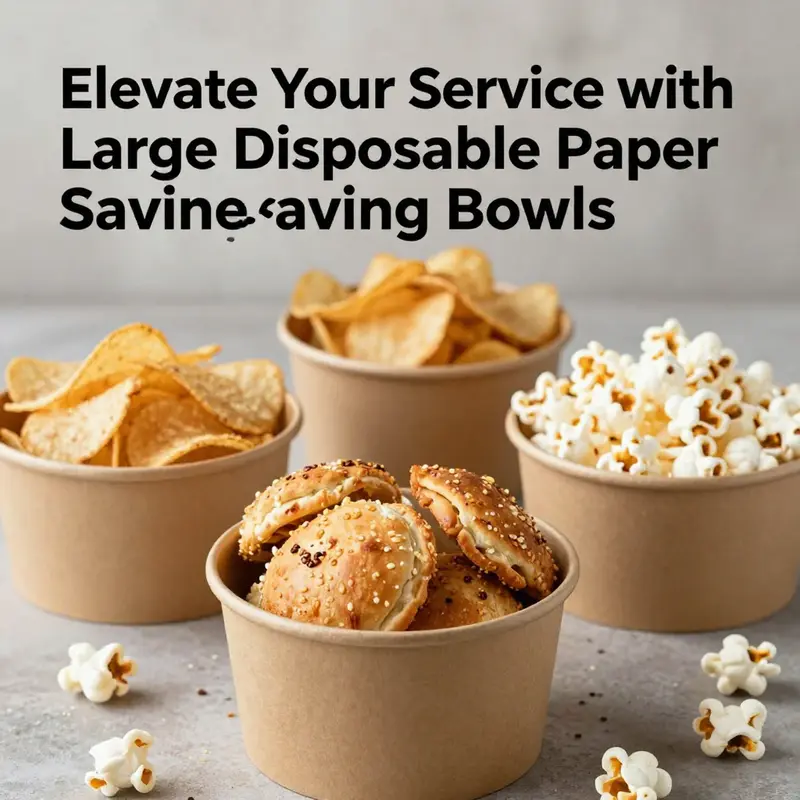
Uncoated paper bowls sit at a quiet intersection of practicality and responsibility in the world of large disposable serving bowls. They strip away glossy coatings and extraneous layers to reveal a straightforward, plant-based core. In settings from bustling farmers’ markets to casual eateries, these bowls offer a perception of simplicity that resonates with eco-conscious customers and operators alike. Their appeal is not just environmental; it is also tactile and practical. The natural texture and minimalist silhouette signal a brand that values flow, accessibility, and a lighter footprint as part of the dining experience. When designed for large portions, uncoated bowls become more than vessels. They become ambassadors for sustainability, blending form and function in a way that supports quick service without compromising environmental goals.
At the heart of uncoated paper bowls is a commitment to material integrity. They are made from plain paper without an internal wax, plastic, or polyethylene lining. This absence of a barrier inside the bowl means they rely on the inherent strength of layered paperboard and smart geometry to maintain shape under light to moderate moisture. The result is a container that is fully compostable and biodegradable under the right conditions. For businesses aiming to demonstrate circular economics, this aligns with a strategy that emphasizes source separation, compostability infrastructure, and transparent end-of-life claims. The trade-offs are clear, too. When the content releases significant moisture or fat, uncoated bowls can lose some rigidity, and risk leakage if the food composition or serving method pushes the limits of the material.
From a sustainability perspective, uncoated bowls offer a compelling narrative. They are fully compatible with composting streams where available, reducing landfill waste in ways that align with circular economy thinking. This is not just a moral stance; it is an operational reality in regions with established composting facilities for paper products. In practice, the environmental footprint of an uncoated bowl depends on several factors: the paper’s origin, the presence (or absence) of coatings elsewhere in the supply chain, and the end-of-life processing that follows a serving event. When sourced responsibly, such bowls help cafes, markets, and events tell a consistent story of reuse and regeneration that resonates with sustainability-minded guests.
For applications, dry or lightly moist foods are where uncoated bowls truly shine. Popcorn, chips, bread rolls, baked goods, and similar fare benefit from a natural, relaxed aesthetic that communicates simplicity and freshness. The absence of a shiny inner lining reduces the visual distance between the food and the consumer, which can enhance the perception of product quality and rustic charm. This makes them particularly appealing for venues that want to emphasize organic or farm-to-table branding without sacrificing practicality. They pair well with simple, hands-on serving experiences where guests pick up a well-priced, straightforward container that mirrors the food’s character rather than competing with it.
In practice, the structural reality of uncoated bowls invites a thoughtful approach to portion size and serving technique. While the plain paper inherently supports lighter or drier foods, heavier or denser items can still be accommodated through design choices that reinforce strength. For example, reinforced paper bowls—built with double or triple layers of paperboard—offer elevated load capacity and improved resistance to sogginess and punctures. These reinforced variants extend the utility of the uncoated concept, enabling large portions of heartier meals to be served without compromising the clean aesthetic or compostable promise. The dialogue between uncoated and reinforced design highlights a core principle: choose the bowl that matches the meal’s moisture, weight, and handling requirements rather than forcing a one-size-fits-all solution.
Branding considerations also play a nuanced role. The uncoated form communicates a natural, minimalist vibe that can align with rustic, organic, or eco-forward branding. In many cases, the bowl itself remains unprinted to preserve its natural look, letting the food and packaging speak for the brand. Yet, operators can still convey identity through the surrounding packaging, signage, or lid design where applicable. The clean surface invites thoughtful customization on external packaging or on matching lids and sleeves, creating a cohesive experience from counter to table. For businesses seeking a balance between simplicity and visibility, the uncoated bowl becomes a canvas for branding strategies that emphasize sustainability without distracting from the meal.
Temperature performance is another practical dimension to consider. Uncoated bowls can safely handle hot and cold foods for limited periods, a capability that broadens their use in cafeterias, markets, and hospitality settings. Studies and product specifications from reputable suppliers indicate that these bowls can tolerate brief heat exposures—enough for a hot portion to be served and briefly maintained before transfer to a consumer-ready experience. However, long exposure to high heat or extended contact with very hot liquids can compromise the bowl’s integrity. In those cases, coated or sugarcane- or bamboo-fiber alternatives may be more suitable, especially when preserving moisture control and structural stability is critical.
One practical tip for operators designing a large-disposable serving program with uncoated bowls is to align the serving method with the food’s moisture profile. Dry or lightly moist items work best, particularly in self-serve or buffet-style settings where guests handle their own portions. If a menu includes items with significant moisture or oil, pairing the uncoated vessel with a thin external barrier—such as a paper sleeve or a liner for the outer surface—can help manage leaks without compromising the core compostable advantage. The goal is to maintain an authentic, natural presentation while ensuring reliability during transport and consumption. In some contexts, this might mean choosing an octagonal or rectangular kraft bowl design that provides structural variety while preserving the uncoated interior’s environmental promise.
For readers considering how to integrate uncoated bowls into a broader sourcing strategy, the procurement landscape presents a spectrum of options. Bulk purchases and customization capabilities exist, often with minimum order quantities that reflect the economies of scale in food-service supply chains. Typical MOQs can range into the thousands to tens of thousands of pieces, depending on the scope of customization, such as flexo printing in color or the inclusion of branded lids. This reality invites a careful alignment of product choice with demand forecasts, event calendars, and sustainable branding goals. When a business plans around a season or peak events, uncoated bowls paired with complementary eco-friendly disposables can deliver a coherent, low-impact service that still reads as premium and thoughtful to guests.
Real-world usage scenarios illuminate how uncoated bowls function in tandem with other packaging choices. At farmers’ markets, for instance, a straightforward, compostable bowl supports a shopper’s eco-conscious ethos while remaining affordable for vendors who operate on thin margins. In casual cafes or pop-up eateries with a focus on sustainability, these bowls reinforce a narrative of simplicity and responsibility. They also align well with a growing repertoire of sustainable serving options, including bowls made from plant fibers such as sugarcane and bamboo. These plant-fiber alternatives offer comparable environmental benefits while often delivering enhanced strength and heat tolerance that suit hotter or soup-focused applications. In the right context, uncoated bowls act as a bridge—connecting traditional, low-cost disposables with modern expectations for responsible packaging and circular waste streams.
If you’re curious about a concrete application that demonstrates how an uncoated bowl can meet specific service needs, consider a 750 ml take-away kraft paper salad bowl with lid. This option presents a practical blend of capacity, portability, and modest environmental impact. It provides a reliable vessel for salads, grains, and light dressings, while the lid helps preserve freshness during transit. 750ml disposable take-away kraft paper salad bowl with lid serves as a representative example of how uncoated designs can pair with thoughtful lid solutions to extend shelf life and protect contents without compromising the compostable promise. The pairing also illustrates how visual branding can be accomplished through packaging design, even when the bowl itself remains unprinted and natural in appearance.
From a supply-chain perspective, sustainability hinges on thoughtful material sourcing and end-of-life outcomes. Uncoated bowls are most effective when the paperboard comes from responsibly managed forests and when the product finishes its life through appropriate composting channels. Certifications such as FSC™-certified paperboard strengthen the sustainability narrative, offering assurance about forest stewardship and supply chain transparency. When these elements align, uncoated bowls contribute to a broader strategy of waste reduction, resource conservation, and responsible packaging design that resonates with consumers who seek authenticity and accountability in the products they choose. The overall effect is a packaging solution that supports a lightweight footprint without compromising the dining experience.
In sum, uncoated paper bowls provide a compelling option for large disposable serving needs where moisture is moderate and branding leans toward naturalism. They excel in dry or lightly moist contexts, offer respectable microwave tolerance for short durations, and invite reinforced designs for heavier meals. Their environmental advantages—coupled with a straightforward production footprint—make them a durable cornerstone of a sustainable serving program. When combined with careful menu planning, strategic branding, and responsible end-of-life stewardship, uncoated bowls become more than a disposable tool; they become a statement about how food service can balance convenience with care for the planet. For those who aim to keep a clean, earthy aesthetic while delivering dependable performance at scale, uncoated bowls deserve serious consideration as the core component of large disposable serving systems.
External resource: For broader context on eco-friendly paperware standards and uncoated materials, see the Duni Global product specification. https://www.duni.com/en/products/plates-bowls/uncoated-paper-plates-bowls
Reinforced Paper Bowls: Elevating Durability and Practicality in Large Disposable Serving Solutions
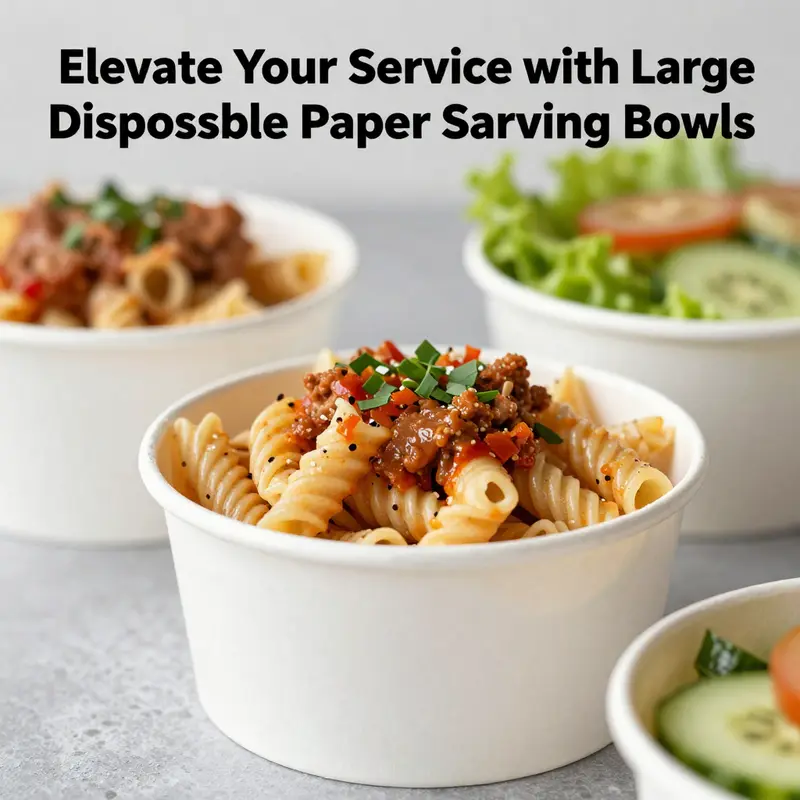
Reinforced paper bowls have emerged as a pivotal upgrade in the realm of large disposable serving ware. They address a practical tension that every food-service operation faces: the need for dependable containment and steady presentation, even when meals arrive hot, saucy, or buoyed by generous portions. The reinforcement is not a mere afterthought; it is a carefully engineered response to real-world service demands. In the broad ecosystem of disposable bowls, these multi-layered vessels stand out because they marry structural resilience with a thoughtful approach to sustainability, making them a compelling option for operations that move food—from mobile food trucks and bustling caterings to outdoor festivals and high-volume take-out services. The result is a vessel that can ferry a heavy meal without buckling, splashing, or leaking, while still aligning with growing expectations for environmental responsibility and responsible waste management.
At the heart of reinforced paper bowls is a deliberate, multi-layer construction. Unlike single-wall variants that rely on a simple sheet-and-fold approach, reinforced bowls typically employ two or three layers of paperboard. This multi-layer strategy distributes weight more evenly and resists the sag that often accompanies denser fillings. When a customer lifts a steaming portion of stews, hearty grains, or generously sauced dishes, the walls retain their vertical integrity. This is especially important for large serving sizes—think weekend buffets, catering trays plated into individual servings, or large bowls presented at a self-serve station. The layered design is not merely about strength; it also contributes to dimensional stability. The bowl doesn’t spread outward under heat and moisture in the same way a single-thickness vessel can, which helps keep the presentation neat and the consumer experience consistent from pickup to plate.
But the layering is only part of the story. Reinforced bowls often incorporate structural ridges or slightly thicker walls that act like architectural features in a building’s frame. These ridges serve multiple functions: they increase the bowl’s load-bearing capacity, reduce the tendency to collapse under weight, and create a perimeter that resists punctures or tears when the vessel is bumped in transit. For operators who load trays with dense fare—such as chili, gumbo, or pasta dishes with hearty toppings—these features translate into fewer incidents of leakage and spillage, which in turn reduces waste and the time spent on cleanup. The practical impact is measurable on the floor: fewer returns from customers because the container failed, and more consistent heat retention as the contents press outward less aggressively on the walls.
Material density and finish also play a decisive role in how reinforced bowls perform in daily use. The paperboard’s density, thickness, and fiber composition determine how the vessel responds to moisture and heat. Heavier, denser boards resist sogginess longer, providing a more rigid interior surface that helps preserve shape even when a dish invites moisture from oils, sauces, or humidity. This matters not only for containment but for presentation. A bowl that holds its form supports a cleaner, more appealing appearance on delivery and at the table. It also makes portion control more reliable for staff who portion meals into large servings. In practical terms, this means that a customer can carry a full bowl without fear of the sides bending and the meal shifting, which preserves the intended dining experience.
From an operational perspective, reinforced bowls offer a meaningful advantage in environments where speed and reliability are non-negotiable. Food trucks, with their limited space, benefit from a container that can be stacked securely without initiating a collapse in the stack. Catering events demand containers that can endure a long haul, occasional jostling, and hot cargo in car trunks or rear-seat storage. Outdoor festivals introduce another layer of challenge: wind, temperature swings, and intermittent seating arrangements can stress packaging in ways that indoor dining does not. In all these contexts, reinforcement translates into consistent performance. A bowl that resists sogginess and maintains its shape reduces the risk of leaks onto clothing, equipment, or other items in transit. For operators, that translates into fewer service interruptions and a smoother hand-off between kitchen, service team, and customer.
A particularly important dimension of reinforcement is how it intersects with containment and presentation. Consumers rely on packaging to convey an impression of care and quality. A sturdy vessel with clean, crisp edges communicates that the brand has prioritized reliability from the moment the order left the kitchen. It also reduces the cognitive load on staff who do not have to manage spills or awkward re-packaging at the pickup counter. The reinforcement thus becomes a marker of consistency—a tangible signal that the food is being treated with care from kitchen to consumption. In an ecosystem where brand perception is increasingly tied to packaging quality, reinforced bowls function as a quiet yet meaningful ambassador for a restaurant or catering business.
Environmentally, reinforced bowls sit at a nuanced intersection. A core consideration for operators evaluating these vessels is the nature of the lining and the overall compostability of the product. Some reinforced designs use biodegradable plant-based linings, which preserve the compostability of the paperboard while still delivering moisture resistance. Others employ traditional polyethylene (PE) linings that improve moisture barrier properties but complicate end-of-life disposal in many composting streams. The choice often reflects a broader sustainability strategy: whether the business prioritizes faster compostability, or whether it emphasizes endurance in the field and the potential for recycling where facilities exist. For many operators, the path is to adopt reinforced bowls that incorporate biodegradable or PLA-based linings when available, so the strength benefits are not achieved at the expense of environmental goals. In cases where a non-biodegradable lining is used, clear labeling and collaboration with local waste programs become essential, ensuring customers understand the disposal options and the impacts of their packaging choice.
Choosing reinforced paper bowls also involves thoughtful consideration of food compatibility. These bowls are especially well-suited for hot and heavy items because the multi-layer construction resists the softening that can come from moisture-rich fillings. When a hot dish sits in a damp environment, a weaker surface can become slick or collapse outward. The reinforced design minimizes this risk, enabling a stable surface for the food and a predictable edge profile for a clean, appetizing presentation. For soups and stews, the interior’s rigidity helps to maintain a consistent shape, supporting a balanced aroma and a steady dining experience. For dense, saucy mains, the same rigidity helps to resist punctures and leaks, even during extended takeaway periods. The design thus enables a more reliable user experience across a spectrum of menu items.
In practical terms, the sourcing narrative for reinforced bowls often balances performance, cost, and sustainability. Operators planning large events or ongoing take-out services typically evaluate a few critical dimensions: sheet thickness, the number of layers, the presence and nature of any ridges or wall supports, and the compatibility of the lining with the food profile. They also weigh the environmental claims of the supplier, looking for certifications that signal adherence to compostability standards or regulatory compliance. The procurement logic broadens into supply chain considerations as well. If a venue regularly serves items that generate substantial moisture or fat, a reinforced option with robust moisture barriers and a sustainable lining becomes a logical standard. If, on the other hand, the business prioritizes recyclability where possible, a liner approach that preserves recyclability in an appropriate waste stream may be favored. In all cases, the reinforced bowl must be compatible with typical serviceware ecosystems, including lids, compatible sleeves, and compatible take-out packaging architectures that streamline the customer journey.
The environmental dimension of reinforced bowls is not a single decision point but a spectrum. A growing segment of the market explores a middle ground—reinforced, compostable paper bowls that are designed to handle hot and wet foods while still offering the chance for composting after use. This approach appeals to operations seeking to align with eco-conscious branding and customer expectations for sustainability. It also prompts a more nuanced discussion about the life cycle of packaging materials, including how the materials break down under commercially managed composting conditions and what residuals, if any, might remain. In evaluating this spectrum, facilities often partner with waste haulers and composters to understand local capabilities, ensuring that the chosen solution aligns with practical end-of-life outcomes rather than purely theoretical sustainability claims. Consumers, likewise, benefit from packaging that can offer strong performance without creating additional burdens on waste streams they are already navigating.
The technical literature and industry references consistently highlight reinforced bowls as a balanced solution. They deliver meaningful enhancements in durability and containment while still allowing operators to pursue responsible environmental strategies, particularly when biodegradable or compostable linings are employed. The engineering rationale is clear: thicker, multi-layered sheets paired with strategic wall geometry provide the necessary stiffness and resilience for large portions and saucy dishes. The resulting performance translates into improved customer satisfaction, fewer operational hiccups, and a packaging experience that reinforces a brand’s commitment to quality and reliability. In sum, reinforced paper bowls enable food-service professionals to elevate the practical aspects of serving large portions without compromising on environmental responsibility or brand integrity.
For practitioners curious about the practical procurement path and market options, it helps to review available supply channels and the kinds of assurances that accompany them. Suppliers often advertise MOQs and customization options, with some offering flexo printing in multiple colors to align with corporate branding. A careful read of the environmental credentials and certifications can reveal whether a given reinforced bowl aligns with a business’s sustainability commitments and waste-management capabilities. In addition, the choice of reinforced bowl should harmonize with other elements of the service experience—from the lid designs that help maintain temperature to the inner finishes that resist oil and moisture without compromising the consumer’s ability to see and enjoy the meal. A cohesive packaging strategy, built around reinforced bowls, can thus support both operational efficiency and a positive consumer impression.
To illustrate a practical sourcing idea, consider a pathway that blends reliability with branding flexibility. Some suppliers offer high-quality take-out kraft paper rectangle octagonal bowls that share a common ethos of durability and design versatility. These vessels, while robust, can be tailored with branding and labels to convey a cohesive brand story even at the point of service. For readers exploring options, one example of such a pathway is to review materials and finishes that emphasize strength without sacrificing compostability where possible. You can explore options such as this through a supplier catalog that highlights multi-layer, reinforced designs and their compatibility with various interior finishes and lid systems. This approach keeps the focus on performance while preserving the opportunity to deliver a polished, market-ready presentation that resonates with customers who expect both substance and sustainability. High-Quality Take-out Kraft Paper Rectangle Octagonal Bowl.
In considering the broader ecosystem of large disposable serving bowls, reinforced options deserve a serious look when the menu includes substantial portions, heavy sauces, and hot temperatures that demand dependable containment. They are not a universal fix for every scenario, but when matched to the right use case, they deliver a tangible improvement in durability, reliability, and brand perception. The story of reinforced paper bowls is thus about more than just stronger walls. It is about rethinking how packaging can support the flow of service—where speed, accuracy, and customer experience converge with responsible environmental choices. It is about acknowledging that the container is part of the dining experience, not merely a afterthought. And it is about recognizing that, in the hands of thoughtful operators, a reinforced bowl becomes a practical instrument for delivering consistent, satisfying meals from kitchen to consumer, even in the most demanding settings.
External reference for further technical perspective: https://www.paperbowl.com/reinforced-paper-bowls-durability-features
Sustainable Alternatives: Compostable Bowls for Large-Volume Service
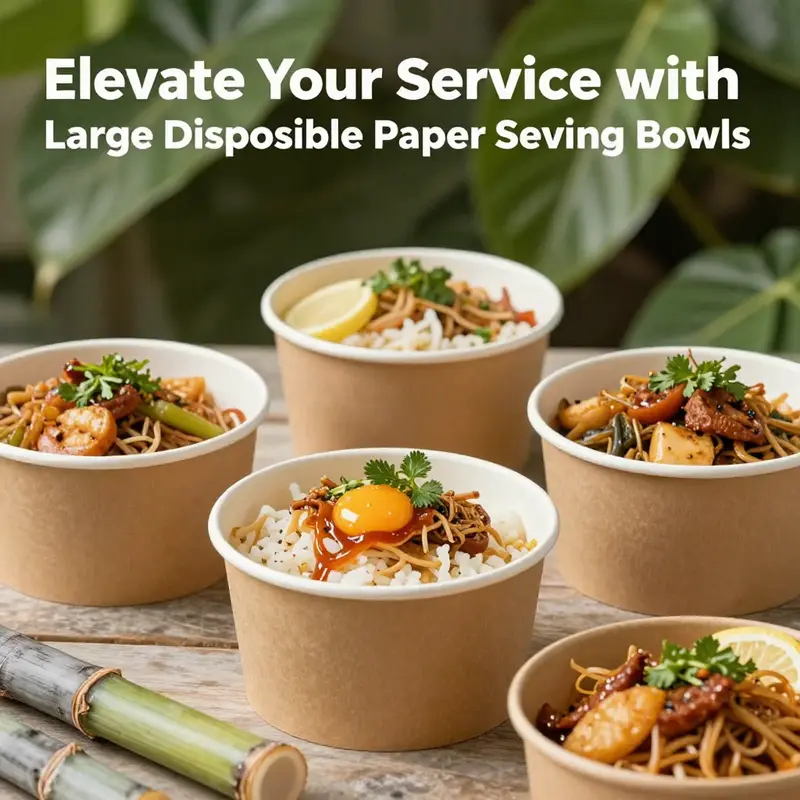
In the food service landscape, vessel choice signals a restaurant’s environmental stance as much as practicality. Large disposable paper serving bowls have long balanced convenience and responsibility, but the field is shifting toward compostable bowls made from natural fibers like bagasse. End-of-life outcomes are central: compostable bowls aim to return to the earth rather than to a landfill, aligning with circular economy goals.
Bagasse bowls are designed to withstand hot foods and sauces, essential for substantial portions and catering scenarios. The 40-ounce capacity has become a practical standard for hearty soups, stews, and sauced dishes, while still being suitable for composting streams at the end of their life cycle. They hold heat and maintain shape without sacrificing compostability.
Performance and end-of-life go hand in hand. Bagasse-based bowls are engineered for both hot and cold foods, with heat resistance and structural integrity that matter in busy service lines. Unlike coated papers that resist moisture but complicate biodegradability, bagasse products break down in home or industrial composting facilities, delivering a clearer end-of-life narrative.
Sourcing and supplier considerations matter. Certifications for compostability, safety, and quality management signal reliability. MOQs, customization, and branding must align with large-scale procurement while preserving performance.
From an environmental perspective, bagasse bowls support a circular flow by returning nutrients to soil and reducing landfill waste. They derive from renewable plant resources, and their production can align with lower carbon profiles than some conventional plastics. End-of-life disposal remains critical: clear disposal instructions and access to composting facilities maximize environmental benefits.
For buyers navigating this space, start with service profile, menu mix, and disposal infrastructure. A 40-ounce bagasse bowl serves hearty servings and sauces, while lighter uncoated options may suit dry foods. The key is balancing performance with credible compostability.
To explore practical options, suppliers offer bulk, customizable, and sustainability-conscious solutions. External resources and supplier profiles can help buyers compare certifications, MOQs, and pricing. External resource: https://www.amazon.com/dp/B0B9XZ8KQV
Final thoughts
In a market that increasingly values sustainability, large disposable paper serving bowls stand out as a versatile solution for food service businesses. From coated bowls that handle saucy dishes to uncoated options that appeal to eco-conscious consumers, and reinforced varieties that support heftier meals, there’s an ideal choice for every need. Compostable bowls made from natural fibers further enhance your offering, aligning both with customer preferences and environmental standards. By carefully selecting the right type of disposable bowl, food service operators can enhance customer satisfaction while supporting their sustainability goals.