
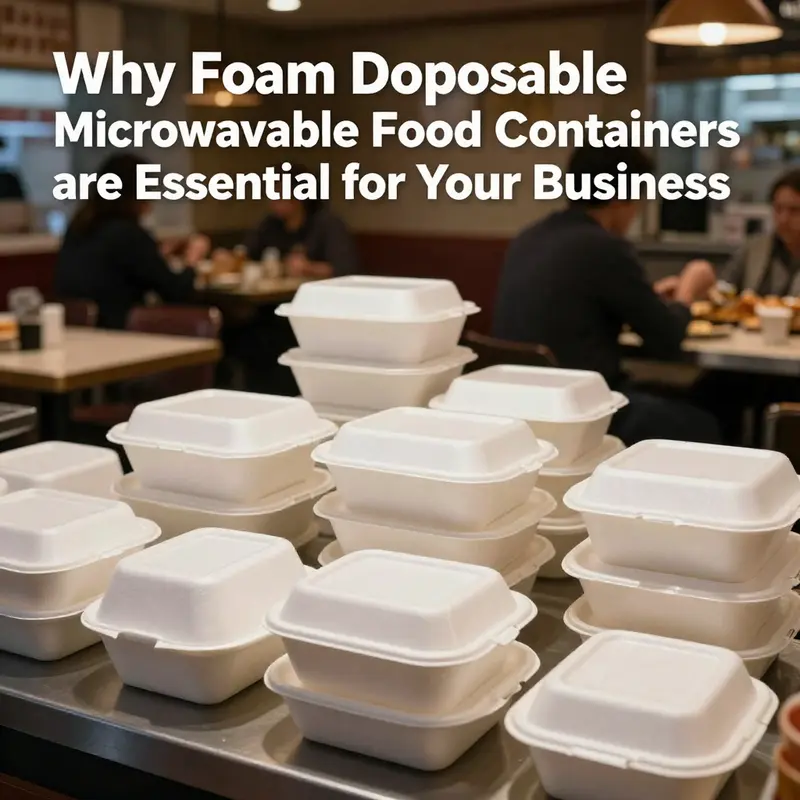
As businesses in the food industry continually seek efficient, safe, and sustainable packaging solutions, foam disposable microwavable food containers have emerged as vital assets. Particularly for bubble tea shops, restaurants, food trucks, catering services, and corporate procurement teams, these containers offer unmatched convenience for serving and transporting meals. This article will delve into the market landscape, explore essential characteristics and safety considerations, and address the environmental impacts and alternatives to foam containers that any food service provider should consider.
Foam in the Fast Lane: Markets, Microwavable Demands, and the Path Toward Greener Disposable Packaging

Across the world’s kitchens and curbside pick-ups, foam disposable microwavable containers occupy a paradoxical position. They are fast, familiar, and cheap, delivering a practical solution for hot meals that need to travel without leaking or cooling too quickly. Their light weight reduces transport burden, and their insulating properties help keep soups, stews, and steamy stews from turning into lukewarm disappointments before a consumer can reach them. Yet beneath the convenience, a set of pressures is reshaping how these containers are designed, sold, and used. The story of foam in food packaging is not just about material science; it is about how societies balance safety, affordability, and environmental responsibility in crowded urban markets where takeout has become a daily norm and food delivery has become a major logistical engine. In this atmosphere, the market for disposable, microwavable foam containers remains active, but it is increasingly complex, regulated, and influenced by a broader shift toward sustainability that is not easily satisfied by any single material solution.
The current market reality rests on a durable, if contested, combination of properties: low cost, strong insulation, compatibility with hot foods, and a construction that resists leaks while still allowing a certain degree of stackability. Polystyrene foam, the traditional backbone of many single-use containers, delivers these features in a way that other materials have struggled to match at scale. The cost curve remains a decisive factor for many quick-service operators that must balance thin profit margins with rapid service, a balance that is particularly acute in highly price-competitive segments. When volume, performance, and price align, foam options win customers through reliability and predictability. But this advantage exists within a shifting regulatory and cultural landscape. A growing chorus of policymakers, waste managers, and researchers argue that the material’s non-biodegradability, long environmental persistence, and challenges with recycling create a set of externalities that communities must address. As a result, foam is increasingly constrained in public procurement, municipal recycling streams, and certain markets where litter and pollution concerns are most acute. Even where foam remains permissible, many buyers require proof of safety and compliance, and insist on manufacturer-claimed microwave safety being supported by explicit guidelines about heating times and temperatures to minimize chemical migration.
The numbers tell a story of steady, if uneven, growth. Industry analyses point to a global disposable food container market that continues to expand at a modest pace, with a compound annual growth rate in the neighborhood of four to five percent through the next decade. The most pronounced growth is forecast in Asia-Pacific and other developing regions, where urbanization, rising disposable incomes, and the explosion of on-demand meals have created a robust demand for affordable, convenient packaging. In these markets, foam containers have remained cost-effective workhorses for takeout and delivery, where speed, ease of use, and safety during transport are essential. Still, that growth is not uniform across all regions or all segments. In areas with strong environmental regulations or where extended producer responsibility schemes are advancing, the economic calculus becomes more nuanced. Operators must weigh the immediate savings from foam against the long-term costs of waste processing, potential fines, or the need to adopt alternative packaging in order to meet corporate sustainability goals or green procurement mandates.
Amid this mix of opportunity and constraint, many of the most successful players are those who can present a practical, safe, and aesthetically acceptable packaging solution while offering flexibility in sourcing and end-of-life disposal. The culinary and retail sectors prize containers that can withstand microwaving without warping or leaking, that can be stacked for efficient storage, and that keep foods hot enough to satisfy expectations without becoming dangerously overheated. At the same time, there is a clear and rising demand for packaging that aligns with consumer values around sustainability. A growing subset of buyers explicitly considers the life cycle impact of the packaging they choose, recognizing that the footprint of a single-use item accumulates quickly when multiplied by millions of meals each day. This tension—between the need for dependable hot-food packaging and the pressure to reduce environmental impact—drives a search for technologies and materials that can bridge performance with responsibility.
In many markets, the most straightforward path has been to preserve the familiar foam’s advantages while layering on features that address safety and convenience. Containers continue to be designed with hinged lids, leak-resistant seams, and microwavability claims that cover typical household heating scenarios. Yet there is an increasingly strict emphasis on safety protocols: manufacturers are asked to provide clear guidance on heating durations, to minimize the risk of overheating, and to ensure that any additives in the foam do not migrate into food under reasonable use conditions. This is not simply about compliance paperwork; it is about consumer trust. When a consumer heats a meal, they expect the packaging to stay intact, to resist puncture or collapse, and to respond predictably to heat. A strained container that fails during reheating can undermine confidence in the product category as a whole, regardless of the brand or retailer involved.
The environmental dimension is where the sea changes begin to surface most clearly. Foam’s aesthetic and functional advantages are increasingly weighed against its environmental costs. The material’s persistence in landfills and its tendency to fragment into microplastics challenge waste-management systems that rely on conventional recycling streams. In markets with robust curbside recycling or advanced sorting facilities, foam might be collected, but it is often contaminated with food residues or mixed with other plastics, complicating processing. Where recycling is limited or non-existent, disposal simply shifts from the consumer to the waste stream, magnifying the responsibility borne by municipalities and, by extension, the buyers who drive demand for these containers. And because the fastest-growing demand for meals is tied to takeout and delivery, the sheer volume of packaging in circulation intensifies scrutiny of end-of-life outcomes.
This scrutiny has catalyzed a wave of innovation aimed at offering similar performance while reducing or reimagining the environmental footprint. A broad spectrum of alternatives has gained momentum, ranging from paperboard and molded pulp to bioplastics such as PLA and other compostable formulations. These options promise improved recyclability or compostability, a sharper end-of-life profile, and a chance to align packaging choices with corporate sustainability objectives and consumer expectations. Yet every alternative faces trade-offs. Some fresh materials can rival foam in insulation or leak resistance, at least for a short window of use, but may compromise microwavability or structural integrity when subjected to repeated cycles or longer heating. Others offer excellent compostability but struggle to maintain performance in heavy sauces or high-fat dishes. The market’s challenge, then, is not a binary choice between foam and a single green substitute but a continuum of materials, designs, and process innovations that collectively move the packaging system toward better outcomes.
The implications for product developers and decision-makers in foodservice and retail are substantial. Any shift toward greener solutions must consider the entire lifecycle—resource extraction, manufacturing energy, transportation, use-phase performance, and end-of-life treatment. In practice, this means evaluating not only the raw material cost per unit but also the downstream costs and benefits of recycling or composting infrastructure, consumer accessibility to proper disposal, and the impact on food safety and quality during heating. It also means asking whether a given alternative can replicate the reliability that foam has historically offered in fast-paced service environments. The goal is not merely to replace foam with a different material but to redesign packaging systems in ways that preserve or improve food safety and quality while delivering demonstrable environmental benefits.
From a design perspective, the shift toward greener solutions has spurred new thinking about how containers perform in microwaves and how they interact with different food types. For instance, the insulating core and structural features that keep foods hot without overheating must be balanced against the material’s heat transfer properties and potential for deformation. The lid design, the sealing mechanism, and the venting system all influence user experience, leakage risk, and even microwave safety. In parallel, suppliers are exploring ways to offer packaging that can be reused or recycled with minimal friction. That means not just new materials but also packaging ecosystems that enable easy cleaning, stacking, and transport of used containers to appropriate recycling or composting streams.
The consumer mindset is shifting in tandem with these developments. Convenience remains a dominant driver, but it is increasingly paired with a desire for transparent environmental attributes. Consumers are not merely passive recipients of packaging; they are becoming informed partners who scrutinize labeling, recycle instructions, and the visible sophistication of product design. Brands and retailers respond with packaging that communicates safety, function, and value through clear messaging and thoughtful aesthetics. For many buyers, a container that looks sturdy, feels premium in hand, and offers a credible environmental narrative can justify a modest premium or a preference over cheaper alternatives, even when the performance gap, if any, is minimal. But the real story unfolds in systems economics: the balance between materials cost, manufacturing capacity, end-of-life processing, and consumer willingness to adapt to new disposal practices.
Against this backdrop, a practical route for many operators has been to expand the portfolio of available packaging while maintaining reliable heating performance and leak resistance. This means offering a spectrum of containers that can handle a variety of dish types, temperatures, and serving occasions—from single-serve heats to meal kits for larger gatherings. It also means providing clear usage instructions and consumer guidance that minimize misuse, such as overheating or sealing inadequately, which can lead to safety concerns or damaged meals. In environments where food safety and customer satisfaction are paramount, packaging choices must be supported by robust supplier qualifications, clear quality control, and consistent testing for microwave compatibility across a range of appliances and usage scenarios.
The push toward greener packaging is not simply about substituting one material for another. It also invites a broader rethinking of how meals are packaged, transported, and disposed of in a high-volume, fast-moving economy. In practice, this could involve integrating recycled or renewable content into container walls, adapting lid geometry to reduce material usage while preserving seal integrity, or adopting more uniform labeling to streamline consumer disposal. It may also entail partnerships across the supply chain to align on end-of-life strategies, such as collaborating with recyclers or composting facilities to ensure that the packaging can be processed effectively after use. Such collaborations can help reduce the overall environmental burden and increase confidence among customers who want to know that packaging choices align with their own sustainability commitments.
Among the most relevant alternatives gaining attention are paperboard and molded pulp solutions that commodity-scale manufacturers can produce with existing equipment and logistics networks. These materials often offer improved recyclability and compostability profiles, and they can be engineered to withstand typical microwaving scenarios and the rigors of transport. Yet even these options require careful design to ensure moisture resistance, leak avoidance, and mechanical stability. For instance, certain paper-based designs can be engineered with barrier coatings or multi-layer constructions that protect against oil and sauce migration, while maintaining safe heat transfer characteristics. The practical challenge is to deliver these features without inflating costs to the point where customers resist adoption, particularly in price-sensitive segments of the market.
In this evolving landscape, operators are drawn to versatility. They seek packaging that can perform reliably across microwave heating, refrigerated storage, and even freezing, while offering some degree of reuse or recyclability. They also want packaging that looks and feels contemporary, as curb appeal can influence consumer perception of product quality. This combination of function, safety, and aesthetics helps packaging become a meaningful element of the overall dining experience rather than a mere afterthought. The result is a market that rewards thoughtful engineering, transparent safety guidance, and demonstrable environmental responsibility, even when those outcomes require more complex supply chains and more sophisticated material science.
From a policy standpoint, the trajectory toward greener packaging is reinforced by a growing matrix of regulations and guidelines designed to reduce plastic waste, encourage responsible disposal, and spur innovation in materials and design. Regulations often address labeling clarity, restricted use of certain additives, and the stewardship of packaging products from cradle to grave. In practice, these policies encourage manufacturers to invest in testing and documentation that prove microwave safety under realistic conditions, while also pushing the industry to develop end-of-life pathways and reusable or recyclable system solutions. For buyers, these regulatory signals translate into a more predictable marketplace where environmental claims are substantiated and consumer expectations around safety and disposal are better managed.
In sum, the market for foam disposable microwavable containers remains vibrant in many segments, even as it confronts legitimate concerns about environmental impact. The future of this category likely lies in a layered approach: retain the best features of foam where cost and performance are indispensable, while expanding the suite of materials and designs that can offer equivalent or superior performance with improved end-of-life options. The most durable value proposition will emerge from packaging ecosystems that balance safety, convenience, and environmental accountability, accompanied by transparent communication that helps consumers understand not just what they are buying, but what happens to it after use. The journey ahead is not simply about swapping materials; it is about reimagining how meals travel from kitchen to consumer while respecting the shared obligation to protect people and the planet.
For readers seeking practical examples of alternative packaging approaches, one can explore options that keep the core function intact while offering enhanced recyclability or compostability. A relevant takeaway is that multi-material or barrier-coated paper-based bowls can meet many requirements for hot foods and hot liquids while enabling more straightforward end-of-life processing in ecosystems designed for recycling or composting. In this sense, the packaging decision becomes part of a broader strategy that aligns product safety, user experience, and environmental stewardship. For those who want to consider a concrete product option that embodies this shift, see the disposable kraft paper bowl take-away options with lids, which provide a tangible example of the kind of design and functionality that is increasingly valued in the market. disposable-kraft-paper-bowl-take-away-kraft-paper-salad-bowl-with-pet-lid
Even as foam maintains a foothold in certain market segments, the broader packaging landscape is moving toward systems that can deliver equivalent performance with a reduced environmental footprint. This is not a single-material revolution but a rethinking of how packaging is designed, sourced, used, and disposed of. It is a shift that requires coordination across manufacturers, foodservice operators, retailers, waste-management infrastructure, and policymakers. The most resilient players will be those who can demonstrate safety and reliability while offering tangible environmental benefits, clear disposal guidance, and a readiness to adopt new materials and processes as the ecosystem evolves. In this evolving dialogue between convenience and responsibility, the foam container is no longer a standalone product; it is a node in a larger, increasingly connected network of packaging choices that shape how the modern food system operates for customers around the globe.
As the chapter closes on this snapshot of a dynamic market, it remains clear that foam’s role is evolving rather than erasing. The path forward involves embracing innovations that preserve hot-food safety and user-friendly design while expanding the toolkit of materials and end-of-life options available to manufacturers and buyers. In practice, the industry’s success will hinge on the ability to demonstrate real improvements in environmental performance without compromising the practical, on-the-ground realities of day-to-day foodservice. The result will be a packaging environment where foam remains an option in certain contexts, yet is complemented—and perhaps gradually balanced—by materials and systems that make the most of today’s technology, logistics, and consumer expectations. External resources exploring the broader implications of plastics and packaging sustainability can offer additional context for readers seeking to connect market trends with global policy and environmental outcomes. For broader reading on plastics and sustainable packaging, see the following external resource: plastics resource.
Beyond Foam: Shifting from Polystyrene to Safer, Sustainable Disposable Packaging

The story of foam disposable containers used for microwave heating sits at the crossroads of convenience, safety, and environmental responsibility. For years, kitchens and takeout counters relied on lightweight, inexpensive foam packaging to hold hot meals that needed a quick heat in the microwave. The promise was clear: a sturdy, stackable shell that travels well and keeps food contained. Yet as the market evolves, so too does the science and the public policy that frame what shoppers encounter on the shelf.
Regulatory reality has become a central driver. In 2021, a major market implemented a prohibition on the production and sale of single use foam plastics made from polystyrene. The impact is profound: foam containers can no longer be assumed to be universally acceptable for microwave use or disposal. The policy is motivated by heat tolerance concerns, potential migration under higher temperatures, and the persistence of foam in the environment.
Polystyrene offers light weight and insulation but has limited thermal stability. When heated, containers may soften or warp and the risk of chemical migration remains a safety question that warrants credible testing and clear guidance. The term microwave safe is not a blanket invitation to heat any food for any time; it reflects conditions defined by the manufacturer and may not cover every product or heating scenario.
Environmentally, foam is very durable in the wrong place. When littered, it breaks into small pieces that resist breakdown and contribute to microplastic pollution. Recycling is often challenged by contamination and the economics of processing, and many local streams do not accept foam for recycling. Taken together, safety and sustainability concerns are intertwined with policy and consumer expectations.
Alternatives such as food grade polypropylene and CPET can provide better heat performance and more predictable end of life. These materials are more commonly accepted by recycling streams in many regions, and they can be labeled BPA free. Fiber based and compostable options offer environmental upside but require appropriate waste infrastructure to realize those benefits.
The design and certification landscape is evolving. Retailers seek containers with explicit heat guidelines and safety marks, while manufacturers improve traceability and labeling. Consumers benefit from transparent usage instructions and independent certifications that support food safety and material integrity.
A practical path forward is to pivot toward fiber based or compostable options that can be heated safely and disposed of with clearer environmental outcomes. For example, disposable kraft paper bowls with lids designed for hot foods illustrate a move away from foam while preserving convenience and portion control. It is important to verify heat tolerance, food compatibility, and any available certifications when selecting packaging.
The broader message for buyers and sellers is simple: do not rely on a lone label. Explicit guidance about heating limits, end of life, and local recycling or composting capabilities matters more than a generic microwave safe claim. The shift away from foam means packaging that respects safety, food quality, and ecosystems, while meeting consumer expectations for sustainability.
External resources: Regulatory and safety references help anchor decisions. For example, see FDA guidance on food contact substances and safety standards at https://www.fda.gov/food-packaging-food-contact-substances/fda-regulations-food-contact-substances-fcs
Foam to Future: Rethinking the Environmental Footprint of Disposable Microwaveable Containers and the Practical Path to Alternatives
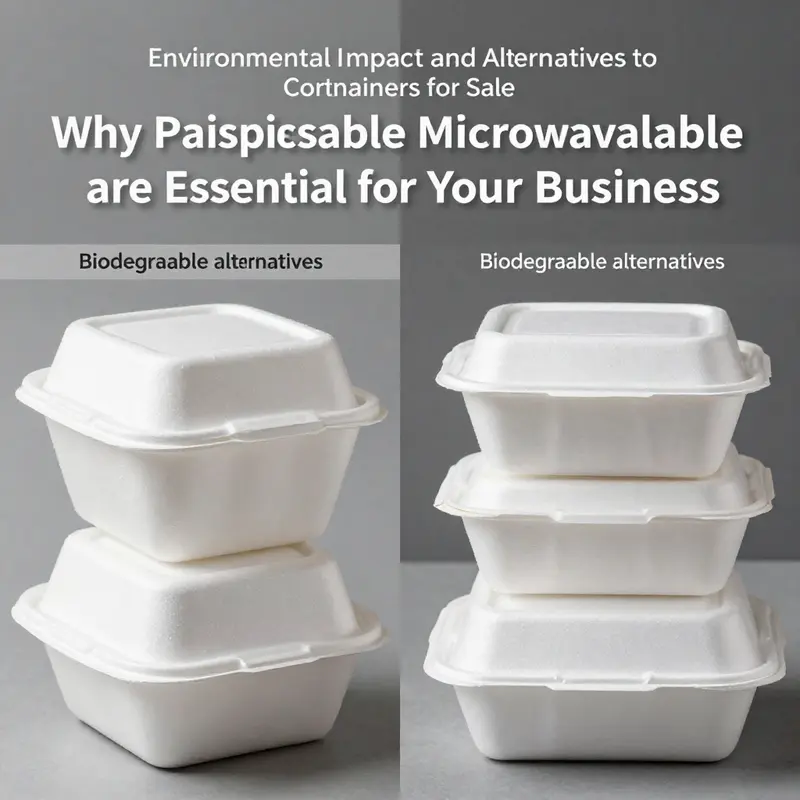
The ubiquity of foam disposable microwavable containers in takeout and home meal settings speaks to a design that prioritizes lightness, insulation, and low cost. Expanded polystyrene foam, the backbone of many white, hinged-lid food boxes, became a default because it keeps hot food hot and cold foods from cooling too quickly, all while staying affordable for millions of consumers and countless vendors. This ease of use, however, sits atop a complex web of environmental and health considerations that demand careful attention. The chapter that follows does not pretend to resolve every tension, but it does trace the main currents: the lasting environmental footprint of foam packaging, the challenges of recycling and end-of-life management, and the growing array of practical alternatives that aim to preserve function while reducing harm. From a systems perspective, the choice between foam and its alternatives is not only about a single product’s performance in a microwave; it is about how packaging aligns with food safety, waste streams, consumer behavior, and the global push toward a more circular economy.
Foam containers excel in performance during a brief, meal-to-table arc. They are lightweight, durable enough to resist minor knocks, and excellent insulators that help keep soups, stews, and sauces at a usable temperature during transit. In the context of hot, liquid-rich foods, the ease of handling with hinged lids and the relatively low cost per unit can be decisive for small food businesses and large-scale takeout operations alike. Yet these advantages have to be weighed against the environmental signals they emit across their life cycle. EPS, the material most foam containers are made from, is non-biodegradable and can persist in the environment for centuries. What begins as a convenient packaging choice can end as a stubborn fragment of litter that resists natural breakdown, migrating through land and waterways and breaking down into microplastics and nanoplastics that pervade ecosystems and potentially enter the food chain.
The environmental concerns extend beyond persistence. The production of EPS is intimately tied to fossil fuels, entwining the packaging’s footprint with fossil energy use, greenhouse gas emissions, and climate considerations. The energy-intensive manufacturing process, combined with the difficulties of efficient recycling, means that even when containers are captured for recycling, the actual throughput is modest. Food residue contamination further complicates attempts to recycle EPS at scale, as it can clog processing streams and degrade material quality, reducing the viability of recycling as a routine end-of-life option. In practice, only a small fraction of EPS ends up recycled globally, and the portion that is recycled often does not capture the full environmental benefit because downstream processes may still require energy-intensive steps to convert the material into usable feedstock.
In recent years, researchers have highlighted a broader, more nuanced risk linked to disposable packaging: the potential release of nanoplastics during heating. In contexts where disposable containers are heated in microwaves, some coatings and materials can contribute to nanoparticle liberation. The data that have emerged show striking contrasts between coating types under heat and mechanical agitation. LDPE-coated packaging tends to release fewer nanoparticles than alternative coatings when heated, whereas PLA-based coatings—although promoted for their compostability end-of-life advantages—can exhibit markedly higher nanoplastic release under similar heating conditions. In some cases, PLA coatings showed dramatically higher nanoparticle release—up to tens of thousands of times more—compared with LDPE-coated counterparts, depending on cooking time and microwave power. These findings underline a critical caveat: even as we pursue alternatives that seem better aligned with environmental goals at end of life, the behavior of these materials under real-use conditions, including microwave heating, can create new health and safety uncertainties that must be understood and managed.
The broader picture thus includes both the end-of-life challenge and the in-use performance of different packaging chemistries. EPS itself is a material designed to be light and inert in a static sense, but once released into the environment or subjected to heat and physical stress, it interacts with air, moisture, and contaminants in ways that can complicate disposal and raise concerns about microplastic formation. When microplastics and nanoplastics migrate through ecosystems, they can move through soil and water, accumulate in sediments and biota, and eventually enter the human food chain through complex exposure pathways. The problem is not limited to one country or one waste stream; it reflects structural limitations in waste management and the material’s resistance to degradation. This is why the debate around foam packaging often converges with broader conversations about waste hierarchy, material substitution, and the need for systems-level change in how we design, use, and recover packaging materials.
From a lifecycle standpoint, the case for moving away from EPS is reinforced by the energy and emissions associated with production and transportation. The cradle-to-grave analysis of foam containers reveals that their production relies heavily on fossil fuels, contributing to greenhouse gas emissions. The energy-intensity of manufacturing, coupled with the relatively low recovery rates in recycling streams, means that the environmental benefits of foam’s lightweight insulation may be offset by the downstream penalties of improper disposal and resource depletion. Moreover, the end-of-life pathway for EPS is usually a challenge if the material cannot be effectively separated from food waste and other contaminants. Even when recycling infrastructure exists, the process is not universally accessible, and consumer contamination can severely limit recycling efficiency. The net effect is that EPS ends up in landfills, incinerators, or poorly managed waste streams in many places, creating visible litter and hidden environmental costs alike.
The question that follows is not simply whether foam should be banned; it is whether the system can pivot toward alternatives that deliver equal or better performance while reducing harm. A growing body of evidence supports a two-track path: first, through increased adoption of reusable, durable packaging that can withstand repeated use and cleaning, and second, through the expansion of compostable and biodegradable options designed for end-of-life recovery in appropriate facilities. Reusable containers made from stainless steel, glass, or BPA-free durable plastics can dramatically reduce single-use waste, particularly in environments with reliable take-back systems or consumer habits that support washing and reusing containers. A 2026 study highlighted that switching to reusable packaging can eliminate hundreds of disposable items per person per year and produce meaningful reductions in carbon emissions from both manufacturing and transportation. The consumption-side shift, however, requires cultural and logistical support: convenient washing channels, reliable cleaning and sanitizing standards, and consumer willingness to participate in reuse cycles. Without these, the gains from replacement options may not reach their full potential.
Even as reuse remains the gold standard for reducing waste, the demand for disposable options persists in many sectors. For these scenarios, developing and deploying compostable or biodegradable alternatives offers a plausible path forward. Plant-based materials such as PLA (polylactic acid) and bagasse (sugarcane fiber) have gained traction as substitutes in many markets. On the surface, PLA-coated and bagasse-based containers promise lower environmental footprints at end of life, particularly when industrial composting facilities are accessible. Yet PLA’s performance under microwave heating warrants careful consideration. Some data indicate that PLA coatings can increase nanoplastic release when heated, complicating the narrative that “bioplastic equals safer in all use cases.” The end-of-life advantage of PLA is strongest when composting infrastructure exists and consumer behavior supports proper sorting and industrial composting. Nevertheless, consumer awareness and access to composting facilities remain key barriers, and the global scale of waste management requires harmonized standards and effective collection systems to unlock the potential of compostable packaging.
Biobased and biodegradable options continue to evolve, with various materials offering different trade-offs between heat resistance, mechanical strength, and environmental credentials. Bagasse-based containers, for example, are increasingly common in takeout contexts and tend to perform well in terms of compostability where industrial facilities exist. The real-world impact of these materials depends on regional waste management capabilities, local regulations, and consumer participation in proper disposal practices. In some cases, multi-use cups or containers with thicker, more durable coatings have demonstrated lower nanoparticle release compared with thinner variants, suggesting that durability and thickness can influence exposure risks during use. This underscores the importance of packaging design as a lever for reducing both waste and potential nanoparticle exposure, rather than simply substituting one material for another without regard to performance under real-use conditions.
For practitioners in restaurants, retailers, and households seeking to reduce environmental impact while maintaining the benefits of microwavable convenience, a measured approach is prudent. Start with a practical assessment of the current waste streams, then identify the most impactful substitutions that align with the local waste infrastructure. If a switch to a disposable option is necessary, prioritize materials and designs with proven efficiency in end-of-life recovery. This could include packaging that is explicitly marketed as compostable in industrial facilities or materials with clear guidance on microwave safety and heat behavior to minimize unintended nanoparticle release during heating. It also means recognizing that not all compostable or bio-based products are created equal in terms of performance in microwave households and that some designs may not yet integrate seamlessly with local recycling or composting facilities. In other words, the transition is not a simple swap; it requires a thoughtful, informed approach to material properties, consumer behavior, and waste management capabilities.
As a practical reference point for those exploring greener options, consider the potential of kraft paper-based packaging and other paper- or fiber-derived alternatives that are designed for takeout use. Kraft-paper bowls and lids, produced from renewable cellulose fibers, often provide a robust alternative to foam in many meal formats. These products are increasingly designed with takeout compatibility in mind, offering stackability, insulation benefits, and microwave compatibility when clearly labeled. The design philosophy behind these alternatives emphasizes not only the material choice but also the overall system in which they operate—from sourcing and manufacturing to end-of-life handling. For businesses and consumers who want to explore these pathways without sacrificing convenience, there is a spectrum of options that can be matched to specific meal types, portion sizes, and delivery channels.
In making these transitions, it is helpful to view the packaging choice as part of a broader sustainability strategy rather than a single-item decision. This strategy should align with corporate sustainability goals, local regulations, and consumer expectations. It should also recognize the importance of education and transparency—consumers want to know how to dispose of a container and what to expect at the end of its life. Clear labeling about microwave safety, recycling or composting capabilities, and recommended heating practices can reduce misuse and improve environmental outcomes. The narrative should move away from absolutes and toward nuanced, actionable guidance that can be implemented by a broad range of stakeholders, from small street vendors to large food-service providers.
The practical path forward involves embracing greener alternatives while maintaining the essential advantages of microwaveable packaging. This does not require abandoning convenience but rather reimagining it through a lifecycle lens. A forward-looking packaging ecosystem combines durability and safety in reuse, compostable options designed for industrial facilities, and materials that can be efficiently recovered in existing waste streams. The outcome is a reduction in microplastic contamination, lower greenhouse gas emissions associated with production and transport, and a more predictable, transparent waste-handling practice for consumers. The interplay between microwavable convenience and environmental stewardship is not a contradiction but a set of design choices and operational decisions that, when aligned, can yield meaningful improvements for ecosystems, human health, and the efficiency of the supply chain.
From a consumer-day-to-day perspective, the choices can be small but cumulative. For households, a practical starting point is to substitute one disposable item at a time with a reusable option, such as transferring meals into a personal, durable container for reheating, rather than relying on a throwaway primary container. This kind of incremental change is often more sustainable and sustainable change tends to be adopted more readily when it does not radically alter daily routines. For food-service operators, the opportunity lies in offering a clear mix of packaging choices, including reusable options and clearly labeled compostable or recyclable disposables, paired with a disposal guidance program that helps customers understand how to return or properly process packaging after use. Such programs can capture value by reducing waste disposal costs and strengthening consumer trust through transparent sustainability commitments.
Ultimately, the conversation around foam disposable microwavable containers for sale is not merely about materials. It is about how packaging choices intersect with environmental integrity, food safety, and the social dynamics of consumption. It calls for continued research into heat-induced nanoparticle release, more robust end-of-life infrastructure, and the design of packaging that can perform its essential function without compromising the health of people or the planet. The push toward alternatives—whether through reuse, more advanced compostable materials, or responsibly designed fiber-based packaging—should be pursued with an eye toward real-world feasibility. It requires partnerships among manufacturers, retailers, waste-management agencies, policymakers, and consumers. By emphasizing material science, waste infrastructure, and practical behavior changes together, the industry can move toward packaging solutions that honor both the value of hot, comfortable meals and the obligation to safeguard ecosystems for future generations.
For readers seeking a concrete pathway to greener packaging options, a practical example of an alternative approach can be found in disposable octagonal kraft paper packaging, a design that aims to balance takeout practicality with sustainability considerations. This option reflects a broader movement toward fiber-based packaging that can be compatible with microwave reheating under certain conditions and is designed to integrate more effectively into recycling or composting streams where infrastructure supports it. It is worth noting that the feasibility and environmental benefits of any given alternative depend heavily on local waste-management capabilities and consumer disposal practices. As such, the conversation around foam versus alternatives remains context-sensitive and dynamic, shaped by technology advances, policy developments, and evolving consumer expectations.
External resources offer additional context on the larger framework guiding sustainable packaging. The U.S. Environmental Protection Agency’s guidance on sustainable management of food packaging emphasizes the importance of reducing packaging waste, recovery of materials, and lifecycle thinking in packaging decisions. For researchers, practitioners, and policymakers seeking to deepen their understanding of the environmental implications of food packaging, the EPA site provides a valuable reference point that complements the more material- and product-specific insights discussed here: https://www.epa.gov/sustainable-management-of-food-packaging
Final thoughts
Foam disposable microwavable food containers are not just practical solutions for food service, but they also meet the growing demand for convenient, safe, and efficient packaging. As businesses navigate through safety standards and environmental expectations, understanding the market, characteristics, and impact of these containers is crucial. Balancing the efficacy of foam containers with alternative sustainable options will empower establishments to make informed choices that align with their operational goals and values.