
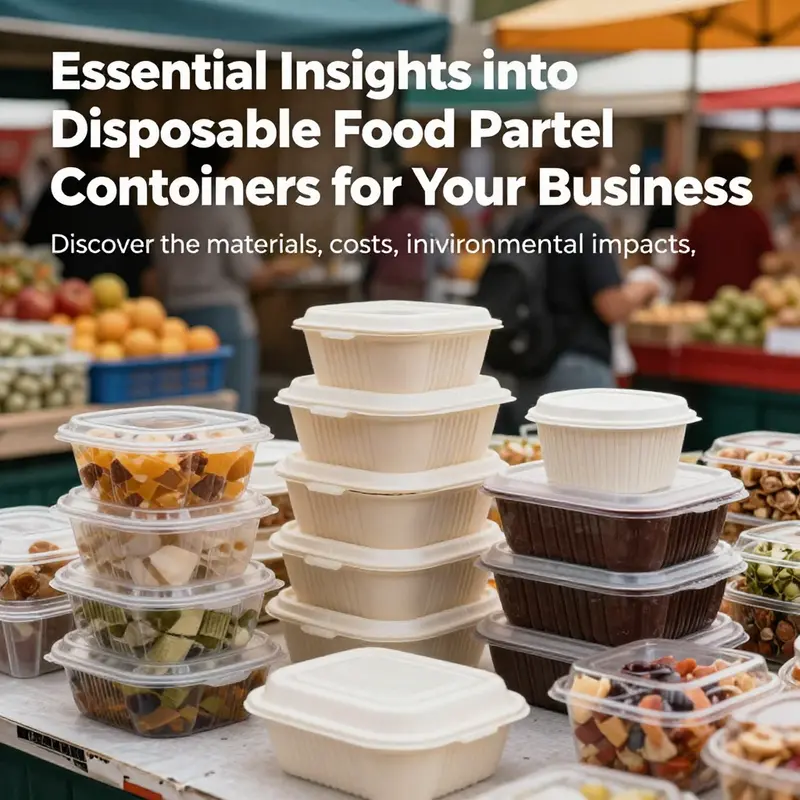
Disposable food parcel containers are a crucial component in the food service industry, catering to the diverse needs of bubble tea shops, restaurants, food trucks, catering services, event planners, and corporate procurement teams. As the demand for convenient and safe food packaging continues to evolve, understanding the various aspects of these containers—such as materials, cost implications, environmental concerns, and the latest trends—becomes vital for businesses aiming to thrive in a competitive landscape. This comprehensive exploration aims to equip you with the knowledge to make informed decisions about disposable food parcel containers, ensuring your operations run smoothly while meeting customer expectations. Let’s delve into the materials that make these containers effective, followed by an in-depth cost analysis, a look at their environmental impacts, and the exciting trends shaping the future of disposable food packaging.
Material Alchemy in Takeout: How the Constituents of Disposable Food Parcel Containers Shape Safety, Sustainability, and Speed
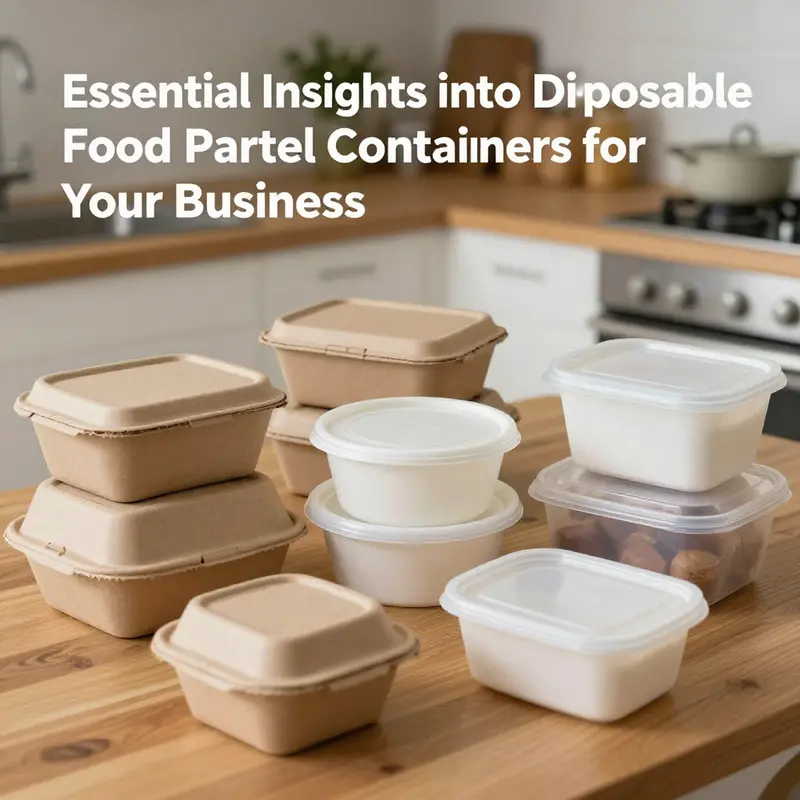
The meal you buy on the go travels through more than a short journey from kitchen to doorstep. It passes through a designed shell that must protect, preserve, and present the food while also aligning with safety standards, cost pressures, and evolving environmental expectations. The chapter on disposable food parcel containers becomes instantly practical once you recognize that material choice is not simply a matter of what is possible; it is a strategic decision that alters texture, temperature, and even the consumer’s perception of value. In this landscape, the material palette runs from traditional papers and plastics to composites and foams, each offering a set of strengths and a set of compromises. The result is a spectrum where performance, cost, and sustainability trade places with one another, shaping which solutions rise to meet a particular order, a particular market, or a particular moment in a company’s supply chain.
At the heart of many takeout interactions is a simple but telling truth: moisture management and temperature control are as important as the food itself. Paperboard laminated with a polyethylene coating serves as a reliable baseline for many meals. The reasoning is straightforward. The paperboard provides structure and the coating creates a moisture-resistant barrier that helps keep the contents from soaking through the liner. This type of laminate is especially well suited to dry or semi-moist foods, but it also supports the common delivery model where a container must survive a brief arc of time between pickup and consumption. It is not a fortress for heat, yet it offers enough resistance to steam and moisture to prevent sogginess in many everyday scenarios. Its compatibility with printing and branding makes it a popular option for shops that want to convey identity without sacrificing performance. Yet the barrier is not an absolute shield; once the interior oils or fats interact with the surface, a rider of heat and moisture can eventually demand more robust performance, particularly for longer transit times or hotter dishes.
To elevate insulation and temperature maintenance beyond what a simple laminated board can provide, manufacturers often employ multi-layer composites. These arrangements combine materials such as aluminum, paperboard, and various plastics in layers engineered to trap air, reduce heat transfer, and limit condensation. The insulation offered by these composites makes them particularly effective for hot meals and for long-distance deliveries where temperature integrity matters. The design leverages the strengths of each material—aluminum’s barrier properties, paperboard’s rigidity, and plastic layers’ moisture resistance—to slow the rate at which meals cool or heat. The result is a packaging solution that helps preserve the intended dining experience across a wider window of time. The downside is that multi-layer systems can complicate recycling and add cost. When the goal is to balance performance with environmental responsibility, the chain of decisions around these composites becomes a conversation about end-of-life strategies as much as thermal performance.
Plastics—chiefly PET and PP—constitute another cornerstone of the disposable parcel landscape. Rigid, transparent PET and the lightweight, fatigue-resistant PP bring durability and a clear view of contents, which enhances consumer appeal and confidence. The transparency of these plastics is not merely aesthetic; it informs quality perceptions and reduces the need to peel back lids to check freshness. Plastics also offer intrinsic moisture barriers and can be engineered for leak resistance, which is essential for saucy dishes and multi-component meals. In many cases, these containers are designed for microwave use, and some CPET formulations even withstand the temperatures of oven-to-table applications. The technological versatility of plastics makes them a versatile choice for a broad set of dishes—from salads and grain bowls to pasta and roasted proteins. Yet, plastics raise other considerations. While recycling streams exist for PET and PP in many markets, the actual ease of recovery depends on local infrastructure. The more the packaging relies on a single, simple resin, the better the odds that it will re-enter the circular economy. Mixed materials or heavily printed surfaces can hamper recycling and complicate disposal, nudging sustainability discussions toward alternative materials or more careful end-of-life planning.
Foam and vacuum-insulated materials occupy a more specialized niche within the ecosystem of disposable containers. Double-walled foams and vacuum-insulated constructs are designed to maximize thermal resistance, enabling meals to remain hot or cold well beyond the typical transit period. These containers are particularly valuable for catering, meal kits, and high-demand delivery runs where temperature stability translates directly into consumer satisfaction. The trade-off, naturally, includes weight, cost, and the challenge of recycling foam materials in many municipal streams. In some cases, flavored or textured foams are used to augment grip and ease of handling, ensuring safe transport and simple stacking in crowded delivery runs. While these solutions excel at performance, they are less common in everyday fast-casual takeout due to cost and the complexities of end-of-life strategies.
In parallel with these performance tiers, a wave of biodegradable and compostable options has gained attention as brands seek to align with sustainability goals. Kraft paperboard, often used in combination with internal coatings or barrier laminates, presents an appealing environmental narrative because the base material is derived from renewable resources. When properly certified and composted in appropriate industrial facilities, these options can reduce the long-tail environmental footprint of disposable packaging. The packaging’s compostability, however, is a function of the entire system: coatings, adhesives, and printing inks must also meet composting standards. Industry conversations increasingly emphasize industrial composting infrastructure, which accelerates the degradation process and creates a more realistic end-of-life scenario for biodegradable options. It is important to note that compostability claims imply a pathway; they do not guarantee universal home composting. For brands, the choice of compostable versus traditional materials is not only about end-of-life certification but also about cost, supply chain reliability, and the ability to meet consumer expectations in a diverse market.
A flagbearer in this space is a class of materials that directly addresses moisture and grease concerns while maintaining structural integrity. Paperboard with a carefully tuned coating—often a thin polymer layer or a biobased barrier—leads to an entry point that many operators understand: a familiar, carton-like shell that can be printed with branding and accommodated with lids. This family of materials is particularly suited to quick-service and mid-range delivery contexts, where speed of production and predictable performance matter most. When a business chooses paperboard, the conversation naturally moves toward the tradeoffs between barrier strength, permeability, and end-of-life outcomes, with the aim of balancing operational simplicity and environmental responsibility.
For those who pursue higher performance and longer hold times, flexible laminates and multi-layer configurations offer a toolkit that can be customized around specific use cases. The interplay between aluminum layers, plastics, and paperboard can create athermal barriers that slow both heat loss and moisture transfer. The result is a packaging solution tailored to a particular menu profile and delivery window. The design balance here is subtle: heavy insulation may win on temperature retention but can complicate recycling and raise costs. Lighter, simpler laminates may reduce price and improve recyclability but risk temperature or moisture challenges during transit. In a market that blends convenience, quality, and responsible disposal, the art of material selection becomes an ongoing optimization rather than a single decision.
Beyond the material itself lies the practical dimension of how it behaves when loaded, transported, and finally disposed of. The performance of any container depends on more than its raw components. Adhesives, coatings, and lid designs can alter barrier properties and heat retention. Printing inks affect recyclability and, in some cases, consumer perception. The shape of the container, from rectangular to octagonal variants, can influence stackability, space efficiency in delivery vehicles, and even heat distribution within the meal. A striking illustration of how form and material converge is the emergence of packaging options that emphasize not only function but also distinct visual identity—an aspect that resonates with brands seeking to communicate care and quality through packaging design. The use of shapes such as octagonal or uniquely configured boxes, which can be found in dedicated product ranges, signals how material choices are becoming a vehicle for differentiation while still delivering reliable performance. For readers curious about such design-driven packaging solutions, the concept behind these configurations is accessible through dedicated resources that explore how kraft-based, breathable, and functional designs can be aligned with fast-moving consumer needs. disposable-octagonal-box-restaurant-food-kraft-paper-packaging
The discussion so far highlights a spectrum rather than a single rulebook. In practice, businesses weigh material choices against procurement realities. MOQs, supplier reliability, lead times, and bulk pricing all feed into the final decision. A practical lens shows that PP and PET options, when sourced in bulk, can deliver favorable unit costs and predictable performance. Biodegradable options, while increasingly attractive, often come with premium pricing and variable supply, depending on market maturity and composting infrastructure. The economics of packaging cannot be separated from the operational realities of a food business. For instance, a quick-service concept that stacks dozens of SKUs and frequently updates menus may favor simpler, recyclable plastics for speed and consistency. A catering operation that emphasizes sustainability conversations with clients might lean into kraft-based packaging with certified compostability, while also preparing for the practical constraints of end-of-life processing in their region.
The procurement landscape for disposable containers mirrors the diversity of materials themselves. Large-scale platforms and manufacturers provide bulk options that can be tuned to volume, with clear specifications on size, capacity, and material composition. This is particularly relevant in markets where cost per unit is a decisive factor in menu pricing and delivery logistics. The ability to customize, to specify barrier properties, and to align with a company’s sustainability commitments becomes a differentiator in a crowded field. It is worth noting that a well-structured supplier relationship can extend beyond a single purchase. It can evolve into a strategic collaboration that guides not only packaging choice but also product flow, waste management, and even co-branding opportunities that emphasize responsible packaging without sacrificing the ordering experience.
In contemplating future directions, several themes emerge. First, barrier technology continues to advance, allowing more efficient use of material thickness while delivering stronger moisture and heat control. This progression supports thinner, lighter packaging that still protects food quality and reduces waste volume. Second, the industry increasingly recognizes the need for circular design. Packaging that is easier to recycle, with compatible coatings and adhesives, stands a higher chance of re-entering the economy. Third, consumer expectations around sustainability are now a standard demand rather than a niche preference. Brands that can credibly demonstrate a lifecycle approach—from source materials to end-of-life outcomes—are more likely to secure customer loyalty in a market where meal delivery is a routine habit. Finally, there is a continuous push toward material innovations that blend performance with renewability, offering not just a greener footprint but also a cleaner path for reuse and recovery that aligns with municipal recycling ecosystems and industrial composting networks.
The narrative of materials is not simply about choosing a container. It is about us rethinking the packaging as an integrated component of service design—one that communicates care, maintains quality, and respects the practical limits of logistics and disposal. The technology behind each layer—paperboard, foil, plastics, foams, or biobased coatings—functions like a language. It translates decisions about heat, moisture, and shelf life into an actual consumer experience in the moment of purchase and in the hours that follow. That translation matters because it shapes expectations and drives choices in a market where speed is essential and responsibility is increasingly non-negotiable. Subtly, the materials chosen for disposable containers tell customers how seriously a brand takes the dining experience, the environment, and the integrity of the food it serves. In that sense, material science is not an afterthought but a front line where culinary art, engineering, and ethics converge to deliver meals that travel well, taste fresh, and respect the planet.
Pricing and Sustainability in Disposable Food Containers
Pricing for disposable food parcel containers sits at the intersection of material science, procurement strategy, and consumer expectations. Unit costs are driven by material choice, size, configuration, order volume, and any customization. Plastic containers often offer lower per-unit costs at bulk volumes, with broad heat tolerance and microwave compatibility, while compostable options such as sugarcane pulp or paper-based packaging can command higher prices but deliver stronger environmental narratives. Economies of scale reduce unit costs for both plastics and compostables, but the total cost of ownership depends on waste processing, regulatory requirements, and brand positioning. Successful procurement balances reliability, performance, and a credible sustainability story to support growth and customer trust.
From Convenience to Consequence: Tracing the Environmental Footprint of Disposable Food Parcel Containers
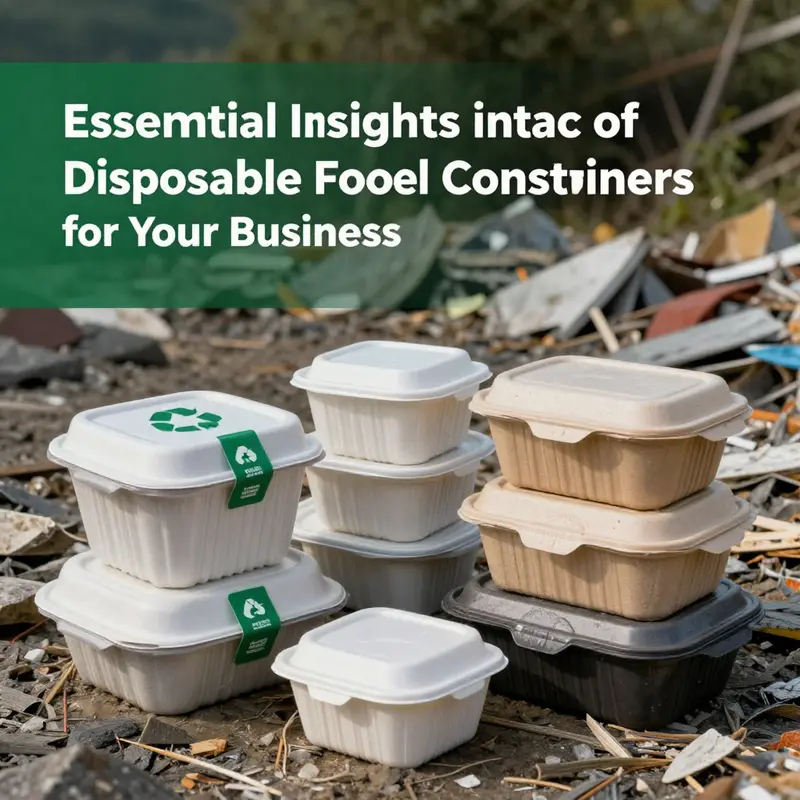
Disposable food parcel containers have become a mainstay of the modern food-service ecosystem. They are woven into the fabric of takeout, delivery, and event catering, enabling rapid service, standardized portions, and minimal mess for both operators and diners. Yet beneath the surface of convenience lies a complex web of environmental consequences that typically accompany the life cycle of these products. Understanding that life cycle—materials, production, use, disposal, and the fate of waste—is essential for anyone seeking to balance business needs with ecological responsibility. The environmental narrative of these containers begins with material choices, most often plastic polymers such as polyethylene terephthalate (PET) or polypropylene (PP). These polymers are derived from non-renewable petroleum resources, and their journey from fossil feedstocks to finished packaging involves energy-intensive refining, polymerization, and shaping processes. The prevalence of PET and PP in disposable food packaging is not incidental; these materials offer the combination of clarity, strength, heat resistance, and cost that the takeout market prizes. They are designed to resist leakage, withstand brief oven-to-table use, and endure the rigors of transport. Their performance comes at a price that is not always visible on a price tag: their environmental footprint is attached to the energy consumed in their manufacture and to the challenge of end-of-life management. The production chain for these plastics is a major energy user, and the associated greenhouse gas emissions accumulate as volumes rise with increasing demand for convenient meals. In a world where takeaway volumes have surged alongside urbanization and evolving dining habits, the emissions associated with container production typically scale with consumption. The result is a feedback loop: more meals sold means more plastic, which means more energy use and more emissions in every stage of the container’s life cycle, from resin production to final disposal.
A further complication is chemical interaction. When hot or oily foods are packed in plastic containers, there is growing concern about chemicals migrating from packaging into food. While regulatory frameworks and material innovations aim to minimize risk, instances of leaching have prompted questions about long-term health effects and environmental contamination in scenarios where containers degrade in landfills or after improper disposal. This is not only a consumer health issue; it has ecological implications if residual chemicals migrate through soils and waterways. The far-reaching consequence of such leaching is the potential for trace contaminants to enter ecosystems, especially when mismanaged waste accumulates in the environment. The problem compounds when we consider that disposable containers are designed for single-use life cycles. In landfills, plastics can persist for hundreds of years, long after the meal is consumed. This persistence means that packaging waste becomes long-term environmental load. It is not merely a matter of aesthetics or litter; it is about the cumulative effects on soil quality, aquatic systems, and the health of ecosystems that support life and livelihoods. The oceans, in particular, bear a heavy burden from mismanaged packaging waste, where fragments of plastic disrupt marine habitats, damage wildlife, and alter the chemical balance of marine environments. When plastic containers escape into waterways, they fragment into microplastics that pervade sediments and biota, entering food chains and potentially affecting human consumers indirectly. These realities have sharpened the focus on the need for sustainable alternatives and improved waste management. If the current trajectory continues, the environmental dividends of continued reliance on conventional plastics will falter under increased waste streams and the mounting costs of remediation.
Crucially, the environmental equation is not solely about end-of-life disposal. A meaningful shift toward sustainability must address the entire lifecycle, including production and post-consumer pathways. In many regions, the infrastructure for recycling of PET and PP products remains uneven. Recycling rates depend on collection systems, sorting capabilities, and market demand for recycled resin. When recycling infrastructure is underdeveloped or poorly coordinated, a large portion of disposable containers end up in landfills or informal dumps, where they are not efficiently recovered, repurposed, or repolymerized. In such contexts, even containers that are technically recyclable contribute little to a circular economy if the downstream system cannot capture and reintroduce the material into new products. This disconnect between availability and utilization is a central bottleneck in reducing the environmental impact of disposable containers.
The conversation, therefore, frequently shifts toward sustainable alternatives. Biodegradable or compostable options offer a potential route to reduce ecological harm, especially when designed for industrial composting facilities capable of managing complex packaging streams. Recycled paperboard and molded fiber products present a distinctly different profile. These options tend to be derived from renewable or recycled feedstocks and often decompose more readily under controlled composting conditions. They can reduce long-term persistence in the landscape and lessen microplastic pollution when end-of-life management is optimized. Yet the true environmental gains from these alternatives are not automatic. They hinge on the existence of appropriate composting infrastructure, consumer disposal behavior, and reliable supply chains that can deliver consistent performance at scale. Simply swapping materials without aligning waste management practices and consumer engagement can yield only partial gains. The literature on sustainable packaging emphasizes that the environmental benefits of greener materials rise when they are paired with effective collection, sorting, and composting or recycling programs. This systemic approach helps ensure that the material’s intended end-of-life pathway is activated rather than overlooked in the rush to lower upfront material costs.
From a business perspective, the choice of container material must balance cost, performance, and environmental considerations. Bulk pricing mechanisms, such as those found on global procurement platforms, can make conventional plastics appear economically attractive in the short term. For instance, economies of scale may offer pennies per unit savings, which are attractive when margins are tight and service demands are high. However, lower upfront costs can be offset by higher waste management expenses, potential regulatory costs, and reputational risk associated with unsustainable packaging. The procurement decision, then, becomes a matter of strategic trade-offs: initial price versus long-term sustainability, reliability of supply, and alignment with consumer expectations about environmental responsibility. It is here that the ecosystem of eco-friendly packaging suppliers, including those offering kraft-based or molded-fiber options, becomes relevant. The availability of cost-effective, compostable, or recyclable alternatives depends on sourcing, manufacturing capacity, and the ability to certify material composition and performance in real-world conditions. News from procurement channels indicates a growing willingness among businesses to invest in greener packaging despite modest cost premiums, recognizing that sustainability has become a differentiator in a crowded marketplace and a compliance signal for increasingly stringent regulations.
Consumer behavior plays a decisive role in determining whether greener packaging can realize its potential. The best-designed biodegradable container is only effective if users dispose of it properly and if municipal or industrial facilities can process it as intended. Consumer education, clear disposal guidance, and convenient access to appropriate waste streams are essential components of any strategy to mitigate environmental harm. Restaurants and caterers must communicate packaging choices and disposal expectations to customers, while retailers and cities must invest in waste infrastructure that can handle compostables and recyclables with minimal cross-contamination. The success of such strategies depends on aligning incentives across stakeholders: designers and manufacturers must deliver durable, cost-competitive packaging; waste managers must ensure proper processing; policymakers must establish consistent standards and clear labeling; and consumers must act on guidance provided at the point of purchase and in homes and workplaces. When these elements work in concert, the environmental footprint of disposable containers can be significantly reduced without sacrificing the convenience that has driven their widespread adoption.
Even as new materials and systems emerge, the question remains: how can businesses implement meaningful change without compromising service quality? The path forward involves several intertwined steps. First, a robust assessment of lifecycle impacts should guide material choice, with attention to energy use, emissions, and end-of-life outcomes. Second, investment in greener alternatives should be pursued not as a one-off substitution but as part of a broader push toward a circular economy—where packaging materials are designed for reuse, recycling, or composting, and where waste streams are transformed into valuable feedstocks. Third, suppliers and manufacturers can play a central role by offering transparent certifications, performance data, and environmental product declarations that enable informed decision-making. The role of procurement is particularly critical here: buyers who understand the trade-offs between durability, temperature tolerance, and compostability can select packaging that meets both operational needs and sustainability goals. Fourth, policy signals—whether in the form of extended producer responsibility, landfill levies, or composting infrastructure funding—can help align incentives and close the gap between intent and outcome. In many markets, policy levers have proven effective at stimulating investment in recycling and composting, accelerating the shift away from single-use plastics toward packages designed for correct and efficient disposal.
In the operational sphere, organizations often discover that material selection is tied to product design. For instance, certain kraft paper-based containers are designed with heat retention and leak resistance in mind, while molded fiber variants prioritize rigidity and stability during transport. The trade-offs between fiber-based and plastic-based packaging are nuanced. Fiber-based options frequently yield improvements in end-of-life outcomes, particularly when the waste management system supports industrial composting or high-quality recycling of fiber composites. Plastic containers may retain performance advantages in heat resistance and moisture barrier but can perpetuate persistence in the environment unless offset by highly efficient collection, sorting, and recycling. The evolving landscape of packaging design increasingly emphasizes lightweighting, multi-material compatibility, and modular configurations that can be adapted to different food types and portion sizes. In practice, this means intelligent packaging that can maintain temperature and integrity while offering clearer pathways to disposal or recovery.
Advances in material science and waste management also draw attention to the potential benefits of hybrid approaches. For some applications, blending renewable fibers with small amounts of compatible polymers can create packaging that achieves the desired performance while enabling more sustainable end-of-life options. Another promising direction is the development of clearly labeled, standardized materials that simplify sorting at the consumer level. When consumers can quickly recognize whether a container is recyclable, compostable, or requires a specific processing stream, the chances of proper disposal increase. The social dimension—how communities organize waste, how education is delivered, and how convenient it is for people to follow guidance—cannot be separated from the technical dimension of packaging design.
In evaluating the landscape, one can see that the environmental impact of disposable food parcel containers is not a fixed attribute. It is a result of decisions made at every stage—from raw material selection to end-of-life processing. The most effective reductions arise when businesses commit to a holistic approach that encompasses material efficiency, end-of-life infrastructure, and consumer engagement. For many operators, this means moving beyond price per unit to a broader value proposition that includes ecosystem health, brand trust, and long-term compliance with evolving environmental standards. The shift toward sustainable packaging is not a simple replacement of one material with another; it is a reimagining of how food service packaging can support high-quality service while honoring environmental boundaries. In practice, this reimagining requires coordination across suppliers, manufacturers, policymakers, waste management professionals, and customers—an ecosystem-wide collaboration that can deliver meaningful environmental dividends as the industry continues to evolve.
For readers seeking a deeper dive into the environmental burden of food packaging materials and the evidence base behind these conclusions, a comprehensive literature synthesis is available in peer-reviewed reviews. These studies illuminate the spectrum of environmental challenges posed by takeaway containers and provide a scholarly framework for evaluating potential solutions. External resource: Environmental Impact of Food Packaging Materials: A Review
To connect ideas with tangible choices, consider how a specific packaging option might perform in real-world operations. The decision to adopt a kraft-based or molded-fiber solution can be informed by examining a container’s strength, moisture resistance, temperature tolerance, and compatibility with existing waste streams. For example, some durable kraft-based options are designed for counters or carryout forceps that might involve hot foods, soups, or sauces. In such cases, the option may include a lid and a moisture barrier for stability during transport, reducing spillage and waste. When considering a move toward more sustainable options, it is useful to review case studies or supplier profiles that detail how a packaging line performs under peak demand while maintaining responsible end-of-life outcomes. In the broader sense, the packaging decision becomes a narrative about stewardship, one that reflects an organization’s values and its willingness to invest in a future where packaging serves people and planet alike. A practical takeaway is to test alternative materials in pilot programs that track not only customer satisfaction and cost but also waste streams, contamination rates, and recycling or composting success. Such tests provide the empirical evidence that a company can rely on when making broader transitions.
In short, the environmental footprint of disposable food parcel containers is shaped by the interplay of material properties, production energy, end-of-life pathways, and human behavior. The path toward a more sustainable future does not lie in a single miracle material but in a suite of coordinated choices: smarter design, better waste infrastructure, and active consumer participation. When these elements align, the industry can preserve the benefits of disposable packaging—the convenience, the safety, the standardization—while markedly reducing its ecological footprint. The journey is ongoing, but the direction is clear: packaging that respects the limits of our environment and supports a resilient, circular economy.
For readers exploring specific product formats and design innovations, a range of packaging options exists that illustrate the variety available in the market. These options include containers designed to combine durability with compostability, and formats intended to optimize space and material efficiency during transport. To learn more about practical, eco-friendly kraft-based packaging solutions, see the following reference: octagonal kraft paper packaging. This example highlights how design details—such as box geometry and material selection—can influence both performance and end-of-life outcomes while remaining compatible with standard takeaway workflows. By foregrounding such design considerations, businesses can begin to chart a path toward packaging systems that minimize environmental harm without compromising the customer experience.
In composing a coherent strategy, it helps to keep in view the broader objective: reduce the environmental burden while maintaining reliable service. The road ahead will require continued innovation in materials and processes, investment in waste-management infrastructure, and concerted efforts to educate and empower consumers. It is a collective undertaking, one that will test and ultimately strengthen the sustainability commitments of food-service operators, suppliers, policymakers, and communities alike. The environmental narrative surrounding disposable food parcel containers is not a verdict but a trajectory—one that invites deliberate action, thoughtful design, and a willingness to rethink how convenience and care for the planet can coexist in the bustling world of takeout and delivery.
From Convenience to Credence: The Sustainable Evolution of Disposable Food Parcel Containers

The landscape of disposable food parcel containers is shifting on multiple axes at once, a convergence of demand, design, and responsibility that mirrors broader changes in how societies think about food, waste, and value. In the commercial world of takeout, delivery, and catering, these containers have long served as the unsung backbone of throughput and revenue. Yet as the volume of food service options grows and consumer awareness of environmental impact deepens, the assumptions that once governed packaging choices are being revisited. Market researchers report a steady expansion in the global foodservice disposable packaging segment, with growth that reflects durable demand for efficient, hygienic, and visually adaptable solutions. This momentum is not merely about holding food; it is about preserving it, presenting it well, and aligning with evolving standards of sustainability. The chapter that follows traces how the industry has responded to these pressures, weaving together material science, user experience, and supply-chain logistics into a cohesive narrative about what disposable containers mean today and what they may become tomorrow.
A central driver of change is the triple focus that now dominates these products: sustainability, convenience, and value. Sustainability does not merely describe an aspirational goal; it shapes material choice, manufacturing processes, and end-of-life considerations. Biodegradable and compostable options, such as wood pulp and molded fiber, are gaining traction in regions with stringent environmental regulations or strong consumer appetite for responsible packaging. These materials offer a different relationship with waste: they invite composting streams or, at least, facilitated recycling paths that reduce long-term persistence in landfills. In places where traditional plastics once reigned unchallenged, menus and operators are increasingly willing to test and adopt alternatives grounded in responsibly sourced fibers and renewably derived resins. The aesthetic implications are also meaningful. When a container mirrors natural textures or minimalism—think bamboo, recycled paper pulp, or other earth-friendly facings—it signals to customers that the food inside is treated with similar care. In the rise of sustainable packaging, even familiar formats are reimagined with new materials that uphold performance while easing disposal.
The journey toward sustainability intersects with performance demands that come from busy kitchens and the realities of service. Containers must resist leaks, withstand heat, and maintain food quality during transit. They must also be practical for short-term reuse or long-term disposal, depending on the chosen lifecycle approach. In practice, this means a growing interest in coatings and hybrid materials that optimize heat resistance, moisture barriers, and odor control without compromising recyclability or biodegradability. For instance, advanced barrier coatings help prevent oil or sauce migration, while specialized interior linings reduce the likelihood that odors from one dish linger in the next. At the same time, designers are exploring reusability pathways that make containers dishwasher-safe or compatible with moderate oven reheating, expanding the utility of disposables beyond the single-use paradigm. The tension between microwave safety and odor management remains a focal point. Some plastics pose sparking risks if tumbled or overheated, while others may absorb aromas over time. Engineers respond with safer, more stable polymers, clearer signaling through lids and seals, and surface treatments that resist odor uptake.
The material choices for these containers are diverse and increasingly nuanced. Kraft paper, molded fiber, and bamboo composites offer compostability or recyclability, while CPET and other plastics deliver heat tolerance and seal integrity for hot or oily foods. Each material presents a different balance of cost, performance, and end-of-life outcomes. In practice, many operators pursue hybrid designs that leverage the strengths of multiple materials: a sturdy outer shell for strength and stackability, a moisture-resistant inner coating to protect against leakage, and a lid engineered for secure sealing in transit. The result is not a single best option but a portfolio of solutions that can be matched to menu types, service contexts, and customer expectations. The shift toward these hybrid systems is inseparable from the broader push for responsible design thinking—where the container is not just a passive vessel but an active component of the dining experience.
From a design standpoint, there is growing attention to how containers contribute to the overall perception of food quality. Visually appealing packaging can elevate a simple lunch into a moment of care, whether in school cafeterias, corporate cafeterias, or casual dining takeouts. The ability to customize—varying sizes, compartments, and lid styles—allows operators to tailor packaging to specific dishes, whether it is a rice bowl with a separate sauce compartment or a noodle dish that benefits from a vented lid. In practice, this emphasis on practicality and presentation drives a more thoughtful approach to the geometry and ergonomics of packaging. Diverse sizes and formats accommodate everything from small salads to layered entrées, while compartmentalization helps prevent cross-contamination and preserves the sensory experiences of each component. A well-designed container also reduces mess during transport, a factor that correlates with higher customer satisfaction and repeat business.
The conversation around lifecycle and end-of-use outcomes is increasingly central to how operators select packaging. Compostable designs are popular where industrial composting facilities are available, and they align with consumer expectations for responsible disposal. Yet the actual end-of-life fate of a given container depends on local infrastructure, household behaviors, and the compatibility of the packaging with recycling systems. This complexity invites operators to consider not just the material but the downstream ecosystem into which their product enters. Recyclability remains a critical measure of value for many customers, while it is paired with education about proper disposal. In other cases, the focus shifts toward durability and reuse—where containers are designed to withstand repeated use and cleaning cycles without compromising safety or performance. The most successful designs today embrace flexibility: high-performing in a single-use context, but with clear pathways to reuse or composting where feasible.
Behind these material and design choices lies a practical calculus of cost and supply. The economics of disposable containers extend beyond unit price to encompass MOQs, lead times, and the reliability of suppliers. In the current market, basic polymer-based options offer cost advantages and scalability, while bio-based and fiber-based formats carry higher unit costs but deliver advantages in environmental footprint and consumer appeal. The supply chain for these products has to manage variability in raw materials, processing technologies, and quality certifications. Operators who temper expectations with a clear sense of regional waste infrastructure tend to perform better, selecting formats that balance performance with realistic disposal routes. The most effective portfolios integrate fast-replenishability with a tolerance for shifts in materials availability, ensuring that service levels remain stable even as the market experiments with new formulations.
Within this evolving ecosystem, there is room for both tradition and innovation. Traditional plastics will no doubt remain essential in certain contexts where heat resistance and leak protection are paramount. Yet the momentum toward sustainability pushes designers to experiment with new compositions and manufacturing processes. In some cases, this means retooling equipment to achieve more efficient material usage, reducing waste in production. In others, it involves adopting coatings that improve water and oil resistance while preserving recyclability. The convergence of recycled content and renewably sourced inputs is another area of active exploration, driven by policy signals and investor interest in circular economy principles. While the path toward fully circular packaging is complex, incremental gains—such as higher recycled-content formulations, better barrier properties, and more efficient end-of-life channels—are already reshaping the decision matrix for operators and manufacturers alike.
The human element in this story should not be overlooked. Packaging is a touchpoint between food producers and diners, a silent ambassador of care and quality. The way a container feels in hand, the ease with which it opens and closes, and the clarity of its labeling all contribute to trust. In workplaces and schools, these aspects matter as much as performance. A container that feels sturdy, looks neat on a lunch tray, and clearly communicates heat safety or recycling instructions can influence how confidently someone treats a meal. This is why the industry’s best designs balance technical performance with everyday usability. It is not merely about keeping food intact; it is about delivering an experience that reinforces the idea that convenience can coexist with responsibility. In many ways, packaging has become a microcosm of broader consumer trends—an arena where efficiency, aesthetics, and ethics intersect in real time.
As the conversation moves forward, the industry will continue to test new materials and configurations while staying mindful of the realities of mass production and consumer behavior. We can anticipate deeper integration of sustainable fibers, smarter coatings, and designs that optimize both transit and presentation. The goal is not to force a single solution but to cultivate a versatile toolkit that accommodates diverse cuisines, service models, and disposal infrastructures. In this sense, the future of disposable food parcel containers is less about abandoning disposables and more about reimagining them as intelligent, responsive components of the dining ecosystem. A container that protects temperature, resists leaks, preserves aroma, and conveys environmental stewardship in equal measure will be valued by kitchens, by customers, and by communities seeking cleaner, more responsible ways to enjoy meals on the go. This is not a straightforward trajectory, but a thoughtful evolution toward packaging that earns its keep through performance, durability, and purpose.
To illustrate how these concepts translate into real-world practice, consider a packaging design that emphasizes both form and function. An outer shell made from a sturdy, recycled-fiber composite provides strength and stackability, while an interior barrier minimizes moisture penetration and oil migration. A vented lid improves steam release for hot meals, reducing the risk of sogginess without compromising seal integrity. The option to include a separate compartment for sauces or sides enhances versatility for diverse menus. The presentation matters: a clean, modern silhouette, a clear indication of heat safety, and a surface that accepts printed or embossed branding in a way that respects recyclability. The result is a container that aligns with modern dining expectations—simple to use, respectful of the meal it carries, and considerate of the environment in which it will ultimately be disposed of or reintegrated into a circular system.
For operators seeking concrete paths forward, one practical reminder is the value of making packaging choices compatible with the intended disposal or reuse framework. If a region can support industrial composting, fiber-based or compostable formats may offer meaningful advantages. If recycling streams dominate, materials chosen should be readily recyclable in local facilities and contain a high proportion of post-consumer content. In either case, clear labeling and consumer education help ensure that end users dispose of containers correctly, maximizing the sustainability benefits. The alignment of packaging strategy with local waste infrastructure is a keystone of responsible practice and a driver of customer trust. When customers feel confident that the packaging they receive has been considered with care—from sourcing to end-of-life—they are more likely to view the dining experience as complete and conscientious.
A practical note for those curating content for menus and corporate communications: the packaging story is part of the broader narrative of how a business approaches quality, safety, and stewardship. The container is not merely a vessel; it is a statement about values and capabilities. By choosing formats that balance performance with environmental responsibility, operators can reinforce a brand message that resonates with a growing cohort of diners who treat meals as moments of selection, not just consumption. In this way, the evolution of disposable food parcel containers becomes a lens through which to view the foodservice industry’s progress toward a more thoughtful and resilient future. The link between material choice, consumer perception, and environmental impact is intricate, but it is precisely this interconnectedness that makes the packaging conversation so compelling and so essential to the continued vitality of the sector.
To explore a concrete example of the kind of packaging design discussed above, see the concept and options described in the following resource: octagonal kraft paper packaging. This example illustrates how a single format can accommodate diverse menu needs while signaling a commitment to sustainability and practicality. While no single solution fits every scenario, the capacity to tailor containers to dish profiles, service models, and disposal infrastructures remains central to advancing the field. As researchers and practitioners continue to test materials, coatings, and configurations, the industry will gradually converge on designs that deliver consistent performance, lower environmental footprints, and enhanced customer experiences.
External references can deepen understanding of the technical standards that underlie these innovations. For a detailed exploration of the standards, properties, and practical applications of modern disposable containers, see the external resource: Disposable Japanese Food Container Explained: Technical Standards, Properties, and Practical Applications (https://www.example.com/disposable-japanese-food-container-explained).
Final thoughts
Understanding the landscape of disposable food parcel containers is essential for any business in the food service industry. From choosing the right materials that align with your brand’s sustainability goals to conducting a careful cost analysis, every decision plays a crucial role in your operations. Additionally, being mindful of the environmental impacts and keeping an eye on trends and innovations can further enhance your brand’s reputation and operational efficiency. Embracing these insights enables you to provide excellent service while contributing positively to the environment—making your business not only profitable but responsible. Stay informed and adapt to the evolving market to ensure your packaging solutions meet the expectations of today’s conscious consumers.