
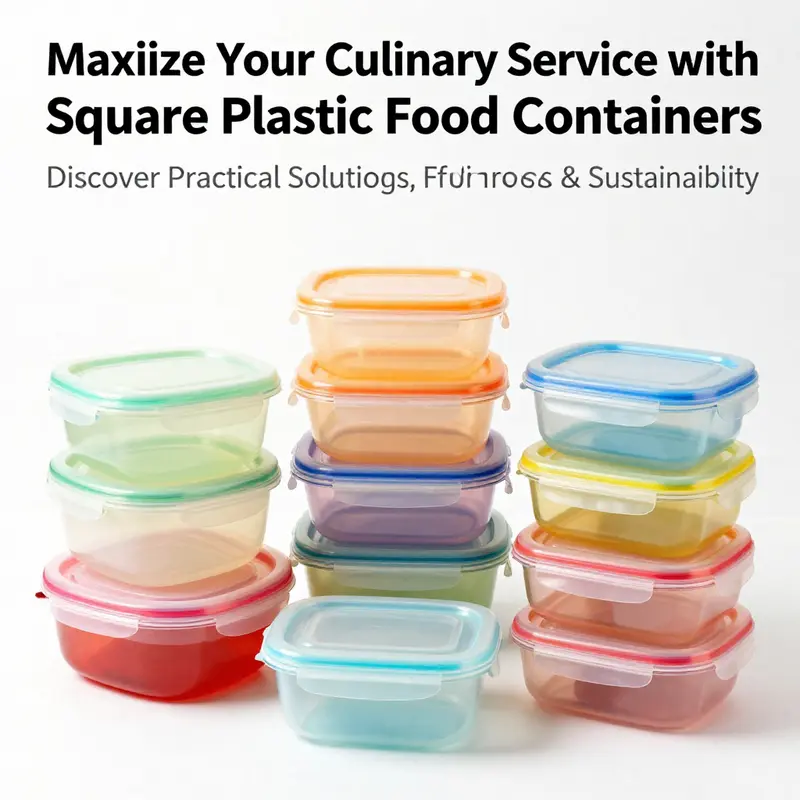
In the restaurant and catering industry, efficient food storage solutions can greatly enhance service delivery and operational efficiency. Plastic square food containers with lids have emerged as an essential tool for bubble tea shops, beverage chains, restaurants, food trucks, catering services, event planners, and corporate procurement teams. These containers not only offer durability and functionality but can also play a role in food safety and waste reduction. This article will delve into the benefits of using these containers, explore their design and functional features, and present eco-friendly options that align with modern sustainability goals, ensuring your establishment operates efficiently while being mindful of the environment.
Squared Solutions: How Plastic Square Containers with Lids Transform Freshness, Organization, and Everyday Efficiency
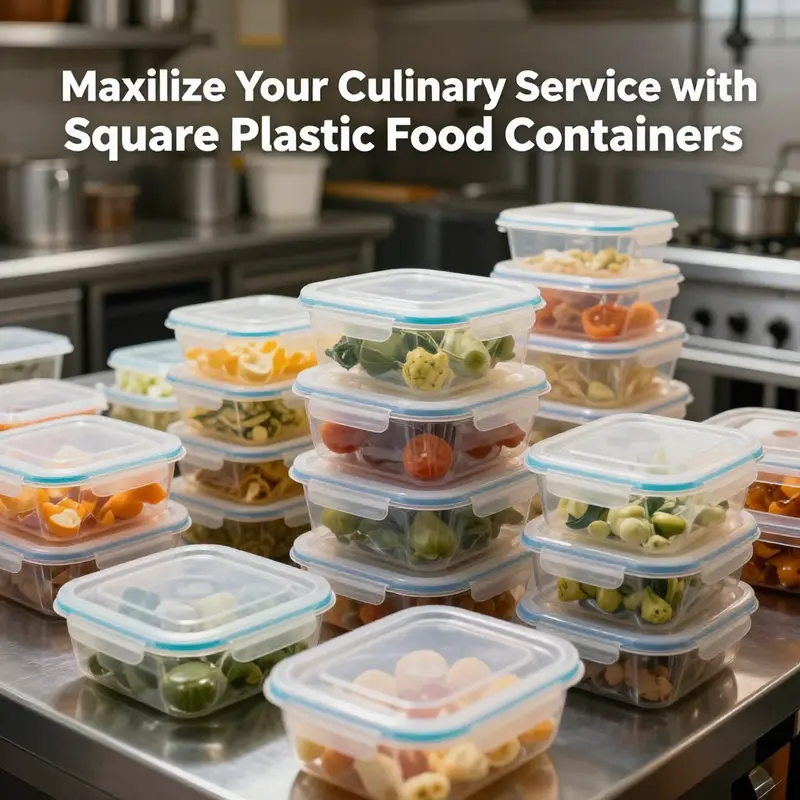
A kitchen thrives when its tools disappear into the background, doing the hard work without demanding attention. Plastic square food containers with lids embody that quiet efficiency. Their square silhouette is not mere geometry; it is a practical philosophy about space, stacking, and predictability. In a world where every inch of a refrigerator shelf matters, the square shape translates to a tighter grid of storage. You can slide a stack of boxes under a shelf or between jars with minimal wasted space. The walls meet at right angles, and that simple geometry quietly reduces clutter. When you reach for ingredients, the neat, orderly rows of uniform containers invite a calm, methodical approach to meal planning. A single system built around square containers becomes a backbone for both everyday cooking and batch preparation, a reliable framework that scales from a single apartment kitchen to a bustling office break room or a small cafe kitchen.
Durability follows from design intent. The containers are crafted to withstand the rhythms of busy kitchens: being opened and closed dozens of times, shuffled inside a crowded refrigerator, or tucked away in a tote for takeout or a weekend trip. Their materials are chosen for resilience, capable of resisting minor bangs and the occasional drop without cracking. This durability matters not just for the containers themselves but for the meals they carry. A sturdy box reduces the chance of compromised seals after rough handling, and that translates into fewer spills on slick kitchen floors and fewer messy leaks in transit. The sense of security—knowing a lid snaps into place and stays in place—remains one of the most reassuring benefits of using these containers. It matters when you’re packing broth for a commute, when you’re stacking prepped lunches for a week, or when you’re routing leftovers to a dorm room or an office desk.
Behind the visible benefits lies a web of safety considerations tied to the materials from which these containers are made. The era of consumer hardware brought a heightened awareness of what touches our food. The standard bearer in this space is a food-grade plastic that can safely handle the temperatures it encounters in microwaves, freezers, and dishwashers. In practice, this means choosing polypropylene-based options and avoiding materials that flirt with heat beyond their design limits. The advantage is twofold: you can reheat meals directly in the container if needed, and you can clean and reuse the same container repeatedly without fear of material degradation. This is not mere convenience; it’s a critical factor in reducing waste and supporting long-term reuse. The lifecycle of a square container—from its first purchase to daily use and eventual retirement—depends on materials that hold their shape, resist staining, and maintain seals after countless wash cycles. The confidence that comes with knowing a lid maintains its airtight grip over time is a subtle but decisive driver of whether leftovers are genuinely preserved or left to lose their character in the back of a fridge.
Air, moisture, and the unseen forces inside a fridge are not passive guests. They shape the flavor, texture, and nutrition of stored foods. The sealing capability of square containers with lids is a frontline feature in this ongoing drama. A robust seal means air is held out, and moisture remains in the right balance inside the container. That balance slows the onset of freezer burn, dampens the soggy or dried-out extremes that can occur when foods are exposed to fluctuating temperatures, and preserves the crispness of vegetables and the tenderness of grains. Even meals that were prepared in bulk days earlier can retain their original character, offering a sense of continuity that makes healthy meal planning more likely to happen. In practical terms, that means fewer midweek disappointments—the uneaten leftovers that get tossed because they lost their appeal. Instead, you reach for a container that holds steady, delivering a familiar, comforting bite when you reheat or repurpose yesterday’s dinner.
The lids themselves deserve attention. A seal is only as good as the mechanism that locks it. Square containers are designed so that the lid aligns easily with the corners, guiding the seal into place with a quiet click. This design reduces the cognitive load of meal prep: you don’t hunt for the matching lid in a sea of random tops. Instead, you have a modular system where lids and bases fit predictably. This predictability fosters confidence for households managing busy schedules and for professionals who rely on precise portions and consistent presentation. The airtight or leak-proof properties are essential for transporting food, whether you’re heading to a lunch meeting, a school event, or a weekend outing. The last mile of food safety often depends on that confident lid closure: once sealed, a container resists spills when jostled in transit, keeps sauces and dressings from leaking into bags, and protects contents from cross-contamination in crowded coolers or car trunks.
Versatility is another quiet virtue. The spectrum of sizes—small, medium, large, and everything in between—lets cooks curate a modular set that suits the full range of needs. A child’s lunch box, a week’s worth of meal-prepped lunches, a batch of roasted vegetables to divide into portions, or a pantry of dry ingredients for easy retrieval—all find a home in a square, stackable family of containers. The ability to mix and match sizes within a single system means you’re not wedded to a rigid assortment; you can tailor the collection to your pantry’s rhythm. This versatility also extends to non-food uses, since the same containers can hold craft supplies, hardware, or office staples in a way that keeps them visible, accessible, and dry. That cross-domain utility widens the value proposition and makes the investment in a modular square system more attractive to households and small businesses alike.
The environmental footprint of these containers matters in ways that go beyond plastic versus glass debates. Reusability stands at the heart of their eco-credentials. When you invest in durable, reusable containers, you reduce the need for disposable alternatives and the waste they generate. Each reuse extends the container’s utility, letting you avoid the cycle of purchase, disposal, and replacement that comes with poorer-quality options. The stackable design also pays green dividends in storage efficiency, which can lead to energy savings in refrigeration as space-saving configurations often allow for less energy use when a fridge runs at a more stable internal temperature. In commercial contexts, these same attributes simplify inventory management, reduce spoilage, and enable consistent portioning, all of which contribute to waste reduction and more predictable food costs. The combined effect—less waste, better reuse, and improved organization—reflects a broader shift toward practical, durable, and responsible kitchen ware.
From a health perspective, the promise of safe plastics is not merely regulatory compliance; it translates into everyday practice. When containers are BPA-free and designed to handle typical kitchen temperatures, they support safer reheating habits and reduce the risk of unwanted chemical exposure during normal use. Yet responsible use remains essential. Avoiding extreme heat, such as direct high-temperature microwaving for foods with high fat content or prolonged exposure to very high temperatures, protects the integrity of the plastic and preserves the taste and texture of the food. The guidelines with which these containers are aligned often reference food-contact safety standards and regulatory frameworks designed to minimize risk. Consumers benefit when they choose high-quality, properly rated plastics and follow manufacturer recommendations for washing and re-use. In turn, that diligence sustains the chain of trust between the consumer, the product, and the broader regulatory ecosystem that supports safe food storage.
The everyday implications of adopting a square, lid-sealed storage system extend into the rituals of cooking and eating. Meal planning becomes less of a juggling act and more of a streamlined process. A week’s worth of meals can be prepped, portioned, and stored in a way that makes weekday lunches predictable and enjoyable. The container’s uniform shape and lid compatibility reduce the mental load of organizing a fridge, pantry, or office break room. When you open the door, you see order rather than chaos, a tangible cue that food safety and planning have become manageable rather than overwhelming. That sense of order leaks into other routines, nudging healthier choices and more mindful consumption. The habit of reheating directly in the container saves time and reduces dishwashing labor, which in turn makes home-cooked meals more accessible on busy days. The practical steps—choose the right sizes, ensure the seal is intact, wash according to guidelines, and reuse—become part of a routine that supports both nutrition and efficiency.
In the broader landscape of kitchen tools, square containers with lids occupy a distinctive niche. Their success is not solely about the containers themselves but about the ecosystem that supports them: the lids that seal, the sets that offer compatibility across sizes, and the storage strategies that integrate them into daily life. A well-chosen system respects space, protects freshness, and aligns with the rhythms of real people who cook, store, and transport foods across different settings. The value is measured not just by the moment of purchase but by the cumulative effect of better organization, longer-lasting freshness, and easier cleanup. In homes where every meal is a small project—planning, prepping, packing—these containers become a quiet partner, enabling more time for the things that truly matter while preserving the flavors and textures that define a good meal. They are, in essence, a modest but meaningful instrument for turning the routine of storage into a reliable ally for health, taste, and efficiency.
To weave these threads into a practical mindset, consider adopting a simple philosophy: prioritize uniformity in shape and reliable sealing, balance capacity with the variety of foods you routinely handle, and pair durability with a clear plan for washing and reuse. In doing so, you create a storage system that does not fight for attention but rather supports every culinary intention, from a single week’s worth of lunches to a month of batch-cooked dinners. The square container with its lid is not just a container; it is a small moral commitment to reduce waste, protect flavors, and respect the rhythm of daily life. When you look across a crowded shelf and see a neat, grid-like arrangement of same-size boxes, you are witnessing the practical spine of a kitchen that values order, efficiency, and sustainable choices. The benefits extend beyond the kitchen for those who manage food in offices, schools, and small commercial kitchens, where predictable performance, spill resistance, and repeatable outcomes matter as much as taste. In every case, the square container with its secure lid serves as a reliable instrument for keeping meals fresh, organized, and ready for wherever the next bite leads. External constraints and internal routines alike are softened by its steady confidence, one airtight seal at a time.
External resource: https://www.fda.gov/food/food-contact-materials
Squared Efficiency: The Design Language and Practical Power of Lidded Plastic Square Food Containers
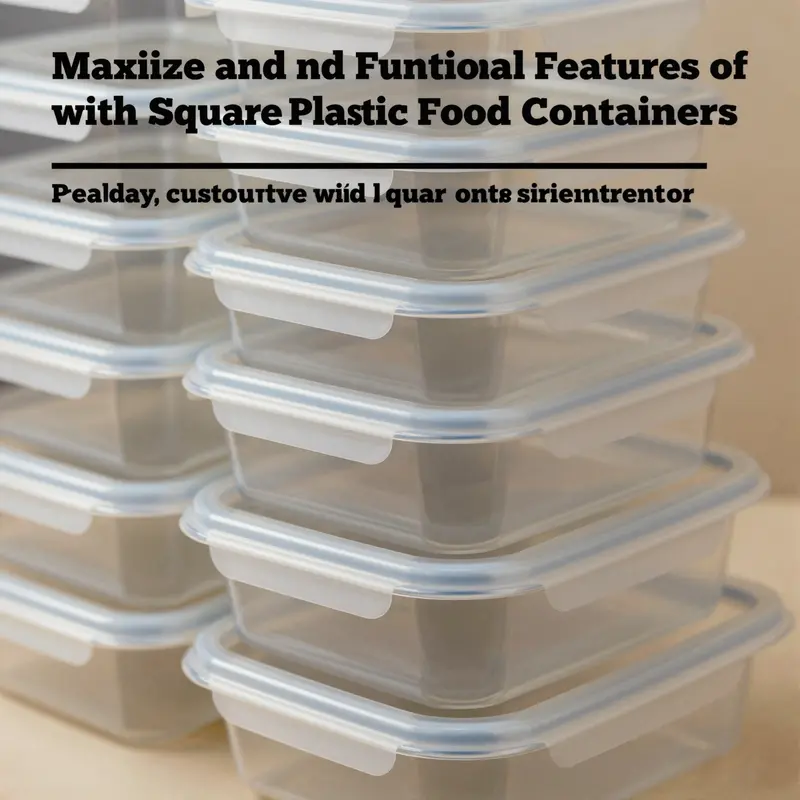
The square is more than a geometric curiosity in the world of food storage. It is a design choice that translates into real, everyday efficiency. When a container sits in a refrigerator, pantry, or lunch bag, its shape begins to narrate how well it uses space, how easily it stacks, and how reliably it protects what it carries. The square form minimizes gaps between units, so shelves and drawers become more orderly and volumes are used to their fullest. In a busy kitchen, this translates into fewer wasted centimeters of storage and fewer moments of rummaging for the right size. In a lunch scenario, it means fewer awkward gaps in a bag and more predictable packing without the jostling that can lead to spills. That is the quiet power of geometry translated into daily practicality. Design choices like this do not exist in a vacuum. They respond to how people actually cook, store, and transport meals, and they anticipate the realities of modern life where space is precious and time is scarce. A well conceived square container is not merely a vessel; it is a small architecture of meals, a compact module that works with its fellows to create an organized system rather than a scattered collection of disparate boxes.
At the heart of this design language is a balance between rigidity and flexibility. The walls are thick enough to resist deformation when carried in a backpack or pressed under a stack of other containers, yet they remain light enough to keep overall weight manageable for daily use. The material choice matters here. Food-grade plastics such as polypropylene provide a reliable combination of durability and safety. Their heat resistance—capable of withstanding temperatures up to about 130 degrees Celsius—opens a broad range of practical uses. Microwave heating becomes feasible, not as a reckless concession but as a studied feature of a container meant to accompany leftovers, prepped meals, and made-ahead lunches. The same material resistance translates to dishwasher and even boiling water scenarios, where cleanliness becomes easier to maintain and the risk of lingering bacteria or odors decreases. The durability of the walls is complemented by a robust lid system designed to seal tightly, trapping freshness inside while guarding against leaks that could ruin a bag, a car seat, or a briefcase during transit.
The lid is arguably the most critical component in preserving food quality and preventing accidents. A secure locking mechanism—a snap-on or interlocking seal—ensures that liquids remain contained and that the contents stay fresher for longer. This seal works in tandem with a continuous, non-porous interior surface that resists the growth of bacteria and mold. In practice, a lid that locks firmly also reduces air exposure, which in turn slows the oxidation and staling that erode flavor and texture. The gasket, often crafted from a flexible material that tolerates repeated washing, is designed to be easy to clean and quick to dry. A well engineered gasket contributes to a reliable seal, which makes the container a trustworthy choice for sauces, soups, or any moist item. It also means less worry when meals are packed for transport, whether for a commute, a road trip, or an afternoon at the office.
Aesthetic simplicity accompanies functional strength. The square silhouette yields a clean, modular silhouette on shelves and in cupboards. Edges are rounded for safe handling, and rims are designed to invite the lid to snap on without wobble. In real-world terms, this translates to easier stacking—both when containers are full and when they are empty. When empty, they nestle within one another with minimal waste of space. This nestability is more than a convenience; it is a practical response to the daily rhythm of kitchens and break rooms where storage space is at a premium. The ability to nest containers reduces clutter and keeps pantries organized, a subtle but meaningful contribution to kitchen efficiency. The combination of nestability and stackability is what transforms a simple box into a dependable component of a larger system for meal prep and daily feeding routines.
Beyond the core features of shape, seal, and material, the design language embraces versatility. Many square containers offer modular layouts or multi-compartment configurations that allow cooks to separate different components within the same vessel. A single container can house rice, a protein, and vegetables in neatly defined zones, reducing the need for multiple smaller containers. This modularity aligns with practical meal prep workflows, where batch cooking yields multiple meals for the week. It also speaks to eco-conscious habits. By enabling precise portions and reducing cross-contamination of flavors, modular designs encourage reuse and minimize waste. The containers are designed to be reused again and again, resisting the everyday indignities of frequent washing, stacking, and travelling. Through thoughtful engineering, they become a reliable backbone for a routine that blends home cooking with on-the-go eating.
Safety and health considerations anchor these design features. The plastics used are typically food-grade and free from bisphenol A and other worry-inducing compounds, aligning with contemporary standards that prioritize long-term safety for people and the environment. These materials are chosen not only for their immediate practicality but also for their compatibility with consumer expectations about hygiene and sustainability. A smooth, non-porous interior surface helps prevent bacterial growth and makes it easier to wipe away residues. The lid seal, designed to be cleaned thoroughly, reduces the risk of mold or bad odors taking hold in the interface between lid and body. In practice, this means the containers can endure regular dishwashing and occasional boiling water sterilization without losing their seal integrity or deformation risk. The design team behind such containers must always balance the desire for a strong, leak-proof lid with the need for user-friendly maintenance—an equilibrium that often defines the true usability of a system.
The conversation about design also threads through the conversation about sustainability. markets increasingly demand durable, reusable kitchenware that can stand up to heavy use and repeated washing. The shift away from disposable, single-use options pairs with the rise of modular, reusable storage that can withstand the rigors of daily life. It is not just about keeping foods fresh; it is about a broader commitment to reducing waste while preserving the quality of meals from fridge to stomach. The square container with a reliable lid embodies this ethos. Its lifecycle begins with careful material selection and finishes with responsible disposal or recycling at the end of its usable life. In the middle of that lifecycle, it serves as a robust tool for meal prep, leftovers, and the organization of pantry items. It becomes an ambassador for a kitchen culture that values efficiency, safety, and sustainability while acknowledging the practical realities of modern living.
In addition to these considerations, the design language also engages with the realities of temperature variation and the needs of different meals. The heat resistance of polypropylene allows a surprising degree of flexibility. A hot stew can be transferred into a container and safely heated in a microwave without the risk of warping or releasing harmful substances. A container can tolerate a quick rinse of boiling water when sanitizing after use, a feature that is valued by households that perform rapid, high-temperature cleanups. Dishwashers, with their hot cycles, further the point that these containers are built for repeated washing without losing their shape or seal. The square geometry, coupled with a sturdy locking lid, helps prevent leaks during washing cycles, where violent splashes or awkward placements could otherwise compromise a less secure system. Such reliability is part of what makes these containers a staple in kitchens, offices, and even some commercial settings where meals are prepped, portioned, and stored for later consumption.
A note on the broader context helps illuminate why these design choices matter. As consumer preferences drift toward more sustainable options, and as regulations shift away from single-use packaging, reusable square containers with secure lids offer practical value that translates into everyday behavior. They enable a habit of planning meals ahead, repurposing leftovers, and maintaining freshness with minimal effort. The ability to repurpose yesterday’s dinner as today’s lunch becomes a tangible outcome of good design. When containers stack neatly, seal tightly, and resist deformation, the everyday act of packing lunches stops being a chore and starts being a predictable, efficient ritual. The square form is not merely a shape; it is a system for organizing time, space, and appetite.
In speaking about the lifecycle of these containers, it is helpful to acknowledge the ways in which design reacts to and reflects market realities. For instance, the rise of multi-compartment designs demonstrates a responsiveness to the way people actually eat. Rather than packing a separate small container for dressings or sauces, cooks can separate components inside one vessel. This reduces clutter and simplifies transport. The result is a more compact, more reliable, and more versatile tool for everyday use. The lids and seals evolve in response to that same demand for reliability. A secure interlocking or snap-on mechanism remains intuitive and straightforward, enhancing user confidence when moving containers from refrigerator to bag to microwave. In practice, this means fewer mishaps and fewer times spent cleaning up spills, both hallmarks of a well conceived product system.
The design and functionality of square plastic containers with lids also have implications for how families and workplaces manage food safety. The combination of a stable square form and an airtight lid reduces exposure to air, which can degrade flavors and nutrients over time. It minimizes moisture loss and the risk of freezer burn by maintaining a stable internal environment. The interior surfaces that resist bacterial growth support hygiene practices in busy kitchens where hands may be full and time is limited. When lids seal well, it is easier to transport meals by car, train, or bus without fear of leaks. This reliability becomes a form of practical reassurance, a quiet but meaningful contribution to daily routines, especially for people who pack meals for long days, kids who take meals to school, or professionals who rely on prepared food for the workday. In short, good design translates into tangible benefits that extend beyond the kitchen into many corners of daily life.
The environmental narrative around these containers is not a footnote but a guiding thread. The shift away from single-use polystyrene and other disposable packaging has reinforced the demand for durable, reusable options. Reusability is not merely about the product’s ability to withstand cycles of washing; it is about the social habit that accompanies responsible consumption. When families and offices invest in containers designed for long service, they create a chain reaction: fewer disposable options used, less waste generated, and a culture of mindful food handling reinforced. The square container stands at the intersection of efficiency and responsibility, a small but significant piece of a larger push toward sustainability in kitchenware. This is not a technical footnote but a living principle of design that influences materials selection, manufacturing choices, and consumer behavior alike.
The practical implications of this design language become clear when we consider the everyday moments that define a meal. Morning packing sessions, midday re-heating, and evening leftovers form a continuous loop of use that reinforces the value of a reliable container. The square shape, the secure lid, the easy cleaning surfaces, and the nestable feature all contribute to a smoother rhythm in the kitchen. You prepare, portion, seal, and store with confidence. You know the contents will stay fresh, the container will not crack under pressure, and the system will stack neatly in the fridge or cupboard. These are not grand feats of engineering in isolation; they are the cumulative outcomes of thoughtful design aimed at making daily routines more predictable, more efficient, and more enjoyable. When you consider the small things that matter—compatibility with standard microwaves, dishwasher safety, easy-to-clean gaskets, and space-saving nestability—you begin to see how a square container becomes a reliable ally in the ongoing project of home cooking and personal organization.
In closing this reflection on design and functional features, it is useful to revisit the core idea: shape, seal, and system. The square form is chosen to maximize space and minimize waste in both storage and transport. The lid and its seal are engineered to prevent leaks and preserve freshness, while allowing practical maintenance. The material choice supports heat resistance, durability, and safety, enabling repeated use across households, offices, and workplaces. The ability to adapt to multi-compartment layouts expands the container’s usefulness across meals and dietary preferences. And the nestable, stackable, and easy-clean design lines up with everyday life where time and space are scarce but meals must still be managed with care. Together, these features form a cohesive design language that makes plastic square containers with lids not just containers, but reliable, everyday tools for nourishment and organization. They embody a philosophy of practical elegance: a shape that saves space, a seal that preserves flavor, and a system that respects both the user and the planet.
For readers who wish to explore related packaging options that share a commitment to lid integrity and reusability, consider a related take-away kraft paper bowl with lid. This option represents another path toward sustainable, reusable meal solutions that can complement the use of plastic containers in mixed material setups. Salad bowl with lid 750ml disposable takeaway kraft paper bowl. The broader takeaway is that whether through fully reusable plastic systems or complementary paper-based solutions, thoughtful design can reduce waste while maintaining the practicality of everyday meals. In the end, the goal is clear: containers that respect food, space, and time—without compromising safety or convenience.
External resources offer concrete reflections on how square plastic containers with lids fit into the wider landscape of storage design. A useful reference that illustrates practical implementation and real-world usage can be found here. https://www.ikea.com/us/en/p/ikea-365-plus-lid-square-plastic-10039429/
Sealed and Sustainable: Redefining How We Use Eco‑Friendly Materials in Plastic Square Containers with Lids
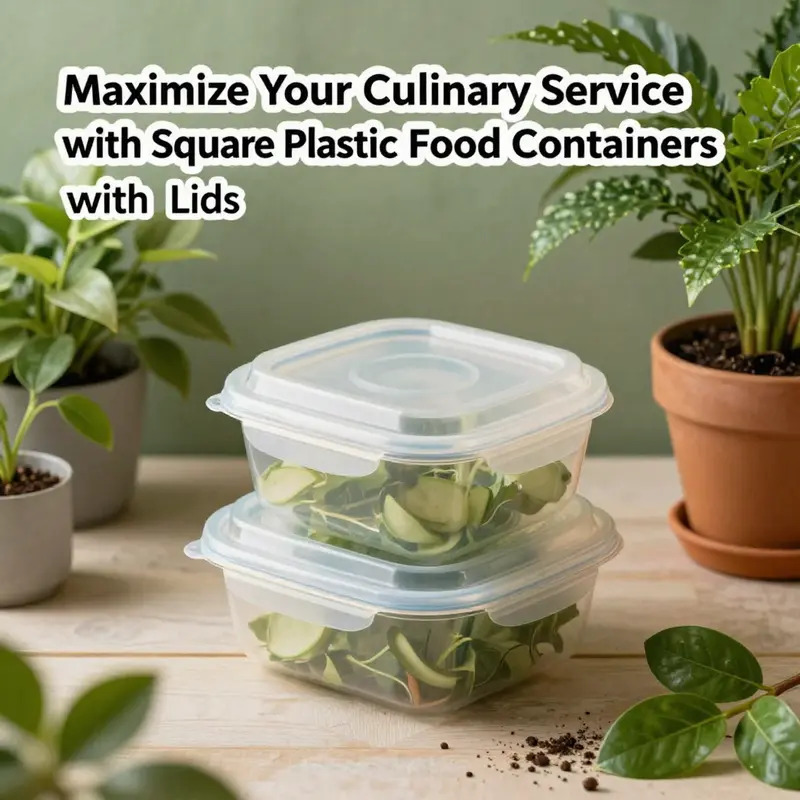
Square food containers with lids have long been the workhorses of meal prep, leftover storage, and organized kitchens. Their shape offers space efficiency, a tidy stack, and a predictable footprint in the fridge, freezer, or office break room. Yet as consumer values shift toward greater environmental responsibility, the vocabulary around these everyday staples is expanding beyond mere convenience. The chapter that follows traces how eco-friendly options are reshaping what counts as an acceptable plastic square container with a lid, balancing performance with responsibility for the planet. It is not about abandoning practicality for purity, but about aligning the design of containers with a lifecycle that minimizes resource use, waste, and environmental impact while preserving the purity of food contact and the security of the seal. The result is not a single revolution but a spectrum of choices that lets households and businesses tailor packaging to their needs without sacrificing reliability.
At the core of the eco-friendly shift is a broadened material palette. Traditional plastics, prized for their lightness, clarity, and rigidity, carry a hefty environmental footprint when viewed through the lens of end-of-life. The most widely discussed green alternatives blend renewables with performance, offering a choice that aligns with a circular economy mindset. One branch of this spectrum embraces biodegradable and compostable plastics derived from renewable feedstocks, most notably polylactic acid or PLA. PLA is sourced from cornstarch or sugarcane, converting renewable plant material into a resin that can be molded into square shapes and fitted with lids that form tight, sometimes watertight, seals. The appeal is clear: a container that serves daily needs without adding a long tail of persistent plastic to landfills. The caveat, however, is equally clear. PLA and similar materials tend to exhibit different heat resistance and mechanical properties compared with conventional plastics. They are often marketed as compostable, but their optimal breakdown occurs in industrial composting facilities rather than standard curbside compost piles. Home composting, if feasible at all, rarely achieves the temperatures and humidity levels required for thorough decomposition. The result is a packaging option that can fulfill a sustainability claim in theory, yet must be disposed of in the proper infrastructure to realize that claim in practice. This nuance matters because performance in real-world use—how well the lid seals, how the container handles temperature changes, and how it withstands repeated washing—determines whether a consumer will reach for a compostable option every time or revert to a more durable reusable solution.
Beyond PLA, there is another thread in the eco-friendly story that resonates with those who prefer to reuse their containers for years: materials sourced from recycled feedstocks, notably recycled PET and food-grade HDPE. Recycled PET offers a blend of clarity and rigidity, with the advantage that the material can be collected, cleaned, and remanufactured into new containers. It can be highly durable, resistant to cracking, and compatible with typical dishwashers, making it a practical choice for daily lunch boxes and pantry organization. HDPE, another widely used material, is celebrated for its toughness and recyclability. Reusable containers crafted from recycled HDPE can endure countless cycles of washing and transport, and when their useful life ends, HDPE can itself be recycled into new products. The challenge here is to consider the lifecycle beyond the first use. While recycled materials reduce the demand for virgin feedstocks, their environmental benefits hinge on a robust recycling infrastructure that can collect, sort, and process the containers after use. In regions where recycling streams are strong, recycled PET and HDPE can offer a compelling blend of resilience and lower environmental impact. In addition to these, some designers explore post-consumer recycled content integrated into the walls of square containers, producing a product that looks and behaves like traditional plastic but carries a smaller footprint in terms of virgin material consumption. The overarching message is not that single material is the universal answer but that the best choice depends on how the container will be used, washed, stored, and eventually disposed of within local waste management realities.
A central theme in assessing eco-friendly options is the performance envelope: leak resistance, temperature stability, safe contact with food, and the integrity of the seal over time. Eco-friendly does not automatically mean fragile; it means understanding how the material behaves across real-life scenarios. For a square container, the lid is as critical as the body. An airtight or leak-proof lid is essential for preventing spills during transit and for preserving freshness inside the fridge or freezer. When the material is PLA or other bio-based polymers, the lid’s gasket design must compensate for any differences in thermal expansion and rigidity compared with conventional plastics. Seals should remain compliant after multiple cycles of dishwasher cleaning, which means that the combined system of body and lid must resist warping, cracking, or gasket compression that would compromise the seal. These performance characteristics are often the deciding factors for families who plan to repurpose leftovers, for office workers who need reliable carry-and-go containers, and for small food businesses that rely on standardized square shapes for efficient prep and delivery.
Another dimension is the end-of-life pathway. For those who choose compostable options, the assumption is that the container will reach an industrial facility designed to break down PLA efficiently. In practice, not all municipalities offer industrial composting at scale, and some facilities have limited acceptance criteria for compostable plastics. When a product is labeled compostable, those labels lose their value if the waste stream cannot reach a facility capable of processing it. This reality has spurred a more nuanced conversation about the role of compostable packaging in everyday use. It is still a valuable option for situations where there is clear access to industrial composting, or where businesses can implement take-back or composting programs. But for the average household in a region without such infrastructure, recycled-content plastics and durable, reusable options may produce more predictable environmental benefits over the long run. The analysis in recent sustainability reviews emphasizes that not all “green” products perform equally well under real-world conditions, and that buyers should weigh certifications, facility availability, and the product’s expected lifespan in their decision, rather than relying on a label alone.
To illustrate how these considerations translate into shopping choices, it helps to keep the distinction between disposable and reusable in view. Some eco-friendly square containers are designed primarily for single-use convenience with a compostable or biodegradable claim. Others are engineered as reusable systems with high durability and compatibility with standard washing routines, built to withstand daily repetition without deforming or losing seal integrity. For businesses that rely on takeout or catering, there is value in exploring purely disposable options with strong end-of-life credentials for large-scale programs, while simultaneously expanding a reusable, modular set for daily operations. The modular aspect—containers that stack neatly, lids that align easily, and lids that stay secure when transported—can dramatically reduce clutter and streamline workflow in kitchens, offices, and cafés alike. The principle remains: design choices should reflect a balance between performance, cost, and environmental impact, with a realistic plan for how waste is managed after the product’s useful life ends.
Consumers who are actively seeking green alternatives often start with a simple criterion: can I reuse this container many times, and can I recycle or compost it responsibly after I am done? The answer, in practice, depends on access to appropriate facilities and the container’s material. If one chooses a reusable option built with recycled content, the responsibility shifts toward reducing the frequency of disposal and ensuring that the product returns to a recycling stream at the end of its life. If a compostable option is selected, the consumer should verify whether their local waste system accepts such materials and whether the facility can process PLA specifically. The best advice is to educate oneself about both the material’s properties and local infrastructure before making a purchasing decision. In other words, eco-friendliness is not solely about the material’s origin; it is also about the system that will handle the container after use.
The practical implications of these choices extend into everyday practice. In a kitchen, the vendor you choose for modular, square containers with lids may offer sets that are purposely designed to be stackable and space-efficient. Designers speak to partnerships between body geometry and lid geometry to ensure that a square container nestles securely into a matching lid, and that a family can identify the correct lid quickly to avoid leaks. In many offices and schools, these containers become the backbone of a meal-prep routine, enabling people to portion meals, label them, and keep them organized in a cool place until lunchtime. For food-service businesses, standardized square shapes and interoperable lids simplify inventory, reduce waste, and improve order accuracy. The eco-friendly dimension adds only one more layer: the lifecycle and the disposal route must be reconciled with the business’s sustainability goals and the community’s waste management capabilities. This alignment matters because, in practice, a well-sealed, durable container that is reused for weeks may deliver a steadier environmental benefit than a single-use option that is composted, but then sent to a landfill due to local limitations.
As the conversation around sustainability advances, a nuanced approach to labeling and education becomes important. Containers that claim to be “compostable” or “bio-based” should clearly communicate whether they are home or industrially compostable, and whether they can be safely heated in microwaves or ovens. The temperature stability of the material is crucial in this regard. Some bio-based formulations have lower heat tolerance, which means they may deform or warp in microwaves or under high oven temperatures. When presenting options to users, a clear map of intended use cases helps. For instance, a square container with a secure, gasketed lid that is rated for cold storage and moderate reheating might be positioned as an ideal choice for meal prep that ends up in the fridge or freezer, whereas a heat-tolerant variant with durable recyclability might be more appropriate for hot foods and longer transport durations.
The internal link embedded in this discussion points toward a practical example of how a packaging category can be aligned with eco-friendly attributes without compromising usability. For readers who want to explore a related category of sustainable take-away solutions, the linked page offers a case study of packaging designed to hold meals while emphasizing recyclability and compostability in tandem. The link, presented as the following anchor, provides a direct path to a product line that demonstrates the kinds of material choices and design features discussed here: eco-friendly-recyclable-pulp-2-4-cups-coffee-take-away-cup-holder. While this specific item is not a square container, the link serves to illustrate how eco-conscious packaging can be designed for practicality and environmental responsibility across a spectrum of shapes and sizes. It also highlights how suppliers are increasingly offering sustainable take-away options that can complement a kitchen’s square containers in a broader household or commercial packaging strategy.
A final layer in the eco-friendly equation concerns education and transparency. Consumers should look for clear certifications and statements about end-of-life pathways. Certifications such as compostability marks and recyclability statements help buyers navigate a sometimes opaque landscape where marketing terms can obscure actual performance. The research in late 2025 and early 2026 emphasizes that performance claims must be validated by real-world use and facility availability. It is not enough to see a claim on a label; one must also consider whether the local waste stream contains the infrastructure to realize the claimed benefits. When evaluating options for plastic square containers with lids, households and businesses can benefit from a holistic assessment that accounts for material properties, lid-seal reliability, wash durability, and the likelihood that the container’s end-of-life pathway will be utilized effectively. In practice, this means asking questions about heat tolerance, dishwasher compatibility, gasket longevity, and the facility network in one’s area before making a decision. Such due diligence can save both money and environmental impact over the container’s lifetime.
For readers who want to ground this discussion in broader research, a recent external resource offers a high-level synthesis of eco-friendly packaging that still emphasizes reliable sealing and performance across various use cases. It addresses how brands and consumers navigate trade-offs between renewables, recyclability, and real-world end-of-life outcomes. The link is intended for those who want a wider perspective on how square containers and the broader plastics landscape fit into sustainable packaging goals. External resource: https://www.sustainablepackaging.org/blog/eco-friendly-food-containers-that-seal-well
Final thoughts
Plastic square food containers with lids are indispensable tools for food service businesses aiming to improve their food storage and transport solutions. With their array of benefits—from maximizing space to preserving food freshness and offering eco-friendly alternatives—these containers meet the unique demands of bubble tea shops, catering services, and restaurants. By integrating these solutions into daily operations, businesses can elevate their service quality while also demonstrating a commitment to sustainability. Investing in reliable food containers could be a significant step toward operational efficiency and environmental responsibility.