
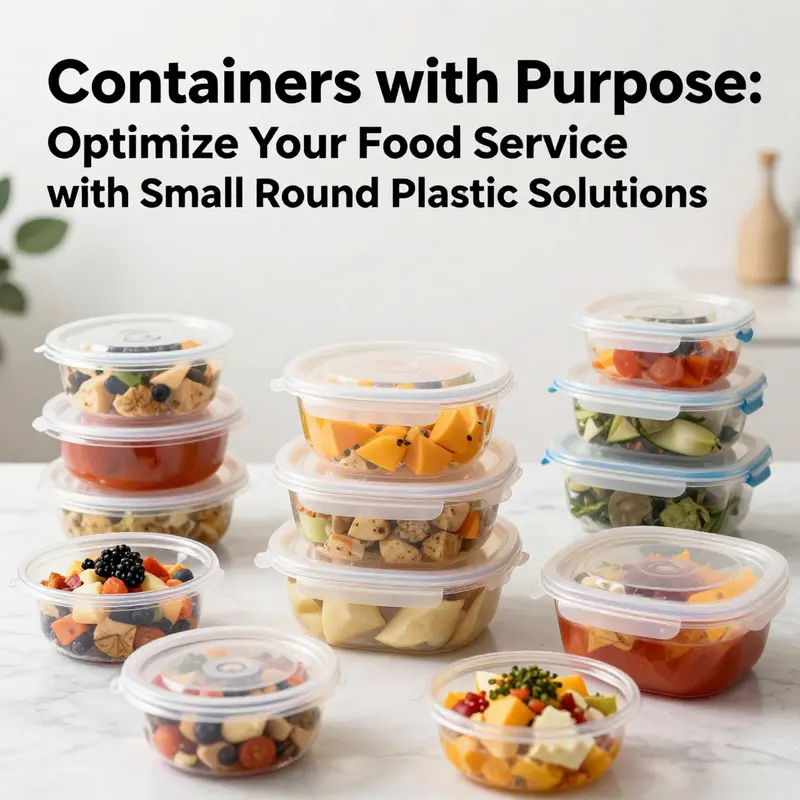
In today’s ever-evolving food service industry, small round plastic food containers have emerged as unsung heroes. Catering to professionals in bubble tea shops, restaurants, food trucks, and catering services, these containers simplify operations, ensure food safety, and enhance presentation. Knowing the right type of container, understanding how to source them, and discovering their numerous applications can elevate your business strategy. This comprehensive guide will delve into the various types and variations of these containers, outline effective manufacturing and sourcing practices, and highlight the ingenious applications that can lead to improved customer satisfaction and operational efficiency.
null
null
null
null
Round Solutions, Wide Reach: The Practical Applications of Small Round Plastic Food Containers
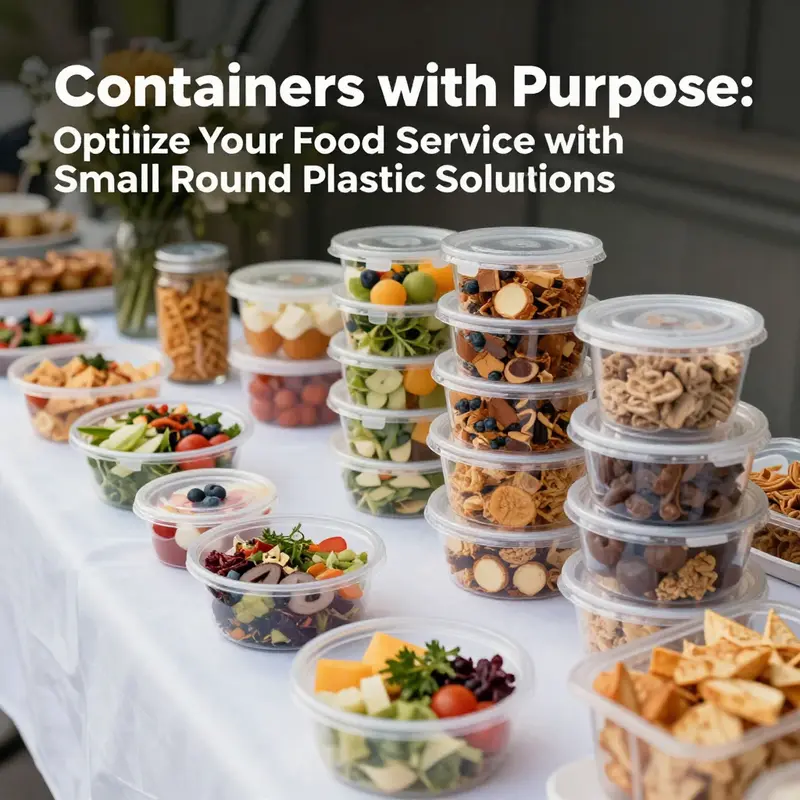
The ubiquity of small round plastic food containers is explained not only by their price or availability but by the way their circular, stackable form compacts reality itself. In kitchens, classrooms, hospitals, and pop-up events, a simple round container becomes a reliable micro-tool that organizes, protects, and portions. The design is not extravagant; it is intentionally restrained. The round shape makes stacking predictable, which reduces the chaos of drawers, shelves, and refrigerators. It creates a stable base that resists tipping when stacked with other containers, papers, or knives nearby. And because many of these containers are made from food-grade polypropylene, they bring a blend of heat resistance, chemical stability, and light weight that translates into durable everyday use. The practical value emerges when the container serves as a faithful companion to meal prep, leftovers, snacks, or ingredients that need to be kept separate but close at hand. With transparency or clear visibility, the contents can be identified at a glance, minimizing the rummage that often accompanies organized storage. In the realm of home life, the result is less waste, faster meals, and cleaner refrigerators where compartments align with the rhythm of a busy household. A 600ml round container is a familiar size for premeasured fruit portions, small salads, or tiny batches of sauces. In a family kitchen, many of these containers form a modular system: different lids, same base, interchangeable with a broad range of food items. Their compatibility with microwaves and freezers makes them a flexible choice for a weeknight, allowing cooks to reheat portions directly, or to freeze portions ahead for later use without fearing texture loss or flavor degradation. The material choice matters here. Polypropylene is widely used because it resists odors and stains, holds up under repeated cycles of heating and chilling, and remains relatively light in weight. It is also a material that many manufacturers designate as safe for contact with food when produced under strict standards. In practice, this translates into a container that is not merely convenient but dependable for everyday storage needs. The result is a familiar rhythm: you cook, you portion, you store, and when the time comes, you reheat or pack for on-the-go meals. This rhythm reduces food waste and supports budget-minded households by turning leftover moments into planned, portable portions rather than a cluttered process of guesswork at mealtime. Beyond home kitchens, the same circular forms adapt to the tempo of professional kitchens, retail, and educational settings. A food-service operation can leverage the same container family for both prep and service, from storing sauce components to presenting small, ready-to-consume salads and desserts in a uniform, hygienic package. In these settings, the container often features a secure seal that preserves freshness during transport. A reliable snap-on or twist-top lid becomes a quiet shield that protects contents from leaks and contamination while enabling convenient stacking in carrying kits, takeout bins, or front-of-house display units. The visual appeal matters as well. Depending on the design, a transparent or lightly tinted lid allows customers to assess the portion at a glance, reducing handling time and improving order accuracy. There is a simple economy here: the same container can be used across a wide range of foods—from condiments and dressings to fruit, vegetables, or even small desserts—reducing the number of SKUs a kitchen must manage. The efficiency in portioning has a broader impact too. For schools, community centers, and event organizers, the ability to distribute uniform portions quickly helps maintain fairness and accuracy in meal programs. When a lunch program serves hundreds of students, the uniformity of a single round container, its consistent dimensions, and predictable lids become an operating standard that minimizes error and waste. The containers are designed to withstand the demands of daily use in a cafeteria line, a classroom, or a community kitchen, including repeated washing or the occasional rough handling during transport. Even for events that emphasize portability and cleanliness—outdoor festivals, seminars, or pop-up markets—the compact round container shines. Its symmetrical shape reduces space in a cooler or tote bag and allows organizers to arrange items with clarity and ease. In such contexts, the container serves not merely as a storage vessel but as a small system that supports the flow of service: pre-packed portions, grab-and-go snacks, and a hygienic barrier between food and hands. The design also integrates with broader sustainability considerations. Reusable options, when designed with durability in mind, invite longer life cycles than single-use equivalents. Even when disposables are the default, manufacturers and suppliers increasingly highlight BPA-free, recyclable polypropylene as a safer, more responsible option. Some brands emphasize the ability to reuse containers after careful cleaning, thereby reducing the number of single-use items entering waste streams. In those conversations, the container becomes a contributor to a circular approach to food storage: not just a disposable vessel but a potential participant in ongoing reuse programs, as long as cleaning and maintenance fall within practical guidelines. For families and food-service teams alike, the containers offer an accessible entry point into better organization and cleaner storage. They accommodate the needs of different diets, portion sizes, and preparation approaches. They also play a role in educational settings, where students learn about portion control, food safety, and the importance of reducing waste. When teachers or program organizers demonstrate proper portion sizes and storage techniques, the containers become a tangible tool that supports these lessons. In this sense, a simple plastic container moves beyond its physical function to become a facilitator of habits—habits around planning meals, managing leftovers, and thinking critically about how to store and enjoy food in a responsible way. This is not a polished luxury; it is practical infrastructure. The containers’ lightness makes them easy to handle in busy environments, while their sturdy construction guards against leaks and spills that would otherwise create messes and waste. That practical resilience is particularly valuable in spaces where speed matters: the kitchen line, the school lunchroom, or the outdoor event booth. The shapes and sizes that dominate the market are chosen with real-world use in mind. A round, shallow variant can serve as a dessert cup or a small side dish, while a deeper variant can hold yogurt, sauces, or small fruit portions. A modest set of compatible lids can seal each option, enabling efficient prep, storage, and distribution. In the broader story of storage and meal planning, these containers function as a scalable system. One base size can be multiplied across a range of volumes to accommodate different recipes, leftovers, and customer preferences. A kitchen team can design a simple, repeatable workflow: cook, portion into the preselected number of containers, seal, label if needed, and store. In this way, the container becomes an instrument for consistency, not merely a holder for food. The opportunity to customize further expands this utility. Suppliers offer an array of options—from branded packaging and custom sizes to eco-friendly materials that align with sustainability goals. This flexibility supports both individuals building a personal storage system and businesses seeking to reinforce a brand identity or meet environmental commitments. In practice, the choice of material, lid type, and size influences the user experience. A container with a robust snap-on lid lessens the risk of leaks during transport, which matters to customers who take meals to work, school, or field sites. A clear lid helps both the preparer and the consumer quickly identify contents without opening containers, preserving freshness and reducing handling. The tactile feel of the lid, the smoothness of the container walls, and even the edge design around the opening all contribute to usability. And while these containers excel in many roles, they are not without limits. For certain high-heat applications, or foods with strong aromas, it may be preferable to consider alternative materials such as glass for longer-term storage or different packaging formats to address sensory considerations. The evolving conversation around sustainability adds another layer of decision making. Reusable PP options and recycling programs are increasingly part of the procurement dialogue. Brands and institutions are expected to provide clear guidance on cleaning, reuse viability, and end-of-life options. In some markets, the availability of curbside recycling for polypropylene and consumer awareness about recycling can influence how these containers are used. The result is a more nuanced understanding of the lifecycle of the container—from manufacture to disposal—and a renewed emphasis on responsible storage practices that preserve flavor, texture, and safety. The practical applications of these containers extend into niches that might surprise—areas such as pharmaceuticals and supply-chain organization where compact, stackable storage helps maintain order in compact spaces. In medical or therapeutic settings, small non-sterile items can be organized similarly to food components, emphasizing hygiene and separation. In a broader sense, the containers’ success stems from their adherence to core principles: safety, simplicity, and flexibility. They withstand repeated use, support straightforward cleaning, and adapt to changing needs. They do not hinge on novelty or trends but rather on the enduring value of a practical shape that makes everyday tasks easier. For anyone seeking to optimize storage and meal preparation, the logic is straightforward. Choose a base size that fits the typical portions you handle, ensure the lid seals reliably, and consider durability and cleaning requirements. If you anticipate frequent transport, prioritize leak resistance and secure closures. If visibility matters, select clear types that let you view contents without opening. If sustainability is a priority, explore reusable options and recycling pathways. And if you operate in a space with a fast-moving workflow, value consistency across a range of items so that the same lids fit multiple containers, reducing clutter and confusion. In sum, small round plastic food containers are more than containers. They are modular, portable, and practical building blocks in a modern food ecosystem. They enable better portion control, reduce waste, streamline prep and service, and support safe, hygienic storage across a spectrum of contexts. They are a quiet but essential part of the daily arc of meals—from the kitchen counter to the lunch bag, from the school cafeteria to the corner market, and beyond. For venues and households alike, they embody a straightforward philosophy: a well-chosen container can simplify life by making food storage predictable, accessible, and responsible. If you’re thinking about how to design a storage system that travels with you, starts with the humble round container. It may be small, but its impact compounds as it works with you in every bite, every break, every meal, and every moment of preparation. For readers looking to explore related packaging formats that also emphasize portability and lid security in a take-away context, a practical reference point is a disposable Kraft paper bowl with lid, which offers an alternative material approach while sharing the core benefits of controlled portions and spill prevention. See here for a representative format: https://greendispopack.com/product/disposable-takeaway-paper-kraft-salad-bowl-with-pet-lid/. As packaging continues to evolve, the round plastic container remains a reliable anchor—especially in a world that increasingly values organization, safety, and the efficient use of space. In the end, the utility of these containers lies not in fancy claims about novelty but in their quiet, dependable service in the daily tasks of food preparation, storage, and distribution. They are the kind of practical tool that, once adopted, changes the cadence of how people plan meals, manage leftovers, and move food from one moment to the next with clarity and care. External resources discuss the broader regulatory framework that governs materials in contact with food, underscoring the importance of safety standards as these containers circulate within kitchens and households. For a detailed overview of food-contact material guidelines, refer to the FDA’s guidelines on food contact materials. External resource: https://www.fda.gov/food/food-contact-materials
Final thoughts
Understanding the significance of small round plastic food containers is crucial for enhancing efficiency and satisfaction within your food service business. As we’ve explored, these containers come in various types tailored to meet diverse needs, can be sourced reliably from global suppliers, and offer numerous applications that streamline operations and boost aesthetic appeal. Armed with this knowledge, you are well-equipped to make informed decisions that will not only optimize food storage and presentation but also elevate your overall service offering, ensuring a better experience for your customers.