
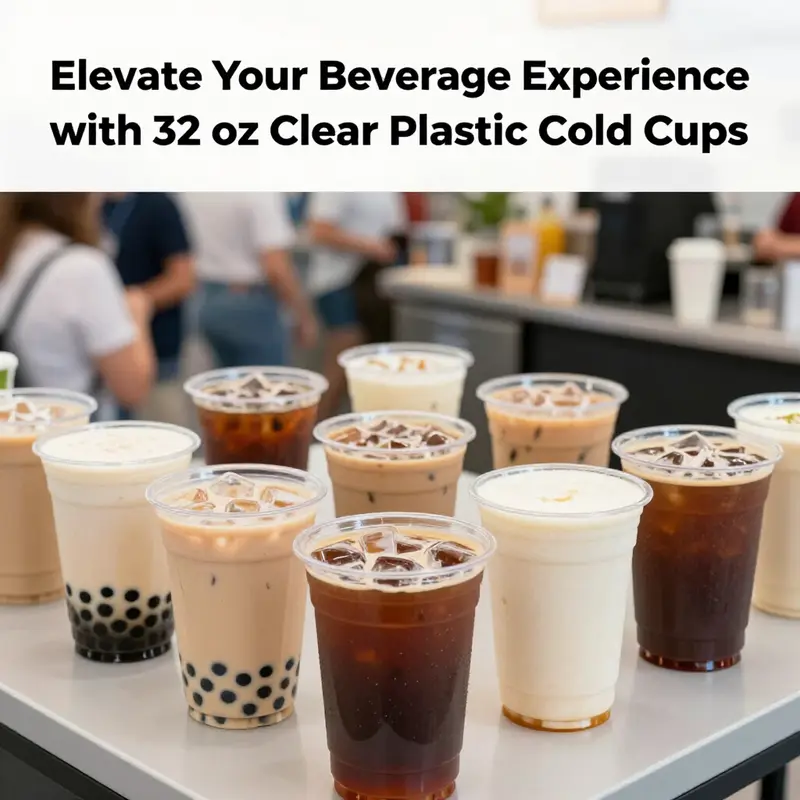
32 oz clear plastic cold cups with lids are essential for beverage shops, restaurants, and event planners seeking practicality and style. These cups, primarily made from food-grade PET or PP, not only deliver functionality but also contribute to an eco-friendly approach in the food service industry. This article delves into five key aspects of these versatile cups, including their material benefits, product design, application scenarios, customization options, and purchasing insights, guiding you towards making informed decisions that align with your operational needs.
Crystal Clarity and Quiet Responsibility: The Material Story Behind 32 oz Clear Plastic Cold Cups with Lids
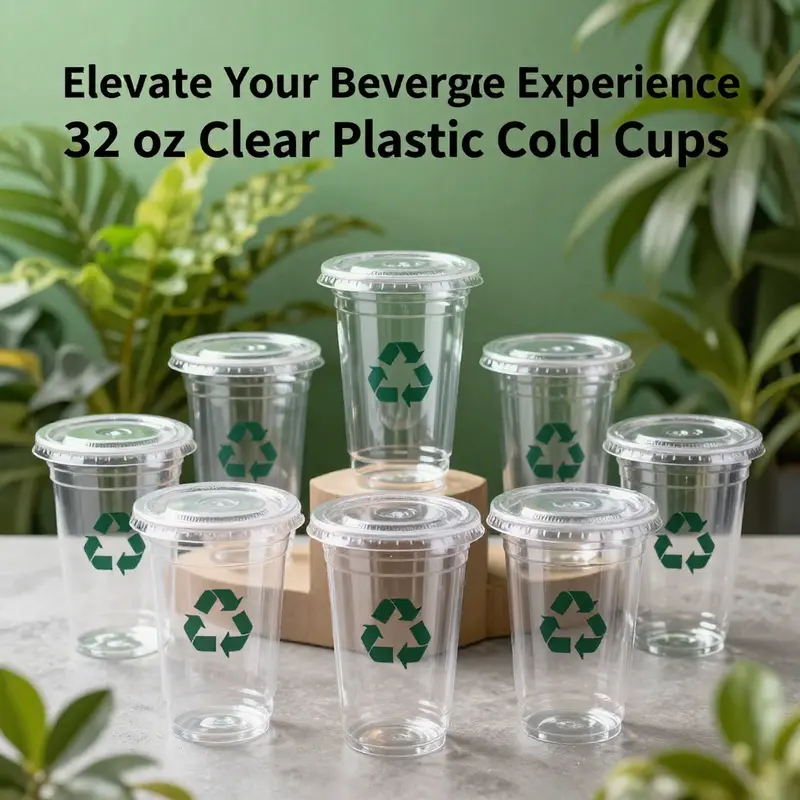
The 32 oz clear plastic cold cup with a lid is more than a vessel; it is a meeting point of design, chemistry, and responsibility. In cafes, at events, and within everyday kitchens, its transparent walls frame the drink’s color and texture, inviting customers to judge not only taste but appearance. The volume—nearly a liter—carries the energy of gatherings, from casual takeout to parties, while reminding us that a single‑use item travels long distances from production to disposal. The choices behind this cup matter, because what seems like a small convenience is in truth a node in a global system of materials, suppliers, and waste streams. Each sip becomes part of a broader conversation about how packaging supports moments of connection while shaping the environmental footprint left behind.
The backbone of these cups is the material family they come from: PET, PP, and sometimes PLA. PET, or polyethylene terephthalate, is the most common for cold beverages because it is crystal clear and tough, resisting shattering and minor impact as drinks are moved, poured, and sipped. PP, or polypropylene, provides a harder edge for cups that may encounter warmer, though not hot, contents and frequent handling. PLA, polylactic acid, frames a more eco‑friendly narrative for some suppliers, since it is grown from renewable resources like corn and advertised as compostable in the right industrial conditions. Each material brings its own promise and its own caveats, and the narrative around a cup shifts with what the consumer and the waste stream can do with it after use.
The safety side is anchored in established guidelines. PET cups intended for cold drinks frequently carry FDA food‑contact certifications, signaling that the material, dyes, and printed inks meet regulatory expectations for consumer safety. This is not merely a label to decorate packaging but a legal recognition that residues, migration, and consumer exposure are within accepted limits under normal use. PP cups share that safety framework, with similar expectations for contact with food and beverages across a spectrum of temperatures, though some formulations allow a greater range of use, including short exposure to warm contents. PLA cups raise different considerations: while compostable in industrial facilities, their performance depends heavily on accurate waste management infrastructure, the presence of certified compostability labels, and the absence of incompatible plastics in the same recycling stream. The result is a material story that requires attention to context—where the cup is used, how it is disposed of, and what processing capabilities exist nearby.
Environmental friendliness, however, is not a binary attribute but a spectrum shaped by material choice, manufacturing process, and what actually happens after use. PET and PP are recyclable in many municipal programs, but recycling rates vary widely by region and by the completeness of the recycling stream. The clarity that makes PET beloved for cold beverages can fade when the cup becomes a mixed waste stream; labels, inks, and decorations can complicate recycling if not properly handled. PLA seems attractive to those pursuing biobased content, but it typically requires industrial composting to break down, and many home compost or curbside systems do not handle it efficiently. Consequently, a PLA cup might still end up in a landfill or unresolved waste if a facility cannot process it. In other words, the eco‑label on a cup often hinges on the local waste infrastructure more than on the material alone. This is why a balanced evaluation considers not just the product, but the places that handle it after use.
Marketing claims of eco‑friendliness deserve careful interpretation. Some suppliers highlight “eco‑friendly” or “biodegradable” features in a way that can blur the truth for a consumer who does not know the distinction between recycling and composting. The difference is crucial: PET and PP, when properly collected, can re‑enter the circular economy; PLA requires a different end‑of‑life route that is not universally available. This is why a key signal of environmental responsibility is certification and transparency: explicit statements about recyclability, compostability, and the conditions under which those outcomes occur. For impact‑minded buyers, the presence of recognized compostability certifications or third‑party recycling verifications can be a stronger indicator than general eco‑friendly rhetoric. It is worth noting that the broader safety framework, including FDA guidelines on food contact materials, provides foundational assurance across materials and formulations; yet environmental performance sits squarely in the domain of waste management and life‑cycle thinking, not merely in the label on the cup.
The story of 32 oz cups intersects with the realities of a sprawling supply chain. Suppliers can offer bulk quantities at a wide range of price points, and customization is a common feature. Logos, slogans, or patterns can be printed or embossed to align the cup with an event, a brand campaign, or a shop’s identity, turning a simple container into a marketing touchpoint. The economics of bulk pricing often hinge on material choice, the complexity of the lid design, and the availability of compatible accessories such as straws and cup sleeves. In some cases, the accessory ecosystem includes insulated sleeves and reusable straws that extend the practical life of the drink experience, blurring the line between single‑use convenience and reusable practicality. For a business aiming to up its branding while remaining mindful of sustainability, it is essential to weigh the visual appeal of a transparent cup against the logistics of end‑of‑life disposal and the environmental claims made by the supplier.
The physical design of the 32 oz cup also interacts with how people use it in different settings. In takeout operations you see a constant demand for a reliable sealing solution that minimizes leaks and spills during transit. The lid, whether a flat disk or a sealable option, plays as important a role as the cup’s wall in maintaining the drink’s temperature and preventing mess. At events, the ability to display vibrant drink colors and textures through the clear wall adds value for both vendors and guests, allowing the beverage’s ingredients to tell their own story. In households and gym bags, the cup carries hydration goals and the small rituals of daily nutrition. The balance between volume and portability makes it a practical choice for larger servings, for families eating together, or for gatherings where multiple beverages circulate. The cup’s clarity invites a quick visual check for flavor and freshness, a little sensory cue that complements the actual taste. In this way, the cup becomes a canvas where beverage aesthetics and practical handling meet the realities of a busy day.
For those who plan to purchase in bulk with branding in mind, the path from concept to delivery often threads through customization options. A brand may want a logo front and center, slogans that speak to a campaign, or a distinctive color scheme that matches a marketing kit. The customization landscape ranges from simple printed logos to full‑wrap graphics, and the price point reflects that scope. This is where the practical meets the promotional: the same cup that serves a practical function can also become a recognizable advertising instrument when printed with care. For readers exploring related packaging solutions that align with eco‑conscious branding, there is a useful resource about eco‑friendly, printed‑logo cold beverage cups with lids, which offers a sense of how such kits can be coordinated with sustainable messaging and material choices. See the resource here: eco-friendly printed-logo cold beverage paper cups with lids. The point is not to push one material philosophy but to show how material choice intersects with branding and end‑of‑life decisions.
In the broader conversation about sustainability, one should also consider the end‑of‑life system into which these cups enter. A well‑functioning circular economy depends on separate streams for plastics and organics, on consumer participation in recycling programs, and on manufacturers providing packaging that is compatible with those streams. The 32 oz cup, despite its simple appearance, sits at the center of this system. The same cup that helps a beverage shine can complicate recycling if it is contaminated with food waste or if the wrong type of lid or straw is attached. Conversely, a responsibly selected cup that is recyclable in local programs or that carries a credible compostability credential can reduce the environmental burden when disposal infrastructure is robust. The economics of recycling, as well as the energy and emissions associated with production, distribution, and end‑of‑life processing, all contribute to the final environmental footprint of the package.
Consumers, businesses, and regulators ultimately share the responsibility of ensuring safety, performance, and environmental stewardship. The FDA’s role in setting safety standards for food‑contact materials remains a cornerstone reference, guiding manufacturers to avoid harmful migrations and to maintain material integrity throughout the product’s life cycle. At the same time, local guidelines for recycling, composting, and waste separation shape what actually happens to a cup after it leaves a storefront. The gap between what is claimed on a packaging label and what occurs in the waste stream is real, and it underscores why ongoing transparency, third‑party verification, and clear end‑of‑life instructions matter. For those who want to explore credible safety and environmental standards further, the FDA’s resources provide a stable baseline for evaluating claims about the materials used in cold beverage cups and their suitability for contact with liquids and flavorings.
In sum, the 32 oz clear plastic cold cup with a lid embodies more than a simple container. It is a product of material science, manufacturing technology, consumer expectations, and environmental negotiation. The choice of PET, PP, or PLA affects not only performance in cold extremes and visual appeal but also how efficiently the item can be recycled or composted after use. It influences the kinds of lids that fit securely, the ways in which beverages are displayed, and the opportunities for brands to tell their stories through customized designs. It invites a practical reflection on how everyday packaging can align with broader commitments to sustainability, without sacrificing convenience, safety, or taste. The cup’s story, when read in full, reveals a landscape where clarity is matched by responsibility, where design meets life‑cycle thinking, and where decisions about a single‑use container ripple through supply chains, domestic waste streams, and consumer behavior alike. By reading the material choices through the lens of local recycling realities, readers can make smarter purchasing decisions that support both beverage quality and environmental stewardship.
External resource: FDA guidelines on food contact materials: https://www.fda.gov/food/food-contact-materials
Seeing Through the Cold: The Design Language and Specifications of 32-Ounce Clear Plastic Cups with Lids
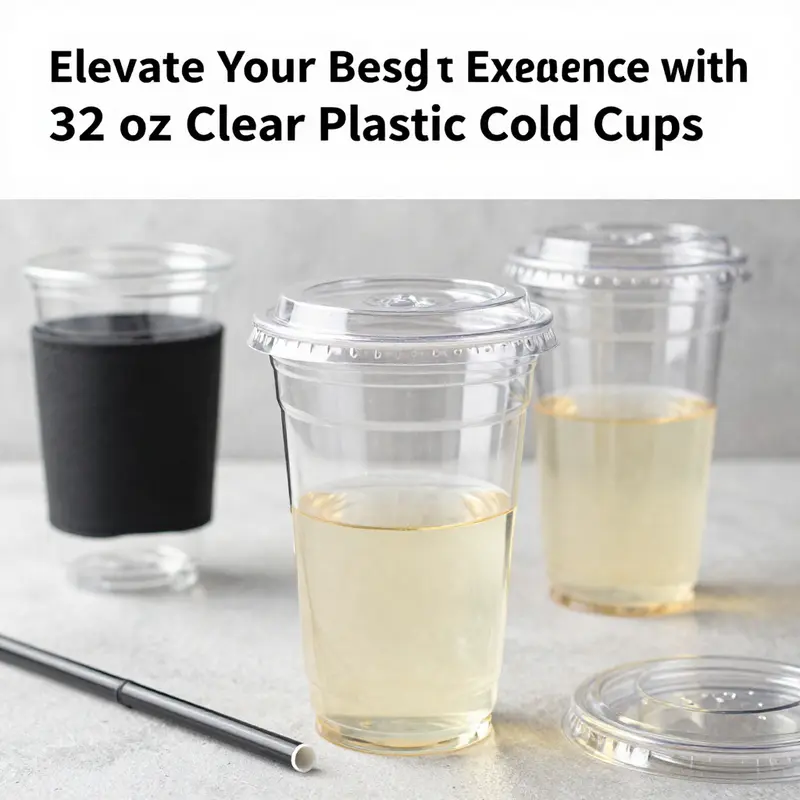
The 32-ounce clear plastic cup with a lid is more than a simple vessel for cold beverages. It embodies a careful balance between transparency, strength, and practicality, a balance that matters whether you are serving iced coffee to commuters, fruit juice at a family gathering, or smoothies at a cafe’s weekend rush. The choice of material sets the tone for durability and safety, and in this category, two plastics repeatedly prove their worth: PET and PP. PET, known for its clarity and rigidity, is prized for showcasing the color and texture of drinks—from the deepest espresso tones to the brightest citrus hues—without distorting the liquid’s appearance. PP contributes resilience and a slightly higher heat tolerance, which can matter during cleaning cycles or when liquids are moved rapidly from ice to desk. The design goal is simple on the surface but sophisticated in execution: a cup that is visibly clean, reliably leak-proof, and easy to handle on the go. Clarity is not incidental. It is a business asset. A consumer can gauge not just how full a cup is, but how fresh a drink is, by the way light passes through the liquid and the viscous trail of condensation along the outside. That visual transparency is part of the product’s value proposition, especially in spaces where presentation matters as much as content—from cafes that rely on Instagram-worthy visuals to gatherings where the drink’s appearance signals quality and care.
The physical dimensions of these cups are standardized enough to enable consistency across outlets yet flexible enough to accommodate a range of beverages. The diameter, roughly 3.54 inches, and a height approaching 6.7 inches, translate into a capacity of about 946 milliliters. These measurements are not arbitrary: they enable a familiar grasp for most hands, ensuring that cups can be stacked, boxed, and transported with predictable efficiency. The tall, slender silhouette helps prevent tipping when carried through crowded spaces, yet the cup’s volume remains generous enough to support large servings—an important consideration for takeout operations, catering, and event services where guests expect more than a single-serve option. The clear body becomes a canvas for the drink itself, allowing operators to highlight natural layers in beverages, reflect brand colors, or display mix-ins and floating fruit bits that can entice customers even before they take a sip.
Lids are where practical engineering meets user experience. A secure, tight-fitting lid system is essential to prevent leaks during transit and to enable confident tabletop use at work or school. Some designs incorporate a sealing ring or an integrated rim that presses seal against the cup’s mouth, forming a barrier against spills when the cup is jostled or jostled again by a busy workflow. The lids can come in flat or sealable variants, and in many cases there is a built-in drinking spout. A spout streamlines sipping on the move, while a wide-mouth option makes filling, adding toppings, or rinsing the cup a straightforward task. For beverage brands and venues, the lid is as much a part of the visual identity as the cup itself; it can be a nearly invisible, nearly seamless cap, or a feature where color or texture communicates a drink category or temperature cue. In some configurations, the lid and straw assembly is a bundle that includes a straw and a sleeve, addressing both portability and comfort. When a lid slides into place with a quiet, reassuring click, the user’s sense of reliability in the product elevates, and that small moment is often what converts a first-time buyer into a repeat customer.
Beyond the basic build, some cups incorporate design details that improve daily usability. For example, the rim is often molded to be comfortable against the lip, reducing fatigue during longer sips. The exterior glaze or surface finish may be tuned to resist fingerprint smudges and moisture, preserving a crisp, clean look from counter to hand. There is also consideration given to ease of cleaning for reusable or partially reusable components, with a wide mouth opening that allows thorough rinsing and scrubbing. The compatibility of the cup with accessories, such as sleeves for insulation or compatible straw options, broadens its utility in both hot and cold service environments, even though the cups themselves are optimized for cold beverages. This compatibility matters in real-world settings where the speed of service, cleanliness, and presentation intersect with the customer’s perception of value.
A curious but essential facet of the 32-ounce class is its range of material options. Food-grade PET and PP ensure safety in contact with beverages and compatibility with common cleaning regimens. The transparency of PET is particularly valued; it creates a clear window that helps baristas and operators monitor fill levels, ice quantity, and ingredient layering without opening the cup. BPA-free construction has become a standard expectation, aligning with consumer demand for safer, more responsible packaging choices. In this respect, the eco-conscious segment of buyers finds PET and PP acceptable alternatives to more opaque or composite materials, especially when the supplier can demonstrate recyclability and responsible disposal pathways. Eco-friendly options do exist, including biodegradable variants designed for sustainable packaging needs. These choices are not merely marketing statements; they reflect a shifting landscape in which buyers weigh performance against environmental impact, price per unit, and end-of-life considerations. The nuance matters because it helps determine whether a cup is best suited to a single-serve cycle or a more extended life in a retail or event setting.
From a procurement perspective, the economics of 32-ounce cups with lids hinges on scale. Suppliers commonly offer bulk ordering with generous quotes that make large commitments feasible. MOQs often start in the tens of thousands, reflecting the needs of large cafes, catering operations, or corporate cafeterias. The unit price can drop dramatically as volume rises, with estimates in the market demonstrating how the economics shift when quantities cross multiple tens of thousands. In practice, this means a business planning a nationwide rollout or a big seasonal push can secure a per-unit price that makes large-scale adoption viable. For buyers evaluating options, it is common to encounter a tiered pricing structure: a modest baseline price at mid-range quantities, followed by steep downward adjustments as orders scale into the hundreds of thousands or more. Even within the same product family, different suppliers may present different panels of terms—minimum order quantities, lead times, and the availability of customization. It is here that branding becomes a differentiator. Custom branding—printing logos, slogans, or patterns on the cup surface—offers a tangible opportunity to reinforce a brand’s image in a disposable format. While some categories rely on generic cups to maximize flexibility, others lean into customization as part of a broader marketing strategy. The option to imprint a logo or message can transform a simple cup into a measurable advertising channel, especially at events, festivals, or corporate receptions where the presentation is part of the experience.
To illustrate the commercial potential of customization, many suppliers advertise straightforward services that enable brands to extend their identity to packaging. The process typically involves choosing a cup base, specifying print quality and color fidelity, and selecting the placement and scale of the logo or motif. In practice, brands have leveraged this capability to deliver cohesive event branding, seasonal campaigns, or corporate identities across thousands of serving cups. A practical point for buyers is to recognize that customization often comes with increased MOQs and slightly longer lead times, but the payoff is a consistent, reusable impression across all served beverages. When evaluating returns on investment, buyers weigh the incremental cost of customization against the potential uplift in brand recognition and corporate partnership opportunities. The math often favors large, recurring deployments where the logo is visible in high-traffic environments and photographed for marketing materials.
Turning to the consumer experience, the tangible benefits of a well-designed 32-ounce cup with lid extend beyond aesthetics. The seal is designed to prevent leaks during transit, a frequent source of dissatisfaction in takeout workflows. A leak-proof design reduces waste, protects customers’ belongings, and supports a smoother delivery operation. The cup’s clarity, coupled with the lid’s secure fit, gives customers confidence that the drink is what they ordered and that it will stay upright for the journey home. The cup’s compatibility with accessories—such as insulated sleeves or straw options—further enhances usability in different contexts, from a hot desk at the office to an outdoor concert where ice remains pivotal to flavor. Even cleaning crews and kitchen staff appreciate cups that are easy to handle, stack, and store. When these practical benefits align with solid pricing and reliable supply, a 32-ounce cup with lid emerges as a dependable staple in the repertoire of beverage service.
As with any packaging choice, there is a spectrum of environmental considerations to balance. The shift toward recyclability remains a guiding principle for many buyers. PET and PP are generally recyclable through established municipal programs, but the availability and efficiency of recycling streams vary by region. In addition, biodegradable or compostable variants appear as niche options for events or venues seeking to minimize waste, though these options often come with trade-offs in cost, availability, and cold beverage performance. For buyers who are committed to sustainability, the decision process includes evaluating the full lifecycle of the cup—from resin sourcing to end-of-life disposal—and selecting partners who can provide transparent certifications and reliable waste-management options. In this landscape, the 32-ounce cup with lid stands as a versatile platform. It invites experimentation with performance, branding, and environmental impact while delivering the practical reliability that busy operators demand. The result is not only a beverage container but a portable, clear medium through which brands communicate quality, care, and consistency to every customer who reaches for a cold drink on the go.
In sum, the design language of these cups is a dialogue between visibility and virtue. The cylinder’s clarity invites sensory engagement with the drink itself, while its structural details—tight lids, comfortable rims, and intuitive openings—support everyday use under pressure. The dimensions are tuned to a sweet spot that blends familiarity with capacity, ensuring that the cup feels substantial in the hand but not unwieldy when crowded behind a counter. Add the potential for branding through customization, and the cup becomes a cost-efficient canvas for marketing as well as a trusted vessel for hydration. The market supports this balance with bulk capacities and pricing that reward scale, alongside a portfolio of materials and finishes that address safety, recyclability, and, increasingly, biodegradability. For buyers planning to leverage these cups in a wholesale or retail setting, the overarching message is clear: choosing the right 32-ounce clear cup with a lid is not simply about holding a drink. It is about selecting a platform that communicates reliability, facilitates branding, and aligns with a sustainable vision—all while delivering a satisfying, spill-proof experience to customers who expect both quality and convenience from their beverages. As the conversation around packaging evolves, this cup type remains a practical, adaptable, and recognizable option for a broad array of cold beverages and service contexts.
External resource: for a detailed parameters view and bulk-quote context on a representative 32-ounce plastic cup with lids, see the product page on a leading wholesale platform. 32 oz Plastic Cups with Lids – detailed parameters on a leading wholesale platform
Internal reference: for those exploring eco-friendly branding options that complement clear cold cups, a resource on custom, eco-friendly printed logos for cold beverage cups with lids provides additional context and ideas. eco-friendly printed logo cold beverage cup with lid
Clear Vessels, Collective Moments: How 32 oz Clear Cups with Lids Shape Service, Style, and Everyday Hydration
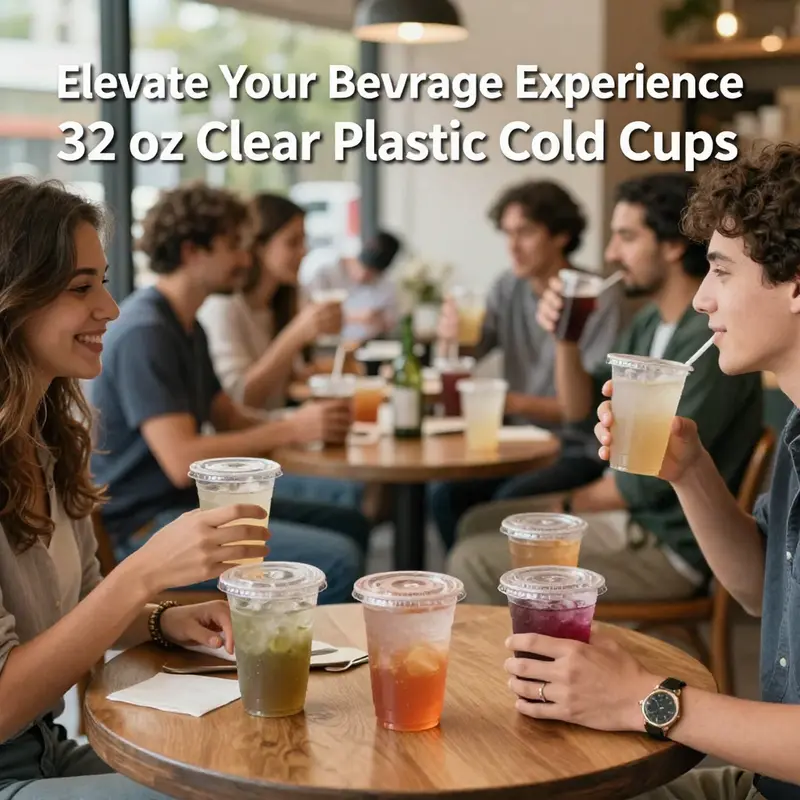
32 oz clear plastic cold cups with lids sit at an interesting crossroads of function and spectacle. They are not merely vessels for liquids; they are stage props in the daily routines of cafés, busy lunch lines, outdoor events, and home kitchens. The capacity—nearly a liter—the practical sweet spot between grab-and-go convenience and the desire to savor a larger, cooler drink, makes these cups versatile across countless settings. They are designed for cold beverages, and their transparency turns a simple punch of color into a visual experience. A well-chilled iced coffee or a swirled fruit juice can look as inviting as it tastes when poured into a crystal-clear container that reveals the drink’s layers, textures, and frost-kissed surfaces. The clarity invites trust because customers can see exactly what they’re choosing, confirming ingredients, freshness, and even the absence of unwanted solids. Yet the value extends beyond aesthetics. In fast-paced service environments, the same clear cup offers rapid recognition for staff and easy inventory checks for managers, enabling quicker throughput without sacrificing accuracy.\n\nThe material choices behind these cups—typically PET or PP—anchor both performance and sustainability considerations. PET is prized for its high transparency and rigidity, a combination that keeps beverages looking bright and appealing while resisting ordinary cracks from light handling. PP, in turn, brings an edge of resilience and heat tolerance that helps in wrangling a wide range of cold drinks, from thick smoothies to fruit-forward iced teas. Both materials are compatible with a broad network of lids and closures designed to prevent leaks during transport, whether a customer is walking from a counter to a car or a server is corralling a stack of takeaway orders in a crowded kitchen. The packaging ecosystems around these cups often include sleeves, often a simple add-on that helps maintain temperature and provide a comfortable grip for customers who carry drinks across long distances. While the science of plastics is a deep topic, the practical takeaway is straightforward: a clear, sturdy body paired with a reliable lid creates a dependable experience that customers come to expect when they order a large cold drink.\n\nIn daily operation, the 32 oz format shines most when it is placed at the intersection of capacity and convenience. The large size is particularly well suited to iced beverages such as coffee blends, herbal infusions, lemonades, and juice-forward mixes. For coffeehouses and tea shops, the cup’s generous volume reduces the frequency of refills on busy shifts, which translates into smoother service during peak hours. For purveyors of fruit drinks, bubble tea, or protein shakes, the opportunity to present a voluminous, visually compelling product is itself a marketing asset. The transparent container becomes a canvas; baristas and beverage developers can layer colors, textures, and toppings in a way that demonstrates freshness, quality, and craftsmanship. It is not only what is inside that matters but how the drink sits inside the cup, how the light plays through it, and how a customer perceives value at a glance as they consider whether to upgrade a size or add a straw.\n\nThe lids—whether flat, snap-on, or sealable—perform a crucial role in the full user experience. They are the safeguard in a busy service environment, reducing spill hazards during transport and on crowded tables. This is especially important in outdoor events or corner kiosks where hands are full, weather may shift, and movement is constant. The lid’s design also aligns with the drinking style of the beverage. A straw-friendly lid supports sipping convenience for slushy textures and milk teas, while a sealed lid keeps a layered juice or smoothie visually pristine during a walk to a seat or a bench. Even small details, like a tight seal or a secure straw slot, contribute to customer satisfaction because they remove friction from the moment of purchase to the moment of consumption. For operators, a reliable lid equates to fewer complaints, fewer returns, and more predictable waste streams, which simplifies both service training and sustainability reporting.\n\nCustomization is another dimension where 32 oz clear cups with lids meet business needs. In high-volume settings, brands seek to differentiate themselves through logos, colors, or slogans printed on cups that must remain readable through the beverage’s own color and opacity. The bulk suppliers in this space commonly offer customization options, including logo printing and decorative patterns, to help reinforce brand identity with every sip. For organizations looking to align their packaging with a broader marketing strategy, the ability to imprint a logo or slogan on the cup can convert a simple container into a mobile advertisement that travels from street to street. When a business considers customization, it weighs the trade-offs between cost, turnaround time, and the durability of printed graphics under cold beverage conditions. The optimal choice balances legibility, durability, and visual impact, ensuring that branding remains clear even as condensation forms on the exterior.\n\nFrom a practical standpoint, this cup format supports an array of applications beyond the standard café or restaurant setting. Catering companies rely on these cups for outdoor weddings, corporate picnics, and large-scale events where service speed and reliability are paramount. In such environments, the cups must endure varied handling—from buffet lines to disposable service stations—while remaining leak-resistant and easy to stack for storage. The versatility of the 32 oz size also lends itself to sports club concessions, school canteens, and corporate lunch programs, where large beverage orders are common. For retailers that offer pre-made cold drinks, these cups enable a clean, visually appealing presentation that invites impulse purchases; the transparent body allows customers to assess the product’s color, texture, and even the presence of ingredients like fruit bits or chia seeds at a glance, which can influence purchase decisions at the point of sale.\n\nHome use is a quiet but important channel for this cup format. Individuals who batch-produce smoothies, infused waters, or large pitchers often appreciate the ability to portion drinks for later consumption. The leak-resistant lid supports safe storage in refrigerators or coolers, while the clear walls let family members identify flavors or ingredients left in the cup. This is particularly relevant for households that entertain frequently or host weekend gatherings where guests help themselves to a cold beverage. Even in domestic contexts, the appeal of a large-capacity, see-through cup that travels well to the dining table or patio can elevate everyday hydration into a small ritual—an act of mindful serving that mirrors the care a café would apply to a customer’s drink. The same principles hold for gym-goers and fitness communities, where a well-sealed cup can accompany a post-workout cooldown or a long run, reducing the risk of spills on gym floors or car interiors.\n\nThe economics of bulk purchasing and customization reflect another layer of practicality. When orders scale to tens of thousands of units, unit prices can drop dramatically—an economy of scale that makes these cups attractive for large operators, event planners, and fundraisers. The leaf-through catalogs and supplier quotes often highlight per-unit figures in the low-cent range for very large orders. Such pricing makes a compelling case for standardizing on a single cup size across a business, simplifying inventory, reducing waste, and enabling consistent customer experiences across multiple locations. Even for smaller cafés or pop-up vendors, bulk buys can reduce the per-unit cost enough to justify offering a larger drink for a slightly higher price, a strategy that can boost both perceived value and overall sales throughput.\n\nAs with any plastic product, material choice and end-of-life considerations remain a part of the conversation. PET’s clarity and recyclability appeal to businesses aiming to balance performance with environmental responsibility. PP’s resilience makes it a good match for frequent re-use of drinkware-like handling in fast-service environments, while still offering recyclability in appropriate facilities. Operators who emphasize sustainability often look for suppliers that clearly communicate recycling streams and local recycling capabilities, and they may choose to pair cups with lids in a way that reduces waste during transport or at the point of disposal. In all cases, the transparency of the cup helps customers see what they are consuming, which aligns with contemporary expectations that products be not only functional but also trustworthy and compliant with cleanliness standards.\n\nFor teams seeking to elevate branding and consistency, there is a pathway to customization that does not sacrifice practicality. The ability to print logos, color schemes, or slogans on the cup surfaces can turn each beverage into a tiny ambassador for a brand during deliveries, takeout, or event setups. A visually cohesive package—from cup to lid to sleeve—communicates professionalism and attention to detail. It can even reduce decision fatigue for customers who are choosing from multiple beverage options, because recognizable branding helps build trust and enhances the overall perceived value of the experience. In this sense, the 32 oz clear cup with lid becomes more than a container; it is a portable, persistent embodiment of a business’s identity, carrying it from counter into consumer’s everyday life.\n\nTo illustrate how this unit fits into broader sourcing strategies, imagine a scenario where a vendor seeks to optimize margins while maintaining a high level of service. A customer-facing unit might be sourced in bulk at a low per-unit cost, with a standardized lid system to ensure leak resistance across all beverage lines. The supplier’s ability to offer packaging options—single- or multi-pack configurations, clear labeling, and even printed branding—would enable a cohesive program that scales with demand. The economic argument strengthens when considering the reduced waste from fewer refills, faster service times, and the ease with which staff can identify drinks by color and contents through the clear walls. In practice, a well-executed cup program supports smoother operations, clearer branding, and improved customer satisfaction, especially during peak hours when every second counts.\n\nFor readers exploring customization options that align with sustainability and branding goals, a practical path is to examine eco-friendly, printed-logo options that preserve the cup’s clarity while conveying identity. These options can be integrated into a broader takeout packaging strategy, ensuring that the visual presentation remains consistent across channels—from in-store pickup to curbside service. This approach also supports long-term marketing campaigns that rely on repeat exposure and brand recall, without compromising the core drinking experience. In short, the 32 oz clear cup with lid is more than a container; it is a versatile platform for service excellence, branding, and practical everyday hydration that scales to fit small cafés or large event operations alike. \n\nExternal resources provide a broader context for the choices involved in selecting 32 oz clear cups with lids. A detailed supplier page offers complete specifications, material explanations, certification standards, and bulk quotes that help buyers compare options and forecast total cost of ownership. This external reference can serve as a starting point for teams evaluating capacity needs, pricing, and customization potential as they build or refine their beverage programs. For more context on at-scale options, see the reputable supplier listing linked in the external resources section. \n\nInternal resource note: for teams interested in branding opportunities on eco-friendly beverage cups, a dedicated page detailing printed-logo options with lids offers practical guidance on feasibility, lead times, and minimum order quantities. The internal link provides a straightforward path to explore how a logo and color scheme can be integrated without compromising clarity or comfort during drinking. This seamless pathway helps teams translate concept into print-ready packaging that complements their beverage lineup and enhances the overall consumer experience. \n\nExternal resource: to explore bulk pricing, material specifications, and packaging configurations in depth, refer to the detailed product listing on a major online marketplace that aggregates supplier quotes and standard options for 32 oz plastic cups with lids.\n\nExternal link: https://www.alibaba.com/product-detail/32-oz-Plastic-Cups-with-Lids-Durable-PET_1600477593583.html?spm=a2700.12157510.0.0.1a1d7c5bYzXvHk
Crystal Clarity, Brand Impact: Mastering Bulk Sourcing and Customization of 32 oz Clear Plastic Cups with Lids
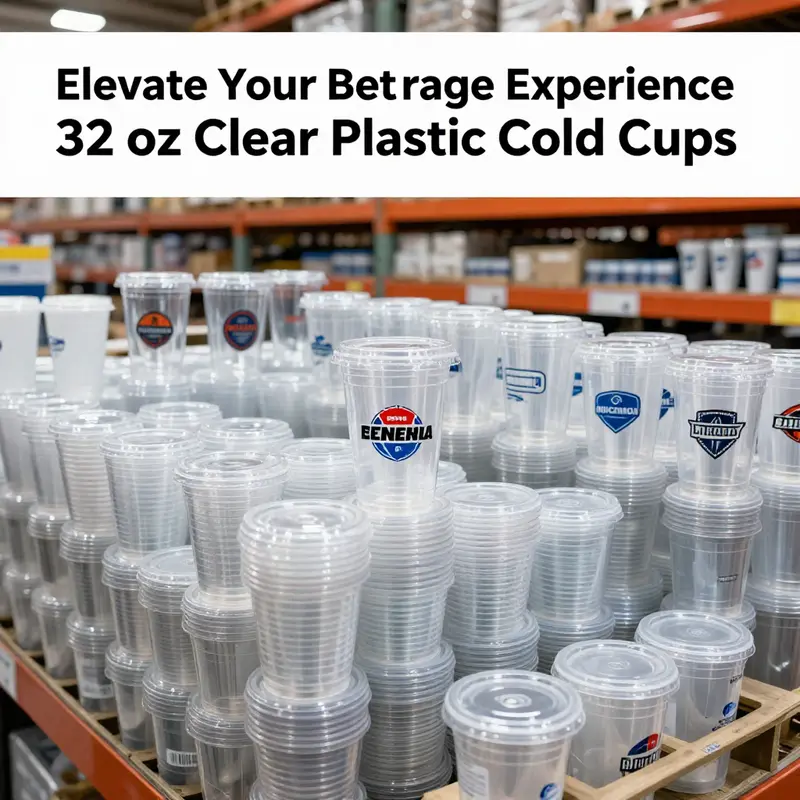
The choice to buy in bulk is more than a logistics decision; it is a statement about how a business presents itself, how it cares for the customer experience, and how it plans for efficiency at scale. When a operation hinges on 32 oz clear plastic cups with lids, the decision matrix expands from simply selecting a cup to crafting a reliable system that sustains quality, supports branding, and minimizes waste. In a market where the visual appeal of a beverage can drive demand as surely as taste does, the material, shape, and feasibility of customization become not just features but strategic levers. The journey from a single case to a stocked supply room involves understanding three interwoven strands: material science, design flexibility, and supplier reliability, all while maintaining safety and sustainability as nonnegotiable benchmarks.
Material choice sits at the heart of bulk procurement. The cups most commonly used for cold beverages in the 32 oz class are sourced from food-grade polymers, with PET and PP standing out for different reasons. PET offers remarkable clarity, a crucial attribute when the drink itself is part of the brand story—the color, the texture, and even the texture of the foam or crema can be showcased through transparent walls. PET also carries strong moisture and gas barrier properties, helping to keep iced coffee, fruit juice, or smoothie beverages stable from shop to table. This combination of visibility and protection makes PET a natural fit for large-volume orders where cold drinks dominate the lineup. On the other hand, PP cups bring durability and a higher resistance to certain kinds of deformation, which can be advantageous in handling and stacking during busy shifts. They can be lighter in weight and sometimes more cost-efficient at scale, though they tend to offer less of the razor-sharp clarity that makes a beverage look pristine in a social-media moment. It is common for buyers to evaluate the trade-offs between PET’s crystal transparency and PP’s versatile stiffness, balancing these characteristics against the anticipated lifecycle of the cup in their particular service context.
The environmental narrative around these cups matters as much as the technical performance. PET cups are highly recyclable in many municipal programs, a facet that aligns with the growing demand for responsible waste management. Yet the reality of recycling streams varies by region, and suppliers often highlight the eco-friendlier aspects of PET’s recyclability while reminding buyers that legitimate end-of-life outcomes depend on local infrastructure. PS, another traditional option, can deliver a crystal-clear appearance and robust rigidity, yet it typically carries a heavier environmental footprint and is generally not favored for hot beverages. For clients who want to navigate this terrain with confidence, it is essential to ask suppliers for certifications, food-grade assurances, and recycling compatibility details. Suppliers in reputable B2B marketplaces often present clear material specifications, certifications, and testing results, enabling procurement teams to document compliance and reassure customers about safety standards. As bulk orders begin, a practical assessment of the environmental implications alongside cost and performance becomes part of the optimization process.
Design matters as much as material when orders scale up. The 32 oz capacity is a practical sweet spot for gatherings, cafes, or takeout services, offering enough volume for generous servings while remaining manageable in a crowded service line. The clear body is more than a cosmetic advantage; it is a communication channel. It allows patrons to gauge the beverage’s color, density, and even visible inclusions like ice shards or fruit bits, turning the cup itself into a marketing canvas without the need for additional inner labeling. Lids complete the system by preventing leaks and enabling transport, which is essential for takeout and delivery. The available lid styles—flat, dome, or those with straw slots—each modify the user experience, from ease of access to spill resistance to the fit with different straw options. For event-based or high-volume service, the ability to customize lids, or at least select a lid with a reliable seal and compatible straw channel, offers tangible practical value: fewer spill-related incidents, smoother service flow, and a calmer shift during peak hours.
Customization is where bulk buying becomes a powerful branding exercise. Suppliers increasingly offer personalized printing services that place logos, slogans, or patterns directly on cups or lids, a capability that can turn a simple beverage into a mobile marketing asset. When organizations pursue logo or message customization, they are stepping into a broader business objective: brand visibility paired with a consistent, on-brand customer experience. Customized cups can reinforce a brand’s color story, typography, and messaging in a way that resonates in retail spaces, at events, or during corporate catering. At scale, the economics of customization hinge on the supplier’s ability to print with fidelity across many units, maintain color consistency, and sustain print durability through the cold beverage lifecycle. It is not uncommon for bulk orders to involve tiered pricing tied to quantity, with higher-volume runs unlocking lower per-unit costs. The predictable cadence of orders, predictable print runs, and accelerated production timelines all contribute to lower risk and higher efficiency in store operations and event management.
The practicalities of negotiating bulk purchases extend beyond the material and the print. Lead times, minimum order quantities (MOQs), and packaging configurations can have outsized effects on inventory planning and cash flow. Some suppliers set MOQs that reflect the complexity of customization or the packaging demands of a large distribution network. When MOQs are high, buyers often lean into longer-term contracts or quarterly orders to stabilize supply and pricing. Conversely, some suppliers offer flexible MOQs for smaller campaigns or pilot runs, enabling a brand to test design concepts or regulatory-compliant labeling without absorbing excessive risk. The packaging of bulk shipments—the number of cups per case, the arrangement of lids, and the method of stacking—also carries cost implications. Bulk orders demand careful coordination with storage spaces, transport capacity, and the timing of promotional events. The ripple effect of small decisions in packaging and timing can translate into meaningful savings or risk exposures over a season of operations.
Pricing in bulk is a dynamic conversation. Tiered pricing structures reward volume, but buyers should also evaluate total cost of ownership, including the costs of customization, mold or setup fees for print runs, sampling, and potential waste from imperfect runs. The economics of customization mean that early-phase projects often benefit from a sample program to confirm color fidelity and print durability before a full ramp. Sample validation helps prevent expensive rework after a large shipment has already been produced. For teams planning long campaigns, it is prudent to negotiate terms that cover color-consistency guarantees, replacement for defective units, and a clear path for reprints should brand guidelines evolve during the lifecycle of the campaign. The procurement strategy should also consider eco-friendly options, such as cups produced from renewable resources or those designed for easier recycling, where such options align with the brand’s sustainability commitments.
Supplier reliability is the connective tissue binding all these factors together. When sourcing in bulk, buyers must assess a supplier’s capacity to deliver consistent quality across thousands or tens of thousands of units, maintain strict food-grade safety protocols, and provide documentation that reassures auditors and customers alike. Many reputable suppliers offer test reports, production certifications, and traceability details that confirm the material, print, and packaging lineage of each batch. Reliability also means the ability to scale quickly in response to surges in demand, whether from seasonal pushes, new stores opening, or large events. This is where the relationship between procurement teams and suppliers proves its value: it enables open lines of communication, rapid issue resolution, and a collaborative approach to optimizing both the product and the supply chain. In practice, this means scheduled check-ins, transparent production calendars, and agreed-upon criteria for accepting or returning batches.
The customization and bulk-sourcing conversation does not exist in a vacuum. It intersects with the broader goals of brand integrity, customer experience, and ESG considerations. A clear, transparent narrative about how cups are sourced, how inks are formulated for safety and durability, and how end-of-life scenarios are managed helps strengthen customer trust. This is especially relevant for operators who want to showcase a sustainability stance through their packaging choices. For readers exploring eco-conscious print options, there is a path that blends clarity with responsibility: selecting materials and print methods that minimize environmental impact while preserving the crisp visual appeal that a transparent 32 oz cup can deliver. Along with this, many buyers evaluate the potential for alternative, compostable or PLA-based cup options at high volumes, recognizing that the landscape is evolving and that innovative supply ecosystems can align with ambitious sustainability agendas.
When contemplating the broader implications of bulk purchasing and customization, a practical, grounded approach helps keep projects moving smoothly. Start with a clear specification: confirm the exact diameter of the cup mouth, the depth of the cup, the compatibility of lids, and whether the chosen lid design accommodates a straw for convenient consumption. Then map the procurement path: identify preferred suppliers, request samples to verify print fidelity and structural integrity, and compare MOQs, lead times, and shipping terms. Build a risk register that anticipates potential disruptions—delays, raw-material price shifts, or changes in regulatory guidance—and assign owners for each risk item. Finally, integrate a brand-forward mindset into the procurement process. Ask how the cup design reflects the brand’s color palette, how the typography reads at a distance, and whether the container’s transparency amplifies the beverage’s appeal for customers who study a product’s visuals in a digital world before ever taking a sip.
For teams considering a path toward more responsible packaging, there is value in examining the broader ecosystem of optioning. Some buyers explore the possibility of switching between PET and PLA-based alternatives where service and sustainability requirements permit. Others weigh the trade-offs of different lid configurations to reduce spillage while preserving user convenience. The key is to maintain a steady balance between clarity, durability, and environmental considerations, aligning every choice with the brand’s promise and the operational realities of daily service. In this way, bulk purchasing and customization become more than procurement activities; they become strategic instruments that empower a business to scale with confidence, to tell its story through a simple, clear medium, and to deliver a consistently compelling beverage experience to every guest.
To connect with ongoing developments in the packaging landscape, readers can explore examples of eco-friendly and printed-logo options that extend beyond plastic cups to related cold-beverage packaging concepts. Within this context, the broader narrative around “eco-friendly printed-logo cold beverage cup with lid” offers a useful reference point for how brands can align practical needs with sustainable storytelling. See an example of this approach here: eco-friendly-printed-logo-cold-beverage-cup-paper-cup-with-lid.
External resource: for a comprehensive overview of 32 oz plastic cups with lids from a leading B2B marketplace, including product parameters, material explanations, certification standards, and bulk quotes, see https://www.alibaba.com/product-detail/32-oz-Plastic-Cups-with-Lids-Durable-PET_1600477593583.html.
From Quotes to Cart: Navigating Pricing and Purchasing Channels for 32 oz Clear Plastic Cups with Lids
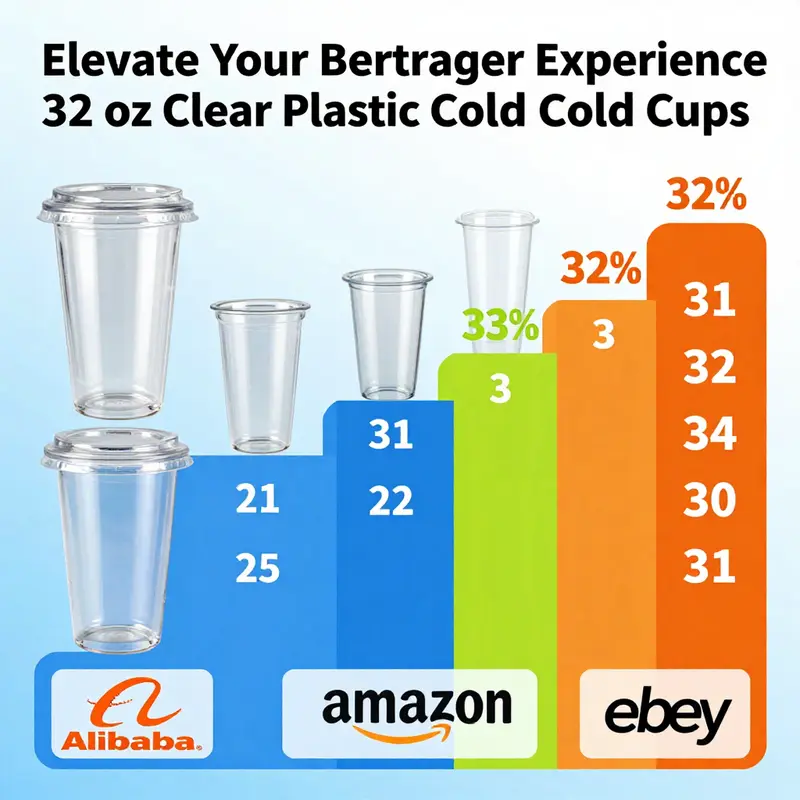
The pricing landscape for 32 oz clear plastic cups with lids is a tapestry woven from material choices, order volumes, and the practical realities of moving goods across borders and into hands.
For buyers in hospitality, catering, or event services, the path from a rough cost estimate to a reliable supply chain is less about a single price tag and more about understanding how volumes, materials, and customization tilt the economics.
At the core, the choice of material drives the baseline cost, but the real decision comes when volume and logistics are layered in. The most common materials used for these large cold cups are PP, PLA, and PET. Each offers a distinct mix of cost, performance, and environmental footprint.
Polypropylene cups are typically the most economical option at scale. They offer adequate clarity, good stiffness, and compatibility with cold beverages, while keeping the per-unit price low enough to support bulk distribution. In many wholesale listings, PP cups sit in the lower to mid range of pricing, especially when bought in tens of thousands of units. This makes PP a practical default for venues with steady demand or seasonal spikes when the goal is to minimize unit cost without sacrificing reliability.
PLA, the biodegradable cousin, introduces an additional dimension to the cost equation. While it satisfies growing demand for environmentally friendly packaging, PLA tends to carry a modest premium per unit. The eco-benefit is real, but the price per piece can be higher than standard PP, particularly when suppliers are sourcing PLA blends or certified compostable grades. In practice, the difference in price is often justified by brand positioning or customer expectations around sustainability.
PET, though more widely associated with transparent cups, is less frequently specified for 32 oz sizes in some supplier catalogs, yet it remains a legitimate option for brands prioritizing optical clarity and recyclability. When PET is offered, the price can align with PP or sit slightly above it, depending on thickness, rigidity, and the availability of certified clear stock.
Beyond the raw material, the design of the cup and the lid plays a meaningful role in price. A flat lid and a dome lid variant can shift per-unit costs because of the molding complexity, sealing performance, and the compatibility with secure packaging features such as leak resistance or straw compatibility. For venues offering grab-and-go service, the lid design becomes a functional differentiator. An effective lid may also bundle with a straw or sleeve, which can alter total cost if the supplier includes these accessories in the base quotation or as a separate add-on.
When sourcing at scale, buyers often encounter a spectrum of price points that reflect both material choices and ordering practices. The cheapest quoted prices commonly appear at very high MOQs, sometimes in the tens of thousands of pieces, where the supplier can optimize production and logistics. In such cases, a basic PP cup might range from roughly one to six cents per unit, depending on raw material costs, run length, and the exact size. A few listings explicitly show prices at the lower end of this range, such as around a penny per piece for sizable orders of 10,000 units or more. The same category can see prices creeping toward the higher end when the batch size is smaller or when the supplier uses premium resin blends, specialized liners, or stricter quality controls.
The biodegradable and compostable options—PLA or similar bio-based materials—tend to sit in a higher tier, often from one cent to four cents per unit for standard runs, and higher for grade-specific certifications or additional compostability assurances. Some listings push toward the upper end of the PLA range, particularly when a supplier highlights PFAS-free status or other environmental certifications. These certifications can be valuable for brands keen on communicating health and safety standards to customers; in practice, they may be priced as a per-carton surcharge or as a small per-unit premium that scales with the order size.
Customization, a perennial driver of cost, introduces another reliable layer to the pricing matrix. Logos, slogans, or brand patterns can be added through screen printing or pad printing, and the pricing for such customization is frequently quoted as a per-carton or per-batch surcharge rather than a straightforward per-piece price. In some cases, a fixed per-carton charge is used to cover setup, color runs, and ink compatibility. One illustrative example from the broader market notes that even with PFAS-free variants, the per-carton customization surcharge can be in the range of a few dozen dollars, while the exact per-unit impact remains dependent on the number of colors, the complexity of the artwork, and the number of cartons in the order. For a business with a steady stream of orders, the economics often improve because the incremental cost per unit of customization shrinks as the carton count grows.
The practical takeaway is that the most cost-efficient path is rarely a single price. It is a blended total-cost-of-ownership calculation that includes unit price, customization charges, lid design, and the reliability of the supply chain. Shipping and import logistics are nontrivial factors too. Large, bulky cups and lids, packed securely to prevent breakage, require careful handling in transit. Lead times can range from a few days for domestically sourced stock to several weeks or more for offshore production, especially when customization is involved. Import duties and freight terms must be weighed against the volume and the timeline, as these variables can materially affect the landed cost of the product.
The pricing picture also shifts with the tier of the purchasing channel. A leading wholesale marketplace serves as the primary conduit for bulk purchases, offering MOQs that typically start around a thousand units and can extend to fifty thousand or more for a single order. This range accommodates startups testing a new beverage concept as well as established chains bulk-buying for holiday seasons or peak events. The MOQs frequently act as a natural filter, encouraging buyers to align their forecasts with procurement cycles. The marketplace model enables suppliers to streamline manufacturing runs, optimize shipping, and offer tiered discounts aligned with order size. For buyers who require immediate stock and smaller runs, retail platforms provide an alternative—often at a higher per-unit price but with lower minimums and shorter lead times. An example from consumer marketplaces shows a 25-set pack, including cups, lids, and straws, priced at a level that is more than ten times the implied per-unit bulk price. While this path is more expensive, it serves immediate needs or test purchases without committing to a large initial order. It also highlights a crucial difference in total cost: sometimes a small delivery can incur a disproportionately higher unit cost, which underscores the value of forecasting demand and negotiating with a supplier who can accommodate both current and future needs.
For teams evaluating alternatives, the ability to customize the packaging shows up as a meaningful differentiator that can influence the decision beyond price alone. Printing logos, brand marks, or custom vacuoles can be a strong branding move, yet it comes with its own cost structure. Some suppliers present customization as a fixed per-carton fee, while others provide a tiered discount aligned with carton volume. In practice, this means that a start-up with modest initial purchases might absorb higher per-carton customization costs, whereas a mature operation can spread those costs across a larger base of cartons and months of usage. The upshot is clear: the cheapest option in isolation does not necessarily yield the best total value over time. When evaluating offers, consider not only the advertised per-unit price but also the stability of supply, the reliability of the lid fit, and the compatibility of the cups with existing cold-drink dispensing hardware. A mismatch in lip diameter or wall thickness can create practical headaches in a busy service environment, leading to increased waste or reduced service speed. In such scenarios, a slightly higher unit price can translate into meaningful savings in time, reliability, and customer satisfaction.
To support informed decision-making, buyers should also verify certifications and material declarations. Food-grade status, recyclability claims, and, where applicable, compostability or PFAS-free certification matter to both regulatory compliance and consumer perception. These assurances can justify premium pricing when the end consumer values sustainability and corporate responsibility. When a brand must choose between several suppliers, a thoughtful approach is to compare not only unit costs but the entire procurement package: MOQs and lead times, customization charges, lid styles, and post-sale support. Contracts that include predictable refill or replacement policies, quality guarantees, and clear return terms can reduce the risk of supply disruption during critical periods. For teams seeking practical tips on the procurement path, it helps to treat the vendor as a partner rather than a one-off supplier. Clear communication about demand forecasts, seasonal peaks, and branding priorities fosters a collaborative negotiation that can yield favorable terms over time. The journey from initial quote to daily operation is rarely linear; it requires ongoing alignment between product specifications, branding goals, and logistical realities. As a practical anchor, consider exploring resources that describe alternative packaging ecosystems and the trade-offs between plastic and paper-based solutions in broader take-away contexts. For buyers evaluating eco-conscious options beyond plastics, see eco-friendly custom paper cups with lid for a perspective on lid design and branding that parallels the packaging decisions discussed here. This broader view helps teams frame their choices within a sustainability and customer-experience context, even when the primary product remains a plastic cup with a lid. In the end, the purchase decision for 32 oz clear plastic cups with lids rests on a balance: the lowest sustainable unit price for the required volume, the reliability of the supply chain, the fit with service operations, and the perceived value conveyed to customers through branding and packaging. The most cost-effective approach for many operations is to secure bulk terms that align with projected demand while retaining flexibility for unexpected surges. A well-structured procurement plan that combines MOQs, explicit customization costs, and a realistic forecast can transform a price sheet into a dependable supply line. For further detail on current bulk pricing and supplier options, readers can consult comprehensive listings that outline the typical ranges and MOQs across material types and customization levels. External sources provide a snapshot of how these prices translate in real-world markets, including bulk pricing tiers, minimum order quantities, and the practical implications of choosing one material over another. For a detailed listing of bulk pricing and specifications, see this external resource: https://www.alibaba.com/product-detail/32-oz-Plastic-Cups-with-Lids-Durable-PET_1600477593583.html?spm=a2700.12157510.0.0.1a1d7c5bYzXvHk
Final thoughts
Choosing the right 32 oz clear plastic cold cups with lids is a strategic move for beverage businesses aiming for efficiency, presentation, and sustainability. With an array of eco-friendly materials, tailored designs, and multiple application scenarios, these cups can cater to various demands from cafes to catering services. Firms that leverage bulk purchasing and customization will not only enhance their brand identity but also align with green initiatives. Ultimately, making an informed choice can elevate your customer experience and contribute to your operational success.