

The beverage industry is constantly evolving, with an increasing demand for versatile and reliable packaging solutions. Among these, 3 oz clear plastic cups stand out as a practical choice for various establishments, from bubble tea shops to event planners. This article explores the main e-commerce channels available for bulk purchases, the key factors to consider during procurement, and sound recommendations that meet diverse operational needs. By understanding the full spectrum of options and considerations involving these cups, businesses can enhance their service, maintain quality, and satisfy customer expectations.
Choosing Bulk 3 Oz Clear Plastic Cups: Marketplaces, Materials, and Smart Sourcing
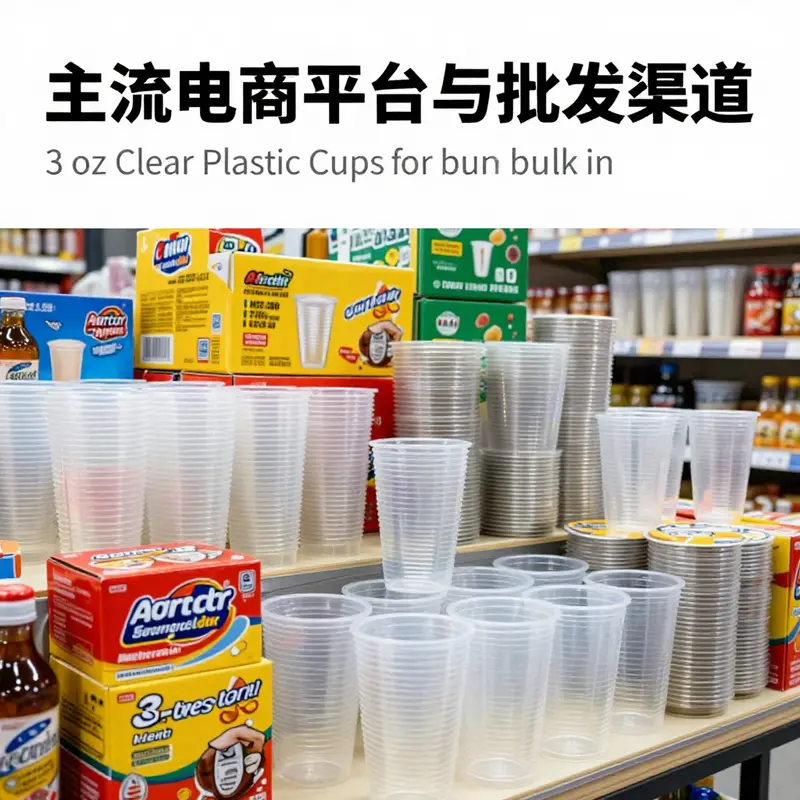
The bulk purchase of a simple 3 oz clear plastic cup involves more than price. This chapter outlines how to navigate marketplaces, evaluate materials, and structure a sourcing plan that minimizes risk while maximizing value. The typical bulk options sit on a continuum between PET- and PP-based cups, each with its own strengths: PET for clarity and rigidity, PP for toughness and heat tolerance. Both can be food-contact compliant when sourced with COAs and third-party verifications such as SGS. For procurement, start with a forecast, distinguish bulk manufacturers from consumer marketplaces, and assess MOQs, lead times, and customization options. Cost optimization comes from volume, but be mindful of storage, obsolescence, and cash flow. Customization can add value through branding but should be evaluated against incremental costs and potential impact on recyclability. A practical approach is to map your cup strategy to operating rhythms: confirm requirements, request documentation, sample products, verify acceptance criteria, and negotiate staged production. Finally, align packaging and logistics with your warehouse and distribution network to protect against damage and ensure predictable deliveries. The goal is a procurement path that combines clarity, compliance, and brand-consistent presentation while keeping total cost of ownership in check.
Bulk Precision with 3 oz Clear Plastic Cups: A Cohesive Guide to Materials, Design, and Supply Chain Wisdom
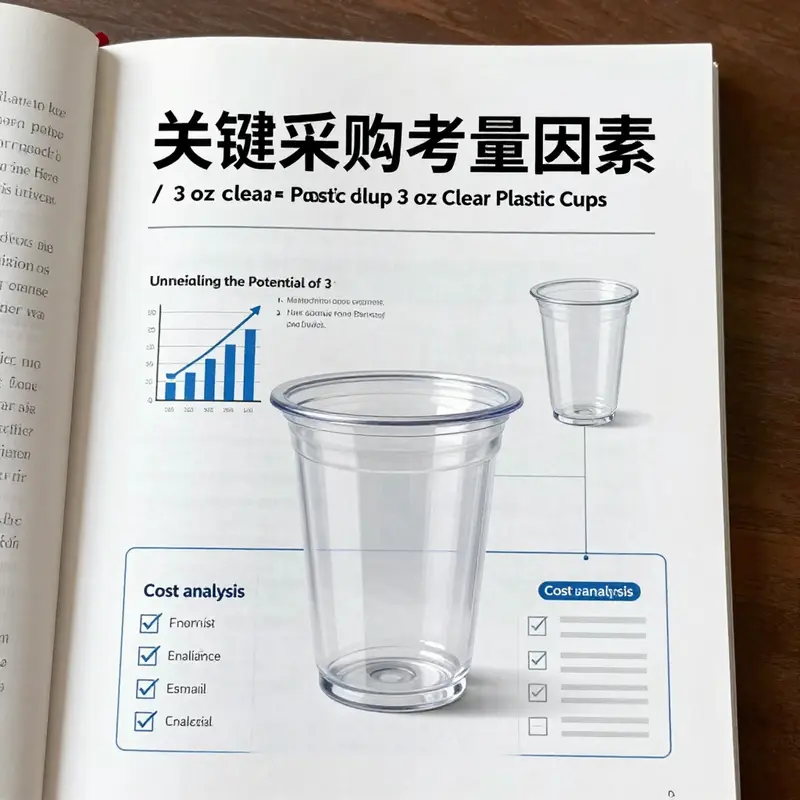
When a business looks to purchase 3 oz clear plastic cups in bulk, the decision landscape extends far beyond the sticker price on a carton. It is a decision about safety, performance, sustainability, and the way a simple beverage presentation can reinforce a brand story at scale. The journey from a hopeful inquiry to a confident bulk order winds through material science, engineering, certification, and logistics, all while balancing the realities of supplier risk and the realities of storage and transport. In this space, the tiniest cup becomes a testbed for a company’s procurement discipline: the willingness to demand data, to test prototypes, and to view cost through the lens of total value rather than unit price alone. The goal is not merely to fill an order but to foster a dependable supply chain that supports events, retailers, and food-service operations with consistent quality, predictable lead times, and a clear alignment to safety standards and consumer expectations.
Material selection is the foundation of that pursuit. In most markets the baseline materials for clear disposable cups are thermoplastics such as polypropylene (PP), polyethylene terephthalate (PET), and sometimes polystyrene (PS). Among these, PP emerges as the preferred option for many applications where a 3 oz cup might encounter temperatures at or near room temperature, or where a modest heat resilience is advantageous. PP offers robust chemical stability and a high degree of heat resistance, which makes it suitable for cold drinks and, in some designs, mildly warm beverages. It also tends to perform well in a wide range of environmental conditions—from coolers to humid conditions at an outdoor event. PET, by contrast, delivers exceptional clarity and rigidity, which can elevate beverage presentation; however, it can be more brittle in certain fall-and-bump scenarios and may require stricter handling during stacking and transport. PS, while noted for its high transparency and cost-effectiveness, carries limitations in hot-drink scenarios due to lower heat tolerance and potential off-gassing concerns under elevated temperatures. The guiding principle here is to choose materials that align with the intended use: cold or ambient beverages for PET or PP, hot beverages with careful design considerations for PP, and a careful, evidence-backed approach to PS where heat is not a factor.
With any bulk purchase, safety certifications are not optional adornments but essential guardrails. Food-contact materials must comply with regulatory frameworks that govern substances that can migrate into foods and drinks. In the United States, the Food and Drug Administration (FDA) oversees many of these standards, and in the European Union, a corresponding set of regulations applies. Responsible suppliers will readily provide COAs (Certificates of Analysis) and SGS reports that verify compliance with applicable safety standards. A prudent buyer treats these documents as living evidence rather than final paperwork; they should accompany each batch and be readily accessible to internal auditors, quality teams, and regulatory officers. The confidence born from tactile testing is reinforced when the supplier welcomes independent verification and is transparent about their raw materials, additives, and any potential additives used in manufacturing. This level of transparency mitigates risk as orders scale, ensuring that bulk acceptance does not become a blind leap into inconsistent quality.
The design of a 3 oz cup—its geometry, wall thickness, and rim structure—can be the difference between a flawless event and widespread product complaints. The wall thickness must be uniform across the cup to avoid weak spots that crack or deform during stacking or transport. A well-engineered cup often integrates a reinforced or wave-form rim profile that improves edge strength and reduces the likelihood of cracking under pressure from stacking or abrasion during handling. The body geometry matters as well: a tapered form that narrows toward the base can improve stacking density in cartons and on shelves, supporting efficient warehousing and logistics. Yet the same geometry must not compromise grip or spill resistance; a cup that feels insubstantial in hand invites slippage, especially when servers are multitasking at a bustling venue. Clarity, of course, remains central to the cup’s purpose. A cup that presents drink color and particle suspension with crystal-like sharpness enhances the consumer’s perception of quality. Imperfections—air bubbles, striations, or texturing that distorts view—undercut the intended visual appeal and can become a customer service issue in large-scale operations. The best designs harmonize transparency with durability, providing a glass-like appearance that still withstands the rigors of everyday use, distribution, and service.
A bulk buyer also weighs the practicalities of stacking and storage. In high-volume settings, the ability to stack cups efficiently translates into tangible savings in warehouse space and shipping costs. The most effective bulk cups employ a stacking-friendly profile, often leveraging a slightly flared lip and a taper that allows tight nesting without compromising ease of removal. The result is a balance: cups stack securely for transport and storage, yet users can extract individual cups quickly during service. The economics of bulk procurement hinge on this balance. While a lower unit price is enticing, it must be weighed against breakage rates, returns, and the overhead of damaged cups that cannot be used. A small, incremental improvement in durability or ease of handling can meaningfully reduce total waste and total cost over the life of a supply contract.
The procurement strategy itself matters as much as the materials. A prudent buyer starts with a clear spec: the cup’s diameter, wall thickness, rim design, and compatibility with widely available lids or closures if the operation calls for them. Even when a purchaser does not intend to use lids immediately, the option to add them later can simplify branding and beverage service in the future. Customization options—such as brand imprinting, color accents, or logos—exist to varying degrees across suppliers. Some manufacturers will accommodate branded sleeves or printed patterns, and others may offer a limited set of pre-decorated options, all of which influence the final price and minimum order quantities. For managers seeking branding synergy across events or retail points, customization can align with broader marketing strategies, reinforcing brand recognition as beverages travel from kitchen to customer hands. It is essential, however, to assess the incremental value of customization against the added cost and longer lead times. If the primary objective is reliable, cost-efficient service for a high-turnover operation, plain-clear cups often deliver the best mix of predictability and performance, with customization reserved for high-impact campaigns or flagship events.
Minimums and costs shape the practical path to bulk purchase. Wholesale channels often require substantial minimum order quantities, driven by manufacturing scale and the desire to optimize production runs. A common scenario features MOQs in the tens of thousands of units, yielding per-unit costs that are appealing only at scale. This is where a buyer’s planning discipline matters: align procurement with demand forecasts, storage capacity, and the anticipated lifetime of the product within the supply chain. For small- to mid-sized operations or trial periods, alternative channels exist that accommodate smaller runs. Marketplaces and vendor catalogs may offer lower-volume options, albeit at higher unit costs—yet they provide the flexibility needed to validate quality, test brand fit, and refine packaging and dispensing workflows without committing to a long, locked-in supply arrangement. The decision of which channel to use should be anchored in a clear cost-of-ownership calculation. Units priced at a premium can still deliver desirable outcomes if they significantly reduce waste, enhance customer satisfaction, or shorten time-to-service at peak demand.
Beyond price and performance, sustainability and end-of-life considerations have grown in prominence. Businesses increasingly prefer materials that are recyclable or have lower environmental footprints. PP and HDPE stand out as recyclable materials when properly identified and routed through recycling streams. Some buyers explore bio-based or recycled-content options that offer improved sustainability profiles without compromising safety and performance. The chapter of sustainability does not stop at the cup’s material. It extends to the packaging, shipping method, and the product’s lifecycle narrative. If a brand wants to emphasize its environmental commitments, it can incorporate messaging that aligns the cup with broader sustainability goals, positioning the product as part of a responsible and transparent supply chain. For example, a supplier might offer an eco-friendly option or even a custom labeling strategy that communicates recycling instructions or a brand’s environmental pledge. The combination of responsible material choice and clear recycling guidance helps the product speak to modern consumer expectations while maintaining practical, business-friendly economics.
A bulleted emphasis on practical steps helps translate theory into action without turning the chapter into a checklist. First, when evaluating materials, request COAs or SGS reports alongside the product data sheet, and examine the materials’ compatibility with your beverage program—whether the cups will be used for hot, cold, or mixed offerings. Second, examine wall thickness uniformity and rim durability; ask for samples and, if possible, perform a small-scale drop and stacking test to simulate real-world handling. Third, talk to the supplier about stackability features and carton configurations, ensuring the packaging aligns with warehouse racking, forklift handling, and loading dock processes. Fourth, calculate the total cost of ownership by considering expected breakage rates, return policies, and shipping costs across the procurement horizon. Fifth, explore sustainability options that do not compromise safety or integrity, and consider branding overlays that communicate environmental values to customers. Throughout, maintain a steady cadence of communication with suppliers to validate lead times, production capacity, and the degree of customization that aligns with your marketing calendar and events pipeline.
The decision-making process also benefits from a realistic view of the supply chain’s volatility. Bulk orders can be affected by raw material price fluctuations, manufacturing bottlenecks, or global shipping delays. A proactive buyer builds resilience by engaging multiple qualified suppliers, establishing clear criteria for quality acceptance, and maintaining a modest safety stock that accommodates unexpected surges in demand. This does not mean overstocking with obsolescent stock; it means creating a buffer that maintains service levels during disruptions. Such a strategy often pays off when a peak season, large event, or unexpected demand spike tests the system. The capacity to pivot between suppliers, while maintaining quality standards and compliance, marks a maturing procurement operation. It is this adaptability, more than any single attribute, that often distinguishes a reliable program from a reactive one.
In the broader context of the article, the conversation about 3 oz clear plastic cups in bulk intersects with the ethics of disposables and the practicalities of brand experience. The choice of cup not only carries functional implications but also communicates values about safety, sustainability, and design sensibility. A clear cup, by virtue of its visibility, becomes part of the beverage’s presentation. It frames the drink’s color, texture, and perceived quality. A cup that fails—through haze, leakage, or breakage—can undermine trust at a critical moment, whether the moment is a tasting event, a catered function, or a retail sample station. Those responsible for sourcing must, therefore, consider not only the cup’s raw performance but also how it performs in the hands of staff, how it feels in a customer’s grasp, and how it contributes to a brand’s narrative of reliability and care.
Within this cohesive framework, the procurement of 3 oz clear plastic cups bulk is best approached as a systems problem rather than a single purchase. The system includes material choice, regulatory compliance, design features, stackability, cost considerations, customization opportunities, sustainability commitments, supplier risk, and logistics. Each facet informs the others. A decision that optimizes cost while ignoring safety or regulatory compliance creates a hidden liability that could emerge as a quality incident or a regulatory audit issue. Conversely, a choice that prioritizes safety and sustainability but ignores supply chain practicality risks stockouts and missed opportunities in a fast-moving service environment. The art of bulk procurement lies in balancing these tensions so that every order reinforces a responsible supply chain while delivering the performance and aesthetics that customers expect.
In closing, the intelligent approach to acquiring 3 oz clear plastic cups in bulk is to view the cup as a instrument of service design—an element that must harmonize with the service workflow, branding strategy, and sustainability commitments of the organization. Materials, safety certifications, and design nuances converge to shape how a cup will perform in the hands of staff and customers. The most successful buyers do not chase the lowest price alone; they pursue the highest reliable value across quality, safety, logistics, and corporate values. They request data, test predictively, and negotiate terms that protect both quality and supply. They build flexibility into their supplier relationships so they can weather disruptions without sacrificing delivery performance or product integrity. And they remain mindful that even small cups can carry large responsibilities when deployed at scale. For readers who want a practical example of sustainable, eco-friendly disposables in a broader packaging strategy, see the linked resource that addresses paper-based cup options and lid compatibility as part of a holistic approach to environmentally responsible hospitality ware. disposable-eco-friendly-custom-paper-coffee-cups-with-lid.
Finally, as professionals consider the regulatory backbone that underpins all food-contact materials, it helps to consult authoritative guidelines to ensure ongoing compliance through the life of a bulk program. For authoritative guidance on food-contact materials and safety, refer to the FDA’s official resources on food-contact materials: https://www.fda.gov/food-contact-materials. This external reference anchors the practical, supplier-driven diligence described above in recognized regulatory standards and reinforces the commitment to safe, responsible, and sustainable dispensing at scale.
Bulk Clarity, Built for Scale: A Comprehensive Guide to 3 oz Clear Plastic Cups in Bulk

The appeal of a 3-ounce, clear plastic cup in bulk is easy to quantify once you look beyond the surface. In many professional settings—laboratories, tasting events, promotional campaigns, medical clinics, or small- to mid-size catering operations—the need for a compact, reliable, visually unobtrusive container is a strategic decision, not merely a logistical convenience. A clear 3 oz cup is small enough to serve as an elegant sample vessel, but sturdy enough to hold liquids, sauces, or syrups without warping or leaking under typical service conditions. When you scale up from a handful to thousands or tens of thousands, a subtle shift happens in how you think about cost, safety, and operational risk. The journey from ideation to a bulk order is less about chasing the lowest price and more about aligning material science with compliance, packaging logistics, and the expectations of a brand’s audience. The narrative here proceeds as a practical, integrated exploration of what it takes to select and source these cups at scale while preserving clarity, reliability, and value.
The central premise of bulk selection rests on three pillars: material performance, regulatory compliance, and total cost of ownership. In small batches, you might prioritize novelty or a particular aesthetic. In bulk, you must anticipate the extremes: the need for uniform clarity across every unit, predictable tolerances in cap seating, and a supply chain that can weather fluctuations in demand. The materials that dominate the category—PP and PET—offer distinct advantages and trade-offs that matter more when your order size climbs into the thousands. Polypropylene, known for its heat resistance and resilience, can handle warm beverages if the use case necessitates it, though many 3 oz cups in this segment are primarily associated with cold drinks or samples. PET, by contrast, is prized for rigidity and optical clarity, ensuring that beverages and contents look as appealing as they appear in the mind’s eye of a consumer. The practical takeaway is this: the choice of material isn’t merely about taste or appearance; it is a performance choice that shapes user experience, waste, and even the environmental footprint of the event or operation.
The regulatory dimension is the quiet, non-negotiable backbone of bulk sourcing. Food-contact safety standards, from local health regulations to broader FDA and EU benchmarks, set the floor for what you can legally serve when you distribute cups in bulk. These standards govern not only the materials themselves but also migration limits and safety assurances that a supplier must demonstrate. For any business planning to place large-scale orders, due diligence in compliance is not optional; it is a safeguard that protects customers, brand integrity, and long-term viability. The typical path to confidence involves obtaining third-party certifications or certificates of analysis that verify that the cup material, the inks used for branding if any, and the overall composition meet applicable standards. In practice, this means requesting documentation such as SGS reports or equivalent compliance verification from the supplier before production begins. When the scale increases, the ability to reproduce consistent safety profiles across thousands of units becomes a defining factor in choosing a supplier.
The economics of bulk purchasing hinge on a careful balance between unit cost and the reliability of the supply chain. The wholesale model often uses a high minimum order quantity (MOQ) to secure price discipline and production efficiency. A bulk supplier may offer 20,000 units or more at a price per unit in the cent range, which reduces the cost substantially compared with small pack purchases. But the larger the MOQ, the greater the risk if demand forecasts prove off. Smart buyers build a staged plan: they begin with a controlled sample run to validate fit, feel, and performance, then expand to a bulk installment that aligns with a projected consumption curve. This staged approach also enables branding considerations, such as the ability to print logos or other identifiers on a portion of the batch for testing market reception before committing to a full private-label run. The calculus thus becomes a blend of demand planning, production lead times, and the ability to absorb the cost of inventory overhang while maintaining cash flow. The total cost of ownership also includes shipping, which is a critical variable when orders run into tens of thousands. In bulk, even small differences in packaging configuration or palletization can translate into meaningful savings or longer lead times. The practical objective is to secure a reliable, consistent supply that minimizes total landed cost while maximizing predictability of delivery schedules and quality.
Understanding the material nuances helps in aligning the product with the intended use. PP and PET offer distinct properties that become more consequential with bulk orders. PP’s heat resistance makes it a sensible choice if there is any chance the cup will encounter warm or hot beverages, or if there is a need to withstand incidental microwaving or exposure to fleeting warmth during service. Even when hot usage is marginal, PP’s resilience against warping and its relatively forgiving shelf life can justify its selection for mixed-use environments. PET’s superior clarity enhances the visual presentation of drinks, sauces, or samples and holds its shape with good rigidity, reducing the risk of deformation during transport and service. However, PET is sometimes more rigid, which can translate into a higher incidence of breakage in mishandled logistics if not packaged properly. The material selection, therefore, becomes a balancing act: you favor clarity and rigidity for certain applications, or you opt for heat tolerance and resilience for others. A comprehensive evaluation often ends with a hybrid decision: for a single bulk order, a clear preference is established for one material, but procurement teams may preserve flexibility by maintaining multiple SKUs optimized for different service contexts in the same bulk program.
As buyers weigh these material choices, environmental considerations increasingly enter the decision matrix. The modern bulk buyer is as much an environmental steward as a cost-conscious operator. Biodegradable or compostable options—often PLA-based—offer a path toward reduced long-term environmental impact, but they also introduce questions about performance under intended disposal conditions and real-world composting infrastructure. For events and venues that emphasize sustainability, such cups can enhance brand perception and align with procurement policies that prioritize recyclable or compostable plastics. Yet it is essential to scrutinize end-of-life assumptions: industrial composting facilities, regional recycling capabilities, and consumer behavior all influence outcomes more than the cup’s appearance in a photo. In this arena, the market provides a range of alternatives that can be integrated into bulk programs, but buyers must verify that the chosen option holds up to the practical realities of their event or operation—from the kitchen to the curbside. The takeaway is that eco-friendly choices are not a marketing prop; they require rigorous assessment of disposal infrastructure and lifecycle performance.
The bulk packaging dynamics introduce another layer of complexity. Bulk buyers must consider not only the per-unit cost but the packaging configuration, the ease of handling, and the logistics footprint. A typical bulk program contemplates multiple packaging options: a supply of cases suitable for direct restocking in kitchens or bars, a second tier of cases optimized for take-away or event distribution, and a third tier of smaller, test-friendly packs that allow quick market testing or consumer sampling without committing to a large inventory. The packaging configuration—whether cups come in sealed cartons, interleaved stacks, or nested sets—affects both the risk of damage and the speed at which staff can retrieve cups during service. In service environments, predictability and speed are as valuable as price, because efficiency translates to a smoother guest experience, less waste, and better throughput during peak times. The bulk program must therefore harmonize cost with service reliability, and this requires close coordination with the supplier on pallet size, carton count, and labeling standards that support efficient warehouse handling and accurate inventory management.
Beyond the structural considerations of materials, compliance, and packaging, the practical realities of supplier selection grow clear when you start to quantify the trade-offs between different sourcing channels. In bulk, reliability matters as much as price. A supplier who can deliver on a consistent schedule reduces the risk of stockouts that disrupt menus or event timelines. Conversely, a supplier with a wider product ecosystem—capable of supplying related bulk items such as lids, straw inserts, or compatible sleeve packaging—offers the advantage of procurement consolidation, reduced logistics complexity, and the potential for better overall negotiation terms. The decision framework here leans toward building a relationship with a supplier who can provide not just a single cup SKU but a robust, scalable platform that supports growth across products and use cases. When the relationship is broad, it is easier to manage long-term contracts, forecast demand, and coordinate with packaging and branding teams to ensure a unified customer-facing experience. In this sense, bulk sourcing becomes as much about strategic partnerships as it is about achieving the lowest possible unit price.
Branding and customization are practical levers that distinguish bulk programs in crowded markets. A company that wants to imprint a logo, color scheme, or seasonal artwork on its cups must consider the degree of customization offered by suppliers. Custom printing on 3 oz cups is feasible with many bulk vendors, though the scope and cost scale with the level of detail and color complexity. Customization can be a powerful driver of brand recall at events, in tasting stations, or during product launches, but it should be configured with attention to lead times and minimums. A pragmatic approach is to pilot a customized subset of the bulk run, learn from consumer feedback, and then extend the program if the response proves favorable. The practical implications are clear: customization adds marketing value but can also introduce lead times and budgetary constraints that need to be integrated into the overall sourcing plan. Those who want to explore branding options may choose to consult internal resources that focus on logo application and packaging customization. For teams exploring branding on bulk cups, a practical example of customization is available in the internal resource that outlines private labeling opportunities for disposable beverageware. You can explore this further through the linked guide with anchor text such as custom-logo disposable kraft paper cups with lids to understand how branding ecosystems extend beyond the cup itself and into the broader packaging and presentation strategy.
In the realm of supplier evaluation, the focus shifts from just affordability to the holistic risk profile. A robust evaluation framework weighs material safety certifications, supplier reliability, and after-sales support as heavily as price. The process becomes a disciplined one: assess the supplier’s track record for quality consistency, confirm that the requested regulatory documentation is readily available, and verify the supplier’s capacity to scale up production in response to demand surges. It is also prudent to review the supplier’s approach to contamination risk, manufacturing controls, and contingency planning for supply interruptions. A well-managed bulk program incorporates periodic quality checks, clear communication channels, and a transparent escalation path should defects appear. The result is a procurement relationship that is not only about price but about the confidence to deliver a seamless user experience across thousands of service events and retail deployments.
Looking forward, it is essential to acknowledge that the market for 3 oz clear cups in bulk will continue to evolve. The interplay between material science, environmental considerations, and supply chain resilience will shape how organizations plan, budget, and execute bulk orders. Buyers should stay attuned to changes in regulatory expectations, shifts in consumer preferences for sustainability, and innovations in manufacturing that might alter the balance of price and performance. The best practice is to remain adaptable: maintain a core bulk SKU that certifiably meets safety standards, while retaining flexibility to test alternative materials or formats that may emerge as better aligned with environmental goals or new service models. This adaptive posture, coupled with a rigorous procurement framework, enables teams to maintain clarity and consistency in their offerings while controlling costs and ensuring customer safety.
The broader lesson from this exploration is consistent and practical: bulk purchases of 3 oz clear plastic cups require more than a price comparison. They demand a holistic view that accounts for material behavior, regulatory compliance, packaging efficiency, environmental responsibility, and strategic supplier partnerships. When these dimensions are aligned, the result is not merely a lower unit cost but a more reliable capability to deliver consistent, high-quality experiences at scale. The cups become the quiet backbone of efficient, compliant operations that can support everything from a small tasting event to ongoing consumer engagements across multiple channels. The path to success lies in a thoughtful, staged approach to procurement, a clear understanding of the end-use environment, and a disciplined focus on safety and reliability as the foundations of value.
As you close the chapter on bulk considerations for 3 oz clear plastic cups, remember that the right choice is not always the cheapest in the short term. It is the option that best harmonizes material performance with regulatory compliance, packaging practicality, and the brand’s sustainability and customer experience objectives. The best bulk program integrates these dimensions so that every cup not only holds a liquid but also communicates a promise of quality and trust to the consumer who will hold it in their hand. And in a world where every detail can influence a guest’s impression, that clarity—both literal and figurative—matters more than ever.
If you are seeking further guidance on branding and customization as part of a broader bulk program, you can explore a practical resource that discusses logo printing and private labeling for disposable cups. This internal reference provides actionable steps for integrating branding into bulk beverageware and demonstrates how customization can be effectively scaled alongside core cup procurement. custom-logo disposable kraft paper cups with lids
To round out the external landscape of bulk options, a current catalog of bulk cup offerings provides broader visibility into material options and pricing dynamics. This external resource offers a snapshot of the market’s range, including large-volume configurations, material choices, and basic compliance cues. For readers who want to review the landscape from a procurement perspective, the catalog can be accessed here: https://www.alibaba.com/product-detail/Clear-3-Oz-Plastic-Cups-Bulk-4191600587238239.html?spm=a2700.galleryofferlist.pc11&scm=1007.13013.114267.0&urlId=114267. This external reference helps situate the internal considerations within the broader market context, offering a concrete sense of what bulk pricing and lead times can look like when you engage with a wide range of suppliers. By combining the internal branding-focused resource with an awareness of external market dynamics, buyers can navigate the bulk space with greater confidence and strategic foresight.
Final thoughts
In conclusion, the selection of 3 oz clear plastic cups in bulk can significantly impact the operational efficiency of beverage-related businesses. By leveraging the main e-commerce platforms and keeping key procurement considerations in mind, companies can secure high-quality products that align with their brand values and customer needs. Whether for everyday use or special events, these cups offer a blend of functionality and style that can enhance the overall service experience. Make informed choices, and your customers will appreciate every sip.