
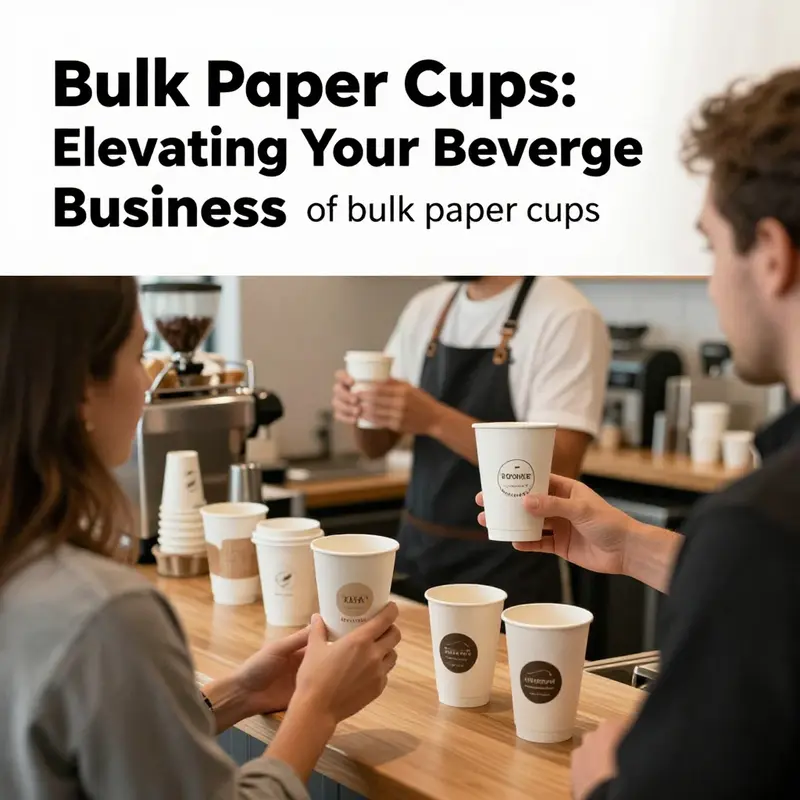
In the bustling world of beverage service, from bubble tea shops to catering services, bulk paper cups are essential for any business that values quality and customer convenience. Sourcing these cups from reliable manufacturers is not just about ensuring quality; it’s about aligning your needs with suppliers who understand your operational challenges. Over the following chapters, we will explore the intricacies of selecting the right supplier, the benefits of customization and manufacturing, the economic advantages of purchasing in bulk, and the vital environmental considerations that accompany your choices. This comprehensive guide aims to equip you with the knowledge to make informed decisions that can enhance your business’s efficiency, sustainability, and customer satisfaction.
Strategic Supplier Selection for Bulk Paper Cups: Balancing Quality, Compliance, and Scale
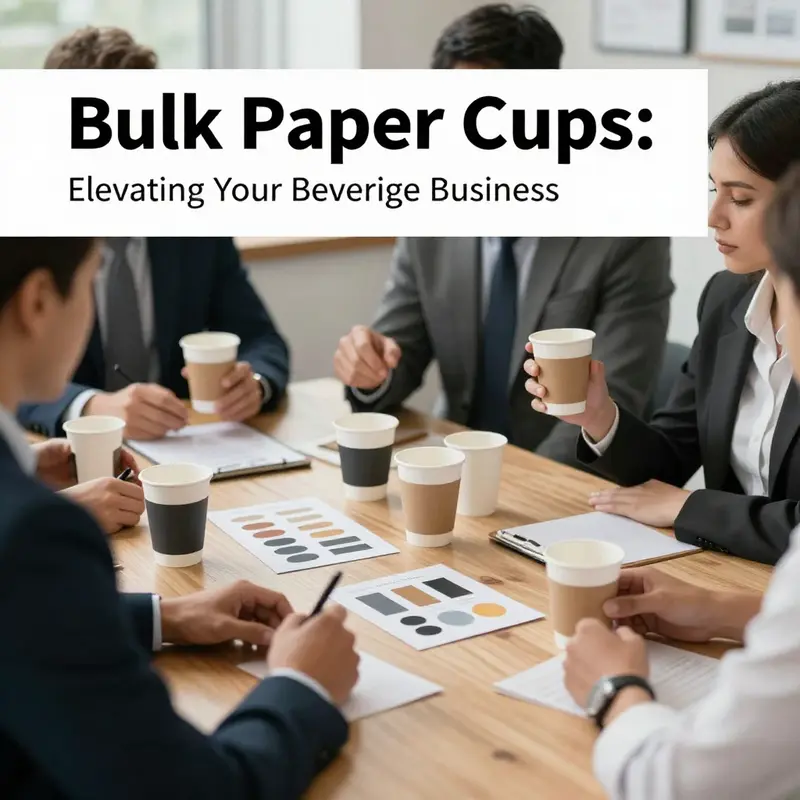
Sourcing bulk paper cups for a business line is more than a price exercise. It is a strategic decision that shapes product quality, brand integrity, and operational resilience. When a café, catering operation, or corporate event program commits to a steady stream of disposable cups, they commit to a supplier relationship that must deliver consistent performance under pressure. The best partnerships are built on a shared understanding of scale, safety, and sustainability, with a vendor ecosystem that supports both immediate needs and long-term brand ambitions. In this sense, supplier selection becomes a core competency of procurement strategy, one that blends measurable performance with a clear-eyed view of market dynamics and regulatory expectations. The chapter that follows invites readers to move beyond unit costs and toward a disciplined framework for choosing bulk paper cup suppliers that can grow with a business while maintaining the trust of customers and regulators alike.
The global landscape for bulk paper cup production has long rested on the efficiencies of large, integrated manufacturing hubs. China remains the dominant source for disposable cups, thanks to highly specialized industrial clusters and end-to-end facilities. In practice, provinces such as Guangdong, Zhejiang, and others have evolved into ecosystems that handle every step of the supply chain—from raw pulp processing or recycled fiber intake to final packaging and export logistics. This vertical integration drives not only lower per-unit costs but also shorter lead times, a critical advantage when demand spikes or seasonal promotions demand rapid replenishment. For businesses evaluating potential suppliers, recognizing these regional advantages helps frame a realistic expectation about throughput, customization capabilities, and the ability to sustain large-volume orders without compromising quality. The proximity of major ports—Shenzhen, Ningbo, and Shanghai—further enhances export reliability, ensuring that bulk orders reach global markets with predictable timing and reduced risk of stockouts.
But not all supplier evaluations should hinge on geographic strength alone. In fact, the most durable partnerships combine regional efficiency with a rigorous, transparent performance framework. Leading suppliers typically demonstrate several non-negotiable capabilities that translate directly into business value: dependable on-time delivery, prompt responsiveness, robust production capacity, and a track record of repeat orders that signals long-term customer satisfaction. A practical benchmark for on-time delivery is a rate above 90 percent; a responsive supplier often maintains sub-four-hour response times to inquiries and issues. These metrics matter not because they make for flashy dashboards, but because they reduce the risk of missed restaurant openings, late catering deliveries, or disrupted event schedules. A distributor who can respond quickly to a quality issue or a packaging change can save a business from operational confusion and customer dissatisfaction.
Within this performance framework, it is essential to align supplier capabilities with the specific cup type and application. Single-wall and double-wall cups require different levels of process control, coating quality, and structural integrity. Ripple or compostable variants introduce additional considerations around coatings and fiber content. Each cup specification carries its own testing regime, certification prerequisites, and compatibility with lids or accessories. For buyers, this means a deliberate alignment of supplier capabilities with product requirements, not merely a preference for the lowest price. It also means acknowledging that some suppliers may excel at high-volume production while offering limited customization, whereas others may lead in design and branding but with longer lead times. A balanced sourcing approach recognizes these trade-offs and seeks partners that can deliver both reliability and value.
In practice, supplier selection hinges on a few core criteria that translate into measurable outcomes. First is material safety and regulatory compliance. Buyers should verify food-contact certifications and standards from credible authorities. FDA compliance in the United States, EU Food Contact Material regulations, and FSC certification for responsibly sourced pulp are among the most common and consequential requirements. In addition, compostability certifications such as OK Compost or TÜV Austria provide buyers with confidence that the product aligns with evolving environmental expectations. The presence of these certifications is not merely a checkbox; it signals a supplier’s ongoing investment in compliant processes, traceable supply chains, and transparent material declarations.
Second, durability and performance under hot and cold conditions matter. A bulk order must withstand the rigors of daily service—from hot coffee to cold beverages—without leakage or delamination. The evaluation should also cover the quality of the inner lining, the strength of the cup wall, and the integrity of any coatings. These attributes directly impact customer satisfaction and reduce the risk of returns or waste. Third, capacity and scalability are essential. A supplier should be able to produce single-wall, double-wall, ripple, and compostable variants in volumes that align with the business’s growth forecasts. Modern suppliers often run semi-automated to fully automated forming lines capable of monthly outputs ranging from tens of millions to well over a hundred million units. A genuine capacity assessment helps avoid scenarios where a vendor promises the moon but delivers only during a narrow window of demand.
The performance narrative becomes more tangible when a buyer can point to specific supplier capabilities. For example, a partner that maintains an almost perfect on-time delivery record and a consistently short response time is not simply reliable; they provide a predictable operating rhythm. The ability to respond within a few hours to questions about material safety data sheets, certification documentation, or customization options indicates a robust customer service infrastructure. Equally important is a high reorder rate, which reflects a proven track record of satisfaction and enduring partnerships. A high reorder rate signals that a supplier can meet ongoing demand while maintaining quality and lead-time commitments across multiple purchase cycles. In the real world, such performance creates a compounding effect on procurement efficiency: fewer supplier changes, reduced risk of supply disruption, and greater leverage for pricing and customization across larger volumes.
Sustainability has moved from a competitive differentiator to a non-negotiable expectation. Responsible suppliers invest in cleaner production, recycled content, and reduced plastic coatings where feasible. They pursue certifications and publish verifiable data about fiber sourcing, coating alternatives, and end-of-life options. For many buyers, this translates into a broader set of decisions that includes not only the cup itself but the entire packaging ecosystem. The choice of cup must integrate with lid compatibility, sleeve options, and even secondary packaging materials to minimize waste and optimize energy use across the supply chain. A supplier committed to sustainability is typically more transparent about its supply chain practices, often welcoming third-party audits and providing access to sustainability reports and material declarations. These attributes help businesses communicate credible environmental claims to customers and regulators alike, a critical factor as green branding becomes a strategic differentiator in crowded markets.
The decision to engage with a supplier is also a decision about process and relationship management. A robust procurement process begins with clear communication of requirements and ends with a formal onboarding that aligns quality management systems, supplier scorecards, and risk management protocols. The starting point is a well-scoped request for information (RFI) or request for quotation (RFQ) that captures not only price but also lead times, MOQs, cancellation terms, and contingency options. For many buyers, a pilot order or sample run serves as the practical test of a supplier’s capabilities. The evaluation should consider the speed and quality of samples, the accuracy of product specifications, and the supplier’s willingness to accommodate design changes or branding requests. A sample-driven validation helps avoid expensive missteps later in the relationship, especially when customization or branding is involved.
Beyond the mechanics of procurement, the supplier relationship must be governed by clear communication channels and performance expectations. A simple but effective practice is to establish a quarterly review regime that covers on-time delivery, defect rates, response times, and feedback loops from internal teams such as procurement, operations, and marketing. In highly dynamic environments—like coffee shops rolling out seasonal beverages or event programs with tight launch timelines—this cadence can prevent drift between expectations and reality. A practical approach is to pair a measurable scorecard with a qualitative feedback mechanism that captures supplier responsiveness, willingness to propose risk-mitigation strategies, and the quality of color-matching and branding during customization. This dual lens—quantitative metrics plus qualitative insight—enables a partnership that learns and improves with every order.
For buyers exploring supplier options, the market often feels fragmented. A practical path forward is to combine regional strength with global reach. Chinese hubs offer unmatched scale and cost efficiency, but buyers should also assess a supplier’s export readiness, logistics capabilities, and ability to meet diverse documentation requirements for global shipments. Platforms that provide verified supplier profiles, detailed product specifications, and real-time pricing data can accelerate the sourcing process and improve due diligence. A useful tactic is to cross-check supplier capabilities against a few practical criteria: certification scope, the existence of end-to-end production lines, and the presence of a formal quality assurance program that includes incoming material checks, in-process inspection, and pre-shipment testing. In addition, buyers should assess whether the supplier can support branding and packaging customization at scale without compromising throughput. Some suppliers offer branded printing, lids, and varying wall thicknesses in the 180–280 gsm range, enabling enterprises to communicate a consistent brand story from the cup to the lid.
The procurement journey also benefits from a pragmatic view of MOQs. For larger operators, MOQs may be a readiness test—do the supplier’s minimum quantities align with forecasted demand and buffer stocking strategies? For smaller pilots or trial runs, a supplier who tolerates lower MOQs can reduce the cost of experimentation and enable faster learning. In between, a tiered approach—starting with a modest initial order, followed by staged increases tied to sales performance and seasonal cycles—can minimize risk while preserving negotiation leverage. It is worth noting that some prominent suppliers have built reputations for reliable delivery and rapid support even at high volumes. When evaluating such partners, it is reasonable to expect a robust capacity to scale orders while maintaining consistency in cup dimensions, wall thickness, and coating integrity.
As buyers build their supplier matrix, there is value in referencing proven performance markers while keeping an eye on supplier-specific differentiation. For instance, certain companies in the core manufacturing regions have demonstrated the ability to manage integrated operations with short lead times and strong quality control. A partner that sustains a near-perfect on-time delivery record and responds within a few hours to inquiries signals a mature operations network and a customer-first service ethos. Another virtue is the ability to support repeat orders at consistent specifications, which reduces the administrative burden of product revisions and requalifications. When a supplier can combine these capabilities with a transparent sustainability profile, the resulting value proposition becomes compelling for brands seeking to align operational excellence with environmental stewardship.
In practice, a buyer’s path to supplier selection often includes a targeted exploration of customization options. Custom branding, color fidelity, and graphic stability during heat exposure require cooperative product development. Some suppliers are particularly adept at integrating branding into the cup design without compromising performance or recyclability. This is where a close collaboration with the supplier’s technical team can pay dividends. Early-stage joint development, including mock-ups and performance testing under a range of temperatures and beverage types, helps ensure that the final product delivers the intended brand experience and consumer satisfaction. When branding is a priority, the organization should evaluate a supplier’s capacity for color matching, printing resilience under heat, and the durability of any decorative coatings.
A practical sourcing strategy for many buyers is to anchor the supplier base around a core group of proven partners while maintaining a short list of alternates to mitigate risk. This approach supports continuity during supply chain disruptions and provides leverage for pricing and terms negotiations. It is also prudent to leverage procurement platforms that facilitate supplier verification, detailed specifications, and real-time pricing data. The smart buyer uses these tools not merely to compare quotes but to validate commitments, align expectations, and ensure that the chosen partner can sustain a brand’s service level during peak demand. The process should culminate in a formal supplier onboarding that codifies quality management expectations, communication channels, and escalation procedures. This onboarding creates a governance framework that sustains the relationship and reduces the chance of miscommunication or misalignment as business needs evolve.
Embedded within this framework is a simple truth: the bulk cup category is a shared risk and shared opportunity. The most resilient supply chains depend on partners who can deliver not only great cups but also predictability, transparency, and collaborative problem-solving. The right supplier is not the one who offers the lowest unit price alone, but the partner who can consistently meet agreed specifications, respond to questions promptly, and scale with the business as it grows. That combination—quality, reliability, and scalability—turns a supplier into a strategic asset, capable of supporting a brand’s growth trajectory while maintaining consumer trust and regulatory compliance.
If you are exploring concrete options to begin this journey, consider starting with bulk options that allow for branding and sizing experimentation. The following wholesale option has been cited in procurement discussions for its balance of size range and customization potential: Wholesale take-away 8oz-12oz disposable coffee paper cup with lids. This can serve as a practical benchmark for MOQs, lead times, and the feasibility of branding programs at scale. As you move from exploration to selection, maintain a living scorecard that captures both objective performance metrics and subjective stakeholder feedback. A disciplined, data-driven approach will help ensure that the chosen supplier not only meets today’s demand but also supports tomorrow’s growth, sustainability goals, and brand commitments.
External resource for further verification and supplier options: https://www.alibaba.com/showroom/paper-cups.html
Bulk Paper Cups: Scale, Style, and Sustainable Sourcing for Business
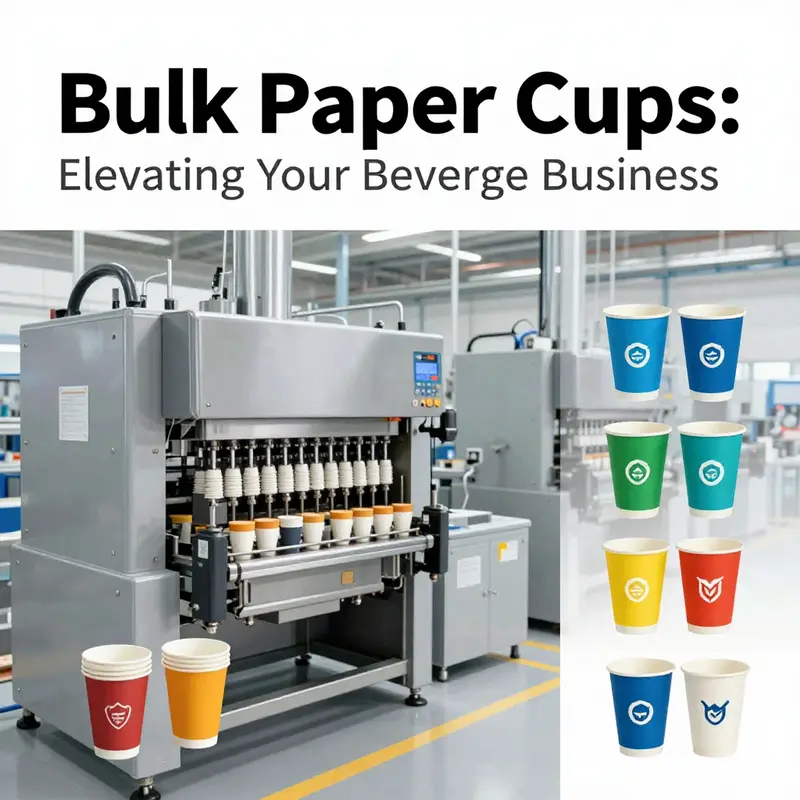
Bulk paper cups sit at the intersection of efficiency, brand expression, and environmental responsibility for today’s businesses. This chapter presents how manufacturing precision, material science, and customization converge to deliver cups that perform under pressure, reflect a brand, and align with sustainability goals.
For buyers, the focus is on dependable supply chains, predictable lead times, and scalable strategies that support large events and seasonal campaigns. The supply chain is global, with significant production in Asia, and careful supplier qualification, quality assurance, and total cost of ownership considerations shaping procurement decisions. The journey from pulp to cup involves choices about wall thickness, coatings, printing capabilities, and compatibility with recyclable streams. Customization options extend to branding, form factors, and packaging configurations, with attention to MOQs and cost trade-offs.
A practical sourcing approach treats suppliers as partners, seeking material safety certifications, robust quality systems, and capacity to meet high-volume demand. In an era of evolving packaging regulations and consumer expectations, bulk cups are not just a utility but a platform for brand storytelling, sustainability messaging, and operational efficiency.
Bulk Paper Cups: Economies of Scale, Profit, and Brand Resilience
Bulk cup purchasing can reduce unit costs, stabilize inventories, and support stronger branding across locations. By shifting from many small orders to coordinated, higher-volume purchases, a business can lower price per cup, improve delivery consistency, and free capital for growth initiatives. This chapter outlines four core dimensions to evaluate: unit economics, supply-chain reliability, branding opportunities, and scalability. It also offers practical steps for selecting suppliers, setting realistic MOQs, running pilots, and measuring outcomes to ensure that bulk purchasing aligns with profitability and brand strategy.
Rethinking Bulk Paper Cups for Business: Aligning Everyday Convenience with a Measurable Environmental Footprint
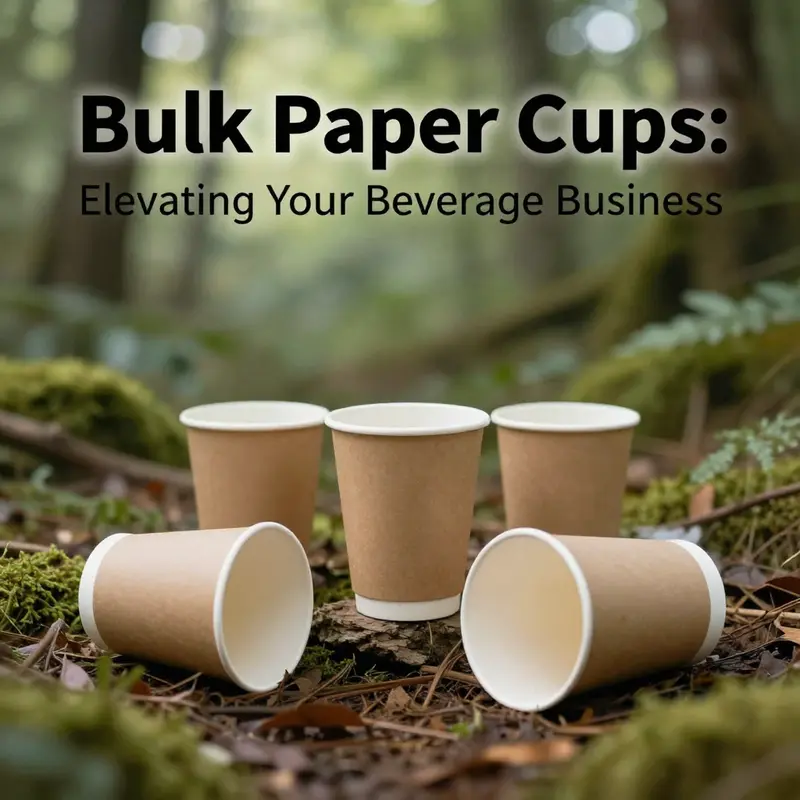
Every day, across offices, cafeterias, event spaces, and drive-thrus, bulk paper cups carry more than just coffee or tea. They carry implications for forests, air quality, and waste streams that accumulate far beyond the moment the cup is emptied. For businesses aiming to serve customers efficiently while upholding responsible practices, the environmental footprint of bulk paper cups is no longer a peripheral concern but a core element of procurement strategy. The journey from tree to to-go cup is long and multifaceted, touching every link in the chain—from forest management and pulp production to manufacturing choices, shipping logistics, and end-of-life outcomes. Understanding this journey is essential for making decisions that balance cost, performance, and planet-friendly credentials. In practice, this means asking hard questions about where pulp comes from, how the cup is made, what kind of coating protects against leaks, and how the cup is disposed of after use. It also means recognizing that the most sustainable option is not always the option with the most attractive sticker or the lowest sticker price, but the one that demonstrates verifiable environmental responsibility across a complete lifecycle.
Deforestation remains a pivotal concern in the sourcing of pulp for paper cups. While forests provide critical biodiversity and climate-regulating services, unchecked harvesting can lead to habitat loss and ecosystem disruption. Certification schemes such as the Forest Stewardship Council (FSC) and the Programme for the Endorsement of Forest Certification (PEFC) offer frameworks to verify that pulp originates from well-managed forests with appropriate safeguards for wildlife, water quality, and indigenous communities. When a supplier can point to FSC or PEFC certification, it creates a traceable narrative of responsible forestry that most buyers cannot easily replicate by accident. For procurement teams, asking for credible forest certifications is not merely a box to check; it’s a practical step toward mitigating deforestation risk and aligning with corporate sustainability commitments.
Carbon emissions trace a parallel thread through the lifecycle of a paper cup. Emissions surge during pulping, papermaking, and finishing, and they resurface in distribution when cups traverse long distances from manufacturing hubs to end users. In bulk purchasing, a common pitfall is to optimize for immediate unit cost without accounting for the climate impact embedded in transport and energy use. The bulk supply ecosystem, especially in regions with dense manufacturing hubs, can minimize lead times and unit costs, yet it also concentrates emissions in a narrow corridor of production. Businesses thinking long term recognize the value of selecting suppliers who quantify energy intensity and who actively reduce their carbon footprint through efficiency measures, renewable energy integration, and smarter logistics.
Waste management presents one of the most tangible environmental challenges associated with traditional paper cups. Many cups rely on a polyethylene or other plastic lining to prevent leakage and maintain structural integrity when hot beverages are filled. That plastic barrier, while functional, complicates recycling and complicates the circularity equation. In many jurisdictions, single-use cups with plastic barriers are not accepted by curbside recyclers, or they require specialized facilities that are not universally available. The result is a material that is frequently diverted to landfill rather than recovered, contributing to methane emissions and resource waste. Recognizing this, manufacturers and researchers are accelerating the development of compostable coatings and barrier materials that can decouple usability from waste tradeoffs.
Compostable alternatives, particularly those based on plant-derived polymers such as polylactic acid (PLA), represent a meaningful shift in the industry. When managed within properly equipped industrial composting streams, these coatings can break down more quickly than conventional plastics and reduce long-term environmental persistence. Yet compostability is not a universal fix. The reality is that composting infrastructure varies by region, and consumer education about compostable cups remains uneven. To realize the potential climate and waste benefits, businesses must pair compostable cup options with accessible composting pathways, clear labeling, and a commitment to verifying composting outcomes through certifications or third-party audits.
Beyond compostability, there is a growing emphasis on recyclability. A cup with a recyclable coating or a single-material design simplifies recovery at end of life. The trade-off, however, often lies in performance under hot liquid exposure. Solutions that successfully balance leak resistance with recyclability require careful material science and rigorous testing. For businesses, the key is to seek cups that are backed by transparent life-cycle analyses and independent certification, offering a credible picture of their end-of-life fate rather than promising performance in isolation. In parallel, adopting cups made from recycled content or from fiber sources that are third-party certified can contribute to a broader circular economy, provided that the supply chain supports effective recycling channels.
Sustainable sourcing also depends on how the cups are produced. A growing number of manufacturers invest in renewable energy on-site, aiming to reduce process-related emissions. Water stewardship becomes particularly relevant in papermaking, where substantial volumes of water are used in pulping, bleaching, and finishing. Forward-looking suppliers implement water-saving technologies, closed-loop cooling systems, and advanced effluent treatment to minimize environmental impact. For buyers, these practices matter not only for their green credentials but also for resilience. Plants that minimize water withdrawal or that reuse process water tend to weather droughts and regulatory fluctuations more gracefully, ensuring more stable supply and consistent quality for bulk orders.
Design for efficiency plays a surprisingly large role in environmental performance. The structural architecture of a cup—its wall thickness, stiffness, and whether it uses two-piece or single-wall construction—affects material use, transport weight, and durability under heat. Contemporary designs aim to achieve required performance with the least possible material without compromising leak resistance or user experience. Weight reductions translate into lower shipping emissions, since bulk orders move more efficiently per pallet and per container. In some regions, the typical material range for food-grade paperboard falls between 180 and 280 gsm, a span that provides a useful balance between rigidity and resource use. The most sustainable approach is to select a design that aligns with the cup’s intended service life and the anticipated handling conditions in a given business context.
The business case for sustainability in bulk cups extends beyond compliance or philanthropy. Consumer sentiment increasingly rewards brands that demonstrate environmental responsibility through packaging choices. A 2025 report by the Ellen MacArthur Foundation highlights that a substantial majority of consumers are more likely to support brands that communicate clear environmental responsibility, including packaging decisions. This trend translates into real commercial value: sustainable cup solutions can differentiate a business, strengthen customer loyalty, and even attract a workforce that values ethical supply chains. For busy operations, the implication is straightforward—invest in credible packaging innovations and supply-chain transparency, and communicate those efforts in a way that is accessible to customers at the point of sale or service.
When contemplating supplier options, buyers should look for credible certifications and verifiable performance data rather than marketing claims alone. Material safety standards must be met through food-grade certifications, while environmental compliance should be demonstrable through third-party audits, lifecycle assessments, and transparent reporting on energy and water use. In addition, the procurement process benefits from evaluating the total cost of ownership, not just unit price. A higher upfront cost for a cup that uses less material, integrates renewable energy, and ends up in a well-functioning recycling or composting stream can yield savings in waste disposal fees, energy consumption, and brand value over time.
Embedded within these considerations is the practical reality of how bulk orders are sourced and delivered. In many cases, bulk paper cup procurement for businesses involves a mix of suppliers with varying capabilities. The integrated facilities located within major manufacturing regions—in particular those with end-to-end capabilities that handle raw pulp to finished packaging—offer economies of scale that can reduce unit costs. However, it is crucial that scale does not come at the expense of environmental integrity. Suppliers who can demonstrate consistent sourcing, energy efficiency, and responsible waste management should be prioritized. For smaller operations, the path often involves trial orders and smaller test runs to evaluate cup performance and end-of-life outcomes before widescale deployment. A pragmatic approach combines robust supplier verification with a phased rollout, ensuring that sustainability claims translate into real, measurable environmental benefits on the ground.
As businesses pursue these objectives, a practicalNavigable step is to consider product options that pair sustainability with operational ease. For instance, cups designed for straightforward recycling or industrial composting, coupled with clear labeling and accessible disposal guidance, help close the loop with customers and staff. Where possible, choosing partners who provide transparent product specifications, including wall thickness, coating type, and certifications, reduces guesswork and aligns procurement with broader environmental goals. An important nuance is the alignment of cup material choices with local waste management realities. In some markets, widely recyclable cup designs may not be accepted due to contamination concerns or lack of processing capacity, while in others, compostable coatings may be better supported by available facilities. By understanding the local context and communicating it clearly to customers, a business can optimize both environmental benefits and operational practicality.
In practical terms, businesses should seek to embed sustainability into the decision framework for bulk cup purchases without letting it overshadow safety and performance. This means requesting third-party verification of compostability or recyclability claims, demanding leakage tests under typical beverage temperatures, and confirming that all coatings and adhesives are food-safe and compliant with relevant regulations. It also means recognizing that environmental stewardship is continuous work. supplier relationships should include ongoing performance reviews, periodic sustainability reporting, and opportunities for incremental improvements—such as energy reduction programs, water conservation plans, and shifts toward renewable energy sourcing. A holistic approach that treats packaging as part of a larger sustainability narrative—rather than as a one-off compliance checkbox—tends to yield more durable results for both the planet and the bottom line.
For organizations considering specific cup options, there is value in exploring materials and designs that embrace a cycle of reuse, recycling, or composting where feasible. While bulk orders are inherently single-use by design, tying the procurement to systems that redirect used cups toward recovery streams—through customer education, clear on-site disposal signage, and partnerships with local recyclers or composters—can dramatically improve outcomes. The interplay between product design, disposal pathways, and consumer behavior is where most environmental benefits can be realized. Aligning these aspects with a clear policy on responsible sourcing and end-of-life management makes it easier to communicate progress to stakeholders and customers alike.
To illustrate how these principles translate into concrete choices, consider the option of selecting cups that incorporate recycled content where possible and that are compatible with certified recycling or composting programs. A practical example is pursuing a cup with plant-based coatings that reveal their end-of-life potential when processed in the right facilities. In parallel, evaluating supplier capabilities to document renewable energy use and water-saving manufacturing steps helps ensure that the cup’s environmental story extends beyond the product itself. For teams weighing the options, an approach that integrates credible certifications, lifecycle data, and transparent communication tends to deliver the strongest environmental credentials while maintaining reliability for day-to-day operations. When evaluating options, consider cups made from recycled content and certified for compostability, such as the eco-friendly-recyclable-pulp-2-4-cups-coffee-take-away-cup-holder option. This kind of option foregrounds both practicality and environmental accountability in a way that can scale with business growth.
Ultimately, the journey toward greener bulk paper cups is not a single switch but a pathway. It requires thoughtful sourcing, rigorous verification, and a willingness to adapt as technologies evolve and waste-management infrastructures improve. It also demands honest conversations with suppliers about what can be measured and how. The business case is not merely about reducing harm; it is about creating value through responsible packaging choices that resonate with customers, employees, and communities. The chapter of environmental considerations in bulk paper cups, therefore, is not a footnote in procurement but a lens through which every purchase decision can reflect the broader aspiration of sustainable business practice.
External resource: for a deeper understanding of how packaging choices influence consumer behavior and corporate sustainability, see the Ellen MacArthur Foundation’s 2025 report on sustainable packaging and consumer behavior: https://www.ellenmacarthurfoundation.org/publications/2025-report-on-sustainable-packaging-and-consumer-behavior
Final thoughts
Selecting the right bulk paper cups is an integral part of running a successful beverage business. From supplier selection to understanding manufacturing processes and economic benefits, each aspect plays a pivotal role in ensuring your operations run smoothly and sustainably. By prioritizing reputable sources and eco-friendly materials, you not only enhance your service quality but also reinforce your commitment to sustainability. Your choices in packaging can significantly impact customer satisfaction and brand loyalty. In an era where consumers are increasingly aware of environmental issues, embracing responsible sourcing and durable products can set you apart in this competitive market.