
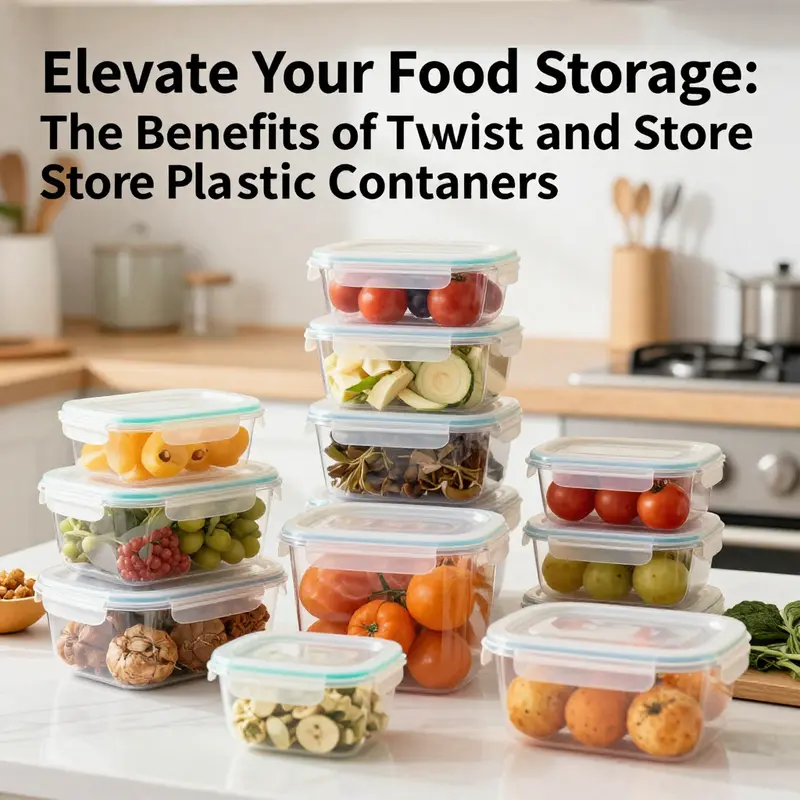
Professional kitchens—whether in bustling restaurants, trendy bubble tea shops, or busy catering companies—are constantly seeking storage solutions that maximize efficiency, ensure food safety, and align with consumer values. Twist and store plastic food containers stand as a practical option, merging functionality with the growing demand for sustainability. This article delves into three key areas: the environmental impact and design innovations that elevate the effectiveness and appeal of these containers. As we explore the sustainability efforts behind twist and store plastic food containers, their material advancements, and the latest market trends, you’ll understand why they are an essential asset for any forward-thinking food business.
null
null
The Twist of Tomorrow: Material Innovations Redefining Plastic Food Container Storage
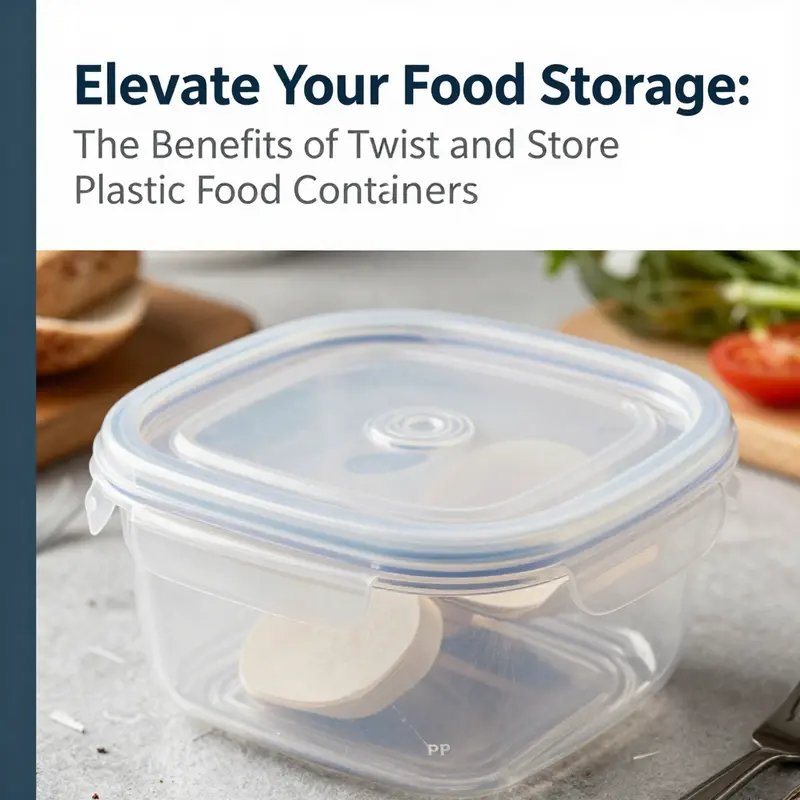
The twist-and-store plastic food container is more than a simple household tool. It is a compact technology that blends form, function, and foresight into a single, reusable package. The mechanism itself—a screw-on or twist-top lid that clamps down with a confident seal—speaks to a design logic that values airtightness, spill resistance, and predictable performance across both home kitchens and commercial backrooms. As anyone who has carried a container through a crowded aisle or a busy prep station knows, the seal is the quiet guardian of freshness. It slows the march of oxidation, protects delicate aromas, and minimizes the exposure of food to air and moisture. Yet the container is only as good as the material that frames it. This is where material innovations come into sharp focus, because the choice of polymer and formulation governs not just safety and durability, but also environmental responsibility and end-of-life readiness.
In recent years, the push toward 100% recyclable materials has moved from aspiration to practice. Modern twist-and-store containers increasingly rely on plastics that can be returned to the loop after use, often derived from post-consumer recycled (PCR) streams. This shift is not merely about slashing waste; it is about rethinking material identity in a way that aligns with a circular economy. PCR-based formulations reduce the demand for virgin resin, lower the energy and emissions embedded in production, and create a tangible consumer benefit: a packaging option that maintains high performance while acknowledging a shared responsibility for the planet. The core idea is to preserve the protective qualities of the container—its strength, clarity, and moisture barrier—without sacrificing recyclability. When a container is considered at the design stage with recyclability built in, the end user experiences a simpler, cleaner disposal path. The loop becomes visible in everyday practice, transforming storage into a small but meaningful act of stewardship.
A further layer to this narrative is the ongoing refinement of material properties to meet safety, usability, and regulatory expectations. The modern formulations are not just lighter; they are smarter. They balance impact resistance with stiffness, toughness with clarity, and resilience with heat tolerance. This balance matters because twist-top storage is used across a spectrum of temperatures and tasks. Some containers are destined for the refrigerator or freezer, others for the microwave, and still others for dishwasher cycles or bulk transport. Each of these use cases imposes a unique set of demands. In response, polymer scientists choreograph a careful interaction of resin type, additives, and processing conditions. High-grade plastics now deliver superior impact resistance so a container can survive multiple drops without cracking, while retaining a lightweight footprint that cuts shipping weight and material use. In other words, longevity and performance are increasingly inseparable from responsible material use.
Two polymers dominate discussions of twist-and-store containers for practical reasons: PET and PP. PET, or polyethylene terephthalate, is celebrated for clarity, moisture resistance, and barrier properties that help keep perishable foods—like salads or cold snacks—crisp and fresh. PET’s transparency also offers a visual reassurance: you can see the contents clearly, which supports quick identification and portioning. At the same time, PET’s resistance to oils and gases helps minimize flavor migration and moisture loss over time. In many designs, PET is paired with a secure lid and a body that can withstand routine handling and washing. The material’s recyclability is a boon for sustainability programs, particularly when the supply chain emphasizes recycled content and end-of-life recovery.
Polypropylene, or PP, brings a different set of advantages. It offers heat resistance that makes it well suited for reheating in microwaves and for use with warm or hot foods. This is especially valuable in home meal prep and in settings where containers must transition from cold storage to a hot service or quick heating. The round shape of many twist-and-store containers is not incidental; it supports predictable heat distribution and even cooking when used in microwaves or ovens that permit plastic use. PP’s stiffness and toughness under temperature swings contribute to a durable product that maintains its form through repeated cycles of use and washing. As consumer expectations evolve toward safer, more versatile, and more durable packaging, PP remains a workhorse polymer in the twist-and-store category, particularly for containers that traverse hot and cold environments.
A central thread in contemporary material development is safety, both for the consumer and for the broader household environment. Modern containers are crafted to meet international safety standards that go beyond flavor and freshness to address exposure, contact with food, and even child safety. Materials and designs are validated to resist deformation and leakage under typical handling scenarios, while still being compatible with common cleaning processes. The science underpinning these safety measures is rigorous, and the standards are not merely bureaucratic checkpoints; they guide material formulation toward reproducible performance across millions of everyday uses. In this regard, one notable consideration in the broader discourse on packaging safety is the principle of child resistance in packaging. Standards such as ASTM D3475 reflect a commitment to packaging that minimizes accidental access to contents by children, a reminder that even everyday kitchen items are part of a safety ecosystem. While twist-top containers designed for food storage are not inherently child-proof by design, the inclusion of safety-conscious test criteria in some packaging families signals an industry-wide emphasis on controlled access, responsible handling, and risk mitigation in homes and institutions alike.
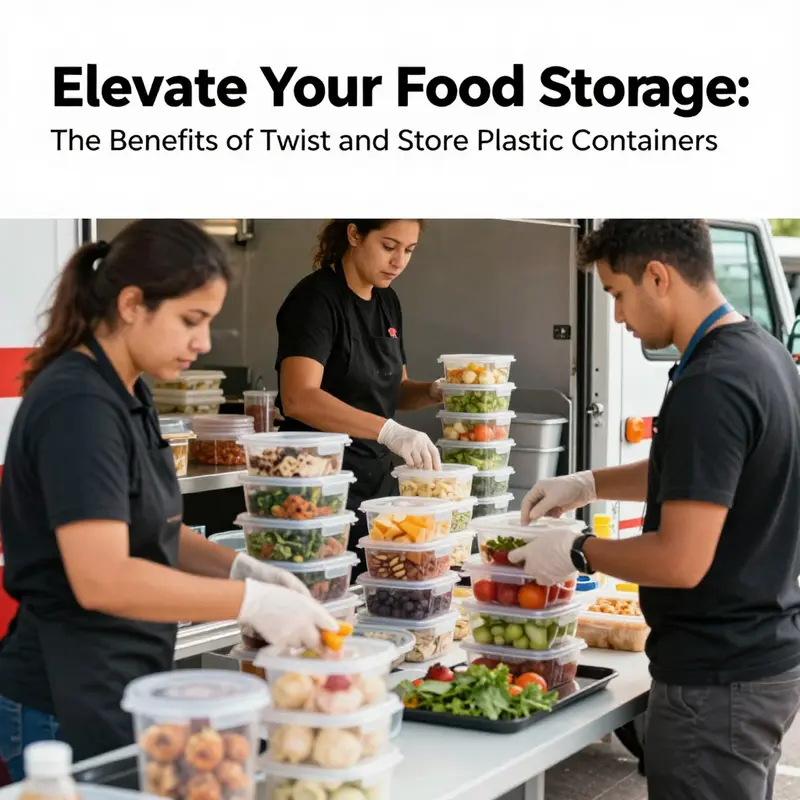
The advantages of lighter yet stronger formulations extend beyond raw performance. Reducing material usage without sacrificing durability has a cascading effect on sustainability and logistics. We are witnessing how resin chemistry and processing techniques enable thinner walls, more efficient closures, and better molded features that resist fatigue after repeated cycles. This translates into containers that take up less storage space, ship more efficiently, and require fewer resources over their lifetime. It is a practical example of how material science translates into tangible benefits in the kitchen and in business operations. In commercial environments—catering, catering services, and high-volume food preparation—these improvements accumulate, helping operators manage inventory, reduce waste, and keep meals or ingredients in peak condition from prep to plate. The ability to stack containers securely, while maintaining a light weight, is not just a convenience; it is a strategic advantage in busy facilities, where every inch of storage and every minute of handling matters.
In parallel with performance improvements, the push for materials that can participate in closed-loop systems is reshaping the economics of twist-and-store packaging. Recyclability is no longer a niche feature; it is a market signal. Consumers increasingly expect packaging to be recoverable, to support recycling streams, and to contribute to the reduction of landfill waste. Manufacturers respond by aligning resin choices, colorants, and barrier properties with recycling guidelines and by steering toward formulation families that maintain integrity in recycling processes. A practical outcome is a family of containers that look and behave as well as traditional products, yet incorporate post-consumer content and offer a clear pathway back into production cycles. The lifecycle perspective informs decisions at every stage—from resin selection and color choices to lid design and labeling. In this context, the talk about 100% recyclable materials expands from a theoretical ideal to a concrete parameter in design briefs and supplier criteria. It becomes a measurable dimension of product value, influencing not only ecological impact but also brand trust and regulatory compliance.
The design logic behind modern twist-top containers also embraces user experience as a driver of sustainability. A high-quality seal, achieved through precise tolerances and complementary lid geometry, reduces spillage risk during transport or hectic kitchen moments. Even heat distribution in round containers helps preserve flavors and textures during reheating, while maintaining structural integrity after cycles of freezing and thawing. The alignment of lid geometry with body curvature is more than cosmetic; it optimizes closure force distribution, minimizes warping, and supports robust dishwasher performance. In short, the material and the geometry work together to create a storage system that is forgiving in real-world use. This synergy between material science and design is what makes twist and store containers durable workhorses in homes and commercial settings alike.
As practitioners and researchers examine the roadmap ahead, several avenues promise to extend both performance and sustainability. Biobased polymers, when engineered to meet the same barrier and heat-resistance requirements, could introduce renewable feedstocks into the twist-and-store family without compromising safety or longevity. Advances in compatibilizers and surface treatments continue to improve adhesion, clarity, and scratch resistance, making containers that look good and resist wear even after repeated washing. There is also continued attention to additive packages that maintain safety in microwave use, avoid potential leaching, and ensure chemical compatibility with a wide range of foods and oils. These lines of inquiry reflect a broader industry trajectory: to deliver containers that are not only reliable and convenient but also transparent about their environmental footprint and resilient across evolving regulatory landscapes. The result is a storage system that remains faithful to its core promise—protecting freshness with a reliable seal—while embracing a future that treats materials as a renewable, circulating resource rather than a one-way ticket to the waste stream.
In the end, the story of twist and store containers is a story about how materials matter in everyday life. The choice of PET or PP, the drive toward PCR content, the insistence on high barrier performance, and the commitment to safety standards all converge to shape products that are easier to use, safer for families, and kinder to the planet. This convergence matters not just for the consumer at home, but for the entire supply chain that brings food from kitchen to table. When containers hold up under repeated cycles of use and cleaning, when they preserve moisture and aroma, when they can be recycled without compromising performance, they become more than containers. They become a practical articulation of responsible design—an everyday technology that quietly but steadily moves toward a more sustainable and resilient food storage culture. And as the field advances, the twist in twist and store continues to symbolize a design philosophy that values precision, versatility, and accountability in equal measure, ensuring that freshness travels with the container, not just within it.
External resources can deepen this understanding for readers who want to explore the science and industry context behind these materials. For a technical overview that situates the discussion of twist and store containers within broader polymer technology and packaging applications, see the external resource on plastic twist jars explained, which offers structure, properties, and implementation considerations that align with the themes of material innovation and safe, durable food storage. https://www.plasticpro.com/plastic-twist-jar-explained/
null
null
Final thoughts
The impact of twist and store plastic food containers extends beyond mere convenience; they represent a convergence of functionality, safety, and environmental consciousness. As businesses look to optimize storage while demonstrating their commitment to sustainability, these containers emerge as essential tools. By investing in reliable, versatile, and eco-friendly packaging solutions, your food business can enhance food preservation, streamline operations, and contribute to a greener future. Embrace the change and elevate your storage solutions for better service and satisfaction.