
Storing pet food securely and efficiently is crucial for maintaining its freshness and safety, especially in businesses where the quality of ingredients directly impacts customer satisfaction. Plastic containers designed for 16-pound bags of pet food are tailored to meet the specific needs of pet owners and businesses alike. This article explores the design specifications and benefits of these containers, compares different options available in the market, examines current trends affecting their usage, and analyzes the environmental implications. Each chapter builds a comprehensive understanding of how these containers can enhance food storage solutions for pet food across various sectors, including bubble tea shops, restaurants, and catering services.
Engineered for Freshness: Designing a 16-Pound Pet Food Plastic Container that Balances Strength, Seal, and Everyday Use
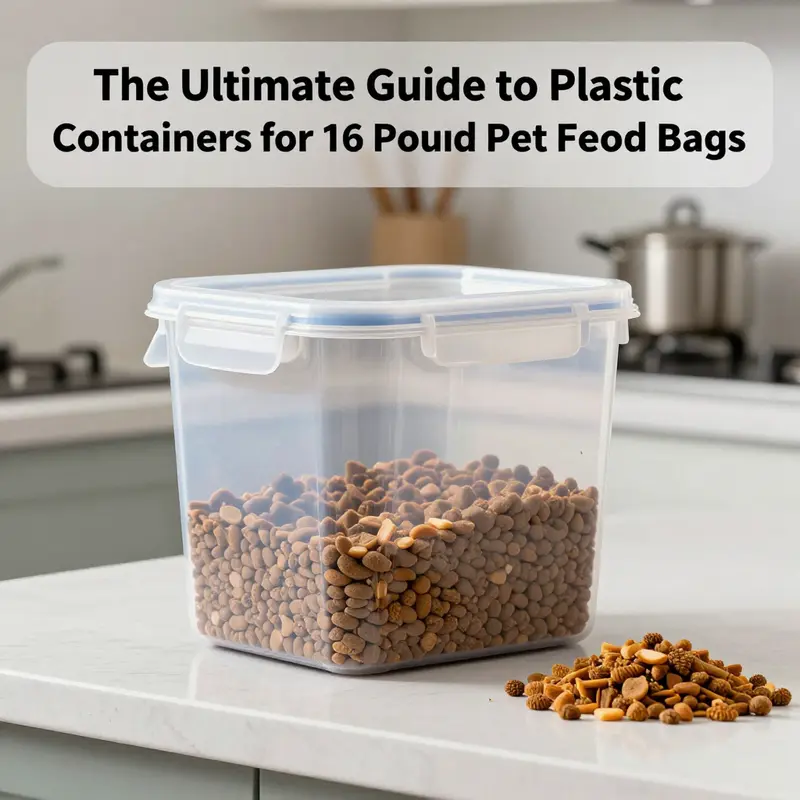
When the topic turns to a 16-pound bag of dry pet food, the real design challenge becomes clear: create a plastic container that not only holds a bulk quantity securely but also preserves freshness, protects from pests, and fits the rhythms of daily life. The container cannot merely be a big jar; it must be a small system, a complete storage solution that works as hard as the pet it serves. Achieving this balance begins with material choices that prioritize safety and resilience, then moves through geometry and features that reinforce an airtight seal, and finally embraces usability and sustainability. The overarching objective is clear: a container that keeps kibble from degrading, reduces waste, and makes life easier for households that juggle multiple pets, busy schedules, and the occasional long-term storage scenario in a garage or pantry. In pursuit of that goal, the most practical materials are food-grade polymers such as high-density polyethylene (HDPE) and, less commonly for heavier-duty applications, polypropylene (PP). HDPE stands out for its combination of impact resistance and chemical stability, both of which matter when a container must endure knocks during transport, stacking in a crowded cabinet, or the occasional bump from a sweeping broom or a curious paw. HDPE’s barrier properties are not magic; they are the result of a tightly controlled resin structure that resists moisture ingress and minimizes oxygen transmission—two factors that drive freshness in dry pet foods. PP, while slightly lighter in strength, offers a comparable safety profile and excellent rigidity. It tends to perform well in cooler storage environments and can be formulated with clarity advantages when a see-through wall is desired. In either case, choosing a food-grade specification is non-negotiable. A container built from HDPE or PP that carries the food-contact label signals to pet owners that the material has been evaluated for direct contact with dry pet food and is free from substances that could migrate into the product. The emphasis on safety is not just about the harm a contaminant could cause; it’s about trust. People want to know their pet’s food remains uncontaminated from one feeding cycle to the next. In many homes, the container will be opened and closed repeatedly, and it may travel from pantry to car trunk to kennel or garage shelf. The material must tolerate that cycle of use without cracking, warping, or imparting off odors over months or even years. HDPE’s durability shines in this context. It resists impact damage when the container is bumped against countertops, shelves, or other containers. It tolerates rough handling during cleaning or refilling, and its chemical inertness helps prevent interactions with fats or seasonings that might be present in the environment. The container’s design, in turn, must maximize the material’s strengths through thoughtful geometry and features that address the realities of everyday pet care. A capacity tuned to 16 pounds—roughly 7.2 kilograms—guides every other decision. This target aligns with common bulk-purchase practices and keeps the container manageable for lifting, pouring, and cleaning. A volume around 16 quarts or 1.5 gallons provides ample headroom for air without creating an unwieldy mass when the container is full. The geometry must make the most of space while ensuring comfortable handling. A wide mouth opening, ideally in the 8- to 10-inch diameter range, matters more than it might appear. It makes refilling from bulk bags straightforward, reduces spillage during scooping, and accommodates standard pet food scoops that many households already own. The broad opening also simplifies top-down inspection of the contents. With a bulging bag of kibble resting inside, the user can confirm the product’s condition without dismantling the container. A curved interior or rounded corners can further ease scooping and cleaning, while smooth edges reduce the risk of injury during routine handling, especially for children or caretakers who transfer the container from pantry to car and back again. The lid, perhaps the most critical component, must deliver an airtight seal that stands up to repeated use. Airtightness is the frontline defense against moisture, which is the most common enemy of dry pet foods. If air or humidity enters, fats can oxidize and degrade, while moisture can promote mold growth or clumping that complicates pouring and measuring. A robust locking mechanism, snap-on closure, or a resealable valve can provide an extra margin of protection. It is not simply the seal but its reliability under various conditions—temperature fluctuations, minor impacts from a bumped shelf, and the occasional imperfect alignment—that matters. A reinforced base keeps the container from deforming when fully loaded and stacked. In households with multiple containers, stacking stability is a practical concern: a deformed base can cause wobble or even topple, risking spillage or damage to the floor. A reinforced bottom, optionally with a non-slip foot pattern, helps maintain steadiness in crowded pantries, garages, or sheds where vibrations from doors, vents, or foot traffic are common. Handles or a built-in grip area contribute to ergonomic lifting, allowing secure pouring and reducing the strain of carrying a heavy full container from storage to the feeding area. When designing for user comfort, attention to edges is essential. Sharp corners or exposed seams can nick skin, particularly when a container is wet or dusty. Smooth, rounded edges enhance safety without compromising structural integrity. A built-in scoop, while not strictly necessary, remains a highly valued convenience. Sabotaging a good user experience, a separate scoop can be misplaced or lost. A built-in scoop ensures that the tool is always available, reduces cross-contamination risks, and encourages precise portioning. The interior should feature measurement markings to guide portion control. Clear, calibrated markings enable caretakers to feed pets according to weight and activity levels, avoiding underfeeding or overfeeding. For long-term storage, a small vent or pressure-relief feature can be considered. Food can release gases, and in some instances, minor pressure fluctuations can occur in sealed containers. A carefully designed vent system can prevent bulging lids or secure seal compromise without allowing moisture ingress. The potential advantage of a vent, however, must be weighed against the risk of letting in air or humidity. If a vent is included, it should be integrated with a one-way mechanism to maintain freshness while addressing pressure changes inside the container. Aesthetics should not be ignored, either. The container may sit in a visible corner of a kitchen or a garage cabinet, and a clean, neutral exterior can blend with diverse decors while signaling that it is a dedicated pet-food storage solution. Color, finish, and labeling are more than superficial choices; they can aid in quick recognition, help distinguish between different types of pet food, and support safe storage practices. A transparent or translucent wall is helpful for quick content assessment. In some designs, a wall made from a clear material—often HDPE of a grade suitable for consumer jars—lets a caregiver determine remaining quantities without opening the lid. If transparency is not employed, interior labels or externally applied markers can serve the same function, supported by a simple mirror-like interior surface to reduce the need for frequent opening to check levels. The objective remains clear: minimize the need to open the container while maintaining accuracy in portioning and replenishment. Safety standards play a crucial role in the design fabric. Materials labeled for food contact, with assurances that no BPA or other leachables pose a risk, provide reassurance to families. The packaging must also be compatible with typical cleaning practices, including washing with soap and water and, in some cases, dishwasher cycles if the manufacturer specifies it as safe. The sustainability dimension deserves careful attention. Although plastic is often criticized for waste, a well-made container can outlast numerous single-use bags, reducing cumulative packaging waste. Recyclability is a practical consideration: HDPE and PP fall under widely accepted recycling streams (often designated as #2 for HDPE and #5 for PP, depending on local facilities). While recycling options vary by region, a durable, long-lasting container remains a responsible choice in many households because it reduces the frequency with which new bags must be purchased. The design philosophy should also address lifecycle considerations—ease of cleaning, resistance to odors, and compatibility with reusability across seasons. For the user, these factors translate into tangible benefits: fresher food, less mess, fewer trips to the store, and more dependable storage during periods of travel or extended caretaking. The broader ecosystem of packaging and storage solutions has evolved toward modularity and practicality. In keeping with this trend, a well-conceived 16-pound-capacity container can offer a well-defined footprint in a pantry while delivering performance that matches higher expectations for home and small-scale commercial use. A rectangular or square silhouette often yields the most efficient use of cabinet space compared to rounded designs. When placed side by side in a row, they create a neat, organized visual that can encourage consistent bag-to-container transfers and reduce the tendency to leave opened bags lying around. The practical reality is that this container must satisfy both routine use and occasional stress tests. It should handle daily refilling from bulk bags, frequent scooping, and the occasional tilt or knock during cleaning, while continuing to seal reliably. It should perform in a range of environments—from a sunlit kitchen to a cool garage in winter and a damp basement during rainy seasons—without warping or losing integrity. To emphasize the broader design context, consider how a related packaging solution demonstrates the same principles in a different domain. A container designed for bulk food storage, with a built-in scoop and a visible interior, can offer a template for how to embed user-friendly features into plastic storage that routinely carries heavy loads. This cross-domain insight reinforces the idea that the strongest designs focus on an airtight seal, a robust yet practical geometry, and thoughtful ergonomics that blend into daily routines rather than demanding the user’s attention away from the task of feeding and caring for a pet. For readers seeking a concrete anchor to related packaging discussions, a broader packaging reference can be helpful. You can explore related discussions on eco-friendly packaging options that highlight how materials, form, and reuse intersect in everyday products, including containers that blend practicality with environmental considerations. See this example resource for a broader perspective on sustainable packaging approaches: eco-friendly corrugated ripple-wall cup with lid. As you move from concept to finished product, the journey is less about chasing a single correct shape and more about harmonizing material science, human factors, and lifecycle thinking. The final design should feel intuitive to the caregiver and resilient in the face of real-world use. A user who can reach for a single, well-formed container, fill it with a bulk bag, and close it with a secure lid, without wrestling with the contents or fearing spoilage, has achieved a meaningful gain in everyday life. Materials, geometry, and features are the levers that turn a bulk bag into a reliable, repeatable storage experience. The interplay between airtight sealing, structural reinforcement, and ergonomic handling is not merely a technical consideration; it is what makes the container a dependable partner in daily meal routines, travel, storms, and the quiet rhythm of a home with one, two, or more pets. In sum, designing a plastic container to hold a 16-pound bag of pet food is about coordinating strength, safety, and simplicity. It requires selecting a food-grade polymer with proven barrier properties, shaping a form that tames heavy loads while remaining easy to maneuver, and integrating features that reduce mess and waste. When these elements converge, the result is not just a vessel for kibble but a practical instrument that supports consistent care, healthier feeding habits, and a measured, sustainable approach to pet ownership. External resource: https://Alibaba.com/product/16oz-Plastic-PP-Deli-Food-Container_1600292447954.html
Guarding Freshness and Strength: A Deep Dive into Plastic Containers for a 16-Pound Bag of Pet Food
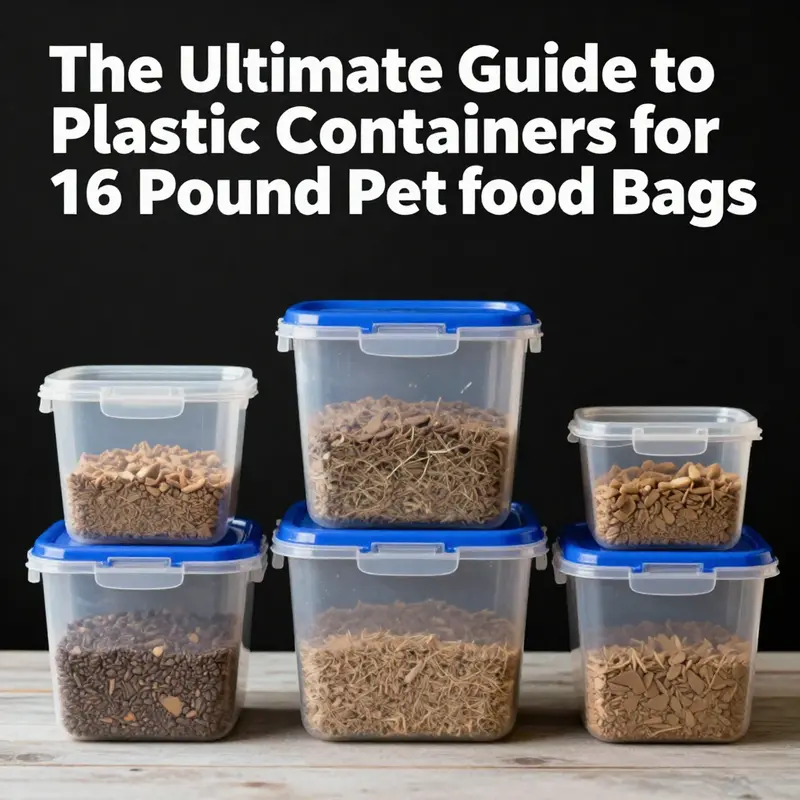
Putting a 16-pound bag of dry pet food into storage is more than a matter of keeping the bag off the floor. It is about preserving nutrition, preventing spoilage, and simplifying daily routines for households that juggle multiple pets, busy schedules, and variable climates. The container you choose becomes part of a larger system that influences how long the food stays fresh, how easy it is to transport and store, and how reliably pests are kept at bay. In this chapter, we explore the plastic-container option through a practical and science-informed lens. We consider material properties, sealing mechanisms, form and function, and the real-world implications for homes, kennels, and small breeding operations that depend on a steady supply of high-quality dry food. The central claim remains straightforward: for a 16-pound bag, high-density polyethylene (HDPE) based containers offer a compelling blend of barrier protection, durability, and ease of use that aligns with both consumer needs and manufacturing realities. Yet the choice is nuanced, and understanding the deeper trade-offs helps buyers align the container with their specific storage environment and pet care goals.
One of the foundational reasons plastic, and specifically HDPE, dominates the field is its exceptional balance of chemical resistance, strength, and safety for direct food contact. HDPE is widely recognized as a food-grade material that resists oil, fats, and moisture without deforming under typical storage conditions. For a 16-pound bag, the container must accommodate the bulk yet remain easy to maneuver. The mass and shape of the bag influence how airtight a container can be while still being practical to handle. In this sense, the plastic container doubles as a protective chest: it protects the contents from humidity and odors that could attract pests, while also shielding the user from the weight and bulk of the loose bag. The barrier properties are particularly important because dry pet foods are susceptible to fat oxidation and moisture migration over time. When fat oxidation occurs, nutritional quality declines, and palatability can suffer. The oxygen and moisture barrier provided by a well-designed HDPE container helps slow these processes, keeping essential fatty acids, including omega-3s, from breaking down prematurely. In other words, the container is part of the food’s extended shelf life, a role that goes beyond a simple lid and body.
The airtight seal is more than a comfort feature; it is a functional safeguard against a range of storage threats. A high-quality lid—whether snap-on or locking—works in concert with a gasket or lip design to minimize air exchange. For a 16-pound bag, this combination matters because it reduces the frequency with which you need to transfer food to smaller containers or repackage for long-term storage. An airtight seal translates into reduced moisture ingress that could invite mold or caking, and it also deters pantry moths, ants, and rodents. In homes and multi-pet facilities alike, a dependable seal means fewer spoilage incidents and less waste, which, in turn, translates to lower overall costs and more predictable feeding schedules. When you pair the seal with a sturdy container body, you get a unit that can survive the bumps of daily life—the occasional spill during transport, a heavy tote-off the shelf, or a stack in a garage corner.
Durability is another essential quality in a container designed for bulk pet food. HDPE’s impact resistance means it can withstand the rough handling that comes with shopping trips, garage storage, or kennel environments. This resilience is especially valuable for residences that use second- or third-floor storage or for families that move frequently. The material’s rigidity helps maintain the container’s shape, which in turn supports an airtight seal and easy stacking. For households with limited cabinet space, a rectangular or square profile often makes more efficient use of vertical and horizontal space compared with round designs. This space efficiency matters when you are juggling other pantry staples, pet treats, and cleaning supplies. A well-considered shape also contributes to easy labeling and quick identification, which reduces the time needed to locate the right bag during busy mealtimes.
Transparency—whether partial or complete—also plays a practical role. Some HDPE containers feature transparent walls or panels that let you gauge the remaining food level without opening the lid. This visibility is more than convenience; it helps prevent midweek stockouts and unnecessary trips to repurchase, which can disrupt a pet’s routine. It also supports responsible feeding by limiting accidental overstock and ensuring an orderly rotation of stock. Where transparency is not available, a clearly marked date window or weight indicator can serve a similar function, provided it is easy to read at a glance. In all cases, the goal is to empower caregivers to minimize waste and keep a steady supply of fresh, nutritionally intact food for their animals.
Capacity is the practical bedrock of any 16-pound-storage solution. Containers come in a wide range of sizes, but a common and sensible target for a household that feeds more than one animal or maintains a small kennel is a container that can comfortably accommodate a 16-pound bag with a bit of headroom for air and air circulation. A leaner container may be appropriate for a single-pet household with a smaller bag, but for multi-pet homes, breeders, or small kennels, a larger container of roughly 20 to 25 kilograms captures the flexibility needed for batch storage, seasonal purchases, and inventory management. The key is to avoid stuffing a bag into a container that forces you to crush the box or compress the bag, which can damage the food’s protective packaging and undermine the seal’s integrity.
For many buyers, the lid design is the tipping point that determines whether a container is fit for long-term bulk storage or simply a temporary holding place. Snap-on lids may be perfectly adequate for households that open the container daily and repackage weekly, but locking lids provide additional security against incidental spills during transport or shelving. A locking mechanism also adds a psychological barrier that reduces the likelihood of the lid being pried open by curious pets, children, or careless hands. The synergy between a tight lid and a robust body is especially important in climates with wide temperature swings. When the container contracts and expands with heat or cold, a reliable seal helps maintain a consistent barrier, keeping moisture at bay and preserving the integrity of the food’s texture and aroma.
The market landscape for plastic food storage reflects a broader pattern in pet-food packaging. The North America PET Food Packaging Market is predominantly dominated by plastic, capturing a substantial share by 2025. This dominance is rooted in the same principles that apply to household storage: durability, barrier performance, and cost-effectiveness. Plastic’s ability to deliver a waterproof, bite-resistant, and lightweight solution aligns with the practical needs of home cooks and professional caretakers alike. The data also hint at a broader industry preference for materials that can scale up to bulk storage without sacrificing performance or safety. From a manufacturer’s standpoint, HDPE-based containers offer a predictable performance profile, which translates into reliable production costs and consistent consumer experiences. For consumers, this predictability reduces the cognitive load of storage decisions. They can choose a container with the confidence that it will perform under daily use and occasional rough handling.
Against this backdrop, it becomes clear why plastic remains the preferred choice for 16-pound bag storage when weighed against alternatives. Paper-based packaging and other materials have begun to re-enter conversations, particularly where sustainability and recyclability are foregrounded. However, for long-term storage of dry pet food, these options generally fall short in barrier performance and mechanical robustness. Paper bags, for instance, are prone to tearing under heavy weight, require extra outer packaging for transport, and can be less protective against moisture and odor intrusion. While they may shine in consumer-facing, single-use contexts or in markets that prize rapid recyclability, their performance under bulk storage stressors is not on par with HDPE-based containers for maintaining food safety and freshness over months. Environmental considerations remain central to the discussion, and while paper-based solutions offer certain sustainability advantages, the superior barrier properties of plastic during prolonged storage keep HDPE as the pragmatic default for 16-pound bulk storage.
There is also ongoing discussion around reusable options. Rigid, sealable containers and shopping bags can be reused in some segments of the supply chain or household operations, yielding environmental benefits in certain contexts. Yet, these reusable solutions do not always align with the specific demands of bulk pet-food storage. Reusability can introduce complications around sanitation, odor retention, and wear and tear on seals over repeated cycles. In many cases, the performance criteria for bulk storage—strong barrier properties, a steadfast seal, and physical durability—are not met as reliably as with single-use but robust HDPE containers. The practical implication is that for bulk storage of 16 pounds of dry food, single-use plastic storage that is designed for reuse is a good compromise, providing high barrier performance and reliability while still allowing for recycling at end of life.
The conclusion that emerges from this synthesis is straightforward: for the 16-pound pet-food storage scenario, plastic remains the most effective and economical option. The material’s chemical resistance, barrier capabilities, strength, and recyclability collectively create a compelling case for HDPE-based containers as the default solution for households and facilities that require bulk storage. The combination of an airtight seal, rugged construction, and space-efficient shapes means a well-chosen container can maintain freshness, deter pests, and simplify daily routines. The practical impact of this choice shows up in fewer spoilage events, less wasted food, smoother feeding schedules, and a reduced burden on household storage space. While this analysis acknowledges valid concerns about sustainability and acknowledges the ongoing evolution of packaging technologies, it positions HDPE-based plastic containers as a robust and dependable fit for the needs of most consumers looking to store a 16-pound bag of dry pet food.
To explore these considerations in greater depth and to contrast the technical standards that govern plastic food packaging across markets, readers can consult broader resources on packaging standards and engineering properties. For an overview of regulatory and standards considerations in European packaging, see the external reference provided at the end of this discussion. In the broader ecosystem of packaging solutions, there is also value in examining related applications that share similar material science and design principles. For example, users may find it helpful to compare how other durable, low-weight containers—such as those used for grocery or take-out applications—manage barrier properties and sealing technologies, which can illuminate best practices for pet-food storage in real-world settings. A practical takeaway is that container selection should be guided not only by size and price but also by how the material and lid interact to preserve freshness over the intended storage horizon. An informed buyer will weigh the container’s barrier performance, seal reliability, shape efficiency, and compatibility with existing storage spaces, such as pantries, garages, or utility rooms, to arrive at a solution that supports both nutritional integrity and convenience.
In this context, a useful way to connect practical concerns with broader packaging knowledge is to engage with related packaging resources that discuss sustainability in a similar domain—where the access to durable, sealable, and largely recyclable plastics is framed within a larger environmental conversation. For readers who wish to explore a related but distinct packaging ecosystem, consider this resource: eco-friendly corrugated ripple-wall paper coffee cup with lid. While this reference addresses a different use case, it presents a parallel examination of how material choice influences barrier properties, durability, and end-of-life considerations in packaging design. The broader take-home message is that packaging decisions—whether for pet food or beverages—benefit from a unified lens that weighs performance against sustainability and practicality in everyday life.
For readers seeking deeper regulatory context and engineering specifications, an external resource that outlines primary European packaging standards and how they relate to food-contact materials offers a valuable complement to the chapter’s narrative. This resource helps illuminate the criteria that manufacturers and regulators use to evaluate safety, performance, and environmental impact, enabling a more informed assessment of HDPE-based containers for pet-food storage. The connection between material science, consumer needs, and policy frameworks underscores the importance of choosing containers that not only protect freshness but also align with safety standards and environmental responsibilities. In sum, the practical recommendation for households storing a 16-pound bag of dry pet food is to favor a robust HDPE container with an airtight locking or snap-on lid, a shape that maximizes space efficiency, and a design that supports long-term storage, easy handling, and clear visibility where possible. This approach balances the realities of daily life with the science of food preservation, yielding outcomes that matter in the kitchen and beyond.
External resources:
- European packaging standards and engineering properties (external resource): https://www.foodpackaging.org/europe-food-packaging-containers-key-standards-physical-properties-and-engineering-applications
Internal resource reference (illustrative anchor for related content): eco-friendly corrugated ripple-wall paper coffee cup with lid
Balancing Bulk Durability and Sustainable Design: Market Trends in 16-Pound Pet Food Storage Containers
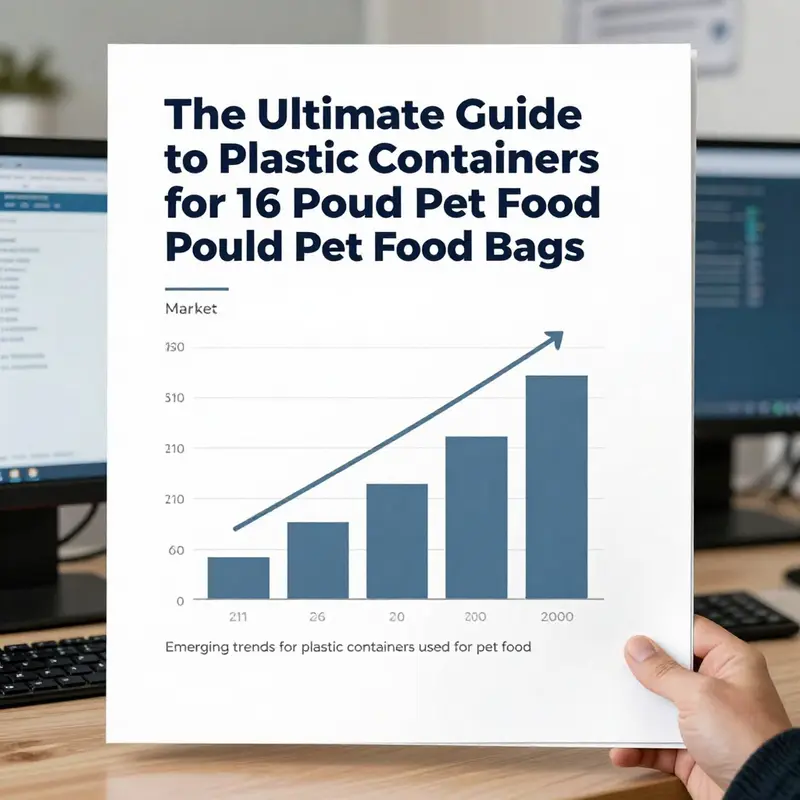
The market for plastic containers that hold a 16-pound bag of pet food sits at an intersection of durability, convenience, and responsibility. As households grow more complex and pets increasingly enter as members of the family, the expectations placed on storage solutions rise in parallel. These containers must keep kibble dry and pest-free, withstand the bumps and jostles of daily use, and stack efficiently in crowded kitchens or workrooms. They also must align with an evolving consumer ethic that prizes sustainability without sacrificing performance. In this context, the 16-pound segment stands out because it captures both the needs of large households or multi-pet homes and the pressure points of wholesale and commercial operations where bulk storage is essential. The current trajectory shows plastic remaining central to the equation, yet the field is moving toward smarter, more sustainable designs that can deliver the same level of protection while reducing environmental impact. That tension—between time-tested practicality and forward-looking responsibility—shapes how brands innovate and how households select storage solutions.
One of the clearest drivers behind these shifts is what many call pet humanization: owners increasingly treat their pets as beloved family members who deserve products that are safe, aesthetically pleasing, and aligned with personal values. The 2026 pet packaging landscape reflects this sentiment in meaningful ways. Data from recent industry reporting show that a large majority of pet owners prefer brands that demonstrate environmental responsibility, and a sizable portion are willing to pay a modest premium—roughly 5 to 10 percent—for packaging that balances sustainability with design and function. This willingness to invest in better packaging creates a feedback loop for manufacturers. When eco-conscious choices do not compromise the core job of the container—keeping food fresh, safe, and accessible—consumers reward those brands with loyalty and repeat purchases. The effect is not theoretical. It translates into measurable shifts in material choices, product architecture, and even where and how these products are manufactured and recycled. In practical terms, this means more brands are exploring recyclable or recyclable-by-design options, as well as clearer labeling about safety standards and end-of-life pathways. The message from consumers here is clear: sustainable packaging should not be an afterthought; it should be built into the very DNA of the container.
Despite the upward pressure on sustainability, the role of plastic remains robust because of its combination of strength, lightness, and cost efficiency. For 16-pound pet food storage, HDPE, a workhorse material in the sector, continues to be the gold standard for direct food contact. It delivers chemical resistance that protects against odors and leachables, impressive impact strength for transport and handling, and a relatively forgiving price point that makes it feasible for mass-market production and bulk purchasing. The barrier properties of HDPE, when paired with well-designed lids and gaskets, translate into real-world benefits: longer shelf life for dry food, reduced spoilage, and less waste. In addition, HDPE’s durability supports the long-term use cycles common in kennels, breeders, and multi-pet households where containers are moved, stacked, and occasionally lugged over rough surfaces. The combination of durability and affordability helps keep plastic storage solutions accessible to a broad spectrum of customers while preserving the performance that pet owners expect at price points that feel sensible when weighed against the cost of frequent bag repurchases.
But the market is not standing still. A parallel thread of development aims to preserve plastic’s strengths while addressing the environmental footprint associated with packaging. The trend toward alternative solutions—particularly paper-based packaging with advanced barrier technology—has gained momentum as manufacturers experiment with materials that can deliver moisture and oxygen barriers comparable to traditional plastics. These paper-based cylinders or rectangular forms often incorporate multi-layer barrier technology: food-grade coatings that are water-based or bio-based, aluminum foil liners in strategic locations, and biodegradable components that forestall rapid disposal scarcities. In some designs, the barrier technology is so effective that it can rival the performance of conventional plastics in terms of keeping kibble fresh for the critical months after opening. The challenge remains, however, in achieving a lifecycle that is genuinely more sustainable when you account for manufacturing energy, end-of-life processing, and the realities of recycling infrastructure. The high cost of more advanced eco-friendly plastics and the limitations of recycling multi-material films continue to pose obstacles. Still, the direction is clear: brands are exploring hybrid solutions that merge the best of both worlds, seeking to retain the practical advantages of plastic while delivering clear environmental benefits.
The market’s dialogue tends to emphasize not just material choices but also design pragmatics. For the 16-pound category, shape plays a decisive role in space management. Rectangular and square configurations maximize cabinet and shelf utilization, reducing wasted space that often accompanies round containers. The lid mechanism matters as well; snap-on or locking lids are a common feature because they ensure an airtight seal that preserves freshness and protects against spills during transport. A lid that remains airtight after repeated openings is more than a convenience; it is a guard against moisture ingress and pest intrusion—two critical threats to dry pet food. In addition, the depth and shoulder design of the container influence how easily owners scoop kibble without causing crumbs to escape or waste to accumulate around the rim. For households that manage multiple bags or rotate stock in a pantry or garage storage area, the ability to stack containers safely while still accessing contents without compromising the seal becomes a real value proposition.
Another design consideration that grows in importance is visibility. Some containers employ partially transparent walls made from materials with clear resistance to staining and scratching. The benefit is straightforward: it enables quick visual checks of remaining food levels without the need to open the lid and release precious aroma or humidity. Visibility reduces guesswork, which can lead to waste through over-purchase or premature disposal. It also aligns with consumer desires for straightforward, no-fuss storage experiences that fit into busy routines. Yet the move toward transparency must be balanced against the risk of UV exposure or heat-related degradation that can affect the product inside, especially in garages or sunlit pantries. Smart choices in wall materials and coatings can offer both a clear view and resilience against temperature fluctuations, further extending the shelf life of stored kibble.
As these material and design considerations evolve, a wider ecosystem of features begins to appear. Some brands explore RFID tagging or other smart features that enable feeding tracking, inventory management, and even automated reminders for reordering. While the big leap toward fully connected storage remains optional for most households, these features illustrate a broader aim: to integrate pet care more tightly with everyday digital life. A container could, in the future, serve not just as a physical barrier against moisture and pests, but as a data touchpoint that helps households monitor portioning, timing, and supply levels with a level of precision once reserved for human food storage. The adoption of such features will hinge on cost, user acceptance, and the ability to maintain safety and simplicity—the core constraints that condition every packaging decision.
Industry commentators frequently highlight the tension between keeping a container approachable for everyday users and pushing the envelope with sustainable innovations. The most successful products are likely to offer a modular set of options that allow brands to tailor packaging to different market segments without abandoning standard formats. A bulk or wholesale buyer might prefer high-volume storage solutions that maximize space efficiency and minimize spoilage risk; a smaller household might value a more compact, aesthetically coordinated option that blends with modern kitchens or pet rooms. In both cases, the underlying durability and sanitary assurances must remain intact. That is why the ongoing negotiation between material science and consumer expectations remains central to the 16-pound segment. It is not enough to swap materials or add a fancy lid; the trade-off between recyclability, end-of-life handling, and the practical realities of how families use pet food every day must be reconciled within the product design.
A practical reflection of these trends can be seen in the way packaging developers discuss the balance of performance and sustainability with customers and retailers. The aim is not to abandon plastic or to embrace a one-size-fits-all solution but to broaden the palette of feasible options. For example, some firms are experimenting with recyclable single-material designs that preserve barrier performance while simplifying the recycling stream. Others are leveraging paper-based barriers for long-term moisture resistance, pairing them with inner liners or coatings that can be safely separated during recycling. The overall strategy resembles a portfolio approach: maintain plastic where its properties are essential, introduce novel barrier layers where renewability is achievable, and innovate where the product life cycle can be meaningfully shortened or simplified to favor reuse and recycling. The practical implication for brands is clear. They must articulate the value proposition of their designs not only in terms of freshness and pest protection but also in terms of end-of-life responsibility and the overall environmental footprint.
For households and retailers, these shifts translate into choices that balance value and ethics. The 16-pound category often serves as a testbed for new packaging concepts before broader rollout. The containers that succeed in this space tend to combine reliable performance with a clear, consumer-friendly story about sustainability. They demonstrate that it is possible to protect a stock of pet food through months of storage while also reducing the environmental cost of packaging. The story, when told well, resonates with the growing segment of consumers who want products that are both practical and principled. In that sense, the market’s current trajectory is not a retreat from plastic but an intensification of innovation—an effort to preserve the strengths of plastic while addressing legitimate environmental concerns. It is a forward path that invites responsible material choices, thoughtful design, and a transparent dialogue with consumers about the end-of-life implications of every container.
Where does this leave the consumer who buys a 16-pound bag and a matching container today? It means seeking products that clearly communicate safety and performance standards, that offer airtight seals and pest protection, and that present a respectful story about sustainability without compromising convenience. It means recognizing that plastic storage remains indispensable in many contexts—pantries with limited space, garages that endure temperature swings, and facilities where bulk storage makes sense. It also means appreciating the broader trend toward smarter packaging, where the container is designed not only to preserve food but also to help owners manage waste and make mindful choices about consumption. In this evolving landscape, the most successful containers will likely blur the line between utility and ethics, delivering practical reliability while earning trust for their environmental profile. The future is not a dramatic pivot away from plastic; it is a calibrated, design-forward evolution that preserves the core advantages of plastic storage while embracing responsible practices that align with modern consumer values.
As a practical touchpoint within this broader narrative, consider the way packaging choices influence daily routines. A 16-pound storage solution that stays airtight after repeated use reduces the frequency of bag purchases and minimizes the risk of spoilage. A design that stacks securely and uses space efficiently helps households organize kitchens, garages, and pet rooms, turning storage into a streamlined task rather than a cumbersome chore. A visible, clean interior reduces the need to open containers unnecessarily, helping maintain the product’s quality. And, increasingly, a packaging story that communicates recyclability or end-of-life pathways provides an added layer of reassurance for owners who want to align their purchases with a broader commitment to environmental stewardship. In this sense, the market for 16-pound plastic pet food containers is less about a single material choice and more about an ecosystem of decisions—material science, design, and communications—that shape how households feed their pets today and how they think about feeding tomorrow.
Internal resource note: For readers interested in sustainability-focused packaging components that align with these principles, see the biodegradable kraft paper bowls resource that highlights eco-friendly, take-away packaging solutions. biodegradable kraft paper bowls. This example underscores how a shift toward single-material or simplified barrier systems can support recyclability while still delivering functional performance when paired with the right coatings and liners. While not a direct substitute for a 16-pound storage container, it illustrates the design logic of barrier technology, end-of-life considerations, and consumer-facing sustainability messaging that is increasingly shaping the pet food storage sector.
External resource: For additional context on broader sustainability considerations and waste-reduction strategies that influence packaging decisions across industries, see https://www.epa.gov/sustainability/basic-information-and-facts.
Beyond Freshness: The Hidden Environmental Footprint of 16-Pound Pet Food Plastic Containers
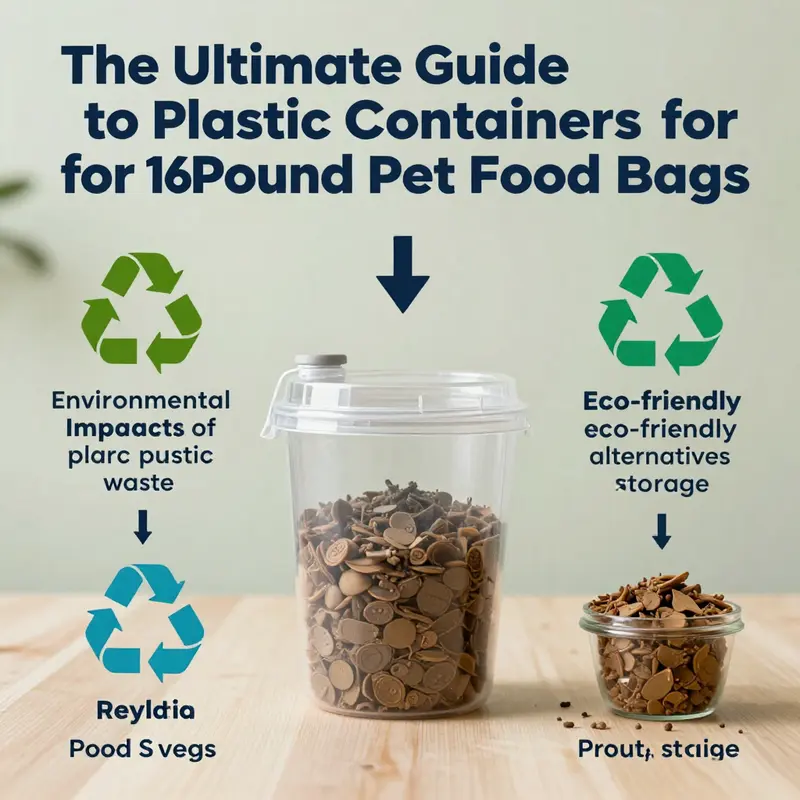
Plastic containers designed to hold a 16-pound bag of pet food perform a quiet daily service, shielding kibble from moisture, pests, and odor while traveling from store to cupboard. But behind their practical role lies a set of environmental trade-offs that show up long after the seal is closed. In this chapter we examine the environmental footprint of the most common container materials, how design choices affect recyclability, and what homeowners and businesses can do to reduce impact without sacrificing safety or convenience. The story begins with material choices. The two most prevalent plastics used for these containers are polypropylene and high-density polyethylene. Both are thermoplastics derived from fossil fuels, and their production relies on energy-intensive processes. The appeal of these materials lies in their durability, chemical resistance, and food safety credentials. They can be molded into stiff, impact-resistant bodies that resist cracking when the bag is moved, tipped, or stacked in a garage shelf. They can also be cleaned and reused, offering a pathway to longer lifespans. Yet the environmental price tag begins with the raw materials themselves and the way energy is consumed during extraction, refining, and polymerization. While HDPE and PP are valued for safety in direct contact with dry pet foods, their life cycle is not neutral. The energy used to convert fossil fuels into polymer resin translates into greenhouse gas emissions, and the subsequent manufacturing steps add further energy demand. Even when efficiency improvements are considered, the overall emissions tied to producing millions of 16-pound containers accumulate across geographies, industries, and supply chains. This is not simply a question of whether a container leaks during use. It is about the broader system into which these containers are designed, produced, distributed, used, and finally disposed of. The design often emphasizes strength, stackability, and cost. A sturdy, rectangular form makes it easier to organize a pantry and optimize cabinet space, but form often follows function in ways that complicate end-of-life processing. Many containers use a combination of materials or features that are not readily separable. A typical 16-pound container may include a rigid main body of HDPE or PP, a secure locking lid, sometimes a built-in scoop, colorants, and seals or gaskets. Each discrete component can complicate recycling streams because it demands separation or specialized processing. The end result is a persistent question: how much of the container’s material can actually be recovered and reintegrated into the economy after its useful life? The path from production to disposal is rarely linear. For many households, a 16-pound container serves its purpose for months or years before it wears out or becomes less convenient to use. In such cases, consumer behavior can amplify environmental impact. Food residue can contaminate recyclables, lowering the quality of streams and making it harder for municipal programs to salvage plastic. The problem is not limited to contamination. Recycling rates vary widely by jurisdiction, and even when facilities accept HDPE or PP, the downstream value of post-consumer plastics depends on market demand, cleaning costs, and the availability of advanced sorting technologies. The Environmental Protection Agency has highlighted a stubborn reality: only a small fraction of plastics ever produced are recovered through recycling. The 9 percent figure is often cited to illustrate the broader gap between production and end-of-life recovery. In short, a container that is technically recyclable may, in practice, contribute to landfill pressure or environmental leakage if the local system cannot efficiently collect and process it. This is not an indictment of every plastic container. It is a reminder that recyclability is a system property, not just a material property. If a container is designed with simplicity and end-of-life compatibility in mind, it can be more easily diverted from landfills. If not, it becomes a reminder of the limits of recycling in many places. The design can matter as much as the material. When a container features built-in scoops, integrated handles, or multi-layer components, the stiffness and convenience come at a cost to recyclability. A scoop that cannot be separated from the main body may render the entire item non-recyclable in some programs. Lids with metal reinforcement, or labels that are fused with adhesives, complicate disassembly. Even the smallest design decision can tip the balance toward waste rather than recovery. The result is a nuanced landscape where two containers of similar size may diverge dramatically in their environmental outcomes after use. The consumer is in the middle of this system, balancing safety, convenience, and responsibility. Purchasing choices can influence environmental impact, but so can usage patterns. For example, long storage periods can extend the life of a container, reducing the need for multiple replacements. Conversely, frequent refills or heavy handling can accelerate wear, prompting earlier disposal. Yet even when a container remains in good condition, its end-of-life fate depends on waste infrastructure that may or may not be capable of reclaiming the plastics. The environmental story is not only about the polymer itself. It also involves additives such as colorants, stabilizers, and anti-oxidants that are designed to improve performance. Some additives aid in heat resistance and durability, while others help resist staining or odor absorption. Unfortunately, additives can complicate recycling if they introduce contaminants or alter the resin’s value in the market. The complexity of modern plastic packaging often lies in these embedded details. Consumers may encounter labels like “BPA-free,” which are intended to reassure users about safety during use. Yet BPA-free does not automatically translate to better environmental outcomes. It speaks to a chemical safety criterion during contact with food, not to recyclability or end-of-life performance. The broader implication is clear: the environmental footprint of a container cannot be fully understood by looking only at its safety credentials in the kitchen. A holistic approach considers the entire life cycle, from cradle to grave. When assessing environmental performance, some researchers point to a different path: alternatives that reduce lifetime impact through design simplicity and material choices. Stainless steel containers, for example, offer exceptional durability and high recyclability, with long service lives that can outpace many plastic options. They can be reconditioned and re-used many times, and metal recycling systems are well established in many regions. However, stainless steel is not a universal solution. It weighs more, increasing transportation emissions and energy use per shipment. It can be more expensive upfront, which may deter some buyers from adopting it as a routine option for home storage. The truth is not about choosing one material over another in isolation. It is about optimizing the entire supply chain for a given context. In some environments, a carefully chosen HDPE or PP container with a straightforward design and minimal multi-material components can achieve a reasonable balance between safety, affordability, and end-of-life recoverability. In others, a switch to metal or to more radical packaging innovations may yield greater overall benefits. This is where consumer agency becomes crucial. By choosing containers that prioritize recyclability, post-consumer recycled content, or designs that facilitate separation at end-of-life, shoppers can tilt the sustainability equation. For instance, containers that minimize multi-material coupling, avoid integrated scoops that limit recycling potential, or use simpler closures are more compatible with a broader range of recycling streams. When possible, opting for products that clearly state recycled content or that align with regional recycling capabilities can also improve outcomes. The broader societal shift involves acknowledging that packaging is not a neutral actor in waste systems. It interacts with municipal programs, waste management incentives, and consumer habits. To support a healthier system, brands and policymakers can encourage designs that are easier to sort and reclaim, expand markets for post-consumer plastics, and invest in collection infrastructure that reduces contamination. The potential gains extend beyond the immediate container. Reducing packaging waste in households can free up landfill space, lower litter, and minimize microplastic leakage into soil and water. Microplastics, tiny fragments that result from fragmenting larger plastics, have been found in diverse ecosystems and even in food chains. Their omnipresence means that even durable containers can contribute to chronic environmental exposure if their end-of-life fate is not properly managed. The literature on life-cycle assessment highlights a critical insight: when end-of-life management is factored in, the environmental burden of plastic containers tends to rise sharply compared to other options. A comprehensive study conducted under the auspices of a European Commission research initiative shows that while the manufacturing phase for plastics can be less carbon-intensive than metal in some cases, the total life cycle, including disposal, typically results in higher emissions and resource use for plastics under current recycling and waste-management conditions. This does not render plastic containers inherently unacceptable. It underscores the need for systemic improvements—reducing consumption, improving recycling rates, and designing for recoverability. The goal is not to demonize a material but to align its use with a waste-management system that can successfully recover value from used products. For consumers, this often means choosing containers with more straightforward recycling pathways, cleaning them promptly to avoid contamination, and supporting brands that demonstrate a transparent path to recycling or reuse. It also means recognizing that packaging choices extend beyond the kitchen. The environmental footprint of a 16-pound pet food container touches the energy mix of production sites, the efficiency of transport networks, and the capacity of local facilities to handle post-consumer plastics. The choice of a container is thus a small but meaningful lever in a larger effort to reduce environmental impact. To explore alternatives that align better with circular economy principles, consider packaging options that emphasize recyclability and reduced material complexity. For readers seeking a practical bridge between convenience and sustainability, there are packaging formats designed to minimize waste, maximize recoverability, and lengthen useful life. These opportunities invite a shift in consumer expectations and industry practices alike. For a closer look at eco-friendly packaging alternatives available in the market, consider this resource on recyclable pulp packaging as an option that can coexist with plastic storage when appropriate for the context: eco-friendly recyclable pulp packaging alternatives. The choice of container becomes part of a broader conversation about waste, resource use, and the long arc of environmental stewardship. It is essential to acknowledge that no single measure will solve the complex problem of plastic waste. A combination of better design, smarter consumer choices, and stronger waste-management infrastructure is needed. In the meantime, households can begin by selecting containers that minimize the number of components, favor materials with established recycling streams, and maximize the likelihood that the container will be repurposed or recovered rather than discarded. The journey toward more sustainable pet-food storage is gradual and incremental, but the cumulative effect of many small changes can be substantial. Finally, it is worth returning to the larger picture painted by environmental researchers and policy makers. The global plastic challenge is not simply a matter of one container or one household. It is a systemic issue that calls for coordinated action across production, policy, and behavior. The World Economic Forum and other leading researchers describe a world in which plastic pollution is a global crisis that demands inventive responses, stronger recycling systems, and a renewed emphasis on reuse and responsible consumption. That framing invites a more mature dialogue about the place of plastic containers in everyday life and the potential for smarter, cleaner, and more resilient storage solutions in the future. External resources provide a useful anchor for readers seeking a broader understanding of the environmental dimensions of plastics and packaging. For further reading on the topic of plastic pollution and policy responses, see the external reference that contextualizes these concerns in a global framework: https://www.weforum.org/agenda/2023/04/plastic-pollution-global-crisis/.
Final thoughts
Understanding the complexities of plastic containers for storing 16-pound bags of pet food allows businesses to make informed decisions about storage solutions that enhance food safety and convenience. The benefits of airtight designs, pest resistance, and durability become crucial when considering their application in a variety of food service environments. With ongoing market trends and increased emphasis on environmental sustainability, choosing the right container not only impacts business efficiency but also aligns with eco-friendly practices. Ultimately, businesses can ensure a better quality of life for pets and a healthier planet through mindful packaging choices.