
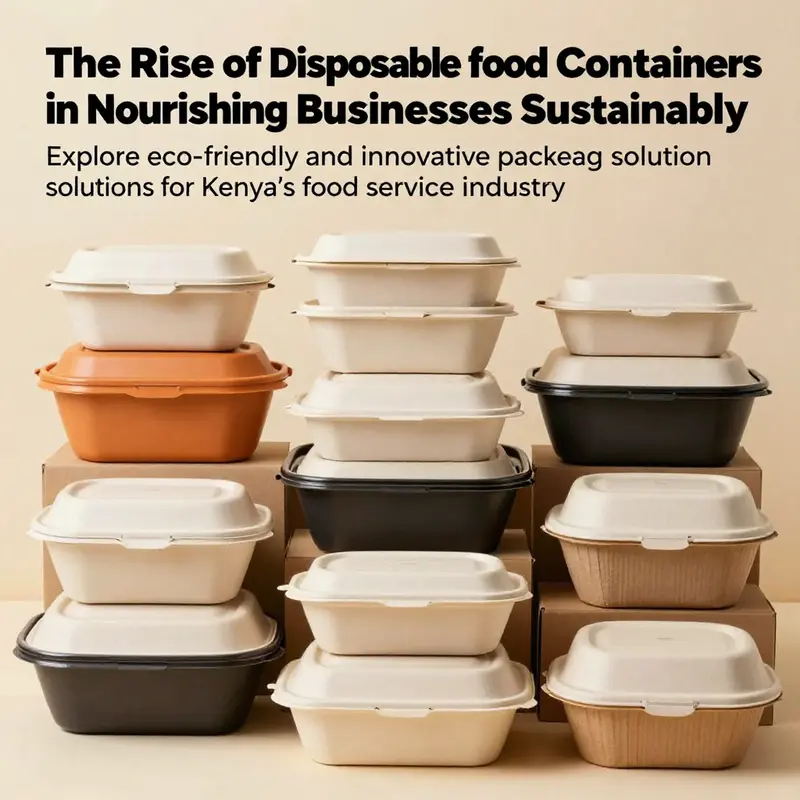
The food service sector in Kenya is witnessing explosive growth, driven by urbanization and heightened awareness of hygiene. As businesses from bubble tea shops to catering services seek efficient and sustainable packaging, disposable food containers have emerged as a vital solution. This article delves into eco-friendly options, affordable plastic alternatives, innovative uses of marine-grade steel, and the digital advancements in sourcing these containers. Each chapter provides an in-depth look at how businesses can adopt these materials, balancing environmental responsibility with operational efficiency.
Greener Carry, Cleaner Cities: The Rise of Eco-Friendly Disposable Food Containers in Kenya
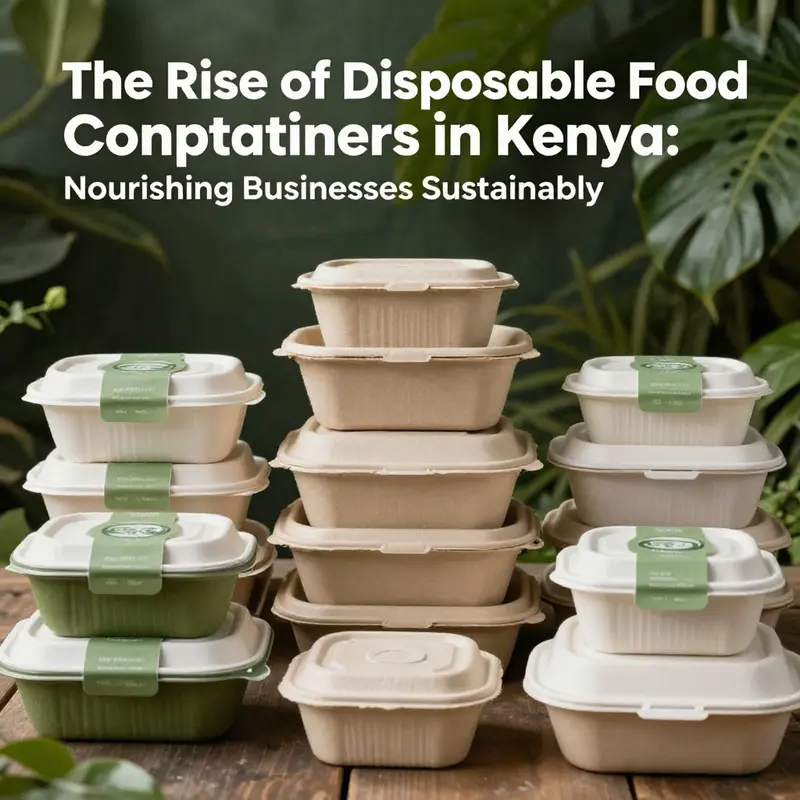
From the bustling lanes of Nairobi to the tourist-driven streets of Mombasa, the appetite for fast, convenient meals has reshaped how food is prepared, served, and transported. In this landscape, disposable food containers are more than a packaging choice; they are a signal of hygiene, efficiency, and responsibility. As urban life accelerates, so does the demand for packaging that can keep hot soups piping and cold salads fresh, while also aligning with growing environmental expectations. Eco-friendly disposable containers have emerged as a practical answer to that challenge. They are not a single solution but a family of materials and forms designed to meet the varied demands of Kenya’s dynamic food economy. The shift toward these greener options is anchored in a mix of consumer preference, regulatory direction, and the logistics of sourcing at scale, all of which intersect with the realities of local markets, import patterns, and the country’s waste-management infrastructure.\n\nWhat makes these containers distinctive lies in their materials and their lifecycle. Sugarcane fiber, commonly referred to as bagasse, along with bamboo and molded fiber, offers a departure from petroleum-based plastics. Paperboard with plant-based coatings provides a familiar form factor with enhanced compostability. Then there is PLA, a plant-based polymer derived from corn starch, which helps some producers offer clear-cut compostability claims. The common thread across these options is a commitment to break down under appropriate conditions rather than stubbornly persisting in landfills. In practical terms, this translates into containers that can be disposed of with the knowledge that their end-of-life impact is managed more responsibly than conventional plastics. The science behind these materials is complemented by practical performance features. Many eco-friendly options are engineered to withstand heat up to 200 F (93 C), a threshold that makes them suitable for holding hot soups, stews, and other menu items without compromising safety or flavor. For hot applications, other sugarcane-based products claim heat resistance up to 120 C and are widely considered microwave-safe and refrigerator-friendly. Such versatility matters in a Kenyan market that includes street vendors, casual diners, and formal catering outfits alike.\n\nThis practical versatility dovetails with a broader shift in consumer expectations. Kenyan customers increasingly equate cleanliness and convenience with responsible sourcing. A consumer who chooses a takeaway bowl is often weighing two questions at once: Will the container keep my meal intact during transport? And, will the packaging degrade in a sensible way when I finish with it? The answers offered by eco-friendly materials tend to be affirmative on both counts. The plates, bowls, and boxes made from bagasse or molded fiber typically resist oil and moisture well, maintaining structural integrity during transit from kitchen to curbside. They also lend themselves to elevated presentation through embossed textures or subtle branding elements, helping vendors communicate quality while remaining faithful to sustainable principles. The visual and tactile signals matter because the Kenyan market is increasingly sensitive to the broader narrative of environmental stewardship. Consumers recognize that how a business packages its products reflects a philosophy about resource use, waste, and accountability.\n\nA practical pathway to adoption for many Kenyan operators has been the availability of certified, scalable options through global and regional suppliers. The availability of bulk, customizable, and certified solutions creates an ecosystem where sustainability can be matched with operational realities. In this ecosystem, certifications play a critical role. For an operator, the assurance that a container meets industrial compostability standards, or at least aligns with recognized benchmarks, can reduce post-purchase risk and simplify disposal decisions for customers. In a market where waste streams can be fragmented and recycling options vary by city, clear end-of-life guidance becomes a valuable asset. The industry also benefits when suppliers invest in traceable supply chains and transparent labeling, which reassure buyers about compliance, safety, and origin. In this context, the emergence of bamboo, bagasse, and molded fiber options represents not just a material shift but a strategic one: it signals a move toward packaging that can fit into increasingly formalized waste-management pathways, including composting networks and, where feasible, recycling streams.\n\nSourcing eco-friendly containers in Kenya is increasingly enabled by digital marketplaces and cross-border trade. Platforms that connect buyers with verified suppliers provide real-time catalogs, sample requests, and secure trading environments. This digital access matters in a country where the geography of demand spans dense urban centers and regional hubs. Delivery times, often spanning several weeks, become a factor in inventory planning for Nairobi, Mombasa, Kisumu, and emerging towns. MOQs can be substantial—an acknowledgment of the economies of scale required to keep prices competitive—yet the market has adapted by offering a range of sizes and forms. The availability of materials and designs that are heat-tolerant, oil-resistant, and microwave-safe enables operators to rethink their menus and packaging configurations. It also allows for a smoother transition from conventional plastics to greener options without sacrificing service speed or customer experience.\n\nWithin this ecosystem, the environmental story is complemented by a circular-economy logic. Eco-friendly containers designed to be compostable or biodegradable contribute to a reduction in long-lived waste. When these items reach composting facilities or appropriate waste streams, their end-of-life path aligns with broader sustainability goals. For Kenyan businesses, this alignment translates into reputational benefits as well as regulatory and policy advantages. A growing body of standards and certifications—ranging from globally recognized bodies that certify compostability to regional assessments of waste-management capacity—helps producers and buyers navigate the complexities of disposal. This is not merely about reducing plastic pollution; it is about integrating packaging choices with local waste infrastructure, consumer expectations, and the economic realities of supply chains. The upshot is a packaging system that supports reliability in services while contributing to a cleaner urban environment.\n\nThe practical implications for a Kenyan food-service operation are nuanced. While eco-friendly options offer clear advantages, there are cost considerations to weigh. The price gap between biodegradable or plant-based containers and traditional plastics can be non-trivial, especially for smaller operators who manage tight margins. Yet the calculus is evolving as demand for sustainable packaging grows, and as mass production and efficient logistics push costs downward. In many cases, businesses find value in a hybrid approach: using eco-friendly containers for select product lines or higher-end offerings where customers explicitly seek sustainability, while applying more economical options for other segments. Another lever is consumer education. When customers understand the lifecycle benefits of bagasse or molded-fiber packaging, they may be more willing to choose these options even at a modest premium. Labeling and branding that communicates compostability, local sourcing where applicable, and clear disposal guidance can amplify that value beyond the price tag.\n\nAmong the practicalities, end-of-life logistics deserve particular attention. Kenya’s waste-management landscape is diverse across cities and municipalities. Some urban centers have expanding composting facilities capable of handling industrially compostable packaging, while others rely on informal waste streams. Businesses that align their packaging choices with local disposal realities—by offering packaging that is widely accepted in nearby facilities or by providing disposal guidance to customers—stand to gain from smoother waste handling and enhanced consumer trust. This alignment is aided by supplier certifications and by clear, accessible information on product labels. The result is a packaging system that reinforces hygiene and safety while minimizing environmental impact, an especially salient combination for frequently prepared foods and takeaway meals.\n\nSourcing strategies for eco-friendly containers in Kenya often begin with a careful assessment of the intended use. A large catering operation may prioritize high-capacity, fully compostable options that retain strength under heat and moisture, while a street vendor might seek lightweight, easy-to-stack solutions with secure lids. The choice of material matters as well as the shape and size. Bagasse-based round bowls, square or octagonal boxes, and molded-fiber trays each offer distinct advantages for different menu items. For visual appeal, suppliers can offer embossed branding or natural finishes that communicate quality without compromising the material’s compostability. In short, the best path blends functional performance, cost efficiency, and clear environmental messaging that resonates with local customers.\n\nTo illustrate the practical potential, consider how a Kenyan takeaway service can integrate these containers into its operations. The service might evaluate temperature tolerance, leakage resistance, and compatibility with standard takeaway formats. It might pilot several shapes—rectangular boxes for rice and stew, round bowls for soups, and smaller compartments for sides—each made from a material that aligns with its sustainability goals. The pilot could monitor customer feedback, disposal behavior, and post-consumer waste streams to determine where green packaging delivers the best balance of reliability and environmental benefit. The result is not merely a change in packaging; it is a deliberate shift in service design that communicates care for customers and the environment. And as the country’s packaging ecosystem continues to grow, businesses will increasingly access a wider array of designs, coatings, and certifications that enable them to tailor solutions to local needs without compromising on performance.\n\nFor operators seeking a concrete starting point, one accessible pathway is to explore custom, branded options that marry function with messaging. A practical example is the ability to adopt a custom-printed, kraft-paper-based soup bowl in combination with a clear end-of-life sign. Such a solution communicates both quality and responsibility to customers, reinforcing a brand’s commitment to sustainability while delivering a reliable takeaway experience. The goal is to choose containers that support the menu and service model, while also aligning with consumer expectations for responsible packaging. A thoughtful choice can thus become a marketing asset, turning packaging into a visible expression of a business’s values rather than a mere utility.\n\nIn sum, eco-friendly disposable food containers offer a compelling blend of performance, sustainability, and market alignment for Kenya’s food-service sector. They respond to the demands of a modern, urbanizing economy while acknowledging the realities of waste management and regulatory direction. They enable operators to present meals safely, aesthetically, and responsibly, reinforcing hygiene and convenience without compromising environmental integrity. The transition is about more than substituting one material for another; it is about rethinking how food travels from kitchen to customer and how packaging can participate in a circular system that reduces waste and supports a healthier urban environment. As demand grows, suppliers will expand their ranges, making sustainable packaging not a niche choice but a practical standard for diverse operators across the country. The trajectory suggests a future where eco-friendly disposable containers are not exceptional but expected—an essential element of Kenya’s evolving food economy and a visible sign of responsible, forward-looking business practice.
null
null
Repurposed Marine-Grade Steel Containers: Connecting Kenya’s Food Service Expansion to a Broader Packaging and Infrastructure Landscape
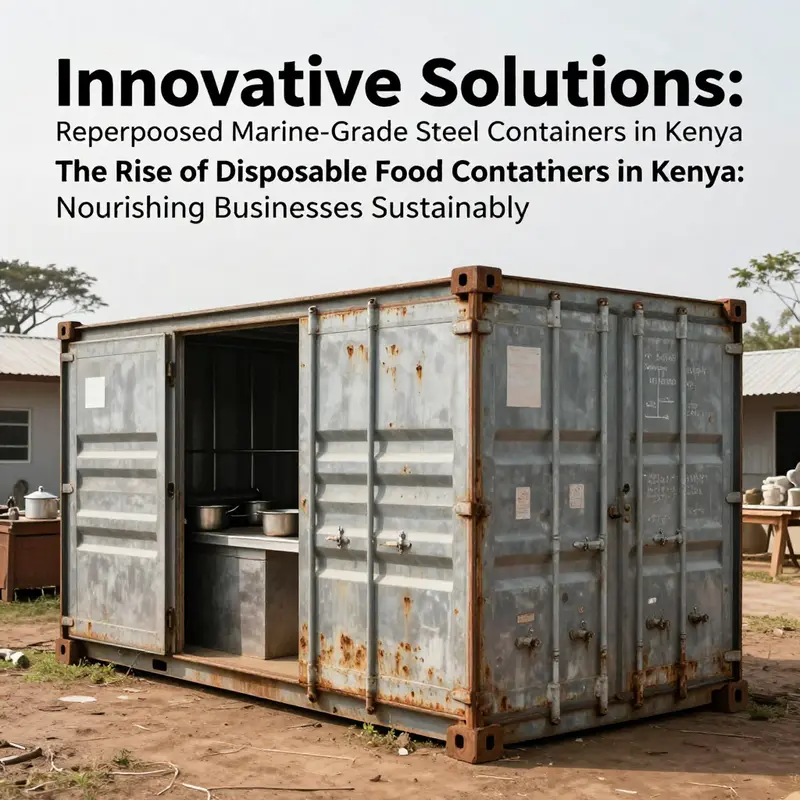
Kenya’s rapidly expanding food service sector is pushing demand for flexible spaces and efficient storage. Repurposed marine-grade steel containers offer durable, modular modules that can become pop-up kitchens, clinics, or secure storage on urban sites and rural outposts. Their robustness, stackability, and quick deployment translate into cost savings and resilience across climates from coastal heat to inland humidity. Using containers reduces new construction waste and supports a circular economy when they are properly maintained and finished with food-safe interior linings. For food safety, interiors must be coated or lined to prevent contamination and to enable cleaning in busy environments. Containers can house controlled environments for staging and distribution, while pairing with solar energy, insulation, and off-grid power enables operations where infrastructure is limited. They complement disposable packaging by providing stable spaces for inventory management, kitchen prep, and staff welfare, reducing losses and improving hygiene in the supply chain. As regulations evolve, collaboration among engineers, health authorities, and local communities is essential to ensure safety and environmental stewardship. Practitioners can explore market-ready options such as sourcing repurposed containers via digital platforms, applying corrosion-resistant finishes, and integrating modular designs with off-grid systems. The broader packaging ecosystem in Kenya thus moves toward resilience and circularity, where durable infrastructure and disposable packaging serve different roles in a shared goal of safe, efficient, and sustainable food systems.
Digital Sourcing and Logistics for Disposable Food Containers in Kenya: A Practical Roadmap from Global Factories to Nairobi Kitchens
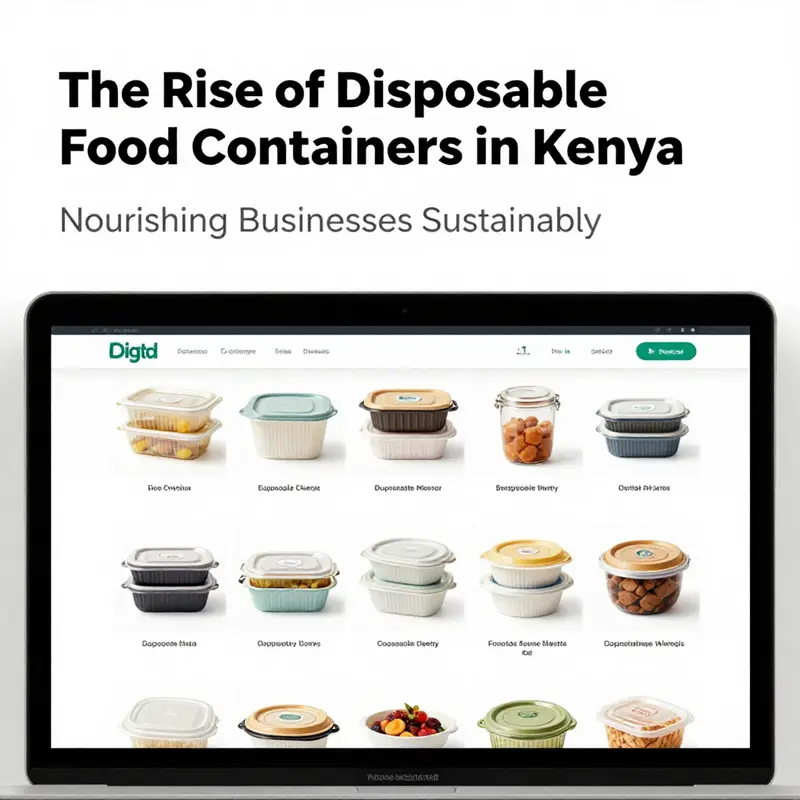
In Kenya, the pace of change in food service and delivery has outstripped the pace of local packaging production. The result is a relentlessly adaptive market that leans on digital sourcing to bridge gaps between demand and supply. Entrepreneurs from bustling street corners to expanding chain operations increasingly rely on online procurement channels to compare specifications, confirm material choices, and secure reliable stock. The story of packaging in this context is not just about the containers themselves; it is about how a country blends digital transparency with physical logistics to keep lines of service moving. The digital sourcing landscape emerges as a practical toolkit that lowers barriers for Kenyan operators who once faced long lead times, opaque pricing, and uncertain quality. Today, a buyer in Nairobi can examine a wide catalog, request samples, and initiate orders with suppliers who can customize shapes, sizes, and materials to meet specific menus and service styles. This shift is more than convenience; it is a strategic capability that directly affects food safety, customer experience, and the bottom line.
Domestic production in Kenya remains relatively lean when viewed against the size and diversity of the country’s food economy. This limitation makes international sourcing not only an option but often a necessity. Digital marketplaces and B2B platforms have become the primary conduits through which Kenyan buyers connect with manufacturers abroad. The most active sources tend to be located in major export hubs that leverage automation, scale, and proximity to port networks. In practical terms, this means that a significant share of the disposable containers used in the urban and peri-urban segments originates with factories in large regional clusters. A core advantage for Kenyan buyers is the clarity these platforms offer: real-time product catalogs, direct messaging with suppliers, and the ability to track orders from factory floor to doorstep. For a business owner, this visibility transforms planning from a sequence of guesswork into a predictable, data-informed process. A simple inquiry can yield a proactive dialogue about lead times, minimum order quantities, and the feasibility of mass customization.
The sourcing ecosystem is anchored by the broad categories of materials that meet different operational needs. Polypropylene and polystyrene remain popular for their balance of price, durability, and performance under heat and moisture. These plastics support a wide range of shapes—from rectangular boxes suitable for bulk meals to round bowls and compact cups for portions. On the sustainability front, there is a growing appetite for alternatives that align with environmental goals. Biodegradable and compostable options, often rooted in plant-based fibers or biopolymers, are increasingly carried by suppliers who emphasize responsible end-of-life outcomes. For brands that position themselves around eco-consciousness, these options are not just a check on a box; they are part of the value proposition that resonates with a changing consumer base. Digital sourcing makes it easier for buyers to weigh trade-offs between cost, performance, and environmental impact, and to request documentation that verifies compostability or recyclability.
A noteworthy dynamic is the role of geographic hubs within the sourcing network. While domestic production in Kenya is growing, the most robust supply pipelines in practice connect buyers to manufacturers in the Guangdong region and other manufacturing clusters that have honed specialized capabilities. These clusters bring together automation, scale, and export readiness in a way that translates into consistent quality and competitive pricing. For Kenyan buyers, the appeal is twofold: the breadth of available formats and configurations, and the speed with which digital platforms can translate demand into production plans. The product rationale for these containers often centers on versatility—container types designed to hold hot or cold foods, with options for vented lids, secure closures, and stackable designs that maximize kitchen and transportation efficiency. The ability to tailor dimensions, lid designs, and printing or labeling also matters for restaurants seeking to reinforce brand identity while maintaining practical service speed.
Digital sourcing channels do more than connect buyers to factories. They embed a workflow that reinforces quality assurance and regulatory compliance through digital documentation and standardized qualifications. Buyers can request certificates of conformity, material safety data, and proof of compliance with food-contact safety standards. While the specific names of certifying bodies vary, the underlying principle remains the same: verifiable safety and consistency across batches. In practice, this means that buyers can design a sourcing process that includes initial sampling, in-depth inspection, and digital record-keeping for each production run. Video inspections and digital documentation provide a transparent trail from factory to warehouse, enabling buyers to verify dimensions, surface finishes, and packaging integrity before committing to full-scale orders.
The logistics dimension is where the digital promise comes to life in a way that directly affects service levels. The journey from a distant factory to a Kenyan kitchen involves multi-modal transit, complex customs regimes, and the realities of last-mile delivery. Sea freight remains the backbone for large volumes, but it is the orchestration of the entire voyage that determines timeliness and cost. Integrated digital logistics providers now offer end-to-end visibility: container tracking, automated alerts for delays, and proactive forecasting that anticipates weather disruptions, port congestion, or currency swings. Such tools transform uncertainty into manageable risk, enabling buyers to align procurement cycles with seasonal demand, festival events, or planned restaurant launches.
Within Kenya, local distributors are increasingly embracing digital inventory management to bridge the gap between global supply and regional demand. These partners help reduce lead times, smooth fluctuations in demand, and optimize warehouse capacity. They play a crucial role in translating a global catalog into readily available stock at regional hubs, so that small operators and large groups alike can access the same essential packaging solutions without excessive downtime. For a small but ambitious restaurant group, digital channels can unlock affordable bulk purchasing terms, flexible payment arrangements, and faster reordering. The ability to request samples and verify packaging in person through local distributors further strengthens confidence in the supply chain, creating a tangible counterpart to the digital catalogues.
From a practical standpoint, the rise of digital sourcing in Kenya is linked to a broader push toward sustainable packaging that can meet both customer expectations and regulatory trends. Platforms increasingly host digital certifications of recyclability or compostability, supporting brands that aim to minimize plastic waste and improve end-of-life outcomes. This is not merely about compliance; it is about aligning a business with values that customers increasingly prize. In the same breath, many buyers still need to balance cost pressures and reliability. Digital tools help navigate this tension by revealing total landed cost, including freight, duties, and handling charges, across multiple supplier options. The result is a more nuanced decision matrix where long-term contracts with proven reliability can outweigh a lower price from a less predictable supplier.
For operators planning growth, the digital pathway also opens doors to more flexible payment terms and scalable ordering. B2B e-commerce platforms frequently offer tiered pricing, credit facilities, and simplified invoicing that can ease cash flow for restaurateurs or mobile vendors. Even when minimum order quantities seem high, sophisticated buyers can segment demand across multiple channels—retail, delivery, and event catering—to achieve bulk efficiency without overstocking. In practice, this means a street vendor expanding into a mid-size takeaway operation can source a common line of containers across all channels, secure consistent quality, and reduce the friction that once accompanied procurement. The result is a more resilient micro-economy where small operators can punch above their weight through responsible scale.
The debate around sustainability does not exist in a vacuum; it is tied to the practical realities of usage in Kenyan service contexts. Biodegradable and compostable options often require composting infrastructure and consumer participation to realize their benefits. Digital sourcing helps by providing clear labeling, usage guidelines, and end-of-life instructions that can be incorporated into branding and service design. At the same time, recyclable plastics—when collected through established recycling streams—offer a pragmatic alternative for operators who must balance performance and cost. Digital documentation supporting recyclability helps reassure customers and regulators that a brand is pursuing a responsible packaging program, rather than pursuing a quick fix.
As buyers navigate this evolving landscape, a few recurring considerations stand out. Lead times can be sensitive to global demand cycles, port congestion, and currency volatility. Digital platforms mitigate some of these risks by enabling side-by-side comparisons of supplier quotes, dynamic updates on availability, and transparent tracking of shipments. They also support risk planning for peak periods in cities like Nairobi, Mombasa, and Kisumu, where delivery windows can tighten during busy seasons. It is worth noting that the most successful buyers treat sourcing as an ongoing collaboration rather than a one-off transaction. They maintain a small cadre of trusted suppliers, cultivate regular communication, and leverage digital tools to monitor not only price but also reliability and responsiveness.
A practical illustration helps connect these ideas. Consider a Nairobi-based café expanding its delivery footprint. The team units demand consistent, oven-safe containers with tight lids and secure locking mechanisms. Through a digital platform, they assess a range of materials, request samples for hot-transport performance, and compare the total cost across several suppliers. They choose a supplier capable of consistent 3D-printed customization and reliable packaging for the heat of curry and the chill of beverages. The same platform also provides visibility into the shipment’s progress, from factory floor to distribution center, with alerts if a port delay appears likely. Locally, a distributor leverages a digital inventory system to ensure stock availability at nearby satellite kitchens, reducing restocking cycles and enabling rapid replenishment as demand fluctuates with delivery peaks. In practice, this creates a seamless chain from concept to consumer, where the customer experience is protected by a supply chain that is both transparent and responsive. To illustrate how accessibility translates into everyday practice, buyers can explore options like the disposable Kraft paper bowl with lid, which can be ordered in bulk and customized to align with branding while maintaining a strong seal during transport. disposable Kraft paper bowl with lid is one example of how a simple packaging choice can harmonize with a broader sourcing strategy that prioritizes reliability, safety, and presentation.
Beyond the mechanics of sourcing and logistics, digital channels are reshaping how Kenyan operators think about supplier relationships. The ability to verify material safety and to access standardized documentation fosters trust and reduces the friction of cross-border trade. As platforms evolve, the emphasis shifts from mere price comparison to a holistic understanding of performance, compliance, and service quality. This evolution is particularly meaningful for small businesses that must balance ambition with prudent risk management. When a buyer can access real-time data about a supplier’s production capacity and quality control processes, sourcing decisions become more strategic and less speculative. The practical upshot is a packaging supply chain that is more agile, more accountable, and better aligned with the fast tempo of modern food service.
Looking forward, the Kenyan packaging landscape is likely to see continued expansion of eco-friendly options, further integration of digital logistics, and a growing emphasis on regional distribution networks that shorten lead times for urban centers. Operators will increasingly demand end-to-end transparency, including traceability of materials from source to end user and clear indicators of end-of-life outcomes. The convergence of digital sourcing with sustainable packaging initiatives holds promise for a market that is both efficient and responsible. In this sense, the chapter on digital sourcing and logistics is not just about the mechanics of procurement; it is about building a resilient framework that supports Kenyan entrepreneurs as they scale while staying true to environmental and social considerations.
External resource: For a broader view of global sourcing dynamics and supplier verification in the plastics and packaging sector, see a leading international B2B platform’s overview of disposable food container suppliers. https://www.alibaba.com/showroom/disposable-food-container-suppliers.html
Final thoughts
The demand for disposable food containers in Kenya speaks to an evolving food service landscape where convenience, affordability, and sustainability are paramount. Businesses, whether they operate food trucks, restaurants, or catering services, have an opportunity to align their packaging choices with consumer expectations and environmental standards. By embracing eco-friendly options, leveraging affordable plastics, exploring innovative uses of durable materials, and taking advantage of digital sourcing, they can enhance their operational efficiency while contributing positively to the ecosystem. As Kenya’s food economy continues to grow, so too will the importance of thoughtful packaging solutions that foster both business success and ecological responsibility.