
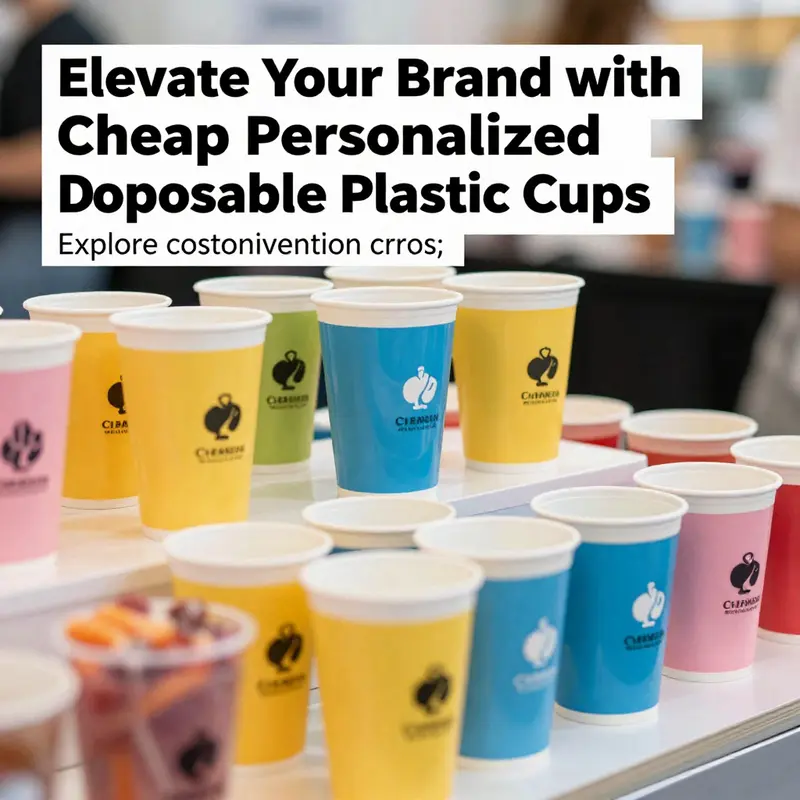
Personalized disposable plastic cups offer beverage businesses, from bubble tea shops to catering services, a unique opportunity to enhance brand visibility while providing practicality and convenience. These cups can be customized to reflect your brand identity and meet varied event needs, making them an excellent choice for restaurants, food trucks, and corporate events. In this article, we will explore four key aspects of cheap personalized disposable plastic cups: customization options that allow for creative branding, a cost analysis revealing their affordability, an assessment of their environmental impact, and the evolving market trends that show their growing relevance in today’s competitive landscape. Understanding these factors will empower your business to make informed decisions about using these cups effectively at events and in daily operations.
Brand on a Sip: Crafting Cheap, Personalized Disposable Plastic Cups That Stand Out
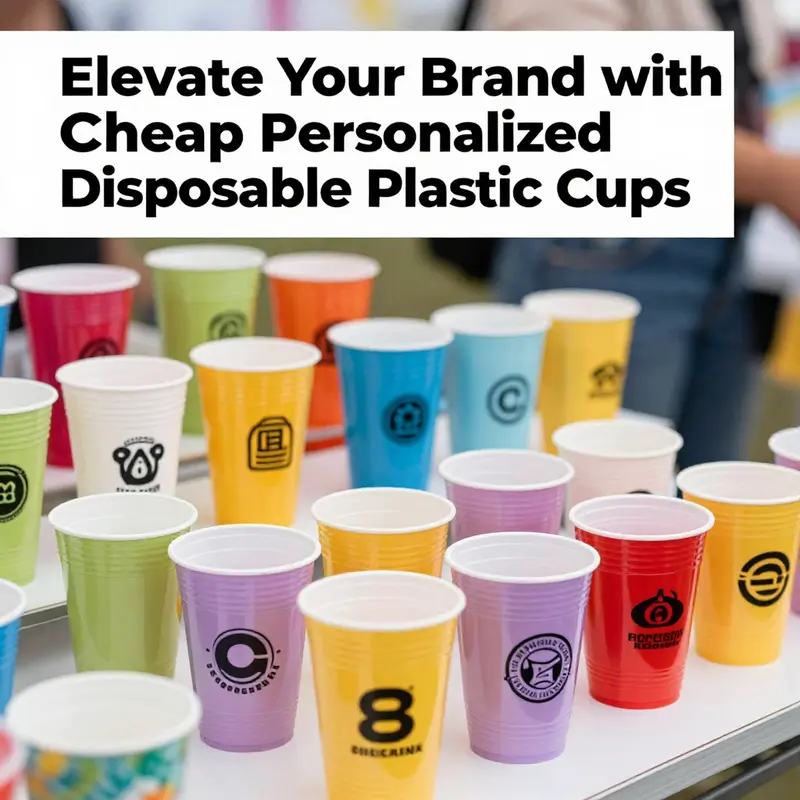
Customization on cheap, personalized disposable plastic cups is less about decorating a party favor and more about weaving a brand message into a moment of hospitality. When a guest reaches for a cup, they’re not just taking a drink—they’re engaging with a designed touchpoint that can reinforce identity, values, and memory. In this chapter, we explore how the seemingly simple medium of a disposable cup becomes a deliberate branding surface. The options are extensive, and the choices you make at the start ripple through aesthetics, cost, and the guest experience. The aim is not to create perfect objects in isolation, but to craft a cohesive, cost-effective mini-campaign that travels with the beverage from hand to memory.
At the core of customization is the choice of printing method, which shapes not only how a design appears but how durable and economical it is across thousands of units. Screen printing, digital printing, and heat transfer each bring different strengths to the table. Screen printing excels in bulk runs. It builds a robust, bold impression on curved surfaces and tends to keep costs predictable when you’re ordering in the hundreds or thousands. For simple, high-contrast logos and short color palettes, screen printing can deliver a clean, legible result even on the relatively thin walls of a disposable cup. Digital printing, by contrast, shines when color fidelity and full-color artwork are essential. It allows for gradients, photo-like images, and subtle shading that can capture brand photography in a single pass. The trade-off is that digital printing can be more sensitive to the cup’s curvature and may require higher minimums or tighter color management to ensure uniformity across long runs. Heat transfer offers another path, transferring a design from a substrate onto the cup’s surface. It can deliver highly detailed images and smooth color transitions, but it often requires careful handling to prevent cracking or peeling with moisture exposure or temperature changes. Choosing among these methods means weighing cost per unit against color richness, durability, and the scale of your order. When you’re planning a large event or a multi-month campaign, screen printing’s cost efficiency for bulk orders often makes it the most predictable choice. For smaller batch runs or campaigns that demand photo-quality imagery, digital printing provides the flexibility you need, while heat transfer can serve specialized designs that require fine detail.
The actual surface you’re printing on is just as important as the method you choose. Customization is typically applied to standard cup sizes, with 12 ounces and 16 ounces being the most common. The choice of size is driven by the beverages you intend to serve and the guest experience you want to create. A 12-ounce cup offers a comfortable grip for water, juice, or light beverages at a reception, conference, or casual gathering. A 16-ounce cup gives a bit more presence for casual summer events, longer sessions, or when you want a higher visibility canvas for your artwork. Surface area matters as well; a wrap-around design that travels around the full circumference can deliver more brand storytelling than a single, small logo. For those who want even more impact, larger sizes can be customized, though they bring additional considerations for legibility and wall thickness. Cup shapes also come into play. Round cups present a familiar silhouette that works well with wrap-around art, while straight-sided or tapered designs can create unique visual dynamics. A wrap-around motif that begins at the base and continues to the rim can work especially well on straight-sided cups, creating a continuous brand arc as the cup is handled, passed, and sipped.
Color choices further shape how a cup communicates. Transparent options, generally tied to PETE-based cups, can showcase a logo or artwork against the cup’s own translucence, lending a modern, light-touch aesthetic. Solid colors provide a strong backdrop for bold, high-contrast artwork that remains legible even from a distance. When color is used strategically, you can align the cup’s hue with your event theme or brand palette, while letting the printed artwork do the heavy lifting for brand recognition. The fidelity of color depends on the printing method and the quality of the artwork. Designers often work in Pantone or CMYK systems to ensure alignment between digital proofs and the final printed result, with the caveat that some hues may shift slightly on plastic surfaces because of light scattering and the gloss level of the cup. More complex multi-color designs benefit from proofs during the pre-production stage to avoid misalignment or color bleed. This is where the value of a reliable print partner becomes evident, because a well-managed proofing process helps ensure the final cups reflect the intended brand story rather than a close approximation.
Lids and straws are not mere accessories but design elements that knit the entire cup presentation together. Customizing lids and straws to match the cup design reinforces cohesion and elevates the user experience. A matched color lid can visually pull the branding upward, while a straw color that echoes the design creates a more finished appearance. In some cases, a contrasting lid color can be used to segment different beverage options or to encode information about flavors or temperatures in a subtle, visual way. The lighting of the event space also influences how a lid and straw impression is perceived; gloss finishes can catch and reflect light in dynamic ways, while matte surfaces read more subdued. When planning the full package, consider how the cup’s finish, lid style, and straw color contribute to a consistent, memorable moment.
Pricing is a practical anchor for decision-making. Bulk orders for cheap personalized plastic cups can begin at around 100 units, with unit costs sometimes as low as a little over a dime, depending on the printing method, color complexity, and surface area involved. The economics of customization depends on a few levers: the number of colors in the design, whether you’re printing a full wrap or just a logo, the complexity of the artwork, and the size of the order. A full wrap that covers the entire exterior will generally cost more than a single-logo application, but the impact can be far greater. For budget-conscious campaigns, a two- or three-color wrap with a bold typographic treatment can deliver strong brand visibility without inflating costs. The scale of production matters as well; bulk pricing often hinges on lower per-unit costs achieved through higher volumes and more efficient production runs. The balance between artistry and economy is a constant negotiation: you want enough impact to be noticed, but not so much that the price per cup undermines the overall event budget. A pragmatic approach is to pilot a small batch with a wrap-around design, gather feedback on legibility and appeal, and then scale up for subsequent orders if the response is favorable.
Beyond the mechanics of printing and color, the choice of materials and the cup’s physical feel can influence perceived value. The walls of standard disposable cups tend to be thin, which can give a lightweight, economical impression. Some operators offer insulated or double-walled variants for temperature retention and a more substantial feel, which can slightly raise the price but may improve user satisfaction for hot beverages or longer events. In all cases, the ultimate impression is shaped by how well the branding integrates with the beverage experience. A well-designed cup becomes a conversation starter, a cue for guests to share a moment of brand recognition, and a tiny, portable billboard that travels from table to tray to memory.
Design considerations extend to legibility and durability. A logo that reads clearly, even at a glance, usually benefits from high-contrast color combinations and adequate white space around important elements. A simple, bold mark can often outperform a complex, multi-element design on a small surface. Similarly, ensure your artwork remains legible when viewed from various distances and angles, since guests will encounter the cups in different lighting and stacking configurations. The durability of the print matters as well. Some finishes resist smudging and moisture better than others, especially on thin-walled cups that endure condensation. The right balance of ink coverage and surface treatment helps keep logos crisp through the event’s duration and into post-event disposal, if applicable. These decisions are not merely aesthetic. They influence how guests interpret the brand in the moment they hold the cup and in the memory they carry afterward.
Sustainability remains a key consideration, even when the pursuit is affordability. Many of these cheap disposable cups are not widely recyclable in municipal programs, which raises questions about environmental impact. This reality has spurred ongoing work in material science, with growing options for biodegradable or recycled-content cups, as well as responsible disposal practices that help minimize waste. When you choose to customize for a budget event, you can still pursue responsible choices by selecting materials with lower environmental footprints where possible, and by reinforcing clear disposal messaging at the event. The ability to align branding with sustainability narratives—without compromising cost or design integrity—can become a meaningful part of the guest experience, reinforcing both brand values and participant responsibilities.
To realize an effective customization program, pairing artwork with practical production steps is essential. Prepare your design files with appropriate resolution and vector elements so the printer can reproduce clean lines at scale. Provide color specs in Pantone or CMYK as appropriate for the chosen process, and include a clean, real-world proof that demonstrates how the final cups will appear under typical event lighting. This reduces the risk of surprises when the first run arrives and helps you stay within budget. A proofing process also offers a chance to test the readability of any text on the cup, which is critical for event messaging, sponsor recognition, or calls to action. Remember that the cup’s curvature can affect how the design looks in three dimensions, so proofs should be tested on the exact cup shape and size you plan to use. When the design needs to be adaptable for various event themes, a modular approach can be helpful. Create a core brand element—such as a logo or emblem—that stays constant, then layer seasonal or event-specific messages within a restrained color palette to maintain visual coherence without sacrificing the flexibility you require.
The choice of customization path is also a decision about the audience and the setting. A sports tournament might value bold, highly legible numbers, sponsor logos, and team colors, printed with strong contrast for visibility from a distance. A wedding or corporate reception may favor elegant typography, gold- or silver-toned accents, and a more restrained color approach that harmonizes with the venue’s decor. In both cases, the cup’s role is to serve the beverage while reinforcing a moment of branding that guests can recall after the event. The best practices involve a minimal risk of muddied color or unreadable text, a cohesive alignment between the cup design and the event’s theme, and a manufacturing plan that scales with attendance without sacrificing quality.
As you consider the broader workflow, don’t overlook the potential for a linked design ecosystem. A cup that features consistent typography, color accents, and imagery can be extended into other event materials, creating a unified brand presence. If you want to explore related options that also emphasize mass customization for drinkware, you can check a related page that discusses disposable, wrapped designs on a similar vessel type. This cross-reference illustrates how the same design decisions translate across different formats while staying within budget constraints. For a related example of a wrap-around surface print on a sip-ready vessel, see this disposable single-wall paper cup with lid, which demonstrates how a cohesive design language can be extended beyond plastic into other beverage vessels. disposable single-wall paper cup 12oz-16oz kraft coffee cup with lid.
The practical takeaway is that customization of cheap disposable cups is a balancing act. You weigh the wow factor of a full-wrap, multi-color design against per-unit costs and lead times, all while keeping an eye on durability, legibility, and the environmental footprint of the choice. You plan for the long tail of the event—from the moment guests receive the cups, through the drink they enjoy, to the memory they carry afterward. You consider the size and shape of the cup as a canvas, the printing method as a technique, the color strategy as a message, and the lid and straw as the finishing touch that seals the design narrative. And you stay open to iterations. A pilot run of 100 or 500 cups can reveal how a design reads in real-world conditions—the lighting in the venue, the way condensation interacts with ink, and how well the color remains consistent across batches. If the pilot is successful, the same approach can be scaled to larger quantities with predictable costs, preserving both design integrity and budget discipline. This is the essence of effective customization for affordable drinkware: a thoughtful approach to design, production, and distribution that makes every cup a small, portable ambassador for the brand or event.
For readers seeking broader context on how these customization practices fit into a larger branding strategy, consider how disposable cups can serve as a low-cost, high-impact touchpoint within a multi-channel plan. They can be the tangible, everyday reminder of a message that targets attendees during an event and then resonates afterward in photos, social media posts, and conversations. In that sense, the cup becomes more than a container; it becomes a micro-billboard that travels through rooms, conferences, and gatherings, extending the life of the brand impression at a fraction of the cost of more formal signage. The practical advice here is simple: design with intent, test with small runs, and scale thoughtfully. With careful choices about printing methods, sizes, shapes, colors, and finishing touches, cheap personalized disposable plastic cups can deliver a surprisingly strong return on investment for events ranging from intimate celebrations to large-scale public gatherings. They offer a familiar, accessible surface for storytelling, one that participants grasp in the moment and carry forward into memory.
External resource: For additional details on available customization services and pricing, industry readers may review listings on broader marketplaces that showcase bulk, personalized drinkware solutions. External link: https://www.alibaba.com/product-detail/Cheap-Plastic-Cups-Personalized-999_1600437855941.html
Branding on a Budget: The Cost Dynamics of Cheap Personalized Disposable Plastic Cups
An overview of the cost dynamics for cheap personalized disposable plastic cups, focusing on four key levers—material, size, customization complexity, and order volume. The discussion covers typical unit costs for standard PET or PP cups when ordered in bulk, the premium often associated with eco-friendly materials, and how print complexity or brand color count affects per-unit pricing. It also examines MOQs, setup fees, and how shipping and handling influence the final per-cup cost in large-scale orders. Finally, the piece notes how bundled offerings and sustainability considerations can add or offset value in a real-world event budget.
From Print to Landfill: Tracing the Environmental Footprint of Cheap Personalized Disposable Plastic Cups

When event planners and marketers choose cheap personalized disposable plastic cups, they often weigh convenience and impact in the same decision matrix, sometimes underestimating the longer shadow cast by a glossy logo and a bright color. These cups, designed for single use, stitch a quick success story for gatherings and brands alike, but their environmental footprint extends far beyond a splash of color at a table. To understand why, we must follow a lifecycle that begins with raw materials and ends, more often than not, in a landfill, a storm drain, or a roadside litter pit. This chapter surveys the path from production to disposal, peering into the chemistry of the plastics, the realities of recycling, and the broader questions about sustainability that buyers and policy-makers increasingly confront. In doing so, it keeps a steady eye on the trade-offs between short-term practicality and long-term ecological costs, and it foregrounds the kinds of shifts that could lessen the net harm without sacrificing the benefits that personalization and disposability can offer at scale.
The most common cups in this category are made from petroleum-based plastics such as PET (polyethylene terephthalate) and high-impact polystyrene (HIPS). PET is favored for its clarity, strength, and relatively low cost, while HIPS provides rigidity and a smoother surface for printing. Both materials originate from fossil fuels, and their production consumes energy and water, contributing to greenhouse gas emissions and resource depletion. The environmental burden, therefore, starts before the first guest even twists a cap or takes a sip. The factory furnace, the sheer volume of resin needed for bulk orders, and the energy mix of the production location all compound the life-cycle footprint. Even at the outset, the choice of material matters—not only for its performance but for how it fits into the broader circular economy that a growing share of buyers claim to care about.
A crucial climate-linked reality follows: the recycling potential of these cups is highly variable. PET is technically recyclable in many municipal programs (often identified by Recycling #1), but the real-world rate of recovery is far from universal. A large share of cups ends up in landfills or as litter, not because the material cannot be recycled, but because contamination during collection, limited local infrastructure, and the sheer volume of disposable items overwhelm systems that were never designed to handle a constant stream of small, glossy cups. Even when recycling occurs, the process is energy- and water-intensive. The quality of the plastic degrades with each cycle, limiting how often it can be remanufactured into food-contact items. This is not merely a matter of a one-way path; it is a multistep journey where every stage introduces losses and inefficiencies. In practical terms, a cup that is recycled is often downcycled into non-food-grade products, which then narrows the future reuse options.
Personalization adds another layer of complexity. Inks, adhesives, and coatings used to print logos or messages can contaminate the plastic stream if the cups are collected together with other recyclables. Even when the cups are separate from trash, the presence of ink and glue can require additional processing to remove or separate inks from the polymer base. Some printers use solvent-based inks or layered coatings to achieve high-fidelity branding, and while these finishes enhance the perceived value and memorability of an event, they can complicate downstream recycling. The result is that many customized cups, despite being made from recyclable feedstocks, contribute to lower-quality recyclables in the stream, or they end up discarded because the cost and complexity of proper separation outweigh the perceived benefits of recycling.
Biodegradable and compostable alternatives—such as polylactic acid (PLA) derived from cornstarch—appear, on the surface, to offer a more sustainable narrative. Yet the effectiveness of these options hinges on the availability of industrial composting facilities that can maintain the high temperatures and specific conditions required to break down these materials efficiently. In many communities, industrial composting is limited or nonexistent, and even when a facility exists, the streams of compostable plastics and conventional plastics are often not properly separated. If a compostable cup enters a standard organics or mixed-waste stream, it may not degrade as intended. In some cases, it behaves much like a conventional plastic in the environment, slowly fragmenting into microplastics or simply adding to the problem at landfills. The overall takeaway is that “biodegradable” or “compostable” is not a universal guarantee of sustainability; it is a procedural promise that depends on specific waste-management practices, which are not uniformly available.
This is where design plays a pivotal role. The drive for personalization can be aligned with environmental stewardship if brands and event organizers prioritize materials and processes that minimize harm across the lifecycle. For instance, printers who invest in water-based inks or inks with lower VOC emissions and adhesives that are easier to separate from polymers can help preserve the recyclability of the base plastic. More broadly, choosing packaging options that reduce the need for coatings or additive layers can improve the odds that cups will remain viable feedstock in recycling streams. Even subtle choices—such as selecting cups with thinner walls where appropriate or opting for one-material constructions—can make a measurable difference when multiplied across thousands or millions of units.
Policy and consumer behavior both play outsized roles in determining the environmental fate of these cups. In markets with strong take-back or return programs for single-use items, disposal can be channeled into systems designed to recover materials responsibly. In places where such infrastructure is weak or absent, the onus falls on buyers to curtail consumption or to opt for alternatives. A growing body of evidence points to a simple but powerful rule: minimize single-use packaging when possible. Replacing disposable cups with reusable drinkware—especially in venues where guests can return cups for cleaning and reuse—or choosing durable, easily recyclable single-use options can shift the balance toward lower overall impact. The best outcome often emerges not from a single policy or product change but from a coordinated mix of consumer education, improved material choices, and investment in end-of-life infrastructure.
The practical implications for event organizers, contractors, and suppliers are tangible. When asked to deliver a branded experience on a tight budget, the pressure to default to cheap disposables can be strong. Yet the cost calculus should consider the hidden price of environmental externalities—the costs that society bears when waste streams are mismanaged or when ecosystems absorb microplastics and chemical additives. In this sense, the choice of a personalized disposable cup is not simply a matter of price per unit; it is a decision about resource stewardship, community responsibility, and the long-term maintenance of public spaces that host events of all sizes. If a chapter of a magazine or a blog can be judged by the clarity of its argument, this one urges readers to see the cup as a proxy for a broader design philosophy: what kind of footprint do we leave behind when we choose convenience over durability?
Within this broader frame, there is an opportunity for meaningful, incremental progress. Some suppliers are moving toward eco-friendly design choices, acknowledging both the branding needs of customers and the environmental realities of waste streams. For example, there are options that combine branded surfaces with print-friendly, single-material substrates that improve recyclability. In the context of this chapter, a meaningful example is the development of eco-friendly, printed-logo cups that aim to simplify disposal and maintain branding integrity at the point of use. These options can serve as gateways to better practices without demanding a complete overhaul of current event-planning workflows. For readers seeking practical examples of such approaches, one representative model demonstrates how a single concept—the combination of a logo with a cold-beverage cup—can be aligned with waste-management realities if the ecosystem is prepared to receive and process the material in a responsible way. A related resource that discusses this kind of approach is available here: eco-friendly-printed-logo-cold-beverage-cup-paper-cup-with-lid.
The broader context for these shifts is not just a matter of corporate responsibility. It intersects with public policy and consumer expectations about plastic waste. The U.S. Environmental Protection Agency has detailed the lifecycle impacts of plastic products, including disposable cups, and highlights the challenges in recycling, waste management, and sustainability efforts. This external reference helps frame the scale of the problem and the complexity of delivering practical, scalable solutions. For readers seeking a comprehensive, evidence-based overview, the EPA’s overview of plastic waste can be consulted as a foundational resource: https://www.epa.gov/sustainable-management-plastics/overview-plastic-waste. This guideline underscores that reducing reliance on disposable packaging is not only a market opportunity but also a public-interest imperative that touches neighborhoods, local economies, and natural systems alike.
If we zoom out briefly, the conversation about cheap personalized disposable plastic cups becomes a mirror for a broader transition in consumer culture. It reflects how choices made in the short term—gimmicks, glitter, and promotional slogans on a disposable container—play out in the long term through energy use, emissions, and the health of ecosystems. The path forward is neither to demonize every disposable item nor to pretend that personalization has no place in modern life. Instead, it is to design within constraints: recognize when a disposable solution is appropriate, and ensure that its entire life cycle has a plan for recovery, reuse, or safe disposal. That often means prioritizing reusables for frequent-use settings, opting for materials with higher recyclability, and investing in consumer education and municipal infrastructure that make proper disposal the easier choice.
In practice, progress may manifest as a layered approach. For high-volume events, organizers can adopt a mixed strategy: use reusable cups where feasible, offer branded disposable cups made from materials that are easier to recycle, and provide clear, well-signposted disposal options that minimize cross-contamination. Marketers and suppliers can help by sharing transparent lifecycle data and by labeling cups with disposal guidance that aligns with local practices. The dialogue between buyers and suppliers then becomes a dialogue about systems, not just products. The added value of personalization should be measured not only by the visibility of a brand, but by the degree to which the entire packaging solution respects waste streams and supports community-based waste management.
Ultimately, the environmental impact of cheap personalized disposable plastic cups hinges less on the color of the branding and more on the choices surrounding materials, manufacturing, disposal, and the systems that connect those stages. The most effective path toward reducing harm does not hinge on a single silver bullet. It requires a confluence of durable design, responsible production, informed consumer behavior, and purposeful policy. In that convergence, the future of event drinkware can be both economically viable and environmentally responsible. By embracing alternatives where appropriate, by enabling recycling where possible, and by educating participants about the implications of disposal, the industry can move toward a model in which personalization and sustainability are not mutually exclusive but mutually reinforcing.
External resource consultable for a broader perspective on plastic waste management is provided here: https://www.epa.gov/sustainable-management-plastics/overview-plastic-waste. And for readers looking to explore concrete eco-friendly options that pair branding with responsible disposal, the following internal link offers a practical example of a one-material, label-friendly approach that can be integrated into event supply chains: eco-friendly-printed-logo-cold-beverage-cup-paper-cup-with-lid. The combination of a thoughtful material choice, a clear end-of-life plan, and a branding strategy that respects local waste systems can help ensure that a moment of celebration today does not become a barrier to a cleaner environment tomorrow.
Branding at Scale: How Cheap, Personalized Disposable Cups Are Shaping Modern Events and Everyday Hospitality
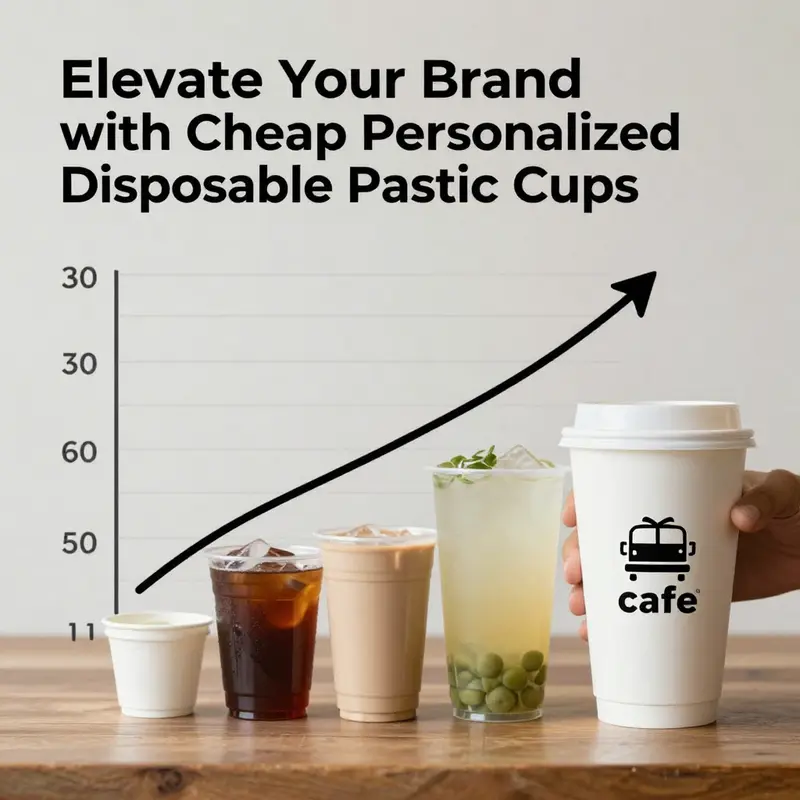
The market for cheap personalized disposable plastic cups is not simply a tale of low prices and fast turnover. It is a study in how organizations and individuals balance cost, branding, hygiene, and convenience in a world that increasingly expects both customization and sustainable practices. The latest market analysis points to sustained growth, with a global disposable cups market projected to expand at a compound annual growth rate of about 9.8% from 2026 to 2033. This trajectory is less about one-off novelty and more about a durable shift in how beverages are served, branded, and discarded across hospitality, events, and food service. In this context, the simple cup becomes a critical instrument for delivering experience, signaling identity, and simplifying logistics in high-volume settings.
A core driver of this momentum is the convergence of consumer demand for hygiene with a persistent need for convenience. Even as disposable products face scrutiny over environmental impact, the appetite for single-use solutions remains strong in places where speed, sanitation, and flexibility matter most. Once the dominant concern was cost per unit; now it is cost per experience. Brands and event organizers increasingly view the cup as a canvas for storytelling, a durable medium that travels from procurement to service to memory. The shift is not about sacrificing quality for price. It is about optimizing both, so that a low-cost, customizable cup can carry a stronger message and perform reliably in varied venues—from a sun-drenched outdoor festival to a tightly scheduled conference lounge.
Among the trends shaping this market, material choice stands at the forefront. Traditional plastics still play a major role, but there is a noticeable pivot toward polypropylene (PP) cups in many regions. PP offers durability, better heat resistance, and a more reassuring sense of recyclability than some older plastics. In markets like India and other parts of Asia, PP cups are widely used for both hot and cold beverages, yielding a safer, more durable option for daily service and special occasions alike. Chilled beverages in PP cups benefit from thicker walls that resist condensation and leakage, a practical feature when ice is involved and service sequences move quickly from crowd mingling to toasting and refills. Hot beverage cups engineered for higher temperatures also reflect this safety-first approach, accommodating cafes and roadside vendors that must balance speed with standup performance in variable environments.
This material shift underpins a broader promise: cups that perform under pressure while remaining affordable. The advantage is twofold. First, the sturdier structure reduces the risk of spills and customer dissatisfaction, particularly in busy event settings or outdoor venues affected by wind, heat, or uneven surfaces. Second, the potential for better recyclability and compatibility with regional recycling streams appeals to buyers who want to demonstrate environmental responsibility without paying a premium. The PP trajectory is not universal, and many buyers still rely on traditional plastics for cost reasons or supply chain familiarity. Yet the appetite for safer, more robust, and more recyclable solutions is growing, and it is supported by a rising ecosystem of suppliers who can offer exams of thickness, rigidity, and heat resistance tailored to specific beverage profiles.
The customization trend is the second pillar driving this market. Personalization goes well beyond a logo on a cup. It encompasses colors, messages, event-specific branding, and even seasonal design elements that align with campaigns or venue aesthetics. The value proposition here is practical and strategic. Custom cups can act as portable billboards, extending brand reach beyond the event space to social posts, photos, and user-generated content when guests share images of their branded cups. The economics of customization have improved with advances in label printing, digital decoration, and efficient lot production. Suppliers can now handle bulk orders with relatively quick turnaround times, offering a spectrum of sizes and formats. A typical scenario might involve 500ml or 16oz cups with a transparent base that supports bold logos and clear messages, packed in standard cartons for international distribution. While the exact configuration varies, the core principle remains constant: impact at scale without breaking the budget.
This trend toward customization dovetails with a broader, almost paradoxical emphasis on affordability. The market rewards solutions that can be deployed across a wide range of events—weddings, corporate gatherings, sports tournaments, and community fairs—without forcing organizers to choose between branding and budget. In practice, this means tiered offerings that blend price-per-unit with design options and size variations. For example, cheap disposable party cups become a dependable baseline, while add-ons like color accents, specialty finishes, or optional lids provide opportunities to elevate the perceived value when the audience expects a more premium experience. Some buyers even pair cups with complementary disposable tableware, such as cutlery sets, to create a cohesive, one-stop solution that streamlines procurement and on-site logistics.
As volume scales, so too does the complexity of supply chains. The same market dynamics that make bulk purchases appealing—low per-unit costs and predictable delivery windows—also create exposure to fluctuations in raw materials, transport, and capacity. Buyers therefore increasingly rely on suppliers who can offer stable pricing, transparent terms, and reliable fulfillment across multiple regions. One practical outcome of this is standardization around a few core cup sizes and formats that are compatible with common event workflows. The 12 oz size remains a prevalent default for water, soft drinks, and most cold beverages, balancing capacity with hand-friendly ergonomics and a broad range of lid and sleeve options. In many contexts, a standard size reduces the complexity of procurement, inventory, and storage for both organizers and venues, while still leaving room for branded customization that resonates with attendees.
Beyond the economics of production and branding, environmental considerations are shaping both the design and messaging around these cups. Public awareness of plastic waste has become a baseline expectation for many buyers. Environmental narratives are no longer a peripheral add-on; they influence choice and supplier selection. While the easiest path is to select the cheapest option, more buyers are scrutinizing end-of-life outcomes and disposal practicality. In some markets, this has spurred interest in materials that offer improved recyclability or compatibility with local waste streams. The dialogue around sustainability is nuanced. It favors a pragmatic approach that acknowledges ongoing innovation while recognizing that many disposable cups, by their very nature, present recycling challenges in municipal programs. As a result, brands and event planners increasingly seek transparency about material composition, recyclability, and post-use handling. The best proposals articulate a clear path from purchase to disposal, with practical steps for guests and venues to minimize environmental impact.
A related trend concerns how cups are integrated into broader disposable-tableware ecosystems. The trend toward one-stop solutions—cups paired with lids, straws, and cutlery—appeals to event organizers seeking to simplify logistics. This bundling reduces vendor touchpoints, speeds up service, and can deliver additional cost efficiencies when sourced from a single supplier. It also provides a more cohesive branding canvas, since colors and design motifs can be extended across multiple items. The result is a more polished guest experience and a more streamlined supply chain that reduces handling, warehousing, and the risk of stockouts during peak moments. Even with these efficiencies, buyers remain attentive to the specific needs of their audience. Outdoor festivals may require more rigid cups with condensation resistance, while formal events might demand a cleaner, more understated aesthetic that still communicates a brand message.
The post-pandemic landscape has intensified the focus on hygiene, which in turn sustains demand for disposables. Vendors note that guests still value sanitary handling and quick service. The single-use format supports rapid turnover in venues with high guest volumes or where event safety protocols require easy waste separation and cleaning avoidance. Yet the industry is keenly aware that sustainability cannot be sidelined. This tension has accelerated experimentation with more recyclable materials, clearer labeling, and guidance on proper disposal. It has also underlined the importance of design choices that minimize waste—such as optimizing cup size for typical consumption patterns, thereby reducing over-ordering and leftover stock at the end of an event.
Regional dynamics shape how these trends manifest. In rapidly developing markets, the affordability and ease of procurement are decisive. Buyers in these regions often optimize for a balance of cost and performance, prioritizing heat resistance and durability to support a mix of hot and cold beverages within the same event footprint. In more mature markets, there is greater emphasis on branding sophistication, nuanced packaging, and a more explicit sustainability narrative. Yet even in established markets, price pressure persists. Organizers seek price ceilings that align with promotional budgets while preserving the ability to customize and still meet quality expectations. The result is a market that rewards suppliers who can deliver consistent quality, flexible quantities, and reliable service across diverse event types and geographic regions.
The strategic implications for buyers are clear. To leverage the market’s momentum, they should think of cups not as standalone items but as elements of a broader brand and operations strategy. Size and material selection must align with beverage profiles, service pace, and waste-management capabilities. Customization should be planned as a staged investment, with the option to scale or pivot designs depending on audience feedback, sponsorship requirements, and seasonal campaigns. Procurement teams can reduce risk by negotiating with suppliers who offer transparent pricing tiers, predictable lead times, and robust quality controls. They can also benefit from suppliers who provide design guidance, sample programs, and turn-key packaging solutions that simplify on-site execution.
All this points toward a future where cheap personalized disposable cups remain central to how events and everyday hospitality express identity, deliver convenience, and manage environments. The ongoing evolution of materials—especially the broader adoption of PP in regions where its advantages shine—will enhance durability and safety while offering pathways to more sustainable practices. Customization will continue to be a primary driver of value, as brands seek to translate engagement into tangible impressions across screens and in photos shared across social networks. At the same time, the industry will keep addressing the environmental paradox inherent to disposables. Innovations in material science, better recycling infrastructure, and clearer consumer guidance on disposal will shape a more responsible path forward, ensuring that the economic and experiential benefits of inexpensive, personalized cups can be enjoyed without compromising the health of the planet.
For readers exploring the technical and standards-oriented dimensions behind these trends, the broader landscape offers additional nuance. In particular, analyses of material types and how they perform under different temperatures, handling conditions, and regulatory environments can provide deeper insight into decision-making at scale. A recent in-depth examination of PP disposable plastic cups in regional markets highlights how standards, types, and industry performance intersect to determine viability and growth trajectories. While that analysis focuses on a specific regional context, the underlying principles—material performance, lifecycle considerations, and market readiness—translate broadly to buyers seeking to optimize both cost and branding impact in the cheap personalized disposable cup segment. External readers can consult that analysis to connect the dots between material choice, regulatory expectations, and market dynamics. For further insights into standards and performance, refer to the external resource cited at the end of this chapter.
Within the practical realities of procurement, buyers should also consider how the available product configurations support or constrain their branding ambitions. A compact, reliable, cost-effective option with a strong surface that holds ink well can deliver high perceived value even at low unit prices. The choice between transparent and opaque cups, the thickness of the walls, and the compatibility with lids and sleeves can influence not only the guest experience but also the efficiency of service workflows. A well-designed customization plan acknowledges these factors. It uses branding to reinforce the event narrative while preserving agility to adjust in response to changing guest counts, weather conditions, or sponsorship arrangements. In this sense, the market trend toward affordable personalization is less about one-off hacks and more about sustainable, scalable branding infrastructure that event teams can deploy again and again with increasing confidence.
In closing, the current market climate for cheap personalized disposable cups reflects a mature, adaptive ecosystem. It balances the pull of low cost with the push toward better materials, stronger branding, and more responsible disposal practices. It recognizes that cups are not merely containers but are integral to guest experience, operational efficiency, and brand storytelling. As suppliers innovate on materials, printing technologies, and packaging logistics, buyers gain access to a broader range of options that meet diverse needs without forcing compromise between price and performance. The future suggests continued refinement of PP-based solutions, expanded customization capabilities, and greater alignment with circular economy principles. The cup, in its humble form, remains a potent symbol of hospitality and market adaptability—a small but telling indicator of how consumption, branding, and sustainability intersect in today’s economy.
External resource: For comprehensive insights into standards and performance of PP disposable plastic cups in India and related markets, see Benjamin Ross’s detailed analysis (January 28, 2026): https://www.industryinsights.com/pp-disposable-plastic-cups-india-complete-analysis-of-standards-types-and-industry-performance/.
Internal reference: A practical perspective on eco-conscious branding solutions can be found in the option described by suppliers for eco-friendly printed-logo single-wall paper cups, which illustrate how branding and sustainability can be combined in a single disposable offer. eco-friendly printed-logo single-wall paper cup.
Final thoughts
In summary, cheap personalized disposable plastic cups present a remarkable way for beverage businesses, event planners, and caterers to merge practicality with branding power. With a variety of customization options available, exposing your brand to a broader audience has never been easier or more effective. While cost-effective in bulk purchasing, it’s crucial to balance this with environmental considerations and stay informed about market trends that favor sustainable practices. As you plan your next event or look to enhance your beverage service, embracing personalized disposable plastic cups could prove to be a smart and impactful decision.