
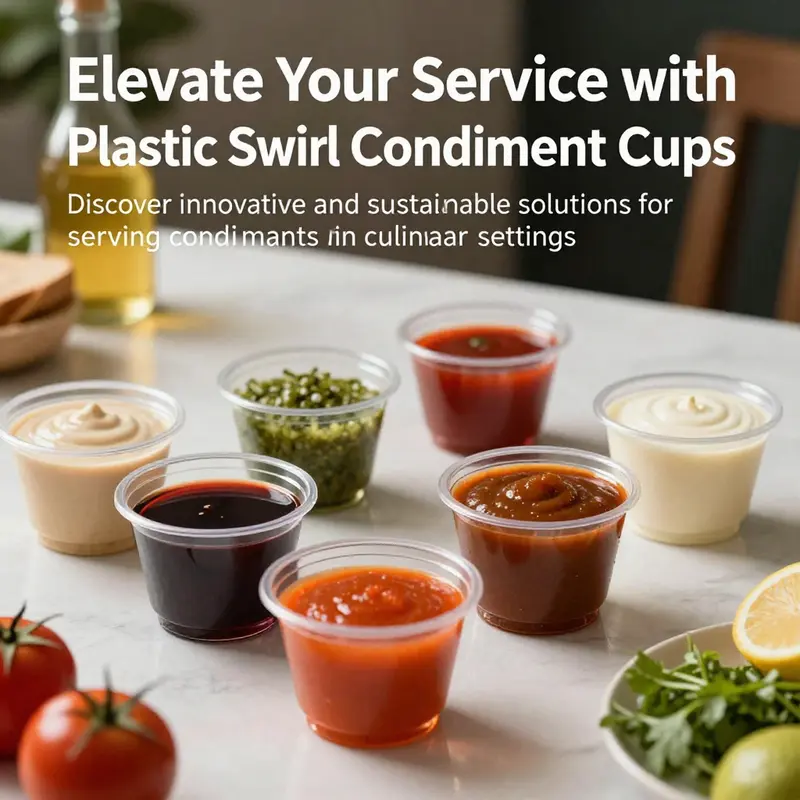
Clear plastic swirl condiment cups have become a staple in various culinary environments, offering a blend of aesthetics and functionality that meets the demands of modern food service. Whether you’re running a bubble tea shop, a bustling restaurant, or a food truck, these cups are designed to cater to your unique needs while ensuring quality and safety. In this exploration, we will delve into the diverse applications of these cups, highlighting their advantages over traditional options, the importance of sustainable production practices, and the current market trends shaping consumer preferences. By the end, you will have a comprehensive understanding of how these versatile cups can enhance your service and align with contemporary dining standards.
Swirl and Serve: The Essential Role of Clear Plastic Swirl Condiment Cups in Contemporary Culinary Settings

In the pace of a modern kitchen, small tools often carry outsized importance. The clear plastic swirl condiment cup is one such tool, blending visibility, grip, and hygiene to support fast, accurate service. Its transparent body showcases the color and texture of sauces, while the built-in swirl pattern aids handling, even when gloved. These cups are designed for one-time use, helping enforce portion control and reduce cross-contamination in busy settings from buffets to food trucks.
Designed with safety in mind, these cups are typically molded from PET or polypropylene, BPA-free and food-grade. A common one-ounce (approximately 30 ml) capacity aligns with samples, tastings, or accompaniments, and a snug lid protects contents during transport. The light, stackable design minimizes storage space and simplifies replenishment, supporting a smooth service flow even during peak hours.
From a sustainability perspective, many suppliers offer recyclable options and encourage responsible disposal. While disposables reduce risk and speed up service, operators can balance convenience with waste reduction by choosing compatible lids and integrating proper recycling streams into their operations. In short, clear swirl cups combine practical performance with clean presentation, making them a dependable workhorse in modern culinary environments.
Seeing Through Flavor: Clear Plastic Swirl Condiment Cups and the Power of Presentation
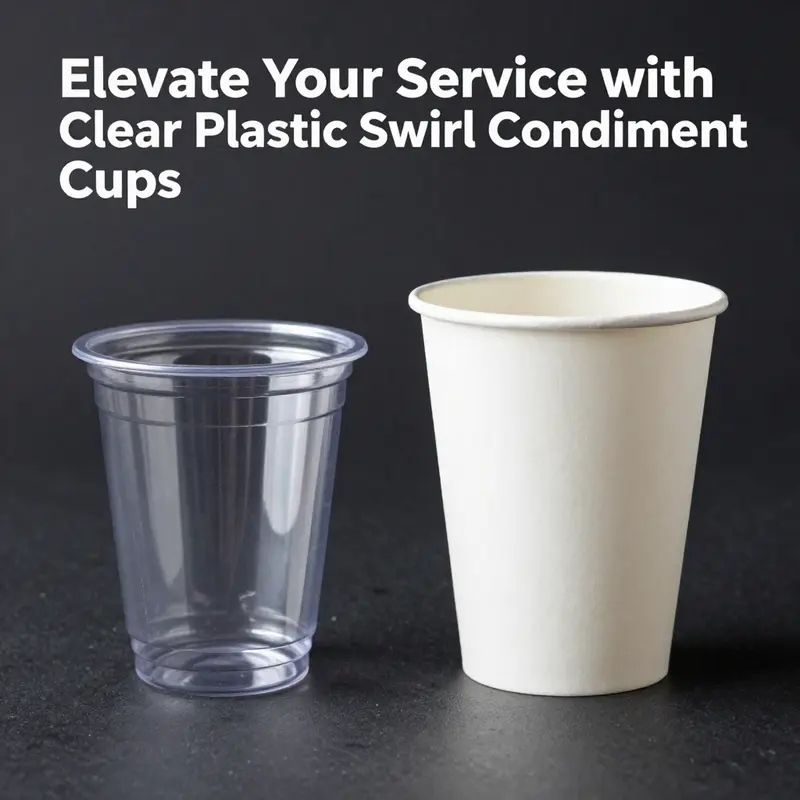
The choice of a serving vessel can be as consequential as the sauce itself. In the world of condiments, dressings, and small-batch sauces, what you see can shape what you buy. Clear plastic swirl condiment cups enter the scene as more than mere containers. They are instruments of transparency, ergonomics, and reliability that blend seamlessly into the fast tempo of modern food service and retail display. The very idea of a “clear” cup carries a promise: you, the operator, are offering a product unhidden by the vessel. The consumer, in turn, is invited to judge color, texture, and consistency at a glance. This visibility matters not only for aesthetics, but for trust. When a sauce glistens with the hue of ripe fruit or a dressing shows subtle layers of oil and vinegar, the moment becomes a silent, persuasive form of storytelling. The cup becomes a frame for the product, and the product’s story is read in real time, without a single word spoken between server and guest. In crowded buffets, quick-service counters, or tasting menus, that visual language is a critical advantage. It reduces cognitive load and speeds decision-making, which translates into higher impulse engagement and quicker cycles of consumption and repurchase. This is not merely about showing color, but about communicating freshness and quality through clarity itself.\n\nThe physical design of these cups reinforces what their transparency promises. They are typically crafted from food-grade plastics such as PET or polypropylene. These materials strike a balance between rigidity and lightness, ensuring that the cup maintains its shape even when perched on a crowded buffet line or nestled inside a takeout bag. The swirl pattern along the sides is more than decorative; it contributes to a tactile experience that guides handling without adding bulk. For staff, a predictable, uniform form reduces the risk of jams in tray stacks or spill during transport. For guests, it provides a familiar, intuitive shape that is easy to grip, even with gloved hands or damp fingers from a sauce-dampened spoon. The alignment of the rim is another practical benefit. A uniform, even rim adds stability for pouring and sampling. It minimizes wobble when a lid is attached or when the cup is set down on a crowded service station. In many operations, even small improvements in handling reduce breakage in transit and the need for replacement stock, which in turn influences overall waste and cost. In a world where every inch of space and every gram of material matters, a carefully engineered rim is as critical as the contents inside.\n\nOne of the strongest case studies for clear plastic swirl cups is how they support variety without sacrificing coherence. In a single line, a business can offer multiple sauces, dressings, or toppings in uniformly presented vessels. The cups come in various sizes and are designed to be compatible with standard lids, enabling easy branding opportunities without sacrificing function. This modularity matters for operators who need to balance assortment with consistency. A customer can recognize a familiar form across different products, ensuring brand or storefront recognition even when the lids change color or the product changes flavor. The result is a dining or sampling experience that feels deliberate and curated rather than improvised. The effect on perception is subtle but significant: uniformity signals reliability, and reliability lowers the perceived risk of choosing a new item. When a guest sees a transparent, neatly arranged display, they are more likely to sample rather than pass by, especially in self-serve contexts where the first impression can determine whether a line becomes longer or shorter.\n\nIn practice, the visibility offered by clear cups works hand in glove with the human palate. Color acts as a cue for flavor and quality, even before a bite is taken. A vibrant berry glaze, a golden honey-mustard drizzle, or a mint-green herb oil gains heightened appeal when it sits in a vessel that does not obscure its optics. In multi-component sauces, layers of color reveal the ingredients and their freshness. The cup becomes a viewing window into the culinary craft. That is not to say color alone guarantees preference; texture and consistency are equally important, and the clear cup makes textural cues legible. Whether a glaze is glossy and smooth or a sauce is speckled with seeds, the vessel preserves a faithful display of the product’s character. This is particularly relevant for tasting menus, where guests often sample several items in quick succession. The clarity of the cup contributes to a streamlined, visually coherent progression, guiding the guest from one flavor to the next with minimal cognitive friction.\n\nDurability remains a cornerstone of the advantage equation. In the fast-moving settings where these cups thrive, durability translates into freshness retention and spill resistance. Glass may offer some aesthetic benefits, but it cannot survive the same rough-handed handling or the disposable, single-use model that many operations rely on to manage sanitation and cost. PET and PP plastic cups, when manufactured to high standards, resist cracking and leakage while preserving the integrity of the contents. They help maintain product freshness by minimizing exposure to air and reducing the likelihood of leaks during transport or self-serve. Importantly, this durability does not come at the expense of safety. Food-grade plastics used for these cups are designed to meet stringent standards, ensuring that the materials do not interact with the contents in undesirable ways. For dessert counters and deli showcases, where multiple items are displayed side by side, a robust vessel reduces cross-contamination risks and keeps samples visually pristine even after hours of display.\n\nAnother dimension of practicality is the compatibility of these cups with lids and accessories. The combination of a precise diameter and a reliable seal means that contents stay fresh during service, storage, and customer transport. The lids prevent spills during parking lot pickups and bagging, a consideration that matters in catering and event settings as well as dine-in or takeout operations. The ability to customize lids with branding or labeling adds a layer of professional polish without complicating the serveware ecology. In essence, the cups deliver a reliable, modular system that supports both the aesthetic goals of presentation and the operational demands of containment and hygiene. The simplicity of this system matters: it minimizes the need for specialized storage solutions and reduces the learning curve for staff, enabling a quicker ramp-up for new team members or seasonal staffing surges.\n\nThe economics of this choice also deserve close attention. The initial material cost of clear plastic swirl cups can be higher than that of basic, unadorned alternatives. Yet this premium is often offset by years of performance benefits. Fewer breakages in transit translate into fewer replacement cups. Reduced waste due to leaks and spills means less product loss and cleaner service areas, which in turn lowers labor time spent on cleanup and restocking. The visual appeal contributes to higher guest satisfaction, which can influence repeat business and overall revenue, particularly in settings where customers assess takeout and sampling options with a quick glance. Even when viewed through the lens of sustainability, the ability to reuse or recycle the cups in appropriate streams can soften the environmental calculus. While single-use by design in many contexts, the cups’ recyclability and compatibility with recycling programs can align with broader organizational commitments to responsible packaging. In practice, the decision to select a clear plastic swirl cup often rests on an integrated cost-benefit assessment that weighs durability, display value, handling efficiency, and waste reduction as a single, coherent value proposition rather than a checklist of isolated benefits.\n\nBeyond the immediate operational considerations, the visual language of clear cups can influence perceived value in subtle but meaningful ways. Presentation is a form of communication that complements flavor. When a guest encounters a tidy, transparent vessel that presents the product in its true colors and textures, they may perceive the item as fresher and higher quality. This perception can positively affect willingness to sample, which, in turn, drives trial and conversion in both retail and food-service contexts. The swirl pattern itself contributes to a refined appearance that signals attention to detail. It is a cue that the operator has chosen a design that respects both form and function, a choice that implies care in sourcing, portion control, and presentation. In tasting sessions or demo events, the ability to clearly view the product can facilitate quicker feedback collection and more informed consumer choices, ultimately supporting better product development decisions.\n\nThe advantages extend into sustainability planning as well. Modern packaging decisions are rarely made in isolation. Clear plastic swirl cups can be part of a larger strategy that prioritizes transparent supply chains and recyclable materials. The choice of PET or PP aligns with established recycling streams in many regions, which can help facilities plan for waste management with greater confidence. While no single packaging solution eliminates environmental impact, those that maximize reuse, minimize waste, and simplify sorting offer meaningful improvements. Businesses that communicate these choices clearly to customers often reinforce trust and transparency, two attributes that can differentiate brands in crowded markets.\n\nIn sum, the case for clear plastic swirl condiment cups rests on a convergence of visual storytelling, practical durability, modular design, and economical sense. They illuminate the product in the most literal sense—letting color, texture, and composition shine through—while supporting efficient service, reliable containment, and consistent branding. They are the kind of incremental improvement that compounds across a service line: a more confident host, a cleaner station, quicker service, and a more engaging guest experience. In a competitive landscape where small choices accumulate into big advantages, the clear cup with its distinctive swirl becomes a visible testament to thoughtful packaging design. It embodies a philosophy where clarity isn’t merely about optics; it is a strategic tool that aligns aesthetics, hygiene, and efficiency toward a shared purpose: to present good food well, and to do so with confidence that the vessel supports the product rather than competing with it.\n\nFor readers seeking a deeper dive into the performance metrics and material properties that underpin these benefits, a related external resource offers a comprehensive look at how clear plastic containers are structured and evaluated across industries. This guide provides context for the durability, transparency, and containment considerations discussed here, grounding practical recommendations in established metrics and industry standards. External resource: https://www.benjaminross.com/blog/clear-plastic-ice-cream-containers-guide
From Clarity to Circularity: Reimagining the Lifecycle of Clear Plastic Swirl Condiment Cups
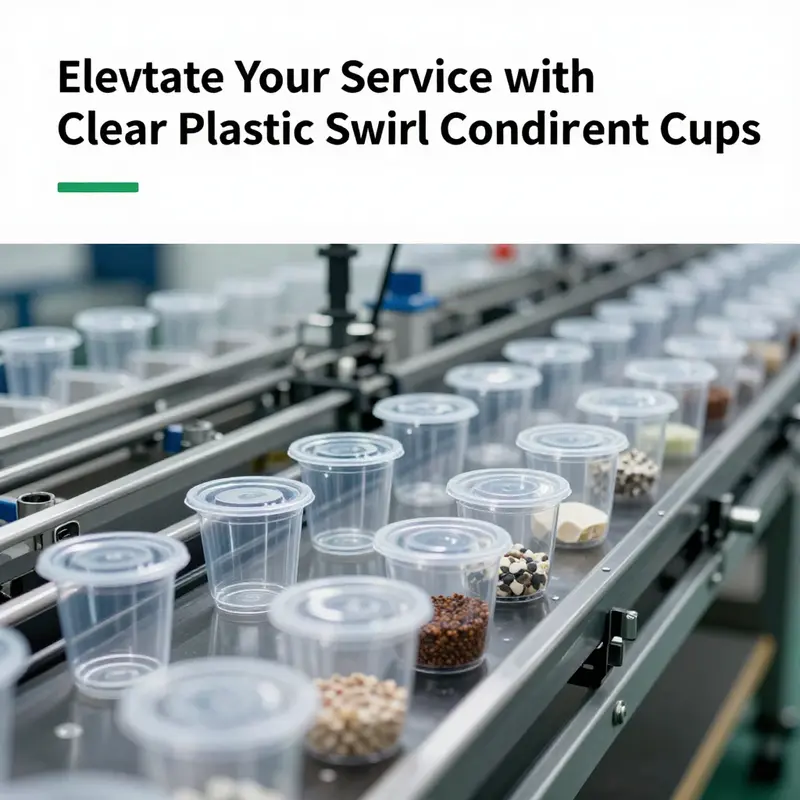
The glass-clear appeal of swirl condiment cups has made them a staple in food service. Their transparency invites a quick, confident glance at sauces, dressings, and dips, while the curved grooves along the sides evoke a sense of modern, utilitarian design. Yet in the blink of a consumer’s eye, the environmental calculus behind a tiny, single-use cup begins to matter just as much as its aesthetic. The chapter that follows weaves together how these cups are made, how they are used, and how industry players are reshaping their production and end-of-life trajectories to align with a rising demand for responsible packaging. What seems like a straightforward, low-cost unit is, in fact, a node in a complex system where material choice, energy consumption, waste collection, and consumer behavior converge. Understanding that system is essential if clarity and convenience are to coexist with accountability and circularity.
The production of clear swirl condiment cups relies primarily on materials like polyethylene terephthalate (PET) and polypropylene (PP). PET is famed for its exceptional clarity and barrier properties, which help preserve the freshness and appearance of delicate condiments. PP, meanwhile, offers toughness and heat resistance that suit a variety of sauces and ready-to-serve dips. Both materials are lightweight, inexpensive to manufacture, and compatible with automated filling and sealing processes that dominate large-scale food service operations. The combination of transparency, strength, and formability makes these cups appealing to busy kitchens and attentive guests alike. But the same properties that enable a crisp, appealing product also shape its environmental footprint. The reliance on fossil feedstocks for virgin PET and PP means that cradle-to-grave impacts are intrinsically tied to energy intensity and carbon emissions, particularly when production occurs far from end-of-life processing facilities.
This is where a broader conversation about sustainability begins. The lifecycle of a clear swirl cup encompasses sourcing, manufacturing, distribution, use, and disposal. Each stage presents opportunities to reduce environmental burden, but they also reveal potential trade-offs. For example, increasing the recycled content of PET or PP can lower virgin plastic demand and associated emissions. However, high levels of recycled content can affect clarity, color, and processability—factors that drive consumer acceptance and the efficiency of automated filling lines. The challenge, then, is to strike a balance between performance and responsibility. Rather than treating sustainability as a separate add-on, many manufacturers are integrating it into design decisions from the outset. They pursue strategies that preserve the look and feel customers expect while also easing the cups’ path back into circulation.
One core strategy is the deliberate incorporation of post-consumer recycled (PCR) plastics into cup formulations. PCR content reduces the demand for virgin resin, which in turn lowers energy use and greenhouse gas emissions across the production cycle. The practical realities of PCR, however, require careful management. PCR streams demand stringent sorting and cleaning, as contaminants can compromise performance or contaminate downstream recycling processes. In the best-performing systems, manufacturers collaborate with waste management partners to improve collection, separation, and securing of clean PCR material. Such collaboration accelerates the transition to circularity by ensuring that more of the material can be recovered and reintroduced into production rather than ending up as residue in landfills or incinerators.
Beyond material choices, energy efficiency plays a pivotal role in reducing the environmental footprint of these cups. Modern extrusion and molding lines are increasingly outfitted with high-efficiency motors, regenerative controls, and state-of-the-art heat management that recycles energy within the process. These improvements can shave significant percentages off energy intensity per kilogram of finished cups. Even small gains—like optimized drying cycles, smarter cooling profiles, and better insulation in packaging and warehousing—compound over the expansive quantities produced for the food-service sector. When energy demand is sliced at scale, the cumulative effect resonates across lifecycle assessments, reinforcing the case for sustainability investments even when the immediate product price is dominated by material choice and tooling costs.
Design for recyclability is another pillar of responsible production. Cup geometry, wall thickness, and labeling all affect how easily a cup can be sorted and processed after use. Clear cups that rely on a single material and minimize mixed-late-stage adhesives and inks tend to perform better in recycling streams. The swirl pattern itself, while visually distinctive, is typically molded into the plastic wall and does not require printing that could complicate sorting if it is applied with durable inks. When designers keep the foreground goal—a clean, efficient recycling process—front and center, the cups become more compatible with existing recycling infrastructure, reducing the likelihood that drawn-out consumer sorting errors derail upstream processing.
A critical, often overlooked dimension is the relationship between packaging design and the waste stream’s real-world performance. In practice, the volume of cups accepted by recycling facilities hinges on programs offered by municipalities and processors who can separate plastics from other materials and then sort by resin type. In some neighborhoods, the presence of a robust curbside program means more clear PET cups are recycled into new packaging and consumer goods. In others, where facilities lag, those same cups might be downcycled into lower-grade products or, worse, end up as litter. The variability across regions underscores why industry-wide improvements require both investment in better technologies and stronger cross-sector partnerships, from resin producers to waste collectors and policymakers who shape end-of-life pathways.
To illustrate how broader packaging trends inform the future of clear swirl cups, consider the broader shift toward circular economy principles in packaging design. A leading global packaging and consumer goods architecture has articulated clear targets to minimize virgin plastic use, expand PCR uptake, and strengthen recycling ecosystems. While the exact product mix and corporate governance are not the focus here, the underlying principle is instructive: packaging should be designed not just for use but for reuse or repurposing, with a transparent audit trail that demonstrates progress toward measurable outcomes. In a system where cups are brief guests in the consumer journey, their value is maximized when they contribute to a loop rather than a linear path from production to disposal. This mindset invites designers to ask tough questions early: Can the cup be manufactured with higher PCR content without sacrificing clarity? Could the same tooling serve multiple resin grades with minor adjustments? What collection and sorting partners can help ensure a high-quality recycled stream for these cups?
The practical implementation of such questions often leads to modular approaches in packaging strategy. For instance, some manufacturers experiment with reducing wall thickness while maintaining rigidity and spill resistance. The savings in resin per unit, when scaled across millions of cups, yield noticeable reductions in embodied energy and raw material demand. Others explore surface finishes and pigmentation that reduce the likelihood of contamination in recycling streams, or switch to water-based inks that are easier to remove in the recycling process. Each modification carries a cascade of consequences—affecting processing temperatures, mold life, cycle times, and gross margins. The art is to choreograph these changes so that improvements in recyclability do not come at the expense of product integrity or operational efficiency.
Industry collaboration is at the heart of making durable progress. Transparent reporting of material composition, energy use, and recycling performance helps the entire value chain learn where the bottlenecks lie and how to address them. The reference point for many practitioners is not only the technical feasibility of a given change but also the socio-economic realities of adoption. Small and mid-sized food-service outfits benefit from packaging that can be sourced in bulk, with predictable performance and clear end-of-life guidance. In parallel, large-scale operators demand compatibility with automated dispensers, portion-control workflows, and reliable shelf-life. Achieving alignment across this spectrum requires not just technical innovations but governance that incentivizes research, sharing of best practices, and long-term commitments to circular supply chains.
A parallel thread in the sustainability discourse concerns the potential for alternative materials that maintain the performance of PET and PP while offering improved end-of-life outcomes. Some designers have explored bio-based or biodegradable options, or low-density variants that cushion payloads and reduce transport energy. However, these alternatives often introduce new complexities, such as different recycling streams, compostability certifications, or limitations in heat and moisture barriers. The ongoing research and pilot programs in this space are essential because they illuminate whether alternative materials can surpass the current paradigm in a way that truly reduces overall environmental impact. The aim is not to abandon clarity or cost, but to refine the balance among these drivers so the cups remain practical, affordable, and more friendly to the environment.
The narrative of sustainability also pores through the lens of consumer experience and education. Consumers who understand why a seemingly small decision matters—whether to recycle a cup after dipping or to dispose of it via a proper waste channel—contribute to stronger recycling rates. Businesses can reinforce these behaviors by providing clear, accessible disposal guidance and by aligning product design with the real-world capabilities of local recycling systems. In this sense, packaging becomes a catalyst for broader environmental stewardship rather than a standalone artifact. The interplay between design, technology, policy, and public awareness forms a feedback loop that gradually elevates the standard for all single-use containers in food service.
The practical takeaway for practitioners is this: sustainability is not a single feature but a composite capability. It requires careful material selection, process optimization, and a willingness to cooperate across the value chain. When implemented cohesively, the result is a clear plastic swirl cup that preserves its essential attributes—transparency, durability, portion control—while contributing to a more circular economy. The path forward is incremental and iterative. It unfolds through better data, ongoing testing, and the willingness of producers and buyers to invest in systems that enable higher PCR content, more efficient energy use, and robust end-of-life recovery. It also invites a reimagining of the cup’s narrative—from a disposable convenience to a link in a sustainable packaging ecosystem that extends beyond a single service instance.
In the spirit of practical exploration, consider the broader ecosystem into which these cups fit. A packaging approach that emphasizes recyclability and PCR content can be complemented by alternatives that showcase circular credentials, such as paper-based packaging designed for recyclability in specific regional streams. For practitioners curious about concrete packaging options that embody this philosophy, one example of a packaging approach that demonstrates recyclability-focused design is the disposable-octagonal-box-restaurant-food-kraft-paper-packaging. This example illustrates how a system built around paper packaging can co-exist with plastic ecosystems, offering insights into design for disassembly, waste sorting, and cross-material collaboration. While not a direct substitute for clear cups, it represents a broader strategic mindset that prioritizes end-of-life outcomes without sacrificing the functional benefits customers expect.
Looking ahead, the field will likely see deeper integration of lifecycle assessments into everyday packaging decisions, alongside more explicit disclosure of recycled content, energy metrics, and end-of-life performance. The Plastics Europe community has emphasized that responsible plastics management hinges on shared standards, transparent reporting, and sustained investment in recycling infrastructure. As the industry refines its methods, clear swirl cups will continue to evolve—embracing higher PCR content, simpler recycling pathways, and smarter design choices that keep them aligned with a circular economy while retaining the visual clarity that makes them so appealing in the first place. The journey from clarity to circularity is not a single leap but a sequence of informed, collaborative steps that honor both taste and responsibility, ease of use and ecological accountability, and the evolving expectations of businesses, workers, and consumers alike.
External resource: PlasticsEurope: https://www.plasticseurope.org/en/
Seeing Through Style: Market Pulse and Consumer Preferences for Clear Plastic Swirl Condiment Cups
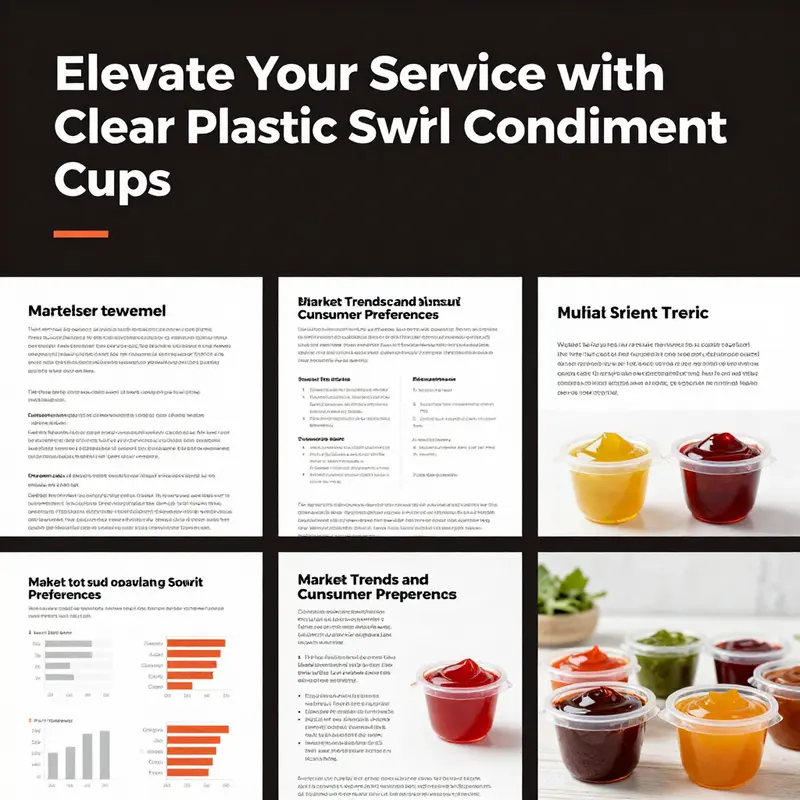
The market for clear plastic swirl condiment cups is shaped by a quiet but persistent tension between function and fantasy. On one side, these tiny vessels must reliably hold sauces, dressings, or condiments without leaking, staining, or failing under the rough conditions of a busy service line. On the other, they must communicate value at a glance. The simplest way they do this is through transparency: the clear walls offer an honest window into what lies inside, a feature that matters just as much in a buffet line as in a tasting flight. Yet the swirl—an emblem of movement and charm—transforms plain utility into a subtle brand signal. In the hands of a caterer or a fast-casual operator, the cups act as mini billboards, signaling attention to detail and a sense of occasion even before a bite is taken. The current market environment rewards both clarity and craft, so the cups that endure are those that balance predictable performance with an appearance that elevates the ordinary act of dipping into a small experience of indulgence.
Design language matters as much as material, and the swirl pattern on the sides does more than decorate. It plays with light and perception, giving the contents a touch of depth while preserving the visual honesty that transparency promises. When a guest sees a sauce catching the light in a cup that feels occasions-ready, the impression extends beyond taste. It becomes a cue about quality, hygiene, and care, a nonverbal assurance that what is inside is prepared with consideration for the diner’s moment. This is especially true in environments where presentation is part of the brand promise. In wedding receptions, corporate events, and upscale cafeterias alike, the cups’ clean lines, combined with metallic or gold-toned swirls, can harmonize with theme colors or metallic accents without shouting for attention. The effect is perceptual rather than promotional, a form of packaging that communicates sophistication while remaining approachable and familiar.
Behind the aesthetic, the underlying logic of these cups rests on practical usability. The formats typically range from modest one-ounce portions to larger samples, with lids designed to minimize spills during transport or self-serve lines. In many cases, the cups are manufactured from food-grade plastics such as PET or polypropylene, chosen for their clarity, stiffness, and safety with a range of condiments. The clear walls are crucial for quick visual checks by staff and by diners who want to confirm a sauce’s color and texture before dipping. The durability of the material matters too, especially in the high-volume rhythms of lunch rushes and catered events. A cup that cracks or fogs under cold or room-temperature sauces undermines both safety and experience. Thus, the market prizes plastics that maintain rigidity and clarity while offering a reliable seal with lids that resist leaks without making the user wrestle with a stubborn cap.
Size and bulk availability are not mere convenience; they reflect the business realities of hospitality and catering. Small portions—often around the one-ounce mark—are ideal for dipping and tasting menus, as well as for buffets where guests sample a range of dressings, yogurts, or condiments. The ability to purchase these cups in bulk, in counts like hundreds or thousands, translates into meaningful unit economics for commercial kitchens, catering outfits, and event planners. The supplier landscape often emphasizes both standardization and speed: standard sizes that fit a predictable lid design and bulk packaging that minimizes handling time. From a buyer’s perspective, this is not just about stocking levels; it is about predictable costs, predictable supply, and the peace of mind that comes with knowing a consistent, clean presentation will be available for every service occasion.
The consumer lens adds another layer of nuance. While many customers value convenience and hygiene, there is a growing willingness to pay a premium for items that enhance the dining experience. The drive toward premium disposable tableware aligns with a broader trend: diners increasingly expect a cohesive aesthetic even in casual or takeaway settings. Clear cups with swirl accents enable brands to project a sense of occasion without resorting to glass or heavy ceramics, which would contradict the need for single-use practicality. In emerging economies and rapidly expanding markets, where disposable solutions are often paired with a clean, modern look, these cups offer a compelling blend of style and efficiency. They support a dine-in vibe at self-serve stations or a tasting-focused service in compact venues, where the visual cue of a well-presented cup can influence perceived quality and value.
From a design perspective, the interplay between clarity and ornamentation is delicate. Crystal-clear walls showcase the sauce’s color, viscosity, and even tiny flecks of herbs or spices—details that might otherwise go unnoticed if a container were opaque. The swirl pattern adds translucence and movement, catching light as diners move around a station. Metallic or gold-tinted swirls can invoke upscale associations, echoing the shimmer of fine dinnerware while staying within the pragmatic constraints of plastic. The result is a fixture that supports branding and theming without requiring bespoke or custom packaging for every event. Operators can leverage the cups as part of a cohesive visual strategy—pairing them with napkins, trays, and signage that share a consistent color story and finish—thereby creating a memorable sensory moment for guests that begins at the table edge and continues through the dining experience.
Yet, the market remains attentive to cost dynamics. Premium appearance does not come without price, and buyers weigh the incremental value of a more elaborate swirl or higher clarity against the per-unit cost. The economics become more favorable when the cups are used for sampling campaigns, seasonal promotions, or branded events where the visual impression is a driver of perceived value. In other words, the premium it conveys must be justified by use-case clarity: if a swirl cup elevates a guest’s perception of the sauce and encourages sampling, it becomes a deliberate investment rather than a decorative add-on. This is where the market’s ongoing evolution towards customization becomes relevant. Suppliers are increasingly able to offer finishes and effects—such as glitter accents or metallic rims—that align with a brand’s color story or a particular event theme. The trend toward customization enables operators to execute marketing campaigns with a consistent, high-visibility cue across multiple touchpoints, from the cup to the buffet line to social media photos that capture the moment.
In examining the broader market landscape, it is useful to consider the trajectory of the plastic portion cup segment as a whole. Industry analyses point to sustained growth driven by ongoing innovation and digitization, with particular momentum in regions where convenience, hygiene, and speed are inseparable from user experience. The one-ounce format, while modest in size, serves as a proving ground for design, sealing technology, and user ergonomics. A well-designed, clearly visible cup can reduce spill risk and improve user satisfaction, especially when paired with a secure lid and a well-fitted cap that minimizes air ingress and leakage during transport. The synergy between container engineering and consumer expectations is a hallmark of this product category. As consumers become more accustomed to a consistent standard of disposable tableware, manufacturers respond with incremental improvements—better heat resistance for guarded hot sauces, more reliable lids, and compatibility with a range of food storage and transport ecosystems. This ecosystem approach helps ensure that the cups remain relevant not only for traditional buffet and takeout contexts but also for expanding formats like meal kits, grab-and-go counters, and corporate catering where speed and presentation matter equally.
The market’s forward motion is not without friction. Cost remains a critical constraint for price-sensitive buyers, particularly in high-volume environments where margins depend on careful procurement. At the same time, the suitability of clear cups for hot liquids is limited by insulation properties and the risk of sweat and condensation on the exterior. These constraints shape product development: some suppliers explore improved heat resistance and insulation-compatible plastics, while others optimize the thickness and rim geometry to balance grip comfort with stacking efficiency. Regulatory considerations around single-use plastics and recycling streams also influence purchasing choices, pushing operators to evaluate end-of-life options and to align with waste-management programs that offer clear guidance on recycling compatibility. In short, the durability of the business case for swirl cups hinges on a combination of performance, aesthetics, and responsible disposal, all of which feed back into the design and marketing narratives that suppliers present to potential buyers.
A key driver of market vitality is the ongoing shift toward what one might term “brand-forward” disposable ware. Customization options—ranging from bold color accents to glitter finishes and personalized prints—have emerged as compelling differentiators. For event planners and venue operators, these features provide a practical route to achieve consistent theming across multiple touchpoints, from signage to napkins to the cups themselves. For brands seeking to maintain a distinctive presence at tastings or promotional events, the ability to tailor every element of the serving experience—down to the cup—offers a powerful channel for storytelling. The swirl cups, in this context, act as a quiet but effective amplifier of a brand’s visual narrative. The goal is not to overwhelm the guest with ornamentation but to offer a cohesive, high-quality impression that women and men alike perceive as thoughtful and professional. This alignment between aesthetics and function—clarity that invites a view into the product, and a design that elevates the moment—defines the current market mood.
Looking ahead, operators and researchers alike should weigh the evolving expectations of consumers who increasingly equate disposable tableware with experience. The rise of social sharing and photo-driven dining means that what shows up in a guest’s feed matters, and a well-presented swirl cup can become part of a brand’s visual vocabulary. The importance of consistent supply chains, reliable materials, and scalable customization options cannot be overstated; these are the levers that enable a business to move from a one-off promotional cup to a consistent, repeatable element of a client’s dining experience. The impulse to elevate a simple dipping cup into a small but meaningful moment aligns with broader trends in hospitality and consumer culture: the desire for products that are both efficient and expressive, practical and pretty. In this sense, the clear plastic swirl condiment cup is more than a container. It is a reflection of an industry that values clarity, care, and crafted presentation as essential components of everyday dining.
For practitioners evaluating these trends, the takeaways are straightforward. First, the value proposition of swirl cups rests on a balance between transparency, security, and visual appeal. Second, the market rewards thoughtful integration with branding and event theming, rather than standalone novelty. Third, cost and sustainability considerations will continue to shape product configurations and supplier capabilities, pushing the industry toward better materials, improved recyclability, and smarter packaging solutions. The chapter’s emphasis on design as a strategic asset means that conversations about swirls and clarity should be anchored in questions about guest experience, not just packaging aesthetics. When a handful of small, well-crafted cups can convey quality and care, they transform the act of dipping into a cohesive encounter—one that aligns with today’s expectations for convenience, cleanliness, and visual storytelling.
External reference: https://www.walmart.com/ip/Clear-Plastic-Condiment-Cups-2oz-25ct/1007438276
Final thoughts
In conclusion, clear plastic swirl condiment cups represent a significant advancement in service solutions for the food industry. Their diverse applications, standout advantages over traditional options, eco-friendly production practices, and alignment with market trends highlight their importance for businesses in catering, event planning, and food service. By adopting these innovative cups, you can not only enhance the visual appeal and functionality of your service but also align with the increasing consumer demand for sustainability. Harness the power of clear plastic swirl condiment cups to elevate your offerings and meet the expectations of today’s discerning customers.