
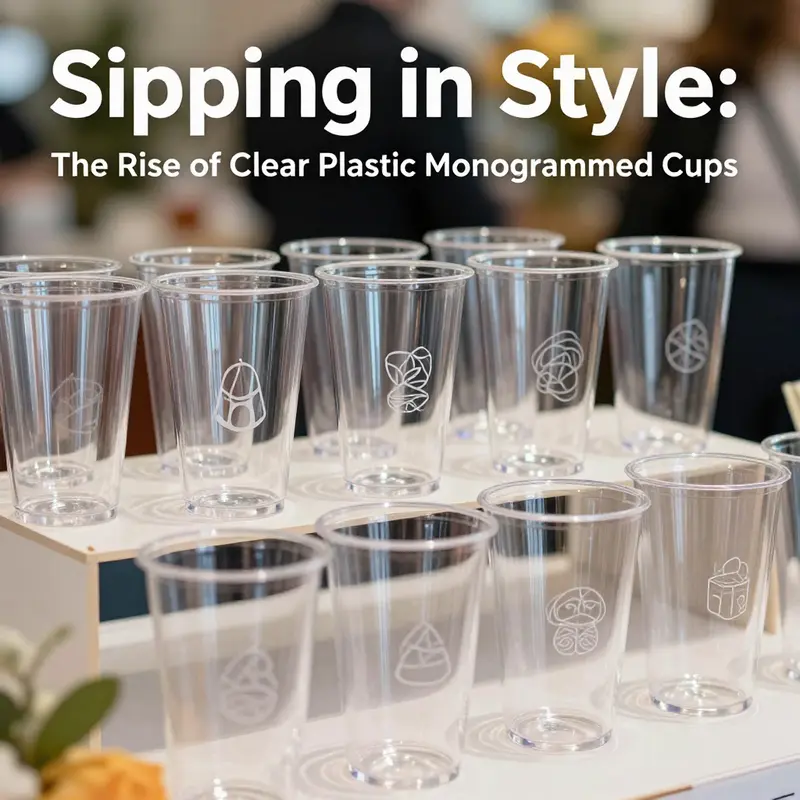
In a world where personalization meets sustainability, clear plastic monogrammed cups are emerging as the preferred choice for businesses looking to elevate their beverage presentation. Tailored for those at the helm of bubble tea shops, restaurants, food trucks, catering services, and corporate procurement teams, these cups offer not only functionality but elegance. Each chapter will delve into vital aspects from customization techniques that ensure your branding stands out, to the ever-growing consumer demand advocating for eco-friendly options. We’ll explore the economic benefits of these cups, as well as their implications for event planners who wish to leave a lasting impression without compromising on quality or sustainability. Whether you’re seeking to make your drinks pop or enhance your brand visibility, this guide will illuminate how clear plastic monogrammed cups can be a game changer in your business.
Monogrammed Clarity: Designing Personal, Sustainable Narratives on Clear Plastic Cups
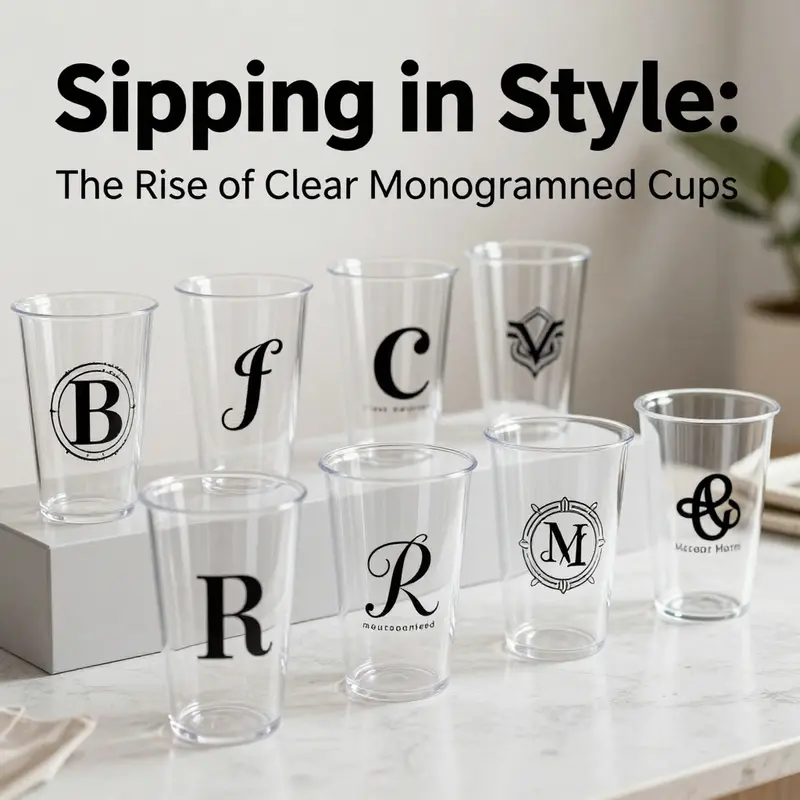
Clear plastic monogrammed cups have migrated from simple branding tools to dynamic canvases where personal stories, polished aesthetics, and responsible packaging converge. In the world of events, hospitality, and gifting, these cups are chosen not merely for their transparency or durability, but for how they carry a message, a memory, or a brand promise. The demand for customization now blends seamlessly with an insistence on sustainability. Consumers want surfaces that reveal a crisp, pristine surface while carrying meaningful details—names, dates, photos, or short lines that speak to a moment. This dual impulse—personalization and ecological mindfulness—has become a defining force behind design decisions, production workflows, and market strategies in the clear plastic cup segment.
The core techniques of customization have matured into a sophisticated toolkit that supports both small teams and large-scale producers. Digital printing, particularly direct-to-cup UV inkjet, has become the workhorse of modern customization. It enables high-resolution, full-color designs that resist fading and scratching, which is essential for items that are handled, stacked, and transported through service workflows. The ability to reproduce photorealistic monograms and intricate logos on crystal-clear PET, PS, and PLA plastics makes the cup not just a container but a visual extension of the event or brand. In parallel, screen printing remains a viable option for straightforward monograms and bold logo placements when the order volume favors high opacity and color consistency. Laser engraving introduces a tactile, premium path, delivering a frosted, ink-free finish that elevates elegance and longevity. Then there is heat transfer and sublimation, a marriage of technique and surface chemistry that can yield seamless gradients and photographic quality by embedding dye into the surface. This spectrum of methods gives designers a spectrum of outcomes—from bold, high-contrast monograms to delicate, luminous imagery that seems to glow from within the cup itself.
This spectrum aligns with the evolving expectations of customers who view a monogrammed cup as a personal artifact rather than a mere packaging item. The practice has shifted toward personalization beyond a corporate logo. Names, nicknames, important dates, and brief inspirational lines are now common, but designs can also incorporate photographs or small visual narratives that echo a moment—such as a wedding day or a milestone celebration. The added dimension of photo integration has become more accessible thanks to optimized workflows and digital proofing tools, which allow clients to preview how an image will translate on a curved surface before committing to production. The result is a product that feels crafted and intentional, a keepsake as much as a consumable item.
As the design canvas expands, so do the design features of the cups themselves. The market has seen a growing interest in unique shapes that maximize branding real estate. Tall, slim cups—often referred to in industry dialogue as distinctive silhouettes—offer a longer surface area for monograms and color work while maintaining the transparency and clarity that customers expect. Functional add-ons are another avenue of differentiation. Built-in straws, insulated sleeves, and even smart features such as a cup with an LED display that can cycle images via USB connection illustrate how the cup becomes more than a container; it becomes a miniature display and storytelling device. While some of these innovations are still at the edge of mainstream adoption, they signal a trajectory where the physical form of the cup and its digital contents work in concert to reinforce a message or memory.
Behind these design possibilities lies a robust production framework shaped by efficiency and scalability. The pricing landscape for clear plastic disposable cups supports widespread customization, with bulk orders offering extreme economies of scale. For instance, unit costs can be as low as a few hundredths of a dollar when orders reach tens of thousands. Such economics enable businesses and event planners to offer personalized experiences at scale, a critical advantage for weddings, conferences, and large promotional campaigns. Yet pricing is never the sole driver; consistency in monogramming quality, reliability of supply, and compliance with safety and labeling standards are equally important. The most successful programs balance visual impact with predictable performance under real world conditions: reliable adhesion of inks to curved surfaces, resistance to condensation during service, and compatibility with a range of lids and cup accessories.
Sustainability remains a central axis of strategy, shaping both material choices and end-of-life considerations. Clear cups are frequently manufactured from PET, which is recyclable, or PP, which is also recyclable and often favored for heat resistance and chemical compatibility. The option to move toward biodegradable or compostable formulations—particularly PLA, derived from renewable resources like cornstarch—has gained momentum as consumers and regulators push for lower environmental footprints. This is not merely a trend; it reflects a broader continuum of responsible packaging that aligns with global sustainability initiatives and regulatory pressures, especially in regions with stringent environmental standards. Industry analysis points to a growing global plastic cups market that projects significant expansion by the early 2030s, with sustainable and customizable options leading the charge. In parallel, manufacturers are actively communicating eco friendly attributes, recyclability, and stewardship messages to connect with an increasingly informed audience. The implication for designers and brands is clear: sustainability and customization must be integrated from the earliest stages of design and production to deliver a product that resonates on both aesthetic and ethical axes.
The ongoing convergence of design and sustainability also invites brands to explore adjacent packaging formats to tell a broader story. For example, there is value in linking the monogrammed cup concept with eco friendly disposable paper cups that bear printed logos or messages, maintaining a cohesive brand or event theme across materials. This cross-format coherence ensures that the environmental narrative travels beyond a single product and reinforces the overall message of mindful consumption and responsible decoration. To learn more about this broader sustainable design ecosystem, you can explore the eco friendly disposable paper cup with printed logo option that demonstrates how simple, well-executed branding can translate across materials while preserving a consistent visual language. eco-friendly disposable paper cup with printed logo
The workflow that supports these capabilities has become as important as the machinery itself. Online design platforms empower individuals and small businesses to compose their own monograms, convert ideas into print-ready files, and preview how a design will look on a curved surface before production begins. This democratization reduces barriers to entry and accelerates the path from concept to final product. It also democratizes the storytelling aspect of packaging. Rather than a one-size-fits-all approach, clients can craft a narrative that changes with events, seasons, or campaigns while maintaining a consistent brand voice. In a sense, the cup becomes a portable canvas for storytelling, a memory that travels from the moment it is held to the moment it is recycled or kept as a keepsake.
In practical terms, these developments translate into robust opportunities for venues, caterers, and marketing teams. Weddings and corporate events benefit from a tangible emblem that couples aesthetic refinement with personal data. The monogram, when thoughtfully designed, complements the table setting or reception decor, creating cohesive visuals across menus, signage, and keepsake favors. For corporate gifts, a personalized cup provides a scalable, shareable touchpoint that reinforces brand value while offering a practical, memorable piece that recipients can reuse. The net effect is a richer, more immersive guest experience where the cup acts as a small but meaningful ambassador for the host’s story or mission.
The narrative around clear plastic monogrammed cups thus blends three core strands: design technique, sustainable material practice, and the human need for personal connection. Each cup is a product of precise manufacturing choices and careful design decisions, yet it also serves as a stage for a moment in time. The ongoing evolution will likely hinge on further advances in digital printing capabilities, more efficient and responsible material options, and an ever-expanding toolkit for customization that embraces both personal identity and shared values. As brands and individuals continue to push the boundaries of what a cup can communicate, the clear cup remains, at heart, a simple vessel capable of carrying complex stories. This is the essential tension that will keep the category vibrant as it moves into the next era of production and perception.
External resource: https://www.alibaba.com/product-detail/90-Outlet-Disposable-Plastic-Milkshake1600842357374.html?spm=a2700.productlist_normal.0.0.7e6d5a4bZlFyRj
Crystal with a Personal Stamp: How Personalization and Sustainability Are Driving Demand for Clear Plastic Monogrammed Cups

Clear plastic monogrammed cups sit at an intersection of practicality and personality, a design choice that resonates with event planners, brand managers, and ordinary hosts alike. They combine the visual clarity of crystal-clear material with the enduring appeal of a touch that feels bespoke. In markets that prize both efficiency and ticket-to-mable moments—weddings, corporate gatherings, and promotional campaigns—the demand for a cup that is not just a vessel but a small stage for identity has become noticeable and increasingly strong. The base product remains compelling for its cost-effectiveness, a factor that enables mass customization without eroding margins. When you can source bulk quantities at around two cents per piece for orders of fifty thousand, the economics of customization become accessible to a wider range of buyers, from boutique caterers to large-scale event producers. This price point underpins a broader shift: the ability to elevate a disposable item into a tangible extension of a brand or a personal moment, all while maintaining a clean, minimalist aesthetic that complements rather than competes with the beverage inside.
The core value proposition of clear plastic monogrammed cups rests on two pillars: pristine visibility and reliable customization. Advances in manufacturing have made it possible to apply high-quality monogramming on a variety of crystal-clear substrates, including PET and polystyrene, while emerging materials such as polylactic acid—PLA—offer a pathway toward compostable or renewable options. The visual outcome is striking. A monogram or logo carved into the cup’s transparent surface becomes a subtle yet high-impact mark that catches the light and guides the eye toward the beverage, enhancing brand visibility or personal recognition without overwhelming the event’s overall design. In practice, this means a wedding reception can feel both elegant and intimate, a conference can reinforce a corporate identity with a restrained, tasteful emblem, and a promotional giveaway can carry a memory of the moment rather than a mere message on a sleeve. The result is a product that serves as a medium for storytelling as much as a dependable container for drinks.
Manufacturers have also refined the physical design to maximize usability and logistics. Smooth-wall cups, for instance, are easier to stack, transport, and store, reducing breakage rates and handling costs for large orders. The structural integrity of these cups supports stacked configurations during catering operations, while the clean edge and uniform wall thickness contribute to a premium tactile feel that aligns with upscale dining experiences. In addition, the rising availability of complementary accessories—secure lids and compatible straws—extends the versatility of the cup beyond a simple drinking vessel. Beverages like smoothies, iced coffees, and fruit juices often benefit from these add-ons, which help prevent spills, preserve temperature, and provide a convenient beverage experience for on-the-go consumers. The combination of a durable cup with practical accessories reinforces the value proposition for both event organizers and corporate buyers who prize convenience alongside appearance.
Sustainability has become an essential axis around which consumer preferences are calibrated. The market research signals a clear tilt toward eco-friendly alternatives, a trend that reflects broader societal concerns and regulatory pressures. It is not just about materials alone; it is about aligning product attributes with consumer values. Surveys indicate that a significant share of consumers—over sixty percent—are willing to pay a premium for eco-friendly products. This willingness translates into real demand for disposable tableware that is biodegradable, recyclable, or derived from renewable resources. In the case of clear monogrammed cups, this creates a dual pathway for growth: brands can preserve the crisp clarity and customization that define the product, while also signaling environmental responsibility through material choices and end-of-life options. PLA, derived from renewable sources such as cornstarch, exemplifies the kind of material that can satisfy both aesthetic and sustainability objectives. While the precise material composition of a given monogrammed cup may vary by producer, the market is increasingly favoring formats that can claim a lower environmental footprint without compromising the visual appeal of the customization.
Regulatory environments—particularly in markets with stringent sustainability standards—further shape the evolution of these products. In regions like California, where environmental standards are robust and enforcement is active, buyers are more likely to seek materials that can be certified as compostable or recyclable and to demand transparent supply chain practices. For manufacturers, this translates into a need to balance performance and compliance. Transparent monogramming on a clear substrate must be paired with responsible material choices and waste management options that reassure buyers that the cup’s environmental footprint is minimal or at least accountable. The result is a market that rewards suppliers who can demonstrate clear environmental benefits alongside the timeless appeal of a well-executed monogram.
Beyond aesthetics and sustainability, functional design remains a critical driver of market adoption. The monogrammed cup’s success as a promotional or event-specific item hinges on its reliability as a container. Leaktight designs, readability of the monogram under varying beverage colors, and compatibility with lids and straws all factor into the user experience. Consumers, especially younger ones with on-the-go lifestyles, value products that combine style with practicality. The presence of a lid or straw can transform a disposable cup into a trusted travel companion, reducing the risk of spills during transit and enabling a more versatile beverage service model at venues, cafes, and pop-up concepts. Recognizing this, manufacturers have integrated features that preserve beverage integrity while upholding the sleek, uncluttered look that monogramming amplifies. A high-clarity surface that accommodates intricate monogram patterns must also endure repeated handling, washing off-site or re-use scenarios in some settings, reinforcing the necessity for durable printing methods and robust materials.
Aesthetics and marketing strategy intertwine in notable ways. The sophistication of a 9-ounce clear cup with a gold or silver rim demonstrates how a simple accessory can elevate the perceived value of a beverage without complicating the purchase decision. Such designs are favored for weddings and formal gatherings because they align with refined color palettes and lighting schemes, providing a subtle frame for the beverage presentation. In corporate contexts, the same design language can be leveraged to convey a brand message with a quiet confidence, ensuring the cup complements the logo rather than competing with it. Customization, in this sense, becomes a storytelling tool. A logo, a name, or an intricate pattern can transform a basic disposable item into a memorable keepsake or a powerful reminder of a brand interaction. When manufacturers offer personalized clear plastic monogrammed cups with sustainable materials and practical accessories, they position themselves to meet growing expectations for aesthetics, functionality, and environmental accountability.
From a buyer’s perspective, the appeal lies in both efficiency and impact. The cost efficiency of the base cup makes large-scale customization economically viable, and the added value of a personalized monogram makes it emotionally resonant. The possibility of a tailored experience—whether that means a wedding guest’s name elegantly inscribed on a cup or a corporate event glistening with a subtle logo—creates a tangible memory that can extend beyond the beverage. This memory is an asset for event planners and marketers who seek to improve guest experience, reinforce brand recall, and maximize the return on promotional investments. In reviews of purchasing behavior, the consensus emerges that customers do not just buy a cup; they invest in a moment that can be revisited in photos, conversations, and social sharing.
For teams tasked with curating a cohesive event or campaign, the decision to adopt clear plastic monogrammed cups is often anchored in a calculated balance of cost, branding, and sustainability. The presence of a clear monogram on a transparent surface enables brands to maintain a polished look while avoiding visual clutter. This balance can be particularly attractive in spaces where lighting and decor are already doing much of the visual work. The cups act as quiet ambassadors, extending the event’s design philosophy into the realm of everyday use. In planning terms, the ability to order in bulk, with predictable unit costs, offers a level of budgeting certainty that is highly valued by procurement teams and venue managers alike. As the market continues to evolve, it is likely that both the range of material options and the sophistication of printing techniques will broaden, enabling even more nuanced expressions of brand identity within the clear, unadorned form of the cup.
To illustrate how these factors come together in practice, consider the potential of an eco-conscious printing approach that leverages a logo with a restrained color palette on a PLA-based monogrammed cup. The result is not only a visually striking piece but also a statement of commitment to responsible consumption. The alignment of personalization with sustainability helps ensure that the cup serves as a value-adding element rather than a disposable afterthought. As buyers increasingly seek turnkey solutions, suppliers who can provide a cohesive package—high-quality monogramming, durable materials, compatible lids and straws, and clear environmental attributes—are well positioned to capture a growing share of the market. In this context, the cup becomes more than a container; it becomes a strategic touchpoint that communicates care for guests, guests’ experiences, and the broader ecological footprint of an event.
For readers seeking further insight into related product categories and optimization strategies, an example of how customization and eco-friendly design come together in disposable cup formats can be explored through a relevant resource on eco-friendly logo options. See the internal reference here: eco-friendly printed logo single-wall paper cup.
In sum, the market for clear plastic monogrammed cups is buoyed by a convergence of factors that collectively elevate the category beyond a simple disposable vessel. Personalization taps into individual and brand identities, sustainability aligns with consumer values and regulatory expectations, and practical design enhances the user experience. These cups are no longer merely functional packaging; they are design statements that travel with the beverage, travel with the guest, and travel with the story of the moment they helped create. As manufacturers refine monogramming techniques and expand the material spectrum toward more sustainable options, the demand for clear plastic monogrammed cups is poised to grow, driven by the enduring appeal of clarity, customization, and responsible form.
For additional context on related product offerings in the broader disposable cup landscape, external information can be found at the following resource: https://www.made-in-china.com/products/500-700ml-Clear-Frosted-Plastic-Cup-Takeaway-Fruit-Juice-Drink-Milk-Tea-Coffee-Cups-with-Lid.html
Clear Beauty, Clear Conscience: Building Sustainability into Monogrammed Clear Plastic Cups
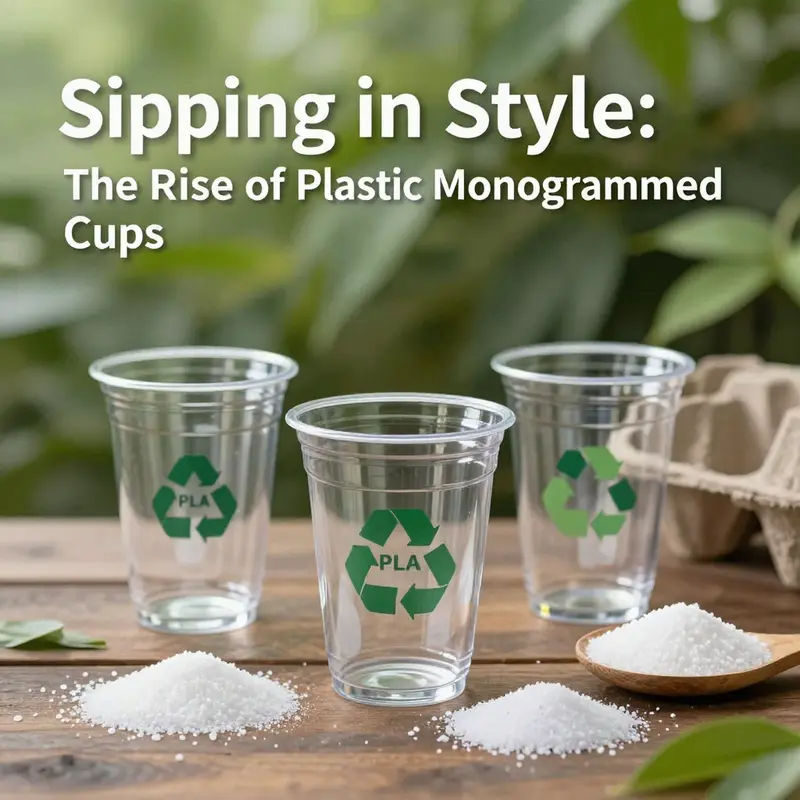
The gleam of a clear plastic monogrammed cup promises precision, polish, and the subtle promise of personal branding. It is a small, almost invisible stage for a moment of celebration or a moment of brand touchpoint. Yet beneath that transparency lies a web of choices and trade-offs that increasingly determine whether such an object can be called sustainable. The market for clear plastic monogrammed cups has grown, driven by demand for customization at weddings, corporate events, and promotional campaigns. The same market is now thrust into a broader conversation about environmental responsibility. As brands seek to elevate their presence with sleek, professional-looking cups, they must also reckon with energy use, material life cycles, and end-of-life outcomes. The tension between aesthetics and stewardship is not a peripheral concern; it is becoming central to how these cups are designed, manufactured, and used at scale.
At the heart of sustainability in this space are the materials themselves. Clear plastics—polystyrene (PS), polyethylene terephthalate (PET), and polypropylene (PP)—offer clarity, rigidity, and durability. They also share a common characteristic: they are derived from fossil fuels and, in most cases, are not readily biodegradable. The result is a long tail of persistence in the environment if the cups are not properly collected and processed. PLA, a bio-based alternative derived from renewable resources like corn starch, promises a more favorable profile. But PLA’s sustainability advantage hinges on industrial composting facilities, which are not universally available. In many regions, home composting or simple landfill disposal cannot reliably reproduce the conditions needed for PLA to break down effectively. The promise of compostability, therefore, sits on a geographic and infrastructural hinge rather than a universal solution.
This material triad directly informs the environmental footprint of a monogrammed cup. The extraction of raw materials, their transformation, and the energy embedded in processes like injection molding or thermoforming contribute to energy use and water consumption. Every stage—startup, production run, and end-of-life handling—adds to the total environmental load. Waste generation is another facet. Offcuts, defective items, and monogrammed remnants all require management. The more nuanced challenge, however, lies in the monogramming itself: branding layers can complicate downstream recycling. Inks, paints, and adhesive labels must be formulated to minimize toxicity and interference with recycling streams. If adhesives or inks hinder recyclability, a cup that is otherwise well-designed for reuse or recovery becomes a barrier to sustainable waste management.
The energy profile of production underscores one of the most stubborn realities of plastics: even with material choices that seem virtuous on paper, the manufacturing process can be energy-intensive. Injection molding and thermoforming demand substantial heat, pressure, and cooling cycles. Water use in shaping and finishing processes can be considerable, especially when plants operate at scale. Waste streams from cutting, trimming, and print or embossing steps require careful handling. Each of these dimensions matters not only for a plant’s bottom line but for the broader climate implications of the product line. The push toward sustainability has nudged some manufacturers to explore cleaner energy sources, more efficient machinery, and process optimization that reduces cycle times and material waste. Yet the scale of production today often means incremental improvements that must be paired with smarter product design to yield meaningful gains.
The monogramming itself adds a distinct layer of complexity. Decorative techniques, whether printed, labeled, or embossed, require specific inks and adhesives that must be evaluated for environmental safety. The most immediate concern is whether the monogram complicates recycling. Adhesives can cling to surfaces, and certain inks may introduce contaminants if cups are reprocessed after use. The industry is learning to balance the durability and vibrancy of monograms with the recyclability of the base material. The overarching challenge is to ensure that the branding effort does not inadvertently derail end-of-life options. In practice, this has led to a search for safer inks, lower-toxicity formulations, and labeling methods that either detach cleanly or are compatible with mixed-stream recycling.
Innovation is steering the category toward more sustainable outcomes without compromising the visual impact that monogramming delivers. One strategy is incorporating post-consumer recycled (PCR) plastics into clear cup formulations. PCR can reduce the demand for virgin fossil inputs and lower the life-cycle emissions associated with resin production. Another strand of innovation focuses on material thickness. Reducing wall thickness can cut material use, provided that there is no sacrifice in performance during handling, stacking, or pouring. Zero-waste design principles encourage engineers to rethink how a cup is shaped, allowing for both resilience in use and easier sorting at end-of-life. Importantly, design for recycling or composting is not a luxury feature but a necessity in progress toward a more circular economy. Cups that are easier to recycle, or that are suitable for industrial composting, contribute to closing the loop rather than simply transferring waste to another phase.
Some brands are also exploring alternatives that blend aesthetics with sustainability by diversifying the packaging ecosystem. For example, there is growing interest in eco-friendly paper cup options for certain events where branding remains critical but the risk profile of plastic is too high. This pivot is not a rejection of plastics but a recognition that every event or campaign has its own waste-management context. Within this continuum, the idea of an eco-friendly printed-logo paper cup with lid—covered by the option described as eco-friendly-printed-logo paper cup with lid—appears as a practical compromise for some applications. It provides a high-visibility branding surface while leveraging a packaging format that is more readily compatible with existing paper-based recycling streams in many locales. Such transitions highlight a broader truth: sustainability is not a single material choice but a spectrum of options that reflect local infrastructure, consumer behavior, and the goals of a given program.
Beyond material selection and design, the pathway to a clearer environmental footprint also lies in lifecycle thinking. Life cycle assessments (LCAs) reveal how energy, water, and emissions accumulate from cradle to grave. They remind us that the most sustainable option in one context may be less favorable in another. A manufacturer might reduce energy use through lean production and switch to di-methyl silicone-free coatings, yet if the resulting cups cannot be recycled efficiently, the net benefit could be limited. Conversely, a modest improvement in end-of-life processing—such as a closed-loop system where used cups are reclaimed and reprocessed into new cups—can magnify the benefits of other gains in the supply chain. Closed-loop initiatives, while still nascent in many regions, offer a compelling model for reducing waste and conserving resources.
Consumer behavior remains a critical, though often overlooked, variable. Even the most sustainable design cannot deliver its intended benefits if disposal is mishandled. When consumers place cups in general waste rather than recycling or composting streams, the environment bears the cost of that misrouting. Clear cups, by virtue of their materials and finishes, can be particularly sensitive to separation practices. Education campaigns, transparent labeling, and straightforward disposal options help bridge the gap between product design and real-world behavior. In parallel, brands that communicate precise end-of-life guidance and support accessible recycling or composting programs can materially improve outcomes. The intersection of design, policy, and behavior is where measurable progress emerges.
Market dynamics further shape these choices. The global plastic cups market is projected to exceed several billions in value in the coming years, with sustainable and customizable options leading growth trajectories. Price remains a practical driver; bulk pricing can support large-scale customization, enabling events to deliver branded experiences at a reasonable unit cost. Yet price is not the sole determinant. The sustainability profile of a product increasingly informs procurement decisions, particularly for brands seeking to align with environmental, social, and governance (ESG) targets. In this context, the ability to demonstrate a credible lifecycle story becomes a differentiator that resonates with modern audiences who seek authenticity in brand values as much as in visuals.
For readers seeking a bridge to related packaging solutions that foreground sustainability, consider exploring options in eco-friendly paper cups with branding capabilities. The pathway toward greener choices is not a single destination but a network of alternatives tailored to the event, geographic context, and waste-management infrastructure. This broader perspective helps brands balance the impact of a chosen format with the practicalities of production, distribution, and customer engagement. As the industry continues to evolve, the emphasis on transparent communications, responsible sourcing, and closed-loop thinking will shape which monogrammed cups endure in the market and which transition to other formats without diminishing brand presence.
External research and industry analyses emphasize that sustainability in plastic cup production is a dynamic field, where improvements in materials, processes, and end-of-life solutions must be pursued in concert. For a comprehensive lifecycle assessment and deeper exploration of emerging technologies, refer to detailed scholarly work in the field: https://www.sciencedirect.com/science/article/pii/S0959652623017842
Margins, Materials, and Monograms: Economics Driving Clear Plastic Monogrammed Cups
Balancing Costs, Customization, and Sustainability
The economics of clear plastic monogrammed cups depends on deliberate choices about material, process, and scale. Manufacturers and buyers weigh raw material prices against the value added by personalization. They also factor in logistics, regulatory risk, and the growing demand for sustainable options. This chapter unpacks those variables so decision makers can see how margins form and where costs can be optimized.
Material choice sets the baseline cost and aesthetic of a clear cup. Traditional clear plastics such as polystyrene deliver a crystal-clear finish at a low cost. That transparency supports premium-looking monograms and high visual contrast. Polystyrene’s low price makes it ideal for single-use runs and high-volume promotional items. By contrast, polypropylene carries a higher raw-material cost. It offers better toughness and heat resistance, reducing breakage and returns. For clients seeking reusable or higher-end disposables, polypropylene often justifies its price through lower product failure and a longer perceived lifecycle. Meanwhile, bio-based options such as PLA command a premium but open access to eco-conscious buyers. PLA’s feedstocks come from renewable crops, which supports marketing claims and regulatory compliance in restrictive jurisdictions. Choosing materials therefore aligns with both price strategy and target market positioning.
Customization is where value multiplies and costs rise. Monogramming methods shape both unit cost and visual appeal. Screen printing spreads fixed setup costs across large runs and yields economical per-unit pricing for medium to large orders. Laser etching or engraving produces durable, high-definition marks, but it requires specialized capital equipment and adds setup and cycle time. Hot stamping offers metallic finishes that stand out at events, but tooling and temperature control increase per-piece expense. For small, highly personalized batches, manual or semi-automated methods drive labor costs up quickly. Those costs are often passed to the customer through minimum-quantity pricing or setup fees.
The tension between customization and cost is mitigated by smart production planning. Grouping similar designs into larger print runs reduces setup frequency. Offering tiered customization options lets customers balance uniqueness with price. For example, standardized placements and typefaces can lower pre-press time while still giving customers a sense of personalization. Digital printing introduces flexibility for short runs with minimal setup. Its per-unit costs are higher than bulk screen printing but lower than traditional short-run analogue processes. For manufacturers, investing in hybrid equipment can broaden offerings while preserving margins across order sizes.
Scale and supply chain efficiency are decisive. Per-unit costs shrink significantly as order quantities rise. This is driven by fixed-cost dilution across more units, lower mold wear costs per cup, and bulk raw-material discounts. Suppliers with integrated operations—from resin procurement through molding and finishing—control costs better and pass savings to clients. Centralized quality control and efficient stackable cup designs reduce transportation expense and warehouse footprint. Conversely, fragmented supply chains introduce lead-time variability. Longer lead times mean higher safety stock and working capital, which compresses margins for both producers and resellers.
Logistics and packaging are often underestimated drivers of final cost. Clear cups stack or nest to reduce volume during shipping. Smooth-wall designs optimize stack density and minimize wasted space. Packaging decisions—single bagging, carton sizes, and protective inserts—affect freight cost and handling labor. Additionally, compatibility with lids or secondary accessories creates cross-selling opportunities. Bundled SKU pricing can increase average order value and improve logistics efficiency when coordinated carefully.
Environmental regulation and consumer preferences reshape economics. Regions with strict waste laws create demand for compostable or recyclable cups. PLA and other bioplastics cost more, but they reduce regulatory risk and can justify premium pricing. Certifications and eco-labels add validation but increase upfront audit and testing fees. These costs are recouped through access to new markets and higher price points. Brands that publicly commit to sustainability enjoy stronger retention among green-minded clients, which can offset higher sourcing costs. At the same time, recycling infrastructure varies by market. Selling a compostable cup into a market lacking industrial composting yields little practical benefit. Manufacturers must therefore align material choice with the intended market’s disposal systems.
Pricing strategies reflect the intersection of material cost, customization, and buyer type. Event planners and corporate clients often accept higher per-unit prices for short runs. They prioritize aesthetic impact and brand alignment over marginal cost. Conversely, retail or foodservice buyers focus on unit economics and operational reliability. Volume discounts, contract pricing, and service-level agreements are common tools to lock in predictable demand. Manufacturers can offer subscription-like replenishment or just-in-time delivery to reduce buyer inventory burden, which increases supplier value and margin stability.
Cost control measures include design for manufacturing, automation, and supplier consolidation. Slight adjustments in wall thickness, rim geometry, or base design can reduce resin usage without compromising function. Automation in printing and finishing reduces labor variability and improves throughput. Consolidating suppliers for resin, printing plates, and logistics reduces administrative overhead and strengthens negotiating position. Shared tooling across multiple cup sizes or designs can amortize capital costs faster. Prudent manufacturers monitor scrap rates closely; small improvements in yield translate into meaningful margin gains at scale.
Risk management plays a financial role, too. Volatile resin markets can swing input costs quickly. Hedging, forward purchasing, or long-term supply contracts stabilize margins. Currency risk matters for firms that source internationally. Tariffs and trade policy can change competitive positioning overnight. Manufacturers should maintain flexible sourcing options and regional production capacity where feasible. Quality issues are costly. A single failed monogram run generates rework, expedited shipping, and reputational damage. Investing in process control and preflight checks reduces these risks and preserves client relationships.
Revenue opportunities extend beyond the cup itself. Offering design assistance, bundled lids, or co-branded campaigns increases customer lifetime value. Limited-edition runs for events or seasonal designs command price premiums. Cross-promotion with sustainable packaging accessories creates ecosystem sales and supports premium pricing. For retail channels, private-label programs lock in recurring orders and predictability. Wholesale pricing must balance margin with distribution costs and retailer markups.
The economics of clear plastic monogrammed cups balance immediate unit cost with long-term brand and regulatory strategy. Material selection, customization approach, production scale, and logistics each influence margins. Smart operators invest in flexible manufacturing, tight quality control, and aligned sustainability claims. These measures protect profits while meeting shifting buyer demands. For manufacturers exploring production details, a factory website provides insight into capabilities and material options: https://www.dongyangplastic.com/.
For buyers seeking eco-friendly tableware alternatives, suppliers often pair clear cups with complementary compostable or recyclable accessories. For example, an eco-friendly recyclable pulp cup holder can be combined with compostable cups to create a low-impact serving solution. Such pairings appeal to event planners and hospitality buyers aiming to reduce waste and show environmental leadership. This integration of product and accessory creates additional revenue and marketing differentiation, anchoring clear plastic monogrammed cups within broader sustainable service offerings.
Seeing Through the Cup: Social Dynamics, Branding, and Sustainability in Clear Plastic Monogrammed Cups
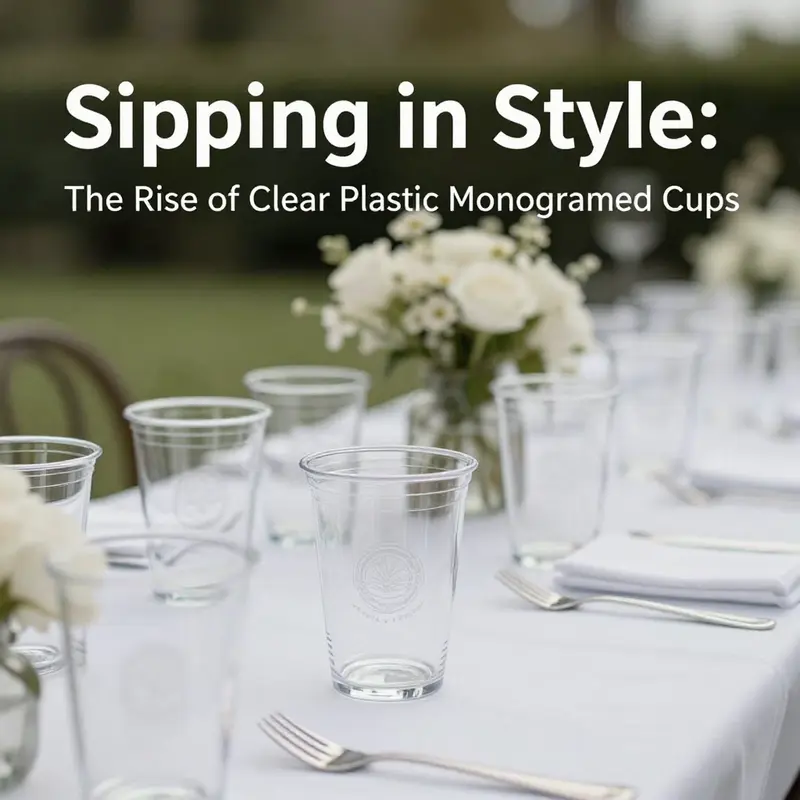
Clear plastic monogrammed cups have emerged as more than mere vessels for beverages; they are a microcosm of how contemporary events balance branding, inclusivity, and environmental responsibility. As planners and organizers lean into personalization, these transparent cups offer a sleek canvas that can elevate the guest experience while also signaling a host’s values. The phenomenon sits at an intersection where aesthetics meet practicality, and where financial considerations intersect with ecological awareness. Understanding this chapter means reading the cups as instruments of social design as well as marketing tools, capable of shaping conversations long after guests have left the room.
At first glance, the appeal of monogrammed clear cups is straightforward. Their transparency highlights the color and clarity of the drink, presenting a clean, unobtrusive backdrop for a brand mark or guest name. The monogram becomes a subtle signature, a whisper rather than a shout, that communicates professionalism at weddings, corporate gatherings, and promotional events alike. In environments that prize a polished image, such as upscale receptions or formal conferences, the cups’ minimalist aesthetic harmonizes with glassware or other premium elements, creating a cohesive visual language. This design synergy matters because the cups are often one of the few uniform touchpoints that every guest handles. When done well, they reinforce a brand narrative without veering into loud advertising or overwhelming color schemes. The result can be a guest experience that feels thoughtful and cohesive, even in large-scale settings where many moving parts rely on quick, dependable service.
Yet the social implications embedded in these clear cups deserve careful attention. The transparency that makes the cups attractive can also reveal more than the beverage. Small imperfections—residual streaks, a misfilled cup, or a barely visible smear—can surface under bright event lighting. At highly formal events, such visual cues may prompt self-consciousness among guests who worry about how their drink is presented or whether their table choices reflect a standard of care expected by the host. Planners mitigating these dynamics often emphasize consistency across service stations, ensuring that every cup is clean, fully filled, and properly presented before guests arrive. This practical discipline helps minimize social discomfort and keeps the focus on the shared experience rather than on minor aesthetic hiccups.
Personalization, meanwhile, can influence social dynamics in nuanced ways. While a monogram can heighten a sense of occasion and reinforce brand visibility, it can also unintentionally create hierarchies. If some attendees receive more elaborate personalization than others, or if the monograms align with particular seating or status indicators, guests may perceive an inequity that distracts from the event’s inclusive intent. The challenge for thoughtful planners is to design personalization that feels egalitarian. One approach is to standardize the cup design across all guests, ensuring every monogram or branding element is identical in scale and style. Another is to use a broad, unifying motif—such as the event’s logo or a neutral monogram—that all attendees share, rather than individualized names or VIP-specific engravings. In this sense, the cup becomes a unifying artifact rather than a badge of distinction.
Despite these social considerations, the pragmatic benefits of clear plastic monogrammed cups remain substantial. They are lightweight and easy to transport, with smooth-wall designs that resist warping and stack neatly for efficient storage. Their durability supports long service hours at bustling venues, where drinks may be poured quickly and moved between stations. The cups also lend themselves to straightforward identification, particularly in environments where multiple beverages circulate. A well-chosen monogram can serve as a quick visual cue, helping bar staff and guests alike to distinguish a drink type or brand attribution at a glance. This ease of identification contributes to a smoother service flow, reduces errors, and minimizes delays during peak moments of a reception or conference, where every minute counts.
As consumer expectations evolve toward sustainability, these cups sit at a crucible of choice. On one side, clear plastic cups remain a cost-effective, highly scalable option for large guest lists. On the other, there is growing pressure to adopt biodegradable or compostable materials, especially in jurisdictions with stringent environmental standards. The market has responded with approaches that blend personalization with greener chemistry. PLA, a compostable biopolymer derived from renewable resources like cornstarch, offers a compelling path for events that want the look and convenience of disposables while signaling environmental responsibility. For many planners, the decision is not binary; it’s a spectrum that weighs cost, performance, and environmental impact in equal measure. In this landscape, the optics of sustainability are as critical as the optics of branding. If an event markets itself as eco-conscious, the choice of cups can either reinforce that stance or undermine it, depending on the materials and disposal plan accompanying the cups.
California and other markets illustrate the regulatory environment that shapes these decisions. Oversight that favors reduced single-use waste has encouraged venues and planners to explore compostable or reusable options where feasible, especially for large gatherings. The strategic implication for event design is clear: sustainability should be embedded in the planning process from the outset. It is not a retrofitted afterthought but a core criterion woven into procurement, service routing, and post-event waste management. Yet even within this push for greener options, clear plastic monogrammed cups continue to be relevant where speed, cost, and practicality are paramount. In such contexts, blending durability and recyclability with a well-considered disposal plan can deliver a balanced outcome. The market’s trajectory suggests sustainable customization is not only possible but increasingly expected, with demand growing for materials that harmonize with brand identity and environmental commitments.
The pricing dynamics also shape social and logistical decisions in event planning. In bulk, the unit cost of disposable cups can be remarkably low, which makes large-scale customization economically viable. When a host is managing hundreds or thousands of guests, even small savings per unit accumulate into meaningful budget flexibility. This financial practicality supports broader experimentation with design, color, and personalization—without compromising the guest experience. Yet price alone does not determine the choice of cup material or design. The best planners evaluate total cost of ownership, including supply reliability, handling needs, and end-of-life options. The decision to favor clear monogrammed cups therefore rests on a balancing act: it must honor the event’s branding impact and guest comfort while aligning with sustainability goals and budget realities.
For planners who want to connect branding with sustainability in a tangible way, the design of the cup and its accompanying service elements can be harmonized into a cohesive narrative. Monograms can be executed with inks or engraving that minimize waste and maximize durability, while lids and sleeves can be selected to optimize stacking stability and transportation efficiency. In practice, this often means coordinating with beverage stations to ensure consistent pour sizes, clean rims, and a polishing protocol that keeps each cup looking pristine from the moment guests are served to the final toast. Such operational discipline reduces social friction, allowing guests to focus on conversation, connection, and the moment itself rather than on the logistics behind the scenes.
From a broader perspective, the social implications of using clear plastic monogrammed cups invite ongoing dialogue about inclusivity and environmental stewardship in event design. Planners can cultivate equity by distributing identical cups across all guest groups, avoiding color-codes or tiered access that might imply status differences. They can also present recycling and composting options as visible, integral parts of the event’s waste stream, signaling a real commitment to responsible consumption. In this way, the cups function not just as beverage vessels but as touchpoints that reflect a host’s values—precision, care, and consideration for the community and the planet.
To readers seeking practical pathways, one glimpse into the practical side of sustainability is worth considering: the availability of eco-friendly, printed-logo cups that maintain the same crisp branding while adopting greener materials. The option to embed a consistent, high-clarity visual identity within a sustainable format helps preserve the event’s professional look without compromising ecological aims. For planners curious about broader options, exploring related eco-friendly beverage vessels can offer additional levers for reducing waste while keeping branding coherent and elegant. For example, resources discussing eco-friendly printing on paper cups can provide insight into how to extend a design language across multiple serving formats, ensuring a unified, responsible presentation throughout the event.
Ultimately, the social life of clear plastic monogrammed cups is inseparable from the event experience they help shape. They bring order to service, amplify brand presence, and offer a canvas for personality that can be shared by every guest. The most successful implementations balance the clarity of the cup with a clear, inclusive design philosophy, so all attendees feel equally valued. They acknowledge the environmental footprint while embracing practical advantages that support a smooth, beautiful celebration or gathering. In this light, the cups become a quiet chorus in the larger story of how modern events negotiate identity, hospitality, and responsibility. The choice of material, the method of monogramming, and the planning around disposal all contribute to a narrative that guests may not consciously dissect, yet will sense in the steadiness of service, the consistency of branding, and the respect shown to every participant.
Internal note: for planners exploring alternatives that foreground environmental responsibility while preserving branding, see resources on eco-friendly printed-logo paper cups, which provide a complementary pathway to maintain visual coherence across event media without sacrificing sustainability. eco-friendly printed-logo single-wall paper cup.
External resource: the conversation around plastic use, sustainability, and materials science is deep and ongoing. For additional context on societal and environmental considerations related to single-use items, see the British Plastics Federation.
External resource: British Plastics Federation
Final thoughts
As we explore the realm of clear plastic monogrammed cups, it’s evident that they are not mere disposable items; they embody a fusion of style, sustainability, and functionality that resonates deeply with today’s consumers and businesses alike. From enhancing brand visibility to meeting eco-friendly standards, these cups are an invaluable addition to any beverage service or event. By understanding the latest customization techniques, consumer trends, and economic factors, businesses can leverage the appeal of these cups to stand out in a competitive marketplace. As we move forward, aligning choices around these modern drinkware solutions can pave the way for innovation and success in serving extraordinary experiences.