

Small plastic gold disposable bowls are not just a trend; they are a staple in the food service industry, especially for establishments like bubble tea shops, restaurants, food trucks, and catering services. These elegant bowls seamlessly combine convenience and aesthetics, making them a popular choice for various events. In this exploration, we’ll delve into the types and varieties of these disposable bowls, their wide-ranging applications at events, the environmental implications of their usage, and the economic factors that shape their market. Each chapter will play a vital role in understanding how small plastic gold bowls can enhance culinary presentations and meet the needs of modern operators while balancing cost and sustainability.
Shades of Gold: The Many Types, Finishes, and Uses of Small Disposable Gold Plastic Bowls

Varieties, materials, finishes and practical considerations
Small disposable gold plastic bowls occupy a surprising variety of forms. Though they share a common aesthetic goal—adding a metallic, upscale touch—they differ widely in material, finish, size, and intended use. Understanding these distinctions helps event planners, caterers, retailers, and hosts choose the right bowl for each moment. This chapter surveys the most common types, explains how construction and finish affect performance, and lays out practical considerations for buying, storing, and pairing these bowls with complementary items.
At the material level, two plastics dominate: polystyrene (PS) and polypropylene (PP). Polystyrene often provides a rigid, glossy surface that reflects light much like plated metal. It holds shape well, so it works for shallow serving or plated-style presentations. Polypropylene tends to be more flexible and slightly more heat resistant. It tolerates bending without cracking, which can be an advantage for takeout or buffet service when bowls might be stacked and moved frequently. Both materials are formed by vacuum molding or injection molding, and each can be given a metallic coating or pigment to create a convincing gold appearance.
Finishes range from high-gloss mirrors to matte or satin sheens. A mirror finish catches light and elevates plated desserts, hors d’oeuvres, and display pieces. Satin or brushed finishes reduce glare and suit more muted décor schemes. Some bowls receive a metallized coating that produces deep, reflective luster. Others use gold-tone pigments or in-mold colorants to create a softer effect. Finish choice influences perceived quality just as much as actual durability, so matching finish to event tone is important.
Sizes and shapes expand the possibilities. Small gold bowls are commonly found in 3–12 ounce capacities for individual servings. Shallow dishes highlight layered desserts and salads. Deeper bowls are intended for sauces, side portions, or candy. Shapes include round, octagonal, and occasional stylized forms that echo traditional ceremonial wares. Size influences not only portion control but also stacking and transport efficiency. For large events, a consistent size across a menu simplifies plating and improves visual continuity.
Functionality and intended use create another axis of variety. Many bowls are produced for celebratory tables. These tend to prioritize appearance, with thin walls and exquisite gloss. Others are engineered for catering resilience. They have thicker rims and reinforced bases to resist bending under weight. Commercial-grade options often come in bulk packaging and are designed for safe transport, quick loading on buffet lines, and efficient post-event disposal. Specialty bowls may be marketed for ritual or ceremonial purposes. They mimic traditional offering dishes in scale and silhouette while remaining disposable and affordable.
Design details matter in practice. Rims can be rolled for comfort when holding, or squared off for streamlined stacking. Bases can be textured to reduce slipping on slick surfaces. Some bowls include embossed patterns or fluting to add tactile interest and hide scratches. Lids are available for select sizes, transforming bowls into portable containers. When lids are offered, they reduce spills, permit safer transport, and extend the bowls’ use for take-away portions.
Packaging and distribution choices affect logistics. Multi-packs of 10, 25, or 50 pieces are common for consumer purchases. Wholesale buyers often order hundreds or thousands in cartons optimized for pallet storage. Manufacturers may provide nested packing to reduce volume, or individual sleeves to protect glossy surfaces from abrasion. Sellers sometimes pre-assemble mixed assortments with matching cups and plates. Customization at scale is possible, with imprinting or brand embossing available for large orders. When planning inventory, factor in protective packing, humidity control in storage, and lead time for custom runs.
Food-safety and temperature capabilities are practical considerations not to ignore. Polystyrene and polypropylene behave differently with heat. Thin polystyrene can soften and deform under high-heat foods. Polypropylene tolerates higher temperatures and can be suitable for warm side dishes. Neither material is appropriate for direct contact with open flame. For hot soups or deep-fried items, look for thickerwall or heat-rated variants. Always verify that the bowls are certified food-safe and free of harmful additives for intended use.
Aesthetics interacts with menu and theme. For weddings and formal dinners, high-gloss gold bowls create a refined tablescape when paired with white linens and muted tableware. For themed parties and cultural celebrations, gold bowls can be combined with ornate props, faux treasures, or complementary textures like lacquer or bamboo. In buffet settings, gold bowls draw the eye and can be used as focal points on grazing tables. For street-food style events, a matte gold finish can look intentionally rustic and upscale.
Environmental and disposal concerns influence choice and perception. These bowls offer hygiene and convenience, but they are still single-use plastic. For planners with sustainability goals, consider pairing the visual impact of gold bowls with biodegradable alternatives for other items. Paper-based salad bowls and compostable vessels can reduce overall plastic use while retaining a cohesive table aesthetic. One practical option to explore is a biodegradable eco-friendly round kraft paper bowl that handles warm foods and offers customization possibilities for branding or event theming. This kind of swap keeps gold bowls as decorative accents while limiting single-use plastic across the event.
Customization and creative reuse expand the role of disposable gold bowls. Some buyers order plain gold pieces and add stickers, vinyl decals, or hand-applied paint for themed twists. Others integrate bowls into DIY centerpieces, using them as holders for florals, votive candles, or resin craft projects. In ritual contexts, bowls often appear as part of curated sets; these sets can be arranged for a single ceremony and then responsibly disposed of or repurposed. When bowls are used for crafts, take care with adhesives and heat sources that might affect the plastic finish.
Buying decisions hinge on a few predictable trade-offs. Cost per unit decreases with larger orders. A premium metallic finish adds cost but elevates presentation. Custom printing and specialty shapes increase lead times and minimum order quantities. Balancing budget, visual impact, and environmental values clarifies which variant to choose. For short events and shows, a glossy, lightweight option may suffice. For all-day buffets or events with frequent handling, a sturdier, thicker-walled bowl pays off through reduced breakage and replacement.
Logistics and storage deserve a quick plan. Store bowls in a dry, temperature-stable space to prevent warping. Keep glossy surfaces protected from heavy abrasion to preserve shine. When stacking nested bowls, use dividers or tissue layers if surface protection is critical. Check humidity levels in storage areas, as extreme moisture can weaken certain cardboard cartons. For event-day handling, assign a small team to manage refill and replacement to keep presentation consistent through service.
Trends continue to refine the category. Demand for bulk, low-cost options remains strong among large-scale caterers. Simultaneously, premium finishes and novel shapes attract boutique event planners. Manufacturers respond with metallic coatings that resist flaking and with food-safe paints that create richer tones. A parallel trend favors hybrid solutions: metallic-coated paper products that mimic gold while improving compostability. Those hybrid products are worth watching for planners who need the gold look but want lower environmental impact.
Choosing the right small gold bowl means thinking beyond color. Consider material and heat tolerance, rim and base design, finish, packaging, and disposal. Match bowl type to service style, whether plated courses, buffet lines, take-away portions, or ceremonial offerings. Factor in storage, transport, and the potential for customization. Where sustainability is a concern, balance a few eye-catching gold pieces with eco-friendly alternatives to reduce single-use plastic overall. Thoughtful selection yields the visual richness of gold without unnecessary trade-offs in function or logistics.
For a broad view of wholesale and retail options, an external marketplace listing offers many product varieties to inspect and compare. https://www.ebay.com/sch/i.html?_nkw=plastic+gold+bowl+disposable
For event planners seeking lower-plastic alternatives that still deliver good presentation, consider biodegradable kraft paper bowls as a complementary choice. One supplier’s biodegradable eco-friendly round kraft paper bowl is a useful reference when mixing materials for a cohesive, more sustainable table setup: https://greendispopack.com/product/biodegradable-eco-friendly-take-away-odm-oem-round-kraft-paper-bowl/
Golden Details, Practical Uses: How Small Disposable Gold Bowls Elevate Events
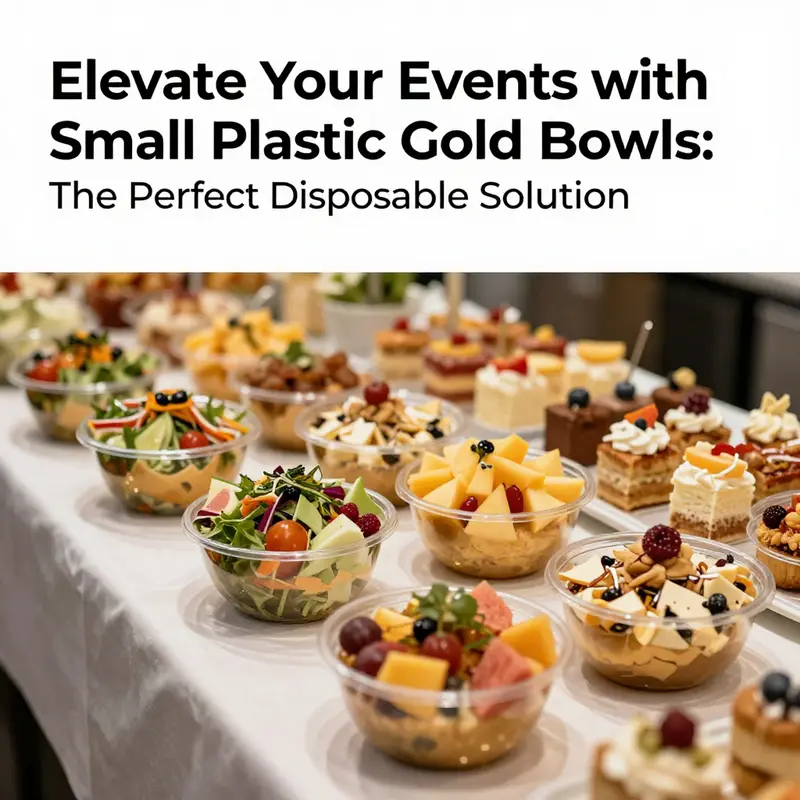
Small disposable gold bowls bring a distinct visual lift to events while serving straightforward, practical roles behind the scenes. They pair ornamental appeal with single-use convenience, making them a favorite for planners who want a luxe look without the logistics of renting or washing fine china. This chapter explores where these bowls shine, how to use them effectively, and what to consider when choosing them for weddings, corporate receptions, cocktail hours, buffets, and more.
At first glance, the appeal is obvious: a metallic finish suggests elegance and formality. That effect is not just decorative. When placed within a table setting, small gold bowls frame food and add perceived value. Guests associate metallic tones with celebration, making simple offerings feel more refined. Chefs and caterers use that perception to make small bites, desserts, or sides read as intentional and upscale. The bowls act both as vessels and as props for presentation.
Functionally, these bowls work best for portions that benefit from containment. Think dips, chutneys, dressings, condiments, and individual portions of salads or desserts. Their size keeps flavors separated and supports plated service without cross-contamination. For buffet or grazing setups, they limit portion creep and help staff maintain consistent serving sizes. For passed hors d’oeuvres, they provide a neat, handheld option for layered bites like shrimp cocktail, mousse, or custard-based desserts.
Outdoor events are a natural fit. Unlike ceramic or glass, small gold plastic bowls resist breaking if dropped. This durability reduces replacement needs and lowers risk around pools, lawns, and terraces. Event teams appreciate this for safety. Lighting and ambient conditions often change outdoors, and the bowls’ sheen catches light, enhancing tablescapes even as sun or string lights shift.
Beyond aesthetics and durability, logistical benefits matter. Single-use bowls streamline service and cleanup. After the event, removal of used wares is faster and less labor intensive. This is especially relevant for events with tight turnover windows, such as multi-room corporate functions or festivals. For venues with limited dishwashing capacity, disposable bowls solve a recurring bottleneck without sacrificing presentation.
Catering workflows also benefit from the bowls’ lightweight nature. Transporting dozens or hundreds of small bowls is easier than moving the same number of fragile items. They stack compactly, minimizing storage footprint in mobile kitchens and service vehicles. When time is tight, staff can set multiple stations quickly using uniformly shaped bowls. Consistency in shape and color simplifies plating, since each portion looks nearly identical from guest to guest.
The bowls play a strategic role in themed events. Gold complements seasonal palettes, from autumnal browns to holiday emeralds. It works with monochrome stationery and dark linens for dramatic contrast. For minimalist events, a small gold bowl becomes the single metallic accent on a neutral table. For more ornate designs, it layers with patterned chargers and glassware without overwhelming the overall look. Planners use them deliberately to tie small visual cues into the event’s color story.
Food safety and material considerations are important. Most disposable gold bowls come from rigid polystyrene or polypropylene. These plastics provide firmness and retain shape under normal serving conditions. However, heat tolerance varies. Hot soups or dishes served above recommended temperatures can warp or release undesirable odors. For hot applications, choose bowls specifically rated for higher temperatures or opt for double-walled alternatives. For chilled dishes, the plastic performs well and helps maintain cold temperatures briefly.
Environmental considerations influence application decisions. While single-use bowls simplify service, they also add to waste streams. Many event buyers now balance visual goals with sustainability aims. One approach is selective use: reserve plastic gold bowls for moments where the metallic look is essential, and use recycled, compostable, or recyclable alternatives elsewhere. For organizers seeking eco-forward options, combining luxe-look disposable bowls with paper-based plates and kraft containers creates a mixed strategy. For example, an eco-friendly kraft bowl can handle main salads, while a small gold bowl adds a polished accent for desserts or condiments; see this disposable kraft paper bowl for food package with lid for a compostable option that pairs well with upscale accents.
Accessibility and guest experience are other practical angles. Small bowls make tasting menus easier to manage. They allow kitchen teams to craft pre-portioned, bite-sized experiences that are simple to serve and eat while standing. For guests with mobility or dexterity issues, the bowls’ rim and depth provide a stable eating surface that reduces spills. Contrastingly, for guests with visual impairments, the reflective finish can create glare; thoughtful lighting adjustments and alternative serving options support inclusion.
For wedding receptions, small disposable gold bowls work in several key places. They are ideal for plated dessert courses served individually. They also elevate late-night snack stations, where mini portions of mac and cheese, sliders, or sweets are offered. Welcome cocktails or canapé hours can present small cured meats, olives, or tapenades in these bowls to create a curated first impression. Because they are disposable, they can be used in multiple momentary installations across an entire day—welcome hour, ceremony refreshments, and reception dessert—without adding cleaning burden.
Corporate events and brand activations use the bowls to align food with visual identity. When brands want a premium feel without expensive rentals, gold bowls can substitute for metal or ceramic. They are particularly useful in VIP lounges where perceived exclusivity matters. Planners often pair them with branded napkins and signage to match the company aesthetic. Event teams can prepare pre-plated samples or tasting flights in matched bowls, ensuring every guest receives an equal, polished portion.
Catering for large parties or festivals finds them useful for quick distribution points. When speed and consistency matter, bowls are pre-filled and handed out. They create fewer messes than open plates and help staff manage crowd flow. For pop-up events and street-food collaborations, the bowls give vendors a way to present plated food theatrically without bulky equipment. Their stackability and low weight reduce vendor setup time and transportation costs.
At home, small gold bowls provide quick elegance for smaller celebrations. They make everyday gatherings feel special. Use them for plated appetizers, dips during dinner parties, or portioned desserts at birthday celebrations. After use, they can be disposed of, minimizing cleanup so hosts spend more time with guests.
Styling tips enhance their effectiveness. Keep portions modest to maintain visual balance. Fill bowls about two-thirds full for an attractive silhouette. Use contrasting garnishes to pop against the gold—herbs, microgreens, or colorful sauces work well. When arranging on a buffet, place bowls on small mirrored trays or dark linens to amplify the metallic sheen. For tiered presentations, nestle bowls within shallow dishes to add height and dimension without sacrificing stability.
Practical limitations deserve attention. Not all gold finishes are equal. Some appear shiny and metallic, while others lean toward matte or foil-like tones. Test samples under event lighting before ordering large quantities. Also, confirm chemical safety for direct food contact, particularly with acidic dishes. Manufacturers can provide guidelines on what foods are safe for their products.
Ordering and inventory planning are straightforward. Estimate portions conservatively based on guest counts and menu structure. For tasting events, budget one bowl per guest per course. For buffet or grazing setups, plan for a bowl per expected serving. Add an allowance for breakage or surplus. Because the bowls are inexpensive, it makes sense to order a small surplus rather than risk shortages.
Finally, consider disposal logistics. Coordinate with venue waste management to determine whether the bowls are recyclable in local streams. If not recyclable, compostable alternatives or a mixed strategy reduces environmental impact. Some planners set up separate disposal stations labeled clearly to guide guests. For high-profile events, contract a waste-management service to ensure responsible handling.
Used thoughtfully, small disposable gold bowls are far more than a convenience. They are a tool for visual storytelling, guest comfort, and operational efficiency. Their golden finish becomes part of the event language, signaling celebration and care. When paired with mindful menu choices, appropriate materials, and clear disposal plans, these bowls help create moments that look and feel intentional, while keeping the back-of-house process manageable.
For planners balancing luxury and sustainability, pairing metallic accents with stronger eco-friendly vessels is an effective compromise. Consider integrating compostable or recyclable main-course containers and reserving gold bowls for accents only. This approach limits waste and preserves the visual impact where it matters most.
External reference: Detailed research on general event supply trends and material safety recommendations can help inform selection and use. (No direct external URL provided in the detailed research results for this chapter.)
The Hidden Cost of Shine: Environmental Consequences of Disposable Small Gold Plastic Bowls
Understanding the true cost of a golden finish
Small disposable gold-colored plastic bowls deliver instant elegance. They brighten tables and simplify cleanup. Yet the gold look hides environmental costs that rarely appear on event budgets. These bowls are usually made from petroleum-derived polymers. Common choices include polystyrene and polypropylene. Both are durable and lightweight. Both resist heat and cracking during use. Both are designed for single-use, then disposal. That design choice drives most of the environmental harm.
From raw material extraction to final fate, the lifecycle of a disposable gold plastic bowl consumes resources. Oil and natural gas are converted into plastic resins. Refining and polymerization consume energy and emit greenhouse gases. Additives and metallic pigments create the gold sheen. Those decorative layers often include metallic flakes, vacuum-deposited metal, or complex pigments. While they enhance aesthetics, these finishes complicate recycling and increase the toxic load when items are incinerated.
After manufacture, transport and storage add more emissions. Even lightweight items require shipping, often in bulk. For large events or commercial venues, hundreds or thousands of bowls move through supply chains. Packaging, pallets, and refrigerated or protected shipping—all add to the carbon footprint. When the event ends and the bowls are discarded, most of that embodied energy vanishes from the useful economy and becomes waste.
Disposal patterns make a big difference. In ideal systems, a used single-material plastic product is cleaned and taken to a recycling stream. In reality, food residues, mixed materials, and the small size of these bowls reduce the likelihood of successful recycling. Municipal facilities often reject small, soiled plastic items. When metallic finishes are present, recycling facilities may further exclude them because contaminants lower the value of recycled resin. As a result, a large share of these bowls ends up in landfills, incinerators, or the natural environment.
Landfill disposal sequesters material but creates long-term persistence. Polystyrene and polypropylene resist biodegradation. They can remain for centuries, fragmenting into microplastics. Those fragments migrate through soil and water. They accumulate in rivers, lakes, and oceans. Microplastics carry additives and absorbed pollutants. They enter food chains when filtered or ingested by wildlife. Over time, the ecological and health implications of that contamination become clearer.
Incineration reduces volume and can generate energy. But it also releases pollutants and greenhouse gases. Metallic pigments and certain additives can produce hazardous byproducts when burned. Modern incinerators have pollution controls, yet emissions remain a concern. Moreover, communities near waste-to-energy plants or landfills often bear disproportionate impacts. That distribution raises environmental justice concerns linked to single-use culture.
Another problematic pathway is litter. Outdoor events, parks, and streets see single-use items escape waste collection. Wind and water transport disperse plastic particles widely. Coastal regions and waterways become sinks for improperly discarded bowls. Wildlife may mistake shiny items for food. Birds and marine animals can become entangled or ingest fragments, with lethal consequences for individuals and population-level effects over time.
Recycling challenges go deeper than infrastructure gaps. Even where collection exists, economics matter. Recycled plastic prices fluctuate. Contamination, mixed polymers, and decorative coatings reduce the quality of recycled pellets. Many recycling programs prioritize larger or cleaner containers like bottles. Small, rigid bowls often fall through the sorting machinery or are sorted into lower-value streams. The gold aesthetic, achieved through coatings or laminates, often necessitates additional separation steps. Those steps increase cost and lower the incentive for processors to accept such items.
The presence of food residue further drives rejection. A bowl smeared with dressing is harder to process. Washing before recycling consumes water and energy, raising trade-offs for event hosts and facilities. For many users, the simplest choice after a party is to bag and discard. That choice, while practical in the short term, compounds long-term environmental harm.
Microplastics deserve separate attention. Fragmentation of discarded bowls leads to particles under five millimeters. These microplastics travel in soil, groundwater, and ocean currents. They adsorb persistent organic pollutants and heavy metals. Studies show microplastic particles in drinking water, seafood, and even human blood. The health effects of chronic microplastic exposure remain under study. Yet early evidence links inhalation and ingestion to inflammation and cellular stress in lab settings. Reducing sources of secondary microplastics matters for both ecosystems and public health.
Beyond materials and fate, consider the social and economic signals embedded in the use of disposable gold bowls. They reinforce a throwaway mindset. Event planners, venues, and caterers weigh convenience against responsibility. Single-use items shift labor from washing to procurement and disposal. That shift can appear cost-effective when labor is expensive or time is limited. But hidden costs accrue: tipping points in municipal waste systems, higher landfill fees, and reputational risk for organizations seen as wasteful.
Alternatives exist that preserve style while reducing impact. Reusable serviceware is the clearest solution for repeated events. Porcelain, glass, or metal serve many cycles and improve life-cycle emissions when used enough times. For true single-use needs, material choice matters. Compostable and certified biodegradable bowls created from fiber or molded pulp present lower long-term risk. They often accept composting when clean and collected properly. Paper-based bowls with food-safe barrier coatings can replace plastic in many contexts. When compostable options are collected and processed correctly, they return carbon to soil and avoid microplastic formation.
To bridge the gap between single-use convenience and environmental responsibility, some suppliers offer certified fiber bowls. These products use renewable fibers and water-based barriers. They are less likely to introduce persistent microplastics. If organics processing infrastructure exists, these bowls can be composted with food waste. For venues serving large crowds at festivals, stadiums, or outdoor weddings, such systems scale well. Event managers can coordinate with local composting facilities or haulers to ensure proper diversion.
One practical alternative to consider is switching to well-designed kraft paper bowls that combine sturdiness with eco-friendly credentials. These bowls hold hot or cold foods and accept custom printing and lids. They are widely available in sizes suited for salads, soups, and desserts. For events prioritizing both aesthetics and sustainability, choosing fiber-based bowls reduces downstream contamination risks. For a supplier option that illustrates this approach, see the biodegradable kraft paper bowls offered by a commercial packaging vendor.
Small design choices within plastic products can help but rarely fix the core problem. Using mono-material plastics simplifies recycling if garments are clean. Avoiding metallic finishes improves the value of collected resin. Producing bowls in larger formats reduces the relative share of contamination during sorting. Yet these technical fixes rely on an intact recycling market and responsible consumer behavior. When markets or collection systems fail, even improved plastics remain likely to become waste.
Policy and procurement change the incentives. Event organizers who require reusable or compostable options create steady demand for better alternatives. Municipalities that invest in food-waste collection and industrial composting make compostable bowls a viable choice. Extended producer responsibility programs can push manufacturers to design for circularity. Deposit-return schemes encourage return of serviceware. Some festivals and venues already operate reusable cup programs; similar models for plated serviceware would dramatically cut waste.
On the consumer side, clear communication matters. Labels that state compostability, recycling instructions, or end-of-life requirements reduce contamination. Training waitstaff and volunteers to separate streams during events preserves material value. Small logistics—cleaning bulk plastic for recycling or pooling dirty compostables—expand diversion success. These operational practices require commitment, but they yield measurable reductions in landfill-bound waste.
Finally, equity and responsibility deserve emphasis. The communities that house waste facilities often experience disproportionate health burdens. Choices by event planners ripple outward. Selecting lower-impact serviceware reduces pressure on local systems and protects vulnerable populations from pollution. Considering suppliers who disclose lifecycle impacts helps align procurement with environmental and social values.
Shifting away from disposable gold-plastic bowls does not require sacrificing beauty. Thoughtful choices, better procurement policies, and modest operational changes let hosts maintain refined aesthetics while lowering environmental costs. Where single-use remains necessary, prefer fiber-based, certified compostable products and ensure collection systems exist. For repeated use, invest in durable serviceware and efficient cleaning. Each decision reduces microplastic formation, carbon emissions, and pollution burdens.
For a broader look at the global consequences of single-use plastics and pathways for change, consult the World Wildlife Fund’s detailed briefing on plastic pollution: https://www.worldwildlife.org/threats/plastic-pollution
Cost, Compliance, and Consumer Taste: Economic Forces Shaping Small Plastic Gold Disposable Bowls

Cost structures and market positioning for small plastic gold disposable bowls weave together material economics, buyer psychology, and regulatory tides. The shiny gold finish and convenient single-use format are not just aesthetic choices; they are variables in a commercial equation. At the most basic level, manufacturers face a triad of cost drivers: raw materials, processing, and distribution. Resin prices for polystyrene and polypropylene are tied to global oil markets. When crude oil prices rise, resin costs follow, squeezing margins unless firms absorb costs or pass them to buyers. Injection molding and thermoforming equipment require capital but enable high production volumes. Those volumes create economies of scale that make low unit costs possible for event suppliers and caterers. The gold finish—applied as metallic pigment, vacuum metallization, or foil stamping—adds a modest increment to per-unit cost. Yet that incremental cost often yields disproportionate value in perceived luxury and willingness to pay.
Price sensitivity in the target buyers—event planners, caterers, and retail consumers—varies widely. Large-scale buyers operate on thin margins and prioritize unit price, predictability, and logistics. Small boutique events and high-end gatherings value presentation more and tolerate a premium for visually impressive disposables. This creates room for segmentation: commodity-priced gold-tone bowls for bulk catering and premium ranges with heavier gauges or finer metallic effects for upscale events. Retailers and distributors calibrate inventory around seasonality; demand spikes around holidays and wedding season require working capital and warehousing capacity. Holding costs for inventory, especially for differentiated colors or sizes, influence ordering cycles and the minimum efficient scale for product lines.
The economic calculus also factors in the total cost of use. For an event operator choosing between disposables and rentals, the decision is rarely about per-piece price alone. Labor for washing, loss and breakage rates, storage infrastructure, and turnaround times are part of a lifecycle cost model. Disposables offer predictable marginal costs per guest and remove the back-end labor burden. However, increasing municipal and corporate focus on sustainability has begun to add hidden costs to single-use plastic choices. Compliance fees, producer responsibility schemes, or landfill taxes can raise the effective price of plastic disposables. Conversely, in regions with robust recycling infrastructure and market access for recovered resin, the life-cycle cost may fall, especially where recycled content mandates create steady demand for post-consumer plastic.
Consumer sentiment is now a measurable economic lever. Research shows that green values, product experience, and accessible information about bio-based alternatives influence purchase intention. In regions where sustainability is a priority, a product that looks like gold but is made from compostable material can command a premium. That is important in the small gold bowl niche, where aesthetics matter. Firms that can offer a compostable or recyclable gold-tone bowl—without compromising on appearance—stand to capture customers willing to pay more. But the transition is costly. Compostable feedstocks such as bagasse, bamboo, or molded fiber cost more per kilogram, require different tooling, and may have longer production lead times. The investment is defensible if it aligns with regulatory trends and measurable consumer demand.
Regulatory pressure is a decisive economic force. Policy instruments range from outright bans and restrictions on certain single-use plastic items to extended producer responsibility (EPR) schemes and incentives for bioplastics. The introduction of such rules changes the cost calculus overnight. When governments impose fees on non-compliant packaging, manufacturers and importers must either pay the levy or redesign products. That creates an entry barrier for smaller producers and accelerates consolidation in the sector as larger firms absorb compliance costs more easily. For suppliers of small gold bowls, the calculus often means either investing in alternate materials or risk margin erosion from new taxes and lost sales in regulated markets. In markets with strong environmental standards, the pace of innovation toward compostable alternatives will likely quicken, altering demand and supply curves.
Supply chain dynamics add another layer of economic complexity. Concentrated resin suppliers, fluctuations in shipping costs, and tariff regimes shape procurement strategies. Manufacturers who source raw materials internationally face currency risk and transport delays. The capital intensity of molds and finishing equipment argues for predictable demand or flexible manufacturing that can pivot between finishes and materials. Many producers hedge risk by offering hybrid product lines—plastic cores with a replaceable compostable lid, or paper-based bowls with metallic foils that mimic gold. This approach spreads fixed costs and allows suppliers to respond to both cost-conscious bulk buyers and eco-focused niche customers.
Brand reputation and risk management play into pricing and market access. Restaurants and caterers are increasingly judged on sustainability as well as service. Using small plastic gold bowls in an environmentally sensitive community can trigger negative publicity. That reputational risk translates into economic risk: lost contracts, canceled events, or the need to pay for remediation and public relations. Firms that proactively adopt greener materials or offer transparent recycling plans may gain a competitive advantage. Investment in supplier certification, compostability testing, and end-of-life messaging can be positioned as marketing expenses with measurable returns in customer retention and higher margins.
Innovation economics are also at work. The cost of R&D to develop compostable metallic finishes or to optimize fiber-based bowls for durability and presentation is high. Yet the potential payoff can be substantial. A successful eco-friendly gold bowl that retains the look and convenience of plastic without the environmental baggage unlocks new market segments. Economies of scope allow manufacturers to sell the same finishing technology across multiple product lines—cups, plates, trays—spreading R&D costs. Strategic partnerships with waste-management firms and certification bodies can reduce market friction and accelerate adoption.
For wholesalers and event suppliers, pricing strategies reflect both cost realities and marketing objectives. Volume discounts, tiered product lines, and bundling with other party supplies are common tactics. The perceived luxury of the gold tone enables premium positioning for certain SKUs. Smart pricing balances margin capture with price elasticity; during peak seasons, premium ranges can be emphasized, while commodity lines clear inventory in off-peak months. Promotional strategies also need to reflect rising environmental scrutiny: offering a biodegradable variant at a modest premium allows buyers to elect sustainability while maintaining options for cost-conscious clients.
Externalities such as waste management and disposal influence long-term market viability. In jurisdictions where recycling systems are underdeveloped, plastic disposables contribute to municipal waste burdens that may prompt stricter regulation. Conversely, regions that invest in collection and recycling infrastructure create a market for recycled feedstock. The presence of a circular economy can lower long-term material costs if recycled resin becomes a stable input. For manufacturers of gold-tone bowls, designing for recyclability—selecting mono-materials, avoiding mixed coatings that impede processing—can reduce future compliance costs and preserve market access.
Finally, competitive dynamics and market concentration shape pricing power. Large suppliers with integrated production, finishing, and distribution networks can undercut smaller competitors on price. Yet smaller manufacturers can carve niches by focusing on specialty finishes, custom printing, or sustainable credentials. Strategic buyers—event planners with recurring demand—can leverage purchasing power to negotiate favorable terms or request co-branded, eco-friendly solutions. Channel strategies that include direct-to-consumer offerings allow for higher margins but require investment in marketing and fulfillment.
Taken together, these economic forces suggest a market in transition. The immediate advantages of plastic—low unit cost, durability, and consistent appearance—remain relevant. But they are increasingly counterbalanced by rising raw material volatility, regulatory costs, and shifting consumer values. The most resilient businesses will be those that model total cost of ownership, invest selectively in sustainable alternatives, and align product aesthetics with evolving buyer expectations. Tactically, that may mean offering a tiered portfolio that includes standard plastic gold-tone bowls for high-volume, cost-sensitive buyers and a certified compostable gold-look line for eco-conscious clients. It may also mean investing in supplier partnerships and logistics that reduce exposure to raw material shocks.
For event professionals and retailers, economic decision-making will hinge on transparent cost comparisons that include disposal and reputational impacts. For manufacturers, opportunity lies in innovation that reduces the cost premium on sustainable options and in marketing that communicates value beyond price. Policymakers will continue to influence the pace and direction of change through incentives, mandates, and infrastructure investment. Where those forces align—affordable compostable feedstocks, accessible waste management, and clear labeling—the small gold bowl market can evolve toward solutions that balance elegance with environmental responsibility.
For a practical illustration of how market research captures these trends, a recent industry analysis discusses the shift toward compostable and biodegradable materials and how policy and consumer preferences are reshaping demand. https://www.mordorintelligence.com/industry-reports/disposable-bowls-market
Manufacturers evaluating alternatives should study existing product examples in compostable fiber and paper. A relevant reference is a biodegradable eco-friendly take-away round kraft paper bowl product that demonstrates how traditional disposable formats can be adapted for sustainability: biodegradable eco-friendly take-away round kraft paper bowl.
Final thoughts
Small plastic gold disposable bowls represent an elegant and practical choice for a variety of food service settings, from upscale weddings to casual food trucks. Understanding their diverse types and varied applications is essential for making informed choices that enhance service delivery and guest experience. As we weigh the environmental implications alongside economic factors, this knowledge empowers businesses to strike a balance between elegance and sustainability. By making mindful choices, operators can elevate their events while also contributing to a more sustainable future.