
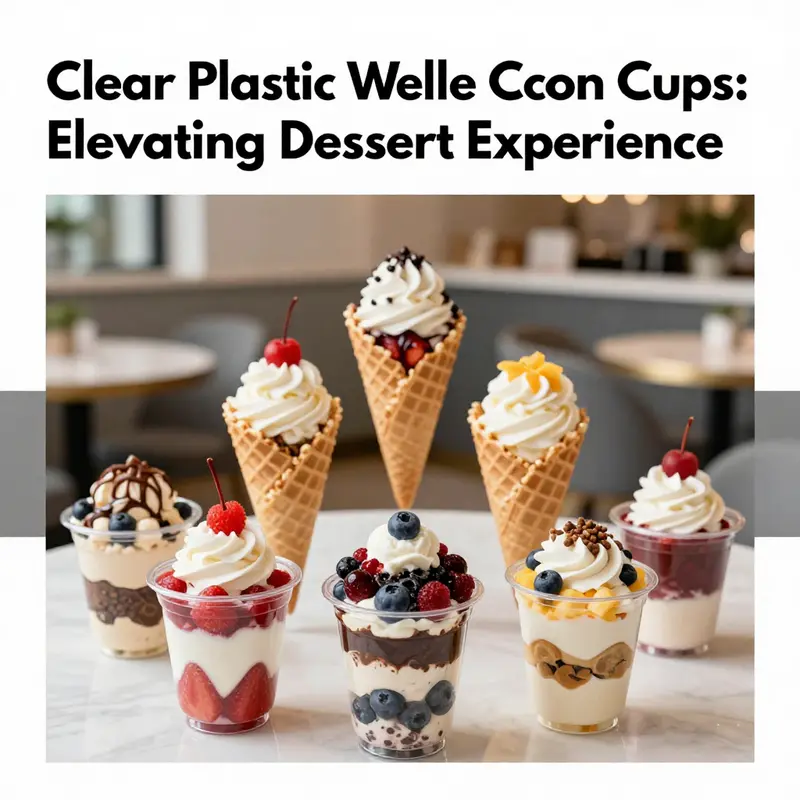
As the demand for unique dessert presentations rises, clear plastic waffle cone cups stand out as a versatile solution that benefits various segments of the food industry. These stylish cups not only showcase luscious desserts like ice cream and parfaits but also meet the diverse requirements of bubble tea shops, beverage chains, restaurants, and catering services. With their sturdy design made from food-grade materials, these cups bridge the gap between aesthetics and functionality. In exploring their consumer appeal, manufacturing processes, market trends, and environmental considerations, this comprehensive guide reveals how clear plastic waffle cone cups are shaping the future of dessert serving in contemporary culinary applications.
Visible Indulgence: How Clear Plastic Waffle Cone Cups Transform Dessert Presentation
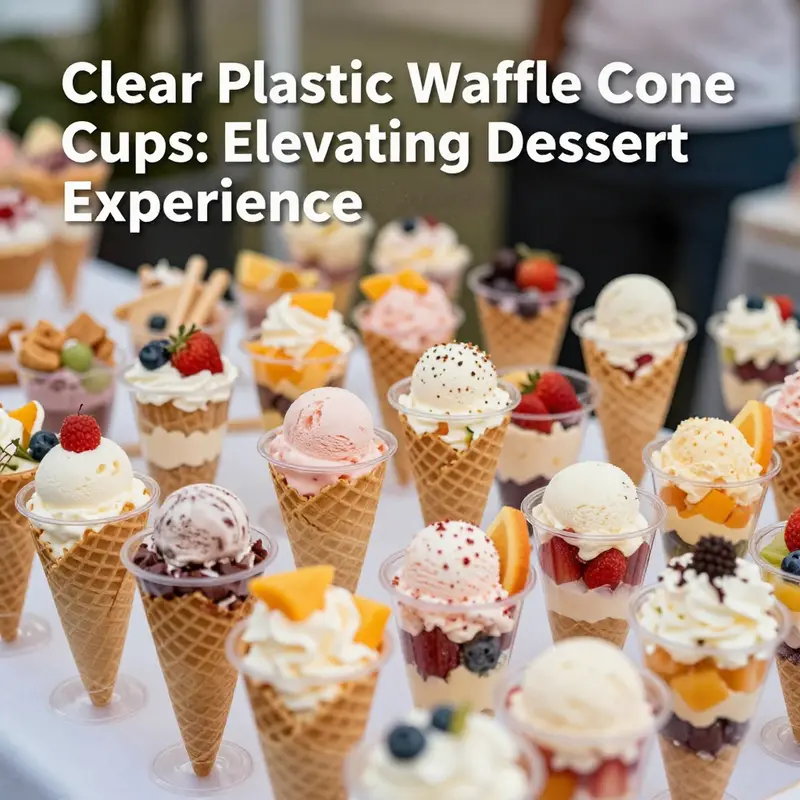
Visible Indulgence: How Clear Plastic Waffle Cone Cups Transform Dessert Presentation
Clear plastic waffle cone cups turn desserts into a visible promise. They blend the nostalgia of a waffle cone’s texture with the clarity of modern materials. For customers, the first impression happens with sight. Transparent cups showcase color, layering, and portion. That visibility elevates perceived freshness and value.
When a layered parfait, vibrant sorbet, or fruit-and-cream creation sits in a clear cup, each ingredient becomes part of the story. The eye tracks contrasts: swirls of sauce, pockets of fruit, specks of garnish. That visual narrative creates appetite and expectation. Consumers often decide before tasting, guided by what they see. Clear cups reduce ambiguity. They communicate quality and honesty about portions.
Beyond visual cues, clear waffle cone cups preserve tactile associations. The molded basket-weave pattern echoes a baked cone. That texture suggests crunch and fun. Even without the aroma of fresh baking, consumers connect the look and feel to pleasant memories. This psychological link enhances enjoyment. It turns serving ware into part of the sensory experience.
For operators, presentation in clear cups is practical. The cups are stable and resilient, ideal for loaded sundaes and layered desserts. Their rigidity supports hefty scoops and toppers. They resist warping and leaking, which keeps service efficient. Staff can assemble desserts quickly and with fewer spills. The result is a consistently clean presentation, especially important during busy service windows.
Lightweight transparency also benefits mobile and event vendors. Desserts can be displayed in see-through containers that are simple to stack and transport. This portability matters at festivals, pop-ups, and outdoor markets. Consumers attending these venues expect convenience without sacrificing presentation. Clear waffle cone cups meet both needs.
The social factor matters more than ever. Visible desserts are highly shareable. When layers and colors photograph well, consumers post images more often. Those posts act as free promotion. A dessert that photographs attractively becomes a visual ambassador for the brand. Smart operators design items to look as good on a screen as they taste on a spoon.
Designing with photography in mind changes ingredient choices and assembly. Contrast is key. Dark and light layers, textured toppings, and clean edges photograph best. Clear cups allow these choices to show clearly. Operators can use that capability to craft signature items built for social sharing. A well-composed dessert in a transparent waffle cup extends the reach of the store beyond its counter.
Sustainability now shapes consumer perception. Clear cups made from recyclable or responsibly sourced materials meet growing expectations. When consumers can see the product, they also judge the packaging. Eco-friendly labeling or visible material cues can reassure buyers about responsible sourcing. Operators who choose recyclable options strike a balance between striking presentation and environmental accountability.
Reusability is another option for premium settings. Sturdy clear waffle cup designs can be collected, washed, and reused at events or in-cafe programs. That approach increases perceived luxury and reduces single-use waste. It also reinforces brand identity when cups bear a subtle logo. Where reuse is impractical, clear cups manufactured from widely recycled plastics help close the loop.
The functional benefits extend to menu engineering and upselling. Transparent presentation makes portion sizes obvious, reducing buyer hesitation. Staff can suggest add-ons by pointing to visible layers. Customers can request extras that will be noticeable, like an extra ribbon of sauce or a sprinkle of nuts. Visual transparency simplifies the upsell conversation.
Clear waffle cone cups also help manage expectations around texture and temperature. When a frozen treat melts slightly, the change is visible. That real-time feedback helps customers pace consumption. For operators, seeing how a product behaves under service conditions informs recipe adjustments. Transparency becomes a tool for continuous quality control.
Brand differentiation is another advantage. Traditional cones and opaque cups hide what’s inside. Clear waffle cone cups create an opportunity to design a signature look. Consistent layering, repeatable garnishes, and predictable portioning build a recognizable aesthetic. Over time, that visual identity becomes associated with the brand’s standards and creativity.
Event and catering environments benefit from the cups’ decorative potential. Clear cups filled with tiered desserts create table displays that invite sampling. For weddings, corporate events, or themed parties, the cups can be coordinated with color palettes and garnish choices. They offer elegance without the fragility and logistics of traditional cones.
Hygiene and service speed matter too. Clear cups provide a sanitary, single-serve presentation. They reduce the need for extra utensils or service ware. This simplicity decreases contact points, which guests appreciate at events. Fast assembly and tidy appearance reduce customer wait times and improve throughput.
Cost considerations are practical. While premium materials add expense, the marketing lift from shareable presentation often offsets the cost. Clear cups can reduce waste from damaged or collapsed cones. The stability lowers the rate of remakes during busy periods, saving labor. Thoughtful suppliers offer recyclable or compostable variants to help control environmental impact and cost.
Aesthetic versatility makes the cups suitable across concepts. They work for artisanal ice cream shops and quick-service counters alike. The same cup that displays a refined parfait also showcases a casual shake topped with cookie crumbles. That adaptability simplifies inventory and keeps the focus on the treat.
Operationally, staff training for assembly is straightforward. Clear cups require neat layering and consistent fill levels. Visual cues guide portioning, reducing variability. This repeatability ensures customers receive the expected experience. It also helps new staff reach quality benchmarks quickly.
Ingredient selection matters more with transparent serving ware. Builders should favor visually distinct components that retain shape. Sauces should be viscous enough to form clean layers. Fruit should be cut to sizes that show well. Garnishes should hold their color and structure during service. These choices improve both taste and appearance.
Lighting and display design amplify the benefits. Backlit counters or glass displays enhance color saturation and clarity. Placing clear cups where natural light reaches them helps showcase textures. On social platforms, images taken in good light translate to more engagement. Presentation planning that includes display lighting multiplies the return on visual investment.
Consumer psychology supports the strategy. Transparency suggests honesty. When people see their food, trust increases. Clear presentation reduces perceived risk. It also elevates the sensory expectation, which often enhances the tasting experience. Visual appeal sets the stage for pleasure.
Finally, clear plastic waffle cone cups invite experimentation. They encourage new layering techniques, seasonal color themes, and playful textures. For operators, they are a flexible canvas that highlights creativity while maintaining consistency. For consumers, they turn eating into a visual and sensory ritual.
For operators seeking complementary packaging options beyond clear waffle cups, consider pairing visible dessert presentation with tailored containers designed for other menu items, such as custom-printed paper ice cream cups, to create a cohesive brand experience across cold treats and grab-and-go offerings: custom-printed paper ice cream cups.
For more on material characteristics, standards, and performance of plastic waffle cone cups, refer to the detailed industrial overview linked here:
https://www.alibaba.com/product-detail/The-Fundamentals-of-Plastic-Waffle-Cone-Cups_1600528379495.html
Seeing Through Dessert: Materials, Molds, and the Manufacturing Craft Behind Clear Plastic Waffle Cone Cups
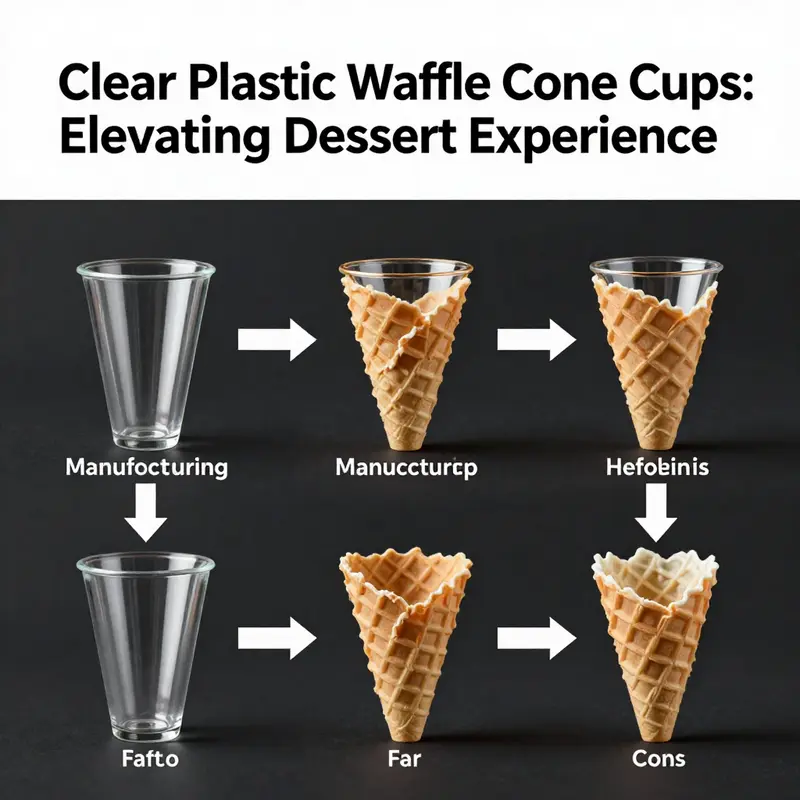
Clear plastic waffle cone cups sit at a unique crossroads of aesthetics and engineering. They are not merely disposable vessels; they are carefully engineered windows into the dessert they cradle. The beauty of the cup lies in its transparency, which allows the eye to glide from the rim to the bottom and across the layered colors, textures, and toppings inside. Yet beneath that gleaming surface lies a precise blend of materials science, molding science, and industrial rhythm. A successful cup must be clear and bright, strong enough to bear a scoop of ice cream or a fruit parfait, and consistent across thousands of units produced each day. It must also integrate smoothly with lids, spoons, and branding elements, while fitting into the broader logistics of take-out and display. The modern clear waffle cone cup accomplishes this by marrying two principal material families with mature manufacturing processes, all guided by a shared objective: deliver a dependable, visually compelling dessert experience without compromising food safety or environmental responsibility.
The material choices in the clear waffle cone cup begin with food-grade thermoplastics, most commonly PET and PLA. PET brings undeniable strengths to the table. Its clarity is exceptional, so even a thin-walled cup can appear as colorless and glass-like as possible. It is also rigid, shatter resistant, and resilient under the cold used for frozen desserts. PET’s barrier properties help limit moisture and oxygen ingress, factors that influence ice crystal formation and product integrity during display and transport. This makes PET a sensible pick for frozen and semi-frozen desserts, where the cup must hold its shape while resisting the stress of repeated handling. PLA, by contrast, emerges from renewable resources and is recognized for potential compostability in industrial facilities. It offers a lower carbon footprint in feedstock terms, which appeals to brands emphasizing sustainability. However, the story of PLA is more nuanced. While it can be biodegradable or compostable under appropriate conditions, the end-of-life infrastructure matters. PLA’s performance in barrier properties, especially moisture and heat resistance, can lag behind PET in some use scenarios. Those trade-offs inform how manufacturers and customers plan packaging strategies, waste streams, and branding narratives. In practice, many producers offer both options or blends, choosing PET for high-throughput, cold-chain applications and PLA for green-oriented campaigns that align with local waste management capabilities.
The manufacturing path begins with the transformation of resin into a melt and then into a hollow, waffle-textured cup through either injection molding or blow molding. Injection molding suits compact, high-precision geometries and multi-cavity tooling. In this route, molten resin is injected into a mold where a cooling cycle rapidly solidifies the part. The waffle texture—an array of ribs arranged in a lattice—begins life as surface features carved into the mold. The texture is not merely decorative; it defines the cup’s tactile character and helps with grip, stacking, and visual appeal. Blow molding, applied to certain cup designs with depth or specific wall configurations, uses a high-pressure air column to push heated resin into a mold that shapes the exterior while the walls are formed by the collapsing mold cavity. In both cases, the goal is consistent texture, precise dimensions, and a surface that remains bright under fluorescent shop and display lighting. The mold itself is a product of careful machining: it must maintain uniform wall thickness, diffraction-free texture, and robust sealing against leakage at the seam between body and base. The result is a product family that retains exact geometry from run to run, a critical factor when thousands of pieces must interoperate with a single lid, a single spoon slot, and a standardized stacking profile.
Across large-scale operations, high-speed automated machinery drives throughput. Robotic loaders feed the preforms or partially formed cups into trimming stations, cooling tunnels, and inspection lines. Vision systems scan for surface defects, thick or thin walls, and misaligned waffle ribs. Inline sensors monitor wall thickness and base integrity to ensure a reliable load-bearing performance. The automation extends to lids, which are often produced in tandem from clear resin in nearby lines. The lids may feature features like straw holes, spoon slots, or tamper-evident seals to secure the contents during transport. Keeping these components synchronized reduces changeover time and minimizes the risk of mismatches between cup diameter, lip radius, and lid size. The entire line operates under strict quality-control protocols, so a single batch of cups can be produced with repeatable color clarity, texture fidelity, and dimensional tolerances that ensure consistent performance downstream.
Texture fidelity is more than skin deep. The waffle lattice must deliver a convincing cone-like sensation while remaining practical in a take-out environment. Manufacturers tune rib depth, wall thickness, and lattice spacing to balance rigidity with a subtle chew. This balancing act matters because the cup must resist cracking when a scoop of dessert sits inside or when a customer handles a cup with a potentially slick, condensation-prone outer surface. Rim design also matters. A smooth, rounded lip improves spoon ingress, pouring comfort, and overall tactile satisfaction. The lattice inside can influence how the interior food interacts with the cup wall—important for glossy syrups or sticky toppings that might otherwise cling to vertical surfaces and affect printability and readability of branding impressions on the exterior. These micro-design decisions accumulate into a product that feels premium, aligns with high-volume operations, and supports a strong consumer experience.
Material selection extends beyond the nominal properties of clarity and strength. It affects how the cup behaves in different dessert scenarios. PET cups excel in environments with extended displays and fast service. They maintain their shape under cold temperatures and resist deformation during transport. PLA options attract brands seeking a lower fossil-energy footprint in feedstock terms, yet they can demand more careful disposal logistics. If the waste stream for PLA is not well separated from PET, the environmental benefits may be less realized. As a result, many producers present a lifecycle view: the cup’s performance in the shop and its end-of-life pathway both matter. Recyclability of PET is widely supported in many regions, while PLA’s compostability hinges on industrial facilities and local composting programs. The packaging decision thus becomes a strategic point in brand stewardship, balancing ingredient visibility with stewardship of the waste stream. In this sense, the cup is not just a passive container but a node in a more complex network of sustainability choices.
From a standards and safety perspective, the cups are designed to meet food-contact requirements. The resin grades used are formulated to minimize migration and to withstand repeated cold exposure, which is essential for frozen products that experience rapid temperature swings. For PET, the canonical performance features include optical clarity, rigidity, and dimensional stability, paired with a favorable recycling profile in regions that support PET recovery streams. PLA emphasizes bio-based origins and the potential for composting, yet it requires a waste system that can separate and process it correctly. In practice, service engineers and quality managers work with resin suppliers to confirm compliance with local food-contact regulations and to validate that the final cups meet tolerances across production lots. The aim is to avoid defects that could compromise flavor perception or mouthfeel, such as rough edges, micro-cracks, or unexpected warping after a few minutes of dessert exposure to air and moisture.
The cups’ life in the consumer space goes beyond their own glassy exterior. They participate in a broader display and service ecosystem. The transparent walls invite the inherent color of the contents to act as a key branding element. The presentation benefits from the absence of a colored container, freeing designers to layer garnishes and syrups in ways that maximize visual impact. At the same time, the lids and packaging accessories complete the ensemble: clear lids that seal securely, design features to minimize accidental spills, and branding options that keep the look coherent from kitchen to counter to table. The ergonomic considerations extend to stacking efficiency; the cups are engineered to nest with minimal waste while still allowing easy separation during service. These practical details underpin operational efficiency, a core concern for ice-cream shops, dessert trucks, and festival booths where speed and consistency define profitability as much as taste does.
Sustainability remains a moving target, and the fastest way to align with evolving expectations is to think about the end-to-end lifecycle. PET’s recyclability is a well-tostered path in many jurisdictions, yet packaging teams must ensure the entire system—cup, lid, and any printed decorations—fits into the local recycling stream. PLA, while commendable for renewable content, often requires specific composting conditions that may not be universally available. Consequently, some customers adopt a mixed strategy: choosing PET for performance and recycling compatibility, while exploring PLA or other bio-based options as part of a broader sustainability narrative that communicates intent alongside actual infrastructure readiness. The decision matrix thus extends into supplier selection, waste-management partnerships, and consumer education about how to dispose of cups responsibly after use. It also invites creative packaging collaborations within the shop, including the use of reusable or returnable systems where feasible and compliant with safety and hygiene standards.
The internal packaging ecosystem also invites cross-material thinking. In this vein, consider the surrounding take-away lineup and how it might complement a clear plastic waffle cone cup. A lightweight, eco-friendly kraft paper bowl can serve as a counterpart in a multi-format offering, enabling customers to choose elegant dessert presentations across formats while keeping a coherent brand narrative. This approach to design and procurement helps operators plan menus, branding, and waste streams holistically rather than treating each container in isolation. For an example of an eco-conscious packaging option that aligns with circular economy principles, see this kraft paper bowl offering. eco-friendly take-away kraft paper bowl
In practice, manufacturers pursue efficiency without compromising safety or performance. The equipment is tuned to minimize energy use while preserving the precision needed for the waffle geometry and the crystal-clear appearance. Process engineers refine cooling times, gate design, and mold release strategies to prevent defects and to sustain rapid throughput. The end-of-line inspection data feed into quality management systems that monitor trend lines across different lots, enabling proactive adjustments rather than reactive fixes. The resulting cups thus embody a blend of science, craft, and logistics that aligns with the demands of modern dessert culture: high visual impact, reliable service, and a chain of custody that respects environmental considerations.
As the discussion turns to standards and specifications, the emphasis remains on safety, performance, and consumer satisfaction. Guidance documents define food-contact safety, permissible migration limits, and material grades appropriate for cold and frozen products. The choice of PET versus PLA becomes a matter of how a brand wants to balance performance with sustainability claims, how the waste stream will be managed locally, and how the consumer experience will be perceived when the dessert is served in a transparent vessel. Service engineers collaborate with suppliers to verify resin certification for food contact and to ensure that lids, seals, and accessories align with the cups’ geometry and intended usage. In a climate where clarity and sustainability are both valued, the clear plastic waffle cone cup represents a convergence of technical excellence and thoughtful design that translates into a satisfying, predictable dessert moment for the guest.
The lasting impression of this technology is not merely the gleam of a transparent wall, but the quiet confidence it grants to employees and customers alike. A cup that is well made provides a reliable experience: it holds a scoop without leaking, it stacks for quick setup, it shows off the dessert’s colors, and it travels well from counter to cart to festival stall. The chapter’s focus on materials and processes thus ties back to a simple idea with practical implications: when a cup lets the dessert speak clearly, the entire serving moment becomes more enjoyable. It is the sum of resin choice, mold precision, automation discipline, and lifecycle thinking—the invisible but essential choreography that makes a modern dessert showcase not only possible but pleasing. For readers exploring the full landscape of plastic and alternative materials in dessert packaging, the next chapters will widen the lens to cover performance in real-world settings, shopper perception studies, and regulatory updates that shape product development moving forward.
External resource: Disposable Ice Cream Cups: Material Grades, Properties, and Uses. Disposable Ice Cream Cups: Material Grades, Properties, and Uses
Seeing Through Dessert: Market Forces Driving the Adoption of Clear Plastic Waffle Cone Cups
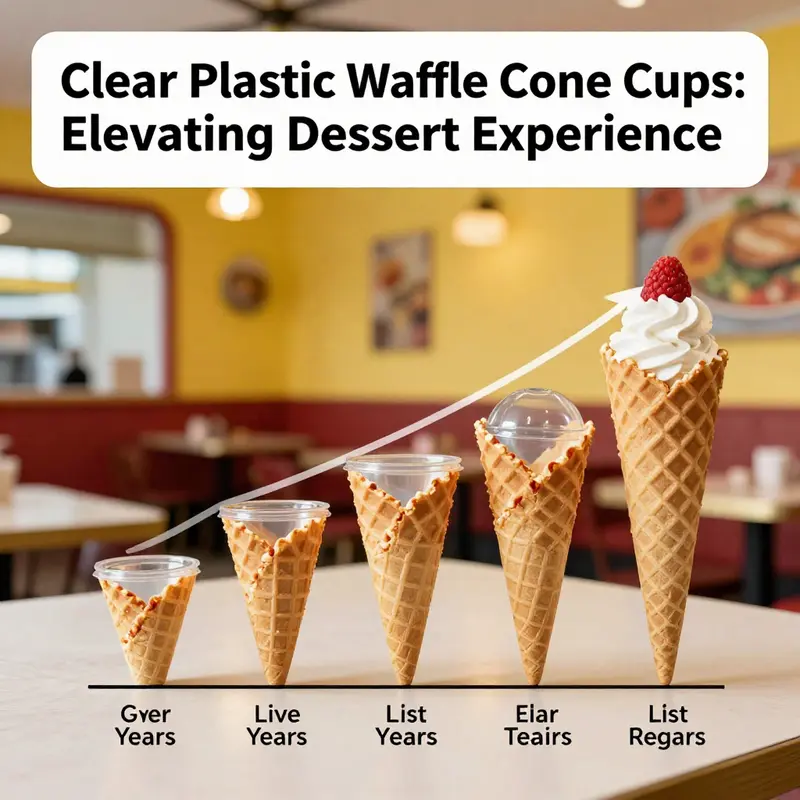
Clear plastic waffle cone cups sit at an intersection of aesthetics and logistics, a small but telling indicator of how today’s dessert culture is evolving. In a marketplace where authenticity and visual storytelling matter as much as flavor, the demand for packaging that is both functional and visually revealing has become a powerful driver. The cone shape remains iconic, but when it is rendered in transparent, durable plastic, it becomes a platform for brand narratives, flavor gradients, and precise portion control. The adoption of these cups is a function of several converging market dynamics: a push for transparency, a shift toward eco-conscious packaging, the operational realities of mobile and seasonal food service, and rapid advances in manufacturing that make clear, patterned cups viable at scale. Taken together, they illuminate why clear plastic waffle cone cups are becoming a staple in dessert service, from downtown parlors to weekend fairs, and why operators who understand these trends can harness them for growth and differentiation.
Transparency is more than a design preference; it is a signal of quality. Consumers increasingly want to see what they are paying for, and the visual entry point is powerful. Ice cream, fruit parfaits, layered yogurts, and other desserts reveal their texture, color, and composition through the cup itself. The basket-weave pattern, familiar from traditional waffle cones, is carried into the clear plastic form, giving the eye the impression of craft and rustic texture while delivering the durability and safety of a modern polymer. This combination of a nostalgic motif with contemporary clarity helps desserts communicate freshness in a way opaque vessels cannot. When a customer peers into a transparent cup and can distinguish distinct layers—the pale vanilla cream, the ruby of a berry coulis, the dark chocolate shavings—it strengthens perceived quality and appetite, turning a simple treat into an artful display. The consequence for operators is simple: enhanced visual merchandising that translates into higher engagement, longer dwell times, and, potentially, higher average checks.
Yet transparency is not merely about aesthetics. It intersects with a broader consumer mandate for trust and authenticity. In a crowded food-service landscape, clear packaging allows a quick, intuitive assessment of product value. This ties into the broader consumer trend toward seeing, rather than guessing, what one buys. The clear cone makes the dessert’s ingredients legible. It also allows brands to communicate freshness and portion integrity at a glance, reducing perceived risk for the consumer. In practice, that means glass-clear visibility for color contrasts, creamy textures, and clean labeling. It also supports cross-merchandising strategies, as operators can pair the cup with branded signage, toppings, or seasonal themes in a single, cohesive visual story. For cafés and dessert shops, this alignment between product and packaging can elevate a storefront’s overall aesthetic, turning window displays into storytelling moments that entice passersby and convert casual observers into customers.
Sustainability is the other axis on which adoption is being weighed. The conversation around single-use plastics has become more nuanced as materials science advances. Clear plastic waffle cups are increasingly designed with eco-conscious choices in mind, incorporating bio-based feedstocks or more easily recyclable formulations without sacrificing clarity or strength. Biodegradable and compostable options—often derived from polylactic acid (PLA) and other renewable resources—are being explored as complements or alternatives to traditional PET at the point of use. For operators, the shift toward sustainability is not solely about environmental stewardship; it is also about meeting regulatory expectations and consumer preferences. Many jurisdictions are tightening rules around single-use plastics, while customers expect brands to demonstrate responsibility. The market response is to offer a spectrum of options that balance performance with environmental considerations. Clear cups that can be reclaimed in recycling streams, or that use compostable materials compatible with local facilities, give operators a credible path to sustainability without sacrificing the visual benefits that make these cups so attractive.
The rise of eco-conscious packaging is also closely linked to lifecycle transparency. Consumers increasingly want to understand the journey of a product from raw material to end-of-life. Clear waffle cups, when paired with responsible lids and branding, can be part of a circular approach that highlights recyclability or compostability. For example, some suppliers promote recyclable or compostable variations designed to integrate with existing waste streams. This is not just a feature; it’s a storytelling opportunity. A dessert display can emphasize sustainability as part of its brand promise, shaping consumer perception long after the purchase. Operators who align packaging with their sustainability commitments—whether through material choice, responsible sourcing, or clear disposal instructions—may also benefit from enhanced brand loyalty and favorable word-of-mouth in an increasingly environmentally aware market.
Mobile and seasonal vendors add another layer to the market dynamics. The resurgence of pop-up shops, food trucks, and festival booths has created a demand for packaging that is lightweight, durable, high-volume, and visually impactful. Clear plastic waffle cone cups meet all of these criteria. They withstand transport without shattering, stack efficiently for storage, and present desserts in a way that is instantly Instagrammable. The ability to scale production with automatic or semi-automatic molding systems means vendors can source in bulk, reduce per-unit costs, and respond rapidly to demand spikes during events. The visual appeal of the cups can become a branding touchpoint, especially when vendors are able to align cups with logos, color schemes, or seasonal motifs. An event-based business benefits from the combination of portability and engagement; customers get a dessert that looks freshly crafted, even when it has traveled from a truck or a tent to a wristbanded crowd.
Technology in manufacturing has played a pivotal role in making these benefits accessible at scale. Fully automatic waffle cup production, improved molding precision, and the ability to use a broader palette of materials have lowered costs and improved consistency. Modern machines can replicate the same durable basket-weave texture that gives the waffle cone its tactile appeal, while enabling tight tolerances for thickness and rim shape. This consistency translates into predictable performance: cups that resist cracking under weight, maintain clarity even when holding cold desserts, and stack without sticking. In addition, advancements in material science enable the use of clearer resins that still perform well in cold environments and under rapid chilling and freezing cycles. The result is a reliable supply chain for operators who require steady, scalable output and a uniform consumer experience across locations and times of day.
The design implications of this trend are subtle but meaningful. The basket-weave pattern, long associated with tradition and craft, is reframed in a clear plastic context. It serves both an aesthetic and a functional role: it cues the mouthfeel of the dessert even before the first bite and helps reinforce a sense of premium quality. The design must also consider practicalities such as lid compatibility, sealing integrity, ease of gripping, and the ability to withstand quick-service environments. Clear cups that incorporate reinforced rims, secure lids, and drip-resistant features reduce mess and downtime, which is critical for operators who run high-volume settings. The balance between rigidity and clarity becomes a design brief: materials must stay clear under temperature variations, resist clouding from frozen desserts, and hold their shape during transit and display. When these factors align, the consumer experience is seamless—from the moment the dessert is served to the moment the last bite is savored.
From a merchandising perspective, the rise of clear waffle cups enables more sophisticated display strategies. Retailers and operators can stage layered desserts that capitalize on color contrasts, textures, and toppings, all visible through the cup. The cup becomes a stage where the dessert’s artistry is performed in real time, a dynamic canvas that invites customer interaction and social sharing. In practice, this means operators can curate a rotating menu of visually arresting compositions that highlight seasonal fruits, artisanal syrups, or distinctive toppings. The clear vessel serves as a gallery frame, while the dessert itself claims center stage. When customers can see the entire composition—fruit mingling with cream, a crystalline sugar shard catching the light, a swirl of sauce tracing the surface—the product becomes more than a treat; it becomes an experience worth photographing and sharing.
The implications for operators extend beyond aesthetics. Clear plastic waffle cone cups can influence ordering patterns and throughput. When the cup clearly communicates portion size and dessert components, servers can process transactions more quickly and confidently. Clear packaging reduces the need for excessive verbal description, freeing staff to focus on speed and service quality. In busy venues, that can translate into shorter lines, higher turnover, and improved customer satisfaction scores. The packaging choice also affects storage and logistics: cups that are light, robust, and stackable reduce warehousing costs and simplify inventory management, particularly for operators juggling multiple locations or seasonal pop-ups. The cumulative effect is a packaging ecosystem that supports faster service, clearer brand messaging, and a more sustainable, scalable business model.
As the market continues to evolve, the strategic choices operators make around clear plastic waffle cone cups will be ideated within a broader framework of responsible innovation. The balance between visibility, environmental responsibility, and logistical practicality will shape product offerings, supplier relationships, and store concepts. The trend lines suggest a future in which transparency and sustainability coexist not as competing priorities but as complementary strengths. Manufacturers will likely continue refining clarity, impact resistance, and compatibility with a wider range of cold-time experiences, while suppliers will expand the set of options available to operators who want to align packaging with their brand values. In such an environment, clear plastic waffle cone cups are not merely a packaging choice; they are a strategic instrument that helps the dessert service ecosystem deliver on its promises of quality, convenience, and responsible stewardship.
To connect this broader narrative to practical decisions, operators can begin with a few guiding considerations. First, assess the consumer’s tolerance for sustainability claims in your market and align cup choices with that standard—whether through recyclable materials, compostable options, or clear disposal guidance. Second, weigh the importance of brand storytelling against the cost of options; a cup that communicates a premium aesthetic may justify a higher price point if it aligns with the menu’s positioning. Third, evaluate the supply chain’s reliability and the vendor’s ability to maintain consistent quality across seasonal peaks. Fourth, consider how the cup integrates with other elements of your packaging system, including lids, utensils, and any branding collateral. Finally, explore the potential for partnerships that reinforce sustainability messaging, such as collaborating on recyclable-lid campaigns or color-coordinated merchandising that uses the cup as a living canvas for seasonal narratives. In short, the market trends are not disparate pressures but a coherent set of opportunities. When embraced holistically, they enable a dessert operation to communicate quality, responsibility, and creativity with every serving.
For readers seeking a deeper dive into material standards and performance metrics, a comprehensive design-focused guide offers technical context and benchmarking for plastic cone cups. See the Design Plastic Cone Cups Guide for structure, material properties, and performance metrics. Design Plastic Cone Cups Guide: Structure, Material Properties, and Performance Metrics
Additionally, a practical example of how packaging choices align with sustainability messaging can be found in related packaging resources. For a look at eco-friendly single-wall paper cup options that complement a sustainability-forward attitude, you can explore this selection: eco-friendly printed-logo single-wall paper cup. This link illustrates how brands are combining visibility, branding, and responsible messaging in a way that resonates with today’s consumer expectations without compromising performance. The cup becomes a consistent element in a broader packaging strategy that spans branding, merchandising, and environmental stewardship, reinforcing the idea that a simple dessert container can carry significant strategic weight.
In sum, the market forces driving the adoption of clear plastic waffle cone cups reflect a larger shift in how desserts are designed, sold, and experienced. Transparency and sustainability are no longer optional add-ons; they are central to how operators differentiate themselves and build lasting relationships with customers. The convergence of consumer desire for visible quality, regulatory momentum, mobile-service needs, and manufacturing ingenuity has created a robust pathway for these cups to move from niche novelty to mainstream staple. As operators experiment with color, texture, and flavor in combinations that showcase the dessert’s character, the clear waffle cup becomes the audience’s first clue to what lies inside: a story told in color, texture, and light—an invitation to savor before the first bite.”
Clarity, Responsibility, and the Plastic Waffle Cone: An Environmental View
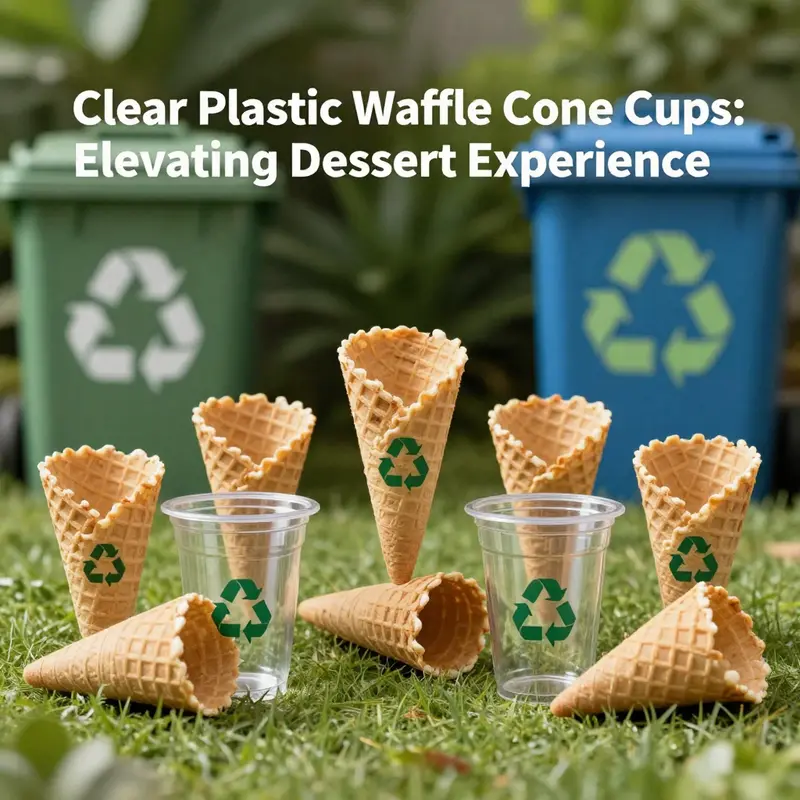
Clear plastic waffle cone cups offer visual appeal and practical durability, but their environmental footprint prompts a broader discussion about materials, waste, and responsibility. The transparency that makes them attractive also highlights the lifecycle of the product from production to disposal. Durability and barrier properties come with energy costs and resource use that vary by region’s recycling and composting infrastructure.
In many cases polypropylene is used, a plastic accepted by numerous programs, yet acceptance is not universal. Local facilities determine whether cups can reenter the market, be downcycled, or end up in landfills. Contamination from food residue and improper sorting further complicates recycling efforts and can diminish material value.
Alternatives such as compostable PLA, barrier-coated papers, or reusable cups offer routes to lower impact, but each option relies on appropriate waste management, consumer behavior, and clear labeling to work in practice. The decision is rarely binary; it is a systems question that involves design, production networks, and community capabilities.
To advance sustainability, brands can pursue design for recyclability, standard labeling, and consumer education. Innovations might combine favorable performance with facilities that can handle end-of-life processing, along with programs that encourage reuse or take-back for cups in select venues. A pragmatic path tends to mix regional material choices with infrastructure investments rather than pursue a single universal solution.
In short, clear plastic waffle cone cups can be part of a sustainable dessert experience when the product design is aligned with local waste systems and consumer practices, and when transparency about end-of-life options is part of the purchase moment.
Final thoughts
Clear plastic waffle cone cups are more than just functional tableware; they represent a beautiful way to serve desserts that captivates customers’ attention and enhances their dining experience. Their sturdy construction ensures reliability, while their aesthetic appeal elevates the presentation of sweet treats. By understanding their impact—from consumer appeal to market trends and environmental considerations—businesses can leverage these cups to create memorable moments that resonate with patrons. As the food industry continues to evolve, integrating clear plastic waffle cone cups into dessert offerings can streamline operations and enhance satisfaction, resulting in a win-win for both providers and consumers.