
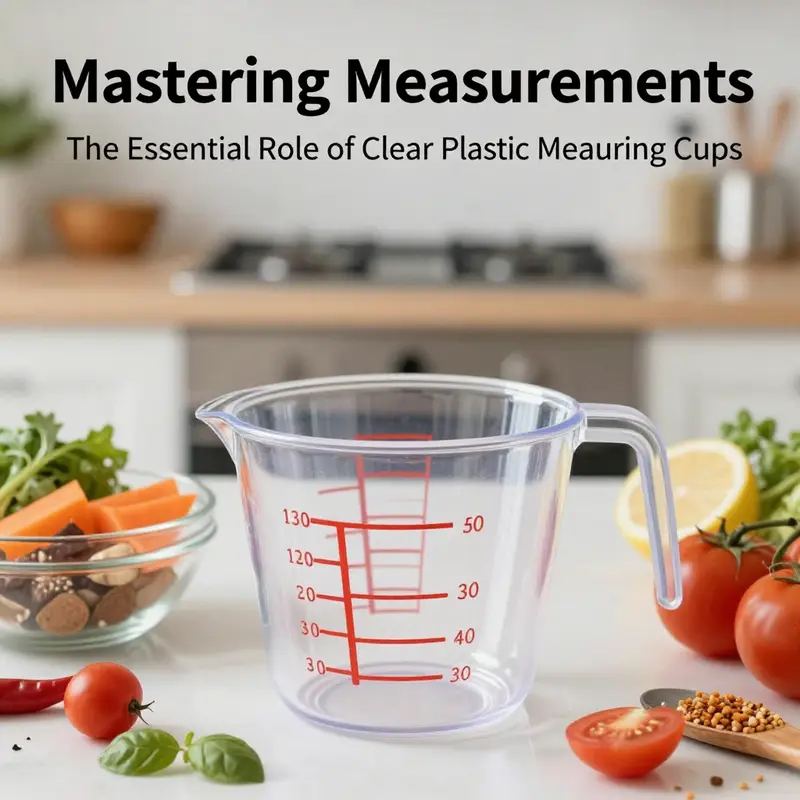
Clear plastic measuring cups are not just practical tools; they are essential for ensuring precision and safety across various food and beverage establishments, including bubble tea shops, restaurants, and catering services. Their robust design and transparent material allow for quick and accurate liquid measurement, which is crucial in any kitchen or lab setting. This article explores the diverse applications of these cups, their safety and durability features, the precision in design, and the current market trends. Each chapter aims to provide insights that will help businesses understand how to enhance operations and ensure consistent quality in their offerings.
How a Clear Plastic Measuring Cup Earns Its Place in the Kitchen
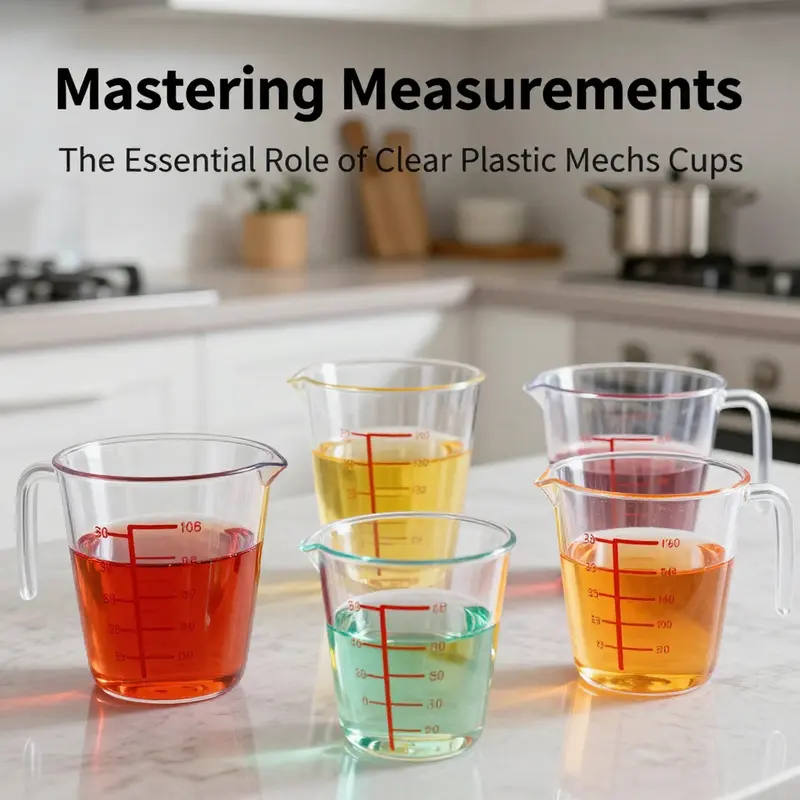
A clear plastic measuring cup does more than hold liquids. It acts as a quiet workhorse that improves accuracy, speeds routine tasks, and reduces risk in busy kitchens. The transparency of the cup removes guesswork. You can line up a recipe, check volume at eye level, and make adjustments on the spot. That simple ability—the immediate visual confirmation of a measurement—changes how cooks approach everyday work. It shapes mise en place, gives bakers confidence when scaling recipes, and helps cooks portion sauces and stocks without stopping to wash multiple bowls.
Beyond visibility, the material matters. High-quality, food-grade polypropylene is a common choice. This plastic resists chips and shattering. It tolerates many kitchen temperatures while staying light enough to handle easily. The result is a tool that survives falls and repeated use where glass would break. For households with children or commercial kitchens with high traffic, that durability lowers the chance of injury and reduces replacement costs. At the same time, polypropylene is chemically stable for most food uses. It will not react with mild acids or oils, nor will it leach flavors into sauces when used correctly. This makes a clear plastic measuring cup a safe pick for stirring, mixing, and measuring a broad range of ingredients.
Accuracy hinges on two design choices: scale markings and shape. Clear measuring cups usually feature well-spaced graduations in both metric and imperial units. Dual-scale markings support international recipes, enabling cooks to follow instructions without conversion errors. Equally important is the cup’s geometry. A flat base and straight sides yield more consistent readings than curved containers. When you pour a liquid into a cup with vertical walls, the meniscus is easier to read, particularly at eye level. For small volumes, cups with tighter graduation spacing—like 10 ml increments—allow repeatable results for sauces, dressings, and small-batch emulsions. Larger cups step up to 500 ml, 1000 ml, or more, which is handy for measuring stocks, brines, or large batter batches during meal prep.
Practical features push a simple measuring cup into indispensable territory. A pronounced pour spout reduces drips and splashes, keeping counters clean and preserving precise quantities when transferring liquids into narrow pots or jars. Integrated handles offer leverage and control, especially when pouring heavy liquids like syrups or melted fats. Some models include a lip or notch that nests over a bowl edge. That functional detail frees a hand while you measure, whisk, or scrape. Stackable designs save drawer space, and sets with multiple sizes streamline workflow. When a cup can nest, store, and be grabbed without tangling, it becomes part of an efficient kitchen rhythm.
Baking illustrates the cup’s importance in a clear way. Baking depends on ratios and chemistry, so even small errors show up in texture and rise. Clear plastic measuring cups help ensure accurate liquid measures for batters and custards. When combined with dry-measure techniques—scooping and leveling for flour, spoon-and-level for brown sugar—the cups allow bakers to translate recipes across batch sizes. For those who adjust humidity and flour absorption by feel, a reliable liquid measure anchors intuition. Large-capacity clear cups are also helpful for mixing wet components before folding them into dry mixes, preserving homogeneity and reducing over-mixing.
In everyday cooking, the measuring cup accelerates tasks without calling attention. Making a vinaigrette, measuring oil for sautéing, or portioning stock into ladles become quicker when the right cup is on hand. Meal prep benefits most: measuring dressings into jars, dividing marinades into containers, and batching broths for freezing all become tidy operations. Larger clear cups serve as temporary mixing vessels for cornstarch slurry, egg wash, or thickening agents before they reach a pan. Because these cups are light and unbreakable, they can be used close to heat sources where glass would be too risky.
Dietary control and portioning are practical applications often overlooked. Clear measuring cups make it easier to track liquid calories, measure milk for coffee, or portion soups and stews for storage. The transparent walls let you see layers and densities—separating oil from broth or checking sediment. For anyone following precise nutritional plans, a consistent measuring method gives reliable data. It also helps home cooks scale family recipes for one or two servings without guessing.
Cleaning and maintenance are straightforward. Most food-grade polypropylene cups are dishwasher safe. Their smooth interior repels residues better than porous materials. Sticky syrups and melted chocolate may cling, but warm water and a brief soak free residues quickly. For stubborn odors from garlic or spices, brushing with baking soda and warm water restores neutrality. Because the plastic is chemically resistant, you can use mild detergents or diluted vinegar to sanitize without fear of damage. Avoid abrasive scouring pads that can scratch surfaces and hide bacteria in grooves.
Heat handling deserves attention. While polypropylene tolerates many cooking temperatures, it is not fully microwave-proof for all uses. Short reheats of liquid are usually fine, but prolonged exposure to very high heat can deform thin cups. Pouring boiling liquids directly into a cold plastic cup can also cause stress. A simple practice preserves longevity: warm the cup slightly with hot tap water before filling with very hot liquids, and avoid placing it directly on a stovetop or open flame. For tasks that require frequent exposure to extreme heat, a heat-rated glass option remains better. But for most kitchen uses, polypropylene’s temperature tolerance is ample and safe.
Versatility expands when the measuring cup works with other tools. A cup paired with a handheld immersion blender or a small whisk turns into a compact prep station. Whisking dressings directly in the cup reduces bowls to wash. When measuring solid fats like butter, the clear walls make it easier to judge partial melts and incorporate them smoothly into doughs. For ingredients that stick, a rubber spatula scrapes cleanly from the cup’s straight sides. Many cooks keep a set of nested plastic cups in a prep drawer so one can be used for wet, another for wet-to-dry transfers, minimizing cross-contamination.
Storage and transport are quiet strengths. Lightweight cups tile into tight stacks that slide into drawers and cabinets. They are convenient for outdoor cooking, picnics, and camping where weight and breakage matter. Because they are affordable, it makes sense to dedicate a few cups to specific tasks—one for oil and fat, one for dairy, and one for acidic mixtures—reducing flavor transfer. When transporting liquids to a pot or grill, the handle-and-spout combination keeps movement controlled and spills minimal. For bulk cooks who portion to-go meals, a set of large clear cups and lids streamlines packaging.
Safety and certification should be part of any buying decision. Look for food-safe markings and material information. BPA-free labeling and compliance with food-contact regulations matter for long-term use. Certified suppliers often provide batch documentation about material grade, temperature tolerance, and testing. For kitchens that also handle light chemical work—such as artisanal soap-making or dyeing—an appropriately certified cup avoids contamination. In commercial contexts, choosing verified, food-grade materials ensures compliance with hygiene standards.
There is also a subtle psychological benefit. Tools that are easy to read and handle reduce hesitation and waste. A transparent measuring cup that nests, pours cleanly, and resists breakage encourages cooks to measure rather than estimate. Over time, that habit improves consistency and confidence. Recipes become reproducible, and the kitchen runs with fewer interruptions. Whether you are portioning soup for a week of lunches or measuring a delicate custard, clear plastic measuring cups quietly make accuracy accessible.
For those curious about specific options and features during a purchase decision, a typical product listing provides useful details about markings, handle shape, and capacity. You can view an example listing that shows metric markings, a large handle, and a pour spout at this product page: https://www.walmart.com/ip/Plastic-Measuring-Cup-for-Kitchen-Use-Clear-500-ml/1087456789
A clear plastic measuring cup is not glamorous. Yet its role is central. It connects recipe instructions to practiced action, streamlines repetitive tasks, and reduces the small errors that add up over time. Because it is visible, durable, and designed with purpose, the cup fits seamlessly into varied kitchen workflows—from single-serving breakfasts to large-scale meal prep. That steady, unobtrusive performance explains why it remains a kitchen staple.
Crystal-Clear Confidence: Safety, Durability, and Precision in the Plastic Measuring Cup
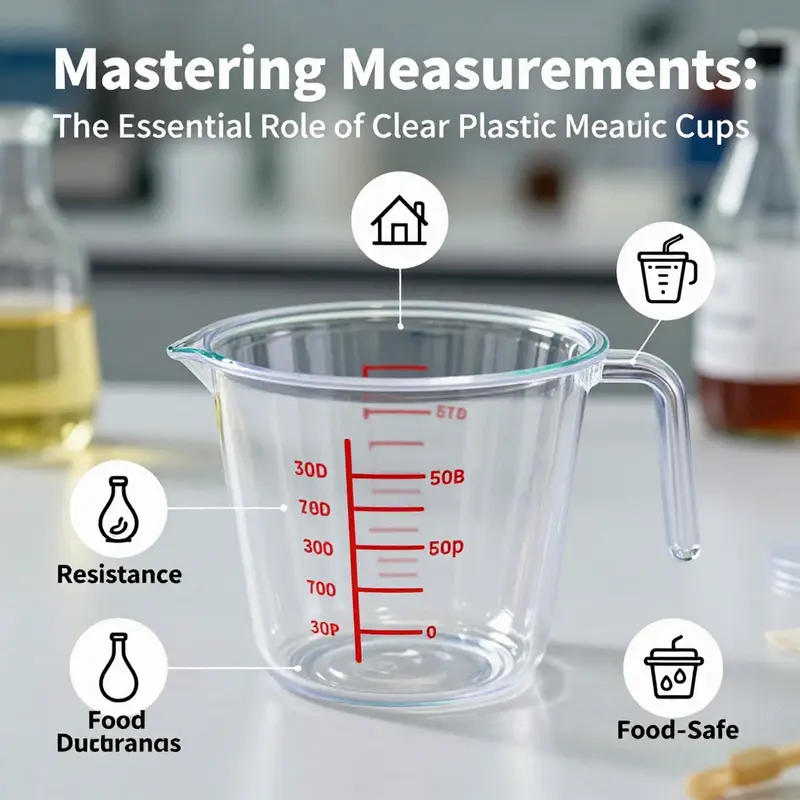
In the kitchen and in the lab, the clear plastic measuring cup stands as a quiet workhorse, a tool that earns its keep not through flash but through dependable performance. Its value lies less in novelty and more in a steady, unobtrusive reliability: the kind that lets a cook glide from batter to glaze with minimal fuss, or a technician mix a precise solution without second thoughts. When a cup is truly well made, it disappears as a distraction, and what remains is a sense of confidence that the numbers on its scales reflect reality. This is the essence of the clear plastic measuring cup’s safety and durability features, a blend of material science, thoughtful design, and practical engineering that makes it more than a simple vessel for liquids. It is a tool that accommodates both daily meals and careful experiments without demanding special handling or fragile treatment in return.
At the heart of safety is material composition. The most trusted clear cups are made from food-safe polymers, commonly clear polypropylene or high-density polyethylene. These plastics are chosen for their inert behavior in contact with a wide range of liquids, from hot soups and broths to acidic dressings and citrus-based solutions. The material is inherently non-toxic, designed to resist leaching even when exposed to heat or prolonged contact with ingredients that could otherwise introduce unwanted flavors or contaminants. This non-reactive character is what makes such cups suitable for culinary tasks and medical dosing alike, where the priority is to avoid introducing anything foreign into the liquid being measured. The idea is straightforward: if you cannot see a safe, clean reading, you cannot trust the measurement. The transparency of the cup makes this possible, turning perception into a practical advantage. In a well-made product, the clarity means you can watch the meniscus settle and align your eye with the scale, ensuring the measurement reflects the true level of liquid beneath it. That visibility reduces guesswork and minimizes errors across everything from delicate glaze mixes to precise reagent volumes.
Safety also manifests in a shatterproof design that is a direct counterpoint to the fragility of glass. A standard glass measuring cup can shatter with a dropped bump or a creak in a crowded kitchen, sending splinters into mixtures or onto work surfaces. Plastic versions, by contrast, absorb impact better and are far less likely to crack under ordinary use. This resilience protects home cooks moving swiftly between stove and counter, students working in classroom kitchens, and professionals who handle busy lab benches. The risk reduction is not only about breaking; it also concerns user safety. Fewer cracks and breaks mean fewer sharp edges and fewer opportunities for injury when handling hot liquids or slippery pours. The safety logic is simple: a durable, non-porous material reduces the chance of leaks, keeps surfaces cleaner, and minimizes the risk of accidents caused by accidental spills.
Durability in a clear cup is more than a matter of resisting breaks. It extends to long-term performance under repeated heating and washing cycles. The materials used are selected for heat tolerance, so a cup can measure hot liquids like soups, syrups, or melted ingredients without warping or deforming. Even when faced with near-boiling temperatures, a well-engineered cup keeps its shape and its readability intact. This reliability is essential for consistency—whether you are following a recipe that requires precise temperatures or an experiment where exact volumes influence outcomes. The film of gloss on the surface may wear a little over time, but the core structure remains intact, preserving the integrity of both the container and the measurement itself. The ability to withstand repeated use without developing micro-scratches or clouding is another facet of durability, because every scratch can scatter light and blur scale marks, undermining accuracy. When the plastic remains clear and the marks stay legible, the user experiences a seamless sense of trust in the tool.
Ease of cleaning further supports durability and safety. Most reputable clear cups are dishwasher-safe, a feature that supports hygiene by ensuring thorough cleansing between uses. This is especially important in kitchens and laboratories where cross-contamination must be avoided and where frequent use requires reliable sanitation. Yet, not all lower-cost versions hold up equally well under harsh detergents and high heat. Some ink-based markings can fade, which reduces readability and, in turn, measurement accuracy. In higher-end models, the scales are laser-etched or printed with durable inks designed to resist fading through repeated wash cycles. Laser-etching, in particular, provides a permanent reference that remains legible long after many dishwashing rounds. Such attention to markings is not cosmetic; it directly enhances safety by maintaining a consistent reading position and reducing the chance of misinterpretation during busy cooking sessions or precise laboratory tasks. The longevity of the markings complements the structural durability, ensuring that the cup remains a dependable tool over time.
The promise of safety and durability is inseparable from the practical cues of design. A clear measuring cup is not merely a transparent container; it is a calibrated instrument that rewards careful use. The graduated scales, often marked in both metric and imperial units, optimize usability for a global audience and for diverse recipes. When the volume is small, the space between marks must be tight enough to minimize drift in reading, and when the volume is large, the scale must extend to cover a wide range without sacrificing readability. The dual-scale feature is especially valuable in mixed environments where international colleagues or recipes from different traditions converge. It is a small detail with a large impact: it reduces the mental load on the user, allowing attention to shift toward technique rather than translation.
In practice, the most reliable cups align three core strengths: precise, legible markings; a translucence that allows sampling and monitoring while pouring; and a robust body that handles the thermal and mechanical demands of real-world use. The alignment of these elements reduces errors at critical moments. Consider the act of reading a cup just as a user tilts it to measure a liquid with a gentle stream; the meniscus should form at eye level. Poor lighting, cloudy plastic, or fading markings can all obscure this alignment, yielding a measurement that is off by a few milliliters or more. A cup engineered to minimize these pitfalls will feature consistent geometry, smooth inner walls to reduce turbulence during pouring, and a rim design that makes gripping comfortable even when hands are slick with oil or water. The result is a tool that invites confident handling rather than cautious, hesitation-filled use.
The versatility of a clear plastic measuring cup also contributes to its safety profile in multi-scenario settings. In home kitchens, the cup is a quiet ally in the ritual of baking, where precise volumes influence the texture and structure of doughs, batters, and sauces. In professional kitchens, the cup disappears into the workflow, helping servers and cooks coordinate timely service without interrupting pace. In laboratories and medical dosing environments, the same clarity and precision translate into standardized measurements that support experiments and treatments where accuracy matters. While glass might offer certain optical properties, its brittleness and cleanup drawbacks can complicate routine tasks. Plastic cups offer a forgiving balance: they are light, easy to handle, and sufficiently clear to reveal the liquid level at a glance. The result is safer, more efficient operations across a spectrum of contexts.
A chapter on safety and durability would be incomplete without acknowledging the path from material science to supply chains. The rise of globally sourced, food-safe plastics means consumers can access cups that meet stringent hygiene and safety standards without sacrificing affordability. The underlying story is not just about plastic behaving well in the dishwasher; it is about the entire ecosystem of production, labeling, and compliance that makes these cups trustworthy. In many cases, manufacturers emphasize certifications and testing protocols to reassure buyers that the products meet international hygiene expectations. This assurance matters, because a measuring cup often sits at the intersection of food preparation and scientific measurement, where the simplest percentages and volumes can have outsized consequences if misread or mishandled. When choosing a cup for any context, it is prudent to look for products whose materials and markings are designed to endure, to stay legible, and to remain stable under heat and impact.
The dialogue between safety, durability, and practicality continues in the way these cups are sourced and specified for bulk orders. While some readers may be drawn to the lowest price, the most reliable choices emphasize a balance of safe material composition, enduring readability, and proven performance under repeated use. For those seeking dependable supply options, the broader market offers numerous options with clear safety credentials, dual-scale readability, and durability designed to survive daily kitchen or lab life. Manufacturers and suppliers who highlight shock resistance, heat tolerance, and long-lasting markings provide a tangible signal that the product is built to stand up to the kinds of stresses typical in busy environments. The value here is not merely in owning a single cup but in acquiring a tool that can be counted on to perform consistently as part of a broader workflow.
In sum, the clear plastic measuring cup embodies a practical synthesis of safety and durability. Its materials—non-toxic, inert, and heat-tolerant—form a foundation that protects users and preserves the integrity of measured liquids. Its shatterproof, impact-resistant design reduces accident risk and keeps the work area cleaner. Its durability—coated with markings that resist fading and maintained by easy cleaning—ensures that the instrument stays accurate across countless uses. And its design—transparent, with legible scales and ergonomic features—translates reading into action with minimal cognitive load. All of these elements come together to give the user the quiet confidence that the measurement is right, that the vessel will endure, and that the work at hand will proceed smoothly, whether in a kitchen, a classroom, or a laboratory setting. In a world where precision matters, such a cup quietly earns its place as a standard, dependable instrument that supports accuracy, safety, and efficiency every time it is picked up.
External resource for further reading: https://www.alibaba.com/product-detail/SHIMOYAMA-Clear-Plastic-Measuring-Beaker-Cup_1600759342781.html
Engineered Precision: The Design Principles Behind Clear Plastic Measuring Cups
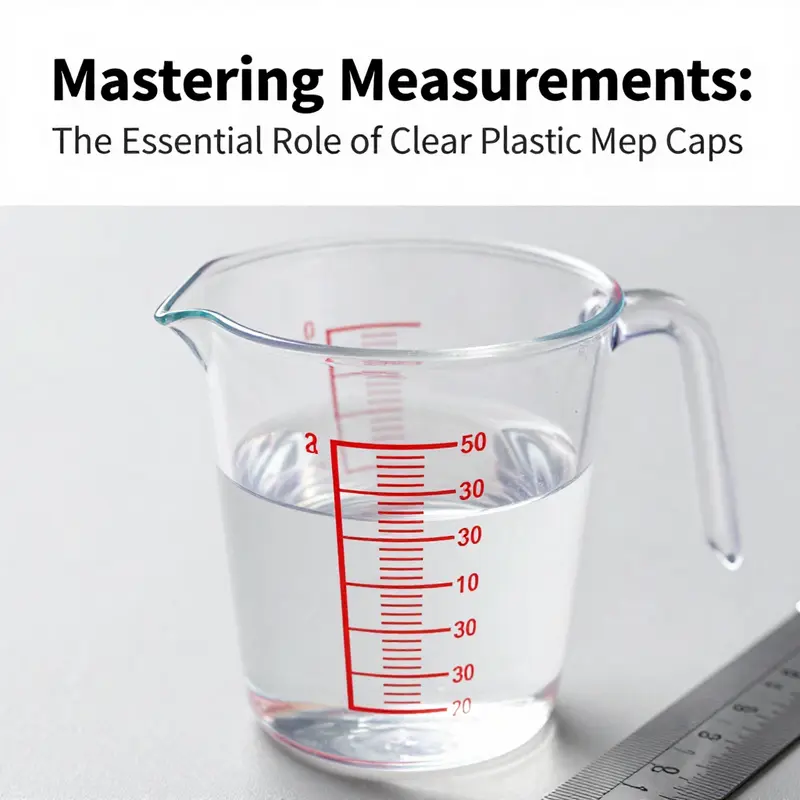
Precision in a clear plastic measuring cup is the result of deliberate choices across materials science, molding technology, and human-centered design. These cups must deliver accurate volumes repeatedly while withstanding daily wear, heat, and chemical exposure. That goal shapes every aspect of a measuring cup’s anatomy: the polymer selected, the way graduations are formed, the geometry of the lip and base, and the quality-control processes that verify performance. This chapter traces how those elements come together to form a reliable, safe, and user-friendly tool used in kitchens, classrooms, clinics, and laboratories.
Material selection begins the process. Food-grade polypropylene (PP) and high-density polyethylene (HDPE) are common because they balance clarity, toughness, and chemical resistance. Polycarbonate offers superior transparency but is less favored where heat resistance and chemical inertness are paramount. Additives such as UV stabilizers and nucleating agents improve dimensional stability and reduce warping during cooling. The polymer’s melt behavior, shrinkage rate, and thermal expansion coefficient must be tightly understood, because small dimensional shifts translate directly into volume errors. Engineers use material data to predict how a molded cup will deviate from its mold cavity as it cools, and they compensate in tooling geometry or post-mold conditioning.
Injection molding is the production method that most reliably creates repeatable, high-volume parts. Precision injection molding uses controlled melt temperatures, optimized cooling channels, and accurate shot metering to maintain consistent wall thickness and surface finish. Tooling is critical: a well-designed mold will include polished cavities for optical clarity, fine-edged core features for crisp graduations, and precisely located ejector systems to avoid marks in measurement areas. The position and design of gates and runners influence flow lines and possible distortion. Engineers often choose hot-runner systems to reduce material waste and maintain uniform melt flow. Draft angles, parting line placement, and controlled venting keep cosmetic defects away from reading surfaces.
Graduations are the interface between design and measurement. There are two primary approaches: integrally molded graduations and surface-applied markings. Molded graduations are created by forming raised or recessed marks during molding. They are permanent, resistant to abrasion, and unaffected by solvents or detergents. However, achieving fine, uniformly spaced molded graduations requires high-precision tooling and consistent process control to avoid dimensional drift. Surface-applied markings, such as ink or laser etchings, allow cleaner visual contrast and dual-scale printing. When inks are used, they must be formulated to resist fading, peeling, and chemical attack. Laser etching removes material to create a readable line without a secondary additive, at the cost of additional processing steps.
Reading accuracy depends on more than scale placement. Optical clarity should permit an unobstructed view of the liquid meniscus. A flat, vertical sightline reduces parallax. Many cups intentionally use a slightly frosted or matte background behind the marking to improve contrast while maintaining overall transparency. Graduations should be evenly spaced and logically grouped so users can quickly interpolate intermediate volumes. Dual-scale designs that combine metric and imperial units are common; they must be printed or molded with equal precision so unit conversions remain trustworthy.
Meniscus behavior, surface tension, and liquid viscosity introduce measurement challenges that design can mitigate. For low-volume measures, narrow bore shapes and fine graduation intervals help reduce reading error. For viscous fluids, wider openings and sloped walls encourage smooth drawdown and minimize residue clinging that would alter the apparent level. A flat rim or a spout with a well-defined lip helps users level off dry ingredients and pour without spilling. Some models adopt a recessed leveling edge to accept a straight spatula or card, aiding exact measurement of powders or pastes.
Thermal behavior can shift volume readings. Polymers expand with temperature, so cups calibrated at one temperature will show small deviations at another. High-precision cups are often calibrated at a defined reference temperature, typically around 20°C, and marked accordingly or supplied with calibration certificates. In critical laboratory contexts, users must account for temperature when measuring volatile or temperature-sensitive liquids. Design strategies to reduce thermal influence include thicker walls in non-critical areas to stabilize shape and annealing steps that relieve internal stresses after molding.
Manufacturing tolerances determine how close a finished cup will match its intended volume scale. Tight tolerances demand more sophisticated molds, closer process control, and frequent tooling maintenance. Typical commercial measuring cups aim for reliable repeatability within a percent or two for common volumes. Laboratory-grade cups are held to stricter tolerances and may be batch-tested gravimetrically: filling to a nominal mark, weighing the liquid, and comparing against theoretical mass to calculate actual volume. This gravimetric calibration is a robust verification method because it removes visual reading variables and directly measures delivered volume.
Quality control spans incoming material testing to final inspection. Raw polymer lots are checked for melt flow index and contaminant levels. During production, statistical process control (SPC) monitors shot weight, cavity pressure, and cooling times to flag drift. Visual inspections target the clarity of the read window and the fidelity of the graduations. For high-precision lots, random sampling undergoes dimensional measurement using calibrated gauges or non-contact optical scanners. Traceability is important: lot numbers and production dates help isolate issues if a batch shows deviation after sterilization, prolonged UV exposure, or shipping stress.
Chemical resistance shapes usage recommendations. PP and HDPE resist a wide range of acids, bases, and many solvents, which is why these cups are common where cleaning agents or reagents are used. Still, certain aggressive solvents or high-temperature sterilization can degrade plastics. Design accounts for cleaning methods in healthcare and food service: smooth interior surfaces minimize residue traps; rounded corners reduce stress concentrations that can crack under thermal cycles. Some cups include stackable features that interlock gently, protecting printed scales and conserving storage space without damaging critical surfaces.
Ergonomics and pour control influence measurement fidelity in practical use. Well-designed handles reduce hand tilt, which in turn reduces parallax and misreading. The spout geometry determines flow rate and dribble control; a narrow, tapered spout with a defined pour lip supports controlled transfer, especially with thin fluids. Weight distribution is tuned so a small filled cup remains stable on flat surfaces, making it easier to view the meniscus at eye level. For fieldwork, sealed lids preserve measured samples and prevent contamination during transport.
Regulatory and safety considerations are integral to design choices. Food-contact compliance requires materials and inks that meet hygiene standards. Manufacturers apply formulations that avoid harmful plasticizers or colorants, and they document compliance against relevant regional regulations. For customers requiring certification, suppliers may offer documentation demonstrating compliance with widely recognized standards. Such traceability supports both commercial kitchens and laboratories that must meet audit requirements.
Sustainability is emerging as a design constraint. While plastics deliver performance advantages, demand for recyclable and lower-impact materials is rising. Engineers explore recyclable resin grades and minimal use of additives that hinder recycling streams. Design for disassembly—avoiding permanently bonded multi-material assemblies—improves recyclability. Some suppliers offer take-back or recycling guidance to reduce environmental burden.
Customization and scale of production influence final form. OEM orders request specific graduated intervals, logos, or embossed instructions. Tooling modifications let manufacturers shift scale ranges, change cup capacity, or add lids and seals. For buyers ordering in bulk, verified production facilities can provide certificates for food safety and quality systems, and they can process custom tooling with the precision needed to meet tighter tolerances.
User technique remains a variable that design cannot eliminate entirely. Proper reading practices—placing the cup on a level surface, viewing at eye height, and noting the bottom of the meniscus for aqueous solutions—are essential. Designers mitigate errors through clear visual cues, but training and simple usage instructions extend the benefits of good design into reliable real-world outcomes.
Precision is not a single specification; it is a chain of decisions that begins with polymer chemistry and ends with the way a user pours a measured volume. When each link is engineered with the same care, the result is a clear plastic measuring cup that performs predictably in diverse conditions. Thoughtful tooling, permanent and clear graduations, thermal stabilization, and measured ergonomics together produce a tool that supports accurate recipes, repeatable lab protocols, and safe, efficient food service operations. For those interested in related sustainable serving solutions, see an example of disposable kraft paper cups designed for hot drinks at this internal resource: disposable kraft paper cups for hot drinks.
For further technical reference on real-world product specifications and laboratory-grade graduated sets, consult this supplier listing which details common scale ranges and materials used in precision molded measuring cups: https://www.alibaba.com/product-detail/10ml-100ml-clear-plastic-measuring-cups_1600745983698.html
Clear Paths to Precision: Transparent Plastic Measuring Cups in Kitchens and Labs
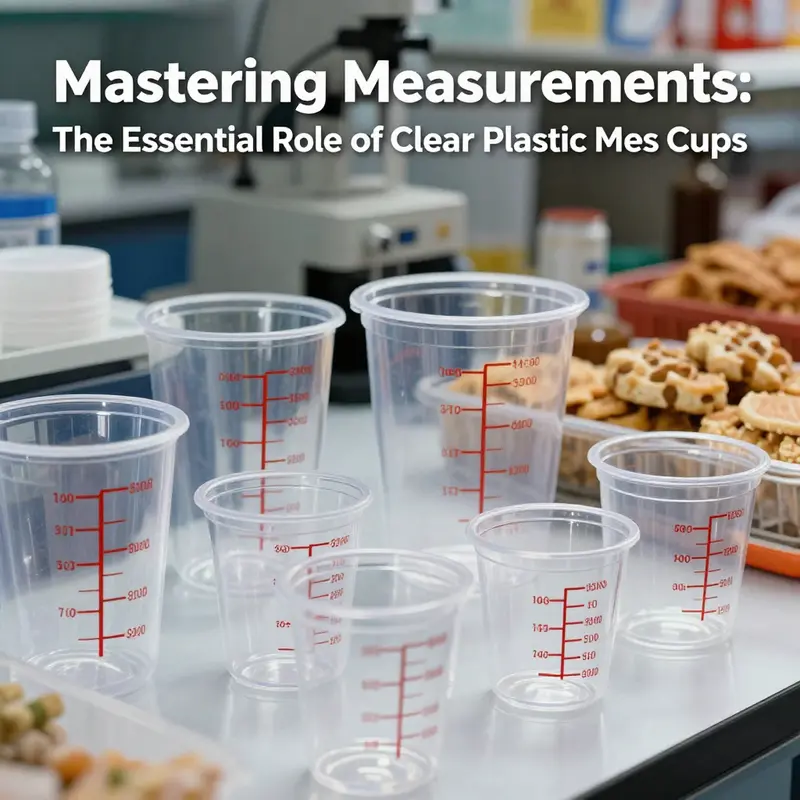
In kitchens and labs, transparent plastic measuring cups serve as reliable tools for accurate liquid measurements. In the kitchen, clear graduations support consistent baking and cooking results; in the lab, precise readings underpin reproducible experiments and careful reagent handling. The key strength of these cups is readability: a near-invisible vessel lets the user see the level at a glance, reducing parallax error and misreads. Materials are typically food-grade polypropylene, chosen for clarity, durability, and chemical resistance. PP cups resist staining and absorption, tolerate a wide range of temperatures, and resist shattering better than glass, making them a practical choice in busy environments. Dual scales in metric and imperial units help users from different regions work with familiar conventions. Feature-rich designs—comfortable handles, pour spouts, and even stackable forms—add convenience without compromising readability. Sustainability and recyclability considerations, plus a growing role for OEM customization, shape how manufacturers respond to both kitchen and laboratory needs. As design evolves, the emphasis remains on readability, safety, and durability, enabling quick, confident measurements whether following a recipe or conducting a quantitative assay.
Final thoughts
Clear plastic measuring cups are indispensable tools that marry functionality with safety, enhancing the operations of bubble tea shops, restaurants, and laboratories alike. Their durability, safety features, and design precision not only ensure accurate measurements but also foster confidence among users. As trends evolve within the food service and laboratory sectors, investing in high-quality measuring cups will support efficiency and reliability in your service offering. Embrace these versatile instruments, and elevate your business standards today.