
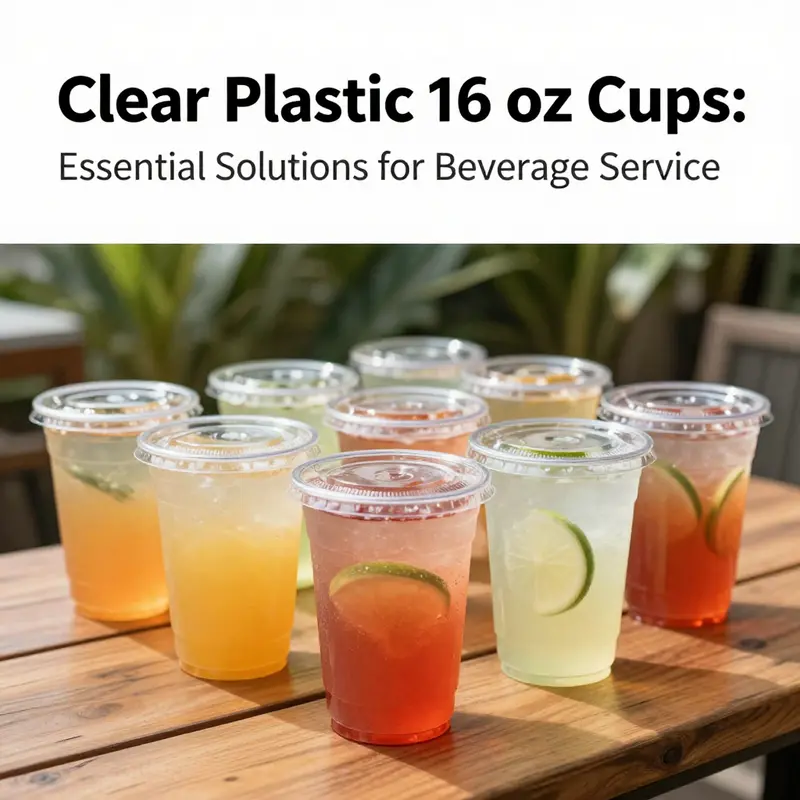
Clear plastic 16 oz cups have become a vital component in the food and beverage industry, catering to a wide array of uses ranging from bubble tea shops to food trucks, corporate events, and gourmet restaurants. The significance of these cups lies not only in their multifunctionality but also in the materials they are crafted from, their environmental impact, and the rising market demand fueling their popularity. This guide will delve into the intricate composition of these cups, assess their ecological footprint, explore current market trends, highlight their uses across various sectors, and showcase how customization can elevate brand presence. Understanding these facets will empower beverage chains, event planners, and culinary professionals to make informed decisions that align with operational needs and sustainability goals.
Inside the Materials of Clear Plastic 16 oz Cups: Properties, Trade-offs, and Practical Choices
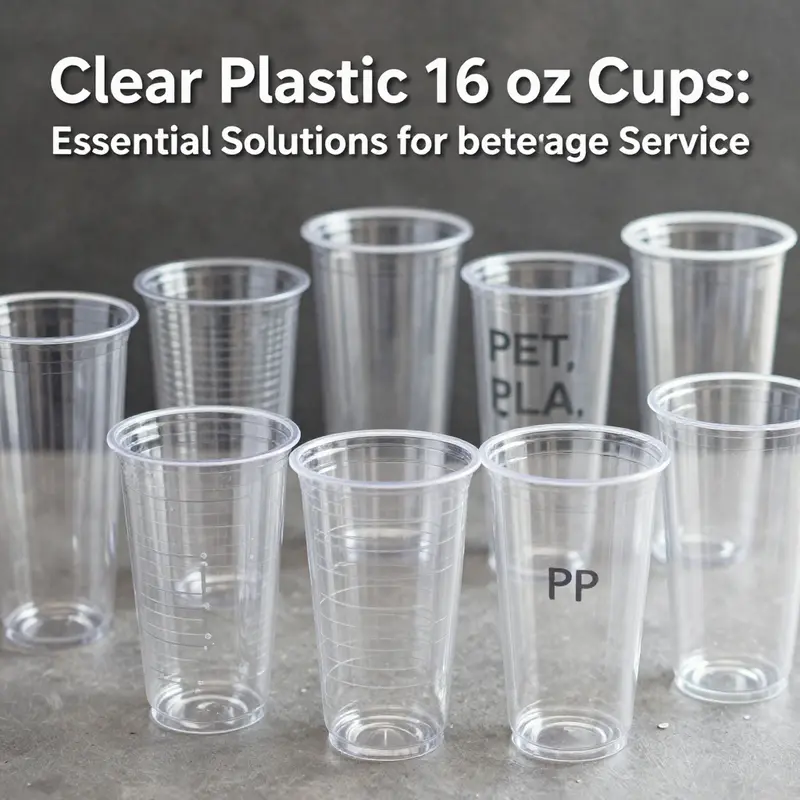
Material composition shapes everything about a clear plastic 16 oz cup — clarity, strength, temperature tolerance, and environmental impact. Understanding the differences between common polymers helps buyers and operators choose the right cup for each use case. The most widely used materials are polyethylene terephthalate (PET), polystyrene (PS), polypropylene (PP), and polylactic acid (PLA). Less common specialty materials, such as acrylic, appear in premium or decorative items. Each material brings a distinct mix of performance and consequence. Reading those material signals lets you match function to context, and control costs without sacrificing guest experience.
PET dominates when clarity and recyclability matter. It offers glass-like transparency, making beverages look fresh and appealing. PET is lightweight yet tough, resisting cracks and shatters during service. That toughness makes PET ideal for cold drinks such as iced tea, soda, and smoothies. It also accepts detailed printing and shrink-sleeve labels, so branding looks sharp. From an operational perspective, PET balances cost and performance; it is produced at scale and widely stocked. Crucially, many municipal recycling programs accept PET. That end-of-life pathway reduces landfill burden when cups are collected and sorted correctly. However, PET cups are not impervious to temperature. They will soften near high heat and should not be used for prolonged exposure to boiling liquids.
Polystyrene, or PS, is often chosen for low-cost, single-use applications. PS yields good clarity and a crisp feel in the hand. It is frequently the most economical option for plain clear cups. Where price sensitivity is high and contents are cold, PS can deliver a satisfactory solution. But PS has lower impact resistance than PET. It can crack or chip more easily under stress. Heat tolerance is also lower, limiting PS cups to chilled or room-temperature beverages. Another limitation is recyclability: many recycling systems do not accept PS, and where it is accepted, contamination and sorting issues reduce capture rates. For operations seeking the lowest unit cost, PS remains an option, but the trade-offs in durability and end-of-life management should be factored in.
Polypropylene, or PP, sits between PET and PS in several respects. It offers toughness and chemical resistance, and it withstands higher temperatures than PS. Clear PP cups are often used for products that mix cold and warm elements. Think items like smoothies with hot mix-ins, or desserts that receive heated toppings. PP is also less prone to cracking under impact, which helps during transport and crowded service. Its clarity is usually slightly lower than PET’s glass-like finish. Still, many customers find the look acceptable for premium beverages and treats. Recycling of PP varies regionally, and identification by the resin code helps recycling facilities route materials. For businesses that require a resilient, heat-tolerant clear cup, PP can be a smart compromise.
Polylactic acid (PLA) represents a different approach: renewable feedstocks and compostability. Made from fermented plant starch, PLA produces clear cups with an appearance similar to PET. It offers a compelling marketing angle for eco-conscious brands. PLA will break down under industrial composting conditions, assuming it reaches a certified facility. That compostable pathway can reduce waste when proper collection and processing exist. However, PLA has limits. It softens at lower temperatures than PET and can deform with hot liquids. Home composting does not reliably break down PLA; industrial processes are required. Also, PLA requires separate collection streams to avoid contaminating conventional plastic recycling. For operations pursuing demonstrable sustainability, PLA can be effective. But logistics and end-of-life realities must align with the cup’s claimed benefits.
Acrylic appears most often in specialty items rather than standard disposables. Its clarity and rigidity are exceptional. Acrylic cups provide a premium look and a glass-like heft. That makes them useful for decorative, reusable, or souvenir applications. Acrylic is more expensive and less convenient for mass disposable use. It also belongs in a different handling and recycling category. When the goal is visual impact and perceived value, acrylic can justify its cost. For everyday beverage service, it rarely competes with PET or PP on cost-effectiveness.
Beyond resin type, a few compositional and design factors affect performance. Wall thickness, or gauge, changes rigidity and thermal behavior. Thicker walls lend robustness but increase material use and cost. Cup geometry, such as tapered profiles versus cylindrical shapes, affects stacking stability and ease of filling. Some cups receive barrier coatings or additives. Those treatments may improve grease resistance or delay flavor transfer. But coatings can complicate recycling if they are not compatible with existing processing streams. Similarly, the presence of printed inks, labels, or adhesive-backed sleeves influences recyclability. If circularity matters, choose materials and decorations that match local processing capabilities.
Lid and straw compatibility is a practical concern that flows from material choice. Dome lids fit beverages with foam or toppings and often pair with PET designs that provide sufficient rim stiffness. Flat lids with straw slots can be made in PP or PET to suit different temperature ranges. Matching a lid’s material to the cup’s thermal behavior avoids warping and ensures a secure seal. Where spill-resistance is critical, choose cups with compatible lid options designed to maintain fit under stress.
Safety and food-contact compliance are essential. All materials used for clear 16 oz cups must meet food-contact standards. That requirement covers migration limits, colorants, and residual monomers. Suppliers typically provide certificates attesting to compliance. For operators serving regulated environments, verifying documentation is standard procedure. Additionally, chemical resistance matters for beverages that contain oils, alcohol, or acidic ingredients. PP offers excellent chemical stability. PET performs well for most nonalcoholic beverages. PLA and PS can show weaknesses depending on the formulation.
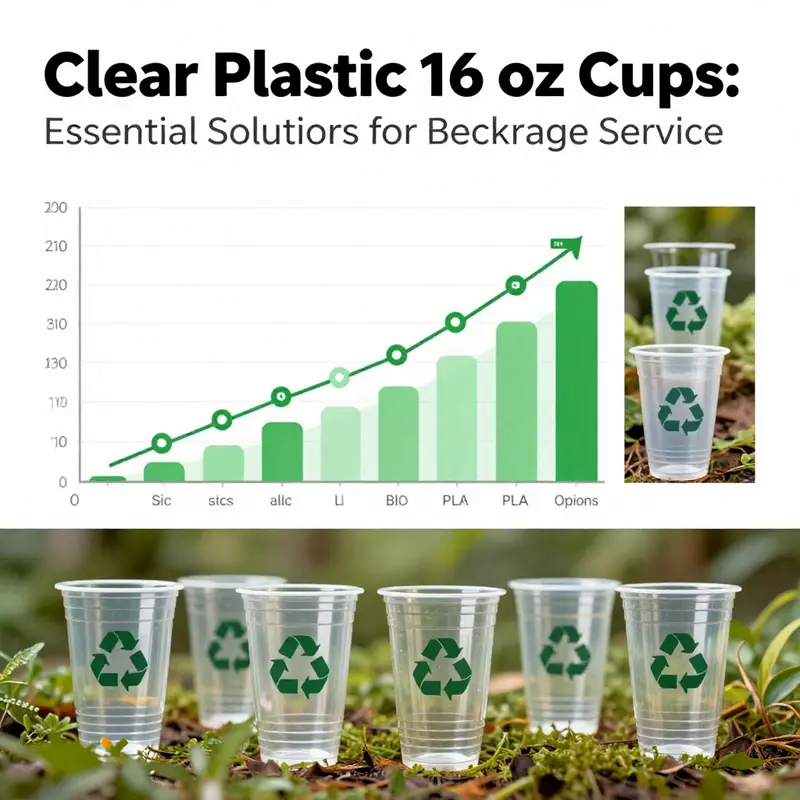
Environmental trade-offs deserve careful scrutiny. PET is widely recyclable, but recycled capture depends on collection systems and contamination rates. PLA is renewable and industrially compostable, but requires different infrastructure. PS is inexpensive but often poorly recycled. Some operations pursue a hybrid approach: use PET for high-volume cold beverages, reserve PLA for special events where composting is arranged, and avoid PS where recycling or composting is the goal. Clear communication to customers about disposal instructions improves the likelihood that cups reach the intended end-of-life stream.
Choosing the right material means aligning product goals with operational realities. Ask these simple questions: What temperature will the cup hold? How much clarity matters for presentation? Will lids or labels be added? What disposal infrastructure is available locally? Answering them narrows the field quickly. For a high-volume beverage program seeking a balance of clarity, strength, and recycling potential, PET often stands out. For budget-driven, short-duration use where clarity suffices and disposal is to landfill, PS can be viable. For brands prioritizing renewable feedstocks and compostability, PLA offers a clear story—if collection and processing are in place.
Finally, the market includes a range of accessory decisions tied to material. Add-ons like insulated sleeves, eco-friendly paper lids, or specialized compostable liners can expand functionality. For operators exploring alternatives such as certified compostable paper options for cold beverages, consider evaluating eco-friendly printed cold beverage cup with lid to create integrated service solutions that meet both functional and sustainability goals.
For further guidance on recycling rates and material-specific recovery, consult authoritative resources that track plastics management and recycling statistics. https://www.epa.gov/facts-and-figures-about-materials-waste-and-recycling/plastics-material-specific-data
null
null
Clarity, Choice, and Demand: Navigating the Market for Clear 16 oz Cups
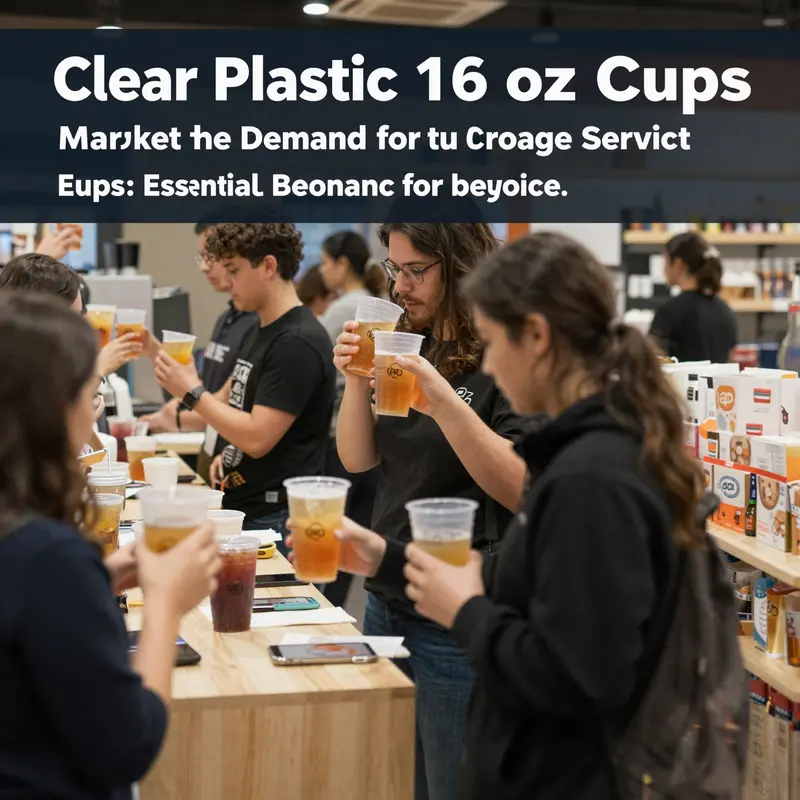
The market for clear plastic 16 oz cups sits at a crossroads of function, aesthetics, and responsibility. Clear cups showcase the beverage, while demand is shaped by performance, cost, and evolving packaging waste concerns. In hospitality and events, 16 oz PET cups remain a reliable workhorse, delivering clarity and lightness with low breakage risk and fast service. PET is favored for recyclability, which translates into practical benefits in busy environments. Designers and operators balance durability with branding opportunities, often pairing cups with lids and straws to maintain brand integrity. Eco-conscious packaging has elevated PLA-based cups, marketed as compostable and derived from renewable resources, expanding the toolkit beyond PET for certain waste streams. Brands weigh end-of-life scenarios, local composting capabilities, temperature tolerance, and compatibility with fillings. Alongside materials, design innovations such as dome lids, straw slots, and branding on the cup surface influence user experience and spill prevention while enabling expressive presentation. The market continues to diversify, offering a spectrum of choices that cater to different priorities, from cost-conscious, high-volume service to sustainability-focused campaigns. Buyers increasingly rely on transparent specifications and supplier collaboration to ensure that packaging aligns with food-contact safety standards and environmental commitments. Ultimately, the choice of 16 oz clear cups is about balancing clarity, durability, cost, and responsible practice to support efficient service and positive brand impressions.
Seeing Through Service: The 16 oz Clear Cup’s Quiet Power in Flavor, Branding, and Sustainability
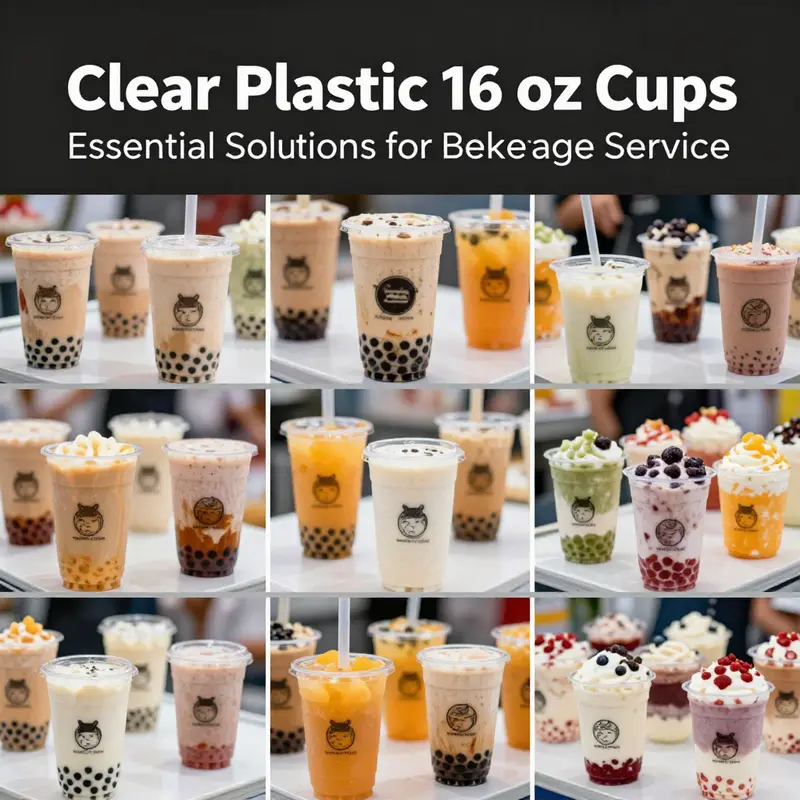
Clear 16 oz cups are more than simple vessels; they serve as a stage for color, texture, and aroma, a canvas for branding, and a practical ally in high volume service. The appeal rests in three intertwined strengths: optical clarity, durable practicality, and a pathway toward responsible packaging that still meets the realities of fast-paced operations. In many venues, the choice of cup translates directly into customer perception of flavor and freshness, making the container a silent partner in the drinking experience.
In cafes and quick-service environments, the virtue of a clear PET cup is the way it showcases the beverage. Iced drinks, layered coffees, and colorful smoothies rely on transparent walls to reveal brightness and texture, while the lid and straw preserve presentation and prevent spills. Practical design features such as a wide opening for easy filling, smooth interiors that resist snagging, and a stable base that reduces tipping contribute to a smooth workflow during busy shifts.
Beyond the counter, the cup proves its versatility in fast-food settings and outdoor events, where it doubles as a dessert vessel or a serving dish for toppings like granola or fruit layers. The availability of lid variations, from dome lids to more minimal seals, creates a flexible toolkit for operators who shift service style within a single shift. Printing logos or branding on cups adds identity to the transaction, reinforcing brand consistency even when the container is a brief intermediary between kitchen and customer.
Events and outdoor gatherings underscore another core attribute: safety and practicality. A clear cup is lightweight and shatter-resistant, reducing hazards in crowded spaces. Its disposability aligns with hygienic, scalable service at scale, while still allowing customers to visually identify their drink among many options. The cups’ rigidity helps maintain form during temperature variations, supporting reliable transport from point A to point B.
Sustainability emerges as a nuanced dimension. The material spectrum includes PET cups for clarity and recyclability, PLA cups for industrially compostable options, and PP cups for additional versatility in certain applications. The environmental conversation remains context dependent: local recycling capabilities, waste-hauling arrangements, and life-cycle considerations shape the best choice for a given venue. PET cups are widely recyclable where facilities exist, aligning with circular economy goals when processing capacity is available. PLA offers compostability where infrastructure supports it; in places lacking robust composting, PLA may not deliver its environmental promise. Recognizing these dynamics helps operators tailor their packaging strategy to community waste systems, customer expectations, and sustainability objectives.
For brands prioritizing sustainability without sacrificing performance, there is room for diversification. Biodegradable or compostable options made from PLA have grown in popularity, and some manufacturers offer certified products designed for compostability in commercial facilities. In practice, though, the decision to adopt PLA versus PET is driven by logistical realities as much as environmental ideals. When a venue emphasizes takeout and outdoor service, PET with a robust recycling plan may be preferred; for a temporary promotion aiming to demonstrate environmental stewardship, PLA may make sense if composting infrastructure is in place. The overarching idea is that the cup should align with the venue’s operating model, the community’s waste practices, and customer expectations, matching the cup’s clarity with a clear purpose about sustainability.
Branding considerations also matter. Custom printing on cups turns a simple vessel into a moving billboard, a tangible touchpoint that travels with the customer through the service journey. Even in bustling environments, a consistent cup design supports recognition and trust, with color cues and logos guiding customer expectations. A clear cup can enhance color coordination and highlight label art, contributing to an integrated, polished look that signals care and attention to detail.
From a operational perspective, mass adoption of clear 16 oz PET cups involves precise molding, rigorous quality control, and supply chain resilience. Regions with strong manufacturing ecosystems offer the consistency required for high-volume operations. Bulk purchasing for reliable lid configurations and compatible branding options helps operators refine their packaging to match service style, customer expectations, and budget. The ability to tailor products—whether by adding logo printing, selecting dome lids, or choosing a specific wall thickness for durability—enables a packaging strategy that aligns with business needs.
The recommended approach blends a practical assessment of needs with a strategic packaging roadmap. If cold beverages and high throughput define core operations, PET cups with compatible lids and scalable branding options present a robust, recyclable solution that supports speed and consistency. For venues prioritizing compostable options or environmental signaling, PLA-based cups can be viable where waste infrastructure supports it. Regardless of material, aligning the cup choice with brand values, service style, and local waste realities ensures the cup supports the beverage rather than competing with it. The result is a cohesive service experience in which the cup’s transparency acts as a quiet backbone for quality.
In closing, the 16 oz clear cup embodies a blend of function and form. It is light enough to handle easily, sturdy enough for a busy shift, and clear enough to let color, froth, and texture take center stage. Its versatility—from a sunlit cafe iced coffee to a bustling festival smoothie—speaks to a broader truth about modern packaging: the best vessels vanish into the moment, allowing the drink to shine and the brand to resonate. For operators balancing performance, cost, and sustainability, the clear 16 oz cup offers a flexible framework that accommodates variety without sacrificing reliability, while for consumers it provides a transparent cue that the beverage inside has been prepared with care and presented with pride.
Branding on the Rim: How Custom Clear 16 oz Cups Turn Every Drink into a Marketing Moment
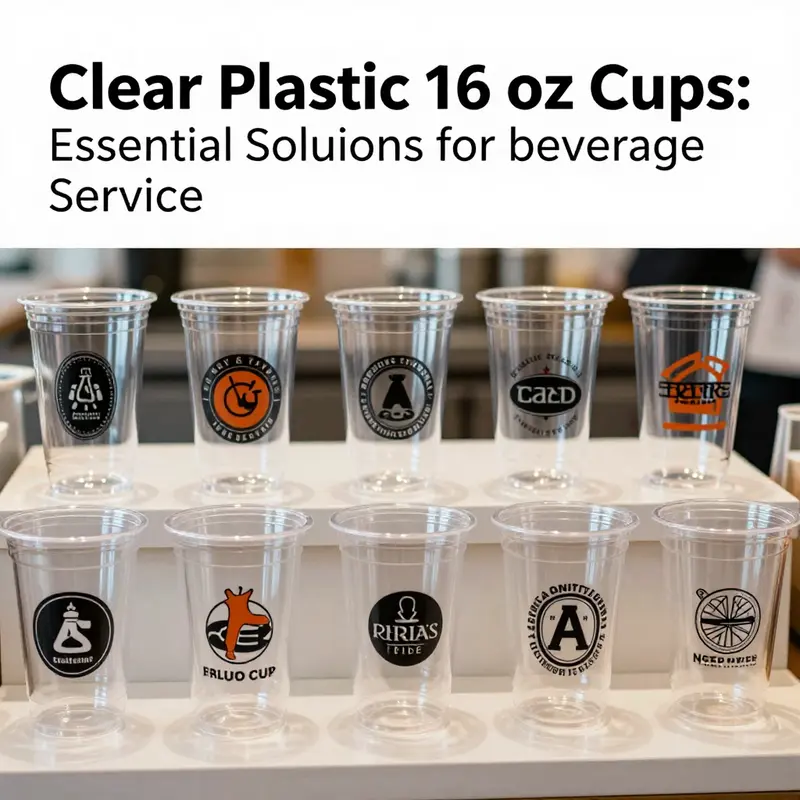
Clear plastic 16 oz cups are not just vessels for beverages; they are portable billboards. In the fast-paced world of food service, the clarity of a PET cup provides a blank canvas where color, typography, and logos can speak without competing with the liquid inside. When a brand can see its own message through a clean, distortion-free cylinder, every sip becomes a moment of recognition. This is especially true for venues that rely on high volumes—catering events, fitness studios, campus dining, and quick-service restaurants—where first impressions are shaped in a single glance.
That visibility is not merely decorative. It changes how buyers perceive value. A well-executed design communicates quality and consistency and invites repeat engagement. The same cup that serves a cold smoothie or a sparkling soda can carry a seasonal motif, a safety message, or a subtle nod to corporate values. In practice, brands treat the cup as a consumer touchpoint that travels from the point of purchase, through the line, into social feeds when someone snaps a photo, and finally into the recycling stream or compost bin depending on material choice.
Material choices influence the look, feel, and lifecycle of the cup as a branding tool. PET cups are prized for their exceptional clarity and lightness, making logos pop without adding weight. PLA cups lean into sustainability, offering a compostable path that appeals to eco-conscious audiences, though they require appropriate composting conditions to deliver on that promise. PP cups provide stiffness and chemical resistance for specialty beverages. Each material has a distinct set of advantages, and the choice often aligns with whether the business emphasizes cold beverages, hot drinks, or a mixed portfolio.
Printing and customization technologies turn the cup into a surface for identity. Logos can be printed on the body for broad visibility or on the lid when the drink is poured and sealed during service. UV printing enables high-resolution graphics with durable coloration that resists fading through wash and reuse cycles in the short term and through outdoor exposure in the long term. Molded-in labels offer a seamless aesthetic, integrating branding directly into the cup profile without relying on surface ink. Color-matched lids expand the palette of brand expression, letting a scheme extend from straw to rim without visual gaps.
Beyond aesthetics, customization supports practical marketing outcomes. For events, promotions, and retail experiences, branded cups become portable advertisements that capture attention in seminars, festivals, and retail aisles. A customer may carry a logo-bearing cup into a photo booth, post a snap to social media, and inadvertently extend the reach of a campaign far beyond a single venue. The combination of clear surfaces and bold branding creates a clean, memorable silhouette that sticks in memory long after the drink is finished.
Regulatory and safety considerations are integral to design decisions. Most clear plastic cups meant for food contact carry BPA-free certifications and comply with FDA or EU food-grade standards. This safety layer reassures customers that the cup is designed for repeated contact with beverages and does not introduce unwanted chemicals into the experience. Recyclability remains a key value proposition for many brands, with PET and certain PP options offering clear recycling pathways. For those who prioritize sustainability, PLA can be positioned as a compostable alternative, provided end-of-life infrastructure exists for composting the material.
Design strategy must respect readability and branding hierarchy. Large, high-contrast logos work well on a broad canvas, but the real estate on a 16 oz cup is finite. Designing for legibility requires thoughtful typography, appropriate font sizes, and concise messaging. It also means placing brand marks where they remain legible from various angles and ensuring that color choices do not clash with beverage hues or with the transparency of the cup itself. A clean, minimalist approach often yields stronger recall than an over-inked surface that crowds the space or distracts from the drink’s appeal.
Seasonal campaigns and product launches benefit especially from versatile cup designs. A cup that carries a seasonal motif can be reused across multiple SKUs, events, and geographies, reinforcing a consistent brand story while offering a sense of novelty for each campaign cycle. When paired with a matching lid color or a designed straw sleeve, the cup becomes an ecosystem rather than a single-purpose container. The cohesive look helps guests associate the taste experience with a brand narrative, and that association carries into point-of-sale materials, social posts, and in-store displays where the same art direction appears again and again.
From a operations perspective, customization must be scalable. Suppliers offer different minimums, lead times, and packaging configurations to suit both large chains and smaller teams. A typical order might include a bulk quantity of transparent cups, a selection of lid colors, and a subset of printed designs that cover core campaigns. For venues that rely on quick speed and accuracy, ready-to-ship sets with lids and straws streamline service while preserving branding integrity. A well-planned program can reduce on-site decision-making, speeding the line while maintaining a distinctive brand presence.
Strategic branding through cups also benefits from careful brand governance. Brands should maintain consistent logo placement and color usage across all vessels to avoid mixed messages. When scaling, it is tempting to adapt designs for different markets or partners, but cohesion should trump novelty. A brand’s color psychology—whether bold and energetic or calm and trustworthy—should guide not only ink choices but also the shade of lids, the opacity of straws, and even the texture of cup surfaces if those tactile cues are part of the brand promise. The goal is to create a recognizable, repeatable impression in every serving instance.
To support these efforts, the supply chain must be transparent about materials and processes. Clear plastic cups are mass-produced through extrusion and molding techniques that ensure uniform clarity and thickness. Print quality depends on substrate compatibility, ink adhesion, and curing methods. Brands that invest in quality control test samples for alignment, color fastness, and readability before large runs reduce costly misprints and misalignments. They also set expectations with partners about wash tolerances, stacking stability, and lid fit, all of which affect the perceived reliability of the final product when customers handle the cup during service.
Another practical consideration is how cups pair with other promotional tools. Lids, straws, and sleeves do more than seal a drink; they extend the branding surface and enable color coordination with the cup design. A lid in a brand color can echo the primary logo color, while a straw sleeve can feature a tagline or a micro-design that would be too crowded on the cup body. For businesses aiming for a premium feel, dome lids are sometimes preferred because they provide extra headspace for toppings and affogato-style beverages, while still maintaining the clean line of the cup itself. The result is a polished, cohesive experiential touchpoint that translates into higher perceived value for the beverage.
When evaluating suppliers, brands should consider the full spectrum of options from mass-market to boutique, ensuring that the chosen partner can deliver consistent color accuracy, reliable lead times, and scalable packaging formats. The global marketplace offers a broad range of customization capabilities, including logo embossing, color-matched print runs, and even molded-in branding for a seamless effect. In the modern economy, where sustainability and cost leadership often intersect, selecting a supplier that can balance price, performance, and responsible practices is essential. This balance supports growth without sacrificing the integrity of the brand’s on-pack identity.
For readers seeking hands-on paths to branded solutions, a practical route is to explore suppliers who provide customizable 16 oz clear plastic cups with a focus on branding options. A multi-step process typically begins with digital proofs and color checks, followed by a physical sample, and then a staged production run that scales to full volumes. It is wise to request a proof that shows logo placement from several angles, ensuring readability regardless of how a guest picks up the cup. In designing for public consumption, engineers and designers must also anticipate usage patterns—people grabbing the cup from the side, turning it to drink, and placing it back on a crowded surface without risking logo distortion.
An additional dimension is the potential for a unified product ecosystem. Brands that pair their cups with other takeout materials—think matching paper bowls, napkins, or packaging sleeves—achieve a cohesive environmental and aesthetic narrative. The synergy aids recall and simplifies brand recognition across touchpoints, from the moment of purchase to post-event social media shares. A consistent design language across all disposable items strengthens loyalty and reinforces a perception of care and professionalism. In turn, customers are more likely to associate positive experiences with a brand, which increases the likelihood of repeat visits and word-of-mouth referrals.
To close this circle, let us consider the ethical and environmental stories that customers rightly expect today. Even when using clear PET cups, brands should be transparent about recycling options and the lifecycle of the cup. If PLA is chosen for compostability, clear guidance should be provided on proper composting streams rather than assuming universal compostability. Education becomes part of the branding effort, shaping how customers dispose of the cup and reinforcing that the brand stands for responsible choices as well as memorable experiences. The transparent surface becomes a place where values are communicated with every pour, and that communication is, in itself, another form of branding.
Finally, a nod to practical guidance for those who want a concrete steppingstone: consider embedding a branded logo on the cup that is legible, enduring, and adaptable to future campaigns. For brands seeking a long-term, repeatable solution, a molded-in label provides a seamless branding layer Custom-Printed-Logo-Disposable-6oz-8oz-9oz-Paper-Coffee-Cup. This option reduces the risk of ink cracking or fading during dishwashing or accidental spills and can be an elegant complement to any printed surface. It also invites a broader conversation about the interplay between function and form, ensuring the cup remains as much a part of the brand identity as the beverage it carries.
External resources can offer further insight into the scale and reach of these capabilities. For brands exploring a global supply chain of customizable 16 oz clear plastic cups, a widely used marketplace hosts a robust catalog of options with specifications, safety certifications, and bulk pricing. External reference: https://www.alibaba.com/product-detail/Customizable-16oz-Clear-Plastic-Cups_1600457329989.html
Final thoughts
Clear plastic 16 oz cups play a fundamental role in the food and beverage sector, offering unmatched versatility and operational benefits. Their unique material compositions, environmental considerations, and adaptability to market trends harness potential from product presentation to sustainability practices. As businesses tap into customization opportunities, they can effectively elevate their brand identity and customer experience. In an increasingly eco-conscious marketplace, utilizing clear plastic cups wisely equips food businesses to serve beverages stylishly and responsibly, positioning them for continued success in an evolving industry landscape.