
As consumer demand for sustainable practices rises, the importance of sourcing quality reusable food containers cannot be overstated. Whether you’re running a bubble tea shop, a bustling food truck, or a large-scale catering service, having the right containers is essential to enhance your service and meet eco-friendly standards. In Los Angeles, local wholesalers and industry trends present unique opportunities for businesses to secure reusable food containers that align with their operational needs. Each chapter of this article will delve into local wholesalers, industry trends that influence purchasing decisions, and the wholesale channels available for sourcing these essential items.
Reusables That Travel: Navigating Los Angeles’ Wholesale Channel for Food-Container Reusables
The Los Angeles region has evolved into a pivotal corridor for sustainable packaging, especially when it comes to reusable food containers. In a city where food service is a defining industry and daily meal routines stretch from office kitchens to apartment balconies, the move toward durable, washable containers is more than a trend. It is a practical response to a crowded supply chain, the demands of high-volume takeout, and a growing consumer preference for less wasteful solutions. For businesses and households alike, sourcing reliable reusables requires a careful blend of local insight, product understanding, and supplier agility. The question becomes not only what to buy but whom to trust when the calendar moves fast, orders must scale, and every delivery matters to the bottom line. In this chapter, the emphasis is on the Los Angeles wholesale channel—how buyers connect with local suppliers, how containers are designed for durability and easy handling, and how a well-structured sourcing approach can turn a tricky procurement puzzle into a steady, scalable operation.
At the heart of this landscape is a cluster of brick-and-mortar stores that serve as both retail shops and gateways to bulk procurement. These shops sit in the fabric of the city near major corridors, where commercial kitchens, school cafeterias, community centers, and office campuses converge. While each store may present itself primarily as a retail destination, the scale of their operation—buoyant inventory, frequent restocks, and established relationships with manufacturers—often translates into flexible bulk-purchase options for small businesses and groups. The physical proximity of these shops to downtown cores and industrial districts matters in a city where logistics matter as much as product design. The experience of visiting in person—seeing the range of sizes, touching the materials, and discussing lead times with staff—often yields information that is hard to capture from a catalog or a flyer. It is not merely convenience; it is risk reduction. Local suppliers can align with a business’s daily rhythm, clarifying minimum order quantities, packaging options, and delivery schedules that keep operations moving without interrupting service.
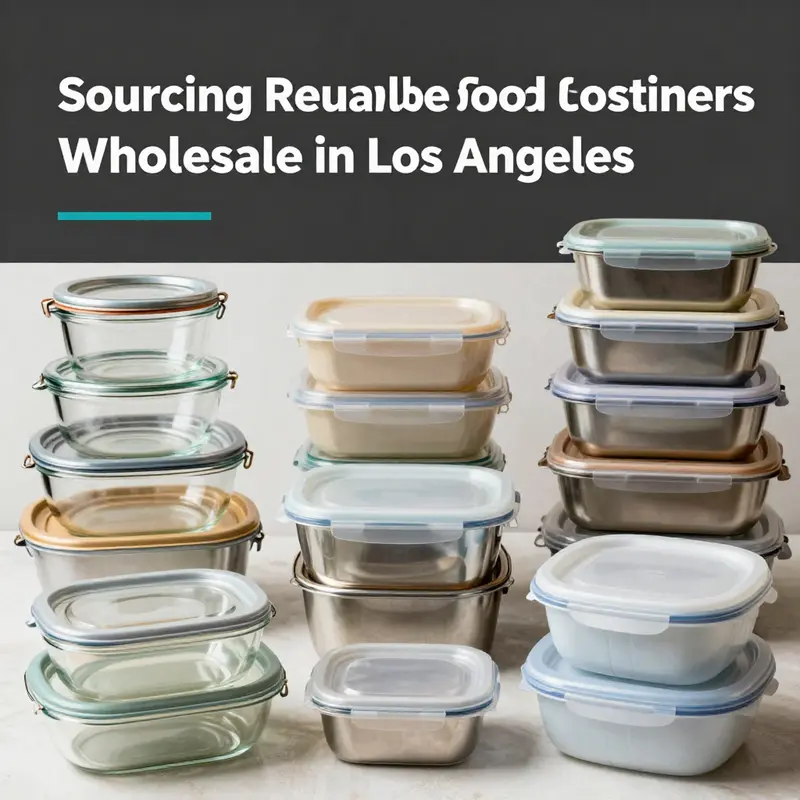
In practical terms, the core products in this market run across several material families designed to withstand repeated use. The most common are durable plastics such as polypropylene and certain thermoplastic elastomers, chosen for their food-grade safety profiles, stain resistance, and dishwasher compatibility. Stainless steel and tempered glass also appear, favored for their longevity, heat resistance, and the ease with which they tolerate aggressive cleaning cycles. Each material carries a different profile of strengths and constraints. Plastics can be lighter and more accessible for a broad range of sizes. Stainless steel offers robustness and a premium feel, but it can be heavier and costlier. Glass delivers excellent odor control and visibility but adds fragility risk in some settings. Buyers who are new to the space benefit from a focused conversation about how a container will be used: Will it endure hot liquid exposure? Will it travel in a courier bag or a loading dock? Will it be stacked in a crowded shelving unit or nested for space saving? The answers guide the material choice, as well as the sealing mechanism and lid design.
Design features that frequently surface in the discussion about reusables include leak-proof seals, snap or screw-on lids, and the ability to withstand repeated washing without warping or degrading. Stackability is not merely a space-saving gimmick; it reduces handling time and clutter across busy kitchens and homes. Rounded corners, for example, can simplify cleaning and minimize odor retention—an often overlooked but essential design detail. The best containers balance airtight performance with ease of use: lids should be secure but intuitive to open, and edges should be smooth enough to tolerate a quick wipe-down without snagging towels or gloves. In a city environment where takeout has become part of everyday life, containers must perform reliably across alternating routines—weekday meal-prep, weekend batch cooking, and the quick grab-and-go moments demanded by busy professionals.
For a buyer seeking to enter or expand a wholesale relationship, the sourcing strategy in Los Angeles benefits from blending on-site exploration with digital reconnaissance. Traditional channels remain valuable; a well-stocked local shop can facilitate face-to-face discussions about bulk pricing tiers, lead times, return policies, and potential partnerships with regional distributors or manufacturers. The advantage of a local, brick-and-mortar pathway is not merely speed. It is the ability to validate fit through conversation, inspect the exact materials, and sample different configurations before committing to larger orders. The risk of misalignment—ordering a batch that doesn’t survive the rigors of a busy kitchen or a long storage cycle—shrinks when buyers can verify performance in person and confirm compatibility with existing equipment and cleaning protocols.
Beyond the walls of a store, Los Angeles buyers often complement in-person visits with digital sourcing. Online wholesale platforms have grown to serve as discovery engines, helping buyers identify suppliers located in California or the broader United States who can accommodate trial orders and tiered pricing. The process of screening these online options emphasizes essential attributes: product safety certifications, material compatibility with existing washing equipment, and the ability to deliver in a timeframe that matches restaurant or school schedules. A practical approach is to compile a short list of needs—specific volumes per day, the number of units per batch, and the range of sizes—and then use digital catalogs to map those needs against supplier capabilities. The result is a targeted short list that honors the realities of local logistics while preserving the opportunity to negotiate better terms through plural sourcing.
Community and industry networks can also amplify access to wholesale resources. Local trade associations, especially those connected to sustainable dining and consumer packaging, provide member directories, buying groups, and occasional bulk-discount opportunities. For retailers, caterers, or schools, membership can translate into access to exclusive supplier directories, negotiated rates, and early notices of new product lines designed for reusables. In a city that constantly experiments with new dining concepts and delivery models, the ability to tap into these networks can shorten the lead time between need recognition and fulfillment.
The practical choices buyers face extend beyond raw material and design features. The leadership question is often about economics and logistics. What is the minimum order quantity for a given line of containers, and can the same supplier accommodate changing volumes across the year as menus and demand cycles shift? Are there multiple SKUs that can be used interchangeably so that a kitchen can pivot without renegotiating terms? How flexible are the payment terms, and what are the options for local delivery versus centralized distribution? These questions are not merely administrative. They shape the day-to-day rhythm of kitchens and households that rely on these products. A supplier’s ability to offer consistent availability, predictable shipping windows, and responsive support can determine whether a wholesale relationship becomes a reliable backbone of a business. In addition, the capacity to offer design variation—such as different lid styles or color-coding schemes to streamline inventory management—can turn a basic container into a strategic tool for efficiency and branding.
The conversation often turns toward a pragmatic balance of cost and durability. Reusables are typically priced higher upfront than disposables, but the total cost of ownership over months or years can be compelling when breakdowns in the supply chain are factored in. In settings with daily meal prep or rapid turnover, the cost of replacements due to damage, staining, or warping can accumulate quickly, making sturdier options more economical over time. This is a critical lens for Los Angeles operators who juggle multiple roles—from chefs and managers to educators and community organizers—while managing budgets that must stretch through peak seasons, summer camps, and back-to-school periods. A wholesale partner who can offer warranty-like assurances, quick replacements for defective items, and a clear policy on returns can convert a typical supplier relationship into a long-term collaboration. It is through these relationships that buyers gain a form of operational security that is hard to quantify but easy to feel when a week of service is at stake.
To illustrate how these dynamics unfold in practice, consider a hypothetical buyer who operates a meal-prep service with a growing demand for take-home containers. The buyer needs a stainless-steel option for daily use in a high-volume kitchen and a lighter, plastic or composite alternative for snack packs and school programs. They begin by visiting a local kitchen-supply retailer known for robust bulk procurement capabilities. They inspect a range of sizes, from compact eight-ounce portions up to large, one-liter containers, evaluating lid designs, sealing performance, and stacking stability. They request sample units to test in the dishwasher and to check for heat tolerance in the microwave or oven. This step matters because a container that warps under heat or loses seal integrity after a few cycles undermines the very premise of reusability.
In parallel, the buyer explores online catalogs where bulk pricing and MOQs are displayed. The goal is to identify a second source, ideally within California or the western United States, that can provide a reliable supply chain during weather fluctuations, traffic delays, or peak demand. They compare lead times, freight costs, and the flexibility of arranging local delivery versus relying on a regional distributor. They review COAs and safety certifications to ensure the chosen materials meet safety standards for repeated food contact. They also consider whether the supplier can support customization, such as color-coding or logo placement, without sacrificing recyclability or washability. Customization is not a luxury but a time-saving feature for brand recall and inventory management in a busy environment. If a container can be easily identified in a crowded kitchen or classroom by its color or label, the staff can work more efficiently, reducing errors and waste.
The local market also hosts a spectrum of products aimed at different usage scenarios. For meal prep and home storage, containers with tight seals and wide mouths may be favored for ease of filling and cleaning. For catering events, rugged designs that resist denting from transport and stacking are valued. For schools and offices, modular shapes that fit standard lunch kits and cubbies streamline distribution. The common thread across these scenarios is the importance of robust sealing, user-friendly lids, and the ability to withstand frequent cleaning. The best containers in this market are not merely boxes with lids; they are tools that simplify the workflow, preserve food quality, and project a sense of sustainability that aligns with regulatory expectations and consumer values.
All of this points to a broader narrative about the Los Angeles wholesale environment: the region rewards relationships as much as products. A wholesale partner is not just a supplier but a collaborator who helps a business forecast demand, optimize storage, and manage a cycle of replenishment that aligns with seasonal shifts in the city’s dining landscape. The local ecosystem is dynamic, reflecting the city’s appetite for innovation, diversity in food culture, and a growing commitment to circular economy principles. Buyers who approach sourcing with curiosity and method can identify glimmers of opportunity in the mix—whether that means negotiating favorable trial terms for a new reusable line, aligning with a regional distributor that offers coordinated logistics, or capitalizing on a shared procurement network that reduces per-unit costs for small-scale operators.
To support readers who are beginning this journey, the following practical outline can serve as a compass. First, define the scope: the number of people served daily, the typical presence of leftovers, and the expected storage conditions in both kitchen and consumer environments. Second, map the range of sizes needed to cover meals, snacks, and bulk ingredients. Third, decide on materials by weighing weight, safety, and cleaning practices. Fourth, outline a cleaning protocol that aligns with the chosen materials and equipment. Fifth, identify existing equipment compatibility, such as washing machines, rack sizes, and drying racks. Sixth, set a target shelf life for containers in use and plan budget cycles accordingly. Seventh, initiate conversations with multiple local suppliers to solicit quotes, MOQs, and delivery capabilities. Eighth, request samples and pilot usage to test how the containers perform under real-world conditions. Ninth, verify safety certifications and recyclability to ensure compliance with local disposal and sustainability goals. Tenth, document and analyze the results to determine the most reliable long-term partner.
In the midst of these steps, a practical touchstone is the idea that reusables are not simply a single product category but a system. The system comprises containers, lids, seals, carriers, and the downstream processes that keep them in rotation. The success of this system depends on a network of relationships, a clear understanding of use cases, and an ongoing willingness to adapt to changing needs. The Los Angeles market rewards adaptive procurement strategies that remain aligned with environmental goals while maintaining cost discipline. For a smaller operator or a community program, the right wholesale channel makes the difference between a one-off purchase and a sustainable procurement practice that endures across months and seasons. It also unlocks opportunities for training and onboarding staff to handle containers with proper care, reinforcing the value of longevity and consistent performance.
As readers consider their own sourcing decisions, a useful practice is to recognize the role that local suppliers can play in shaping a zero-waste or reduced-waste narrative for a business or institution. The proximity of suppliers means faster replenishment cycles, easier coordination for inventory checks, and the ability to adjust orders quickly in response to events, promotions, or shifts in consumer demand. This agility is especially valuable in a city famed for its fast pace and dynamic food scene. The wholesale pathway becomes more than a transaction; it is a logistics partnership that keeps messes manageable and service levels steady. While online catalogs provide breadth, it is the tactile, in-person validation of material properties, sealing reliability, and long-term performance that often separates the good options from the truly dependable ones. In short, the Los Angeles wholesale landscape for reusable food containers is less about a single product and more about an ecosystem that can flex with a business’s needs while remaining aligned with local sustainability goals.
For readers who want to explore more about the local marketplace and current listings, a practical entry point is to examine a well-regarded local resource that aggregates consumer and professional opinions about container suppliers in the area. This resource can offer guidance on reputation, service quality, and user experiences, helping new buyers gauge which shops are most aligned with wholesale inquiries and bulk-capacity procurement. A balanced approach combines direct store visits, online research, and engagement with community networks to create a robust starting plan. It is through this approach that a business can convert the concept of reusables into an operational reality—one that supports reliable service, sustainable practices, and cost control in a market as dynamic as Los Angeles.
To connect these ideas to practical action, consider this concrete step: if you are exploring bulk options, start with a local store that already serves a range of kitchen and catering needs and ask about their bulk purchasing programs. As you discuss volumes, ask about lead times, packaging options, and whether there is an opportunity to work with third-party distributors who can extend their reach. While you explore, you can also review related product pages in the broader eco-friendly packaging space to understand how container design influences lifecycle costs and performance. For example, a category page describing eco-friendly, recyclable pulp options can provide context on how packaging materials are evolving in response to consumer demand, even if those particular items are disposables. This broader perspective can sharpen decisions about what types of reusables to prioritize and how to structure orders to leverage bundled pricing.
In sum, Los Angeles stands out as a hub where proximity, reliability, and a focus on durable, well-designed containers converge. The local wholesale channel offers a practical path for small operators and large buyers alike to align procurement with sustainability goals while maintaining service levels in a bustling food landscape. The combination of in-person supplier engagement, thoughtful material selection, and a disciplined, phased sourcing process creates a foundation for reusables that endure. As supply chains continue to adapt to evolving customer expectations and regulatory contexts, the value of a well-chosen local partner becomes clearer: a partner who can respond quickly, stock robust products, and help a business or organization stay on a steady, shared path toward reduced waste.
Internal link reference: For readers interested in related packaging options within the same sustainable space, you can explore a catalog entry focused on eco-friendly take-away cup holders here: eco-friendly recyclable pulp take-away cup holder.
External reference: For a broader view of local market dynamics and supplier evaluations, see the Yelp listing for a prominent Los Angeles kitchen-supply retailer serving the reusables space: https://www.yelp.com/biz/kitchen-plus-los-angeles
How Sustainability, Policy, and Local Demand Are Rewriting the Wholesale Market for Reusable Food Containers in Los Angeles
Shifting Market Forces and What They Mean for Wholesalers in Los Angeles
Los Angeles is seeing a sustained shift in how food is stored, sold, and transported. Consumers and businesses alike are moving away from single-use options. This shift is not random. It is the result of aligned economic incentives, stronger environmental policies, and visible community advocacy. For wholesalers of reusable food containers, these forces create both new opportunities and clear expectations. A successful wholesale supplier must now think like a sustainability partner. They must respond to demand for durable materials, functional design, and supply chains that reduce waste. This chapter unpacks the trends reshaping the market. It shows how local dynamics create buyers who value reliability, regulatory compliance, and long-term cost efficiency.
Consumer preferences are the first driver. Shoppers increasingly seek products that reflect their values. They prioritize items that can be washed and reused many times. Many prefer materials such as stainless steel, glass, and certified food-grade plastics. These options promise longevity, safety, and a smaller environmental footprint. Buyers are often willing to pay more up front for containers that last. That willingness changes the wholesale calculus. It shifts focus from price-per-unit toward total cost-of-ownership. Reusable containers that survive hundreds of cycles replace dozens of disposables. This makes bulk buying for restaurants, caterers, and meal-prep services financially sensible. Wholesalers who clearly communicate lifecycle savings gain an advantage.
Regulation is the second major influence. California has led the nation on rules that limit single-use plastics. Local ordinances and statewide policies reduce the availability of throwaway containers. These rules accelerate adoption of reusable systems by businesses. Restaurants and food delivery services face the choice of redesigning operations or incurring fines. As a result, demand for compliant reusable containers rises. Wholesalers that keep pace with regulation can secure long-term customers. This means stocking items that meet state standards and offering documentation to prove compliance. Wholesalers that provide educational materials and compliance guidance position themselves as trusted partners, not just vendors.
The rise of zero-waste and refill culture in Los Angeles also shapes wholesale demand. Neighborhoods and business districts now host refill stations, cooperative kitchens, and zero-waste shops. These hubs create a steady need for standardized, easy-to-clean containers. Reusable lids, stackable systems, and uniform sizing become more valuable than niche designs. When community members bring containers back to refill, businesses need durable, consistent packaging that fits their dispense systems. Wholesalers who supply modular, interoperable containers are more attractive to these markets. They can supply batches that fit both retail refill stations and institutional kitchens.
Design trends flow from practical needs. Buyers want strong sealing systems that prevent leaks during transport. They prefer stackable or nested designs that save shelf space and reduce shipping volume. Rounded interiors are favored because they are simpler to clean and less likely to trap odors. Clear or partially transparent materials help staff verify contents at a glance. Insulated containers serve meal delivery and lunchbox markets by keeping food at safe temperatures. For wholesalers, the lesson is simple: offer options that solve operational pain points. Packaging that reduces labor or waste becomes a competitive differentiator. Samples, demonstrations, and clear spec sheets help prospective buyers adopt new systems.
Materials selection matters at scale. Stainless steel sells on durability and end-of-life recyclability. Glass appeals where aesthetic presentation is essential, such as high-end catering. High-quality food-grade polymers remain popular for their light weight and resistance to breakage. Wholesalers should curate portfolios with a balance of these materials. They should also highlight certifications for food safety and material composition. Many buyers ask for BPA-free, FDA-compliant, or similar assurances. Transparent sourcing and third-party testing create buyer confidence. Suppliers that source domestically or maintain traceable supply chains can meet procurement standards for institutions and large businesses.
Cost dynamics have shifted from purely unit-priced thinking toward lifecycle economics. Commercial kitchens calculate the total cost over a product’s usable life. A more durable container may cost more initially. However, when it replaces plates or single-use clamshells repeatedly, it becomes cheaper per use. Wholesalers can help buyers make this calculation. Offering cost-per-use comparisons and sample sets encourages trial. Offering flexible ordering quantities also helps small businesses scale. Domestic manufacturing or regional warehousing reduces lead times. Shorter lead times reduce the need for excessive inventory on the buyer’s side. For many Los Angeles businesses, this reliability matters more than a minimal per-unit discount.
Logistics and supply chain transparency are increasingly important. Buyers want predictable deliveries and clear communication. Delays can cripple small restaurants and pop-up vendors. Wholesalers should offer reliable fulfillment and easy reorder systems. They should also provide information about material origin, recycling options, and how to replace parts. For example, modular lids that wear out can be replaced without buying whole sets. Such flexibility reduces the long-term cost for the buyer. Wholesalers who publish simple maintenance and replacement guides help prolong product life. This adds perceived value to their offerings.
Retail and wholesale channels are converging in interesting ways. Many buyers start with retail purchases and graduate to wholesale as they scale. Conversely, bulk buyers may participate in community programs that demand retail-friendly packaging. Wholesalers that support multiple purchase models win trust. They might offer trial packs for individual consumers and bulk SKUs for businesses. Multi-channel support can be a competitive edge. It encourages local adoption while capturing larger contracts.
Education and community engagement are central to adoption. Many consumers and small business owners want guidance on cleaning, storage, and compliance. Retailers and wholesalers who provide simple how-tos build loyalty. Workshops, online tutorials, and visible labeling can reduce misuse and extend product life. Community events that promote reuse turn curious shoppers into regular buyers. Partnerships with local sustainability groups amplify this effect. Wholesalers that provide educational materials to their buyers add value. They also reduce the likelihood that containers are discarded prematurely because of misunderstanding.
Partnerships between foodservice businesses and wholesale suppliers are evolving. Some enterprises now adopt returnable container programs. Customers receive meals in reusable carriers and return them at drop-off points. These systems demand containers designed for repeated handling and efficient sanitation. Wholesalers who understand these operational models can offer tailored catalogues. They can supply items that fit collection systems and commercial washers. This practical support helps business customers launch successful returnable programs.
Innovation in payment and deposit systems is aiding market growth. Deposit-based models reduce loss and improve return rates. Many businesses use simple QR codes and digital tracking to manage containers. Wholesalers can support these systems by providing barcodes, RFID-ready items, or standardized sizes that integrate with tracking technologies. By aligning product design with tracking solutions, wholesalers help buyers reduce loss and improve reuse rates. That alignment increases adoption and repeat orders.
Sustainability reporting is influencing procurement decisions. Businesses that publish sustainability metrics seek measurable impacts from suppliers. Wholesalers who can quantify reductions in single-use waste become preferred vendors. Simple reporting templates, year-over-year impact summaries, and case studies demonstrate value. These documents support corporate sustainability goals and can be decisive in supplier selection for larger contracts.
Local market nuances matter. Los Angeles is diverse in both culture and economic scale. Neighborhoods vary in adoption speed for reusable systems. Some areas have dense communities with high environmental awareness. Others prioritize low-cost solutions. Wholesalers that segment their offerings can better serve this varied market. They might offer premium stainless steel kits alongside robust polypropylene sets. This flexibility allows them to meet a wide range of budgets and expectations without diluting brand positioning.
Sales strategies that emphasize partnerships over transactions perform best. Customers increasingly seek suppliers who offer product education, compliance documentation, and post-sale support. This is especially true for institutional buyers such as schools and corporate cafeterias. Wholesalers who invest in after-sale service win loyalty and secure repeat business. Support can include maintenance guides, replacement parts, and long-term supply planning.
Design for disassembly and end-of-life matters. Buyers are interested in how components can be recycled or repurposed. Containers designed to be easily separated into recyclable parts reduce disposal friction. Where possible, using mono-material designs simplifies recycling. Wholesalers that prioritize recyclable or upcyclable materials can market a clearer environmental advantage. Clear labeling and end-of-life instructions further reassure buyers.
Finally, the broader packaging ecosystem affects reusable container demand. Many restaurants and food vendors blend reusable systems with eco-friendly disposable options. This hybrid approach responds to practical constraints like customer behavior and sanitation needs. Reusable container adoption often rises alongside demand for certified compostable paper and molded-fiber disposables. Wholesalers who can offer a complementary range of sustainable disposables, such as kraft paper bowls and compostable cups, help buyers make practical transitions. This integrated offering supports businesses as they pilot reuse programs while maintaining service continuity. For a wholesale partner, providing both reusable options and eco-friendly disposables encourages larger and more consistent orders. For retailers and caterers, it eases implementation and reduces supply fragmentation. One useful example of sustainable disposable alternatives is a wholesale kraft paper food storage bowl, which helps businesses bridge reuse programs and single-use needs: wholesale kraft paper food storage bowl.
Collectively, these trends create a clear picture. Demand is driven by consumer values and reinforced by regulation. Businesses respond by adopting systems that reduce waste and lower lifecycle costs. Wholesalers that adapt will offer durable, certified products, transparent sourcing, and operational support. They will provide modular designs that simplify cleaning and replacement. They will also support educational outreach and compliance documentation. Wholesalers who position themselves as long-term partners, rather than commodity suppliers, will capture the most significant share of Los Angeles’ evolving market.
For deeper reading on the broader forces driving these shifts, a recent industry analysis provides an overview of the influencing factors shaping this market: https://www.linkedin.com/pulse/influencing-factors-reusable-container-market-2026/
Wholesale Sourcing Strategies for Reusable Food Containers in Los Angeles
Los Angeles presents a unique mix of scale, sustainability demand, and logistics options for businesses that need reusable food containers in bulk. The region supports restaurants, caterers, meal-prep companies, office food services, and event planners that want to move away from disposable packaging. To succeed, buyers must combine local sourcing flexibility with reliable supply chains and clear supplier evaluation criteria. This chapter lays out the practical wholesale channels available in Los Angeles and explains how to choose and operationalize them so your reusable container program performs well from day one.
Wholesale channels in Los Angeles span from local distributors to global manufacturers. Each channel has tradeoffs in lead time, minimum order quantity, unit cost, customization ability, and sustainability support. Local wholesalers and distributors offer fast response and small-batch flexibility. They can often supply domestic-made stainless steel, glass, or food-grade plastic containers that meet regulatory standards. Because they operate near your point of use, local partners make it easier to handle returns, exchanges, and urgent replenishment. Many also provide value-added services such as consolidation, local warehousing, or simple rework and labeling. Those services reduce complexity for restaurants that lack storage space or procurement staff.
Regional distribution networks also play a key role. California-based distributors often maintain inventory on common SKUs and can assemble mixed pallets to meet smaller minimums. They tend to understand local regulations and the specific needs of Southern California food service customers. Working with a distributor lets you trial multiple designs without committing to a full factory run. It also shortens lead times when demand spikes for seasonal events.
Trade shows and industry expos are another important channel for discovering qualified suppliers and testing products in person. Los Angeles hosts and attracts national events focused on restaurant equipment, sustainable packaging, and hospitality supplies. These gatherings let you compare materials, open lids, and stack containers side by side. They also provide a chance to negotiate terms directly with sales teams and to learn about new circular-service offerings. When attending, bring a short checklist: material type, sealing method, nested dimensions, sample durability data, and the vendor’s minimum order quantity. Face-to-face meetings accelerate trust and often lead to pilot projects.
Online B2B marketplaces remain a powerful tool for identifying manufacturers and wholesale distributors. Platforms that list suppliers from the U.S., Mexico, and Asia make it simple to filter for certifications, minimum order quantities, and capacity. For Los Angeles buyers who need a quick local supplier, filter results by domestic shipping or U.S.-based warehouses. For those seeking lower unit costs and customization, expand the search to international manufacturers while planning for longer lead times and import logistics.
Sourcing directly from manufacturers by way of OEM or ODM agreements is a frequent strategy for enterprises with large and stable demand. Direct sourcing gives full control over materials and brand identity. It also enables custom features such as engraved logos, multi-compartment designs, or proprietary sealing systems. Large runs reduce unit cost but require careful planning. Expect longer upfront lead times for design, tooling, and sample approvals. Make sure the manufacturer can meet domestic compliance standards and provide traceable quality data.
A growing channel in Los Angeles involves sustainable-service providers and circular economy startups. These companies design reusable container systems around a service model. They handle container supply, washing and sanitizing, and route-based pickup and return logistics. For many food service businesses, partnering with a service provider eliminates the burden of building a reuse infrastructure from scratch. Service providers may also supply digital tools to track unit counts, cleaning cycles, and usage statistics. For customers who prefer not to manage inventory and cleaning, this model can be transformative.
When choosing between channels, evaluate five core criteria: compliance and certification, product performance, supplier reliability, cost structure, and service-level offerings. Compliance includes food-safety approvals and material certifications. For domestic suppliers, confirm third-party test reports that align with local food safety codes. For imported products, require FDA-equivalent documentation or laboratory test results. Product performance covers sealing, leak resistance, stackability, nestability, and durability in dishwashing cycles. Test samples in real operating conditions to ensure lids stay secure during delivery and repeated washing. Supplier reliability is about lead times, on-time delivery rates, inventory transparency, and historic responsiveness. Ask for references from similar clients.
Cost structure matters beyond per-unit price. Include freight, customs, warehousing, handling, and potential reverse-logistics costs. For reusable systems, budget for attrition and replacement. Calculate the break-even point versus disposable alternatives using realistic reuse cycles. A container that lasts 300 cycles will change the economics dramatically compared to one rated for 50 cycles. Service-level offerings—the final criterion—can include local repair, dedicated packaging for return flows, or contract washing. These services reduce operational friction and can justify slightly higher unit costs.
Practical steps for building a vendor shortlist start with clear specifications. Define the required materials, dimensions, closure type, maximum stack height, and weight tolerance. Identify whether you need vented lids, multi-compartment inserts, or thermal properties. With specifications in hand, source three candidate suppliers from each channel type: one local distributor, one regional or national wholesaler, and one manufacturer or service provider. Request samples, and when samples arrive, test them against a simple protocol: fill with hot and cold liquids, drop from shoulder height, run through multiple dishwashing cycles, and check seals after nesting in storage. Document failure modes and refined expectations.
Negotiate minimum order quantities and pricing with a clear escalation path. For local distributors, ask for mixed-case options and short-term consignment. For manufacturers, negotiate staggered shipments and pilot pricing. Consider trial runs that limit initial investment yet permit performance data collection. Payment terms are also negotiable; try to secure net 30 or milestone-based payments for large orders, especially with international suppliers. When dealing with overseas factories, use letters of credit or escrow for the first transactions.
Logistics and inventory planning are crucial in Los Angeles. The region offers many freight and warehousing options, but traffic and port congestion can affect timing. For domestic orders, use cross-dock services to move inventory quickly from wholesaler to store or kitchen. For imports, plan for customs clearance and inland trucking from the port. Consider distributed warehousing if you serve multiple neighborhoods and need fast replenishment. For reusable systems, coordinate a reverse-logistics provider for returns. A well-designed route plan reduces vehicle miles and labor costs.
Quality assurance and inspection processes must be part of any wholesale relationship. For local suppliers, schedule periodic sample audits and random checks. For international manufacturers, require pre-shipment inspections and ask for video or live-streamed factory tours if possible. Define acceptable defect rates and agree on remedies for nonconforming shipments. Include requirements for tamper-evident packaging or batch labeling that enable traceability. For reusable containers, track life-cycle data and failure incidents. Data helps refine procurement specifications and renegotiate terms when patterns emerge.
Legal and regulatory considerations include warranties, indemnities, and compliance with local waste and health codes. Reusable systems may be subject to health-department rules for food-contact surfaces and washing standards. Ensure contracts contain clear responsibilities for cleaning validation and for rectifying contamination issues. If working with a service provider, document service-level agreements for container availability and hygiene. Include data-security clauses if the provider collects customer usage information.
Supplier audits should examine social and environmental practices. Ask about worker conditions, waste management, and material sourcing. For manufacturers, check for certifications or third-party audits that cover environmental and social governance. For local wholesalers, ask how they dispose of or recycle damaged units. Buyers who prioritize sustainability should weigh supplier practices alongside price.
Pilot testing is where theory meets reality. Run a pilot with a single location or service lane for a minimum of four weeks. During a pilot, measure container loss rates, cleaning cycle time, customer feedback on container performance, and operational labor impacts. Track how often containers are returned, sanitized, and reused. Use simple KPIs such as average reuse cycles per container, cost per meal served for reusable versus disposable, and customer acceptance rate. Adjust the process based on pilot learnings and scale only when the metrics support it.
For businesses that plan to scale quickly, design inventory buffers and safety stock. Reusable container demand can rise unpredictably during promotions or peak seasons. Maintain a reorder point that accounts for cleaning turnaround time and transit delays. In multi-site operations, centralize procurement but decentralize small emergency stocks at high-volume locations.
A few operational tactics reduce friction. Use clear labeling on containers to prevent loss and mixing. Assign unique colors or subtle branding for different menus or partners. Train staff on stacking, loading for delivery, and sanitizing protocols. Create simple customer-facing guidance for returns and rewards to encourage compliance. If you run a return-deposit model, make the deposit amount meaningful but not punitive. A smooth user experience increases return rates and cuts replacement costs.
When working with overseas manufacturers, plan for intellectual property protections if you order custom tooling. Use non-disclosure agreements and consider registering designs when possible. For complex tooling, verify that the supplier maintains tool custody and understands acceptable tolerances. Insist on samples from the actual production line, not only prototype pieces.
Cost optimization strategies include designing modular SKUs that share common lids, inserts, or trays. Reducing the number of unique components simplifies procurement and lowers stock-keeping costs. Negotiate volume discounts across product families and ask about seasonal promotions from distributors. Consider an annualized procurement plan that allows suppliers to optimize their production runs and pass savings to you.
Complementary products can help ease transitions. For example, pairing reusable containers with recyclable carriers or cup holders simplifies multi-item deliveries. These carriers bridge the practical gap when a partner still needs a disposable cup. As a content reference, see an example of an eco-friendly recyclable pulp cup holder that complements reusable container programs: eco-friendly recyclable pulp cup holder. Use such complementary items sparingly to maintain the overall reuse goal.
Measure program success with a combination of environmental and financial KPIs. Track reduction in single-use items, net cost per meal serviced, container reuse cycles, and customer satisfaction. Use those metrics to refine procurement and to inform marketing messages. Transparent reporting builds credibility with customers and regulators.
Finally, maintain a risk management plan. Identify backup suppliers in different geographic regions. Keep an emergency stock to cover at least one high-volume weekend. For direct imports, plan alternate shipping routes. For local suppliers, maintain an options list so you can switch quickly if quality drops.
Sourcing reusable food containers in Los Angeles requires a pragmatic mix of channels. Local distributors and wholesalers provide speed and flexibility. Trade shows and B2B platforms expand your supplier set. Direct manufacturer relationships unlock customization and scale. Circular-service providers reduce operational overhead by managing cleaning and return logistics. Successful buyers combine these channels with rigorous supplier evaluation, careful pilot testing, and clear operational processes. With thoughtful planning, Los Angeles businesses can build reusable container systems that reduce waste, control costs, and make sustainable operations an everyday reality.
For additional background on manufacturing and supply-chain capabilities that apply when you consider direct sourcing or international partners, consult this sourcing guide: https://www.sourcingguide.cn/wholesale-food-containers-china-suppliers
Final thoughts
To stay competitive in today’s environmentally-conscious market, sourcing quality reusable food containers is essential for businesses in Los Angeles. With local wholesalers, emerging industry trends, and diverse wholesale channels, there are ample opportunities for bubble tea shops, restaurants, food trucks, and catering services to elevate their packaging and sustainability initiatives. By making informed choices in your sourcing process, you can not only meet customer demands but also contribute to a greener future.