
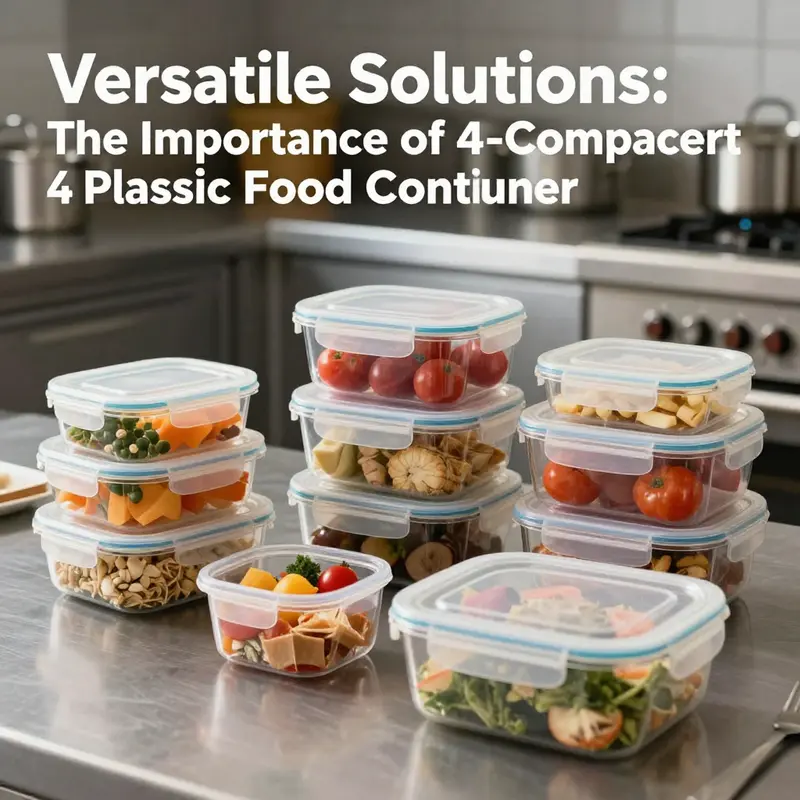
The emergence of 4-compartment plastic food containers represents a significant leap in food service convenience and functionality. These containers are expertly designed to segregate various food items, appealing not only to consumers who crave organizational efficiency but also to businesses aiming for operational excellence. For bubble tea shops, restaurants, food trucks, and catering services, the ability to present diverse menu items side by side without mixing flavors is invaluable. As we delve into this comprehensive exploration, we will investigate the innovative design and material use in these containers, their role in meal prep and food safety, the environmental implications, a thorough cost analysis, and the promising future of their evolution—ultimately illustrating why they are a must-have for your food service needs.
Engineering Separation: Design Choices and Material Science Behind Plastic 4‑Compartment Food Containers
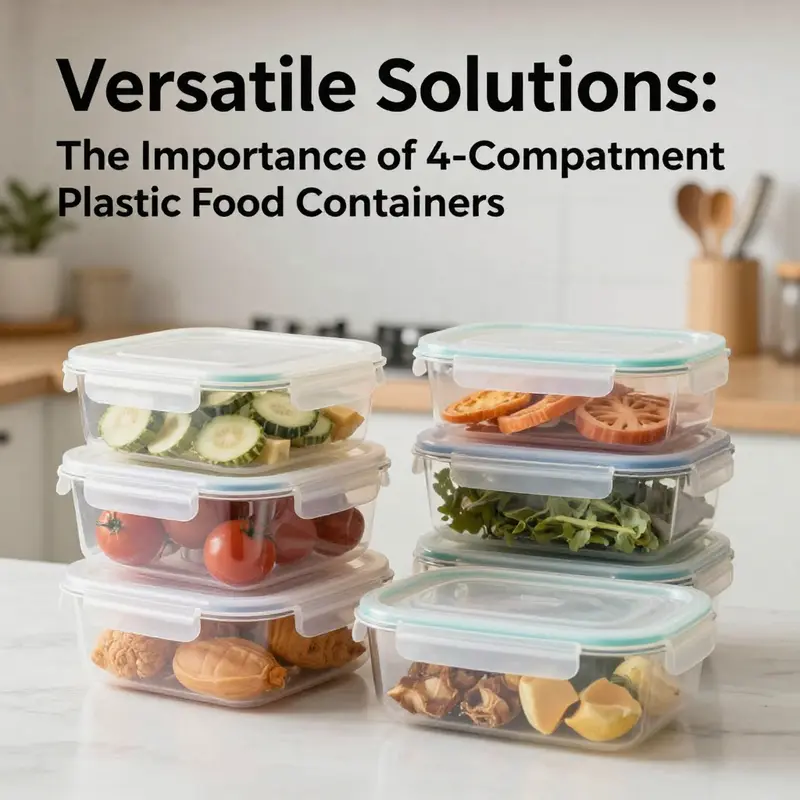
Design Meets Material: How Choices Affect Performance
Plastic four-compartment food containers are a study in trade-offs. Their basic purpose is simple: keep multiple foods separate while enabling safe storage, transport, and reheating. Yet achieving that goal involves careful choices in geometry, wall thickness, lid systems, and polymer chemistry. Those choices determine usability, thermal performance, stackability, leak control, and regulatory compliance. This chapter examines how design and material work together to create functional, safe, and economical four-compartment packaging.
The compartment layout is the visual and functional starting point. Typical configurations place four sections in a square grid, but proportions vary to match meal patterns. Larger mains get a dominant bay; sides, salads, and desserts occupy smaller pockets. Designers balance the need for separation with efficient material use. Deep, narrow pockets resist spillover, while shallow, wide bays reduce food compression. Corner radii and ribbing help with cleanup and structural strength without adding bulk. Internal ribs or textured bottoms can reduce food adhesion and improve cooling after hot fills.
Wall thickness and gauge are among the most consequential design decisions. Thicker walls increase stiffness and resistance to deformation during stacking and transport. They also improve thermal performance during hot fills and reduce the risk of brittle failure in cold storage. However, thicker parts raise material costs and increase weight. Manufacturers optimize thickness through finite-element analysis and prototype testing, placing reinforcing ribs where loads concentrate, and thinning non-critical regions to save polymer.
Compartment separation relies on precise molding. Seamless dividers formed in a single piece minimize leak paths between bays. Where removable inserts or snap-in partitions are used, attention to tolerances and material creep is essential. Leak control in compartmented trays is pragmatic: most designs assume some moisture transfer between adjacent compartments is acceptable, so full liquid containment usually requires additional features such as gasketed lids or separate sauce cups.
Lids are as important as bases. A secure-fitting lid preserves freshness, prevents spills, and provides a surface for stacking. Lids may be flat or domed; domed lids allow taller items or salads without crushing. Snap-fit designs deliver audible closure and a tactile assurance of sealing. For higher leak resistance, manufacturers add integrated gaskets or over-molded seals. Venting options — small tabs or vent holes — accommodate microwave reheating and help avoid lid warping. Designers balance vent area with splash protection and the need to retain steam until opening.
Stackability drives both warehouse efficiency and countertop utility. Interlocking rims and tapered sidewalls allow reliable, space-saving stacks. A common approach places a bead around the lid perimeter that nests into a matching recess on the base below. Effective stackability reduces shipping volume and supports automated handling in commercial kitchens.
Materials decide how those design elements perform under real use. Polypropylene (PP) is the material of choice for many four-compartment containers. It combines heat resistance, chemical stability, and toughness. PP handles microwave reheating well and tolerates hot fills. It also resists many detergents and oils, aiding reuse and cleaning. Crucially, food-contact grades of PP are widely available with certifications that exclude harmful additives like BPA.
High-density polyethylene (HDPE) finds use where chemical resistance and cost-efficiency matter. HDPE is lightweight and shows excellent resistance to many cleaners and basic acids. Its heat tolerance is lower than PP, so HDPE is better suited for chilled or room-temperature applications rather than frequent microwave reheating.
Polystyrene (PS) appears in some lower-cost trays. PS offers good clarity and can be rigid, but it is brittle at low temperatures and has limited heat resistance. Because of those limits, PS is rarely selected where repeated microwaving or rough handling is expected.
Polyethylene terephthalate (PET) is used when clarity matters, such as for retail display. PET provides an attractive glossy finish and good barrier properties. Its heat resistance is lower than PP, so PET containers are usually for cold or ambient-temperature foods.
Eco-conscious buyers will encounter plant-derived alternatives such as PLA and other bioplastics. These materials can reduce reliance on fossil feedstocks and offer compostability under industrial conditions. Yet they have mechanical and thermal constraints. PLA softens at moderate temperatures and can deform under hot fills or during microwave reheating. That limitation influences design choices: thicker sections, vented lids, or hybrid constructions (paper base with a thin plastic lid) may be required to maintain performance while keeping an eco-friendly claim. For those exploring compostable solutions, aligning material selection with intended use is essential.
Manufacturing method also shapes final performance. Injection molding yields high-precision, robust parts suitable for complex snap-fit lids and reproducible stackability. Thermoforming can be more cost-effective for large flat parts and allows fast tooling for new shapes, but it can limit detail in thin sections. The choice between these processes affects cycle times, tooling costs, and achievable tolerances.
Regulatory and safety compliance sits at the center of procurement decisions. Food-grade certification, material declarations, and third-party testing provide assurance that container materials will not leach harmful compounds into food. Buyers should insist on documentation showing compliance with relevant authorities. For international sourcing, look for evidence of conformity with multiple jurisdictions, since formulation, approved additives, and test methods differ by region.
Customization is common, but it must not compromise safety. Colorants, inks, and additional layers for barrier properties all require food-contact approval. Branding and labeling should be applied using approved inks and processes. Options such as embossed logos or color-matched lids can increase perceived value without changing core material performance.
Sustainability claims deserve scrutiny. Recyclability depends on local infrastructure and polymer type. PP and HDPE are widely recycled in many regions, but low collection rates reduce actual recycling. Bioplastics can be compostable, but only under specific conditions. When choosing an eco option, evaluate the entire lifecycle: feedstock, production energy, reuse potential, and end-of-life handling.
For buyers and specifiers, a practical checklist helps. Confirm the polymer grade and food-contact certifications. Test for required thermal performance, including hot fill and microwave cycles. Review lid fit and gasket performance under stacked loads. Validate supplier quality control through inspection reports and sample runs. Consider mixed-material solutions when performance and sustainability goals conflict.
When design and material are aligned, a four-compartment container becomes more than a tray. It is a tool for portion control, a branding surface, and a logistics asset. Thoughtful geometry, correct polymer choice, and robust sealing details deliver a product that protects food, reduces waste from damaged shipments, and meets regulatory expectations. For those seeking alternatives that pair the convenience of disposable trays with greener credentials, a useful comparison is available for compostable bowls and lids like the custom disposable kraft salad bowl with lid.
For technical specifications and supplier details on standard four‑compartment plastic containers, see the product reference here: https://www.alibaba.com/product-detail/4-Compartment-Plastic-Food-Container-Set-with-Lids_1600589735558.html
How Four-Compartment Plastic Containers Shape Safer, Smarter Meal Preparation
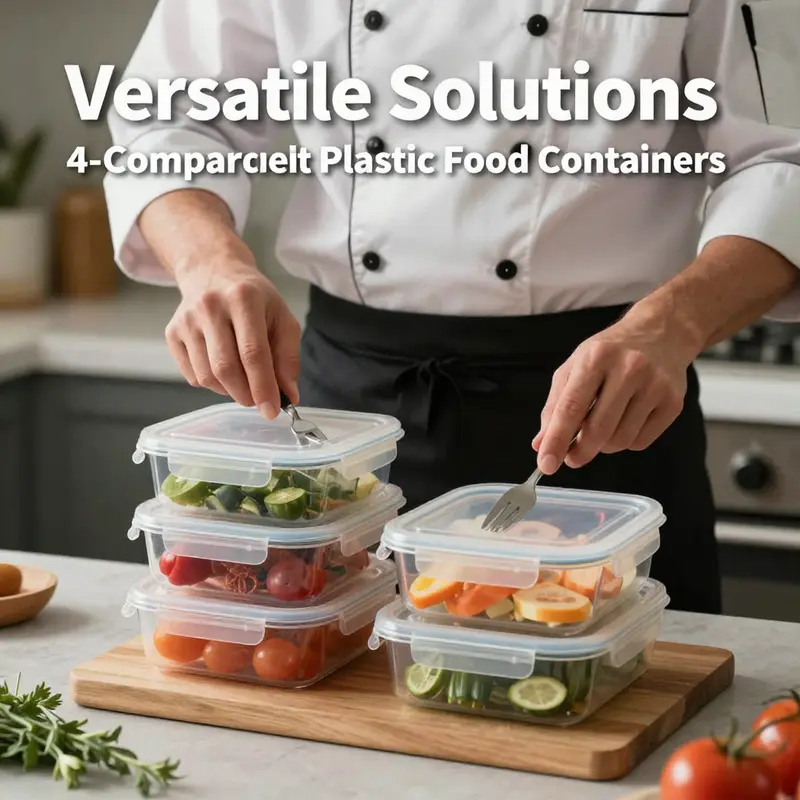
Plastic four-compartment food containers have reshaped how meals are prepared, stored, and served by combining simple geometry with material science. Their divided layout does more than keep foods tidy; it enforces separation where hygiene and flavor preservation matter most. In a single unit, proteins, vegetables, grains, and sauces can coexist without touching. This physical separation reduces the risk of cross-contamination and preserves textural contrast—crisp greens stay crisp, sauces stay contained, and heat transfer between components is limited during transport.
At the heart of their reliability is material choice. Polypropylene (PP) is the most trusted option for these containers because it balances durability with food safety. PP resists heat and many chemicals, tolerates microwave reheating in short bursts, and carries a lower risk of chemical migration when certified as food-grade. When containers are made from certified food-grade plastics, they are tested and cleared by regulatory authorities to minimize the risk of harmful substances migrating into food. This is especially important when packaging hot dishes or storing acidic or fatty foods that can increase the likelihood of chemical interaction with lower-quality plastics.
Design features reinforce safety in everyday use. Raised compartment walls and tapered bases help foods stay separate, while secure-fitting lids create a barrier against spills and airborne contaminants. Airtight seals preserve freshness, slow moisture loss, and prevent odour transfer between compartments. For kitchens that prepare batches of meals, the stackable profile of many designs saves space and reduces handling during storage and transport. Interlocking lids and bases help maintain stability in crowded refrigerators or during deliveries, which lowers the chance of accidental toppling and subsequent contamination.
The containers are also functional for portion control. Four compartments naturally encourage balanced plates by allocating space for a protein, a carbohydrate, and two vegetable or side portions. This layout supports meal-planning strategies, clinical diets, institutional feeding, and commercial meal delivery, where consistent portioning matters both nutritionally and economically.
Practical hygiene benefits arise from the containers’ reusability and compatibility with common cleaning methods. Many PP containers are dishwasher-safe and can be sanitized repeatedly. Using a dishwasher on a regular cycle reduces manual handling and improves sanitation outcomes, provided the lids and seals are checked for wear. Still, reuse carries responsibilities: repeated scrubbing and thermal cycles can create hairline fissures where bacteria can lodge. Visual inspection for cracks, persistent staining, or warping should be routine. If a seal no longer compresses evenly or a lid is misshapen, replacement prevents leakage and maintains barrier performance.
Microwave use is another advantage, but it comes with careful practices. Containers labeled microwave-safe indicate they have passed tests that simulate reheating. Typical guidance is to reheat at intervals, stir midway, and avoid prolonged high-power exposure that can warp lids or degrade polymer integrity. Also avoid direct contact between hot oil or acidic sauces and the plastic for extended periods; these conditions increase the potential for chemical migration in lower-quality materials.
Food-safety protocols that involve separated compartments are straightforward to implement. Raw proteins should be prepped and cooled in designated sections or, better yet, kept in separate containers until fully cooked. Ready-to-eat items like salads should occupy distinct compartments to avoid cross-contact. For commercial kitchens, color-coded lids or labels can indicate allergen presence or temperature sensitivity, reducing human error during portioning. When transporting meals, add a rigid outer carrier or insulated bag to keep temperatures stable and prevent deformation during transit.
While plastic four-compartment containers deliver many advantages, they are not without limitations. Lids and seals may warp if exposed to very high heat or improper dishwasher cycles. Certain plastic types may not perform well with very oily or highly acidic foods, which can compromise appearance and, over time, material integrity. Single-use containers create waste streams that are harder to manage than reusable alternatives. Even recyclable plastics depend on effective local recycling programs; contamination or mixed-material designs can render items unrecyclable.
For those seeking lower-impact options, paper-based or compostable bowls provide an alternative for single-use scenarios. These alternatives may not match the durability or clear-visibility of plastics, and their compartmentalization can be less precise, but they are useful when waste reduction is a priority. A notable option is a disposable kraft paper bowl with lid designed for takeout; it offers a plant-fiber-based choice for certain menus while still protecting food in transit (see disposable kraft paper bowl for food package with lid).
Selecting safe, compliant plastic containers means verifying certifications and supplier claims. Inspect product markings for food-safe symbols, microwave and dishwasher ratings, and resin identification codes. For bulk purchases, request documentation that materials are food-grade and compliant with applicable regulations. Ask suppliers about any migration testing, BPA-free certifications, and third-party lab results. Facilities that adhere to good manufacturing practices will typically provide traceability and compliance documentation on request.
Operational best practices further enhance safety. Allow hot foods to cool slightly before sealing to reduce condensation and pressure on lids. Store meals promptly at appropriate temperatures to minimize bacterial growth. Label containers with preparation date and reheating instructions. Rotate stocks using first-in, first-out principles to avoid extended storage that can mask spoilage. When reheating, use short cycles and probe food to confirm safe internal temperatures rather than assuming uniform heat distribution.
Finally, consider lifecycle and end-of-use decisions. Reusable plastic systems reduce single-use waste, but they require clear cleaning protocols and lifecycle tracking to ensure food safety over time. When containers reach end-of-life or show wear, replace them rather than risk compromised hygiene. Work with suppliers that offer recyclable or take-back programs when possible, and separate mixed materials (for example, foam inserts or composite lids) before recycling.
Used wisely, plastic four-compartment containers are more than a convenience; they are a practical tool for risk reduction, portion control, and efficient food logistics. Their effectiveness depends on material quality, design features, and user practices. Confirm certifications, follow proper cleaning and reheating procedures, and integrate them into a broader food-safety system to ensure they contribute positively to both operational efficiency and public health.
For authoritative guidance on materials that contact food, consult the U.S. FDA’s resource on food-contact materials: https://www.fda.gov/food/food-contact-materials
Weighing the Footprint: Environmental Realities of 4-Compartment Plastic Meal Containers
Balancing Convenience with Consequences
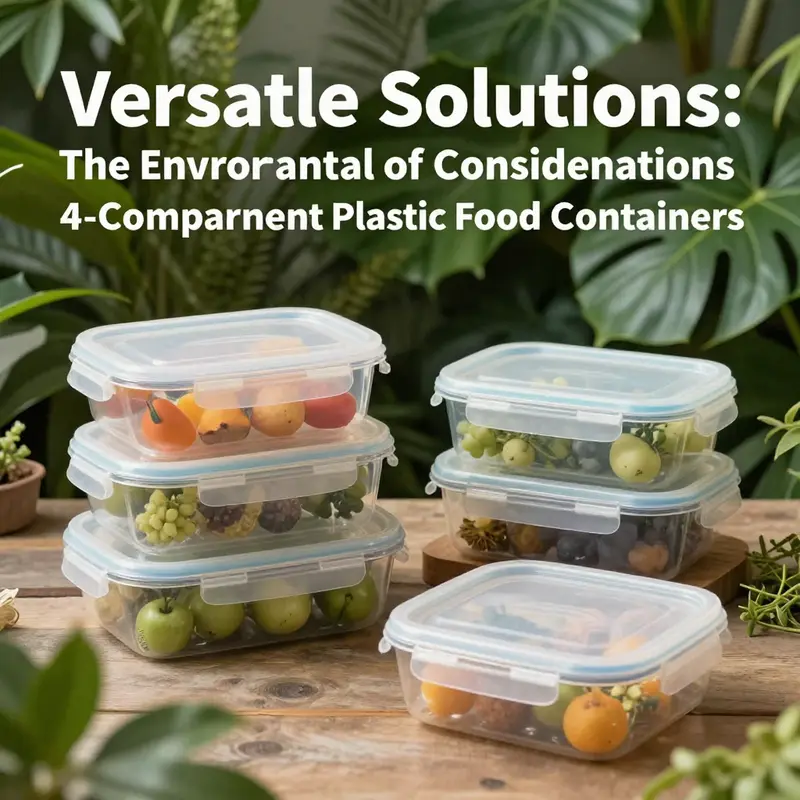
Plastic 4-compartment food containers deliver clear operational benefits. They keep foods separate, simplify portioning, and streamline transport. Yet those advantages come with environmental consequences that ripple across production, use, and disposal. Understanding those consequences helps businesses and consumers make informed choices. It also points to practical steps that reduce harm while preserving utility.
Most of these containers are manufactured from polymers derived from fossil fuels. The energy and feedstocks used to make plastic generate greenhouse gas emissions. That footprint begins at extraction and continues through polymerization, forming, and distribution. Single-use items amplify this impact. Each container represents embedded carbon and resource consumption. When millions of units move through a food service system, the cumulative emissions become material.
Durability and heat resistance make polypropylene a preferred material for hot and cold meals. That same durability means plastic resists natural degradation in landfills and the environment. Conventional polypropylene and polystyrene can persist for decades. Over time they fragment into microplastics. Those microplastics travel through waterways and soils. They accumulate in ecosystems and biological tissues. The long-term ecological effects are still being studied, but evidence shows harm to marine life and contamination of food chains.
Recycling offers one pathway to mitigate waste, but real-world recycling rates fall well short of technical potential. Containers must be collected, cleaned, and sorted by resin type. Food residue frequently contaminates recyclables. Contamination reduces the value of recycled material and increases processing costs. Some materials, such as polystyrene foam, are often excluded from municipal programs because their low density makes transport uneconomical. Mixed-material constructions and composite lids complicate recycling further. A container that combines a plastic base with an attached foam or coated paper lid is harder to reclaim.
Consumer behavior and waste infrastructure shape outcomes. A recyclable symbol does not guarantee a container will be recycled. Local facilities determine what gets accepted. In many regions, industrial composting is limited or unavailable. Biodegradable and compostable materials require specific temperature and humidity conditions to break down. Without access to industrial composters, compostable containers may persist in landfills just like conventional plastics.
Alternative materials change the calculus but introduce trade-offs. Plant-based polymers such as PLA offer compostability under industrial conditions. Paperboard and molded fiber products can be sourced from renewable feedstocks and are often recyclable or compostable. Yet these alternatives face limitations. PLA and coated papers can contaminate recycling streams if sorted improperly. Some plant-based options soften in humid or hot environments, which reduces their suitability for hot meals or heavy sauces.
Material choice is one piece of a larger design puzzle. A container designed for reuse or for simplified recycling creates downstream benefits. Single-material constructions with uniform resin types are easier to recycle. Lids that detach cleanly and are made from the same material remove separation challenges. Thicker, reusable designs require more material per unit but can offset that investment through repeated use. Reusables shift the environmental impact from a linear to a circular model, provided they are actually reused enough times to amortize their footprint.
For businesses considering change, procurement practices matter. Prioritizing suppliers who provide transparent material certifications reduces regulatory risk. Look for food-grade certifications and clear resin identification. Seek suppliers who can document recycled content and recyclability. Where possible, choose designs that favor a single resin and avoid problematic additives. Small specification changes in packaging design can improve recovery rates significantly.
Operational measures also matter. Restaurants and catering services can reduce waste through portion control and smarter menu planning. Choosing containers that support portioning can lower food waste, which in turn lessens overall environmental harm. Training staff to scrape and rinse containers before recycling mitigates contamination. Investing in dedicated recycling contracts or take-back programs helps close the loop. In regions with access to industrial composting, shifting to certified compostable containers makes sense for organic-rich waste streams.
Policy and purchasing power push markets toward better outcomes. Institutional buyers can influence suppliers by demanding recycled content and end-of-life solutions. Local governments can support infrastructure upgrades, such as improved sorting technologies and industrial composting facilities. Extended producer responsibility (EPR) schemes hold manufacturers accountable for end-of-life costs, encouraging designs that are easier to reclaim.
Consumers play a role as well. Clear labeling and education help households and businesses sort materials correctly. Visible, simple icons increase the odds that a container reaches the right processing stream. When consumers choose reusable containers or returnable systems, they reduce demand for single-use options. But convenience and convenience economics remain strong drivers. For many operations, single-use containers remain necessary due to hygiene needs, labor constraints, or regulatory requirements.
Transition strategies that marry practicality with sustainability often work best. Hybrid approaches pair durable, reusable containers for in-house dining with recyclable or certified compostable options for delivery. Offering customers a choice, such as incentivized returns or discounts for bringing reusable containers, nudges behavior without forcing wholesale system changes. For short-term improvements, switching to containers that are widely accepted by local recycling systems reduces landfill diversion quickly.
Finally, businesses exploring alternatives should pilot changes and measure outcomes. Track how a new container affects waste streams, recycling contamination rates, and customer satisfaction. Work with local waste haulers to understand processing limitations. Consider partnering with suppliers who provide eco-friendly paper-based products when suitable, such as a disposable kraft paper bowl for food package with lid, which can be more compatible with composting and recycling systems.
Addressing the environmental impact of 4-compartment plastic food containers requires coordinated action across design, procurement, operations, and policy. No single material or fix solves the problem alone. Yet incremental improvements—like adopting single-resin designs, reducing contamination, and investing in collection and composting—collectively reduce harm. By aligning packaging choices with local infrastructure and organizational practices, food businesses can preserve convenience while shrinking their ecological footprint.
For more details on the environmental impacts and management strategies for plastic packaging, see the EPA guidance on sustainable plastic management: https://www.epa.gov/sustainable-management-plastics/environmental-impacts-plastic-packaging
null
null
How Tomorrow’s Materials, Seals, and Smart Features Will Redefine 4-Compartment Food Containers
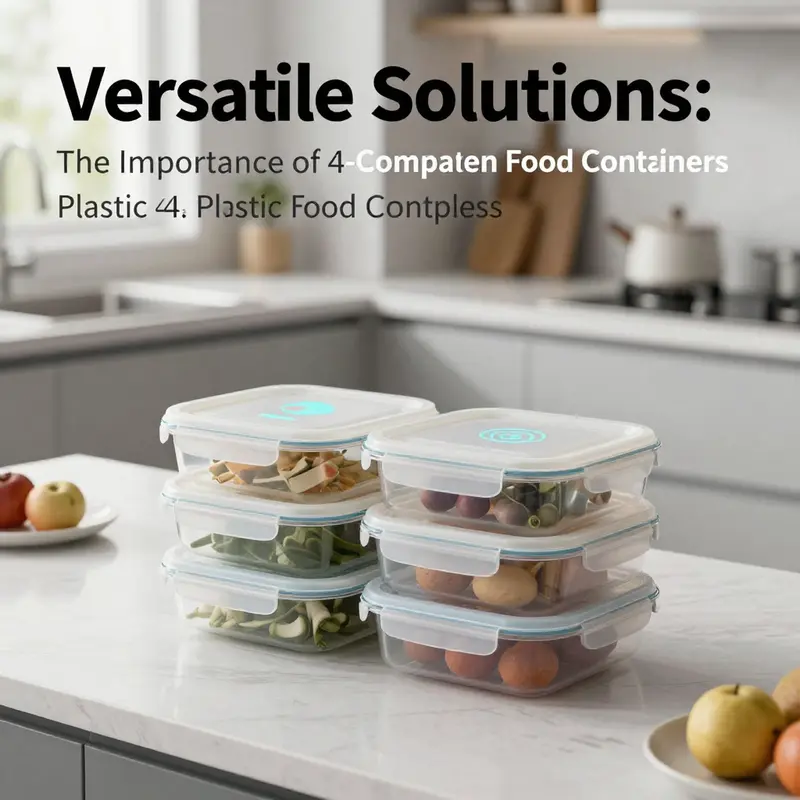
Plastic four-compartment food containers are at a crossroads where durability, convenience, and environmental responsibility must meet. The next generation will not simply be thinner or cheaper. It will combine advanced materials, smarter sealing, and digital features to extend freshness, reduce waste, and fit modern food-service workflows. This chapter describes the trajectory of those innovations and the practical choices manufacturers and buyers will face.
Manufacturers are moving beyond single-minded reliance on traditional resins. Polypropylene (PP) will remain central because of its heat tolerance, chemical resistance, and proven food safety track record. Its high melting point makes PP suitable for microwave and dishwasher use, and its robustness supports repeated use. Yet environmental pressures and changing customer expectations are accelerating a parallel shift toward alternatives that break down more responsibly after disposal. Compostable polymers like polylactic acid (PLA) and other bio-based formulations are gaining traction. They lower carbon footprints in production and appeal to consumers who demand greener options.
The adoption of compostable options will not be uniform. Not every kitchen, municipality, or waste stream can process PLA or similar materials. For many operators, a hybrid strategy will emerge: keep PP for reusable, high-heat applications while offering certified compostable versions for single-use service where industrial composting exists. Brands that want to demonstrate commitment to sustainability will take this hybrid path. They will also invest in clear labeling so end users know how to dispose of each container. This reduces contamination in recycling and composting streams.
Alongside new materials, sealing technology is becoming a decisive differentiator. Four compartments increase the risk of leaks when sauces or dressings migrate between sections. Better sealing now means engineered lid geometries, improved gasket materials, and precision locking features. Some lids will incorporate flexible thermoplastic seals that compress into a reliable, reusable barrier. Others will use snap-fit designs with multiple locking points to prevent accidental opening during transport. These advances preserve texture and taste, and they lower food waste by keeping meals fresher longer.
Sealing also interacts with material choices. Compostable lids require different gasket formulations than PP. Designers must balance airtightness with the need for lids to release safely under heating. Overly rigid seals can warp when exposed to high temperatures. The solution lies in engineered tolerances and heat-stable elastomers placed where they are most effective. This attention to detail will reduce lid warping and maintain microwave compatibility across a wider range of products.
Digital integration will move from novelty to utility. Embedded sensors, passive NFC tags, and QR codes will turn containers into information carriers. Sensors that monitor temperature, humidity, or gas composition can provide real-time indicators of food quality. They can signal when an item has been exposed to unsafe temperatures or when spoilage is likely. For institutional kitchens and meal-delivery services, that data can reduce liability and support traceability. For consumers, a QR code can deliver ingredient lists, reheating instructions, and suggested pairings.
Smart features will be affordable because manufacturers will embed low-cost indicators rather than full electronics in many products. Time-temperature indicators that change color, for example, offer a simple but effective way to signal compromised food. Passive QR codes are inexpensive and can link to dynamic content. The combination of visual indicators and digital information will make four-compartment containers more than a means of transport; they will become part of the food experience and the supply chain data stream.
High-performance polymers will continue to matter. PP and other advanced plastics provide repeated-use durability that compostables cannot match today. Their role will expand in reusable programs and applications that demand heat resistance. However, designers will focus on recyclability and circularity. That means designing containers with single-material construction where possible. Mono-polymer parts are easier to recycle than assemblies made from multiple incompatible resins. Containers built entirely from PP, for instance, streamline sorting and reprocessing.
Circularity also requires attention to labels, inks, and adhesives. Poorly chosen decoration can contaminate recycling streams. The future will see stricter guidance about removable labels and water-soluble adhesives. Additionally, modular designs that separate the lid from the base without damaging either component will simplify end-of-life processing.
Operational realities will shape which innovations see rapid adoption. Delivery services and institutional buyers focus on stackability, leak resistance, and cost per use. Restaurants and caterers emphasize appearance and brandability. Large buyers will negotiate for custom molding and specific barrier properties. Smaller vendors will rely on off-the-shelf designs that balance price and performance. Across all these segments, certification and regulatory compliance remain non-negotiable. Buyers will require food-grade certifications and evidence that compostable claims match local waste-management capabilities.
A growing niche will combine paper-based bowls and trays with plastic lids or barriers where suitable. Paper alternatives enhance perceived sustainability but can require a plastic or bioplastic lining to maintain barrier performance. Where operators want a fully compostable stack, integrated solutions that marry paperboard with compostable liners will gain favor. For businesses exploring these options, product samples and supplier transparency about materials and certifications will become routine. For inspiration on compostable paper alternatives, see the biodegradable eco-friendly take-away kraft paper bowl.
Manufacturing techniques will adapt to support these innovations. Injection molding remains the baseline for PP containers. Thermoforming continues to be efficient for high-volume runs. Newer methods, like multi-material co-injection and in-line sensor embedding, will reduce post-production assembly. Advanced tooling will also improve seal tolerances and reduce warpage during cooling. On the logistics side, stackable designs that minimize shipping volume will lower greenhouse gas emissions from transport.
Finally, user education will determine real-world success. Clear disposal instructions, reheating guidance, and visual cues for reuse will help customers act responsibly. For operators, standard operating procedures that map container type to intended use will reduce misuse and extend container life. Collectively, these practices will make the material choices and technical features genuinely effective.
The future of four-compartment food containers will be pragmatic and layered. Durable PP will coexist with certified compostables. Smart sensors and QR-driven content will add transparency without inflating costs. Better seals and mono-material designs will ease recycling and keep food fresher. Success will depend on harmonizing product design, certification, and end-of-life infrastructure so that convenience and sustainability reinforce each other. For deeper context on polymer choices and their performance in food packaging, see https://www.packaginginsights.com/food-packaging-containers-plastic-structure-material-properties-and-uses/.
Final thoughts
As we’ve journeyed through the multifaceted world of plastic 4-compartment food containers, it is clear that they are more than just a packaging solution; they represent an intersection of convenience, safety, and sustainability. From their design and material choices to their critical role in meal prep and food safety, these containers offer invaluable benefits to food service businesses. Addressing environmental concerns further reinforces their relevance in today’s marketplace. Coupled with competitive pricing and emerging innovations, the future for 4-compartment containers looks bright, ensuring they remain a staple in food service for years to come.