
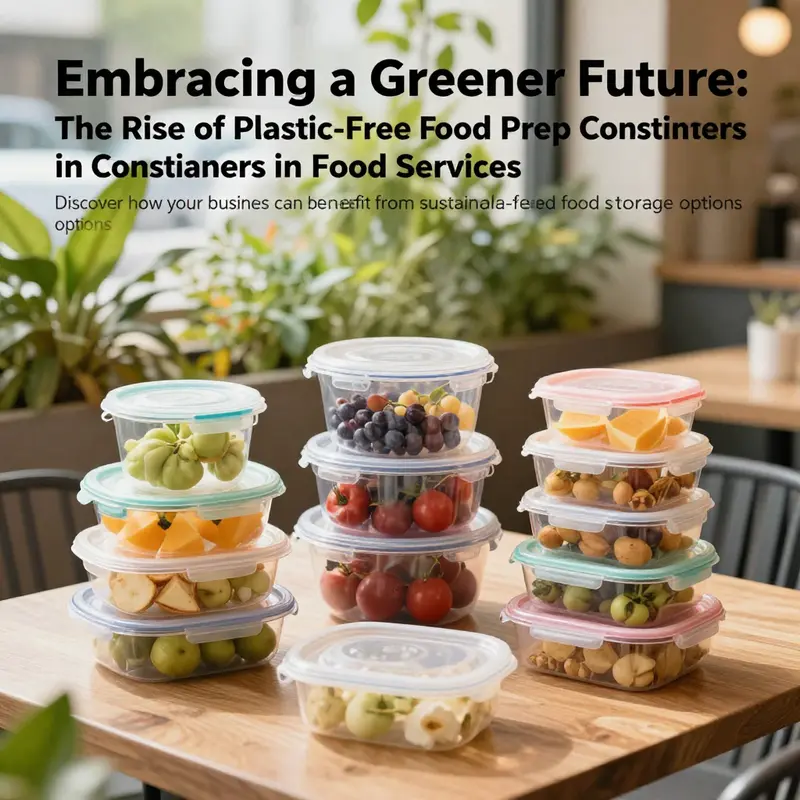
As the food service industry takes strides towards sustainability, plastic-free food prep containers emerge as a superior choice for businesses committed to health and environmental stewardship. Utilizing materials such as glass, stainless steel, bamboo, and silicone, these containers offer not only safety and durability but also promote long-term cost savings by minimizing dependence on single-use plastics. This article explores the various materials and benefits of plastic-free food prep containers, their environmental impact, health considerations, and the trends shaping consumer preferences in this evolving market. Each chapter highlights crucial aspects that can aid beverage chains, restaurants, food trucks, and catering services in making informed choices that align with their operational values and customer expectations.
Choosing Safe, Durable, and Truly Plastic-Free Containers for Food Prep
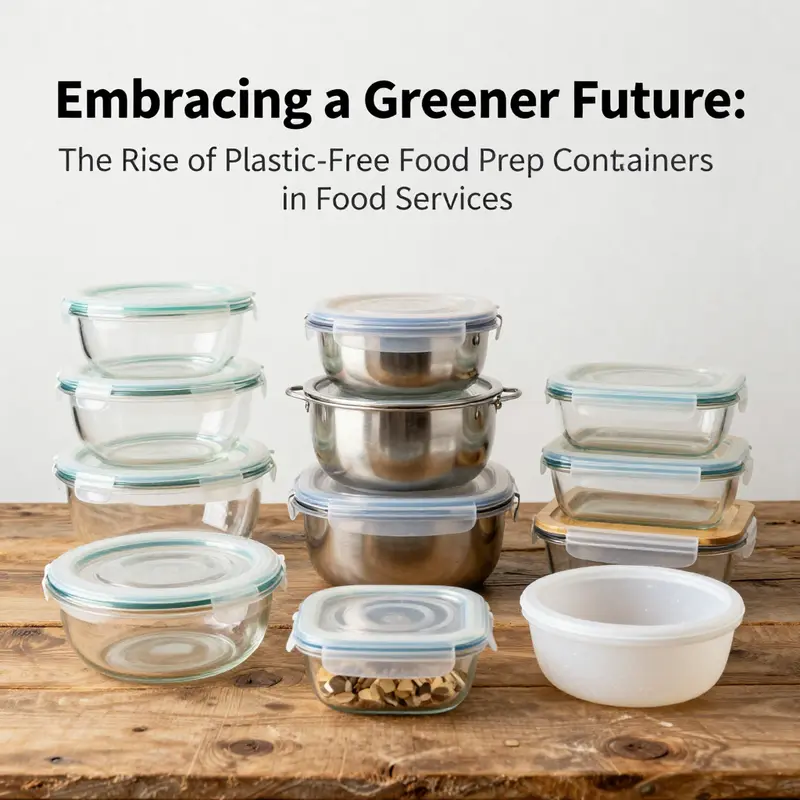
A careful look at materials, performance, and real-world benefits
Choosing truly plastic-free food prep containers means aligning daily habits with long-term health and planetary goals. The right container does more than hold food. It resists stains and odors, tolerates temperature changes, seals reliably, and stays safe over years of use. When evaluating options, focus first on material chemistry, then on practical performance, and finally on end-of-life impact.
Glass, stainless steel, silicone, ceramic, and natural wood or bamboo cover the main choices. Each material brings a unique balance of properties. Borosilicate glass, for example, is prized for its thermal stability. It tolerates rapid temperature changes with less risk of cracking than ordinary glass. This makes it suitable for moving food from freezer to oven or from refrigerator to microwave. Glass is inert, so it will not absorb flavors or leach chemicals into food. That inertia also makes it easy to sanitize, and it resists staining from tomato sauces and turmeric.
Stainless steel, especially food-grade 304 and 316 alloys, offers a different set of strengths. It is mechanically robust and resists dents and impacts that would crack glass. Stainless steel is lightweight relative to other metals, and it keeps contents insulated when paired with layered lids or double-wall construction. For packed lunches or outdoor use, steel containers frequently outperform alternatives. Because the metal does not undergo chemical breakdown at typical food temperatures, there is no risk of endocrine-disrupting chemical migration. Steel also ages well; a quality container can remain serviceable for decades.
Platinum-cured silicone occupies a middle ground between rigid and metal materials. Its flexibility allows collapsible designs and airtight seals achieved through gasket-like lips. Unlike untreated silicone, platinum-cured grades are processed with a catalyst that yields greater stability. This material tolerates freezing and moderate heating, yet it remains pliable. Good silicone will not absorb oil-based odors as some low-grade plastics do. Still, silicone performance varies by grade, so choose platinum-cured types and confirm food-safety certification when possible.
Ceramic and enamel-coated vessels contribute both function and presentation. Natural ceramic is inert and visually appealing. It performs well for storage and oven-to-table serving. Glazes, however, must be food-safe. Some low-quality glazes can contain heavy metals. When selecting ceramic containers, prefer reputable sources and look for clear declarations of food-safe glazes.
Natural materials like bamboo and untreated wood bring warmth and biodegradability. They work well for dry foods and as serving containers, but they are less suitable for long-term wet storage. Bamboo lids or outer shells paired with glass or steel interiors combine aesthetics with practicality.
Beyond the base material, lids and seals determine daily usability. Airtight closures help prevent leaks and preserve freshness. Look for lids that avoid plastic contact with food. Metal lids with silicone or cork gaskets can seal effectively. Glass containers with silicone ring seals are common; just verify the silicone is food-grade and removable for cleaning. A well-designed lid reduces the need for cling film or disposable wraps, which supports a truly plastic-free routine.
Thermal resilience matters for people who heat or freeze prepared meals. Glass and ceramic excel in high-heat scenarios. Most borosilicate glass is oven- and microwave-safe, though lids may not be. Stainless steel, while excellent for hot foods, should not go into microwaves. Silicone covers and seals handle temperature swings well, making them useful for freezer-to-counter transitions. For those who plan to reheat food directly in the container, always confirm the entire assembly’s temperature tolerances.
Durability reduces waste. A container that lasts ten years generates far less impact than single-use alternatives. Glass resists scratching in a way that maintains its inert surface. Steel withstands drops and rough handling. Silicone resists tears and remains flexible when high quality. Durability also reduces the temptation to buy replacements that might contain hidden plastics or lower-quality components.
Health advantages are central to the case for plastic-free containers. Plastics can contain additives that migrate into food, particularly under heat or with acidic contents. Some alternatives marketed as “BPA-free” still employ substitute chemicals with uncertain safety profiles. By removing plastic from the food-contact equation, consumers remove a vector for potential endocrine-disrupting exposures. Glass and stainless steel do not contain plastic additives. Ceramic and properly cured silicone do not leach synthetic plasticizers. Natural wood and bamboo, when untreated and responsibly sourced, avoid synthetic chemicals altogether.
Odor and stain resistance improves food enjoyment and hygiene. Glass and glazed ceramic maintain neutral surfaces that do not trap odors. Stainless steel sheds odors and cleans easily. Silicone, if high quality, avoids long-term odor retention better than many plastics. In practice, choosing non-porous or properly glazed materials minimizes cross-contamination risks between strongly flavored meals.
Sustainability extends beyond being plastic-free. Consider the full lifecycle of the container: raw material extraction, manufacturing impacts, transportation, and recyclability. Glass is infinitely recyclable without quality loss. Stainless steel also recycles well and often contains recycled content. Silicone is less commonly recycled, but its long life can offset disposal concerns. Bamboo and untreated wood are renewable when harvested responsibly. When possible, choose containers manufactured with transparency about sourcing and energy use.
Practical maintenance determines whether a container remains in daily rotation. Dishwasher-safe materials simplify life. Many borosilicate glass containers tolerate dishwashers and high heat. Stainless steel often resists dishwash cycles but may require air drying to prevent water spots. Silicone is dishwasher-safe and resists residual stains when cleaned promptly. Ceramic requires attention to avoid thermal shock and preserve glazes. Removable gaskets and straightforward lid designs make deep cleaning possible. Plain lids with minimal crevices reduce mold or food buildup.
The right container depends on routine. For meal prep involving reheating and freezer storage, borosilicate glass often offers the best all-around performance. For travel and rugged use, stainless steel is usually superior. For collapsible storage or flexible lids, platinum-cured silicone fits niche needs. For aesthetics and table presentation, ceramic and bamboo deliver unmatched appeal. Many households benefit from a mixed-material approach. Combining a glass interior with a wooden lid keeps food safe while offering a stylish serving solution.
Cost is a short-term barrier for some households. Plastic alternatives may cost more up front. Yet, the total cost of ownership favors durable, plastic-free containers over time. A single high-quality glass set can replace dozens of disposable containers. The environmental savings from reduced plastic waste also represents indirect cost avoidance. Consider prioritizing investments by frequency of use. Start with several versatile containers you will use every day.
When choosing containers, examine certifications and material disclosures. Food-contact certifications, heat-tolerance ratings, and clear statements on coatings or glazes give confidence. Avoid vague marketing claims. If a product mixes materials, ensure the food-contact surface is plastic-free. Lids that incorporate minimal silicone or cork are an acceptable compromise when the food surface remains glass or metal.
Single-use plastic alternatives deserve a place in the conversation. For occasions when disposability is unavoidable, prefer compostable paper bowls or fiber-based packaging. These options reduce plastic leakage into landfills and oceans. If you need disposable bowls for large events, consider compostable kraft paper bowls with lids. They offer a plastic-free one-time solution while minimizing environmental impact. A ready example is the disposable kraft paper bowl with lid available from sustainable packaging suppliers.
Adapting a plastic-free kitchen requires small behavior changes. Rinse containers promptly after use to avoid stubborn stains. Store lids separately if seals retain moisture. Keep a few containers dedicated to certain foods; this avoids cross-flavor issues. For on-the-go meals, pair insulated steel containers with a compact set of utensils to reduce disposable cutlery use. Over time, these small shifts create a consistent, low-waste routine.
For households with children or seniors, safety matters. Stainless steel offers shatter resistance for young children. Glass remains safe but can break, so choose thicker-walled borosilicate types and consider silicone sleeves for extra protection. For older adults who require lighter weight, favor steel or silicone that reduces the risk of dropped items.
Finally, think long term about disposal. Reuse extends product life. When a container reaches end of life, recycle it where programs exist. Glass and steel are widely recyclable. Many localities accept them at curbside or through drop-off centers. For compostable paper bowls, verify local composting facilities accept them, especially if they include a liner.
Switching to truly plastic-free food prep containers has clear advantages. Material choices influence safety, durability, convenience, and environmental impact. By prioritizing inert food-contact surfaces, reliable seals, and long service life, you gain better food quality and reduce chemical exposure. Thoughtful purchasing and simple maintenance make plastic-free containers practical for daily life.
Learn more about the durability and safety of non-plastic meal prep options from Wellness Hub: https://www.wellnesshub.com/plastic-free-meal-prep-containers
For a convenient plastic-free disposable option when needed, see the disposable kraft paper bowl with lid: https://greendispopack.com/product/disposable-kraft-paper-bowl-for-food-package-with-lid/
How Plastic-Free Food Prep Containers Reduce Pollution and Restore Resource Balance
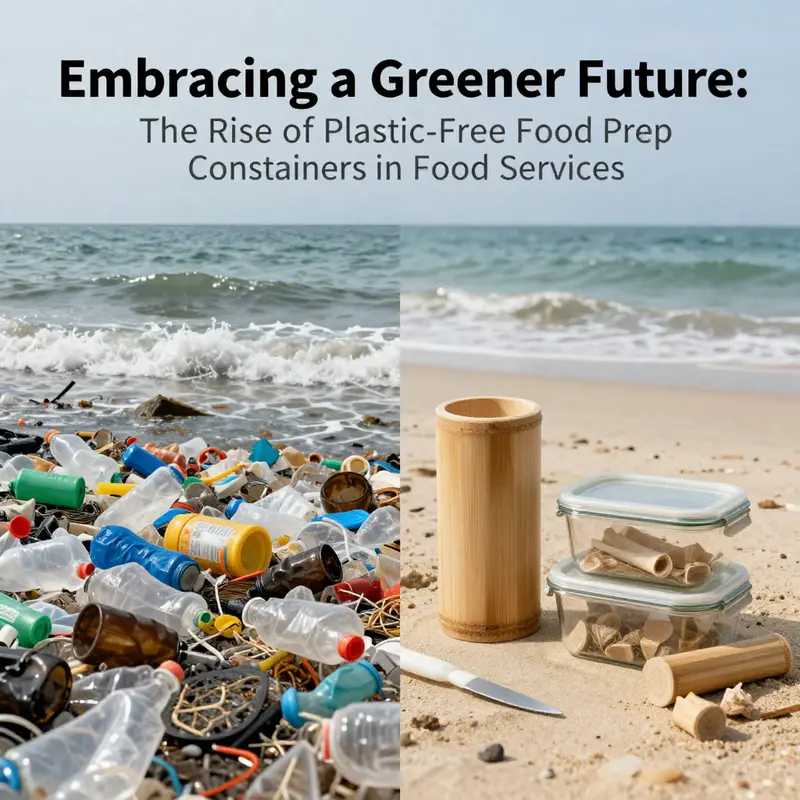
How a simple swap scales beyond kitchens. Choosing plastic-free food prep containers shifts far more than what sits in your pantry. That single decision intersects with resource extraction, manufacturing emissions, waste streams, human health, and the long-term resilience of ecosystems. The environmental differences between disposable or conventional plastic containers and durable, non-plastic alternatives are not trivial. They are measurable in greenhouse gases, in the volume of persistent waste, and in the unseen spread of microplastics through water, soil, and food chains.
Making the switch reduces direct inputs of fossil fuels. Most conventional food containers are made from petrochemical-derived plastics. Extracting, refining, and polymerizing those hydrocarbons consumes energy and emits greenhouse gases at every step. In contrast, alternatives such as glass, stainless steel, and sustainably sourced bamboo are produced from abundant or renewable feedstocks. Their production still requires energy, yet their long usable life spreads that initial environmental cost over many years of service. A container used daily for five or ten years divides its manufacturing footprint across thousands of uses. This simple arithmetic forms the backbone of why reusable, non-plastic containers outperform single-use plastics on lifecycle metrics.
Durability is central to environmental impact. Glass resists chemical change, does not absorb odors, and can be cleaned and reused indefinitely without degrading in quality. Stainless steel offers high strength, excellent thermal performance, and a long lifespan even under rough handling. Bamboo and other natural woods provide lower embodied energy in production when harvested and processed responsibly, and they return to natural cycles more cleanly at end of life. These materials avoid common failure modes seen in plastic: brittle cracking, staining, and permeation by oil-soluble compounds. Because they remain functional longer, they reduce the frequency of replacement and the throughput of materials into waste systems.
End-of-life outcomes diverge sharply between materials. Most plastics—especially the thin and rigid varieties used for disposable containers—are rarely recycled into equivalent products. Globally, only a small fraction of plastic has ever been recycled into items that match the original performance. Much of the rest is landfilled, incinerated, or leaked into the natural environment. Over time, plastic fragments into microplastics. These particles persist for centuries and travel through waterways, settle in sediment, and enter food webs. Microplastics have been detected in marine life, soil, drinking water, and even human tissue. By contrast, glass is highly recyclable without loss of quality. Stainless steel is also recyclable and retains value in scrap markets. Bamboo, when not coated with non-compostable finishes, can be composted or biodegrade more rapidly than fossil-derived plastics. Choosing materials that either return to industrial cycles or to the biosphere reduces the long-term burden of persistent waste.
Microplastic pollution is an environmental and health externality that often goes unpriced. Conventional plastics fragment but do not disappear. They act as vectors for chemical additives and absorbed pollutants. This contamination affects filter feeders, plankton, fish, and ultimately larger predators. It alters nutrient cycles in soils and in marine systems. Reusable, non-plastic containers eliminate a direct source of secondary microplastics from everyday food storage and preparation. They also reduce the demand for new single-use items, which in turn shrinks the flow of fresh pollutants into natural systems.
A lifecycle view reveals nuances worth noting. Producing glass can be energy-intensive because of high-temperature melting. Stainless steel requires mining and smelting of iron and nickel. Bamboo cultivation may involve land use and transport footprints. These necessary impacts do not negate the clear long-term advantages of durable containers. Instead, they point to two practical strategies that maximize environmental benefit: extend the useful life of items, and prioritize local recycling or reuse infrastructure. A glass jar that lasts decades, and is recycled repeatedly, achieves far lower environmental impact per use than a plastic container used a handful of times. Similarly, a stainless steel lunchbox that replaces thousands of disposable meals cuts cumulative emissions and waste dramatically.
Human health links strengthen the environmental case. Plastics can leach additives into food under heat or acidic conditions. Even when products are labeled to reduce specific chemicals, the structural nature of plastics allows interaction with food. Glass and stainless steel are chemically inert and do not shed microplastics during use. Natural materials like bamboo, when treated responsibly, provide a barrier-free alternative for dry and cooled foods. Reducing chemical transfer reduces exposure risks for households, and that health benefit compounds across populations.
Behavioral and systemic effects multiply the environmental wins of switching. When individuals adopt durable, non-plastic containers, their purchasing habits shift. Fewer single-use items are bought. Households may prepare more meals at home and choose bulk buying, which reduces packaging per meal. Community norms can change: workplaces and schools accommodate reusable containers, and food services may adopt deposit-return or refill models. These aggregate behavior changes feed back into production choices. Manufacturers respond to demand by scaling sustainable materials, which lowers unit costs and expands availability. This positive feedback loop demonstrates how household choices cascade into supply-chain shifts.
Economic fairness matters in sustainability too. While high-quality glass and stainless steel containers can cost more up front, their per-use cost typically falls below that of repeated disposable alternatives. Over time, a single durable container pays back its embodied energy and monetary cost many times over. For low-income households, access to affordable reusable options matters. Community programs, bulk purchasing, and incentives can help widen access. That broader adoption multiplies environmental impact more than isolated, high-cost purchases.
Infrastructure and policy further shape outcomes. Without effective recycling systems, the theoretical recyclability of a material cannot be realized. Glass can be infinitely recycled, but if it is contaminated or mixed with color fractions, reuse rates fall. Stainless steel depends on scrap markets and collection logistics. Compostable bamboo products require industrial composting to break down efficiently in some cases. Policy can bridge these gaps. Support for curbside collection, investment in recycling and composting facilities, and standards for compostability and labeling all strengthen the environmental returns from making plastic-free choices.
Complementary alternatives deserve mention. Not every food-use case requires a heavy glass jar or metal box. For on-the-go drinks or single-serve meals, responsibly produced paper-based or pulp products can reduce reliance on plastic. These items perform best when sourced from recycled fibers or certified sustainable forests, and when designed for industrial composting or straightforward paper recycling. They are not a replacement for reusables in the long run, but they fill a gap where reuse is impractical. For example, eco-friendly pulp cup carriers and molded pulp bowls can serve short-term needs without contributing to persistent plastic waste. Using these responsibly reduces single-use plastic leakage into the environment and aligns packaging with natural end-of-life processes. (See an example of an eco-friendly recyclable pulp cup holder for context: eco-friendly recyclable pulp cup holder.)
To capture the largest environmental gains, users should consider three simple principles. First, choose a material whose lifetime and disposal route match the intended use. Glass or stainless steel suits long-term storage and reheating. Bamboo works for dry goods and short-term transport when untreated. Second, care for containers to prolong life. Gentle cleaning, appropriate temperature use, and using protective sleeves or padding for glass reduce breakage. Third, when items do reach end of life, route them to the correct stream. Clean glass to recycling, return stainless steel to metal recyclers, and compost untreated plant-based items where facilities exist.
The aggregate picture is clear. Replacing single-use and short-lived plastic food prep containers with durable, non-plastic alternatives cuts the flow of persistent waste into the environment. It lowers cumulative greenhouse gas emissions over the lifetime of containers. It reduces human exposure to chemical migration and microplastics. And it nudges consumption patterns toward reuse and repair, rather than discard and replace. Each container that leaves landfills or oceans because it was never produced, because a reusable item took its place, reduces environmental stress in measurable ways.
As research and lifecycle assessments make clear, the best outcomes come when individual choices combine with system-level supports. Consumers choosing durable, non-plastic containers play a vital part. Policy, infrastructure, and market responses amplify that choice. The result is not only cleaner kitchens, but healthier ecosystems, stronger local recycling markets, and fewer persistent pollutants cycling through the planet.
For deeper technical analysis and lifecycle comparisons between plastic food containers and reusable alternatives, consult the comprehensive assessment by the Environmental Protection Agency: https://www.epa.gov/sustainable-management-plastics/lifecycle-assessment-plastic-food-containers
Choosing Health in a Plastic-Free Kitchen: How Glass, Stainless Steel, and Natural Materials Shield Your Meals
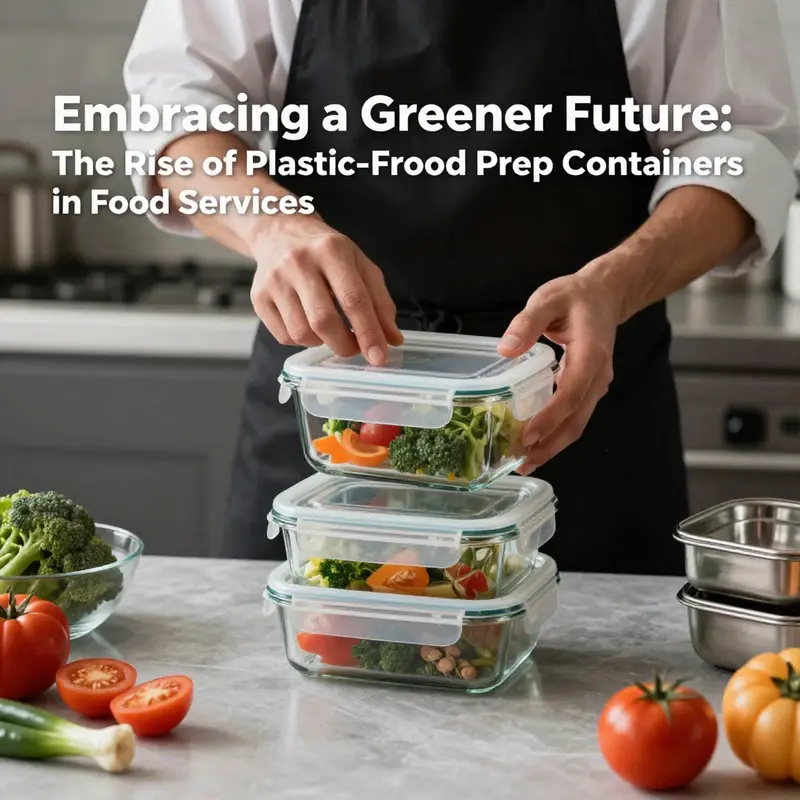
Choosing health in a plastic-free kitchen means more than swapping materials; it demands a clear understanding of how different containers interact with our meals, especially under everyday conditions like heating, cooling, and repeated use. When people shift away from conventional plastics, they often encounter a spectrum of options, each with its own health and practical trade-offs. The core health question remains the same across materials: what, if anything, could migrate from the container into food, and under what circumstances does that risk rise or fall? Plastics commonly contain additives such as bisphenol A (BPA), phthalates, and other endocrine-disrupting chemicals that can migrate into foods. Heat, acidity of ingredients, and wear from washing can accelerate this migration. The concern becomes acute during microwave reheating or when containers are repeatedly used and gradually degrade. This is not merely a theoretical worry. A substantial body of research has shown that even products marketed as “BPA-free” may release estrogenic compounds when stressed by heat or dishwashing. Such findings underscore why plastic-free advocates emphasize material choice as a primary health shield rather than trusting labels alone.
In contrast, glass stands out for its chemical inertness. Borosilicate glass, in particular, resists reaction with foods, does not absorb odors, and remains stable under a wide range of temperatures. That inertness translates into fewer concerns about leaching, even after months of use and after repeated cycles in the dishwasher or oven. Because glass preserves the integrity of flavors and aroma, it helps ensure that the food you prepare and reheat tastes the way it should, without the off-notes that can accompany scratched or degraded surfaces. And while plastic can accumulate micro-abrasions that harbor bacteria, glass resists such micro-damage and is easier to sanitize thoroughly. This is not merely about avoiding a chemical issue. It is about preserving the sensory quality of meals, so that healthy choices remain appealing rather than inconvenient.
Beyond glass, stainless steel offers a distinctive blend of durability and performance. Steel containers are notably resistant to impact, keep meals insulated for longer periods, and are convenient for transport in daily life. Yet metal has its own constraints. Metal containers cannot be microwaved, and care must be taken to choose lids and seals that do not introduce plastic components if the goal is a truly plastic-free system. For anyone who needs a portable lunch or a robust, everyday use option, stainless steel serves as a reliable workhorse—strong, non-reactive with most foods, and easy to clean. The trade-off, of course, is that these containers are not microwave-friendly, and their heat retention characteristics differ from glass. Pairing stainless steel with a glass or metal lid that is itself free of plastics helps maintain the health advantages while accommodating a busy, on-the-go lifestyle.
Natural materials, such as bamboo, offer another pathway toward plastic-free storage. Bamboo is renewable and visually appealing, and it often pairs with silicone or wood lids. However, bamboo can be porous and more challenging to sanitize completely, which makes it less ideal for storing highly fatty or acidic foods over long periods. Its pore structure can harbor flavors and moisture if not properly seasoned and maintained, potentially leading to odor transfer or surface wear that encourages microbial growth. When bamboo is used, it is crucial to ensure that any lids or seals are also free from plastics and that the overall system is designed for effective cleaning and quick drying. Natural fiber options expand the range of plastic-free choices, but they require conscientious care to preserve both health and longevity.
In practice, the most health-conscious plastic-free configurations emphasize a combination: glass or stainless steel storage bodies with lids that are themselves free from plastic components. In the realm of glass, 100 percent borosilicate variants are most commonly recommended for their resilience to thermal stress and chemical stability. Without plastic lids, or with lids made from inert materials such as tempered glass or stainless steel, you minimize potential adsorption of residues and the risk of micro-structural degradation over time. This is particularly important when reheating or freezing foods, where temperature fluctuations can stress materials differently. A truly plastic-free system also avoids dyes, additives, or coatings that could complicate sanitation or introduce unknowns into your meals. In such a framework, health considerations become a matter not of single-choice absolutes but of designing a storage and reheating ecosystem that minimizes migration pathways while maximizing durability and ease of cleaning.
The health conversation extends to the broader question of labeling and marketing. A notable lesson from the research literature is that “BPA-free” does not guarantee complete safety under all conditions. A 2023 study published in Environmental Science & Technology demonstrated that a large majority of products labeled BPA-free released estrogenic compounds when subjected to microwave heating or dishwashing stress. This finding has profound implications for consumers who rely on labels to guide choices. It shifts the emphasis from focusing solely on plastic-free claims to evaluating the material science behind the product—how the container is constructed, what it is made of, and how it behaves under heat and wear. It also highlights the importance of selecting materials with well-established inert characteristics, such as borosilicate glass, and of avoiding components that can degrade and accumulate residues over time.
Reinforcing this stance, reputable health and science sources emphasize that long-term storage safety benefits from choosing materials that resist odor absorption, stain buildup, and micro-scratches. Glass, especially borosilicate glass, excels on these fronts. It remains inert to most acidic and alkaline ingredients, and it does not retain flavors or odors that could cross-contaminate future meals. Stainless steel offers a robust alternative for those who need lightweight, portable options, provided the system stays free of plastic and metal lids that might compromise the plastic-free goal. Such configurations also simplify cleaning: glass and steel can tolerate high-temperature dishwashing cycles, while avoiding the risk of chemical migration that can accompany degraded plastics. As the science suggests, durability and sanitation are not merely convenience features; they are central to reducing cumulative exposure to potentially harmful substances over years of repeated use.
A practical takeaway arises from recognizing that health considerations are not solely about one property—chemical inertness, heat resistance, or ease of cleaning. They are the intersection of all these attributes plus the ability to maintain safe usage across a typical household life cycle. For households preparing meals in advance, the weekly routine involves refrigeration, freezing, and frequent reheating. In such cycles, glass tends to preserve integrity, odor, and taste while reducing the likelihood of chemical transfer. Stainless steel supports the same goals with different advantages, especially for those who value lightness and impact resistance. Bamboo and other natural options provide appeal and sustainability, but they require careful management to maintain hygiene. The critical criterion remains the same: if a material has any potential to transfer chemicals into food under real-world conditions, it introduces a health risk that is avoidable by choosing safer alternatives.
To knit these insights into everyday practice, consider a few specific guidelines that align with the plastic-free objective while supporting health. First, whenever reheating, avoid metal lids or bands that might harbor metallic residues or interact with certain foods. If you use glass, venting lids or lids designed for microwave use should be free of plastic components. Second, prioritize containers with smooth, non-porous interiors that do not require abrasive scouring, as micro-scratches can accumulate bacteria and be sites of contamination. Third, select lidding solutions that are truly plastic-free or at least minimize plastic contact with food, and verify that any sealing materials do not degrade with repeated dishwashing. Fourth, for foods with strong acidity or fats, lean toward glass or stainless steel for storage, as these substances can sometimes accelerate material degradation in less inert surfaces. Fifth, maintain a regular cleaning routine that uses non-abrasive detergents and thorough drying; residual moisture can encourage microbial growth, particularly on porous surfaces.
All these considerations feed into a broader narrative about health and sustainability. By adopting plastic-free containers made from glass, stainless steel, or carefully managed natural materials, households can reduce exposure to unwanted chemicals and lower their environmental footprint. The cost and weight trade-offs are real but manageable with thoughtful choices and proper use. The weight of glass is a factor for portability and handling, yes, but the absence of plastic-related migration risks, combined with superior longevity and ease of sanitation, often offsets those drawbacks for households prioritizing health and long-term cost savings. The upshot is that plastic-free does not have to be a compromise in safety or convenience; it can be a pragmatic standard that supports healthy eating habits and a cleaner environment.
For readers exploring a broader spectrum of plastic-free options, there are related, non-plastic storage paths worth considering alongside glass and stainless steel. For instance, you may encounter eco-friendly, recyclable pulp take-away accessories designed to minimize plastic use in daily containers. These options illustrate how practical, everyday decisions—such as choosing a paper-based vessel for certain foods or settings—can complement glass and metal systems. To explore one such option in depth, you can refer to further discussions about eco-friendly pulp-based alternatives, which provides a sense of how broader packaging choices intersect with kitchen storage decisions. eco-friendly recyclable pulp take-away cup holder
The Health-perspective on plastic-free containers aligns with a growing body of scientific literature that emphasizes material safety over labels alone. A recent NIH-backed review underscores that chemical safety in food contact materials depends on both composition and usage context. It reminds readers to look beyond claims and consider the full lifecycle of the container—from the initial manufacture to the end of its useful life and the conditions under which it will be used. In practical terms, this translates to choosing glass or steel as primary container bodies, ensuring lids and seals are free of plastics or made from inert materials, and maintaining rigorous sanitation practices to support lifelong health. The ultimate goal is to create a kitchen environment where meals can be prepared and stored with confidence that health risks are minimized, while still supporting flexibility for meal planning, batch cooking, and on-the-go living.
External resources provide corroboration for these considerations. For a broader scientific perspective on plastic container safety, the NIH’s literature and reviews offer foundational context and contemporary updates. https://www.ncbi.nlm.nih.gov/pmc/articles/PMC6852483/
Tracing the Shift: Trends, Trade-offs, and the Promise of Plastic-Free Food Prep Containers
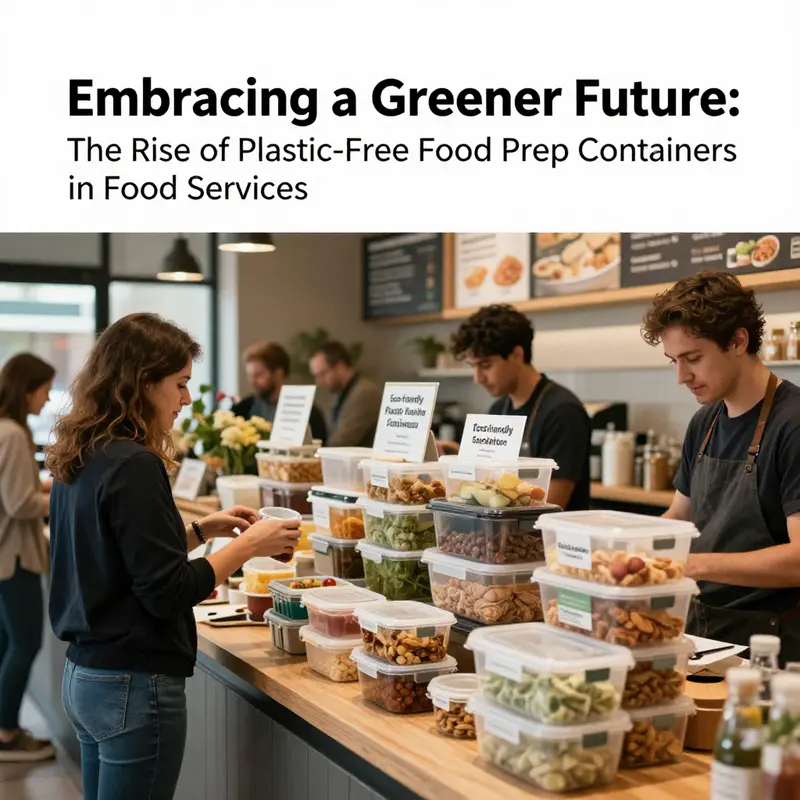
The global pivot from plastic to plastic-free food prep containers is not merely a stylistic preference; it reflects a confluence of health concerns, environmental accountability, and practical logistics that are reshaping how households plan, store, and transport meals. As of early 2026, the market for reusable meal prep solutions—especially those that eschew conventional plastics in favor of glass, stainless steel, bamboo, and plant-based alternatives—has begun to carve out a substantial space in a broader landscape still dominated by plastic, yet increasingly defined by durability, safety, and a growing appetite for circular consumption models. In 2025 this segment was valued at about USD 8.49 billion, and it is projected to expand at a robust CAGR of around 15.8% from 2026 to 2033. Those numbers signal more than a trend; they indicate a structural shift in consumer behavior and corporate strategy alike, one that places long-term health and planetary well-being at the center of meal preparation routines.
Behind this shift lies a shared concern about chemical leaching from plastic products. Many shoppers are actively ditching plastic containers for glass because of potential health risks linked to bisphenol A (BPA), phthalates, and other endocrine disruptors. The risk intensifies with heat exposure, acidic ingredients, or repeated use, which can facilitate the migration of substances into food. The public health imperative is clear: consumers want containers that minimize or eliminate chemical transfer, even when subjected to the daily stresses of reheating, freezing, and long-term storage. In parallel, there is a deepening desire for materials that are inert, easy to clean, and truly reusable, so that the environmental cost of every meal reduces over time rather than accumulating in landfills.
The materials race within the plastic-free category has produced a spectrum of durable, functional options. Glass containers, valued for their inertness and heat resistance, stand out as a benchmark for safety. They resist odor absorption and maintain the purity of flavors across cycles of use and cleaning. While their higher upfront cost and heavier weight pose practical considerations, many households perceive glass as the gold standard for long-term storage and temperature resilience. Stainless steel is celebrated for its ruggedness and portability. It handles routine handling with less concern about cracking or staining, and many designs incorporate microwave-safe features for practical lunchtime use. Bamboo and other natural fibers offer a renewable, aesthetically pleasing alternative that aligns with values around sustainability and responsible sourcing. Plant-based bioplastics present an intriguing middle path: materials derived from renewable feedstocks can deliver the convenience of plastics without relying on fossil resources. Yet, even these innovations face scrutiny regarding end-of-life options, durability under repeated cycles, and compatibility with high-temperature processes.
The market dynamics also reflect a clear regulatory push. Governments in Europe and North America are tightening rules around single-use plastics, nudging both manufacturers and consumers toward reusable and compostable solutions. The regulatory environment intersects with shifting consumer expectations: health-conscious individuals want containers that can handle microwaving and freezer storage without degrading or leaching, while environmentally minded shoppers demand transparency about sourcing, manufacturing, and end-of-life disposal. In parallel, the rise of e-commerce and direct-to-consumer channels has lowered barriers for access to high-quality, design-conscious plastic-free meal prep solutions. The once-siloed world of kitchenware now resembles a landscape where sustainability meets tech-enabled convenience, from better seal designs and stackability to modular systems that encourage users to plan meals for the week rather than rely on disposable options.
In practice, the plastic-free opportunity is not simply about substituting one material for another. It is increasingly about building holistic, circular packaging ecosystems that prioritize human health and planetary well-being. Brands are experimenting with transparent supply chains, clearly labeled materials, and return or refurbish programs that extend the life of containers beyond a single year. Even the way containers are designed is evolving: products are crafted with easy disassembly in mind, enabling separate recycling streams for glass, metal, and specialized bioplastics. The ambition is to reduce the overall environmental footprint by designing for durability, repairability, and eventual recycling rather than disposal.
Consumers who are drawn to plastic-free options often balance several criteria. They look for inert materials that do not impart flavors or odors, long-lasting construction that can withstand the daily rhythms of a busy household, and simple, hygienic cleaning routines. They want compatibility with common kitchen workflows—freezer storage, oven or microwave use, and dishwasher cleaning—without requiring special handling. They also value portability and leak resistance, since meal prep typically involves transporting portions to work, school, or activities. In many cases, households are building a repertoire of containers for different purposes: glass for home storage and reheating, stainless steel for on-the-go meals, bamboo or wood-accented designs for picnics and kids’ lunches, and bioplastic options for lighter, short-term needs. Each material brings its own benefits and caveats, and the best choices often involve a thoughtful blend across a user’s routine rather than a single universal solution.
The consumer conversations surrounding these choices have a practical spine. On one hand, glass offers an inert, hygienic profile and excellent heat tolerance, making it a natural fit for reheating and long-term storage in the fridge or freezer. On the other hand, glass is heavier and more prone to breakage, which matters for households with kids or for lunchbox use on the go. Stainless steel, meanwhile, yields superior durability and temperature management in portable formats but has intrinsic limitations for microwave use and, depending on construction, may require insulated or combined designs to optimize heat retention. Bamboo and other natural fibers provide a renewable aesthetic and often a lighter touch, yet they demand care in cleaning and may not perform equally across all heat or moisture conditions. Plant-based bioplastics appeal to the sustainability-minded, offering a lower fossil resource footprint, yet questions about compostability, the availability of industrial composting infrastructure, and performance under heat remain essential considerations for buyers.
For manufacturers, the plastic-free space is as much about credibility as it is about material science. Consumers expect materials to be clearly labeled, sourced responsibly, and tested for safety under conditions of everyday use. They also expect products to be designed with cleaning in mind: flat, wide-mouth containers can be scrubbed easily; smooth interiors resist food entrapment; and seals and lids must maintain performance after repeated cycles. The design challenge, then, is to combine ease of use with longevity, minimizing the need for frequent replacements while delivering a reliable user experience. The sophistication of lid mechanisms, sealants, and closures has advanced rapidly, reducing the risk of leaks and fostering confidence in carry-and-store routines. In turn, this drives repeat purchases and the adoption of a larger, more diverse set of containers within households.
An often-underappreciated aspect of this transition is its potential to redefine what “plastic-free” means in the kitchen. Early investors tended to equate plastic-free with no plastic at all, a standard that can be impractical in some use cases. Today, many planners emphasize plastic-free in the sense of avoiding outsourceable plastics for food contact and prioritizing materials that are either non-plastic or clearly recyclable and thermally stable. This nuanced understanding helps balance the need for reliability with the aspirational goal of eliminating single-use plastics from daily life. It also invites a broader conversation about accessibility and affordability: plastic-free options must be reasonably priced and readily available to avoid creating a gap between environmentally conscious shoppers and the rest of the population.
From a business perspective, the shift toward plastic-free containers aligns with a broader movement toward circular economy principles. Market research points to strategies that emphasize durable goods, transparent sourcing, and end-of-life stewardship. Companies that provide reusable systems—where customers rotate, return, or refurbish containers—can reduce waste and foster long-term relationships with customers. The eco-conscious consumer today is increasingly prepared to invest in well-made containers that promise many cycles of use and straightforward maintenance. This attitude supports not only environmental goals but also brand trust, enabling firms to differentiate themselves in a crowded market where the supply of plastic-free options continues to grow.
In translating these market dynamics into everyday choices, shoppers often look for practical guidance on what constitutes a true plastic-free option. The best plastic-free containers should ideally be free of any plastic components, safe for freezer, microwave, and oven use as applicable, easy to clean, and built to last. Materials such as glass and stainless steel meet many of these criteria, while bamboo and plant-based alternatives offer compelling sustainability credentials when paired with responsible production practices. The evolving landscape is still negotiating trade-offs among weight, cost, durability, heat tolerance, and end-of-life options, but the trajectory is unmistakable: a move toward products designed for durability, repairability, and multiple uses rather than disposability.
For readers seeking concrete examples of plastic-free options in broader kitchenware ecosystems, a practical point of reference emerges from the realm of take-away and meal-prep ware. Eco-conscious packaging suppliers and retailers alike showcase a range of kraft paper bowls and similar paper-based products that boast biodegradable and recyclable credentials. One illustrative example is a biodegradable, eco-friendly round kraft paper bowl, which demonstrates how a seemingly simple packaging item can embody several of the core principles at play in plastic-free planning: materials drawn from renewable sources, design for easy disposal or recycling, and versatility for light or short-term food service contexts. This kind of product signals how the supply chain is evolving to meet consumer demand for plastic-free disposables that still offer functional performance in the right contexts. For readers exploring this space, an accessible route to explore such options is through supplier pages that highlight these attributes and usability features, such as the linked offering here: biodegradable eco-friendly kraft paper bowl.
As the market continues to mature, the focus will likely shift from simple substitution to the creation of integrated, circular packaging ecosystems. That means not only choosing a single material but designing a system of containers, lids, seals, and return or refill mechanisms that work together to minimize waste and maximize reuse. It also means investing in consumer education—clear guidance on safe reheating practices, cleaning protocols, and the environmental implications of different materials. The most successful plastic-free narratives will be those that marry practical convenience with genuine environmental stewardship, offering households a clear path to cleaner kitchens without sacrificing the everyday ease that modern life demands.
Looking ahead, researchers and policymakers will likely push for standards that help consumers distinguish truly plastic-free products from those that merely market themselves as BPA-free or “plastic-free” in name but still rely on plastics in other parts of the packaging system. Transparent labeling, robust testing, and certification schemes could become the norm, enabling shoppers to compare options with confidence. The combination of better materials, smarter design, and stronger governance holds the promise of accelerating adoption across households, cafés, and institutions alike, turning plastic-free containers from a niche convenience into the standard expectation for responsible meal prep and storage. In this evolving ecosystem, the journey toward plastic-free living is less about a single product and more about a durable, reliable practice that integrates health, sustainability, and everyday practicality into a coherent, long-term strategy. The next chapters will delve into how households can implement these principles, choosing among materials and designs that best fit their routines while navigating cost considerations, availability, and the realities of modern dining and food storage.
External Resource: For a comprehensive overview of market trends and projections in reusable meal prep containers, see the external industry analysis: https://www.marketresearchfuture.com/reports/reusable-meal-prep-containers-market
Final thoughts
In summary, transitioning to plastic-free food prep containers represents an essential step for food service businesses aiming to enhance their environmental responsibility while catering to the growing health-conscious consumer base. By embracing materials that are not only safe but also sustainable, companies can effectively reduce their carbon footprint and appeal to consumers who prioritize eco-friendly practices. Now is the opportune moment for beverage shops, restaurants, and catering services to join the movement towards a greener future, ensuring that their operations align with contemporary values and aspirations for sustainability.