
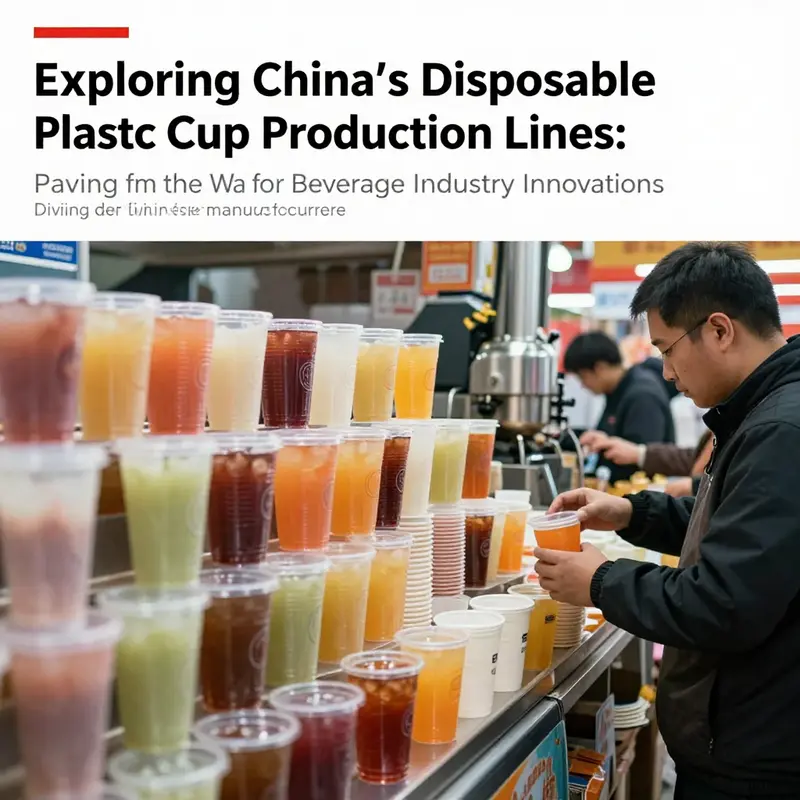
In a world increasingly leaning towards convenience, the demand for disposable plastic cups has become paramount, especially within food service environments like bubble tea shops, restaurants, and corporate events. Chinese manufacturers are pivotal in this landscape, particularly through their advanced production lines tailored for disposable plastic cups and plates. This article delves into the manufacturing capabilities of these lines and their economic impact, alongside cutting-edge technological innovations. Moreover, we will address the geopolitical factors influencing the market and evaluate societal perspectives regarding environmental ramifications. Together, these chapters will offer a comprehensive view of how China’s production lines can benefit a range of businesses from catering services to event planners, ensuring sustainable practices while meeting the soaring demand.
From Resin to Branding: The Integrated Cup-Line in China
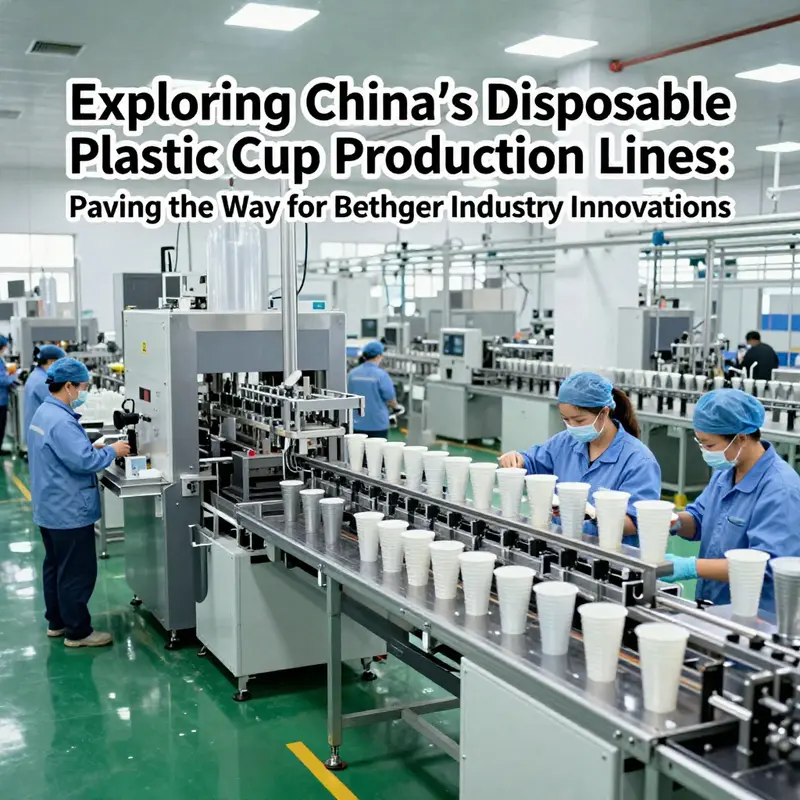
In modern Chinese disposable cup manufacturing, an integrated line turns resin into finished cups with minimal handoffs. The plant design often consolidates mold design, toolmaking, injection molding, surface decoration, and packaging on a single site. This vertical integration tightens quality control, reduces transit times, and enables rapid changeovers for standard SKUs and branded variants. A design-to-production loop ensures that cup geometry, wall thickness, and downstream fit with lids, sleeves, and branding layers are optimized together rather than in isolation. In-mold labeling and decorating are common features that embed graphics directly into the surface, improving durability and avoiding label delamination.
Line hardware emphasizes automation: robotic part handling, precision injection molding, trimming, surface finishing, and inline inspection. With sensors and cameras checking tolerances in real time, a facility can sustain uniform quality across thousands of cycles. The economics favor modular architectures: scalable numbers of injection units and add-on decoration modules allow a plant to grow with demand without expensive retooling. Managers prioritize energy efficiency, waste reduction, and closed-loop cooling and purification to align with environmental and regulatory expectations.
For buyers, this integrated approach reduces risk and accelerates time-to-market. A single supplier can provide the cup family from resin selection to final branding, simplifying contracts and after-sales service. It also helps ensure consistency in weight, translucence for clear cups, and branding fidelity across large campaigns. In a global context, these capabilities support export-readiness, supply resilience, and the ability to respond quickly to seasonality in foodservice and takeout trends.
From Clusters to Global Shelves: The Economic Engine of China’s Disposable Plastic Cup Production Lines
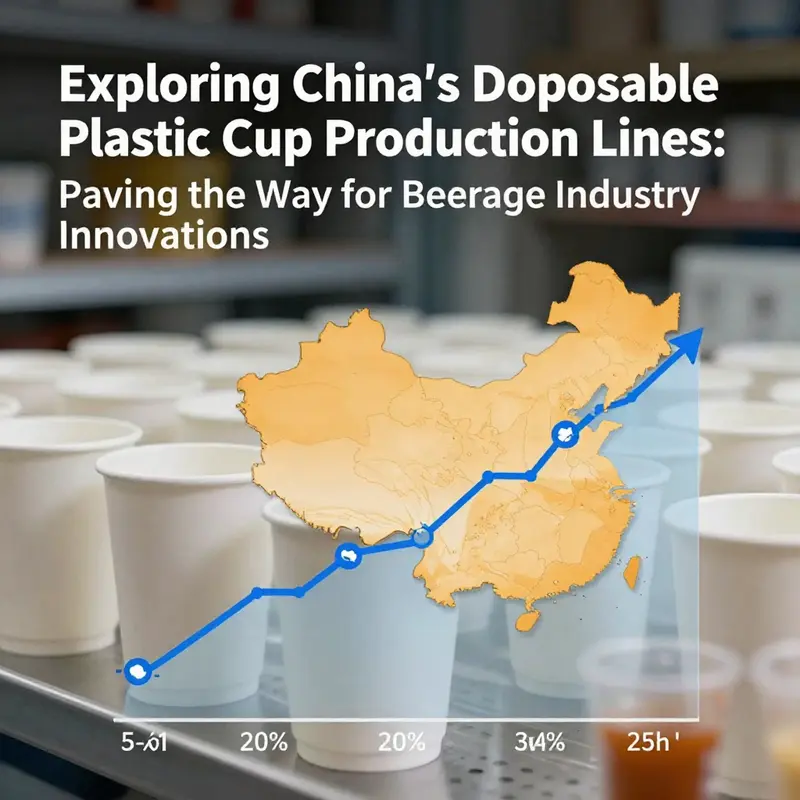
A quiet revolution runs through a set of industrial clusters in southern and central China, where plastic resin becomes the ubiquitous disposable cup that fills vending machines, takeout bags, and event kits around the world. The economic impact of disposable plastic cup production lines in this country is built on more than the sum of individual machines; it rests on an integrated system that combines location advantage, scale, automation, and a constantly evolving supply network. The result is a formidable engine that drives domestic employment, shapes global supply chains, and subtly nudges consumer behavior toward convenience. Across the Guangdong, Zhejiang, Fujian, Hubei, and Dongguan corridors, factories operate as nerves of a larger organism that coordinates raw materials, equipment, and downstream packaging services into a seamless flow. The raw materials essential to these lines—primarily polymers such as polypropylene—are not dispersed resources but part of a regional supply rhythm. Proximity to material suppliers lowers procurement risk and improves on-time delivery, allowing producers to run longer continuous shifts with fewer interruptions. The same geographic concentration that feeds raw materials also places manufacturers near major export gateways, including Shenzhen and Guangzhou. This proximity translates into shorter logistics chains, lower freight costs, and faster response times for international buyers seeking quick replenishment of disposable tableware. The geographic logic is complemented by a labor market steeped in precision manufacturing. Skilled workers who understand the nuances of injection molding, mold maintenance, and quality control methods converge in these clusters, lending a level of consistency that supports global customers who expect reliable performance batch after batch. The result is not merely a single machine in a factory hall; it is a well-orchestrated ecosystem capable of delivering high-volume output with predictable quality. When these conditions align, economies of scale become a decisive determinant of price, service, and the speed at which a product can move from design to shelf. A typical production line for clear disposable cups, for example, may carry a price tag around sixty thousand dollars per set, reflecting the investment in automation, process control, and the ability to run 24/7 with minimal manual intervention. Such economics empower manufacturers to offer competitive pricing while maintaining margins, a dynamic that reinforces China’s lead in this sector on the global stage. Yet price alone does not capture the full economic resonance. Automation is the hidden driver that reshapes employment, productivity, and the nature of work in these factories. Modern lines are built around injection molding systems and automated material handling that reduce the need for manual labor while increasing throughput and consistency. Clean-room practices, where necessary, minimize contamination risks in high-volume runs and strengthen the appeal of these lines to customers who insist on strict cleanliness standards for food-contact packaging. The investment in automation is not merely about cutting labor costs; it is about enabling more complex production sequences, such as cup shapes, wall thicknesses, and surface finishes that meet varied branding requirements. As a consequence, more sophisticated customers—often from overseas markets with exacting specifications—are drawn to these production clusters, confident that the manufacturers can scale and adapt quickly to evolving demands. In parallel, digital transformation interlaces production with procurement and export channels. Platforms that facilitate B2B transactions are increasingly instrumental in shaping how equipment buyers source production lines, plan capacity, and compare total cost of ownership. These digital networks flatten information asymmetries, enabling buyers to forecast delivery schedules, access spare parts quickly, and coordinate after-sales service across borders. This digital layer does not simply support a single transaction; it amplifies the entire production line value proposition by reducing lead times, improving reliability, and creating an auditable trace of quality and compliance. Within this digital ecosystem, a growing number of buyers also explore components and ancillary services that complement the core line. Mold design firms, finishing specialists, and packaging converters become part of a broader supplier network that adds value without requiring the buyer to manage dozens of discrete vendors. When viewed through this broader lens, the economic impact extends beyond the factory floor. The ability to deliver a complete packaging solution—cups, lids, prints, and compatible packaging—through a coordinated supply chain translates into shorter time-to-market for end users and more consistent product performance across markets. The spillover effects reach ancillary industries that touch the production cycle in meaningful ways. Molds and toolmaking facilities experience higher demand as new cup geometries and branding patterns emerge. Printing houses expand capabilities to accommodate decorative patterns and logos on a large scale, while packaging companies enhance their lines to coordinate the entire consumer experience from cup to wrapper to takeaway bag. The interconnections between these activities create a service ecosystem that strengthens the region’s attractiveness to both domestic and international investors seeking reliable, end-to-end packaging solutions. The digital transformation reshapes not only the buyer’s journey but also the way manufacturers conceive product lines and capacity expansion. Investment patterns reveal a push toward more flexible lines capable of switching quickly between cup sizes and styles, a response to fluctuating demand driven by seasons, promotions, and global events. This flexibility is often achieved through modular equipment, real-time data monitoring, and predictive maintenance that minimizes downtime. The market responds by favoring suppliers that offer not only machines but a track record of stable performance, long service life, and a willingness to share technical know-how to keep lines current with evolving standards. The sustainability dimension adds a critical counterweight to the economic story. Regulators in many jurisdictions have intensified scrutiny of plastic waste and packaging footprints, compelling manufacturers to pursue cleaner production methods, better waste management practices, and more recyclable content. The economic impact thus includes investments in cleaner operations, recycling-compatible design, and compliance programs that optimize throughput while reducing environmental risk. For producers, the challenge is balancing efficiency with accountability. It means adopting process controls that reduce scrap, investing in air and water treatment where needed, and pursuing materials options that offer lower environmental footprints without compromising performance. The industry’s response to these pressures is neither purely regulatory nor purely voluntary; it blends policy signals with market demand. End users increasingly demand transparency about material sourcing, production energy use, and end-of-life disposal options. In turn, manufacturers that can demonstrate responsible practices often unlock premium positioning or preferential access to certain export markets, even as cost pressures remain a constant competitive variable. The consequence for the broader economy is a nuanced but substantial contribution to employment, trade balances, and regional development. Facility expansion, equipment upgrades, and the creation of support services generate steady demand for engineering talent, logistics capabilities, and maintenance expertise. The spillover into related sectors means more robust local supply chains, higher regional GDP, and a stronger tax base that can support public investment in infrastructure and education. In this sense, the chapter’s central premise holds: disposable plastic cup production lines are not a narrow manufacturing niche but a dynamic economic engine whose effects cascade through multiple layers of the economy. The continuing evolution of this sector will hinge on how well producers can harness automation, sustain supply chain resilience, and align with global shifts toward sustainable packaging. The price point of a typical line and the capital needed to scale production are real barriers, but the longer-term return—through faster throughput, smarter maintenance, and more versatile product offerings—helps justify the investments. In a landscape where demand for convenient packaging remains robust, China’s role as a hub for high-volume, high-quality cup production will likely persist. The market’s future will depend on maintaining the delicate balance between aggressive capacity expansion and disciplined environmental stewardship, ensuring that economic gains are matched by social and ecological responsibility. External references to deeper technical insights and market context are available, such as a detailed overview of producing lines in global marketplaces that provide the technical specifications, supplier networks, and case studies to guide buyers through decision points. For additional technical insights and commercial aspects of these production lines, refer to the industry resource detailing clear disposable plastic glass cup and plates producing making machine production lines, as cataloged on a leading manufacturing platform. See also a widely used external reference for broader context: https://www.made-in-china.com/products/1037954868.html. In the broader ecosystem, buyers may also explore component offerings on B2B marketplaces that highlight lid assemblies and closing solutions, where a page such as new arrival single layer paper cup lid demonstrates how packaging components converge with cup production to deliver a complete, branded experience. As these channels mature, the industry’s willingness to couple equipment innovation with transparent sourcing and sustainable practice will shape both the trajectory of investment and the resiliency of supply chains for years to come.
Molding the Future: How China’s Disposable Plastic Cup Production Lines Redefine Efficiency, Quality, and Sustainability
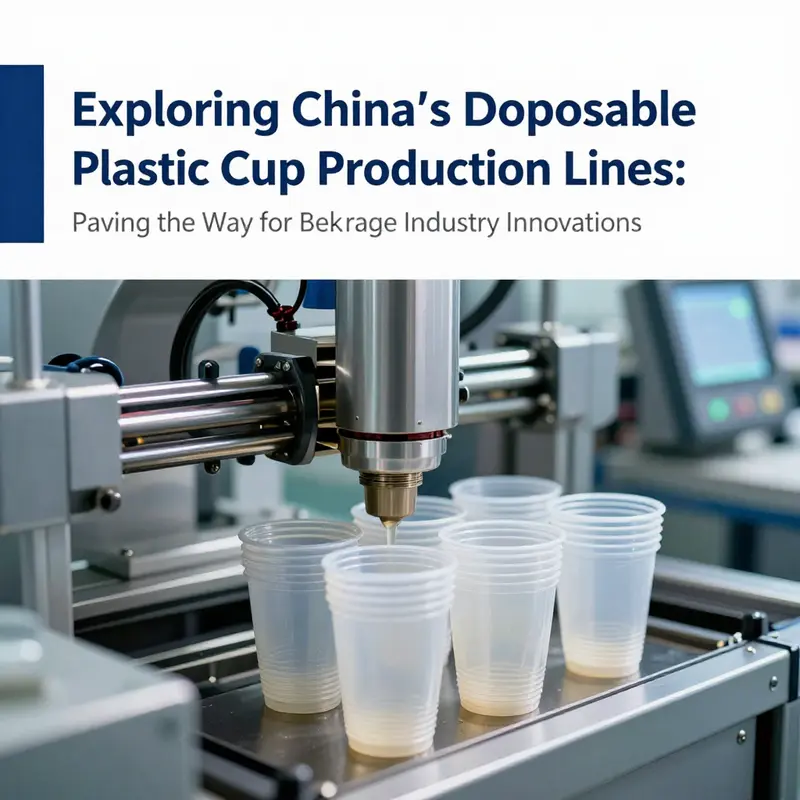
The surge in demand for disposable plastic cups in modern food service, catering, and event logistics has become a defining feature of manufacturing patterns. In China, the ecosystem of manufacturers and suppliers supporting cup production lines has grown intricate and capable, reflecting a broader shift toward automation, precision, and integrated sustainability. A high-volume cup line embodies more than a sequence of machines; it is a tightly choreographed system designed to balance throughput, material use, and compliance with evolving environmental expectations. The economics of such lines are shaped by capital investment, operating cost savings, and the pressures of global logistics that push producers to optimize every stage of the process. While the raw materials—polyethylene and polystyrene—provide the basic building blocks, it is the architectural design of the line and the intelligence embedded in its control systems that determine a plant’s competitiveness in a crowded market.
At the heart of modern cup production is high-speed, high-precision injection molding. This technology has moved beyond simply filling a mold; it now demands tightly synchronized cycles that shave milliseconds off cycle times while maintaining dimensional stability across millions of parts. The result is a predictable output where wall thickness uniformity, neck diameter, and base geometry are consistently reproduced. For cups that must stack neatly, seal reliably with lids, or pair with standardized trays and holders, the tolerance stack-up can be the difference between smooth downstream packaging and a cascade of rejected units. In a Chinese manufacturing context, the emphasis on speed does not come at the expense of quality; rather, it is complemented by sophisticated process controls that monitor temperature profiles, clamp force, and injection pressure in real time. The net effect is a cup profile that remains stable under rapid cycling and demonstrates low variation from run to run, an essential quality attribute for clients requiring reliable performance in event venues, takeaway services, and bulk distribution.
Beyond the core molding operation, automated production systems have transformed line efficiency. Feeding systems that deliver preforms or polymer pellets with minimal human intervention reduce labor intensity while increasing accuracy. Robotic or semi-robotic handlers can place incoming materials, rotate molds between stations, and manage part transfer with consistent speed and gentleness. The automation layer extends to intelligent monitoring that taps into every machine’s health metrics, environmental conditions, and energy consumption. Real-time quality control has become a hallmark of advanced lines. Vision inspection systems scan for surface defects, dimensional anomalies, and deformations as cups exit the mold, with the ability to sort out defective parts before they reach downstream packaging. This reduces material waste and prevents the costly downstream rework that can erode margins in high-volume production.
The push toward smarter lines is driven not only by speed and accuracy but by the broader imperative to manage environmental impact and regulatory compliance. The industry is increasingly responsive to requirements around waste reduction, recycling integration, and the use of more sustainable materials where feasible. In practice, this means lines are configured to accommodate eco-friendly materials like bio-based plastics where feasible, and to support downstream recycling through design choices that simplify material separation and recovery. While polyolefins and polystyrenes remain predominant in many markets due to established supply chains and performance characteristics, researchers and manufacturers are exploring blends and alternatives that can improve compostability or reusability without compromising rigidity, clarity, or heat resistance needed for take-out applications. Implementing these materials on a production line often requires adjustments to molding temperatures, cooling rates, and mold design, underscoring the interplay between material science and process engineering.
In tandem with material innovation, waste management has become an operational axis for production lines. Reclaiming sprues, runners, and defective parts through integrated recycling loops can reclaim energy and raw materials, help meet corporate sustainability targets, and reduce disposal costs. Even modest gains in recycling integration—such as closed-loop cooling systems or reclaimed plastic re-feed—can yield meaningful reductions in net material loss over time. The collaboration between process engineers, material scientists, and environmental compliance teams is now a necessity, not a luxury, as markets demand traceability, cleaner emissions profiles, and transparent reporting on packaging sustainability. In this sense, the production line is not just a factory floor but a living platform that evolves as new regulations emerge and consumer expectations shift toward responsible packaging.
The financial reality frames these technical aspirations. A typical clear disposable plastic cup production line entry illustrates the scale of investment and expected return. The line is designed to deliver high volumes with minimal downtime, yet the upfront cost reflects the complexity of automated systems, precision molds, and intelligent control software. The balance between capital expenditure and operating expense hinges on several factors: energy efficiency, maintenance costs, yield, and the ability to prevent production halts. In comparable settings, manufacturers weigh the cost of replacing older, less efficient lines against the benefits of increased throughput and lower defect rates. They also study the demand signals from food service, hospitality, and event organizers, where consistency and speed can translate into strong supplier partnerships and recurring contracts. In a crowded market, the ability to offer a reliable, energy-efficient line—capable of producing cups with uniform clarity and consistent heat resistance—can differentiate a supplier in a way that pricing alone cannot.
An enduring theme in this transformation is the integration of digitalized feedback into the production workflow. Real-time data from sensors, cameras, and controller consoles feeds a continuous improvement loop. Operators can detect drift in process variables, such as cycle time deviations or deviations in melt temperature, and adjust parameters on the fly to restore quality. This capacity for rapid response reduces scrap and rework. It also provides a valuable data backbone for longer-term optimization, where engineers test alternate process settings, mold configurations, and cooling strategies to identify the most productive and least wasteful combinations. The result is a line that not only produces cups efficiently but also learns from every batch to tighten tolerances, reduce waste, and improve energy use—an outcome that matters for manufacturers facing tightening environmental standards and growing customer expectations for responsible production practices.
A practical dimension of this evolution is the ongoing interest in material compatibility and design for efficiency. As lines adapt to new materials and evolving consumer preferences, cup geometry must remain compatible with common lids, trays, and stacking systems. Even subtle shifts in lip thickness or rim geometry can ripple through the downstream packaging ecosystem, affecting lid fit, stacking stability, and palletization efficiency. Therefore, engineers emphasize a holistic view of the production line, one that considers the entire packaging chain—from resin composition and mold design to the way cups are stacked, boxed, and transported. This systems thinking helps ensure that improvements in one part of the line do not create bottlenecks elsewhere and that the final product remains consistent across varied production runs and different facility layouts.
In reflecting on the trajectory of China’s disposable plastic cup production lines, several tensions emerge. On one hand, global demand continues to favor fast, reliable, high-volume manufacturing. On the other, regulators, customers, and investors increasingly demand environmental responsibility and clear accountability for waste management. The industry appears to be navigating this tension by enhancing automation, embracing smarter process control, and exploring sustainable materials within a pragmatic framework that respects performance requirements. The result is not a single magic solution but a portfolio of capabilities: faster cycles, tighter quality control, smarter maintenance, and more sustainable material choices that can be integrated without sacrificing throughput. As these lines mature, they will likely set new benchmarks for efficiency and responsibility, influencing plant design and procurement decisions across the region.
For readers who want to explore related packaging innovations beyond plastics, one practical point of reference is the growing ecosystem around eco-friendly packaging solutions. These options illustrate the broader packaging landscape—an important context as manufacturers in China and elsewhere adapt to mixed-material and hybrid packaging strategies. To learn more about a practical, environmentally conscious approach to cup and container design, you can explore a marketplace resource focused on recyclable cup accessories, which offers insight into how supplementary components like cup holders can fit into sustainable service models. See the resource here: eco-friendly recyclable pulp cup holder for coffee take-away cups.
As the chapter on technological innovations in disposable plastic cup production lines in China demonstrates, the industry’s future rests on a careful blend of speed, precision, and environmental stewardship. The line becomes a platform for experimentation and process refinement, where small gains in cycle time or material efficiency can accumulate into meaningful competitive advantages. The most successful manufacturers will be those who treat automation not as a cost to be managed but as a strategic asset that enables consistent quality, lowers overall waste, and opens pathways to new materials and business models. In this sense, the evolution of cup production lines mirrors a broader shift in manufacturing: a move toward intelligent, connected, and sustainable production that serves today’s demanding markets while laying the groundwork for tomorrow’s innovations.
External resources for further reading on market evolution in this space include comprehensive market analyses that track the techno-economic trends shaping plastic cup making machinery. These reports provide a broad view of how high-speed molding, automation, and sustainability initiatives are converging to redefine what is possible in mass production. Access the MarketsandMarkets overview here: https://www.marketsandmarkets.com/MarketReports/plastic-cup-making-machines-market.asp
Molds, Markets, and Movements: Geopolitics Shaping China’s Disposable Cup Production Line Manufacturing
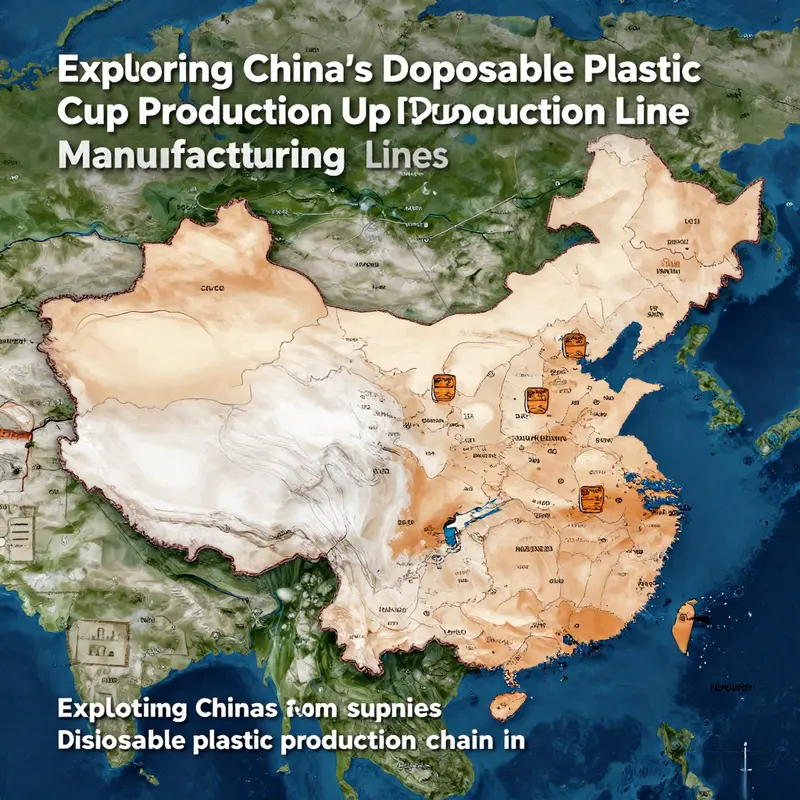
Geopolitics does not stay outside the factory wall when the subject is disposable cup production line manufacturing in China. It threads through every link in the chain, from the feedstocks that become inevitable inputs to the machinery that shapes, prints, and calibrates the end product. The practical effect is that managers and engineers must read political weather as a daily operating parameter—just as surely as they monitor oil prices or exchange rates. When a supply disruption arises, it rarely announces itself as a single event. Instead, a cascade can begin with a shift in crude oil prices, pass through the cost of polymers like polypropylene and polystyrene, and end in a decision about a machine’s uptime, a maintenance window, or a customer’s delivery date. In this evolving landscape, the most resilient strategies emerge from a clear understanding that geopolitical currents do not merely affect margins; they redefine the physics of production planning, supplier collaboration, and product strategy at scale.
Raw material markets in particular illustrate the tight coupling between geopolitics and production economics. China’s plastic-based manufacturing sector relies on a globally sourced mix of feedstocks, and price movements in these markets often track geopolitical tensions in oil-rich regions. When sanctions or conflicts constrain supply from key exporters, polypropylene and polystyrene prices can move in tandem with the news cycle. For a facility designed to maintain steady run rates, even a modest uptick in input costs can compound into a significant variance in per-unit costs, especially for lines with high throughput and complex automation. The immediate responses are routine yet consequential: diversify suppliers, participate in longer-term contracts with price caps, and maintain buffer inventories that can bridge short-term shocks. In real terms, this means more sophisticated supplier development programs, multi-source procurement strategies, and a disciplined approach to risk budgeting across the production calendar.
Trade policy is another layer where geopolitics translates into day-to-day consequences for line manufacturing. Tariffs, export controls, and sanctions can extend beyond the price of a single component. They shape the availability of advanced automation systems, precision molds, and control electronics that are central to modern production lines. When access to these technologies becomes uncertain, manufacturers are compelled to redesign line layouts around domestically available substitutes or to pursue multi-regional sourcing that mitigates single-point failures. The result is a more deliberate, slower, and sometimes more costly path to upgrade cycles. Lead times extend as engineers have to qualify different suppliers, integrate disparate control platforms, and ensure compatibility with a broader spectrum of regional regulatory expectations. The overarching narrative is that export environments influence not only what equipment costs but how quickly factories can modernize and scale.
Environmental regulation adds another dimension to the geopolitics conversation. The global push toward reducing plastic waste creates demand for lines that can run greener, smarter, and with greater waste management sophistication. International directives and policy trends push manufacturers to rethink materials, reconfigure scrap handling, and optimize energy use. While this can stimulate technical innovation, it also interacts with the volatility of trade and capital flows. Access to financing for upgrading line systems—especially those involving more ambitious automation or cleaner processing—can hinge on geopolitical stability and the willingness of investors to back long-cycle projects in uncertain times. Within the Chinese context, there is a parallel pressure from domestic policy aimed at advancing a circular economy. That policy alignment encourages retooling and process improvements that reduce waste and improve recyclability, but it also raises the bar for compliance, permitting, and reporting. The practical impact is a gradual shift in the baseline requirements for new lines and for retrofits, altering the financial calculus of modernization.
Beyond materials and regulation, geopolitics influences the technology ladder that underpins production line performance. The most efficient lines today depend on a mix of automation, sensing, and control electronics that guide every stage—from extrusion and molding to printing and packaging. Some of these components and systems are sourced internationally, and their availability can be constrained by licensing regimes or cross-border restrictions. In response, manufacturers are increasingly investing in domestic R&D ecosystems, strengthening collaborations with local suppliers, and designing lines with modular architectures that allow upgrade paths as modules become available. This strategic modularity reduces exposure to shocks in any single component category and provides a smoother trajectory for line modernization even when external conditions are unsettled. It is a practical adaptation to a world where global technology access is neither guaranteed nor uniform, but must be cultivated through deliberate partnerships and careful planning.
The currency and capital dimensions of geopolitics also shape the economics of line production. When geopolitical tensions intensify, capital flows can tighten and risk premiums may rise. For equipment buyers, this translates into tighter budgets, tighter project timelines, and more stringent due diligence. From the manufacturer’s perspective, this environment encourages flexible financing models, staged deployments, and lease arrangements that align with customers’ cash flow realities without sacrificing the integrity of a production upgrade program. The end result is a market where buyers and suppliers must negotiate with a shared understanding of risk, time, and return on investment. The capacity to forecast demand and secure stable supply becomes a competitive differentiator, not just a function of price or lead time.
Geopolitics also reshapes market dynamics and regional exposure within China’s own manufacturing landscape. The country’s clustering of industries—where certain regions emphasize polymers and downstream assembly while others excel in automation components—creates a mosaic of risk exposure. A regional strategy that emphasizes diversified risk, a ready supply chain for deadline-driven orders, and a balanced mix of domestic and imported elements can enhance resilience. Such strategies are particularly important as buyers in end-use markets search for reliable delivery calendars, consistent quality, and transparent sourcing narratives. The visible benefit is not merely a steadier supply for the production line but a stronger value proposition for customers who must plan procurement around complex supply chains with external dependencies.
From the customer perspective, the geopolitically charged environment requires a different kind of clarity and communication. Hoteliers, restaurateurs, and event organizers weigh the cost stability and the reliability of supply against evolving regulatory expectations and public sentiment about plastic waste. In this context, the most capable manufacturers translate complexity into predictable performance. They offer clear contingency plans, transparent lead-time expectations, and robust risk management disclosures that explain how external shocks will be handled without disrupting production. This is not just about minimizing downtime; it is about maintaining trust with customers who must balance cost, quality, and compliance within a shifting policy landscape.
The overarching message is that geopolitics matters on the factory floor because it recalibrates the economics of every link in the chain. It shapes how raw materials are priced, how easily technology can be upgraded, and how customers plan investments over multi-year horizons. It also influences the pace at which sustainable and efficient line configurations become standard rather than aspirational. Rather than viewing these forces as external headwinds, proactive manufacturers treat them as design constraints that spur better, more adaptable line architectures. They design with redundancy in mind, they embrace modular upgrades, and they cultivate a network of suppliers capable of pivoting with minimal disruption.
As part of embracing this geo-informed mindset, some practitioners emphasize sustainability as a core design principle rather than as a postscript. The shift toward more recyclable packaging and lower waste generation interacts with geopolitics in two meaningful ways. First, it broadens the range of acceptable feedstocks and materials, which can reduce some dependency on volatile single-sourcing of traditional polymers. Second, it elevates standards for data sharing, traceability, and environmental reporting, which dovetails with risk-management practices that are inherently valuable in uncertain political times. In this sense, the pursuit of sustainability and the pursuit of geopolitical resilience can reinforce each other, nudging line design toward longer lifecycles and smarter resource use.
The practical upshot for stakeholders is a need for continuous learning and adaptable planning. Companies that succeed will routinely map political exposure across their supply networks, monitor regulatory developments across major markets, and maintain a clear playbook for rapid reconfiguration of lines when necessary. They will invest in local capability development, cultivate supplier ecosystems that can withstand geopolitically induced shocks, and pursue modular approaches that allow slower upgrades to be achieved without interrupting ongoing production. In doing so, they will not only protect margins but also reassure customers that their operations remain reliable even as the geopolitical weather shifts.
To anchor this discussion in a concrete sense of what drives these considerations, it helps to connect the arc of geopolitics with the real-world logic of a production line’s lifecycle. A line is not a static asset. It is a living system that must accommodate evolving materials, evolving standards, and evolving technologies. The more a manufacturer can anticipate and incorporate geopolitical risk into the design and commissioning process, the more durable the line becomes. This is the core reason geopolitics deserves a central place in conversations about disposable cup production line manufacturing in China: it frames the constraints, illuminates the opportunities, and ultimately guides the decisions that determine how efficiently and responsibly a factory can operate in a world of growing interdependence.
External resource: https://www.statista.com/statistics/1452309/china-disposable-drinking-cup-market-size-by-region/
Internal link: As buyers consider lifecycle impact and end-of-life options, many packaging providers are highlighting sustainable alternatives such as recyclable packaging components. For example, look at this option for recyclable cup-related accessories: eco-friendly recyclable pulp cup holder.
From Distribution to Dignity: Societal Perspectives on China’s Disposable Cup Production and Its Environmental Wake
In China, the lifecycle of a disposable plastic cup sits at the crossroads of convenience, industry, and public responsibility. The market for single-use cups remains embedded in daily life, from takeout to beverage outlets, while social expectations are gradually shifting toward accountability for environmental impacts. This dynamic is not only about consumer choice; it signals to policymakers, manufacturers, and educators that sustainable abundance requires more than faster production or lower prices. It calls for a reimagined production ethic, an improved waste system, and a social compact about what counts as progress.
Policy developments in China have begun to curb environmental externalities at the source. The 2021 solid waste law and related actions constrain non biodegradable plastics and steer the value chain toward lower waste, higher reuse, and better disposal. The regulatory framework nudges producers to consider lifecycle impacts, energy use, and end of life in their design and operations. In practice this means more automation, tighter process control, and stronger links to recycling streams. The aim is not punitive withdrawal but a managed transition to materials and systems compatible with ecological limits while preserving service quality.
Society is watching how different actors meet responsibility. Government sets expectations and maintains transparency; industry adheres to standards without sacrificing competitiveness; consumers reconcile habits with emerging norms. Education and public outreach play a pivotal role. Universities and community programs that connect design thinking with waste valorization illustrate how knowledge across disciplines can reframe packaging as a resource. Initiatives that explore recycled content and take back schemes show how culture can value waste as feedstock.
Meanwhile packaging design itself becomes a site of innovation. Designers and material scientists pursue life cycle thinking, experiment with biodegradable or recycled content, and seek more efficient mold design to reduce waste. These shifts aim to deliver the same user experience while lowering environmental burden, creating a more holistic approach to product development.
In this evolving landscape, markets increasingly demand transparency about materials and disposal options. Producers respond with traceable content, clearer labeling, and better environmental data. The public conversation around single use plastics shifts from critique to collaboration, energizing improvements in material choice, energy use, and waste management.
Looking ahead, universities, research labs, and industry players are piloting circular approaches that link waste streams back into productive loops. The result is a broader cultural shift in which sustainability is a core criterion for evaluating production systems rather than an add-on. The social role of packaging design thus expands to consider the journey of cups from factory to table, waste collection, and community response to litter or pollution.
Ultimately the social narrative is about aligning policy, education, and consumer behavior to support responsible consumption without sacrificing convenience. This balance is the real test of how societies navigate progress, responsibility, and ingenuity in a world shaped by rapid service economies.
Final thoughts
Exploring the intricacies of disposable plastic cup production in China unveils not only a robust industry but also a critical intersection of economics, technology, and societal values. As the demand continues to rise, the role of Chinese manufacturers becomes ever more significant in shaping sustainable practices while addressing the needs of diverse sectors such as beverage chains and event planning. By reflecting on the economic impact, technological innovations, and societal concerns surrounding disposable products, stakeholders can make informed decisions that align with both operational efficiency and environmental stewardship in their respective fields.