
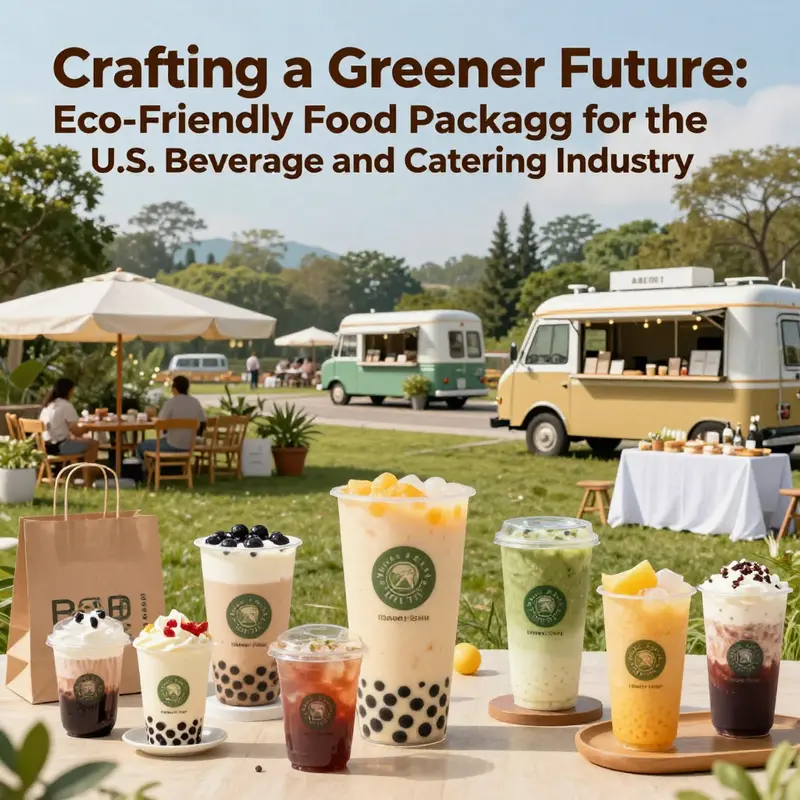
As environmental concerns continue to rise, the demand for eco-friendly food packaging options is reshaping the landscape for businesses across the U.S. This transformation holds particular significance for bubble tea shops, beverage chains, restaurants, food trucks, catering services, event planners, and corporate procurement teams. Understanding innovative technologies, market trends, materials science, and consumer awareness surrounding eco-friendly packaging can position your business at the forefront of sustainability. In this exploration, we will delve into how these elements work harmoniously, ultimately paving the way for a more sustainable future in food service.
Smart, Sustainable, and Scalable: The Technological Frontier of Eco-Friendly Food Packaging in the USA
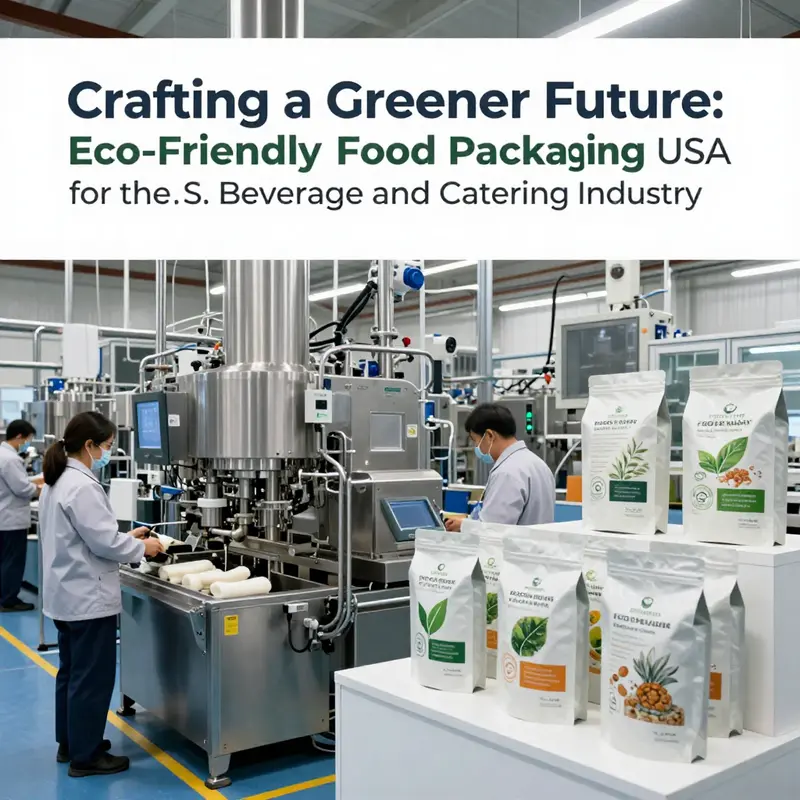
In the United States, the shift toward eco-friendly food packaging is transforming from niche initiative to a strategic priority for brands and supply chains. Market momentum is driven by consumer demand, regulatory incentives, and the need to differentiate in competitive markets. The result is a landscape where material options are expanding beyond traditional plastics to bio-based polymers, recycled fibers, and smarter packaging that can monitor and protect product quality. This evolution is not only about substituting materials; it reflects a system-wide redesign from feedstock sourcing and manufacturing to end-of-life processing and circularity. The starting point is embedding environmental performance into product design, not treating sustainability as an afterthought.
At the core of this transformation are plant-based bioplastics and bio-based coatings, designed to deliver durability and barrier properties that compete with conventional plastics. These materials are often derived from renewable resources such as corn, sugarcane, or agricultural residues. Their appeal lies in reducing fossil fuel dependence and offering end-of-life options like industrial composting, recycling, or safe biodegradation under certain conditions. Yet the story is nuanced: bioplastics can be highly effective but require suitable waste streams and infrastructure to achieve meaningful environmental benefits. End-of-life options may be limited by local facilities, so the environmental gains depend on coordinated waste-management systems.
The performance profile of these materials is evolving as researchers refine polymer blends and barrier coatings to improve moisture resistance, gas permeability, and heat tolerance. The goal is packaging that extends shelf life while meeting sustainability targets. In practice, this means moving beyond the stereotype that “green” materials are fragile, and approaching packaging from a systems perspective. In parallel, paper-based packaging is gaining ground thanks to renewable fibers, advanced barrier coatings, and compatible inks and adhesives. The challenge is to balance barrier performance with recyclability and compostability, ensuring environmental benefits are not offset by end-of-life complications.
A second pillar is active packaging technology that can interact with the product or its environment to preserve quality and reduce waste. Oxygen scavengers, moisture absorbers, antimicrobial films, and time-temperature indicators can provide real-time insights and longer shelf life. Bringing these features into cost-effective formats requires careful design to avoid complicating disposal or incurring unsustainable increases in material usage. In fast-service and retail contexts, such innovations can reduce waste and spoilage while remaining user-friendly for consumers.
The market context underscores that not all green claims are equal across use cases. A material that degrades in industrial composting may contaminate paper recycling streams if not properly sorted. Coatings must be compatible with existing recycling infrastructure, and products should be clearly labeled to aid separation at end of life. Lifecycle thinking—cradle-to-grave assessment, including feedstock cultivation, manufacturing energy, distribution, consumer handling, and disposal—helps brands compare trade-offs and communicate credible environmental performance. Independent verification and transparent reporting increasingly set the standard for trust and regulatory alignment.
The United States market remains buoyant but nuanced. Regulatory pressure is rising, but standards and enforcement vary by region and sector. Companies pursuing sustainable packaging are adopting lifecycle assessments, credible third-party certifications, and clear disposal guidance to help consumers act correctly. The broad trend toward paper-based, recyclable, and compostable options is expected to continue, supported by ongoing investments in recycling, composting, and waste-collection infrastructure. The path to scale involves aligning material performance with practical logistics, ensuring compatibility with existing recycling streams, and investing in consumer education to improve disposal literacy.
In summary, the next generation of eco-friendly packaging in the USA will combine durable, barrier-capable materials with smart features that reduce waste and support circularity. The brands that succeed will integrate material science with system-level solutions—design for recyclability and compostability, end-to-end supply chains, and clear consumer guidance—delivering environmental benefits without compromising safety, quality, or convenience.
External reference: Market research and policy developments continue to shape the trajectory of eco-friendly packaging, with expectations of steady growth through the coming decade and beyond.
null
null
Material Innovation and the Rise of Eco-Friendly Packaging in the U.S. Food Supply Chain
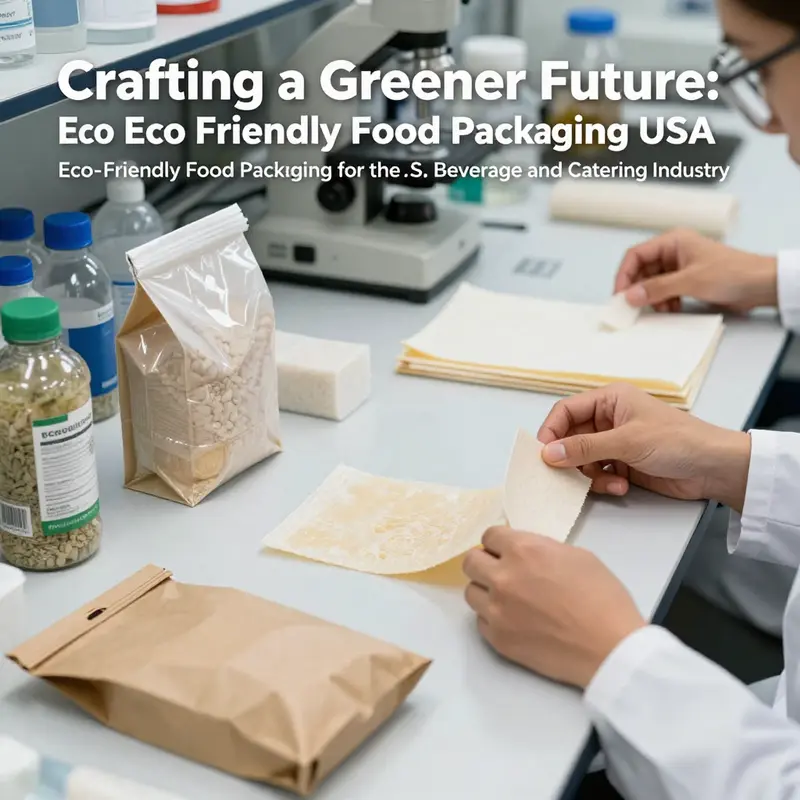
The material science driving eco-friendly food packaging in the United States sits at a compelling crossroads of performance, safety, and environmental accountability. In labs and pilot lines across the country, researchers and engineers are redefining what it means for packaging to protect, preserve, and communicate quality, while also aligning with a growing imperative to reduce plastic waste and fossil-based inputs. The core shift is toward materials that originate from renewable resources, degrade under appropriate end-of-life conditions, or are engineered to be infinitely reclaimable through circular economy strategies. This evolution is not merely a substitution of one material for another; it is a reimagining of how packaging interfaces with food, supply chains, and consumer expectations. When the conversation centers on eco-friendly packaging in the U.S., it is impossible to separate material science from regulatory landscapes, consumer behavior, and the logistics of waste management. Each of these dimensions shapes what counts as a viable material and how it must perform in the real world.
Biodegradable and compostable options have moved from curiosity to core components of packaging strategies. Polylactic acid (PLA), derived from renewable resources such as corn starch, represents a leading class of bio-based polymers that can replace certain conventional plastics in applications where clarity, rigidity, or heat resistance is important. Yet the story extends beyond PLA to a family of bioplastics and bio-derived blends that seek to balance speed of compostability with the machineability required for high-speed packaging lines. In practice, material scientists are often working to optimize the balance between rapid degradation under industrial composting conditions and stability during shelf life and distribution. This entails advances in resin chemistry, compatibilizers, and processing aids that enable thin, transparent films or sturdy, recyclable laminates to carry food safely from factory to table. The emphasis remains clear: materials must meet stringent food-contact safety standards while delivering predictable performance in barrier properties, mechanical strength, and processability.
A critical anchor in this evolution is the role of barrier performance. Food packaging must curtail moisture and oxygen ingress to preserve flavor, texture, and nutritional quality. Traditional plastics relied on multi-layer structures to achieve this, but many long-life, compostable options have pursued new architectures that minimize non-renewable components. For paper- and pulp-based packaging, barrier coatings and bio-based films are being engineered to achieve competitive water vapor and gas barrier properties without sacrificing recyclability or compostability. These developments often involve thin, functional coatings that are either compostable themselves or compatible with existing recycling streams, enabling a more seamless end-of-life pathway. The result is packaging that can maintain freshness and safety while opening the door to recycling bins, composting facilities, and, where appropriate, industrial compost infrastructure.
Durability and shelf life extension remain non-negotiables in a market that values both performance and planetary responsibility. In the realm of paper-based packaging, the challenge is to provide sufficient rigidity, puncture resistance, and heat tolerance for handling, shipping, and consumer use, while keeping the material footprint low. Advances in nano- and micro-structured coatings, as well as bio-based barrier layers, are enabling paper and paperboard formats to resist oil and grease, withstand temperature fluctuations, and maintain integrity during transit. This is especially important for fast-moving consumer goods, where packaging is not only a containment vessel but also a shield against contamination and a communications surface for brand storytelling. Researchers are also exploring the synergies between fiber morphology, coating science, and surface chemistry to push barrier performance to levels once thought possible only with petrochemical-derived laminates.
The market dynamics feeding this material science surge are clear. Consumer awareness of plastic pollution and resource depletion, combined with regulatory signals that encourage recyclability and compostability, has elevated packaging from a logistics function to a strategic component of corporate sustainability goals. In the United States, the momentum comes from a combination of consumer demand, policy nudges, and investment in circular economy infrastructure. Brands increasingly seek materials that can be measured, certified, and traced along their life cycles. Independent verification and life-cycle assessments are becoming common tools for validating environmental claims and guiding material choices in product development. This shift toward data-driven sustainability is pressing the industry to not only invent new materials but also to articulate their environmental benefits with rigor and transparency.
A practical illustration of the ongoing material science push is the broad adoption of renewable, recyclable, and compostable packaging formats that can perform in real-world settings—from quick-service takeout to retail-ready containers. In this context, the dialogue about eco-friendly packaging extends beyond raw materials to the entire packaging system, including inks, adhesives, and coatings that must comply with food safety regulations and environmental standards. For example, inks and coatings derived from renewable bio-based inputs are being developed to meet regulatory requirements and minimize environmental impact, while still delivering legibility, colorfastness, and adhesion during the shelf life of the product. The regulatory milieu—increasingly harmonized across regions—plays a catalytic role by elevating the baseline expectations for safety and performance and by encouraging cross-border adoption of standardized sustainability metrics.
In this ecosystem, materials science also embraces the challenge of end-of-life management. Recyclability remains a favorable attribute when it aligns with existing waste streams and collection infrastructure. Compostability is gaining traction where industrial facilities are available to process the materials within their intended time frames. The circular economy mindset recognizes that sustainable packaging must be designed with its afterlife in view, not merely with its initial performance in mind. This mindset drives innovations in multi-material systems where the goal is to reduce or replace non-recyclable layers, or to introduce compatible, bio-based alternatives that can be separated or dissolved during recycling or composting. The design philosophy is moving toward simpler, more compatible material systems that support efficient separation and processing, while preserving the integrity of the food it protects.
The upward trajectory of the U.S. eco-friendly food packaging market is supported by concrete growth indicators. Market analyses point to robust demand shaped by consumer expectations and regulatory support, with projections suggesting the market will continue to expand through the next decade. The rise of biobased and biodegradable options is redefining what is considered standard performance in barrier properties, durability, and shelf life. However, the road is not without its complexities. Cost competitiveness, supply chain stability for bio-based materials, and the need to align end-of-life infrastructure with material choices remain critical levers for further acceleration. The industry response involves a combination of material innovation, process optimization, and upstream collaboration among suppliers, manufacturers, and waste management partners to ensure that eco-friendly packaging can be scaled without compromising food safety or consumer convenience.
Consider the broader landscape where end users—retailers, foodservice operators, and brand owners—seek packaging that not only protects product quality but also communicates a credible commitment to sustainability. The material science underpinning these choices must address sensory compatibility (clarity, gloss, texture of the packaging surface), process compatibility (integration with existing converting and printing lines), and lifecycle claims that resonate with shoppers and regulators alike. This means ongoing research into bio-based polymers with improved heat resistance, barrier performance, and mechanical durability, as well as smarter coatings that can be more easily removed or separated during waste treatment. It also means exploring the interplay between packaging design and consumer behavior, understanding how perception of sustainability can influence purchase decisions and post-consumer actions.
For readers who want to explore concrete pathways from research to market, one can observe how a practical packaging solution evolves from the lab bench to a consumer product. The materials must perform where it matters—in the cold chain, during distribution, and on the shelf—while also fitting into the waste infrastructure that surrounds it. This requires not only technical breakthroughs but also standardized testing, certification, and clear communication about end-of-life expectations. It is a multi-disciplinary effort that blends polymers science, surface engineering, food safety, and waste management policy into a coherent strategy for sustainable packaging. As the industry navigates this transition, the emphasis remains on delivering packaging that is safe, functional, and environmentally responsible at a scale that supports a robust food system.
The path forward is illuminated by collaboration across sectors. Material scientists work with manufacturers to tune polymer blends and coating chemistries; packaging engineers translate these formulations into scalable film and board structures; and supply chain partners ensure that the new materials can be produced with consistent quality and integrated into existing packaging lines. This holistic approach is essential because it connects the laboratory innovations with real-world production realities and consumer expectations. In the end, the success story of eco-friendly packaging in the United States will hinge on materials that are not only superior in performance but also coherent with circular economy principles and accessible to waste management infrastructure across the country.
For readers seeking a broader market perspective and its implications for research priorities, this chapter aligns with industry analyses that project sustained growth in the eco-friendly packaging space through mid-decade and beyond. The market is increasingly characterized by a move toward renewable feedstocks, advanced barrier technologies, and packaging formats designed for compatibility with recycling and composting channels. This is not a fringe development; it is a mainstream shift that reshapes product development, branding, and consumer engagement. As scientists continue to push the boundaries of material design, the packaging ecosystem will increasingly reward reliability, safety, and environmental integrity in equal measure. The larger objective is clear: to deliver packaging that preserves food, protects people, and respects the planet, while enabling economies of scale and innovation that spur broad adoption across diverse food sectors.
For a broader market perspective, see external market analyses that synthesize these trends and project growth trajectories across regions and sub-sectors: https://www.grandviewresearch.com/industry-analysis/eco-friendly-food-packaging-market. Meanwhile, practical references to sustainable packaging formats and case studies can be found in industry resources that discuss the development of renewable, recyclable, and compostable packaging solutions, such as the disposable octagonal box in kraft paper packaging. This specific example illustrates how designers are leveraging familiar, recyclable substrates to broaden the end-of-life options for a wide range of foods, from hot snacks to cold meals, while maintaining the necessary barrier performance and consumer appeal. disposable octagonal box in kraft paper packaging
Consumer Awareness as Compass: Guiding the USA Toward Eco-Friendly Food Packaging
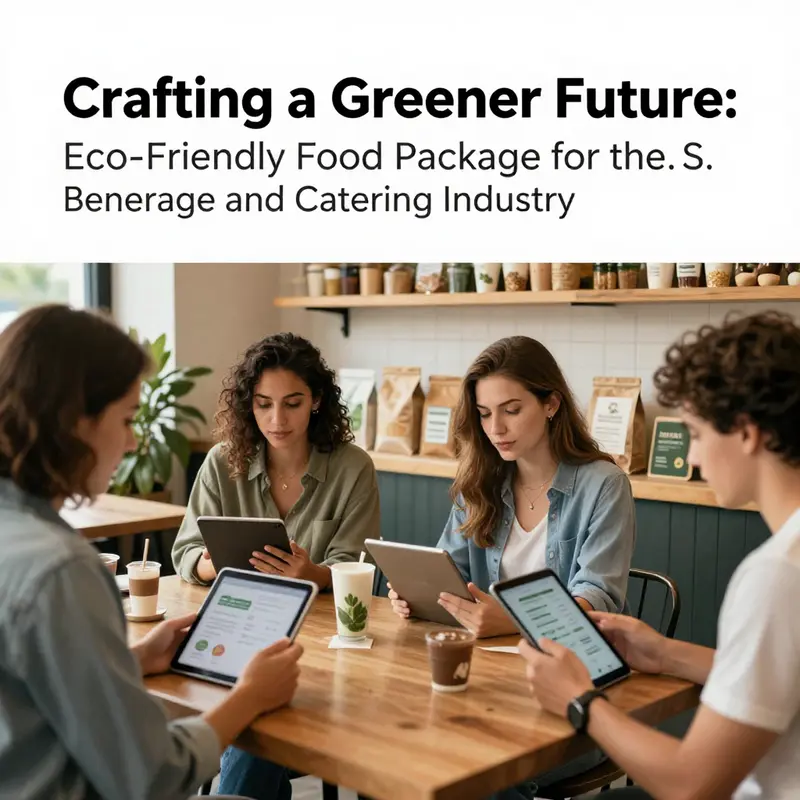
A clear current runs through the U.S. market for eco-friendly food packaging: consumer awareness has become the compass heading for what brands, retailers, and regulators regard as viable and valuable. In recent years the pull of sustainability has moved from a niche appeal to a mainstream expectation, influencing every stage of the packaging life cycle—from material choice and manufacturing processes to end-of-life options and transparency in labeling. The market signals that undergird this shift are robust. Estimates place the size of the environmentally friendly food packaging market in the United States at roughly 450 billion in 2024, with a trajectory that points toward stronger growth through 2033. This expansion is not happenstance; it mirrors a convergence of public concern about environmental issues, regulatory pressures designed to curb single-use waste, and corporate sustainability mandates that connect brand value with social responsibility. In practice, this means that a growing share of products in grocery aisles, fast-casual counters, and take-out windows now arrive wrapped or housed in materials that aim to be recyclable, compostable, or biodegradable, or at least derived from renewables. The implications extend beyond materials science into marketing, supply chain resilience, and consumer trust. When a consumer sees a packaging option described as compostable or recyclable, that descriptor becomes a signal about a brand’s values, a factor in trial and repeat purchase, and a data point for investors evaluating long-term viability. The reality is not simply about removing plastic; it is about replacing it with intelligent, evidence-based solutions that protect product quality while minimizing environmental impact.
What drives this momentum is not only the urgency of environmental stewardship but also the tangible benefits that eco-friendly packaging can offer. On the consumer side, awareness translates into behavior: shoppers increasingly favor brands that demonstrate concrete commitments to sustainability, and they are more willing to consider premium pricing when a product’s packaging aligns with their values. This is especially evident among younger demographics, who often balance price with a broader set of criteria that include ethics, planetary health, and social responsibility. A 2025 consumer survey involving 270 participants highlighted a meaningful willingness to pay a premium for products packaged in materials that are renewable, compostable, or recyclable. The willingness to invest more in packaging that reduces environmental impact signals a market reevaluating trade-offs and recognizing that sustainability can be a differentiator rather than a mere afterthought. The survey also hinted at a cultural shift: sustainability is increasingly becoming a core value rather than a marketing footnote. When a product is designed with circularity in mind, its appeal grows not just among eco-conscious shoppers but across a wider audience that appreciates reliability, transparency, and stewardship.
This evolving consumer mood intersects with policy and corporate practice in ways that reshape the whole packaging ecosystem. Regulatory frameworks in the United States and abroad are pushing the industry toward materials that minimize waste, improve recyclability, or support composting infrastructure. Governments are incentivizing innovation that reduces petroleum-based plastic use while funding development in renewable paper-based packaging, bio-based polymers, and barrier technologies that extend shelf life without compromising end-of-life options. For brands, the challenge is twofold: deliver protective performance and product integrity while ensuring that the packaging contributes positively to environmental metrics across its entire life cycle. This means balancing barrier properties, durability, and shelf life with recyclability and compostability, and aligning marketing claims with verifiable outcomes. In practice, that balance requires careful material science, rigorous testing, and independent verification to ensure that a claim like “renewable content” or “compostable under municipal conditions” holds true in real-world contexts. The result is a more rigorous, data-driven approach to packaging development, one that reflects consumer demand as well as the realities of waste management systems and regulatory expectations.
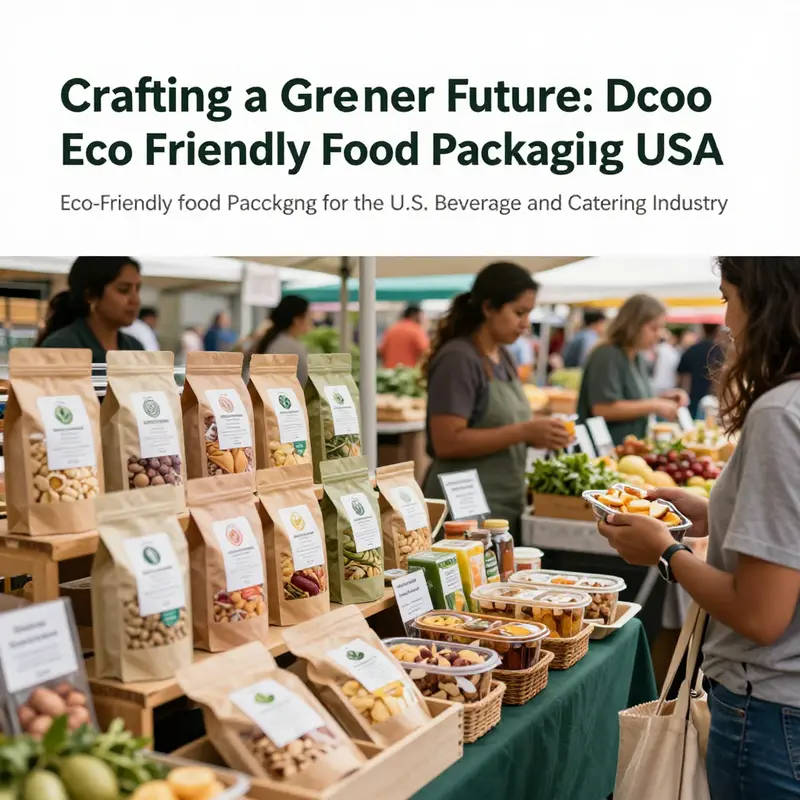
The material choices at the heart of this transformation are as varied as the markets they serve. Eco-friendly packaging now often centers on renewable paper-based solutions, biodegradable plastics, and compostable films, all designed to provide the necessary protective attributes without compromising environmental responsibility. The performance equation is nuanced. Barrier properties—the ability to prevent moisture, oxygen, and aromas from compromising the contents—must be maintained to ensure food safety and shelf life. Durability matters for transport and handling, while compatibility with existing recycling streams and composting infrastructure governs end-of-life outcomes. The industry has moved beyond the binary choice of “plastic vs paper” to a spectrum of options that mix plant-based polymers, cellulose-based films, and innovative coatings that support barrier performance while enabling recyclability or compostability. In parallel, advances in packaging design—such as single-serve formats, portion-controlled packaging, and container shapes that optimize stacking and transport—are intersecting with sustainability goals to reduce waste throughout the supply chain. These developments are not isolated; they inform and are informed by consumer insights. When shoppers see packaging that clearly communicates its end-of-life options and environmental benefits, trust grows and trial rates can rise, reinforcing the business case for sustainable packaging investments.
A particularly important dimension of innovation in this space is the way packaging inks and graphics align with sustainability goals. The industry has begun to shift toward inks and colorants based on renewable bio-based materials that comply with global food packaging regulations. Importantly, such materials undergo independent verification to confirm their environmental credentials. In this context, the value proposition extends beyond reduced toxic load or carbon footprint. It includes regulatory alignment, consumer assurance, and the potential to streamline labeling and certification processes. Independent verification acts as a credible signal to brands and retailers that sustainability claims are robust and verifiable, a factor that becomes especially significant when consumer attention is focused on the full packaging life cycle rather than on a single attribute. In this regard, laboratories and third-party evaluators play a central role in validating claims such as carbon content, renewability of inputs, and compatibility with composting or recycling streams. For manufacturers, this translates into a more transparent supply chain and clearer sustainability narratives that can be communicated effectively to consumers, investors, and regulators alike.
For brands seeking to translate consumer awareness into measurable outcomes, the path forward involves a combination of material science, process engineering, and market-facing strategy. It means selecting materials that offer the needed barrier performance and shelf stability while being sourced from renewable feedstocks and designed for end-of-life recovery. It means integrating compostability or recyclability into packaging formats from the outset, rather than as an afterthought. It also means investing in clear, accurate labeling and educational storytelling that helps consumers understand how to dispose of packaging correctly and why certain materials behave differently in real-world waste streams. In parallel, it requires collaboration across the supply chain—suppliers, manufacturers, retailers, and waste management operators—so that end-of-life outcomes are predictable and aligned with consumer expectations. When these elements come together, consumer awareness becomes not just an attitude but a driver of ongoing improvement, encouraging brands to experiment with newer materials, to optimize packaging design for real-world use, and to measure progress with auditable sustainability metrics.
The practical implications of consumer-driven demand are visible in the way packaging ecosystems are evolving. Plant-based plastics, mushroom-based foams, and edible coatings are among the innovations gaining traction as substitutes for conventional petroleum-based plastics. Each option carries its own set of trade-offs in terms of performance, cost, and end-of-life handling, but the overarching trend is clear: consumers are signaling that the burden of waste should not be borne solely by individuals; it should be a shared responsibility that businesses design for and stand behind. The regulatory environment supports this shift by creating incentives for alternatives that improve recyclability, enable composting, or reduce the use of non-renewable resources. In the United States, this confluence of consumer demand and policy direction is accelerating the adoption of sustainable packaging across fast-food outlets, grocery channels, and consumer-packaged goods industries. The trajectory is not simply incremental; it is transformative, recalibrating how packaging is sourced, manufactured, used, and ultimately reclaimed or repurposed. The end result is a packaging landscape where environmental stewardship and commercial viability reinforce one another, rather than competing for resources or attention.
To give readers a concrete sense of the options shaping this landscape, consider the growing interest in kraft paper-based systems and the ways brands are exploring containers that blend performance with responsible end-of-life outcomes. A practical example of how this is playing out in the field is the adoption of distinctive kraft packaging formats that are designed for take-out and quick-service contexts. For a concrete sense of how kraft paper packaging is being used in this space, you can explore octagonal kraft paper packaging options here: octagonal kraft paper packaging options. This example demonstrates how designers are leveraging familiar shapes and reliable barrier properties while emphasizing recyclability and compostability, signaling to consumers that performance and responsibility can go hand in hand in everyday meals and snacks.
Looking ahead, the eco-friendly packaging narrative in the United States will likely continue to blend consumer-driven demand with scientific and regulatory advances. The momentum suggests not only a larger market but a more sophisticated set of products and services that help brands differentiate themselves on sustainability while delivering safety, quality, and value. The culture of responsible consumption—now deeply ingrained in expectations around everyday products—will push companies to adopt more transparent reporting and to invest in lifecycle analyses that reveal the true environmental impact of packaging choices. As new materials and processes mature, the focus will shift from simply replacing plastics to designing closed-loop systems that minimize waste, maximize recyclability, and support composting where feasible. In this environment, consumer awareness serves not merely as a gauge of popularity but as a practical catalyst for continuous improvement across the packaging ecosystem.
For readers seeking a broader, strategic perspective on this momentum, the current landscape is well captured in comprehensive market analyses that analyze trends, technologies, and forecasts. These insights reinforce that the U.S. eco-friendly food packaging market is on an upward trajectory driven by a combination of consumer demand, ongoing innovation, and policy evolution. The synthesis of these factors points to a future where sustainable packaging becomes a standard, rather than an exception, and where brands that invest in verifiable, consumer-facing sustainability narratives can build lasting trust with shoppers. External research and industry assessments provide the broader context for practitioners who are balancing regulatory compliance, performance requirements, and cost considerations as they navigate this rapidly changing space.
External resource for broader strategic outlook: https://www.marketresearchfuture.com/reports/environmentally-friendly-food-packaging-market-usa-7195
Final thoughts
Embracing eco-friendly food packaging is no longer merely a trend; it’s essential for businesses aiming to thrive in a market shaped by sustainability. By leveraging innovative technologies and materials, staying attuned to market trends, and fostering consumer awareness, you can contribute to a greener future while enhancing brand loyalty and customer satisfaction. It’s an opportunity to align your brand with the values of today’s conscious consumers, making your offerings not just good for business, but good for the planet.