

Every event, whether intimate or grand, demands presentation that captivates and delights. The 2 inch clear plastic footed cups have emerged as a must-have for businesses in the food service industry, from bubble tea shops to catering services. These cups are crafted from high-quality polystyrene, offering both durability and style, making them ideal for showcasing delicious treats like desserts and appetizers. As we explore the material analysis, design features, and current market trends surrounding these versatile cups, it becomes clear how they can enhance the customer experience and operational efficiencies. Understanding their significance is vital for anyone involved in food service and event planning.
A Clear Perspective on 2-Inch Footed Cups: Material Choice and Design Implications

The small, clear, footed cup presents an elegant balance of visibility, practicality, and pace at a dessert or cocktail station. Standing about 2 inches in diameter and roughly 5.6 cm tall, this form lifts the dessert slightly and keeps the focus on the contents. Its compact footprint allows many units to coexist on a service surface without crowding, while the short pedestal adds a touch of elevation that enhances perceived value and helps with airflow around delicate items. The result is a serving vessel that is unobtrusive yet expressive, enabling guests to appreciate color, texture, and layering as they approach the table.
Material choices—polystyrene PS and SAN copolymers—define performance. PS offers excellent clarity, rigidity, and cost efficiency for high-velocity service. But it can be more susceptible to impact damage and heat exposure. SAN variants typically provide greater break resistance and higher heat tolerance, at a higher price point. In practice, operators weigh temperature exposure, handling risk, and budget to decide which material best supports the intended menu and service rhythm.
The footed geometry and edge quality matter. A stout base reduces tipping risk on busy stations and crowded guest lines, while a smooth rim and uniform wall thickness preserve the visual clarity of fillings. The cup should disappear visually so the dessert remains the hero. Cleaning or reusing is not typical for disposable cups, but a careful molding process improves stacking efficiency and reduces waste during transport and setup.
From an operational standpoint, packaging and waste strategy matter. Pack sizes commonly scale to large events; a typical carton might contain dozens to hundreds of units. For sustainability, venues consider recycling streams or compostable alternatives where available and align disposal with local programs. The choice of a clear, footed cup thus becomes part of a broader design system that includes lids, napkins, and display elements to deliver a cohesive, efficient experience.
In closing, the 2-inch clear plastic footed cup embodies a pragmatic design ethos: visibility, stability, and efficiency aligned with the realities of food service. The material choice and the footed geometry work together to support quick service, elegant presentation, and scalable use across events of varying size.
Small Stage, Clear Presence: The Design and Function of 2-Inch Clear Plastic Footed Cups in Modern Hospitality
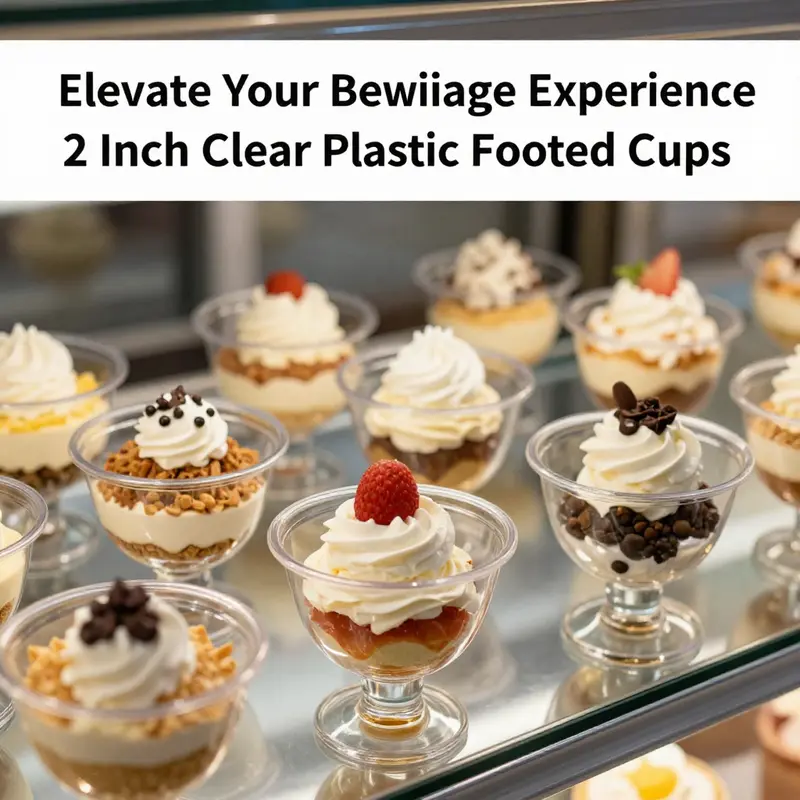
A few inches can carry significant presence when crafted with care. The 2 inch clear plastic footed cup acts as a micro stage for bite sized art, a tiny vessel that elevates the presentation of desserts, appetizers, and small samples while remaining unobtrusive in a busy event. In settings where texture color and contrast are visible, the choice of vessel matters as much as the pastry or garnish. These cups are compact and open topped, following a design logic that favors a quiet partnership between form and function. They offer a glimpse into a hospitality philosophy that values clarity stability and the ability to showcase content without competing for attention. The name suggests a footprint small enough to seem incidental, yet the design signals reliability guests can trust when they reach for the next bite.
Small Cups, Big Markets: The Economic Pulse and Practical Why Behind 2-Inch Clear Plastic Footed Cups
A tiny, transparent vessel can carry a remarkably large set of meanings. The 2-inch clear plastic footed cup, with its delicate elevation and terse silhouette, sits at the seam where convenience, presentation, and economy converge. Its very design – short height, a raised foot for stability, and a surface clear enough to showcase color, texture, and contrast – is a microcosm of how disposable tableware negotiates value in the modern marketplace.
The market context is broad, and the numbers are expansive. In the global landscape of disposable cups, the overall value of the sector surpassed USD 15.88 billion in 2025 and is projected to climb toward USD 27.38 billion by 2035. A compound annual growth rate around 5.6 percent frames the pace at which convenience-oriented disposable solutions are adopted worldwide. This trajectory tracks urban life rhythms, which reward quick service, portable consumption, and the ability to transition a consumer moment from a street vendor to a sophisticated dining room without friction. The cups-and-lids ecosystem values speed and consistency as well as branding opportunities that enable sellers to transform a simple vessel into a carrier of identity. While the collective category grows, subsegments emerge with their own currents. The market for cups and lids, valued at about USD 18.34 billion in 2026, is anticipated to continue expanding at a compound rate of roughly 3.37 percent through 2031. This is the context in which the 2-inch clear plastic footed cup finds its niche, not as a dominant segment on its own, but as a complement that enhances the perceived value of desserts and small-appetizer presentations in both casual and formal settings.
Within this broader frame, the 2-inch clear plastic footed cup is frequently chosen for desserts, small portions, and refined presentations in fine-dining contexts where a visual cue matters as much as the taste itself. The design flattens the line between everyday convenience and premium appearance. In weddings, galas, ice cream parlors, and dessert buffets, these cups serve as a versatile stage on which bite-sized artistry can be displayed. The clear material allows the layered textures of mousse, panna cotta, or light fruit compotes to shine. The compact volume makes them suitable for tasting menus and multi-course experiences where guests sample a range of flavors without committing to a larger portion. The footed base, meanwhile, creates a subtle lift that reads as deliberate staging rather than incidental packaging. When ice cream or mousse is presented in this form, it suggests a curated, deliberate experience—an expectation that the portion is both visually appealing and thoughtfully portioned for a single tasting moment. The modern, nearly minimalist silhouette aligns with contemporary event aesthetics, where clean lines and understated elegance often trump ornate presentation in the pursuit of a timeless, adaptable look.
The attention to customization captures a significant thread in the chapter of market dynamics. Across many disposable-ware suppliers, there is a pronounced demand for options that carry logos, colors, or branding marks—an extension of the broader shift toward brand-consistent, take-away experiences. While the base product remains simple—a clear, footed cup—the customization adds a layer of value that can differentiate an event or a venue in a crowded market. The economics of customization hinge on scale. For orders large enough to cross thresholds, per-unit costs retreat in meaningful ways, allowing branded or logo-bearing cups to be sold at prices that still meet margins while offering clients a way to reinforce brand presence at gatherings. An example in this space, though not named here, demonstrates how logo and lid customization can be offered at competitive unit economics when orders soar into the hundreds of thousands. The lesson, applicable to the 2-inch clear footed variant, is that customization can convert a niche product into a strategic marketing tool for venues, pastry shops, and caterers that host high-end events or operate at volume. The aesthetic payoff is not merely decorative; it translates into perceived value, which in turn supports higher willingness to pay for the overall experience.
In terms of economic contributions, the light, modular nature of the cup supports efficiency across supply chains. Manufacturing economies of scale enable lower per-unit costs on a broad class of disposable ware, and the PS (polystyrene) composition of these cups—while offering durability and clarity—benefits from established extrusion and molding processes. The result is a product that can be produced at scale without sacrificing the crisp, glass-like appearance that makes these cups attractive for premium presentations. This is particularly important in markets where vendors regularly stage high-volume events and require reliable stock. A consistent supply of 2-inch footed cups reduces the risk of disruption during peak seasons, enabling planners, caterers, and retailers to maintain steady service without resorting to substitute items that might compromise the visual coherence of a dessert display or tasting station. The capacity to stock, store, and transport such cups adds to overall efficiency, a factor that translates into cost savings and predictable lead times for customers who depend on dependable ware for critical moments.
The intersection of sophistication and convenience has also raised questions about sustainability. As environmental concerns mount around plastic waste, market watchers anticipate two parallel trajectories shaping the future. First, there is a push toward materials that maintain the visual and structural advantages of polystyrene while incorporating recyclable or biodegradable elements. Second, there is a shift toward improved end-of-life management—recycling streams, better waste segregation, and consumer education about disposal. These movements do not merely reflect ethical considerations; they influence purchasing decisions, supplier competition, and regulatory landscapes. The disposable cups ecosystem—including the 2-inch clear footed cup—must adapt to evolving expectations about compostable materials, recycled content, and the availability of recycling options in venue settings. For high-end events, where guests may expect disposal to be as thoughtfully considered as the service itself, the ability to provide a visually appealing, stable, and responsibly sourced cup can become a decisive factor in a client’s selection criteria. The tension between desire for premium presentation and the imperative for environmental stewardship will continue to shape product development, with designers and manufacturers seeking to balance clarity, strength, and lifecycle impact in new iterations.
Beyond environmental concerns, the economic narrative also includes the role of branding continuity in the wider packaging ecosystem. The 2-inch clear footed cup does not exist in isolation; it is part of a portfolio of disposable tableware that must integrate effectively with lids, wraps, napkins, and accompanying serving pieces. The value proposition extends beyond the cup itself to the total experience of the dessert or bite station. In events where guests tend to explore a sequence of flavors and textures, each element—cup height, visibility of the contents, and the ease of handling—contributes to a seamless flow. For caterers and venue managers, there is an income-to-value calculus: the same cup that performs reliably under heat, cold, and movement also supports an up-sell in terms of presentation quality, brand alignment, and guest perception. When a host chooses a particular presentation style, the choice of vessel signals a commitment to detail. The 2-inch clear footed cup, in its understated elegance, communicates restraint and confidence. It says that the host values what is inside as much as what the table looks like from a distance, a balance that many consumers subconsciously reward with trust and satisfaction.
As the chapter moves toward a broader conclusion, the narrative recognizes that data on the micro-niche of 2-inch clear plastic footed cups is scarce when viewed in isolation. Yet the broader view of disposable cups and lids markets offers a coherent story: growth driven by urban convenience, expansion of food delivery, and the demand for single-use, but thoughtfully designed, tableware at events and retail settings. The customization trend broadens the tactical value of such cups, while economies of scale and efficient manufacturing underpin affordability and availability. The environmental discourse remains a critical counterbalance—driving innovation toward sustainable formulations and end-of-life solutions that preserve the convenience without compromising planetary health. For stakeholders across the supply chain, the message is clear: together, innovation in materials, branding, and logistics can preserve the appeal of the cup as a vessel for momentary enjoyment and a long-term contributor to an event’s success.
For readers who want to explore related packaging options within the same ecosystem, there is value in examining take-out and displayware that complements dessert-focused offerings. The take-away and displayware segment, including kraft paper bowls and other disposable pieces, demonstrates how the industry continually reframes disposables as more than momentary tools. In this broader narrative, the 2-inch clear footed cup represents a bridge between everyday practicality and elevated presentation, a small asset with outsized impact on the way an event feels and, ultimately, how a brand is perceived. If you wish to dive deeper into related packaging conversations, you can explore kraft paper bowl take-out packaging to see how brands coordinate material choices across a complete display. Kraft paper bowl take-out packaging can be found here: https://greendispopack.com/product/disposable-700ml-kraft-paper-bowl-take-out-octagonal-rectangle-paper-bowl/. This cross-reference highlights how the ecosystem of single-use ware evolves together, shaping consumer expectations and supplier strategies in ways that extend well beyond any single product line.
As the industry continues to evolve, readers may wish to consult broader market analyses that synthesize the growth patterns of cups and lids across varied materials, formats, and end-use cases. See the broader market insights from industry analysts who track the cups and lids sector to stay abreast of emerging trends and the implications for product design, pricing strategies, and supply-chain resilience. External market analysis can be found here: https://www.mordorintelligence.com/industry-reports/cups-and-lids-market.
Final thoughts
The 2 inch clear plastic footed cup stands as a testament to the union of durability and sophisticated design. These cups provide a practical solution for diverse occasions, enhancing the presentation of culinary delights while meeting the performance demands of modern food service. Their growing popularity signifies an important trend that all food business operators should observe and adapt to. Investing in these cups could very well elevate your customer experience and operational efficiency, making them a smart choice for anyone in the industry.