
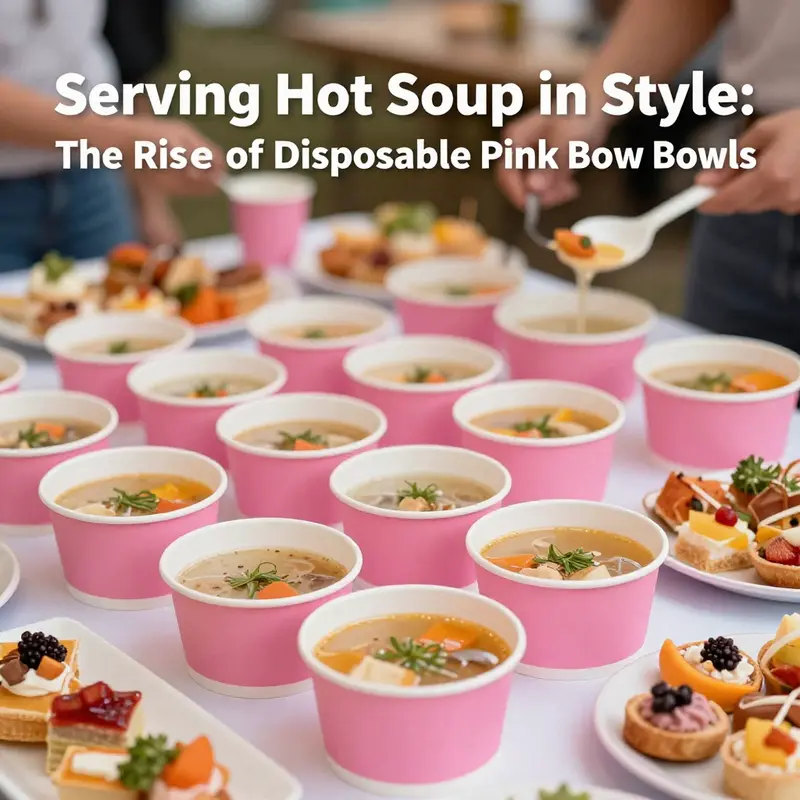
In today’s food service landscape, aesthetics and functionality play crucial roles in consumer choices. Disposable pink bowls designed for serving hot soup are at the forefront, offering a delightful blend of convenience, visual appeal, and performance. Aimed at bubble tea shops, restaurants, food trucks, catering services, and event planners, these bowls present a positive solution for serving hot soup without compromising quality or safety. Throughout this article, we will delve into the essential materials that make these bowls reliable, examine the latest market trends driving their popularity, consider their environmental impact, and understand consumer preferences influencing their adoption. By the end, businesses will have a comprehensive understanding of how to effectively integrate disposable pink bowls into their service offerings.
The Material Truth Behind Disposable Pink Bowls for Hot Soup
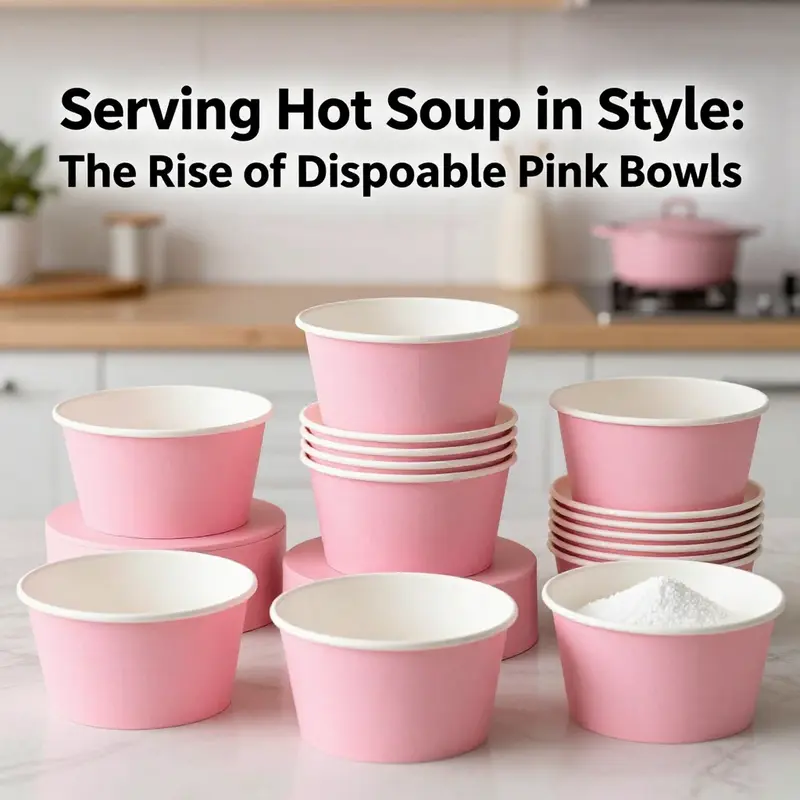
The sight of a bowl in soft pink immediately signals more than color; it signals a material choice that promises a balance between warmth, safety, and convenience. In the world of disposable dishware designed to hold hot soup, the material is not just a container but a maker or breaker of experience. Patrons expect a bowl that can endure the heat of a steaming simmer, resist leaking through the act of transport, and arrive intact at the table or curbside with the same neat presentation that began the meal. The chapter that follows threads together the material logic behind these pink innovations, tracing how choices at the molecular level translate into practical performance in catering, takeout, and home use. It is a narrative of heat, barrier, and balance, where color is a cosmetic cue that sits atop a stack of engineering decisions aimed at reliability, safety, and environmental responsibility.
At the core of most disposable pink bowls meant for hot soup is a decision about a polymer that can tolerate heat without softening or deforming in the presence of hot liquids. The two most common families in this space are polyolefin plastics, particularly polypropylene, and various forms of polyethylene when used as a plastic lining or shell. Polypropylene, in particular, is prized for its heat resistance. It can withstand temperatures approaching 160°C (320°F) in many formulations. This property is not incidental; it is the direct outcome of the semicrystalline structure of PP, which resists softening when exposed to temperatures well above typical serving temperatures for hot soups. In practical terms, a 12-ounce or 16-ounce pink polypropylene bowl can handle a bowl-brimming hot soup without visible sagging, cracking, or warping. It also tends to be lightweight and impact-resistant, which means that during a busy service period or a lengthy transport, the integrity of the vessel remains intact even when bumped or jostled along a route. The result is a dependable, user-friendly experience that does not demand the consumer to pause and worry about leakage or spills.
By contrast, the alternative plastics used in some disposable bowls—PET or PET-based composites—offer superb clarity and barrier properties, which can be appealing for presentation and for certain contents. PET-based designs can possess excellent rigidity and a strong barrier against moisture transfer. When color is added to a pink formulation, the colorants must be chosen with care to avoid compromising clarity where it matters or affecting heat performance. In practice, colorants and thin coatings must be compatible with food-contact standards and should not migrate into hot liquids. In most cases, the pink bowls discussed in contemporary research and practice rely primarily on PP for their heat stability, with color applied at the outer surface to convey the brand or style while leaving the inner barrier unimpaired. This keeps the primary contact surface safe and reliable while preserving the bowl’s aesthetic appeal.
The presence of heat-resistant plastic is only part of the equation. A bowl used for hot soup must also resist leakage and deformation while in transit. This implicates the wall thickness, the sealing method, and the edge geometry. A well-engineered design uses a wall that is thick enough to resist deformation but not so thick that it adds unnecessary bulk or waste. The rim and base interplay is carefully tuned to minimize flex under load, even when a hot bowl is carried in a stack or nestled within a larger order. The lining, if present, is chosen to create a robust internal barrier against liquid penetration while maintaining compatibility with reheating methods if needed. The use of a plastic lining, such as a polymer coating that helps resist moisture wicking, is a common approach in several paperboard-based configurations. In such cases, the outer pink layer can be decorative or color-true, while the internal barrier keeps the contents from saturating the cardboard or fiber substrate. When this combination is executed well, the result is a disposable vessel that feels sturdy, even when it holds a generous serving of soup at a high heat.
The aesthetic dimension of pink in disposable bowls should not be dismissed. Color can influence perceived temperature, appetite, and overall experience. Pink, when applied on the exterior, can convey warmth without signaling danger, as opposed to darker hues that may visually convey heat retention at the expense of perceived safety. That said, color is lip service if the core structure lacks resilience. The two are linked in practice: color enhances marketability, while material choice and wall geometry deliver the practical guarantees that a bowl can perform safely from kitchen to customer’s table. Beyond color alone, many bowls incorporate design accents—gentle ridges, subtle lustre, or even banded rims—that contribute to grip and handling. Yet these decorative touches do not substitute for the essential material properties that determine heat tolerance, leak resistance, and compatibility with microwaves or heating equipment when required.
As the industry explores more sustainable paths, the material mix grows increasingly nuanced. Paperboard bowls with a plastic lining, for instance, combine a bio-based or recycled exterior with a barrier interior. This configuration offers a relatively low-cost solution with improved heat resistance compared to pure paper products. The trade-off often centers on recyclability and end-of-life behavior. If the interior barrier is a plastic coating, it can complicate recycling streams, as the coating may not be easily separable from the fiber substrate. In some markets, industrial composting or specialized recycling programs may reclaim the fiber while isolating or segregating the plastics. In others, contamination concerns and process limitations can limit recyclability. Understanding these trade-offs is essential for operators balancing cost, convenience, and environmental goals. Some facility networks allow for the composting of fully biodegradable alternatives, such as molded fiber or plant-based bioplastics, but these options may require specific collection streams and processing conditions that are not universally available. The push toward sustainability thus introduces a layered decision framework: among heat tolerance, leak protection, consumer safety, and end-of-life pathways, which combination best aligns with the service context, regulatory expectations, and local waste management infrastructure?
To a growing degree, the obesity of environmental considerations shapes the material conversation around pink bowls. Plastic, derived from fossil fuels, remains a reliable workhorse for heat retention, rigidity, and barrier performance. Yet it does carry the burden of recyclability challenges, pale in the sense that color and coatings can complicate recycling even in well-developed systems. For operators who are mindful of the broader ecological footprint, alternatives are increasingly visible. Bioplastics such as PLA (polylactic acid) offer compostability under industrial conditions and are often marketed as renewable-resource-based. PLA blends can provide adequate heat resistance for shorter-term use, though some formulations may begin to soften faster than PP at the same high temperatures. Molded fiber, produced from recycled paper or plant fibers, represents an eco-friendly option that skews toward biodegradability and compostability. It can deliver good insulating properties and leak resistance when properly engineered, but its rigidity and heat tolerance can lag behind that of robust plastics. The choice among PP, PET, PLA, molded fiber, or a lined paperboard becomes a matter of aligning performance with sustainability priorities and the logistics of the service setting. It is not unusual for a catering operation to use PP bowls for hot soups while offering compostable fiber bowls for cold foods, thus tailoring the material choice to the menu’s temperature profile and the waste-management realities of the venue.
The consumer-facing dialogue around these choices also intersects with safety and regulatory expectations. Materials intended for hot foods must meet food-contact standards set by national authorities. They should not leach harmful substances into the soup under normal use, and they should endure the service temperature range without deformations that could compromise seal integrity or spill risk. The U.S. regulatory framework, for example, requires that containers in contact with foods meet safety guidelines designed to minimize migration of residues and contaminants. This feeds back to suppliers and manufacturers who must balance aesthetics and cost with the assurance that a pink bowl will perform safely across repeated uses in a high-demand environment. The practical upshot is that a consumer-friendly pink bowl is underwritten by a complex matrix of material science, process engineering, and compliance programs that collectively ensure it remains a reliable vessel for hot soup from the moment it leaves the kitchen to its moment of consumption.
In the field, heat resistance translates into tangible experiences. A bowl with robust heat resistance stays rigid and does not collapse under the weight of a steaming liquid. It retains its shape during the half-hour drive from a catering site to a conference room or home delivery, reducing the risk of leaks at the seam or crimped rim. The barrier properties protect not only the contents of the bowl but the integrity of the container itself. When the inner barrier resists moisture transfer, the exterior surface remains manageable for handling and stacking, and the user experience remains clean and straightforward. The interplay of these properties—heat tolerance, barrier performance, mechanical strength, and end-of-life considerations—defines a practical performance envelope that operators must navigate. In markets where demand for color-coded branding or themed tableware is high, pink bowls perform the dual role of functional vessel and visual cue, signaling a cohesive aesthetic across the service line while not compromising on the critical performance metrics that food safety and customer satisfaction demand.
As service models evolve, flexibility becomes a decisive virtue. The same pink bowl might need to survive a quick reheat in a microwave, or at least be compatible with heating equipment used in food service environments. Some designs explicitly advertise microwave safety for short periods, aligning with hot-soup service realities where leftovers or congregant meals require quick reheating. The compatibility question depends on the specific material matrix and any coatings or coatings used to maintain colorfastness. In some instances, the same bowl that holds soup in a dine-out setting is repurposed for other hot foods, if its barrier system is robust and the interior surface is designed to resist staining and odor absorption. In such cases, the color choice—pink—serves as an organizational tool for staff and guests alike, helping to differentiate hot-soup servings from other items in a crowded service queue.
From a lifecycle perspective, the material choice also shapes the waste and the downstream processing necessary to reclaim value. Plastics, particularly PP, can be recycled in systems where end-to-end collection is robust and contamination is minimized. The presence of colorants and coatings can affect recyclability, but modern recycling technologies and local policy frameworks increasingly accommodate colored plastics. Paperboard-based bowls with liners may require separation steps to reclaim the fiber while dealing with the liner material. Molded fiber and PLA-based options, while attractive for their compostability, rely on industrial facilities that can process them, which may not be present in every community. The pragmatics of end-of-life management thus weigh heavily on the material strategy. A brand or event planner aiming to balance performance with environmental stewardship must map the local waste ecosystem and choose a path that maximizes recovery or composting potential in that specific context.
This material-driven tapestry is not static. It evolves with advances in polymer science, processing technology, and waste-management infrastructure. Future pink bowls could push the envelope with multilayer structures that combine high heat resistance with improved recyclability, or with bio-based liners that preserve barrier properties without compromising compostability. The color—pink—will likely continue to function as a branding and experiential cue, but the underlying materials will be optimized for the entire lifecycle. For operators, the challenge remains to select a solution whose strengths align with the service context: the degree of heat exposure, the need for leak prevention, the tolerance for microwave use, and the intended end-of-life pathway. When these factors converge, the pink bowl becomes more than a simple container; it becomes a carefully engineered interface between culinary warmth, human handling, and planetary responsibility.
In contemplating the material choices, it is useful to consider the broader ecosystem of alternatives that respond to growing environmental concerns. Eco-friendly, compostable, and plant-based options continue to gain traction, particularly in events and venues that emphasize sustainability. Yet these options demand careful implementation; their benefits can be undermined if they are not composted or recycled in the correct stream. The practical takeaway for cooks, caterers, and home users is to pair color and form with a realistic plan for end-of-life management. The convenience of a pink bowl should not overshadow the importance of safe handling, consistent performance, and responsible disposal. Operators can turn to partners and suppliers who clearly articulate the material composition, heat tolerance, and end-of-life pathways, ensuring that the experience of warmth and hospitality extends through to responsible stewardship.
The material logic behind disposable pink bowls for hot soup thus blends science with service. It is a story written in heat and barrier layers, in the way a rim holds under pressure and a lining resists moisture wave after wave. It is about how color and form translate into reliable handling, minimal waste, and predictable performance in busy service contexts. It is a reminder that even a humble disposable bowl carries a chain of decisions—from polymer science to waste management—that determine whether slipping soup, accidental spills, or compromised safety will disrupt a moment of sharing. For consumers, this means trusting that a pink bowl will do what it is meant to do when the soup is ready to be enjoyed, whether it travels across town, sits at a campus cafeteria, or rests on a kitchen counter at home. For designers and manufacturers, it is a call to optimize every layer of the bowl—outer color, inner barrier, wall thickness, edge geometry, and compatibility with warming devices—so that the final product honors both the culinary act and the broader commitments to health, safety, and environmental care.
Internal link for further reading: readers exploring eco-friendly options and packaging design may find relevant discussions here: disposable kraft paper bowls with lids.
External resource for regulatory context: to understand how food-contact materials are governed and how safety is assured across containers like these, see the U.S. FDA’s guidelines on food-contact materials. https://www.fda.gov/food/food-contact-materials
Rosy Horizons: Market Trends Shaping Disposable Pink Bowls for Hot Soup
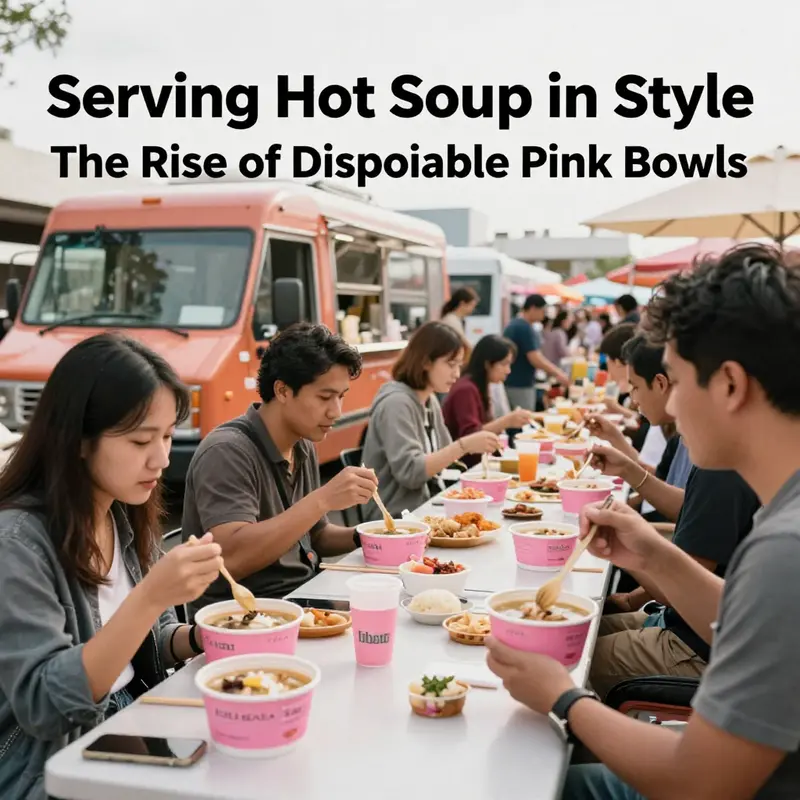
The market for disposable pink bowls designed to hold hot soup is evolving into a conversation about color, comfort, and responsibility that goes far beyond mere convenience. In a competitive landscape where presentation can influence choice as much as price, the simple pink bowl has become a strategic instrument. It catches the eye in a crowded takeout lineup, signals a sense of occasion at events, and provides a practical vessel that can travel from kitchen to table with confidence. Yet the real story lies not only in what these bowls look like, but in how they are made, how they perform under heat, and how they align with broader currents in packaging and consumer behavior. When you step back, you can see a market converging on three core dynamics: sustainability as a universal expectation, aesthetic differentiation as a branding lever, and functional reliability as the backbone of hot food service.
Sustainability sits at the heart of contemporary packaging decisions, and pink disposable bowls are no exception. The shift toward eco friendly materials is not a passing trend but a structural change in how foodservice suppliers think about end-of-life outcomes. Paperboard with bio based linings, molded fiber, and bioplastics such as PLA have moved from niche options to mainstream contenders in the hot soup space. Each material brings a distinct balance of heat resistance, leak protection, and environmental impact. Paperboard with a plastic lining offers familiar performance for kitchens that want predictable heat tolerance and low cost, while molded fiber appeals to operations pursuing compostability and a lower carbon profile. Bioplastics, derived from renewable feedstocks, promise industrial compostability and a reduced reliance on fossil fuels, aligning with sustainability goals while maintaining the microwave readiness needed for reheating or serving from warmed stations. This material diversity is not just about choosing the right cup for a single use; it is about enabling a circular approach in which brands can select packaging that fits their sustainability claims, disposal infrastructure, and customer expectations.
The tactile charm of pink is inseparable from its branding power. Color is not decorative garnish in this market; it functions as a differentiator that helps a takeout order stand out in photos and on social feeds. Pink communicates warmth and approachability, which can translate into higher perceived value for soups and stews that aim to feel homier or more festive. This aesthetic has become an opportunity for customization without sacrificing practicality. Modern producers offer options to print or emboss branding elements on bowls or lids, delivering a cohesive package that reinforces a restaurant’s identity from the first glance to the final bite. In events and catered settings, the pink bowl can frame a themed experience—think bridal showers, baby showers, charity galas, and seasonal celebrations—where the color palette of the service contributes to the narrative of the occasion.
Expanding the perceived utility of pink bowls beyond cold items like dessert or ice cream to hot soups marks a notable shift driven by material science and packaging design. Historically, hot items demanded sturdier containment and careful heat management. Today, innovations in barrier coatings, heat resistant linings, and lid engineering enable pink bowls to hold soups and stews without deforming, leaking, or compromising safety. The balance between heat retention and consumer safety is nuanced. Bowls must withstand temperatures above 180°F (82°C) long enough for transport and service, while remaining microwave safe for reheating when needed. The lid, often a matching material, becomes a critical component as well; it helps preserve temperature, prevent spills, and support tamper-evidence in delivery models. The result is a package that couples color and performance in a way that meets the practical realities of busy kitchens, delivery drivers, and on-the-go customers.
The rise of meal delivery and takeout services has intensified the demand for durable, leakproof, and insulated containers. Pink bowls that pair with secure lids support the end-to-end experience: a customer opens a bag to reveal a presentable, temperature-stable bowl and a lid that remains in place until ready to eat. The industry has learned to optimize such systems for transport, focusing on forms that minimize shifting, leakage, and heat loss. This is especially important for soups with higher solids content or oil-based components, where the risk of seepage is higher. In parallel, the market has seen a push toward user friendly features that improve the post-purchase experience. For example, bowls with heat resistant properties and microwave safe certification address common questions from consumers about reheating and safety. Tamper-evident lids add an extra layer of trust for both retail and delivery contexts, giving customers confidence that the contents are untouched and ready for consumption.
From a business perspective, the economics of pink bowls are influenced by scale, supply chain resilience, and the push for customization. Retailers and foodservice operators are increasingly prioritizing solutions that can be sourced in bulk, stored efficiently, and deployed across multiple venues. Large pack sizes—often in thousands of units—help drive down per-unit costs, while reliable supply chains reduce the risk of stockouts during peak demand. For brands seeking differentiation at volume, branded or logo ready options enable a consistent brand message across every takeout package. This is where wholesale and customization capabilities intersect with sustainability, offering a pathway to align corporate social responsibility with practical marketing outcomes. For brands exploring scalable options, consider disposable wholesale kraft paper soup bowls with custom branding as a means to build recognition while maintaining a responsible disposal narrative. disposable wholesale custom-logo kraft paper soup bowl
The channel mix for pink bowls has diversified as e commerce platforms mature and as catering and event services seek more reliable packaging partners. Consumers increasingly order directly from apps, and a robust packaging solution must perform under the rigors of last mile delivery. The integration of a sealing lid with a color matched bowl is a practical response to those needs. The packaging ecosystem also reflects a broader movement toward transparency: customers want to know what the bowl is made of, how it is disposed of, and whether the material is compatible with municipal recycling or industrial composting streams. This transparency has, in turn, driven more detailed labeling and third party certifications, helping buyers compare options beyond price and appearance. In the context of pink bowls, the emphasis is on conveying a credible sustainability story without sacrificing usability or aesthetics. The most compelling narratives tell a story of color that does not come at the expense of the planet—where heat resistance, leak protection, and compostability can co-exist with a vivid, memorable presentation.
If the industry continues to move toward more sustainable plastics and fiber blends, we can expect further refinements in performance to match the specific demands of hot soups. For example, engineered barrier layers can improve moisture control and heat retention without increasing weight, and novel fiber formulations can provide sturdiness comparable to conventional plastics while delivering compostable end-of-life options. These advances broaden the set of choices available to operators who want to balance cost with environmental stewardship. It is not simply about choosing a pink bowl that survives a hot soup test; it is about selecting a package that aligns with a brand’s values, a kitchen’s throughput, and a consumer’s disposal options.
From a lifecycle viewpoint, the shift toward sustainable materials invites a more thoughtful approach to waste. Bioplastics debut a potentially favorable end-of-life pathway when industrial composting infrastructure is available, but consumer awareness about home composting versus industrial facilities remains uneven. Molded fiber offers a more straightforward path to compostability in several markets, yet the tradeoff often includes higher cost and varying performance characteristics under heat and moisture. Paperboard with bio based linings offers a familiar print and printability profile while enabling improved leak resistance; however, recycling streams must be clearly identified to avoid contamination. The overarching message for operators is clear: the choice of pink bowl material should be harmonized with the local disposal ecosystem and with corporate sustainability commitments. The most compelling offerings are those that enable brands to tell a cohesive story about how a product travels from kitchen to consumer and, ultimately, to its end-of-life destination.
The market is also watching consumer segments with particular sensitivity to both aesthetics and ethics. Younger consumers, in particular, favor brands that demonstrate environmental accountability alongside style and convenience. They are drawn to vibrant packaging but expect clarity on whether the product is recyclable or compostable, and whether the disposal pathways are practical in their community. For events and hospitality environments, pink bowls add a celebratory note while still delivering reliability for hot servings. Caterers and food trucks leverage the color to signal a specific mood or theme, but they balance this with the need to maintain temperature and prevent spills in transit. The cultural resonance of pink—as a color tied to warmth, care, and social sharing—helps these bowls become more than vessels; they become part of a social ritual around a warm, comforting meal.
In practical terms, the industry’s attention to technical compatibility is shaping product development in meaningful ways. Bowls must be tested for heat tolerance at typical serving temperatures, compatibility with standard microwave protocols, and resilience against deformation during stacking and transport. Lids must seal securely and remain easy to open, especially for customers who are eating on the go. The packaging must also withstand the rigors of cold storage, rapid reheating, and the occasional drop without compromising safety. The best designs harmonize these functional aspects with an appealing pink hue, a color that captures attention while delivering a sense of approachability and hospitality. This combination—color, performance, and sustainability—defines the current trajectory of pink disposable bowls for hot soup and suggests a future where brands can offer a consistent, responsible, and visually distinctive dining experience at scale.
For readers exploring supply chain implications or considering procurement strategies, the market signals a clear direction: quality, reliability, and sustainability must arrive together. Operators seeking to optimize cost without sacrificing performance should evaluate not only unit price but also liner materials, lid compatibility, and end-of-life pathways. A well chosen pink bowl can reduce waste through improved leak resistance and heat retention, yet the full environmental benefit depends on the disposal options available to customers. In regions where industrial composting is accessible, molded fiber and certain bioplastics can offer tangible advantages. Where recycling streams are robust, paperboard with recyclable linings can deliver efficient circularity when properly labeled and collected.
This chapter remains a snapshot of a fast moving market, one where color does not merely decorate the product but acts as a lens to understand value, responsibility, and consumer delight. The pink bowl has grown beyond a simple container; it has become a platform for brand storytelling, sustainability commitments, and practical food service design. In the chapters that follow, we will trace how these values translate into specific supplier capabilities, consumer expectations, and policy contexts that will shape the next generation of disposable packaging for hot soups. To illustrate how these threads come together in a real supply scenario, consider the pathway of a bulk order intended for a multi venue festival. The organization must balance color consistency across thousands of units, ensure compatibility with existing lids and sleeves, verify heat resistance for soup service at elevated temperatures, and confirm end-of-life options with local waste management programs. The decision becomes less about a single feature and more about a coherent package—one that aligns aesthetics, function, and sustainability into a compelling value proposition for both operators and diners.
For organizations navigating these choices and seeking scalable, brand friendly packaging options, a practical route involves exploring wholesale, branded paper soup bowls with compatible lids and access to customization services. This approach supports consistent presentation across venues while enabling a sustainability narrative that resonates with customers who care deeply about environmental responsibility. The opportunity to tie color and branding into a single, thoughtfully designed container strengthens the overall dining experience from the moment a customer glimpses the pink hue to the final bite beneath a secure, heat resistant lid. In this way, market trends in disposable pink bowls for hot soup become more than product attributes; they become a strategic pillar for brands aiming to deliver warmth, reliability, and responsibility in every serving.
External resource for broader context on packaging sustainability and policy considerations can be found here: https://www.epa.gov/smm/sustainable-management-materials-packaging
Pink Bowls, Big Footprints: The Environmental Realities of Disposable Bowls for Hot Soup
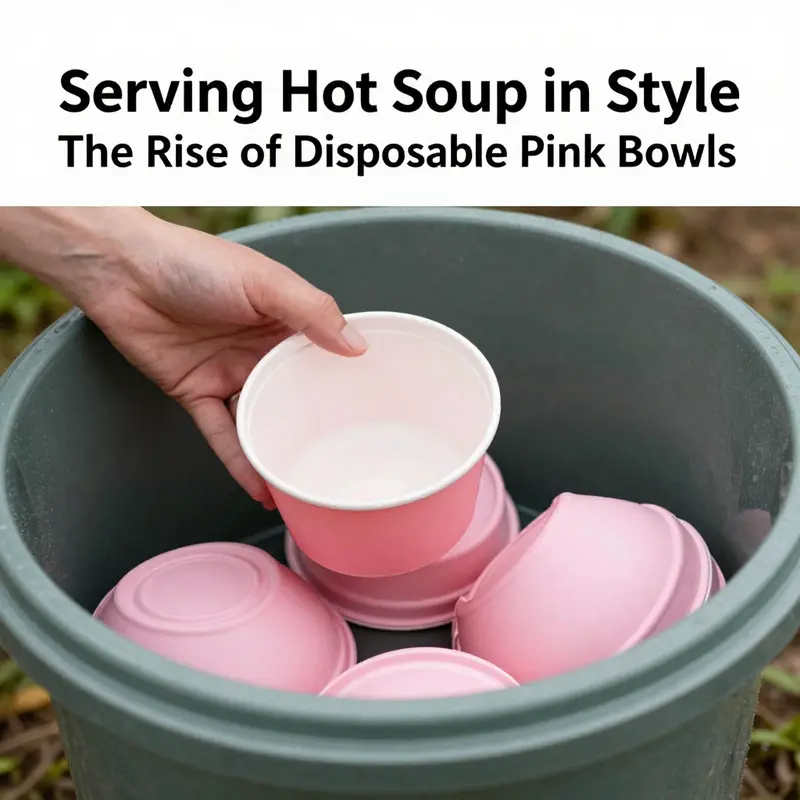
The sight of bright pink disposable bowls ready to cradle steaming soup evokes celebration and convenience. They brighten event tables, simplify catering logistics, and offer a predictable, affordable option for takeout. Yet beneath the charm lies a set of environmental considerations that complicate their appeal for sustainability-minded businesses and individuals alike. The environmental footprint of these bowls is not a single number but a spectrum that shifts with material choices, manufacturing energy, distribution, and, perhaps most importantly, the end of life. Color, in this case pink, is not merely a decorative decision but a signal that can influence processing streams and waste destinies. When planners choose pink for branding or thematic coherence, they also commit to understanding how the color is achieved, what it means for disposal, and how the bowls perform when faced with hot liquids. The practical benefits—heat resistance, leak resistance, and light weight—are real, but the environmental costs are real too, and they vary widely from option to option. To understand the environmental realities, it helps to trace the journey from raw material to disposal and to weigh how that journey is altered by emerging standards and consumer expectations.
Material matters sit at the core of this journey. Paperboard bowls lined with plastic, commonly a polyethylene coating, are widely used because the lining helps keep liquids from seeping through and enables the bowls to stand up to the heat of soup without deforming. This design makes sense in a kitchen or event setting where performance matters as much as price. However, the trade-off is a muddy end-of-life profile. The plastic lining complicates both recycling and composting. In many municipal systems, a layer of polyethylene means the item is effectively non-recyclable, because contamination risks and process limitations prevent easy reclaim of the paper fibers. The result can be a higher overall footprint, since the production of petroleum-based plastics tends to require significant energy, and the product may end up in a landfill if no industrial composting or advanced recycling options are available. Heat resistance in these structures generally remains robust enough to handle temperatures well above typical serving needs, but that resilience does not translate into environmental resilience once the bowl has fulfilled its serving job.
Bioplastics, especially those marketed as compostable under industrial conditions, represent a different narrative. Derived from renewable resources such as corn starch or sugarcane, these materials can reduce the environmental burden in some respects compared with traditional fossil-based plastics. The promise often articulated is a dramatic reduction in waste that ultimately ends up in landfills, with composting potentially reclaiming a large share of the material. Yet the reality hinges on infrastructure. Industrial composting facilities, appropriate collection, and consumer participation all must align to realize the benefit. If a compostable bowl is discarded in a way that bypasses industrial composting—into a municipal system not equipped to process the material or into a standard landfill—the anticipated gains can disappear. In some analyses, properly collected and processed bioplastics dramatically reduce the environmental impact compared with conventional plastics, but the degree of benefit can be highly sensitive to local conditions and waste-management practices. This is not a universal green outcome; it is a conditional one that requires coordinated systems and clear labeling so that facilities and households can act accordingly.
Molded fiber bowls, crafted from recycled paper or plant fibers, present another pathway with a more straightforward end-of-life narrative. These products are typically designed to be compostable or biodegradable in a manner aligned with natural materials. When dyed with natural pigments or food-safe dyes, molded fiber options can offer a compostable and biodegradable profile that aligns with sustainability goals. In practice, though, molded fiber may demand more energy and material input during production and can sometimes be less forgiving with very hot liquids, depending on thickness and fiber composition. The trade-off here often lies between a more favorable end-of-life story and a potential increase in the energy footprint of manufacturing. Consumers and institutions seeking to bolster circularity may find molded fiber attractive precisely because it presents fewer recycling complications than plastic-coated papers, but the choice still requires attention to the specific fiber source, dyeing method, and the availability of appropriate composting streams.
A further category—the conventional plastics family used in disposable bowls—offers durability and heat retention that align with demanding use cases. These options, typically made from polypropylene or polystyrene, stand up well to the physical demands of carrying hot soup. They can be recycled in certain jurisdictions, yet recycling rates for rigid plastics vary widely, and contamination is a perennial concern when colorants, coatings, or multi-material constructions are involved. The pink color, while aesthetically compelling, can complicate recycling streams if it signals a nonstandard resin or if the dyeing process introduces pigments that interfere with sorting technologies. In some systems, pink dyes are compatible with standard recycling streams; in others, they necessitate pre-sorting or even consumer education about proper disposal. The environmental advantage of plastic-based bowls, when it exists, is typically tied to durability and light weight, which can reduce energy in transport, but those benefits must be weighed against end-of-life uncertainties and potential persistence in landfills.
With these material pathways in view, the life cycle implications become clearer, though still complex. Production processes for pigmented disposables often consume more energy than plain, uncolored equivalents because of additional dyeing, coating, or formulation steps. The energy footprint of dye manufacture and the casting or forming of multi-layer structures can add up, particularly when scale is high and demand is constant. Yet lightness and compactness reduce shipping weights and volumes, a factor that lowers transportation emissions during distribution. The contrast, then, is not simply a question of which material is “best” but which set of trade-offs best aligns with a given operation’s priorities—cost, performance, and the potential for end-of-life recovery. A takeaway for responsible buyers is to inquire about the full supply chain: where the materials originate, how dyeing and coatings are handled, and what the manufacturer claims about recyclability or compostability. Claims should be scrutinized against recognized standards and verified through third-party certifications to avoid the risk of greenwashing.
End-of-life considerations anchor the environmental assessment in practical terms. Even compostable options rely on industrial facilities that can process them. In many regions, home composting or curbside programs either do not exist or are not compatible with specific packaging formats. Recycling streams, meanwhile, often reject heavily coated or multi-material items, especially when the color and coating complicate fiber recovery. The pink color, in particular, can be a signal for potential sorting challenges, especially if the dye is not formulated with recycling compatibility in mind. Consequently, a bowl that seems environmentally friendly in theory may contribute to landfill waste if community infrastructure cannot handle it properly. Contamination of recycling streams is a real risk when compostable and non-compostable products mix, which underscores why clear labeling, consumer education, and standardized disposal guidance matter just as much as the product’s material composition.
Industry trends and standards are increasingly oriented toward clarity and accountability. The regulatory framework governing food-contact materials emphasizes safety and performance, ensuring that disposables can hold hot foods without compromising consumer health. Beyond safety, there is growing attention to sustainability claims. Many suppliers now offer certifications that indicate compostability under specific industrial conditions or recyclability within targeted programs. Certifications help buyers navigate the gray areas of end-of-life behavior and reduce the likelihood that a product’s green claims remain unverified. The push for transparency is echoed in broader sustainability movements that encourage life cycle thinking, the use of renewable or recycled feedstocks, and the minimization of non-recyclable waste. In practice, this means suppliers increasingly provide documentation about fiber sources, coatings, and dyeing processes, enabling purchasers to make informed decisions that align with corporate or event sustainability goals.
A regulatory backdrop guides every stage of this equation. The U.S. Food and Drug Administration (FDA) provides essential safety guidance for food-contact materials, outlining which substances are permissible and how they must perform when in contact with hot foods. This framework helps ensure that colorants, binders, and coatings used in pink disposable bowls do not pose health risks. However, safety alone does not guarantee environmental responsibility. The FDA’s guidance is a necessary baseline; environmental claims depend on a parallel set of standards and certifications that address compostability, recyclability, and overall life cycle impact. In practice, responsible sourcing requires cross-checking safety compliance with environmental verifications, so that a product can be both safe for hot foods and mindful of its end-of-life fate. For those balancing branding needs with ecological stewardship, the task is to integrate safety assurances with transparent environmental performance data, selecting options that reliably fit the intended disposal infrastructure.
From a business perspective, the choice of pink disposable bowls for hot soup becomes a matter of balancing customer expectations, operational realities, and environmental commitments. Events, takeout operations, and home use all benefit from bowls that perform well in heat and leakage resistance, but those benefits are meaningful only when the end-of-life story is coherent with local waste-management practices. For organizations aiming to demonstrate leadership in sustainability, it is not enough to choose a color or a material on the basis of aspect alone. The total package matters: supplier credibility, verifiable certifications, clear labeling, and a realistic assessment of how waste is collected and treated after use. In this light, selecting a packaging solution becomes a strategic decision that reflects a broader commitment to circularity, rather than a quick fix to a common operational need.
In the context of this chapter, a path toward reconciliation of practicality and planet-friendliness emerges when we look at alternatives that foreground compostability and recyclability within feasible systems. For entities exploring options that reduce end-of-life complexity, a practical step is to consider products designed to align with specific industrial composting capabilities or to prioritize materials with higher recyclability in established streams. The idea is not to eliminate pink bowls from the menu but to choose formats that maximize the likelihood of productive recovery after use. This approach often involves engaging with suppliers who can articulate the complete lifecycle story of the product, from raw material sourcing to the end-of-life channel, rather than focusing solely on the immediate performance in hot liquid containment.
For readers seeking concrete avenues toward greener choices, the chapter points to a pathway that emphasizes transparency and system alignment. If a business desires a more sustainable option within the realm of pink bowls, it can seek out biodegradable kraft paper bowls that are designed for take-away packaging and explicitly marketed with compostability or improved recyclability in mind. These options typically offer a more straightforward end-of-life narrative and may integrate more seamlessly with existing waste-management practices in regions with robust organics or fiber-recovery programs. To explore this type of option, consider sources that provide both the product form and the environmental credentials in a way that allows for verification by waste facilities and customers alike. For readers who want to dig deeper while remaining anchored to practical realities, a concise reference point is available through resources that describe the benefits and limitations of compostable and recyclable paperboard options, alongside the supply chains that deliver them.
In this light, the environmental impact of disposable pink bowls is not a fixed verdict but a living story shaped by choice and circumstance. The color can signal a branding intention, but what ultimately matters is whether the bowl’s material and end-of-life journey harmonize with local waste systems, whether the production footprint is justified by the performance and demand, and whether the consumer can dispose of the product in a way that supports recovery rather than landfill. To aid in navigating these questions, a practical step is to engage with suppliers who offer explicit disclosures about fiber sources, dyeing methods, and disposal pathways. This transparency helps ensure that the pink hue does not come at the expense of a community’s ability to manage waste effectively.
Internal link example for further exploration: Biodegradable eco-friendly kraft paper bowls. This resource highlights a pathway toward compostable, fiber-based packaging that can align with systems designed to reclaim organic materials and fiber content. It is a reminder that color and form can be harmonized with responsibility, provided the disposal infrastructure exists to support recovery. And while the scientific and logistical details continue to evolve, the overarching message remains clear: choosing a pink bowl that can responsibly re-enter the materials loop is a meaningful step toward reducing avoidable waste and fostering a more sustainable foodware ecosystem. For readers seeking regulatory context to complement these considerations, official guidance on food-contact materials offers a foundational baseline for safety and performance, while environmental certifications and disclosures provide the verification needed to assess true sustainability outcomes.
External resources offer additional grounding for the broader regulatory and environmental conversation. For regulatory context, see the FDA’s guidance on food-contact materials, which outlines safety considerations for containers that hold hot foods and other liquids. This essential reference supports a comprehensive assessment of any pink disposable bowl’s suitability for service while remaining mindful of health protections that accompany consumer food exposure. https://www.fda.gov/food/food-contact-materials
The Subtle Allure and Safe Function of Pink Bowls: Navigating Consumer Preferences for Hot-Soup Disposables
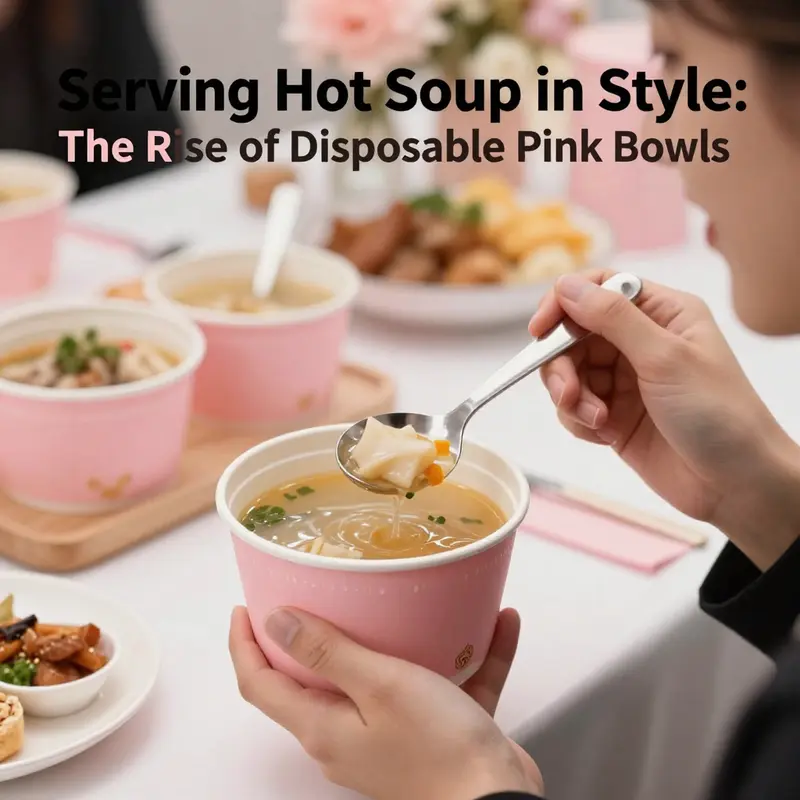
Pink disposable bowls designed for serving hot soup sit at an intriguing crossroads of color psychology, practicality, and responsibility. They catch the eye in crowded catering halls and busy takeout windows, offering a splash of warmth and whimsy that can elevate an ordinary bowl into a small, mood-shifting ritual. Yet beneath that visual appeal lies a web of worries and expectations that consumers weigh, often unconsciously, when deciding what to buy, serve, or reuse. The modern consumer does not simply want a pretty vessel; they want a container that performs reliably under heat, travels well, respects environmental constraints, and communicates safety through clear signaling on packaging. In this sense, the pink bowl becomes less a fashion ornament and more a signal of a brand’s credibility, its commitment to safety, and its alignment with evolving cultural norms around sustainability and health-conscious dining.
At any event or service scenario, the first impression of a hot-soup experience is tempered by the container that carries it. A pink hue can cue feelings of comfort, hospitality, and a touch of festivity, which aligns well with the social nature of soups—from comforting familial meals to celebratory gatherings. Color can influence perception well before taste is involved. But color alone cannot compensate for what happens when heat meets material. Consumers today approach disposable containers with an expectation that the product will withstand high temperatures, resist leaks, and not degrade into the liquid or its contents. The moment hot broth hits the inner surface, the container must hold its shape and its integrity. If the vessel warps, leaks, or releases an unexpected odor, the perception of safety and cleanliness can be compromised, even if the color remains pristine. This is why material science matters as much as color psychology in shaping consumer preference for pink bowls used with hot soup.
Material choice is the scaffolding that supports both aesthetics and function. Paperboard with a plastic lining offers a practical balance: it brings heat resistance and leak protection at a reasonable cost, which explains its popularity in kitchens that prioritize efficiency and turnover. Molded fiber presents an eco-conscious alternative, often lauded for biodegradability and compostability. For brands pursuing sustainability goals, molded fiber is appealing because it aligns with consumer demand for products that reduce landfill impact. Bioplastics, like polylactic acid, present another path: plant-based origins, microwave compatibility, and industrial compostability can be marketed as forward-looking sustainability features. On the other hand, traditional plastics—though celebrated for durability and heat retention—come with environmental considerations that govern consumer choices, especially among shoppers who want to minimize plastic waste or who insist on proper recycling streams to avoid leakage of residual materials into the environment. Each material type speaks to a different segment of the market: cost-driven operators weighing margin against performance; eco-conscious buyers seeking certified compostability or recyclability; and tech-forward customers who value microwave safety and predictable heating outcomes.
No matter the base material, a matching lid is a practical companion that consumers increasingly expect. Lids help preserve temperature during transport, reduce the risk of spills, and create a convenient one-hand service model for busy events. The lid’s compatibility with heating equipment is not a mere convenience; it becomes a safety feature that prevents scalding and protects the coating, especially when the container is filled close to capacity with hot soup. A well-fitted lid also reinforces consumer confidence that the bowl can be safely transported in a bag, on a tray, or in a vehicle without leaking, which is a nontrivial factor when it comes to repeat purchases. For many buyers, the pink color is not just a cosmetic touch but a cue that the entire packaging system—from bowl to lid to label—has been designed with attention to detail. The color, the finish, and even the rim design can contribute to a perception of sturdiness and care, influencing whether customers are willing to choose a particular option for a work event, a family gathering, or a community meal program.
In the realm of consumer safety, the chain of responsibility is clear and increasingly scrutinized by informed buyers. The core concern is whether the container can hold hot liquids without deforming, leaking, or releasing harmful substances. A paper-based container lacking sufficient resistance to pressure and heat can distort, leak, or collapse under the weight and temperature of a hot soup. Such failures do not merely risk spills; they can escalate to scalding injuries or exposure of an inner plastic coating, which could migrate into the food if the coating is breached. This is precisely why safety experts emphasize structural integrity and compatibility with hot contents. The color pink should not supplant the fundamental requirement that the container be designed and tested to safely contain hot foods. Transparent labeling and third-party safety certifications become essential signals to consumers who want to trust that a pink bowl will perform as advertised under real-world conditions. A consumer who sees a color that signifies warmth should also see a material that supports that warmth without compromising safety, with a coating that is non-toxic and stable under heat.
Regulatory considerations are not mere bureaucratic frills; they map the expectations that govern what can be marketed to households and food service operations. While specific guidance often targets broader classes of packaging, the underlying principle is universal: containers used for hot foods should minimize the risk of chemical migration, release of off-odors, or physical degradation. While some guidelines emphasize plastic materials for fear of specific leachables, they also underscore a broader requirement for safety testing, labeling, and traceability. In the real world, brands respond by adopting high-grade, food-grade paper with heat-resistant coatings that resist delamination and prevent transfer of substances into the soup. Clear labeling, ingredients, and safety certifications on the packaging reassure buyers who must comply with health and safety standards, insurance requirements, and customer expectations. For many operators, this translates into a preference for pink bowls that are not only eye-catching but also certified to meet recognized safety standards for food contact materials. Consumers who demand transparency about material choices and manufacturing processes tend to favor brands that publish third-party testing results or certification marks, seeing these as evidence of credibility in a crowded marketplace.
Environmental considerations increasingly shape consumer preferences for pink bowls, especially among those who pivot toward events with sustainability as a narrative thread. Molded fiber, for instance, is equated with eco-friendliness because it derives from recycled paper or plant fibers and can be composted under appropriate conditions. Bioplastics hold similar appeal, aligning with sustainability goals when properly composted in industrial facilities. Even paperboard with plastic lining is weighed against its environmental footprint: while it provides leak resistance and heat tolerance, it also raises questions about end-of-life management and recycling compatibility. The market increasingly rewards packaging that clearly communicates its end-of-life pathway, whether through compostability certifications or recyclable material declarations. Within this landscape, pink bowls offer an opportunity to blend style and sustainability by combining a distinctive color with a robust, well-documented material story. The emphasis is on a holistic approach: consumers want products that look appealing and perform reliably, but they also want to know that their choice reduces harm to the environment and aligns with a broader mission to minimize waste. In practice, this means brands that invest in sustainable coatings, clear disposal guidance, and transparent supply chains can cultivate deeper trust and loyalty among customers who aren’t just buying a bowl; they’re buying a package of values.
From the standpoint of user experience, the boilings of taste and temperature rely on more than raw material selection. The interaction between heat, material, and design is a dance where the goal is predictable performance. Heat resistance must exceed typical serving temperatures—often well above 180°F (82°C)—to ensure the bowl does not soften, distort, or release an off-putting odor. The interior lamination or coating plays a critical role here, serving as a barrier that prevents liquid contact with the paper substrate and, ideally, with the consumer’s lips and palate. Yet consumers are now more attentive than ever to what lies beneath the surface: coatings must be non-toxic and stable under real cooking and serving conditions. The risk is not just chemical migration, but also whether the coating degrades in a way that could alter taste or appearance. An off-taste or a visible seam can quickly erode trust, regardless of the color’s charm. In response, the market gravitates toward solutions that pair aesthetics with empirical safety, offering pink bowls that carry explicit safety narratives, third-party testing, and credible sustainability claims. In other words, the consumer’s preference is shifting from a simple “looks nice” criterion to a more robust evaluation of safety, function, and responsibility—all while maintaining the emotional appeal that a pink hue can provide.
The social dynamics surrounding disposable pink bowls for hot soup are equally telling. In a world of social dining and dine-out experiences, color becomes a cue for shared experiences. Friends and families plan photo moments around themed events, and remember that a pink bowl can anchor the visual palette of a gathering. But social media’s influence also pushes demand toward brands that can demonstrate transparency. Consumers increasingly expect to see clear labels about what materials are used, how they are tested, and what the environmental fate of the product is. They also want accessible information about heating compatibility, microwaving instructions, and lid performance. This demand for clarity translates into a packaging strategy that favors pink bowls with straightforward, credible disclosures rather than glossy but opaque marketing. In practical terms, this means accessible QR codes, printed claims that align with recognized standards, and packaging artwork that reinforces the bowl’s purpose without obscuring safety messaging. When a consumer encounters a pink bowl at a food truck or a pop-up event, the first impression is no longer simply ‘cute’ or ‘fun’; it is a signal of responsible production, clear information, and a thoughtful approach to heat and safety.
All of these factors converge to shape what retailers, caterers, and households value in a pink disposable bowl for hot soup. For many buyers, the decisive elements are not primarily the color itself but the overall package: heat tolerance, leak resistance, lid compatibility, and a clean end-of-life story. The color remains an important differentiator, a way to create mood and identity. Yet the consumer who invests in such a product is likely to scrutinize the container’s performance, verify its safety credentials, and consider the environmental implications of disposal. In this sense, the pink bowl becomes a microcosm of contemporary consumer expectations, where aesthetics, safety, and sustainability are inseparable threads in a single narrative.
For businesses seeking versatile packaging that can support a pink, appealing presentation while maintaining safety and performance, one practical option is a disposable kraft paper bowl with a lid. This approach harmonizes color appeal with robust function, delivering a container that can hold hot soup without compromising structural integrity. The kraft paper exterior provides a natural, warm aesthetic that pairs well with the pink interior or with a pink-coated surface, offering a gentle contrast that is visually engaging without being flashy. The option to add a lid enhances transport safety and keeps the contents at a desirable temperature, enabling operators to serve more customers with confidence. Such a solution also aligns with growing consumer demand for transparency and responsible packaging, particularly when the bowl and lid are clearly marked with safety certifications and disposal guidance. Within this framework, the internal link to a supplier’s kraft-based, lid-ready option serves as a practical reference for readers exploring packaging configurations that combine color, function, and sustainability. The link can illustrate how a brand communicates these qualities through product design, labeling, and accessibility of information, while also offering real-world procurement options for event planners, caterers, and food-service managers who must balance cost, performance, and environmental considerations.
As the chapter closes on consumer preferences for disposable pink bowls for serving hot soup, a broader perspective reveals that the most enduring appeal lies not in the color alone but in a holistic package that integrates safety, performance, and responsibility. Consumers are increasingly forward-looking; they want products that are safe under heat, that minimize risk during transport, and that align with ecological values. The pink bowl is a vessel through which these aspirations are expressed. In the language of modern consumer research, pink bowls are not just a color choice—they are an indicator of a brand’s willingness to meet complex expectations with honesty, clarity, and quality. Providers who recognize this will avoid merely chasing trends and instead invest in materials, finishes, and communication that reassure users about safety and sustainability. That reassurance, in turn, translates into trust, loyalty, and repeated use in homes, offices, events, and eateries that value both style and substance.
In sum, consumer preferences around disposable pink bowls for hot soup reflect an evolving balance of aesthetics, safety, and environmental accountability. The color can elevate a dining moment, but it must be paired with a container that stands up to heat, preserves the soup’s integrity, and respects the planet. The most successful products in this space will be those that tell a credible story—one that customers can read on the packaging, the certifications, and the company’s disclosures—without sacrificing the joy that pink can bring to the table. The ongoing dialogue between form and function, between delightful color and rigorous safety, will continue to shape the market as operators respond to what customers want: bowls that look good, feel confident to use, and leave a lighter footprint on the world.
External resources for readers seeking further grounding in food-contact safety and material standards can be explored at credible regulatory references. For a comprehensive overview of the materials allowed, testing protocols, and regulatory oversight relevant to disposable containers used for hot foods, see the official guidance from the food safety authority. This resource helps connect consumer-facing claims with the underlying safety science that makes pink bowls reliable companions for hot soup in diverse settings.
External link: https://www.fda.gov/food/food-contact-materials/food-contact-materials-and-articles
Final thoughts
Disposable pink bowls for serving hot soup are not just a trendy choice; they represent a commitment to quality, sustainability, and customer satisfaction. By understanding the materials, market trends, environmental considerations, and consumer preferences surrounding these bowls, businesses can optimize their food serving experience. As we move forward, the adoption of these bowls offers teams in various sectors a unique opportunity to enhance their brand image while catering to modern consumer demands. Embrace the vibrant appeal and functionality of disposable pink bowls in your service strategy, and watch your offerings thrive.