
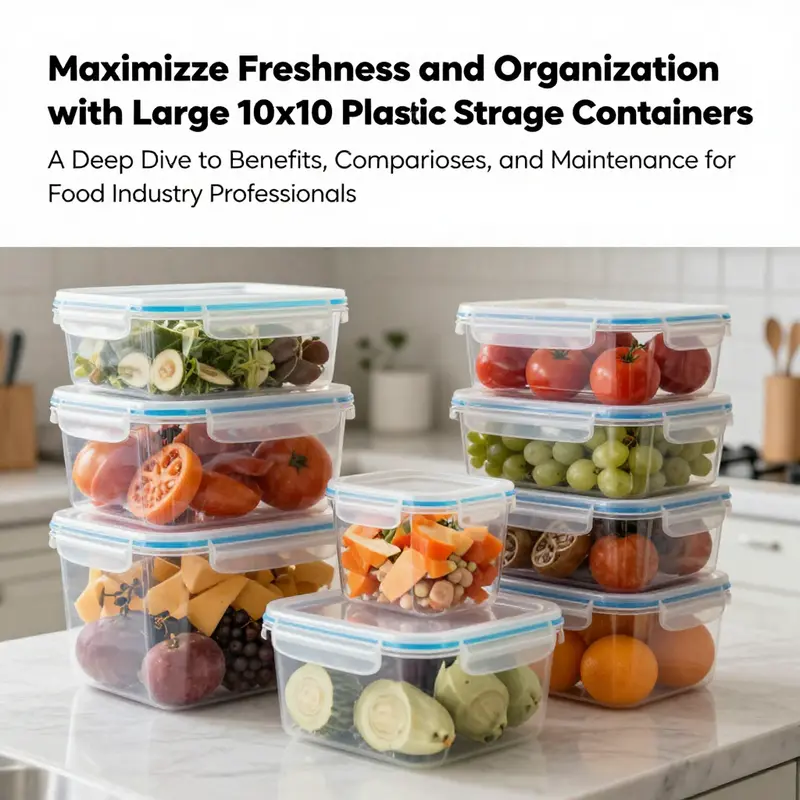
Large 10×10 plastic food storage containers are essential for food service professionals, providing an ideal solution for storing a variety of food items. Bubble tea shops, restaurants, food trucks, and catering services can benefit from the multifunctional nature of these containers, which are designed to maintain freshness and organization. In this article, we will explore the many benefits of using these containers, conduct a comparative analysis of popular brands, and provide tips on maintaining and cleaning them, ensuring they remain a staple in your food storage practices.
Rethinking a Pantry Staple: Health Risks, Heat, and Safer Pathways Beyond Large 10×10 Plastic Storage
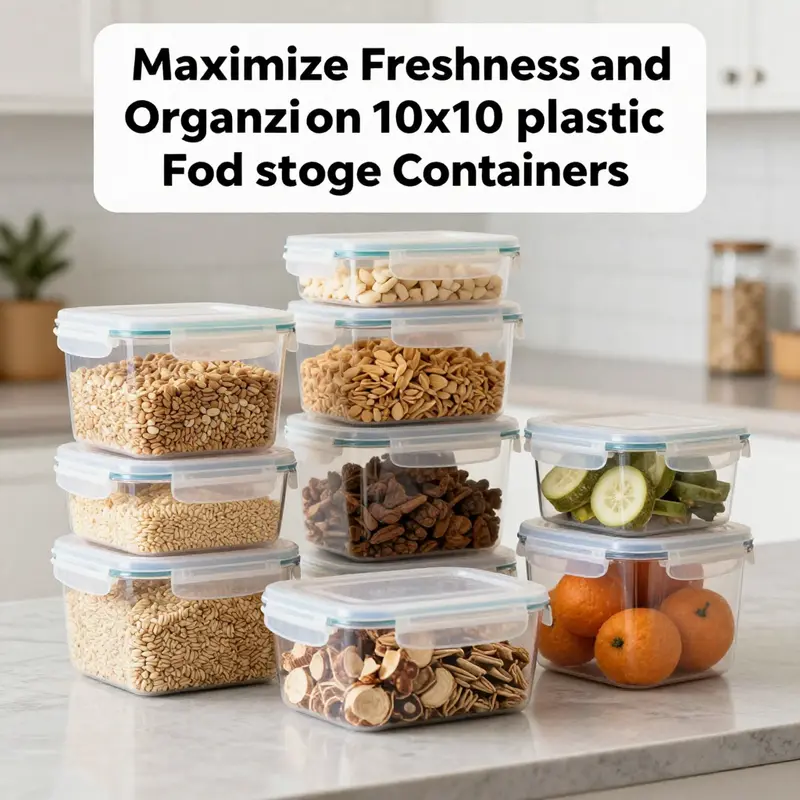
The allure of a large 10×10 plastic storage container is practical and almost universal in homes that prize organization. A square footprint that tucks neatly into a shelf, a transparent body that lets you scan contents at a glance, and an airtight lid that promises preserved freshness—these are the selling points that make such containers feel indispensable. Yet beneath the surface of convenience lies a more complex story about how plastic interacts with food, how temperature and time alter that interaction, and what truly safe storage looks like in everyday kitchens. This chapter does not pretend to erase the appeal of a sturdy, stackable bin. Instead, it invites a careful meditation on the long-term health implications that research quietly accumulates in the background, and it guides readers toward alternatives that maintain order without compromising safety.
To begin, it is important to acknowledge the practical realities that propelled large plastic storage into pantry ubiquity. The 10×10 design maximizes vertical space, a critical advantage in compact kitchens and apartment setups where every inch of shelf and countertop counts. The light weight of plastic reduces handling fatigue and makes it easier to transport bulk purchases from pantry to table. Clear or translucent bodies let you see what’s inside, reducing the guesswork about whether a bag of rice or a box of pasta has run its course. And, for many families, the airtight seal promises a measure of protection against moisture and pests, at least in the short term. These features, taken together, created a perception of safety and convenience that has embedded itself into daily routines and shopping habits.
But the same combination of features that creates convenience can also harbor risk, especially when properties of plastic come into play over time. The research materials guiding this chapter emphasize a consistent thread: the chemicals used in or added to plastic containers can migrate into food under certain conditions. In particular, heating (whether in a microwave or in a dishwasher’s hot cycles), certain types of food—especially acidic items like tomatoes or citrus—and repeated use can exacerbate chemical migration. The concern is not mere speculation but a chemical reality tied to the very materials chosen to form the containers. Some plastics are more inert, some carry additives that improve durability or clarity, and some claim to be free of certain substances like Bisphenol A. Yet even in containers marketed as “BPA-free” or “food-contact safe,” the research calls for cautious interpretation, because other compounds can migrate or degrade with time and exposure.
The health implications that researchers have flagged are not merely theoretical. Among the most discussed concerns are compounds that can migrate from plastic into food when the material degrades or is stressed by heat. Bisphenol A (BPA) is the centerpiece of much public and regulatory attention, given its structural role in some plastics and resins. Phthalates, a class of plasticizers used to impart flexibility in certain formulations, have also raised health concerns in other consumer contexts. The literature links, with varying degrees of certainty, chronic exposure to these substances with cardiovascular risks and endocrine disruption, among other potential effects. It is not that every plastic container will suddenly release dangerous levels of chemicals; rather, the risk profile should be understood as a function of time, temperature, and the nature of the stored contents. In practical terms, this means a plastic container that has been used for years, or one that has been repeatedly heated, carries a higher theoretical risk than a pristine, heat-dormant system used with inert foods at cool room temperatures.
An important nuance in the body of evidence is the role of heat exposure. When plastic storage is heated, either directly through microwaving or indirectly through hot storage environments, molecular movement increases. Add to that the presence of acidic or fatty foods, which can interact more aggressively with the polymer matrix, and the likelihood of chemical migration rises. In many households, the temptation to reheat leftovers in a plastic container is strong: it saves a step, reduces dishwashing, and aligns with fast-paced routines. Yet the science suggests that reheating can intensify the release or migration of substances, presenting a potential health hazard over time. The same logic extends to dishwasher cycles, where high temperatures and detergents can alter surface properties, potentially accelerating leaching over repeated cycles.
Given this body of evidence, the preference for safer storage becomes a matter of risk mitigation rather than an outright ban on plastics. The research results explicitly encourage a move toward alternatives that do not pose the same chemical leaching risks under typical household use. Glass and silicone emerge as the most frequently recommended paths for this transition. Glass, particularly borosilicate varieties, is chemically inert in many common food contexts and does not leach substances during normal use. Silicone, meanwhile, offers a heat-tolerant alternative with flexible lids and a resilience that makes it easier to handle compared to brittle glass. The proposition is not to eliminate plastic from all kitchens overnight—an impractical demand in many households—but to reframe the pantry around safer configurations for the foods we store most frequently, especially grains, dried beans, baking ingredients, and snack staples that sit on shelves for extended periods.
In this reframed landscape, it becomes useful to consider how containers function beyond their stated purposes. The value of a large storage unit extends not only to how well it keeps out moisture but also to how it prompts or discourages certain storage practices. A container that seals tightly can enable bulk buying and reduce waste, which is a meaningful ecological and economic benefit when used wisely. Yet if that same seal is paired with a material that risks chemical migration under kitchen conditions, the net benefit shifts toward caution. The dual nature of large 10×10 plastic containers—convenient and potentially risky—requires a balanced approach that weighs convenience against long-term safety.
From the consumer’s perspective, the implication is not to abandon organization tools but to choose them with a clear understanding of the conditions in which they will operate. The appeal of a transparent, airtight, stackable unit can be preserved, but the choice of material and the context of use should be revisited. In practice, this means adopting safer containers for the most frequently stored foods and reserving plastic storage for items stored in cool, dry conditions, away from direct heat and sunlight, and for shorter periods where possible. The heart of the argument, then, is not a wholesale rejection of plastic but a strategic reconfiguration of how we use it in daily life.
The discussion also touches on the broader ecosystem of storage options, reminding us that the pantry is a system, not a collection of isolated containers. The initial research materials show a spectrum that includes not only household items but also industrial storage solutions. While the latter have important roles in bulk or commercial contexts, they are not relevant for typical kitchen storage and leftovers. It is easy to conflate scale with safety, but the takeaway is that home storage should be evaluated within the constraints of household use, not industrial scale. In other words, the practical decisions you make about large 10×10 containers should be informed by how you cook, how you reheat, how you store, and how you clean, all within the ordinary rhythms of a home kitchen.
As this chapter moves toward practical implications, it is worth pausing at the question of labeling and consumer information. The market for food storage often signals reassurance through certifications and claims of safety, but these do not always capture the full complexity of long-term use. A container may be certified for food contact, and it may be BPA-free, yet that does not guarantee that every molecule remains inert under every kitchen condition. Skepticism, therefore, becomes a useful ally—paired with practical measures that reduce risk. One such measure is diversification of materials within the pantry. By rotating storage materials—using glass for bulk, silicone lids for flexibility, steel or ceramic for certain applications—you can preserve the organizational benefits of the 10×10 footprint while mitigating potential health concerns.
In practical terms, what does this look like on the kitchen shelf? It starts with a pantry audit: which foods are stored most frequently, for how long, and under what conditions? Dried grains, cereals, nut flours, and baking staples often sit for extended periods and are susceptible to moisture and pests if poorly sealed. Plastic containers with airtight seals can be useful for these items if they are kept in cool, dry places and not subjected to repetitive heating. But even then, the cautious approach is to use glass storage for long-term containment, particularly for flour, sugar, and grains that you anticipate storing for months. For snacks and non-perishable items that you plan to consume within weeks, silicone lids and BPA-free or alternative-material containers may provide a middle ground that preserves convenience without introducing new risks. The aim is not perfection but a more resilient and health-conscious routine.
In addition to chemical migration concerns, the life cycle and end-of-life considerations for plastic storage add another layer to the decision. The environmental footprint of plastic containers involves production energy, the potential for microplastics, and the challenges of recycling. While glass has its own environmental costs in terms of weight and breakage, its inertness and recyclability often translate into a different risk-benefit calculus for households seeking to minimize chemical exposure. The decision therefore also intersects with personal values about sustainability, disposal practices, and the desire to reduce cumulative exposure to synthetic chemicals across daily life. The pantry, then, becomes a microcosm of a broader shift toward informed consumer choices that balance convenience, health, and environmental responsibility.
From a design and product development perspective, the conversation about large 10×10 containers invites deeper questions about materials science and consumer safety in everyday contexts. If a square, stackable container continues to dominate kitchen shelves, manufacturers and researchers alike could focus on advancing alternatives that retain the practical strengths of these designs while removing the health concerns associated with certain plastics. This could involve developing resin systems that are demonstrably inert under all normal kitchen scenarios, or adopting composite approaches that combine the best of glass and polymer technologies without introducing migration risks. The goal would be to preserve the intuitive scorecard many shoppers use—clarity, seal integrity, durability, and ease of cleaning—while ensuring that the stored contents remain chemically inert across the lifespan of the product. Such innovations, however, hinge on transparent testing, clear labeling, and consumer education about safe use and care.
In all of this, the human factor remains central. People utilize containers in ways that reflect routines, habits, and time pressures. The impulse to reuse, to reheat, or to stack aggressively in a crowded cabinet is powerful. Yet modest changes in practice can reduce exposure without sacrificing organization. For instance, cooling hot foods before transferring them into containers minimizes heat exposure, a key driver of chemical migration. Separating highly acidic foods from plastic storage by using glass jars or silicone alternatives slows down potential interactions between food and container. Cleaning habits matter as well; not all plastics tolerate aggressive dishwashing detergents or high-heat dishwasher cycles equally. Gentle hand washing with a mild detergent and thorough drying can extend the functional life of containers and reduce surface degradation that might contribute to chemical release.
The chapter’s synthesis rests on a paradox: large 10×10 plastic containers solved a practical problem—how to manage bulk pantry items with minimal clutter—yet the same characteristics that enable this solution can complicate safety over time. The path forward is not elimination of plastic, but a recalibrated approach to storage that respects the physics of food, the chemistry of materials, and the realities of household life. For many households, this means embracing a mixed-material strategy that preserves the organizational logic of a uniform, stackable system while assigning the safest materials to the foods most sensitive to heat and acidity. A glass container can house the dry bulk staples that stay longest, a silicone-sealed option can cover the need for a flexible, heat-tolerant alternative, and the smaller, lighter, and more portable options can still be plastic—but used thoughtfully, with an eye toward safe reheating practices and mindful care.
To illustrate how this might look in a practical pantry, imagine a kitchen that uses a few standardized glass jars for bulk grains and flours, each with a clearly labeled lid, a silicone seal, and a removable, soft-rimmed top for easy access. On higher shelves, the lighter silicone or composite containers can hold snacks and baking ingredients that are consumed within shorter time frames, while the remaining dry goods find a home in smaller, modular glass or metal canisters with a time-proven track record for inertness. The important thread across this vision is continuity: the sense that one’s storage system still feels cohesive and orderly, even as its components are diversified to prioritize safety. And that cohesion matters because it supports confidence in everyday decisions—decisions about what to cook, what to store, and how to reuse leftovers—without becoming a source of constant anxiety about potential health risks.
Against this backdrop, the reader may ask how to navigate the existing marketplace, where a large 10×10 plastic container often comes with a promise of universality: one size to fit many foods, one system to rule all pantry shelves. The answer is not to abandon the concept of a unified storage approach but to replace the underlying assumption that a single material should dominate such a system. The most prudent approach is a tiered strategy: preserving the organizational logic of the 10×10 footprint while assigning the safest materials to the foods most likely to benefit from long-term storage. The goal becomes a pantry that is not only neat but also health-conscious, resilient, and adaptable to the changing realities of family life, cooking styles, and storage needs.
Finally, it is worth acknowledging that consumer education plays a pivotal role in translating research into daily practice. When people understand how heat, acidity, and time can interact with plastic, they are better equipped to make better choices. This knowledge does not demand perfection but invites informed flexibility. A kitchen that adopts glass for bulk storage, silicone for flexible lids, and selective plastic use for short-term, cool-storage items can still achieve the desired effect: a pantry that is orderly, affordable, and safer for long-term health. In this sense, the large 10×10 container remains a relevant symbol of how we balance convenience with safety, provided we temper enthusiasm with a careful, evidence-informed mindset and a willingness to adapt as new insights emerge.
For readers drawn to the practicalities of making a transition, consider the following integrative step: begin by inspecting the items you keep in your current 10×10 bins. Are there grains, flours, or dried goods that you know you store for long periods and that are prone to moisture or pests? If so, place those items in glass jars with airtight seals and store them away from direct heat. Keep a few silicone-sealed containers for items that you anticipate using quickly or that benefit from a more flexible lid. Use plastic storage sparingly and primarily for items that you will store for shorter durations and under cool conditions. This approach preserves the slope of the pantry toward order while decreasing the cumulative risk of chemical exposure over time.
In sum, the call to reassess large 10×10 plastic food storage containers is not a surrender to caution alone. It is a disciplined invitation to align storage practices with what science continually clarifies about chemical migration, heat exposure, and long-term health. It also opens space for design and material innovations that can deliver the same organizational benefits without compromising safety. The pantry becomes not a battlefield between convenience and health but a thoughtfully composed system where form and function cooperate with biology, chemistry, and daily life. As households embrace safer alternatives, they do not abandon the logic of a tidy, efficient kitchen; they refine it, enabling more reliable preservation of the foods that sustain us while reducing subtle, long-term risks. In this light, the large 10×10 container remains a useful starting point for a larger conversation about how we store, prepare, and enjoy food in a world where safety and simplicity must walk hand in hand. For those seeking to bridge the best of both worlds, the path forward is clear: preserve organization, minimize heat exposure, and adopt safer materials where possible, while maintaining flexibility and a willingness to adapt as new knowledge becomes available.
As you move forward, remember that every decision about storage carries consequences, both immediate and cumulative. The pantry is not merely a repository for dry goods; it is a daily interface between your health, your environment, and your routines. The choice to transition away from certain plastic storage practices is not a rejection of practicality but an invitation to cultivate a kitchen that respects scientific insight and personal well-being. If you are looking for a tangible example of safer, eco-conscious storage, explore options that align with this approach and consider integrating them gradually into your kitchen routine. For example, swapping a subset of your large plastic bins for glass containers can be accomplished over time, reducing risk without upending your existing workflow. And as you search for alternatives, you may come across practical, affordable, and aesthetically pleasing solutions that fit your space, your budget, and your values, helping you keep a well-organized pantry that you can trust day after day. For readers who want to explore safer, more sustainable packaging options more broadly, there are product lines in the market that emphasize eco-friendly materials and responsible design choices, including biodegradable and recyclable options that align with long-term health and environmental goals. That broader perspective can be a source of inspiration as you tailor a pantry system that serves both your kitchen and your conscience.
For further reading and a sense of how alternative materials can be integrated into a safe storage strategy, consider exploring a resource that highlights eco-friendly packaging options. This example underlines the broader shift toward materials that reduce chemical exposure while maintaining practical usability. eco-friendly kraft paper bowls. External resources also remind us that while plastic storage remains common, ongoing research and regulatory developments continue to shape what is considered safe for everyday use, especially in households with children, elderly individuals, or those with heightened sensitivity to environmental triggers. For a broader, global health perspective on chemical migration and consumer safety, you can consult external guidance and studies from international health organizations that discuss how substances used in plastics can migrate under certain conditions and what mitigation strategies look like in real-world homes. External resource: https://www.who.int/news-room/facts-in-pictures/detail/bisphenol-a
The Square That Redefines Space: How Large 10×10 Plastic Storage Containers Change Freshness, Organization, and Industry Practice
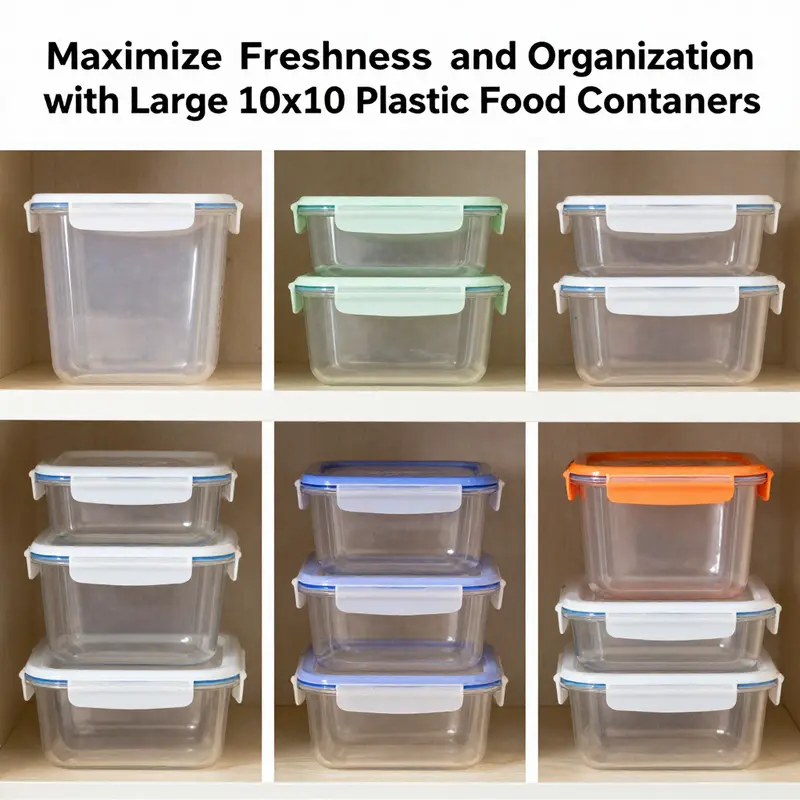
In kitchens and warehouses, a square container can quietly reshape daily rituals and procurement priorities. The large 10×10 plastic storage container, defined by its square footprint and a sealed, modular exterior, has evolved beyond a simple box for dry goods. Its appeal rests on a careful balance of safety, durability, usability, and scalable manufacturing. In homes and in facilities alike, these containers help preserve freshness, maximize space, and present contents in a way that supports routine cooking and bulk storage. To understand their impact, one must trace not only how the design performs in daily tasks but also how it reflects broader trends in material science, food safety, and supply chain culture. The story begins with the materials that make the container safe for food and ends with the business logic that motivates large orders, custom branding, and widespread adoption across diverse markets.\n\nFrom a materials perspective, polypropylene serves as a common foundation for most large, square storage units. Its appeal lies in the chemistry: PP is lightweight, has good impact resistance, and maintains clarity or color integrity when used in transparent or translucent forms. Importantly, PP used for food contact is typically vetted for safety standards that many buyers rely on. In practical terms, this means that containers can withstand repeated handling without leaching or warping, an assurance that matters to households and institutions alike. The presence of a well engineered seal amplifies this safety by limiting air exchange that can accelerate staling, rancidity, or moisture related spoilage. A tight seal paired with a rigid body helps prevent contamination and preserves the quality of grains, cereals, dried fruits, and baking ingredients over extended periods. For professionals, such safeguards translate into predictable shelf life, reduced waste, and streamlined inventory control, especially when thousands of units are managed in a single facility.\n\nAesthetics and practicality converge in the daily use of these containers. The square shape—flat topped, with a lid that sits securely and often snaps into place—maximizes stackability and enables a neat, modular arrangement in pantries, cabinets, and cold storage spaces. Clear lids or transparent bodies are particularly valued because they let the contents speak without opening the container. In environments where time is money and organization is a workflow, being able to identify contents at a glance reduces disruption and speeds up routine tasks like portioning, labeling, and restocking. The lid design itself matters as much as the material. A reliable gasket, sometimes made of flexible elastomer, ensures an airtight seal that minimizes moisture intrusion and odors. The best iterations balance pressure resistance with user friendly operation, offering lids that open with a confident grip but stay shut under the weight of stacked containers.\n\nThis design logic scales from home kitchens to commercial operations. In a busy food service or storage facility, the same square unit can be employed to hold everything from pantry staples to bulk bags of ingredients awaiting portioning. The ability to nest and stack reduces vertical footprint, which is crucial in spaces where every square foot is precious. Stackability also informs handling and transport. For caregivers and staff who move containers through walk in coolers, shelving rows, or loading docks, the ease of gripping, lifting, and securing containers matters as much as the contents. Ergonomic considerations—handles that stay cool, lids that snap open without requiring substantial hand strength, and uniform dimensions that align with shelving standards—become selling points when comparing sets intended for home kitchens versus industrial environments.\n\nIn the market, buyers weigh more than the basic function. They evaluate how a container aligns with broader safety and compliance frameworks. A robust container is expected to meet recognized food contact safety requirements, which may include general food safety guidelines and, in some regions, formal certifications. For businesses procuring large quantities, this assurance becomes even more critical. A product that signals compliance with established safety guidelines reduces the burden of supplier audits and accelerates procurement cycles. It also matters for private label strategies where a companys brand promise hinges on consistent performance across thousands of units. The polypropylene consensus is complemented by the realities of manufacturing. In practice, brand owners and distributors favor facilities that can demonstrate in house tooling, material traceability, and quality control protocols. The capacity to respond quickly to design tweaks, color or translucency adjustments, or labeling innovations is a competitive edge in a market where form and function must harmonize across many SKUs.\n\nThe conversation then broadens to how such containers are procured and deployed at scale. On the consumer side, households typically prioritize ease of use, affordability, and durability. A family will likely purchase a set that offers clear visibility, a dependable seal, and a size that fits into existing kitchen shelving. For bulk buyers and commercial outfits, the calculus shifts toward predictable pricing, low minimum order quantities in some cases, a consistent supply line, and the ability to customize. Customization can range from branding and photography on the lid or label to precise tolerances in wall thickness and lid fit. Each additional feature creates value in the eyes of a purchaser who is managing thousands of units and wants a uniform user experience across all locations.\n\nA critical, though sometimes overlooked, dimension of these decisions is the role of suppliers and the broader supply ecosystem. When manufacturers speak of production infrastructure, they are referring to the combination of tooling capacity, mold making capabilities, and robust quality assurance programs. The most capable suppliers maintain in house tooling for rapid iterations, enabling them to adjust wall thickness, seal geometry, or lid knurling in response to feedback from retailers or end users. Digital printing and branding capabilities allow for customized appearances that can align with seasonal campaigns or corporate identity. From a risk management perspective, a supplier’s ability to demonstrate end to end compliance with safety and labeling standards becomes as important as price. The procurement strategy often includes evaluating not only material cost and MOQs but also the speed at which a supplier can respond to design changes, the thoroughness of their QA testing, and the transparency of their communication channels.\n\nIn the end, the decision to choose a particular brand or supplier is a nuanced synthesis of performance, safety, and business needs. For everyday home use, a simple equation tends to hold: reliability plus clarity equals peace of mind. A container that seals well, resists cracking, and keeps contents visible without staining becomes a staple in the kitchen. For institutional use, the equation expands to include cost per unit over the lifecycle, predictability of supply, and the possibility of customization that supports branding or process flows. In this broader frame, a container is not just a receptacle; it is a component of a system that touches procurement, warehousing, labeling, and even customer experience when these units are sold as part of a private label line.\n\nThis is where material safety and transparency meet design driven innovation. The growth of transparent surfaces, the ability to monitor contents without repeated openings, and the demand for long term durability push manufacturers toward higher grade PP with stabilized clarity and more resilient seals. Yet the market also reveals a practical boundary: no single container perfectly solves every use case. A storage unit that excels in shelving efficiency may be less ideal in humid climates if its seal experiences degradation over time, or a container chosen for freezer storage might compromise ease of cleaning if the gasket is too rigid. The best choices acknowledge these trade offs and offer flexible paths—sets that include multiple lid types, a variety of sizes, and even interchangeable components—so end users can tailor a configuration to a specific stack height, humidity level, or workflow.\n\nFrom the consumer’s perspective, the lifecycle of a large 10×10 container is a narrative of recurring reuse rather than one off purchase. The container’s initial cost is weighed against its longevity, the ease with which it can be cleaned, and its resistance to staining or odor retention. A durable exterior will stand up to the daily drag of pantry rearrangements, while a seal that resists odor transfer helps preserve the quality of stored grains and dried fruits. This is not simply about keeping bugs out or a lid from popping open. It is about preserving the inherent freshness of the contents through time and managing the subtle, cumulative effects of everyday use. For households dealing with reduced storage space, the square format becomes strategic, enabling a modular approach to pantry design. The containers can nest when empty, reducing clutter, and they can be stacked when full, turning vertical space into a practical asset. The result is a user experience that feels almost invisible—the kind of product that is easy to overlook until a moment of real need reveals how much it improves daily routines.\n\nAt a more strategic level, the chapter on large 10×10 containers intersects with conversations about sustainability and lifecycle thinking. Recyclability, recyclate content, and the energy intensity of production matter to both manufacturers and buyers who are mindful of environmental footprints. For many buyers, the preference is not only for safe and durable products but also for ones that fit within a broader sustainability framework. This can translate into choosing materials with lower emissions during production, selecting designs that minimize waste in manufacturing, or opting for suppliers that demonstrate responsible end of life handling. Such considerations do not replace the practical requirements of durability and safety; they complement them, creating a product category that speaks to modern consumer values and corporate responsibility.\n\nThe marketplace thus reflects a convergence of three rails: household practicality, industrial reliability, and responsible production. As more players enter the space, the emphasis on standardized dimensions, consistent lid geometry, and compatible labeling solutions grows. Companies that can offer a consistent, scalable solution across regions gain a substantive advantage. In practice, this means that a large 10×10 container is not merely a kitchen accessory; it becomes a standardized element within a broader system of storage, inventory control, and branding. The square footprint is a quiet enabler of order, turning a cluttered shelf into a predictable grid where contents are easy to identify, measure, and manage. In environments where food safety compliance is mandatory, the container’s role expands even further, becoming a visible link in the chain that connects raw materials to finished products and, ultimately, to the consumer’s table.\n\nA final note on the dynamics of choice is warranted. In markets with diverse consumer and business requirements, decisions hinge on a delicate balance between cost, performance, and customization. A core advantage of large, square containers is their adaptability. They are suitable for meals in transit, bulk dry goods in the pantry, and even non food uses such as office storage and craft supplies. This versatility is not a small thing; it is what makes the 10×10 container a staple in a variety of contexts. For households, it translates into fewer purchases over time because a well made unit can serve many purposes. For businesses, it means that the initial investment yields a broad range of applications, which can streamline procurement and reduce the number of separate SKUs required to cover different storage needs. The result is a product category that is at once ordinary in its form and extraordinary in its impact on daily routines and strategic decision making.\n\nTo close this portrait, consider how the next generation of large 10×10 plastic storage containers might address emerging consumer priorities. Expect refinements in gasket materials that balance tight seals with easier maintenance, and in wall thickness that optimizes both rigidity and weight. Anticipate improvements in transparency that endure, even after repeated washing, while maintaining color stability. Picture more configurable lids and labeling options that allow for brand storytelling without sacrificing usability. In a world where small improvements compound across thousands of units, these containers become instruments of efficiency and clarity. They help kitchens function not by heroic single acts but by consistent, reliable performance that supports the rhythms of everyday life and the demands of professional settings alike.
Guardians of Freshness: Maintaining and Cleaning Large 10×10 Plastic Food Storage Containers for Lasting Pantry Health
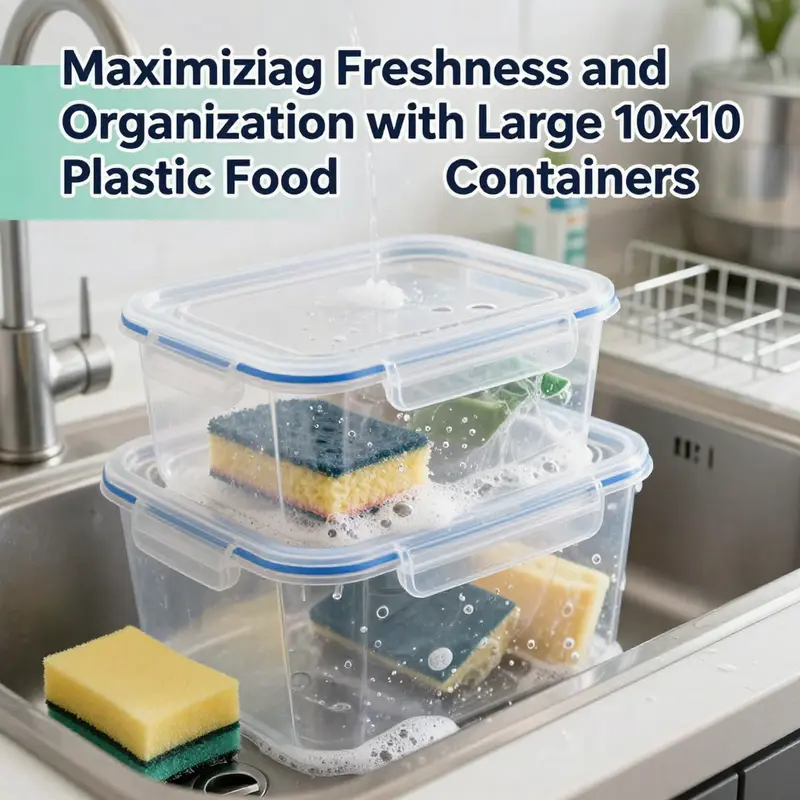
The large 10×10 plastic food storage container has earned its place as a quiet workhorse in many kitchens, pantries, and even small commercial setups. Its size makes it ideal for bulk dry goods, snacks, and ingredients that deserve a steady, organized home. Yet its true value emerges not just from capacity but from the way it is cared for. A container that seals tightly, resists stains, and stays free of lingering odors can preserve freshness for weeks or months, turning a once chaotic pantry into a dependable system. When we consider these containers as part of a broader approach to food safety and kitchen efficiency, maintenance becomes less a chore and more a hygiene discipline. The simple acts of cleaning, drying, and ensuring the seal remains intact are, in effect, preventive measures that protect the food we eat and the peace of mind we seek when we open the pantry door.
In understanding how to maintain and clean these square volumes of storage, it helps to start with the materials and design that define their everyday performance. Many large 10×10 containers are built from food-grade polymers, most commonly polypropylene (PP). PP is favored for its balance of rigidity and lightness, its resistance to cracking, and its compatibility with cold storage. In some instances, high-density polyethylene (HDPE) appears in similar forms, offering robust resistance to impact and a sturdy long-term feel. What matters most for safety is not the weight of the plastic alone but its certification and labeling: indicators that the material is suitable for contact with food, and that it won’t leach harmful substances during normal use. In practice, this often translates to containers that are BPA-free and labeled for safe food contact, with some models also meeting broader regulatory standards that reassure households and small businesses alike. The presence of clear, stackable bodies—sometimes paired with transparent lids—adds a practical layer: you know what’s inside without opening each lid, and you can maximize vertical space while keeping contents orderly. In smaller living environments, that organization translates into real value, because every inch of storage becomes usable and every item finds a predictable place.
This is where the container’s lid and seal pair play a crucial role. A well-designed airtight seal can be the difference between grains staying fresh for months and the flagging aroma of stale items wafting through the kitchen. The lid’s fit, the gasket’s integrity, and the alignment of the lid with the body determine how well the container preserves aroma, moisture, and texture. A seal that has softened with age may still close, but it won’t keep odors at bay or prevent moisture from creeping in. Over time, even the most robust containers can develop micro-scratches or subtle warps in their lids; these are not just cosmetic issues. Scratches can harbor bacteria and spots can trap scents, making cleaning more challenging and reducing the perceived freshness of the stored contents. This is why a regular inspection routine matters: assess lids for cracks or elasticity loss, verify the clamps or latches engage cleanly, and check the gasket for tears or hardening. If any serious damage is found, the safe course is to retire the container from food contact. A small, everyday habit—visually inspecting the seal and ensuring it closes with a clean, even seal—extends life and preserves performance more reliably than a quarterly deep clean alone.
The daily and seasonal rhythm of pantry care shapes how these containers perform over time. Stacking features are not merely about space efficiency; they also influence how easily you can access contents without repeated handling of several units and lids. Clear or translucent bodies help you identify contents at a glance, reducing the temptation to open multiple containers during meal planning. This can indirectly impact cleanliness: less frequent opening means fewer opportunities for spills, crumbs, and airborne dust to settle on the interior walls. Yet even with clarity, the interior surfaces are prone to staining and odor buildup from markers like coffee, cereals with natural oils, or dried fruits. The cleaning methods you choose should be effective yet gentle enough to preserve the plastic’s integrity. For stubborn stains and lingering odors, several time-tested approaches exist, each playing its part in restoring the container to near-new condition without resorting to harsh chemicals.
One classic method is a vinegar soak. A solution of one part white vinegar to three parts water can be used to submerge the container for an hour or two, or even overnight for severe residue. The acidity dissolves mineral deposits, grease, and some organic residues that cling to the plastic surface. After soaking, a thorough rinse with clean water followed by a dish soap wash helps remove any vinegar scent and restores the container’s pristine feel. Then—crucially—air-drying completes the process. The vinegar approach is appealing because it uses a readily available, non-toxic substance that won’t leave behind harsh chemical residues. For really stubborn areas, a baking soda paste provides a gentle abrasive boost. Mix baking soda with enough water to form a pasty consistency, apply it with a non-abrasive sponge, and let it sit for about 30 minutes before rinsing and washing as usual. The mild abrasive action helps lift surface stains while deodorizing the interior. Lemon juice, like vinegar, brings natural acidity to the fight against stains. Half a lemon rubbed across the interior, then left in place in the sun for an hour or two, can enhance light bleaching while imparting a fresh scent. This citrus approach is particularly appealing for those who prefer natural cleaning options, though it should be used with caution if the container has any sensitivity to acidic exposure or if you plan to store highly acidic foods soon after cleaning.
In addition to these targeted stain-removal strategies, general maintenance habits matter as much as the occasional deep clean. Start with mild detergents and a gentle washing routine. Harsh chemicals, bleach, and scouring powders can degrade the surface of polypropylene and HDPE, reducing clarity, dulling the finish, and potentially affecting the long-term safety of the container. A soft sponge or a non-abrasive brush works best to lift grime without creating micro-scratches that give bacteria extra places to cling. It’s worth remembering that deep-cleaning is beneficial, but repeated aggressive scrubbing can accumulate micro-scratches that harbor residues and odors. Regular, light cleaning after each use can dramatically reduce the need for intensive cleansing later, preserving both the container’s appearance and its hygienic properties.
Heat exposure is another factor that shapes maintenance. While many plastic containers are designed to tolerate warm or even hot contents, and a subset may be labeled microwave-safe up to around 120°C, the safest practice is to avoid placing these containers in direct ovens or under broilers. Extreme heat can warp the plastic and degrade the seal, weakening the airtight performance that underpins long-term storage. A simple rule of thumb is to minimize exposure to direct heat, avoid boiling water or cooking liquids inside the container, and transfer hot foods to heat-tolerant vessels when needed. When cleaning, warm water is usually sufficient to loosen oils and residues; hot water can be used cautiously, but it should not come from a boiling source that could deform the container.
The interior surfaces deserve special attention due to the way fats and oils behave. Grease can leave a thin film that is not always visible but is easy to detect by the way it feels to the touch after washing. This film can trap odors and attract more dust or crumbs with subsequent use. A dedicated rinse cycle with a light touch—followed by air-drying—helps prevent this buildup. If you notice persistent odors that resist vinegar or lemon treatments, consider a more intense cycle of rinsing with hotter water, then a second wash with mild dish soap and a thorough dry. The transparency of many large containers makes scent more noticeable, and a clean exterior should be matched by a clean interior to maintain overall hygiene. Remember to clean the lid and its gasket with equal care. The seal’s performance depends on its cleanliness; a dirty gasket can impede closure and quantify the container’s ability to keep air out and moisture in.
Storage considerations extend beyond the act of cleaning. Proper ventilation during storage is essential for containers intended to hold perishable or high-moisture contents. Some recipes or food items require a certain airflow to prevent mold or condensation that could creep into the lid’s interface. In the long term, though, most pantry storage relies on a secure seal to maintain dryness and freshness, especially for grains, cereals, flours, dried legumes, and baking supplies. Stock management practices also play a role. Establishing a first-in, first-out routine ensures older contents are used before newer purchases, minimizing the chance of stale odors forming inside containers that have sat too long between refills. This approach is particularly important when the containers are used to store items with natural lipids or aromas, which can quickly migrate through the air inside a sealed space and cling to the container walls over time.
From a safety perspective, the selection of an appropriate container and its maintenance routine has fundamental implications for the broad spectrum of household food safety. Choosing food-grade plastic, verifying that the product is labeled as BPA-free, and understanding whether the material is suitable for the intended use should always accompany any cleaning or storage plan. Microwave safety labels, when present, are helpful but should not be treated as universal permission to heat foods directly inside the container. The presence of acids, such as those found in tomato sauces or citrus-based ingredients, can, over extended periods, influence the surface and chemical stability of some plastics. While most food-grade plastics are designed to withstand such exposure for typical storage durations, it is prudent to transfer highly acidic foods to glass or ceramic containers if you plan to store them for more than a few days. The goal is to maintain both the physical integrity of the container and the safety of the stored food.
All these considerations come together when you take stock of the big picture: the large 10×10 container is more than a vessel; it is a system for preserving texture, aroma, and safety at scale. The design emphasizes practical features—space efficiency, visibility, a dependable seal—yet the real performance lives in how you care for it every day. Routine inspection becomes a quiet, repetitive ritual: check the lid for a snug fit, inspect the gasket for tears or stiffness, and watch for any micro-scratches that might hint at future leakage or harboring odor. When a container shows significant warping, cracking, or discoloration, it is a sign to retire it from food contact. Keeping spare lids and gaskets on hand makes it possible to replace a worn component quickly, sustaining performance without disrupting storage plans.
In conversations about storage options, it’s useful to acknowledge that there are related approaches that complement plastic solutions without replacing them. For instance, in contexts where a lighter or more disposable alternative is desirable for specific events, one might explore kraft paper or other compostable options for short-term serving or packaging needs. A particular example of such alternatives is found in wholesale kraft paper food-storage bowls designed for recyclable and disposable use. These options can be convenient for dry, non-liquid items or for temporary offerings in cafes, offices, or events, and they provide a different set of advantages, particularly around clean-up and waste considerations. If you are curious to explore these materials as a complement to your regular pantry containers, you can learn more about kraft paper food-storage bowls here: kraft paper food-storage bowls. This link is a reminder that while the large 10×10 plastic units excel in durability and long-term storage, there are thoughtful, alternative materials that can fit particular use cases in the broader ecosystem of organized food storage.
As you plan a routine that keeps large 10×10 containers performing at their best, remember that the goal is not only cleanliness but confidence. Clean, well-maintained containers reduce the likelihood of contamination, spoilage, and waste. They support a streamlined kitchen workflow, where ingredients are easy to locate, measure, and use. They also simplify the logistics of batch cooking, meal prep, and bulk purchasing. The peace of mind that comes from knowing your pantry is not just neat but hygienic translates into fewer last-minute scrambles when parties, family meals, or busy workdays demand reliable, ready-to-use ingredients. While a single deep clean may seem like a rare event, the truth is that the best maintenance program is a series of small, consistent actions that protect both your stored food and the investment represented by these staple containers. The result is a pantry that remains a dependable ally rather than a source of anxiety when you open the door and scan the shelves for tonight’s dinner.
For readers who want to deepen their understanding of how to maintain these containers in commercial or high-use settings, it is worth noting that professional-grade storage options often come with enhanced seals, interchangeability of lids, and clearer labeling schemes. These attributes support consistent turnover and reduce the risk of cross-contamination across bulk purchases. The same principles apply in home usage, with the added benefit of the emotional clarity that comes from a well-organized space. When the kitchen feels predictable, cooking and planning feel more grounded, and the practical act of cleaning becomes less of a chore and more part of a routine that sustains freshness and safety over time.
In sum, maintaining and cleaning large 10×10 plastic food storage containers is an ongoing practice that blends material science, practical design, and disciplined care. The result is more than a clean container. It is a dependable, hygienic, and efficient system that supports the daily rhythms of food preparation and storage. Carefully chosen materials, thoughtful use, routine inspection, and gentle, effective cleaning all contribute to a longer container life and a healthier pantry. The emptier your sink is of stubborn residues and the more certain you are that your lids seal reliably, the more you can trust that your bulk staples will stay at their best between uses. That trust is, after all, the true measure of a well-managed pantry: the confidence to reach for what you need and know it will be safe, fresh, and ready.
External resource: For a broader perspective on cleaning practices for large plastic storage containers, see the detailed guidance from a consumer-focused home and garden publication: https://www.homeandgardenmagazine.com/cleaning-large-plastic-food-containers
Final thoughts
In conclusion, large 10×10 plastic food storage containers are invaluable tools for food service professionals. Their benefits in preserving food freshness and aiding organization are complemented by a variety of brands available in the market. By understanding how to properly maintain and clean these containers, businesses can maximize their longevity and functionality, ensuring safe and efficient food storage for years to come.